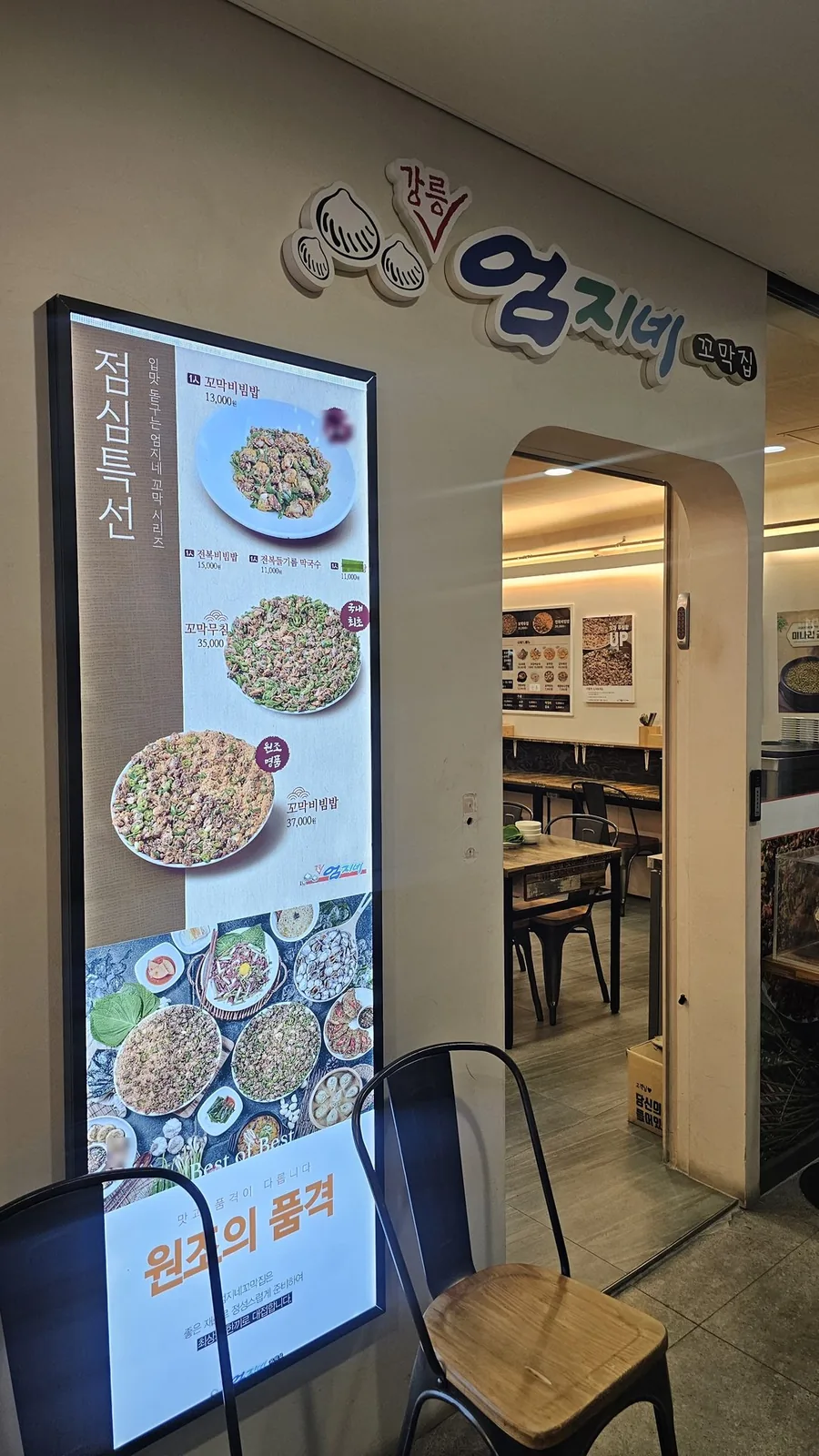
Quick honest review of Eomjine Kkomak House (엄지네꼬막집) in Yeouido. Skip to the verdict if you’re short on time — but here’s the short version: the cockle bibimbap is genuinely good, the lunch set is reasonable for Yeouido, and this is the kind of place regulars keep coming back to not because it’s trendy but because it’s consistently on point.
Two of us went for lunch. Two kkokak bibimbap sets, one potato pancake to share.
What Is Kkokak Bibimbap?
Okay, quick explainer before anything else.
Kkokak (꼬막) is a shellfish — specifically an ark clam, often called a blood cockle in English. Small, dark-shelled, chewy. The real ones come from the tidal flats of South Jeolla Province in the south of Korea, particularly around Boseong and Suncheon. Koreans treat them like a regional delicacy.
The texture is the thing. Kkokak is firmer than a clam, with less give — you actually have to chew it. The flavor is deeply umami and oceanic, but not fishy. Season them with gochugaru (Korean red pepper flakes), sesame oil, garlic, and scallions and you get something that’s almost addictive.
Kkokak bibimbap is just rice with that seasoned cockle mixture piled on top. You mix it, you eat it. Simple as that. But like most Korean food, simple concept doesn’t mean anywhere near simple execution.
About the Restaurant
The name 엄지네꼬막집 translates roughly to “Eomji’s Cockle House.” The menu here is focused — not trying to do everything. Cockle bibimbap, cockle muchim (seasoned cockle as a standalone dish), abalone bibimbap, and a handful of sides. That’s it.
Restaurants that keep a tight menu and stay busy are usually doing something right. This one’s been around long enough to build a local following, and the lunch crowd on a weekday backs that up.
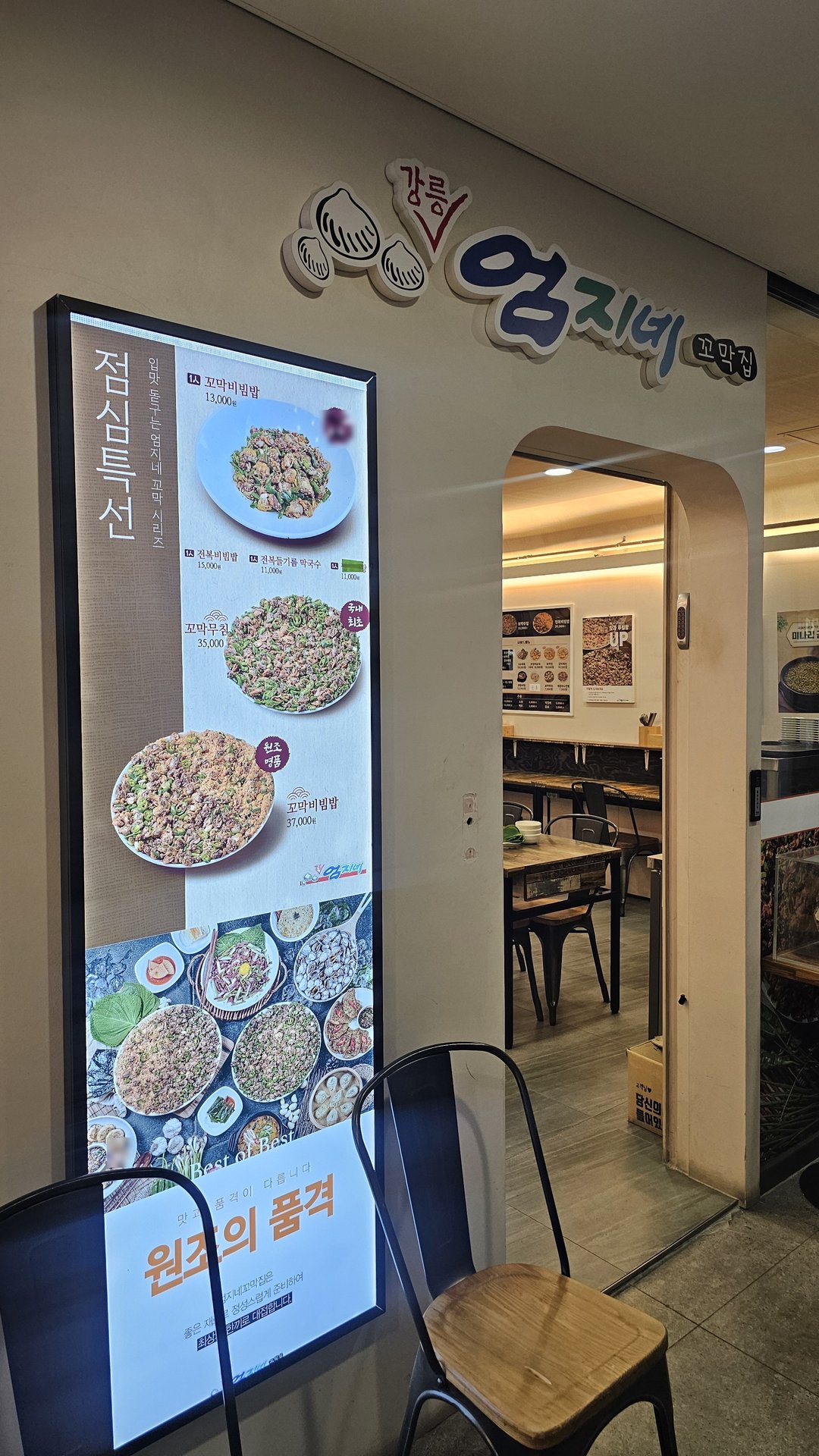
Getting There
Yeouido is Seoul’s financial district — think of it as Korea’s equivalent of Wall Street, but with a large riverside park attached. Banks, broadcast companies (KBS headquarters is here), government offices, and a whole lot of people who need somewhere decent to eat between 12 and 1 PM.
Closest subway: Yeouido Station (여의도역), accessible via Line 5 or Line 9. Short walk from either exit. Use Naver Maps — more reliable than Google Maps for Korean addresses. Search 엄지네꼬막집 여의도 and it’ll come up.
From Incheon Airport (ICN): About 50–60 minutes by AREX train and subway, or 40–45 minutes by taxi (roughly 50,000–70,000 KRW / ~$37–$52 depending on traffic). Not a straight-from-the-airport stop, but if you’re staying in Yeouido or passing through the area, it’s very convenient.
The Interior
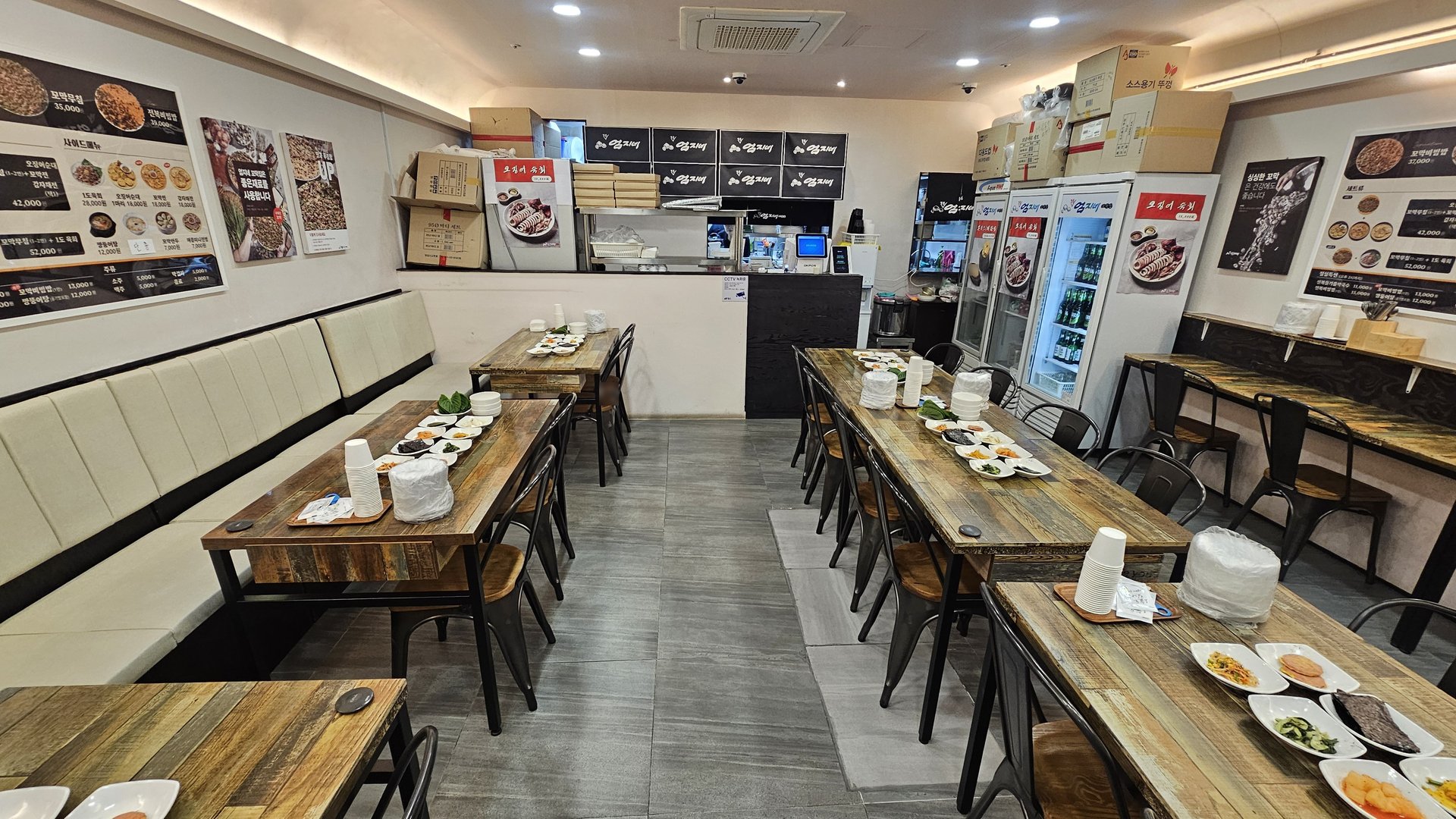
Clean, functional, unpretentious. Long wooden tables, bench-style sofa seating along one wall, bright lighting. Not a date spot. Not somewhere you linger after eating. This is a lunch operation designed for quick turnover, and the layout reflects that.
We went around 11 AM, right after opening — the hall was nearly empty and perfectly quiet. By noon, this place fills up with the Yeouido office crowd.
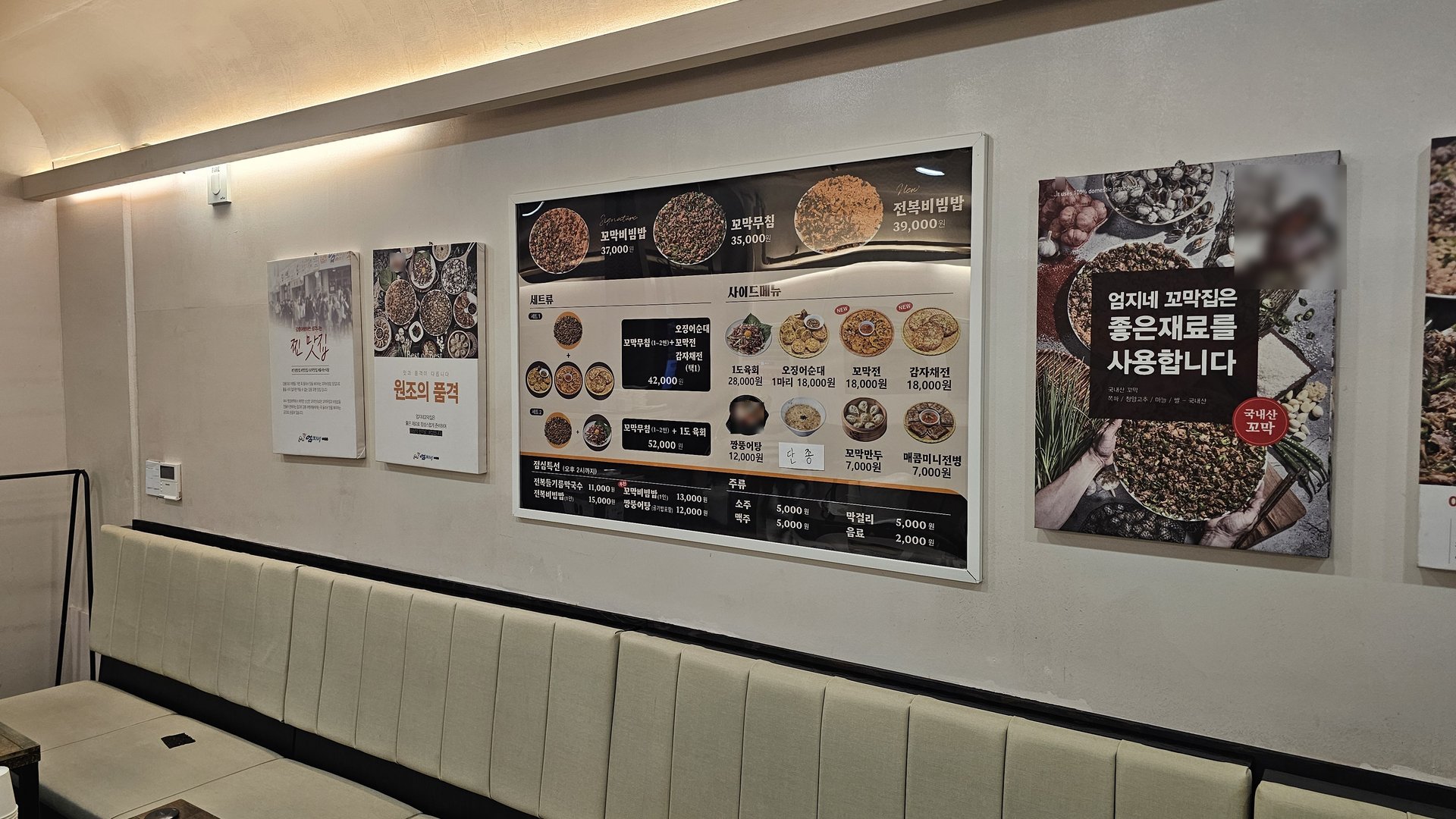
The wall menu is in Korean only, but the prices are visible. Regular kkokak bibimbap is listed at 37,000 KRW (~$27 USD) on the main menu. The lunch set pricing is more reasonable — our total for two sets and a shared pancake came to 44,000 KRW, which breaks down to well under 20,000 per person.
What I Ordered
Kkokak Bibimbap Lunch Set × 2
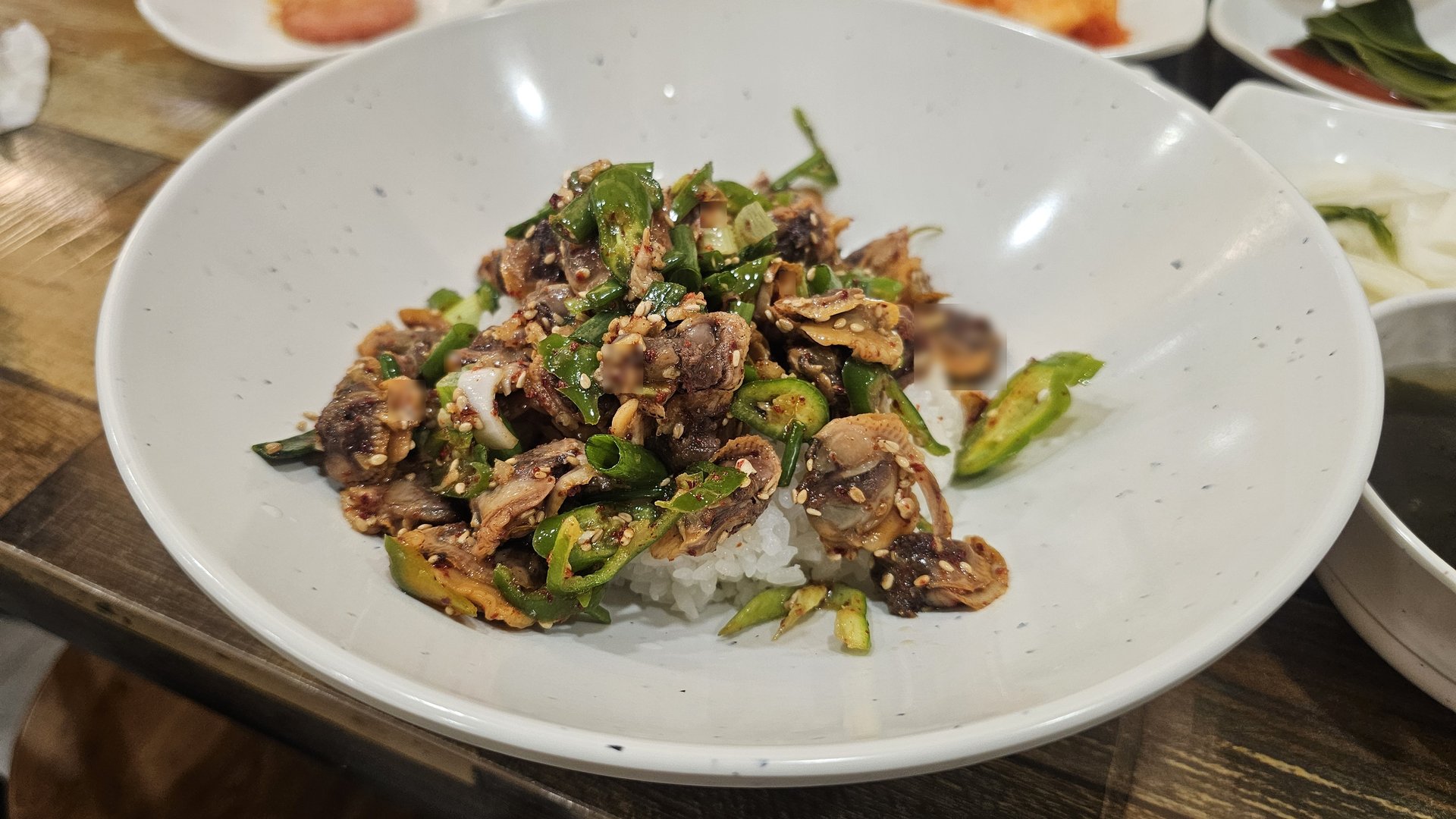
The dish arrives looking like a lot. A big mound of seasoned cockles sits on top of a bowl of rice — the cockles are coated in that classic mix of gochugaru, sesame oil, garlic, and scallions. There’s an instruction card on the table.
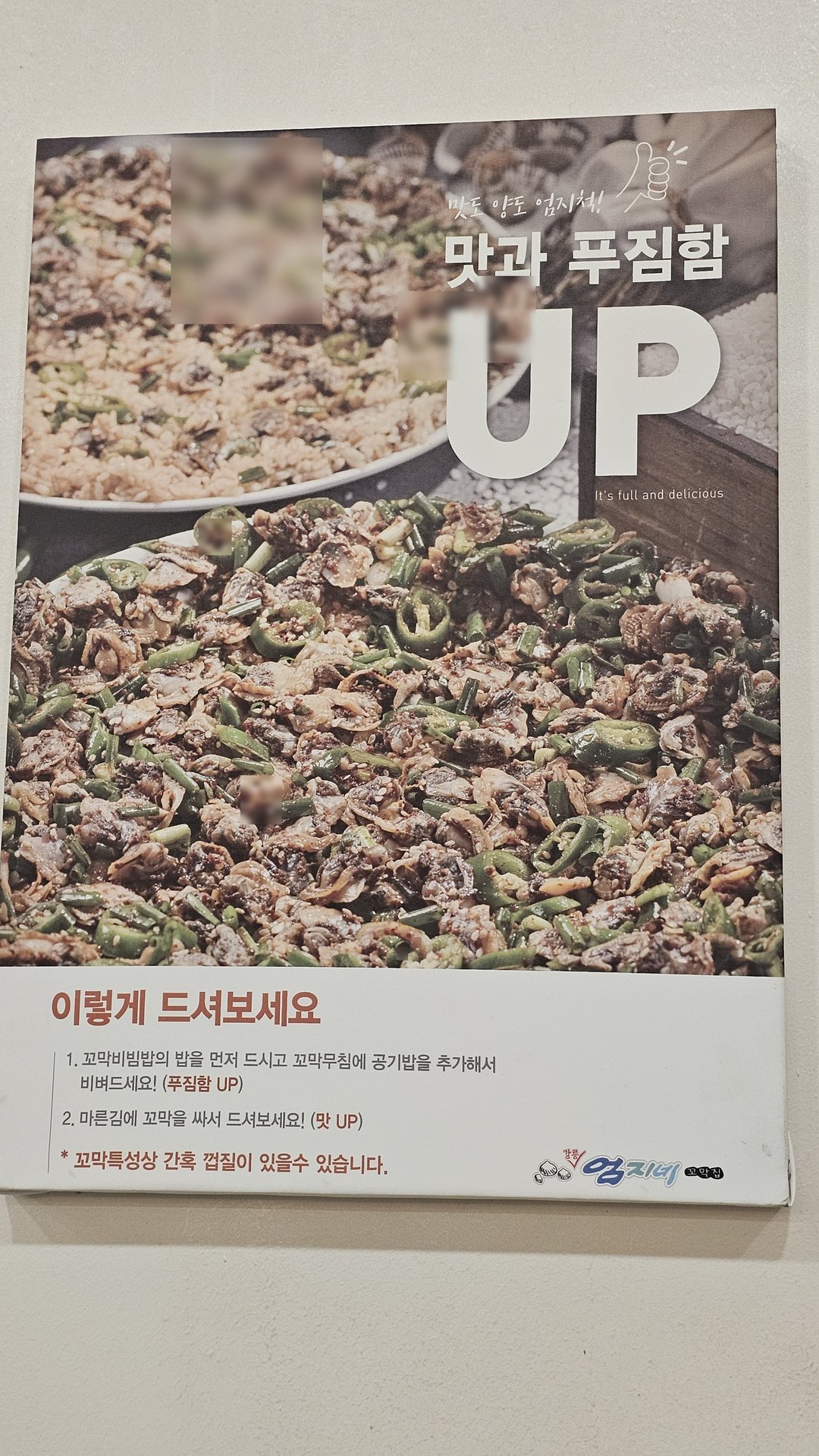
The instruction is: mix it. That’s essentially the whole thing. Once you mix, the sesame oil and cockle juices coat the rice and you get this savory, slightly spicy bowl that eats much bigger than it looks.
The cockles themselves are cooked properly — firm but not rubbery, tender enough to eat without effort. The seasoning is balanced. The heat from the gochugaru is present but not aggressive, and the sesame flavor rounds everything out. It’s the kind of dish you finish and immediately understand why people come back for it.
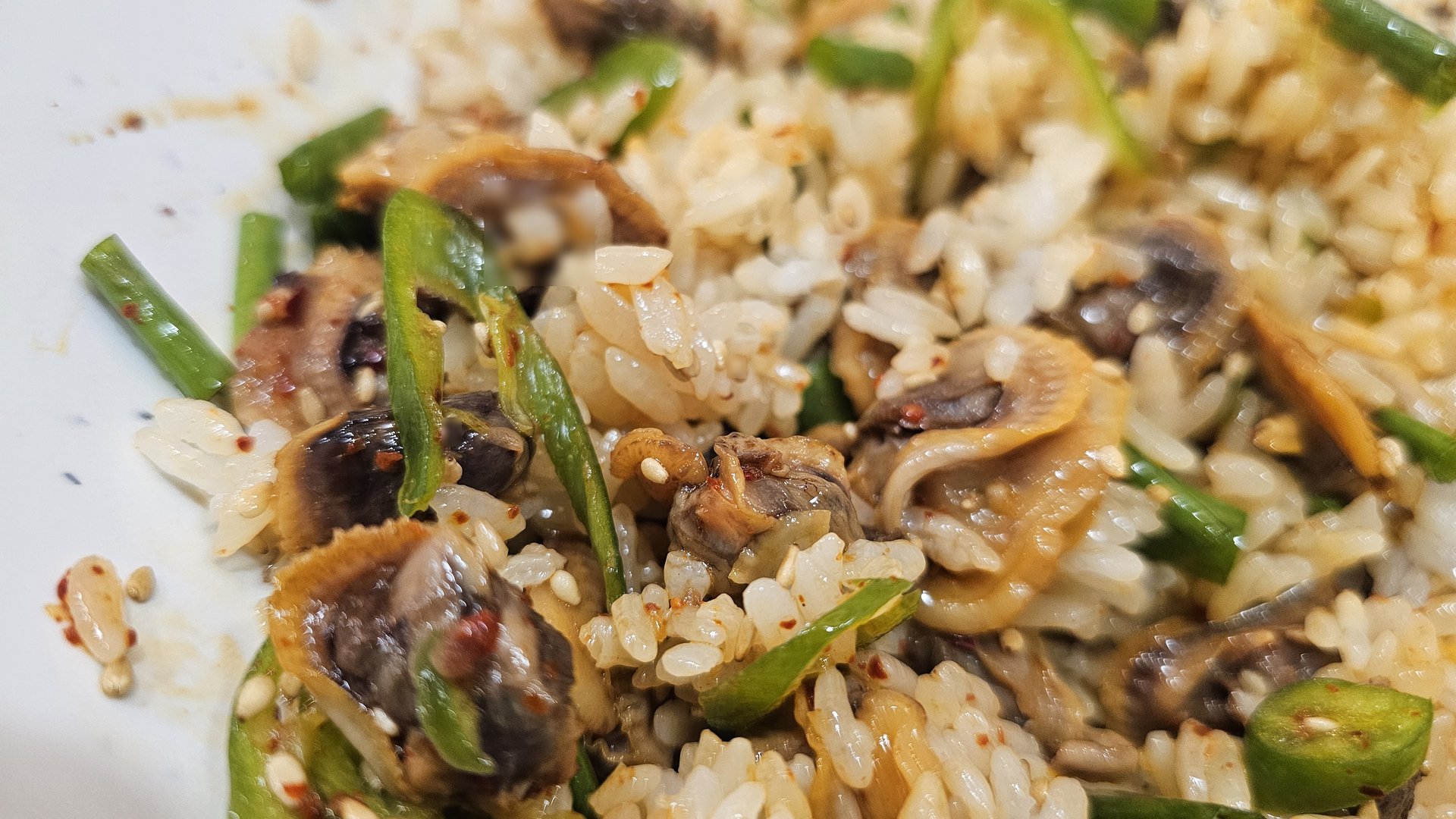
Yeah. This is the dish to order. No question.
Potato Pancake (감자전) × 1 — Shared
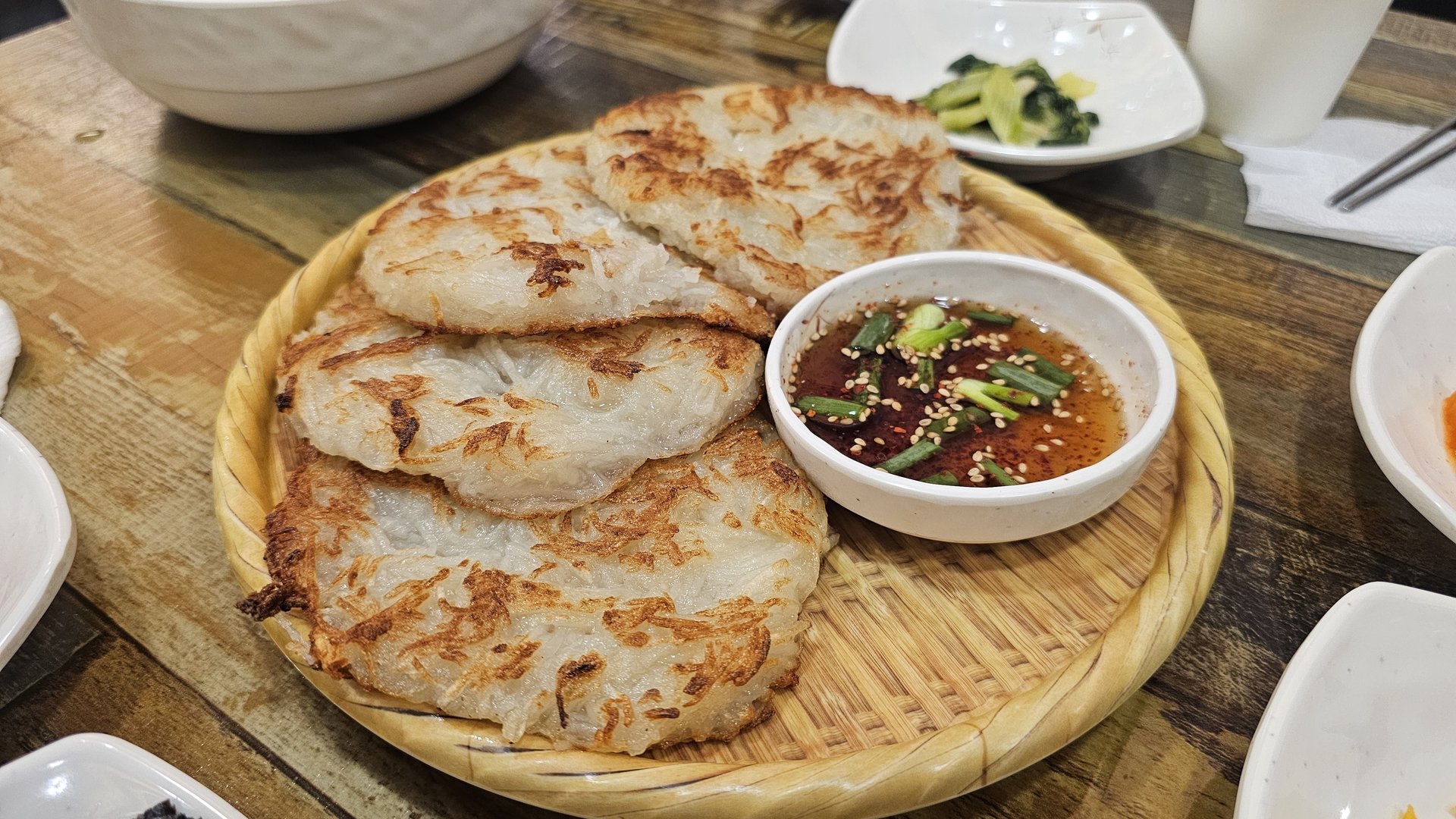
Potato jeon is a Korean savory pancake made with grated potato — denser and chewier than a wheat-based pancake, slightly translucent in the middle when cooked right. Comes with a soy-based dipping sauce on the side.
Crispy at the edges, chewy center, hits the spot as a shared side. It’s not a reason to come here on its own, but it’s a solid call when you want something to eat alongside the bibimbap. We finished it.
The Soup
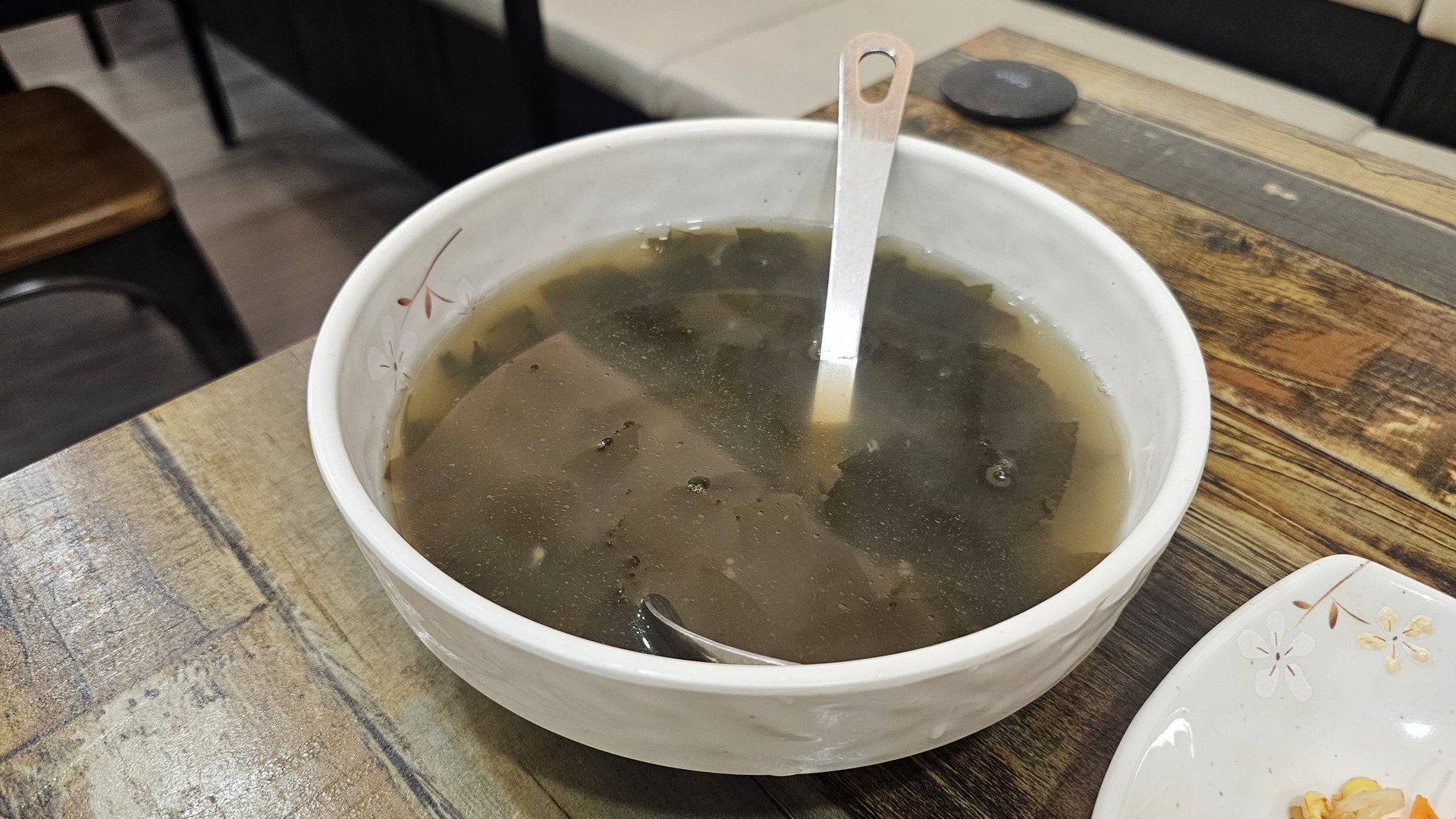
The lunch set comes with soup. Seaweed soup (미역국, miyeokguk) — seaweed, tofu, clean light broth. Warm, simple, restorative. Standard for a Korean set meal. It does exactly what it’s supposed to do.
Banchan (Side Dishes)
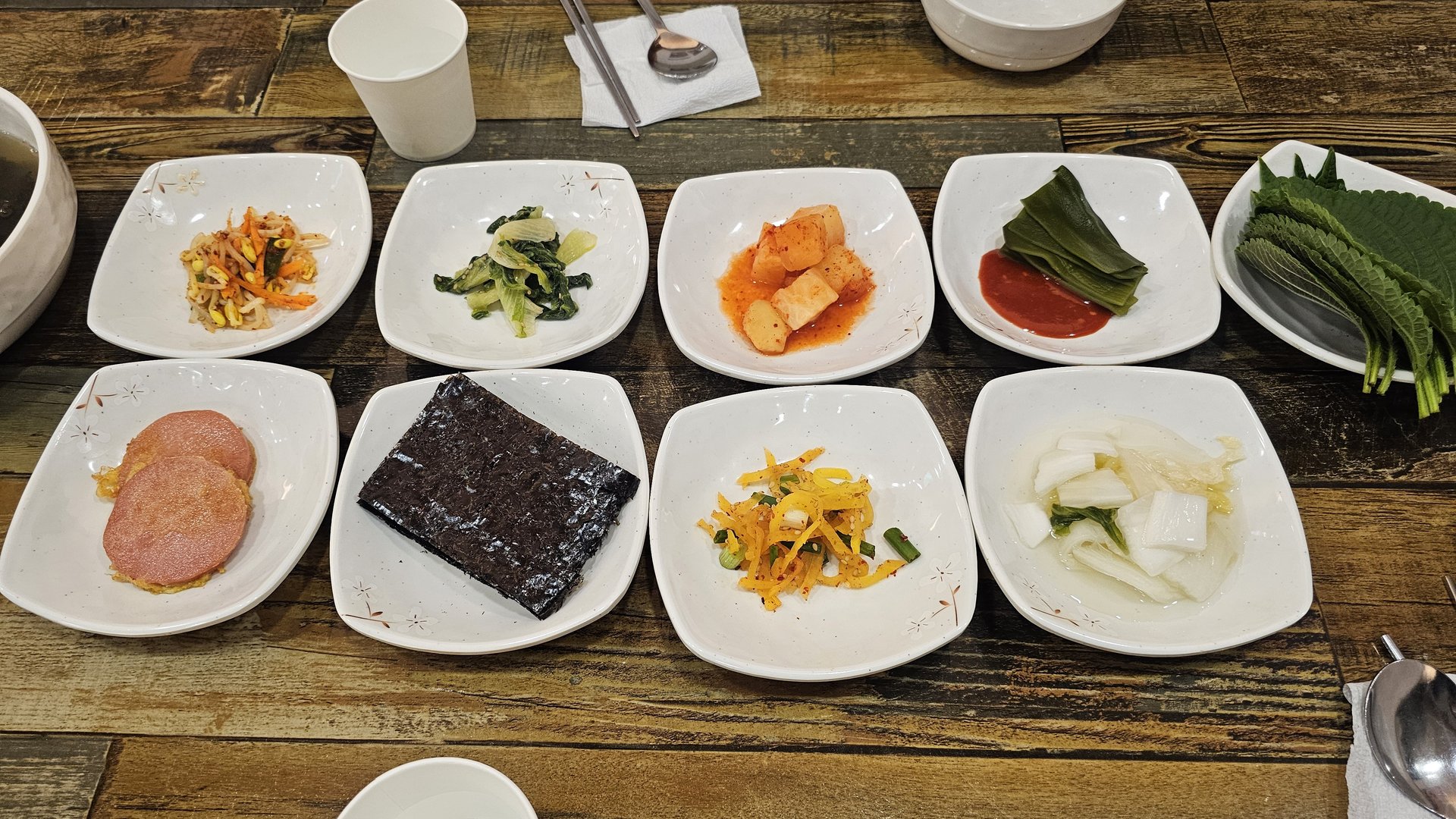
Eight small side dishes came out with the sets. Banchan is the Korean tradition of serving multiple small dishes alongside the main — you eat from them throughout the meal, no extra charge.
The spread here: egg roll, spam, dried seaweed, bean sprout salad, kkakdugi (cubed radish kimchi), perilla leaves, cabbage kimchi, cucumber salad. More than expected for a lunch set. The egg roll and spam are very Korean comfort food — not fancy, but satisfying.
Total bill: 44,000 KRW (~$32.60 USD) for two kkokak bibimbap lunch sets and one shared potato pancake.
That’s roughly 22,000 KRW (~$16.30) per person for cockle bibimbap, soup, eight banchan, and a shared side. For Yeouido, that’s solid value.
Stuff Tourists Should Know
English menu: The wall menu is Korean only. Staff likely speaks minimal English. Point-and-order works fine — the main dish is 꼬막비빔밥. Show a photo if needed.
Payment: Korean cards work fine. Foreign Visa/Mastercard cards generally work at most Seoul restaurants now. Carry some cash as backup.
Tipping: No. Korea doesn’t have a tipping culture. Just pay the bill as printed.
Best time to go: Open for lunch. Arriving around 11:30 AM before the office rush is the move — by 12:30 PM it fills up fast on weekdays.
Solo dining: Fine. Tables accommodate single diners without issue.
Groups: Long tables work well for groups of 4–6. Larger groups may want to call ahead.
Kids: Should be fine. Rice-based dishes and mild banchan make it manageable for children. The cockle seasoning has some heat — ask for less spicy (덜 맵게 해주세요) if needed.
Dietary restrictions: Not suitable for vegetarians (cockles are the whole point) or shellfish allergies. Not halal. Gluten is tricky — soy sauce is in most things. For serious allergy concerns, this probably isn’t the right stop.
The Verdict
Should you go?
If you’re in Yeouido for any reason — yes. Cockle bibimbap doesn’t appear on every Seoul menu. It’s a regional specialty that most restaurants don’t do seriously. Eomjine does it seriously, and the execution is consistent.
If you’re on a 3-day Seoul trip and haven’t touched Korean barbecue, a proper jjigae (Korean stew), or street food yet — prioritize those first. Kkokak bibimbap is a slightly niche pick for first-timers. But if you’ve covered the basics and want to eat something that locals actually choose over the tourist trail: this is a good call.
We’re regulars at this point. That’s the real review.
FAQ
What exactly is kkokak?
Ark clam, also called blood cockle. A small saltwater shellfish with a firm, chewy texture and deep umami flavor — completely different from the clams you’d get at a Western seafood place. Very popular in Korean coastal cuisine, especially from South Jeolla Province.
Is there an English menu?
No. Menu is Korean-only. Point at 꼬막비빔밥, or show staff this post on your phone. You’ll be understood.
Do I need a reservation?
For weekday lunch, probably not — we walked in right at opening with no wait. Lunch rush (12–1 PM) will be busier. Weekends may vary. Arrive early to be safe.
How spicy is the cockle bibimbap?
Mild to medium heat. The gochugaru is present but it’s not a challenge. Most people handle it fine. If you’re very sensitive to spice, ask for 덜 맵게 해주세요 (a little less spicy, please).
How do I eat it?
Mix everything together. The restaurant puts an instruction card on the table. Basically: mix the cockles and rice thoroughly with whatever sauce comes with it, eat straight from the bowl. Don’t overthink it.
Is it worth it as a tourist?
If you want to eat something genuinely Korean and slightly off the usual tourist path — yes. Cockle bibimbap is the kind of dish that locals eat for comfort. That’s a good sign.
How do I find it?
Open Naver Maps (download it — it’s more accurate than Google Maps in Korea) and search 엄지네꼬막집 여의도. It’ll come up. Closest subway is Yeouido Station on Line 5 or Line 9.
Leave a Reply