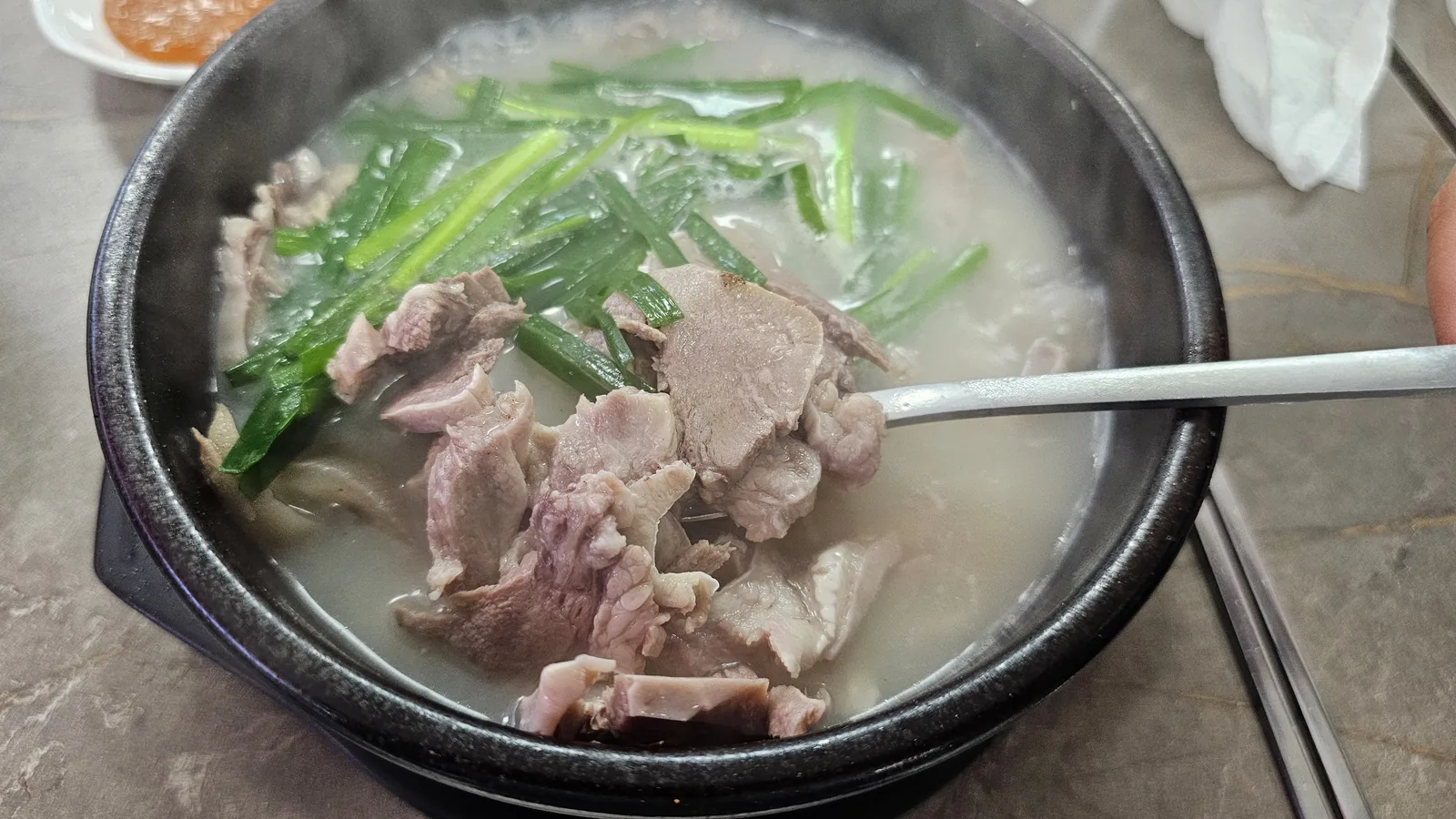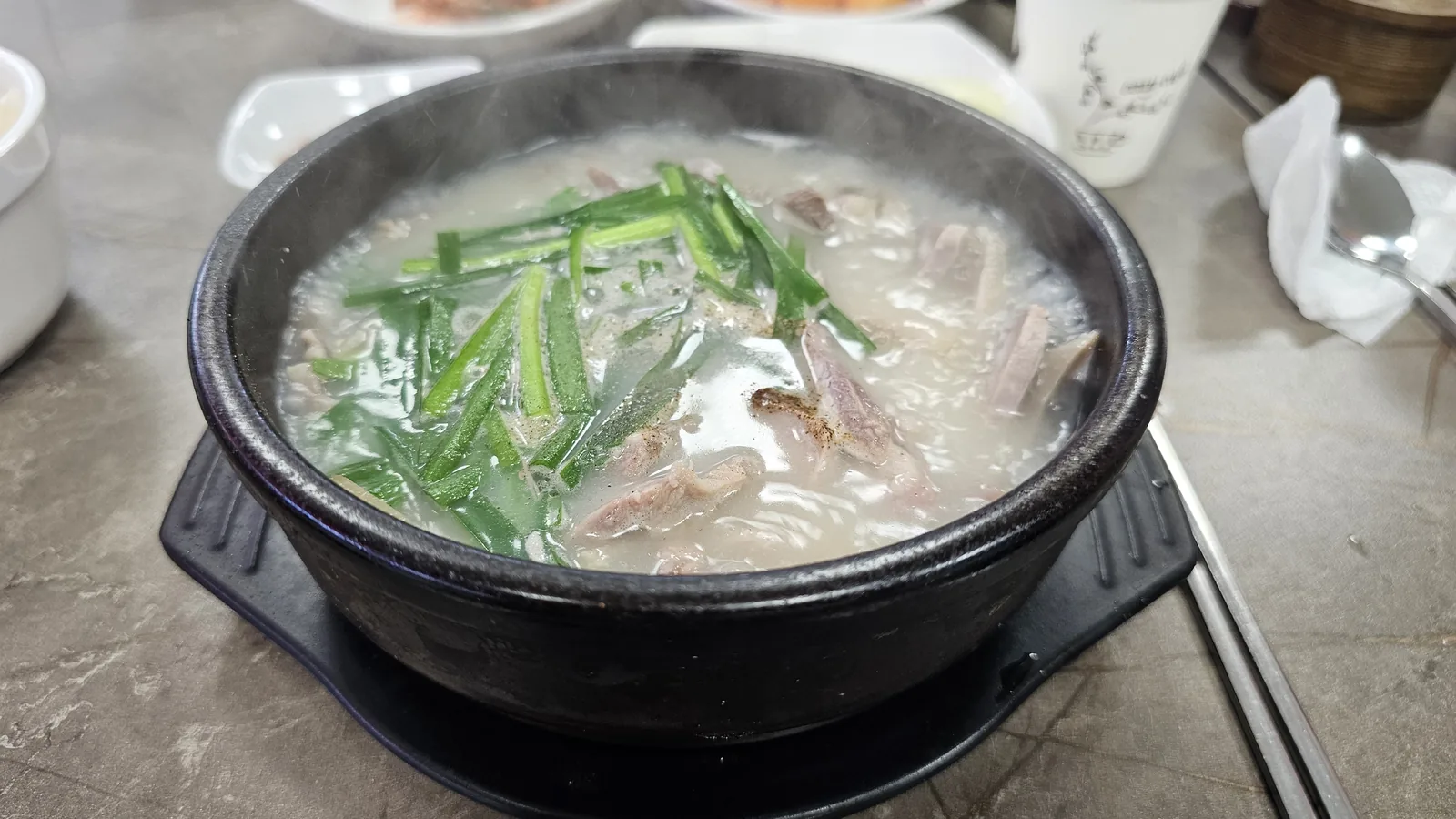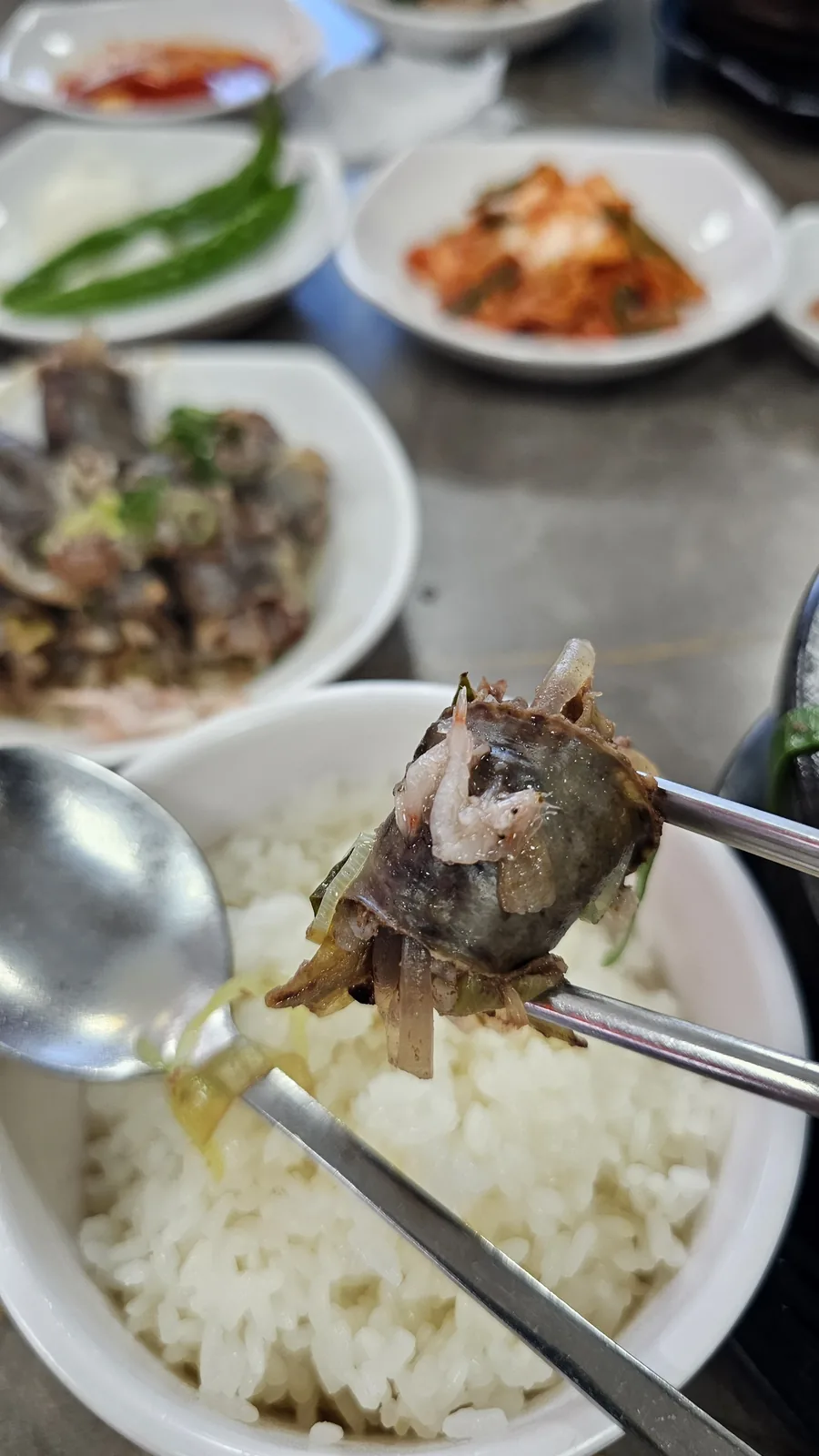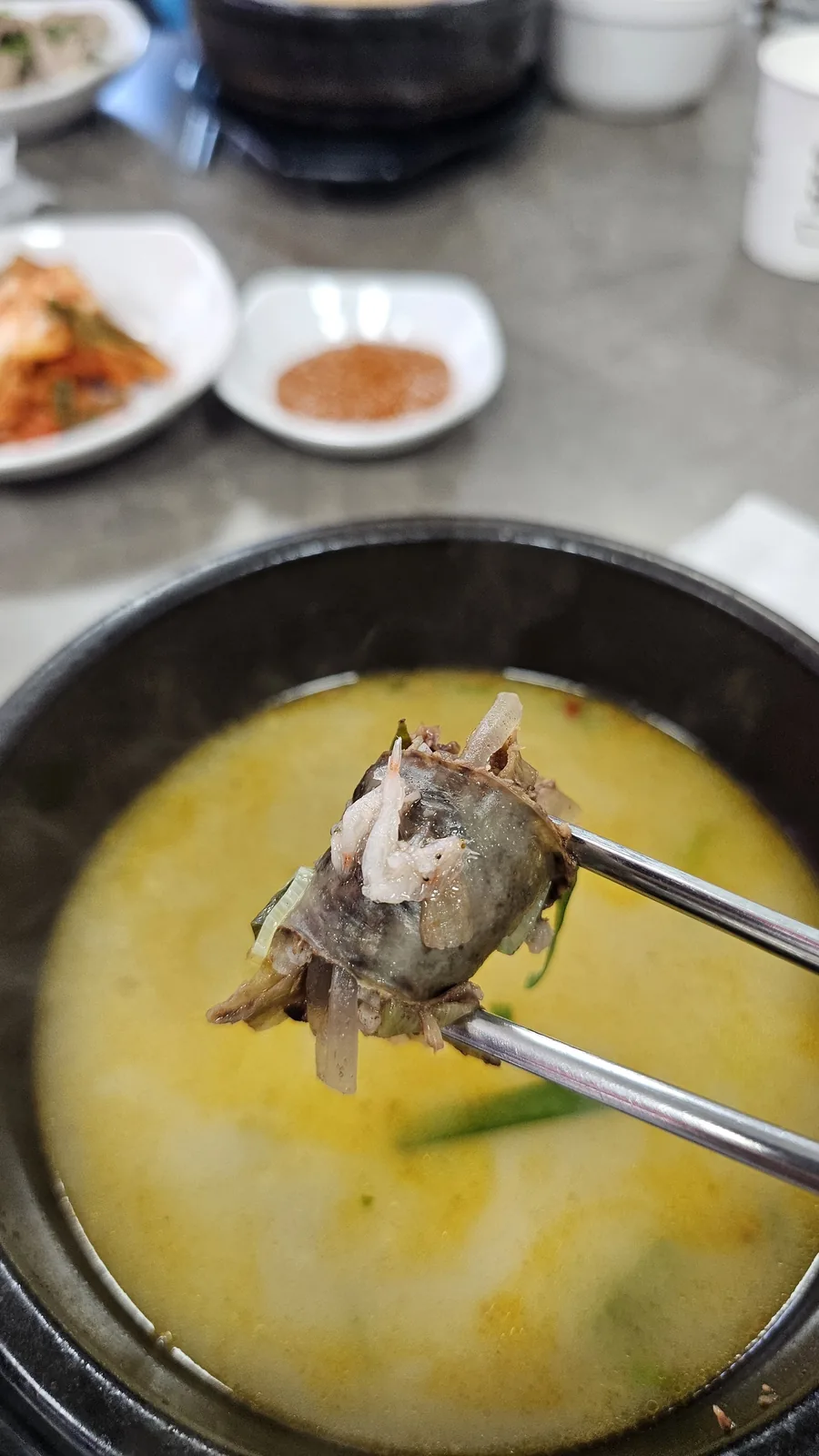
Category: Korean Food

Honest reviews of Korean restaurants in Seoul and beyond.

  • Galbidorak Guro: Honest Review of Korean Master Chef BBQ

    Galbidorak Guro: Honest Review of Korean Master Chef BBQ

    Quick honest review of Galbidorak in Guro. Short version: premium Korean galbi done by someone with a government certificate to prove they know what they’re doing. Prices are real. Beef is good. If you’d spend serious money on a steak dinner, this makes more sense than that.

    I’ve been twice now. Still going back.

    What Is Galbidorak?

    Galbi (갈비) is Korean short rib — one of the pillars of Korean BBQ culture. At the most basic level, it’s beef cut across the bone, marinated or fresh, grilled over heat. If you’ve been to a Korean restaurant anywhere in the world, you’ve probably encountered it.

    What separates Galbidorak from the average galbi spot is the chef behind it.
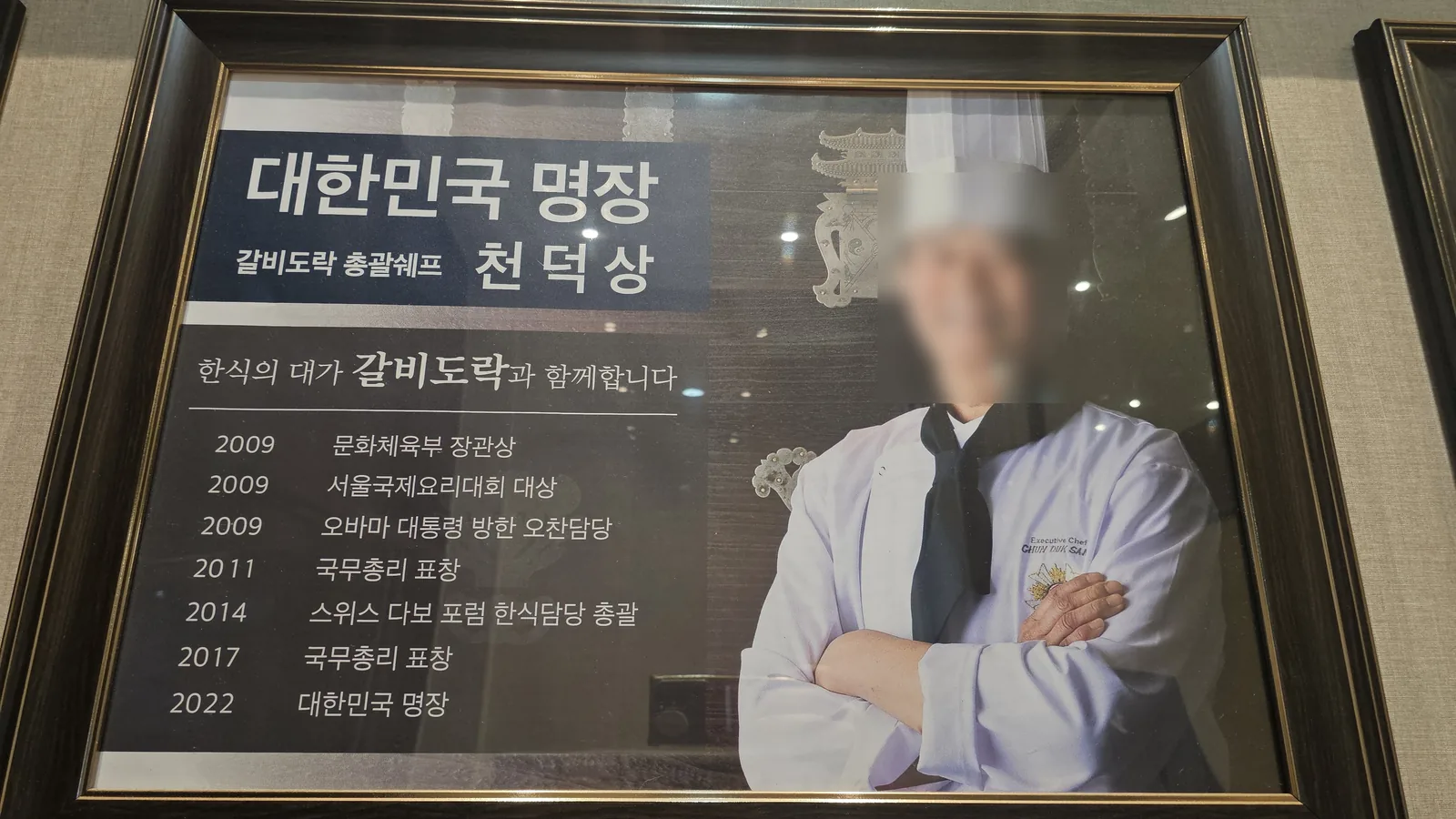
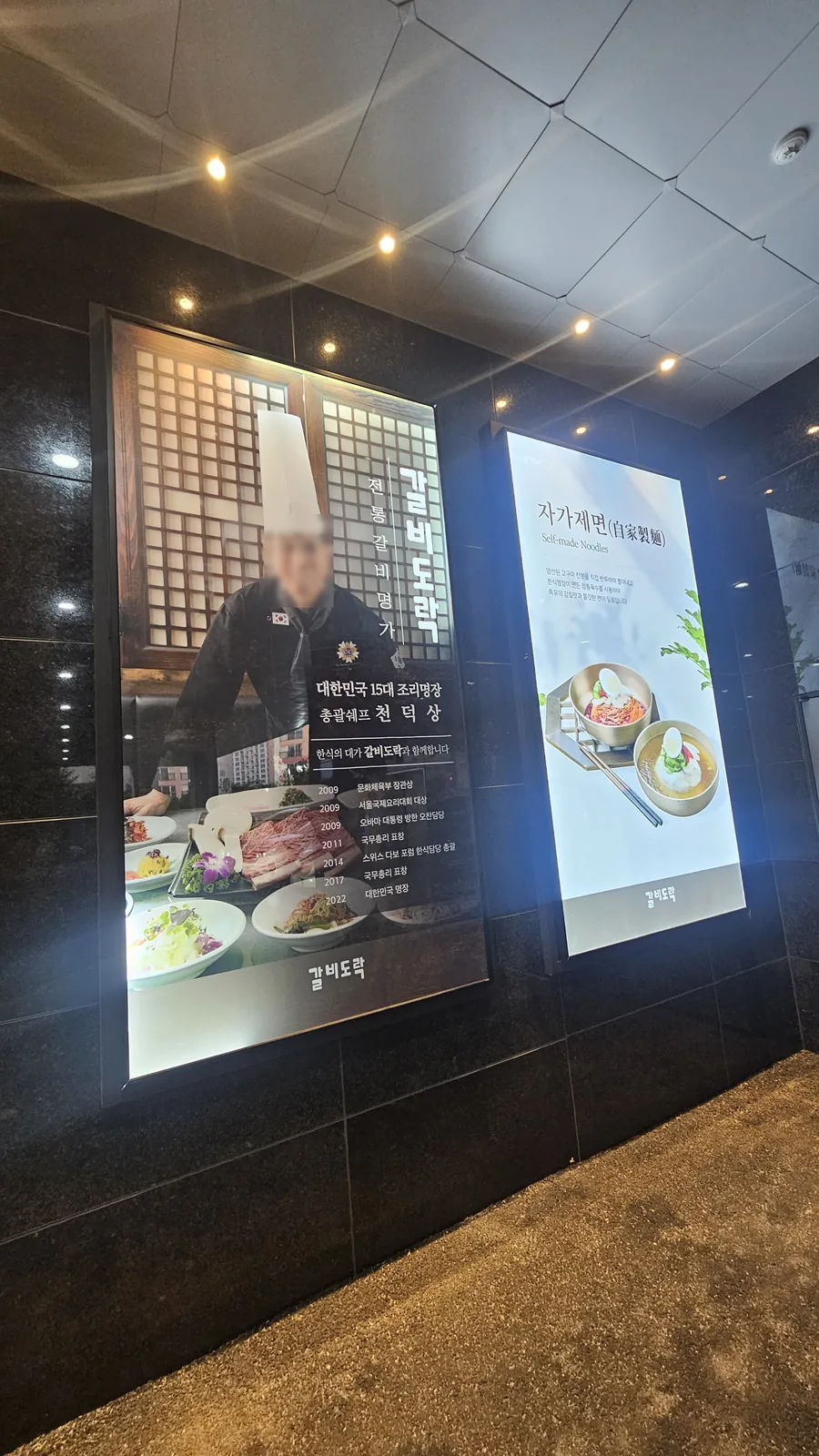
    Galbidorak chef credentials frame — Master Chef of Korea Cheon Deok-sang, 2022 Korean National Meister Award
    Galbidorak chef credentials frame — Master Chef of Korea Cheon Deok-sang, 2022 Korean National Meister Award

    Chef Cheon Deok-sang (천덕상) holds the title of 대한민국 명장 — Korean National Meister. This is a government designation awarded to craftspeople who’ve reached the absolute peak of their field. Not a Michelin star, not a magazine ranking. An official government recognition that says: this person is one of the best in the country at what they do.

    He received his in 2022. The specialty: galbi.

    The certificate is framed and mounted near the entrance. It’s not subtle. But it’s not bragging either — it’s just a fact about who’s running the kitchen.

    Getting to Guro

    Guro (구로구) is in southwestern Seoul. Not on most tourist itineraries — no palaces, no night markets, no famous shopping strips. It’s a real Seoul neighborhood where actual Seoulites live and work.

    By subway: Line 1 (blue) — Guro Station, or Line 7 (dark olive) — Guro Digital Complex Station. From central Seoul (City Hall, Myeongdong), it’s about 25–35 minutes. From either station, check Naver Maps or Google Maps for the exact walk to the restaurant.

    From Incheon Airport: About 50–60 minutes total via AREX to Seoul Station, then Line 1 south. Not a quick detour, but a workable dinner destination if you’re staying nearby.

    Parking: Large covered lot on-site. If you’re coming by taxi or rented car, this is easy.
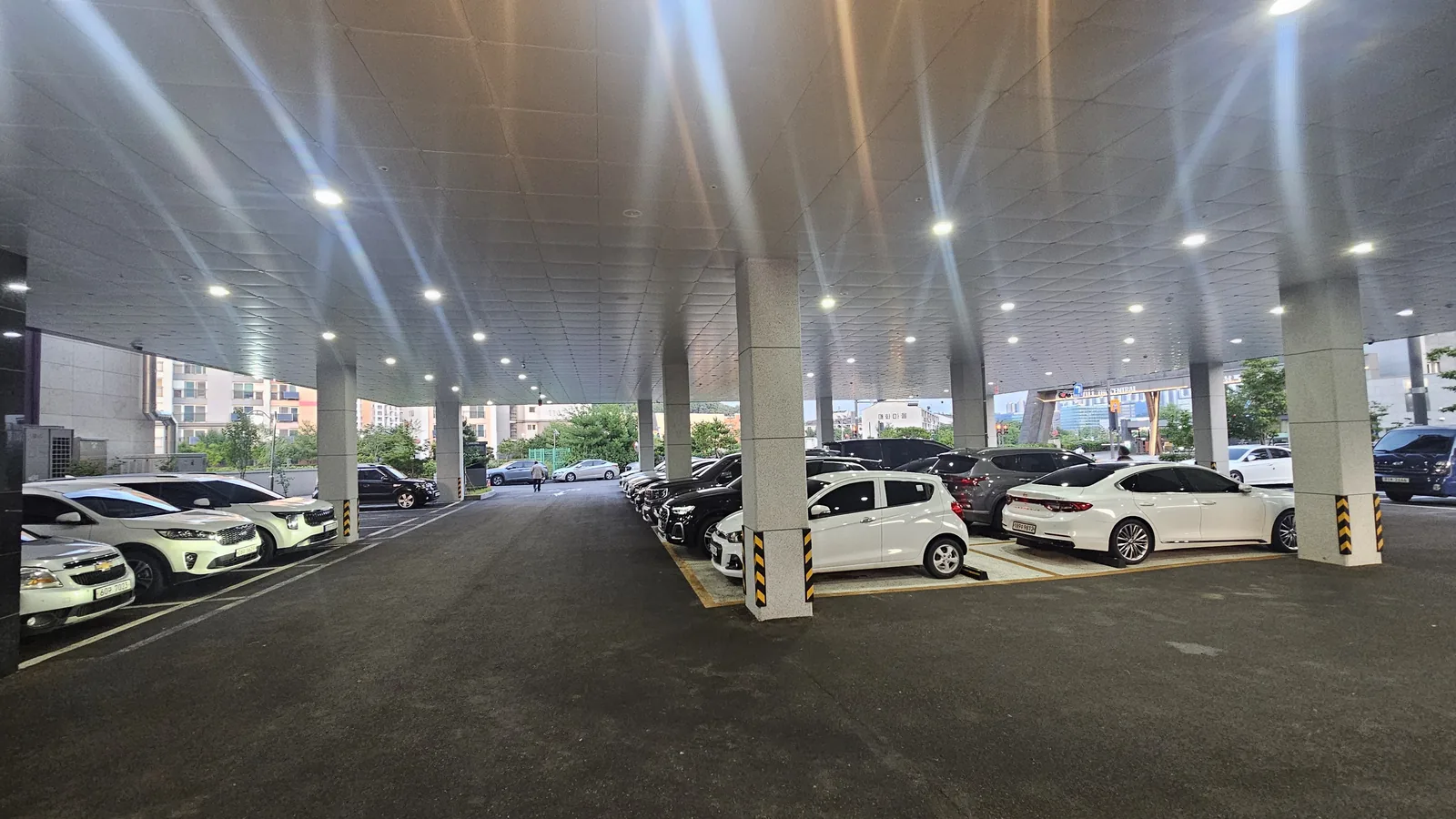
    Galbidorak Guro large covered parking lot with cars parked during evening hours
    Galbidorak Guro large covered parking lot with cars parked during evening hours
    Galbidorak restaurant entrance at night — signage for house-made cold noodles and Master Chef credentials
    Galbidorak restaurant entrance at night — signage for house-made cold noodles and Master Chef credentials

    The Space

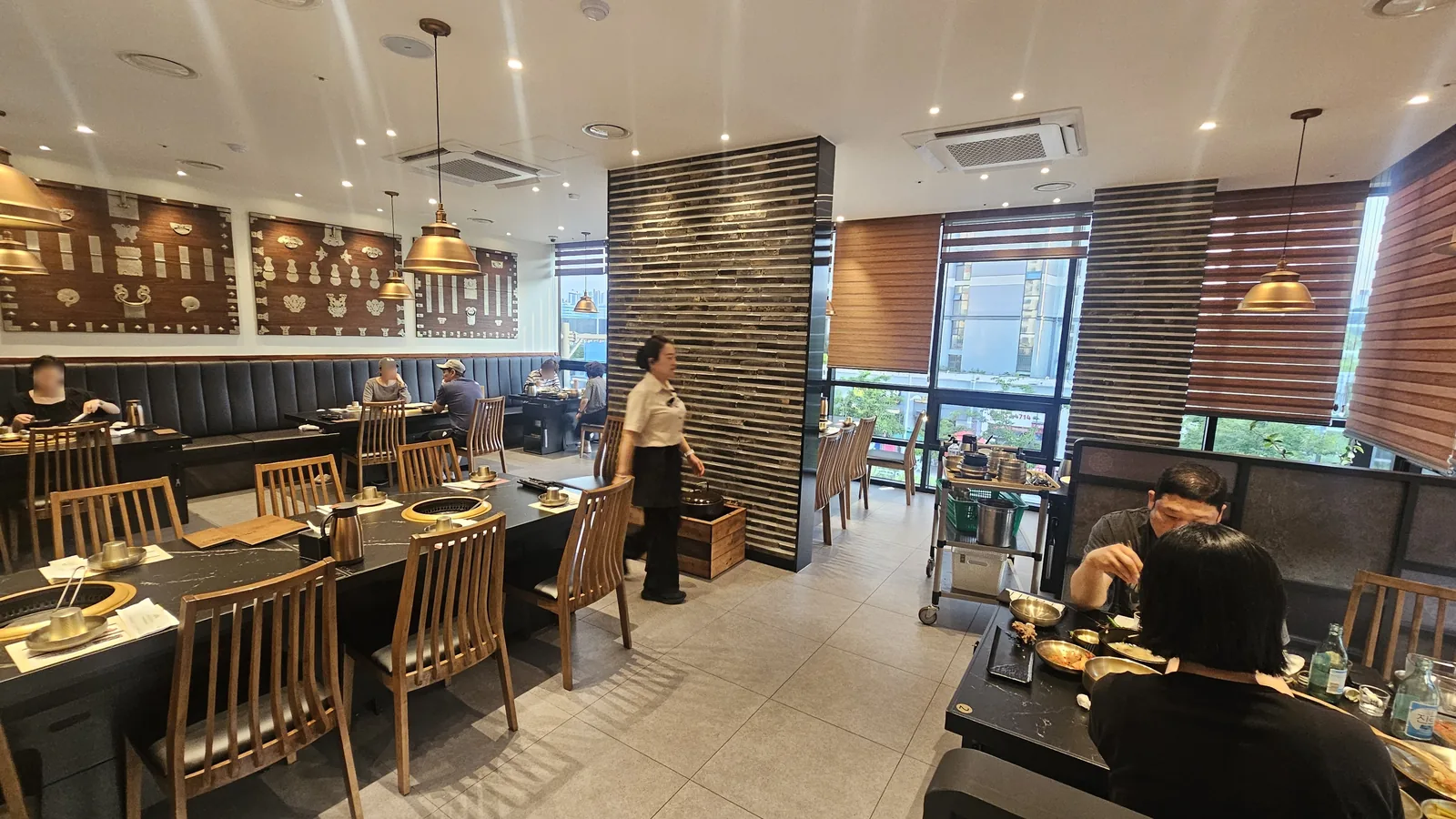
    Big restaurant. Genuinely polished interior — wooden panel walls, brass pendant lights, marble-topped tables, charcoal grill recessed into the center of each table. The overall feel is somewhere between an upscale steakhouse and a traditional Korean dining room. Considered, not flashy.

    Staff move efficiently. At this price point, they should.
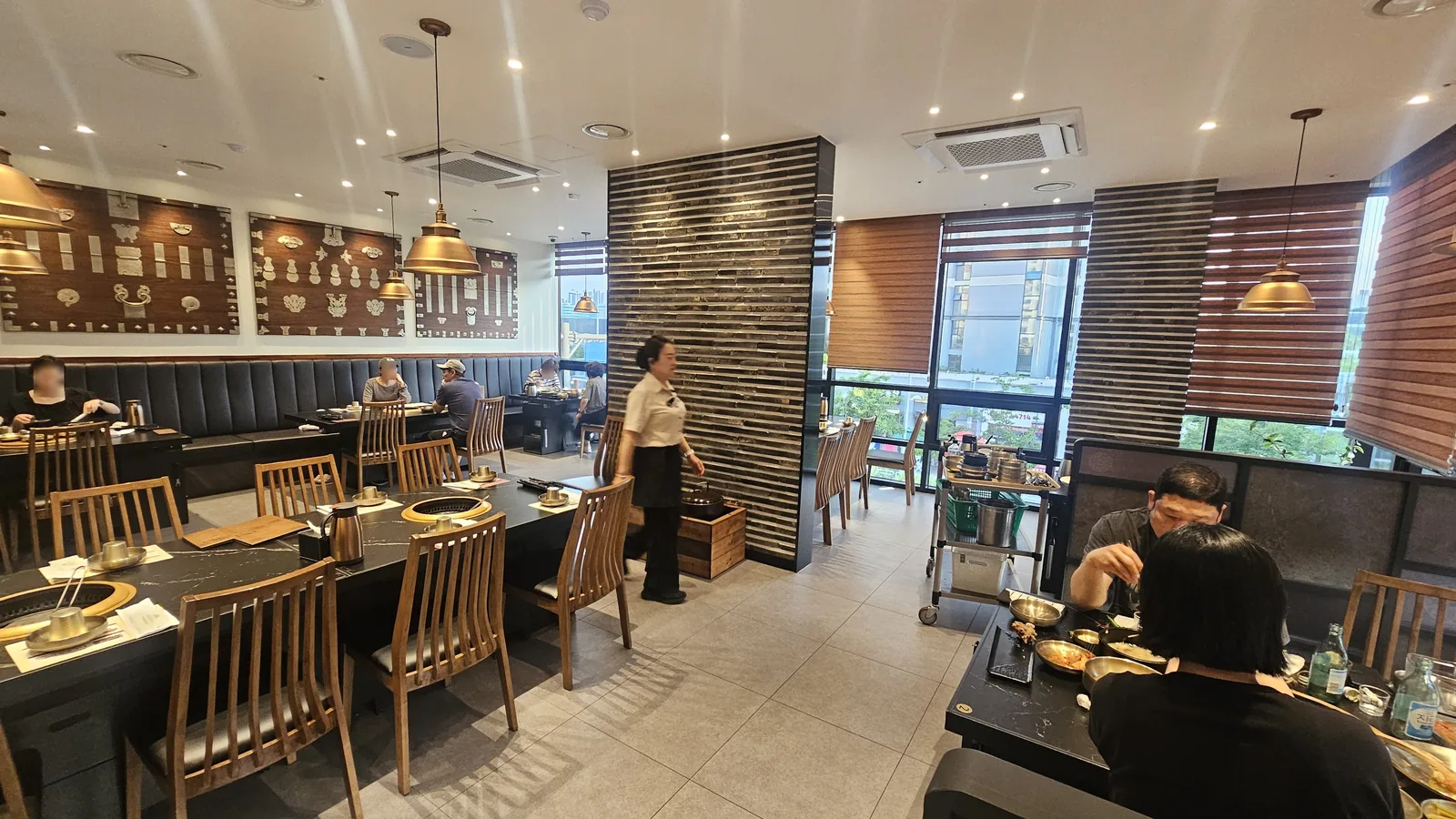
    Elegant interior of Galbidorak Guro with wooden panels, brass pendant lights, and charcoal grill tables
    Elegant interior of Galbidorak Guro with wooden panels, brass pendant lights, and charcoal grill tables

    Banchan Before the Meat

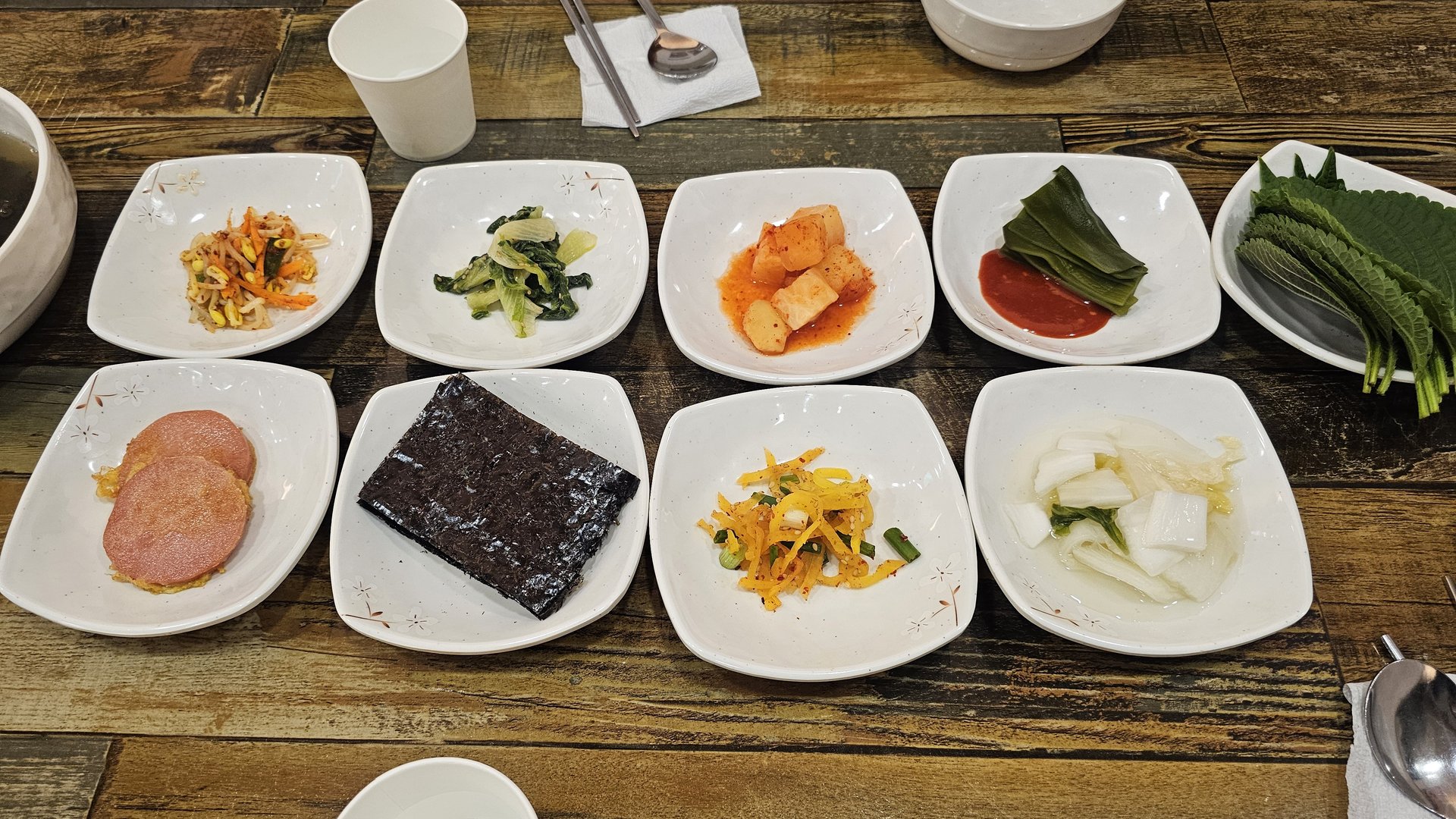
    Korean meals start with banchan — a spread of small side dishes that arrive before you order anything. At Galbidorak, you get a solid lineup: japchae (stir-fried glass noodles with vegetables), seasoned spinach namul, kkakdugi (cubed radish kimchi), candied pumpkin, and a few others. Not the 20-dish extravaganza of some places, but quality across the board.
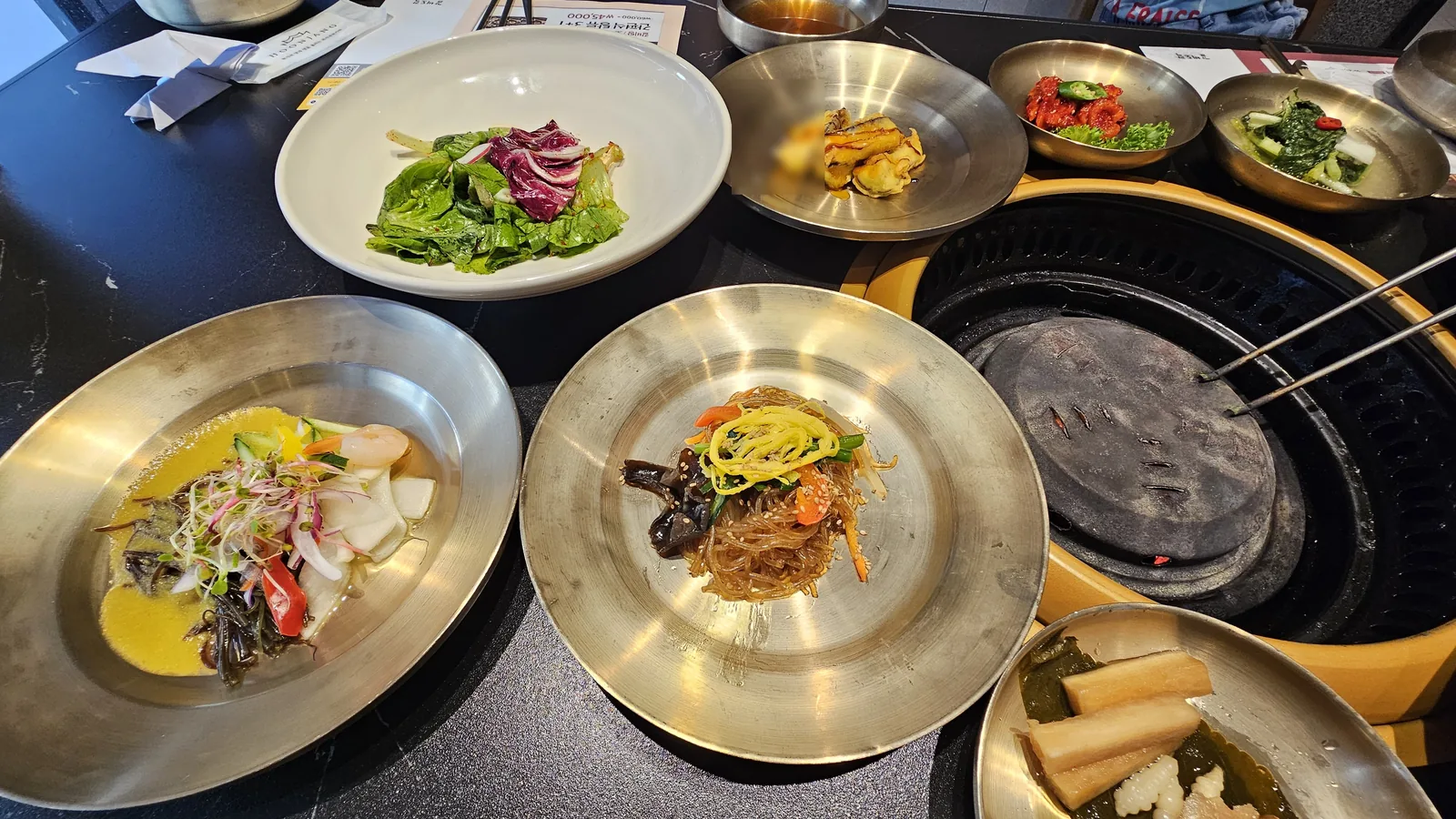
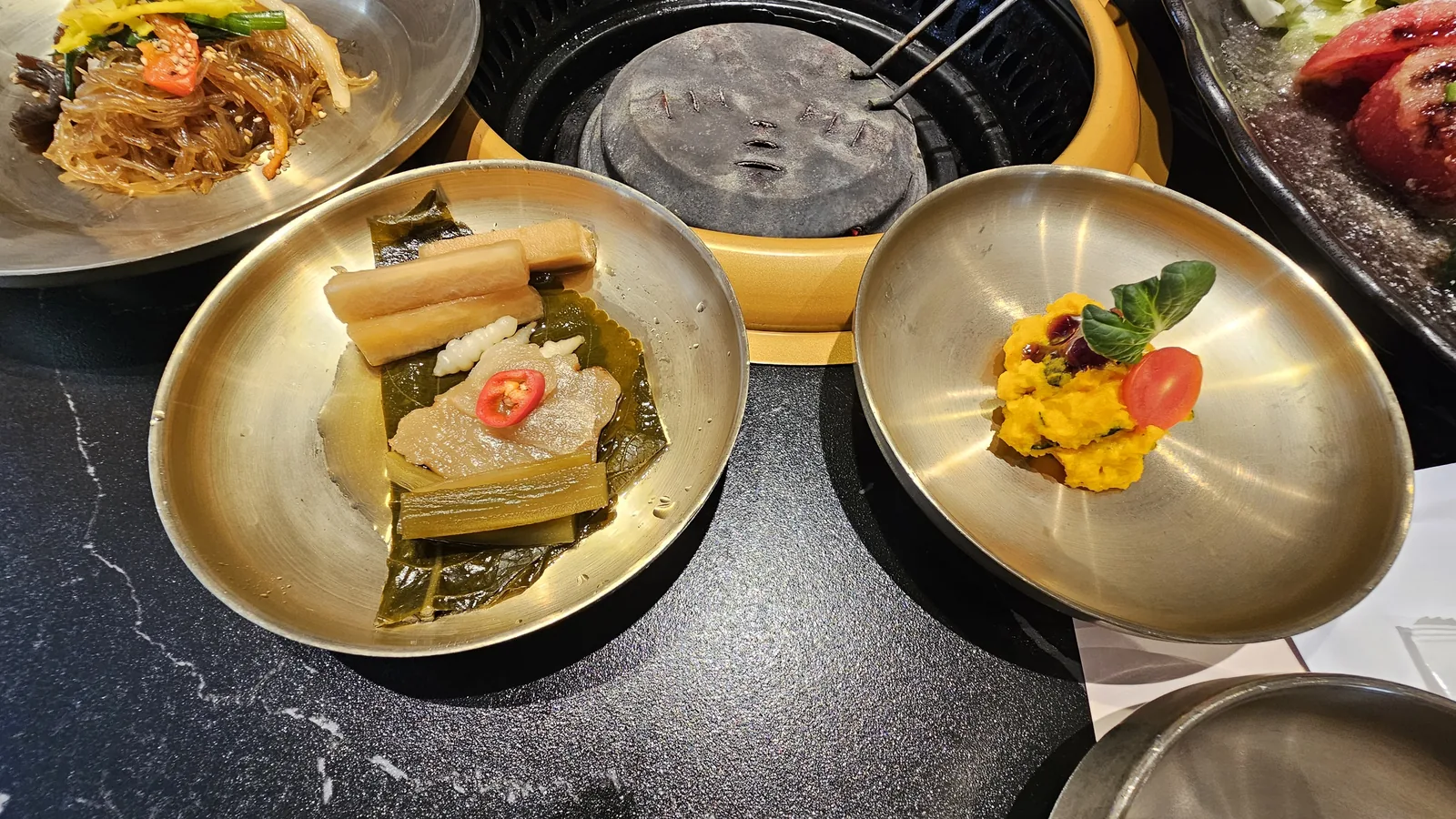
    Banchan spread at Galbidorak — japchae, seasoned greens, kkakdugi, pumpkin salad and charcoal grill table setup
    Banchan spread at Galbidorak — japchae, seasoned greens, kkakdugi, pumpkin salad and charcoal grill table setup
    Galbidorak banchan close-up — stainless steel bowls with dried kelp, radish, tofu kimchi and candied pumpkin
    Galbidorak banchan close-up — stainless steel bowls with dried kelp, radish, tofu kimchi and candied pumpkin
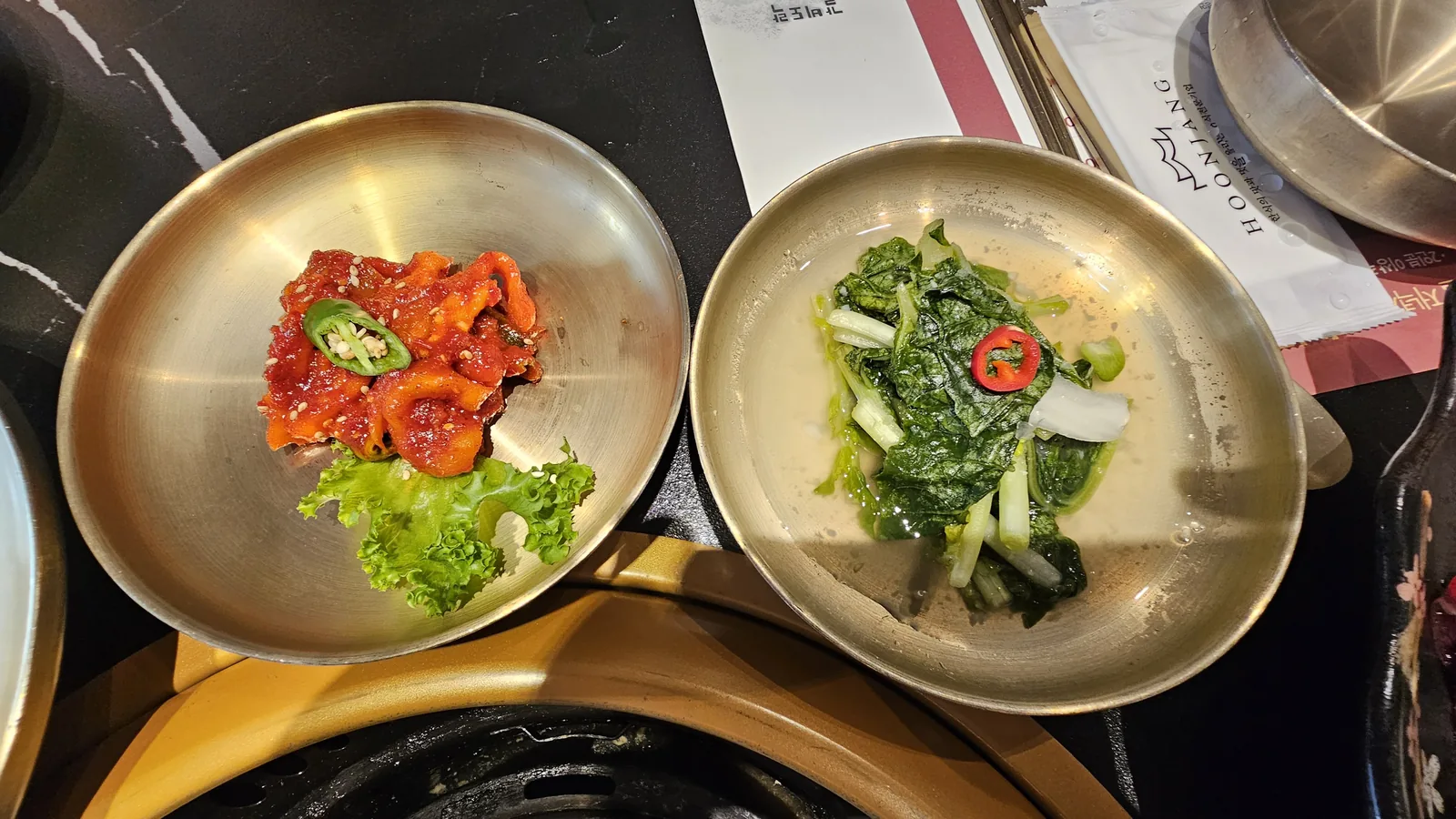
    Galbidorak banchan — kkakdugi radish kimchi and seasoned spinach namul
    Galbidorak banchan — kkakdugi radish kimchi and seasoned spinach namul

    Then there’s the appetizer — and this one’s actually impressive. A leaf-shaped black plate arrives with yukhoe (한우 육회, Korean-style raw beef tartare) and a couple of plump shrimp, dressed with micro greens and edible flowers. It looks like something from a tasting menu. Eats like it too.
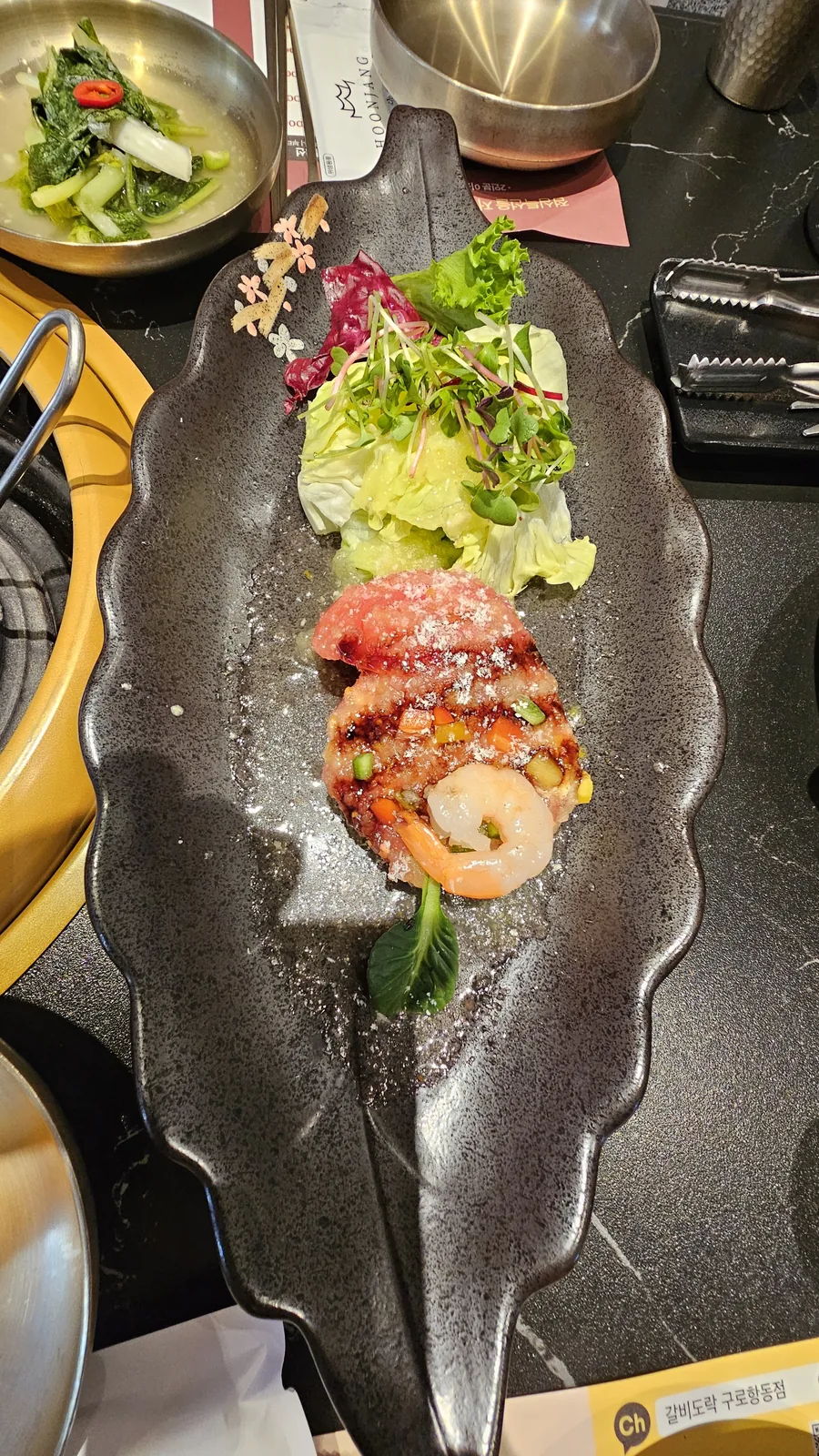
    Galbidorak signature appetizer — beef yukhoe and shrimp on black leaf-shaped plate with micro greens and edible flowers
    Galbidorak signature appetizer — beef yukhoe and shrimp on black leaf-shaped plate with micro greens and edible flowers

    Yukhoe is raw beef. If that’s not for you, it’s not for you. But if you’re open to it, the seasoning here is clean and the beef doesn’t have the off-notes that cheaper versions sometimes do. Worth trying.

    소왕生갈비: The Whole Reason to Come

    소왕生갈비 — transliterated: Sowang Saeng Galbi, meaning King Fresh Short Rib. The 生 (saeng) character means raw or fresh — this is beef that arrives uncooked, on the bone, and gets grilled at your table.

    No marinade. No sauce. Just the beef and the charcoal doing their thing.
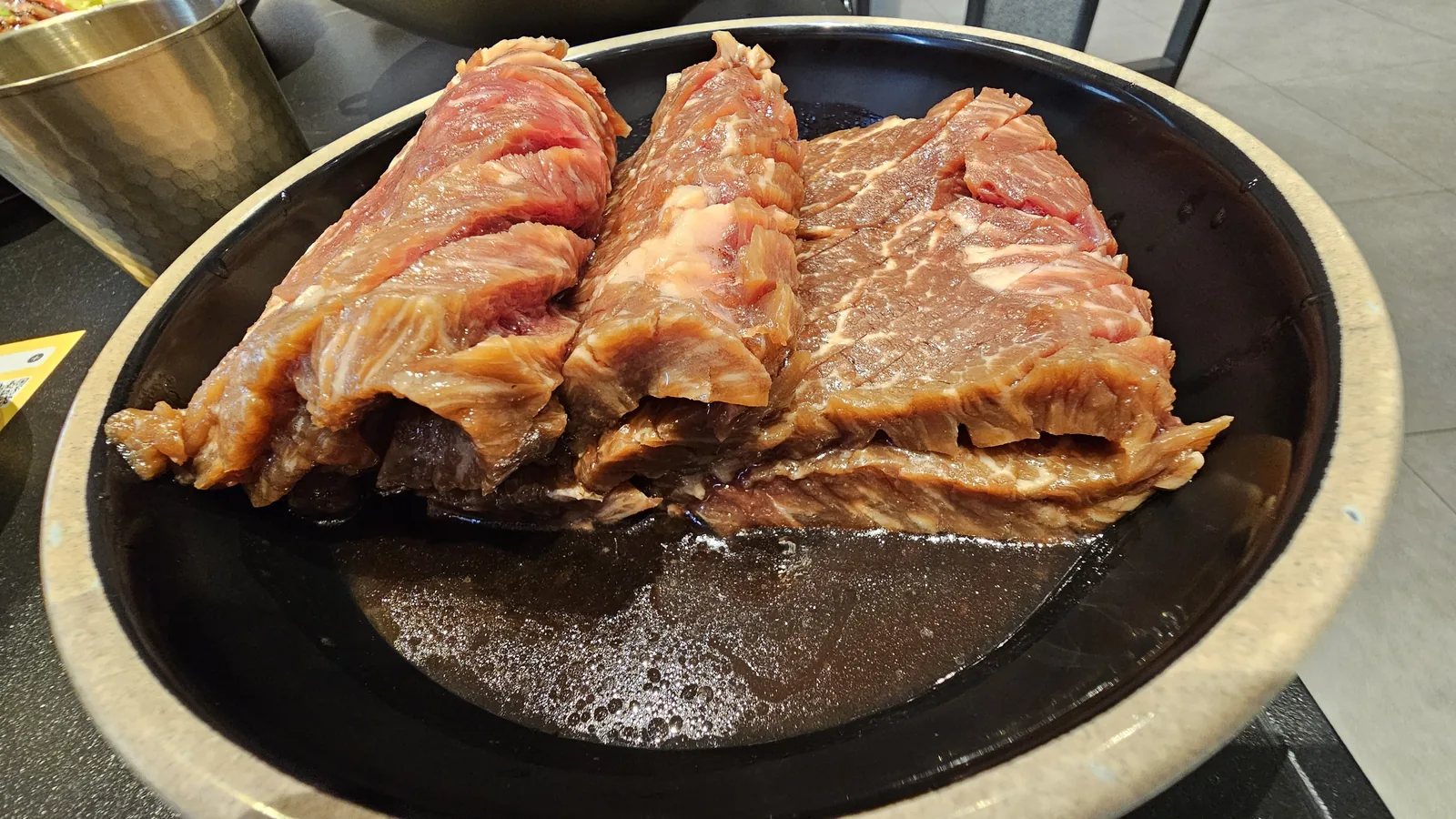
    Raw King beef short ribs in ceramic dish before grilling at Galbidorak Guro
    Raw King beef short ribs in ceramic dish before grilling at Galbidorak Guro

    Staff handle the grill entirely. You don’t touch the tongs. They manage the fire, flip the ribs, and time each section. This is full-service Korean BBQ — a different category from the casual spots where you manage your own grill and hope for the best.
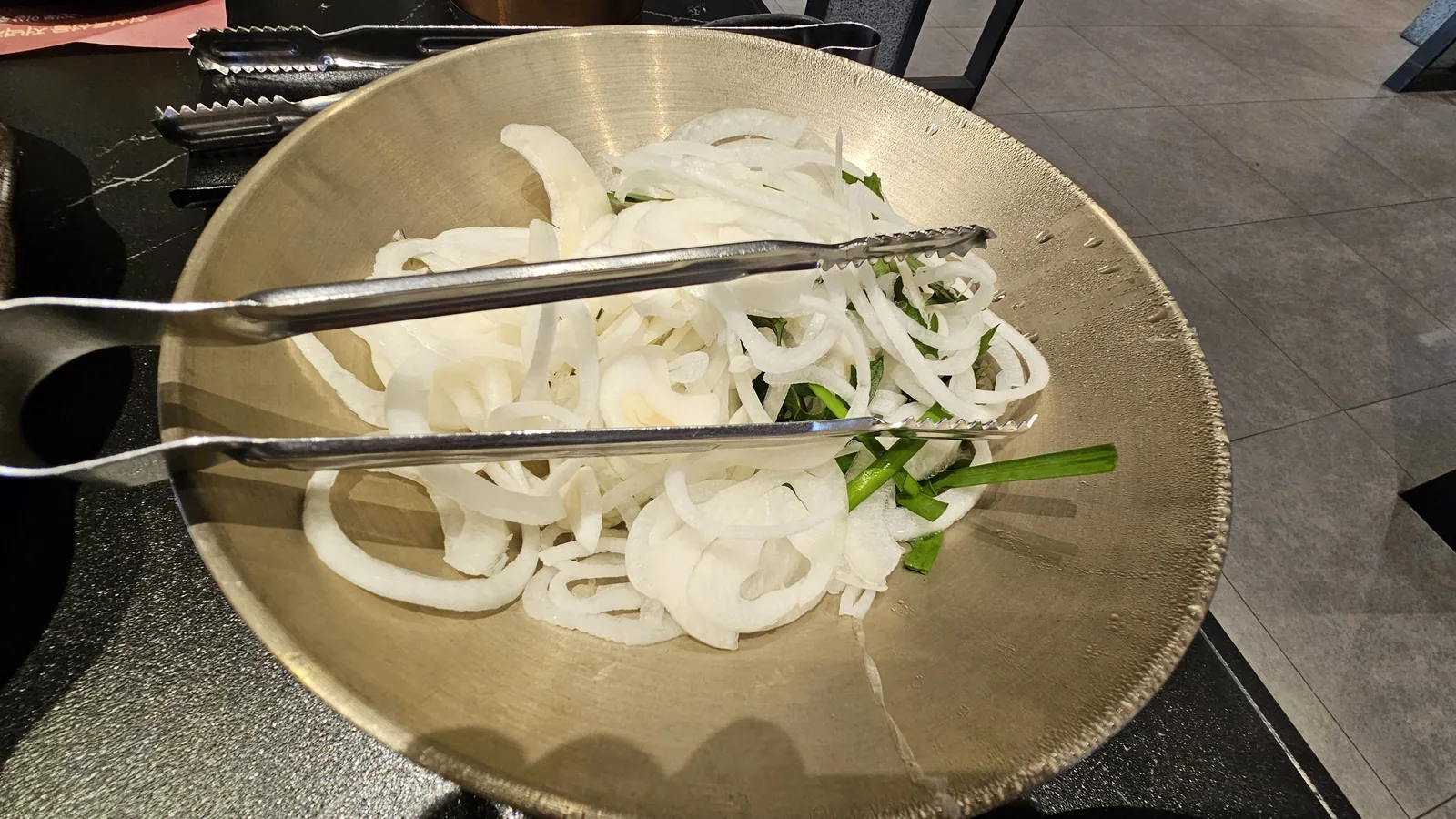
    Sliced onions and scallions in stainless bowl, accompaniment for Korean BBQ at Galbidorak
    Sliced onions and scallions in stainless bowl, accompaniment for Korean BBQ at Galbidorak
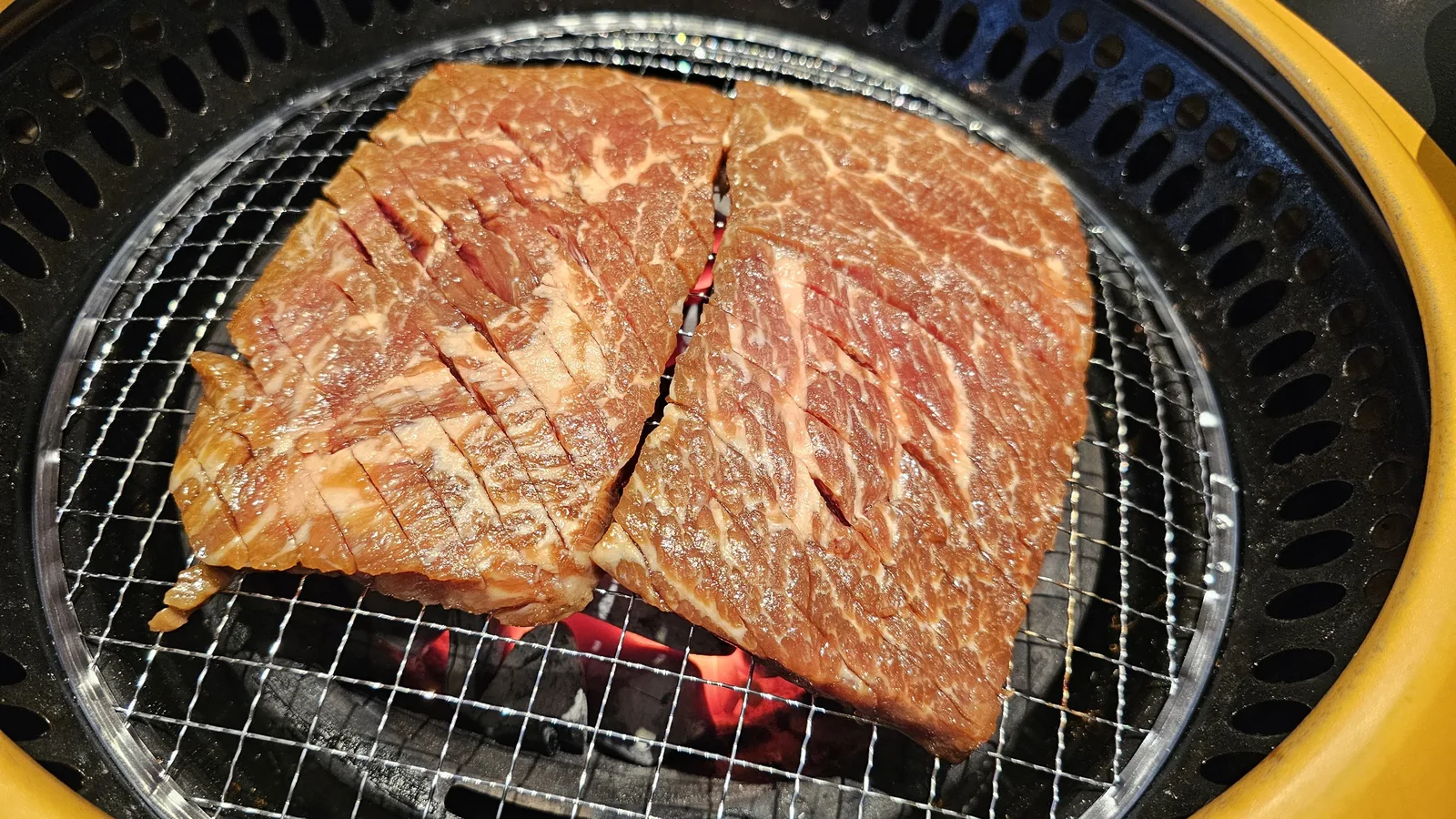
    King beef short ribs grilling over charcoal at Galbidorak, mid-cook stage
    King beef short ribs grilling over charcoal at Galbidorak, mid-cook stage

    The beef: well-marbled, with the natural sweetness you get from quality Korean hanwoo (한우). Charcoal does something gas grills can’t replicate — a faint smokiness, some crust on the fat, without drying the meat out. Cut a piece off the bone and eat it straight. Or wrap it in a sesame leaf with a slice of garlic and a dab of fermented shrimp paste. Either works.

    We ordered 4 servings for 3 people. That’s more galbi than is probably reasonable. Still no regrets.
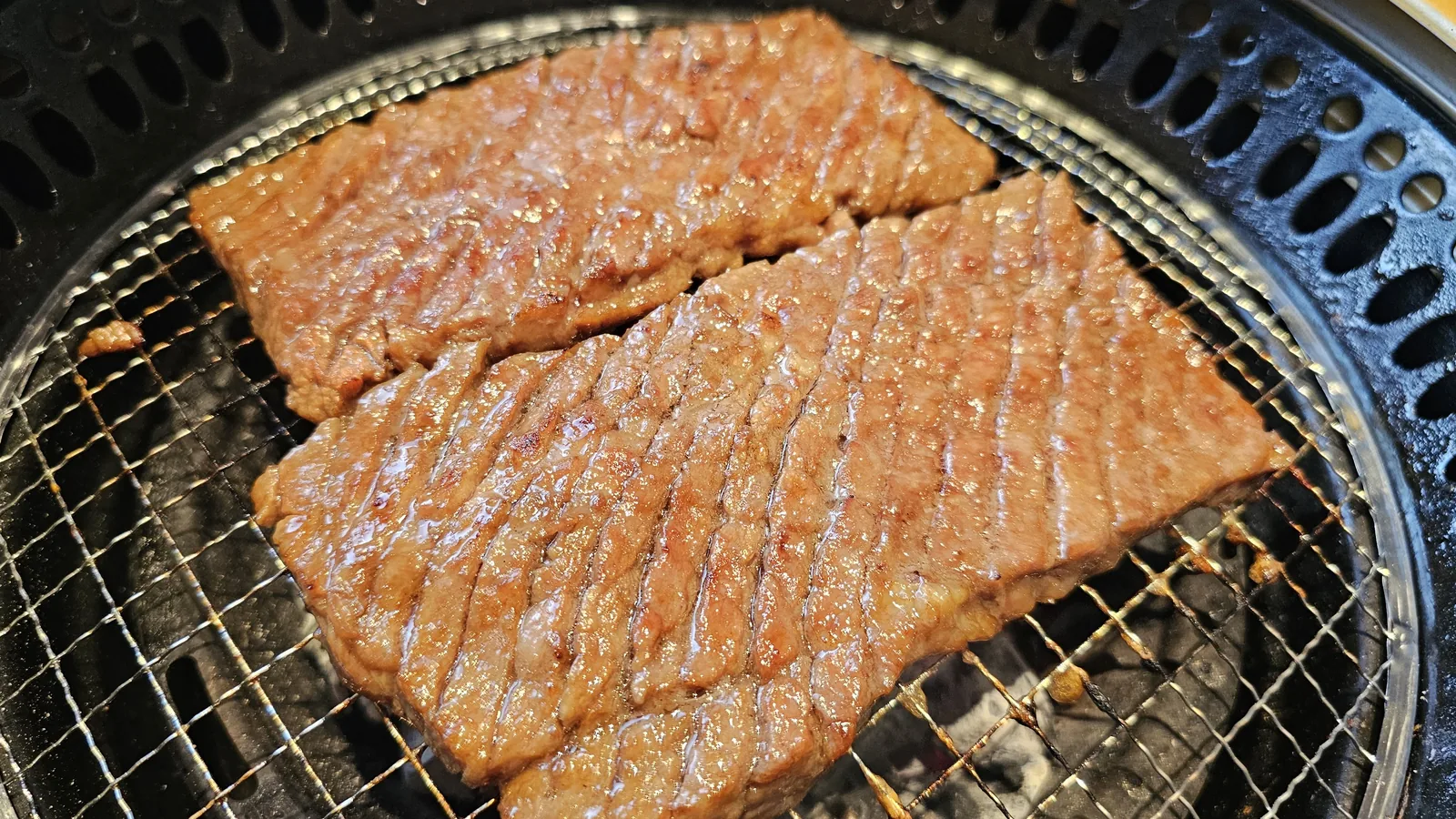
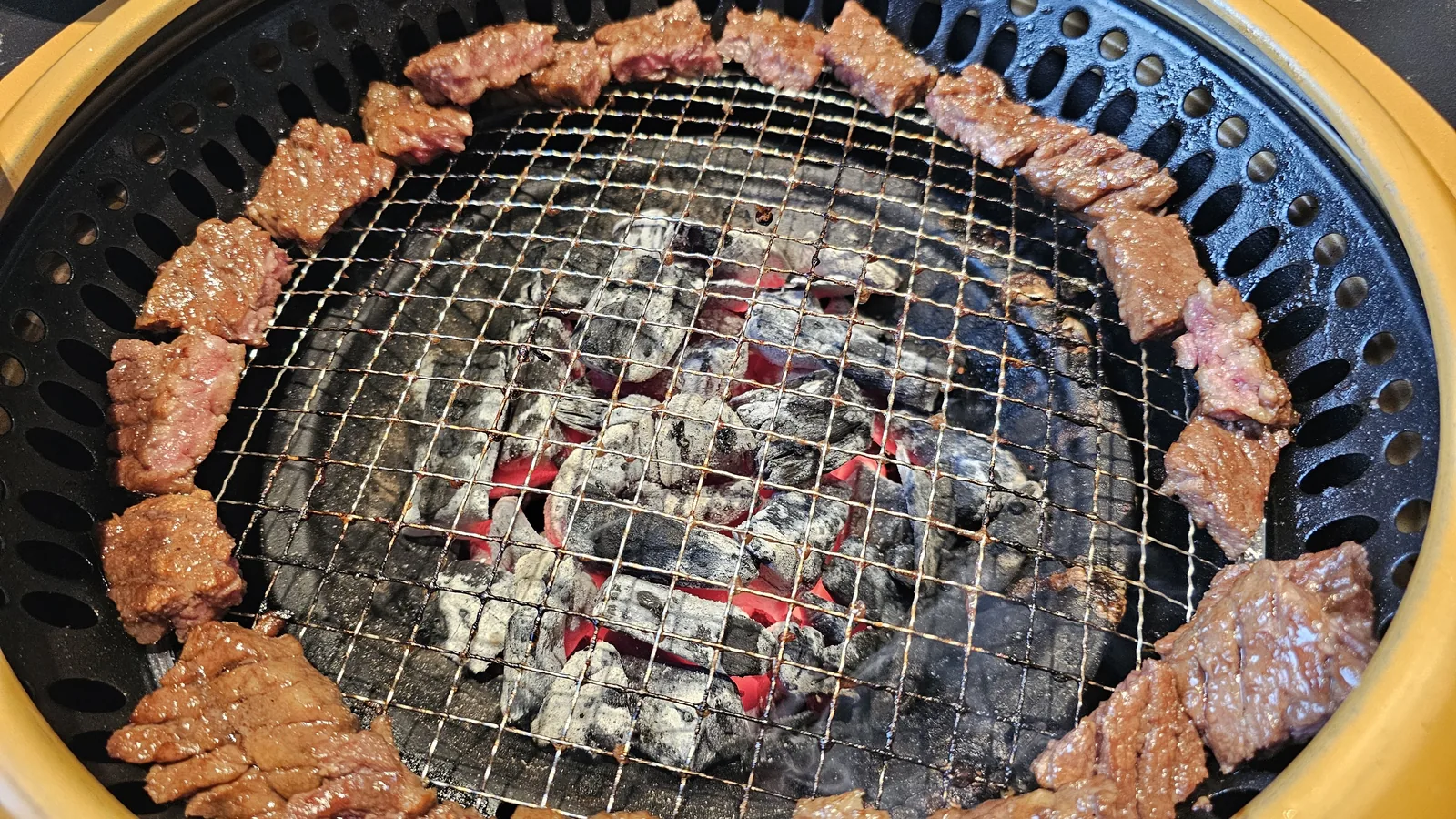
    Marinated beef galbi nicely browned and glazed over charcoal grill at Galbidorak
    Marinated beef galbi nicely browned and glazed over charcoal grill at Galbidorak
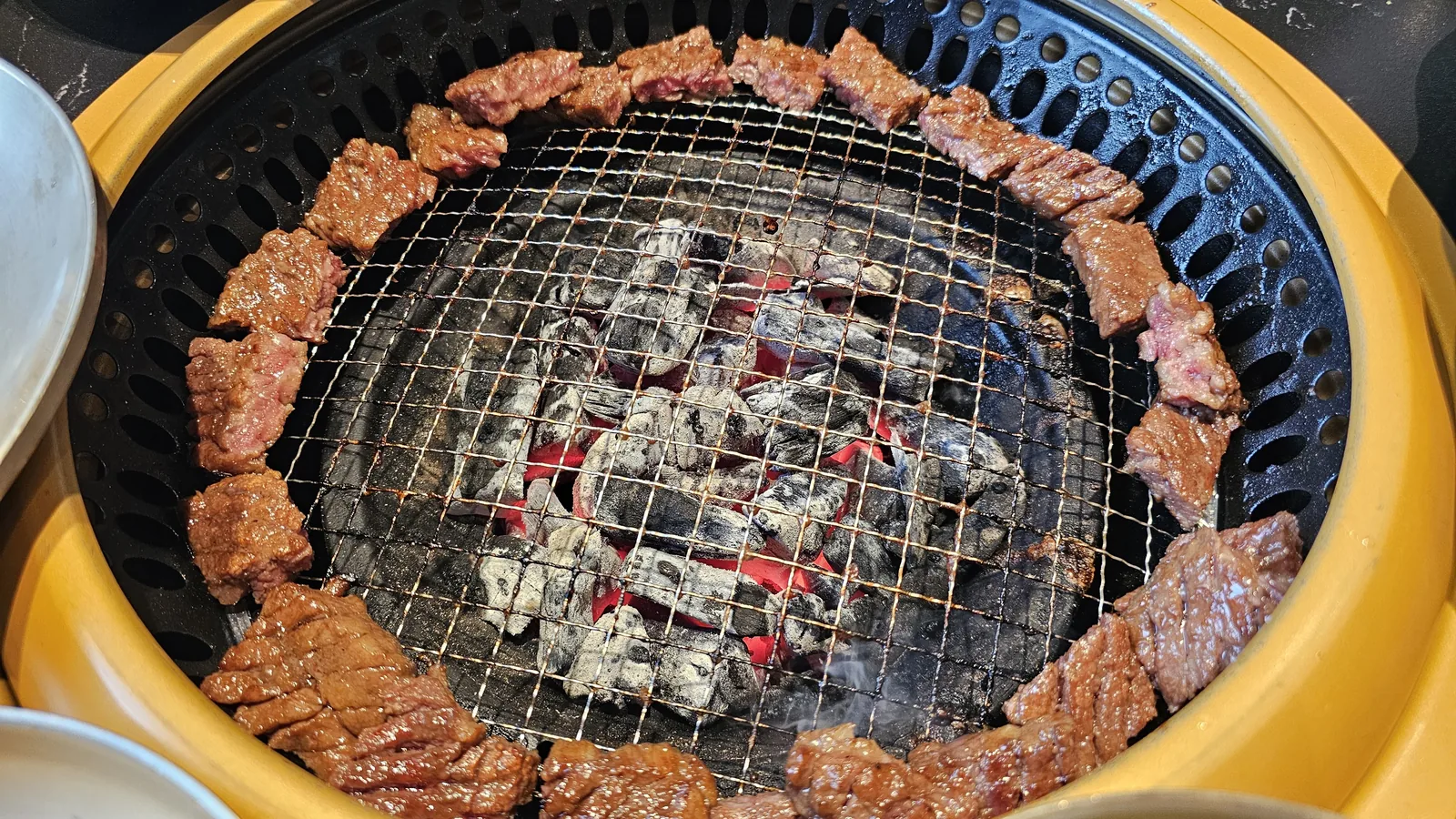
    Small pieces of marinated beef arranged along charcoal grill edge at Galbidorak
    Small pieces of marinated beef arranged along charcoal grill edge at Galbidorak
    Marinated beef pieces on charcoal grill edge at Galbidorak from a different angle
    Marinated beef pieces on charcoal grill edge at Galbidorak from a different angle
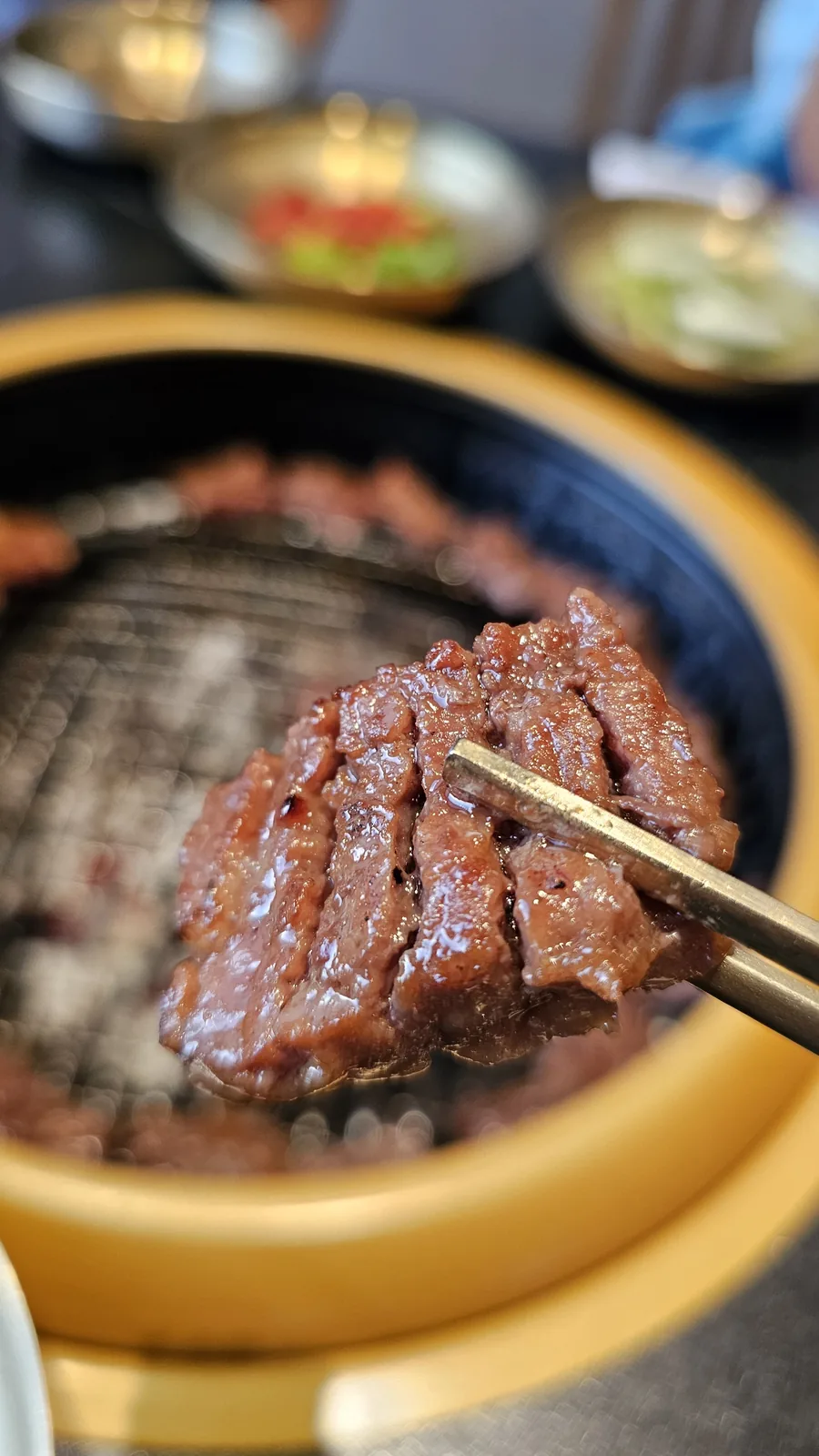
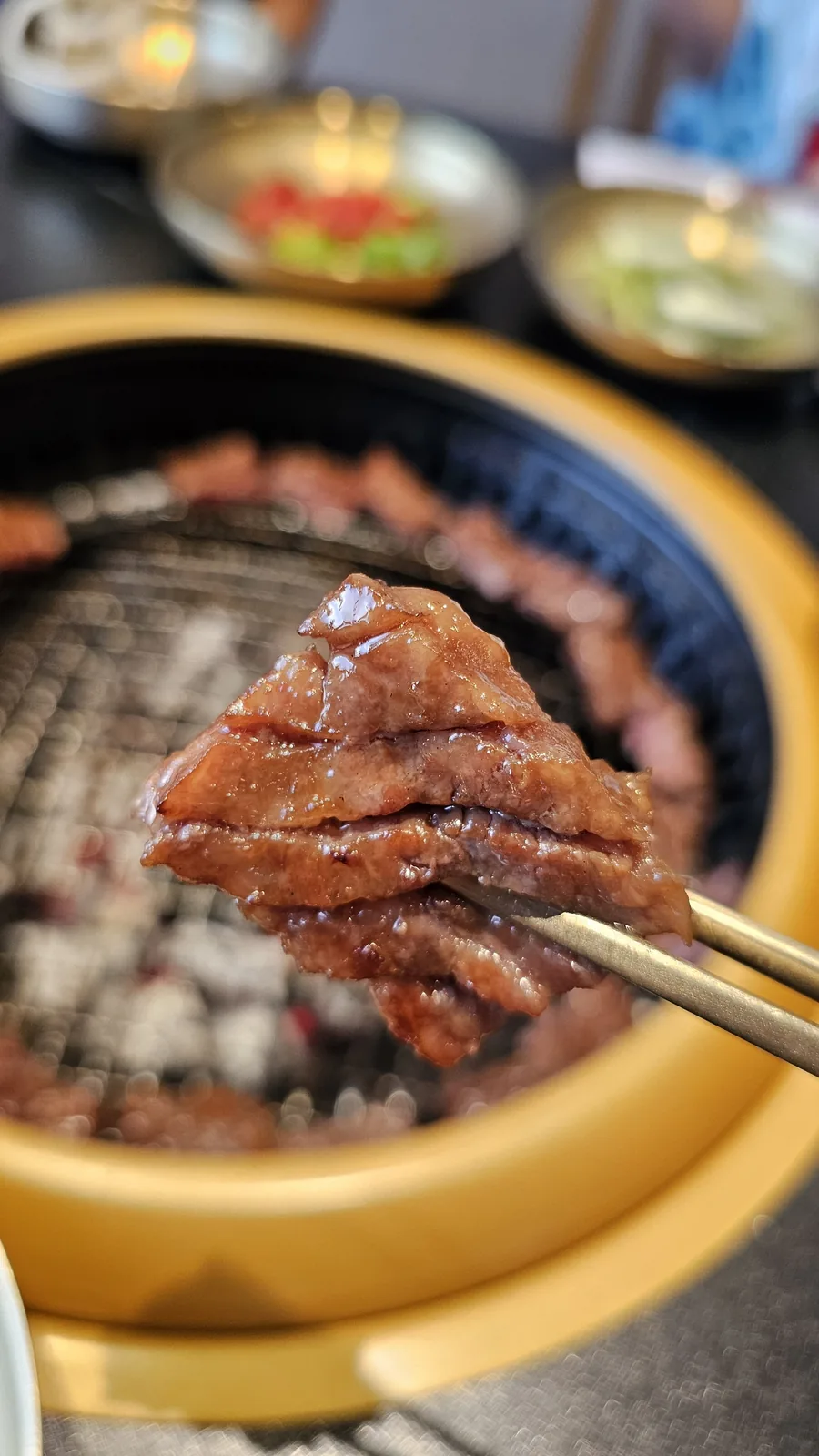
    Brass tongs lifting a piece of well-cooked marinated beef at Galbidorak charcoal BBQ
    Brass tongs lifting a piece of well-cooked marinated beef at Galbidorak charcoal BBQ
    Close-up of juicy cooked marinated beef held by tongs at Galbidorak Korean BBQ
    Close-up of juicy cooked marinated beef held by tongs at Galbidorak Korean BBQ

    Finishing With Nurungji

    After the main event, they bring 누룽지 (nurungji) — a stainless pot of scorched rice water (also called sungnyung). It’s what happens when you add hot water to the rice-crusted bottom of a pot: a slightly toasted, nutty, very mild liquid. Warm, simple, settles everything down.
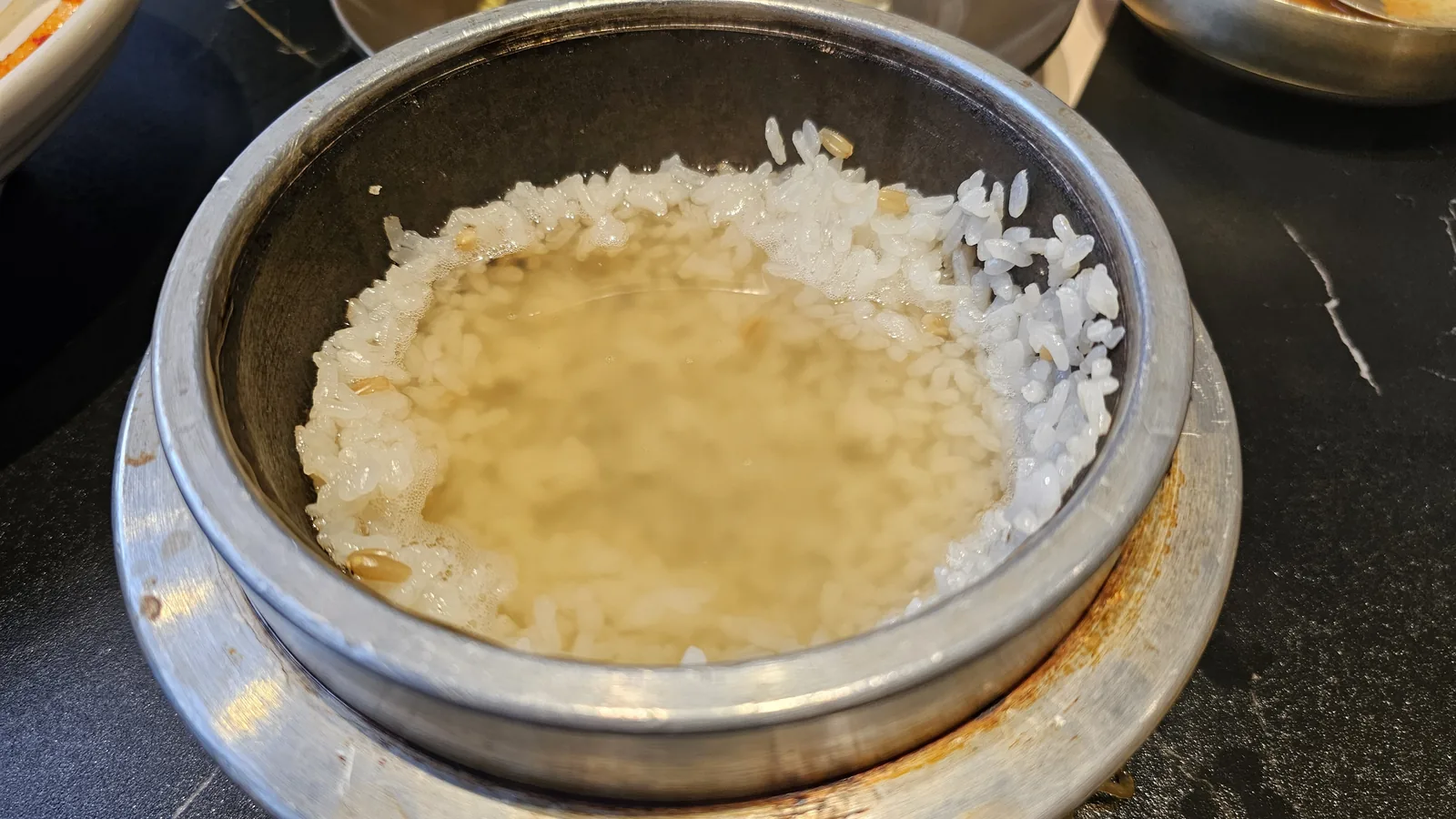
    Nurungji scorched rice water in stainless pot, traditional end-of-meal drink at Galbidorak
    Nurungji scorched rice water in stainless pot, traditional end-of-meal drink at Galbidorak

    If you’ve never had it before: it’s not sweet, it’s not bold. It’s a clean finish. Standard at traditional Korean meals, and a thoughtful touch at a restaurant like this. Just drink it.

    The Event Deal

    Current promotion running during our visit: order galbi, get free frozen beef bulgogi to take home. We received HOONJANG brand frozen bulgogi packs as part of this — vacuum-sealed, ready to cook. A nice bonus, not the reason to make the trip.
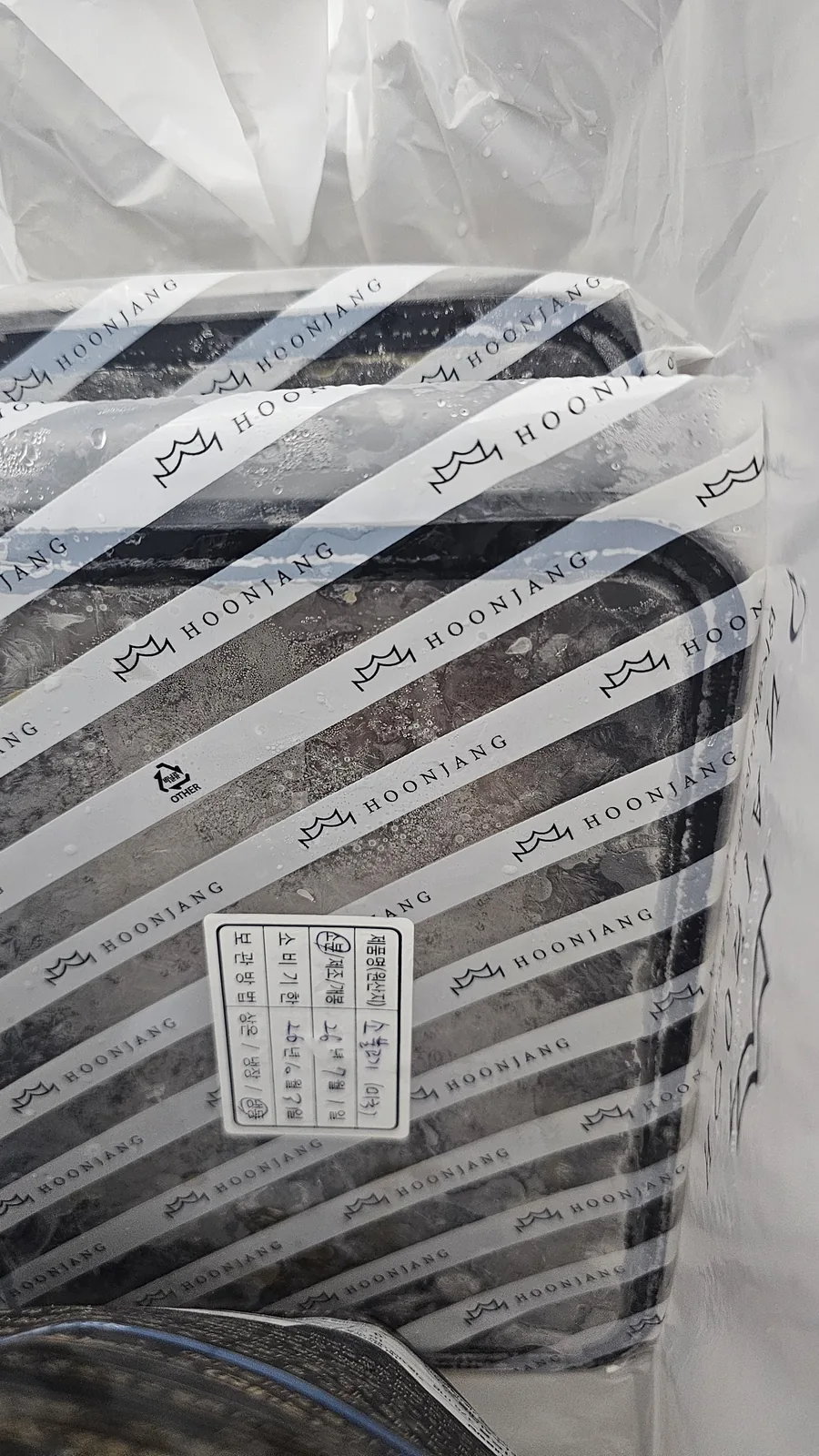
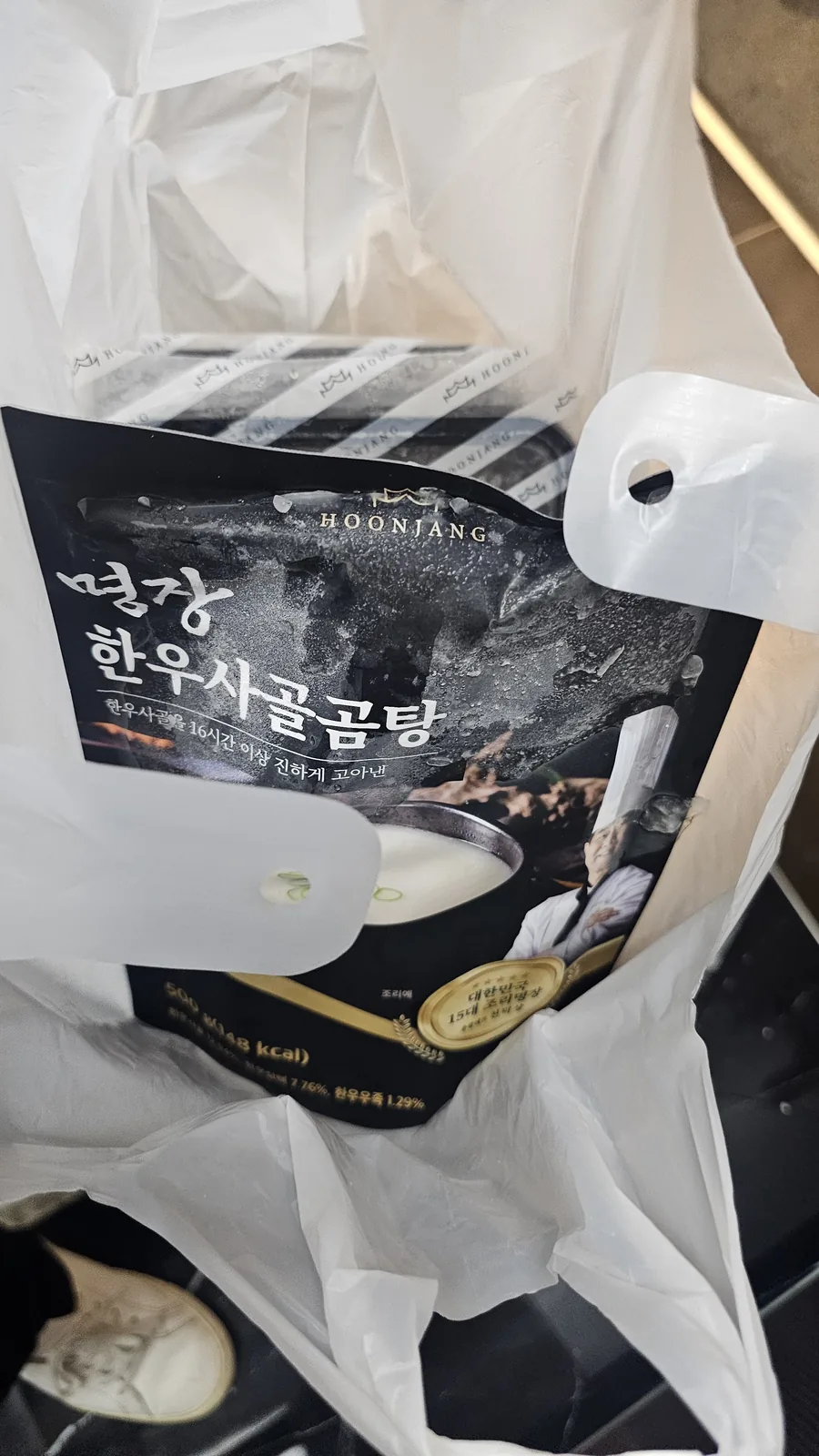
    HOONJANG brand beef bulgogi packaging label — production date July 1, 2026, close-up
    HOONJANG brand beef bulgogi packaging label — production date July 1, 2026, close-up
    HOONJANG instant Korean beef bone broth salgomtang pouch product, packaging opened
    HOONJANG instant Korean beef bone broth salgomtang pouch product, packaging opened

    Check if the promotion is still running when you visit. These things change.

    The In-Store Retail Corner

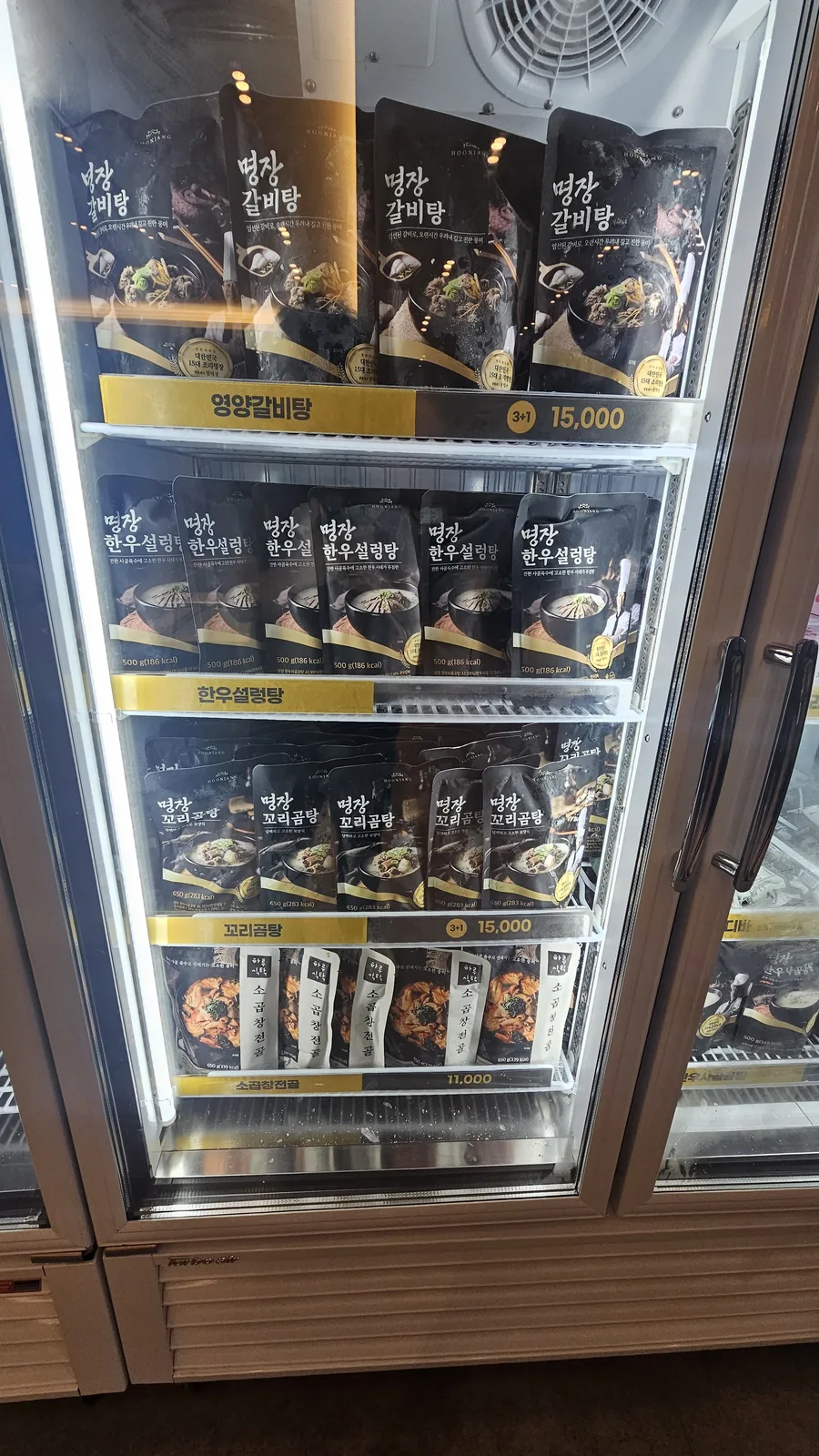
    One section of the restaurant is set up like a small shop: wine fridges, refrigerated marinated meat packs, and frozen ready-to-eat products. Galbitang (short rib soup), seolleongtang (bone broth), kkori gomtang (oxtail soup) — all in pouch form at 15,000 KRW (~$11) each.
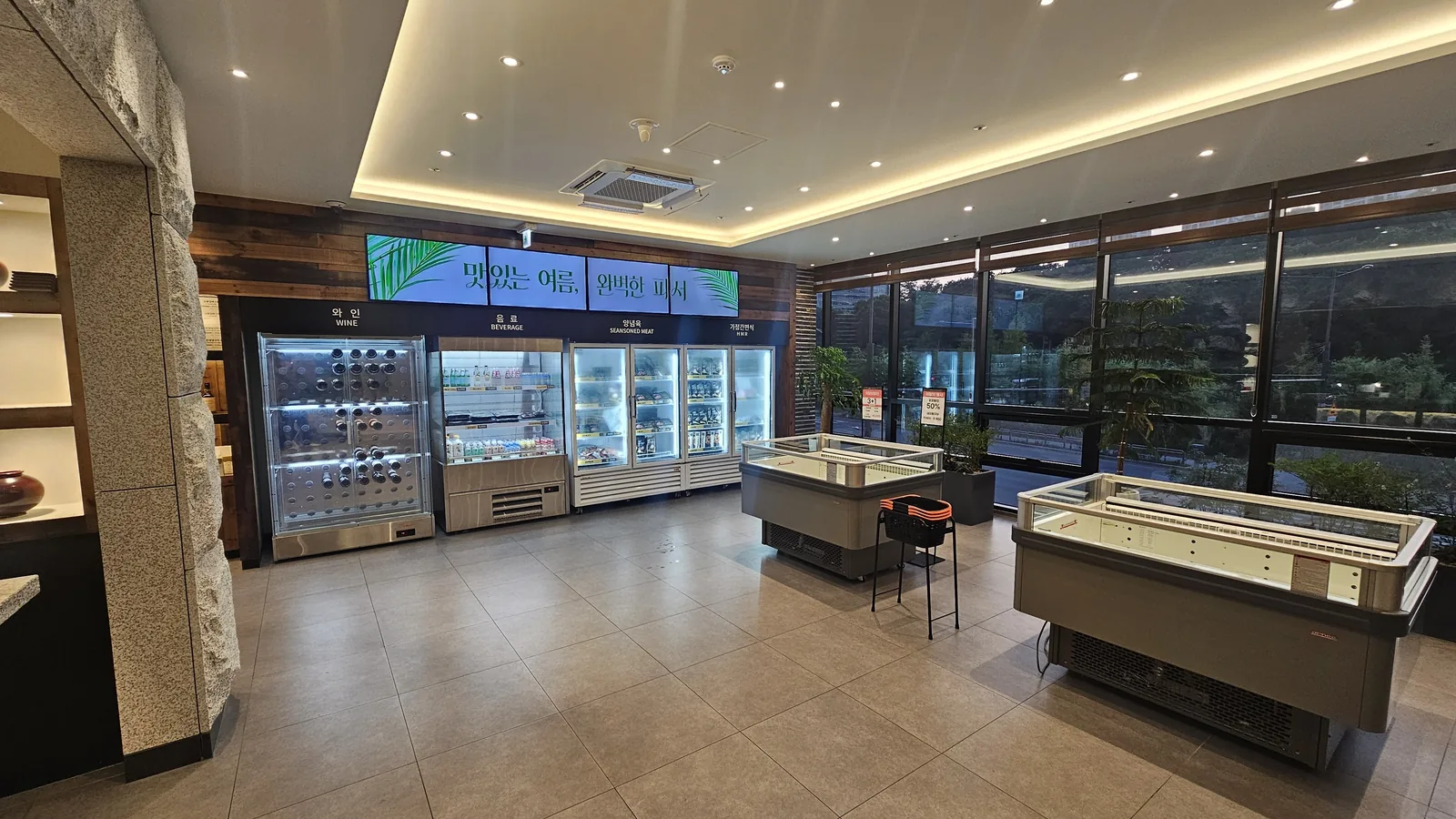
    Galbidorak in-store retail corner with wine fridges, marinated meats and ready-to-cook HMR products
    Galbidorak in-store retail corner with wine fridges, marinated meats and ready-to-cook HMR products
    Galbidorak frozen product display — Byeoljang Galbitang, Han-u Seolleongtang, Han-u Kkori Gomtang pouches 15,000 KRW
    Galbidorak frozen product display — Byeoljang Galbitang, Han-u Seolleongtang, Han-u Kkori Gomtang pouches 15,000 KRW
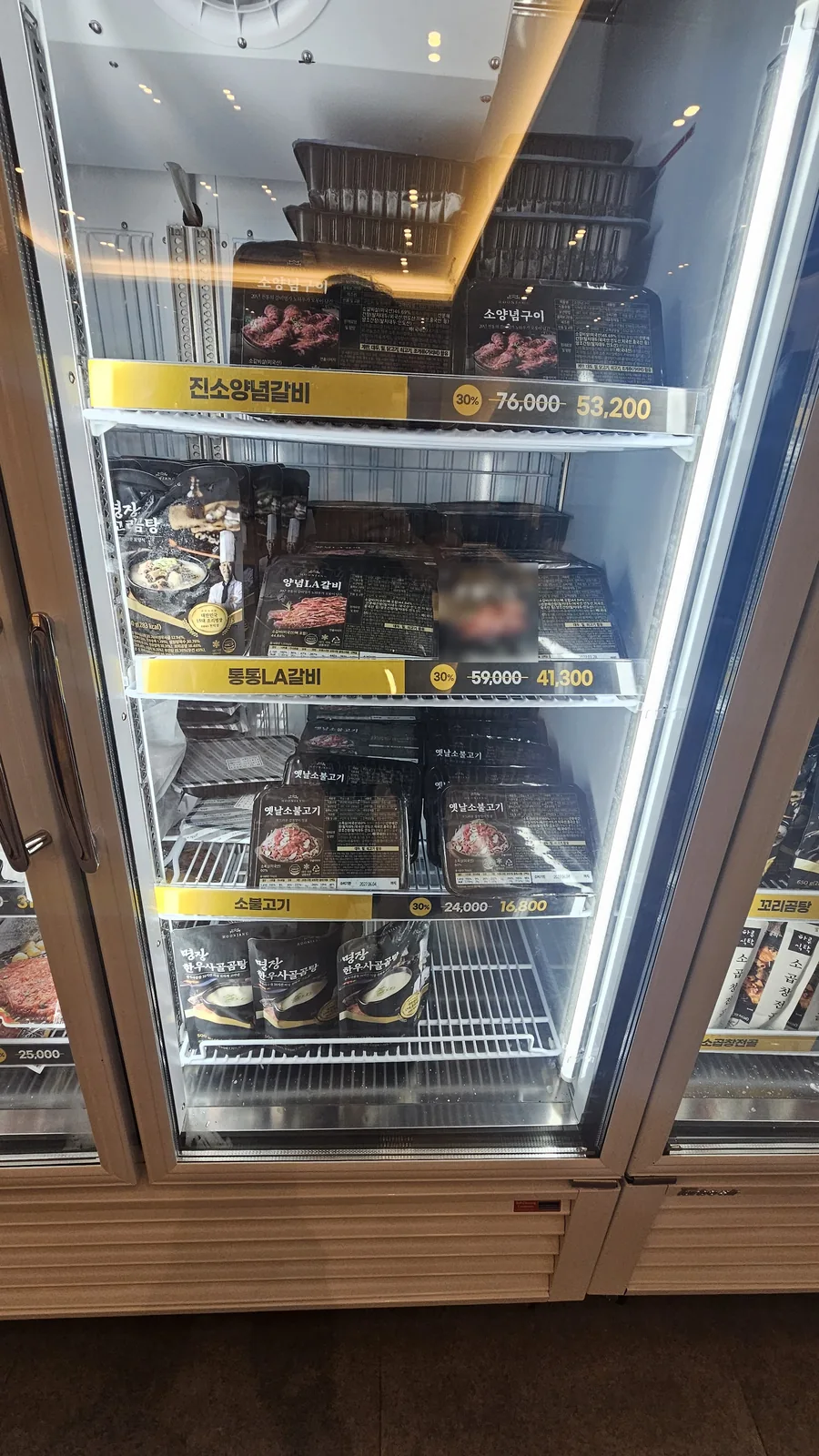
    Galbidorak frozen marinated meat display — Jinso Marinated Galbi, LA Galbi and Seasoned Beef Bulgogi with 30% discount
    Galbidorak frozen marinated meat display — Jinso Marinated Galbi, LA Galbi and Seasoned Beef Bulgogi with 30% discount

    Marinated galbi and LA galbi packs were on 30% discount at the time. If you’re staying somewhere with a kitchen, the take-home galbi is worth a look on your way out.

    The Menu (What Else Is There)

    The menu covers a lot of ground:

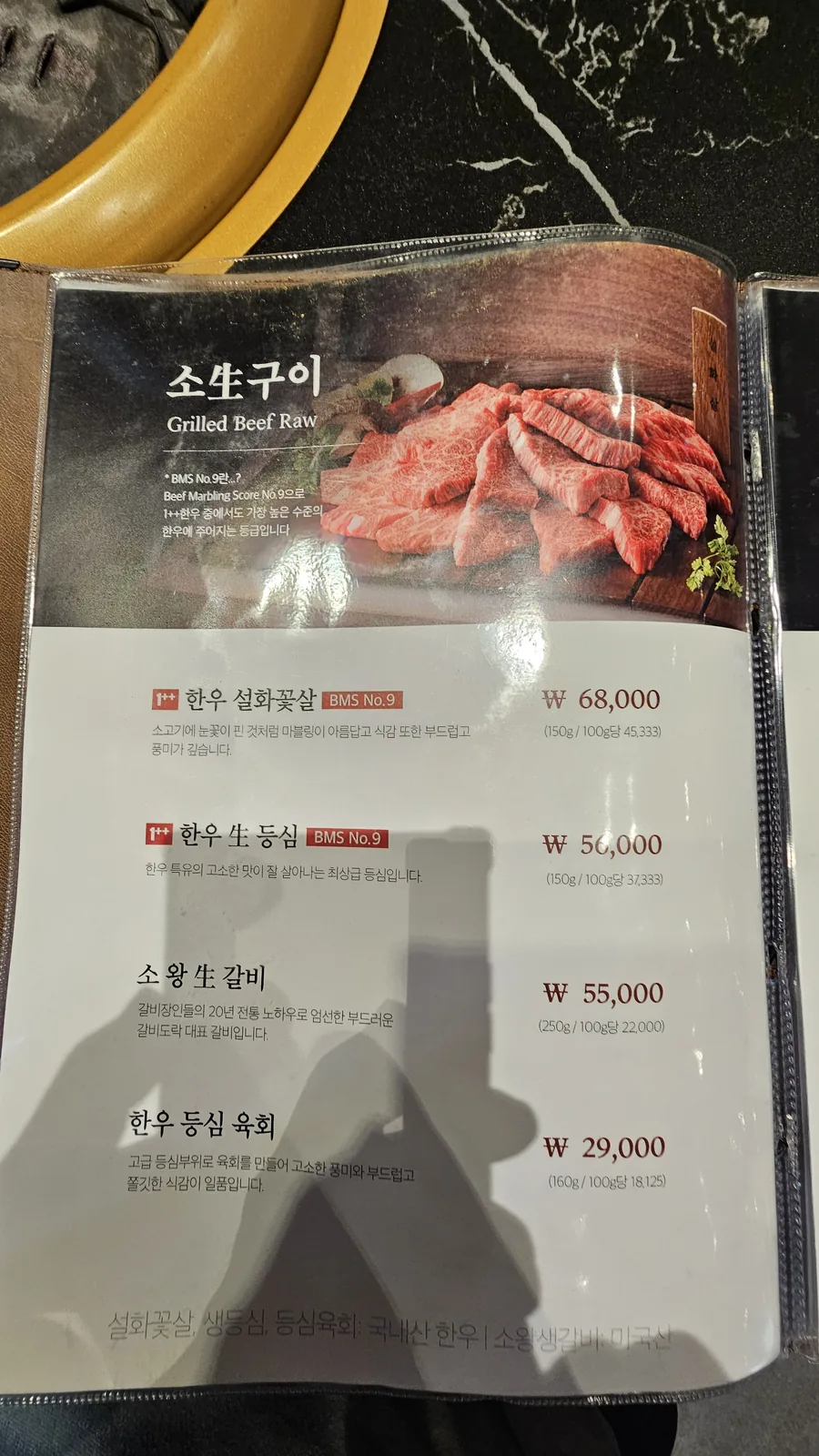
    – 한우 설화꽃살 (Flower cut sirloin): 68,000 KRW/serving (~$50)

    – 한우 生등심 (Fresh sirloin): 56,000 KRW/serving (~$41)

    – 소왕生갈비 (King fresh short rib): 55,000 KRW/serving (~$41)

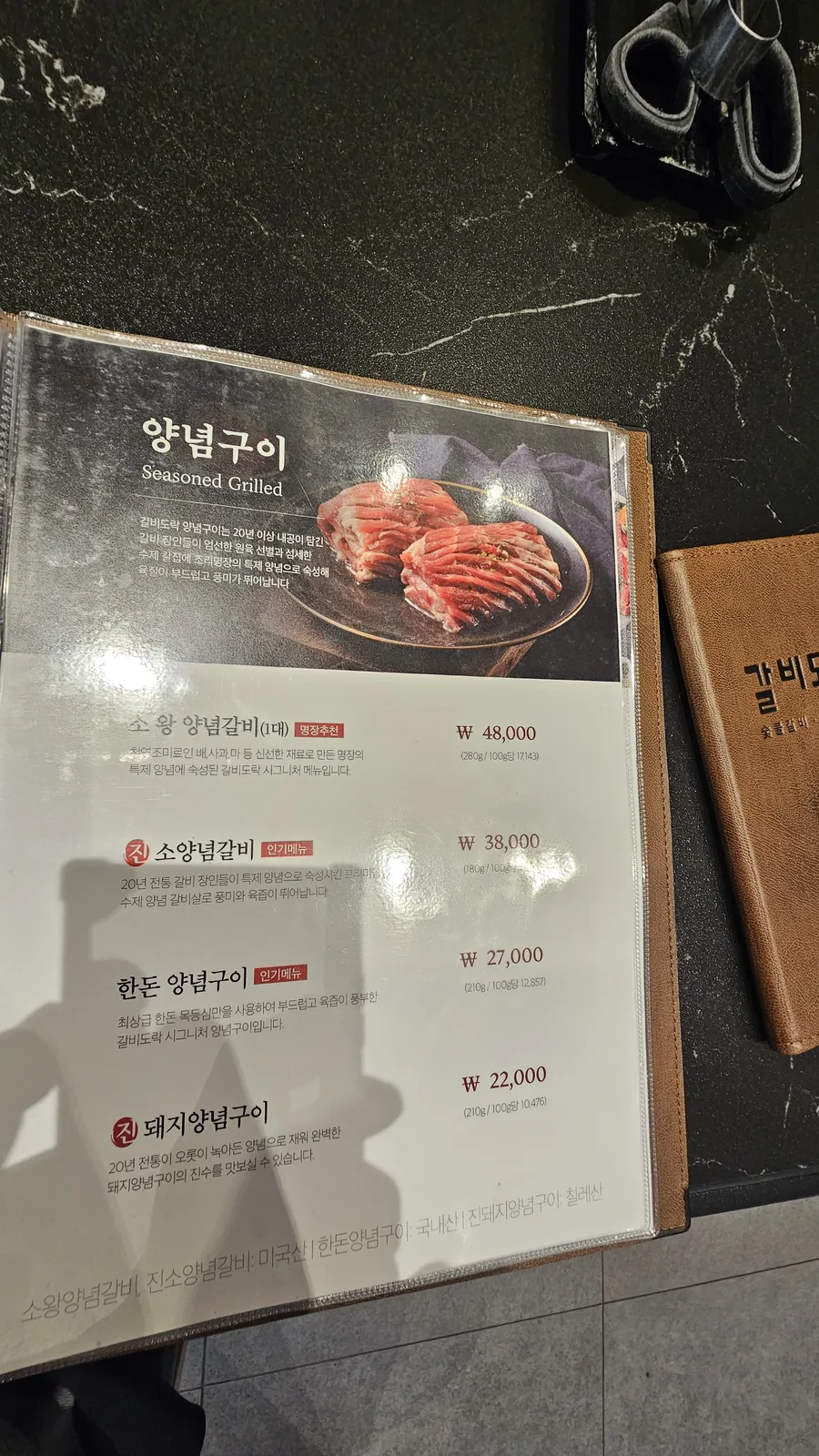
    – 소왕 양념갈비 (King marinated galbi): 48,000 KRW/serving (~$36)

    – 한우 등심 육회 (Sirloin tartare): 29,000 KRW (~$21)

    – 정통 함흥 냉면 (Hamhung cold noodles): 12,000 KRW (~$9)

    – 왕갈비탕 (King short rib soup): 19,000 KRW (~$14)

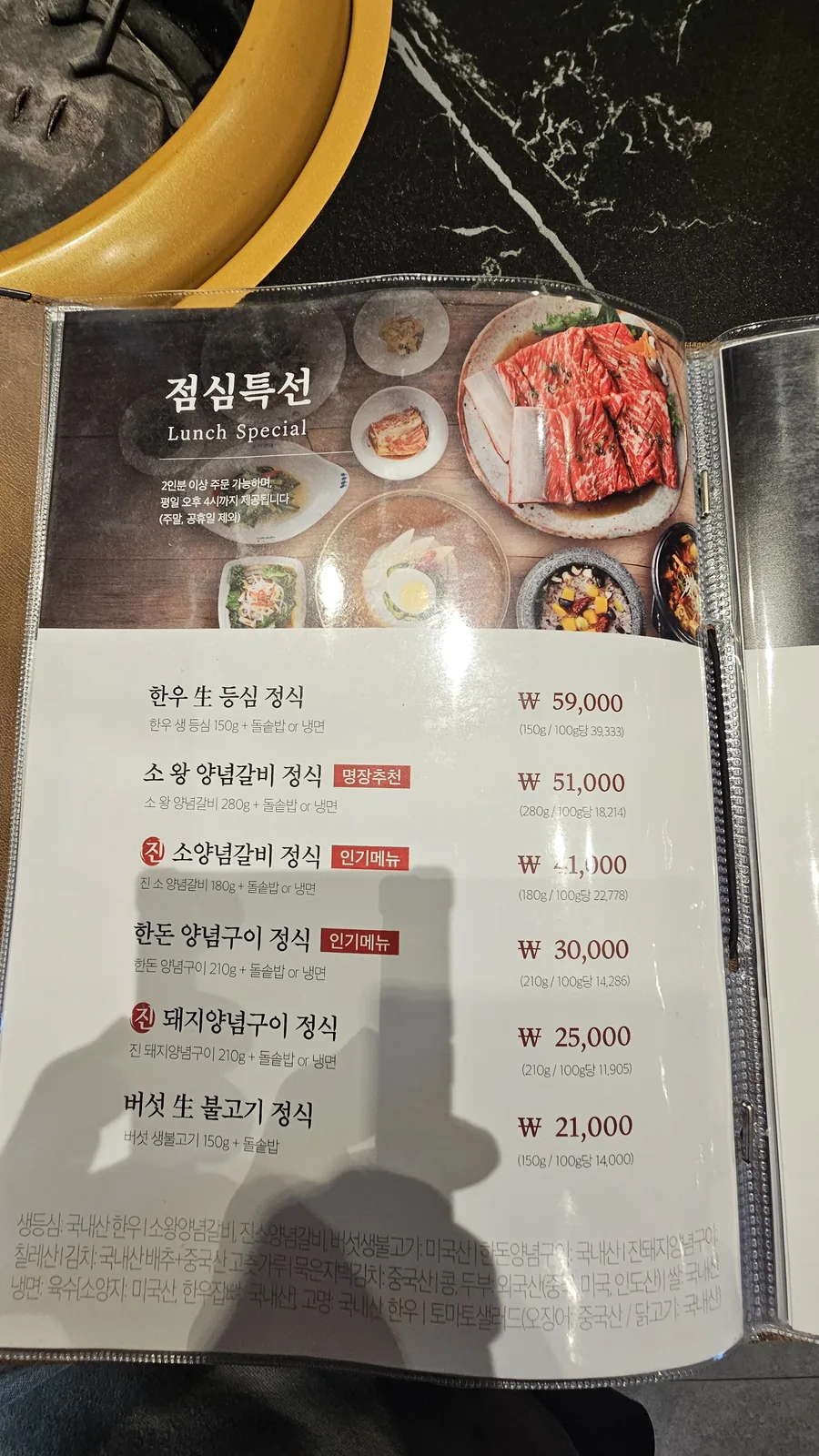
    Lunch and dinner specials exist too — set meal formats (정식) that bundle rice, banchan, and a main at a structured price. Evening sets start around 27,000 KRW for pork and go up from there.
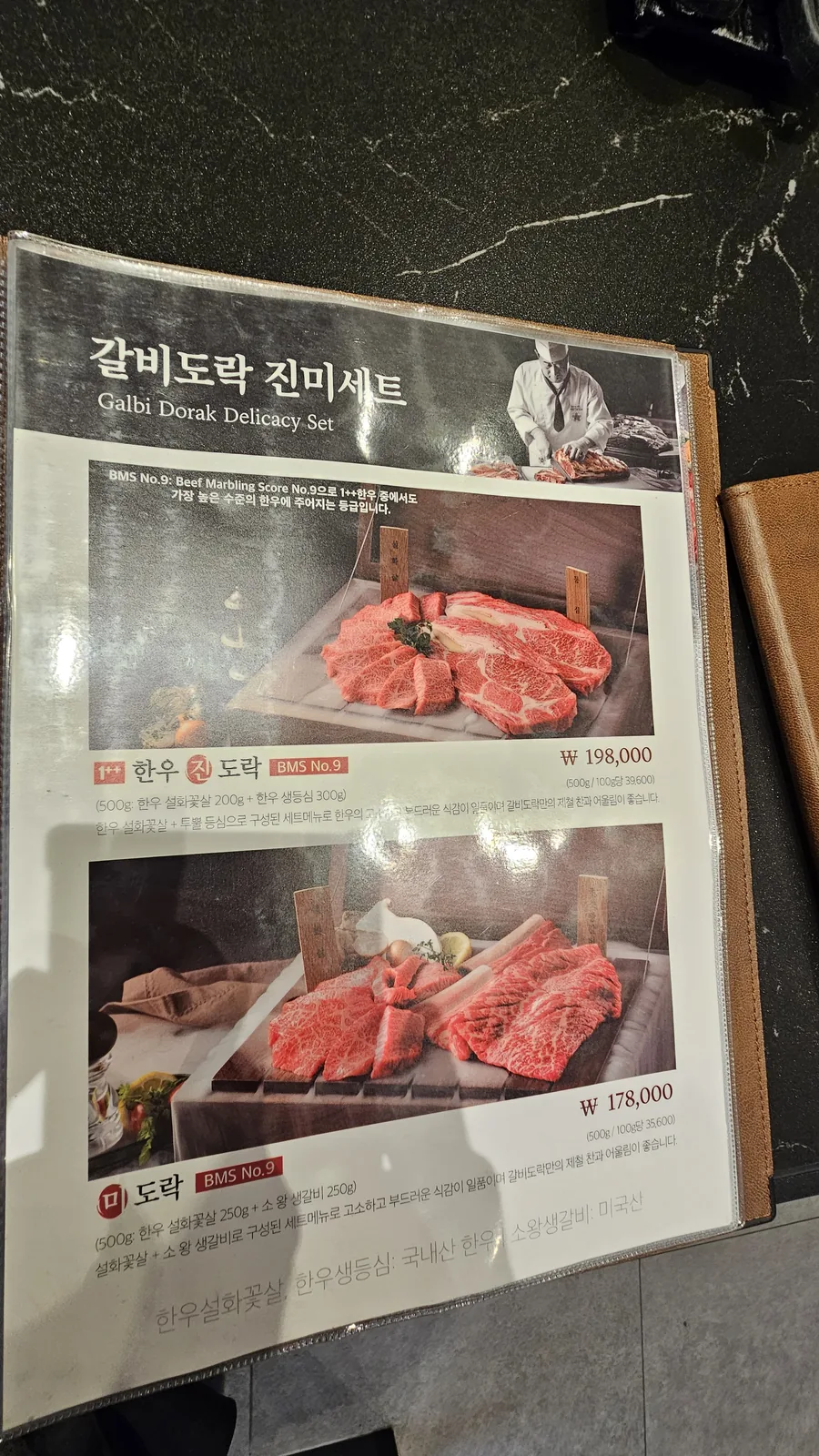
    Galbidorak set menu — Han-u Jindorak 178,000 KRW and Han-u Dorak BMS No.9 198,000 KRW
    Galbidorak set menu — Han-u Jindorak 178,000 KRW and Han-u Dorak BMS No.9 198,000 KRW
    Galbidorak raw beef menu — Han-u Flower Cut 68,000 KRW, Fresh Sirloin 56,000 KRW, King Raw Short Rib 55,000 KRW
    Galbidorak raw beef menu — Han-u Flower Cut 68,000 KRW, Fresh Sirloin 56,000 KRW, King Raw Short Rib 55,000 KRW
    Galbidorak marinated beef menu — King Marinated Galbi 48,000 KRW, Pork Marinated BBQ 22,000 KRW
    Galbidorak marinated beef menu — King Marinated Galbi 48,000 KRW, Pork Marinated BBQ 22,000 KRW
    Galbidorak lunch special menu — Han-u Raw Sirloin Set 59,000 KRW and other options
    Galbidorak lunch special menu — Han-u Raw Sirloin Set 59,000 KRW and other options
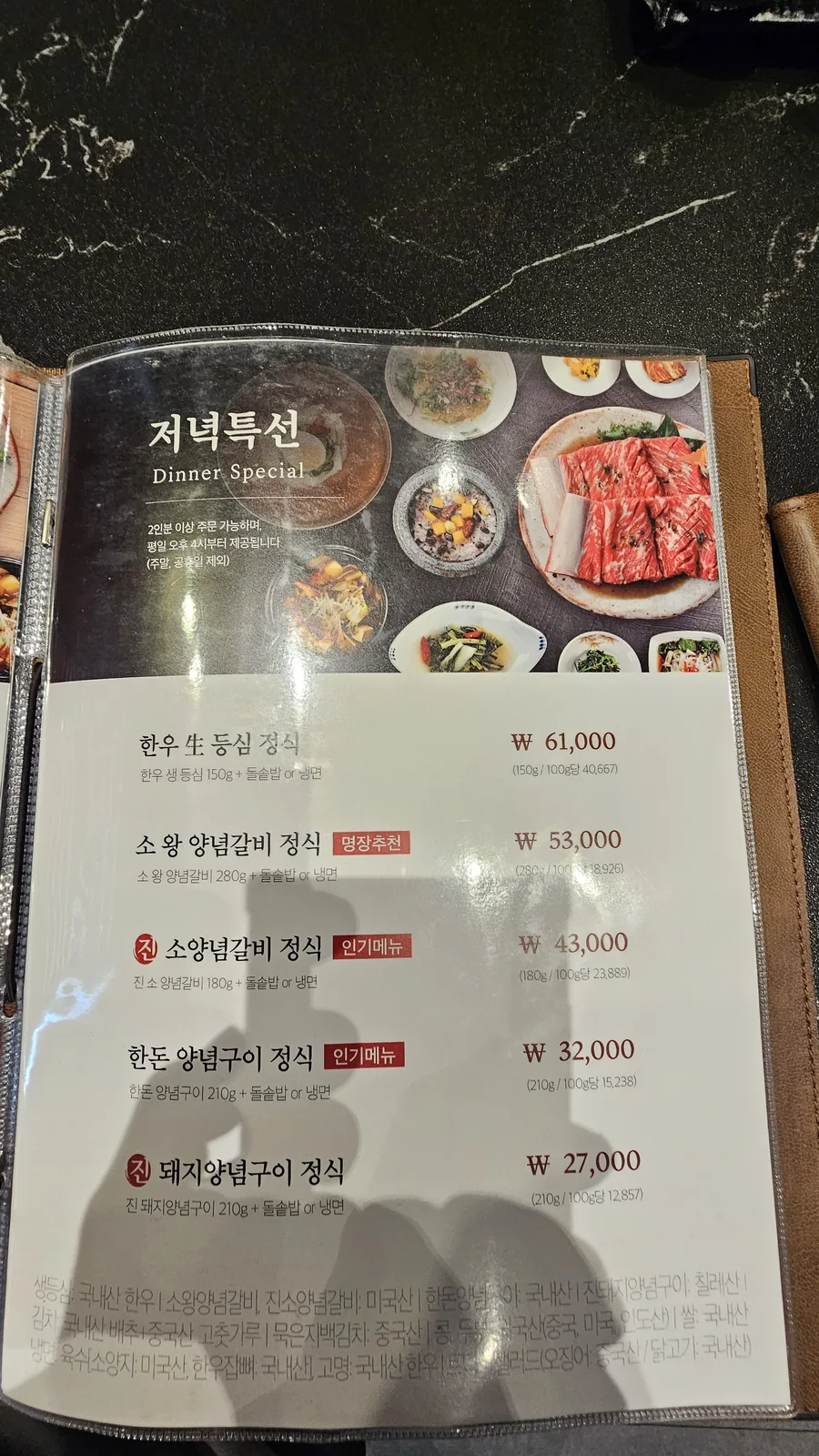
    Galbidorak dinner special menu — Han-u Raw Sirloin Set 61,000 KRW to Pork BBQ Set 27,000 KRW
    Galbidorak dinner special menu — Han-u Raw Sirloin Set 61,000 KRW to Pork BBQ Set 27,000 KRW
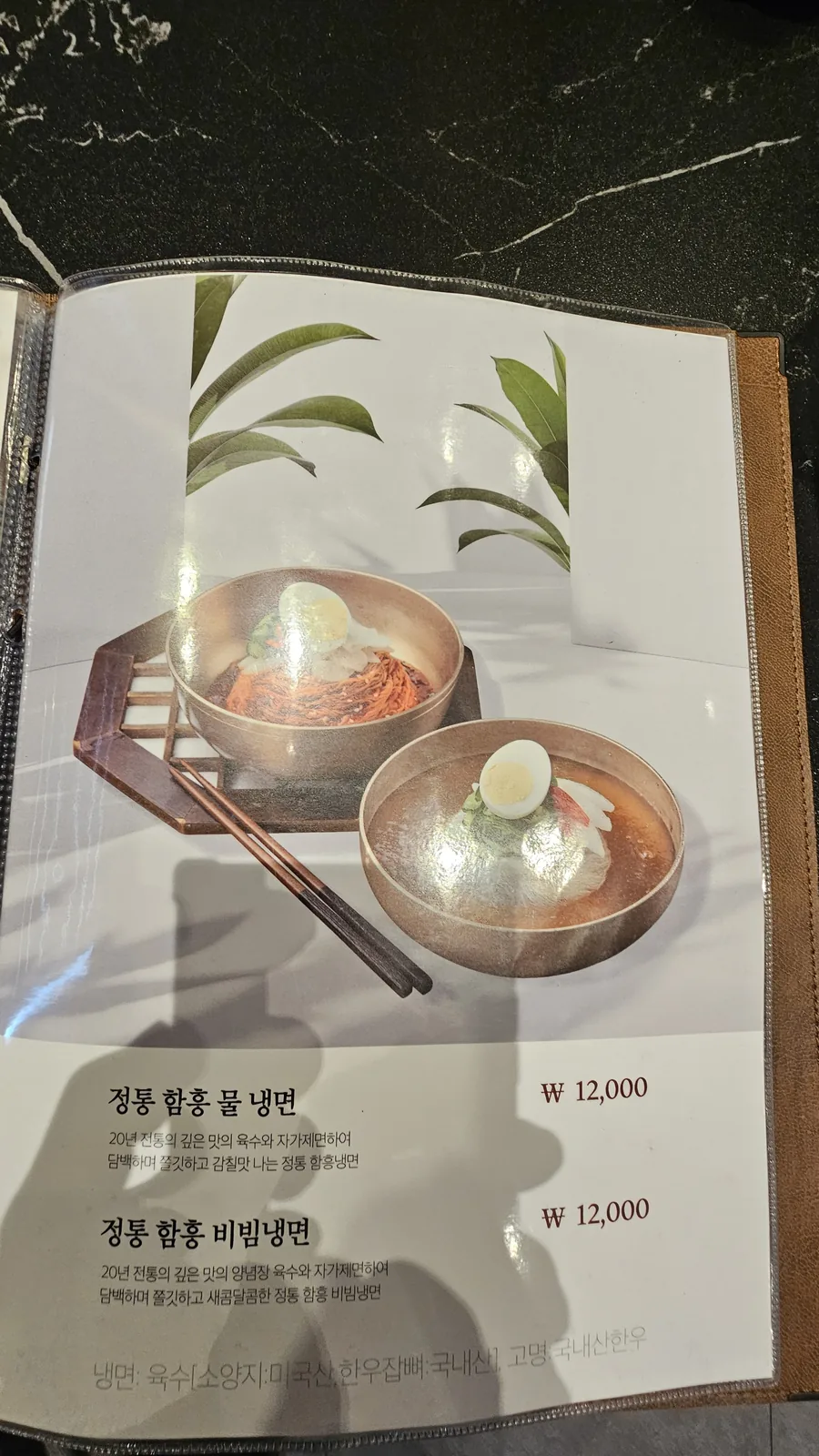
    Galbidorak naengmyeon menu — Hamhung Mul and Bibim Cold Noodles 12,000 KRW each
    Galbidorak naengmyeon menu — Hamhung Mul and Bibim Cold Noodles 12,000 KRW each
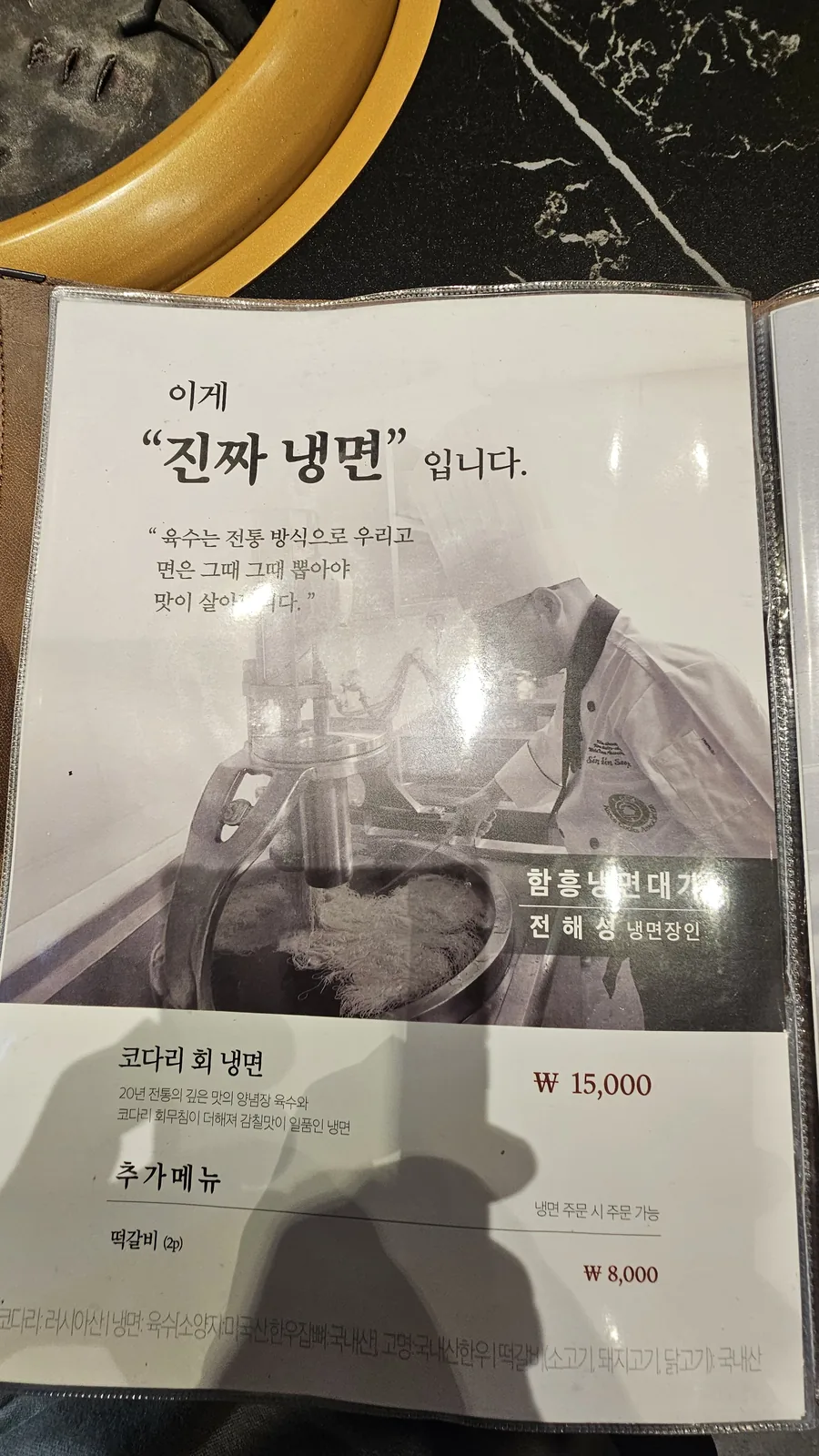
    Galbidorak side dish menu — Kodari Cold Noodle 15,000 KRW and Tteok-galbi 8,000 KRW
    Galbidorak side dish menu — Kodari Cold Noodle 15,000 KRW and Tteok-galbi 8,000 KRW
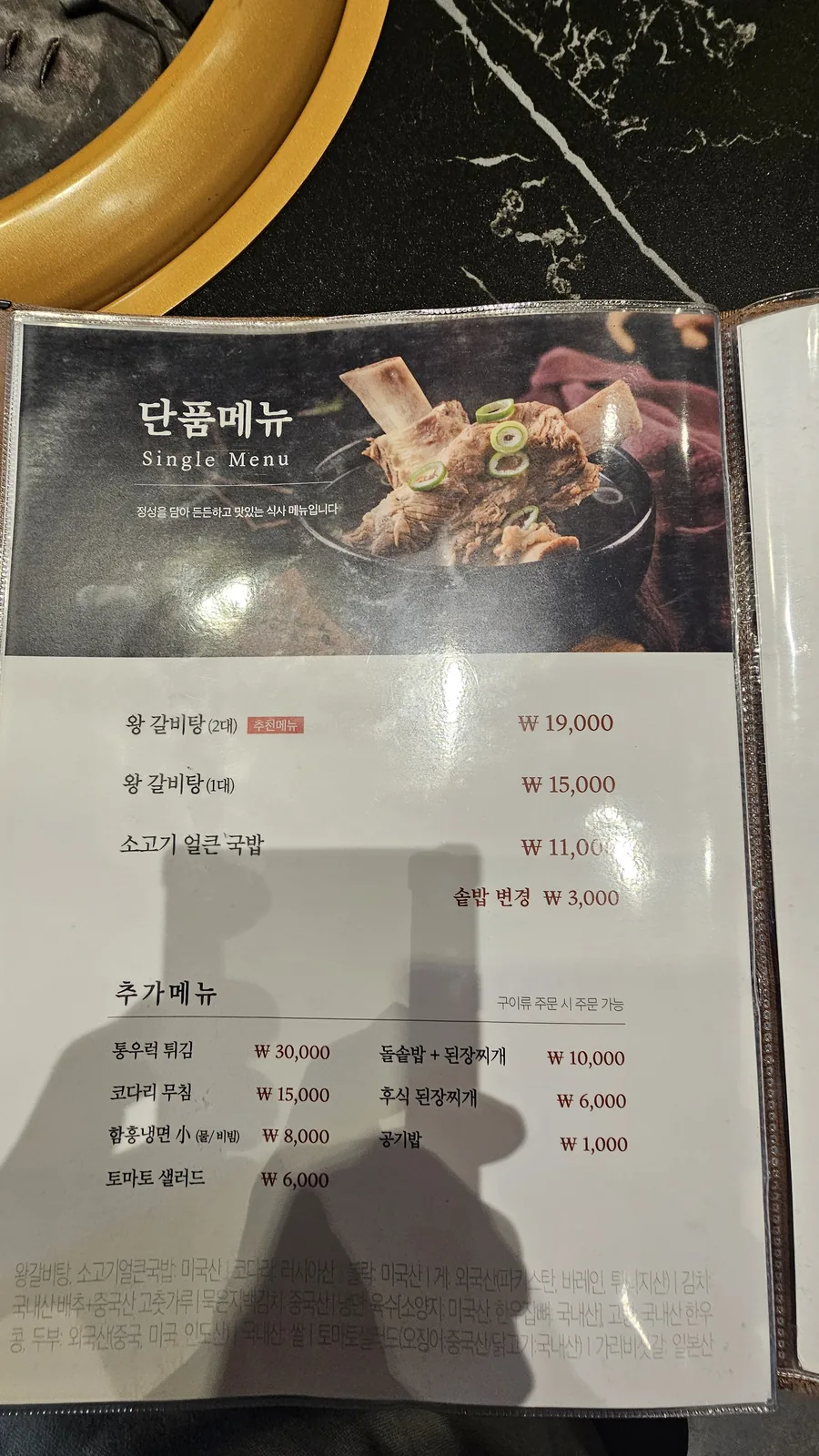
    Galbidorak solo dish menu — King Galbitang 19,000 KRW, Beef Spicy Rice Soup 11,000 KRW
    Galbidorak solo dish menu — King Galbitang 19,000 KRW, Beef Spicy Rice Soup 11,000 KRW
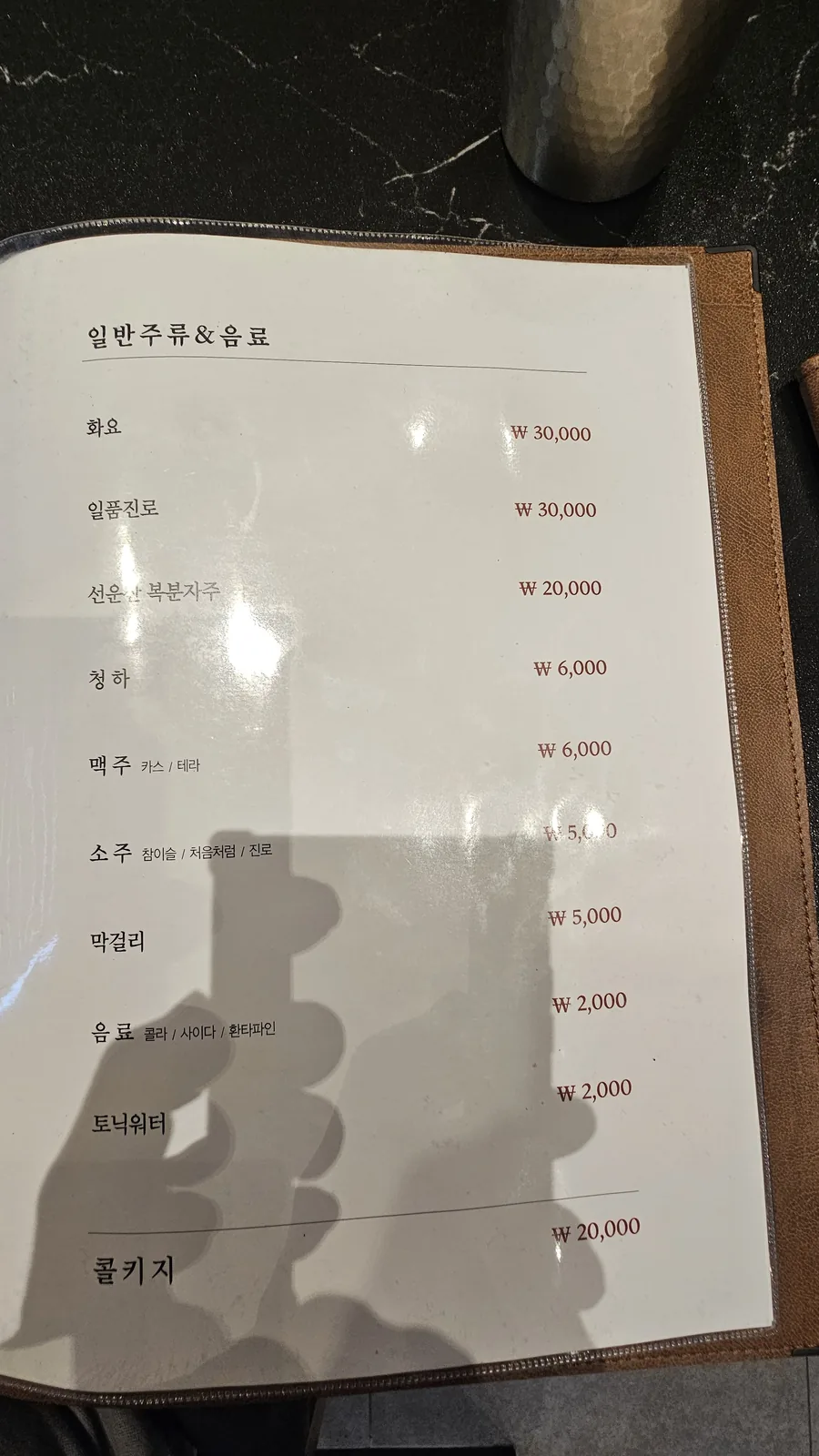
    Galbidorak drinks menu — Hwayo soju, Ilpoom Jinro, Bokbunja wine, beer and makgeolli
    Galbidorak drinks menu — Hwayo soju, Ilpoom Jinro, Bokbunja wine, beer and makgeolli
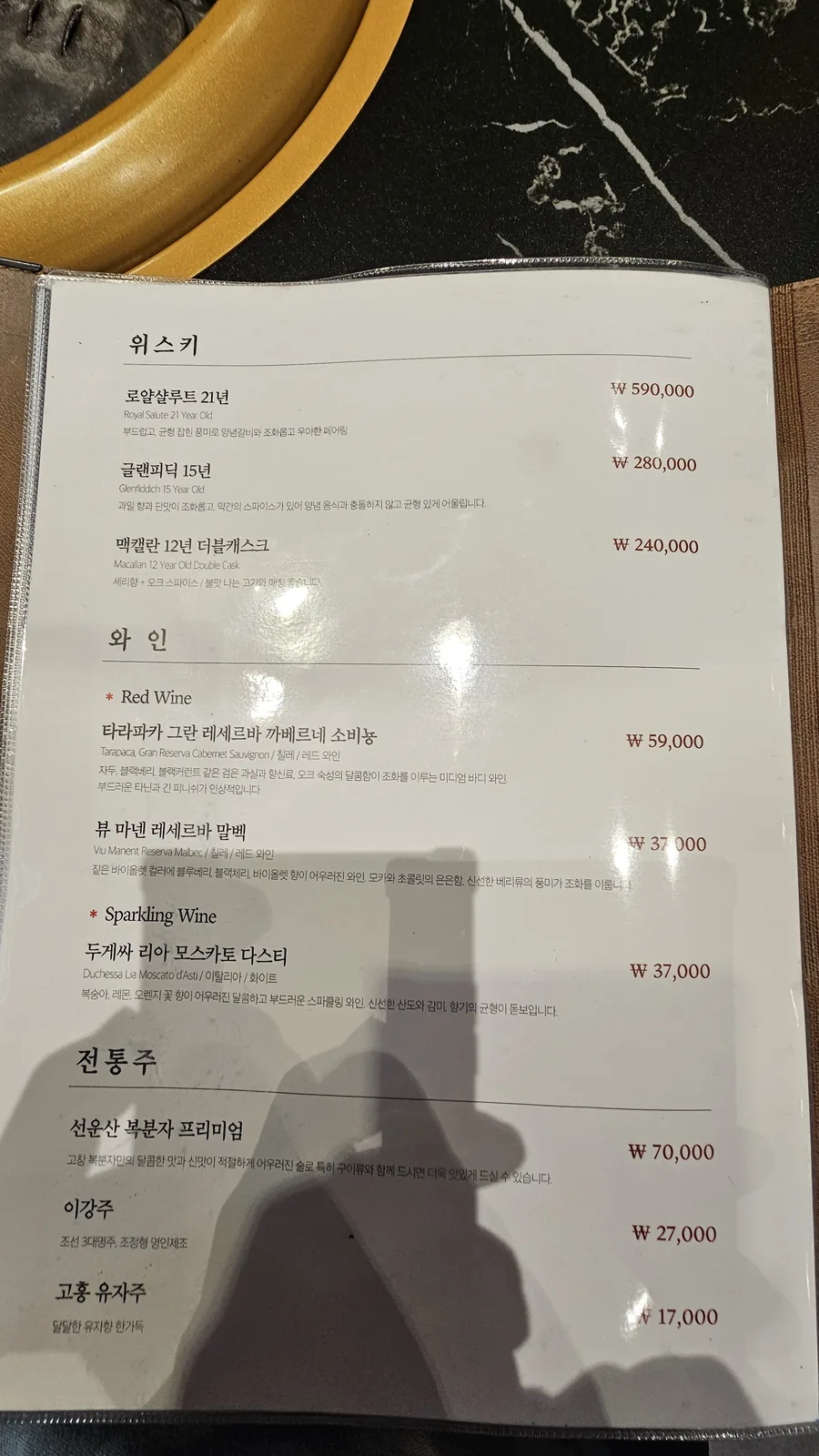
    Galbidorak premium drinks menu — Royal Salute 21 Year, Glenfiddich 15 Year, red wine and sparkling wine
    Galbidorak premium drinks menu — Royal Salute 21 Year, Glenfiddich 15 Year, red wine and sparkling wine

    The drinks menu is serious: Hwayo soju, multiple makgeolli options, and premium whisky by the glass — Royal Salute 21 Year, Glenfiddich 15 Year. This is built for long dinners, not a quick lunch stop.

    Stuff Tourists Should Know

    English menu: No. Menu is in Korean, with some Chinese characters. Google Translate’s camera mode covers most of it.

    Staff English: Basic. Pointing works. Don’t count on a detailed conversation, but you’ll get your order in.

    Payment: Cards accepted. Foreign Visa and Mastercard work fine at restaurants like this.

    Tipping: None. Korea doesn’t do tipping culture. Pay the bill, nothing extra needed.

    Vegetarian options: Almost zero. The banchan sides are mostly plant-based, but this restaurant is built around meat. Not the right place if you’re avoiding it.

    Kids: Fine. The space is big, service is attentive, and there’s no vibe pressure. Kids who eat meat will have no problem.

    Halal/Kosher: Not certified for either.

    Dress code: Nothing formal required, but the restaurant has a dinner-out feel. Business casual or smart casual is appropriate.

    Time to budget: 1.5–2 hours minimum for a proper evening meal.

    Price Check

    소왕生갈비 a la carte: 55,000 KRW (~$41 USD) per serving.

    We ordered 4 servings across 3 people. Total per-person estimate including the banchan spread, appetizer course, and nurungji finish: roughly 80,000–100,000 KRW (~$59–74 USD) before drinks. Add whisky or wine and the number climbs.

    This is not budget galbi. Go in knowing that, or don’t go at all.

    The Verdict

    Second visit. Still good. Coming back.

    If you want a proper high-end Korean BBQ experience — not the tourist-strip version, not the Instagram-optimized thin-cut trend — Galbidorak delivers. Real charcoal, full tableside service, quality beef, and a chef who earned a national award doing exactly this.

    The 소왕生갈비 is what you order. Everything else is support.

    Go if:

    – Premium Korean BBQ is on the list and budget isn’t the main concern

    – You want staff to grill for you, not manage your own fire

    – You’re in Guro anyway, or willing to make the trip

    – You want a long, relaxed dinner, not a quick bite

    Skip if:

    – You only have a few days in Seoul and haven’t covered the basics yet — eat at Gwangjang Market or a samgyeopsal spot first

    – Budget is tight — there are solid galbi options at half the price

    – You need English-fluent service for a comfortable experience

    FAQ

    How much does it cost per person at Galbidorak Guro?

    Budget around 80,000–100,000 KRW (~$59–74 USD) per person for a full evening meal with galbi. A single serving of the King fresh short rib (소왕生갈비) is 55,000 KRW (~$41).

    Is parking available at Galbidorak?

    Yes — there’s a large covered parking lot on-site, with plenty of space even on busy evenings.

    Does Galbidorak have an English menu or English-speaking staff?

    The menu is in Korean. Staff English is basic — pointing and Google Translate’s camera mode will get you through. No English menu at the time of this visit.

    Do I need a reservation at Galbidorak Guro?

    The restaurant is large, but evening visits can get busy. Calling ahead or using Naver Reservation is recommended, especially for groups.

    What’s the best thing to order at Galbidorak?

    The 소왕生갈비 (King fresh short rib) — thick, bone-in, uncooked and grilled tableside by staff over real charcoal. That’s the whole point of coming here.

    Is Galbidorak vegetarian-friendly?

    No. This is a meat-forward Korean BBQ restaurant. The banchan side dishes are mostly plant-based, but the menu itself revolves entirely around beef and pork.
    You might also like

    📍 Location

    Open in Google Maps →

  • Jangsu Makguksu in Cheongyang: Fresh Buckwheat Noodle Review

    Jangsu Makguksu in Cheongyang: Fresh Buckwheat Noodle Review

    Jangsu Makguksu in Cheongyang: Fresh Buckwheat Noodle Review

    Quick honest review of Jangsu Makguksu in Cheongyang — a no-frills local buckwheat noodle shop that makes their noodles fresh in-house. Short version: the noodles are genuinely good, the broth is clean and light, and at 9,000 KRW (~$6.70 a bowl) it’s hard to complain.

    Four of us went on a Saturday around 11:30 AM. Walked right in. No wait.

    What Is Makguksu?

    Makguksu (막국수) is Korea’s buckwheat cold noodle dish. Think earthy, slightly nutty-flavored noodles served in cold broth — or tossed in a spicy sauce if you want the bibim (비빔) version.

    It’s often compared to naengmyeon, which is the other big Korean cold noodle dish. But they’re different. Naengmyeon noodles are smoother and more elastic. Makguksu is coarser, with a more pronounced buckwheat flavor. Less refined. More honest.

    The buckwheat flavor is an acquired taste for some — it’s earthy and slightly bitter compared to wheat noodles. But when the noodles are fresh, that flavor gets a lot more interesting.

    About Jangsu Makguksu

    The “Jangsu” in the name refers to Jangsu County in North Jeolla Province (전북 장수군), a mountainous area historically known for buckwheat cultivation. Restaurants using this name are usually signaling a traditional approach to makguksu — this style is actually a signature dish of that region.

    What sets this place apart from most: they make the noodles fresh, right there in the kitchen.

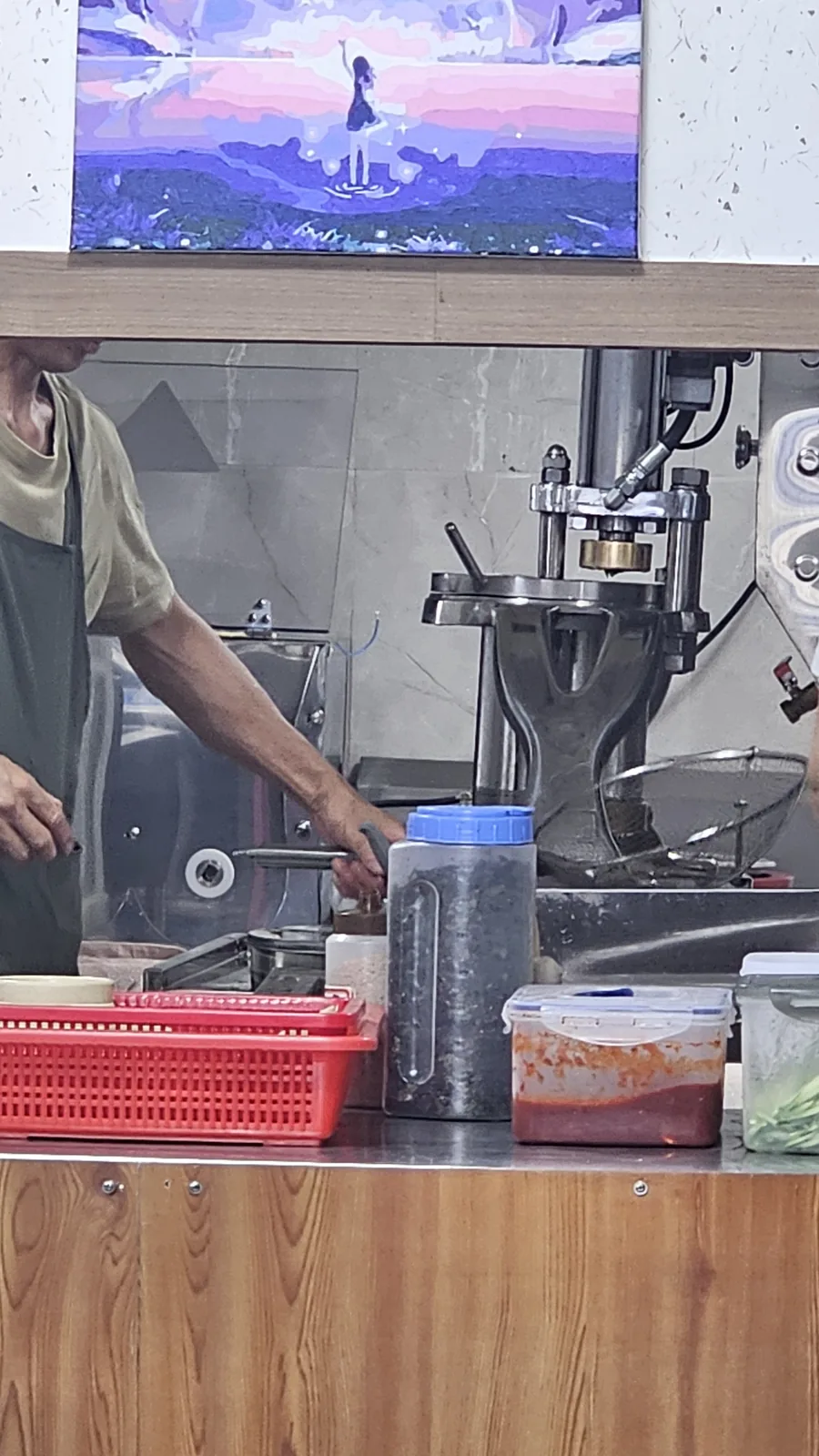
    Kitchen staff at Jangsu Makguksu operating a fresh noodle press machine to make buckwheat noodles in-house
    Kitchen staff at Jangsu Makguksu operating a fresh noodle press machine to make buckwheat noodles in-house

    There’s an actual noodle press machine (제면기) and you can watch staff working it during service. Buckwheat dough goes in, noodles come out. That’s not something you see at every makguksu restaurant. Most places use pre-packaged noodles. Freshly made ones have a noticeably better bite — slightly springier, with a cleaner buckwheat flavor.

    Getting to Cheongyang

    Cheongyang (청양군) is a small rural county in South Chungcheong Province (충남), about two hours south of Seoul by car. It’s not a well-known tourist destination — most people know it, if at all, for the Cheongyang Chili Pepper. The 청양고추 (Cheongyang chili) is actually one of Korea’s most famous varieties, and it’s named after this region.

    If you’re visiting the Chilgapsan area (칠갑산 — a popular hiking mountain nearby) or the Cheongyang Pepper Festival, this restaurant makes a solid lunch stop.

    There’s no direct train from Seoul. Your options are to drive, or take a bus from Cheonan or Daejeon and transfer. Honestly, a car makes way more sense for this area.

    The Interior

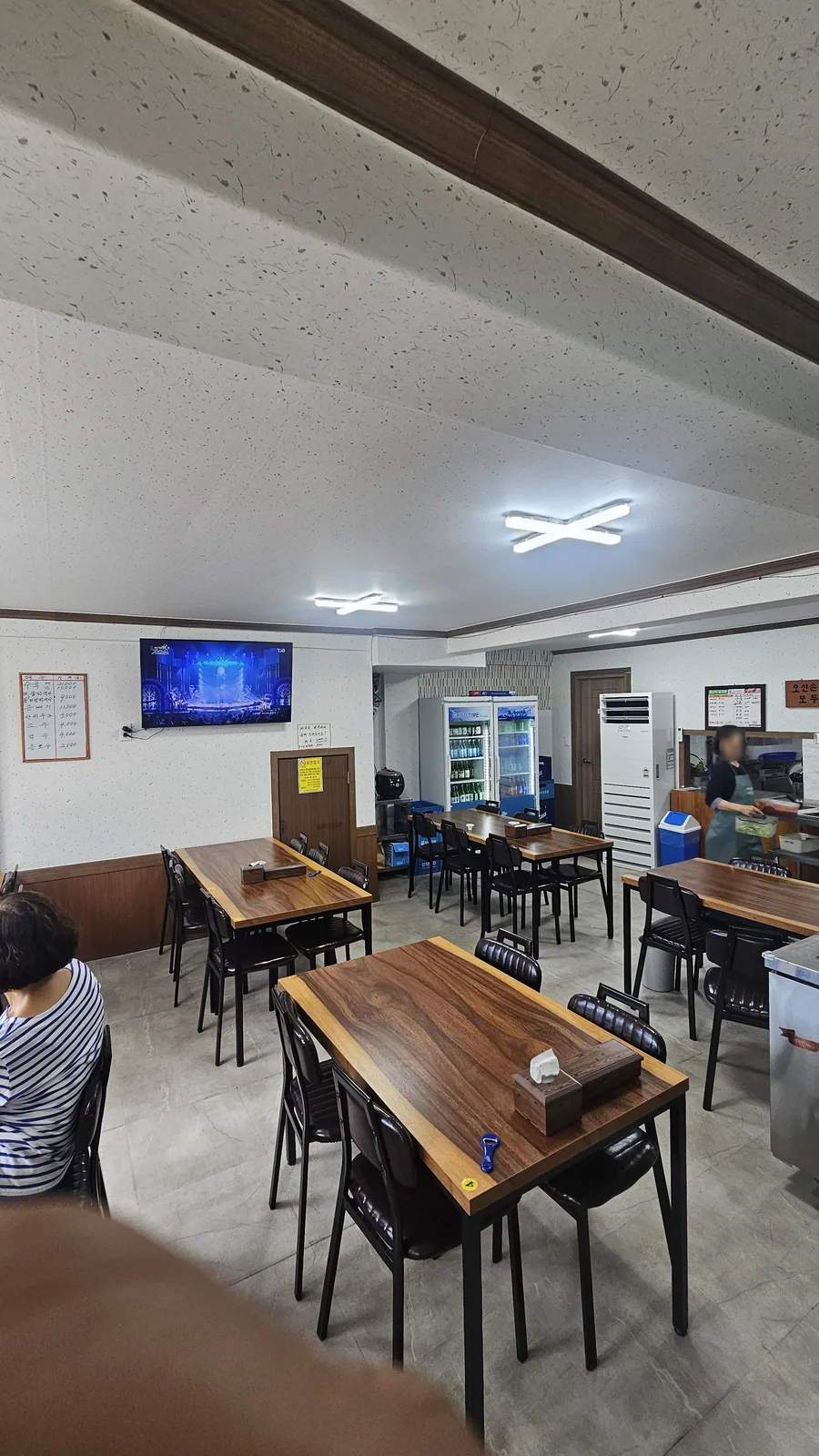
    Interior of Jangsu Makguksu in Cheongyang with wooden tables, black chairs, and LED wall decorations
    Interior of Jangsu Makguksu in Cheongyang with wooden tables, black chairs, and LED wall decorations

    Clean and straightforward. Wooden tables, black chairs, LED strip lighting on one wall, a couple of TVs. Spacious — tables are well-spread, which is nice for a group. No attempt at a “concept” or Instagram-friendly decor. The kind of place that spends money on ingredients, not interior design.

    The Menu

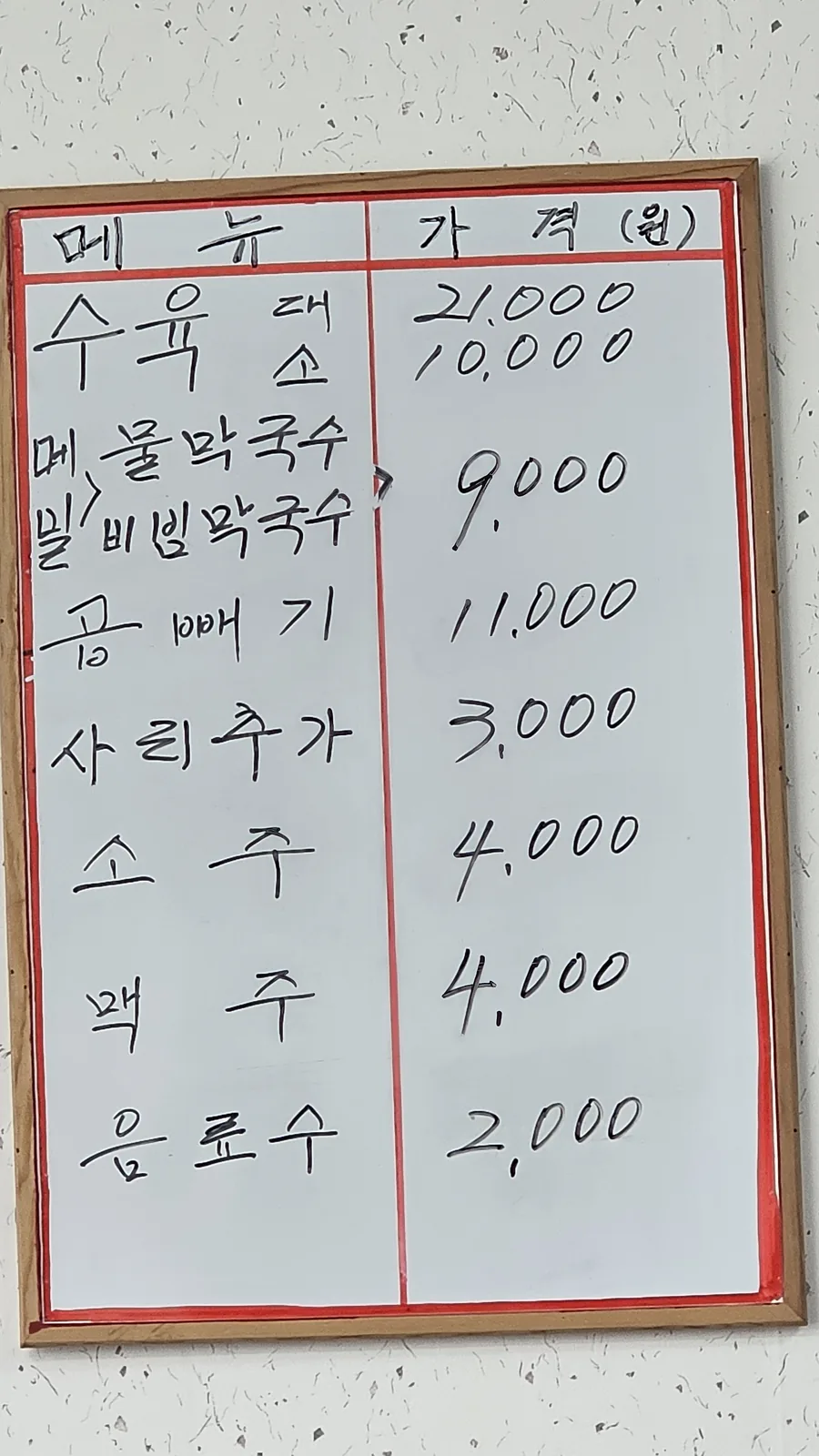
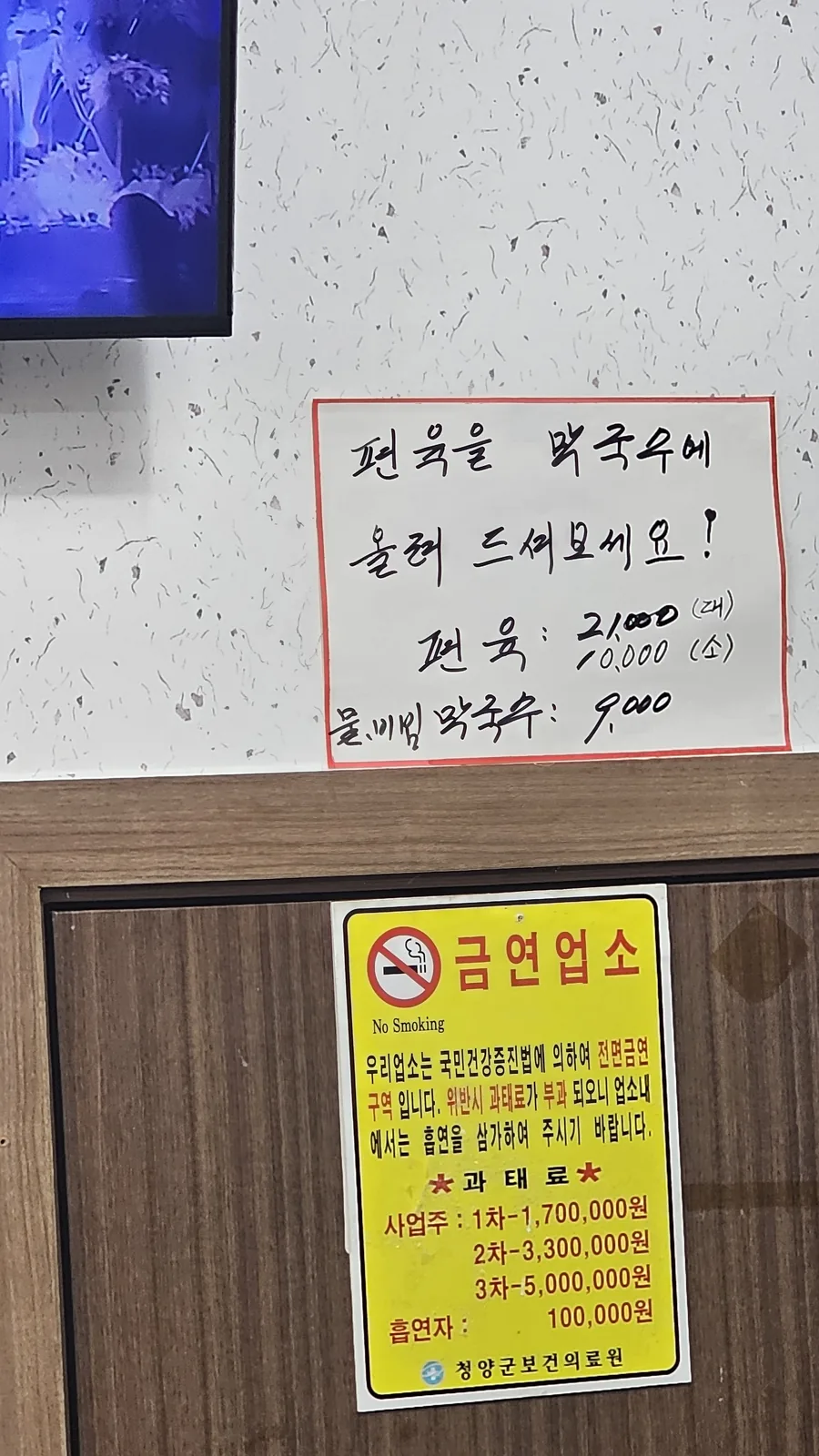
    Handwritten menu board at Jangsu Makguksu showing prices for subyuk, buckwheat makguksu, and bibim makguksu
    Handwritten menu board at Jangsu Makguksu showing prices for subyuk, buckwheat makguksu, and bibim makguksu

    The menu is handwritten on a board and pretty short:

    – 메밀막국수 (Buckwheat Makguksu, cold broth) — 9,000 KRW (~$6.70)

    – 비빔막국수 (Spicy Mixed Makguksu) — 11,000 KRW (~$8.15)

    – 수육 대 (Subyuk, large) — 21,000 KRW (~$15.60)

    – 수육 소 (Subyuk, small) — 10,000 KRW (~$7.40)

    – Add-ons: noodle extra, tofu

    No English menu. But the menu is simple enough to navigate by pointing.

    Restaurant notice at Jangsu Makguksu instructing diners to place subyuk slices on top of makguksu, with pricing
    Restaurant notice at Jangsu Makguksu instructing diners to place subyuk slices on top of makguksu, with pricing

    There’s a notice at the entrance suggesting you place the subyuk on top of your makguksu. We followed that advice. Good call.

    What We Ordered

    We went with the buckwheat makguksu and the small subyuk to share among four.

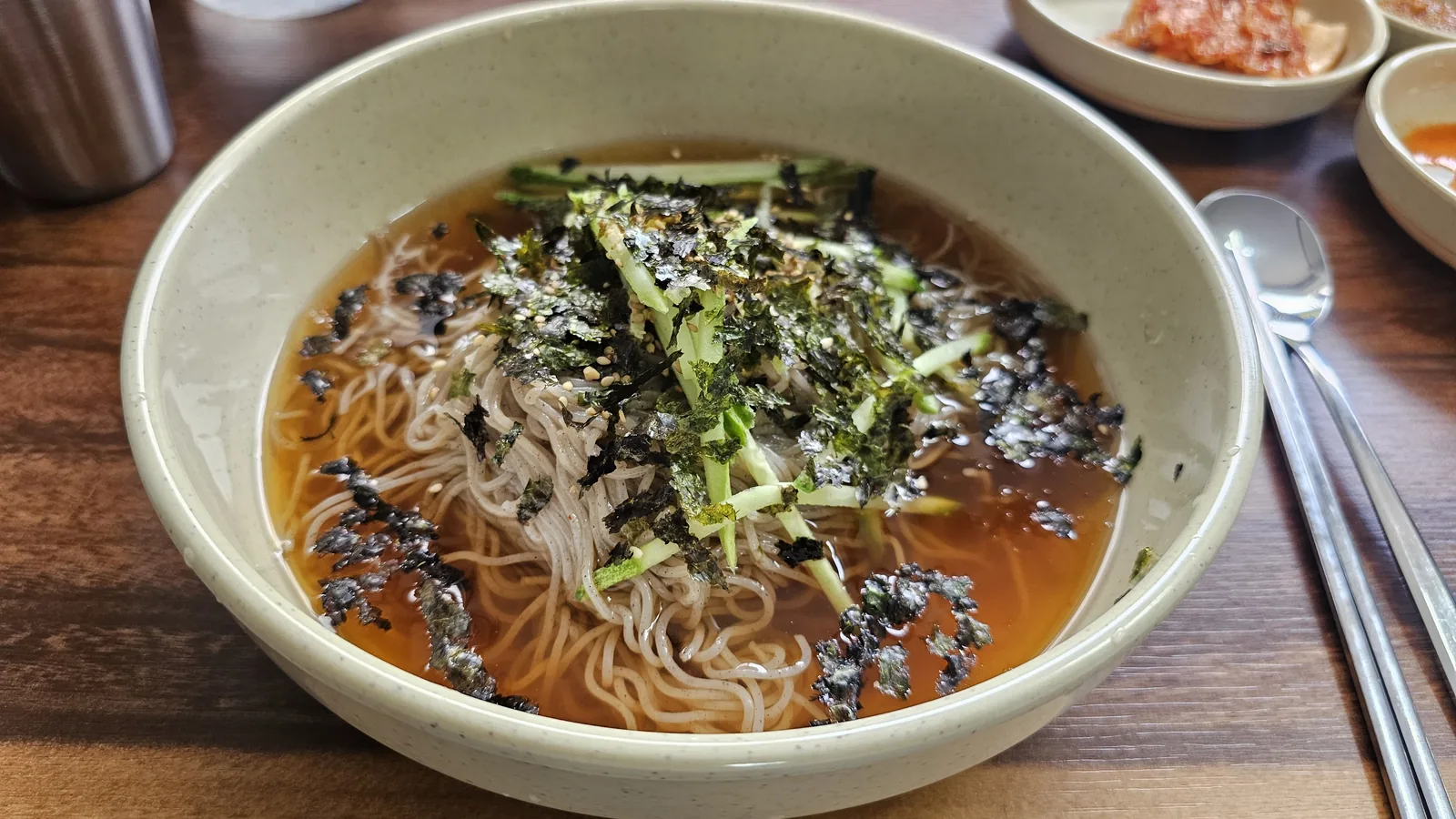
    Buckwheat Makguksu

    Bowl of buckwheat makguksu with clear cold broth, shredded cucumber, and dried seaweed flakes at Jangsu Makguksu
    Bowl of buckwheat makguksu with clear cold broth, shredded cucumber, and dried seaweed flakes at Jangsu Makguksu
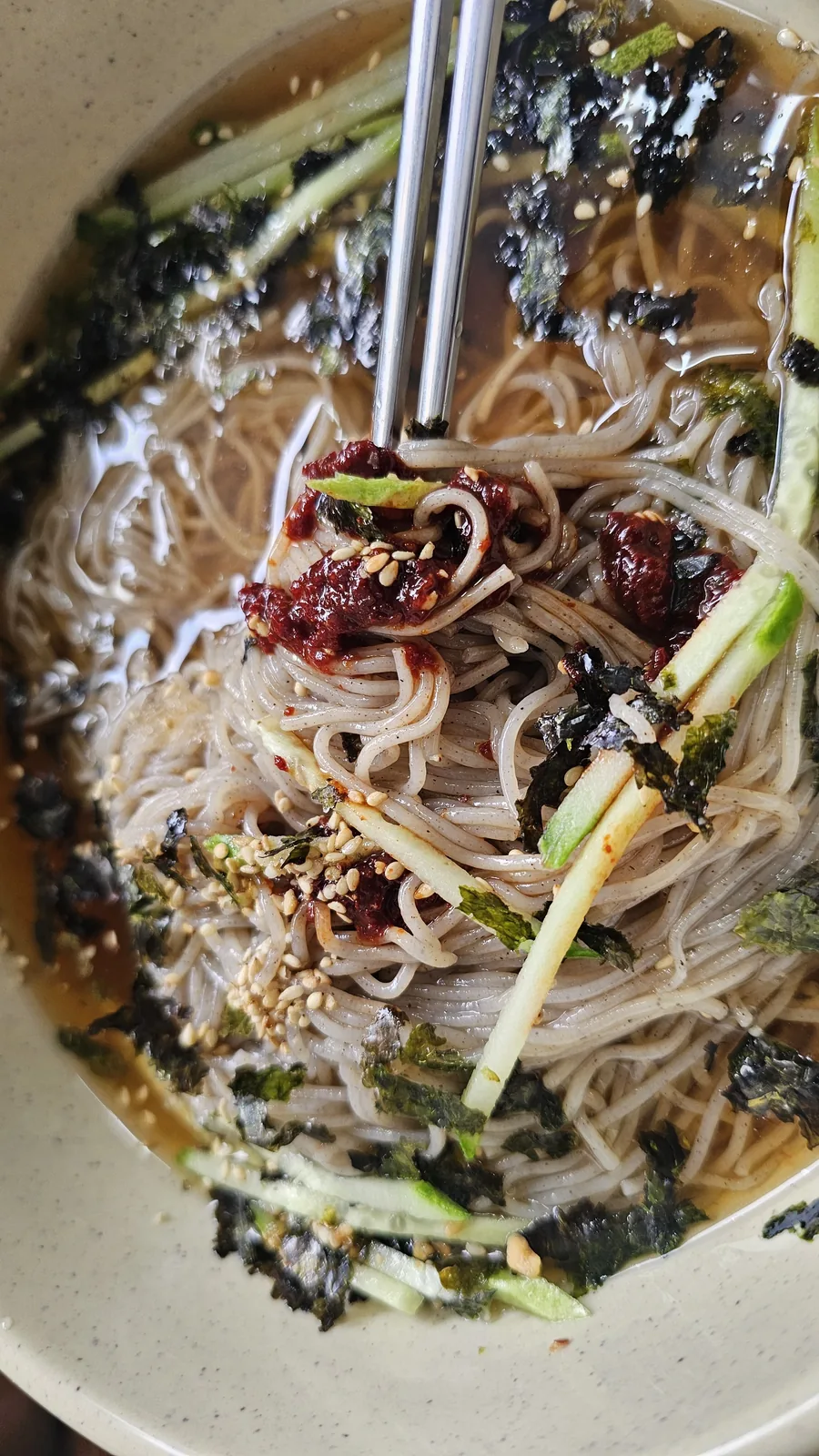
    Chopsticks lifting fresh buckwheat noodles from a makguksu bowl with gochujang chili paste on the side
    Chopsticks lifting fresh buckwheat noodles from a makguksu bowl with gochujang chili paste on the side

    The broth is clear and cold. Light savory flavor, no heavy seasoning. The focus is the noodles, and the broth knows it.

    The noodles — because they’re freshly made — have actual texture. A slight chew and springiness. You can taste the buckwheat without it being overwhelming. Topped with thin shredded cucumber and dried seaweed flakes (김 가루). Simple.

    Gochujang (chili paste) comes on the side. You can leave the bowl clean and light, or add the paste and mix. Either works. We did both — some went plain, some mixed it in. The plain version lets you taste the noodles properly. The spicy version is more punchy and satisfying.

    The noodles were the highlight of the meal. Clean taste, good texture. The freshness matters.

    Subyuk (Boiled Pork)

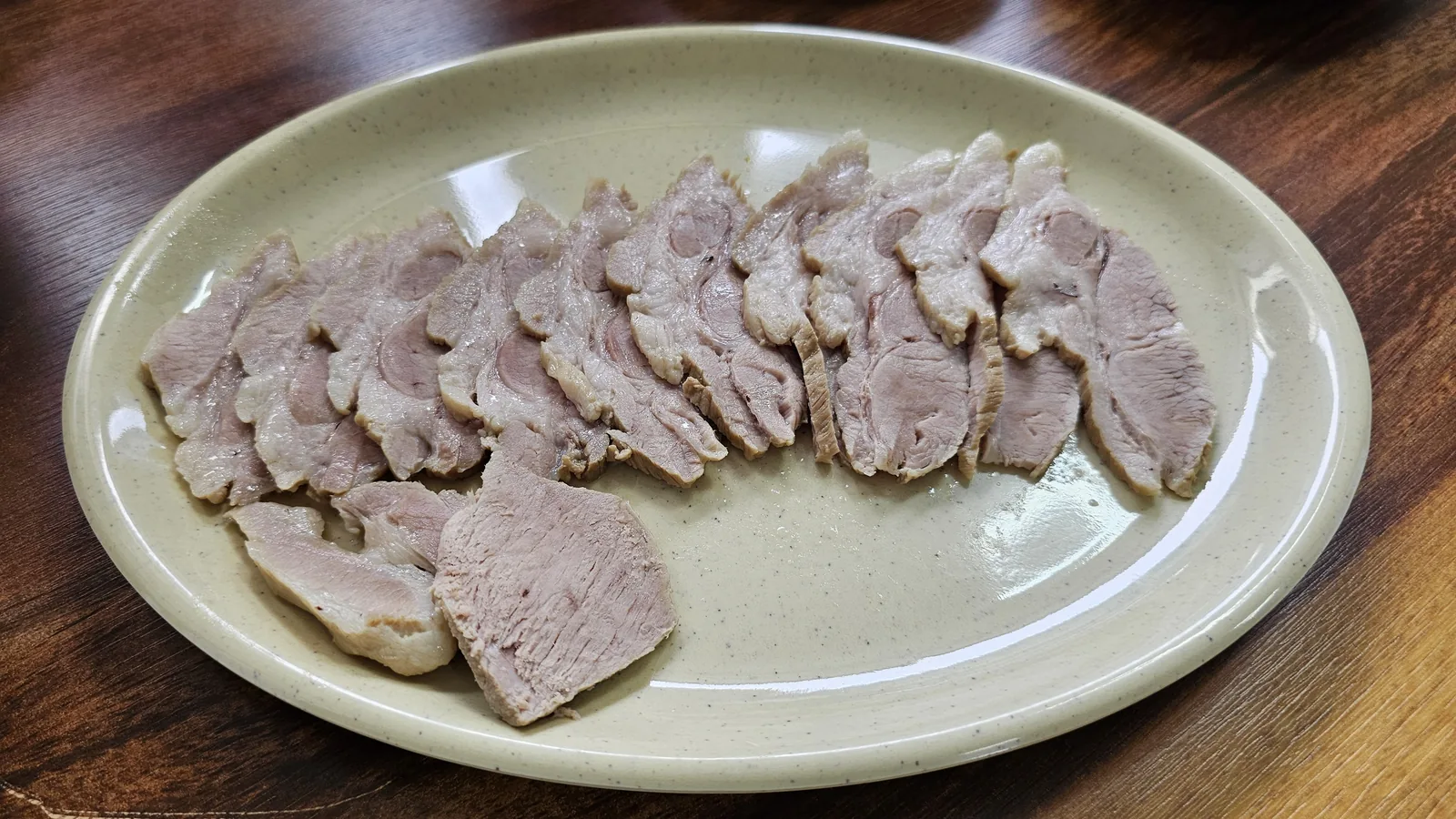
    Thinly sliced subyuk boiled pork on an oval plate at Jangsu Makguksu in Cheongyang
    Thinly sliced subyuk boiled pork on an oval plate at Jangsu Makguksu in Cheongyang

    Subyuk (수육), also called pyeonyuk (편육), is boiled pork — usually pork belly or shoulder — sliced thin and served warm or at room temperature. It’s one of Korea’s most common pork preparations. No frying, no heavy sauce. Just clean, slow-boiled pork.
    The small portion was a solid amount for four people sharing. Pork was tender, not greasy. Clean flavor.

    You dip it in the doenjang (된장 — fermented soybean paste) that comes in the side dishes. The paste is earthy and salty, which pairs well with the clean pork.
    The Side Dishes

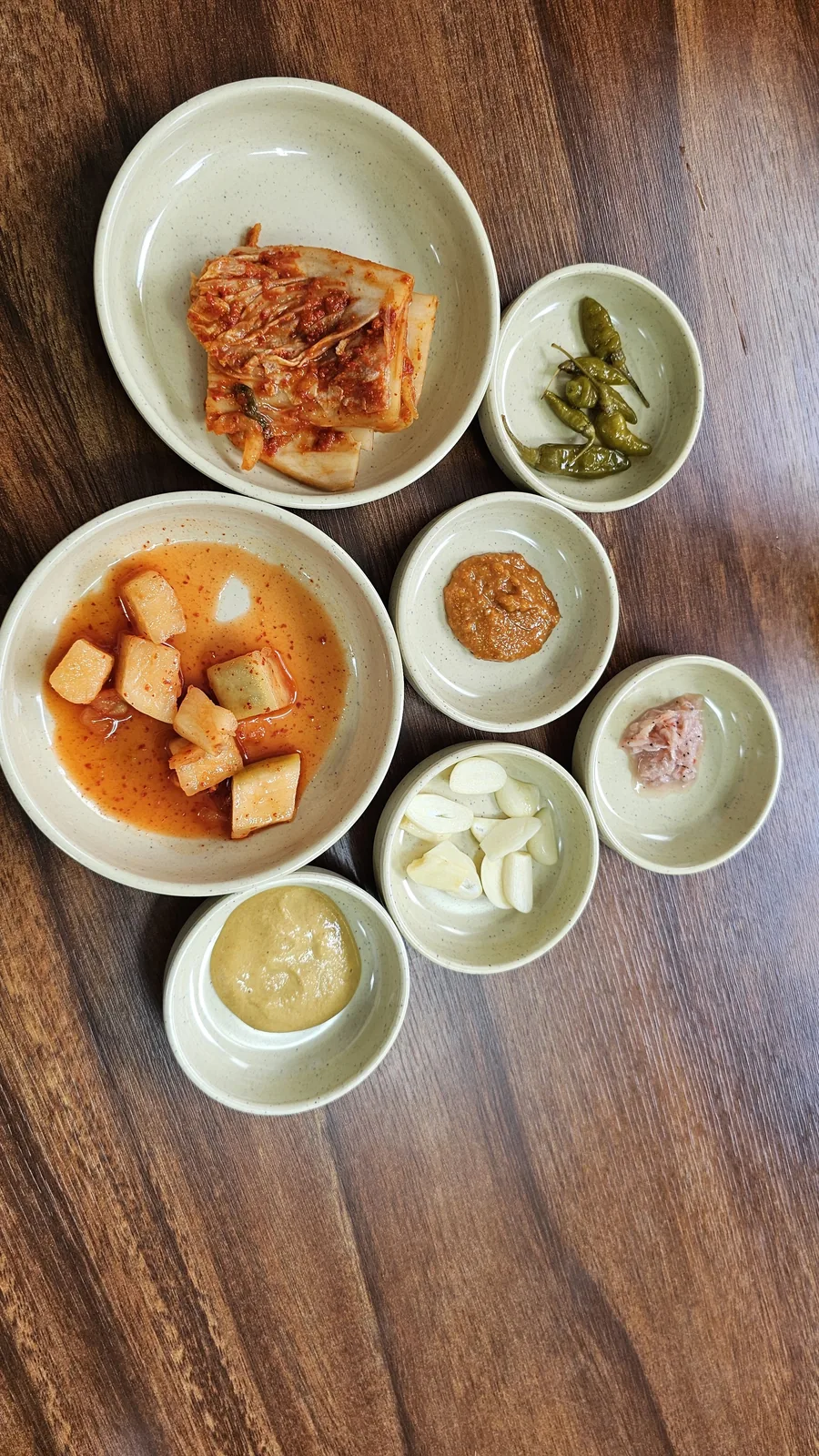
    Seven-dish banchan spread at Jangsu Makguksu including kkakdugi radish kimchi, baechu kimchi, doenjang, and mustard sauce
    Seven-dish banchan spread at Jangsu Makguksu including kkakdugi radish kimchi, baechu kimchi, doenjang, and mustard sauce

    Seven side dishes came out:

    – Kkakdugi (깍두기 — cubed radish kimchi)

    – Baechu kimchi (배추김치 — cabbage kimchi)

    – Doenjang (된장 — fermented soybean paste, for dipping)

    – Sliced garlic

    – A small portion of subyuk

    – Mustard sauce (겨자소스)

    – One more

    All the usual suspects at a Korean makguksu restaurant. Nothing surprising, all solid.

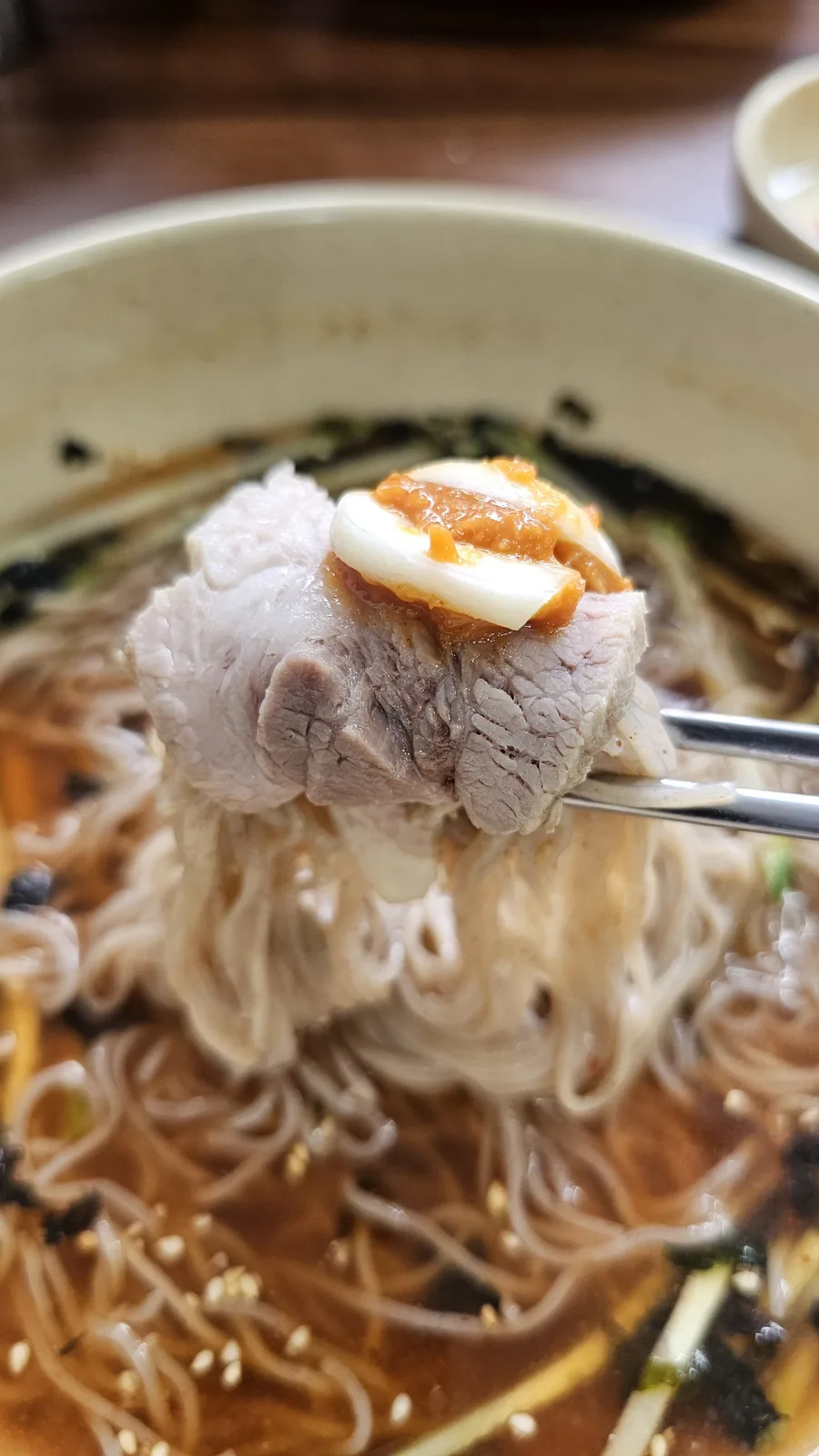
    The Subyuk-on-Makguksu Combo

    Close-up of a subyuk slice placed on top of buckwheat makguksu noodles at Jangsu Makguksu Cheongyang
    Close-up of a subyuk slice placed on top of buckwheat makguksu noodles at Jangsu Makguksu Cheongyang

    The restaurant actively tells you to do this, and they’re right. Take a slice of subyuk, place it on the noodles, pick it all up together. The pork adds a little fat and body to the otherwise very clean noodles. It works better than eating them separately.

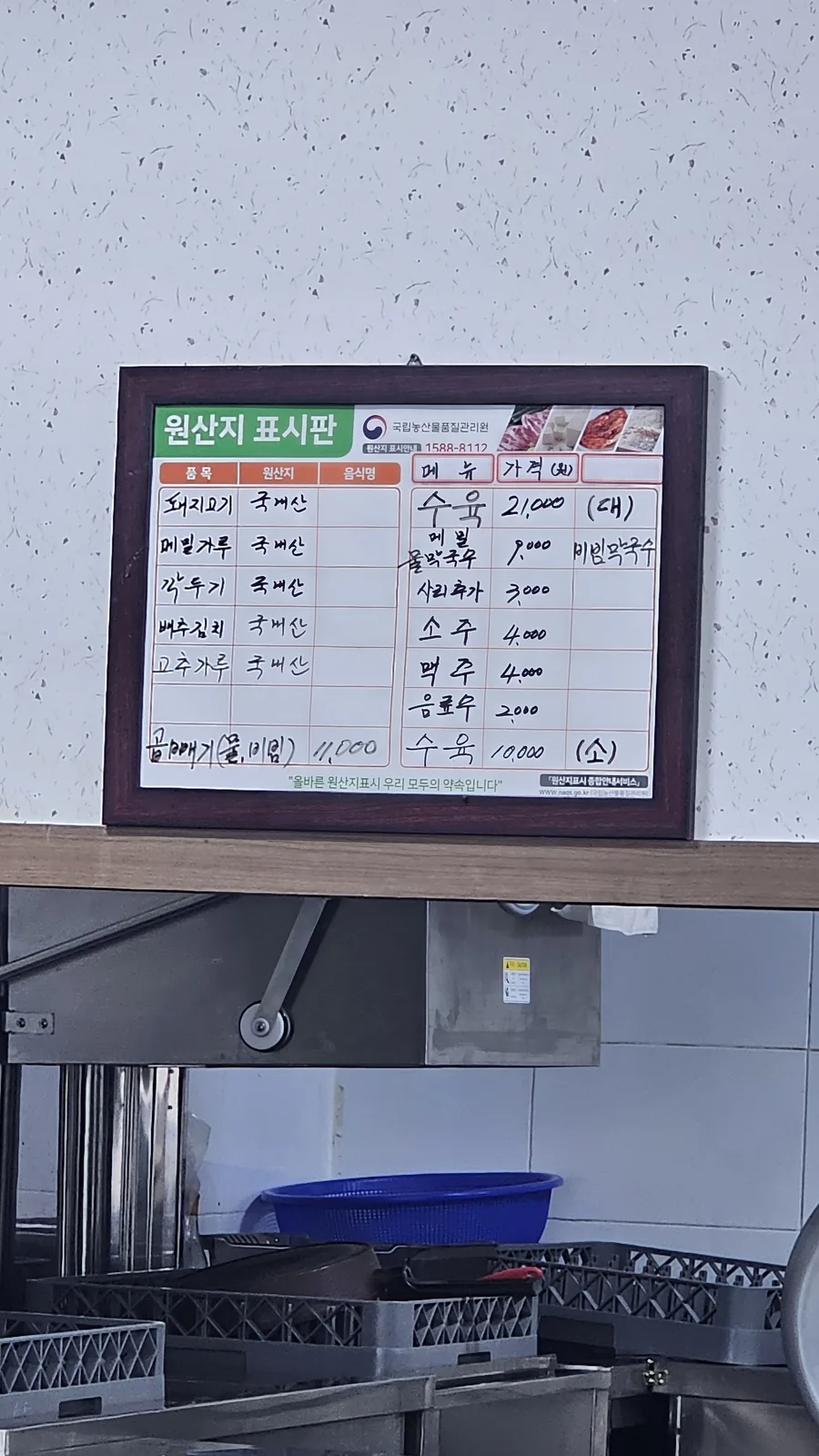
    Ingredient Transparency

    Wall-mounted ingredient origin sign at Jangsu Makguksu showing buckwheat and pork sourcing information in Korean
    Wall-mounted ingredient origin sign at Jangsu Makguksu showing buckwheat and pork sourcing information in Korean

    They post ingredient origins on the wall — pork and buckwheat sourcing. This is a legal requirement for restaurants in Korea above a certain size. Worth glancing at if you care about sourcing.

    Stuff Tourists Should Know

    English menu: No. Korean only. The menu is simple — buckwheat noodle, spicy mixed noodle, boiled pork. Pointing works fine.
    English-speaking staff: Probably not. Small local restaurant in a rural area. Come with a translation app if you need to communicate more than pointing at the menu.

    Card payment: Unknown — bring cash to be safe. Rural small restaurants in Korea often prefer cash.

    Tipping: None. Korea doesn’t tip.

    Reservations: Not needed. Walk-in.

    Vegetarian: The makguksu broth may contain meat-based stock — hard to confirm without asking. The noodles themselves are buckwheat. Check if this matters to you.

    Halal/Kosher: Not applicable — pork is central to the meal here.

    Kids: Fine. Simple food, no complex flavors. The plain buckwheat noodle bowl is easy for kids.

    Solo dining: Totally fine. This isn’t a “group experience” restaurant.

    The Verdict

    The noodles are the reason to come here. Fresh-made, buckwheat flavor you can actually taste, light broth that doesn’t overpower them. For 9,000 KRW (~$6.70 a bowl), it’s honest value.

    The subyuk is good supporting cast. Small portion is enough for three or four people sharing.

    Go if:

    – You’re in Cheongyang or driving through South Chungcheong and need a solid lunch

    – You want to try proper regional makguksu away from the Seoul restaurant circuit

    – You care about fresh-made noodles over pre-packaged ones

    Skip if:

    – You’re in Seoul with limited time — this is two hours away and not worth a special trip just for noodles

    – You need English menus and English-speaking staff — this isn’t that kind of place

    Would we go back? Yeah. Already planning to.

    FAQ

    What is makguksu and how is it different from naengmyeon?

    Makguksu (막국수) is a Korean cold buckwheat noodle dish. It’s earthier and coarser than naengmyeon — less polished, more rustic. Usually served in a light cold broth or mixed spicy style. Jangsu Makguksu makes their noodles fresh in-house, which makes a noticeable difference in texture.

    How do I get to Cheongyang from Seoul?

    Cheongyang is about 2 hours south of Seoul by car. There’s no direct train — you’d need to drive or take a regional bus from Cheonan or Daejeon. It’s a small rural county, not a typical tourist stop, so a car is your best bet.

    Is there an English menu at Jangsu Makguksu?

    No English menu. The menu is handwritten in Korean on the wall: buckwheat noodle (메밀막국수), spicy mixed noodle (비빔막국수), and boiled pork (수육) in small or large. It’s simple enough to point at.

    How much does a meal cost per person?

    A bowl of buckwheat makguksu is 9,000 KRW (~$6.70). Add a shared small subyuk (boiled pork) for 10,000 KRW (~$7.40). For a group of four sharing one subyuk, expect to pay around 11,000–12,000 KRW per person (~$8–9).

    Is parking available?

    Cheongyang is a small town with space to spare — parking near the restaurant should be easy. No parking fees expected.

    Do I need to make a reservation?

    No reservation needed. It’s a walk-in local restaurant. We arrived at 11:30 AM on a weekend and walked right in with no wait.

    You might also like

    📍 Location

    Open in Google Maps →

  • Guigui Yeouido: Honest Review of Korean Grilled Mackerel

    Guigui Yeouido: Honest Review of Korean Grilled Mackerel

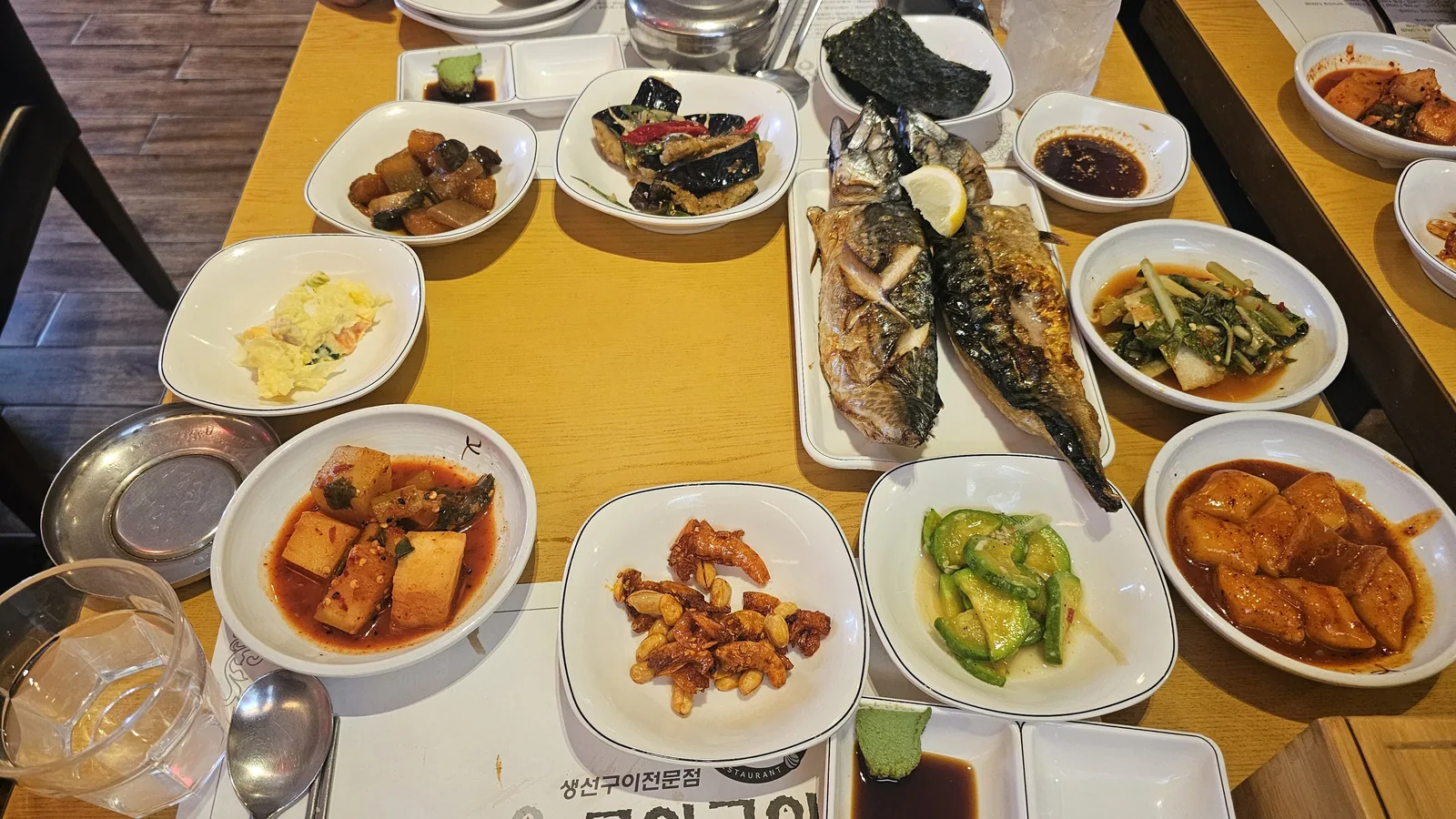
    Quick honest review of Guigui (구이구이) in Yeouido. Short version: it’s a place I keep coming back to. The grilled mackerel is solid, the side dish spread is generous, the al-tang warms you up properly, and there’s an eggplant tempura hiding in the banchan that’s quietly the best thing on the table.

    Went with one other person. Ordered one grilled mackerel and one al-tang. Shared everything.

    What Is Guigui?

    Guigui (구이구이) literally means “grill grill” in Korean. The name is exactly what it is: a grilled fish restaurant. Not a fusion concept, not a themed dining experience. Fish, grilled, served with rice and a table full of side dishes.

    In Korea, this kind of meal works on a set format. You order one main dish — in this case, a whole grilled fish — and the restaurant brings out banchan (반찬), a spread of small complimentary side dishes. Could be 8, could be 12. You don’t order them. They just show up. No extra charge.

    For anyone used to à la carte dining: the side dishes are included. You’re welcome.

    Where It Is

    Yeouido. Seoul’s financial district — think Canary Wharf in London or the lower Manhattan area in New York, but the lunch spots are genuinely better. It’s home to the National Assembly, KBS and MBC broadcasting headquarters, and a dense cluster of office towers.

    Getting there:

    – From Myeongdong: ~25 minutes by subway (Line 5)

    – From Hongdae: ~20 minutes (Line 2 transfer to Line 5)

    – From Gangnam: ~30 minutes (Line 9)

    Yeouido Station exits on both Line 5 and Line 9. The restaurant is an easy walk from there.

    This is not a tourist-heavy area. You’re eating where Seoul office workers eat, which is most of the appeal.

    The Interior

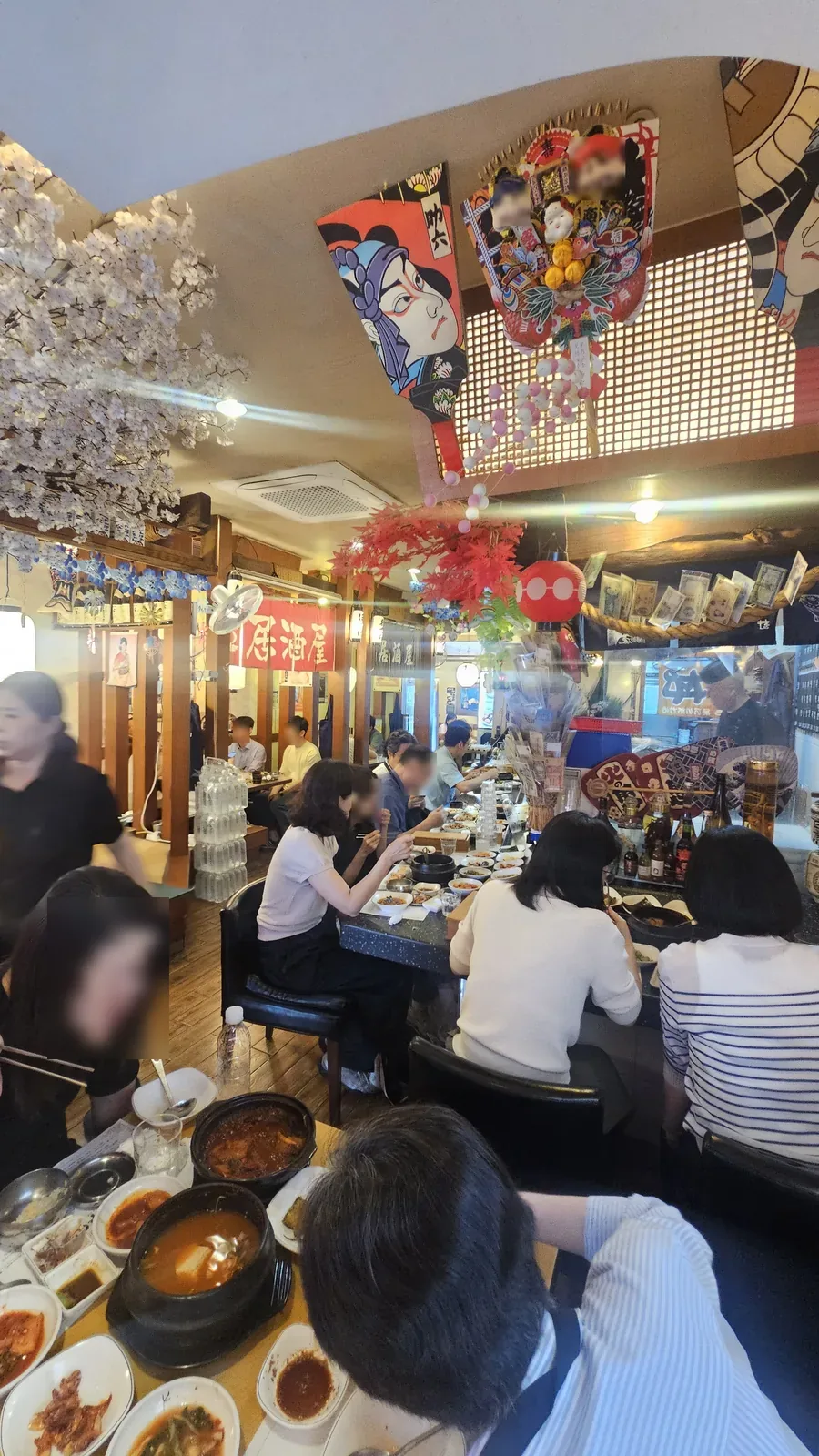
    Busy lunch crowd inside Guigui Yeouido with izakaya-style interior decor fully packed
    Busy lunch crowd inside Guigui Yeouido with izakaya-style interior decor fully packed
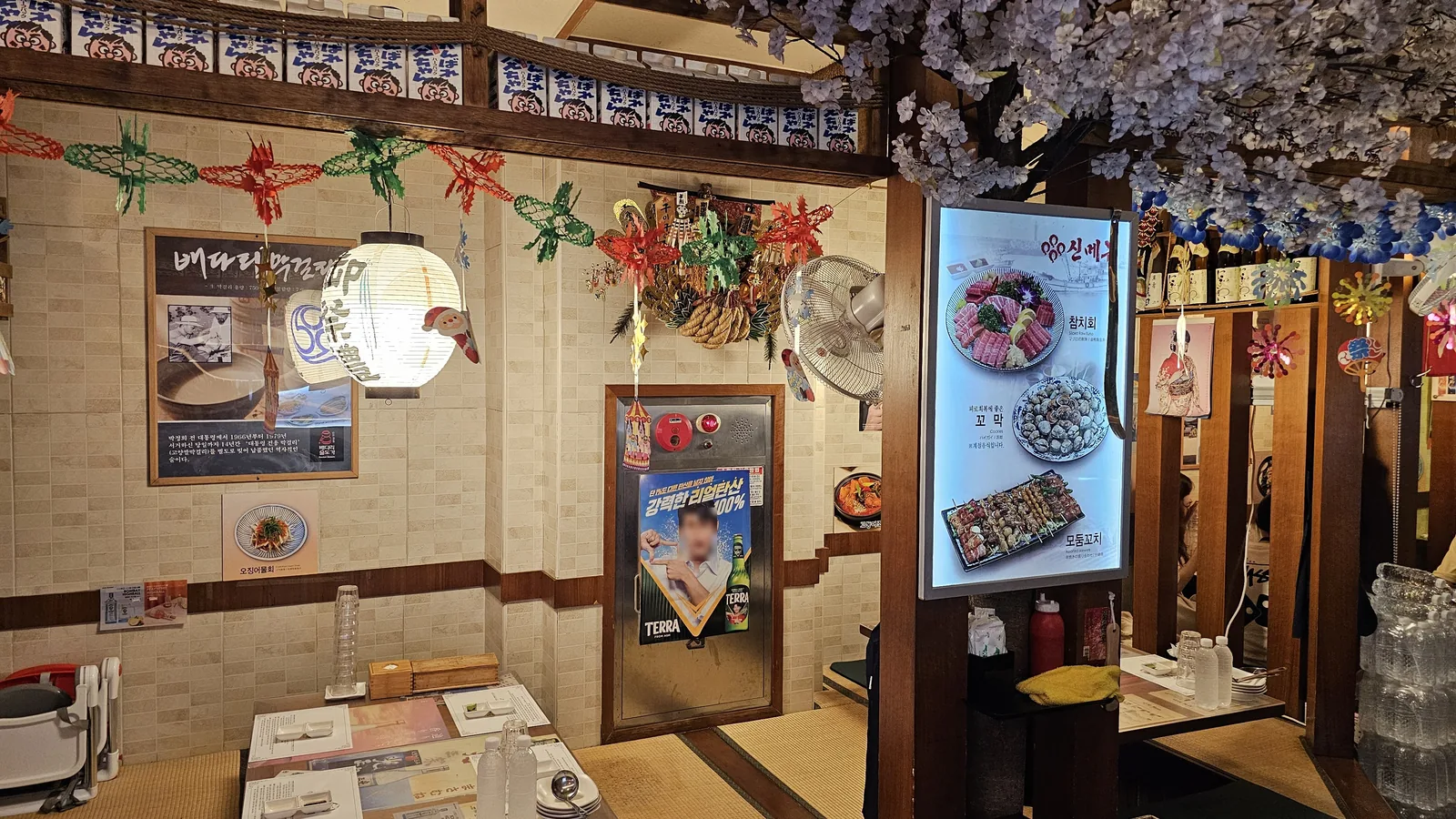
    Interior wall of Guigui Yeouido decorated with cherry blossom branches, paper lanterns, and retro TUNA advertising poster
    Interior wall of Guigui Yeouido decorated with cherry blossom branches, paper lanterns, and retro TUNA advertising poster
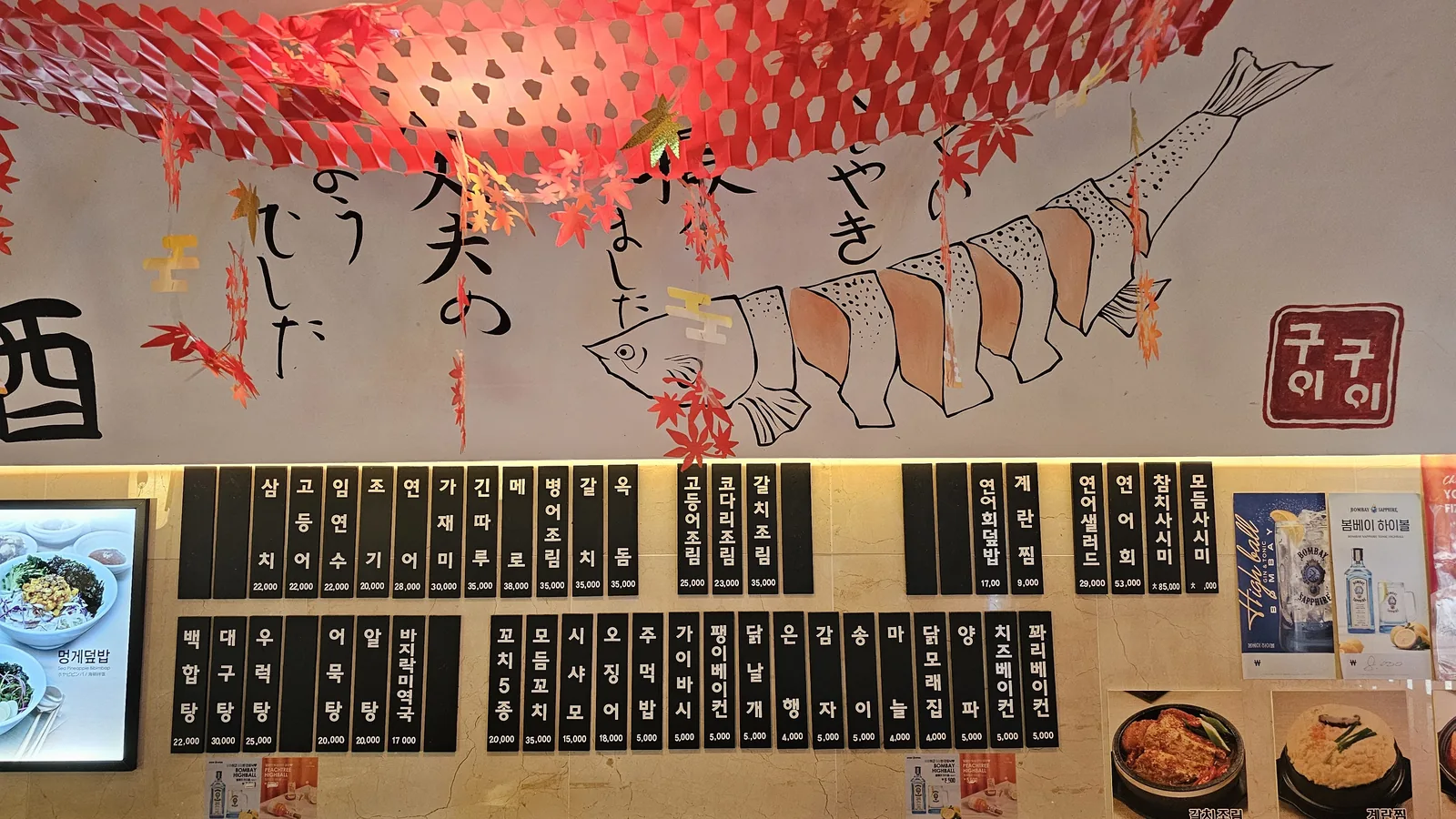
    Chalk menu board on ceiling at Guigui Yeouido with autumn leaf and fish motif decorations
    Chalk menu board on ceiling at Guigui Yeouido with autumn leaf and fish motif decorations

    Not what you’d expect from a grilled fish restaurant. There are paper lanterns hanging from the ceiling, cherry blossom branches on the walls, chalk menus written on wooden boards up top, and retro-style advertising posters — one reads “TUNA” in old-school graphics. Some tables have digital display boards. It reads like an izakaya (Japanese pub) that got reimagined by someone who really loves Korean fish markets.

    A lot of character. Chaotic in a good way.

    We visited at lunch and it was completely packed. Every table taken, steady noise level, quick turnover. This is not a lingering-over-coffee type of place.

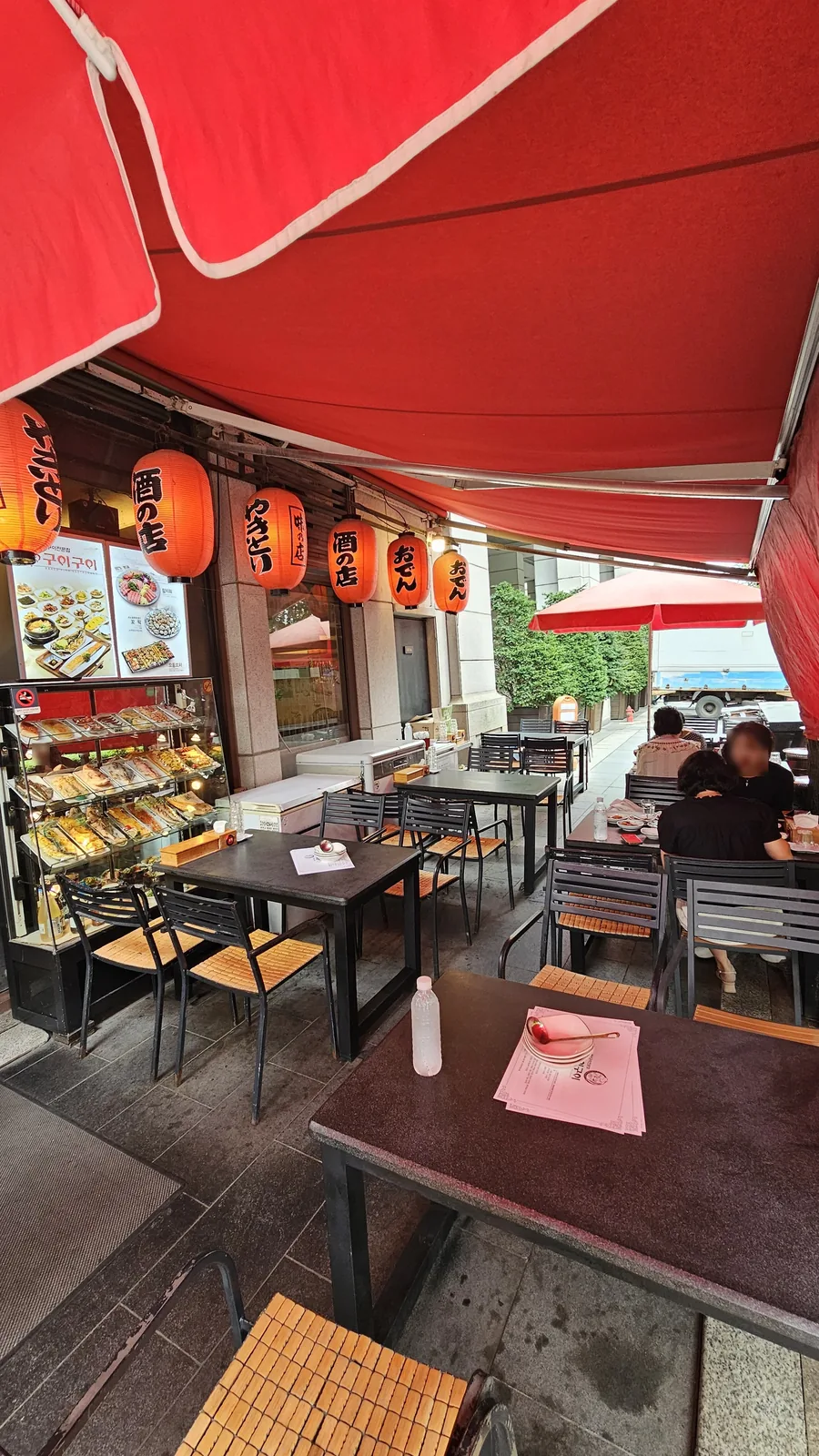
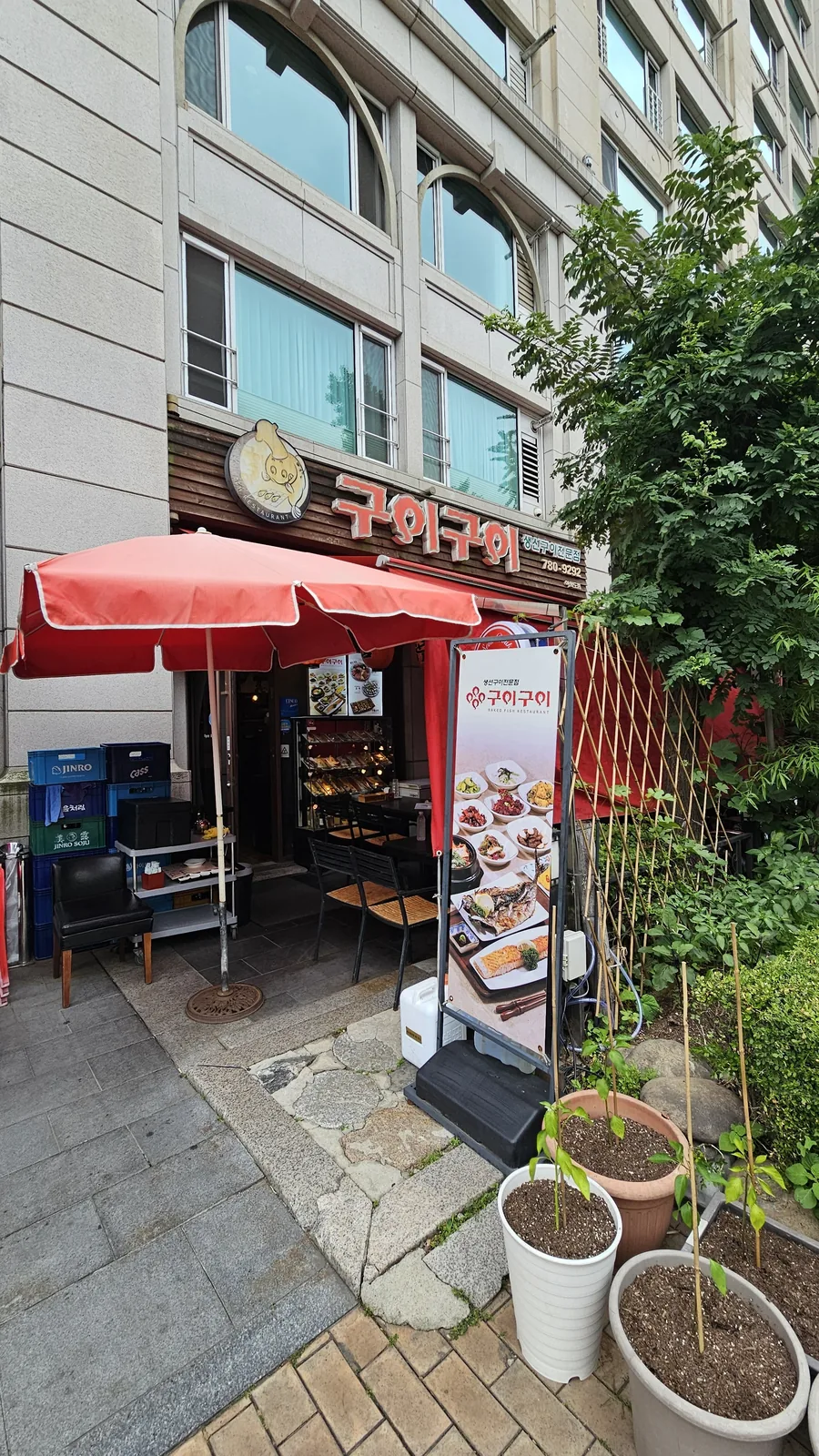
    Outdoor terrace seating at Guigui Yeouido with red awnings and orange paper lanterns
    Outdoor terrace seating at Guigui Yeouido with red awnings and orange paper lanterns
    Exterior facade of Guigui Yeouido in Yeouido Seoul showing red awning and terrace seating during daytime
    Exterior facade of Guigui Yeouido in Yeouido Seoul showing red awning and terrace seating during daytime

    Outside there’s a terrace with bar-style seating along the building face, red awnings, and orange paper lanterns. On a decent weather day, worth grabbing a spot out there.

    The Menu

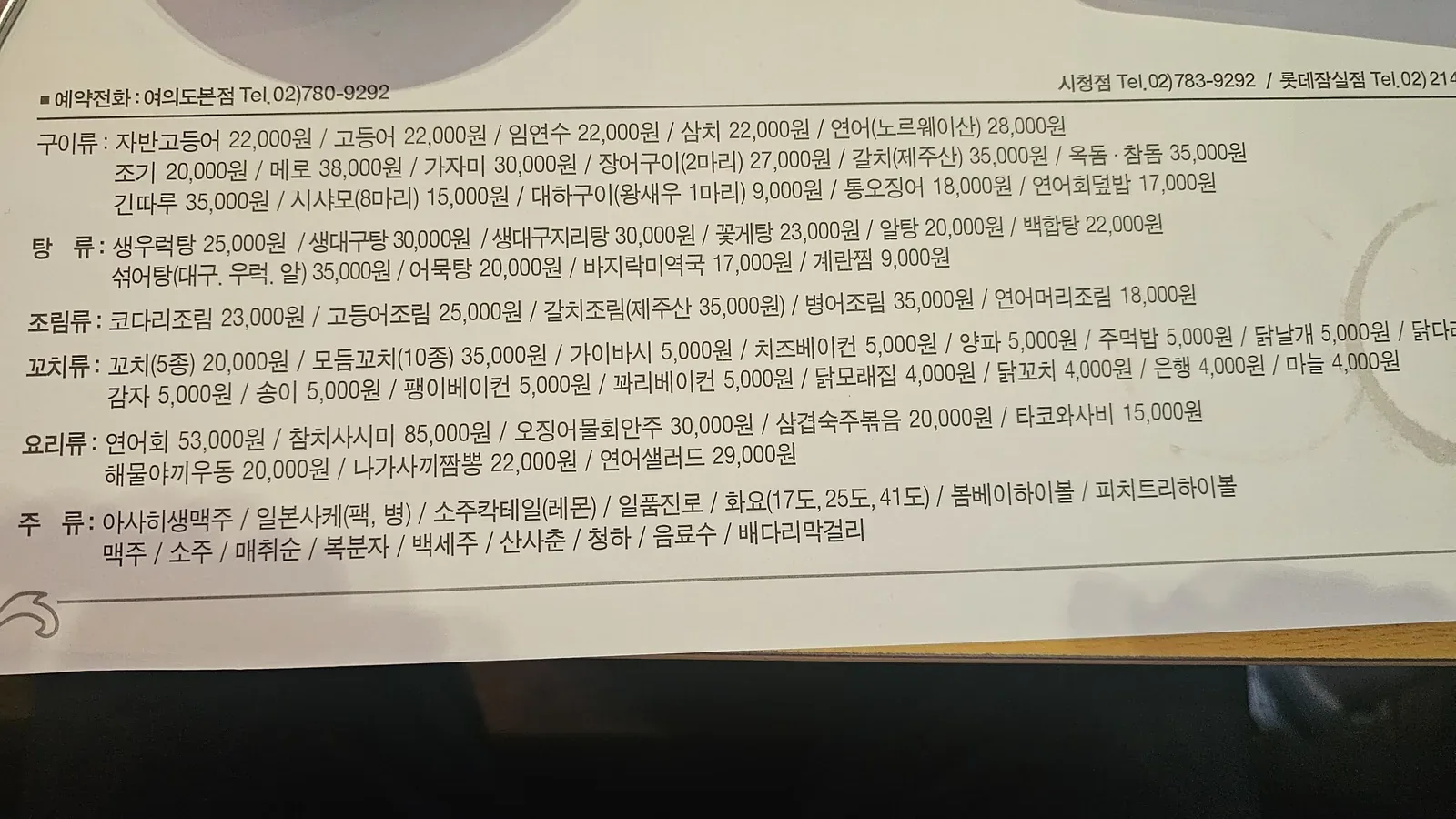
    Main items on the grilled fish side:

    – 고등어구이 (Grilled mackerel): 22,000 KRW (~$16)

    – 자반고등어 (Salt-cured mackerel): 22,000 KRW (~$16)

    – 장어구이 (Grilled eel): 27,000 KRW (~$20)

    – Plus salmon, cutlassfish, and others depending on availability

    There are also stews (탕류) and skewers. We went with the mackerel and al-tang.

    What We Ordered

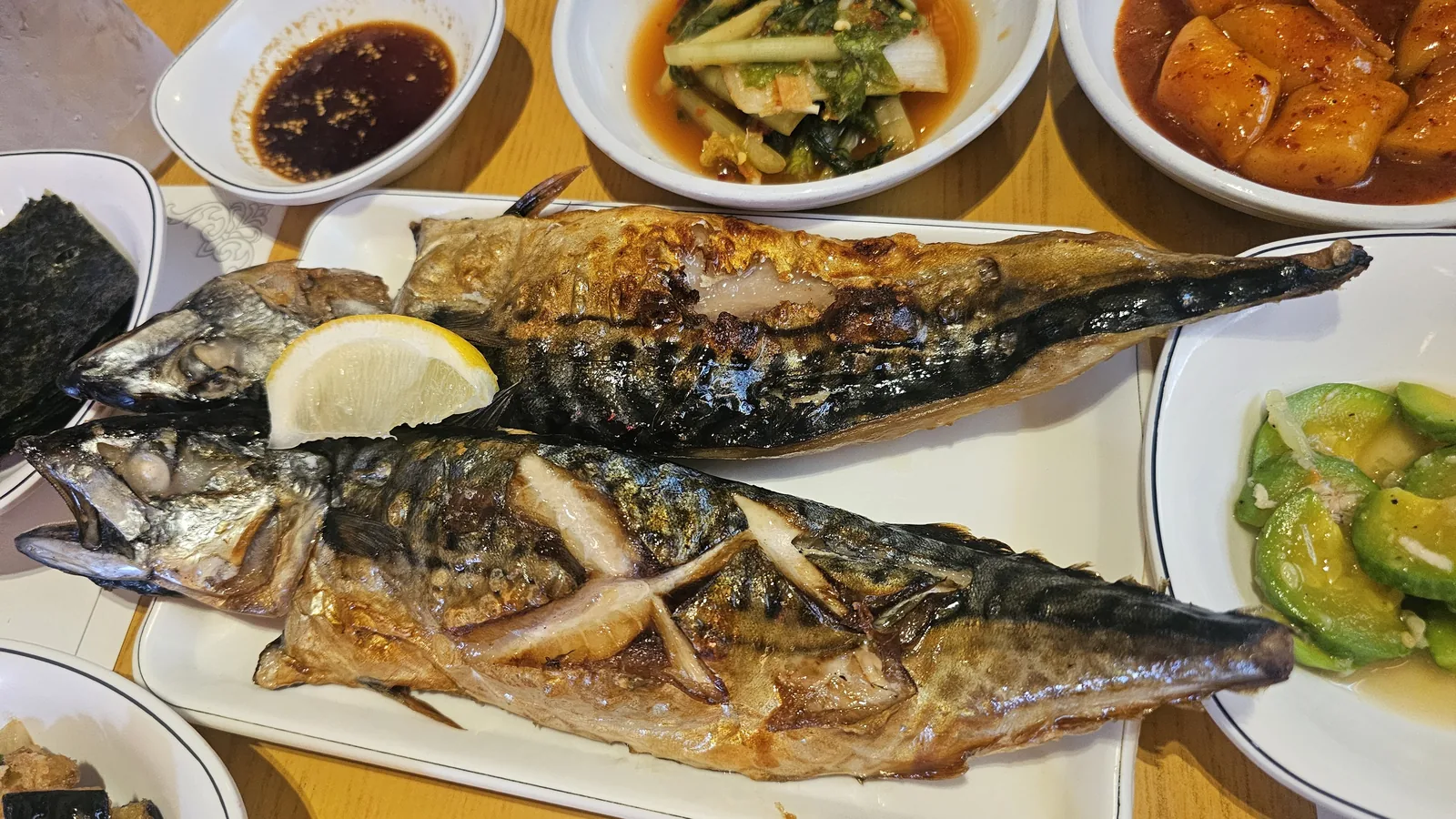
    Two whole grilled mackerel with lemon slices at Guigui Yeouido, crispy golden skin close-up
    Two whole grilled mackerel with lemon slices at Guigui Yeouido, crispy golden skin close-up

    Grilled mackerel (고등어구이) — 22,000 KRW (~$16)

    The mackerel comes whole. Two fish, skin-on, grilled until the surface blisters and the skin tightens up. Lemon wedge on top. That’s it.

    Mackerel has a stronger, oilier flavor than white fish. If you’ve had grilled fish at a Korean home or a neighborhood diner, you know the taste. Guigui’s version is well-executed — the skin is properly crispy without being dry, the flesh pulls apart in clean flakes, and the fat stays in the fish where it belongs.

    It’s not a fancy plate. It doesn’t need to be.

    If you’ve never had whole grilled mackerel before: the bones run through the center of the fish. Use your chopsticks or a spoon to pull the flesh from the spine and ribs. Slightly fiddly, completely worth it.

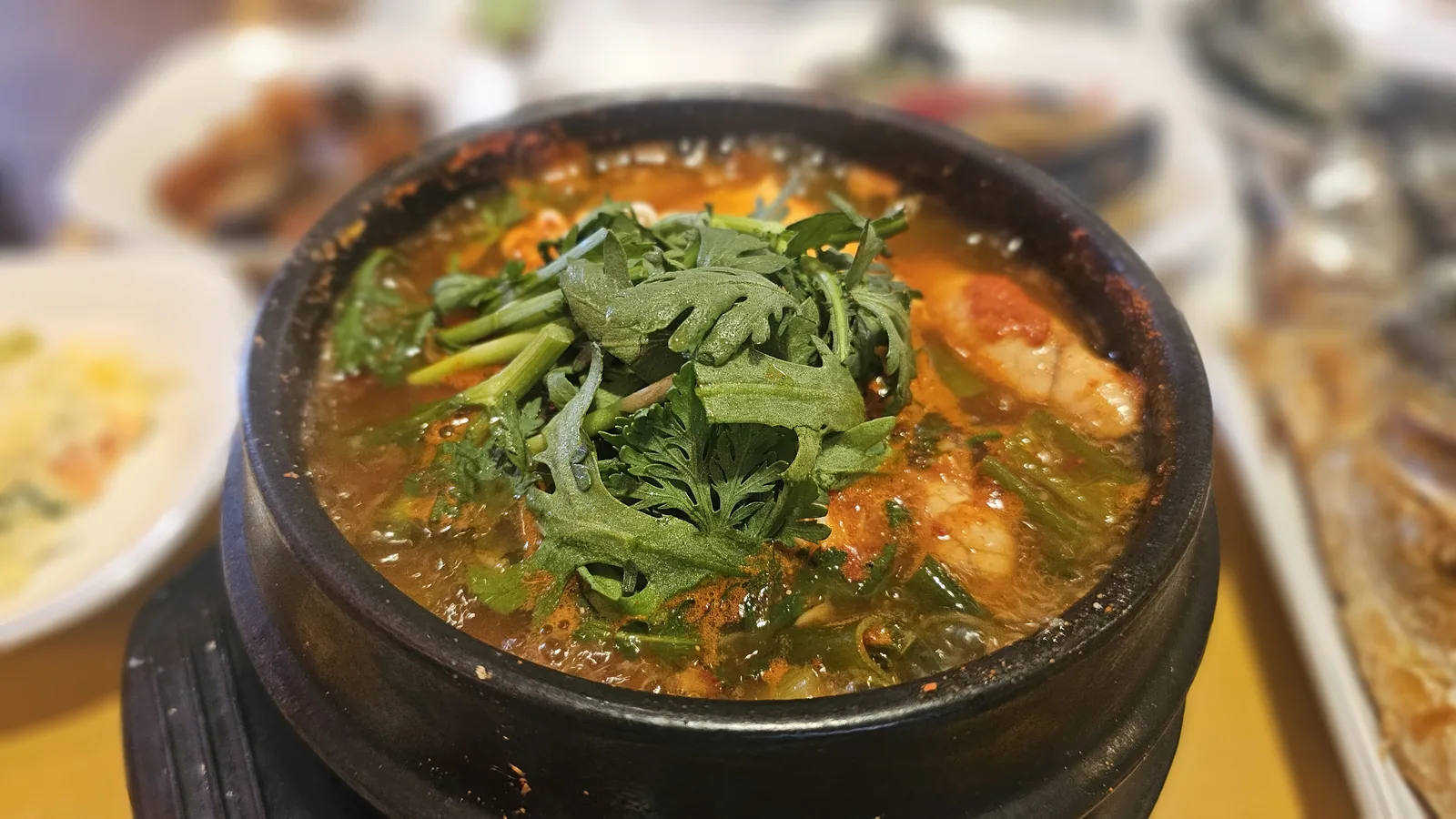
    Spicy fish stew in earthenware pot at Guigui Yeouido garnished with green onions and water parsley
    Spicy fish stew in earthenware pot at Guigui Yeouido garnished with green onions and water parsley

    Al-tang (알탕) — roughly 15,000–18,000 KRW (~$11–$13)

    Al-tang is a spicy stew made with fish roe — typically pollock roe. Red broth, heavy on the heat, piled with water parsley (미나리) and green onions. It comes in an earthenware pot (뚝배기) that holds the heat for a long time.

    If spicy food is not your thing, skip this and order a milder stew. If it is your thing — this is exactly the kind of Korean stew that makes you want to keep scooping more rice into it. The roe has a slightly firm texture, not mushy. The broth is deep and rich from the seafood base.

    Good call. Would order again.

    The Side Dishes

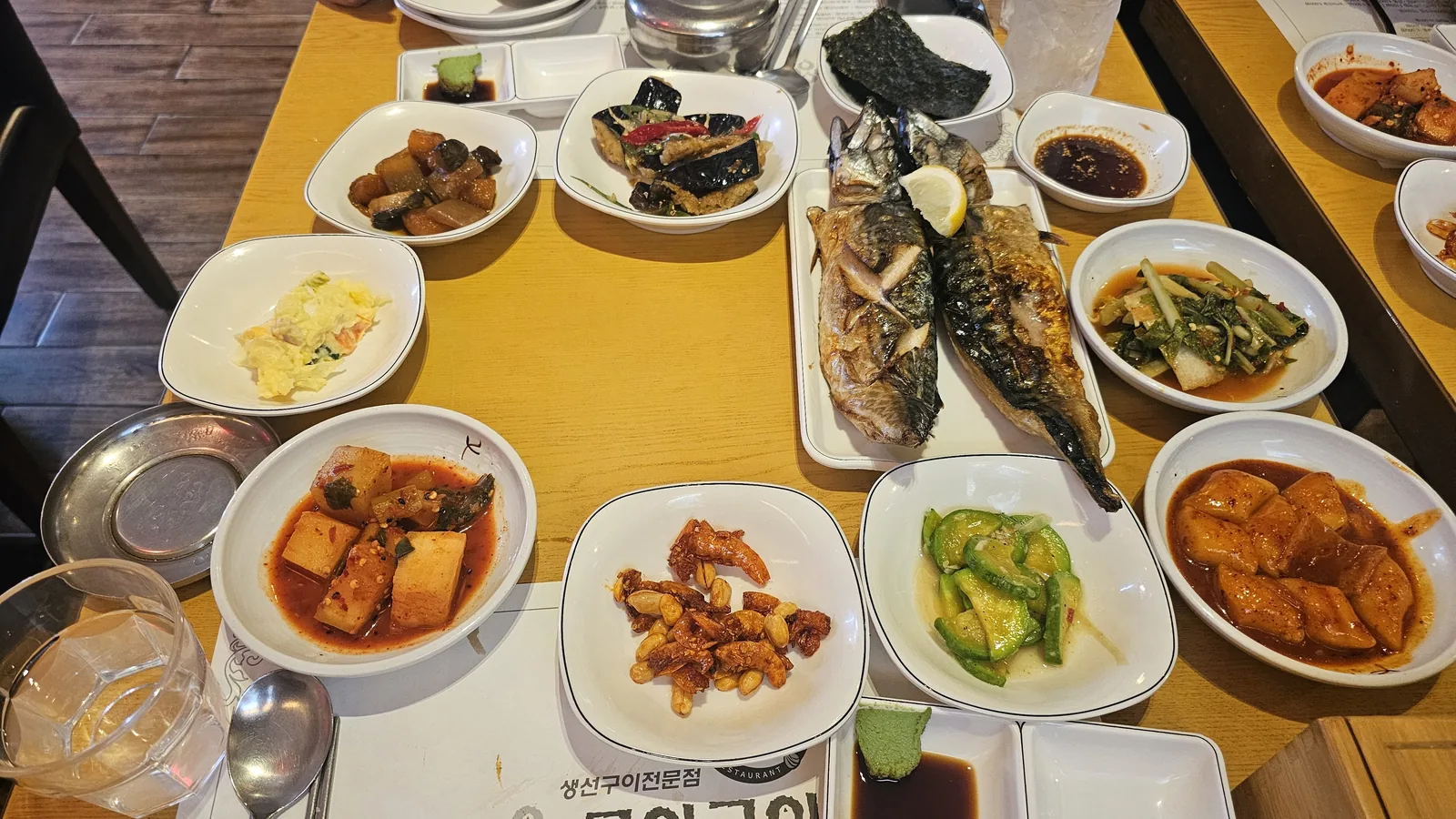
    Full Korean grilled fish set at Guigui Yeouido with two whole mackerel and over ten side dishes covering the table
    Full Korean grilled fish set at Guigui Yeouido with two whole mackerel and over ten side dishes covering the table

    This is honestly where Guigui earns its regulars.

    When the main arrived, the table filled up fast. We counted well over ten side dishes: roasted seaweed, egg roll (계란말이), acorn jelly (도토리묵), radish kimchi (깍두기), cucumber salad, braised tofu, anchovy stir-fry, something tteokbokki-adjacent, avocado salad, and a few others I didn’t catch the names of.

    Standard lineup for this style of restaurant. But then there was the eggplant tempura (가지튀김).

    I wasn’t expecting much from it. It’s one small plate among a dozen others. But — eggplant, battered lightly, fried without getting greasy, soft on the inside. I ate most of it before even getting to the mackerel.

    If you’re at Guigui and the eggplant tempura shows up on your table, don’t ignore it.

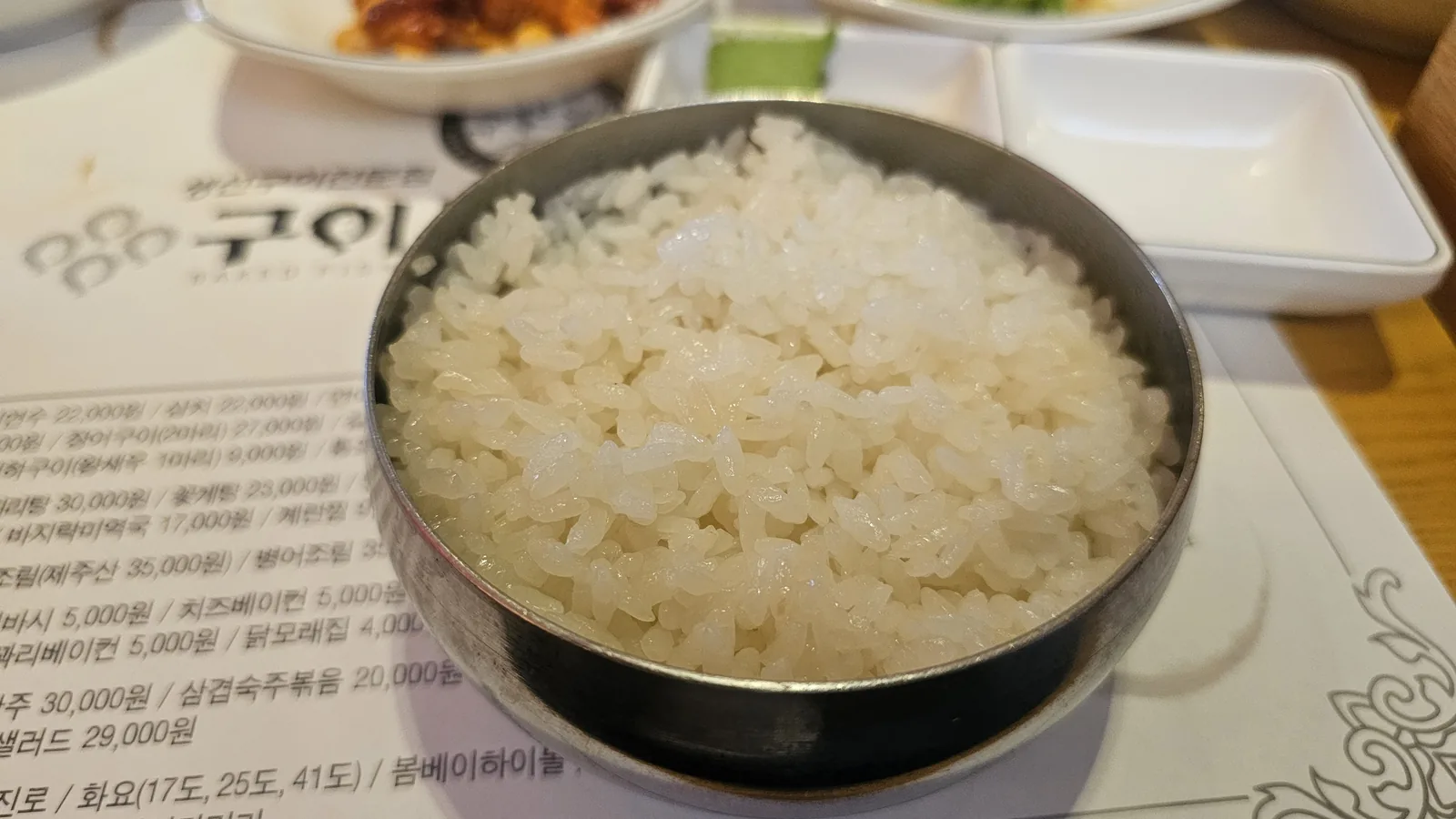
    Steel bowl of white rice at Guigui Yeouido with menu board visible in the background
    Steel bowl of white rice at Guigui Yeouido with menu board visible in the background

    Rice comes in the standard steel bowl. At most Korean restaurants of this type, you can ask for refills — just flag down the staff and point at the bowl.

    Stuff Tourists Should Know

    Language: Menu boards are in Korean only. The photo menus on the wall help significantly — pointing and holding up fingers gets the order done. Don’t stress it.

    Payment: Card payment is standard across Yeouido. Foreign Visa and Mastercard cards generally work at Korean terminals. Keep a little cash on hand as backup.

    Tipping: There is no tipping culture in Korea. Don’t leave money on the table expecting it to be kept as a tip — it may just create confusion.

    Spice: Grilled mackerel is not spicy. Al-tang is spicy. If you want a milder stew option, ask about 대구지리탕 (daegu jiri-tang, mild cod stew) if it’s available. Or just skip the stew and focus on the fish.

    Vegetarian options: Minimal. This is a fish-forward restaurant. Most banchan contain anchovy broth, dried fish, or small seafood. Not a good pick for vegetarians.

    Halal: Not halal-certified.

    Timing: Lunch rush is serious. Arrive before 11:30 AM or after 1:30 PM if you want to walk in without a wait.

    Who this is for: People who eat at the same place more than once. Office workers, Yeouido regulars, anyone building a mental list of reliable Seoul lunch spots. Not a special occasion restaurant. A very good everyday restaurant.

    The Verdict

    Should you go?

    If you’re in Yeouido for any reason — yes. The grilled mackerel is properly done, the banchan spread is more generous than most, the al-tang delivers, and the eggplant tempura is a genuine bonus. Prices land around 18,000–25,000 KRW (~$13–$19) per person, which is fair for what you get.

    If you’re a tourist with three days in Seoul — probably not your first stop. Yeouido isn’t on the typical tourist circuit, and good grilled fish exists across Seoul. But if you’re already heading to Yeouido — Han River Park is nearby, IFC Mall is close, 63 Building is a short distance — it’s worth making Guigui your lunch plan.

    It’s the kind of place you eat at once, remember, and come back to. That’s a good sign.

    FAQ

    What is the must-order dish at Guigui Yeouido?

    The grilled mackerel (고등어구이, 22,000 KRW / ~$16). It comes whole, skin-on, with rice and 10+ complimentary side dishes included. Also check if eggplant tempura shows up in your banchan — it’s genuinely good.

    How much does a meal at Guigui Yeouido cost per person?

    Around 18,000–25,000 KRW (~$13–$19 USD) per person depending on what you order. Grilled mackerel is 22,000 KRW, eel is 27,000 KRW.

    Is Guigui packed at lunch? Should I make a reservation?

    Yes, very packed on weekdays. Aim to arrive before 11:30 AM or after 1:30 PM. Check their official social media for reservation options — walk-ins work but you may wait.

    Does Guigui Yeouido have an English menu?

    The main menu boards are in Korean. The photo menus on the walls help a lot — pointing and holding up fingers gets the job done. Staff won’t speak much English but orders go through fine.

    Is the food at Guigui spicy?

    The grilled fish itself is not spicy. The al-tang (fish roe stew) is spicy. If spice is a concern, stick to grilled fish and plain rice.

    Can I pay by card at Guigui Yeouido?

    Most restaurants in Yeouido accept card including foreign Visa and Mastercard. Keep a bit of cash as backup just in case.

    You might also like

    📍 Location

  • Hwanggeum Dwaeji Gukbap in Cheongyang: Honest Review

    Hwanggeum Dwaeji Gukbap in Cheongyang: Honest Review

    Quick honest review of Hwanggeum Dwaeji Gukbap (황금돼지국밥) in Cheongyang. Short version: 10,000 KRW pork soup rice, milky bone broth, generous head meat, open at 6AM, one of those local spots regulars never stop going back to. I’m one of those regulars.

    We went as a group of five on a Saturday around noon. Got 4 돼지국밥 (pork gukbap) and 1 순대국밥 (sundae gukbap). Walked in, sat down, eaten and out in under 40 minutes. 50,000 KRW total for five people. That’s $37.

    What Is Gukbap?

    Gukbap (국밥) is two words: 국 (soup) + 밥 (rice). A bowl of hot soup with rice — either served on the side, or already mixed in.

    Dwaeji gukbap (돼지국밥) is the pork version. The broth is milky white from pork bones simmered for hours. The meat is typically 머리고기 (meorigugi) — head meat, meaning boiled pork from the cheek and jowl area. Sounds intense. Tastes like tender, mild pulled pork. It’s the cut that soaks up the most flavor from long simmering.
    This is Korean working-class comfort food. Not a trend. Not a chef’s-table concept. People have been eating this for breakfast and lunch for decades, and some places have been serving the same bowl for just as long.

    Where Is Cheongyang?

    Cheongyang (청양군) is a small county in South Chungcheong Province — about 2 hours south of Seoul by car or intercity bus from Daejeon. It’s not on most tourist itineraries. Most foreigners passing through Chungnam are heading to Gongju or Buyeo for the Baekje history, or to the western coast.

    But if you’ve eaten Korean food, you’ve probably encountered Cheongyang already. The county gave its name to 청양고추 — the cheongyang chili pepper, the go-to spicy variety in Korean cooking. When a Korean menu says “extra spicy (청양)” it’s referring to this county. The self-serve side dish bar here has a full container of them sliced up, and yes, they’re from around here.

    Getting There

    Cheongyang is a drive or intercity bus ride. From Daejeon, about 1 hour by bus. From Seoul’s Central City Terminal, around 2–2.5 hours. There’s no subway. Once in town, taxi or car makes things easier.

    Phone: 041-943-4300 (useful for directions or takeout orders)

    The Interior

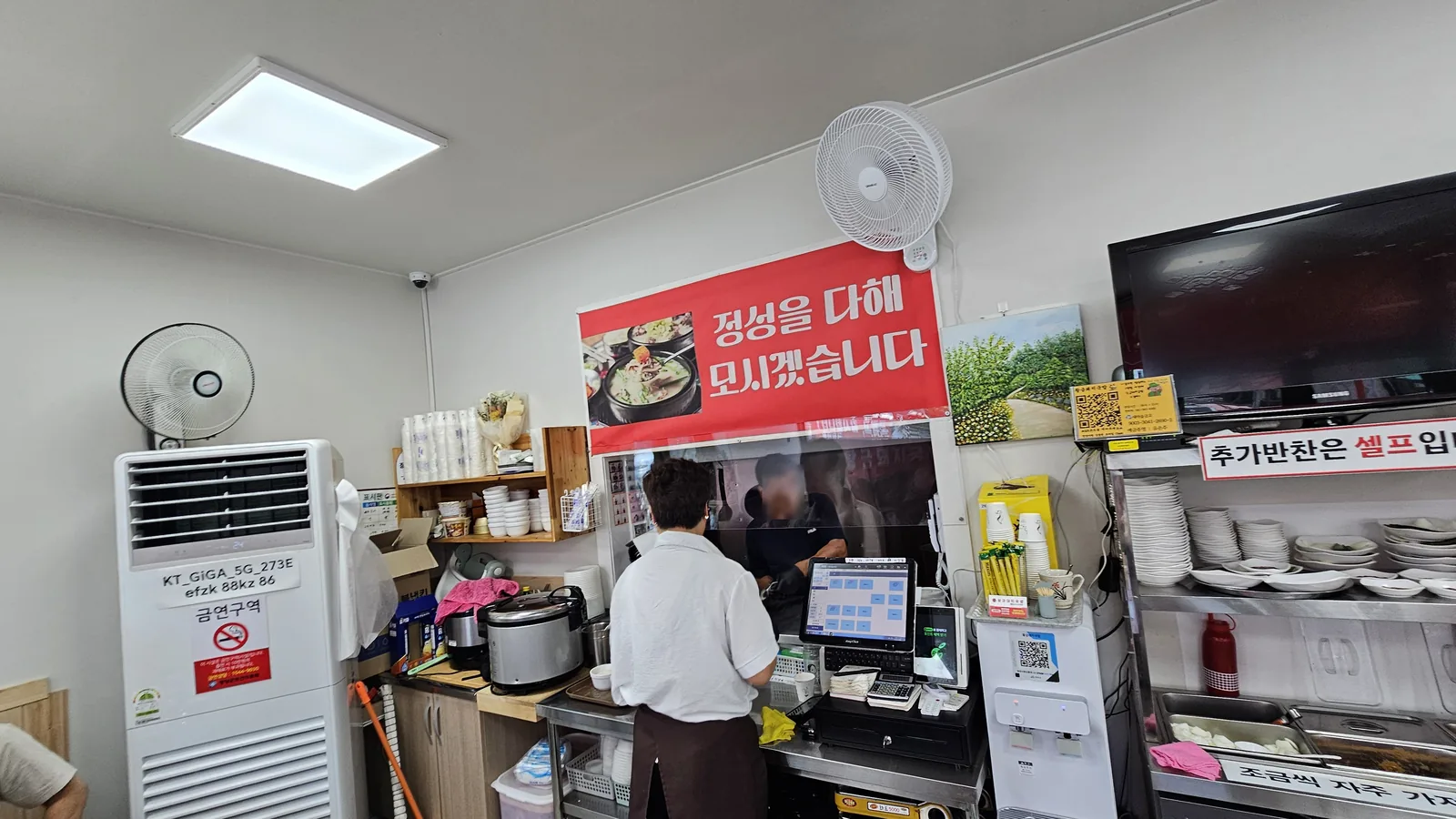
    Kitchen counter and staff at Hwanggeum Dwaeji Gukbap with self-service side dish station signage
    Kitchen counter and staff at Hwanggeum Dwaeji Gukbap with self-service side dish station signage

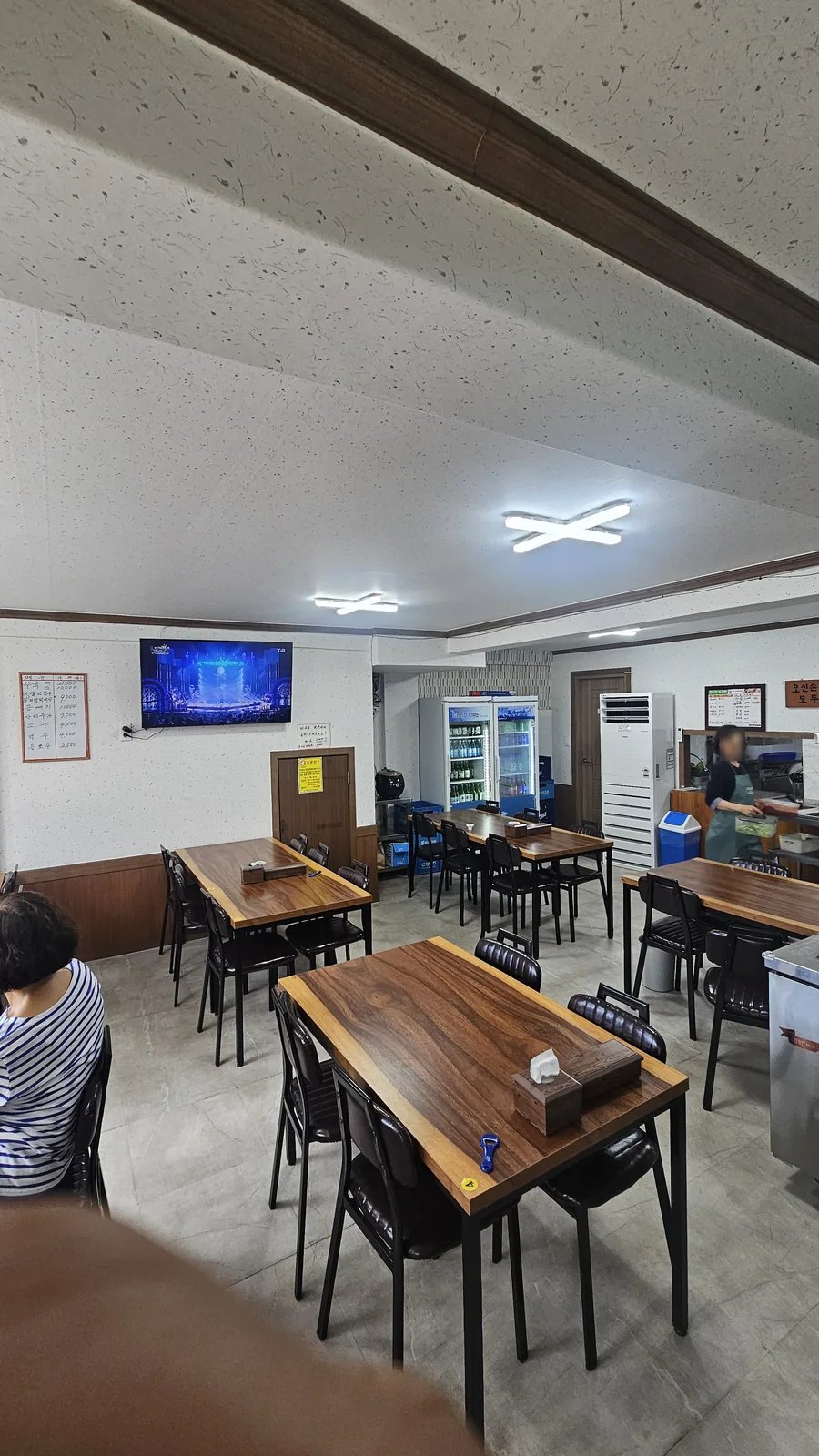
    Bright fluorescent lighting, clean tables, counter seating near the open kitchen. No mood lighting, no design concept. It’s the kind of place where the focus is entirely on the bowl in front of you.

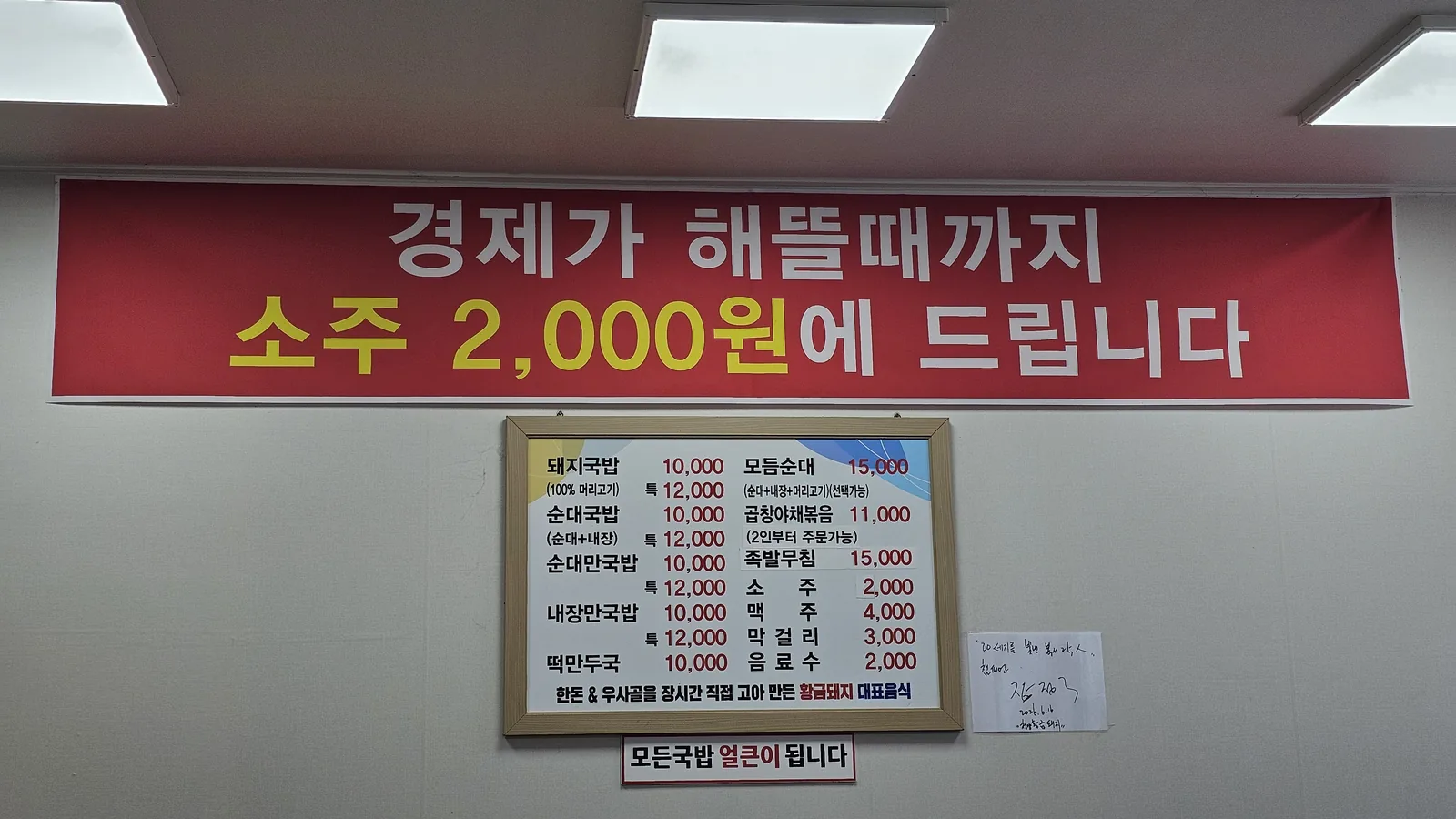
    Two banners catch your eye when you walk in. One says “정성을 다해 모시겠습니다” — “We will serve you with sincerity.” The other one is better:

    Soju 2000 won promotional banner and menu board at Hwanggeum Dwaeji Gukbap
    Soju 2000 won promotional banner and menu board at Hwanggeum Dwaeji Gukbap

    “경제가 해뜰때까지 소주 2,000원에 드립니다” — “Until the economy improves, we’re serving soju for 2,000 won.”

    Regular soju at Korean restaurants runs 6,000–8,000 KRW these days. 2,000 KRW ($1.50) is a real gesture. Whether you read it as gimmick or sincerity, it works either way.

    The Side Dishes

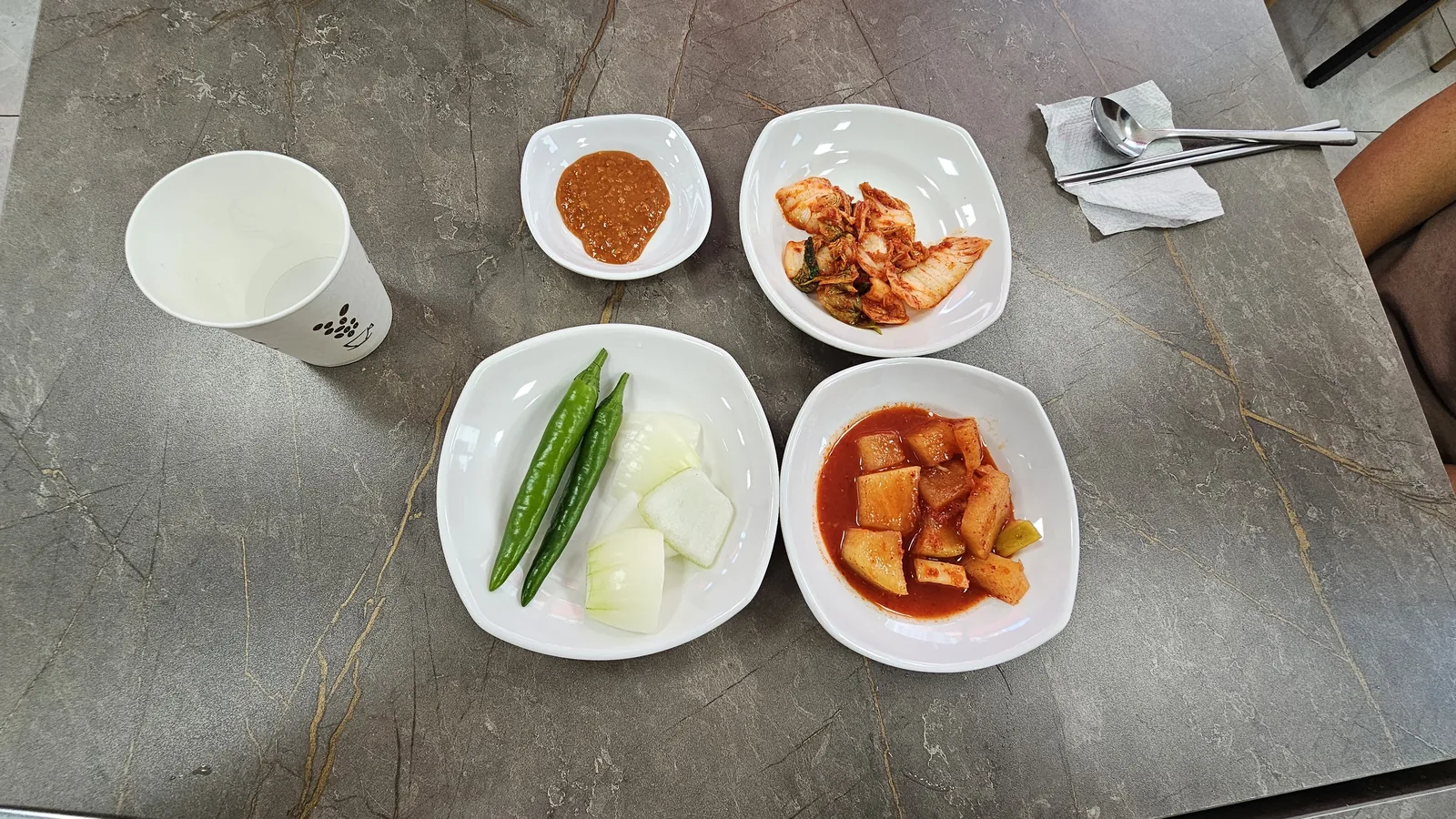
    Traditional Korean side dish table set at Hwanggeum Dwaeji Gukbap — salted shrimp, kkakdugi, cheongyang peppers, onion and kimchi
    Traditional Korean side dish table set at Hwanggeum Dwaeji Gukbap — salted shrimp, kkakdugi, cheongyang peppers, onion and kimchi
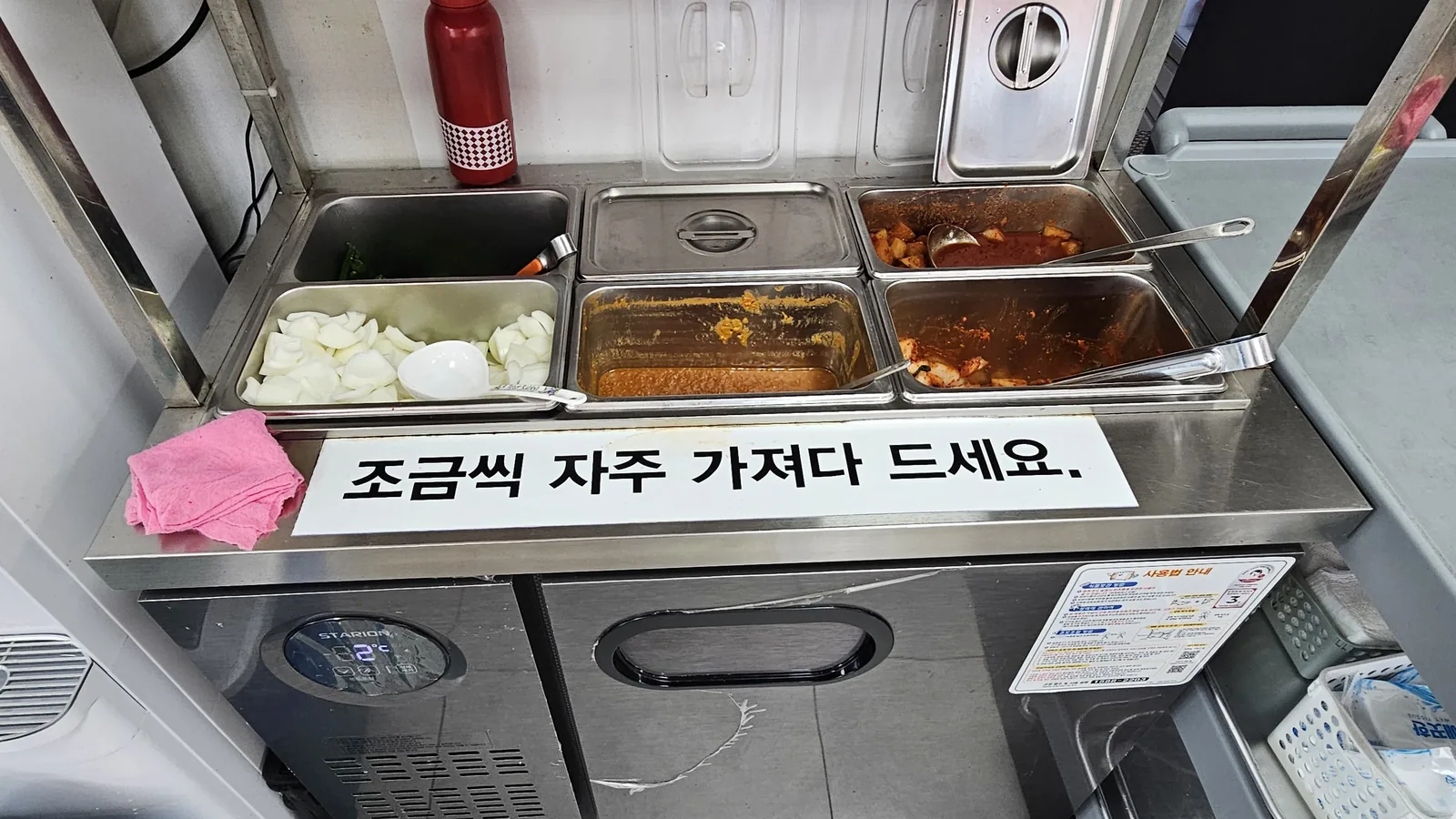
    Self-service side dish bar at Hwanggeum Dwaeji Gukbap with stainless containers of onions, salted shrimp and kkakdugi
    Self-service side dish bar at Hwanggeum Dwaeji Gukbap with stainless containers of onions, salted shrimp and kkakdugi

    Side dishes are self-service. The sign asks you to take a little and come back often — “조금씩 자주 가져다 드세요.” So don’t pile everything at once.

    The lineup:

    새우젓 (saeujeot) — fermented salted shrimp. This is the most important condiment at the table. You add it to your broth to season it. Gukbap comes out unsalted so you control it yourself. Start with a small spoonful, stir, taste, add more. Don’t skip this step or your bowl will taste flat.

    깍두기 (kkakdugi) — cubed radish kimchi. Goes alongside the soup, not usually in it. The crunch and acidity cut through the fatty broth well.

    청양고추 + 양파 — sliced cheongyang peppers and raw onion. Add the peppers if you want heat. Given that you’re literally in Cheongyang County, these are about as local as it gets.

    김치 — standard napa cabbage kimchi.

    For first-timers with gukbap: season with saeujeot first, then add heat with the peppers. Don’t dump everything in at once.

    Dwaeji Gukbap (돼지국밥)

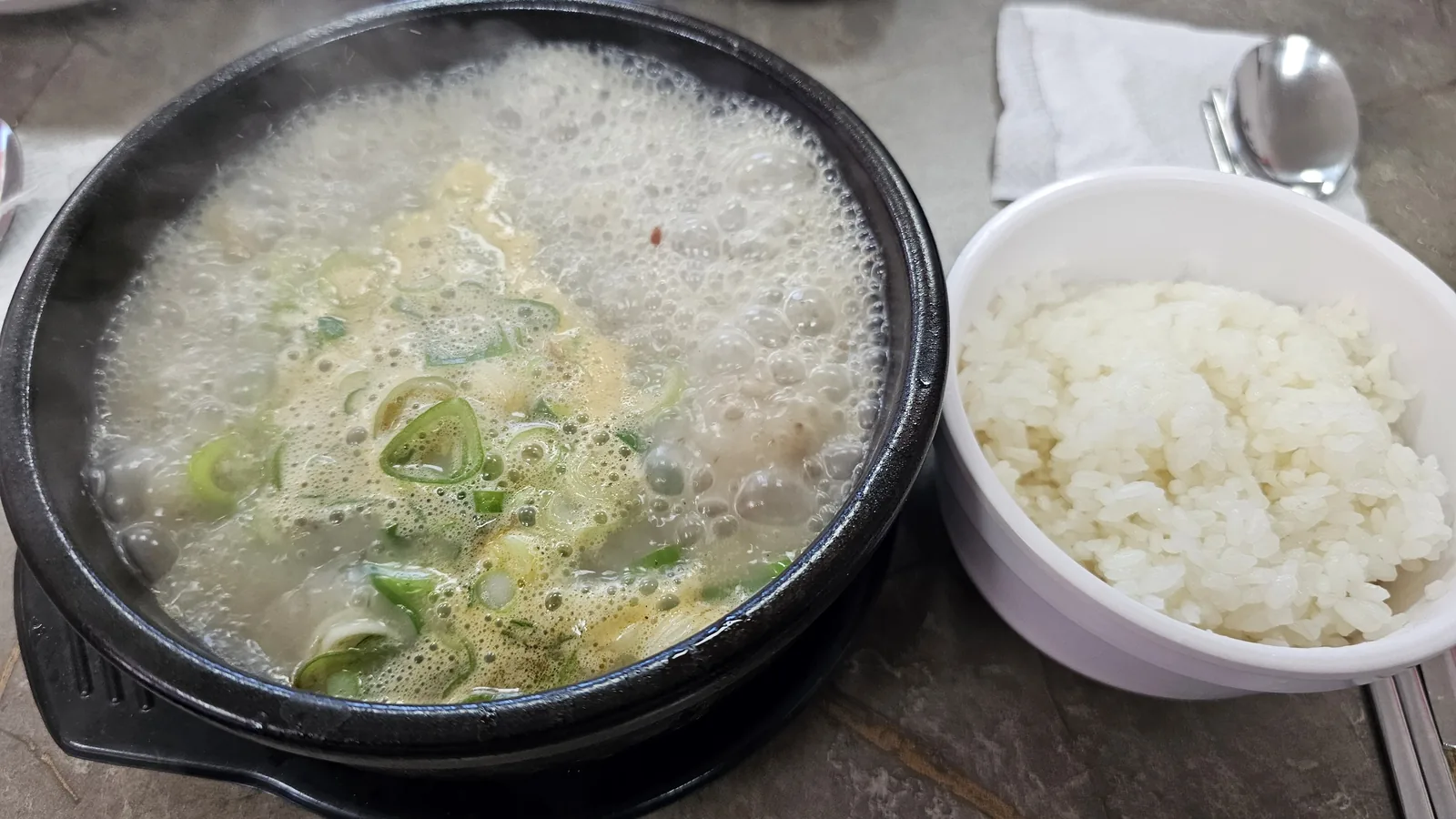
    The dwaeji gukbap (pork and rice soup) arrives
    The dwaeji gukbap (pork and rice soup) arrives
    Close-up of the pork head meat (meorigogi)
    Close-up of the pork head meat (meorigogi)

    The broth is the thing. Milky white from long-simmered pork bones, clean on the palate, not greasy. There’s no funky smell, no heaviness. Just a well-made bone broth that does exactly what it should.

    The head meat is generous. Lift a spoonful and you’re getting real chunks of soft, mild pork. Not shredded scraps — actual pieces. The texture holds up in the hot broth.
    Eat it how you want — rice separate or mixed in. Mixing is the more common way. Drop the rice in, let it soak up the broth for a minute, eat. Add saeujeot. Add some pepper if you want. Done.

    This is why I keep coming back here. The broth hits that specific comfortable note — porky but not overpowering, savory, warming. Some gukbap places get heavy or overly fatty. This one doesn’t. It’s calibrated right.

    Sundae Gukbap (순대국밥)

    A bowl of sundae gukbap (Korean blood sausage soup)
    A bowl of sundae gukbap (Korean blood sausage soup)
    Close-up of sundae (Korean blood sausage) held with chopsticks
    Close-up of sundae (Korean blood sausage) held with chopsticks
    Close-up of a sliced sundae showing its cross-section
    Close-up of a sliced sundae showing its cross-section

    Sundae (순대) is Korean blood sausage. Before you close this tab: it’s milder than what you might be imagining. The standard version is pig intestine casing stuffed with glass noodles (당면), vegetables, and sometimes tofu. Some versions include blood, some don’t. The flavor is gentle and the texture is soft and slightly chewy.

    Same milky broth as the pork bowl. The sundae goes right in, absorbs the soup, and you eat it with the broth. You can also dip pieces in the saeujeot directly.

    Sundae gukbap is a dividing-line dish for foreigners. Either it clicks and you love it, or you decide to stick with the plain pork version. Neither reaction is wrong. If you’ve got a friend in the group who eats everything, order one to share and try a piece before committing.

    The Menu

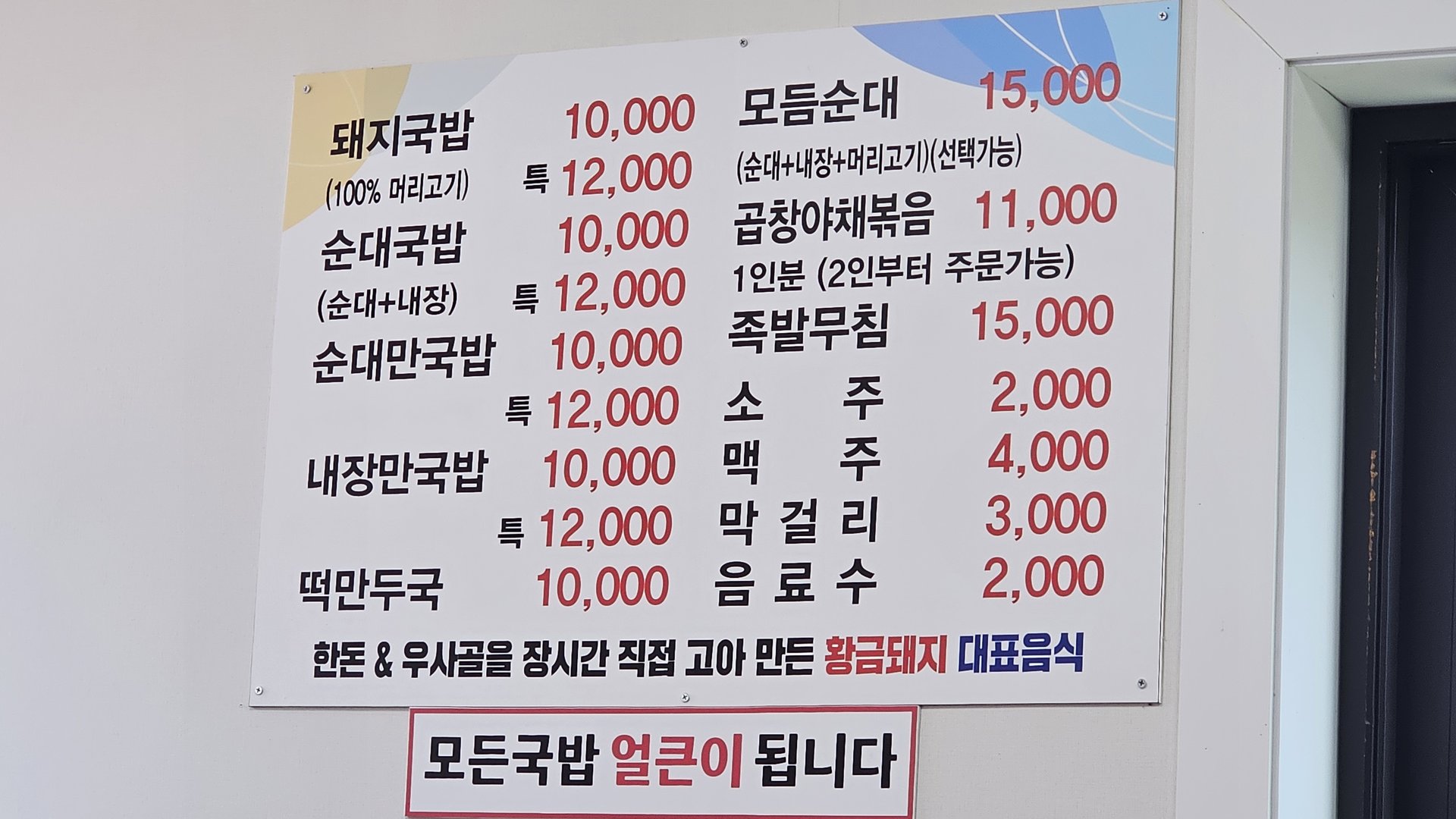
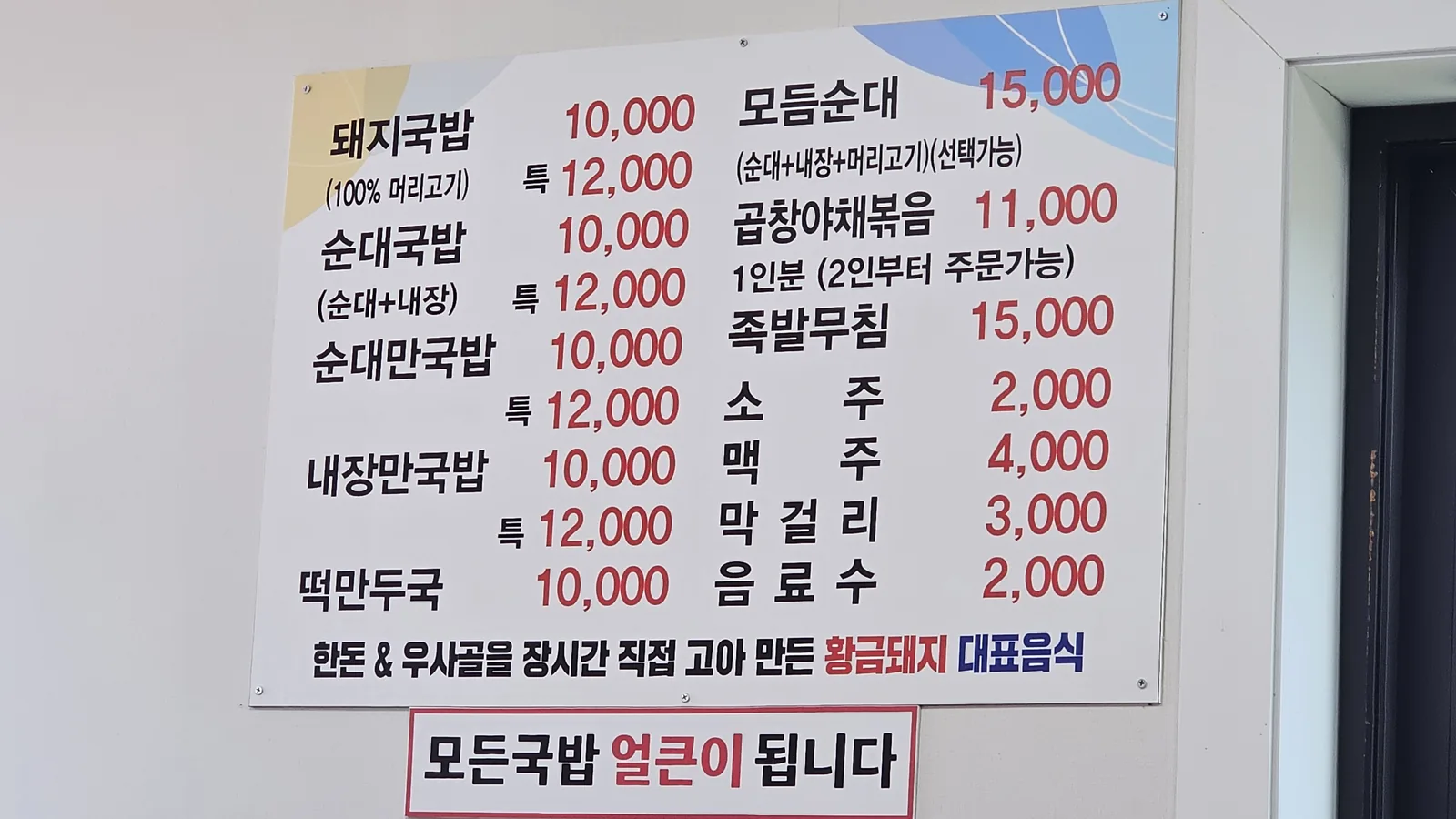
    Menu board at Hwanggeum Dwaeji Gukbap Cheongyang showing all items priced at 10,000 KRW
    Menu board at Hwanggeum Dwaeji Gukbap Cheongyang showing all items priced at 10,000 KRW

    Everything is 10,000 KRW (~$7.40 USD):

    돼지국밥 — pork soup rice (the main event)

    순대국밥 — Korean blood sausage soup rice

    내장만국밥 — offal-only soup rice (intestines and organ meat, for those who want to go further)

    떡만두국 — rice cake and dumpling soup (the safe option if you’re squeamish)

    Rice comes with every bowl. No upcharge. Soju is 2,000 KRW.

    Practical Info for Tourists

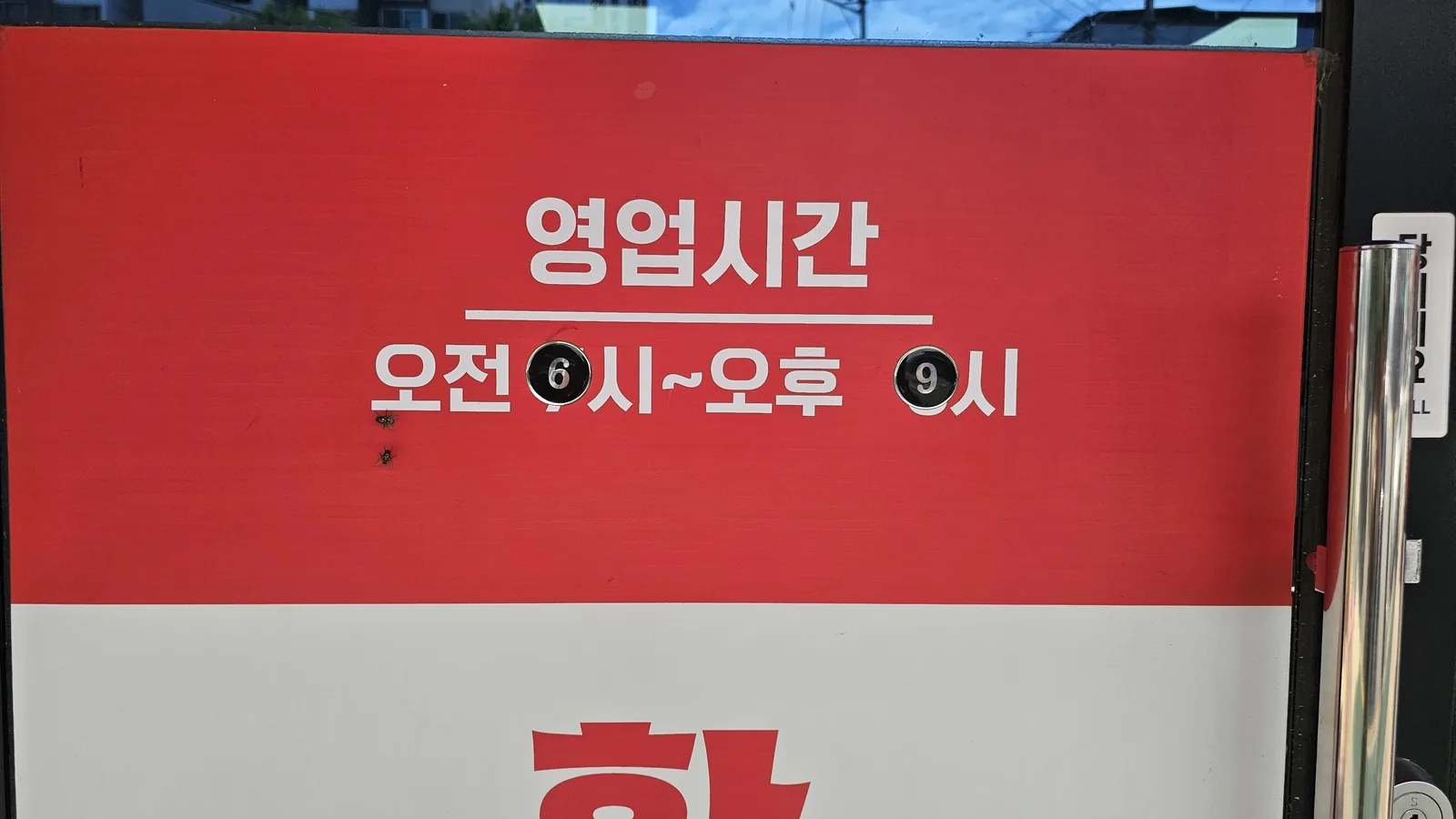
    Opening hours sign at Hwanggeum Dwaeji Gukbap
    Opening hours sign at Hwanggeum Dwaeji Gukbap
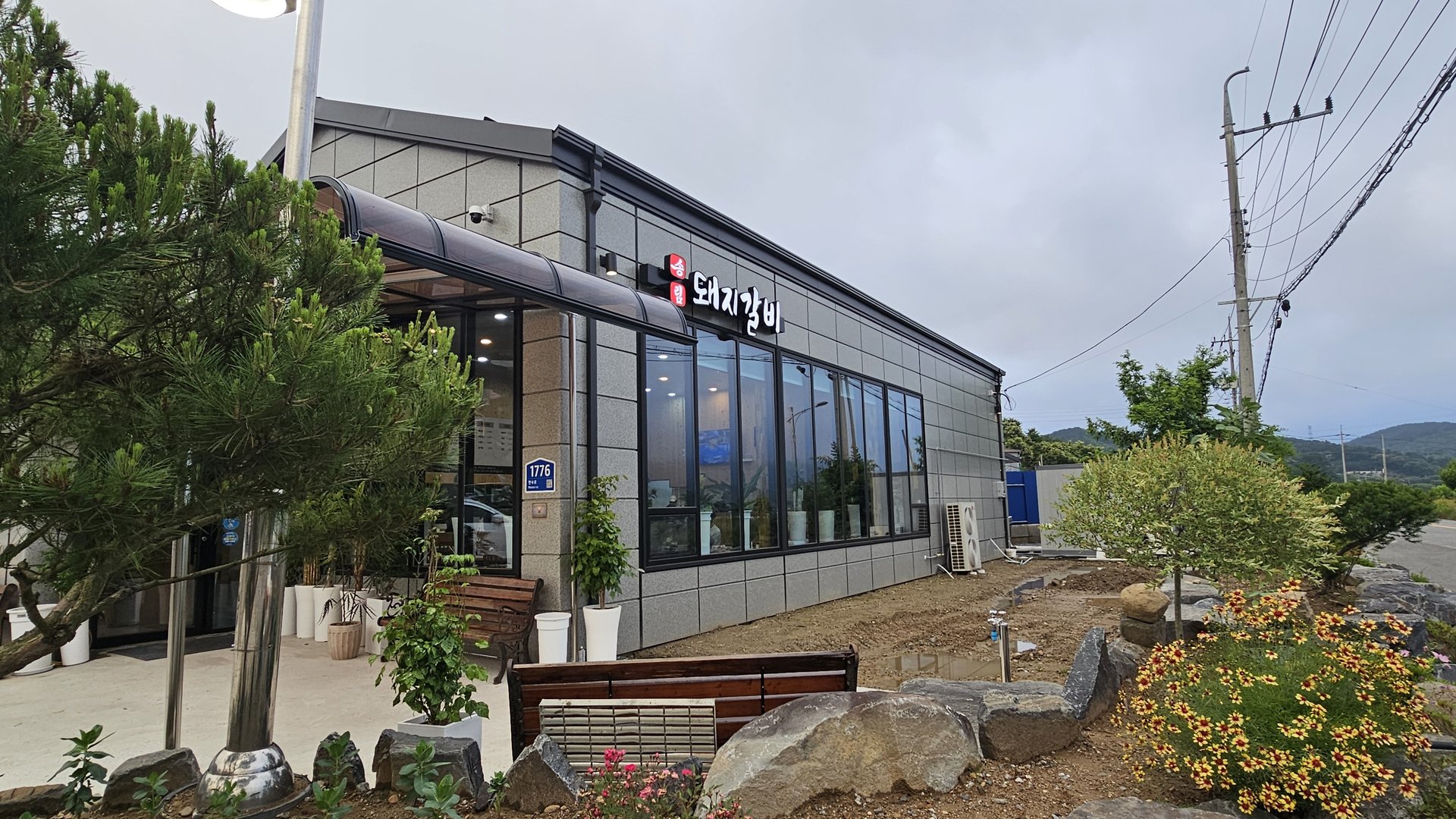
    Exterior of Hwanggeum Dwaeji Gukbap in Cheongyang
    Exterior of Hwanggeum Dwaeji Gukbap in Cheongyang

    Hours: 6:00 AM – 9:00 PM

    Takeout: Available (포장 가능 — the sign is on the exterior)

    Price per person: 10,000 KRW (~$7.40)

    English menu: No. Bring a translation app or just point. The menu has four items and they’re all the same price.

    English-speaking staff: Unlikely, but the ordering process is simple enough. Hold up fingers for how many bowls, point at the menu item. Works fine.

    Card payment: Not confirmed for this type of local restaurant. Bring 10,000 KRW per person in cash.

    Tips: Korea doesn’t tip. Don’t leave money on the table.

    Vegetarian options: None. This is a dedicated pork restaurant.

    Kids: Fine. Casual, loud enough, no dress code.

    Alcohol: Soju at 2,000 KRW. It’s there if you want it.

    The Verdict

    Should you make the trip to Cheongyang for this?

    If you’re in Cheongyang anyway — yes, this is exactly where you should eat. It’s the kind of local spot that earns repeat visits from people who live here. That’s not nothing.

    If you’re road-tripping through Chungnam and need a lunch stop — worth it. Good food at honest prices, in and out quickly. The 6AM opening also makes it a legitimate road-trip breakfast stop if you’re heading south early.

    If you’ve never had gukbap — this is a solid introduction. Start with the dwaeji gukbap. Season it with saeujeot. You’ll know pretty quickly whether Korean soup rice is your thing.

    If you’re vegetarian, or really not into pork/offal — different restaurant entirely. This one’s not for you.

    Tbh, the most surprising thing about this place is the soju price. 2,000 KRW at a restaurant is basically unheard of right now. Even if you don’t drink, it’s a sign of the kind of place this is — somewhere that actually cares about making things accessible to the people eating there.

    I keep coming back. Bowl’s always good. Nothing here disappoints.
    FAQ

    What are the opening hours of Hwanggeum Dwaeji Gukbap?

    Open daily from 6:00 AM to 9:00 PM. Yes, they’re open for breakfast — gukbap is a perfectly normal Korean breakfast.

    How much does a bowl cost at Hwanggeum Dwaeji Gukbap?

    All main bowls are 10,000 KRW (~$7.40 USD). Rice is included. Soju is 2,000 KRW (~$1.50) as a promotional price.

    What should I order at Hwanggeum Dwaeji Gukbap?

    Get the dwaeji gukbap — milky pork bone broth with generous head meat. If you’re up for something adventurous, the sundae gukbap with Korean blood sausage is also good.

    Is takeout available at Hwanggeum Dwaeji Gukbap?

    Yes, takeout (포장) is available. Phone ahead: 041-943-4300.

    Is there an English menu or English-speaking staff?

    Probably not. Bring a translation app. The menu is short and simple — four main items, all the same price — so pointing works fine.

    Do I need to bring cash?

    Card payment is not confirmed for this type of small local restaurant. Bring cash to be safe — 10,000 KRW per bowl.

    You might also like

    📍 Location

  • Songnim in Cheongyang: Honest Review of Korean BBQ Pork Ribs

    Songnim in Cheongyang: Honest Review of Korean BBQ Pork Ribs

    Quick honest review of Songnim (송림) — a local Korean BBQ place in Cheongyang, South Chungcheong Province, that does house-made marinated pork ribs. Short version: the galbi is genuinely better than most Korean BBQ spots you’ll hit on the tourist trail, the pork belly quality was excellent, and the evening we went the place was packed with locals. That last part matters.

    Five of us. Evening visit. Left full and happy.

    Wait — Where Is Cheongyang?

    Fair question. Most people have never heard of it.

    Cheongyang (청양) is a small county in South Chungcheong Province (충청남도), about 150km south of Seoul. Population around 30,000. Rural. Agricultural. Not on anyone’s Korea travel itinerary.

    What it IS known for: 청양고추 (Cheongyang pepper) — one of the hottest chili peppers in Korea, and the pepper this town literally gave its name to. If you’ve eaten a Korean dish and thought “that’s actually spicy,” there’s a decent chance Cheongyang peppers were involved.

    If you’re doing a Seoul-only 3-day trip: this is not for you. Stick to Seoul, eat Korean BBQ there, come back on a longer trip. But if you’re doing a proper road trip through Chungcheong — hitting Gongju, Boryeong, Buyeo, or just driving across the province — Cheongyang is a natural stop. And Songnim is one of the better reasons to stop there.

    What Is Songnim?

    Songnim (송림) means “pine forest” in Korean — a nod to the pine trees landscaped out front. It’s a local Korean BBQ restaurant with one main specialty: 수제양념돼지갈비 (suje yang-nyeom dwaeji-galbi).

    Breaking that down for people who don’t read Korean:

    수제 (suje) = handmade, house-made

    양념 (yang-nyeom) = marinated, seasoned

    돼지 (dwaeji) = pork

    갈비 (galbi) = ribs

    So: house-made marinated pork ribs. The key word is 수제. Most Korean BBQ spots — good and bad — use commercially bottled marinades. It’s fast, consistent, and honestly fine. But it tastes like every other place using the same bottle. A house-made marinade means someone is actually making the sauce from scratch in that kitchen.

    Songnim restaurant exterior in Cheongyang with pine tree landscaping and parking lot out front
    Songnim restaurant exterior in Cheongyang with pine tree landscaping and parking lot out front
    Songnim signboard showing house-made marinated pork ribs, hanu bulgogi hot pot, pork gukbap, and hours 11:00–21:00
    Songnim signboard showing house-made marinated pork ribs, hanu bulgogi hot pot, pork gukbap, and hours 11:00–21:00
    Side exterior view of Songnim Cheongyang with gray panel walls and pork ribs signage
    Side exterior view of Songnim Cheongyang with gray panel walls and pork ribs signage

    The building itself is new or recently renovated — clean gray panel exterior, proper parking lot, pine trees out front doing their branding duty. Not fancy, not a hole-in-the-wall. That middle zone where a place looks like it takes itself seriously without charging Seoul prices.

    Hours: 11:00 AM – 9:00 PM.

    Getting There

    No subway. No KTX stop. This is Chungnam countryside.

    From Seoul: About 2 hours by car via the Seohaean Expressway (서해안고속도로) or Honam Expressway (호남고속도로). Express buses from Seoul’s Gangnam Express Bus Terminal (강남고속버스터미널) serve nearby towns — check schedules to Cheongyang or Hongseong and work out from there.

    From Daejeon: About 1 hour by car — much more manageable as a day trip base.

    Parking: On-site lot. No issues.

    Driving is the practical option here. Rent a car in Seoul or Daejeon if you want to explore the Chungcheong region properly.

    The Interior

    Wooden interior dining hall at Songnim Cheongyang with warm lighting, TV, and seated customers during evening service
    Wooden interior dining hall at Songnim Cheongyang with warm lighting, TV, and seated customers during evening service
    Evening interior of Songnim Cheongyang dining hall with lights on and most tables occupied
    Evening interior of Songnim Cheongyang dining hall with lights on and most tables occupied

    Spacious wooden hall with warm lighting. Multiple tables, TV mounted on one wall, tablecloths. The kind of space that fits a large family dinner without anyone feeling cramped or wedged into a corner.

    We were there in the evening and most tables were occupied. Locals, not tourists. That’s a reliable indicator — if people who live 10 minutes away are choosing this spot on a weeknight, it’s doing something right.

    Vibe: comfortable, casual Korean BBQ hall. No concept, no gimmick, no Instagram installation in the bathroom. Just a restaurant that wants to feed people.

    What We Ordered

    Full table setup at Songnim — center grill, marinated galbi, gamja-jeon potato pancake, green onion salad, and side dishes
    Full table setup at Songnim — center grill, marinated galbi, gamja-jeon potato pancake, green onion salad, and side dishes

    양념돼지갈비 — House-Made Marinated Pork Ribs (5 servings)

    Raw marinated pork ribs (yang-nyeom galbi) on a plate before grilling at Songnim Cheongyang
    Raw marinated pork ribs (yang-nyeom galbi) on a plate before grilling at Songnim Cheongyang

    This is the dish. Order this.

    The ribs come out marinated and ready for the grill — reddish-brown sauce, gochujang-based (fermented chili paste), layered with soy, garlic, and probably some fruit for tenderizing. Standard Korean galbi marinade structure. But the house-made version reads differently the moment you eat it.

    The sweetness is the tell. Commercial marinades are heavy-handed with sugar — it’s the easy way to make something taste immediately satisfying. This one is calibrated. Sweet, but you can actually taste the pork under the sauce. The meat flavor doesn’t disappear.

    Marinated pork ribs at the start of grilling on the tabletop BBQ at Songnim Cheongyang
    Marinated pork ribs at the start of grilling on the tabletop BBQ at Songnim Cheongyang
    Three pieces of marinated pork ribs cooking mid-grill on the BBQ at Songnim
    Three pieces of marinated pork ribs cooking mid-grill on the BBQ at Songnim
    Sliced and fully cooked marinated pork ribs on the grill at Songnim Cheongyang
    Sliced and fully cooked marinated pork ribs on the grill at Songnim Cheongyang

    The ribs are thin-cut — standard for pork galbi, which cooks fast and chars nicely at the edges. They’re cut into bite-sized pieces with scissors at the table (normal at Korean BBQ — don’t be startled when someone comes at your food with scissors).

    Chopsticks lifting a piece of grilled galbi dipped in sauce at Songnim, gamja-jeon visible in background
    Chopsticks lifting a piece of grilled galbi dipped in sauce at Songnim, gamja-jeon visible in background
    Close-up of chopsticks holding a piece of grilled galbi over green onion salad at Songnim
    Close-up of chopsticks holding a piece of grilled galbi over green onion salad at Songnim

    Classic way to eat it: pick up a piece, dip in sauce, put it directly on top of the green onion salad (파채, pa-chae) that comes with the banchan. The acidity of the salad cuts through the richness of the marinade. One bite combination.

    The 수제 claim holds up. This is why you come here.

    생삼겹살 — Fresh Pork Belly (2 servings)

    Raw thick-cut pork belly (saeng-samgyeopsal) on a plate before grilling at Songnim Cheongyang
    Raw thick-cut pork belly (saeng-samgyeopsal) on a plate before grilling at Songnim Cheongyang

    Samgyeopsal (삼겹살) — three-layered pork belly, grilled at the table. If you’ve had Korean BBQ anywhere in the world, you know this dish. “생” (saeng) means fresh or plain — no marinade, just the meat on the grill.

    Two servings for five people was the right call: main focus was the galbi, and the samgyeopsal gave us variety without overloading the table.

    Quality was noticeably good. Thick cuts, clear fat layering, no water-pumped texture. When you put low-quality samgyeopsal on a grill it shrinks dramatically and goes rubbery. This didn’t. The fat rendered properly, the outside got the right amount of char, and the inside stayed moist.

    Four thick slices of pork belly just placed on the tabletop BBQ grill at Songnim
    Four thick slices of pork belly just placed on the tabletop BBQ grill at Songnim
    Pork belly mid-grill with fat rendering and browning at Songnim Cheongyang
    Pork belly mid-grill with fat rendering and browning at Songnim Cheongyang
    Fully cooked and sliced pork belly, golden-brown on the grill at Songnim
    Fully cooked and sliced pork belly, golden-brown on the grill at Songnim

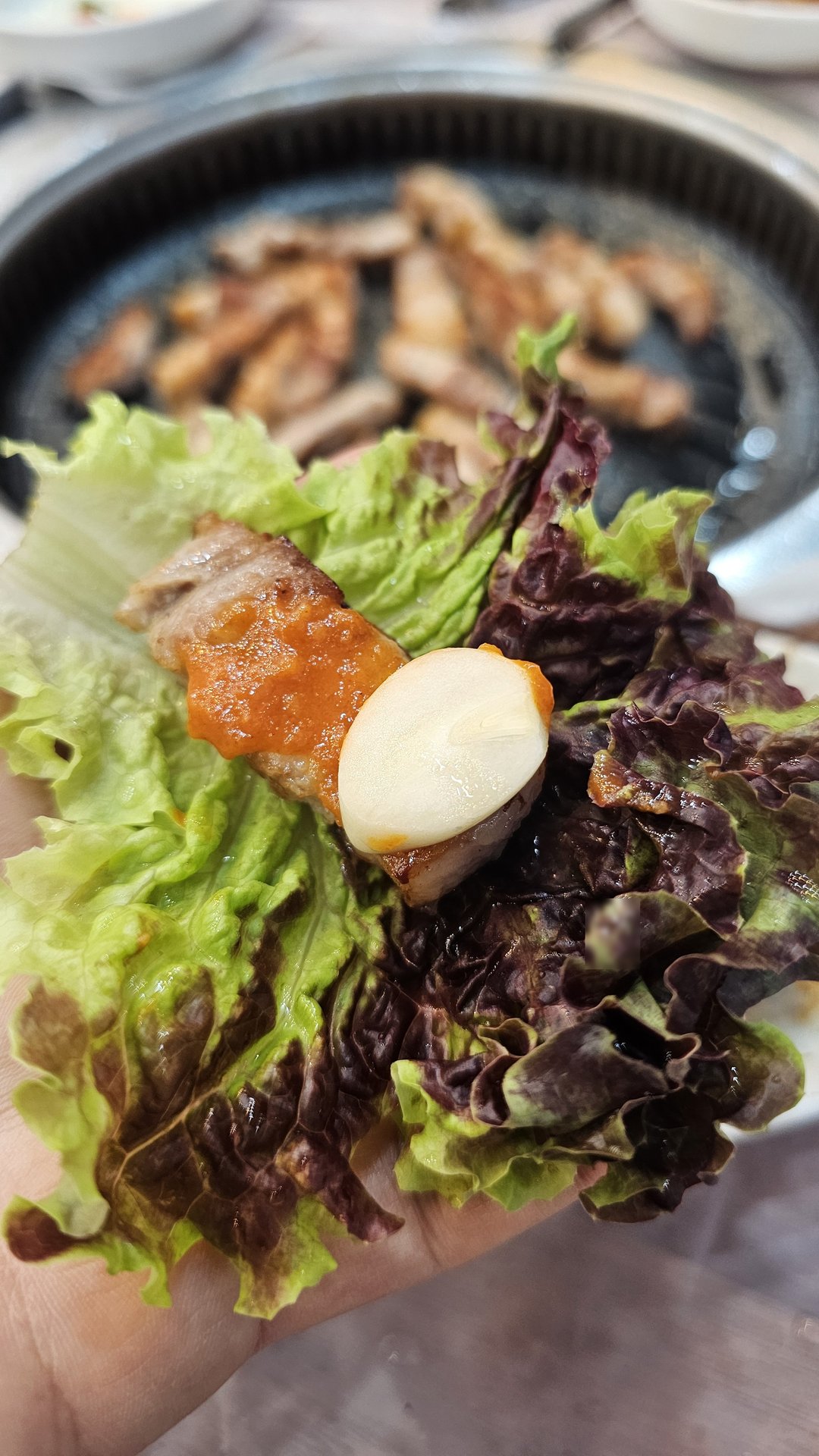
    The move everyone should try: wrap a piece in fresh lettuce (상추쌈, sang-chu ssam), add a small smear of ssamjang (된장+고추장 mixed dipping paste), toss in a thin slice of raw garlic. Fold it up, eat in one bite. That’s ssam — the classic wrap.

    Hand holding a ssam wrap with pork belly, garlic, and ssamjang in a lettuce leaf at Songnim
    Hand holding a ssam wrap with pork belly, garlic, and ssamjang in a lettuce leaf at Songnim

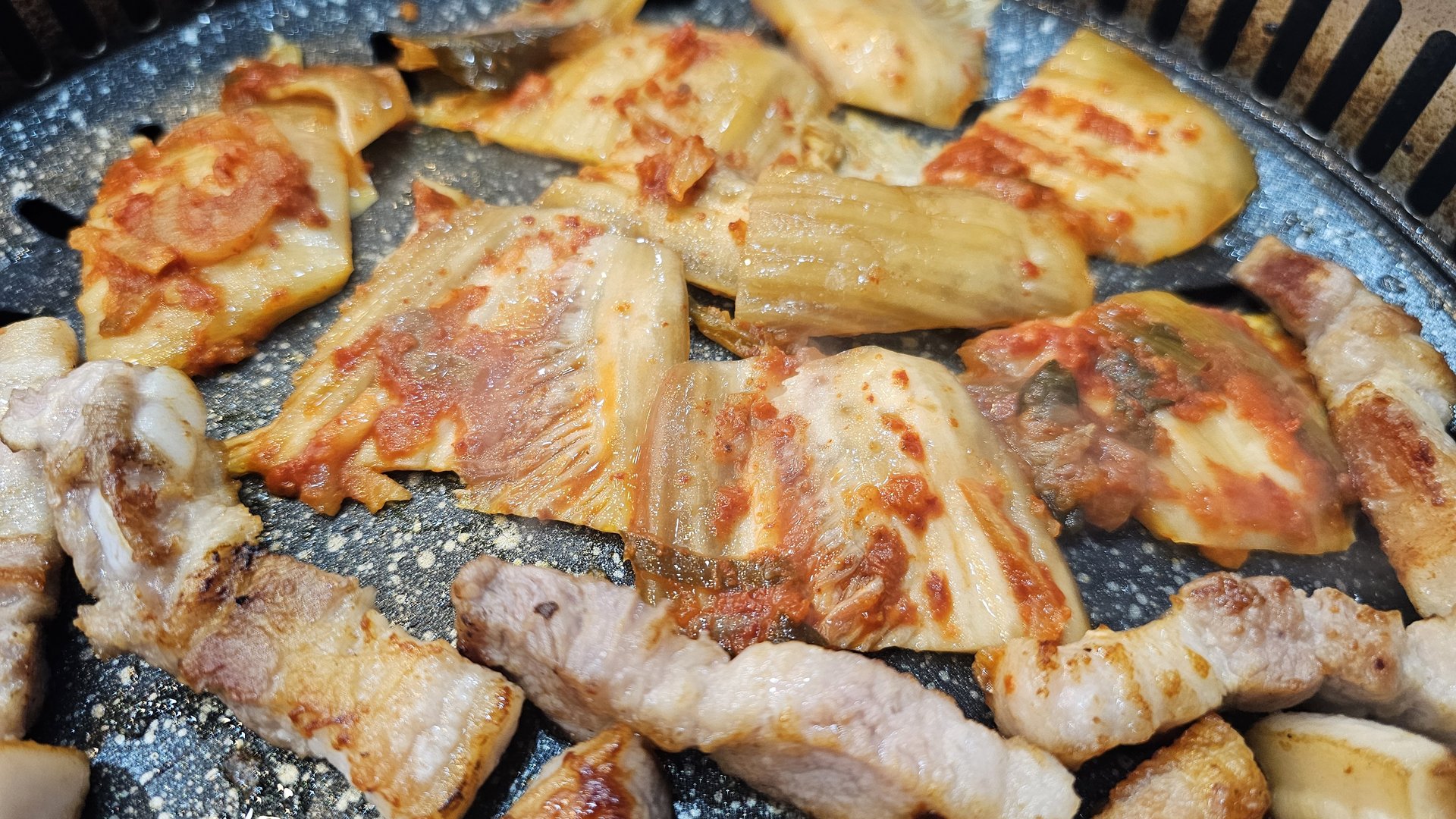
    Second move: throw some kimchi on the grill in the last few minutes alongside the pork belly. The kimchi caramelizes, picks up smoke, and the sourness gets mellow. Pork belly + charred kimchi is a combination that makes sense the first time you try it.

    Pork belly and kimchi grilling together on the BBQ at Songnim Cheongyang, kimchi caramelized
    Pork belly and kimchi grilling together on the BBQ at Songnim Cheongyang, kimchi caramelized

    반찬 — Banchan (Side Dishes)

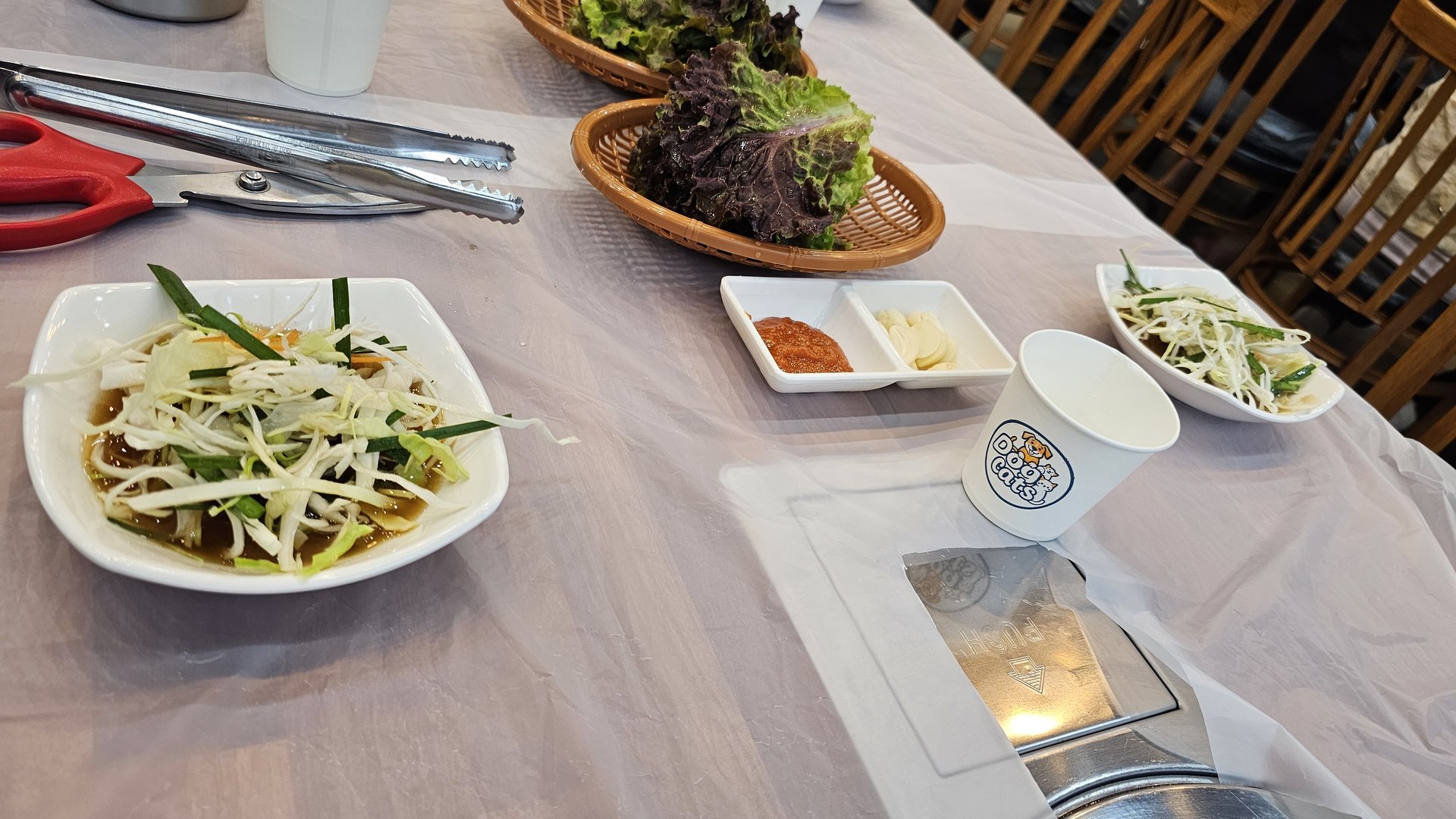
    Banchan side dishes at Songnim — green onion salad, fresh lettuce, doenjang paste, bean sprout namul, tongs and scissors
    Banchan side dishes at Songnim — green onion salad, fresh lettuce, doenjang paste, bean sprout namul, tongs and scissors

    Banchan (반찬) are the small side dishes that come free with any Korean meal. At a BBQ place, they’re designed to complement the meat.

    What came with ours:

    파채무침 — thinly sliced green onion salad seasoned with sesame oil and vinegar. The acid is intentional: it cuts through the rich galbi marinade

    상추 — fresh green lettuce for wrapping

    소금+된장 — small dish of salt and fermented soybean paste for dipping the plain samgyeopsal

    콩나물무침 — seasoned bean sprout salad

    Nothing surprising, everything fresh. They refilled without prompting.

    된장뚝배기 — Doenjang Hot Pot

    Steaming doenjang soup in a stone pot (ttukbaegi) at Songnim Cheongyang, served with kkakdugi and rice
    Steaming doenjang soup in a stone pot (ttukbaegi) at Songnim Cheongyang, served with kkakdugi and rice
    Full table at Songnim with ttukbaegi soup, lettuce wraps, kimchi, rice, and BBQ grill in center
    Full table at Songnim with ttukbaegi soup, lettuce wraps, kimchi, rice, and BBQ grill in center

    We ordered rice, and it came with a stone pot of doenjang jjigae (된장찌개) — fermented soybean paste stew, served bubbling hot in a ttukbaegi (earthenware pot).

    Doenjang is Korea’s answer to miso — fermented soybean paste — but it’s earthier, more pungent, and more complex than the Japanese version. The stew version, jjigae, is one of the great Korean comfort foods. Good for balancing the richness of a heavy BBQ table.

    Came with kkakdugi (깍두기, cubed radish kimchi) and white rice on the side.

    누룽지 — Scorched Rice

    Nurungji scorched rice soup in a stainless bowl at Songnim, with kkakdugi and perilla leaves on the side
    Nurungji scorched rice soup in a stainless bowl at Songnim, with kkakdugi and perilla leaves on the side

    We ordered nurungji (누룽지) to close out the meal. Nurungji is the crispy layer of rice that forms on the bottom of a pot — intentionally scraped off and served dry and crunchy, or made into a light soup.

    Ours came as a nurungji soup: slightly milky, subtly nutty, served in a stainless bowl. It’s a palate cleanser more than a dish — light, warm, simple. If you’ve never had it, think of it as somewhere between a thin rice porridge and hot rice water. Korean people tend to order it after a BBQ meal as the way to wrap things up.

    Worth trying once if you haven’t.

    선양소주 — Seonyang Soju

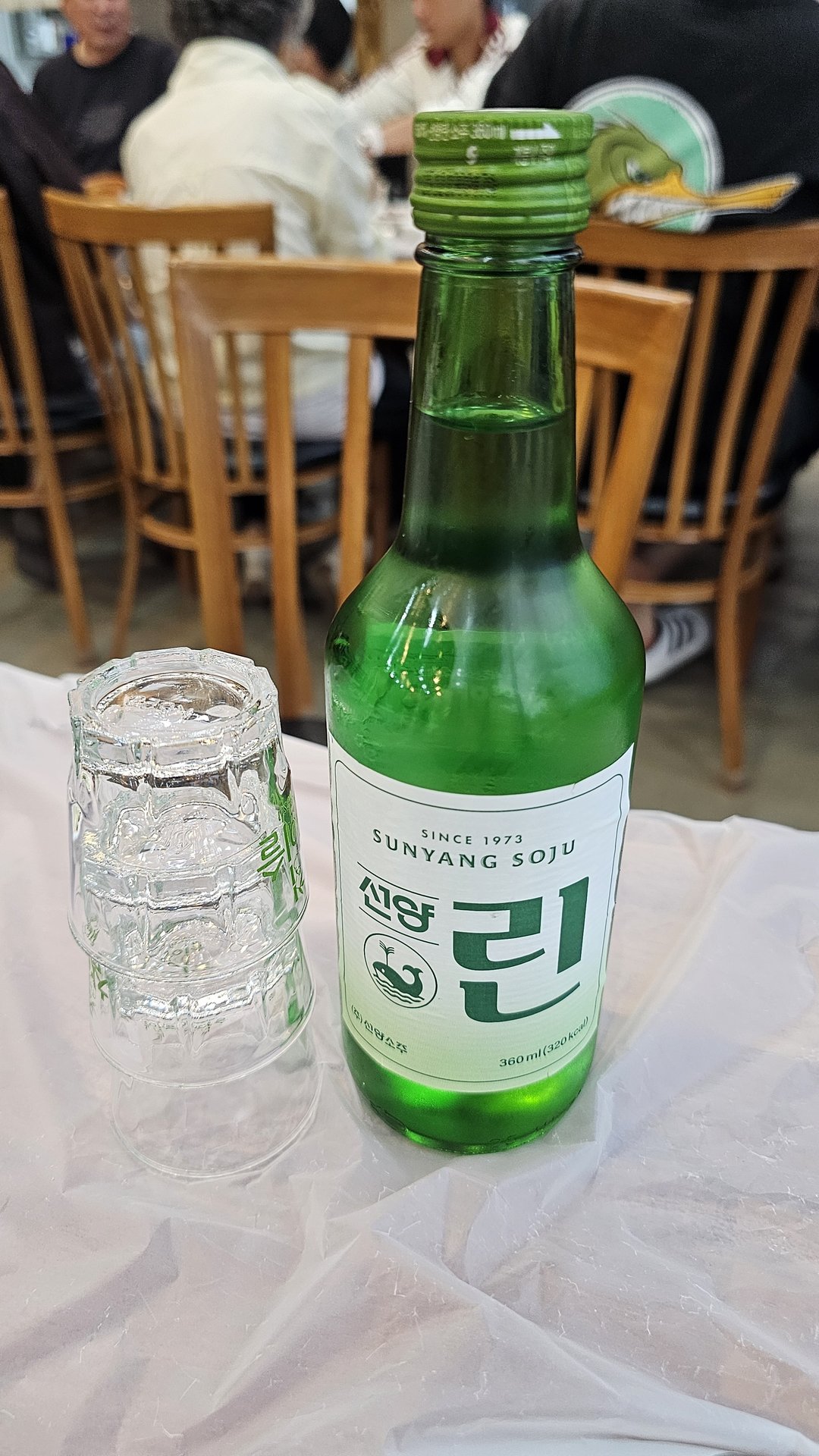
    Seonyang soju bottle and shot glasses on the table at Songnim Cheongyang
    Seonyang soju bottle and shot glasses on the table at Songnim Cheongyang

    Seonyang Soju (선양소주) is the local soju brand of South Chungcheong Province. If you’ve only encountered Jinro (진로) or Chamisul (참이슬) — the national brands you find everywhere — local sojus tend to have their own character. Seonyang reads slightly lighter than the mass-market versions.

    Heads up for international visitors: soju runs ~16–25% ABV depending on the product. Stronger than beer, weaker than whiskey. Three rounds goes fast.

    How Much Does It Cost?

    The user didn’t give us the exact bill, so use these as ballpark figures only.

    For a setup like ours — 5 servings of galbi, 2 servings of samgyeopsal, nurungji, and a few bottles of soju split between five people — expect somewhere in the range of 15,000–22,000 KRW (~$11–16 USD) per person. Rural Chungnam pricing, not Seoul pricing. Verify at the restaurant as costs shift.

    Stuff You Should Know Before Going

    Language: No English menu. Download Google Translate and use the camera function — point it at the menu and it translates in real time. Staff speaks Korean only; pointing and basic gestures work fine.

    Payment: Bring some cash as a backup. Card acceptance is standard across Korea, but foreign cards occasionally have issues in rural areas. Don’t rely solely on your international card.

    Tipping: Zero. Korea doesn’t tip. Don’t leave money on the table.

    Vegetarian / Vegan: This is a meat-focused Korean BBQ spot. The banchan are plant-based, but the broth may use meat stock. Not practical for vegetarians.

    Dietary info: Standard Korean BBQ uses soy sauce, doenjang, and gochujang in most dishes — not gluten-free, not halal. For specific restrictions, a translation app conversation with staff is your best bet.

    Kids: Hall-style layout, family-friendly atmosphere. Fine for kids.

    Groups: We went with five people and it was comfortable. The setup scales well for larger groups — the dining hall is spacious enough.

    Parking: On-site lot. No stress.

    The Verdict

    Songnim delivers on the thing it’s claiming to be good at. The house-made marinade on the galbi is noticeably better than the bottled version — balanced sweetness, meat flavor comes through, not candy-coated. The samgyeopsal was quality meat, handled properly. The meal felt like a local place that actually cares about what goes on the grill.

    Is it a destination restaurant? No. You’re not driving from Seoul specifically to eat here. But if you’re passing through South Chungcheong — if you’re doing a Chungnam road trip, visiting somewhere in the province, or just hungry and in the area — this is the kind of local spot worth having on the list.

    Go if:

    – You’re road-tripping through Chungnam and need a proper dinner

    – You’re with a group of 4+ and want the full Korean BBQ experience

    – You’ve done the Seoul BBQ circuit and want to see what a local Chungcheong spot does with the same ingredients

    – You want to taste the difference a house-made marinade actually makes

    Skip if:

    – Your Korea trip is Seoul-only (stay in Seoul, eat BBQ there)

    – You need English-speaking staff or an English menu

    – You’re vegetarian or have significant dietary restrictions

    Would go back. No question.

    FAQ

    What are Songnim’s opening hours in Cheongyang?

    The sign shows 11:00 AM to 9:00 PM. Call ahead if you’re visiting on a public holiday — hours may vary.

    What should I order at Songnim Cheongyang?

    The 양념돼지갈비 (yang-nyeom galbi — house-made marinated pork ribs) is the specialty. That’s the whole point of coming here. Add samgyeopsal if your group is big enough to want variety.

    How do I get to Cheongyang from Seoul?

    About 2 hours by car via the Seohaean or Honam Expressway. Express buses from Seoul’s Gangnam Express Bus Terminal serve nearby towns. No KTX — driving is the most practical option.

    Is Songnim foreigner-friendly?

    Honestly, no — not in the “English menu and staff who speak English” sense. Use Google Translate’s camera mode on the menu. Staff are local and won’t speak much English, but pointing and gesturing gets the job done fine.

    How much does a meal cost at Songnim per person?

    Roughly 15,000–22,000 KRW (~$11–16 USD) per person for a full BBQ meal with meat, banchan side dishes, and a drink. Prices may have changed — check current menu prices on-site.

    Is there parking at Songnim Cheongyang?

    Yes, there’s a proper parking lot out front. No issues for groups arriving by car.

    You might also like

    📍 Location

    Open in Google Maps →

  • Gareung Sikdang in Hadong: Honest Review of Jaecheop Clam Soup

    Quick honest review of Gareung Sikdang in Hadong — a no-frills local restaurant that’s been doing one thing for a long time: cooking freshwater clams from the Seomjin River. Skip to the verdict if you’re in a hurry, but here’s the short version: the jaecheop jinguk is the real thing, the side dishes are better than average, and 10,000 KRW (~$7.40) for a complete soup-and-rice meal in 2026 is genuinely good value.

    I visited on a Saturday morning around 10:30 AM, right after opening.

    What Is Jaecheop? (Start Here If You’ve Never Heard of It)

    Jaecheop (재첩) are freshwater clams. Not the big ocean clams you’re probably picturing.

    These are small — roughly thumbnail-sized — and they come specifically from the Seomjin River (섬진강), which runs along the border between South Jeolla and South Gyeongsang Province. Hadong sits right on that river. The clams have been harvested here for generations.

    The soup, called jaecheop jinguk (재첩진국), is pale and slightly milky. “Jinguk” means something close to “true broth” — a long-simmered stock that extracts everything from the shells. The result is clean-tasting, lightly savory, nothing fishy or briny. Koreans drink it in the morning or as 해장국 (haejangguk) — literally “hangover-clearing soup.” It’s considered good for the liver.

    It’s not a bold flavor. If you want something intense, order Korean BBQ. Jaecheop jinguk is subtle. That’s the point.

    Hadong is the main place in Korea to eat this. If you’re here and you don’t try it, you’ve missed the whole reason locals make the trip.

    About Gareung Sikdang

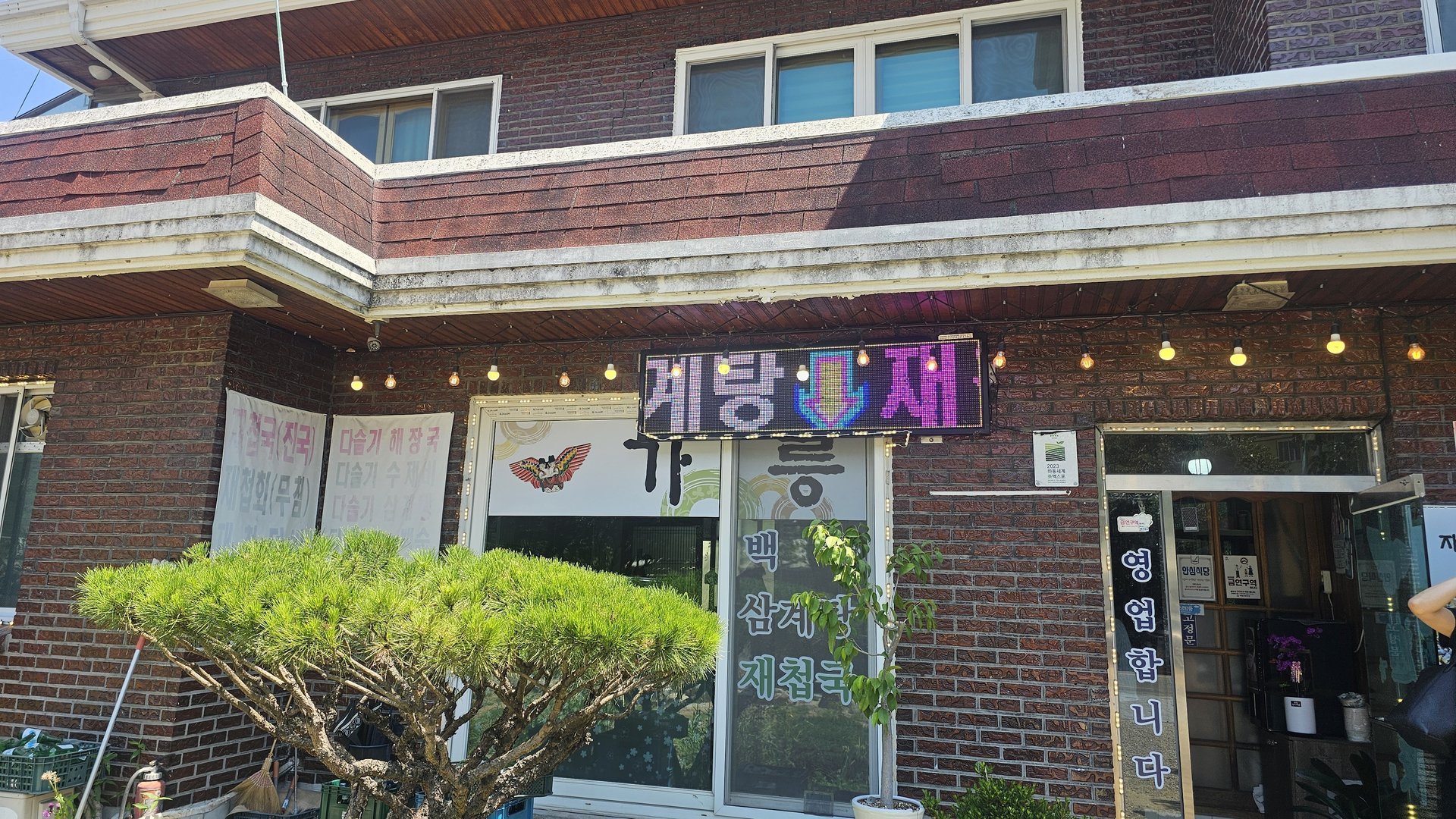
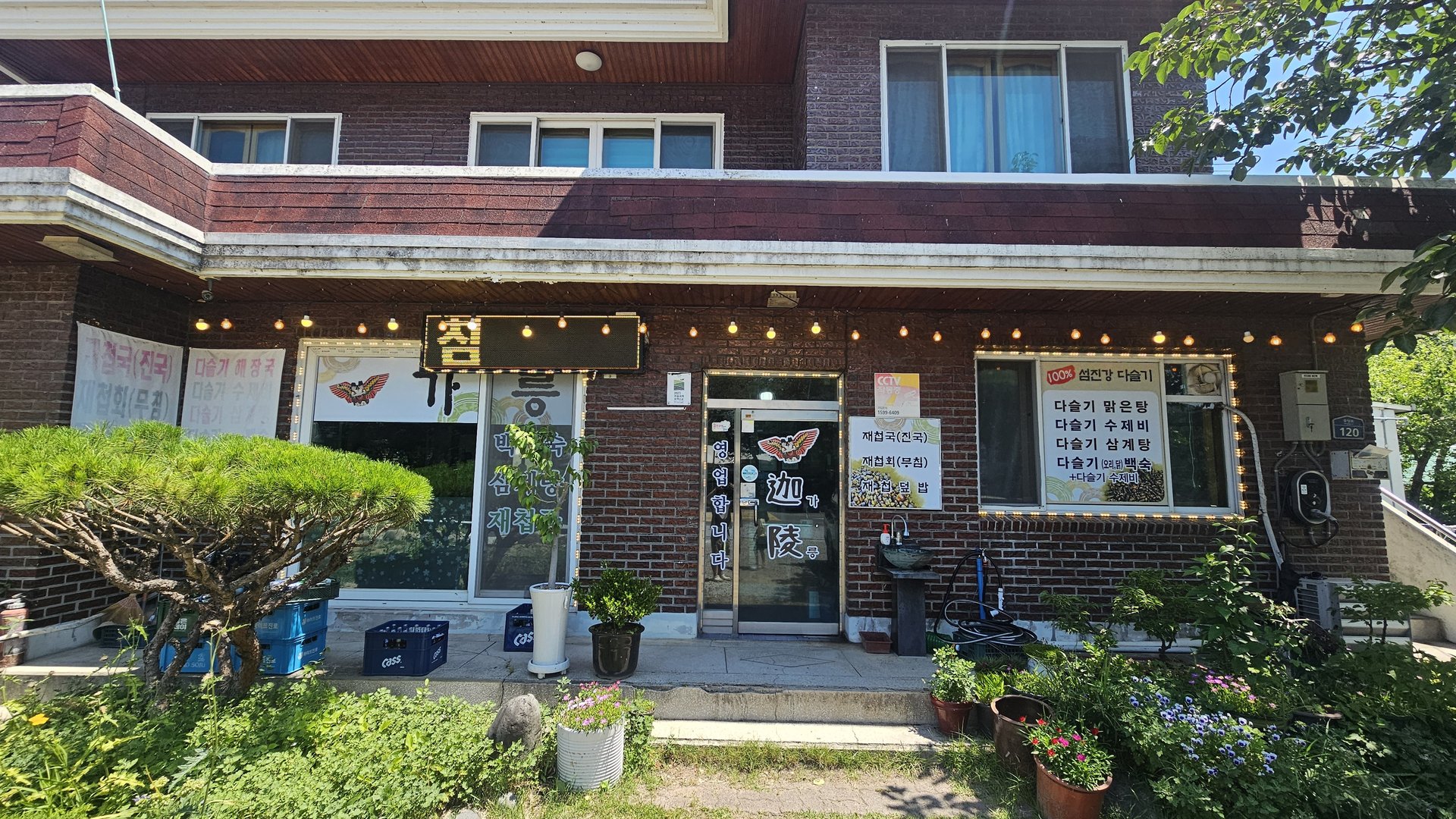
    Exterior front of Gareung Sikdang in Hadong — red brick building with neon sign and handwritten menu on glass door
    Exterior front of Gareung Sikdang in Hadong — red brick building with neon sign and handwritten menu on glass door

    Red brick building. Neon sign. Handwritten menu on the glass door listing 백숙, 삼계탕, and 재첩국. This is not a restaurant trying to impress first-time visitors. It’s a place that’s been feeding locals for years and has no real reason to change.

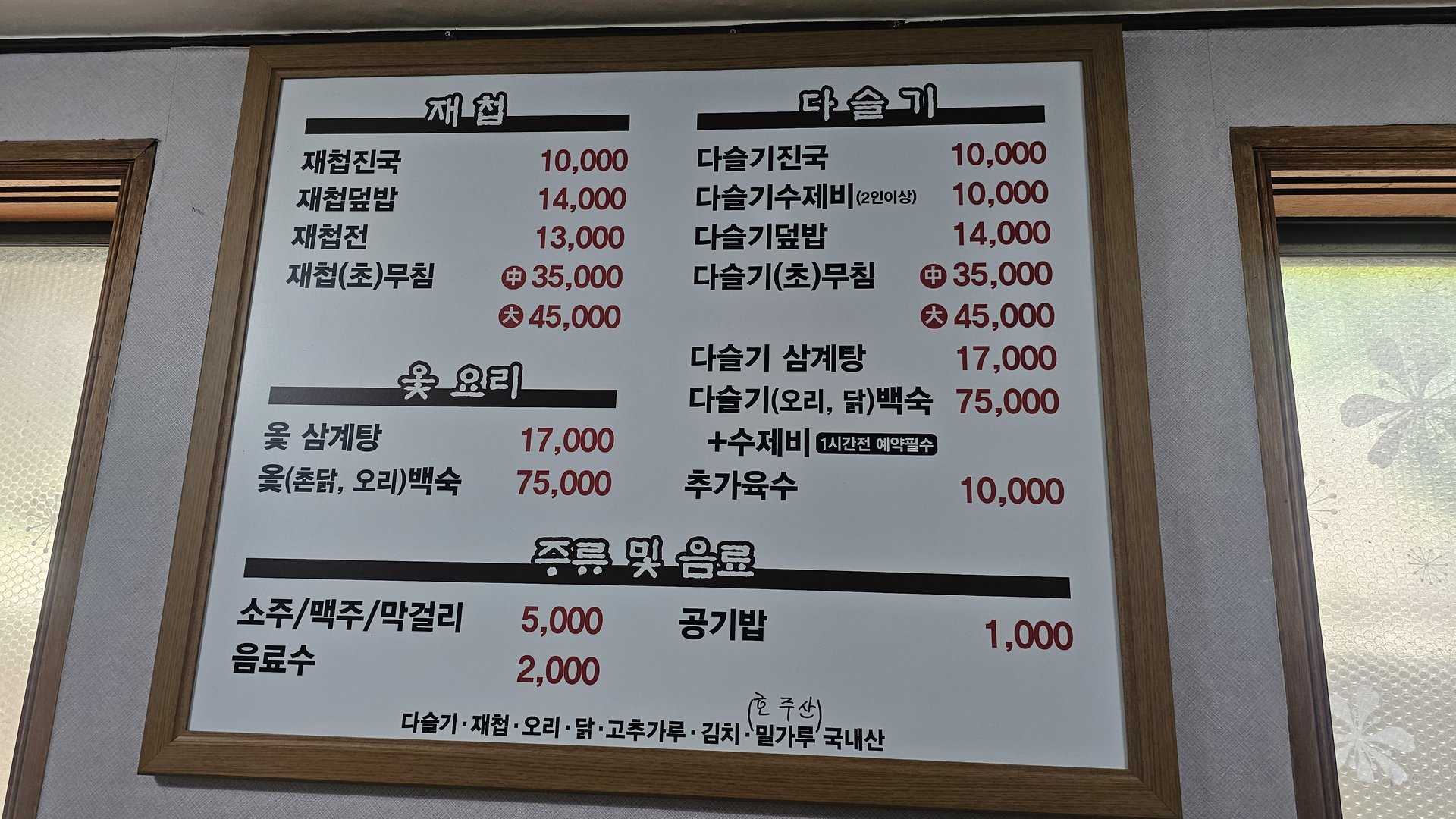
    The wall menu is worth a read even if you can’t understand Korean — you’ll get a sense of what this place is.

    Wall menu board at Gareung Sikdang Hadong showing jaecheop and daseulgi dishes with Korean won prices
    Wall menu board at Gareung Sikdang Hadong showing jaecheop and daseulgi dishes with Korean won prices

    Three main categories: 재첩 (jaecheop/freshwater clam), 다슬기 (daseulgi/freshwater snail), and 옻 요리 (ottchil — lacquer tree dishes). That last one is a traditional Korean medicinal preparation where chicken or duck is cooked with lacquer tree bark. It sounds strange but it’s been part of Korean folk medicine for centuries. The 백숙 (whole chicken/duck) version requires 1-hour advance reservation — not a same-day order.

    All ingredients listed as Korean domestic (국내산). That matters here — the whole point of Hadong jaecheop is that it comes from this river, not imported.

    Getting There

    Hadong is in South Gyeongsang Province (경남), in the deep south of Korea. Think lush mountains, river valleys, and not many foreign tourists.

    From Seoul: Express bus from Seoul Express Bus Terminal (센트럴시티, in Gangnam) to Hadong — about 3.5 to 4 hours. Budget around 25,000-30,000 KRW (~$18-22 USD) each way.

    From Busan: About 1.5-2 hours by intercity bus.

    There’s no train to Hadong. Bus or car. A rental car is the better option if you want to see more of the area — the Seomjin River, Ssanggye Temple (쌍계사), and the Hadong green tea fields are all within a short drive and make for a genuinely good full day.

    Hadong’s green tea, by the way, comes from the oldest tea garden in Korea. Worth combining with a jaecheop lunch.

    The Interior

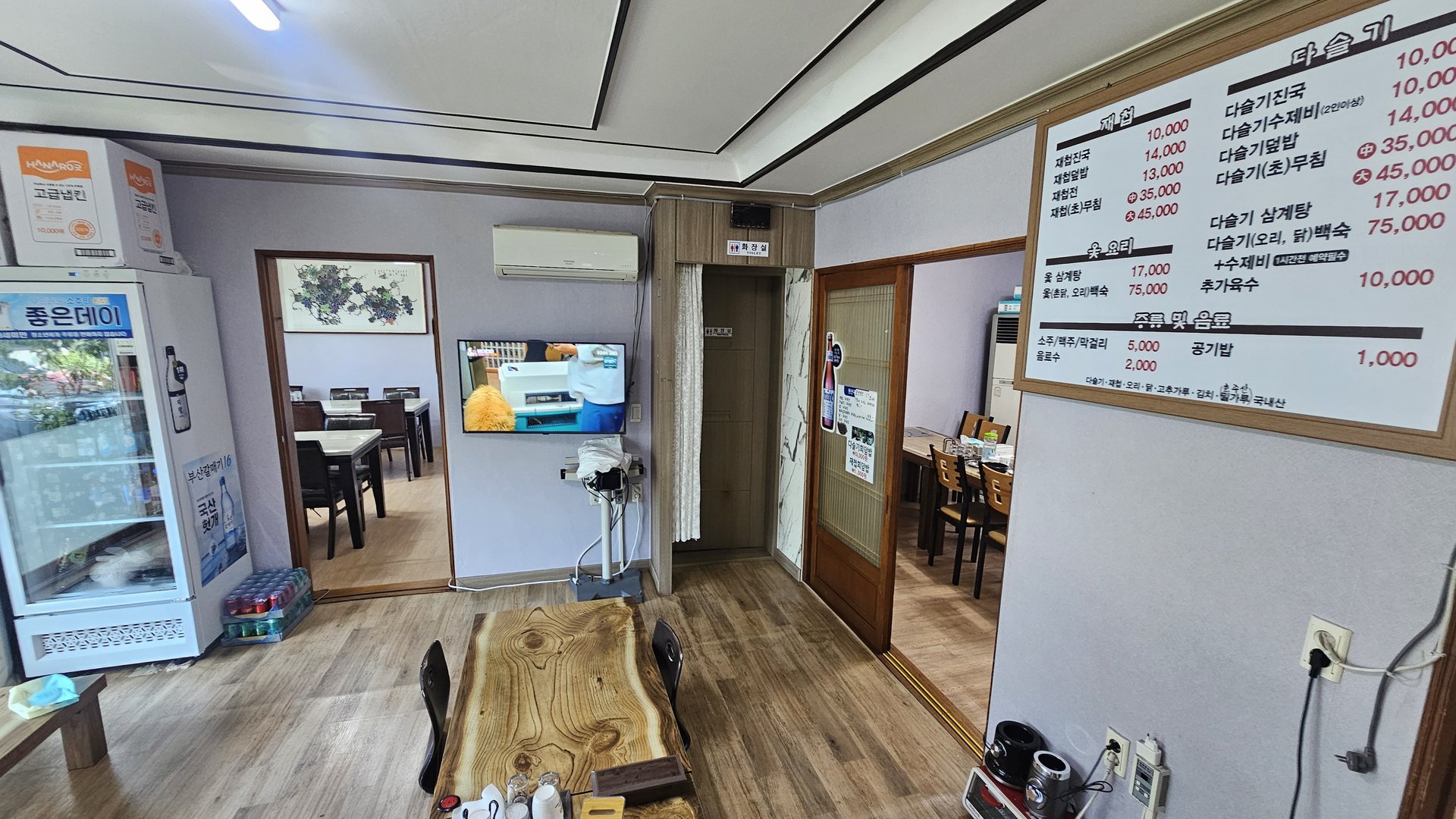
    More spacious than the exterior suggests.

    Interior entrance area of Gareung Sikdang with drink refrigerator, TV, and hallway to private dining rooms
    Interior entrance area of Gareung Sikdang with drink refrigerator, TV, and hallway to private dining rooms
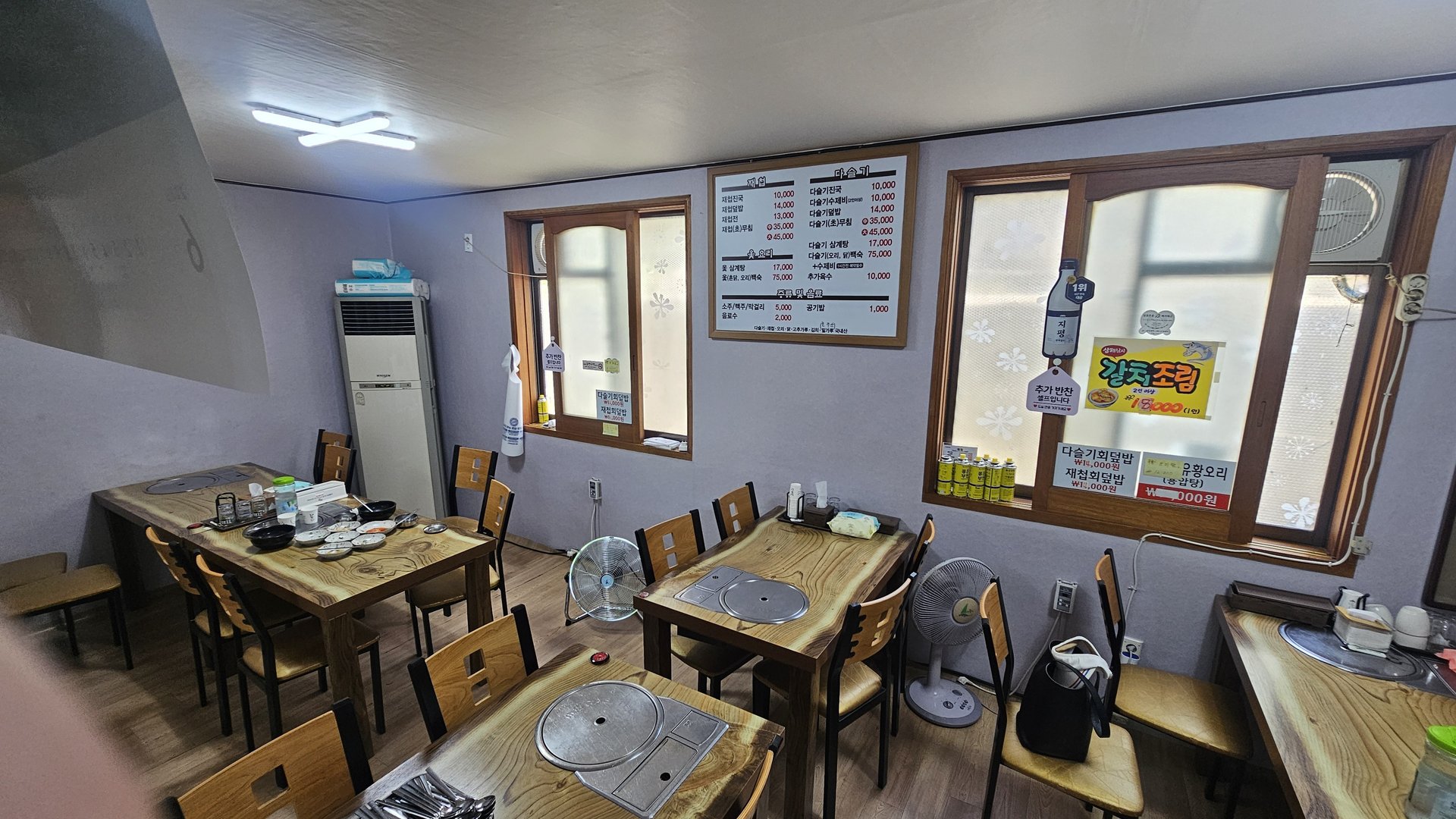
    Spacious main dining hall at Gareung Sikdang Hadong with wooden tables, chairs, fans, and large windows
    Spacious main dining hall at Gareung Sikdang Hadong with wooden tables, chairs, fans, and large windows

    Large main hall with wooden tables and chairs. Fans and air conditioning. Windows along the side. There’s also a private dining section toward the back — visible from the entrance — which means this place handles group bookings, family gatherings, that kind of thing.

    No music. No Instagram-friendly lighting. Just a clean, functional space that seats a lot of people comfortably.

    Solo diners are fine here. Nobody gave me a second glance.

    What I Ordered

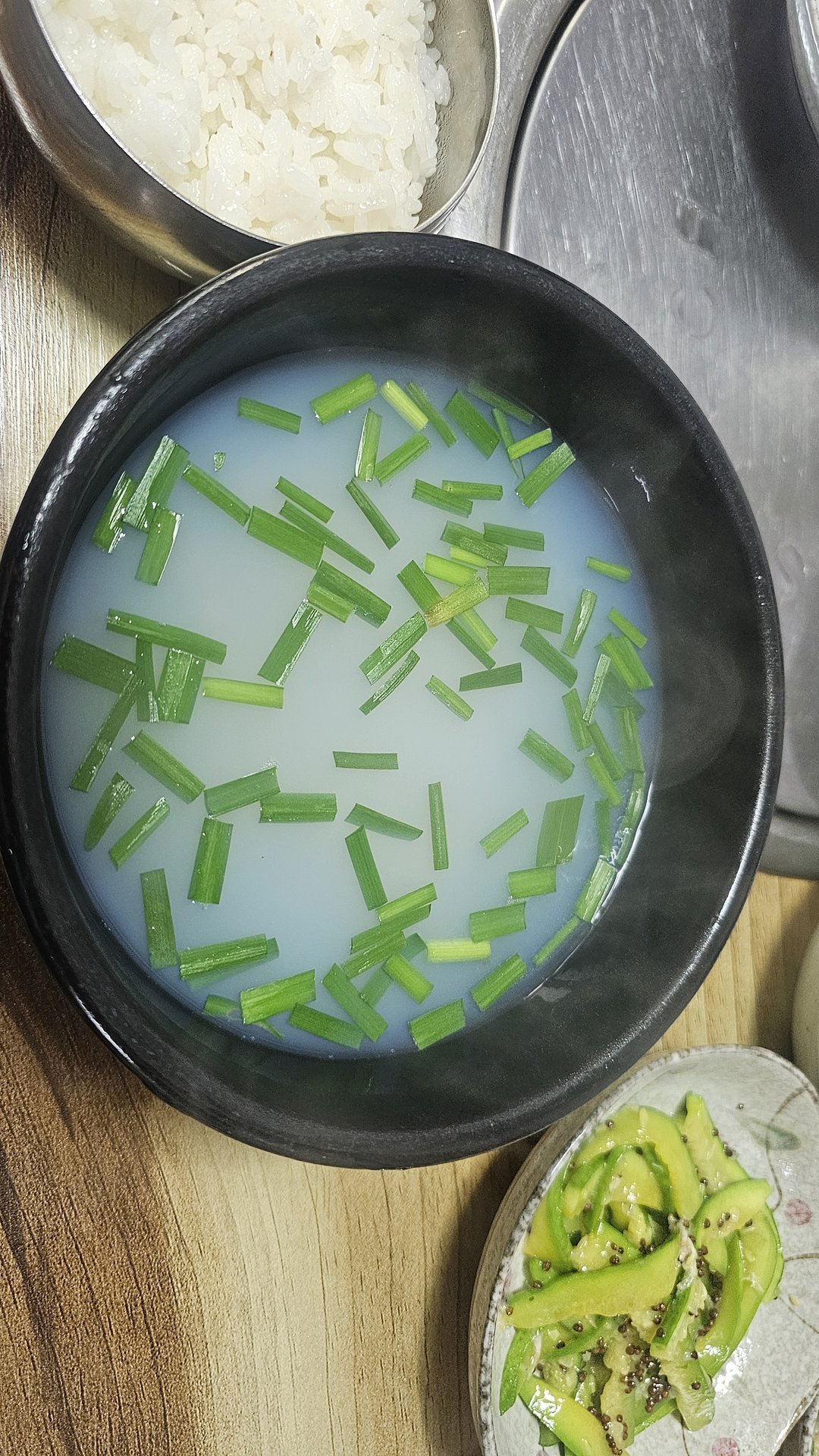
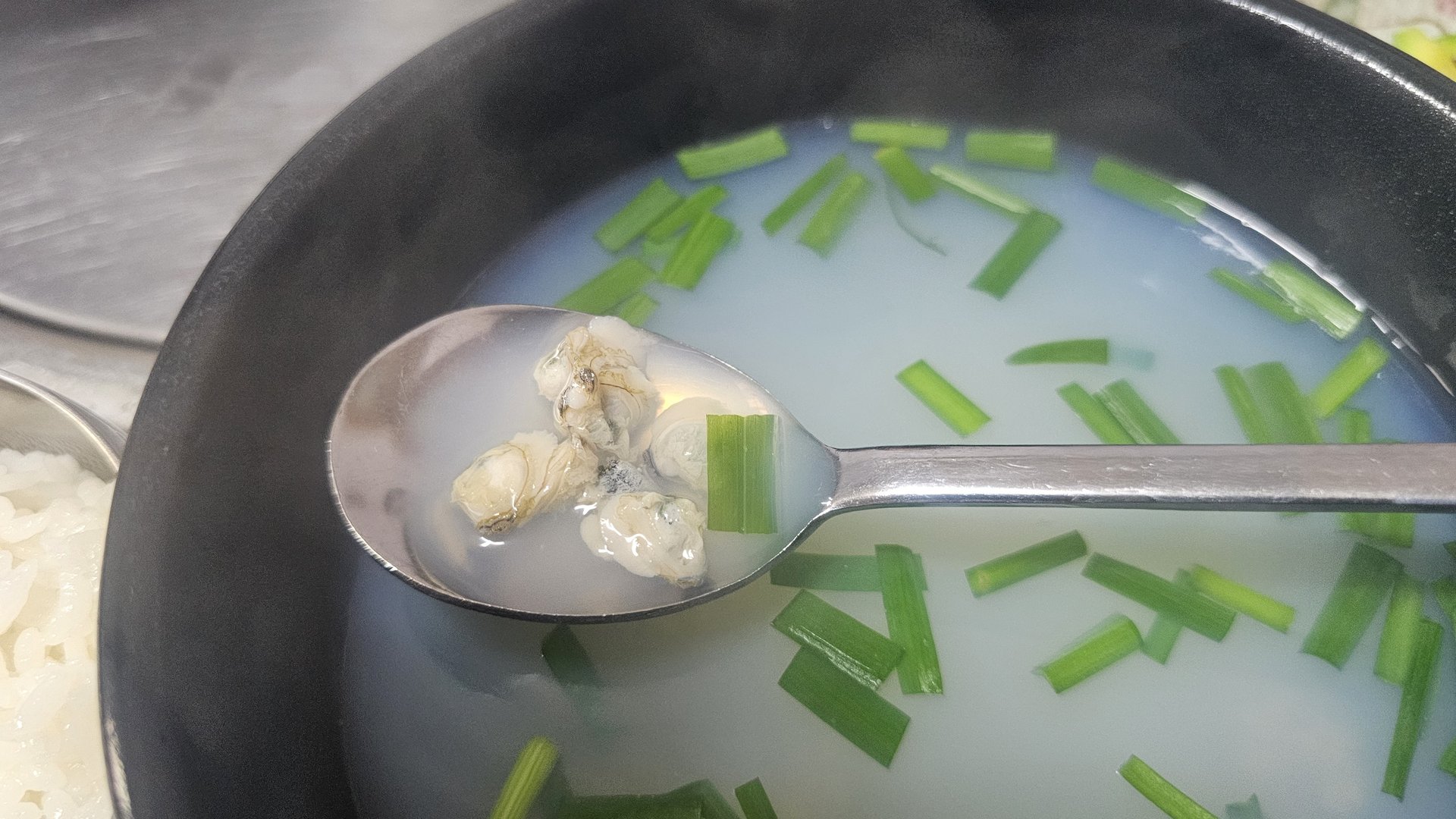
    Jaecheop Jinguk — 10,000 KRW (~$7.40)

    Bowl of jaecheop jinguk freshwater clam soup with chopped green onions and a side of steamed rice at Gareung Sikdang Hadong
    Bowl of jaecheop jinguk freshwater clam soup with chopped green onions and a side of steamed rice at Gareung Sikdang Hadong
    Close-up spoonful of jaecheop jinguk showing plump Seomjin River freshwater clams from Gareung Sikdang
    Close-up spoonful of jaecheop jinguk showing plump Seomjin River freshwater clams from Gareung Sikdang

    The bowl arrives pale — not white, more like off-white, the color of a long-simmered broth. Chopped green onion on top. Rice comes with it.

    Taste: clean, lightly savory, delicate. The clam meat is small but noticeably plump. You get actual jaecheop flavor in every spoonful — not just vague broth with occasional clam fragments, but something that tastes like the river it came from.

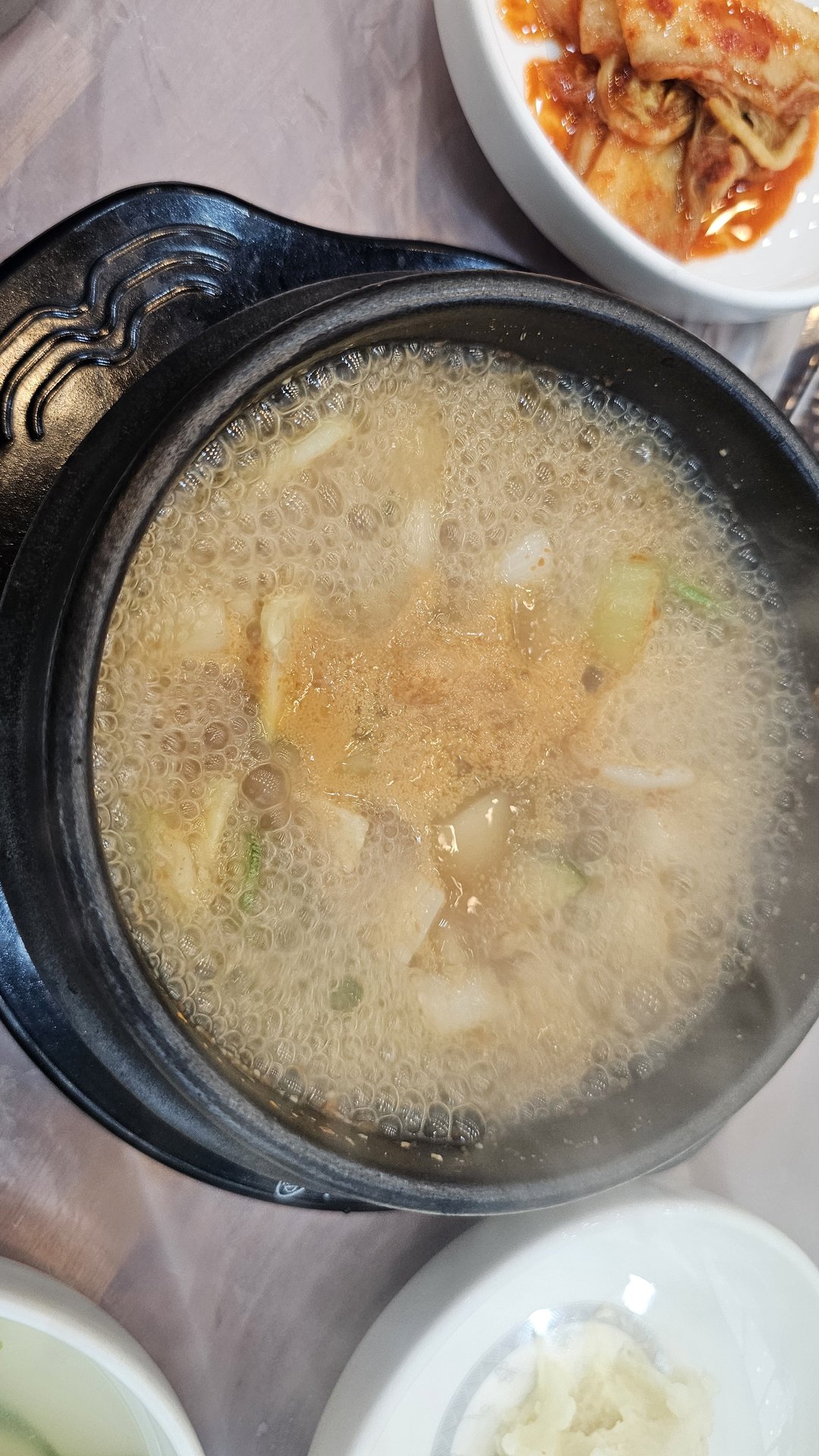
    Honestly, this was exactly what I was hoping for. Not a transcendent experience. Not the best thing I’ve ever eaten. But properly made jaecheop jinguk at a fair price with decent-sized clams. If you’ve never had this before, this is a solid introduction. If you know what good jaecheop tastes like, this is the real thing.

    Jaecheop Jeon — 13,000 KRW (~$9.60)

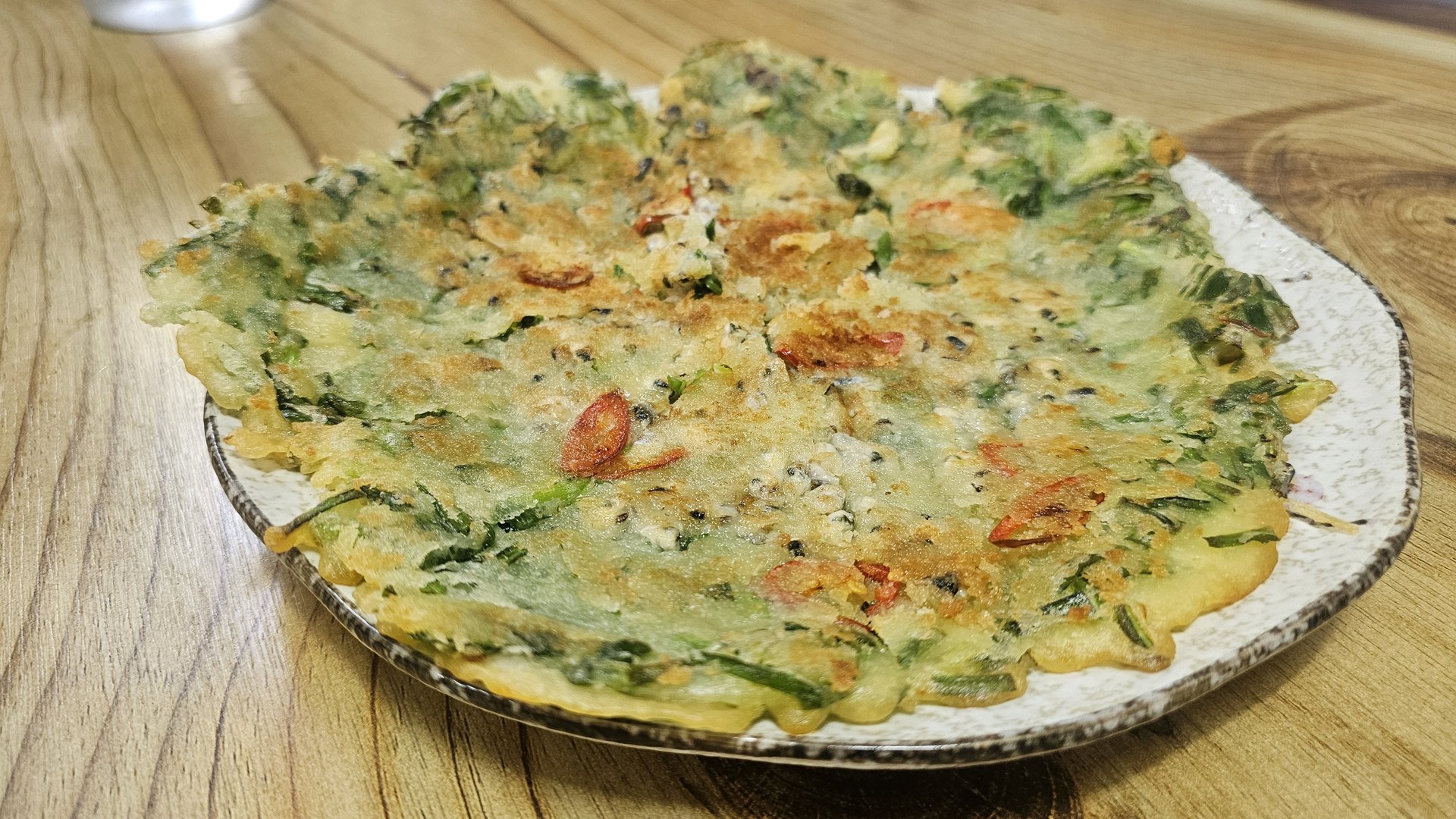
    Jaecheop jeon freshwater clam pancake at Gareung Sikdang with crispy golden edges
    Jaecheop jeon freshwater clam pancake at Gareung Sikdang with crispy golden edges

    Freshwater clam pancake. Pan-fried to a proper golden crisp at the edges, a little softer toward the center where the clam filling concentrates.

    This is the texture dish. The soup is subtle and warming — the jeon gives you something to actually chew through. Crunchy outer layer, soft interior with clam pieces distributed throughout. You can taste the jaecheop clearly.

    Get both. The soup is the main event but the jeon adds something the soup doesn’t have.

    The Banchan (Side Dishes)

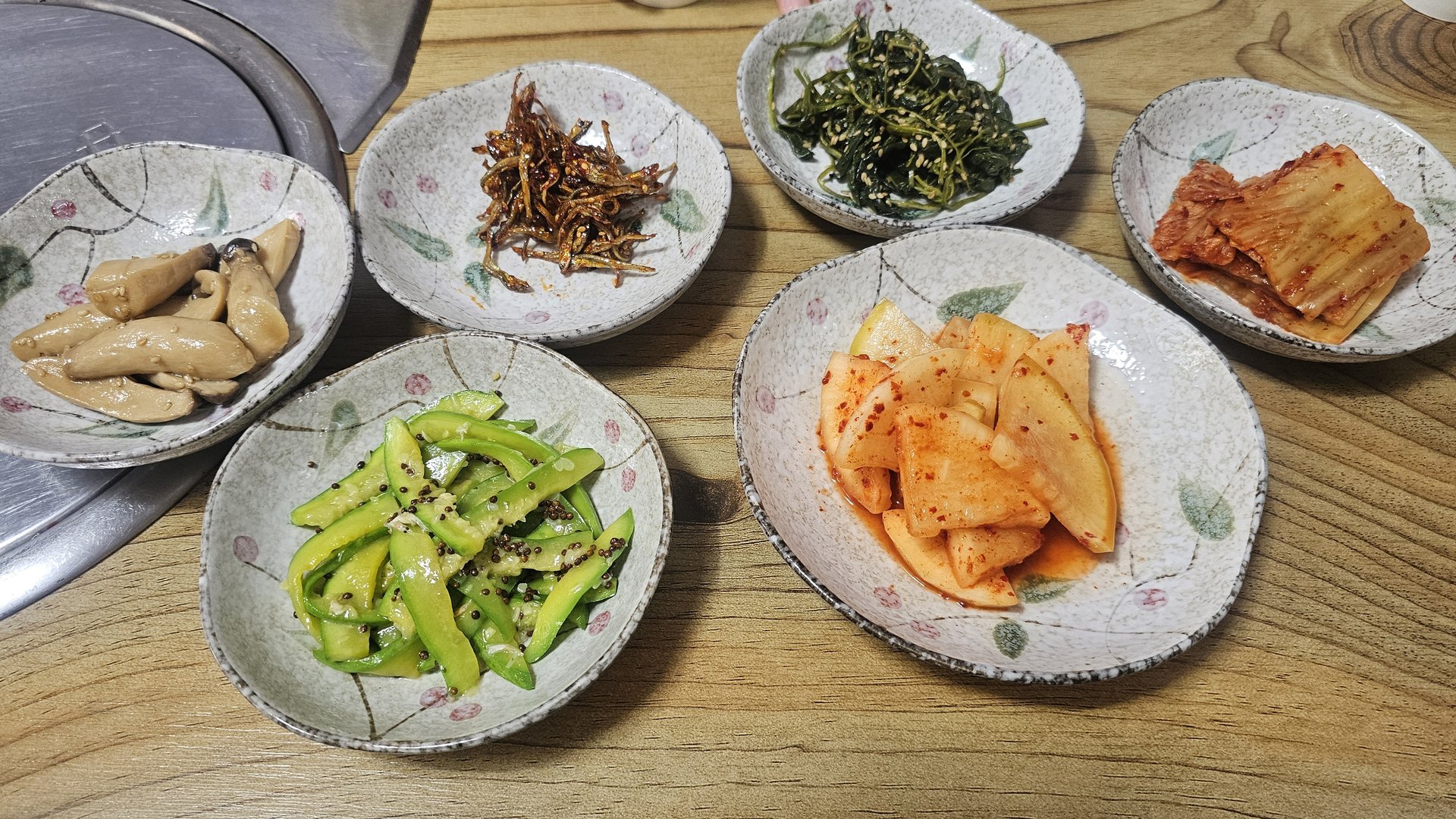
    Five Korean banchan side dishes at Gareung Sikdang including pickled ginger, stir-fried anchovies, chwinamul greens, kkakdugi radish kimchi, and cucumber salad
    Five Korean banchan side dishes at Gareung Sikdang including pickled ginger, stir-fried anchovies, chwinamul greens, kkakdugi radish kimchi, and cucumber salad

    Five side dishes: pickled ginger, stir-fried anchovies (멸치볶음), chwinamul greens (취나물무침 — wild aster, slightly bitter and earthy), kkakdugi (깍두기, cubed radish kimchi), and cucumber salad.

    Here’s the thing — at a lot of local restaurants in Korea, banchan is an afterthought. Not here. Each dish was properly seasoned. The kkakdugi had real crunch. The chwinamul wasn’t overdressed. The pickled ginger was sharp, a good palate reset between bites of rich soup and crispy pancake.

    Small details. They matter.

    Stuff Tourists Should Know

    Language: No English menu. Wall board only, all Korean. The menu is short though — point at 재첩진국 for soup, 재첩전 for pancake. Pronunciation: “jae-cheop jin-guk” and “jae-cheop jeon.” Staff won’t speak much English but they’ll understand what you’re pointing at.

    Payment: Bring cash (Korean won). Traditional local restaurants in rural areas often don’t take foreign cards, and even when they take domestic cards, foreign cards can be unreliable. ATMs are available in Hadong town center.

    Tipping: No tipping in Korea. Don’t tip.

    Reservations: Not needed for jaecheop dishes. If you want the 옻 백숙 (lacquer whole chicken/duck), call 1 hour ahead — that’s on the menu itself.

    Vegetarian/Vegan: Not an option. The menu is entirely built around freshwater clams, snails, and poultry. Banchan likely contains anchovy-based seasoning in several dishes.

    Halal: Not halal-certified.

    Kids: Completely fine. Large tables, casual setting, accessible food. The soup and pancake are kid-friendly dishes with no spice or unusual flavors.

    Best time to visit: Morning or lunch. This is morning-meal territory in Korea — jaecheop soup is traditionally a breakfast or early lunch dish.

    Price breakdown:

    – 재첩진국 (soup + rice): 10,000 KRW (~$7.40)

    – 재첩전 (clam pancake): 13,000 KRW (~$9.60)

    – Extra rice: 1,000 KRW (~$0.75)

    – Beer / soju / makgeolli: 5,000 KRW (~$3.70)

    Two people ordering one soup each and sharing one pancake: around 33,000 KRW total (~$24 USD).

    The Verdict

    Side exterior of Gareung Sikdang Hadong with illuminated sign and daseulgi freshwater snail banner in daytime
    Side exterior of Gareung Sikdang Hadong with illuminated sign and daseulgi freshwater snail banner in daytime

    Should you go?

    If you’re already in Hadong — yes, absolutely. This is what you came here for. The jaecheop jinguk is properly made, the side dishes are above average, and the price is fair. Order the soup and the jeon together.

    If you’re planning a day trip from Busan — yes. Ssanggye Temple + Hadong green tea fields + jaecheop lunch is a genuinely good day out. This place fits naturally into that itinerary.

    If you’re based in Seoul with 3-4 days in Korea — probably not. A 4-hour bus ride for a bowl of soup is hard to justify when Seoul has plenty to eat. Save Hadong for a longer trip when you have time to explore beyond the capital.

    Would I come back? Yeah. Next time I’m in Hadong, this is where I’m eating lunch.

    FAQ

    What is jaecheop and why is Hadong famous for it?

    Jaecheop (재첩) are tiny freshwater clams harvested from the Seomjin River that runs through Hadong. The soup made from them is pale, slightly milky, and clean-tasting — nothing like ocean clam chowder. Hadong is the main source of these clams in Korea, so eating jaecheop here is essentially eating them at the source.

    How much does a meal at Gareung Sikdang cost?

    Jaecheop jinguk (clam soup with rice included) is 10,000 KRW (~$7.40). Jaecheop jeon (clam pancake) is 13,000 KRW (~$9.60). For one person ordering both, expect around 23,000 KRW (~$17 USD). Two people sharing a pancake and each getting soup runs about 33,000 KRW total (~$24 USD).

    Is there an English menu at Gareung Sikdang?

    No English menu — everything is in Korean on the wall board. The menu is short and straightforward though. Point at 재첩진국 for the clam soup or 재첩전 for the pancake. Staff aren’t English speakers but they’re used to visitors figuring it out.

    How do I get to Hadong from Seoul or Busan?

    From Seoul, take an express bus from Seoul Express Bus Terminal (Gangnam, 센트럴시티) to Hadong — about 3.5-4 hours. From Busan, roughly 1.5-2 hours by bus. There’s no train to Hadong, so bus or rental car is your option. A car is worth it if you’re exploring the region.

    What are Gareung Sikdang’s opening hours?

    Based on a morning visit, the restaurant opens around 10 AM. Lunch service is the main rush. Check locally or call ahead for current hours, especially if visiting on weekdays or in off-season.

    Is Gareung Sikdang vegetarian-friendly?

    No. The entire menu is built around freshwater clams, freshwater snails, and poultry (chicken, duck). Not suitable for vegetarians. Banchan (side dishes) likely contains anchovy-based seasoning too.

    You might also like

    📍 Location

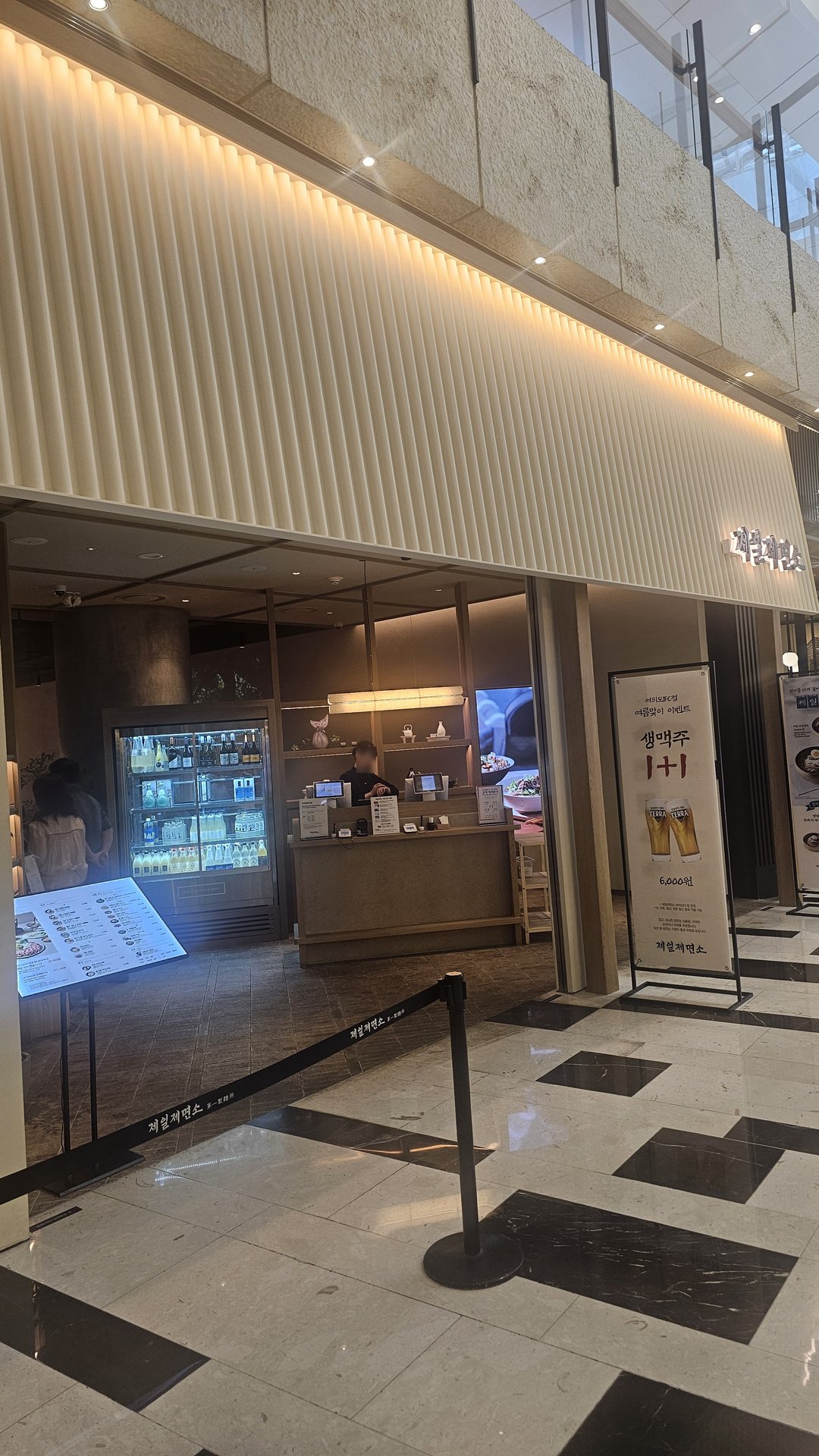
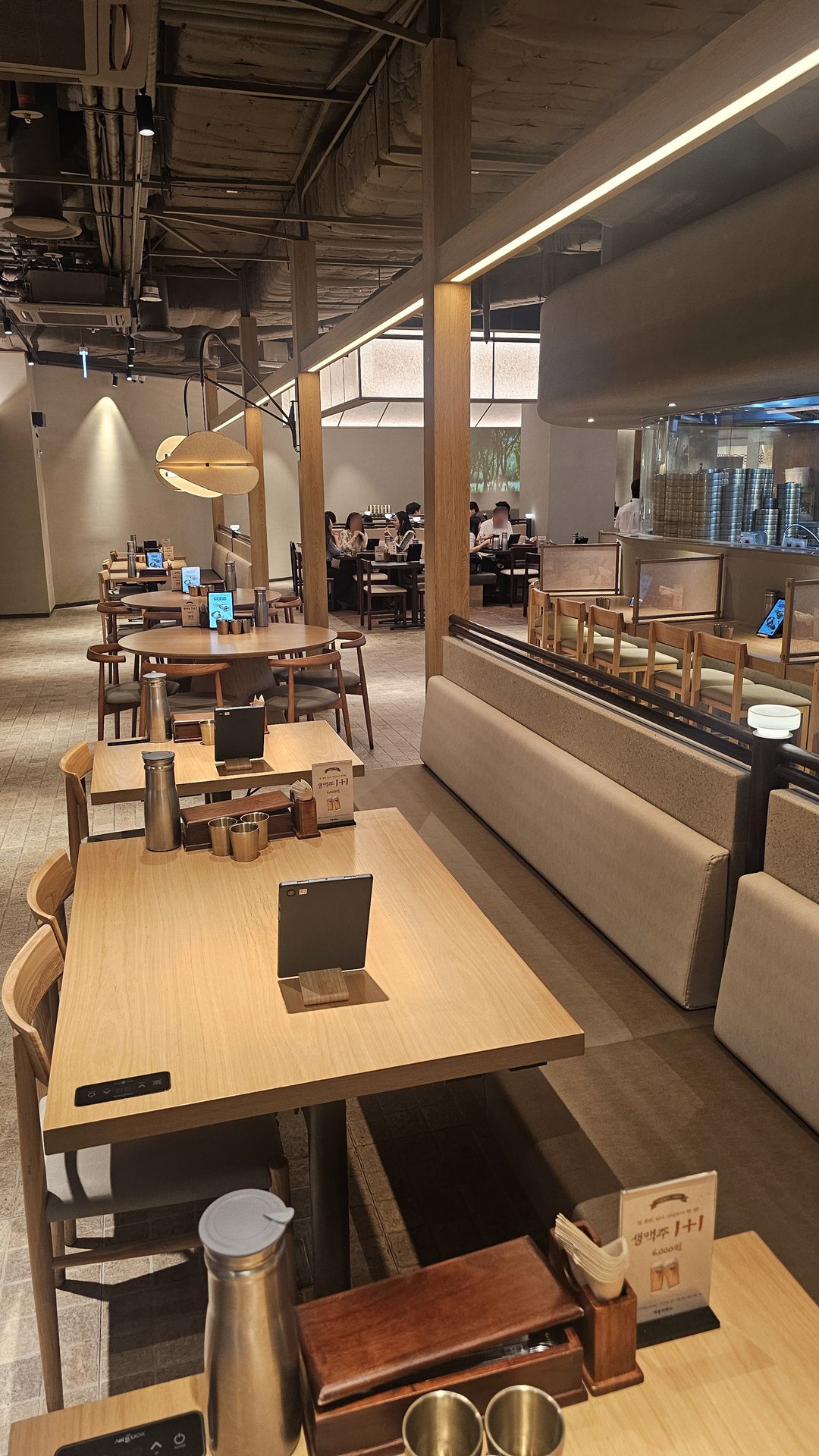
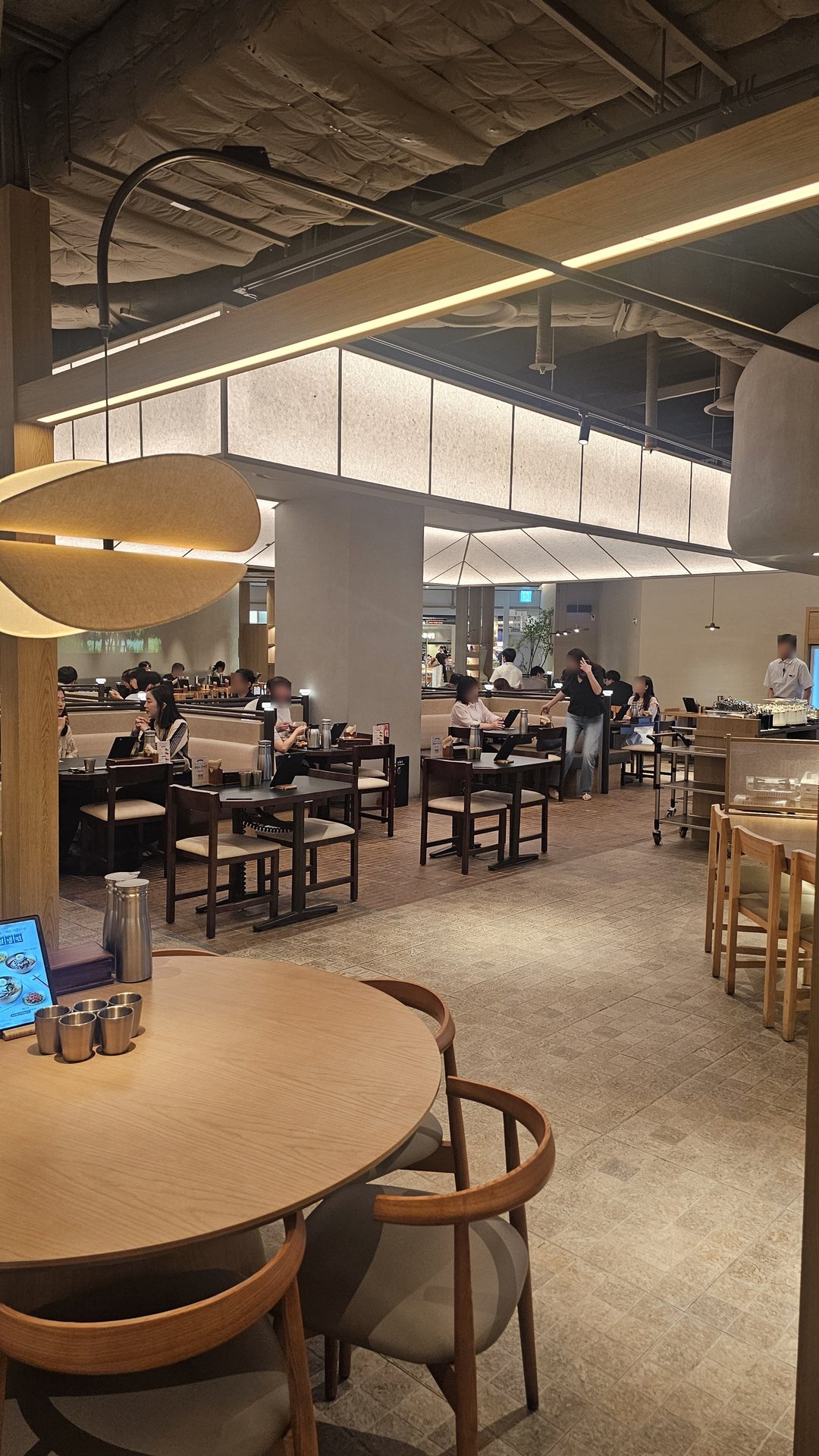
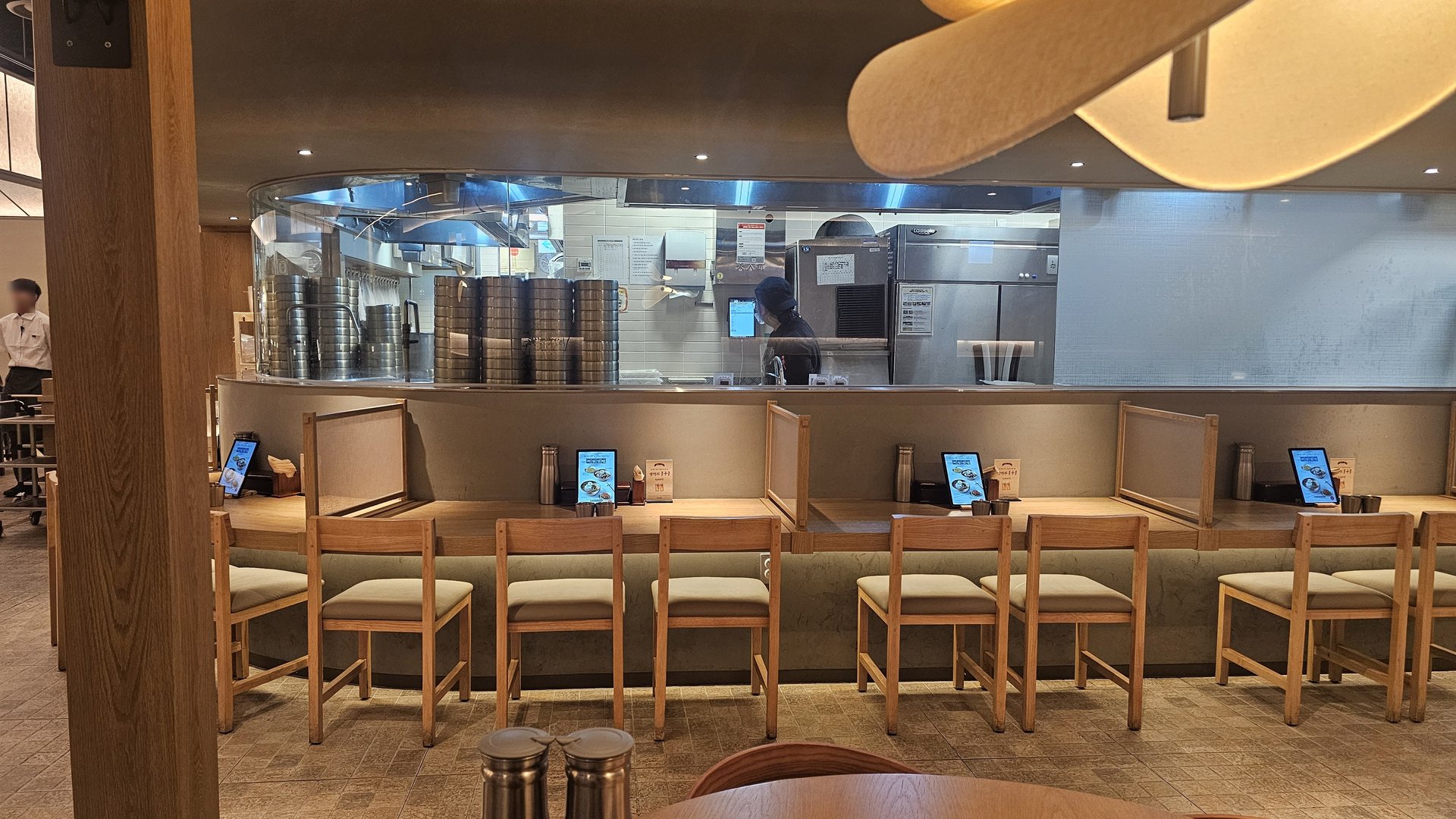
  • Cheil Jemyunso Yeouido: Honest Review of the Shabu Shabu Hot Pot

    Cheil Jemyunso Yeouido: Honest Review of the Shabu Shabu Hot Pot

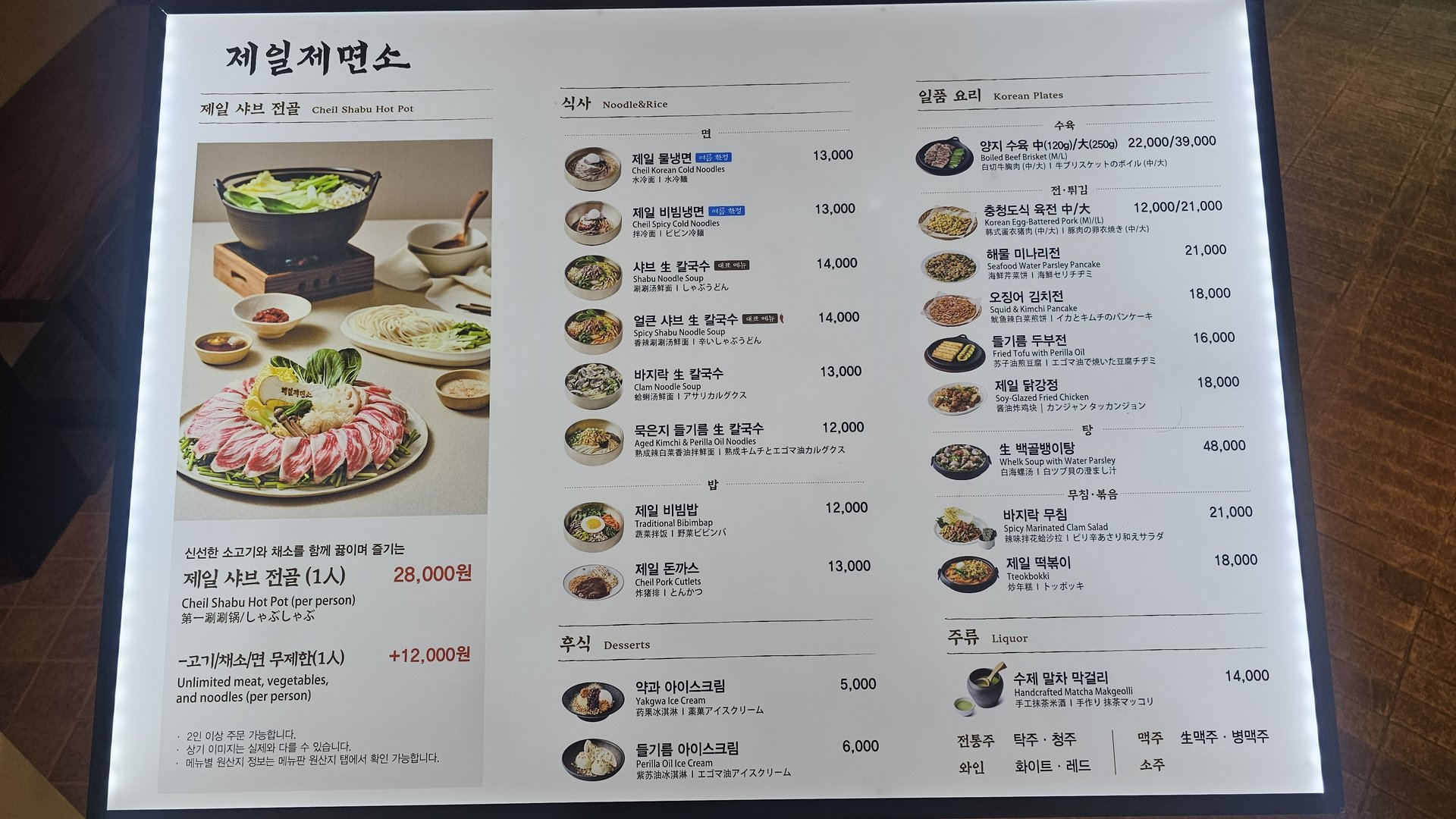
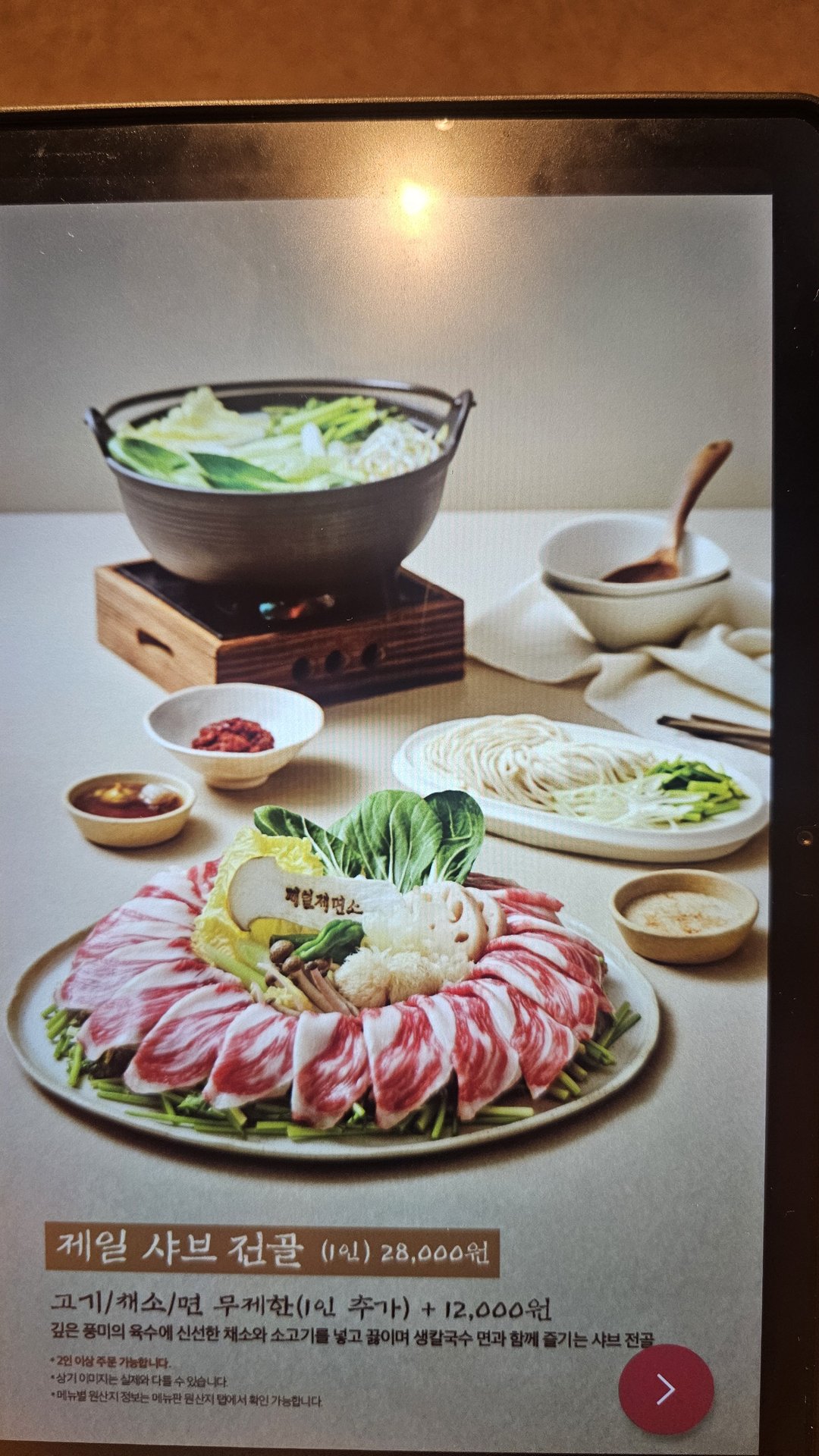
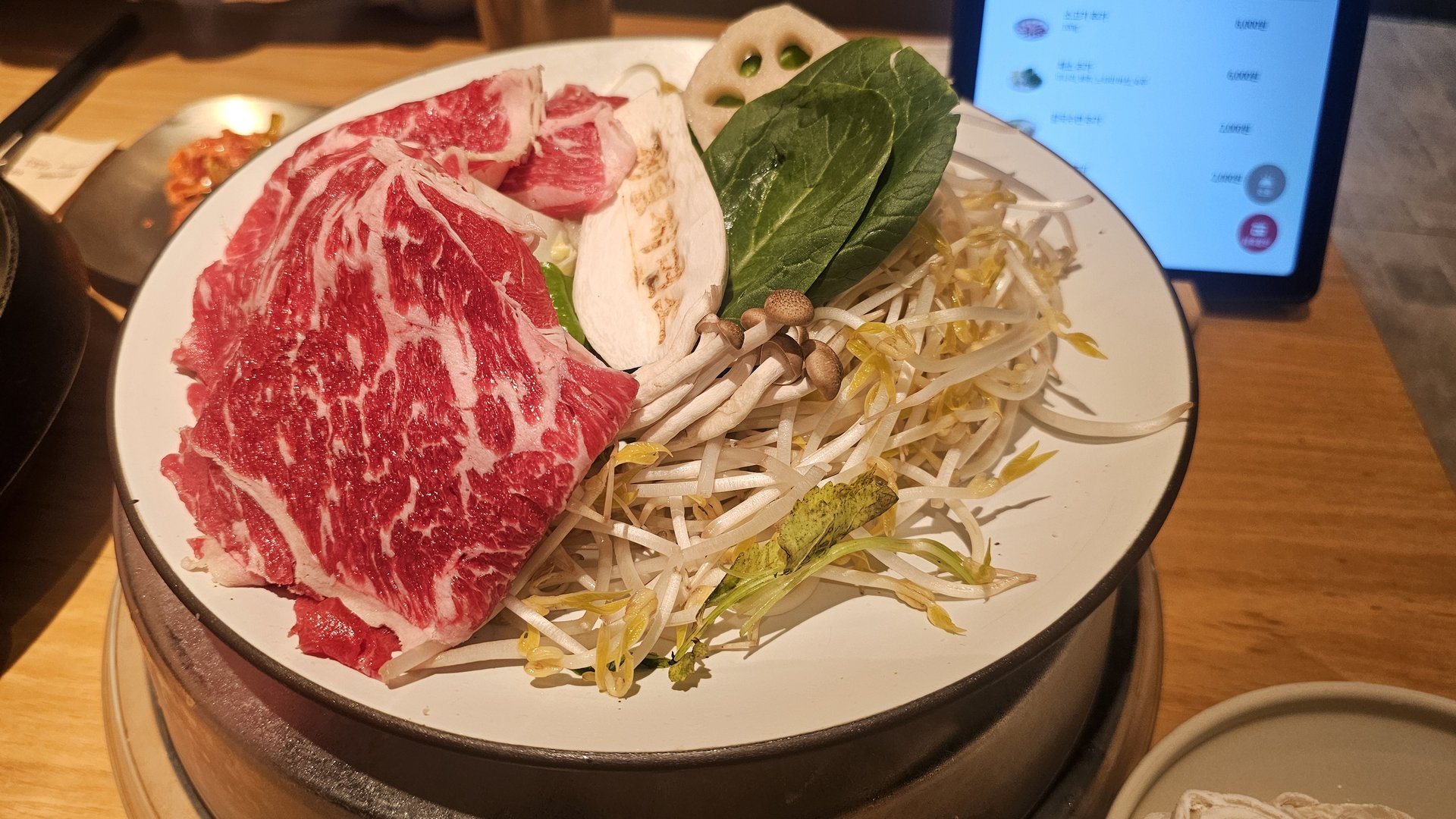
    Quick honest review of Cheil Jemyunso at Yeouido IFC — a Korean chain known for cold noodles that somehow makes its shabu shabu hot pot the main reason to show up. Skip to the verdict if you’re pressed for time, but here’s the short version: the beef is thicker and better quality than the price suggests, the setup is clean, and if you’re already in Yeouido this is one of the better lunch calls you can make.

    Three of us went on a Tuesday. Walked in at 12:15 PM, no reservation, seated immediately.

    What Is Cheil Jemyunso?

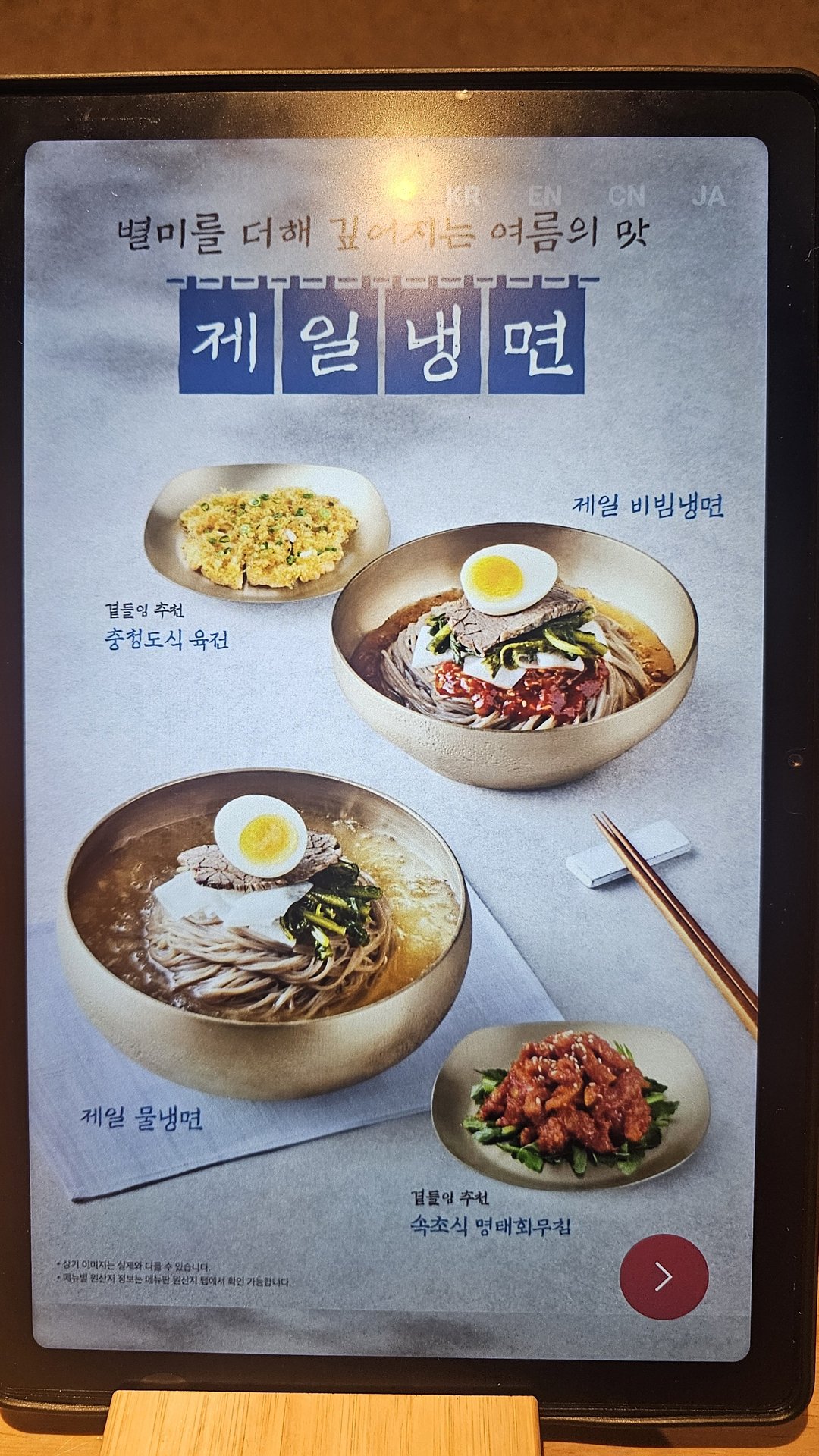
    Cheil Jemyunso (제일제면소) is a Korean restaurant chain. The name translates roughly to “Number One Noodle Shop” — 제일 means “first” or “best,” 제면소 means a place that makes noodles. The menu does include naengmyeon (Korean cold noodles), warm noodles, and rice dishes.

    But the Jeil Shabu hot pot is what keeps people coming back. The Yeouido branch sits inside IFC Mall (국제금융센터 — the financial district’s main shopping complex), which means it feeds a lot of office workers on tight lunch windows. They’ve got the operation dialed in.

    What Is Shabu Shabu?

    If you haven’t done this before: shabu shabu (샤브샤브) is a hot pot style where you cook thin slices of beef and vegetables yourself by swishing them through simmering broth at your table. The name comes from the Japanese sound of the meat moving through liquid. Korea picked it up and made it their own.

    Cheil Jemyunso’s version — the Jeil Shabu Jeongol (제일 샤브 전골) — comes as a full ingredient platter: beef, mushrooms, bean sprouts, bok choy, lotus root, green chili, perilla leaves. The pot of broth sits on an induction burner built into the table. You heat it up, cook the ingredients at your own pace, and the broth gets better as the meal goes on.

    This is not a fast lunch. Plan for 45–60 minutes minimum.

    Getting There

    Subway: Yeouido Station (여의도역), Line 5 (purple line) or Line 9 (gold line). Follow IFC Mall signs from the station — you can walk the whole way underground without going outside, which matters in Seoul’s summers and winters.

    From Myeongdong: About 20 minutes by subway.

    From Hongdae/Sinchon area: About 15 minutes.

    From Gangnam: About 20 minutes via Line 9.

    From Incheon Airport: Around 50–60 minutes via Airport Railroad + subway transfer at Gimpo Airport Station.

    Yeouido is Seoul’s financial district — think Canary Wharf in London or La Défense in Paris. It’s not a typical tourist neighborhood, but plenty of visitors end up here for the Han River Park, the spring cherry blossoms along Yeouiseo-ro, or catching something at the KBS or MBC broadcast centers. If Yeouido is already on your itinerary, Cheil Jemyunso is easy to slot in.

    Jeil Myeonso Yeouido IFC branch entrance inside the shopping mall
    Cheil Jemyunso Yeouido IFC branch entrance inside the shopping mall

    The Interior

    Clean, modern, well-organized. Wooden table tops, warm lighting, and an open kitchen running along one side of the space. It reads like a polished chain — not a trendy independent restaurant, but not the soul-crushing corporate cafeteria version either.

    The counter seats facing the open kitchen are the highlight for solo diners. Real counter space, proper stools, direct view of the kitchen. Solo dining at a hot pot place can feel weird, but not here.

    Lunch crowd was busy. Staffed well, tables turned over efficiently.

    Spacious interior of Jeil Myeonso Yeouido with wooden tables and open kitchen visible in the background
    Spacious interior ofCheil Jemyunso Yeouido with wooden tables and open kitchen visible in the background
    Busy weekday lunch service at Jeil Myeonso Yeouido with customers seated and staff in motion
    Busy weekday lunch service at Cheil Jemyunso Yeouido with customers seated and staff in motion
    Open kitchen counter with single-seat bar stools at Jeil Myeonso Yeouido IFC
    Open kitchen counter with single-seat bar stools at Cheil Jemyunso Yeouido IFC

    The Menu

    Tablet ordering with photos. Even with zero Korean, you can mostly figure out what’s what by looking at the pictures. The main categories: cold noodles, warm noodles, rice dishes, the shabu shabu hot pot, drinks and alcohol.

    Full paper menu at Jeil Myeonso Yeouido showing noodles, rice dishes, hot pot, and drinks with prices in Korean won
    Full paper menu at Cheil Jemyunso Yeouido showing noodles, rice dishes, hot pot, and drinks with prices in Korean won
    Tablet menu at Jeil Myeonso showing naengmyeon cold noodle options — mul naengmyeon and bibim naengmyeon
    Tablet menu at Cheil Jemyunso showing naengmyeon cold noodle options — mul naengmyeon and bibim naengmyeon
    Tablet menu at Jeil Myeonso showing the Jeil Shabu hot pot priced at 28,000 KRW per person
    Tablet menu at Cheil Jemyunso showing the Jeil Shabu hot pot priced at 28,000 KRW per person

    The shabu shabu at 28,000 KRW (~$21) per person is the most expensive thing on the menu. If you’re doing lunch on a tighter budget, the noodle and rice dishes come in cheaper. But honestly, coming to Cheil Jemyunso and ordering the noodles when the hot pot is there feels like going to a steakhouse for the salad.

    What We Ordered

    Three orders of the Jeil Shabu. 84,000 KRW (~$62) total for three people.

    The ingredients come out on a black platter with the restaurant’s logo pick pressed into the beef. It looks good.

    Shabu shabu ingredient plate at Jeil Myeonso with marbled beef slices, mushrooms, bean sprouts, bok choy, and lotus root
    Shabu shabu ingredient plate at Cheil Jemyunso with marbled beef slices, mushrooms, bean sprouts, bok choy, and lotus root
    Black ingredient plate at Jeil Myeonso with the restaurant logo pick in the beef, showing beef, bean sprouts, lotus root, green chili, and perilla leaves
    Black ingredient plate at Cheil Jemyunso with the restaurant logo pick in the beef, showing beef, bean sprouts, lotus root, green chili, and perilla leaves

    The beef is the thing worth talking about. Most shabu shabu places cut the beef so thin it’s almost translucent — swish it in the broth for ten seconds and it’s done. That style is fine, but it’s not exciting. The beef here is noticeably thicker. You can actually feel the texture when you eat it. The marbling is solid. You’re getting real meat, not just something that absorbs broth flavor.

    This is the reason this spot gets return visits. The beef quality punches above the price.

    The vegetables: Mushrooms, bean sprouts (숙주), bok choy (청경채), lotus root (연근), green chili (청양고추), perilla leaves (깻잎). A full spread. The lotus root holds its texture even after time in the broth — it gives a crunch that the other vegetables don’t. Perilla leaves (깻잎) are a staple Korean herb — slightly minty, a little like basil. Worth trying in the broth even if you haven’t had them before.

    The broth: Clear at the start. As the meat and vegetables cook through, it picks up depth, goes slightly cloudy, and gets genuinely good. By the time the ingredients are mostly done, the leftover broth is something you want to finish. Adding noodles at this point to soak up the broth is an easy yes.

    Side dishes at Jeil Myeonso — kimchi and three dipping sauces including sesame, gochujang, and soy sauce
    Side dishes at Cheil Jemyunso — kimchi and three dipping sauces including sesame, gochujang, and soy sauce
    Initial hot pot setup at Jeil Myeonso with clear broth in the pot and raw beef and kimchi waiting on the side
    Initial hot pot setup at Cheil Jemyunso with clear broth in the pot and raw beef and kimchi waiting on the side
    Beef and vegetables cooking in the shabu shabu broth at Jeil Myeonso Yeouido
    Beef and vegetables cooking in the shabu shabu broth at Cheil Jemyunso Yeouido
    Jeil Myeonso shabu shabu hot pot boiling with cooked meat and vegetables, broth turning rich and cloudy
    Cheil Jemyunso shabu shabu hot pot boiling with cooked meat and vegetables, broth turning rich and cloudy
    Final stage of the Jeil Myeonso shabu shabu with reduced broth and fully cooked ingredients
    Final stage of the Cheil Jemyunso shabu shabu with reduced broth and fully cooked ingredients

    The dipping sauces: Three options on the table — sesame sauce (참깨소스), gochujang (고추장, Korean fermented red pepper paste — spicy and slightly sweet), and soy sauce (간장). Most people default to the sesame sauce and it’s the right call. Go gochujang if you want heat, soy sauce if you want something clean and simple.

    Kimchi comes as a side dish. Use it as a palate break between rounds of hot pot. Technically you can throw it into the broth but that’s not the intended move.

    The Cooking Process

    No formal instruction given — you figure it out quickly. Drop the beef in, swish it around until it changes color, pull it out. Vegetables need a bit longer. The induction burner keeps the broth at a steady simmer. Don’t crank it to full boil — medium heat is enough and keeps the broth from getting murky too fast.

    Staff will check in and help if you look genuinely lost. No pressure, no hovering.

    Stuff Tourists Should Know

    Price per person: 28,000 KRW (~$21). Budget for a drink if you want one — total per person comes to around 30,000–35,000 KRW (~$22–26) with sides included.

    Payment: Cards accepted, including most foreign cards (Visa/Mastercard work fine). Cash is fine too.

    Tipping: None. Korea doesn’t have a tipping culture. Do not leave money on the table — it will confuse the staff.

    English: Basic English from staff, photo-based tablet menus. You’ll be fine without Korean.

    Dietary restrictions: Not vegetarian or vegan friendly — the whole point is the beef, and the broth is meat-based. Halal not certified. If you have a shellfish or pork allergy you’re in okay shape here since neither is in the standard hot pot, but confirm with staff for your specific allergy.

    Kids: The induction burner at the table means you’d need to watch young children. The restaurant itself is family-friendly in setup — booths and regular tables have enough space.

    Solo dining: Fully comfortable. Counter section is designed for it.

    The Verdict

    This is the kind of place that earns regular visits precisely because it doesn’t try to be more than it is.

    The shabu shabu is well-executed, the beef is better than the price requires, and the IFC Mall location means it’s accessible without going out of your way if you’re already in Yeouido. It’s not going to be the most memorable meal of a Seoul trip — Korean BBQ, pojangmacha street food, or a proper naengmyeon in summer will all compete harder for that slot. But as a reliable, quality hot pot lunch in a clean comfortable space, it delivers every time.

    Go if:

    – You’re in Yeouido for the Han River, a work meeting, or IFC shopping

    – You’re 2–3 people looking for a shared, interactive lunch

    – You want to try shabu shabu without hunting down a specialty spot

    Skip if:

    – This is your first or second day in Seoul — eat Korean food first, hot pot later

    – Budget is tight — the noodle dishes elsewhere in IFC food hall are cheaper

    – You need vegetarian or halal options

    Worth coming back to. Already have.

    FAQ

    How much does the shabu shabu cost at Cheil Jemyunso Yeouido?

    The Jeil Shabu hot pot is 28,000 KRW (~$21) per person. There’s no minimum group size — you can order it solo.

    Where exactly is Cheil Jemyunso in Yeouido?

    Inside IFC Mall (국제금융센터) in Yeouido. Take subway Line 5 or Line 9 to Yeouido Station and follow signs for IFC Mall — you can walk there underground without going outside.

    Is there an English menu at Cheil Jemyunso?

    They use tablet menus with photos, so even without Korean you can navigate it. Staff speaks basic English and will help if you look stuck.

    Can you add noodles to the hot pot at the end?

    Yes — Cheil Jemyunso is primarily a noodle restaurant, so finishing your hot pot broth with naengmyeon (cold noodles) or noodles is an option. Check the tablet for add-ons.

    Do I need a reservation for lunch at Cheil Jemyunso Yeouido?

    We walked in on a weekday at 12:15 PM with no reservation and got seated right away. Peak lunch hour (noon to 1 PM) fills up, so arriving just before noon or after 1 PM is the safer move.

    Is Cheil Jemyunso good for solo dining?

    Yes. There’s a dedicated counter section facing the open kitchen built specifically for solo diners. It doesn’t feel like an afterthought — proper seats, comfortable setup.

    You might also like

    📍 Location

    Open in Google Maps →

  • Myeongdong Gyoja in Myeongdong: Honest Kalguksu Review

    Myeongdong Gyoja in Myeongdong: Honest Kalguksu Review

    Quick honest review of Myeongdong Gyoja — a kalguksu institution that’s been feeding tourists and locals in Seoul’s most chaotic shopping district since 1966. Skip to the verdict if you’re in a hurry, but the short version: the mandu is excellent, the kalguksu broth is the real reason people keep coming back, and the garlic kimchi will wreck your breath for the rest of the afternoon.

    Worth it.

    Went on a Tuesday around 2:40 PM with two other people — well past the lunch rush. Still had to wait. Still packed inside.

    What Is Myeongdong Gyoja?

    “Gyoja” (교자) is the Korean reading of 餃子 — the same character used for gyoza in Japan and jiaozi in China. Dumplings, basically. But the dumplings aren’t even the main event here. It’s the kalguksu that built this place’s reputation.

    Kalguksu (칼국수) is a Korean knife-cut noodle soup. Thick, flat, hand-cut wheat noodles in a long-simmered broth. The noodles aren’t uniform — they’re not machine-extruded — so they have that rustic, slightly uneven texture that machine noodles can’t fake. Myeongdong Gyoja’s broth is chicken-based, cooked down until it turns pale golden and rich. Clean but deep. The kind of thing that doesn’t look like much until you taste it.

    Nearly 60 years of serving this soup. There’s a reason it’s still here while most restaurants around it rotate every two years.

    The Michelin Thing

    Myeongdong Gyoja main branch entrance with Michelin Guide sign and crowd waiting outside
    Myeongdong Gyoja main branch entrance with Michelin Guide sign and crowd waiting outside

    It’s on the Michelin Bib Gourmand list. Not a star — Bib Gourmand is Michelin’s “exceptional food at honest prices” category. Still real recognition, and one of the very few noodle spots in Seoul to get it.

    Not overselling this. It’s not fine dining. It’s a canteen-style lunch spot that seats maybe 80–100 people under fluorescent lights. But that’s exactly what Bib Gourmand is supposed to flag — places that deliver consistently good food without charging you for the decor.

    Getting There

    Myeongdong main street packed with tourists and shoppers Seoul

    Myeongdong main street packed with tourists and shoppers Seoul

    Myeongdong Gyoja main branch is right in the middle of Myeongdong — Seoul’s most tourist-dense shopping street, lined with K-beauty stores, street food carts, and more international visitors per square meter than almost anywhere else in the city.

    Subway: Exit 5 or 8 from Myeongdong Station (Line 4, orange line). Walk toward the main pedestrian street and look for the line outside.

    From Incheon Airport: About 1 hour by Airport Railroad (AREX) to Seoul Station, then one stop on Line 4 to Myeongdong.

    From Hongdae or Sinchon: About 30–40 minutes by subway.

    You can’t miss Myeongdong. It feels like a weekend crowd even on a Tuesday.

    The Pre-Payment System — Read This First

    Pre-payment menu board at Myeongdong Gyoja with Pay in Advance notice in English

    Pre-payment menu board at Myeongdong Gyoja with Pay in Advance notice in English
    Trilingual pre-payment policy notice in Korean English and Japanese at Myeongdong Gyoja entrance

    Trilingual pre-payment policy notice in Korean English and Japanese at Myeongdong Gyoja entrance

    You pay before you sit. This catches first-timers off guard.

    When you get to the door, they direct you to a counter where you order and pay upfront. Then you wait for a table. Signs in Korean, English, and Japanese explain the process — once you see them, it’s clear. But if you walk in expecting to sit first and pay later, just know it doesn’t work that way.

    Also: there’s a food waste notice at every table. If you don’t finish your food, there’s an environmental fee. Just eat your food.

    Inside

    Crowded interior dining hall of Myeongdong Gyoja with bright fluorescent lighting and packed tables

    Crowded interior dining hall of Myeongdong Gyoja with bright fluorescent lighting and packed tables

    Big, bright, functional. Rows of tables under fluorescent lights. At 2:40 PM on a Tuesday — past peak lunch — it was still nearly full.

    This is not an atmosphere place. No music, no mood lighting, no Instagram corner. It’s a room built to feed a lot of people fast. Tables turn quickly, staff moves quickly. Sit down, eat, leave. Everyone seems to understand this implicitly.

    What I Ordered

    Small white rice bowl held in hand at Myeongdong Gyoja

    Small white rice bowl held in hand at Myeongdong Gyoja

    Three people, three dishes: mandu, kalguksu, bibim guksu. Total came to 37,000 KRW (~$27 USD) for all three — about $9 per person. For Michelin-recognized food in the middle of Myeongdong, that’s genuinely fair pricing.

    Rice (공기밥) was thrown in extra at no charge.

    Mandu (Steamed Dumplings) — 13,000 KRW (~$9.60)

    Closeup of nine steamed mandu dumplings in bamboo steamer at Myeongdong Gyoja

    Closeup of nine steamed mandu dumplings in bamboo steamer at Myeongdong Gyoja
    Steamed mandu dumplings in bamboo steamer alongside kalguksu noodle soup at Myeongdong Gyoja

    Steamed mandu dumplings in bamboo steamer alongside kalguksu noodle soup at Myeongdong Gyoja

    The mandu is really good.

    These are large, thick-skinned Korean dumplings — not the delicate dim sum style, not pan-fried Japanese gyoza. The skin is substantial and chewy. The filling is pork and vegetables, well-seasoned and tightly packed. When you bite through, there’s good juice but not the explosive soup-dumpling situation — just proper, satisfying mandu.

    Nine dumplings per order. Solid value at 13,000 KRW.

    If your only reference point for dumplings is Japanese gyoza (thin-skinned, crispy, pan-fried), these will feel different. Heavier, more filling-forward. I prefer this style — more to actually eat.

    Kalguksu (Knife-Cut Noodle Soup) — 12,000 KRW (~$8.90)

    Kalguksu knife-cut noodle soup with minced meat and thick noodles in bowl at Myeongdong Gyoja

    Kalguksu knife-cut noodle soup with minced meat and thick noodles in bowl at Myeongdong Gyoja
    Chopsticks lifting kalguksu knife-cut noodles from bowl at Myeongdong Gyoja

    Chopsticks lifting kalguksu knife-cut noodles from bowl at Myeongdong Gyoja

    This is the dish that made the restaurant famous. And yeah — the broth delivers.

    Chicken-based, long-simmered, pale and slightly cloudy. Clean but genuinely deep. Not salty, not spicy — just rich in a way that’s hard to pin down until you’ve had a few spoonfuls. The kind of broth that makes you want to keep drinking it even when you’re already full.

    The noodles are thick and hand-cut, so they have a slightly uneven, rustic texture — not mushy, not too chewy. They hold up in the broth without going soft. Simple toppings: a few thick pieces that look like dumpling skin, some minced meat on top. The broth does all the work.

    tbh, this is the dish to order. If you’re only getting one thing, get this.

    Bibim Guksu (Spicy Mixed Noodles) — 12,000 KRW (~$8.90)

    Bibim guksu spicy cold noodles in large stainless steel bowl topped with cucumber perilla and sesame

    Bibim guksu spicy cold noodles in large stainless steel bowl topped with cucumber perilla and sesame
    Chopsticks lifting bibim guksu cold noodles showing green and yellow strands

    Chopsticks lifting bibim guksu cold noodles showing green and yellow strands

    Bibim guksu is cold noodles tossed in a spicy red sauce — think Korean cold noodles, more fiery than sweet. Myeongdong Gyoja’s version comes in a big stainless steel bowl with julienned cucumber, perilla leaves (깻잎), and sesame seeds on top. The noodles are thinner than the kalguksu, and the sauce has a clean kick — not brutal, but present.

    It’s good. Not as distinctive as the kalguksu, but if you’ve been eating heavy Korean food all week and want something cold and lighter, this works.

    Honestly, if it’s summer and you’re already hot and tired from walking around Myeongdong, order this.

    Kong Guksu — We Skipped It, But Worth Knowing About

    Interior view through glass window showing queue and menu price board at Myeongdong Gyoja

    Interior view through glass window showing queue and menu price board at Myeongdong Gyoja
    Menu board closeup at Myeongdong Gyoja showing kalguksu 12000 won and mandu 13000 won

    Menu board closeup at Myeongdong Gyoja showing kalguksu 12000 won and mandu 13000 won

    Kong guksu (콩국수) is cold noodles in chilled soy milk broth — a summer Korean specialty that sounds stranger than it tastes. Creamy, slightly nutty, surprisingly refreshing. 13,000 KRW, and it’s seasonal. Worth trying on a hot day if you’re feeling adventurous.

    The Kimchi Situation

    Table notice at Myeongdong Gyoja warning that kimchi contains a lot of garlic in English and Korean

    Table notice at Myeongdong Gyoja warning that kimchi contains a lot of garlic in English and Korean
    Self-service kimchi station with tongs at Myeongdong Gyoja

    Self-service kimchi station with tongs at Myeongdong Gyoja

    Kimchi here is self-service and free to refill. There’s also a notice on every table in English that basically says: this kimchi has a lot of garlic.

    They mean it.

    It’s garlicky, fermented, and pungent in the way properly aged kimchi should be. Goes great with the kalguksu broth. If you have any afternoon meetings or close-contact plans after this, maybe exercise some restraint. If you don’t, pile it on.

    Unlimited refills. This is one of those simple Korean restaurant things that always delights visitors.

    Stuff Tourists Should Know

    Price: 12,000–13,000 KRW per dish (~$9–10 USD). For Myeongdong — Seoul’s most expensive tourist corridor — that’s a fair deal.

    Payment: Cards accepted. Foreign Visa and Mastercard generally work fine in Seoul, and this place sees enough international visitors that it shouldn’t be an issue. Remember: pay at the counter before you sit.

    English: Signs in three languages. Menu has four items. You’ll be fine.

    Reservations: None. First-come, first-served.

    Wait time: We waited about 10–15 minutes at 2:40 PM on a Tuesday. During peak lunch (12–1 PM), expect 20–30 minutes, maybe more on weekends. Tables turn fast.

    Tipping: No. Korea doesn’t tip. Don’t leave coins behind.

    Vegetarian options: Limited. The mandu filling has pork. The kalguksu broth is chicken-based. Kong guksu (soy milk) is the closest thing to a vegetarian option — verify with staff if you’re strict about it.
    Solo dining: Fine. No issues eating alone here.

    Families with kids: Kalguksu is mild, mandu is universally liked. The place is loud and busy, which works well or badly depending on your kids.

    Operating hours: 10:30 AM – 9:00 PM, last order 8:30 PM.

    Operating hours sign at Myeongdong Gyoja showing open 10:30 AM close 9:00 PM

    Operating hours sign at Myeongdong Gyoja showing open 10:30 AM close 9:00 PM

    The Verdict

    Should you go?

    Depends on your Seoul situation.

    – If you’re in Myeongdong already — yes. Get the kalguksu. Don’t overthink it.

    – If you have 3 days in Seoul and haven’t tried proper Korean noodle soup yet — yes. Kalguksu is one of those dishes every visitor should try, and this is one of the better versions in the city.

    – If you’ve done all the Korean classics and just want lunch — also yes. It’s fast, cheap for what you get, and the food is consistent.

    – If you need a calm, cozy dining experience — skip. This place is efficient, not relaxing.

    The mandu is excellent. The kalguksu broth is genuinely distinctive — that slow-cooked chicken depth isn’t something you stumble into everywhere. Prices are honest. The garlic kimchi is aggressive in the right way.

    I’ve been here multiple times over the years and it’s always the same: fast service, reliable food, zero pretension. That’s actually harder to maintain than it sounds.

    Rating: 4/5 — would edge toward a 5 if the space had any soul, but the canteen vibe is part of what keeps the prices down. Fair trade.

    FAQ

    What’s on the menu at Myeongdong Gyoja?

    Four items only — kalguksu (knife-cut noodle soup, 12,000 KRW), mandu (steamed dumplings, 13,000 KRW), bibim guksu (spicy cold noodles, 12,000 KRW), and kong guksu (cold soy milk noodles, 13,000 KRW, seasonal).

    Do you need to pay in advance at Myeongdong Gyoja?

    Yes. You order and pay at the counter before you’re seated. Signs explaining this are posted in Korean, English, and Japanese, so you won’t be caught off guard.

    Is Myeongdong Gyoja Michelin-starred?

    It’s on the Michelin Bib Gourmand list — that’s Michelin’s "great food at honest prices" category, not a star. Still real recognition, and one of the few noodle spots in Seoul to earn it.

    What are the opening hours of Myeongdong Gyoja?

    Open 10:30 AM to 9:00 PM daily, last order at 8:30 PM. No reservations — it’s first-come, first-served.

    Is Myeongdong Gyoja tourist-friendly?

    Very. Signs are in Korean, English, and Japanese. The menu has just four items, so ordering takes about ten seconds. Staff speaks enough English to get you through.

    How much does it cost per person at Myeongdong Gyoja?

    One dish runs 12,000–13,000 KRW (~$9–10 USD). Budget around that per person and you’re covered — kimchi refills are free.

    You might also like

    📍 Location

    Open in Google Maps →

  • Shindosegi, Yeouido: a beautiful room and a perfectly fine kimchi jjigae

    Shindosegi, Yeouido: a beautiful room and a perfectly fine kimchi jjigae

    I should say upfront that we did this restaurant wrong. Shindosegi is built around aged beef, and we walked in, sat down, and ordered kimchi jjigae for lunch. So this isn’t really a review of what the place is for. It’s a review of what we actually ate, which was a 13,000 KRW (~$9.60) hot pot in a room that looked like it cost more than the food.

    What this place actually is

    Shindosegi (신도세기) is a chain whose whole pitch is an aging method they call SCA — Super Cold Aging, or 수빙숙성 in Korean. The short version: they age beef at near-freezing temperatures, colder than ordinary dry aging, which is supposed to firm up the texture, cut the gaminess, and push the flavor up. You don’t have to take their word for it either — the aging fridges are right there in the dining room, rows of vacuum-packed beef sitting behind glass while you eat. That’s the draw. Grilled aged beef, done Korean-BBQ style at your table.

    We ordered none of that. Keep that in mind for everything below.

    Getting there

    The Yeouido branch is on the 2nd floor of BNK Finance Tower, in the middle of Seoul’s financial district — think Wall Street or Canary Wharf, lots of suits at noon and tumbleweeds by nine. Yeouido Station on Line 5 or 9 puts you about 5–10 minutes away on foot depending on which exit you climb out of.

    If you’re staying somewhere central — Myeongdong, Gangnam, Hongdae — it’s a 20–30 minute subway ride, and honestly not worth the trip for the hot pot alone. From Incheon Airport you’re looking at the better part of an hour on the AREX plus a transfer, which would be a genuinely unhinged amount of effort for a bowl of kimchi jjigae. Go if you’re already in the neighborhood. Otherwise don’t reorganize your day around it.

    Shindosegi (신도세기) is a Korean restaurant chain built around a specific aging concept called SCA — Super Cold Aging (수빙숙성, su-bing-suk-seong in Korean). The idea is that beef is aged at near-freezing temperatures over an extended period. It’s supposed to tighten the texture, reduce any gamey smell, and concentrate flavor. You can actually see the meat sitting in refrigerated showcases when you walk in.

    The restaurant’s main draw is grilled aged beef, served Korean BBQ-style at the table. That’s the thing people come here for.

    We did not order that. We ordered kimchi jjigae.

    So consider this a review of the hot pot lunch option, not the BBQ. Two different experiences.

    Getting There

    Shindosegi Yeouido is on the 2nd floor of BNK Finance Tower in Yeouido — Seoul’s financial district, roughly equivalent to New York’s Wall Street or London’s Canary Wharf. If you’re staying near Yeouido or have business in the area, this is easy to reach.

    Nearest subway: Yeouido Station (Line 5 or 9), about a 5–10 minute walk depending on your exit.

    From central Seoul (Myeongdong, Gangnam, Hongdae), you’re looking at 20–30 minutes by subway. Not a destination worth a dedicated trip for the hot pot. Worth considering if you’re already in Yeouido.

    From Incheon Airport: roughly 50–60 minutes on the AREX express + subway transfer. Way too far to specifically come here just for kimchi jjigae.

    Shindosegi Yeouido exterior entrance with standing sign board showing BNK Finance Tower 2F location
    Shindosegi Yeouido exterior entrance with standing sign board showing BNK Finance Tower 2F location
    Shindosegi Yeouido front entrance with neon sign, navy and gold door, and blackboard menu
    Shindosegi Yeouido front entrance with neon sign, navy and gold door, and blackboard menu

    The room

    Credit where it’s due: the interior is the best thing here. Navy and gold, and not in the gaudy way that combination usually goes — it’s restrained, more wine bar than gukbap joint. Wine glasses hang upside down over the floor, the kitchen is open, and those SCA fridges I mentioned do a lot of the visual work. For a place where lunch tops out around ten bucks, it punches well above its weight on atmosphere. There’s a tablet on each table for ordering, which quietly solves most of the language problem before it starts.
    Shindosegi Yeouido interior with navy and gold decor, SCA Super Cold Aging refrigerators, and dining seating area
    Shindosegi Yeouido interior with navy and gold decor, SCA Super Cold Aging refrigerators, and dining seating area
    SCA aged meat showcase refrigerator and wine glass rack inside Shindosegi Yeouido open kitchen
    SCA aged meat showcase refrigerator and wine glass rack inside Shindosegi Yeouido open kitchen

    .

    What we ate

    황제 김치전골 (Emperor Kimchi Jjigae), 13,000 KRW. If you’ve never had it: kimchi jjigae is a hot pot built on fermented kimchi, with tofu, pork, and a broth that lands somewhere between spicy and deeply savory. It’s a national comfort food — every household has its own version, every restaurant too. The “Emperor” (황제) tag implies the upgraded one: more of everything, richer.

    It came out in a stone pot, not yet boiling, everything still arranged neatly — kimchi, tofu, scallion, a knob of seasoning on top — before the heat got to it. Then it bubbled up and the room started smelling like a Korean grandmother’s kitchen, which is to say great.

    Kimchi jjigae hot pot before boiling with tofu, kimchi, green onion, and seasoning at Shindosegi
    Kimchi jjigae hot pot before boiling with tofu, kimchi, green onion, and seasoning at Shindosegi

    Then it starts bubbling.

    Kimchi jjigae with ramen noodle add-on starting to boil at Shindosegi Yeouido
    Kimchi jjigae with ramen noodle add-on starting to boil at Shindosegi Yeouido
    Fully boiling kimchi jjigae with ramen noodles at Shindosegi Yeouido
    Fully boiling kimchi jjigae with ramen noodles at Shindosegi Yeouido

    The eating was less dramatic than the smell. The broth was competently spiced, the kimchi had real fermentation behind it, the tofu didn’t fall apart. All correct. But it’s the kind of jjigae any decent neighborhood spot would hand you at the same price without the “Emperor” branding, and somewhere in the middle of the pot I stopped having opinions about it and just ate. That’s not an insult exactly. It’s just not a thing I’ll remember next month.

    라면 사리 (ramen add-on), 2,000 KRW. This is the move. You drop dried ramen noodles into the broth near the end and give them a few minutes; they drink up all that red kimchi liquid and go slightly chewy. It’s the best part of the meal, and I’ll be honest about why — it’s not that Shindosegi does something special with it, it’s that ramen in kimchi broth is just one of those combinations that’s good no matter who makes it. The broth on its own was average. The noodles are what made me finish the pot.

    Close-up of lifting ramen noodles from kimchi jjigae with tongs showing rich red broth at Shindosegi
    Close-up of lifting ramen noodles from kimchi jjigae with tongs showing rich red broth at Shindosegi

    기본 반찬 (banchan). Four little dishes on a gold tray: kkakdugi, regular baechu kimchi, jeotgal, and soy-pickled jangajji. A solid spread, and the jeotgal stood out — briny and sharp without tipping into too-salty, which is a harder line to walk than it sounds.

    Four-piece banchan set on a gold tray at Shindosegi Yeouido — kkakdugi, baechu kimchi, jeotgal, and jangajji
    Four-piece banchan set on a gold tray at Shindosegi Yeouido — kkakdugi, baechu kimchi, jeotgal, and jangajji

    The practical stuff, if you’re visiting

    You can manage here with zero Korean. The tablet has photos, some items carry English labels, and even when they don’t you can point your way through it. Staff probably won’t chat with you in English, but you don’t really need conversation to get fed. Pay by card — Yeouido is an office district, so cash-only places are basically extinct around here. Don’t tip; Korea doesn’t do it, and service is built into the bill. One small thing worth knowing: the sign outside says they run on weekends and holidays, which isn’t a given in this neighborhood — plenty of Yeouido restaurants shut when the office crowd vanishes.

    On portions, the hot pot is sized for two, one pot per pair, so a solo diner will be drowning in it and a group of four needs to order in multiples. It’s fine for kids in theory, though the room skews a touch nicer than toddler-friendly. And if dietary restrictions matter to you, ask first — kimchi jjigae has pork, and even the kimchi base often carries fish sauce, so it’s neither vegetarian nor halal.

    The same hot pot logic applies to the whole lunch menu, by the way: kimchi jjigae, budae jjigae, duruchigi, all 13,000 KRW a pot. The aged beef is a completely different price bracket — figure 30,000 to 60,000+ KRW per portion, which is the real reason to come and the thing we skipped.

    So, should you go?

    If you work in Yeouido or you’re passing through, sure — it’s a pleasant, fairly priced lunch, and the room makes it feel a little more special than the food earns. If you’re a tourist with limited days in Seoul, I’d skip it without much hesitation. Nothing about this meal was something you couldn’t get at a hundred other places; spend that meal on something Seoul does that nowhere else does — a proper grill house, good naengmyeon, a sundubu spot that takes its tofu seriously.

    The kimchi jjigae gets a 6 out of 10 from me. Fine, pretty surroundings, forgettable bowl. I probably won’t come back for the hot pot. I might come back for the beef, if Yeouido pulls me in again — which, given the SCA thing is apparently the entire point of the restaurant, is the version of Shindosegi I should’ve reviewed in the first place.

  • Eomjine Kkomak House in Yeouido: Cockle Bibimbap Review

    Eomjine Kkomak House in Yeouido: Cockle Bibimbap Review

    Quick honest review of Eomjine Kkomak House (엄지네꼬막집) in Yeouido. Skip to the verdict if you’re short on time — but here’s the short version: the cockle bibimbap is genuinely good, the lunch set is reasonable for Yeouido, and this is the kind of place regulars keep coming back to not because it’s trendy but because it’s consistently on point.

    Two of us went for lunch. Two kkokak bibimbap sets, one potato pancake to share.

    What Is Kkokak Bibimbap?

    Okay, quick explainer before anything else.

    Kkokak (꼬막) is a shellfish — specifically an ark clam, often called a blood cockle in English. Small, dark-shelled, chewy. The real ones come from the tidal flats of South Jeolla Province in the south of Korea, particularly around Boseong and Suncheon. Koreans treat them like a regional delicacy.

    The texture is the thing. Kkokak is firmer than a clam, with less give — you actually have to chew it. The flavor is deeply umami and oceanic, but not fishy. Season them with gochugaru (Korean red pepper flakes), sesame oil, garlic, and scallions and you get something that’s almost addictive.

    Kkokak bibimbap is just rice with that seasoned cockle mixture piled on top. You mix it, you eat it. Simple as that. But like most Korean food, simple concept doesn’t mean anywhere near simple execution.

    About the Restaurant

    The name 엄지네꼬막집 translates roughly to “Eomji’s Cockle House.” The menu here is focused — not trying to do everything. Cockle bibimbap, cockle muchim (seasoned cockle as a standalone dish), abalone bibimbap, and a handful of sides. That’s it.

    Restaurants that keep a tight menu and stay busy are usually doing something right. This one’s been around long enough to build a local following, and the lunch crowd on a weekday backs that up.

    Entrance of Eomjine Kkomak House in Yeouido with illuminated menu board showing cockle dishes
    Entrance of Eomjine Kkomak House in Yeouido with illuminated menu board showing cockle dishes

    Getting There

    Yeouido is Seoul’s financial district — think of it as Korea’s equivalent of Wall Street, but with a large riverside park attached. Banks, broadcast companies (KBS headquarters is here), government offices, and a whole lot of people who need somewhere decent to eat between 12 and 1 PM.

    Closest subway: Yeouido Station (여의도역), accessible via Line 5 or Line 9. Short walk from either exit. Use Naver Maps — more reliable than Google Maps for Korean addresses. Search 엄지네꼬막집 여의도 and it’ll come up.

    From Incheon Airport (ICN): About 50–60 minutes by AREX train and subway, or 40–45 minutes by taxi (roughly 50,000–70,000 KRW / ~$37–$52 depending on traffic). Not a straight-from-the-airport stop, but if you’re staying in Yeouido or passing through the area, it’s very convenient.

    The Interior

    Interior of Eomjine Kkomak House with long wooden tables and sofa-style bench seating

    Interior of Eomjine Kkomak House with long wooden tables and sofa-style bench seating

    Clean, functional, unpretentious. Long wooden tables, bench-style sofa seating along one wall, bright lighting. Not a date spot. Not somewhere you linger after eating. This is a lunch operation designed for quick turnover, and the layout reflects that.

    We went around 11 AM, right after opening — the hall was nearly empty and perfectly quiet. By noon, this place fills up with the Yeouido office crowd.

    Wall menu at Eomjine Kkomak House showing prices for kkokak bibimbap, kkokak muchim, and abalone bibimbap

    Wall menu at Eomjine Kkomak House showing prices for kkokak bibimbap, kkokak muchim, and abalone bibimbap

    The wall menu is in Korean only, but the prices are visible. Regular kkokak bibimbap is listed at 37,000 KRW (~$27 USD) on the main menu. The lunch set pricing is more reasonable — our total for two sets and a shared pancake came to 44,000 KRW, which breaks down to well under 20,000 per person.

    What I Ordered

    Kkokak Bibimbap Lunch Set × 2

    Kkokak bibimbap topped with a large mound of seasoned cockles, sesame, and green onions at Eomjine Kkomak House

    Kkokak bibimbap topped with a large mound of seasoned cockles, sesame, and green onions at Eomjine Kkomak House

    The dish arrives looking like a lot. A big mound of seasoned cockles sits on top of a bowl of rice — the cockles are coated in that classic mix of gochugaru, sesame oil, garlic, and scallions. There’s an instruction card on the table.

    How-to-eat instruction card for kkokak bibimbap placed on table at Eomjine Kkomak House

    How-to-eat instruction card for kkokak bibimbap placed on table at Eomjine Kkomak House

    The instruction is: mix it. That’s essentially the whole thing. Once you mix, the sesame oil and cockle juices coat the rice and you get this savory, slightly spicy bowl that eats much bigger than it looks.

    The cockles themselves are cooked properly — firm but not rubbery, tender enough to eat without effort. The seasoning is balanced. The heat from the gochugaru is present but not aggressive, and the sesame flavor rounds everything out. It’s the kind of dish you finish and immediately understand why people come back for it.

    Close-up of mixed kkokak bibimbap showing cockles, rice, gochugaru seasoning and sesame at Eomjine Kkomak House Yeouido

    Close-up of mixed kkokak bibimbap showing cockles, rice, gochugaru seasoning and sesame at Eomjine Kkomak House Yeouido

    Yeah. This is the dish to order. No question.

    Potato Pancake (감자전) × 1 — Shared

    Crispy potato jeon (Korean savory pancake) on bamboo tray with soy dipping sauce at Eomjine Kkomak House

    Crispy potato jeon (Korean savory pancake) on bamboo tray with soy dipping sauce at Eomjine Kkomak House

    Potato jeon is a Korean savory pancake made with grated potato — denser and chewier than a wheat-based pancake, slightly translucent in the middle when cooked right. Comes with a soy-based dipping sauce on the side.

    Crispy at the edges, chewy center, hits the spot as a shared side. It’s not a reason to come here on its own, but it’s a solid call when you want something to eat alongside the bibimbap. We finished it.

    The Soup

    Seaweed soup in white bowl served as part of the kkokak bibimbap lunch set

    Seaweed soup in white bowl served as part of the kkokak bibimbap lunch set

    The lunch set comes with soup. Seaweed soup (미역국, miyeokguk) — seaweed, tofu, clean light broth. Warm, simple, restorative. Standard for a Korean set meal. It does exactly what it’s supposed to do.

    Banchan (Side Dishes)

    Eight-piece banchan spread including egg roll, spam, seaweed, bean sprouts, kimchi, perilla, and cucumber

    Eight-piece banchan spread including egg roll, spam, seaweed, bean sprouts, kimchi, perilla, and cucumber

    Eight small side dishes came out with the sets. Banchan is the Korean tradition of serving multiple small dishes alongside the main — you eat from them throughout the meal, no extra charge.

    The spread here: egg roll, spam, dried seaweed, bean sprout salad, kkakdugi (cubed radish kimchi), perilla leaves, cabbage kimchi, cucumber salad. More than expected for a lunch set. The egg roll and spam are very Korean comfort food — not fancy, but satisfying.

    Total bill: 44,000 KRW (~$32.60 USD) for two kkokak bibimbap lunch sets and one shared potato pancake.

    That’s roughly 22,000 KRW (~$16.30) per person for cockle bibimbap, soup, eight banchan, and a shared side. For Yeouido, that’s solid value.

    Stuff Tourists Should Know

    English menu: The wall menu is Korean only. Staff likely speaks minimal English. Point-and-order works fine — the main dish is 꼬막비빔밥. Show a photo if needed.

    Payment: Korean cards work fine. Foreign Visa/Mastercard cards generally work at most Seoul restaurants now. Carry some cash as backup.

    Tipping: No. Korea doesn’t have a tipping culture. Just pay the bill as printed.

    Best time to go: Open for lunch. Arriving around 11:30 AM before the office rush is the move — by 12:30 PM it fills up fast on weekdays.

    Solo dining: Fine. Tables accommodate single diners without issue.

    Groups: Long tables work well for groups of 4–6. Larger groups may want to call ahead.

    Kids: Should be fine. Rice-based dishes and mild banchan make it manageable for children. The cockle seasoning has some heat — ask for less spicy (덜 맵게 해주세요) if needed.

    Dietary restrictions: Not suitable for vegetarians (cockles are the whole point) or shellfish allergies. Not halal. Gluten is tricky — soy sauce is in most things. For serious allergy concerns, this probably isn’t the right stop.

    The Verdict

    Should you go?

    If you’re in Yeouido for any reason — yes. Cockle bibimbap doesn’t appear on every Seoul menu. It’s a regional specialty that most restaurants don’t do seriously. Eomjine does it seriously, and the execution is consistent.

    If you’re on a 3-day Seoul trip and haven’t touched Korean barbecue, a proper jjigae (Korean stew), or street food yet — prioritize those first. Kkokak bibimbap is a slightly niche pick for first-timers. But if you’ve covered the basics and want to eat something that locals actually choose over the tourist trail: this is a good call.

    We’re regulars at this point. That’s the real review.

    FAQ

    What exactly is kkokak?

    Ark clam, also called blood cockle. A small saltwater shellfish with a firm, chewy texture and deep umami flavor — completely different from the clams you’d get at a Western seafood place. Very popular in Korean coastal cuisine, especially from South Jeolla Province.

    Is there an English menu?

    No. Menu is Korean-only. Point at 꼬막비빔밥, or show staff this post on your phone. You’ll be understood.

    Do I need a reservation?

    For weekday lunch, probably not — we walked in right at opening with no wait. Lunch rush (12–1 PM) will be busier. Weekends may vary. Arrive early to be safe.

    How spicy is the cockle bibimbap?

    Mild to medium heat. The gochugaru is present but it’s not a challenge. Most people handle it fine. If you’re very sensitive to spice, ask for 덜 맵게 해주세요 (a little less spicy, please).

    How do I eat it?

    Mix everything together. The restaurant puts an instruction card on the table. Basically: mix the cockles and rice thoroughly with whatever sauce comes with it, eat straight from the bowl. Don’t overthink it.

    Is it worth it as a tourist?

    If you want to eat something genuinely Korean and slightly off the usual tourist path — yes. Cockle bibimbap is the kind of dish that locals eat for comfort. That’s a good sign.

    How do I find it?

    Open Naver Maps (download it — it’s more accurate than Google Maps in Korea) and search 엄지네꼬막집 여의도. It’ll come up. Closest subway is Yeouido Station on Line 5 or Line 9.