Quick honest review of Nongbu Bapsang (농부밥상) in Cheongyang — a hansang restaurant built entirely around local ingredients from one of South Korea’s most underrated food counties. Skip to the verdict if you’re in a hurry, but here’s the short version: clean, well-executed Korean set meals at 16,000 KRW (~$12 USD) per person, more side dishes than you can finish, and a dining room that actually fills up for a reason.
We went on a Sunday around noon. Five people. Three Mushroom Jeongol Sets, two Goji Berry Tteok-galbi Sets. Total bill was 80,000 KRW (~$59 USD) for the whole table.
What is Cheongyang — and why does food matter here?
Cheongyang (청양) is a small county in South Chungcheong Province, about two and a half hours from Seoul by car. Most people in Korea know the name because of 청양고추 — Cheongyang chili peppers, the fiery ones used in Korean cooking. That part you’ve probably heard of.
What a lot of tourists don’t know: Cheongyang is also famous for goji berries (구기자, *gujija*). The region’s climate is apparently ideal for growing them, and the local food scene has leaned hard into that. Goji berry rice, goji berry tteok-galbi, goji berry everything. Nongbu Bapsang is one of the restaurants that built its whole identity around it.
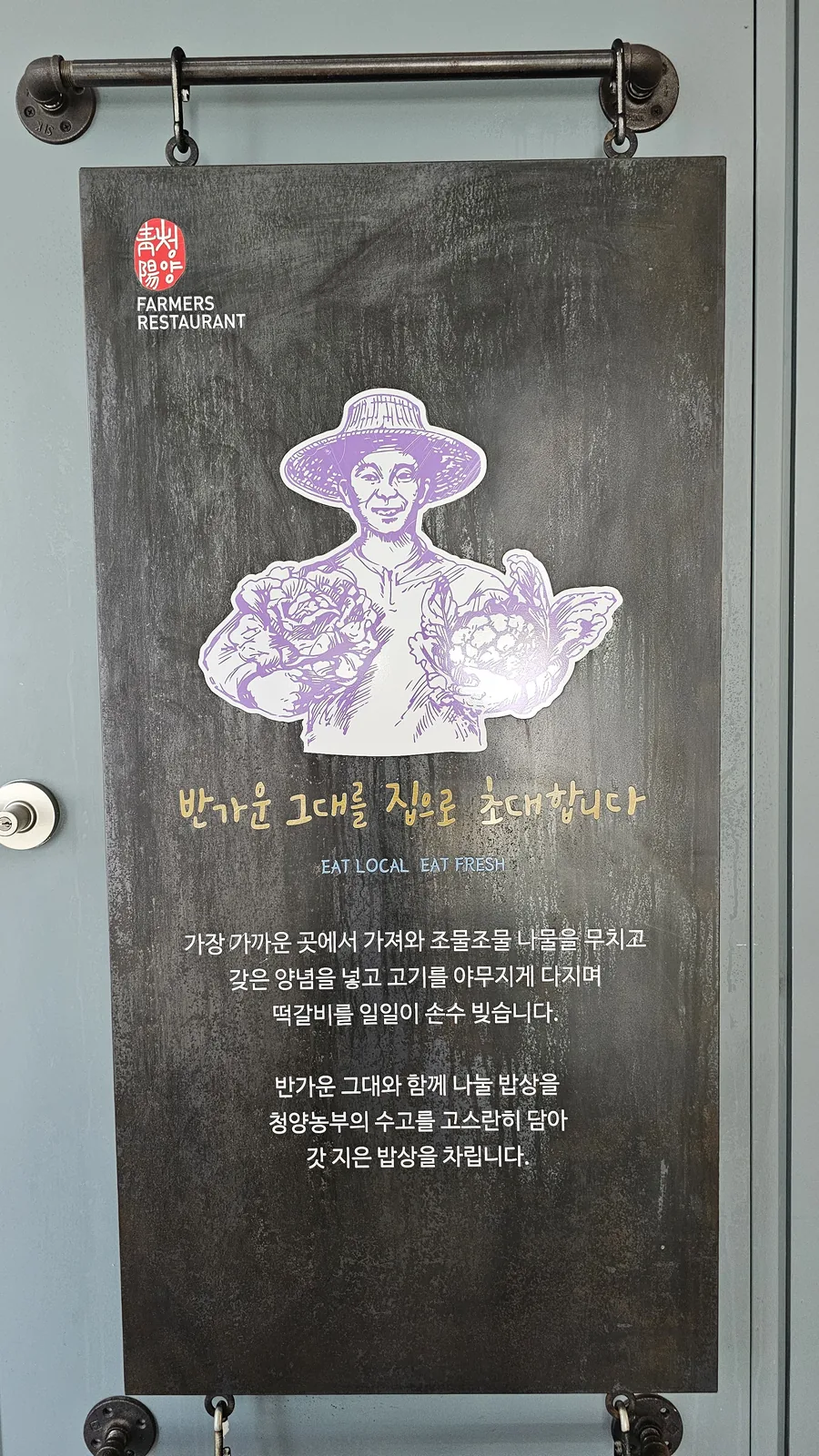
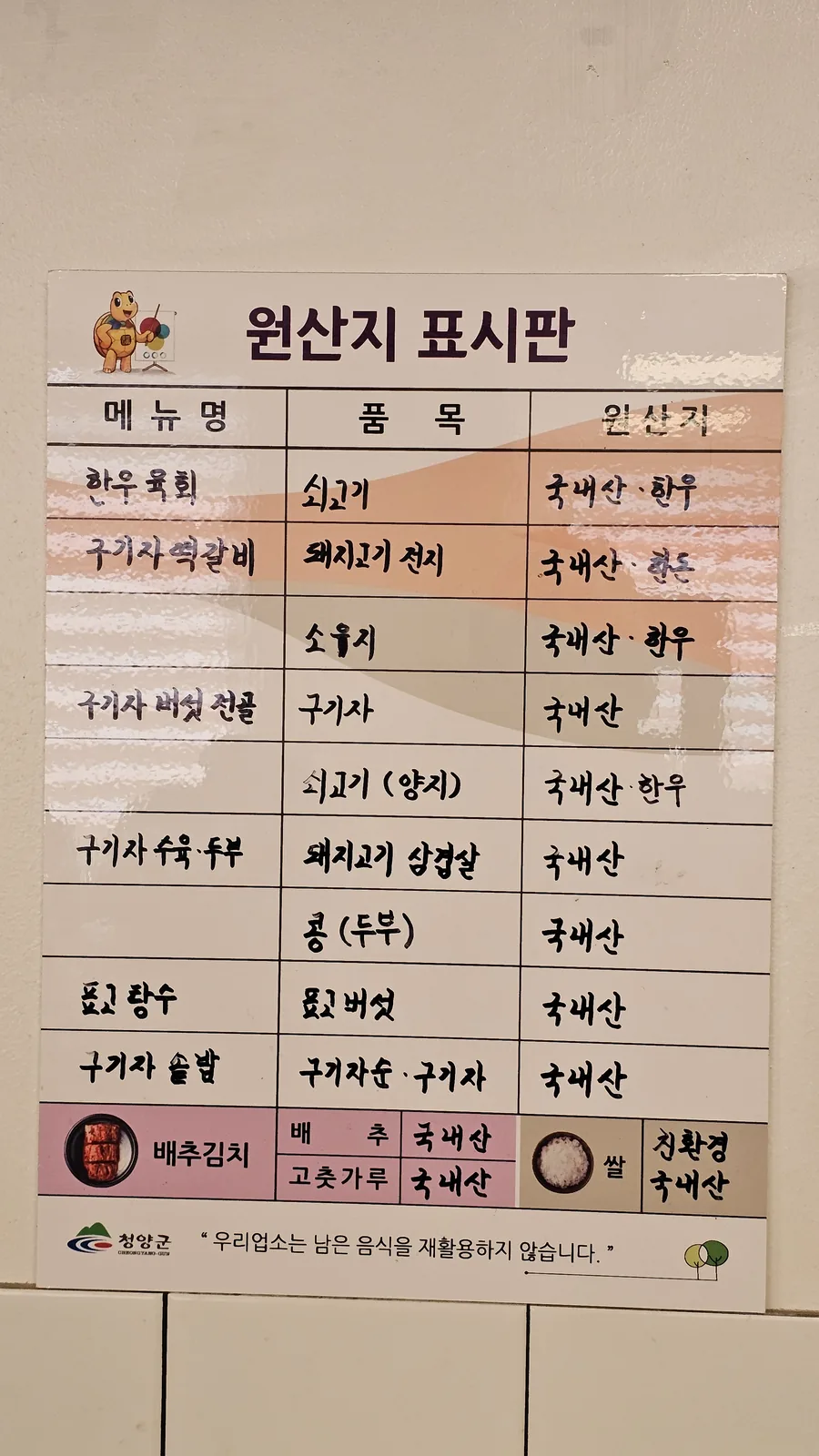
The restaurant name literally translates to “Farmer’s Table.” Not subtle, but accurate. They’re a certified local food restaurant, and there’s a signboard near the entrance that names the actual local farmers who supplied that day’s ingredients. Nice touch.
What is Hansang?
If you’re not familiar with the format: hansang (한상) means a full Korean table spread served all at once. You pick your main set, and it comes with rice, soup, and a lineup of side dishes (banchan). You’re not ordering à la carte — it’s a complete meal in one go.
Nongbu Bapsang has four sets:
| Set | Price |
|—|—|
| Mushroom Jeongol Hansang (버섯전골한상) | 16,000 KRW (~$12) |
| Goji Berry Tteok-galbi Hansang (구기자떡갈비한상) | 16,000 KRW (~$12) |
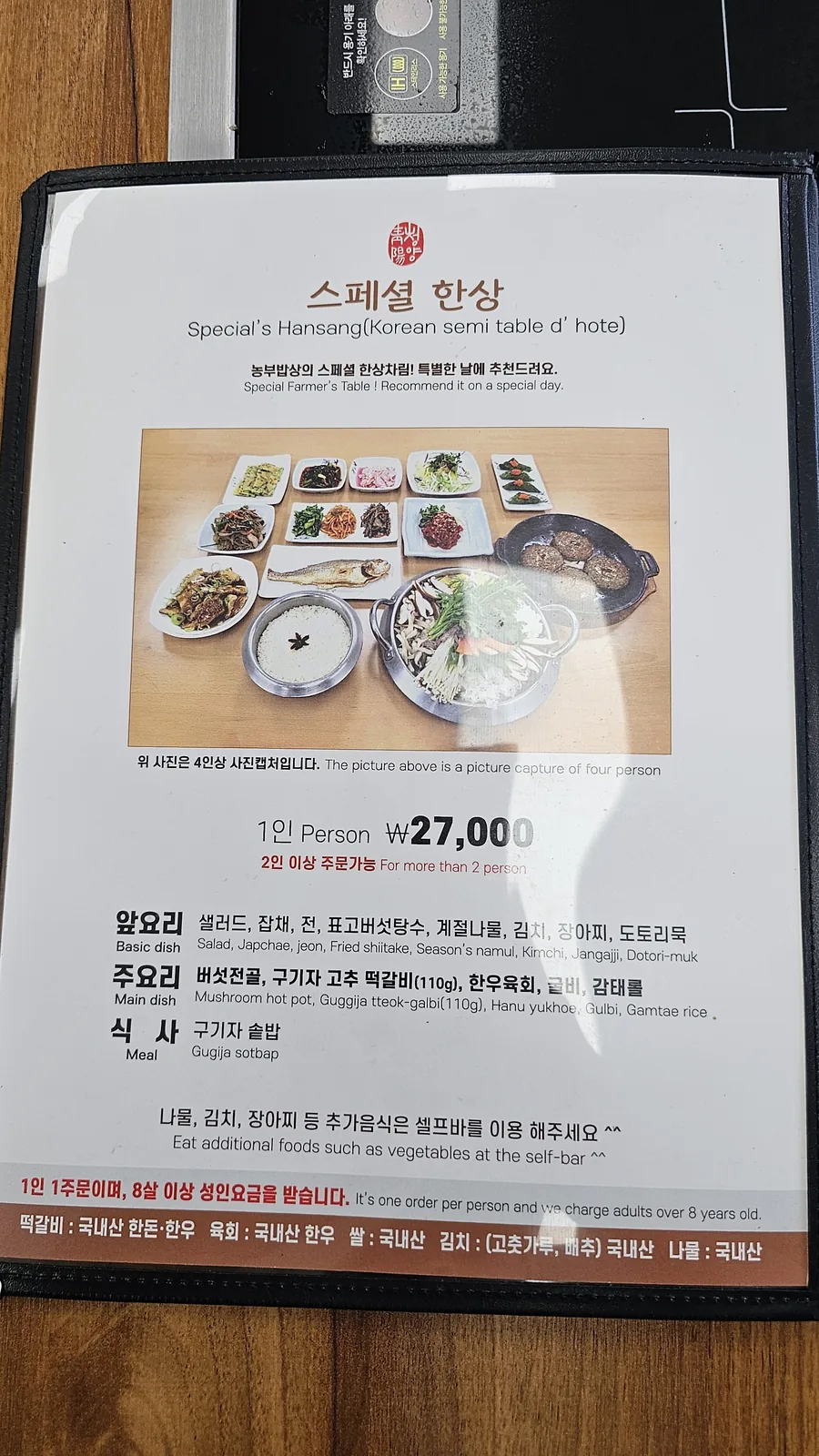
| Cheongyang Farmers’ Hansang (청양농부한상) | 23,000 KRW (~$17) |
| Special Hansang (스페셜 한상) | 27,000 KRW (~$20) |
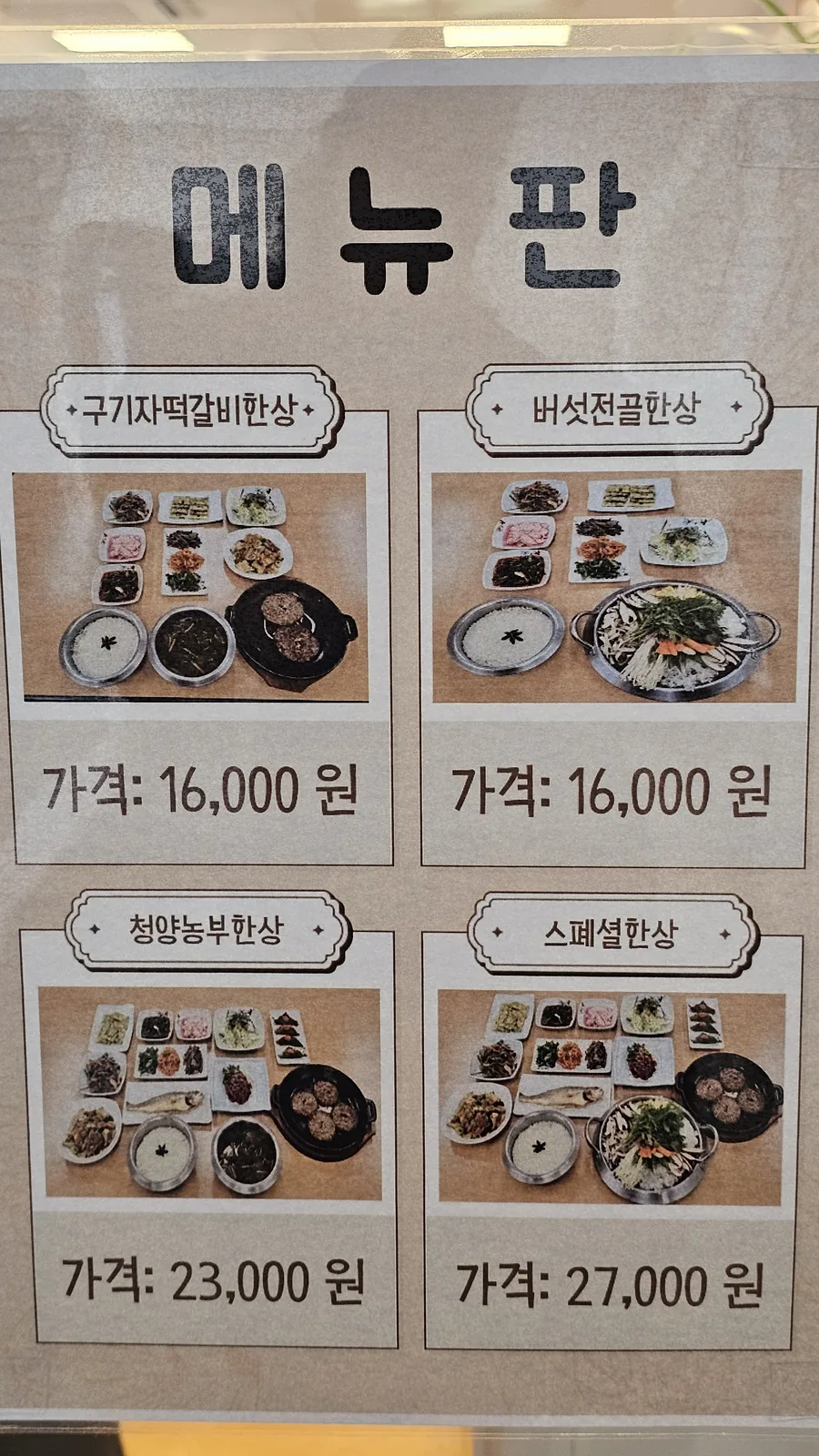
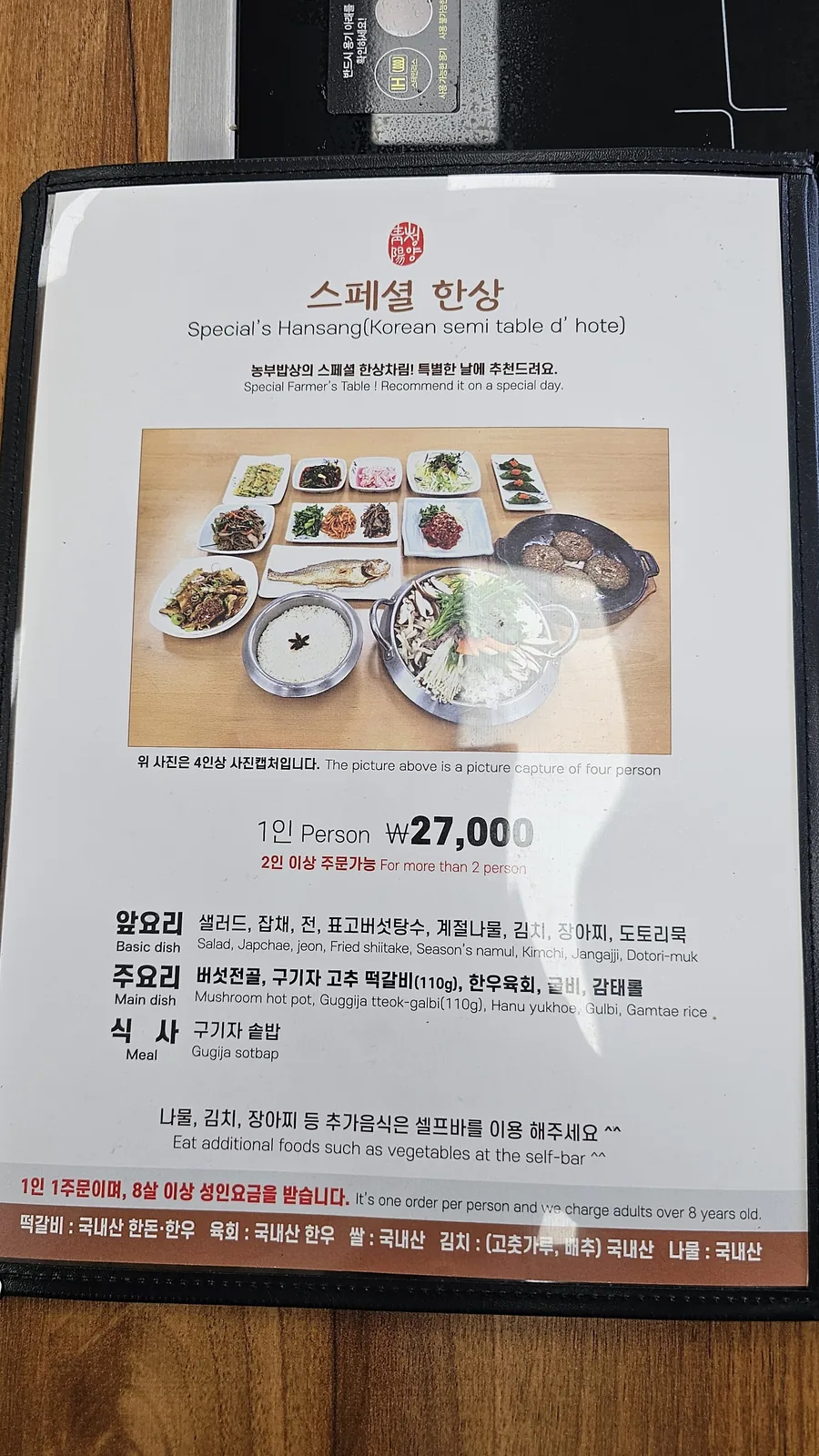
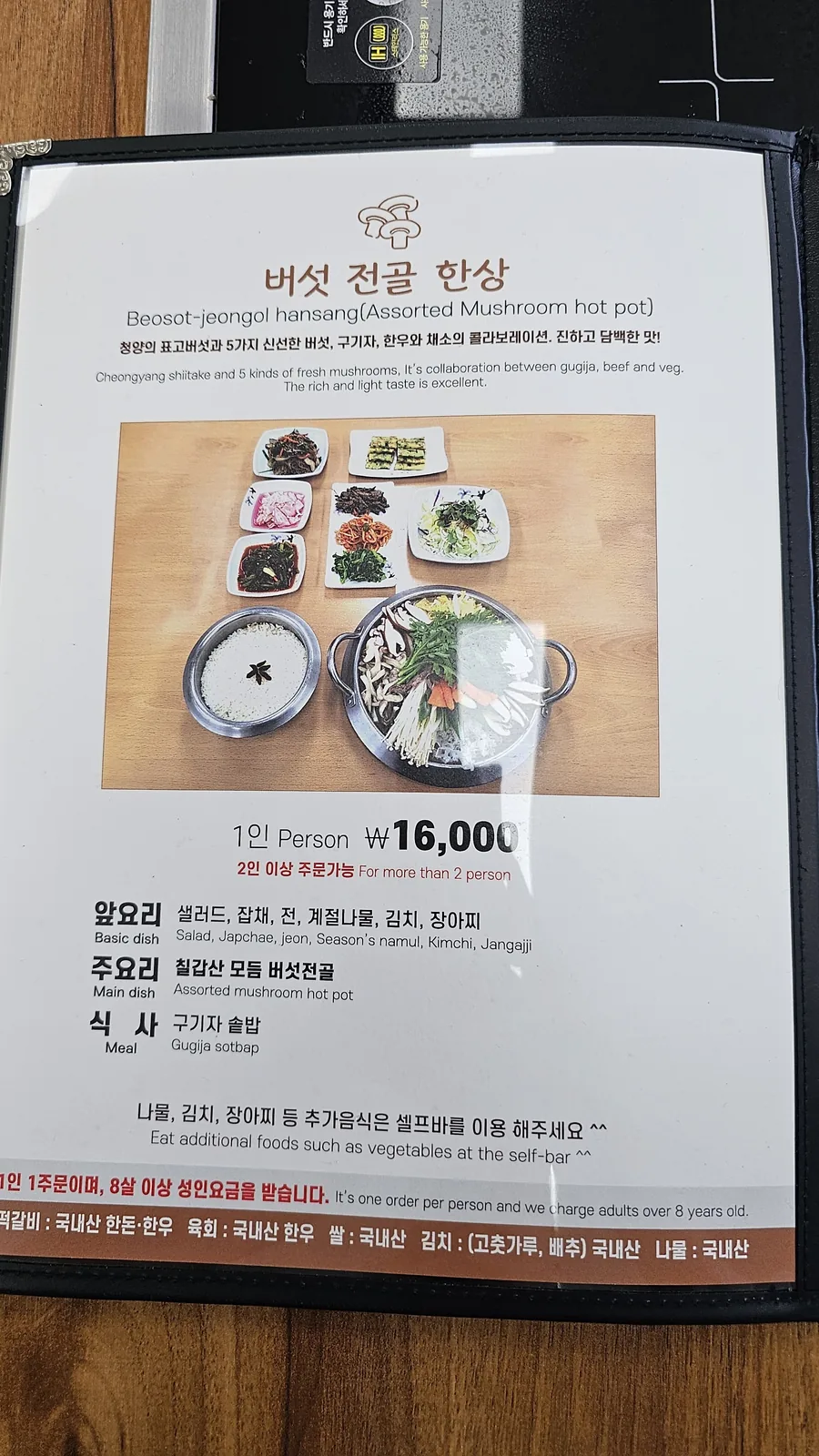
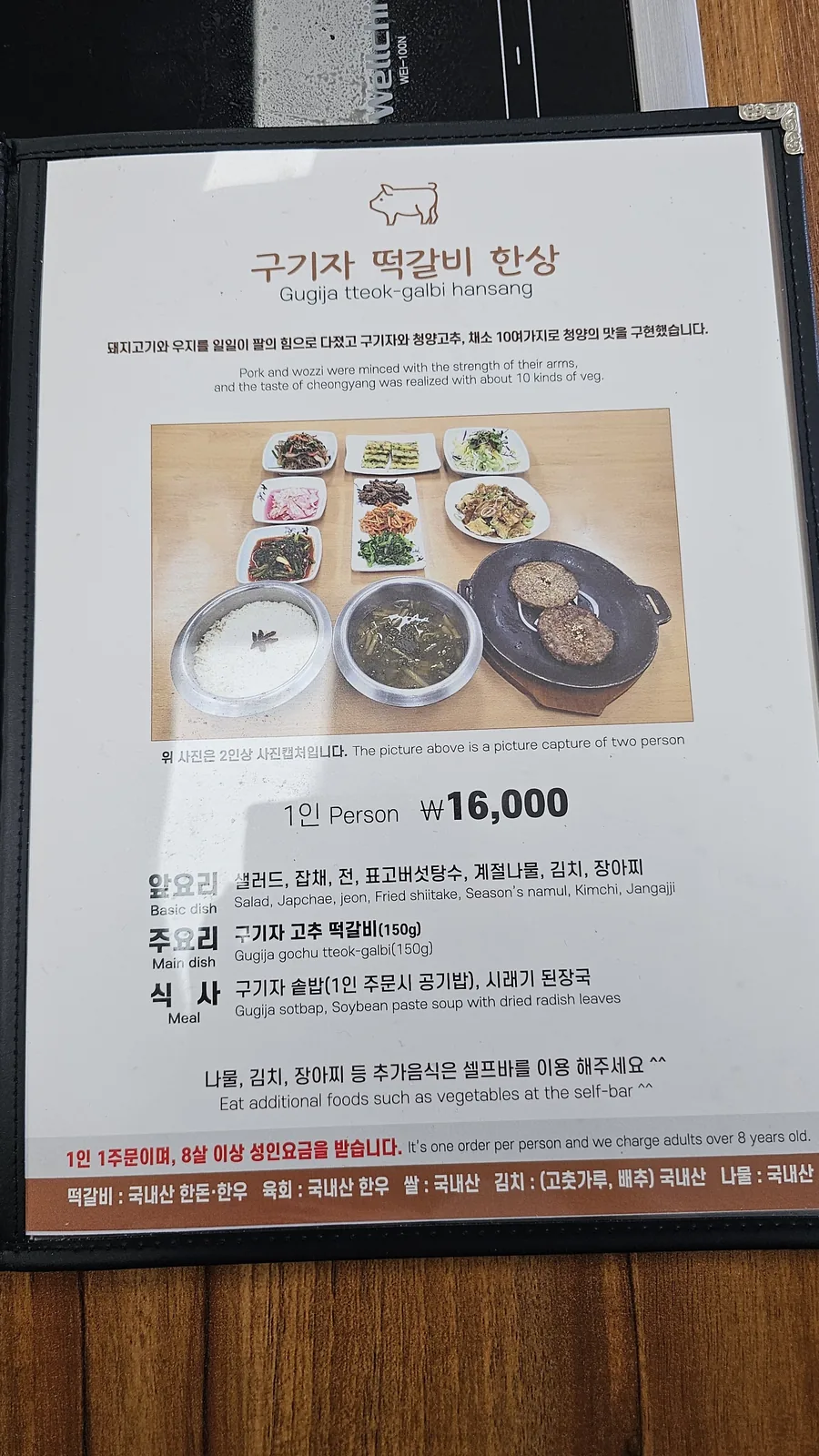
We went with the two lower-tier sets. No regrets.
Getting There
Cheongyang is not exactly on the Seoul day-trip circuit. It’s a rural county — you’re looking at about 2.5 hours from Seoul by car, or a bus from Seoul’s Nambu Terminal. There’s no direct subway or KTX to Cheongyang itself. If you’re already doing a road trip through South Chungcheong Province (Boryeong Mud Festival route, or heading toward Taean National Park), this fits naturally into that loop.
From Incheon Airport: roughly 3 hours by car, depending on traffic.
Honestly, this isn’t a restaurant you’d go to in isolation as a tourist. But if you’re doing any kind of regional travel through Chungcheong, it’s worth building a lunch stop around.
The Interior
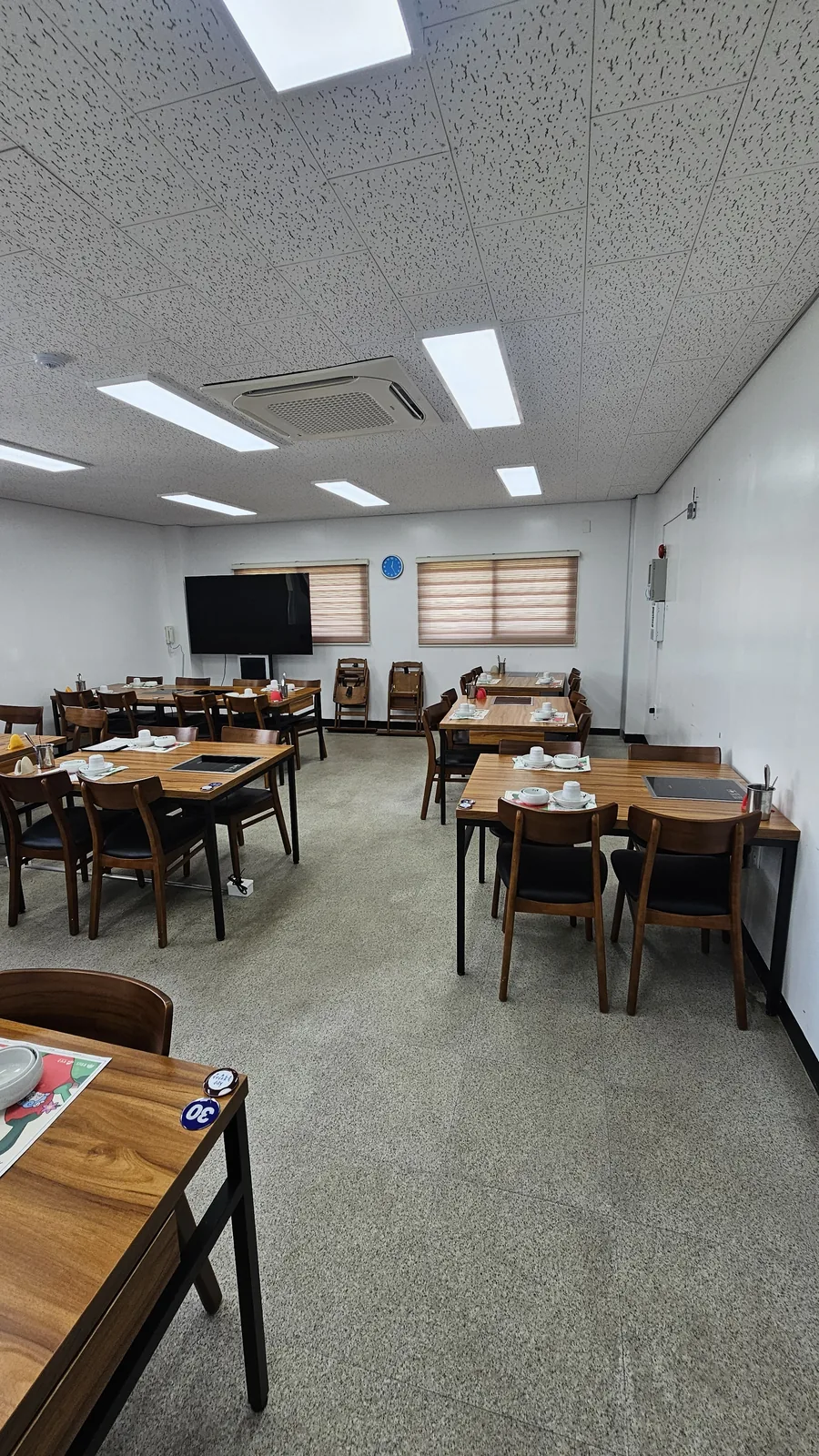
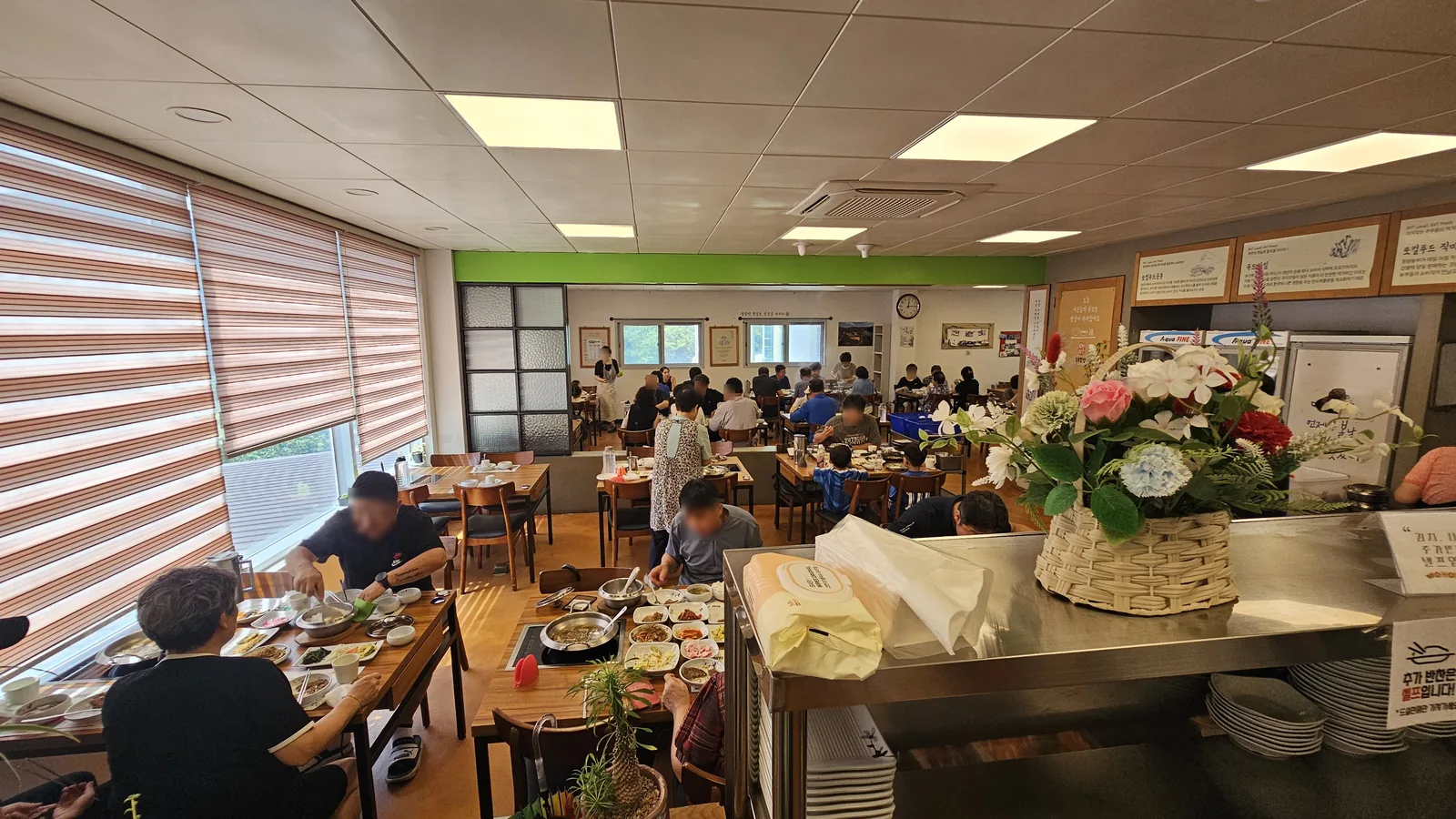
Two floors. The main dining hall is spacious with good natural light, wood furniture, and seasonal flower decorations throughout. It’s a comfortable space — not flashy, but clearly maintained with care. There’s a warm, countryside-restaurant feel to it.
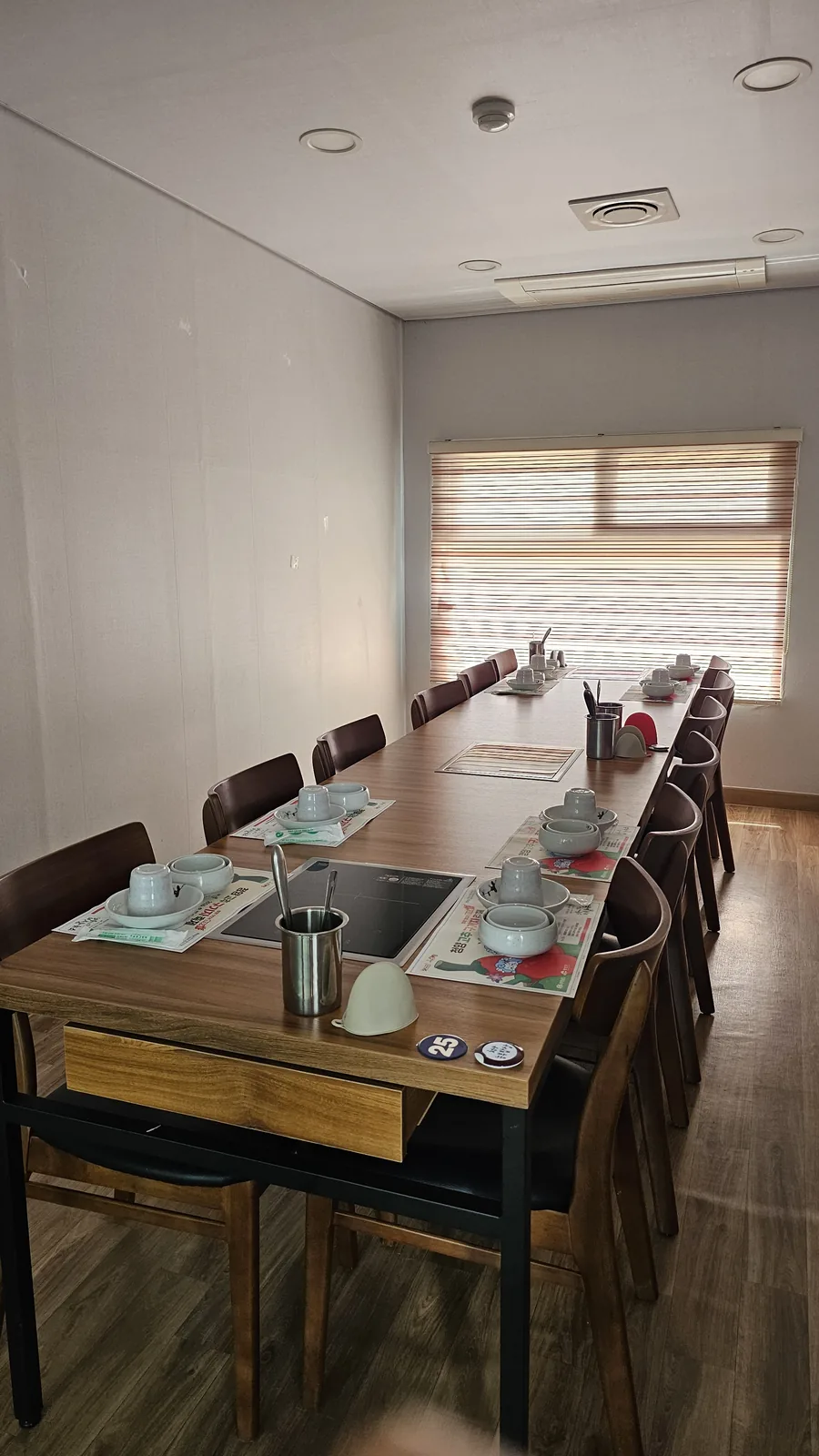
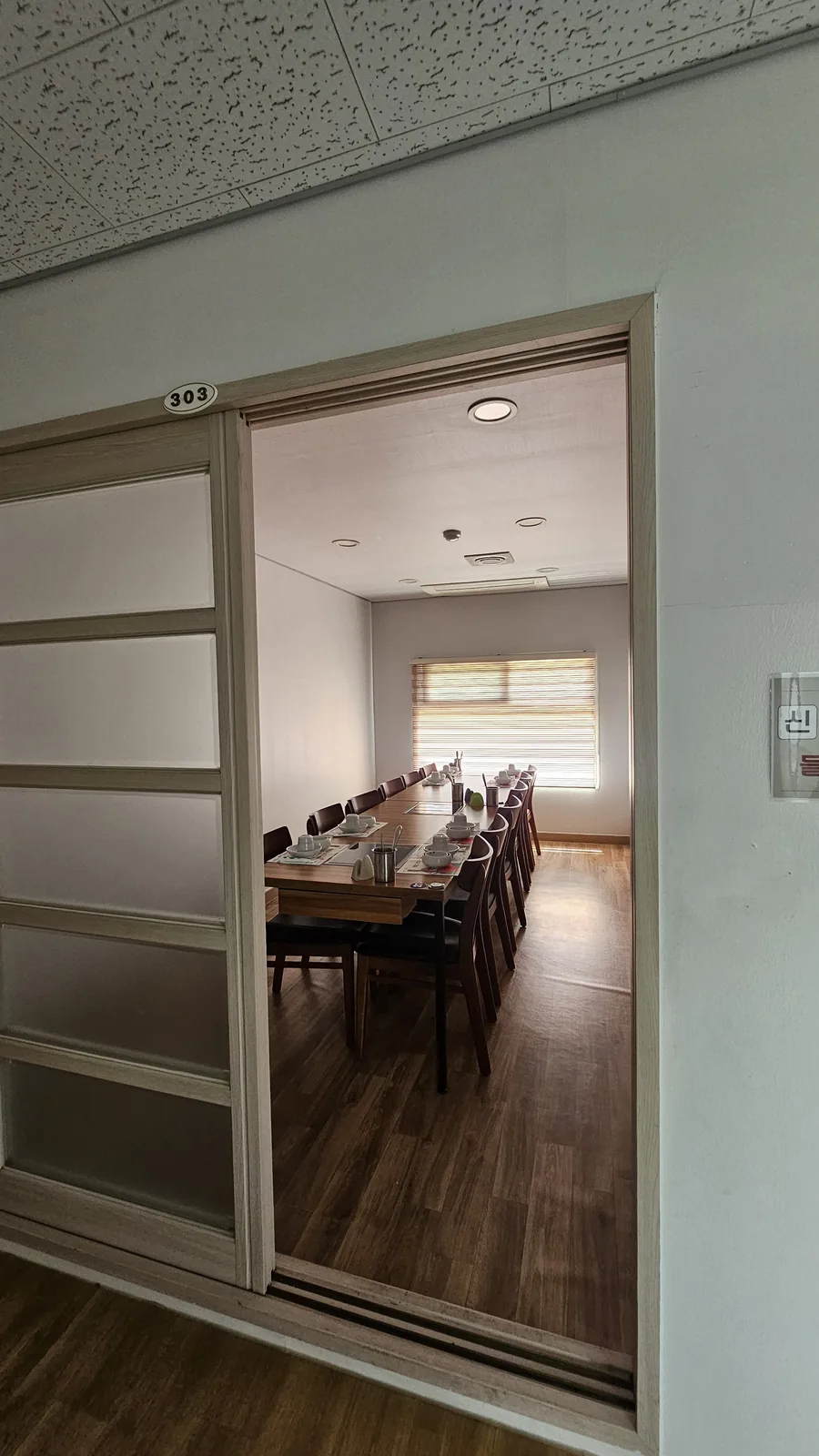
They also have private group dining rooms on the upper floor. Room 303 we walked past — set up for about 12 people, long table with induction cooktops built in. Good option for family groups or company dinners.
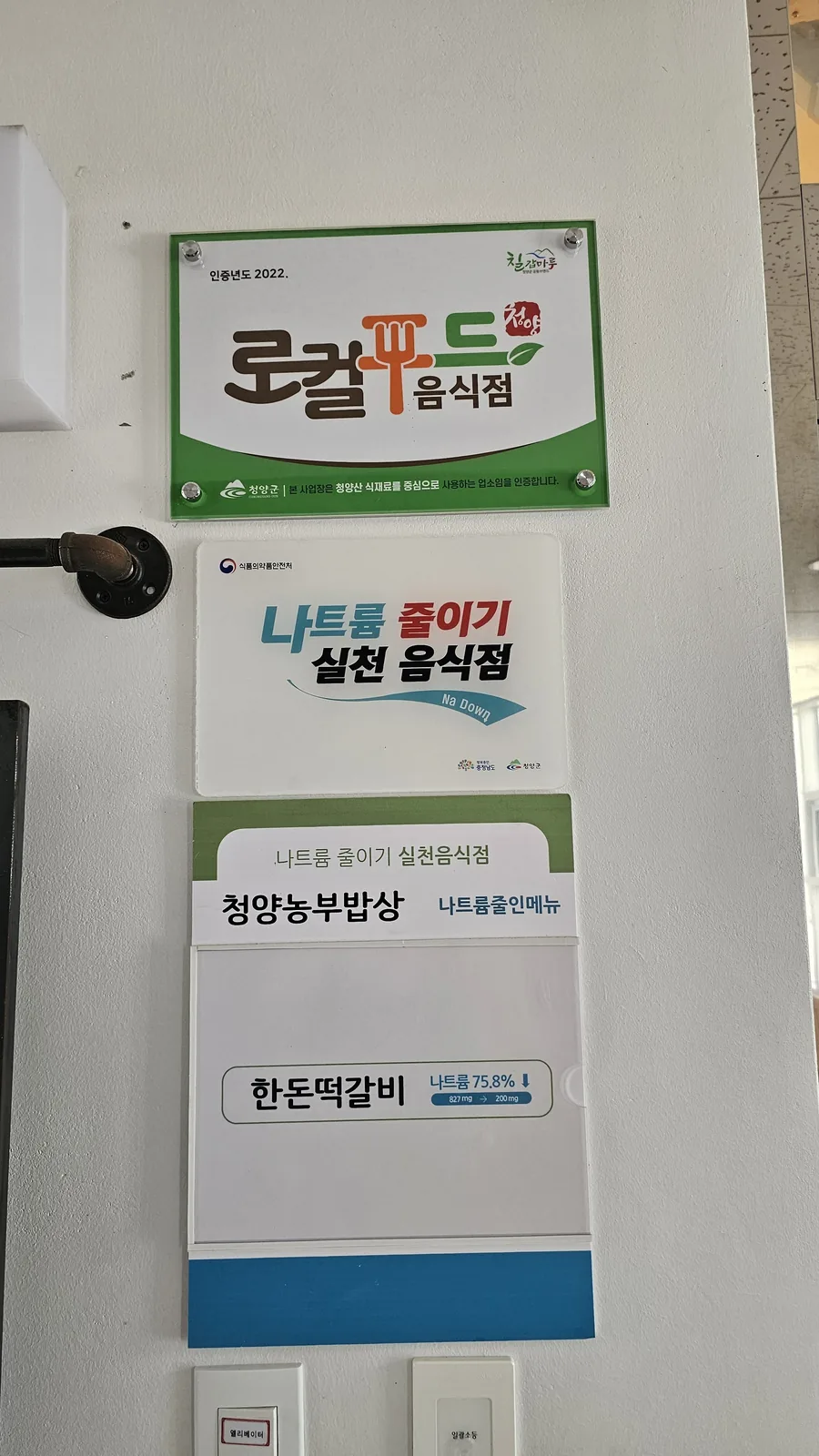
There’s a low-sodium certification displayed near the entrance. Worth mentioning for health-conscious travelers — the food here is notably less aggressively salty than typical Korean restaurants.
The Self-Service Banchan Bar
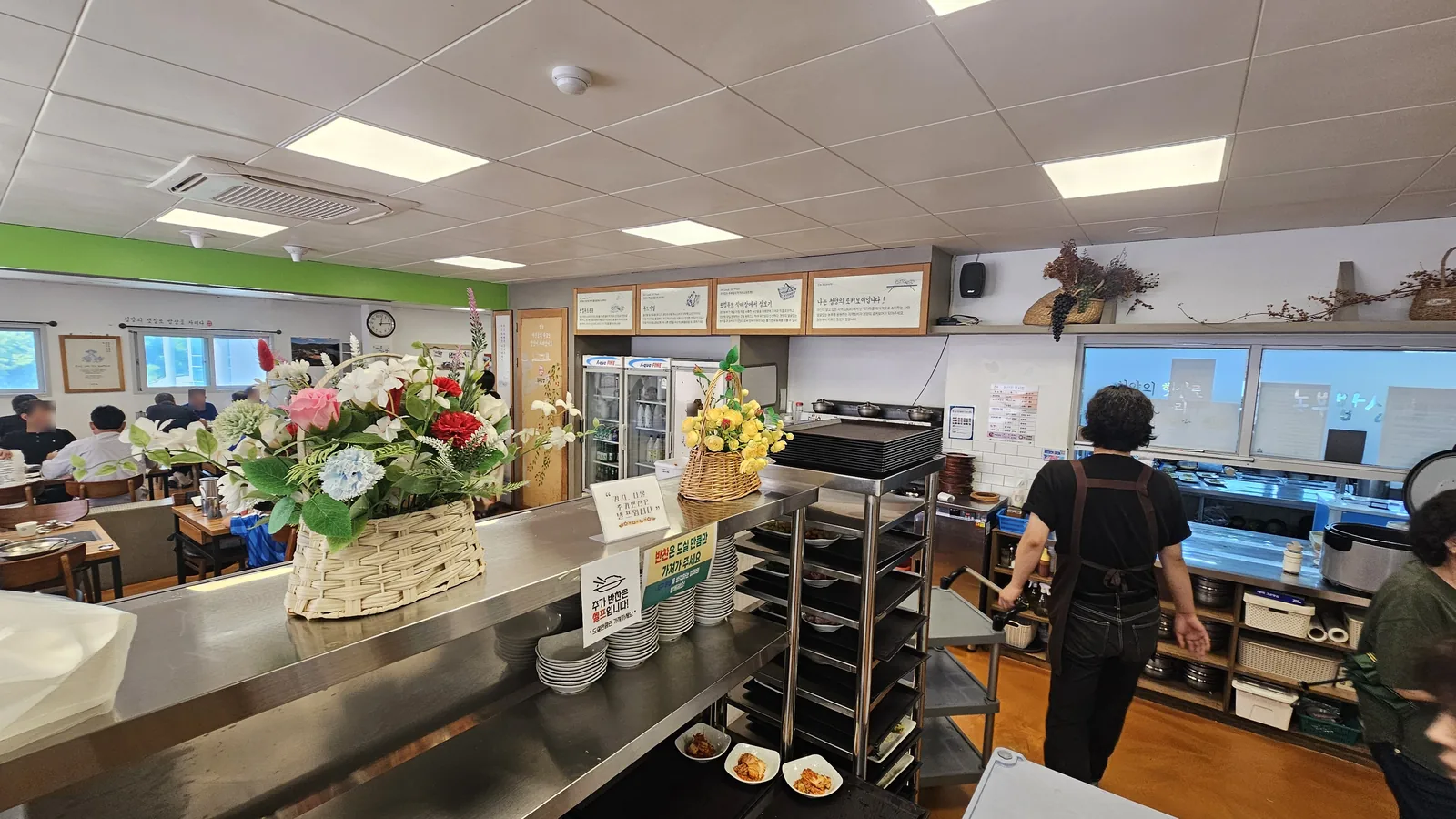
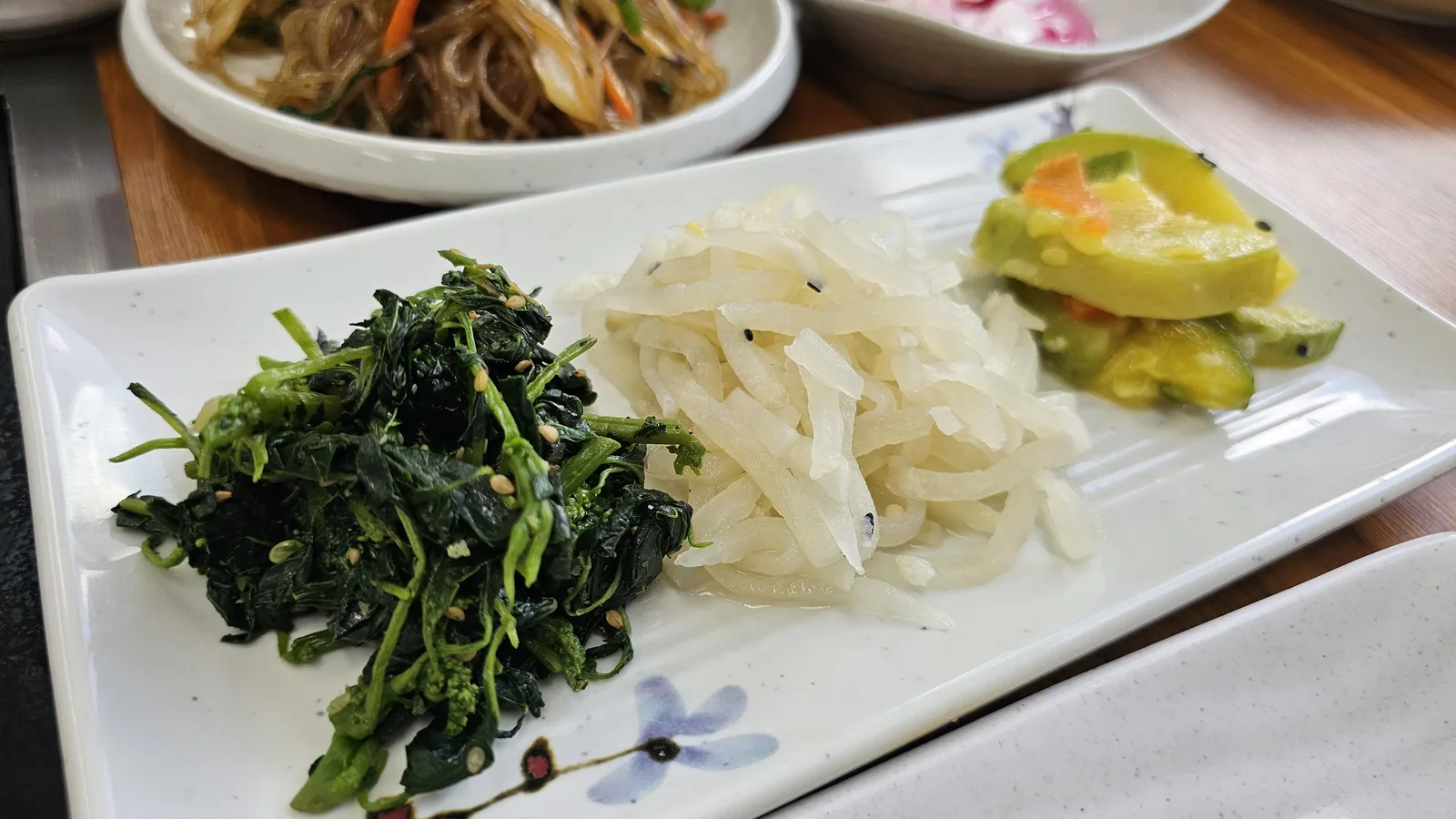
One setup worth knowing: there’s a self-service banchan bar where you can refill certain side dishes. Cucumber salad, chive namul, radish strips. Not unlimited everything, but a few staples you can go back for. Practical.
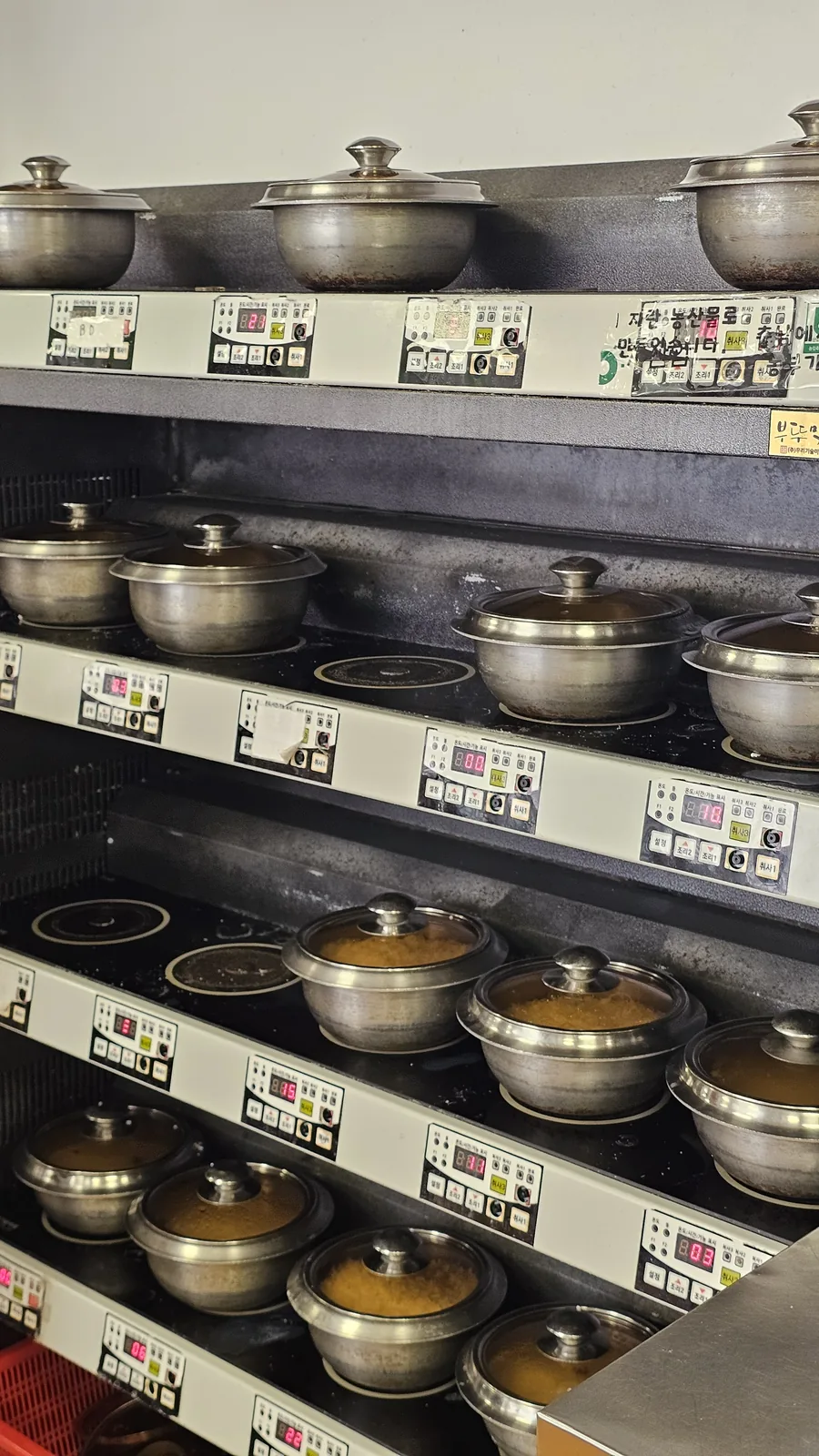
The stone pot rice is cooked fresh per order on a dedicated induction station — you can see the row of dolsots steaming in the kitchen. It takes a bit of time, but it means the rice arrives properly hot.
What We Ordered
Mushroom Jeongol Hansang (버섯전골한상) — 16,000 KRW
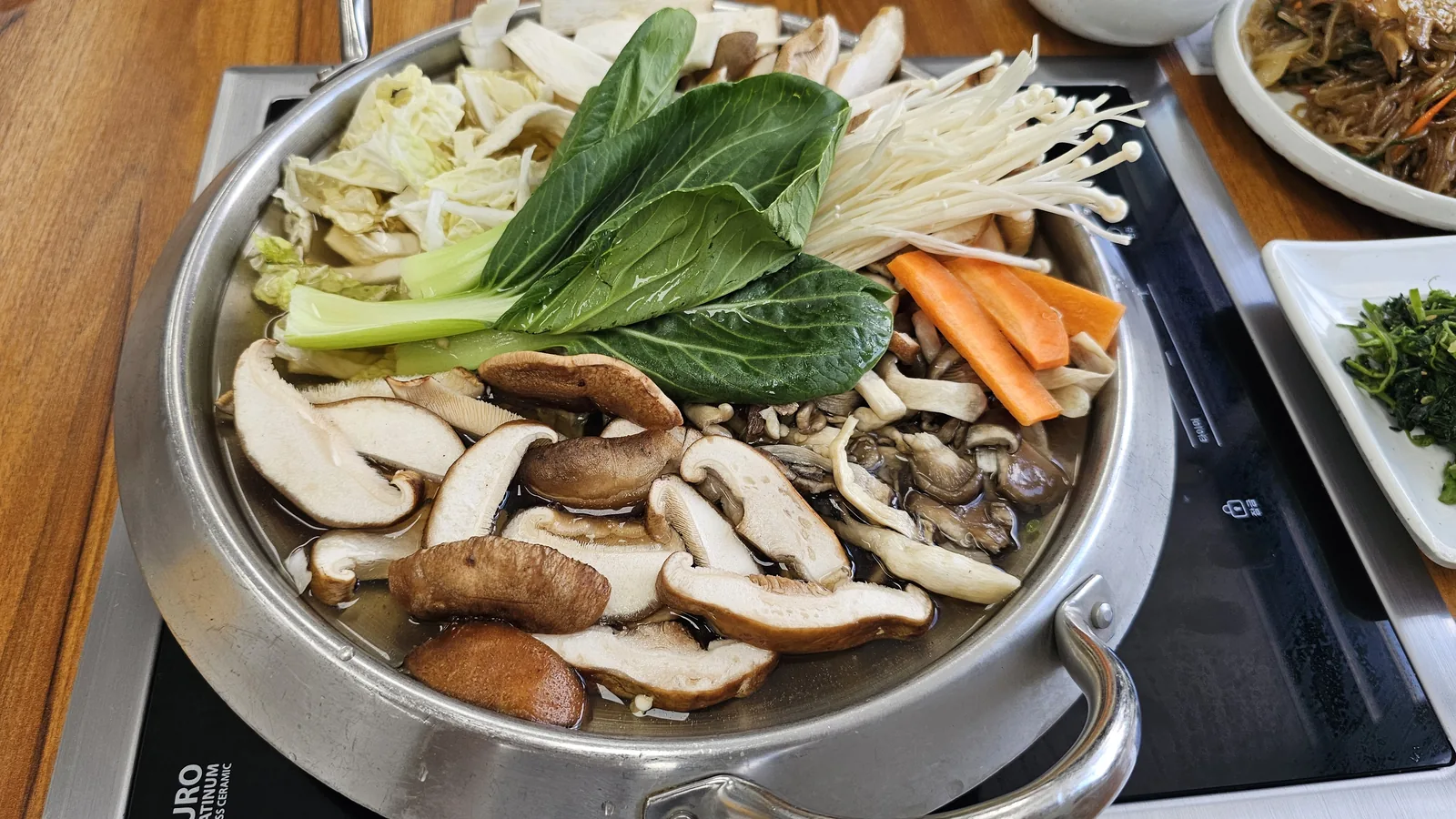
Jeongol (전골) is Korean hot pot — a shallow pot of broth with ingredients that simmer at the table. This one came loaded. Shiitake, oyster mushrooms, enoki, black wood ear fungus, bok choy, napa cabbage, carrot. The broth was light and clean, not heavy with seasoning. Good for people who want something on the milder side.
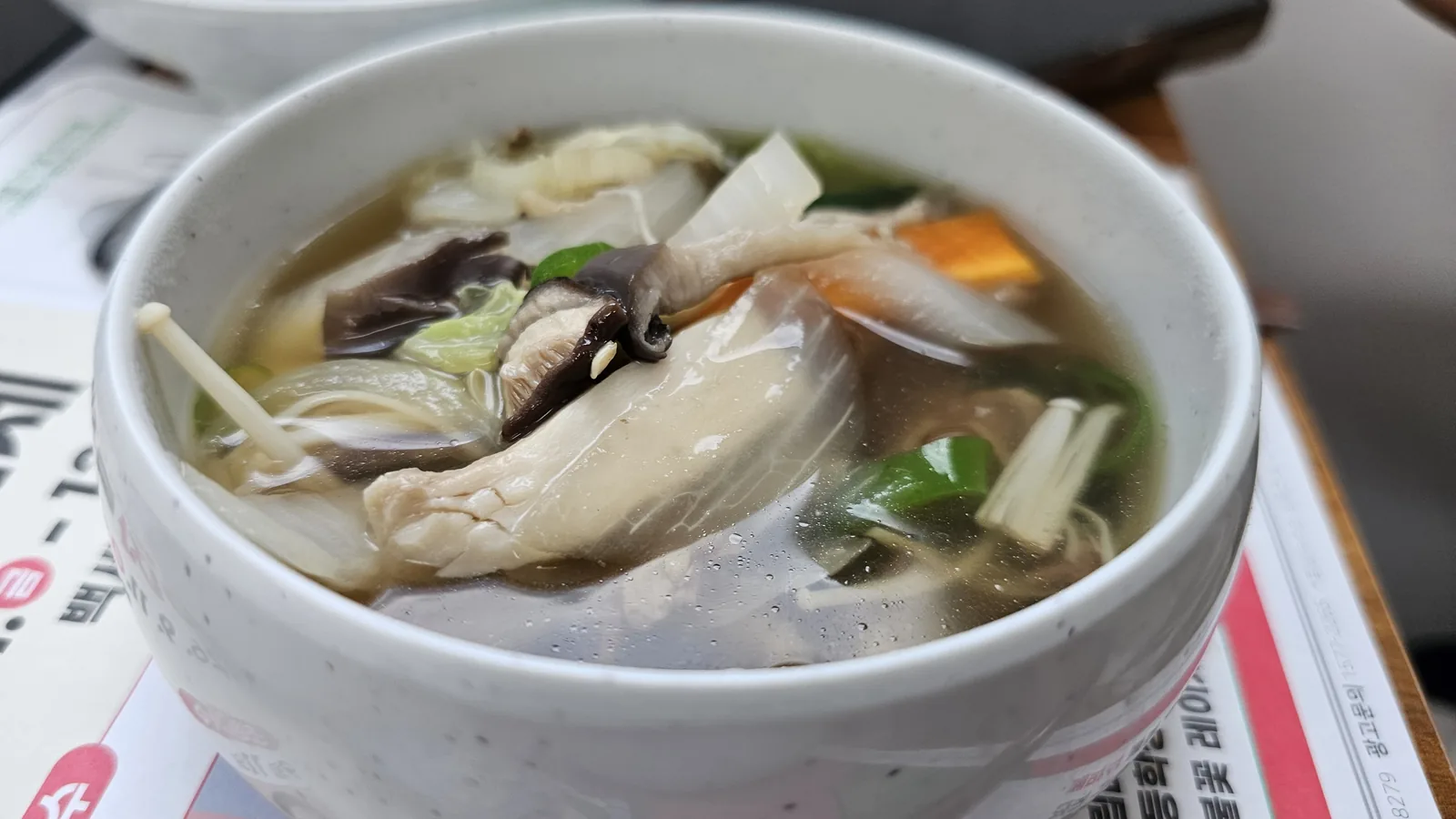
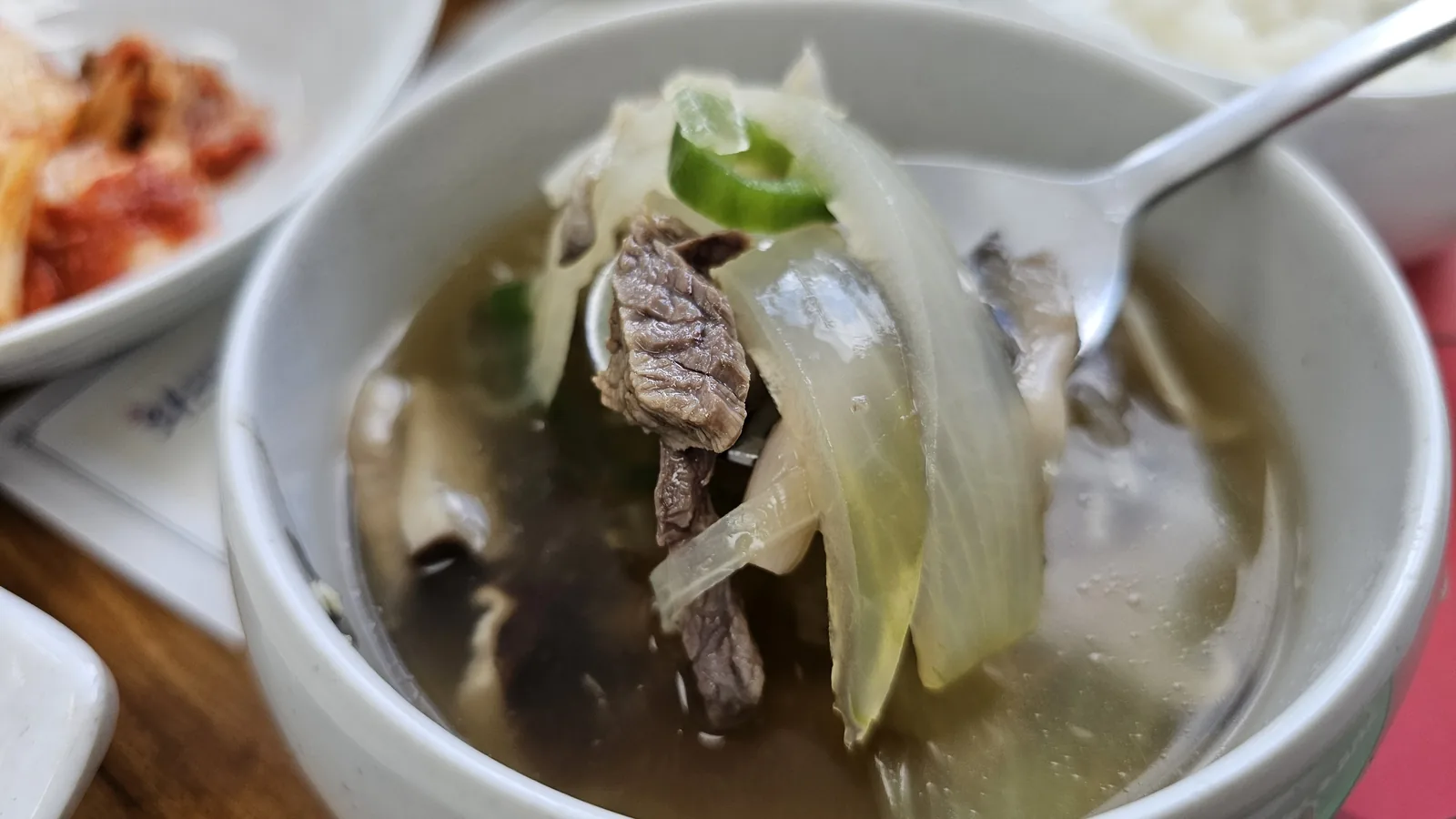
After the pot cooked down a bit, the broth got richer — mushroom umami building into it. The mushrooms themselves had good texture. Nothing overcooked. The clear, light style might surprise you if you’re expecting a heavy, reddish Korean stew. This is subtle. Intentionally so.
Goji Berry Tteok-galbi Hansang (구기자떡갈비한상) — 16,000 KRW
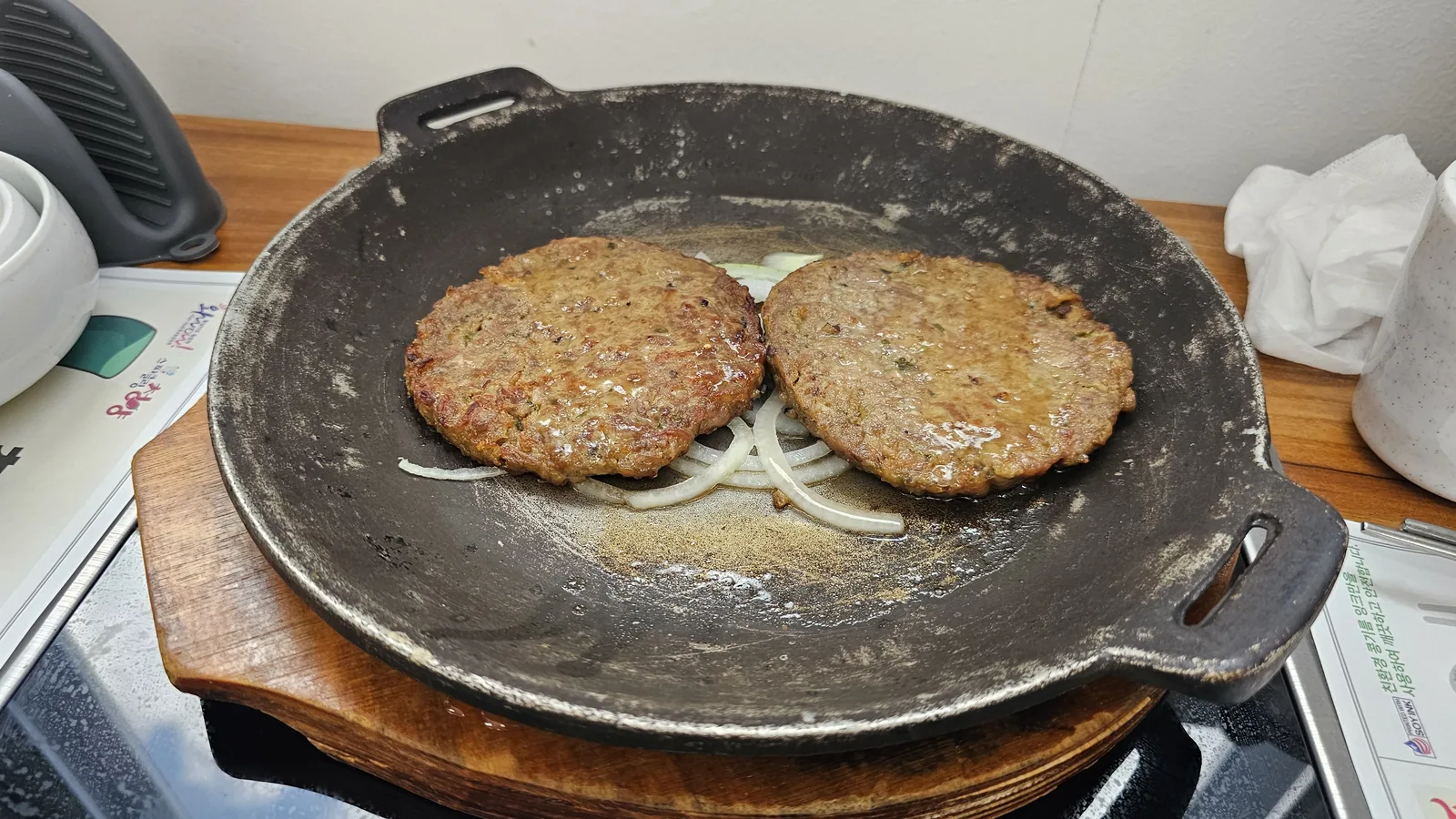
Tteok-galbi (떡갈비) is minced and shaped meat — typically pork and/or beef ground, seasoned, and formed into patties. It’s sometimes called Korean-style meatball or meat cake. The texture is tender compared to a regular grilled pork chop — more uniform, softer bite.
Here it arrived on a cast iron pan, two round patties sitting on a bed of onion. The goji berry element is subtle — you won’t get a pop of goji berry flavor, but it rounds the seasoning slightly. More of a local-ingredient marker than a dominant taste.
Honestly? It’s good. Solid execution, not dry, good caramelization on the outside. The onion underneath softened nicely and absorbed the meat juices.
Goji Berry Stone Pot Rice (구기자솥밥)
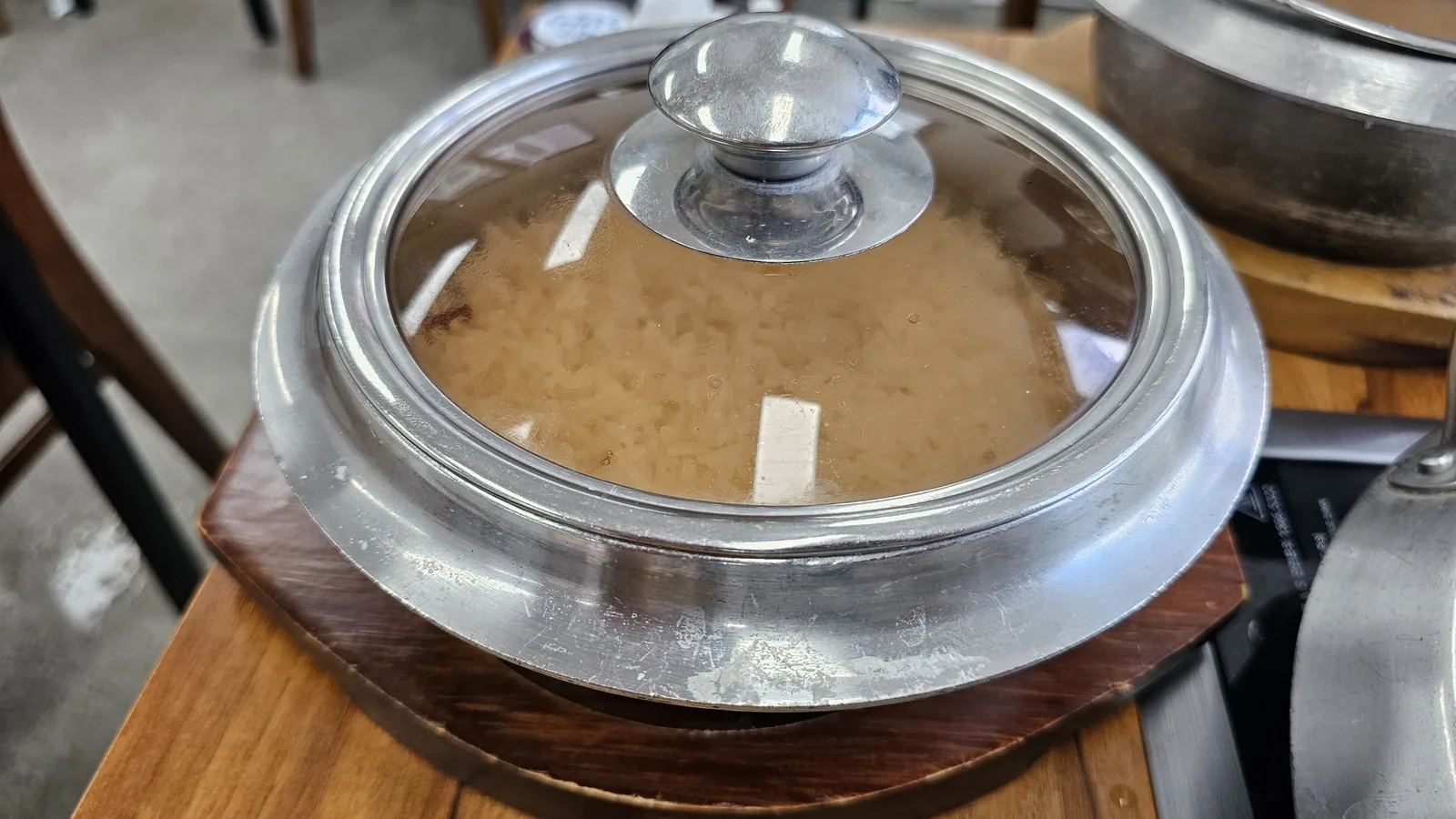
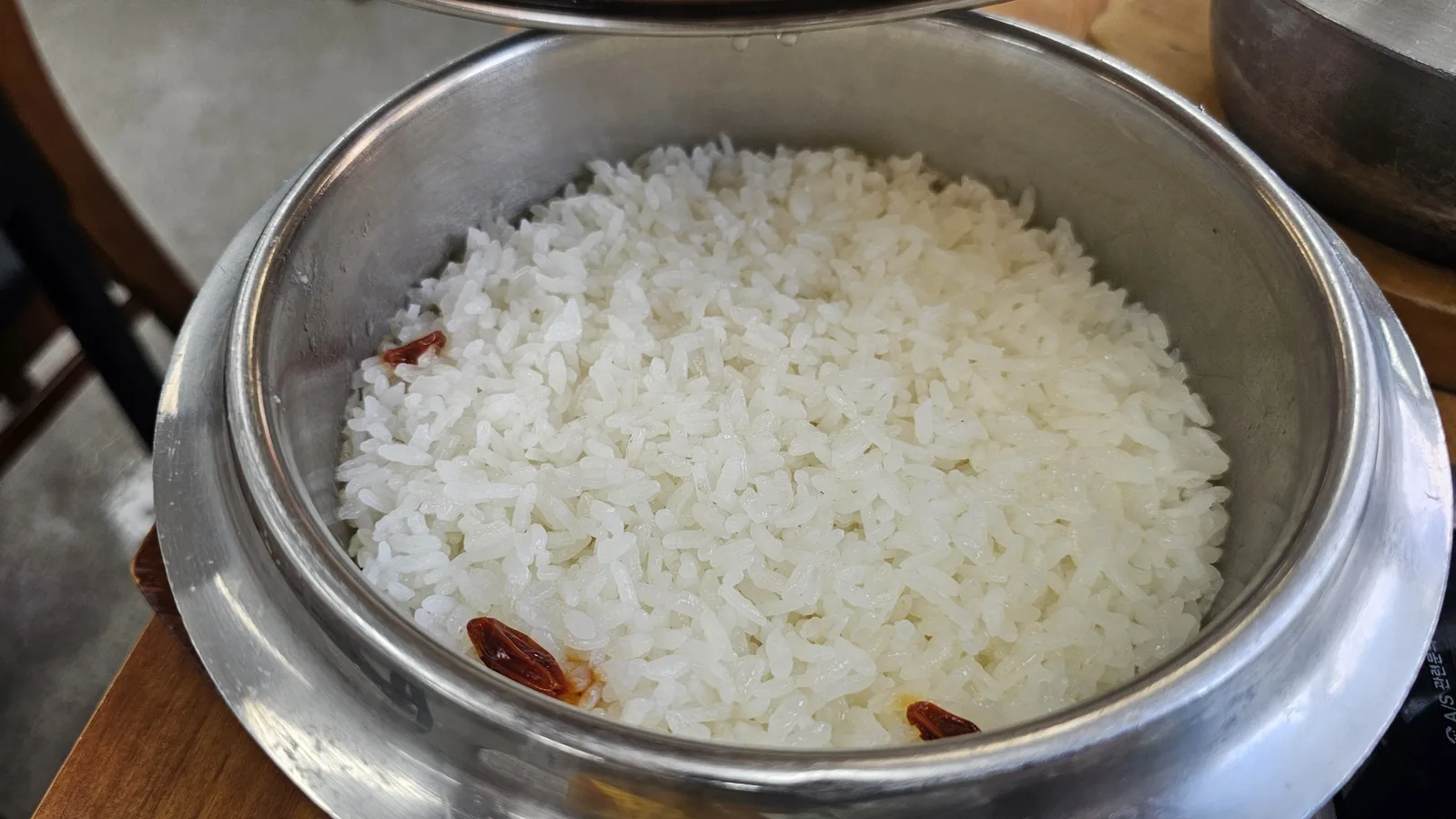
Every set comes with this. White rice in a stone pot with goji berries scattered through — you see the red dots when the lid comes off. The rice had that slight crust on the bottom (nurungji) that stone pot rice does naturally. Good.
The goji berries are mostly visual and textural — slight chewiness, mild sweetness. Nothing strong. If you’re expecting goji berry to be the main event, it won’t be. It’s background.
The Side Dishes
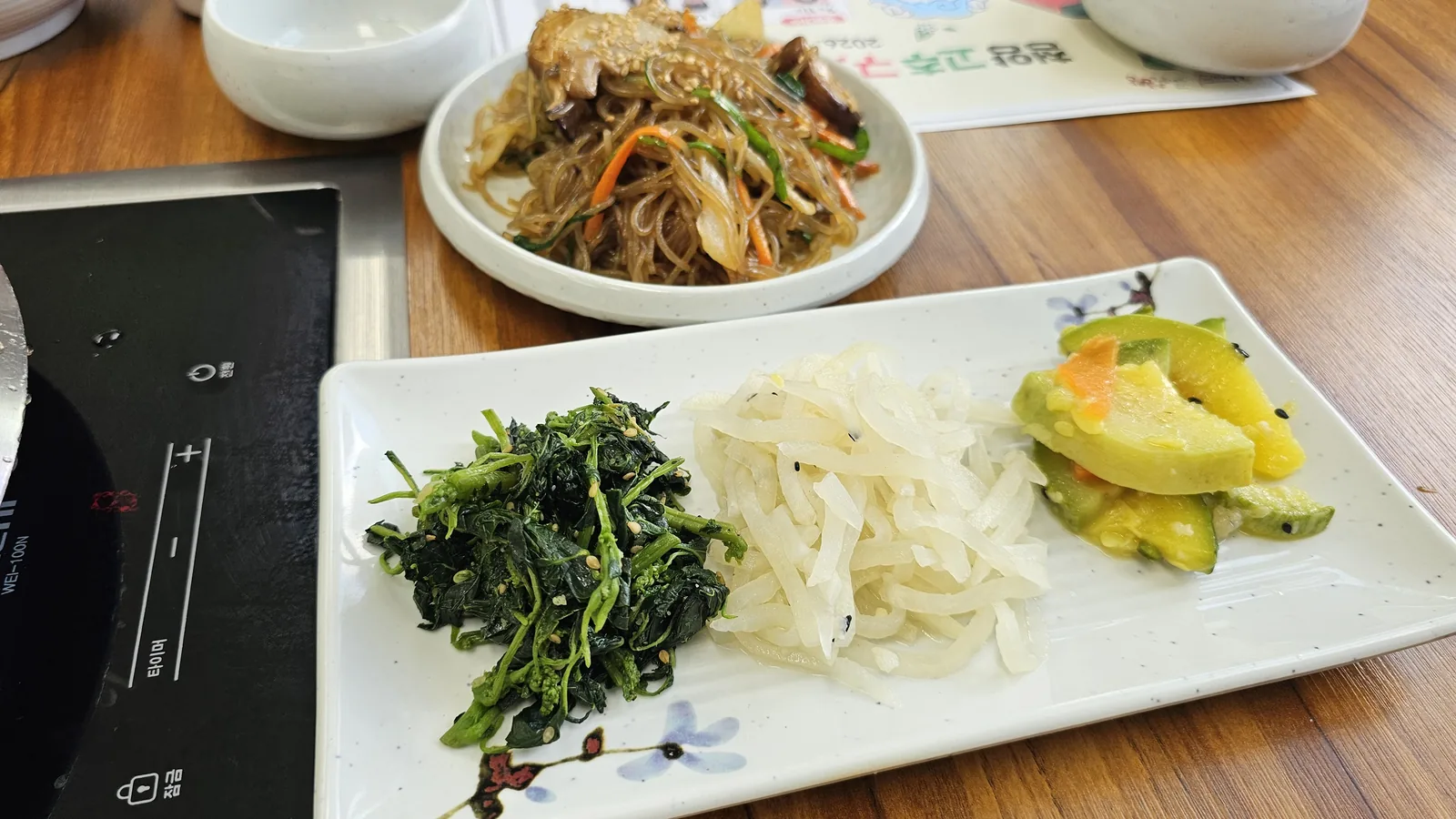
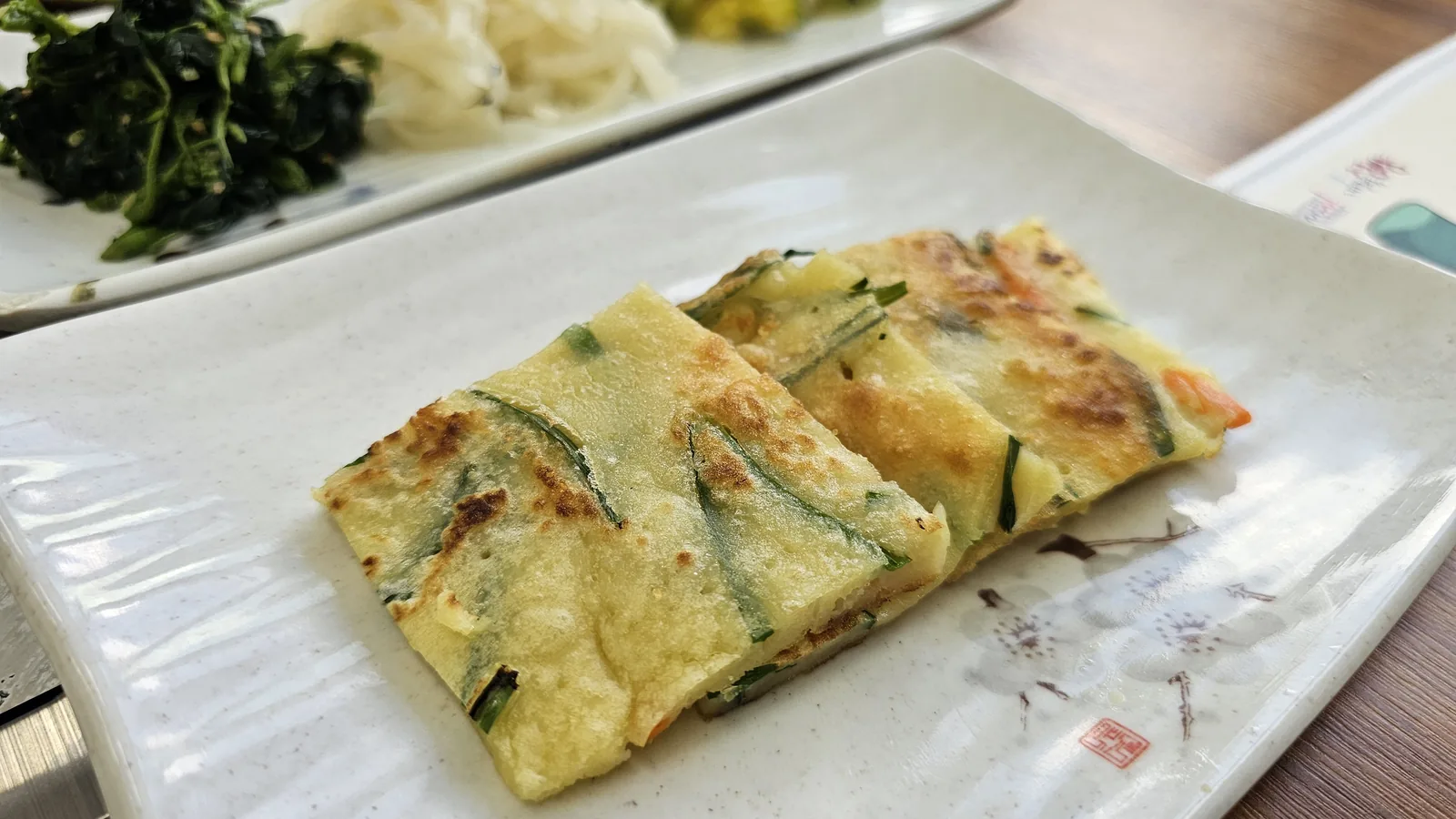
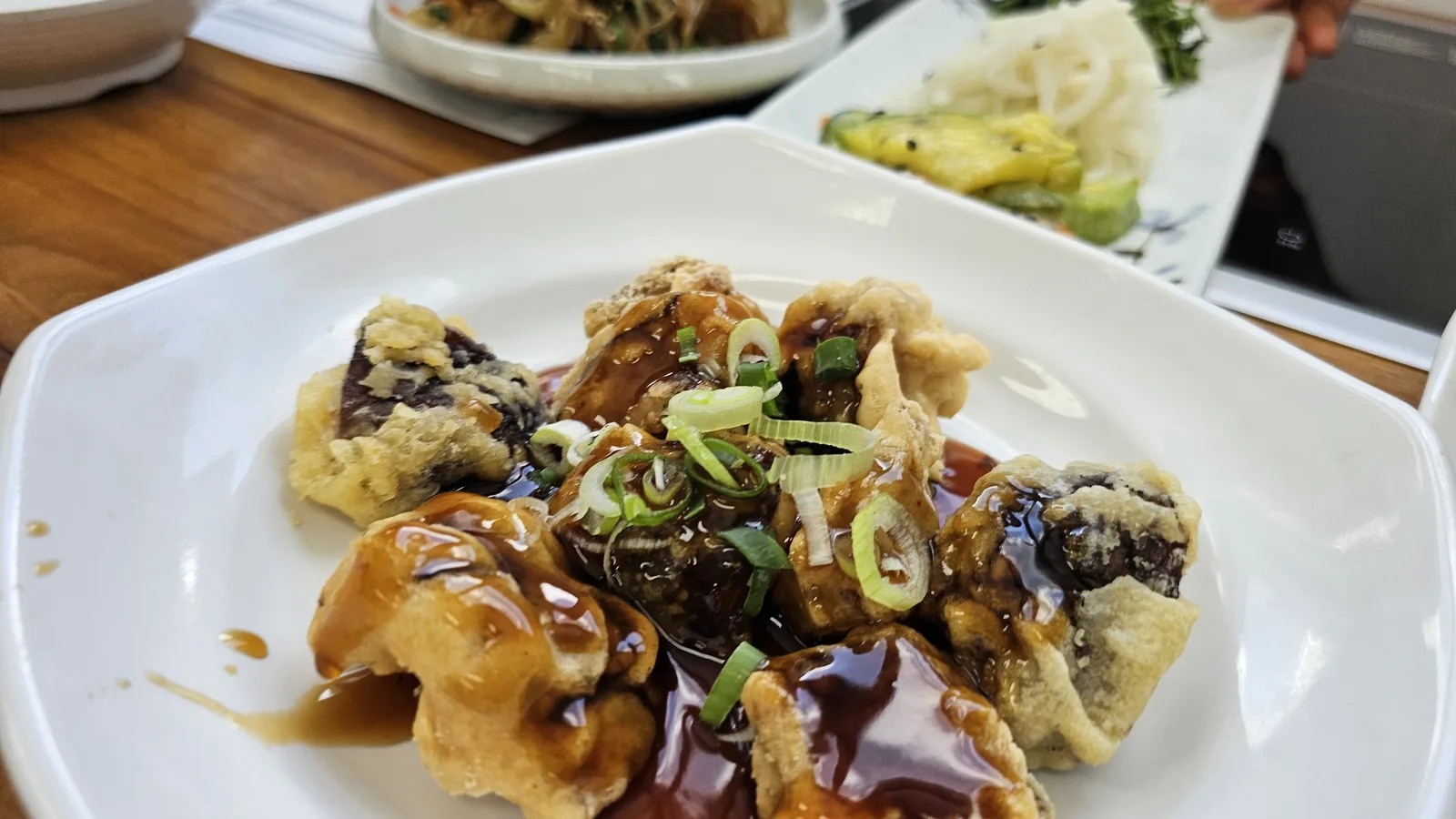
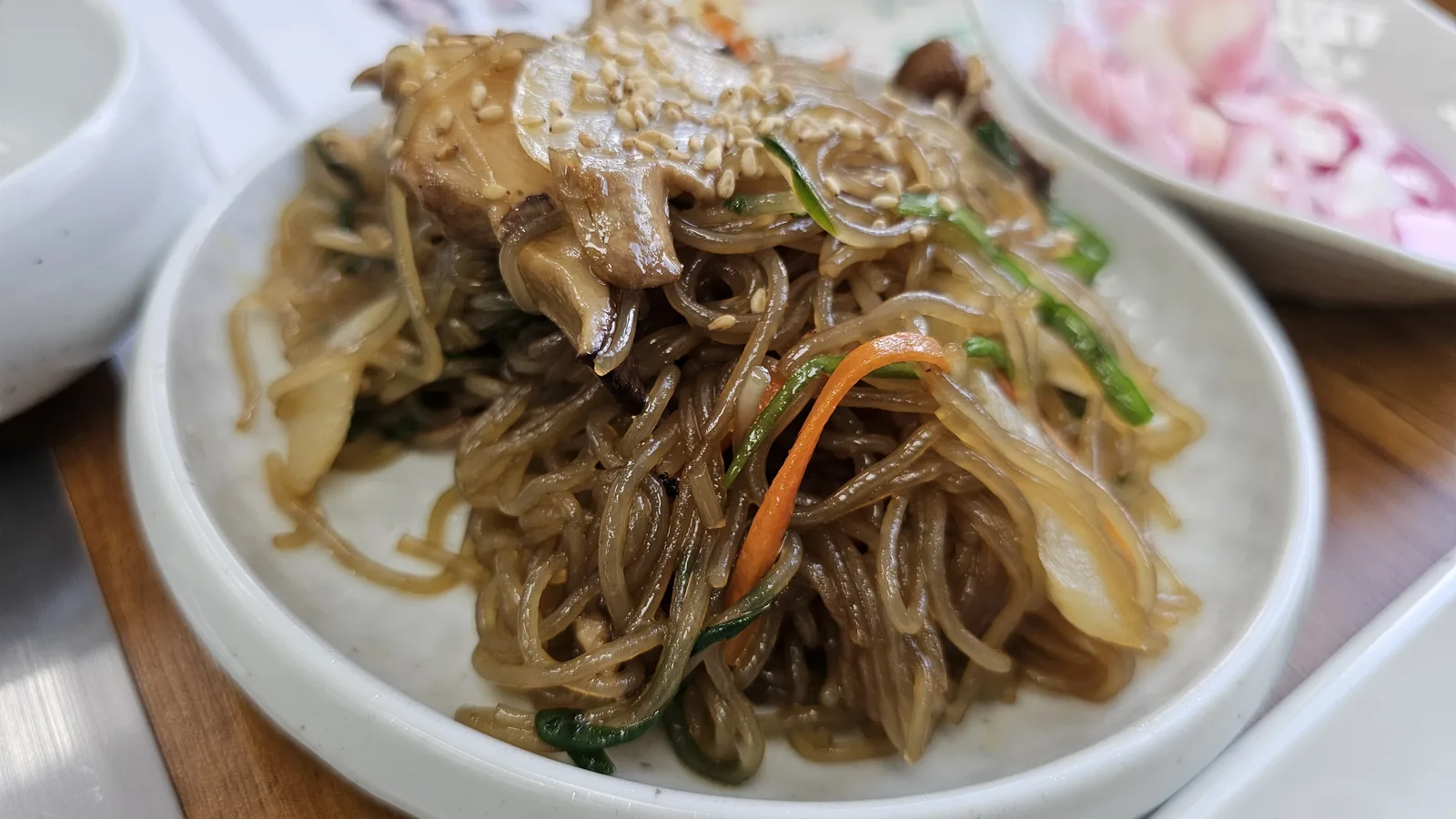
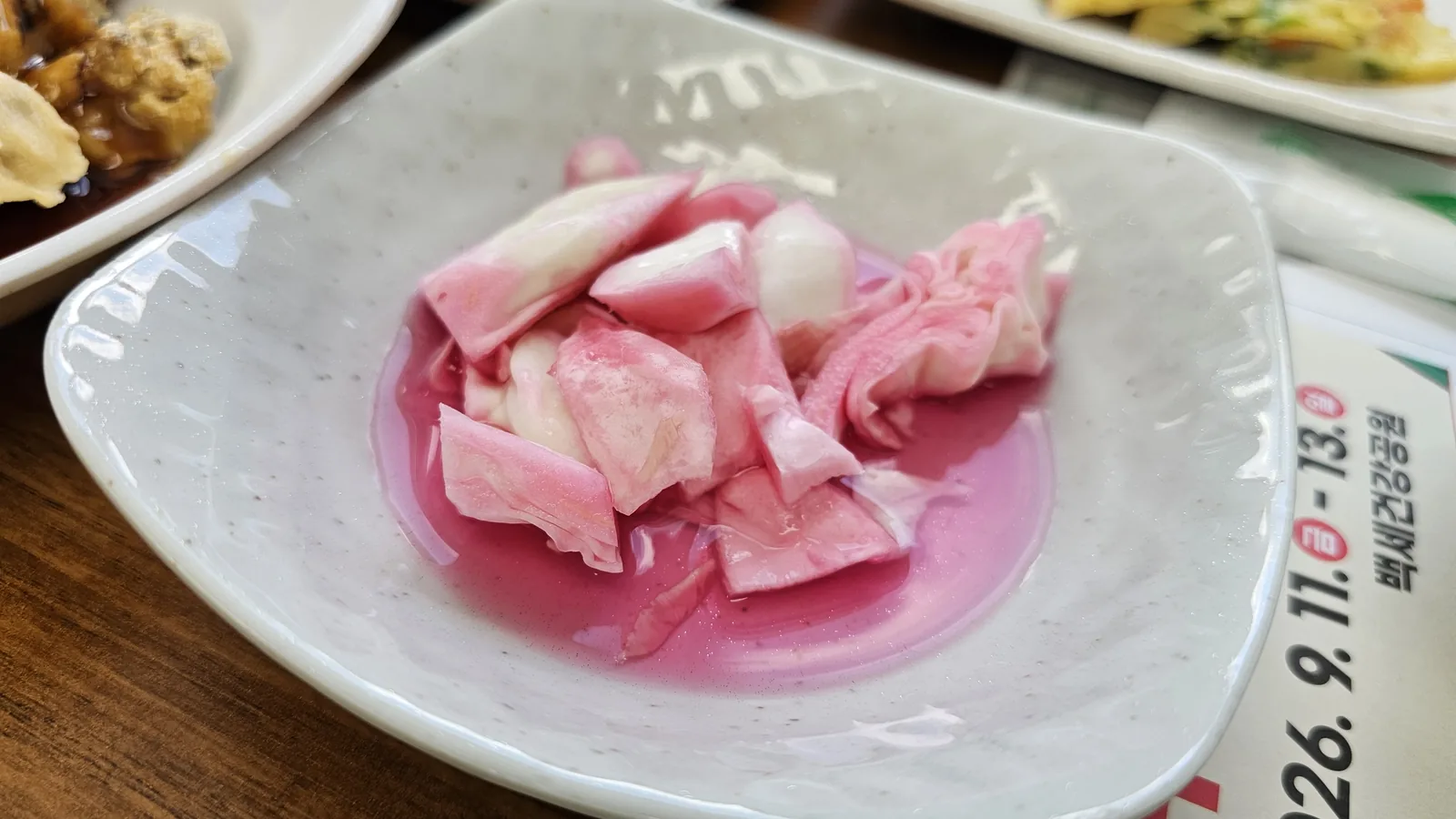
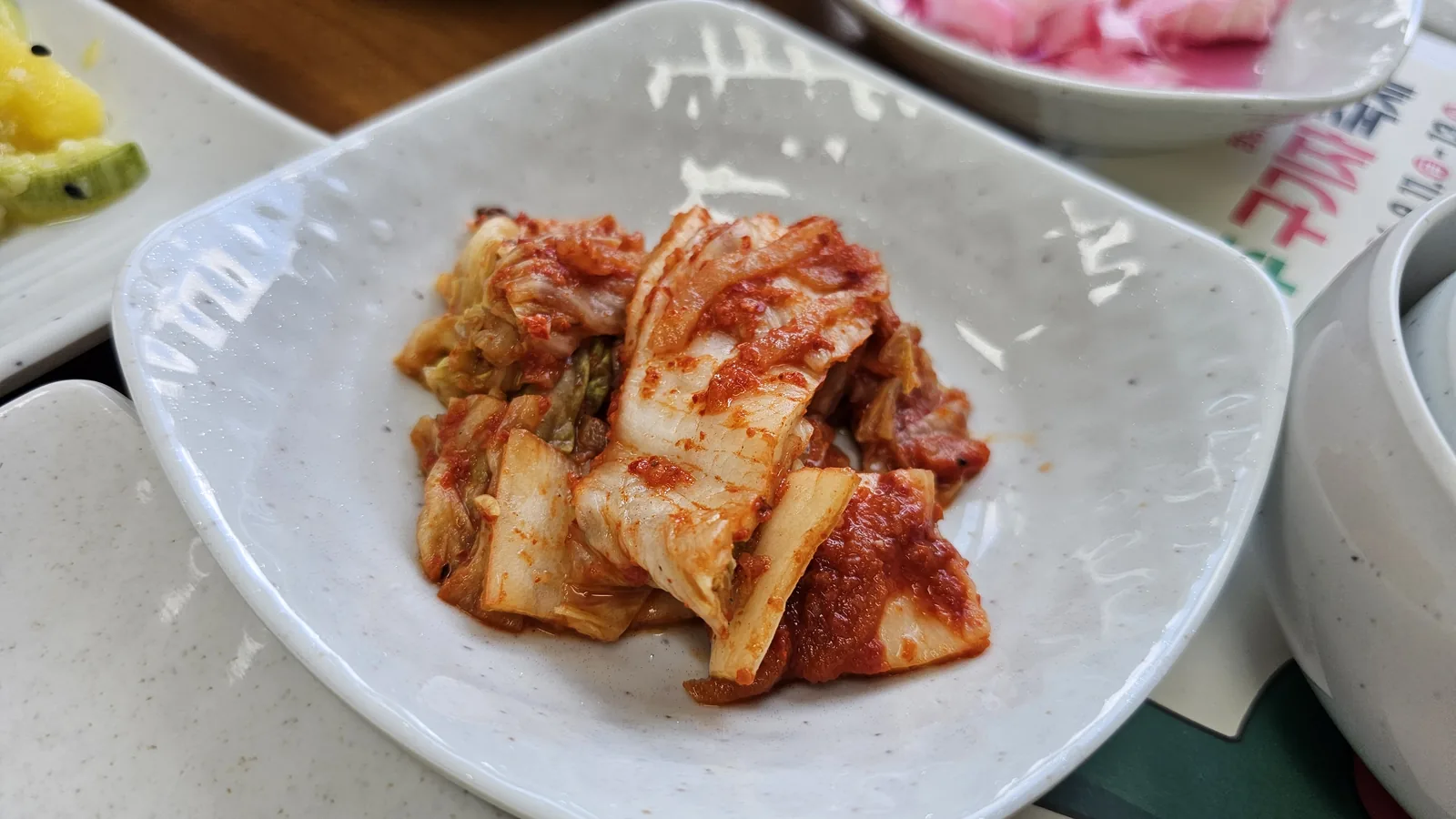
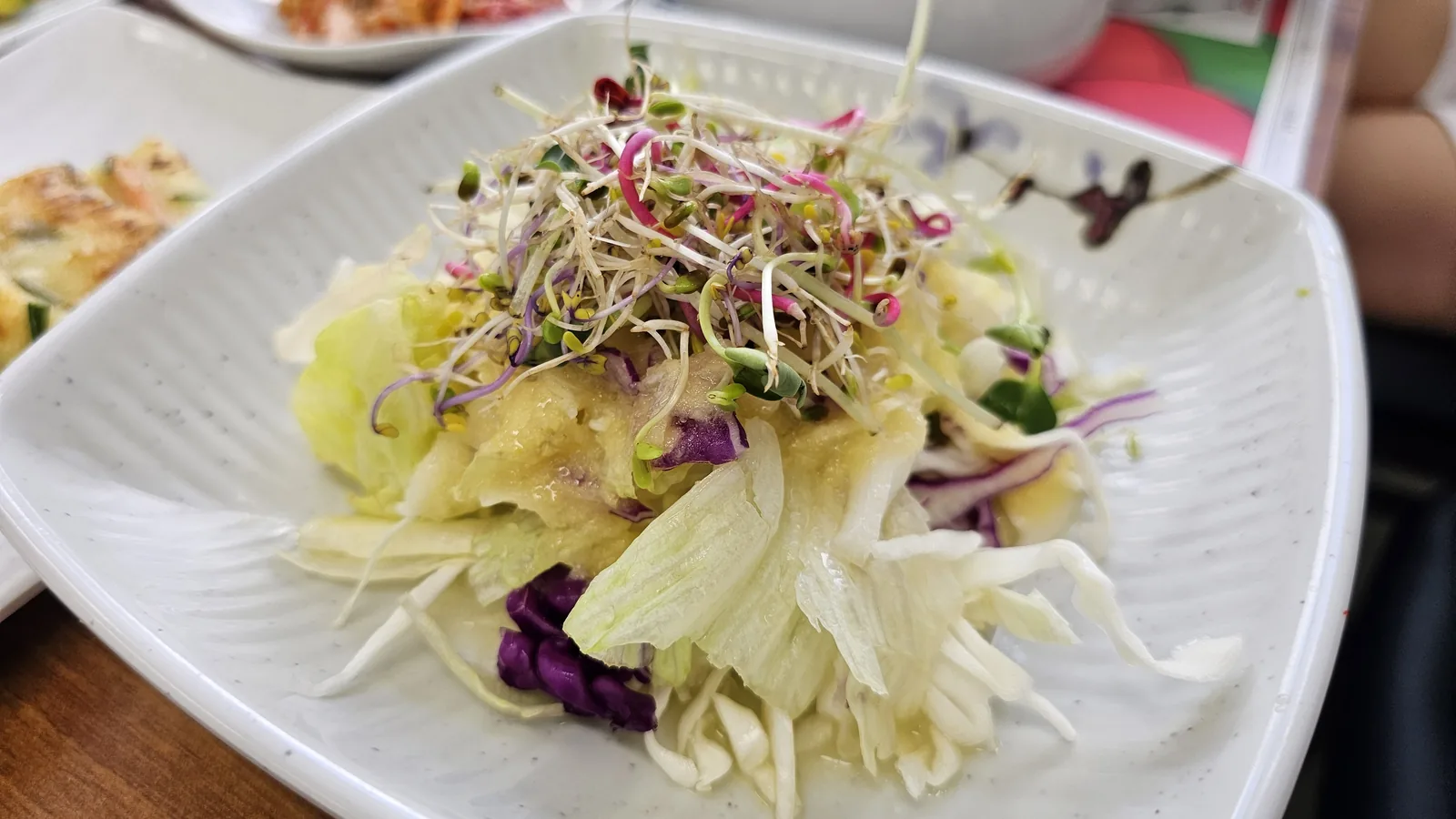
This is where the set genuinely delivers. We got:
– Japchae — glass noodles stir-fried with shiitake, carrot, green onion. Standard but done well.
– Vegetable jeon — Korean savory pancake, crispy edges. Good.
– Shiitake tangsu — battered fried shiitake in a sweet sauce. This was a surprise — usually tangsu (sweet and sour) is a meat dish. The mushroom version works better than you’d expect.
– Sprout salad — fresh, light dressing. Good palate cleanser between heavier bites.
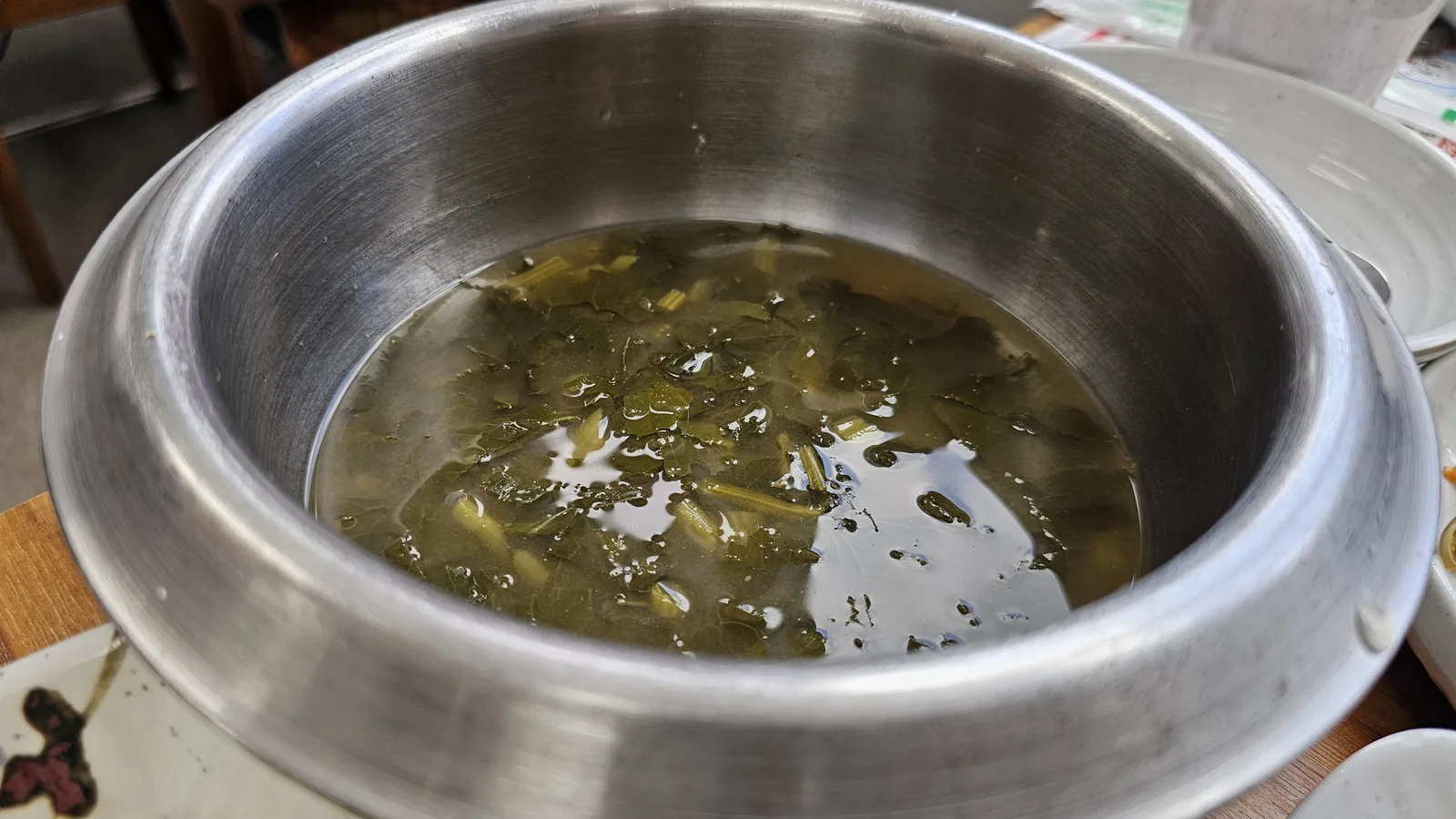
– Siraegi doenjang soup — siraegi (시래기) is dried radish greens simmered in soybean paste broth. Earthy, savory. Classic Korean country-style flavor.
– Pink pickled vegetables — mild, sweet-sour pickled onion or radish. Goes well with the richer dishes.
– Kimchi — straightforward, properly fermented. Not too spicy.
– Chive namul, radish strips, cucumber salad — the refillable ones from the banchan bar.
tbh the side dish spread alone is worth the price of the set. Everything was clean and well-prepared. Nothing overcooked, nothing underseasoned. It felt like actual care went into each dish rather than bulk-prepared fillers.
Practical Info for Tourists
Price: 16,000 KRW (~$12 USD) per person for the main two sets. Bring cash just in case, but card should work fine.
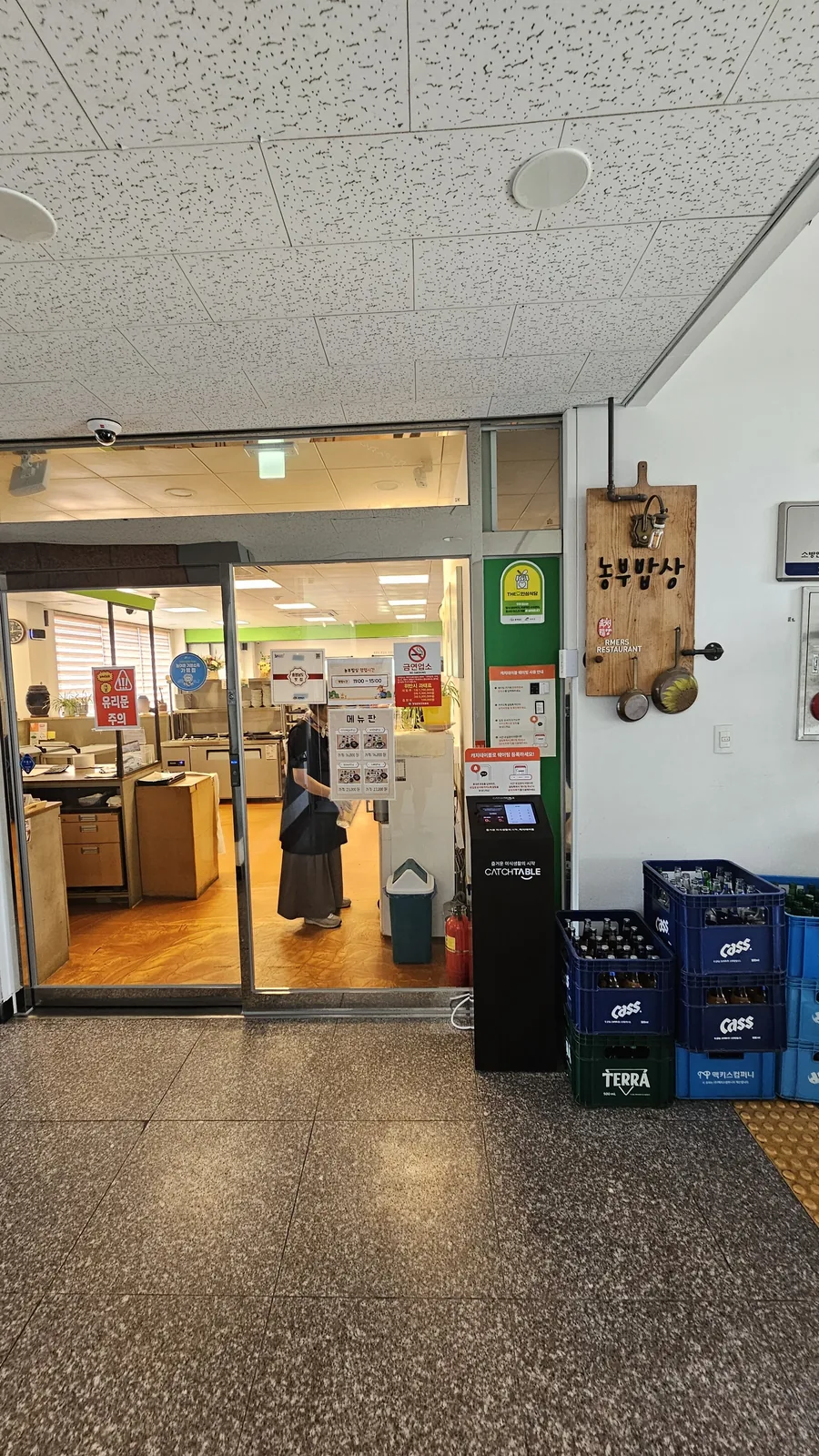
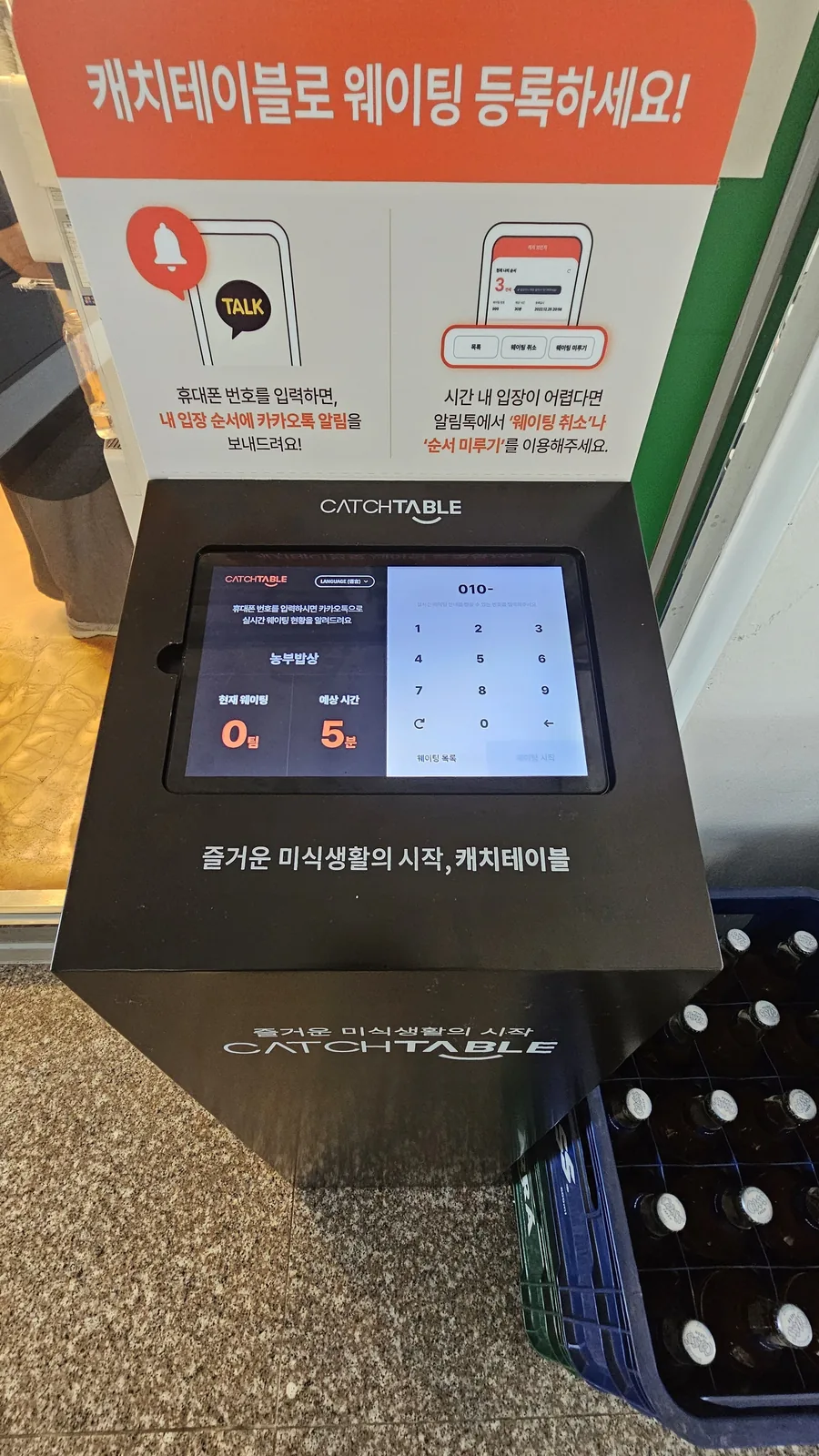
Reservations: CatchTable app. We walked in on a Sunday at noon with no wait (the kiosk showed zero teams waiting), but lunch gets busy. Reserve if you’re visiting as a group.
English: Don’t expect much. Menu is in Korean, though the photo board makes ordering easy. Pointing works.
Tipping: No tipping in Korea. Don’t leave money on the table.
Vegetarian options: The Mushroom Jeongol Hansang is close to vegetarian depending on the broth base — confirm with staff. Most other sets include meat.
Kids: Fine. Family-friendly setup, the food isn’t very spicy, the set meal format is easy for kids.
Groups: Private rooms available for 10+ people. Book ahead.
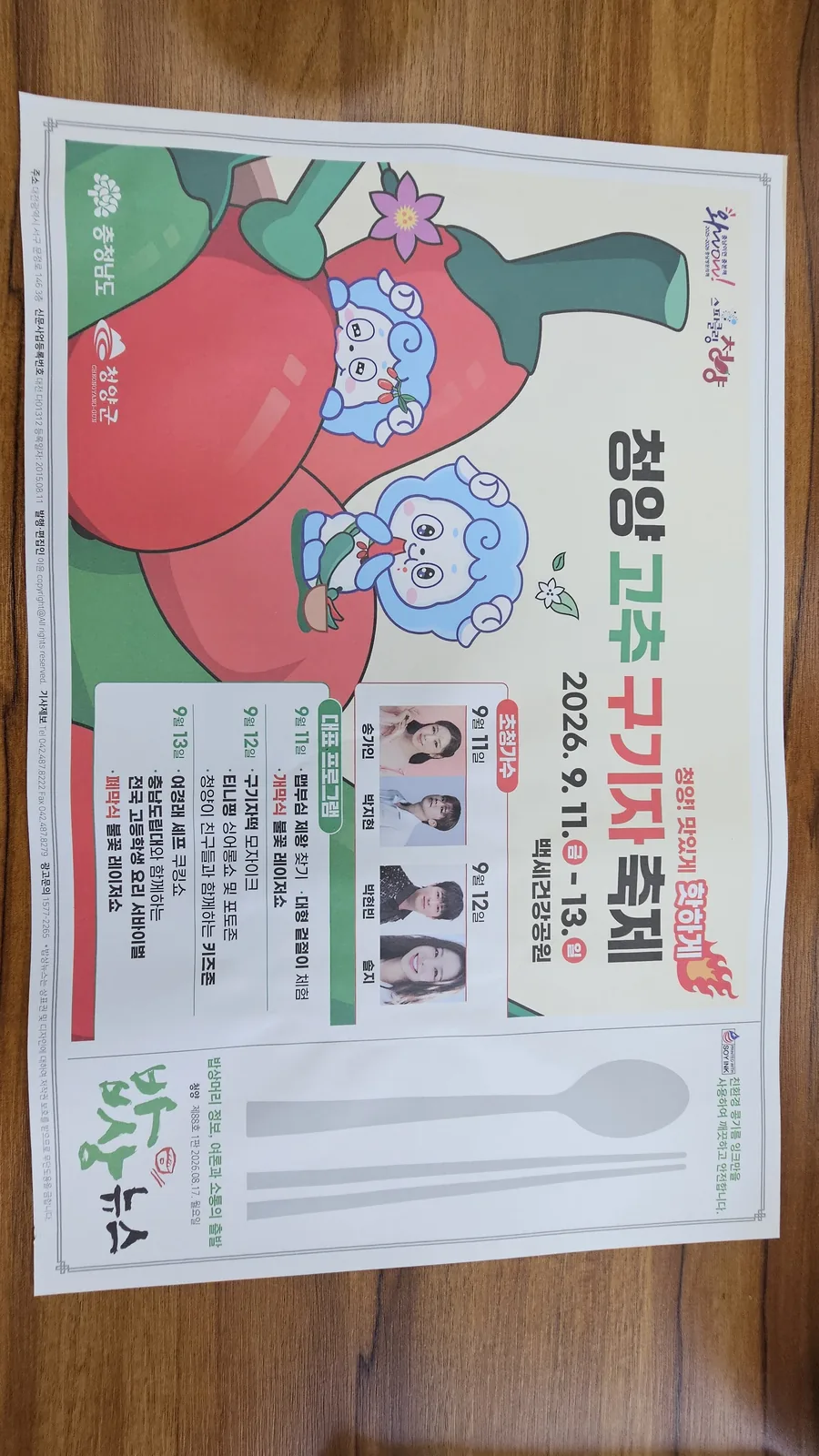
Side note: the Cheongyang Goji Berry & Ginseng Festival is scheduled for September 11–13, 2026. If your trip lines up, it might be worth combining with a visit here.
The Farmers’ Market and Cafe
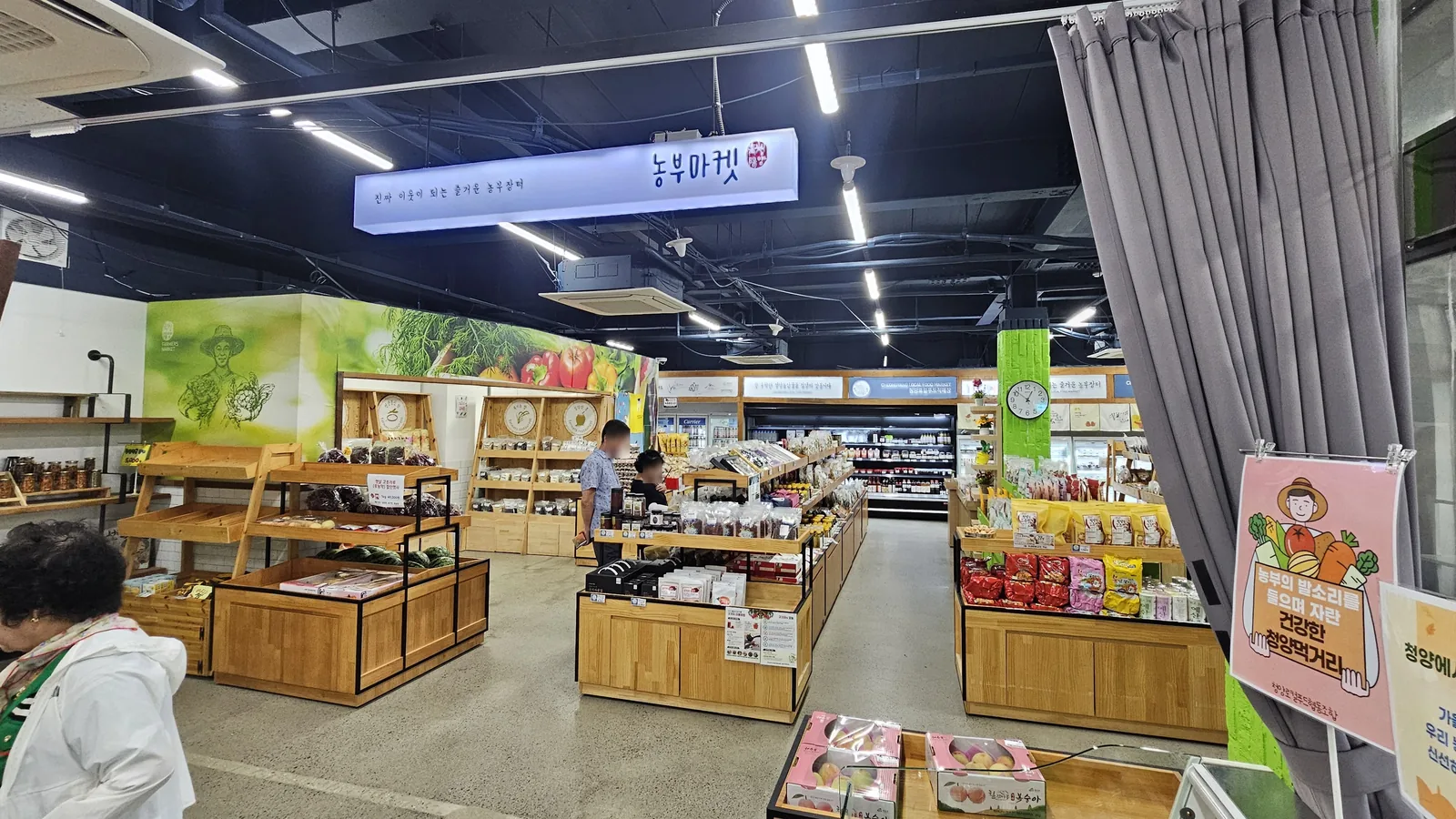
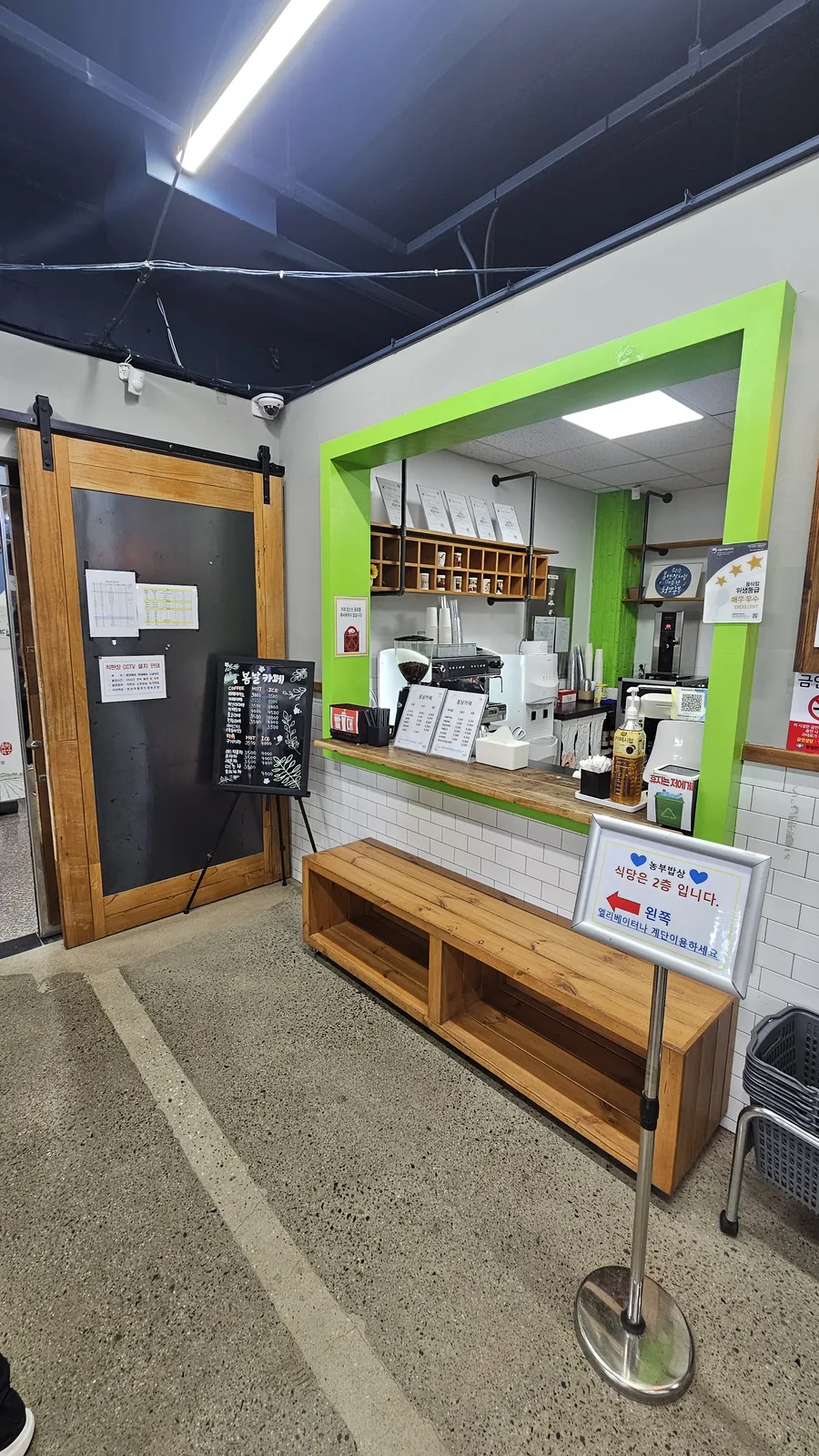
The ground floor has two bonus features. First, a small farmers’ market selling Cheongyang local produce and processed regional foods — goji berry products, dried goods, pickles. Good place to pick up something to take home.
Second, a cafe called Bomnal (봄날, meaning “spring day”) with a coffee bar. Reasonable place to have a coffee after the meal before getting back in the car.
For a noodle meal instead of a full set meal in Cheongyang, see our Jangsu Makguksu in Cheongyang: Fresh Buckwheat Noodle Review.
The Verdict
Should you go?
Depends on where you’re at in your Korea trip.
– If you’re driving through South Chungcheong Province — yes, absolutely. One of the better lunch stops in the region. Get the tteok-galbi set.
– If you’re on a short Seoul trip (3–5 days) — probably not worth the journey on its own. Prioritize Seoul neighborhoods.
– If you’re into regional Korean food and want something beyond Seoul restaurant culture — yes. This is a good example of what regional hansang dining looks like when it’s done with actual pride in local ingredients.
– If you want to see what the goji berry hype in Cheongyang is about — yes, this is a good intro to it.
The food was clean, well-presented, and properly executed across the board. Side dish quality was notably higher than average. Prices are fair. We’d go again.
📷 [사진51 – 주문 영수증]
Google Maps: [Nongbu Bapsang](https://maps.app.goo.gl/bMh2Vo9WQsNPYCZ3A?g_st=ac)
FAQ
How much does a meal cost at Nongbu Bapsang?
Most set meals (hansang) are 16,000 KRW (~$12 USD) per person. The premium Special Hansang goes up to 27,000 KRW (~$20 USD). For what you get, the 16,000 KRW sets are solid value.
Do I need a reservation at Nongbu Bapsang?
They use the CatchTable app for reservations and walk-in queue management. We walked in around noon on a weekend with no real wait, but it fills up fast — booking ahead via CatchTable is the smart move.
What is goji berry tteok-galbi?
Tteok-galbi is a Korean dish of minced and shaped meat patties — think thick, tender burger patties made from ground pork and beef. Nongbu Bapsang’s version uses goji berry (구기자), a local Cheongyang specialty, mixed into the patties and the accompanying stone pot rice.
Is there an English menu at Nongbu Bapsang?
The menus are in Korean, but the large photo menu board makes it easy to point and order. The set meal system is simple — you pick one of four hansang options. Staff communication may be limited in English, but it works fine.
Is Nongbu Bapsang good for large groups?
Yes — they have private group dining rooms (like room 303) that seat 12+ with built-in induction cooktops at the table. Good for family travel or group outings.
Is there anything to do nearby after eating?
The building has a cafe (“Bomnal”) and a farmers’ market on the first floor selling Cheongyang local produce. Also, the Cheongyang Goji Berry & Ginseng Festival runs in mid-September if your timing lines up.
Leave a Reply