Quick honest review of Jogane Galbi (조가네갈비집) in Mokdong, western Seoul. Skip to the verdict at the bottom if you’re short on time, but here’s the short version: solid traditional charcoal galbi, impressive hanok-style interior, decent meal. Not a destination restaurant — but a genuinely good neighborhood spot if you’re in this part of the city.
I went on a Sunday evening around 7 PM.
What Is Galbi?
Galbi (갈비) literally means “rib” in Korean. At a galbi restaurant, you’re getting beef short ribs — bone-in — grilled at your table over charcoal. It’s one of Korea’s most iconic BBQ dishes, and it eats very differently from samgyeopsal (pork belly), which is what most tourists end up ordering.
Two styles you’ll see at any traditional galbi restaurant:
생갈비 (Saeng galbi) — raw, unmarinated. Just the meat and the fire. This is the higher-end style where the beef quality does the talking.
양념갈비 (Yangnyeom galbi) — marinated in a sweet soy-based sauce. More forgiving, more umami, and you get those slightly caramelized edges from the sugar in the marinade.
Jogane Galbi does both.
A Quick Note on Idong Galbi
Their menu lists 이동갈비 (Idong Galbi) — worth explaining. Idong is a small town in Pocheon, Gyeonggi Province, about 60km north of Seoul. In the 1960s and 70s, the area became known for marinated galbi restaurants, and “Idong galbi” became a regional style: sweeter marinade, slightly thinner-cut ribs, nice caramelized edges from grilling. It’s not a brand name — it’s a tradition. A lot of Seoul galbi restaurants carry it on the menu to signal they’re doing classic-style ribs, not some modern reinvention.
About Jogane Galbi
This isn’t a new restaurant. Jogane Galbi has been around for decades, and they lean into that. The whole place is designed around tradition — and you feel it the moment you walk in.
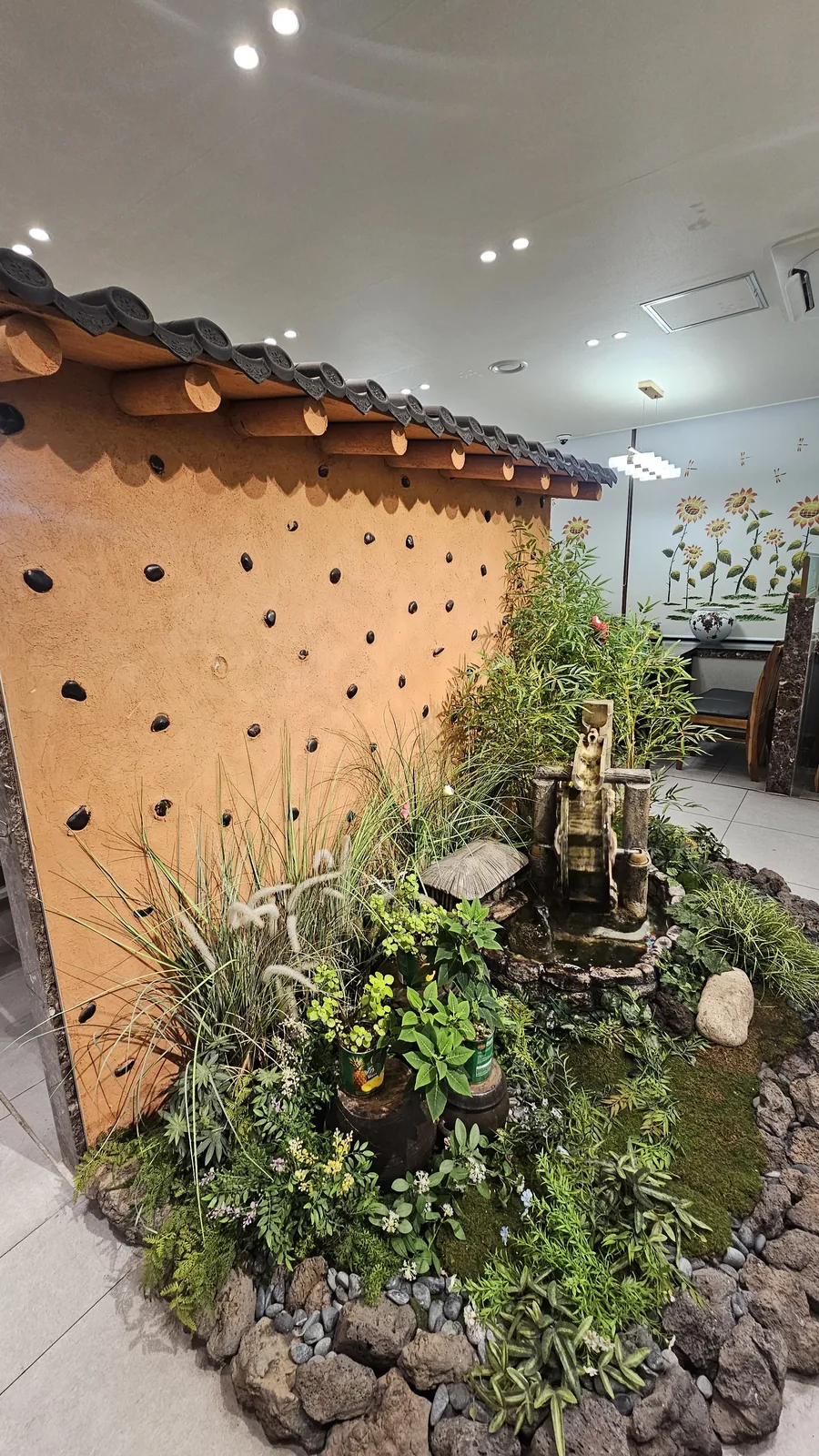
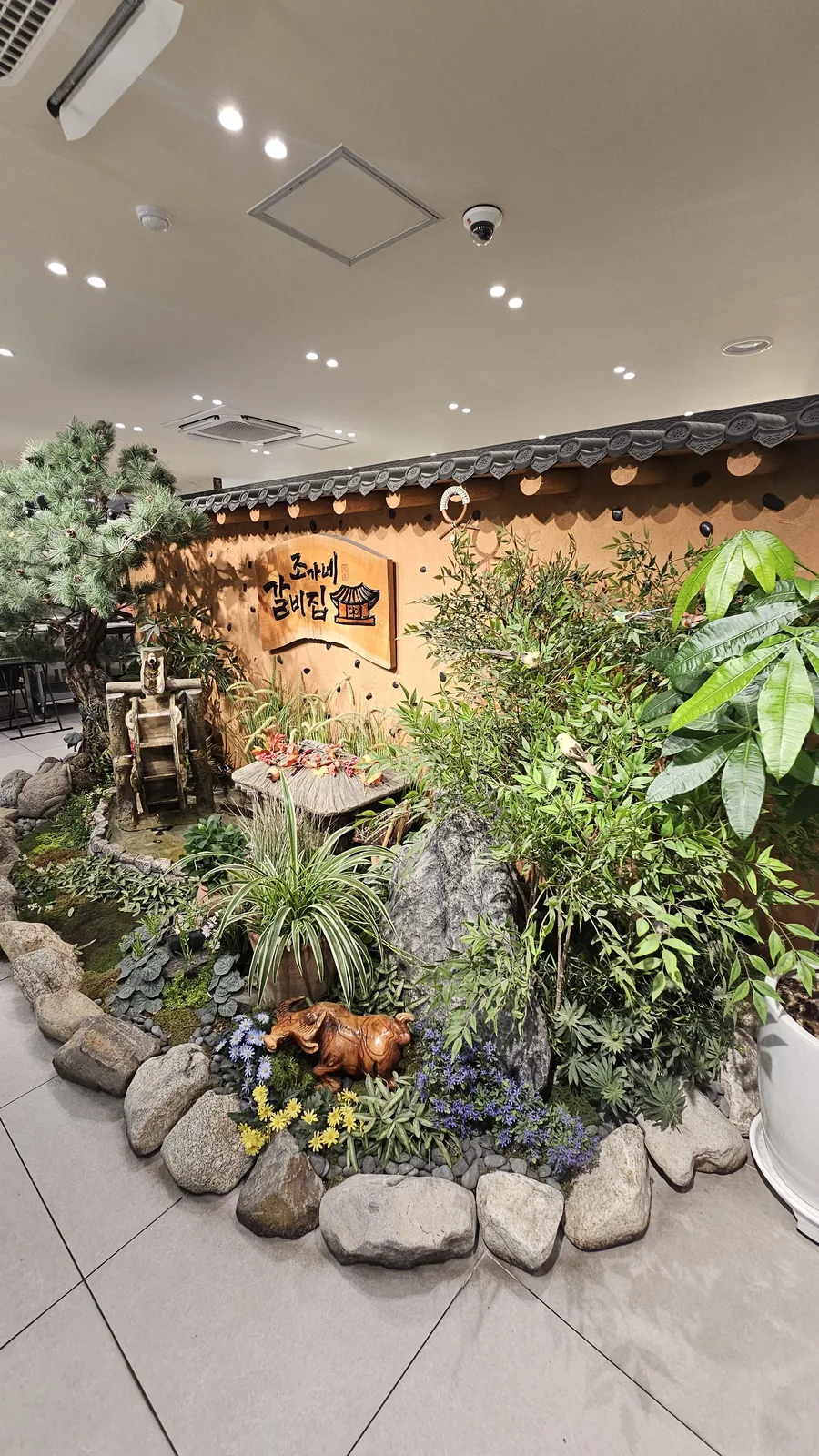
The interior is a reconstructed traditional Korean hanok (한옥) — the classical wooden architecture with clay walls (황토벽), curved tiled rooflines (기와지붕), indoor garden ornaments, and a working water wheel. Inside a commercial restaurant in western Seoul. It’s theatrical, but they’ve committed to it fully.
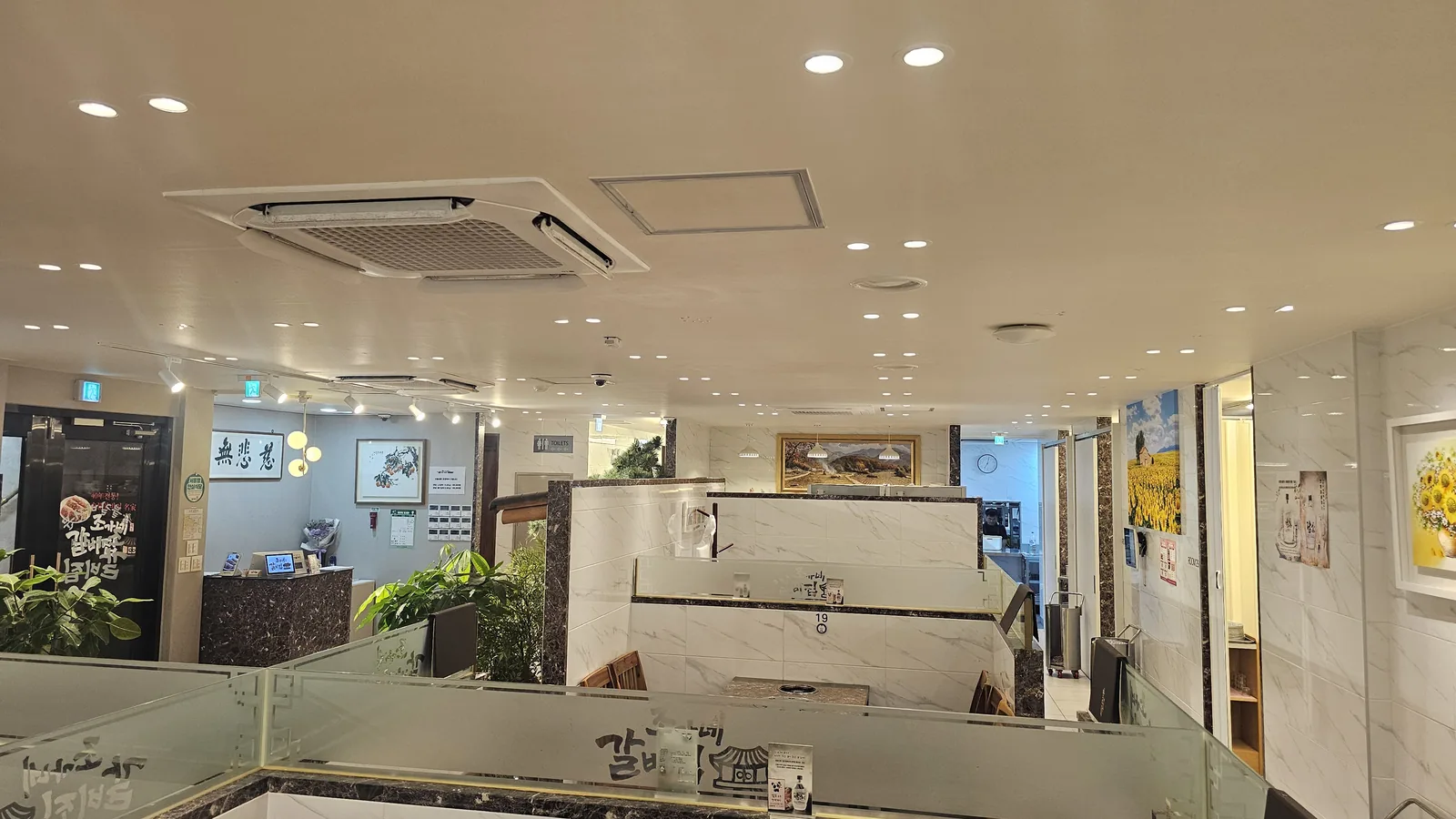
Seating is booth-style with dividers between tables — good for groups, decent privacy. The hall is fairly large. On a weekend evening it filled up steadily, but we had no wait.
Getting There
Mokdong (목동) is a residential neighborhood in Yangcheon-gu, western Seoul. This is not a tourist area — no major landmarks, mostly apartment complexes, schools, and local restaurants. Think of it as Seoul’s family-neighborhood belt. Koreans know it well; most foreign tourists don’t have a reason to be here.
The closest subway is Mokdong Station (목동역) or Omokgyo Station (오목교역), both on Seoul Metro Line 5. From either it’s a short walk or a 5-minute taxi.
From central Seoul (Myeongdong, Hongdae): 30–40 minutes by subway. From Gimpo Airport (GMP): around 20 minutes. From Incheon Airport (ICN): about 1 hour by subway, 45–55 minutes by taxi.
Taxi from Yeouido runs about 5,000–8,000 KRW (~$4–6 USD). Use Kakao Taxi — it has an English interface and lets you request English-speaking drivers.
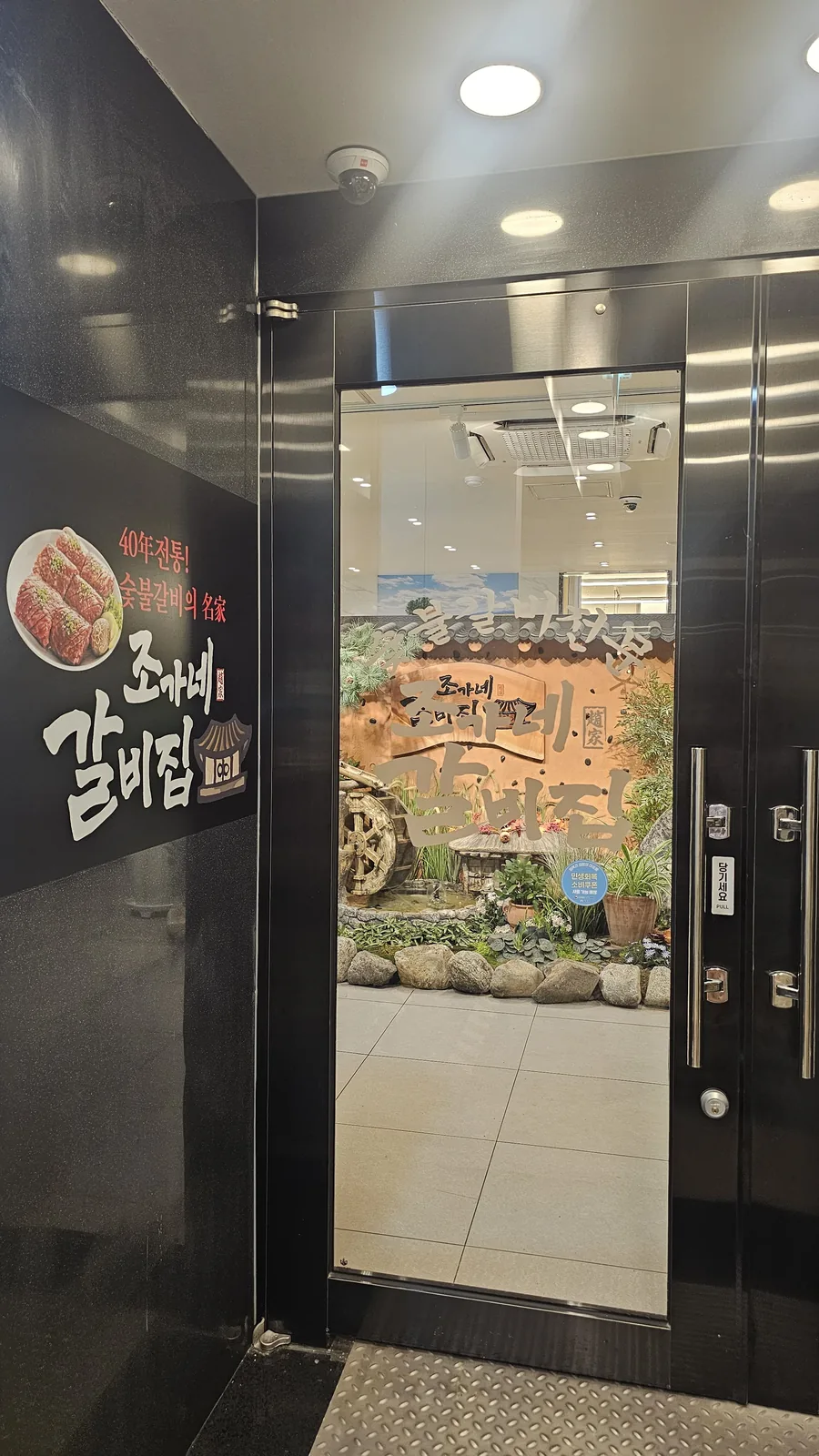
The Table Setup
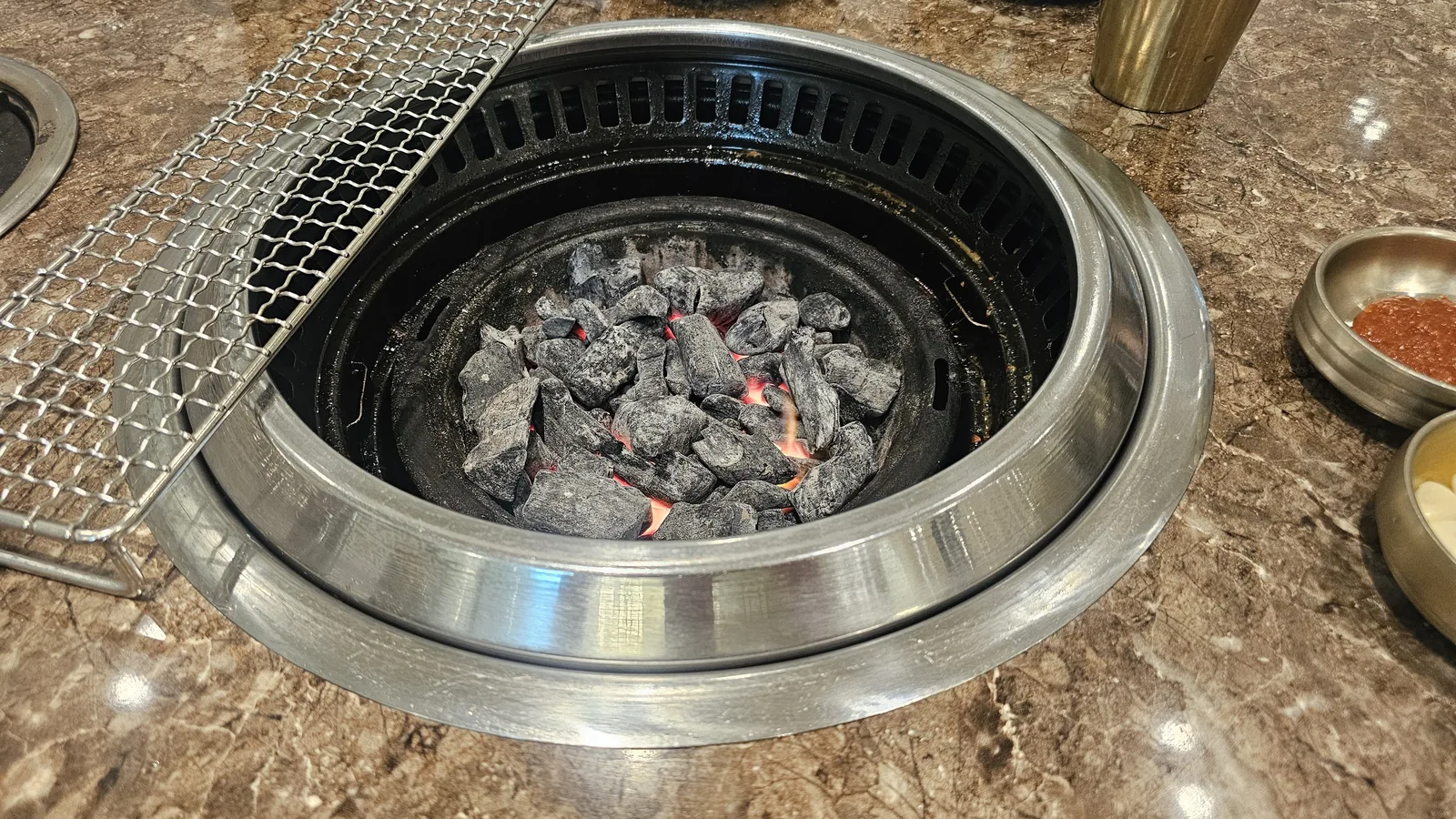
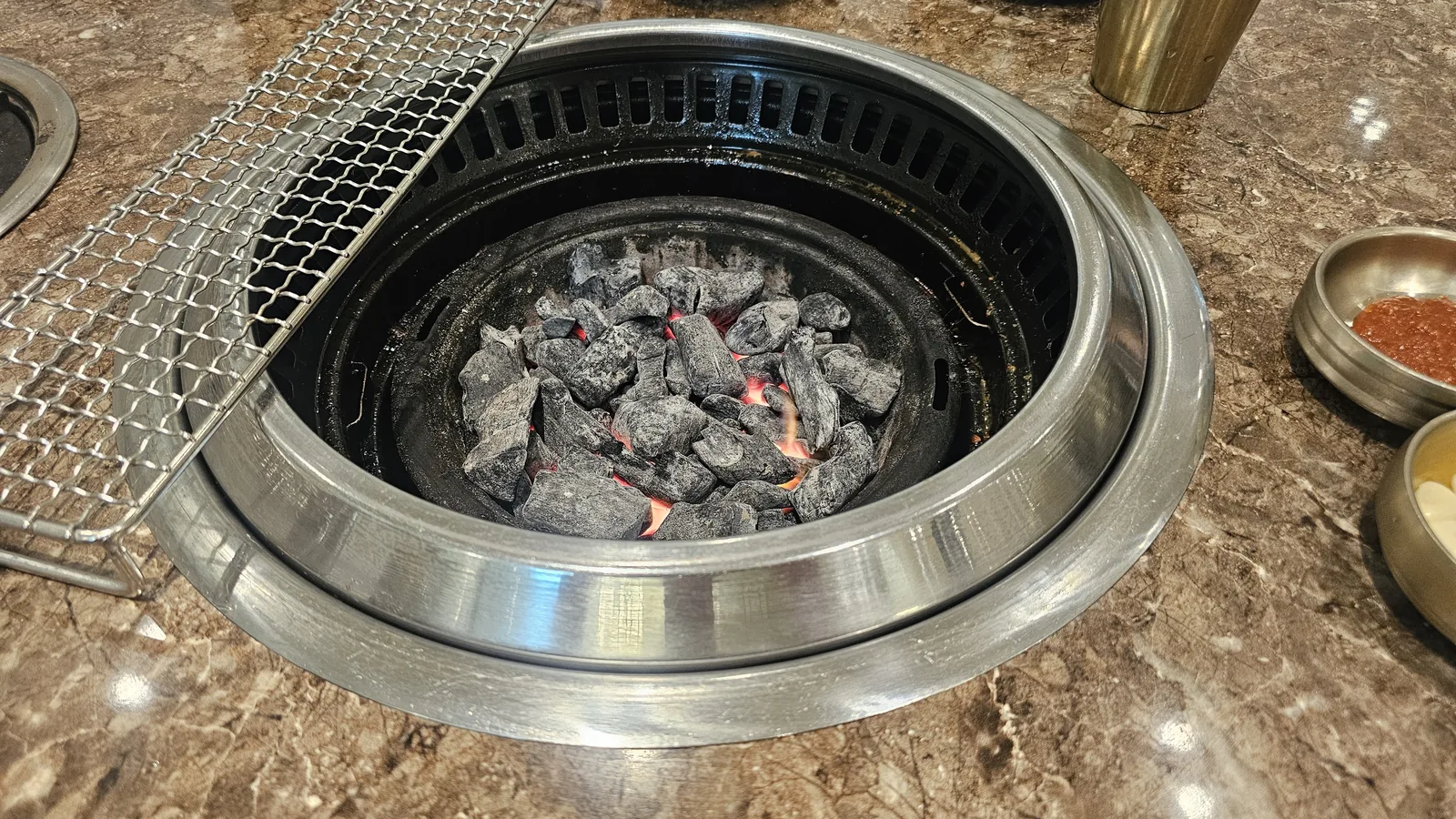
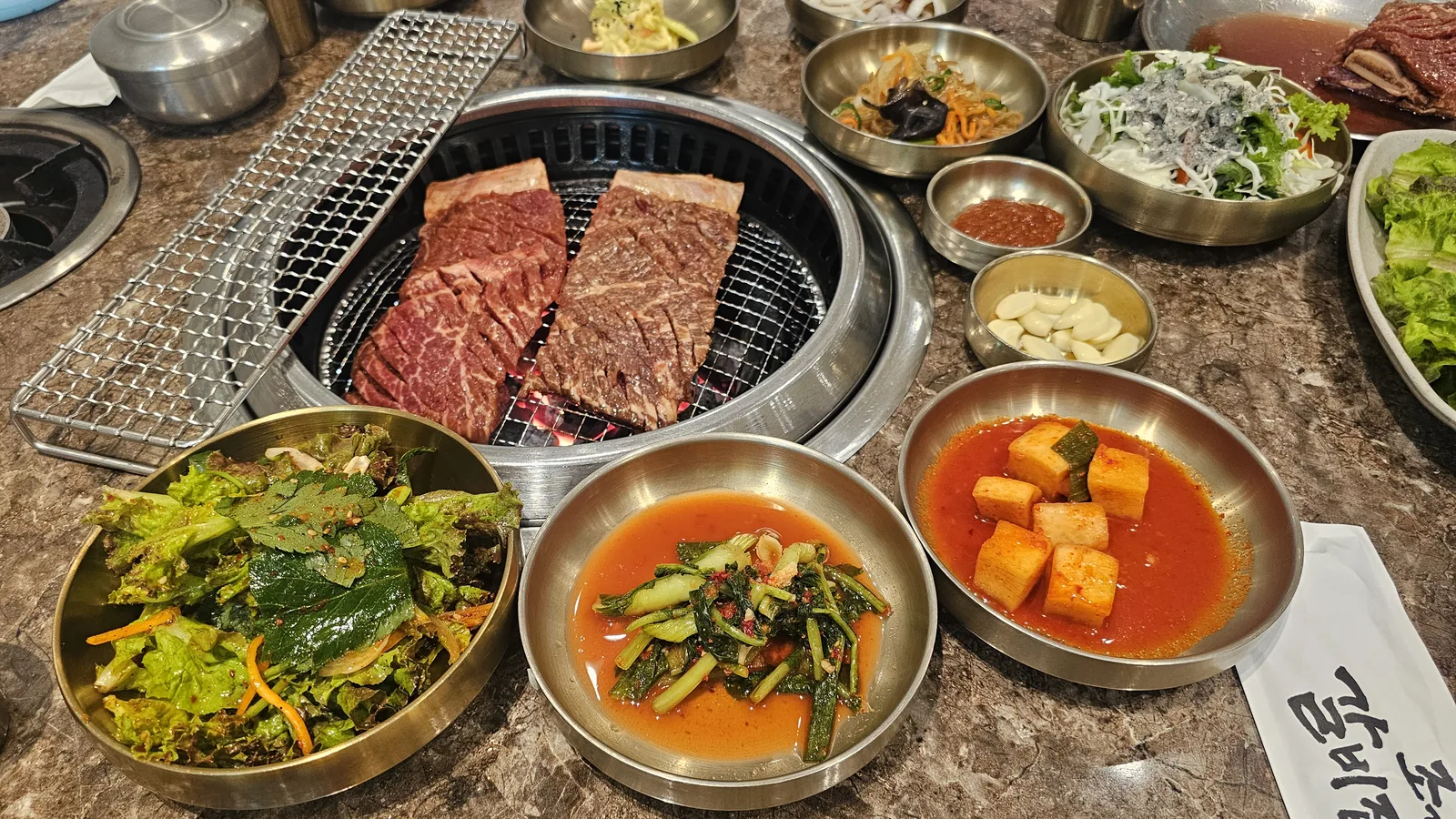
The grills here are old-school: round cast-iron charcoal braziers, not the flat tabletop plates you see at Korean BBQ chains. Real charcoal, actual fire. The server lights them before your food comes out.
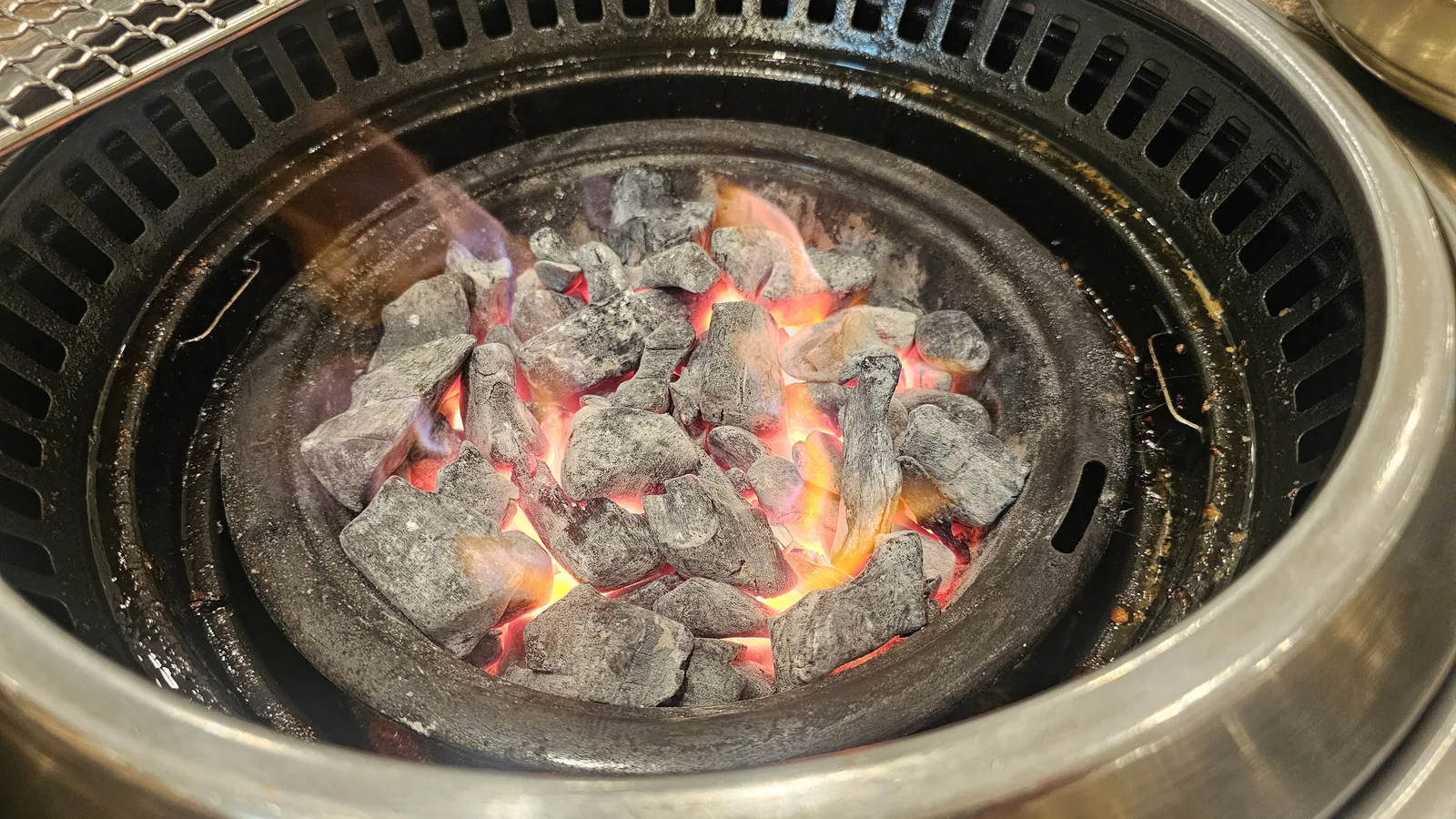
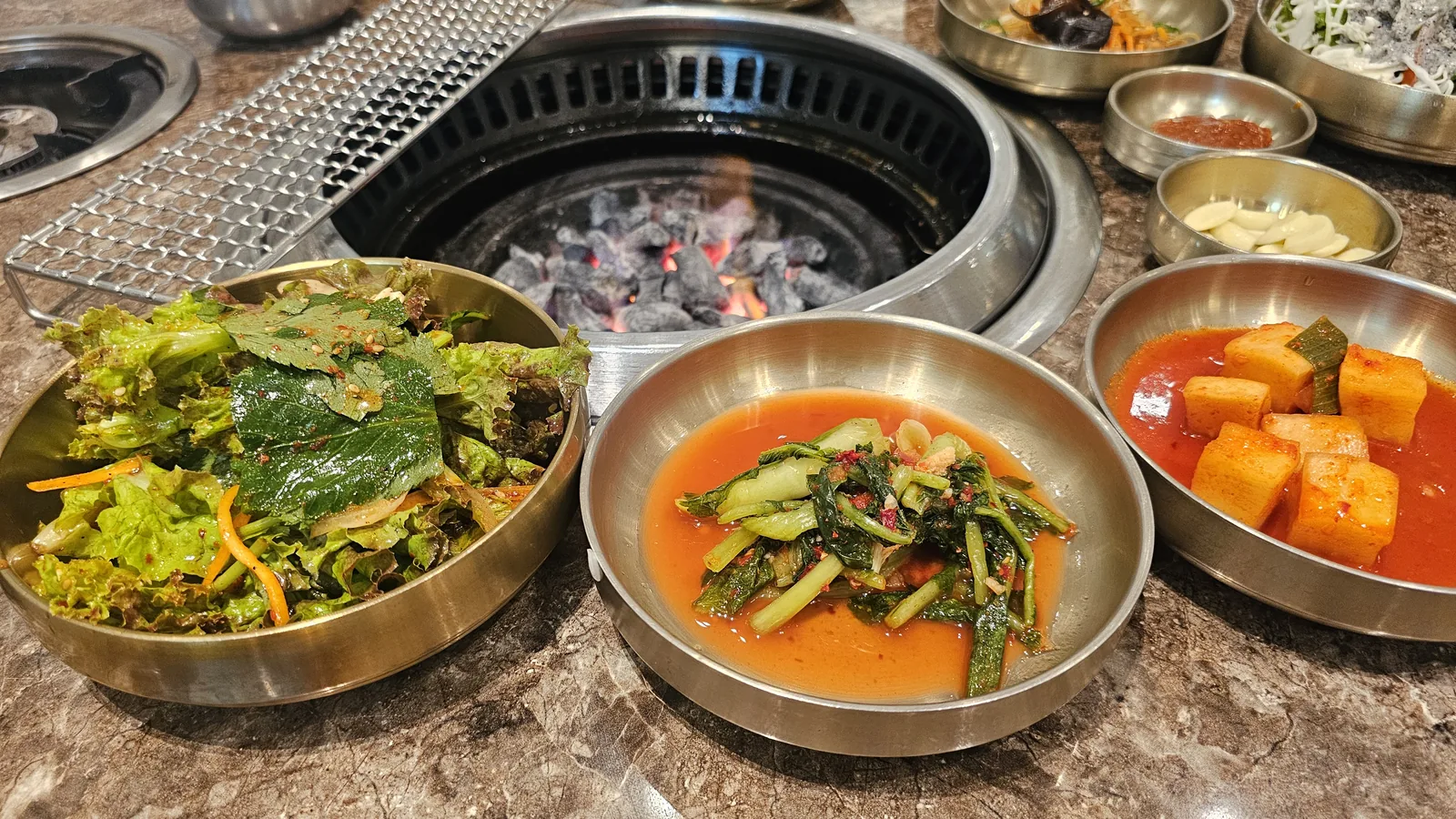
The advantage of real charcoal: intense, uneven heat that gives you proper searing and a smoky char you can’t replicate on a gas plate. The trade-off: your clothes will smell like BBQ smoke for the rest of the night. Not negotiable. Plan accordingly.
The Side Dishes
Before the meat arrives, the table fills up with side dishes. This is standard Korean BBQ practice — the sides are included, you don’t order them separately.
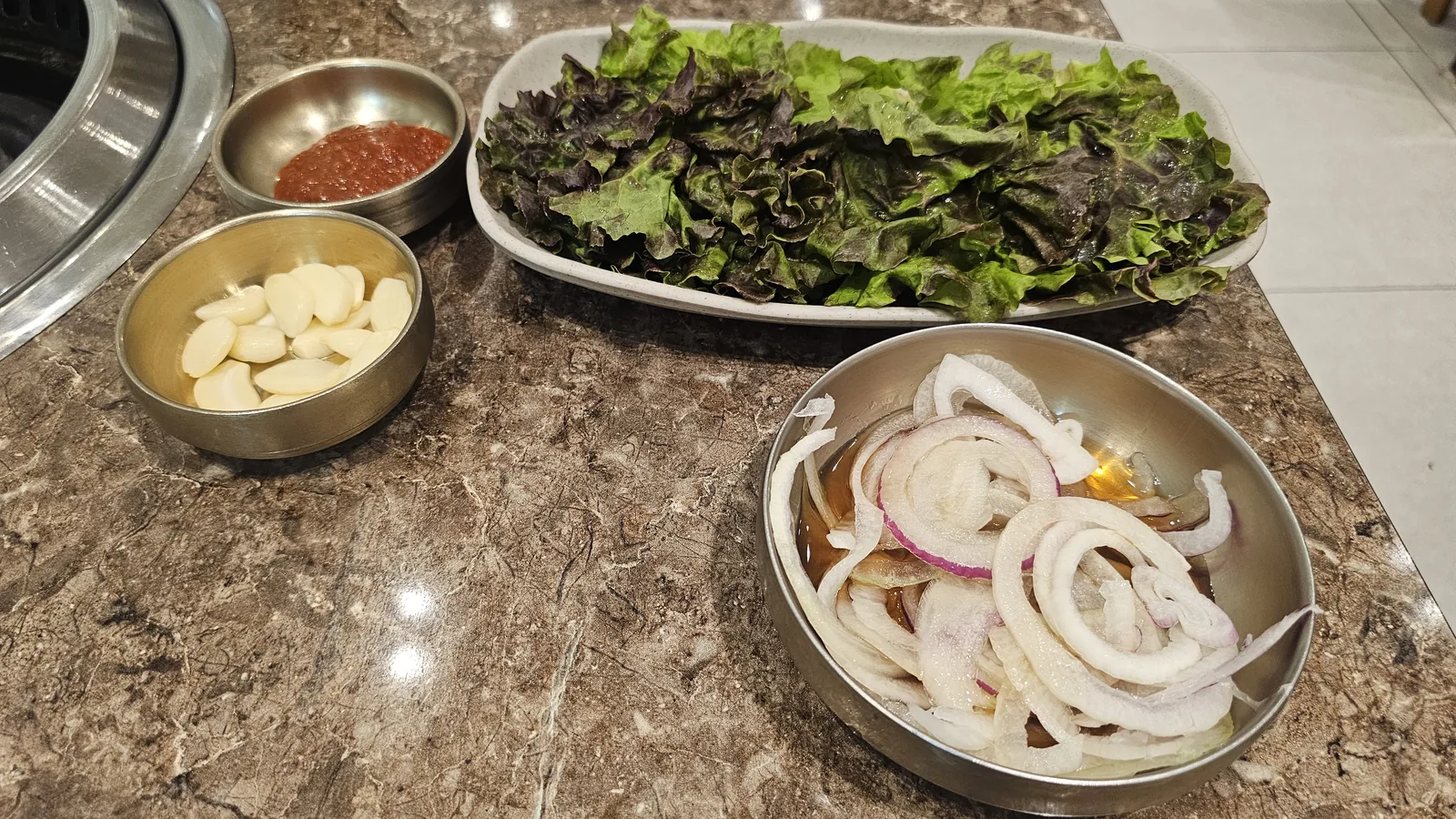
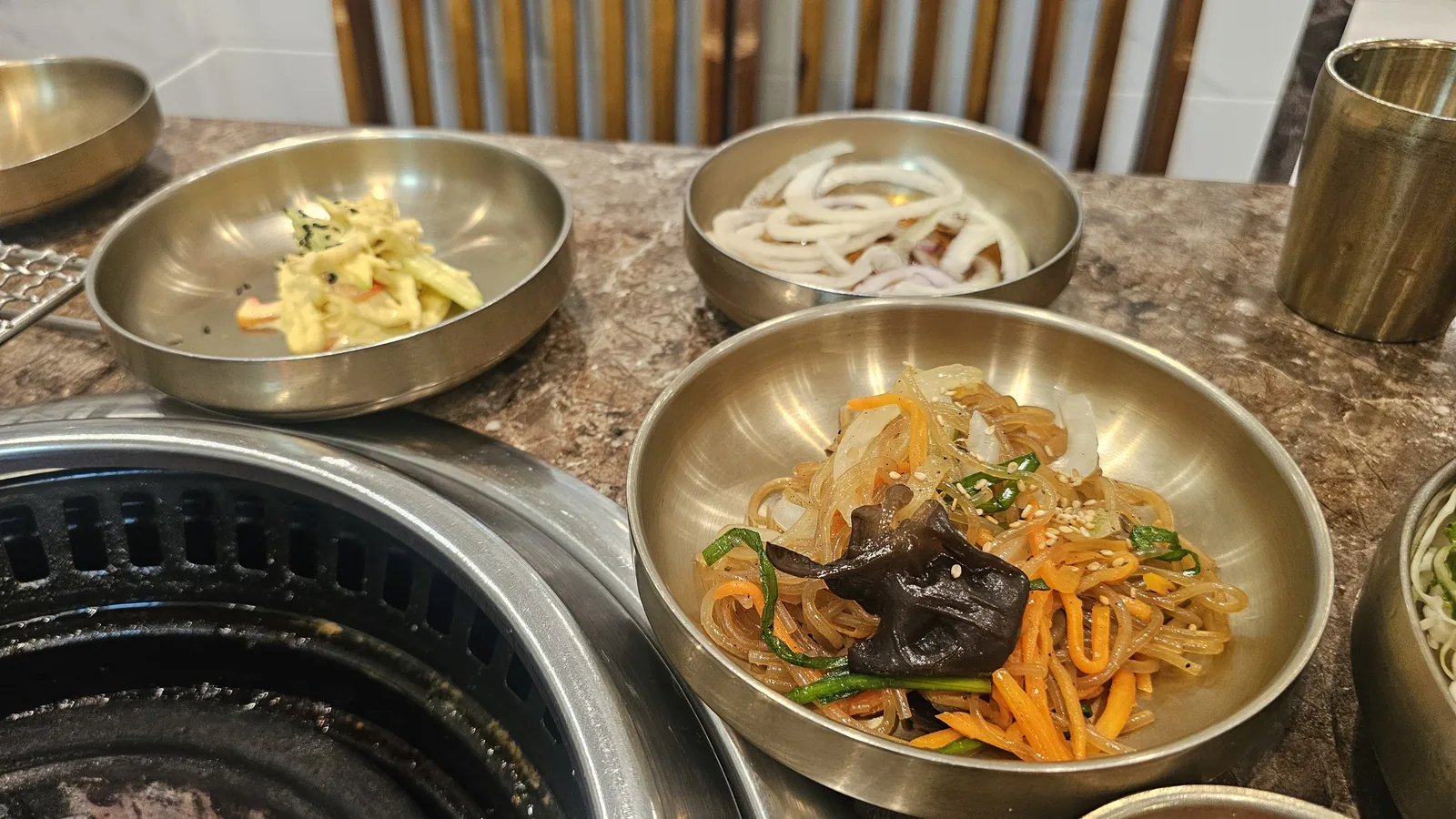
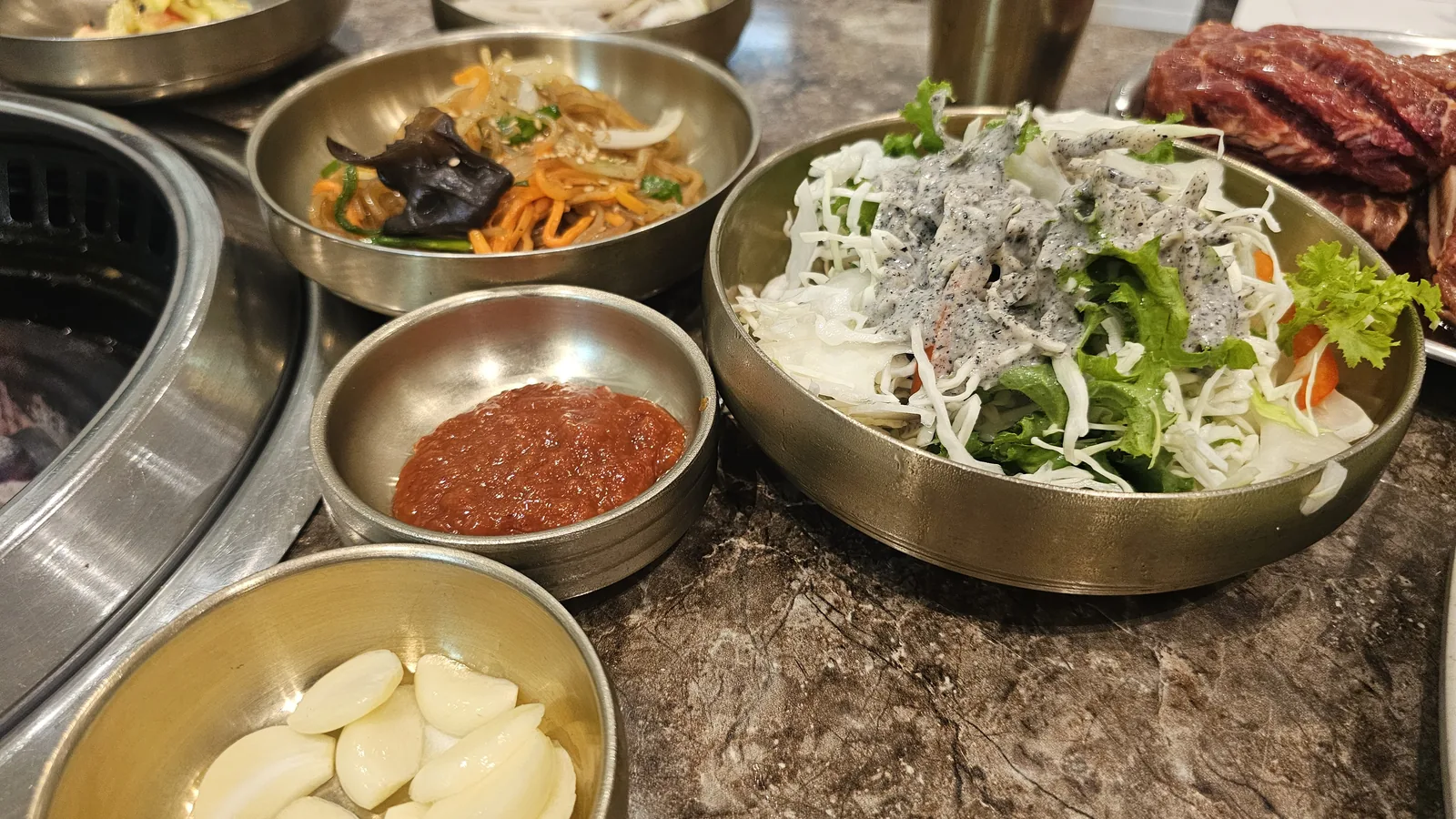
What was on the table:
– 쌈채소 (Ssam vegetables) — lettuce and perilla leaves. You wrap the cooked meat in these with a smear of sauce. That’s the move.
– 쌈장 — thick fermented soybean-chili paste. Goes with the ssam wrap. This is not optional; use it.
– 마늘 (Garlic) — sliced raw. Gets thrown directly on the grill alongside the meat, gets slightly charred, then eaten with it.
– 양파절임 (Pickled onion) — sweet, acidic, cuts through the fat well.
– 잡채 (Japchae) — glass noodles stir-fried with vegetables and soy sauce. Common galbi restaurant side.
– 열무김치 (Yeolmu kimchi) — young radish kimchi, lighter than the standard napa cabbage version.
– 깍두기 (Kkakdugi) — cubed radish kimchi, crunchier and more pungent.
– 마카로니 샐러드 (Macaroni salad) — yeah, this is a real Korean BBQ side dish. It comes from Japanese-influenced Korean food culture from the mid-20th century. Don’t be thrown off by it.
The sides were solid — standard galbi restaurant lineup, done cleanly. Nothing exceptional, nothing missing.
The Meat
We ordered 왕갈비 3 servings. 왕갈비 (Wang Galbi) means “king galbi” — thicker, meatier cuts than standard. You can see the difference when the raw plate arrives.
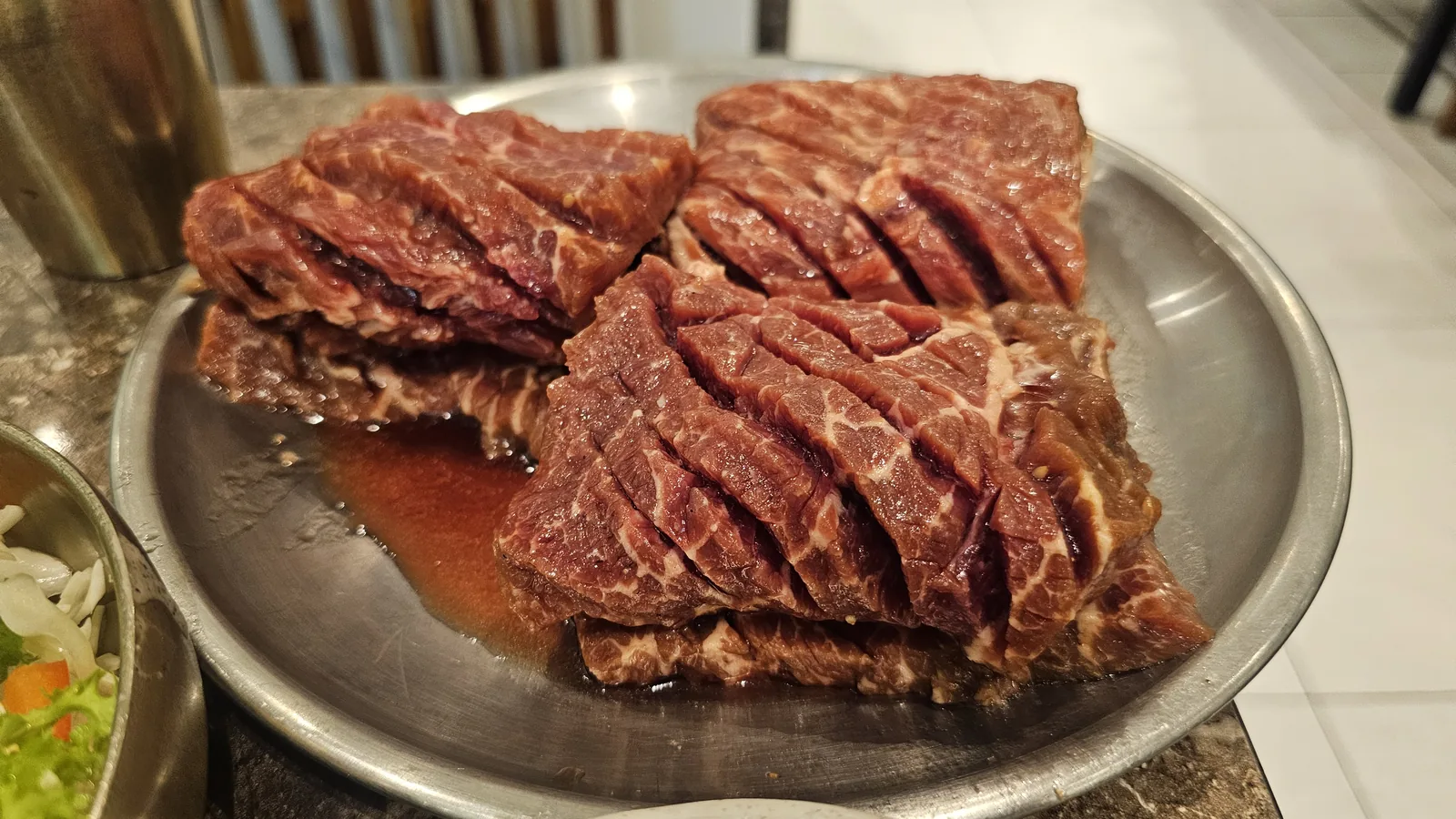
The staff handles the grill at the start, which is good. They know when to flip, when to cut the meat off the bone into smaller pieces, when to move things to the edge to rest. You can take over partway through or let them manage it.
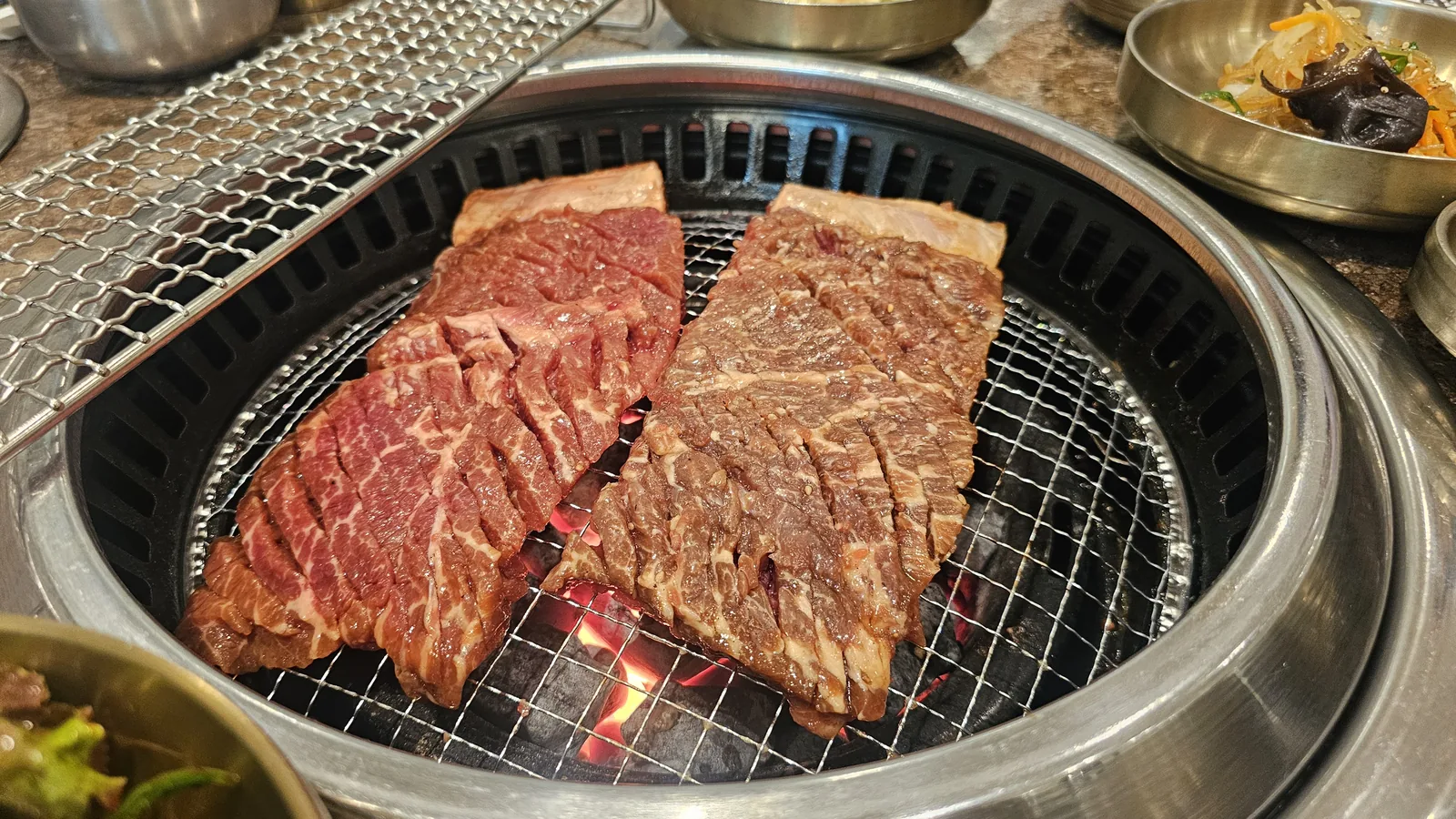
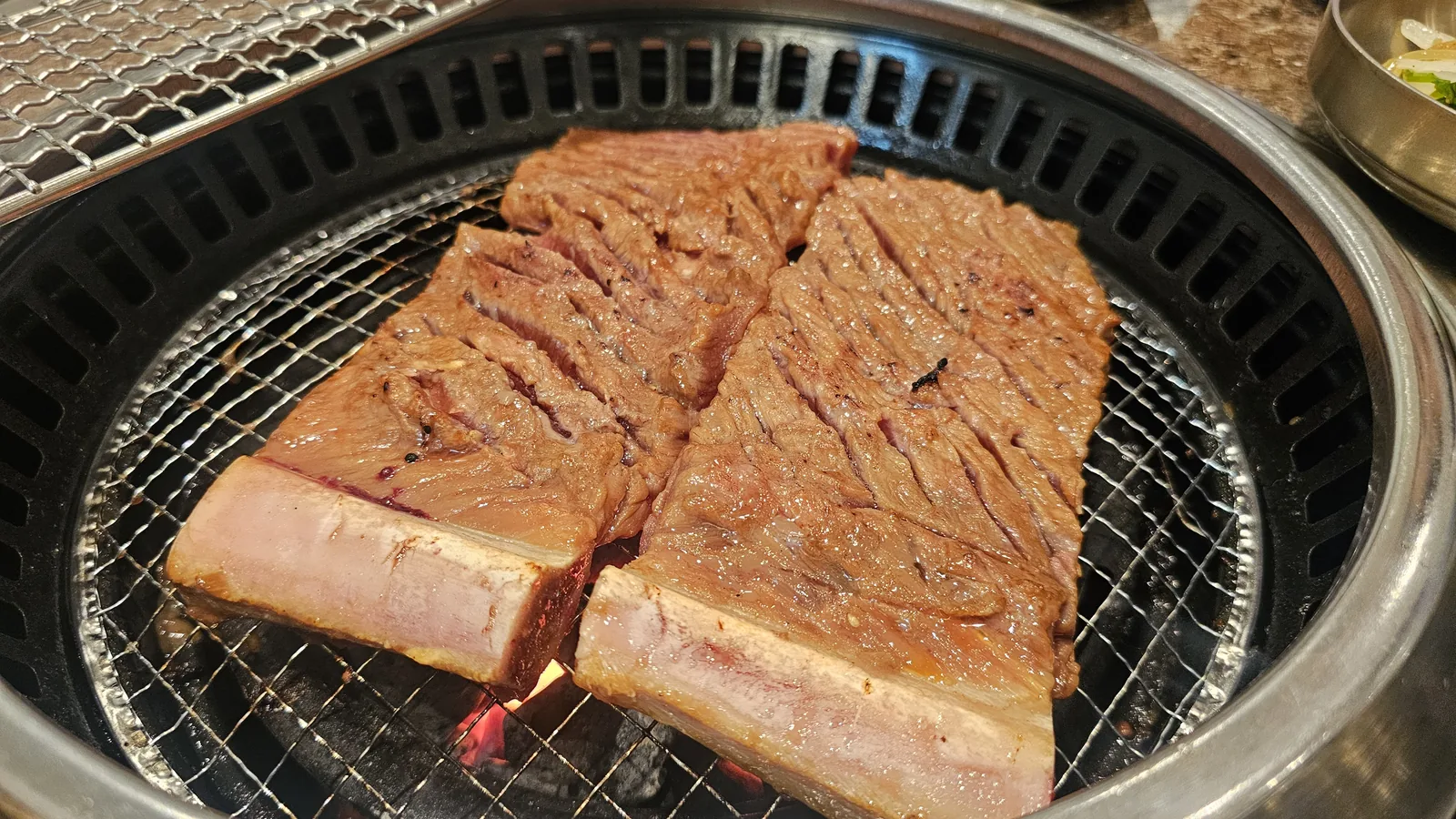
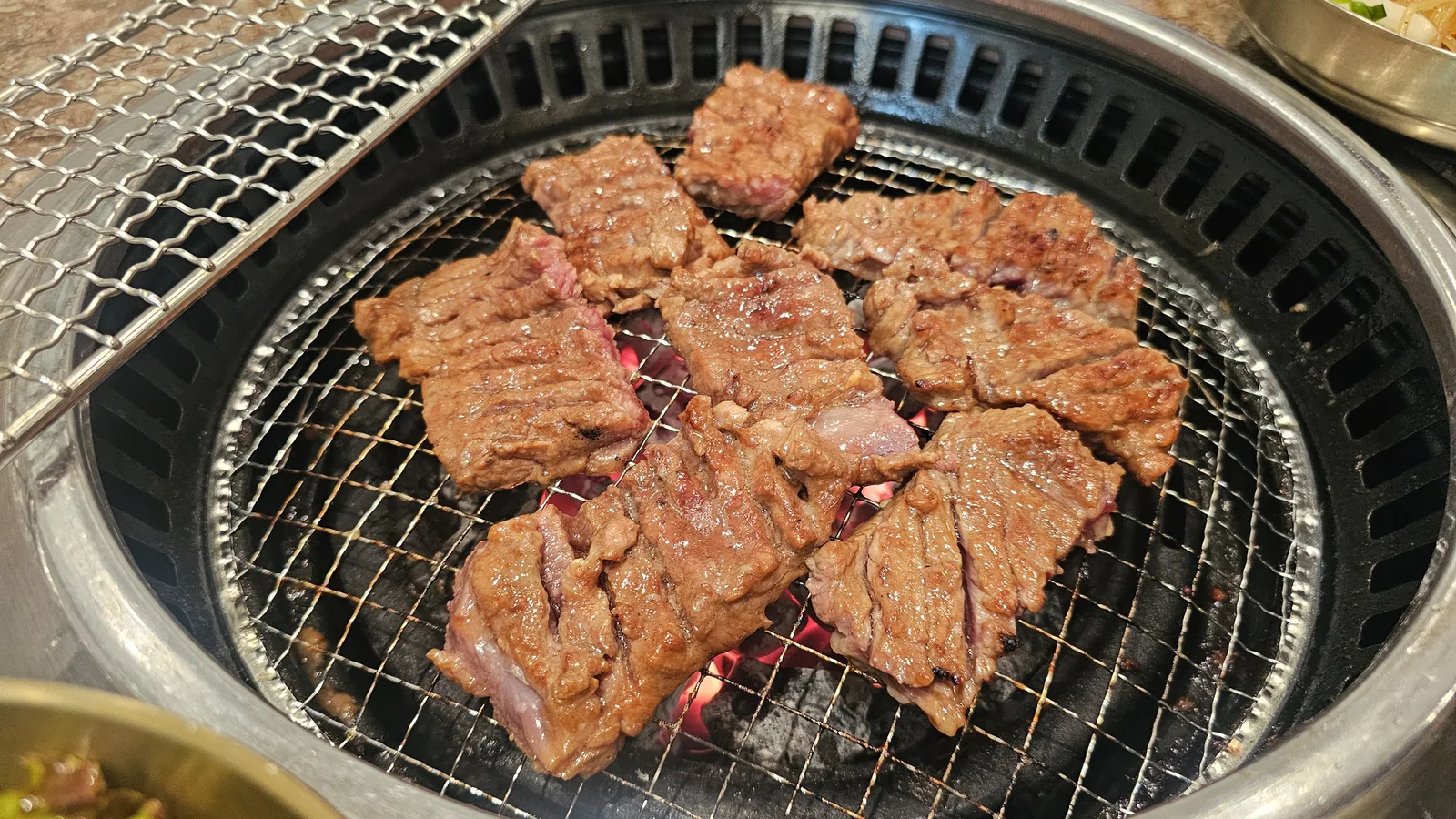
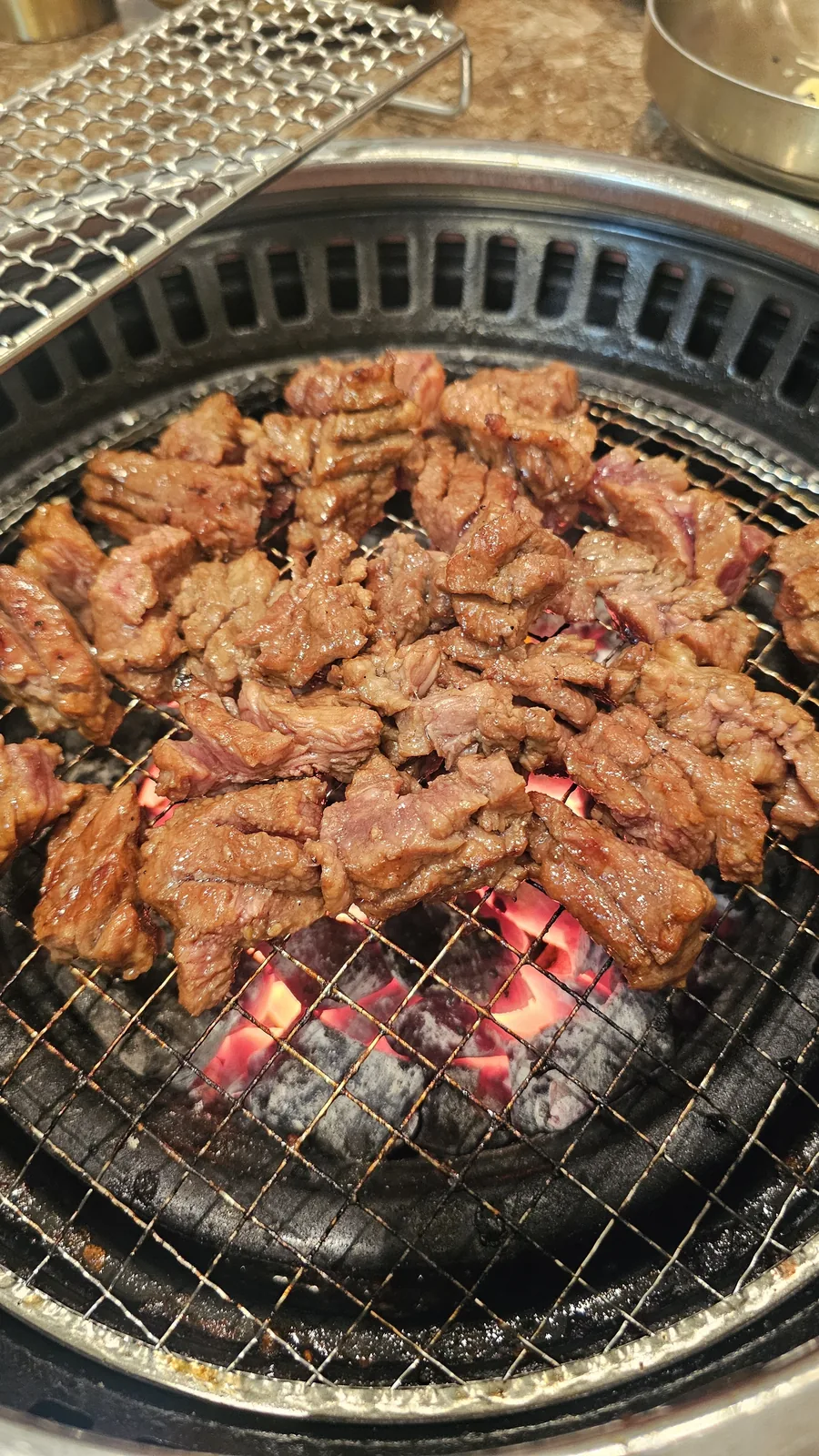
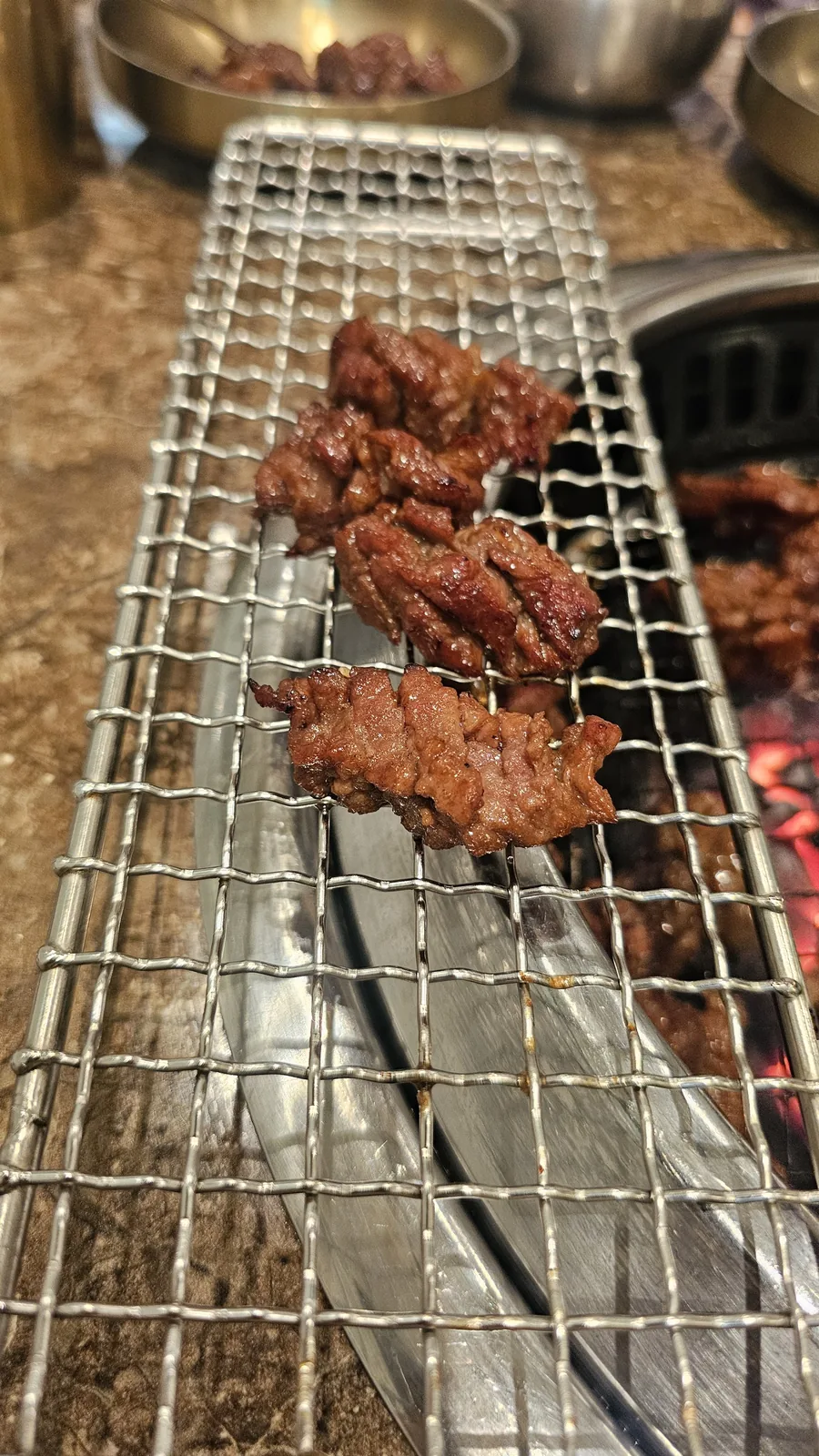
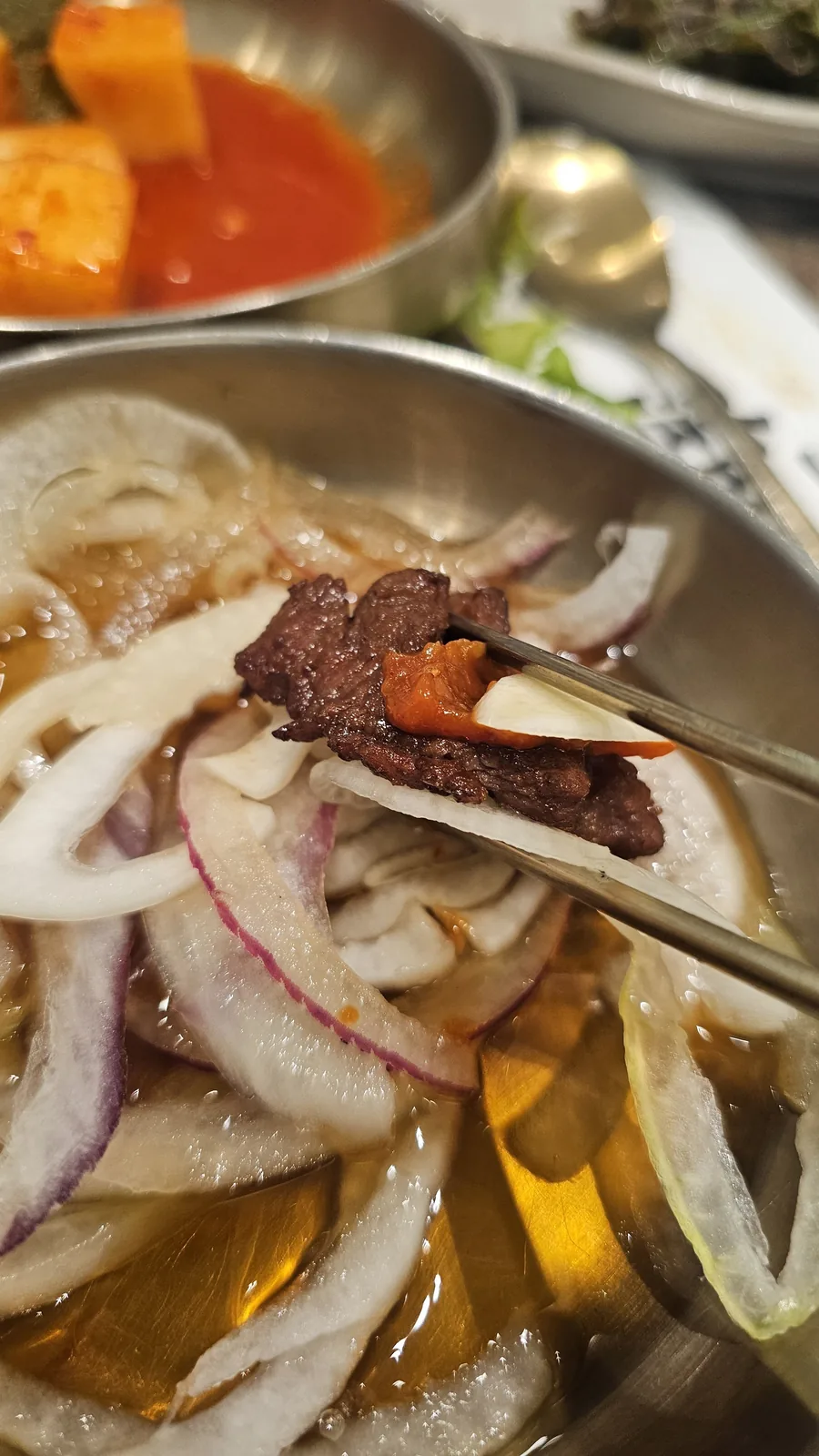
Honestly? It was decent. Not life-changing — but clean, properly cooked, with real charcoal flavor coming through. The beef had good marbling and actual structure; these aren’t thin cuts done just for Instagram. The marinated version had the classic sweet-savory profile without being overwhelmingly sweet. The unmarinated cut let the beef do the work.
You eat it with a bowl of steamed rice and cycle through the kimchi and pickled onion between bites. That’s the rhythm of a galbi meal.
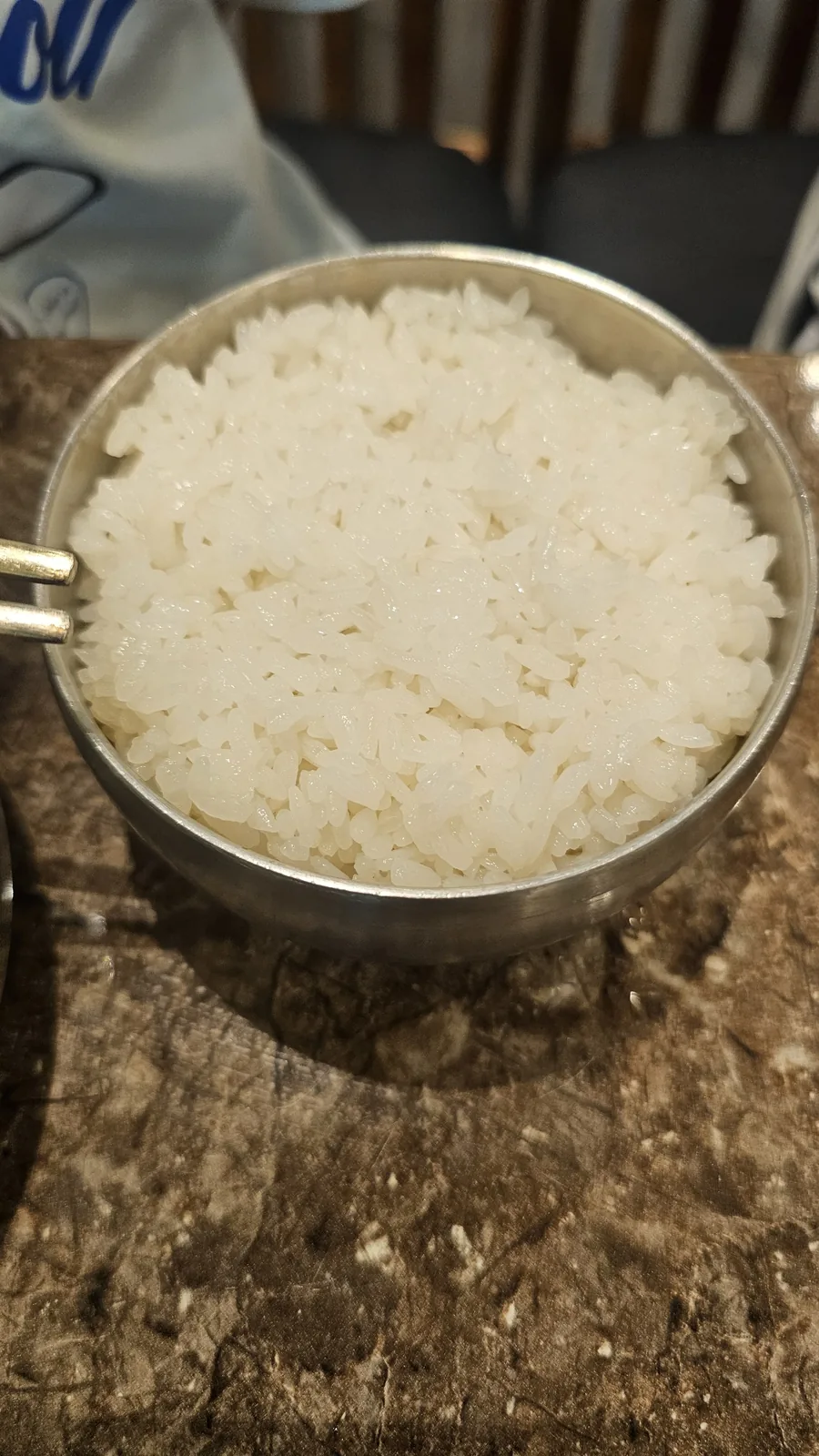
Nothing here will make you write home about the meal. But nothing about it was wrong either. Clean, solid, traditional.
The Menu
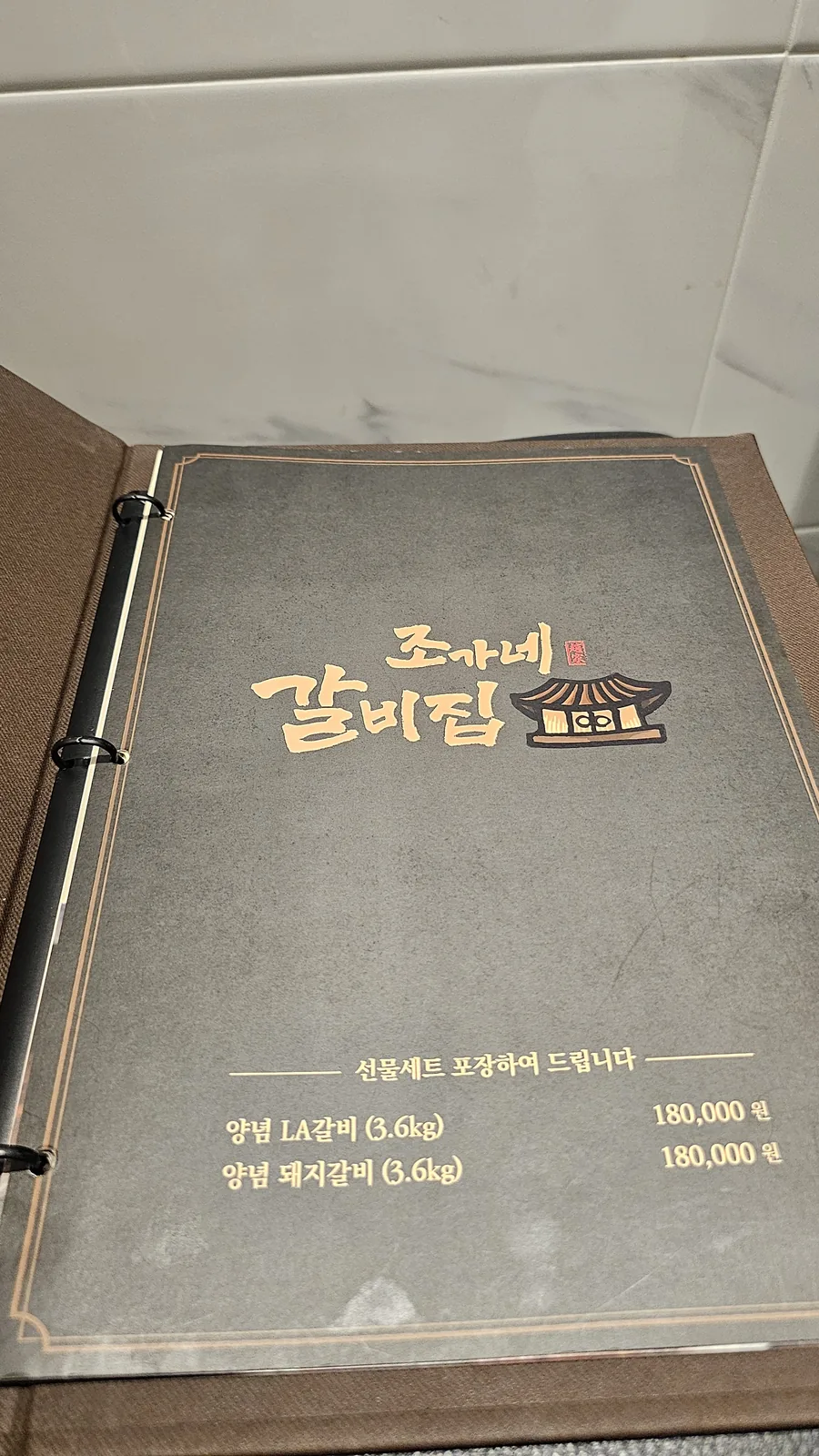
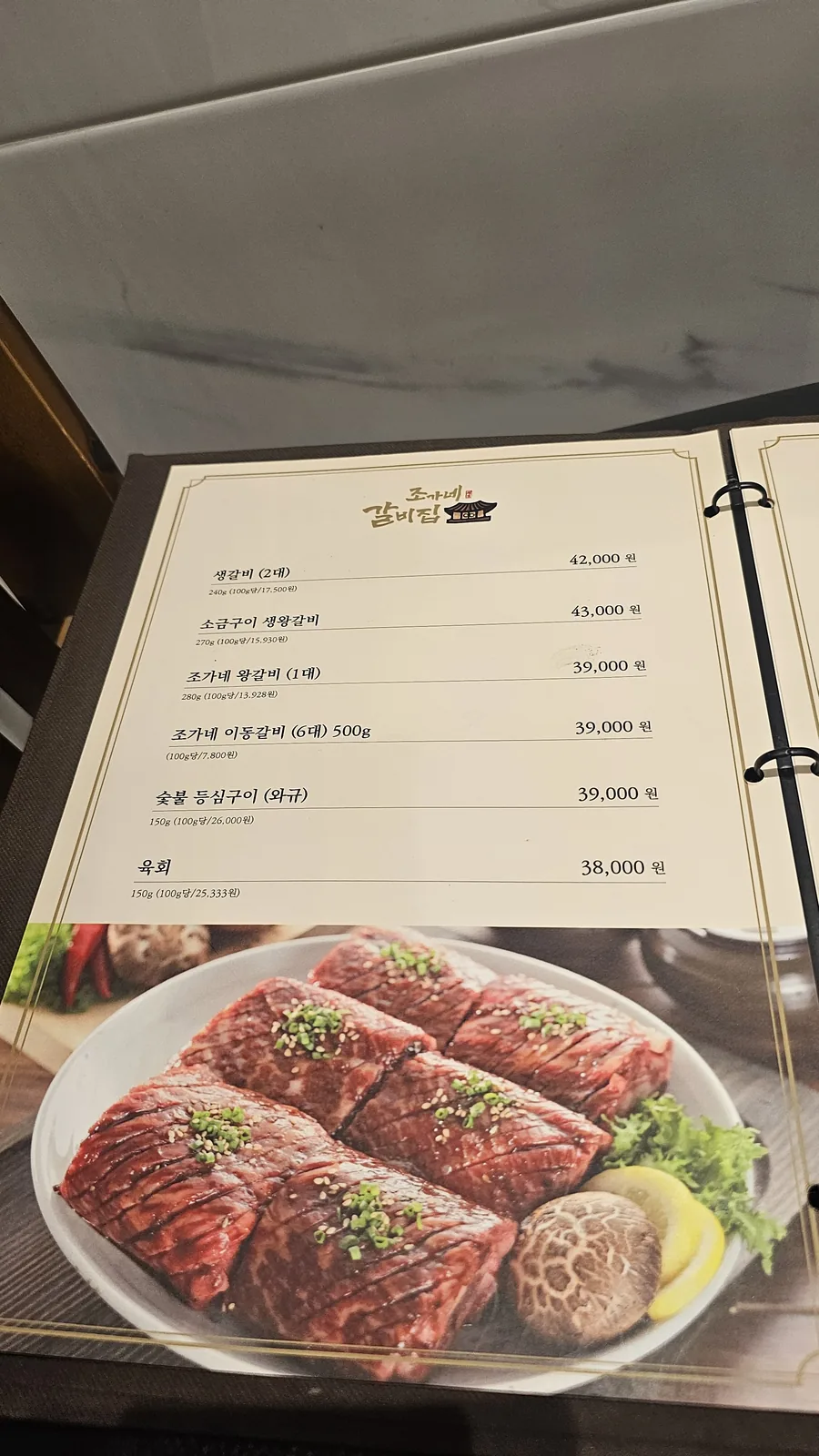
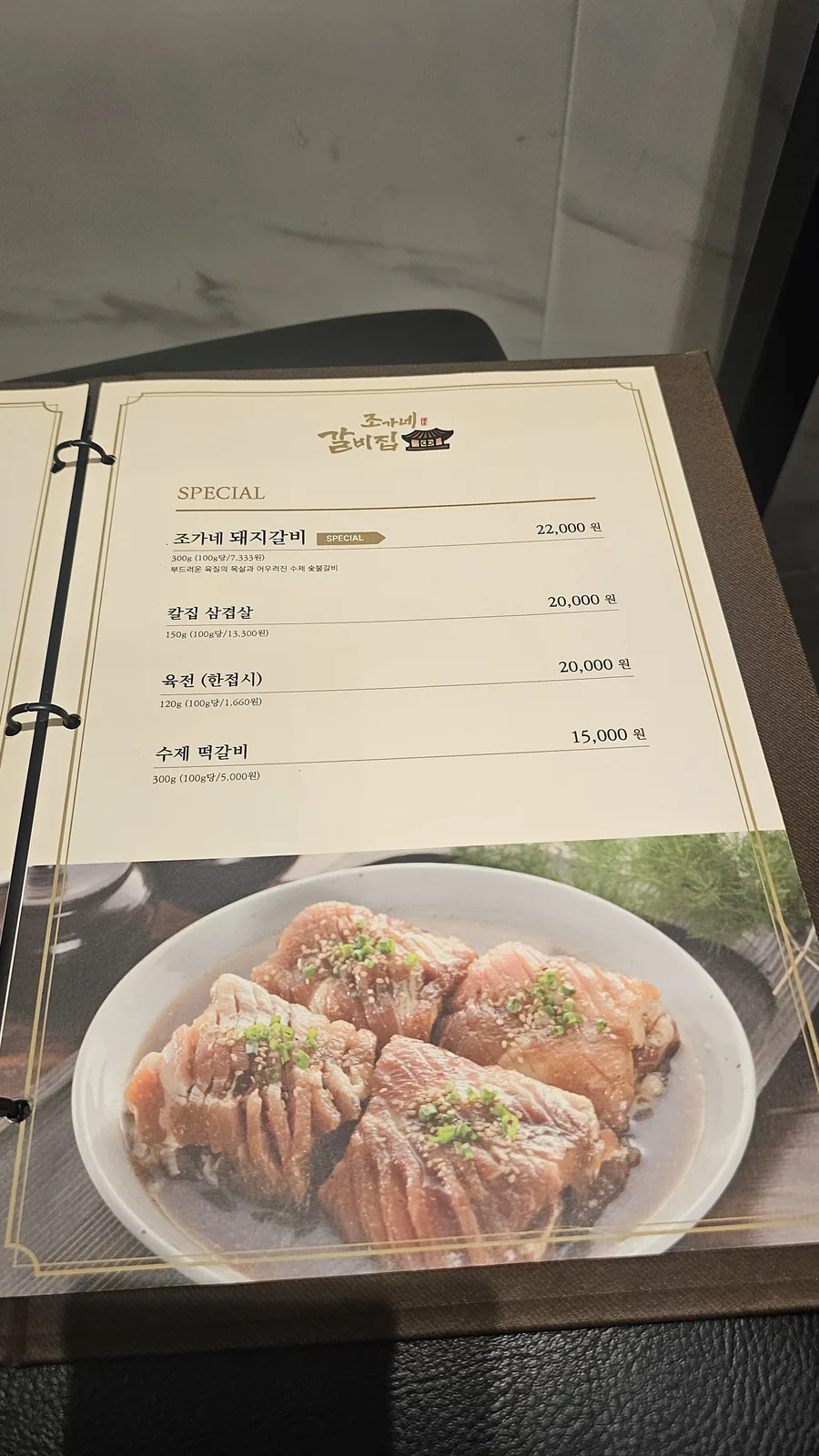
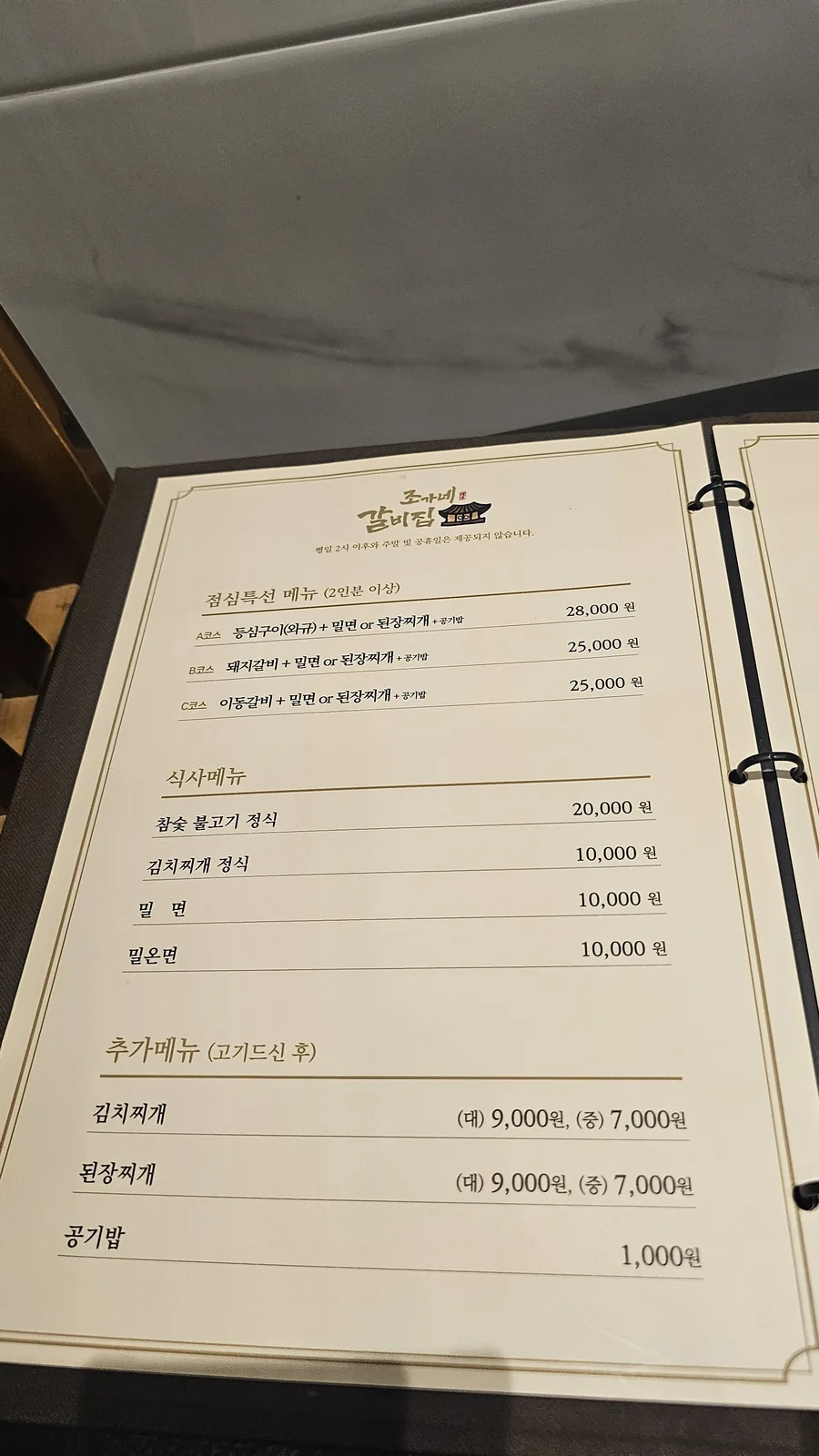
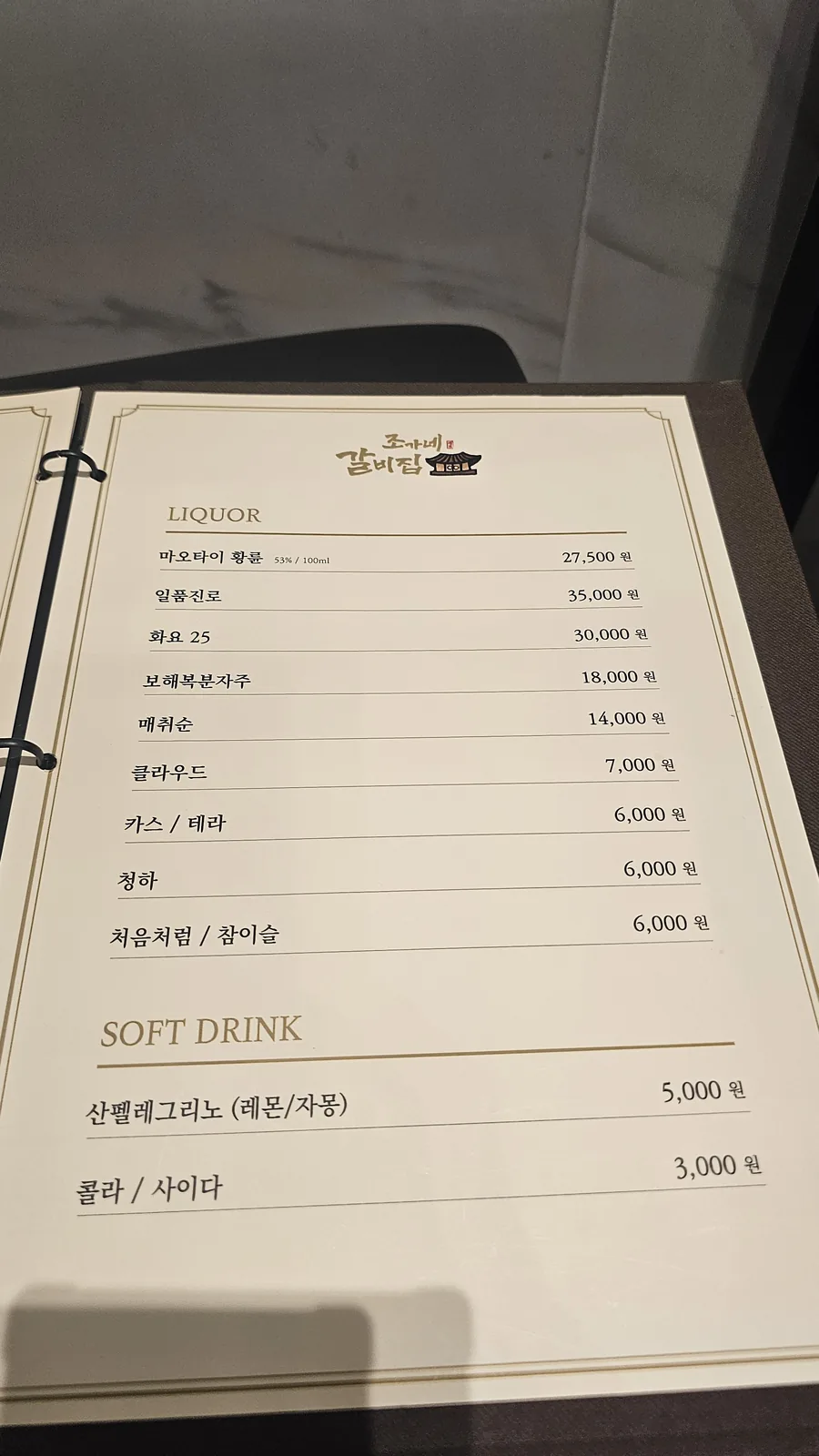
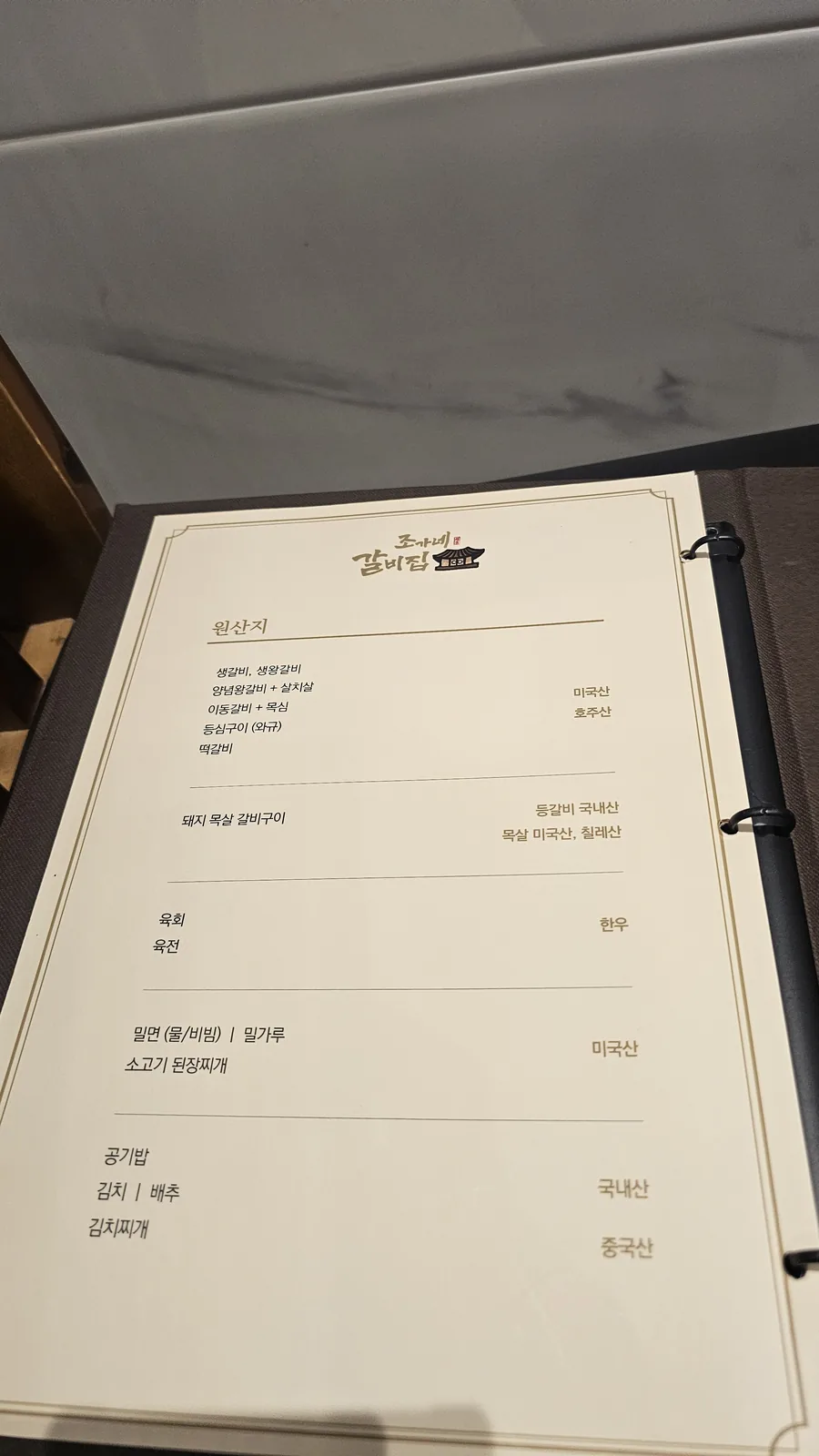
What you can order beyond galbi:
– 숯불 등심구이 (와규) — wagyu sirloin on charcoal, the premium option if budget isn’t a concern
– 육회 (Yukhoe) — Korean beef tartare. Worth ordering if you’re into raw beef; it’s seasoned with sesame oil, pear, and egg yolk
– Pork options: 조가네 돼지갈비 (pork ribs), 칼집 삼겹살 (scored pork belly), 수제 떡갈비 (handmade pressed galbi patties)
– 육전 (Yukhoe jeon) — beef pancake, battered and pan-fried, more like a Korean beef crepe than a Western pancake
– Lunch sets (weekdays): three course options (A, B, C) at different price points
They also do takeout gift sets — marinated LA galbi and pork galbi at 180,000 KRW (~$133 USD) for 3.6kg if you want to bring some home.
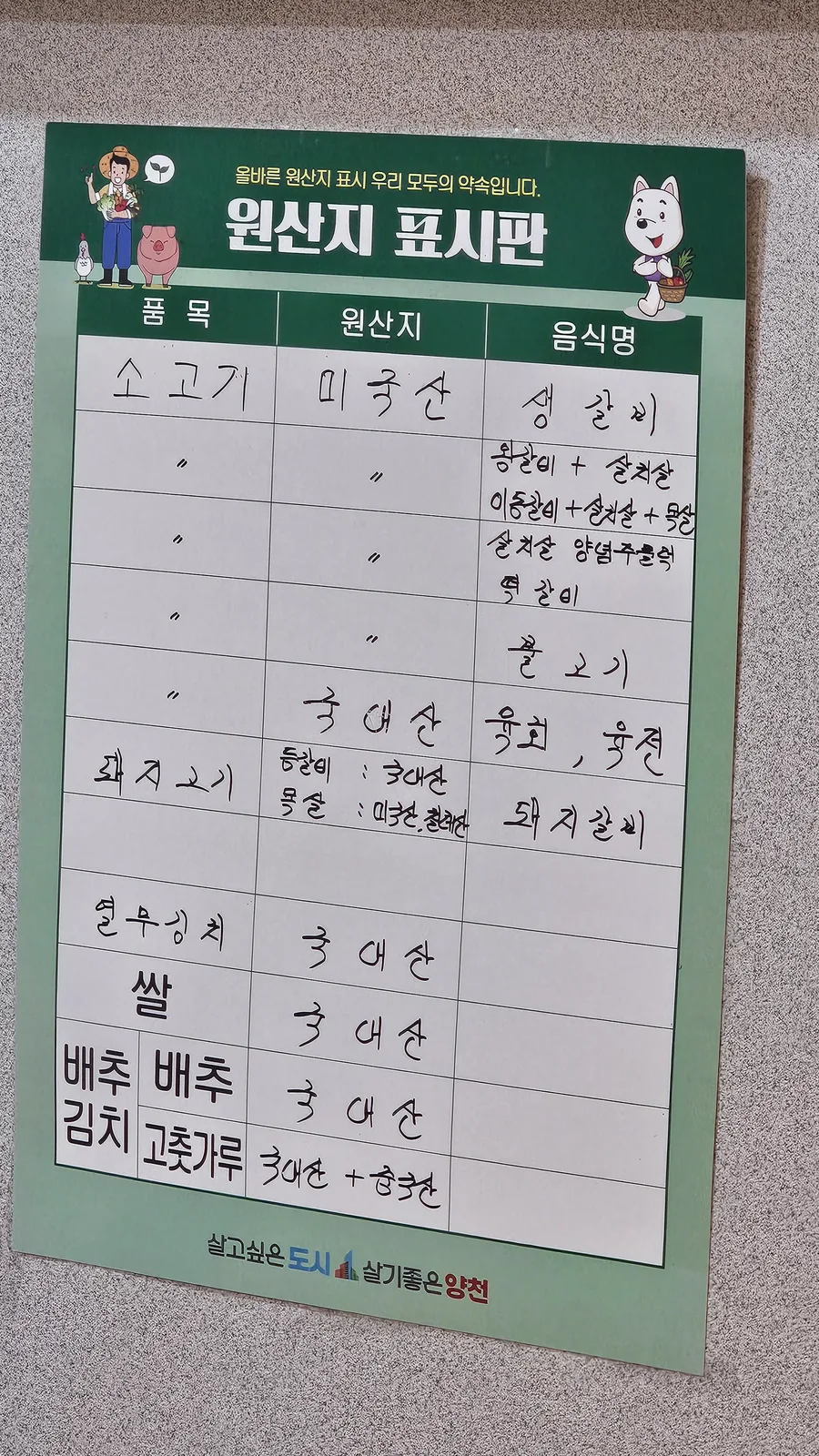
One thing worth knowing: the origin notice confirms beef is imported from the USA and Australia, pork is domestic Korean. This is fairly standard for Korean BBQ restaurants operating at this level.
Stuff Tourists Should Know
Language: English menu doesn’t appear to be available, but the menu has pictures. Point-and-order works fine. “이걸로 주세요” (ee-geo-ro joo-seh-yo) = “I’ll have this one.” Staff English is likely limited.
Payment: Foreign credit cards (Visa, Mastercard) are generally accepted at restaurants like this, but it’s worth having some KRW cash as backup. Korea is largely cashless but always good to have a fallback.
Tipping: None. Tipping is not part of Korean culture — it can actually create an awkward situation. Pay the bill, say 감사합니다 (gam-sa-ham-ni-da / thank you), and go.
Smoke: Real charcoal means real smoke. The ventilation works but your hair and jacket will smell like galbi by the end. If you have plans after, keep that in mind.
Vegetarian: The side dishes are mostly plant-based, but this is fundamentally a meat restaurant. Not a great fit for vegetarians, and no halal certification.
Kids: Family-friendly setup — booth seating, mild side dishes, relaxed vibe. Keep an eye on kids near the open charcoal fire at the table.
Comparing charcoal galbi in western Seoul? Read our Galbidorak Guro: Honest Review of Korean Master Chef BBQ for another restaurant, this time in Guro.
The Verdict
Good traditional charcoal galbi. Not the kind of place you build a Seoul itinerary around, but if you’re in Mokdong or anywhere in western Seoul, it’s a solid dinner. The hanok interior is a genuine bonus — it adds something to the experience beyond the food itself.
Go if:
– You’re in Mokdong or nearby (Yeouido, Gangseo, Yangcheon) and want proper galbi
– You want real charcoal over a proper brazier, not a gas plate
– You’re with family or a group looking for a comfortable traditional meal
Skip if:
– You’re staying in central Seoul — the travel time isn’t worth it when there are comparable galbi options closer to tourist areas
– You’re on a tight budget — this is not cheap
– You want the most exciting food experience you can find in Seoul — there are more interesting options for that kind of trip
Would I come back? Probably yes, if I’m in the area. It’s a reliable restaurant for a reliable meal. That’s not a small thing.
FAQ
What should I order at Jogane Galbi in Mokdong?
The 왕갈비 (Wang Galbi / King Galbi) is their signature — thick-cut bone-in beef short ribs grilled over real charcoal. If you want to try both styles, get one order of unmarinated (saeng galbi) and one of the Idong-style marinated.
How much does it cost per person at Jogane Galbi?
Expect to spend around 35,000–50,000 KRW ($26–$37 USD) per person for a proper galbi meal with rice and side dishes. It’s on the pricier side compared to average Korean BBQ chains, but you’re paying for real charcoal and thicker cuts.
Is English available at Jogane Galbi Mokdong?
The menu doesn’t appear to have an English version, but it has photos — point-and-order works fine. Staff English is likely limited, but you’ll manage.
Do I need a reservation at Jogane Galbi Mokdong?
For weekend dinner, calling ahead or checking their Naver Place page is safer. Weekday evenings are more forgiving, but they do fill up.
Is Jogane Galbi kid-friendly?
Yes — booth seating, plenty of mild side dishes, and a relaxed family atmosphere. Just keep kids away from the open charcoal brazier at the table.
Is there vegetarian food at Jogane Galbi?
This is a meat-focused restaurant. The side dishes (kimchi, japchae, salad, vegetables) are mostly vegetarian-friendly, but the main menu is all meat. Not a good fit for vegans or strict vegetarians.