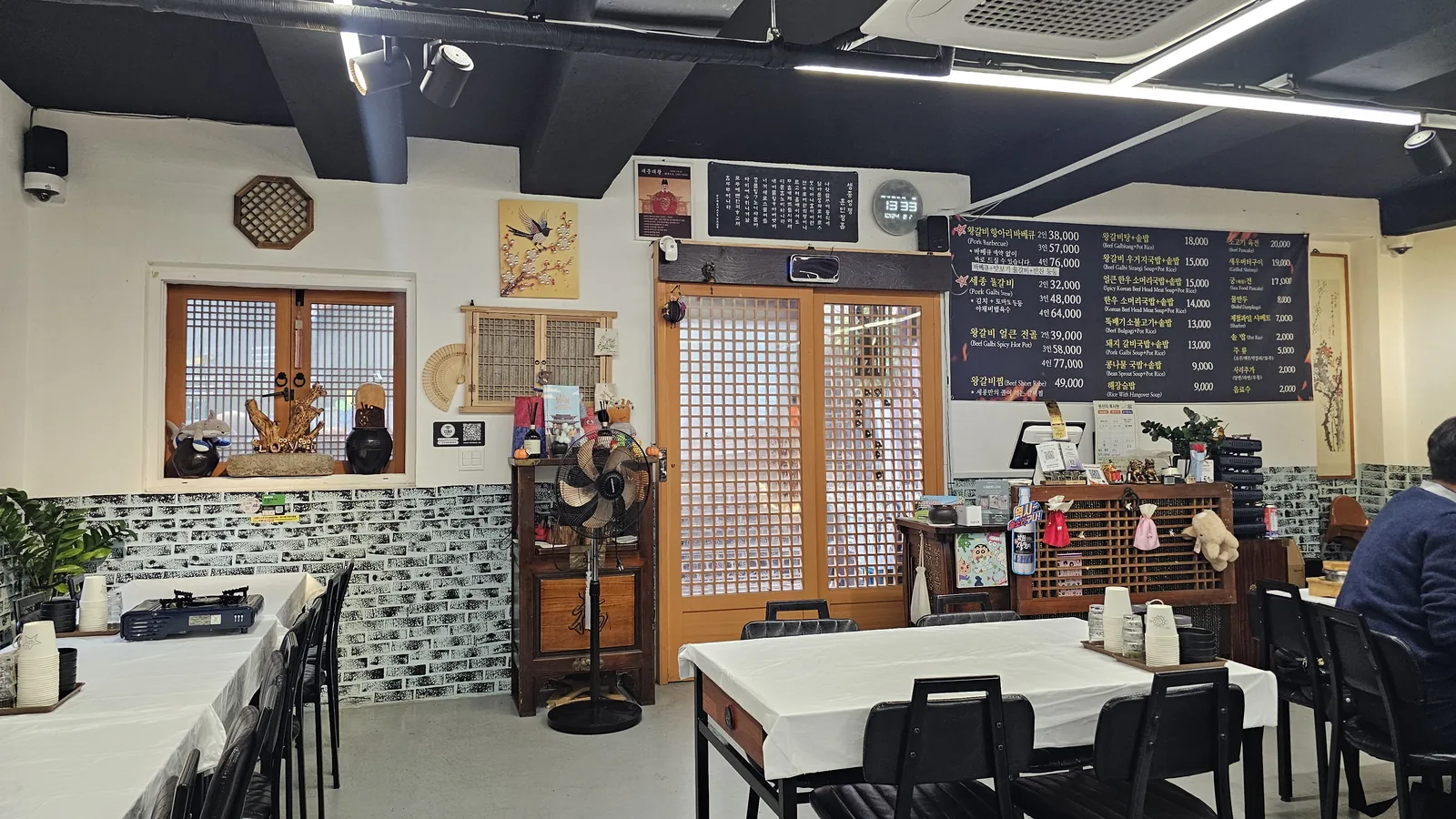
Quick honest review of Sejong Daewang Hangari BBQ in Jeonju Hanok Village. Short version: the mulkalbi is clean and genuinely good, the sotbap is a nice ritual to end the meal, and this is one of the better galbi stops if you’re spending a day in Jeonju. It’s my second visit. I came back on purpose.
What Is Mulkalbi?
Quick explainer before we get into it.
Most Korean galbi (ribs) you’ve probably seen falls into two categories: grilled over charcoal, or braised in a sweet soy marinade. Mulkalbi (물갈비, literally “water ribs”) is neither. It’s pork ribs cooked in a light broth-based sauce on a tabletop pan — pale, not red, not sticky-sweet. Bean sprouts, enoki mushrooms, and sliced green onion cook down in the broth alongside the meat.
The flavor is clean. Savory without being heavy. That’s the whole point.
It doesn’t photograph as dramatically as charcoal BBQ. It also doesn’t leave you feeling like you ate a bucket of lard, which I appreciate at lunch.
Jeonju Hanok Village: Quick Context
Jeonju (전주) is in the southwest of Korea, about 1 hour 40 minutes from Seoul on the KTX. Jeonju Hanok Village (전주한옥마을) is the city’s most visited area — 735 preserved traditional buildings (hanok, 한옥), narrow alleys, and a serious food culture.
Jeonju is genuinely one of Korea’s top food cities. Bibimbap (비빔밥) put it on the map, but locals will tell you the galbi and kongnamul gukbap (bean sprout soup) are worth the trip too.
If you have a spare day here, eating your way through the village is the right call. Most of the restaurants are within easy walking distance of each other.
The Restaurant
Full name: 세종대왕항아리바베큐 — roughly translates to “King Sejong Earthenware Jar BBQ.” King Sejong (세종대왕) is one of Korea’s most revered historical figures, creator of the Korean alphabet. The hangari (항아리) refers to the large traditional earthenware jars used for fermenting kimchi and doenjang — the restaurant uses the aesthetic to reinforce the traditional angle.
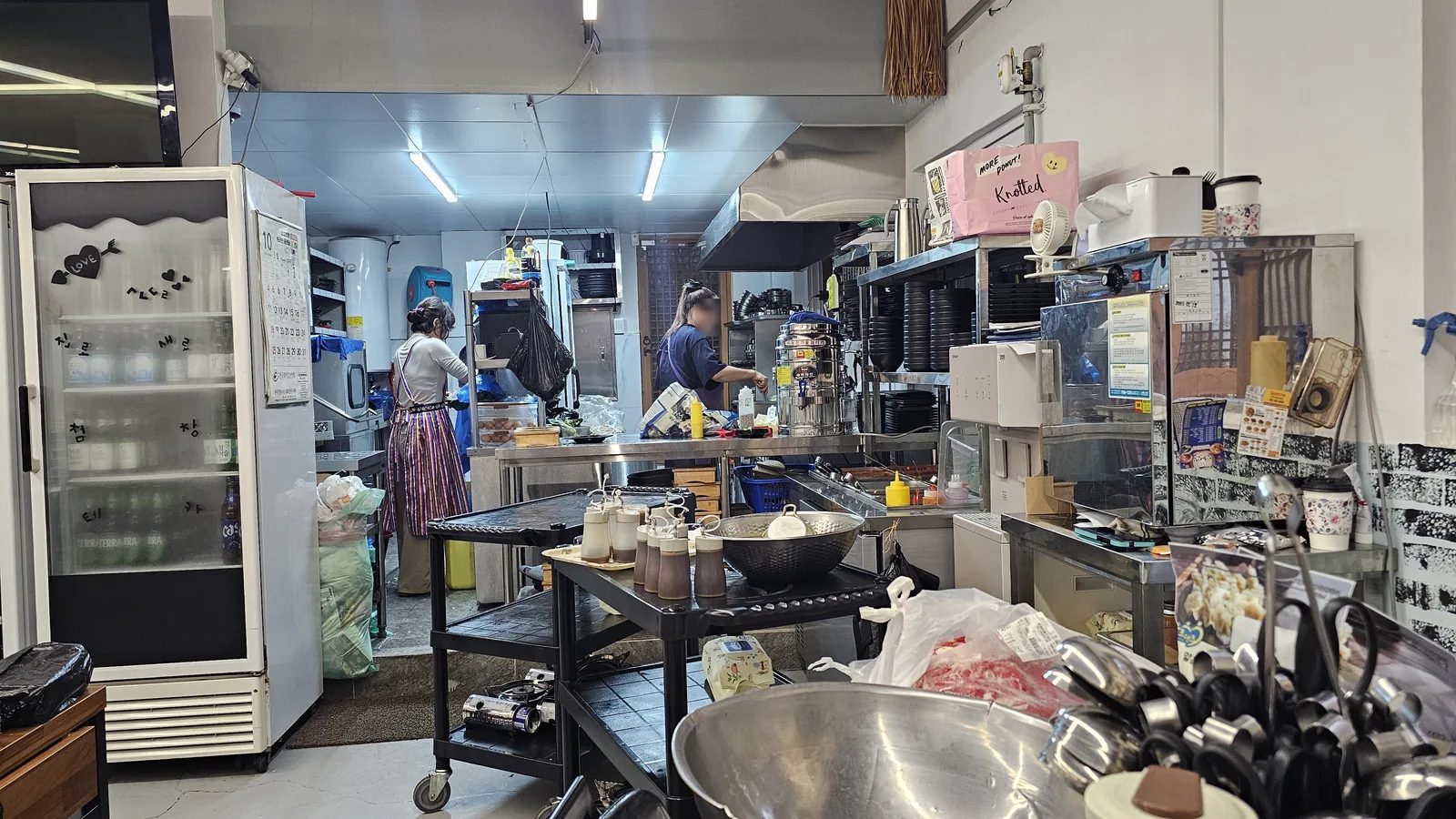
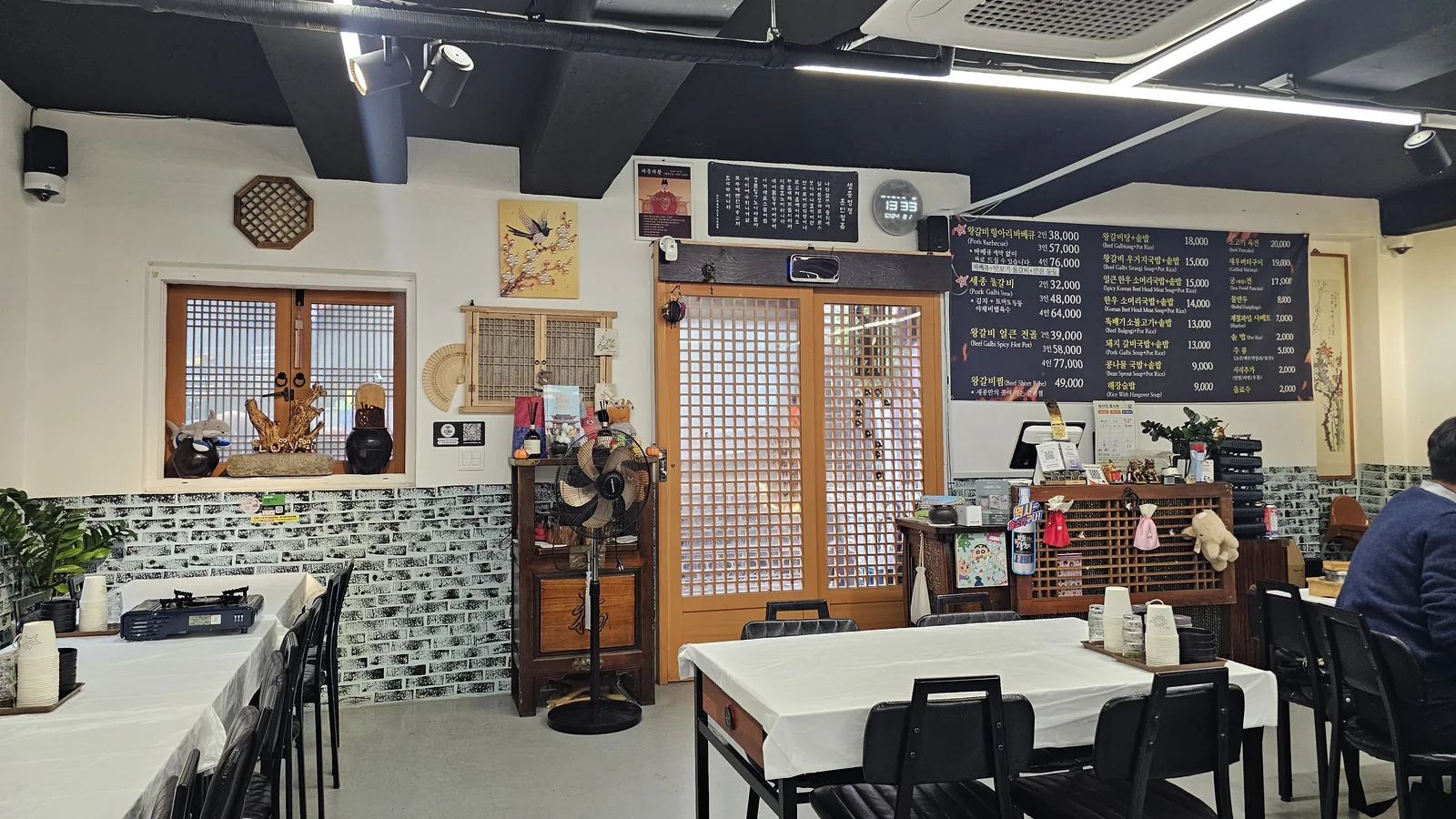
Interior is clean and traditional-feeling without overdoing it. Lattice window frames (창호 style), earthen-toned decor, open kitchen where you can see prep happening. White disposable tablecloths on the tables — practical, given that galbi cooking involves broth splatter.
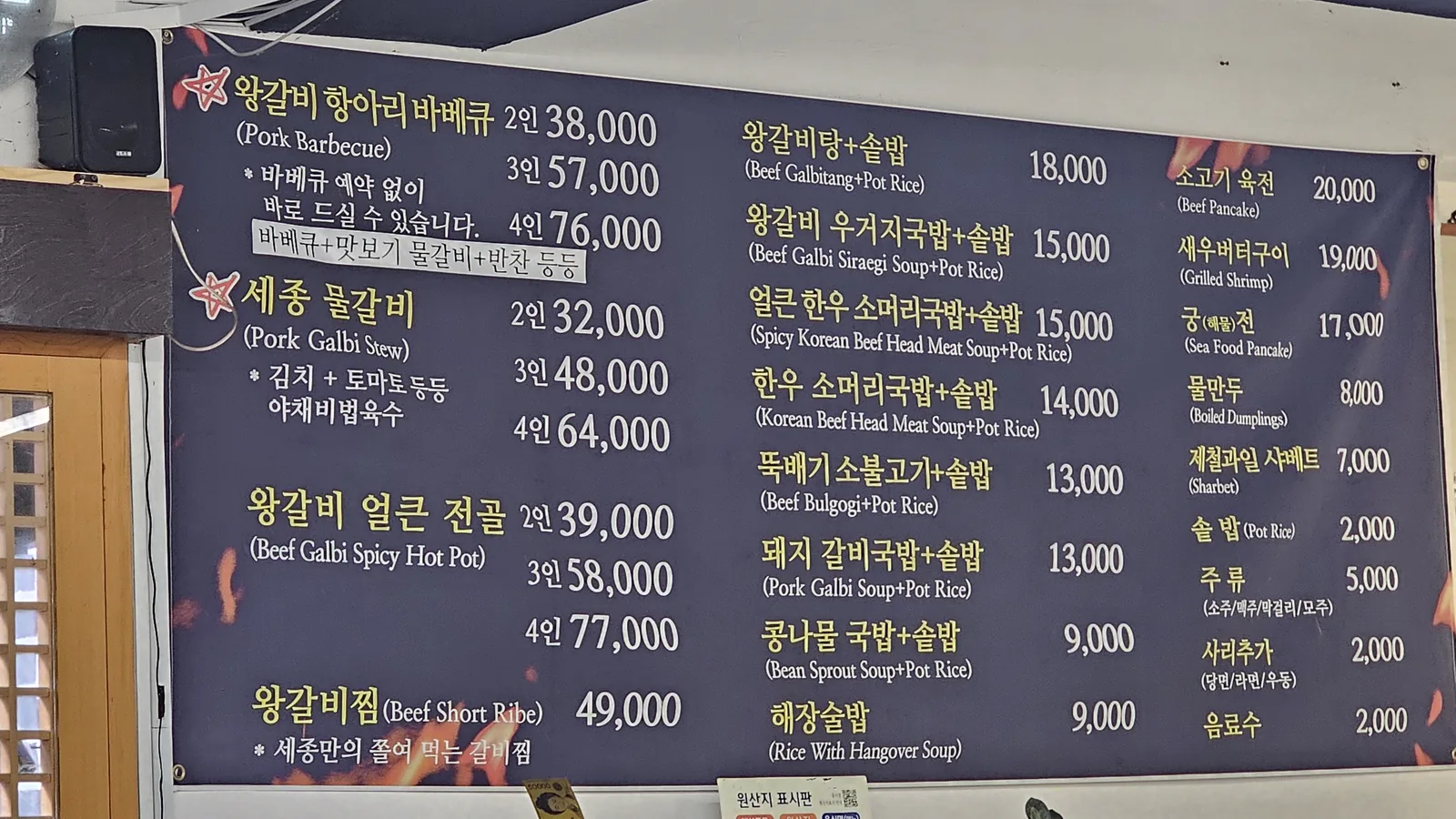
Menu is in Korean. Bring a translation app or screenshot the menu board to translate on your phone. The visual menu makes it easier to point at what you want.
The Banchan
They bring the side dishes (banchan, 반찬) before the main dishes arrive.
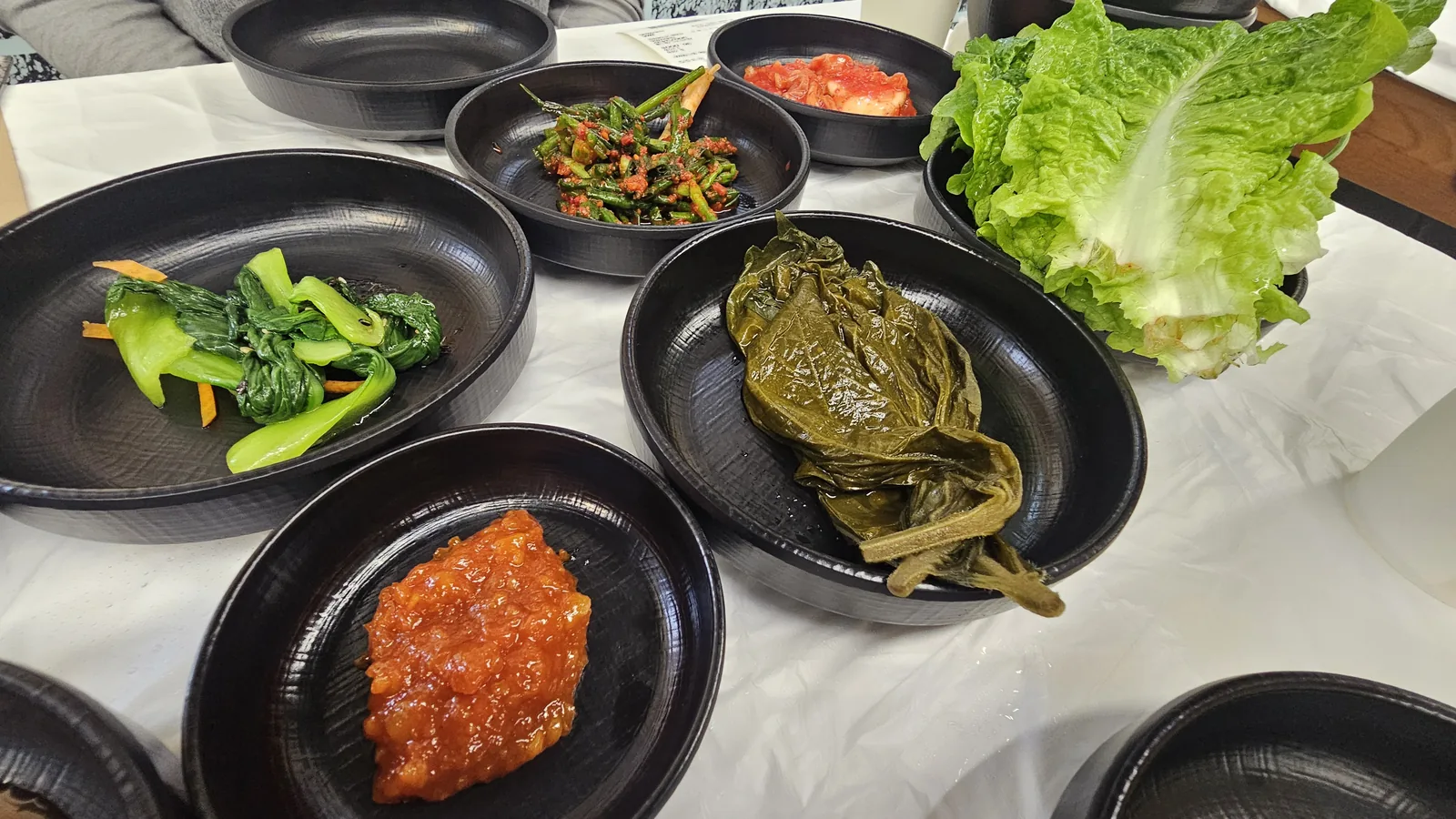
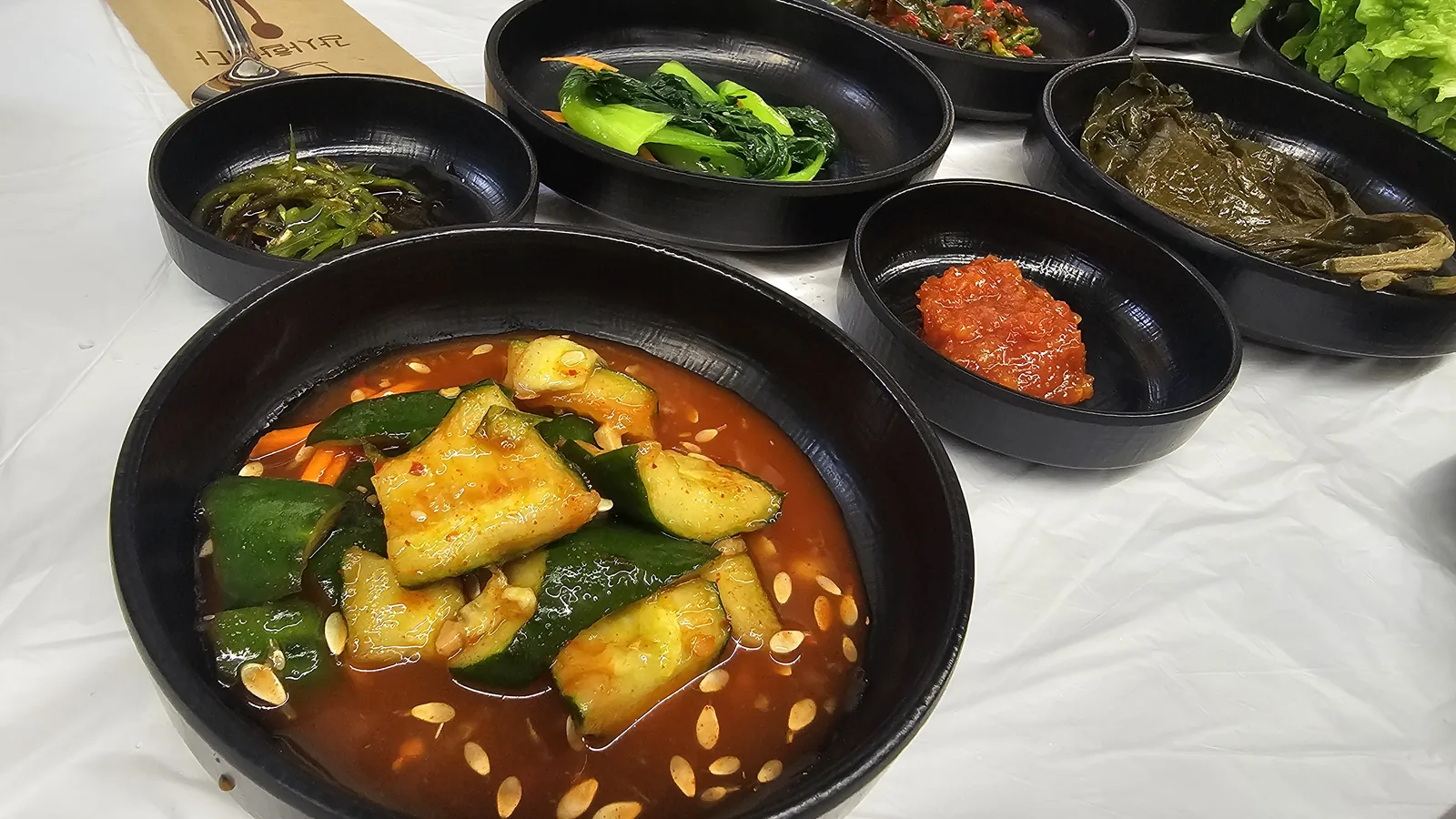
What came out: seasoned bok choy greens, pickled perilla leaves, braised cucumber, red pepper seasoning, a red sauce, and lettuce wraps for rolling bites. Nothing surprising, nothing bad. Good enough to pick at while the burner heats up.
Then — unprompted — the staff brought out dried seaweed snacks from Wando (완도 새우포 완도김) as a complimentary item.
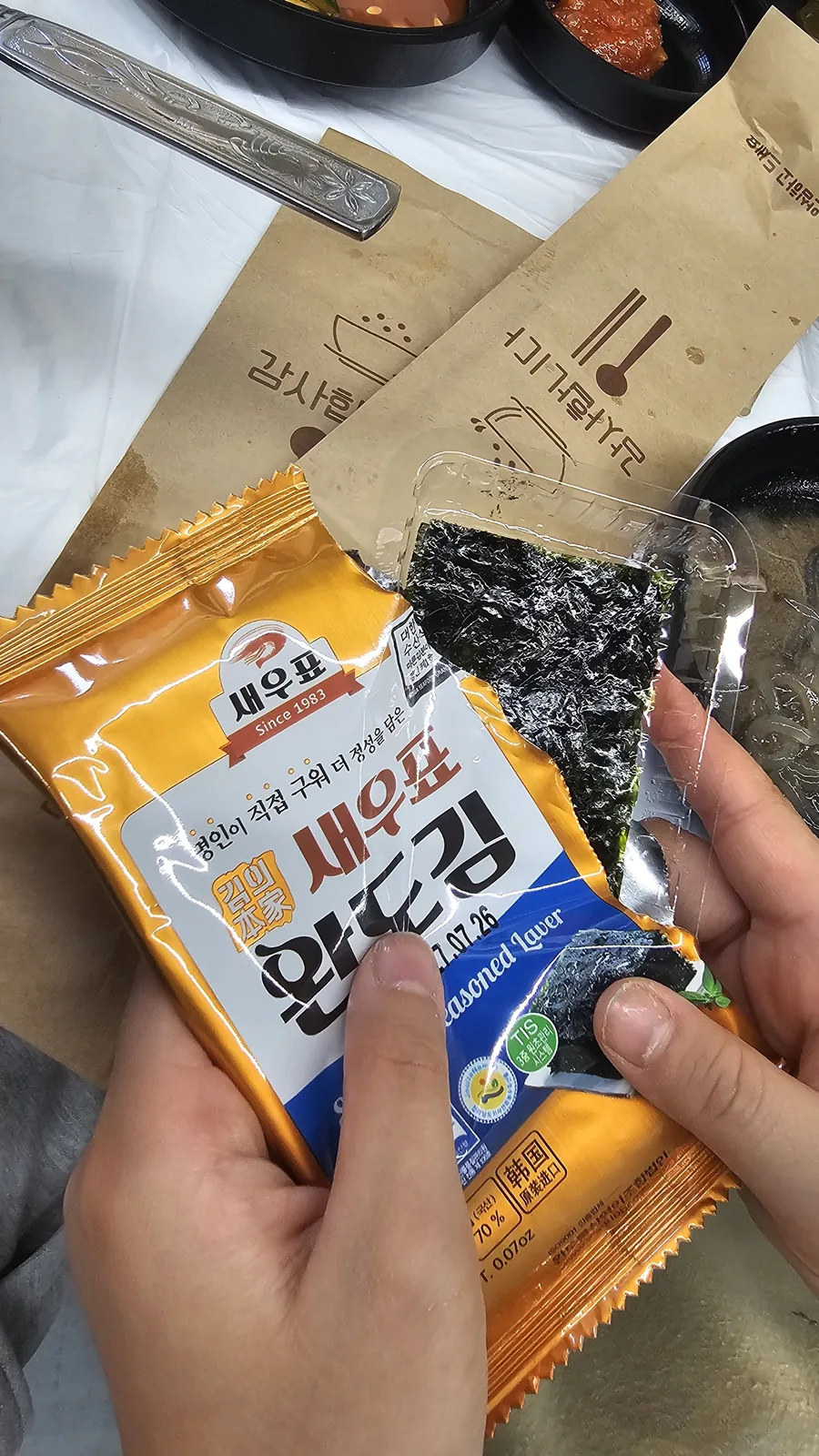
Small gesture. Appreciated.
What We Ordered
Three people. Mulkalbi (물갈비) for 2, ttukbaegi bulgogi (뚝배기불고기) for 1, and extra sotbap (솥밥) added on.
Sejong Mulkalbi (세종 물갈비)
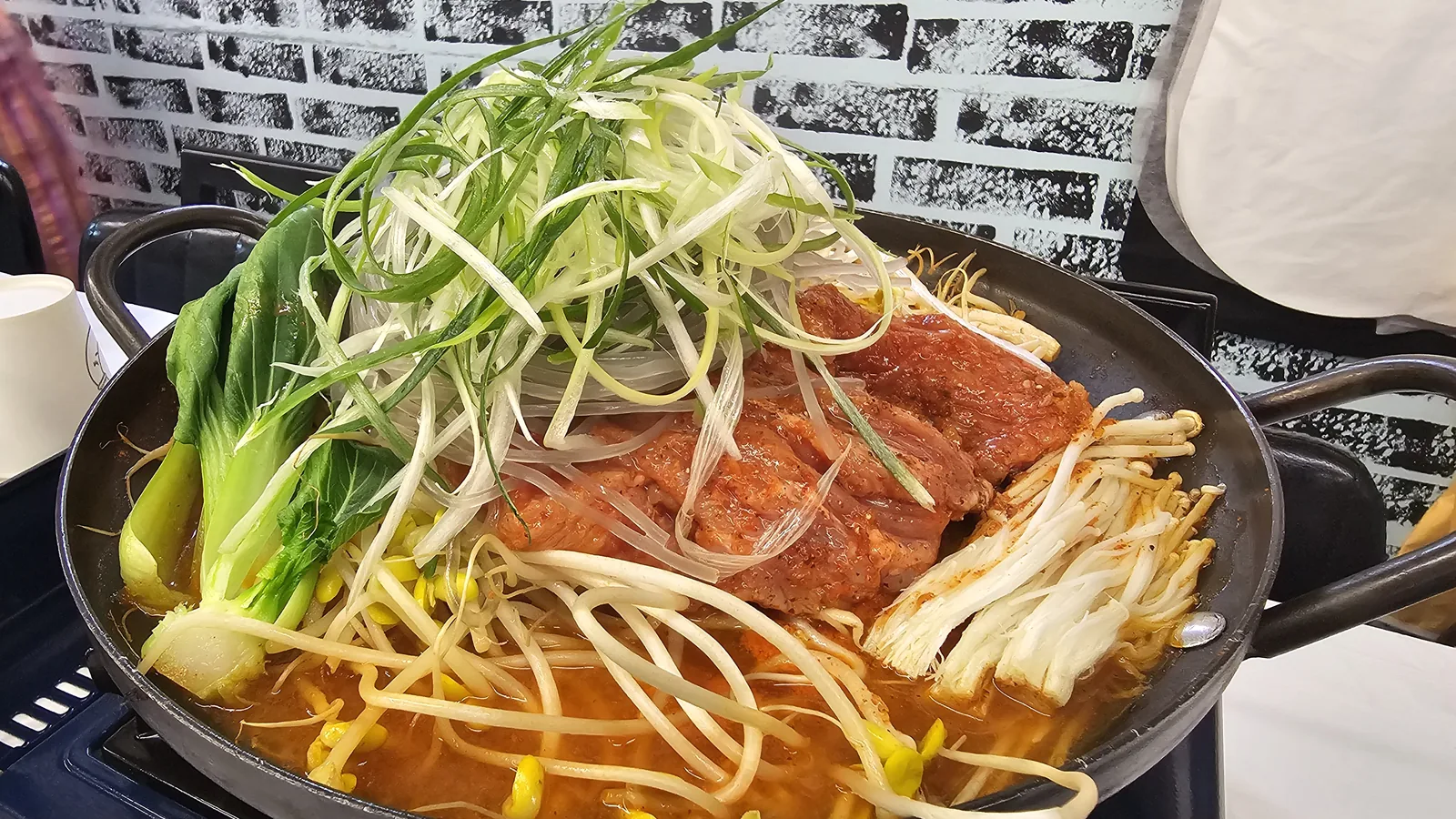
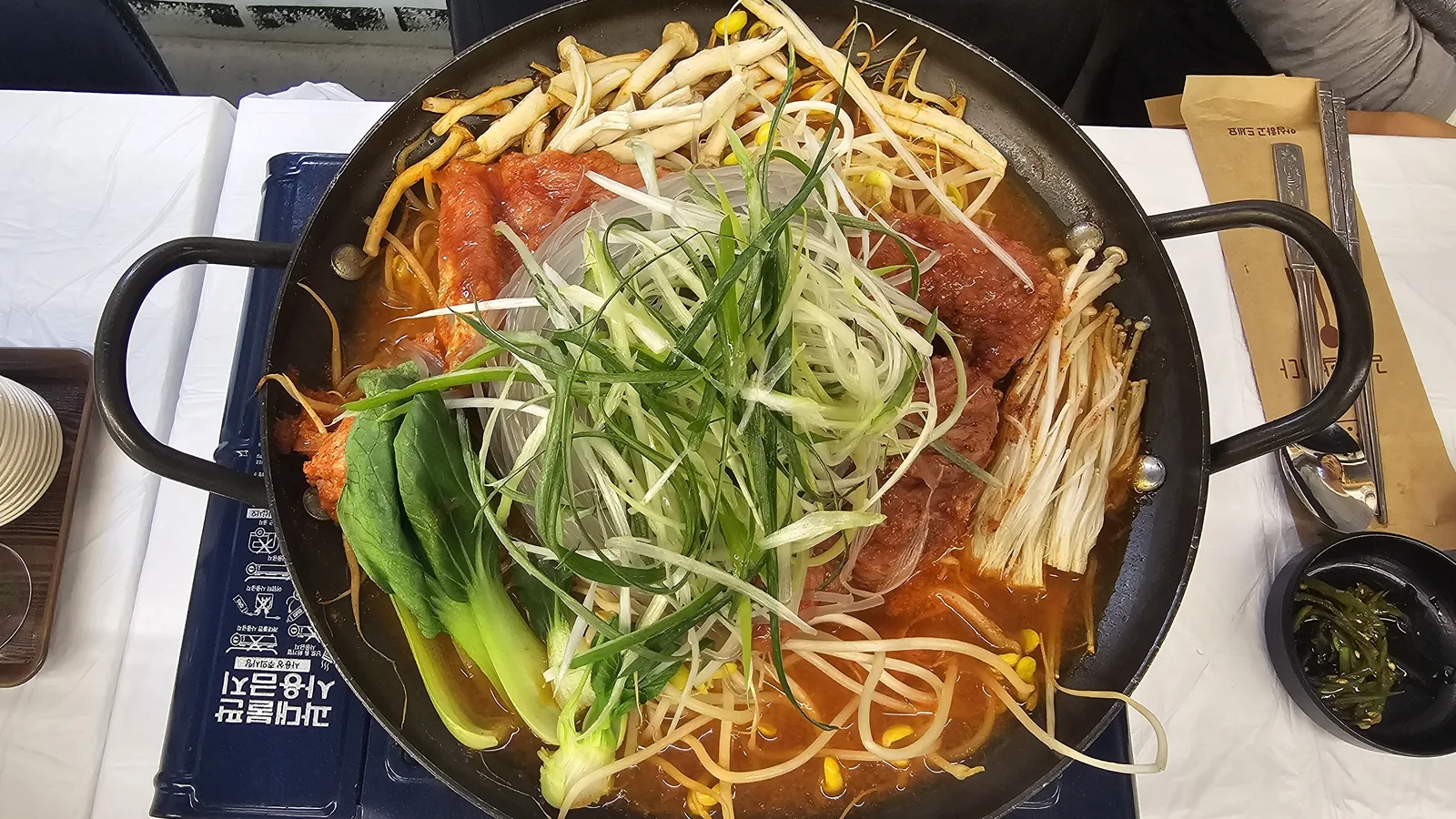
This is the one to order.
The pan arrives with pork ribs, thick-cut green onion strips, bean sprouts, enoki mushrooms, and bok choy layered over them. The sauce is pale and light — this is not a spicy dish, not a sweet dish. Once the burner gets going, the broth soaks into the vegetables and the ribs start to loosen.
The pork is tender without being mushy. The flavor is exactly what I’d call 깔끔하다 in Korean — clean, refreshing, balanced. No aggressive seasoning doing the heavy lifting. The meat carries itself.
Comfort food. Executed without fuss.
Ttukbaegi Bulgogi (뚝배기불고기)
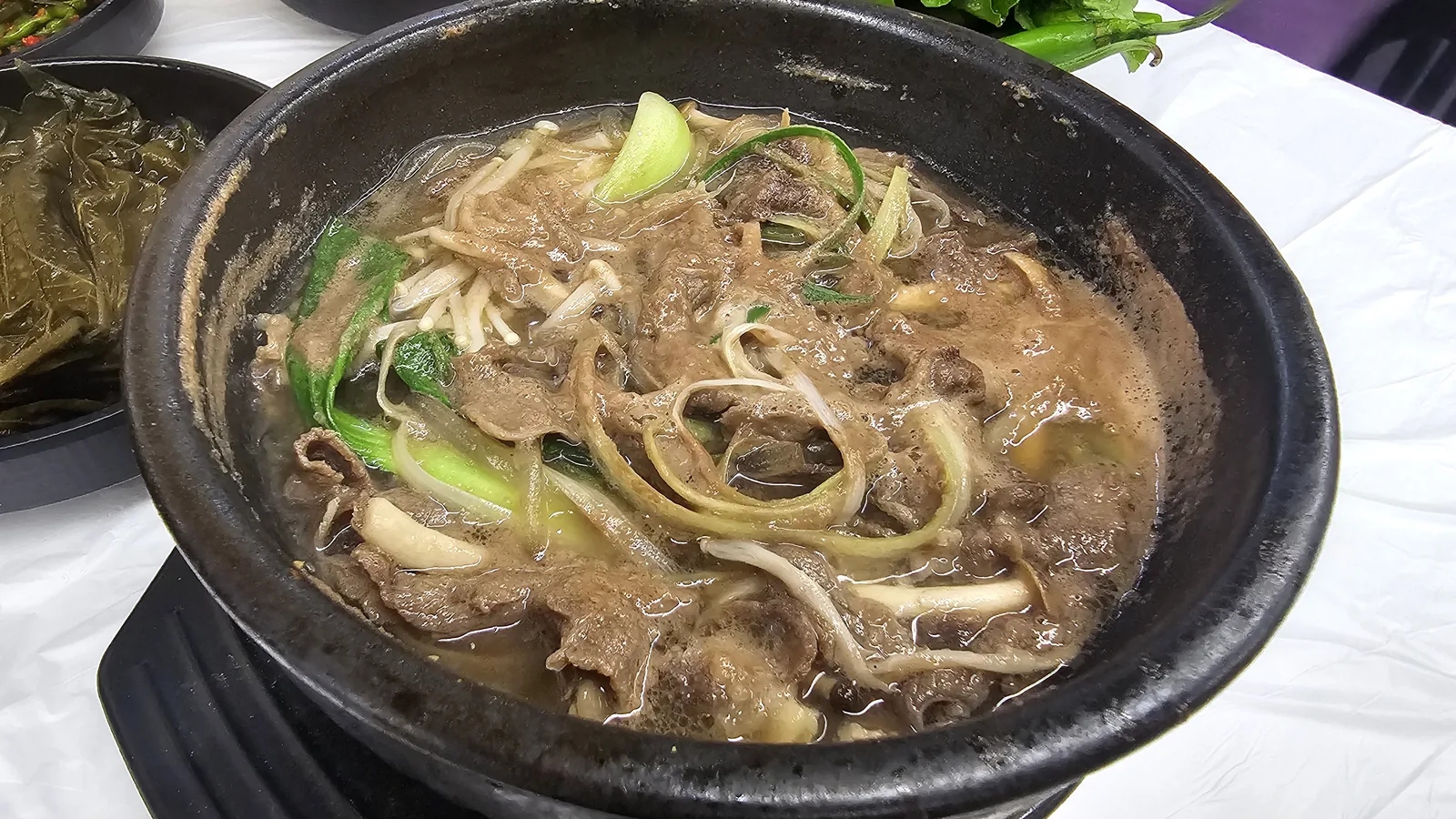
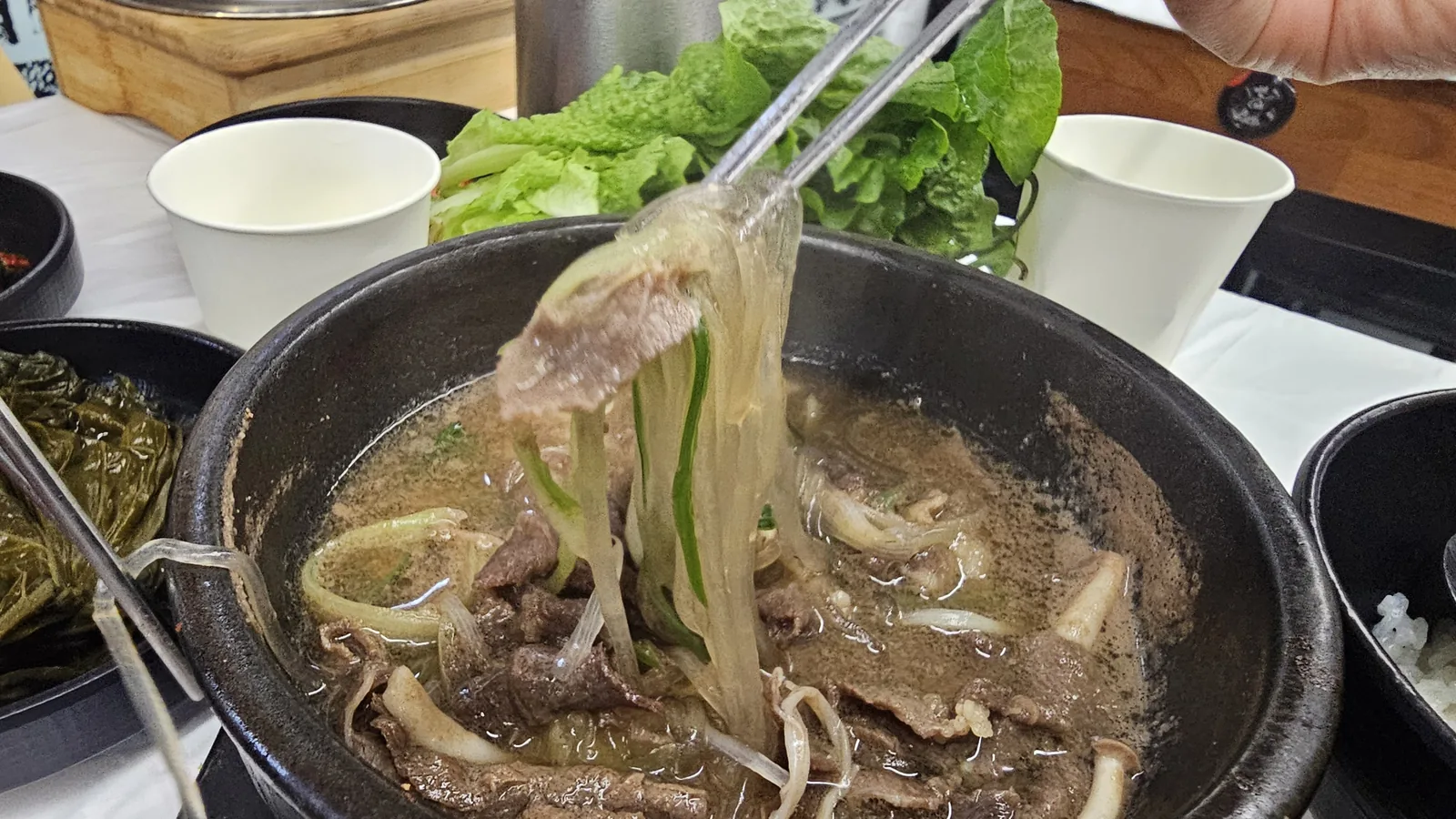
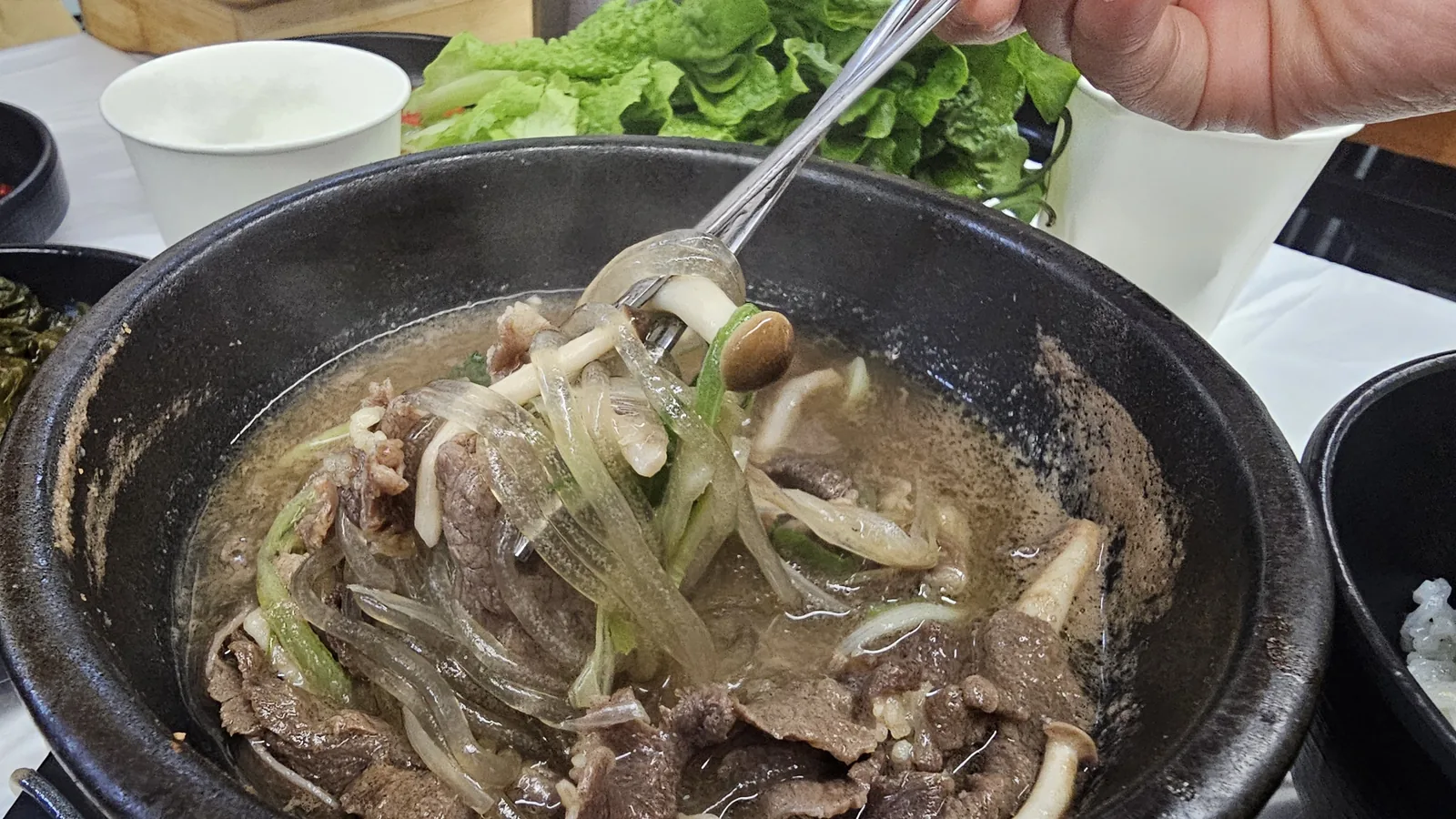
Comes in a dark stone pot (ttukbaegi, 뚝배기). Rich, deep broth — darker than the mulkalbi, more body, slightly sweet. Glass noodles (당면), mushrooms, and bok choy in there alongside the rib meat.
The glass noodles soak up the broth well. This one hits differently — warmer, more savory, closer to a soup than a stew. Good if you want something more substantial.
Spicy Galbi Stew (왕갈비 얼큰 전골)
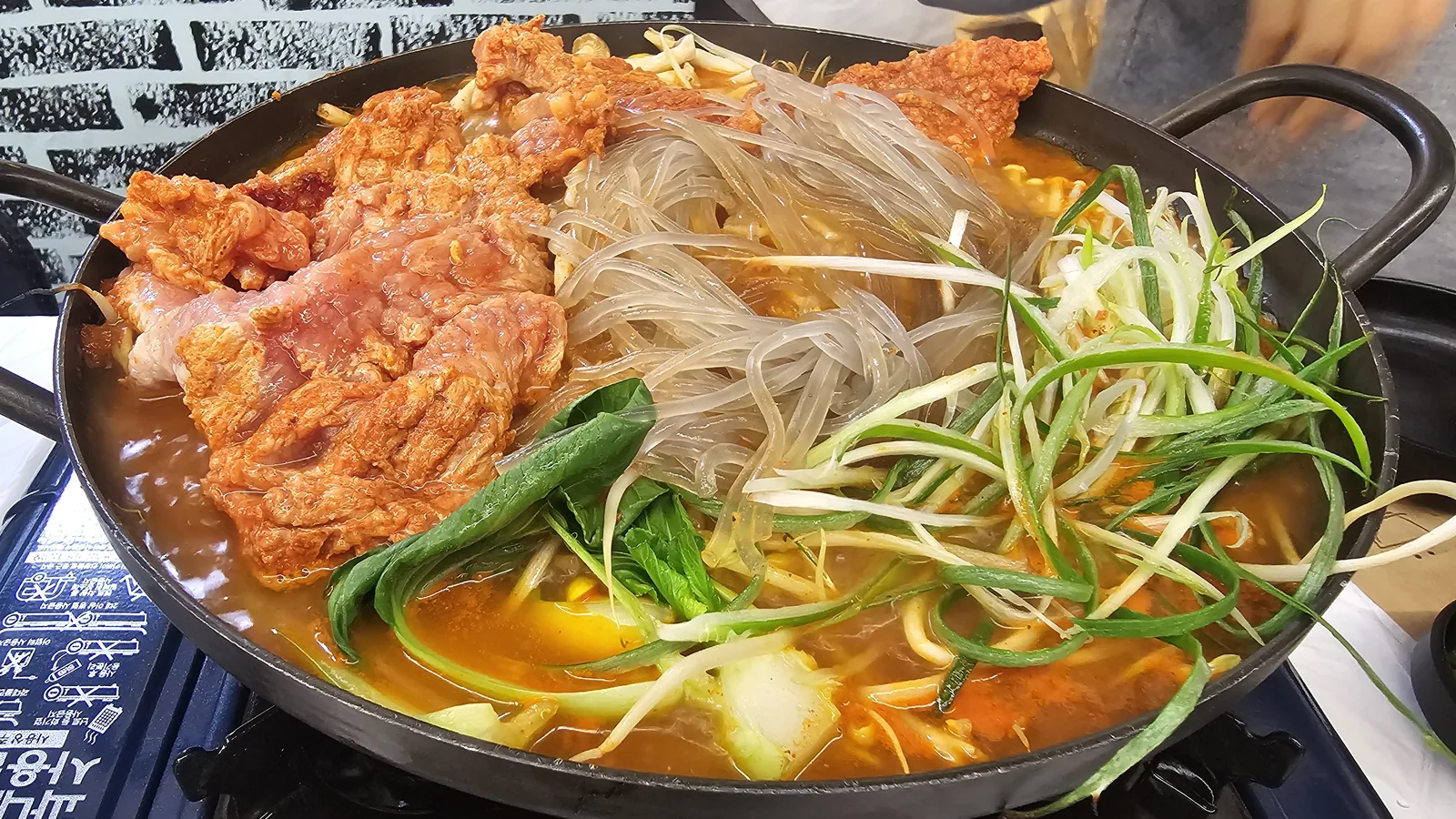
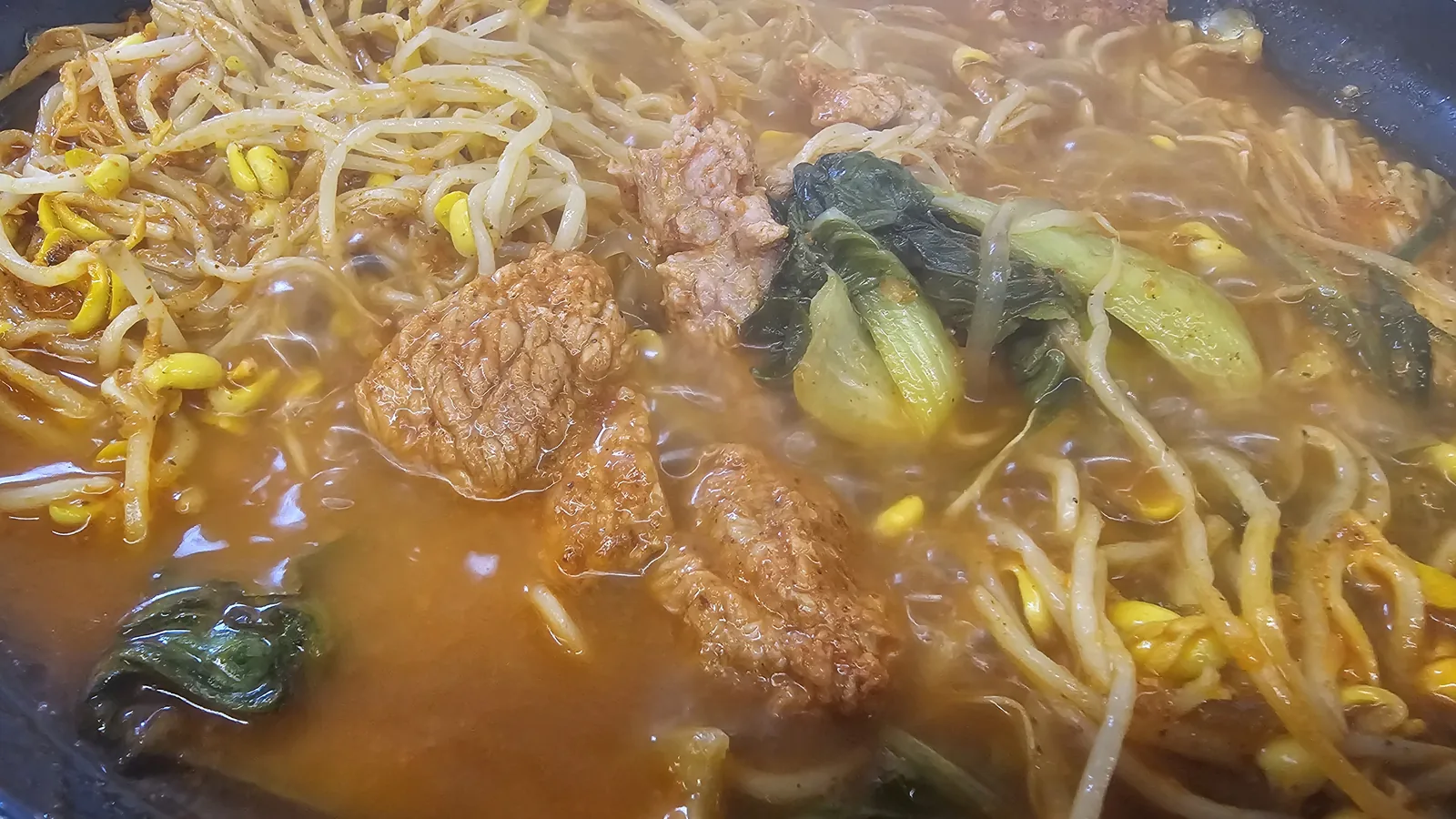
Red broth, rib meat, glass noodles, bean sprouts, bok choy. If you want heat at this table, this is where it is. The broth turns properly spicy once it’s been going a while. Not a face-melter, but enough to notice.
Good contrast against the cleaner mulkalbi.
The Sotbap Experience
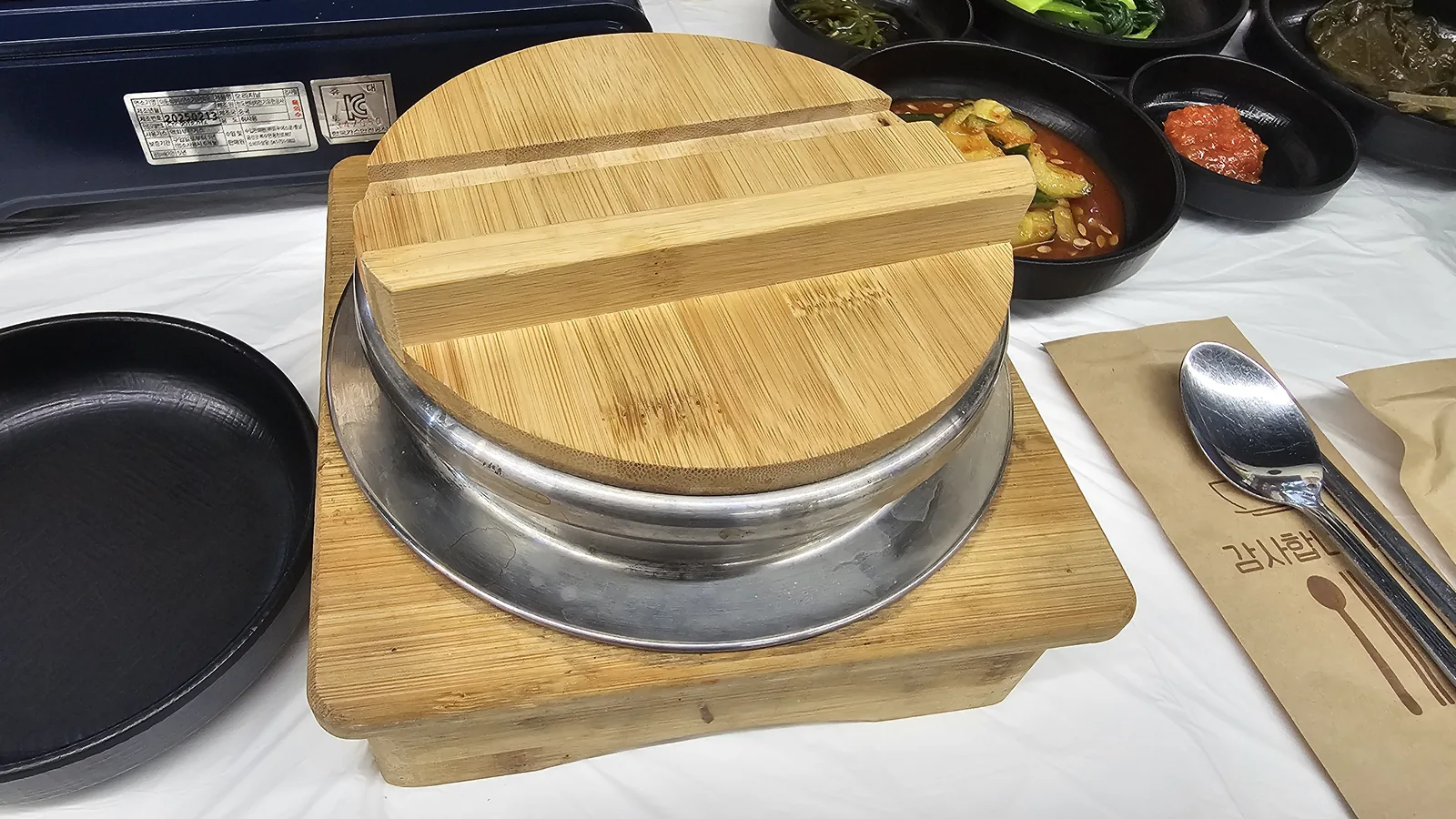
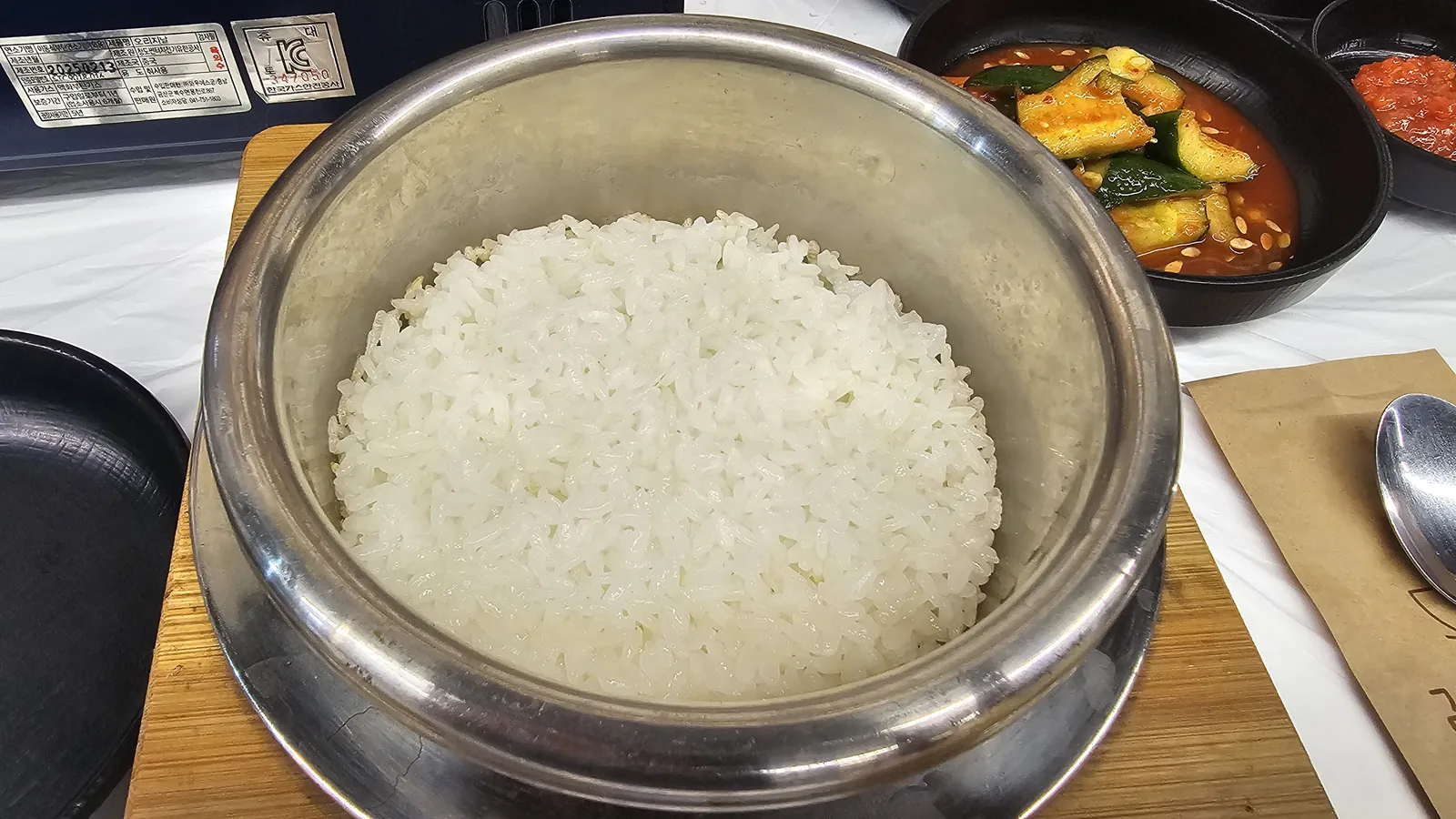
Sotbap (솥밥) — rice cooked in a small metal pot — comes to the table on a wooden board with a bamboo lid. Lift the lid and the rice is fully cooked, slightly packed, with a thin crust starting to form on the bottom.
Here’s the part tourists miss: once you’ve eaten the rice, pour hot water into the pot. The scorched rice stuck to the bottom (nurungji, 누룽지) dissolves into a lightly toasty, slightly nutty rice tea called sungnyung (숭늉). Not fancy. But it’s one of those small, distinctly Korean rituals that makes sense once you’ve done it.
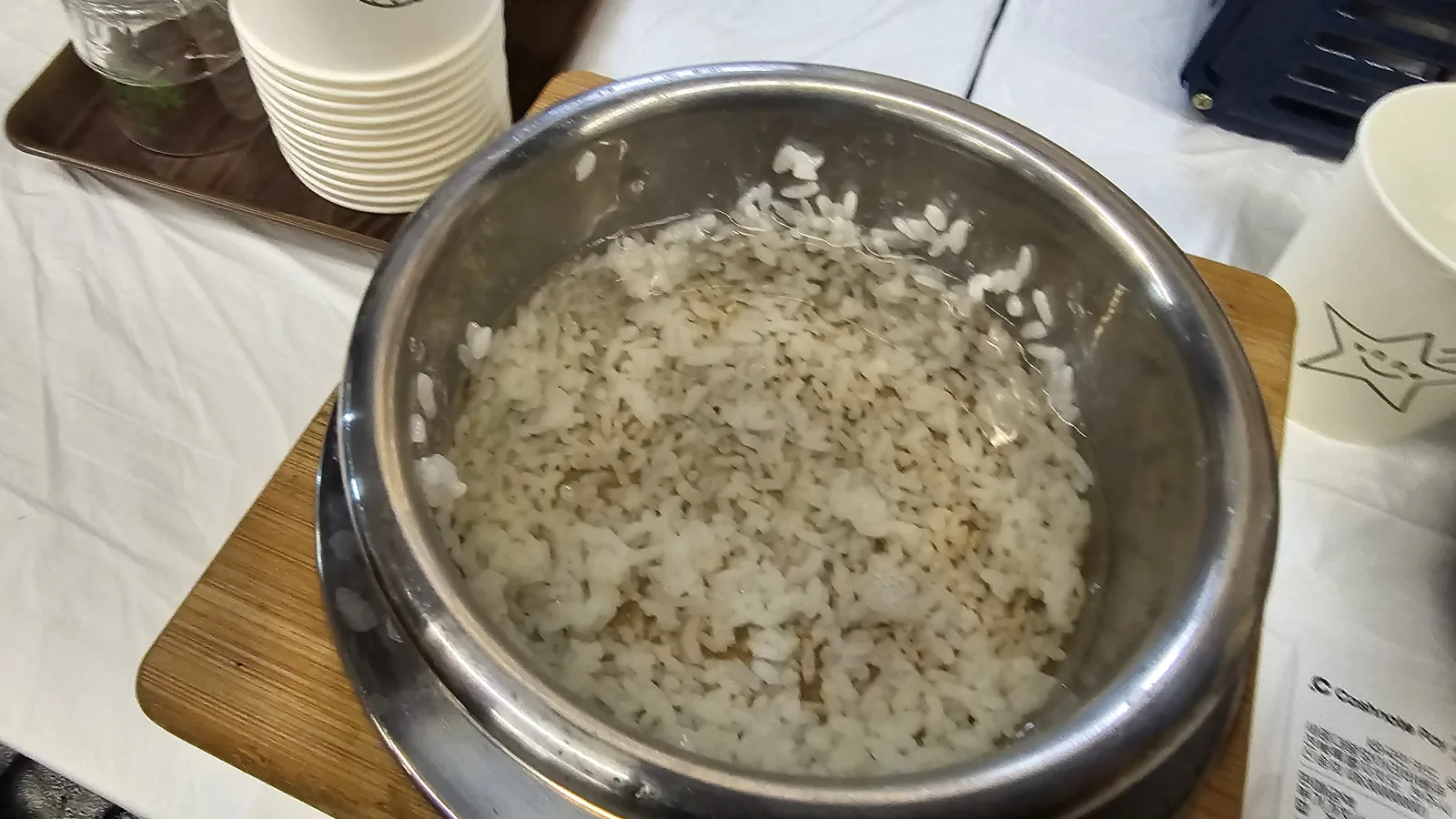
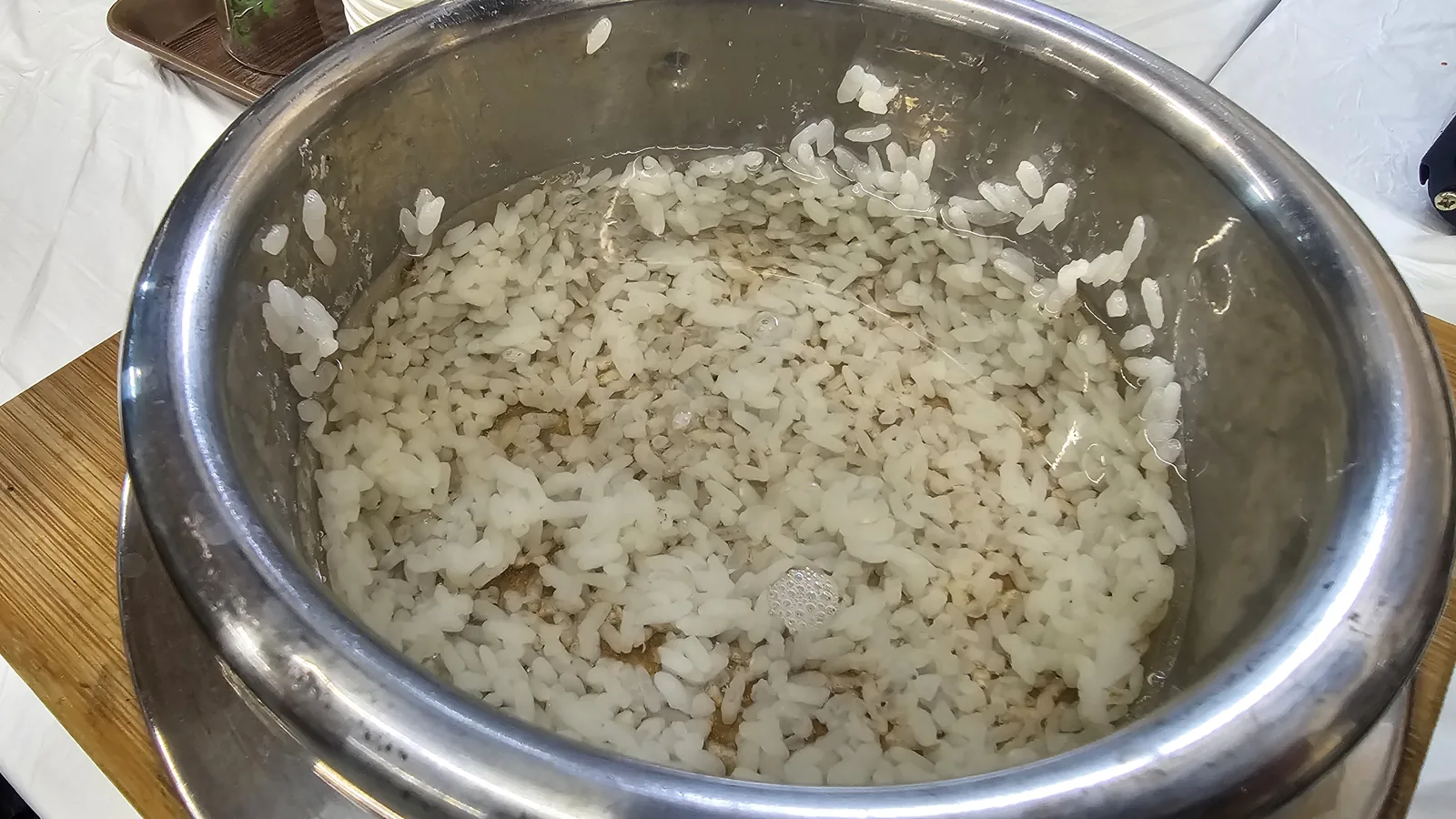
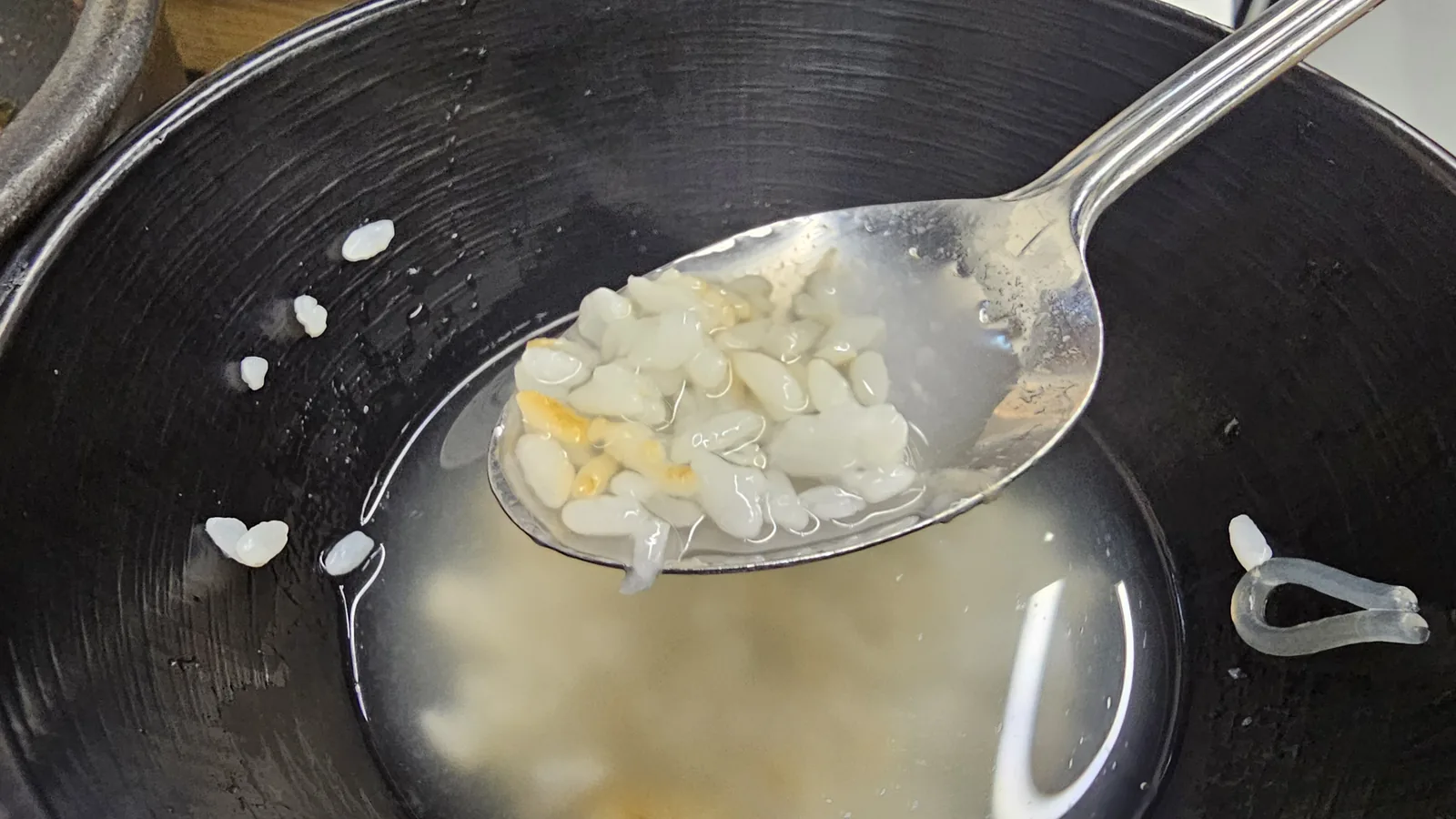
Good way to close the meal.
Stuff Tourists Should Know
Language: Menu is in Korean. Staff may not speak English. Have a translation app ready — Google Translate’s camera mode works well on menu boards.
Prices: Not confirmed during this visit. Check the menu when you arrive. Prices at the time of your visit may differ from any figure you find online.
Foreign cards: Not confirmed. Have Korean Won (KRW) ready just in case.
Tipping: Korea doesn’t have tipping culture. No tip expected or necessary.
Solo dining: Possible, but the mulkalbi is portioned for 2+. Better suited for groups of 2–4.
Kids: Tabletop burners are in active use during the meal. Keep young children away from the cooking equipment.
Vegetarian: This is a rib restaurant. Not realistic for vegetarians.
Halal/Kosher: Not applicable here — pork-based menu.
The Verdict
Second visit, same conclusion: the mulkalbi is clean and well-executed, the sotbap is worth ordering, and the traditional interior fits the Jeonju Hanok Village setting without being kitschy about it.
Not the most exciting galbi in Korea. But reliable, and that’s harder to find than it sounds.
Go if:
– You’re spending a full day in Jeonju Hanok Village and want something beyond bibimbap
– You prefer lighter, broth-based preparations over heavy charcoal BBQ
– You want a traditional-feeling space without paying tourist-trap prices
Skip if:
– You have 3 days in Korea total — spend that time eating things you can only find in Korea’s major cities
– You need big smoky charcoal BBQ energy — this is not that
Worth coming back to. Already have.
FAQ
What is mulkalbi and how is it different from regular galbi?
Mulkalbi (물갈비) is pork ribs cooked in a light broth-based sauce on a tabletop pan — less sweet and sticky than marinated galbi, cleaner flavor, with vegetables like bean sprouts and enoki mushrooms cooking alongside in the broth.
Is Sejong Daewang good for tourists visiting Jeonju Hanok Village?
The hanok-style interior and galbi menu are a solid fit for a day in the village. Signage and menus are in Korean, so bring a translation app — English service is not confirmed.
How much does a meal cost at Sejong Daewang Hangari?
Exact prices were not confirmed during this visit — check the posted menu when you arrive. Galbi restaurants in Jeonju Hanok Village typically run 13,000–20,000 KRW (~$10–15 USD) per person at lunch.
How do I get to Jeonju Hanok Village from Seoul?
Take the KTX from Seoul Station to Jeonju Station (about 1 hour 40 minutes), then grab a taxi or local bus to the hanok village (10–15 minutes). From Incheon Airport, total travel is roughly 2.5–3 hours.
What is sotbap and the nurungji ritual?
Sotbap (솥밥) is rice cooked in a small metal pot. Once you’ve finished the rice, pour hot water into the pot — the scorched rice left on the bottom turns into sungnyung (숭늉), a lightly nutty rice tea. It’s a traditional way to finish a Korean meal.
Do I need a reservation?
Not confirmed for this restaurant specifically. Jeonju Hanok Village gets crowded on weekends and holidays — going at off-peak hours (before noon or after 1:30 PM) or checking their social media for reservation info is worth the effort.