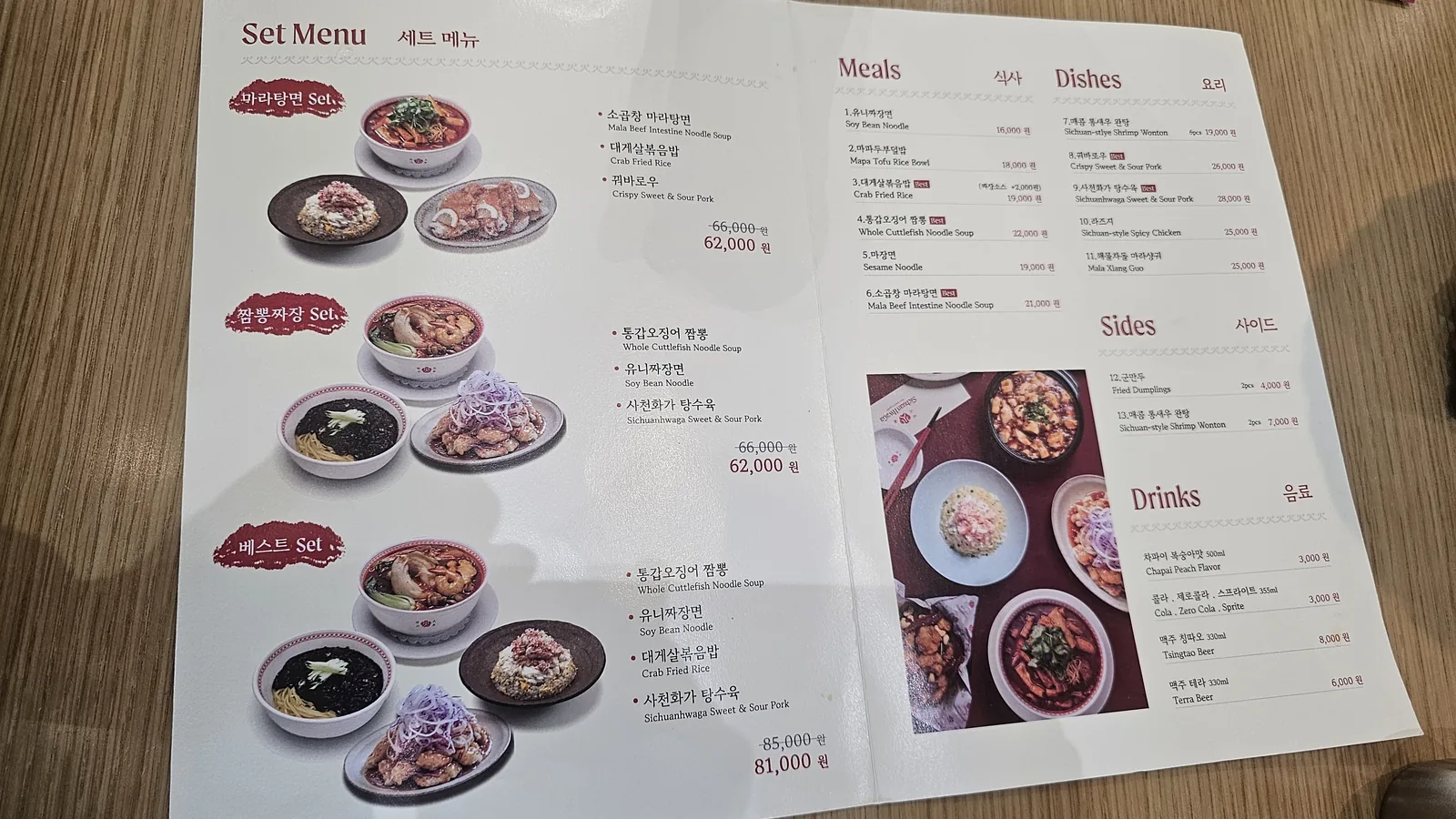
Quick honest review of Sacheon Hwaga at The Hyundai Seoul in Yeouido. Short version: the food is genuinely good — better than most department store restaurants have any right to be. The tangsunyuk had pork that melted in the mouth, the mala noodles were the real deal, and the jjamppong had a broth with actual depth behind the heat.
Went on a weekday around 11am. Walked right in, no wait.
What Is Sichuan Food?
Fast context for anyone not familiar:
Sichuan (사천, 四川) is a province in southwest China. The food is built around a very specific sensation called *mala* (麻辣) — numbing plus spicy. The numbing part comes from Sichuan peppercorns (花椒), which hit your tongue differently from regular chili. It’s not just heat. It buzzes. Then the chili layered on top builds into actual burn.
Mapo tofu, dan dan noodles, hot pot — all Sichuan originals.
Korea has its own long history with Chinese-influenced food (한중식, Korean-Chinese cuisine), and Sichuan flavors have been surging in popularity here over the past several years. Sacheon Hwaga sits at the premium end of that wave: proper Sichuan flavor profile, polished execution, positioned for Seoul’s upscale dining crowd rather than the neighborhood 짜장면 spot.
About Sacheon Hwaga
Sacheon Hwaga (사천화가, 四川畫家 — roughly “Sichuan Painter”) is a Korean restaurant chain specializing in Sichuan-style cooking adapted for Korean tastes. Think authentic mala heat and technique, without the aggressive oil levels you’d encounter in mainland China.
It’s not trying to be a straight import from Chengdu. It’s Korean-Chinese food done seriously, with Sichuan as the foundation.
The Yeouido location is inside The Hyundai Seoul (더현대 서울) — the department store that opened in 2021 and became one of Seoul’s most talked-about retail destinations almost immediately. It’s the kind of building people visit for the atmosphere alone: soaring atriums, heavy curation of food tenants, the works. Sacheon Hwaga is one of the anchor restaurants on the B1 “TASTY SEOUL” food hall floor.
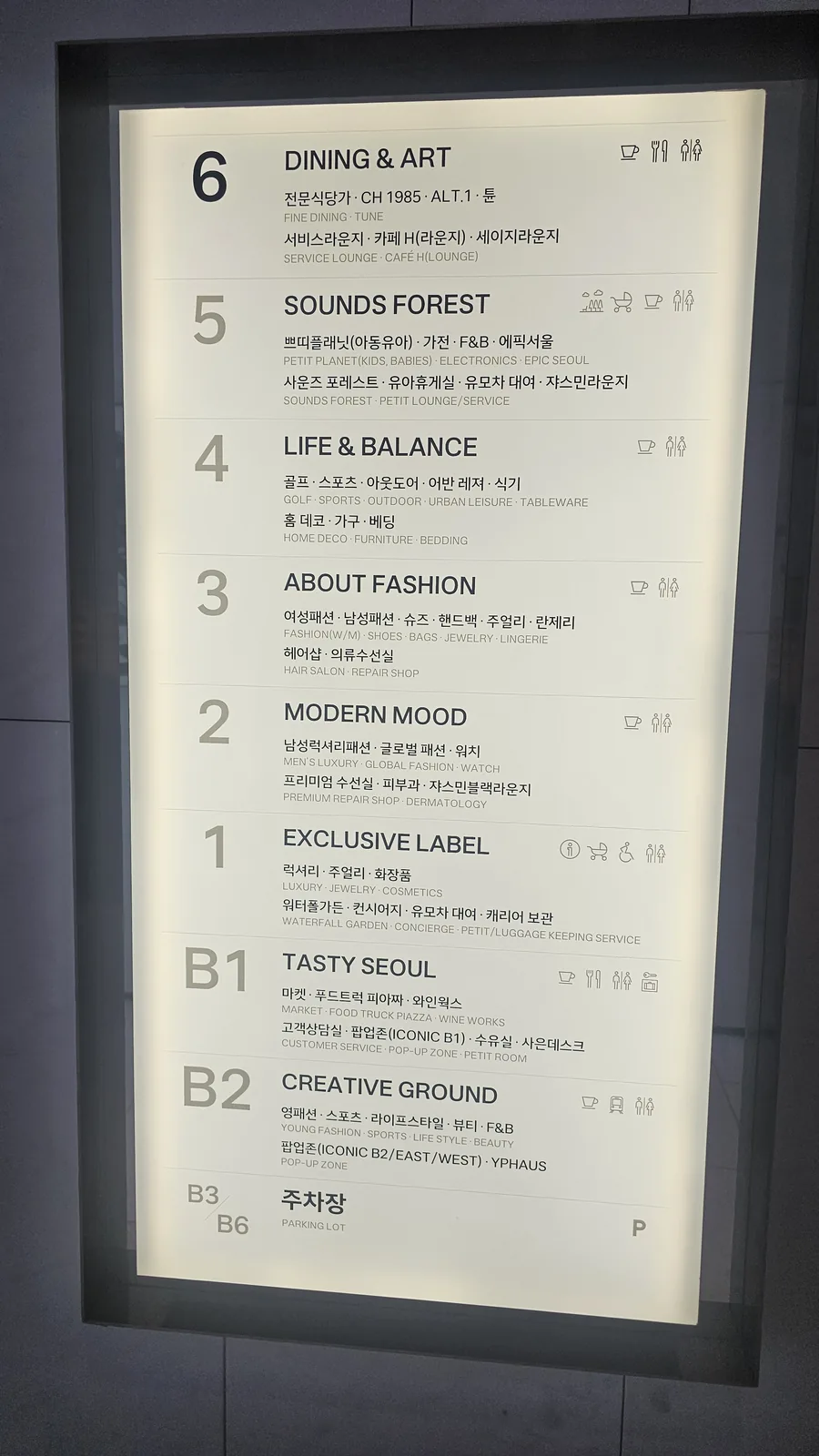
B1 is where you want to be.
Getting There
Subway: Yeouido station (여의도역), Lines 5 and 9. Exits 3 or 4. Walk toward IFC Mall and The Hyundai Seoul — about 7 minutes on foot.
From Incheon Airport (ICN): AREX to Gimpo Airport station, transfer to Line 5 (Banghwa direction), ride to Yeouido. Total around 50-60 minutes depending on connections.
From city center (Myeongdong, Hongdae, Gangnam): 20-30 minutes by subway.
Taxi: Tell the driver *더현대 서울 여의도*. Everyone knows it.
Inside the store, take the escalators or elevator to B1. Follow the food hall. You’ll spot the Sacheon Hwaga logo.
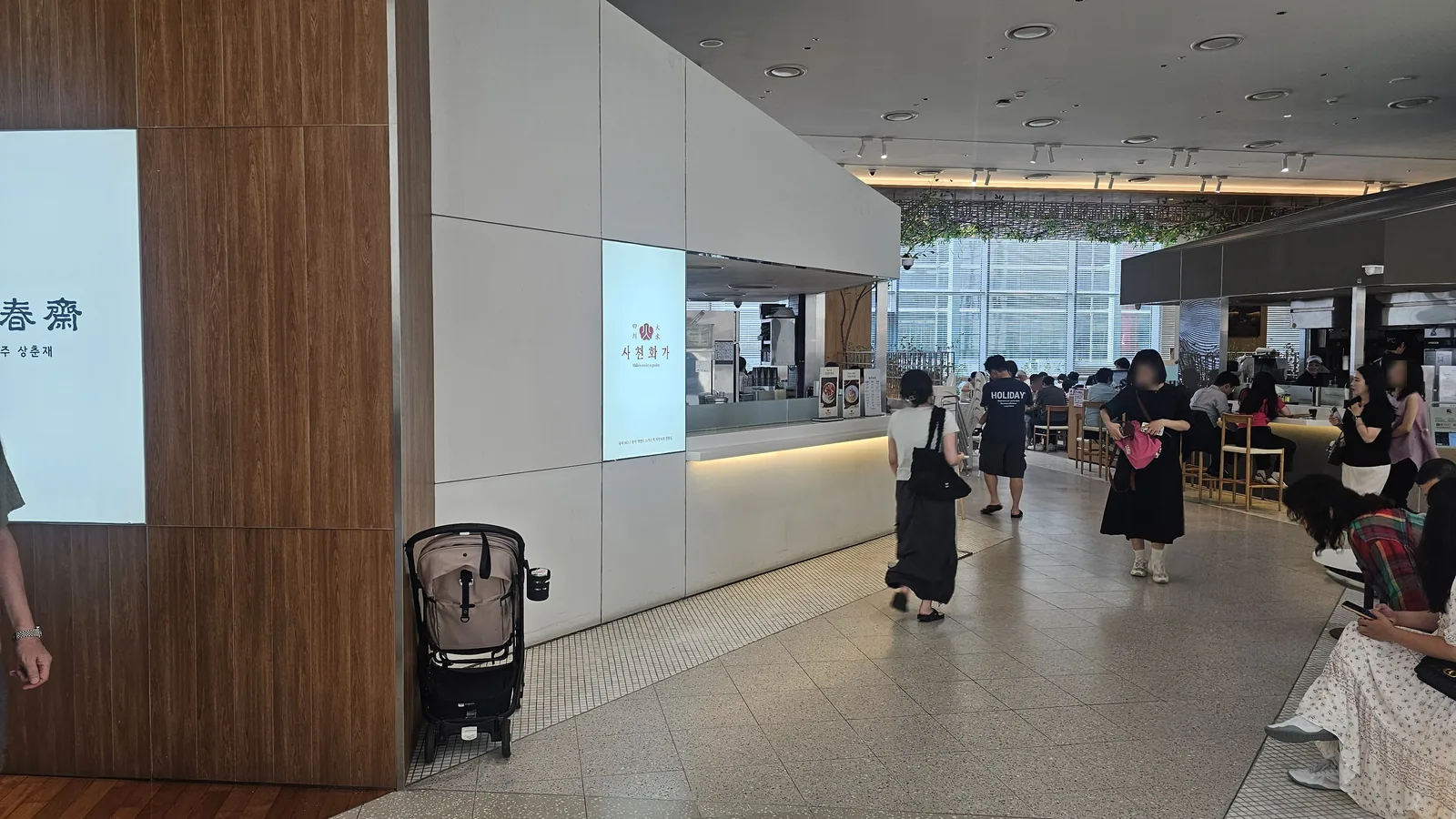
The Interior
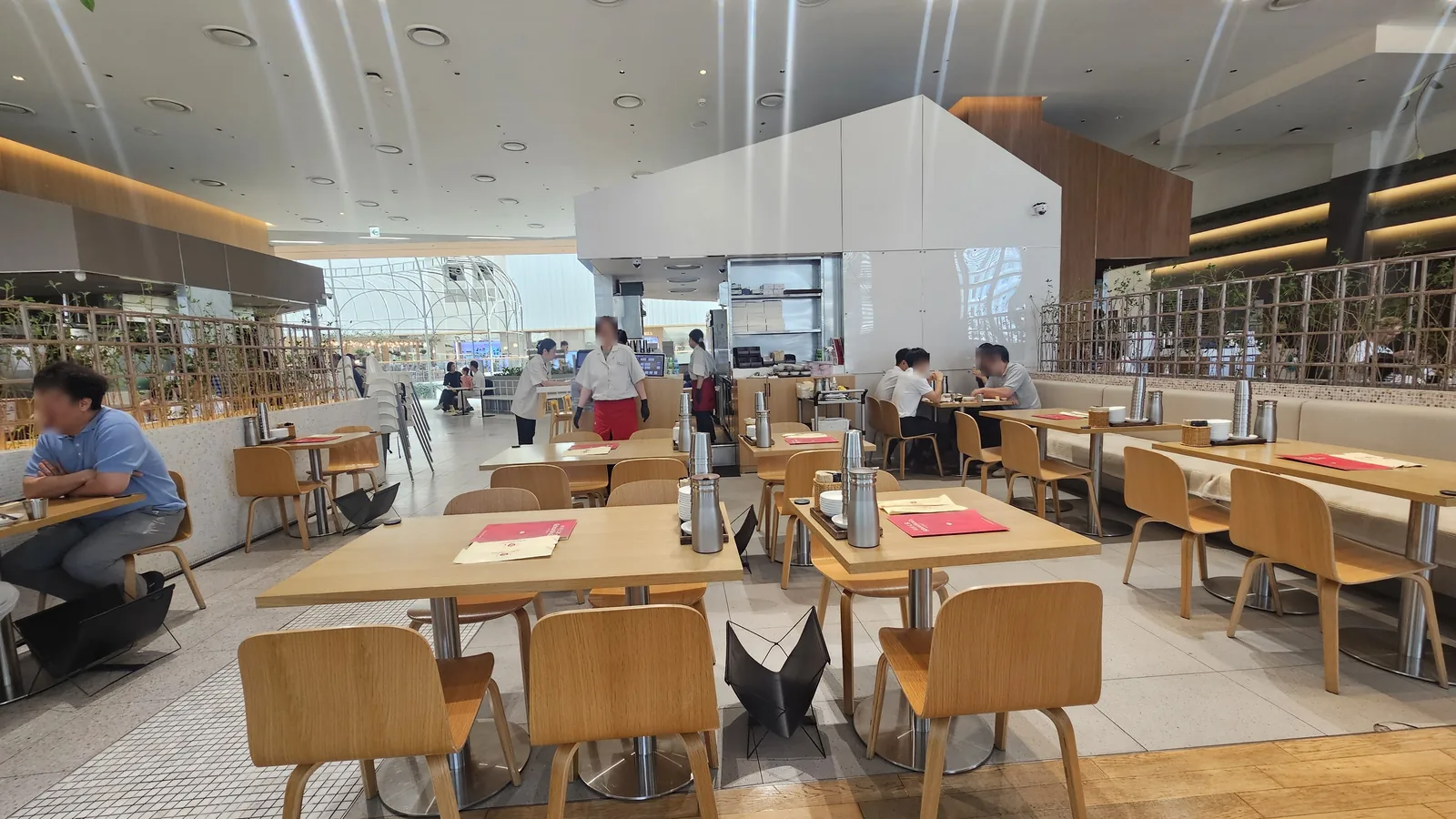
Clean, modern, bright. Wooden chairs and tables, wide-open layout, staff in matching red uniforms. No red lanterns. No dragons. Nothing that reads “generic Korean-Chinese restaurant.”
The vibe is upscale casual. Business lunch crowd, weekend shoppers, all fit here. Tables are spaced comfortably. Not cramped.
Gets busier toward the noon-to-1pm window. The 11am start is quieter and more relaxed.
What I Ordered
Four dishes across the table: the signature tangsunyuk, mapo tofu rice, Sichuan-style seafood noodle soup, and mala broth noodles. Budget roughly 25,000–35,000 KRW per person (~$18–26 USD) for this kind of shared spread.
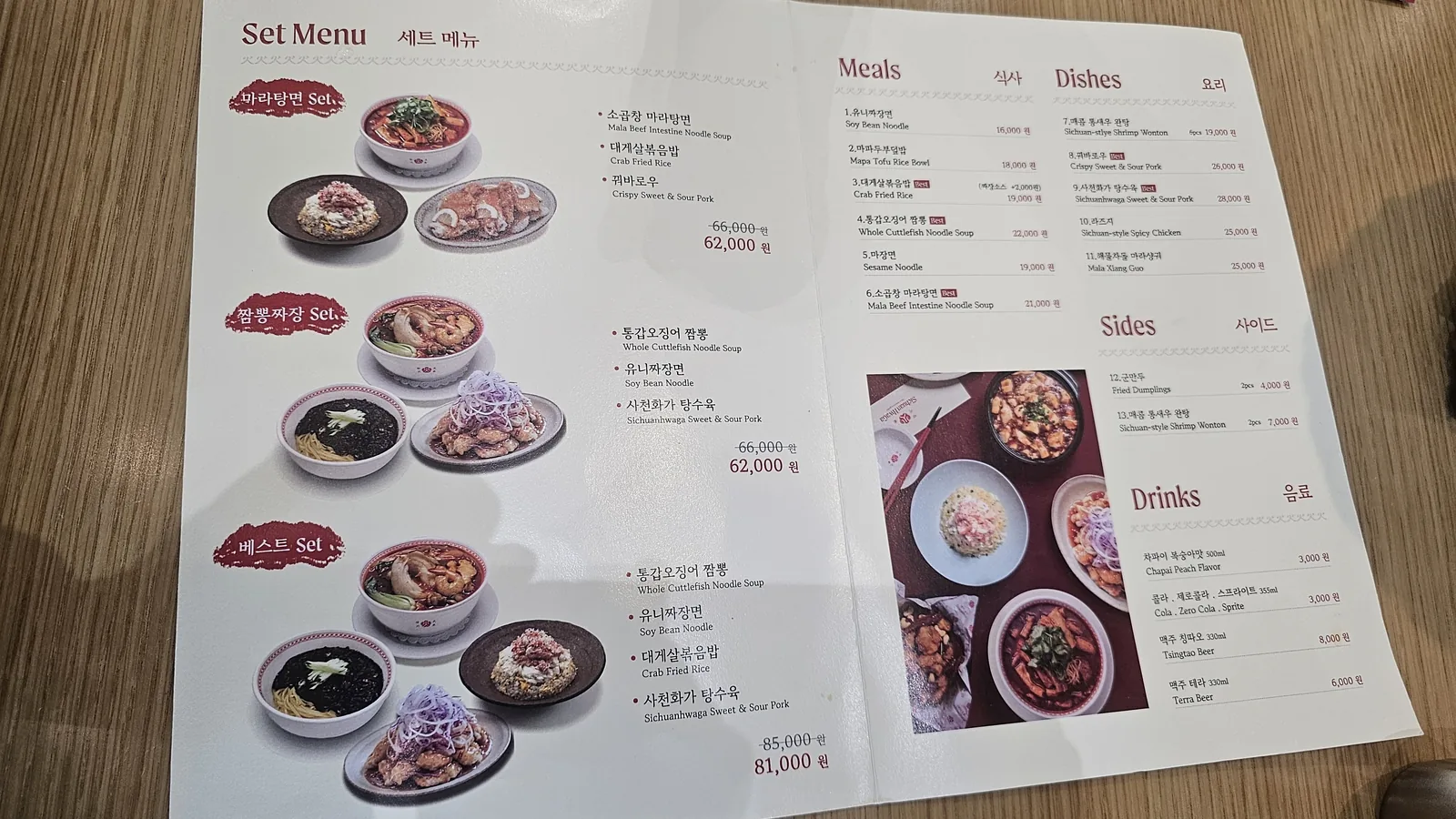
The menu has photos. You can order by pointing even without Korean.
Sacheon Hwaga-Style Tangsunyuk
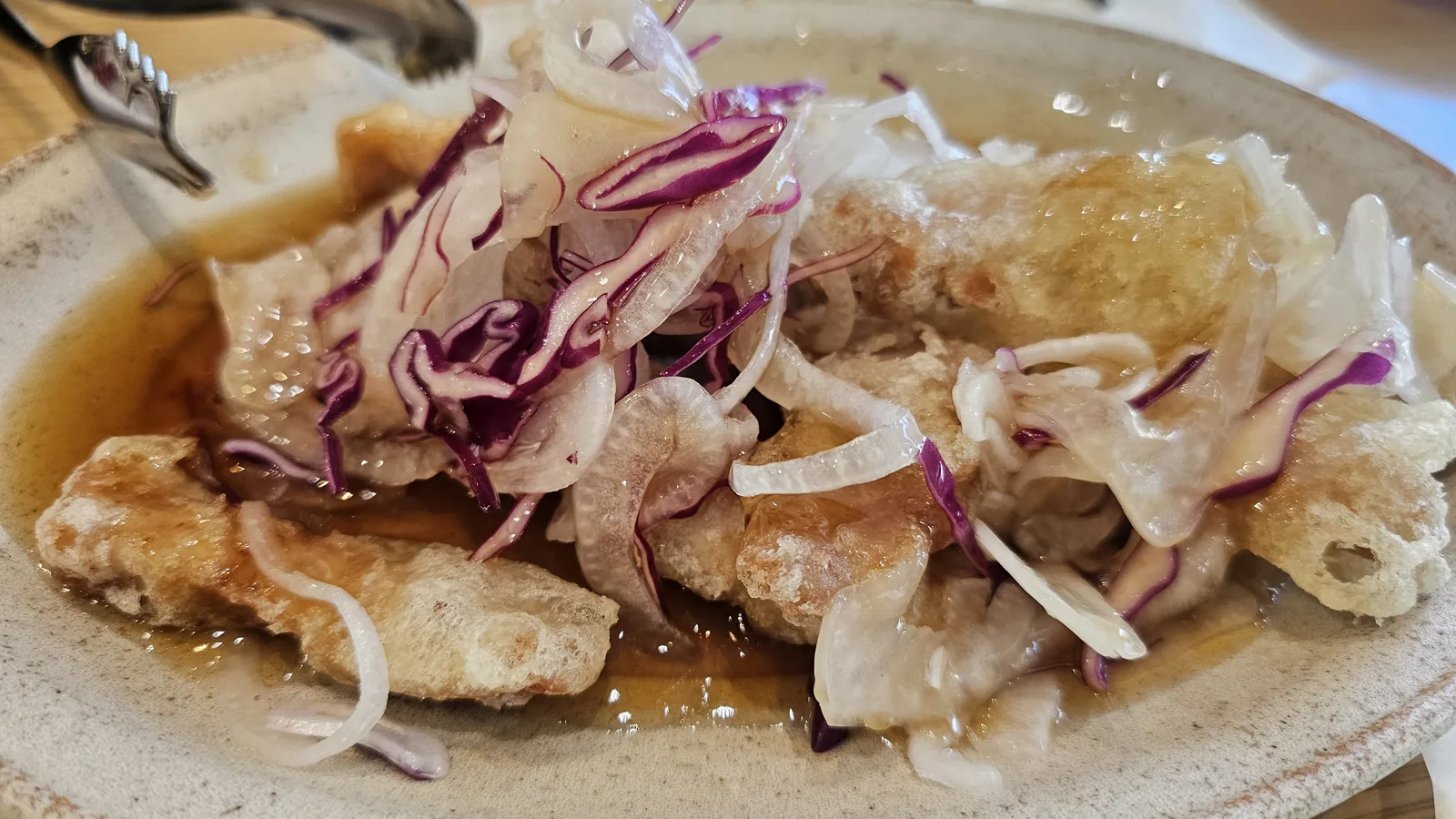
Okay. This is the dish.
Tangsunyuk (탕수육) is Korea’s version of Chinese sweet-and-sour pork. Every Korean-Chinese restaurant has it. Usually: fried pork strips or chunks, sauce poured over or served on the side. Standard. Fine.
Sacheon Hwaga’s version has a point of view. The pork is thick-cut — real cuts of loin, not pounded flat. Topped with shredded raw onion and red cabbage. The sauce punches harder than typical Korean-Chinese sweet-sour glaze; there’s a Sichuan edge to it.
The meat melted. Actually melted. That’s not a phrase I throw around — Korean tangsunyuk is usually decent but can run chewy or dense. This was tender in a way that made me genuinely wonder what they did to it. Every bite clean through.
If you order nothing else, order this.
Mapo Tofu Rice (마파두부밥)
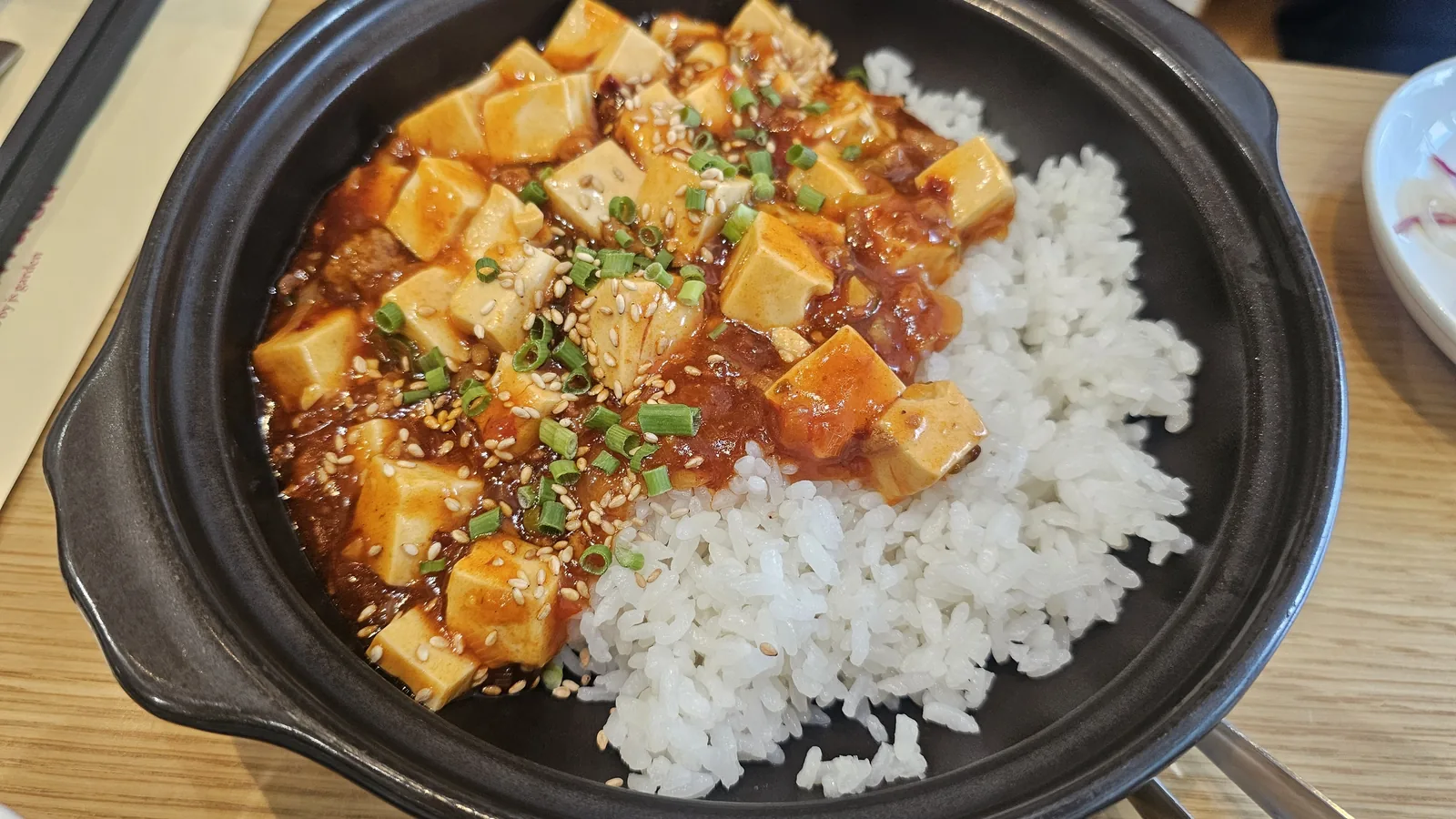
Mapo tofu (麻婆豆腐) is a Sichuan classic. The name translates roughly to “pockmarked old lady’s tofu” — not flattering to its inventor, extremely accurate as a dish. Silken tofu in a spicy, oily sauce built on fermented black bean paste, ground pork, and Sichuan peppercorns. The mala tingle is part of the deal.
Sacheon Hwaga’s mapo tofu rice comes in a black cast iron bowl, tofu set in the sauce alongside steamed white rice. The spice level is real but doesn’t overwhelm. Green onion and sesame on top.
Good. Solid. The tofu is properly silken, the sauce has the right oiliness and depth. Not the most exciting thing on the table, but reliable.
If you’ve had mapo tofu in Chengdu or at a serious Sichuan restaurant, you’ll recognize this. If you haven’t, it’s a clean introduction to what the dish is supposed to taste like.
Sichuan Seafood Noodle Soup (사천식 해물탕면)
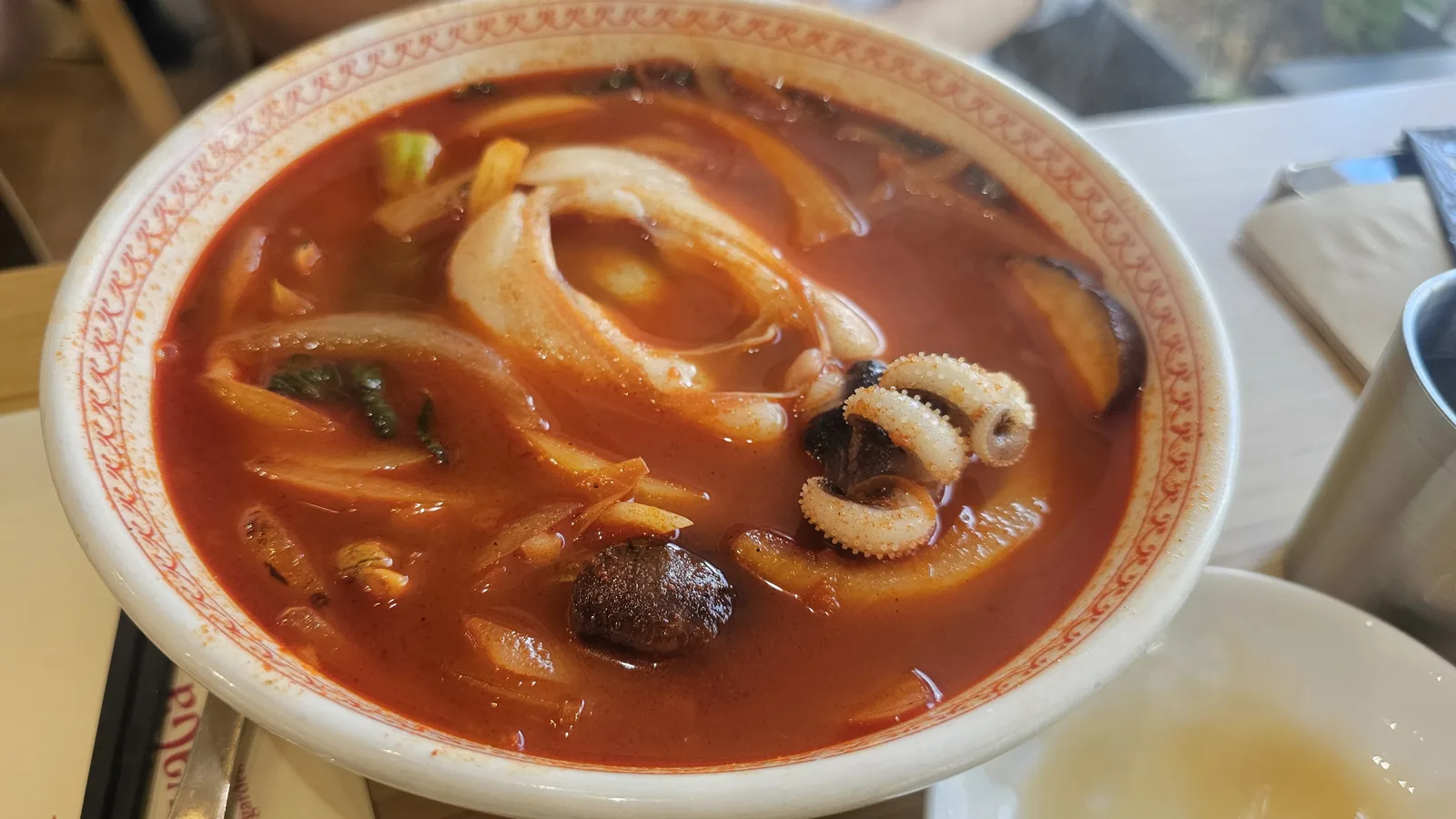
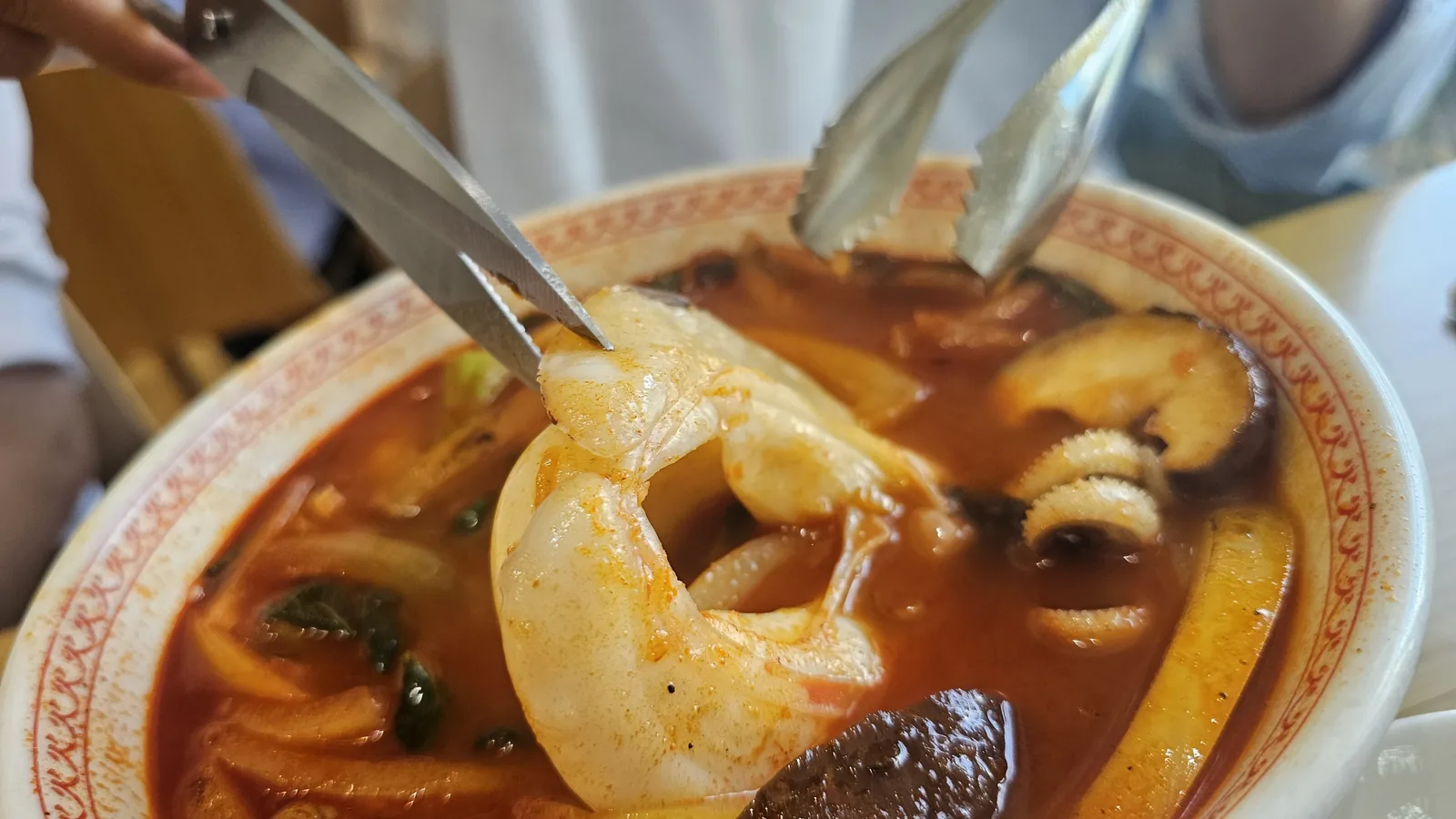
This is jjamppong territory — jjamppong (짬뽕) being Korea’s spicy seafood noodle soup, a dish with deep roots in Korean-Chinese dining culture. The baseline version is spicy, loaded with mixed seafood, red broth.
Sacheon Hwaga pushes it further. The broth is genuinely spicy, not decoratively red. Thick noodles that hold up in the heat, squid, shiitake mushrooms, and a large shrimp at the center. They’ll hand you scissors to cut the shrimp at the table — totally normal practice in Korea, don’t read it as anything weird.
The broth had actual flavor underneath the heat. Not just capsaicin soup. There was depth in there.
If your only reference for jjamppong is whatever the neighborhood Chinese spot does, this is a significant step up.
Mala Broth Noodles (마라 국물 면)
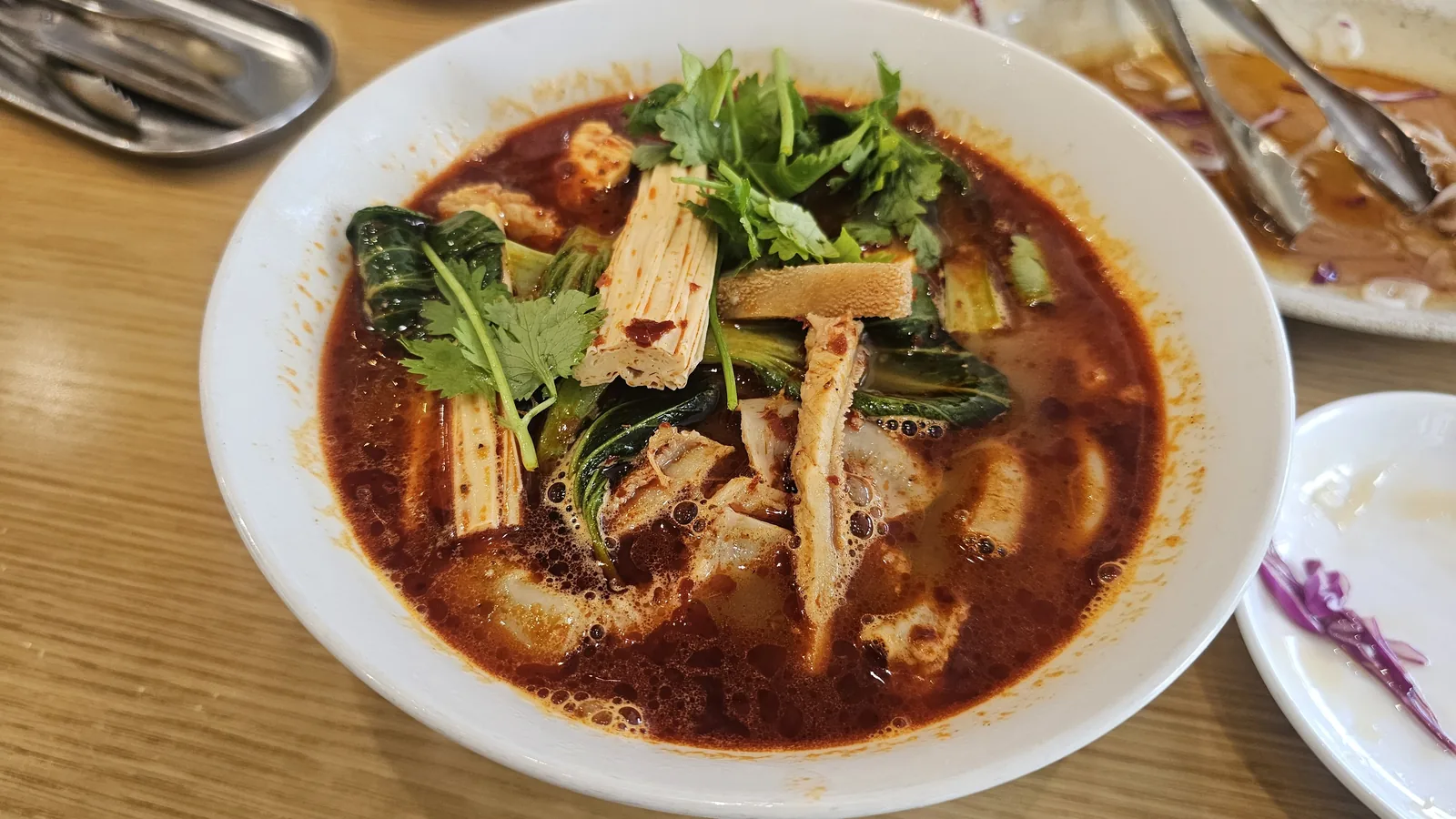
This is the most Sichuan dish on the table. Dark, almost mahogany-red broth. Thick noodles. On top: yuba (유바, 湯葉) — tofu skin, the thin film that forms when you heat soy milk and skim the surface. Silky, slightly chewy. Bok choy (청경채) for freshness. Cilantro to finish.
Fair warning on the cilantro: if you’re in the camp that thinks cilantro tastes like soap, ask them to skip it.
The mala sensation here is legitimate. The Sichuan peppercorn numbing shows up properly, and the chili heat builds on top of it. Not trying to destroy you, but you will feel it. Sweat is possible.
This is the dish that separates people who actually enjoy Sichuan food from people who think they do. If you ordered it and loved it, you’re in the first group.
Stuff Tourists Should Know
Language: Staff at this location manage basic English. The photo menu means you can point your way through ordering without issue.
Payment: Credit cards accepted, including foreign-issued cards. Standard for a department store restaurant.
Tipping: None. Korea does not have a tipping culture. Don’t leave cash on the table — it’ll confuse more than it’ll thank.
Spice sensitivity: If you don’t eat spicy food, the tangsunyuk and mapo tofu rice are your safest bets. The jjamppong and mala noodles are not mild. Ask staff to reduce heat if needed.
Vegetarians: Hard to navigate here. Mapo tofu looks vegetarian but almost certainly uses meat-based stock. Ask directly before ordering.
Halal/Kosher: Not certified.
Kids: The place is calm and the food is table-service. Kids are fine here. The tangsunyuk will go over well with younger eaters; skip the mala dishes for them.
Solo dining: Absolutely doable. Single tables available.
Peak hours: Noon to 1pm gets busiest. The 11am opening window is quieter.
For a different Chinese meal in Yeouido, compare our Xin Hong Lou in Yeouido: Honest Review of Peking Duck Seoul, which focuses on Peking duck.
The Verdict
Sacheon Hwaga delivers food that earns its place in The Hyundai Seoul’s food hall. The tangsunyuk alone is a reason to come — that pork is genuinely special. The mala noodles are a proper version of a Sichuan classic, not a watered-down take. The jjamppong broth has real depth. Mapo tofu rice is solid without being the highlight.
Is it worth the slightly premium pricing for a department store lunch? Yeah. The quality justifies it.
Should you go?
– Already in Yeouido for the IFC, a business meeting, or just exploring The Hyundai Seoul — yes. One of the best lunch options in the building. Order the tangsunyuk.
– Want to try Sichuan food in Seoul without tracking down specialty restaurants elsewhere — yes. This is accessible, well-executed, and easy to find.
– Into spicy food and want a proper mala experience — yes. The noodles here are a good benchmark for what Korean-Sichuan cooking looks like at its better end.
– First 3 days in Seoul, haven’t tried Korean food yet — hold off. Eat Korean BBQ, sundubu jjigae, or galbi first. Come back to Korean-Chinese on a longer visit.
Would I go back? Yes. That tangsunyuk isn’t easy to forget.
FAQ
Where exactly is Sacheon Hwaga in Yeouido?
Inside The Hyundai Seoul (더현대 서울) department store, B1 floor — the "TASTY SEOUL" dining hall. Take Line 5 or 9 to Yeouido station, then walk about 7 minutes toward the IFC mall.
What’s the must-order dish at Sacheon Hwaga?
The Sacheon Hwaga-style tangsunyuk (Sichuan sweet-and-sour pork). The pork is thick-cut and unusually tender, topped with shredded onion and red cabbage in a punchy sauce. Don’t skip it.
How spicy is the food at Sacheon Hwaga?
Ranges from mild (tangsunyuk, mapo tofu rice) to genuinely hot (mala noodles, seafood jjamppong). If you’re sensitive to spice, stick to the tangsunyuk and ask staff to dial down the heat on noodle dishes.
Do I need a reservation at Sacheon Hwaga Yeouido?
No reservation needed for weekday lunches — walk right in. Weekends fill up faster; arriving when they open around 11am helps avoid waits.
Is English spoken at Sacheon Hwaga?
Basic English is manageable at this location. The menu has photos, so pointing works just fine. Foreign cards are accepted; no tipping expected.
Are there vegetarian options at Sacheon Hwaga?
Limited. Mapo tofu sounds vegetarian but likely uses meat-based stock. Ask staff specifically if you have dietary restrictions.
Leave a Reply