Ginza Yeouido: Honest Review of Seoul’s 20-Year Japanese Course Restaurant
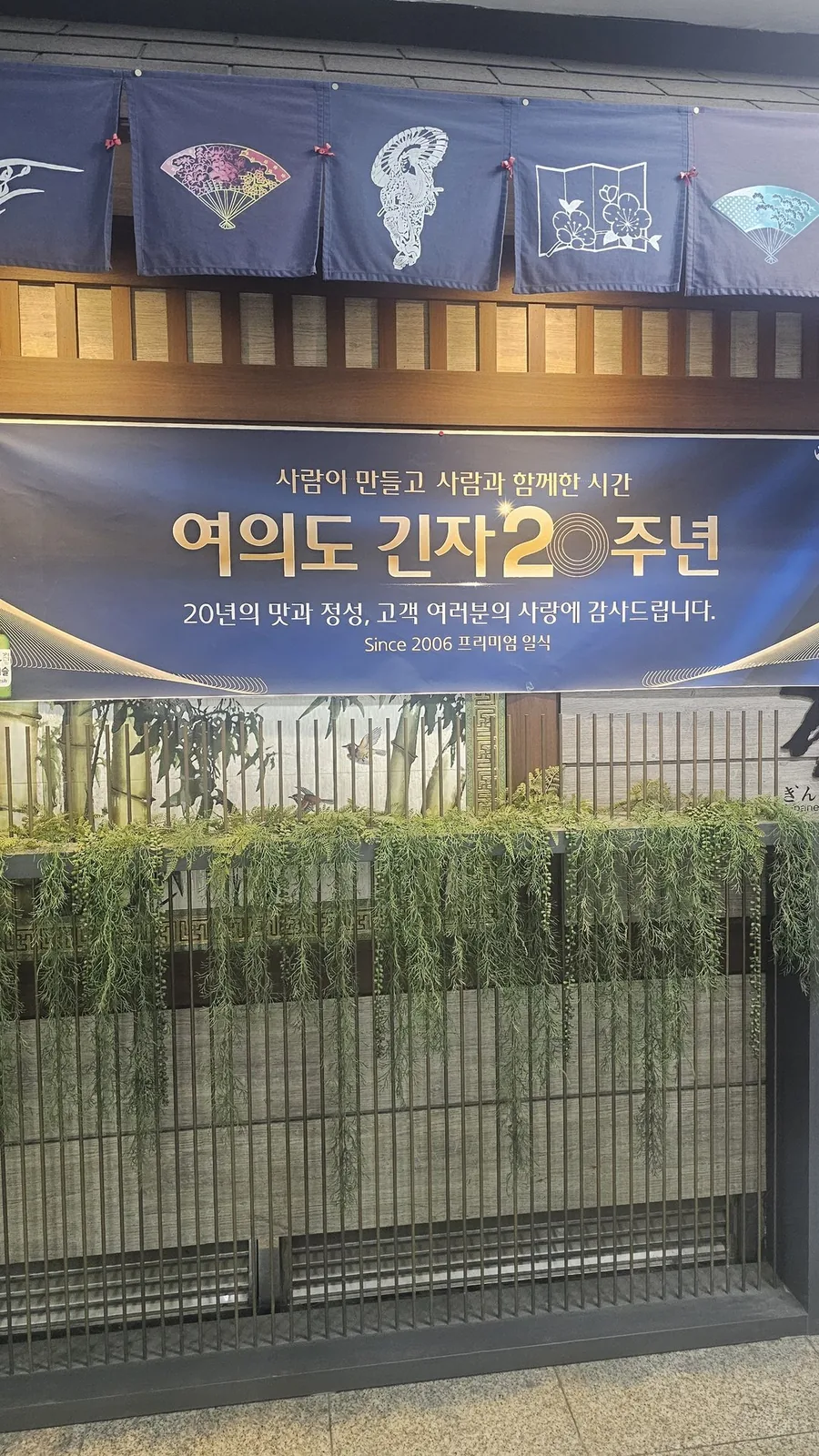
Quick honest review of Ginza (긴자) in Yeouido — one of Seoul’s longest-running premium Japanese course restaurants. We visited on June 10, 2026, which happened to be their 20th anniversary. Four of us, full course, walked out full and slightly lighter in the wallet.
Short version: the food is clean, refined, and well-executed. Not flashy. Not trying to impress you with trends. Just solid Japanese course cooking that’s been doing the same thing for two decades because it works. For the price, that’s actually a compliment.
What Is Ginza Yeouido?
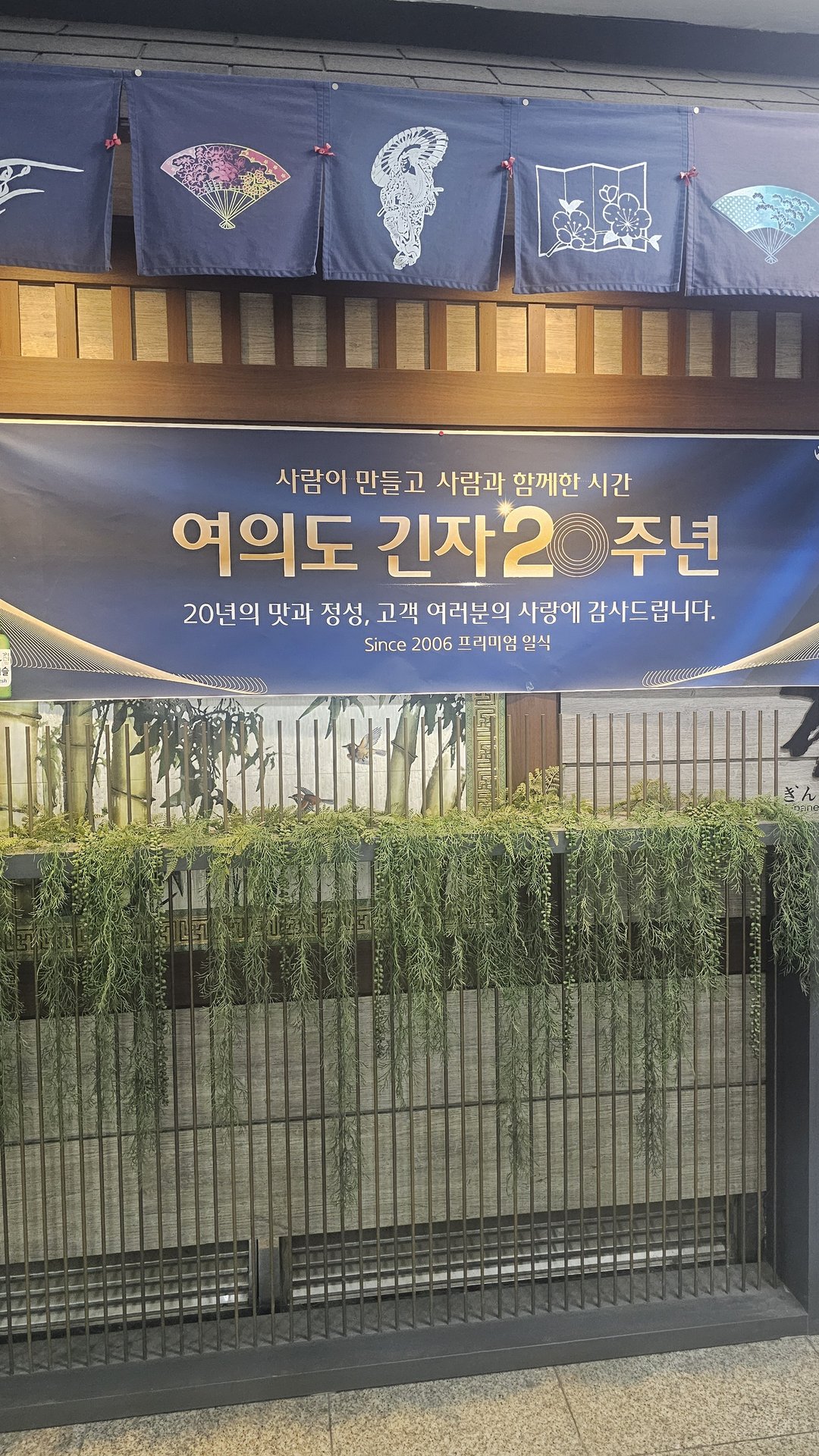
Ginza (긴자) takes its name from the famous upscale shopping and dining district in Tokyo. The Seoul version isn’t a Japanese chain — it’s a Korean-run premium Japanese restaurant that opened in Yeouido in 2006. Two decades later, it’s still one of the go-to spots for business lunches and formal meals in Seoul’s financial district.
Yeouido, for context: think Wall Street meets Canary Wharf. This is where Korean banks, broadcast networks, and securities firms are headquartered. Lunch spots here cater to executives and client meetings, not backpackers hunting for cheap bibimbap. Ginza fits that world perfectly — formal, quiet, unhurried.
The format is a Japanese course meal (코스 요리). You pick a tier, and dishes come out one after another over roughly 90 minutes. No à la carte scrambling, no “what should we order?” decision fatigue. Just sit down and eat.
Getting There

Yeouido is well connected by Seoul Metro:
– Line 5: Yeouido Station (여의도역), Exit 1 or 2
– Line 9: National Assembly Station (국회의사당역)
– From Incheon Airport (ICN): about 60–70 minutes by AREX express train + subway transfer
From the major hotels in Yeouido (Conrad Seoul, FairField by Marriott), it’s a short taxi ride — under 10 minutes, likely under 5,000 KRW.
Drop the Korean name 긴자 여의도 into Kakao Maps or Naver Maps. Google Maps works but Korean addresses are more reliable on local apps.
The Interior
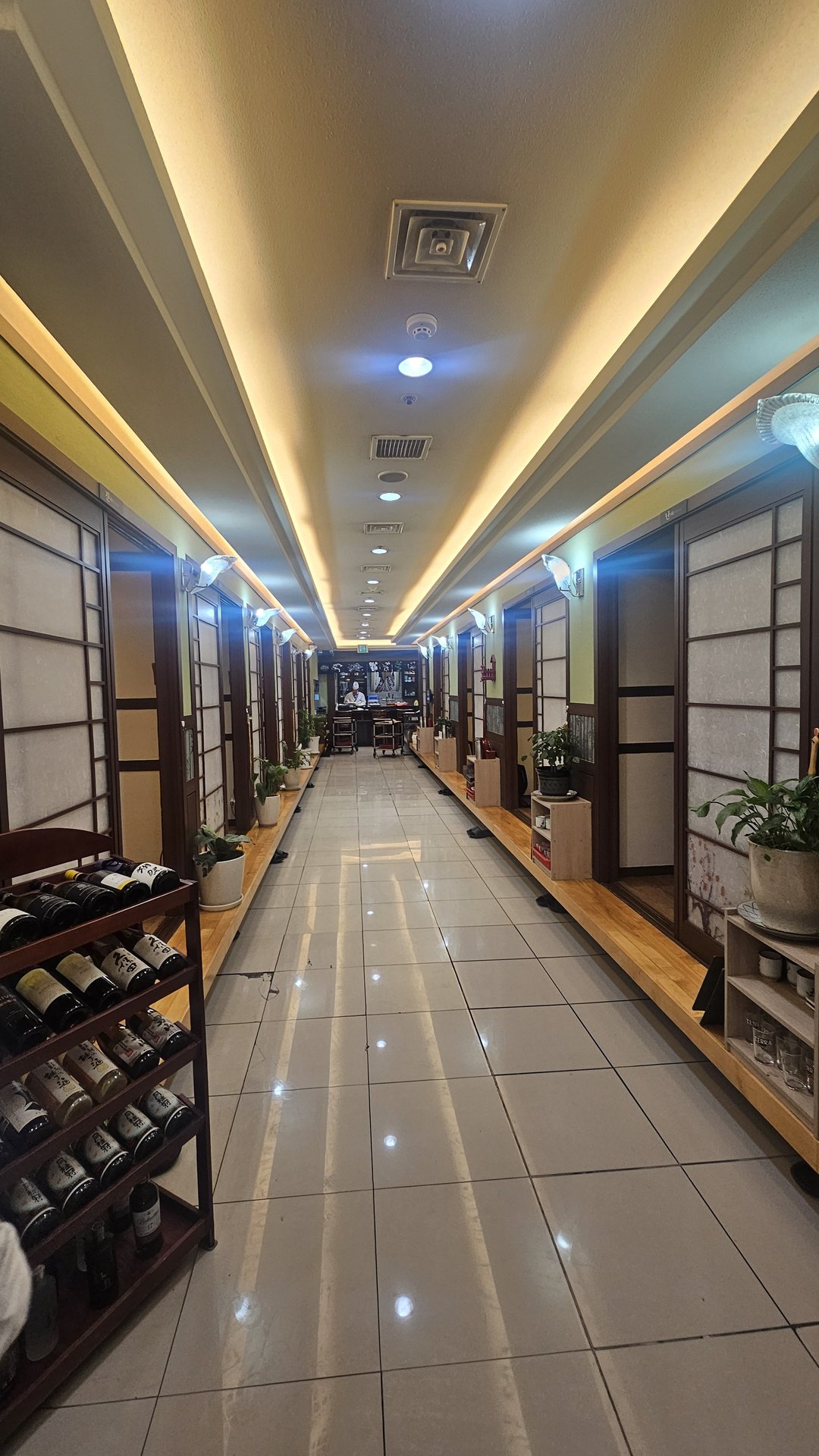
The interior is formal Japanese — clean wood paneling, shoji-style screens, quiet lighting. Not the Instagram-bait kind of design with exposed brick and Edison bulbs. This is old-school Japanese restaurant aesthetic: calm, considered, tells you to lower your voice.
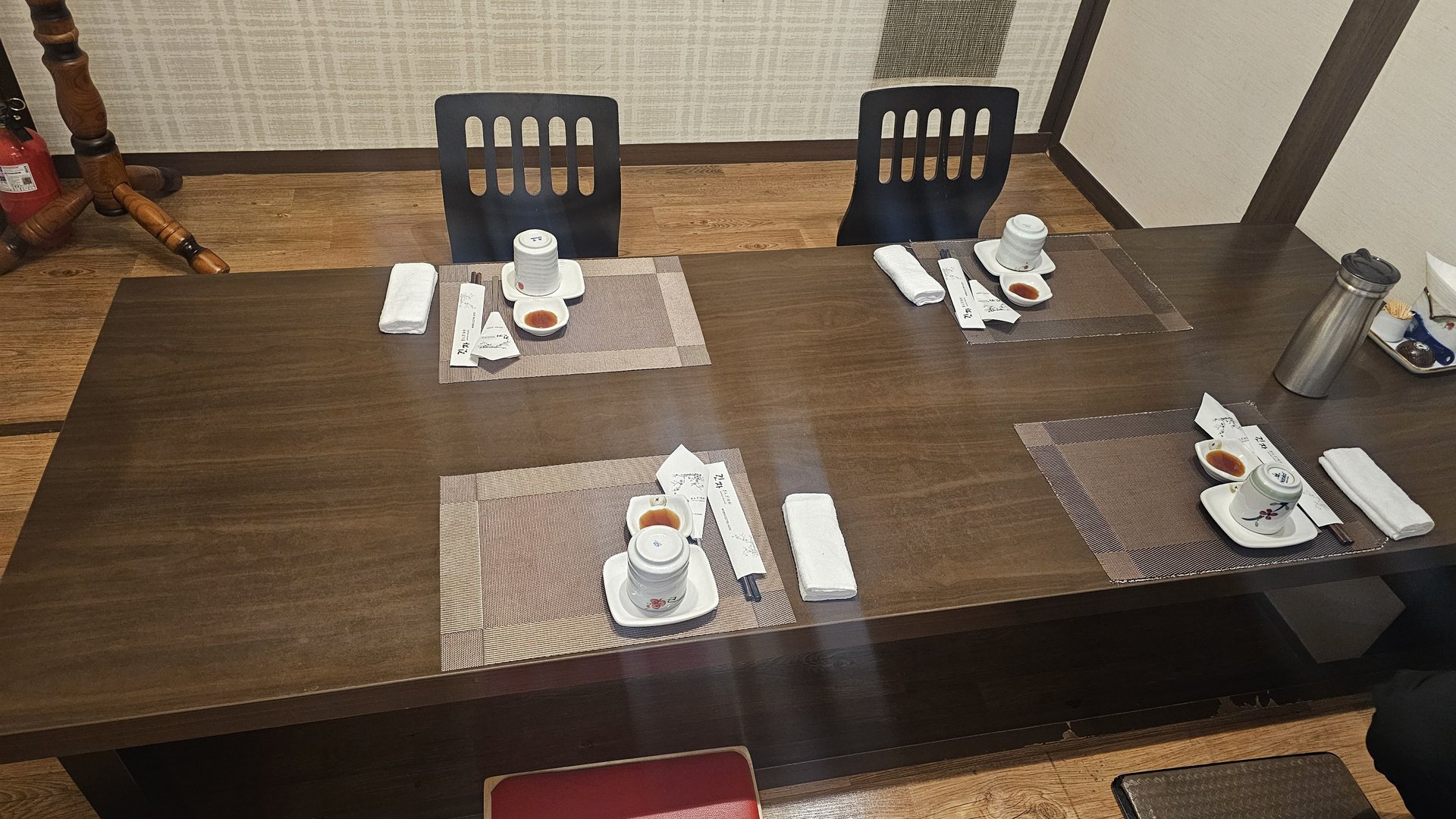
Seating is arranged for groups. The table setting when we arrived was already fully prepared — tea poured, chopsticks laid out, napkins folded. That level of pre-set service signals what kind of restaurant you’re in before a single dish arrives.
Pricing
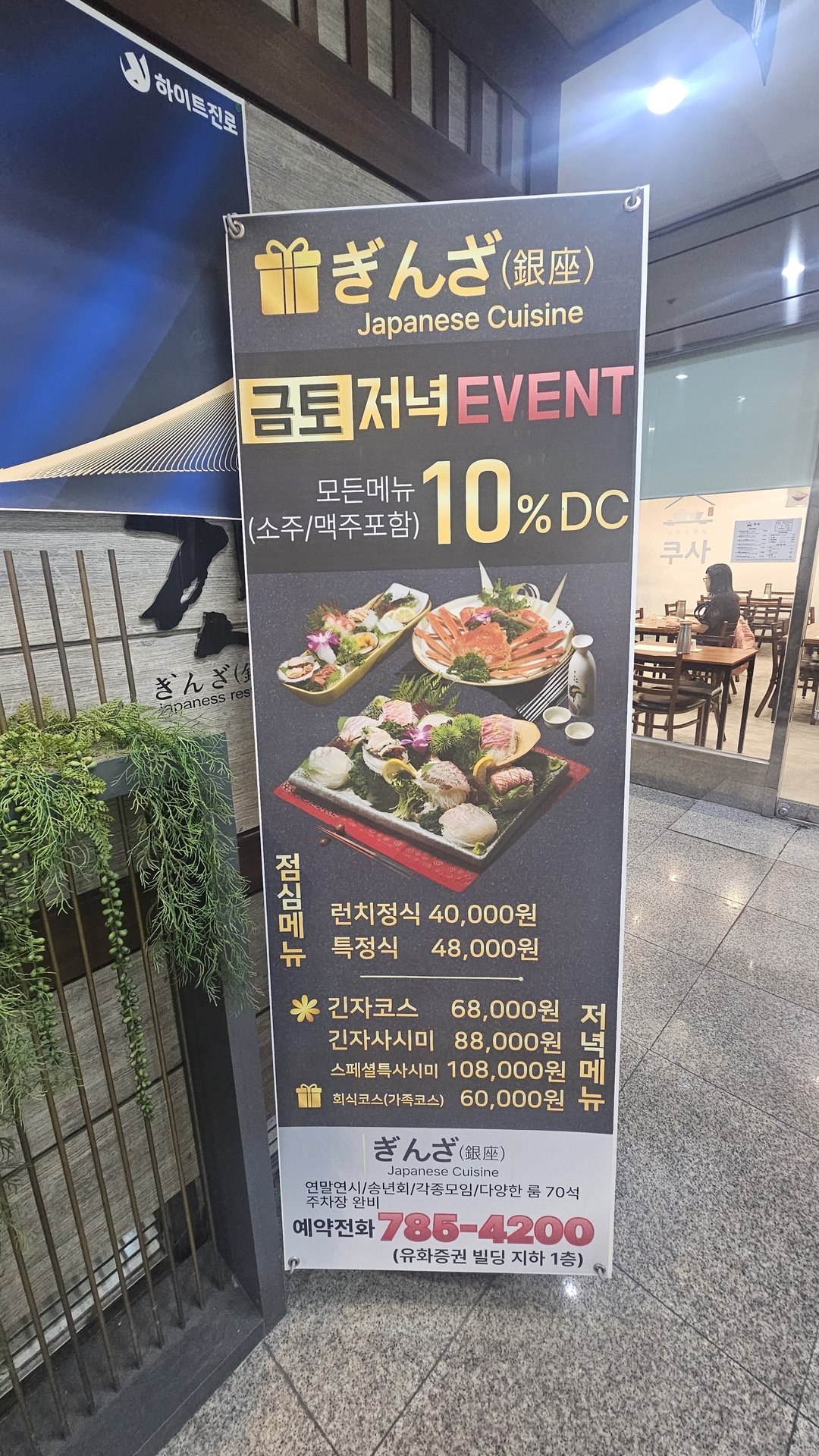
This is where you need to decide before going in:
– 런치정식 (Lunch Set): 40,000–48,000 KRW (~$30–36 USD per person)
– 긴자코스 (Ginza Course): 68,000–108,000 KRW (~$50–80 USD per person)
For 4 people on the full Ginza course, budget 272,000–432,000 KRW (~$200–320 USD total) before drinks.
There’s also a Friday evening discount event — 10% off, which at this price level is actually meaningful.
Is it expensive? Yes, for Seoul. But not for what you’re getting — a full multi-stage Japanese course that runs 90+ minutes. Comparable quality in Tokyo would cost similar or more.
The Meal, Course by Course
The Starters
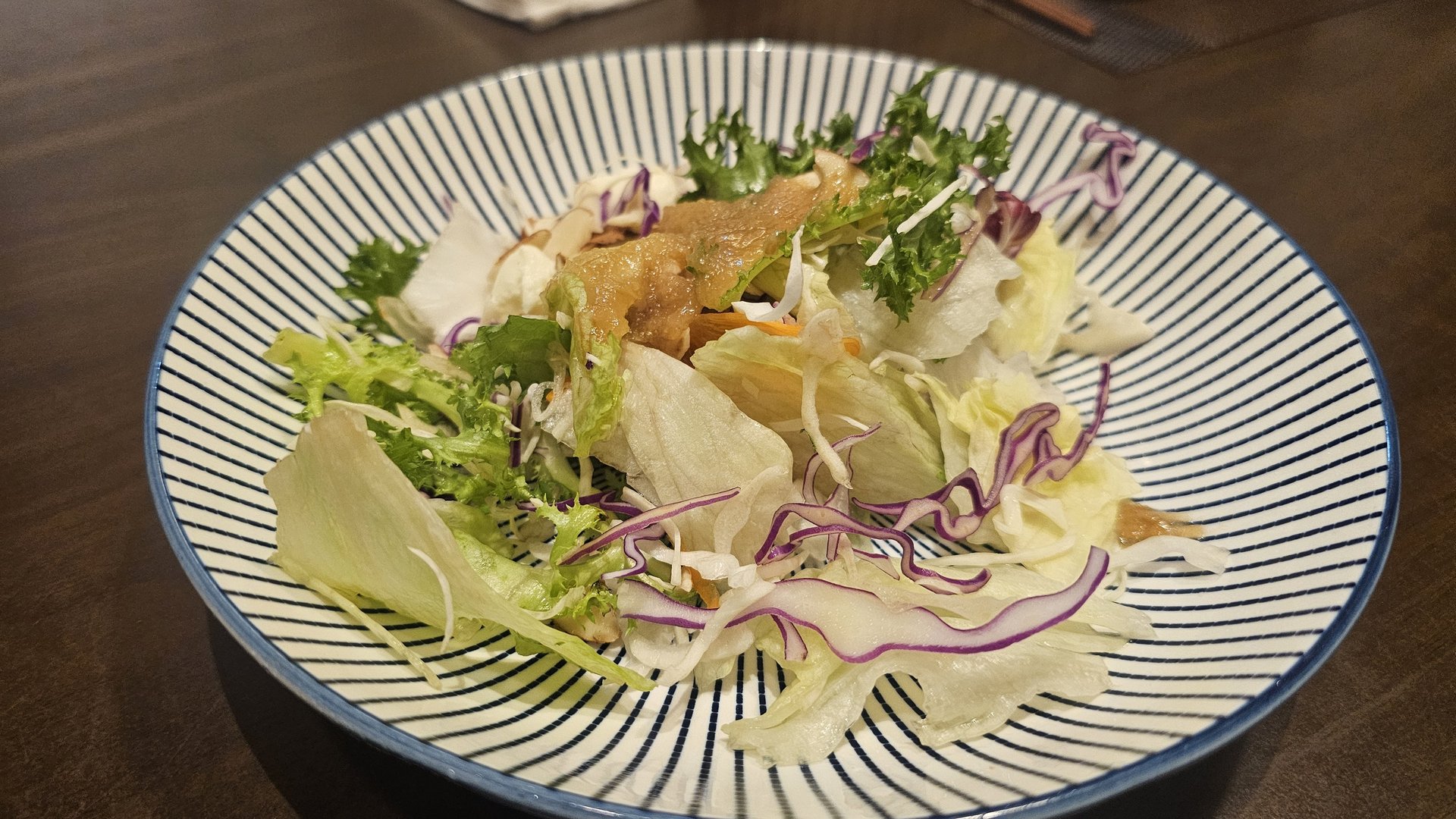
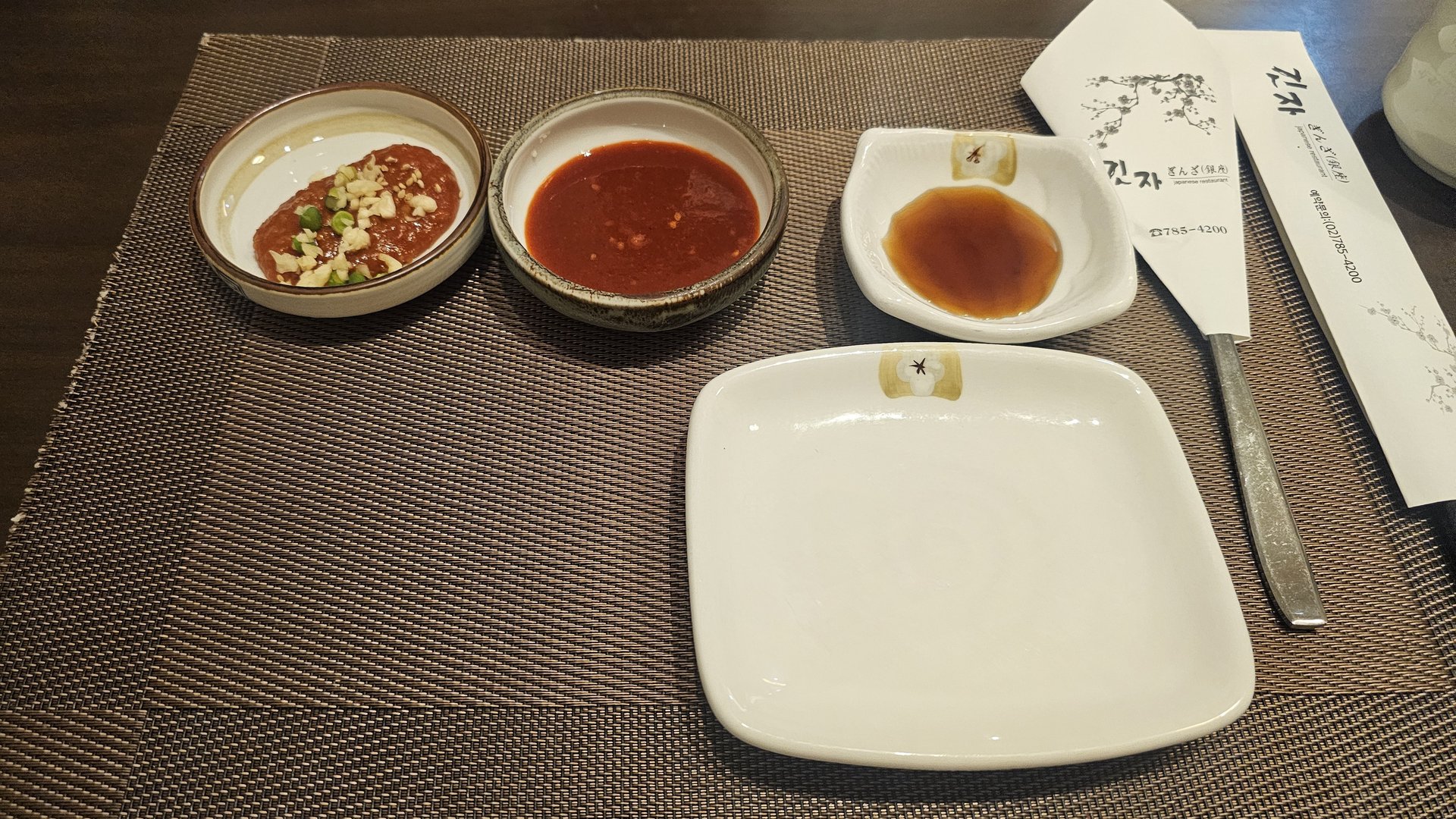
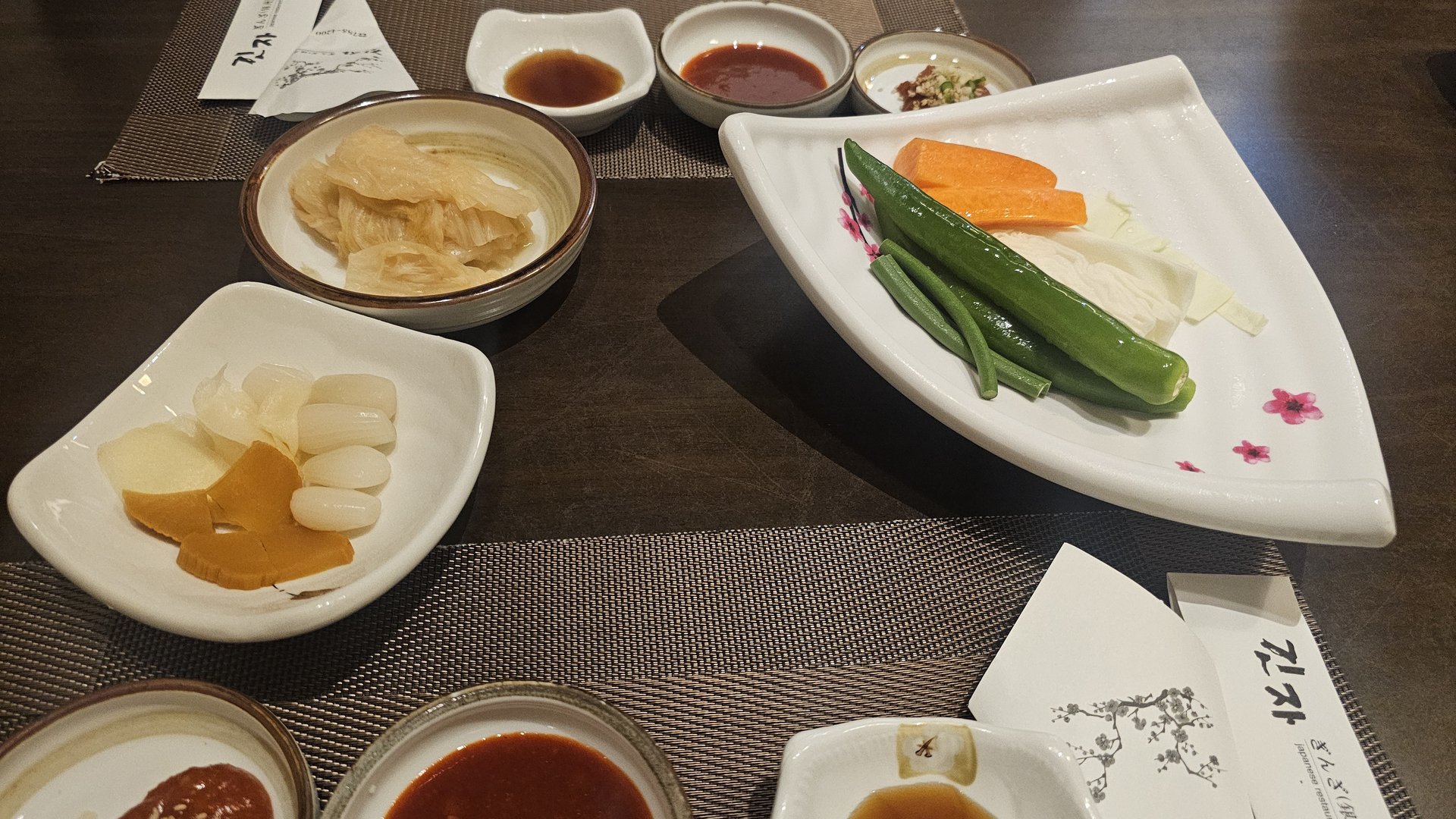
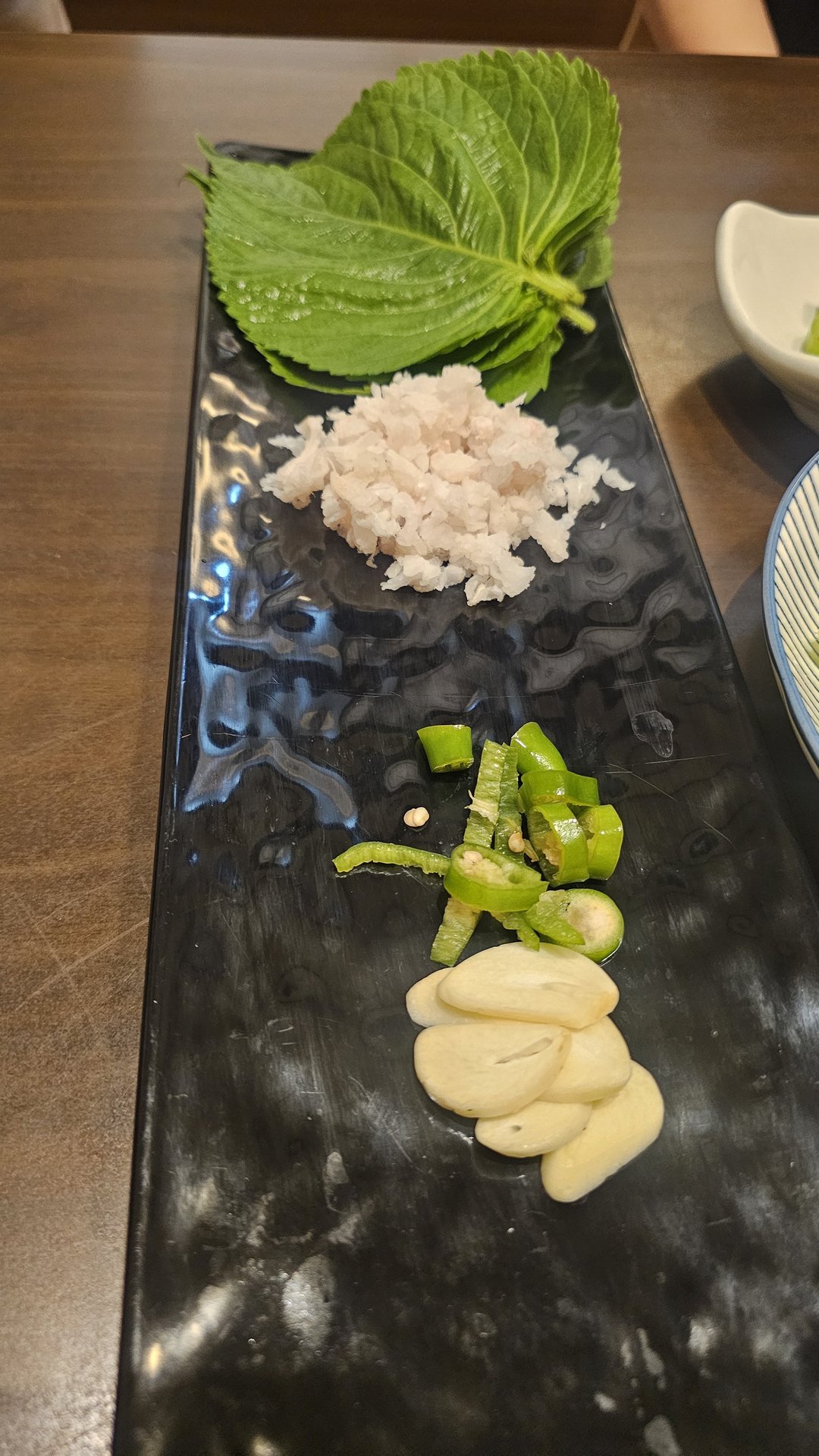
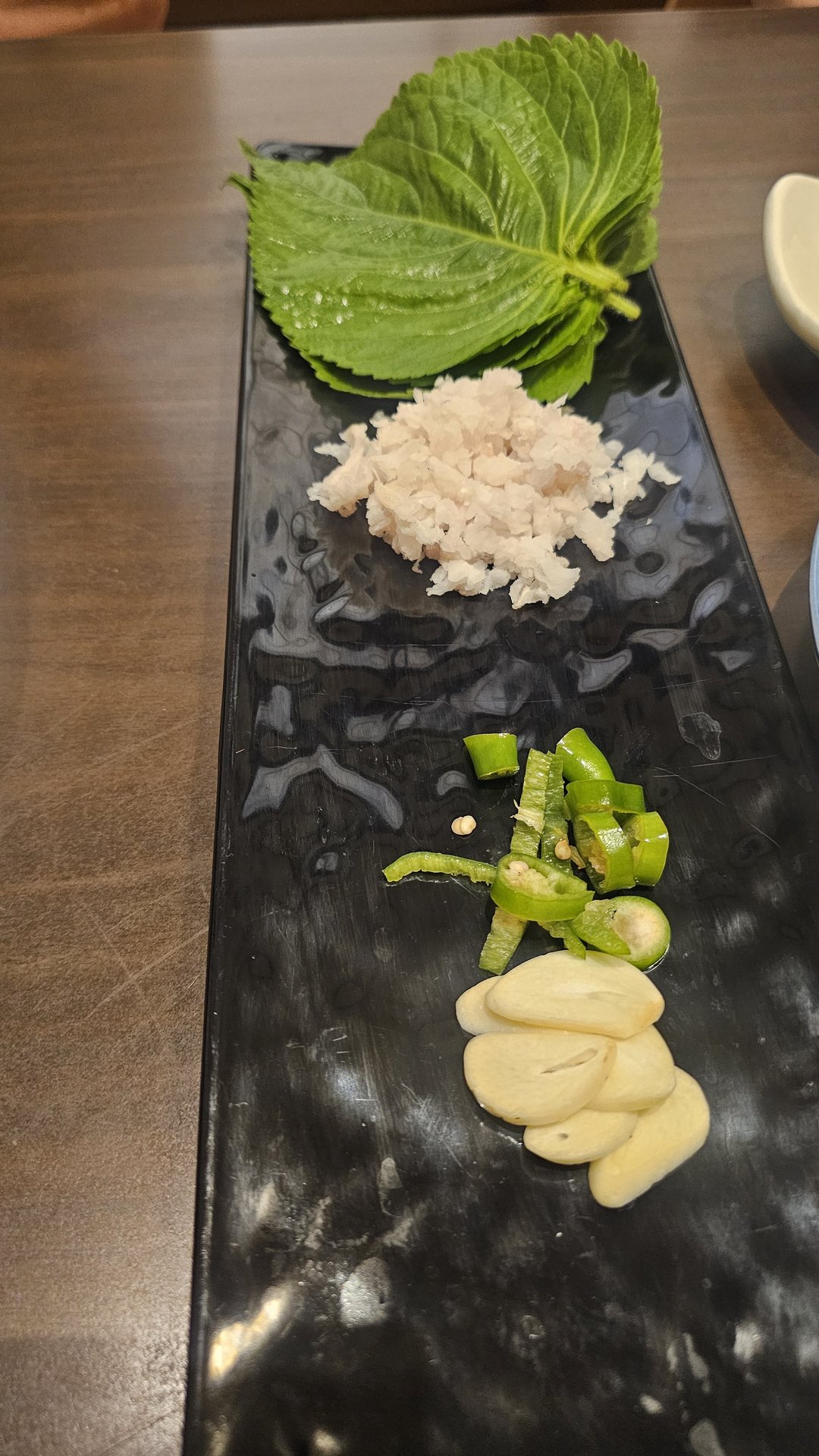
Courses started with a mixed green salad and a small assortment of pickled radish, fresh vegetables for ssam (wrapping), and multiple dipping sauces — soy vinegar, ponzu, a spicy sauce, and a couple of others.
Ssam (쌈) is the Korean practice of wrapping bites of meat or fish in leafy greens like perilla leaves. The tray came with perilla, salted greens, sliced green chili, and whole garlic. For the uninitiated: you grab a leaf, place whatever you want inside, add a bit of garlic or chili, fold it up, eat in one bite. You don’t need instructions — it’s intuitive once you see the tray.
Three dipping sauces alongside: standard setup for Japanese-Korean course dining.
Sashimi
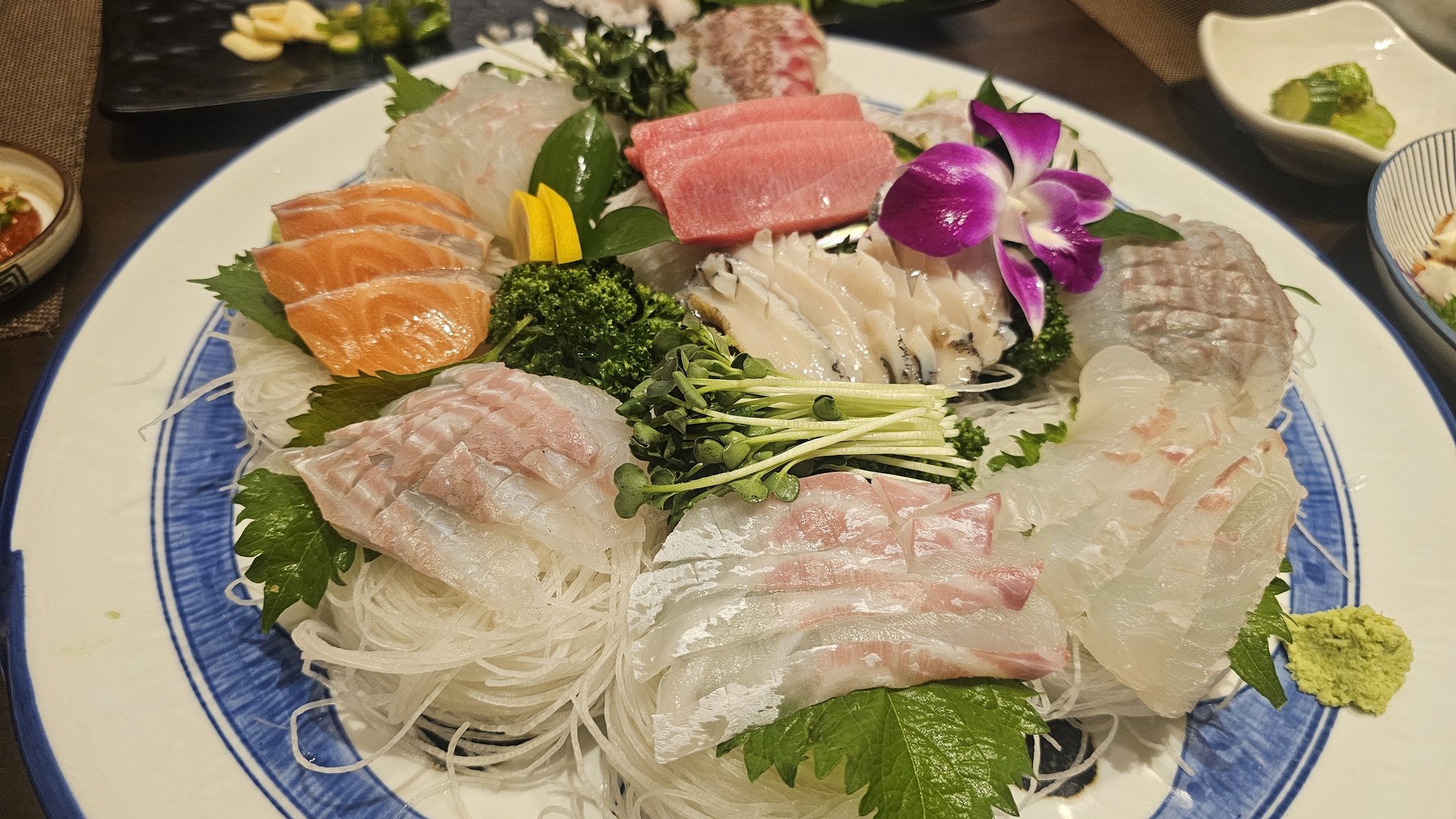
The sashimi platter was the first real showstopper. Salmon, tuna belly (중뱃살), flounder (광어), sea bream (도미) — a wide range, all sliced thick and arranged properly on a large platter. Not a few thin slices on a corner of a plate. This was a full spread.
The fish tasted clean. That’s the honest summary. Fresh, properly handled, no off notes. For a 20-year restaurant, you’d expect the fish sourcing to be consistent — and it was.
Seafood Assortment
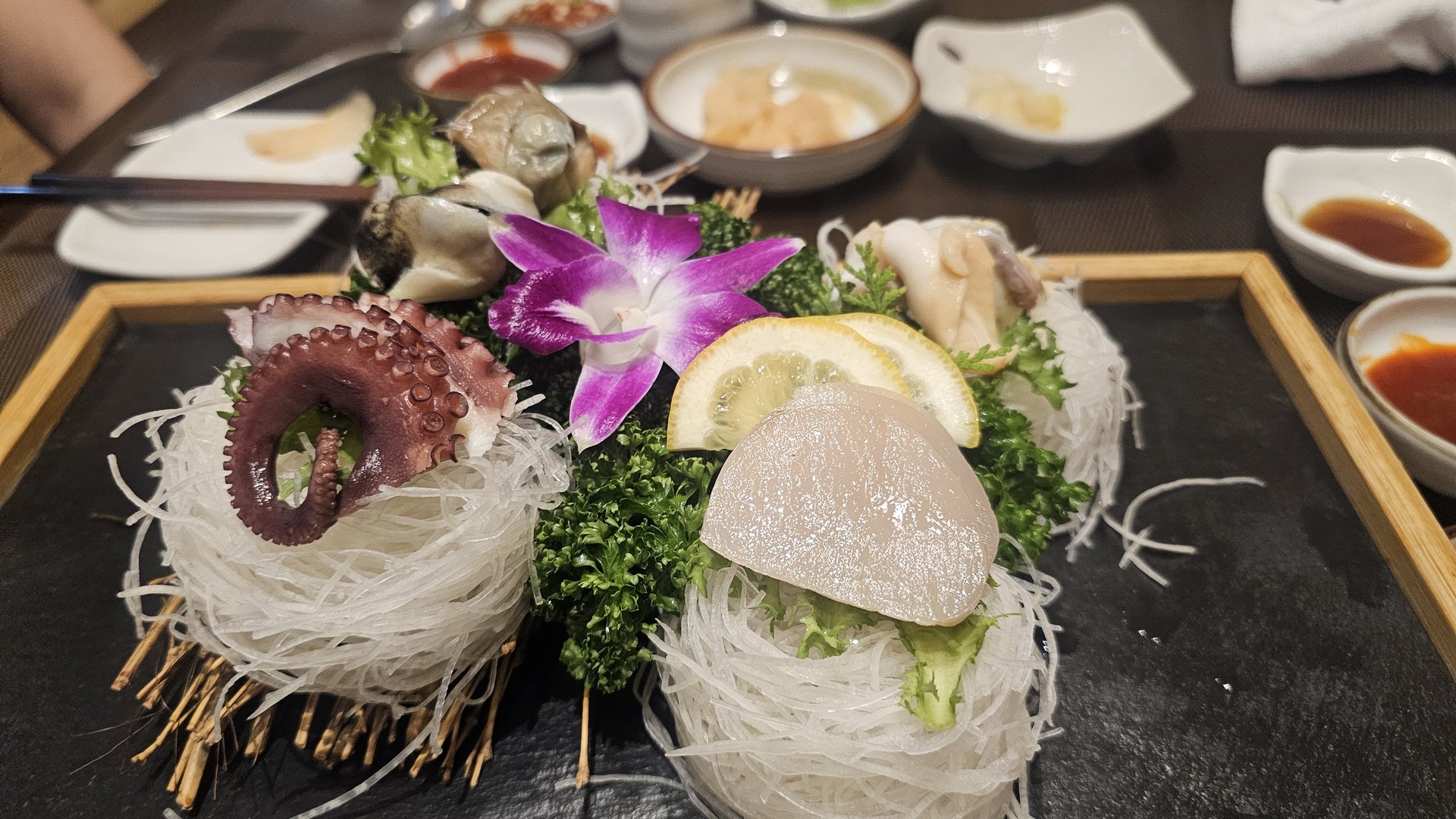
This course included octopus (문어), scallop/gwanja (관자), oyster (굴), and what appeared to be sea urchin (성게) as a garnish on a straw tray. Presentation was genuinely good — the straw tray and careful arrangement made it look more like an omakase counter than a lunch restaurant.
Octopus was tender, scallop was clean and sweet, oyster was fresh. No complaints on this course.
Sushi
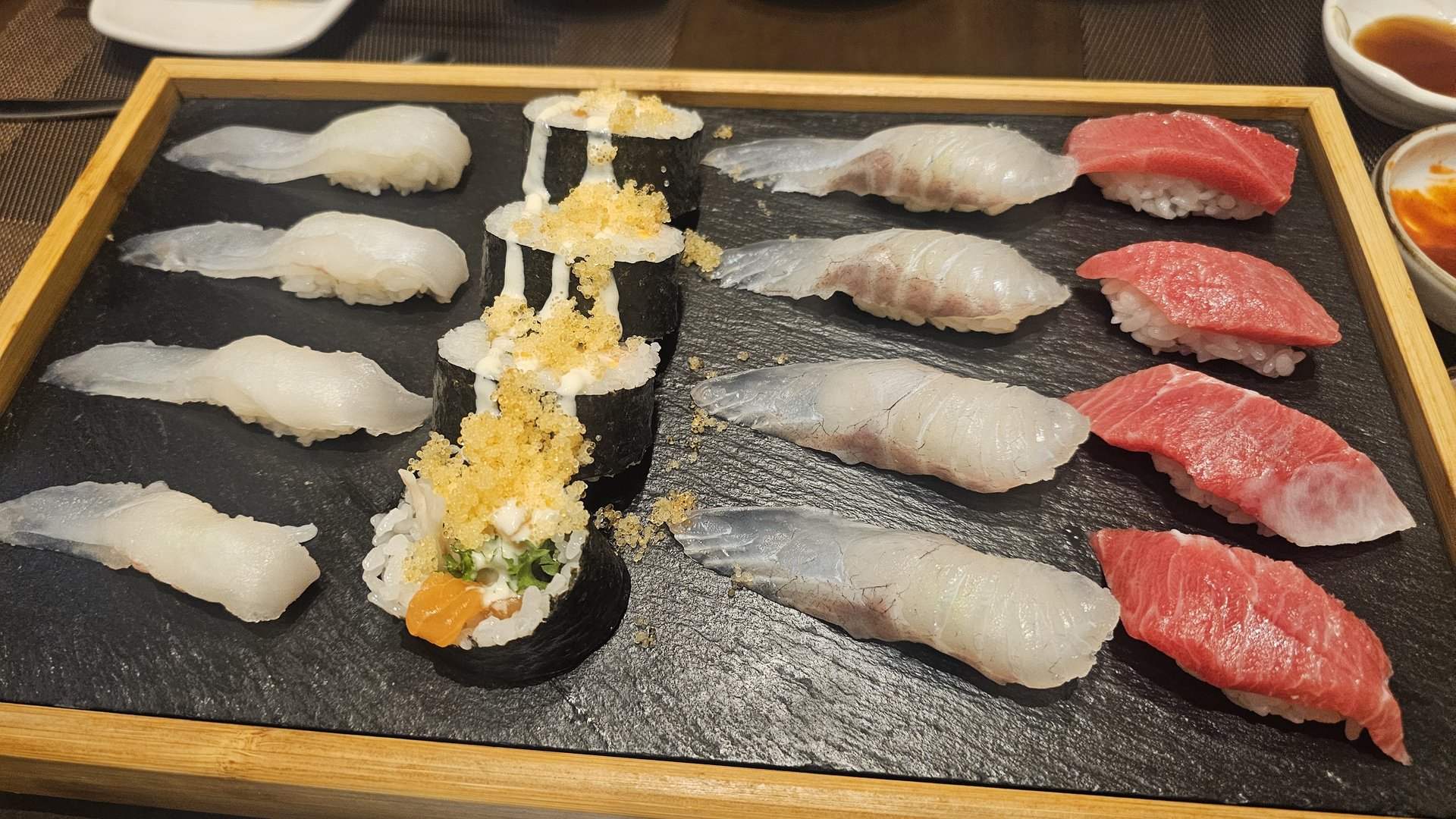
Around 15 pieces of assorted nigiri and gunkan maki served on a slate board: flounder, sea bream, otoro (fatty tuna belly), and a few gunkan-style pieces. The rice was well-seasoned — this is where a lot of Korean Japanese restaurants fall short, but Ginza’s rice temperature and vinegar balance were right.
Otoro (大トロ) is the fattiest cut of bluefin tuna — melt-on-your-tongue texture, slightly sweet, rich. If you see it on a sushi course in Seoul, it’s a good indicator of the restaurant’s quality ceiling. Theirs was solid.
Tempura
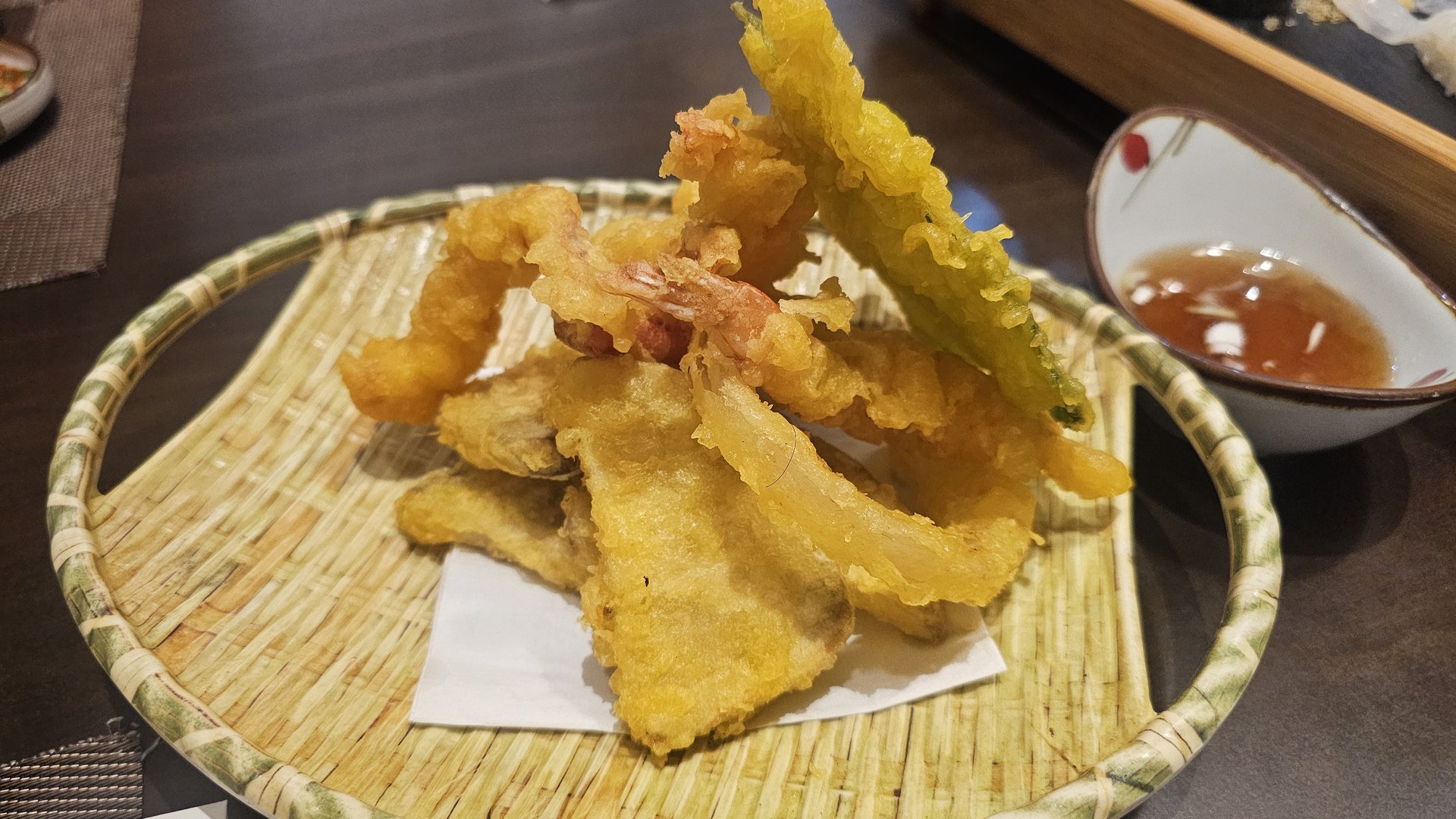
Shrimp, fish, and vegetables in a bamboo basket, served with tentsuyu dipping sauce. Batter was light — the right kind of transparent, barely-there crunch. No greasiness. The tentsuyu (天つゆ — a dashi-based dipping broth) was mild and clean.
Tempura is easy to do poorly. Heavy batter, overcooked shrimp, oil that isn’t hot enough. Ginza’s version had none of those problems.
Grilled Fish
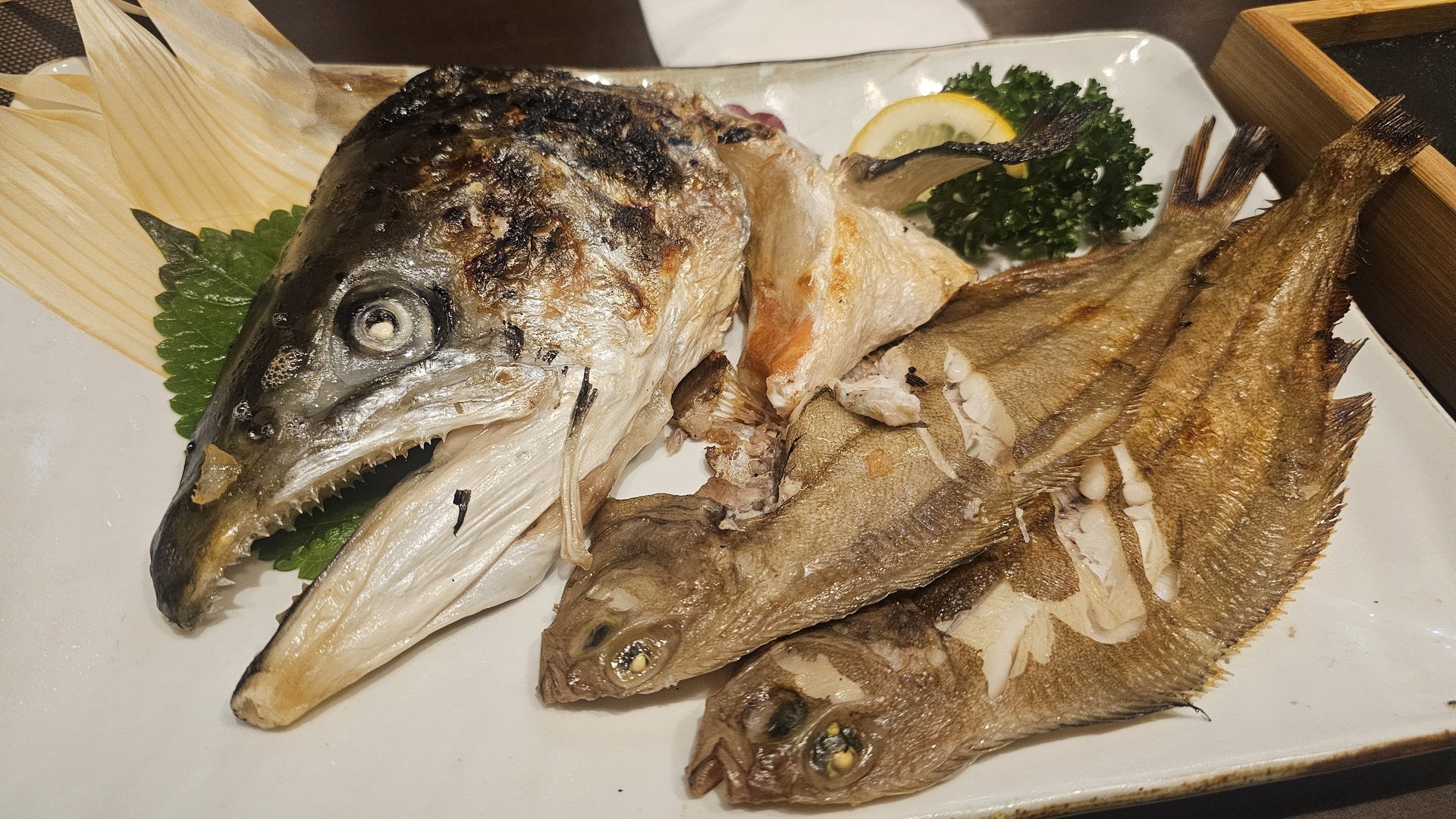
A large whole fish head plus a couple of smaller whole grilled fish. Visually impressive in the way only a whole grilled fish can be. Skin properly charred, flesh flaky and moist.
For foreign visitors: eating around a whole fish head is normal at this kind of Korean-Japanese restaurant. Staff can help if you’re not sure how to work through it.
Noodles and Rice to Finish
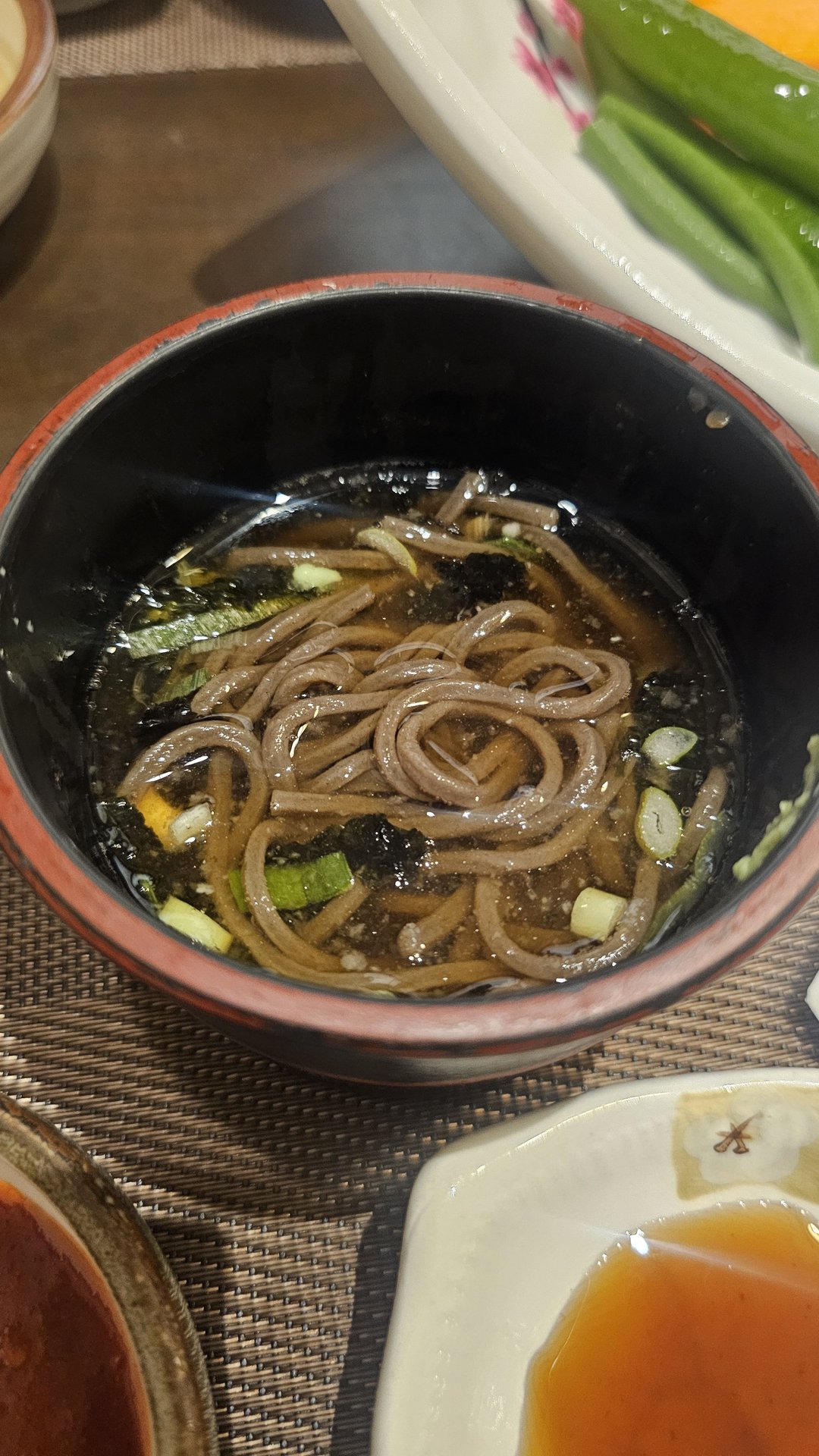
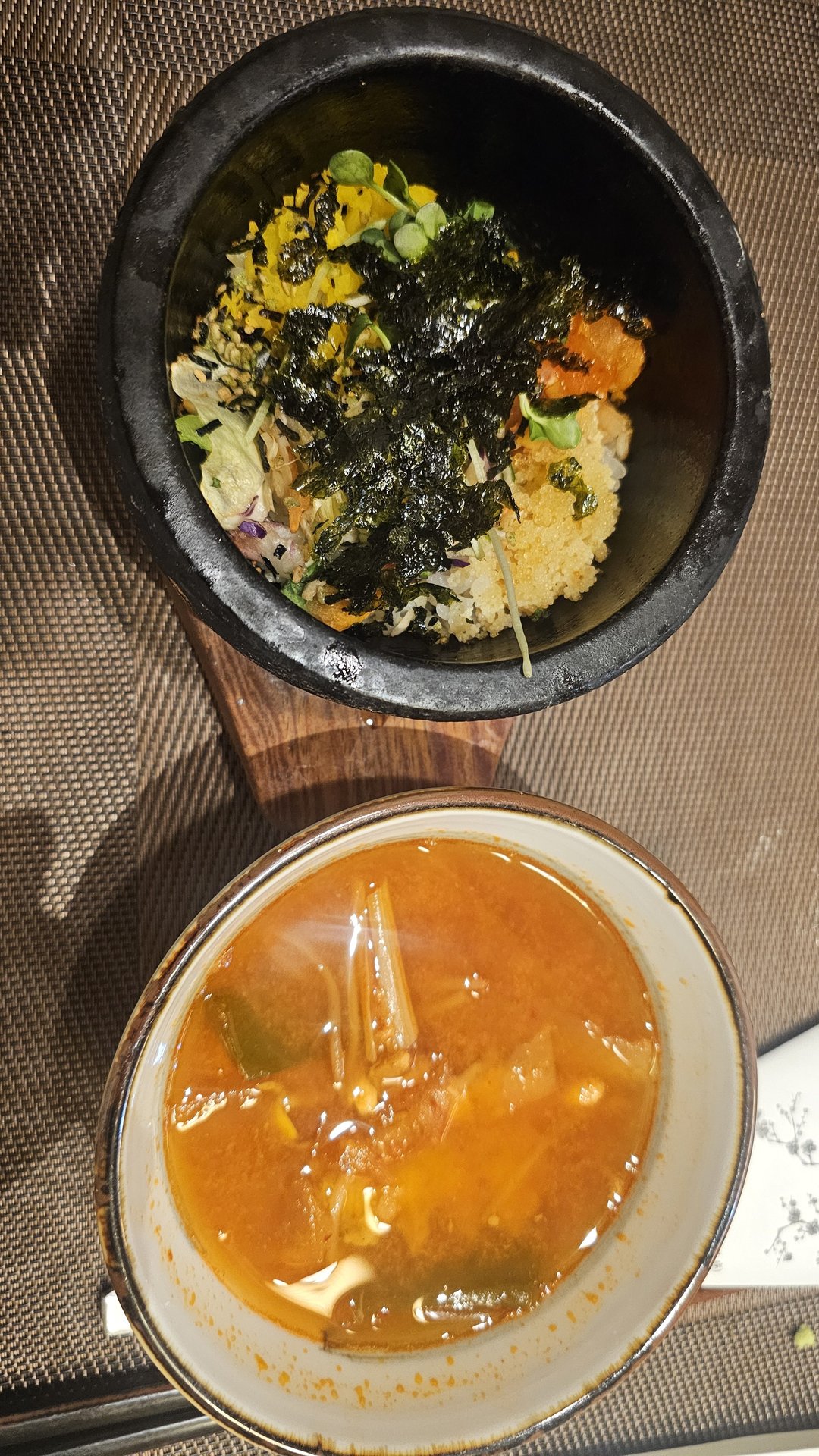
Hot soba (温そば — buckwheat noodles in hot dashi broth) with scallions and seaweed, served in a black lacquer bowl. Then stone pot rice (돌솥밥) with Japanese-style miso soup to close the savory courses. The stone pot rice arrived with a slight crunch on the bottom — the scorched rice layer is intentional and considered good by Korean standards.
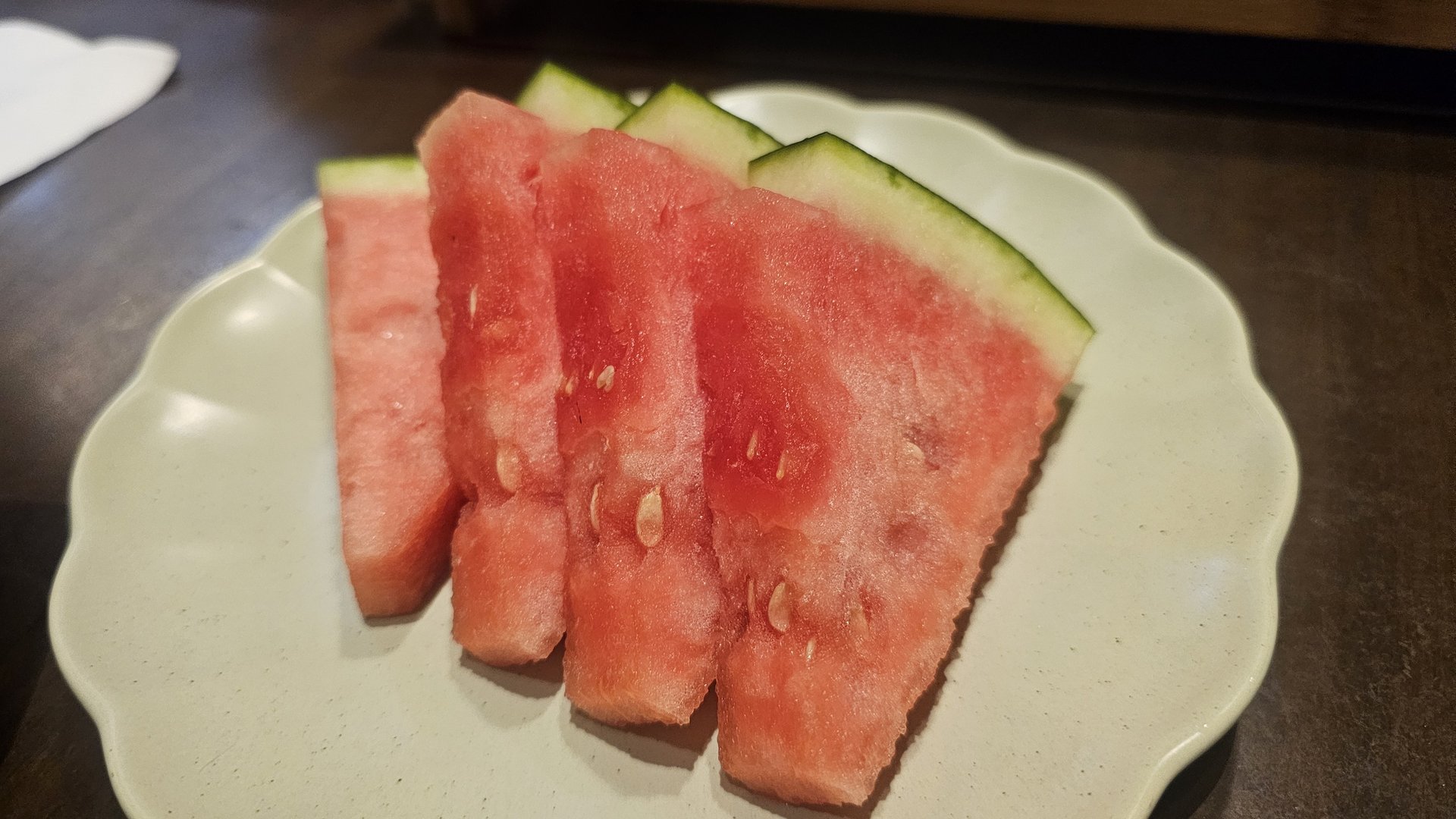
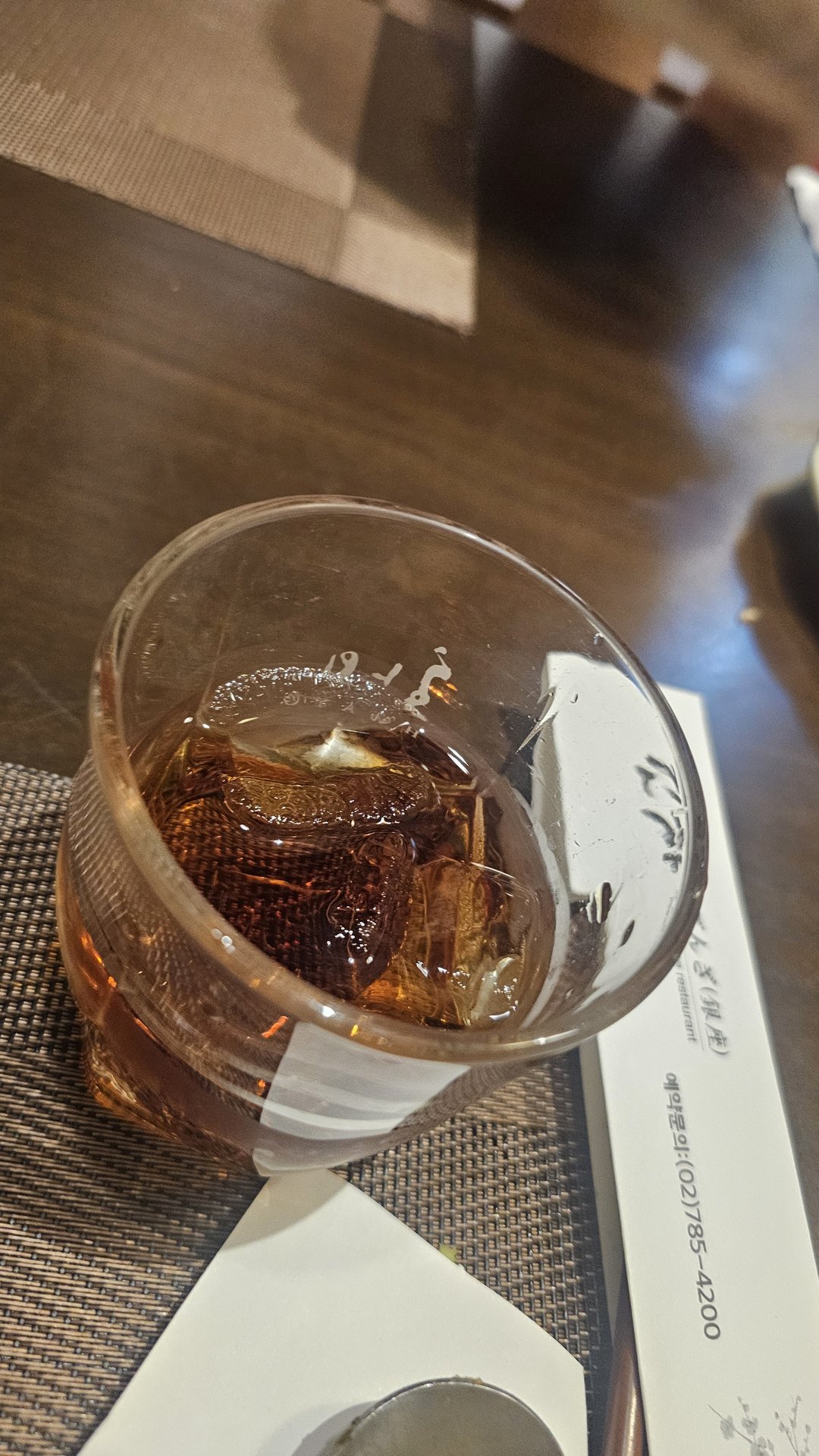
Dessert was simple: four triangular slices of watermelon on a white plate. Classic light finish after a long meal. Iced barley tea on the side throughout.
Stuff Tourists Should Know
Language: The menu is Korean and Japanese. Don’t expect English menus. That said, the course format means you don’t really need to read anything — you pick a price tier, and the kitchen handles the rest. Pointing works.
Payment: Card payment should be fine at a restaurant at this level. Foreign cards (Visa/Mastercard) are widely accepted in Seoul. Worth confirming at the door.
Tipping: No tipping in Korea. Don’t tip.
Dietary restrictions: This is a seafood-heavy Japanese course. Not suitable for vegetarians, vegans, shellfish allergies, or halal requirements. The course structure makes substitutions difficult.
Groups: Tables are set up for groups of 4+. Solo dining would feel odd here. This is a group meal format.
Reservation: Strongly recommended, especially at lunch. Yeouido business crowd fills up popular spots.
Dress code: No strict policy, but the vibe is business casual. You’ll see suits and smart casual. Beach shorts would be out of place.
The Verdict
Should you go?
Depends on what you’re doing in Seoul.
– Business meal or formal occasion in Yeouido — yes, this is the answer. Reliable, quiet, handles the pacing for you.
– Budget is real money to you — the lunch set (40,000–48,000 KRW / ~$30–36 USD) is the smarter entry point. Full Ginza course adds up fast for 4 people.
– You have 5 days in Seoul and want to try everything Korean — probably skip. Spend that money on Korean BBQ, raw crab, or a proper Korean hanjeonsik course. Come back to Japanese cuisine on a longer trip.
– You’ve visited Japan and want to compare — interesting to see the Seoul interpretation. Ginza serves a Korean-inflected Japanese course. The ssam tray and some of the sauce pairings are distinctly Korean. Not pure Japanese omakase, and not trying to be.
The food was clean. That’s the honest take. Everything was properly cooked, well-presented, and tasted like what it was supposed to taste like. For a 20-year-old restaurant hitting its anniversary, that consistency is the whole point.
Four of us left satisfied. Nobody had complaints. Nobody had a revelation either. Clean, solid, expensive. Worth it if you’re already in Yeouido and looking for a proper sit-down meal.
FAQ
How much does a meal at Ginza Yeouido cost per person?
Lunch sets run 40,000–48,000 KRW (~$30–36 USD). The full Ginza course goes 68,000–108,000 KRW (~$50–80 USD) per person depending on the tier you choose.
Do I need a reservation at Ginza Yeouido?
Strongly recommended, especially for groups of 4 or more. This is a popular business-lunch spot in Seoul’s financial district — walk-ins are hit or miss. Check their official channels or call ahead.
Is there an English menu at Ginza Yeouido?
It’s a Korean-run Japanese restaurant, so the menu is primarily in Korean and Japanese. Staff can assist with orders, but don’t expect full English service. Pointing at the course price tiers on the entrance board gets you far.
What’s included in the Ginza course menu?
A typical Ginza course runs through multiple stages — sashimi platter, assorted seafood (octopus, scallop, oyster), sushi, tempura, grilled fish, soba, stone pot rice with miso soup, and a light dessert like watermelon. It’s a full meal.
Is Ginza Yeouido good for a business lunch in Seoul?
Yes, this is exactly the kind of place Seoul’s financial district crowd uses for client lunches. Private or semi-private table settings, formal Japanese service, and a course format that takes care of the conversation pacing for you.
Does Ginza Yeouido have any discounts or promotions?
At time of visit, they had a Friday evening event offering 10% off. Worth checking their current promotions before you go, especially if visiting on a weekday evening.
Leave a Reply