Tag: buckwheat noodles

  • Meomil Danpyeon in Yeouido: Korean Buckwheat Bansang Review

    Meomil Danpyeon in Yeouido: Korean Buckwheat Bansang Review

    Quick honest review of Meomil Danpyeon in Yeouido. Short version: buckwheat specialist on the 2nd floor of an office tower, the bansang set is solid, and 23,000 KRW (~$17 USD) per person is steep for noodles — fair for a full set meal with sides and a drink included. The perilla oil noodles are the reason to come.

    Two of us. Thursday. 11 AM sharp.

    What is Meomil?

    Meomil (메밀) is buckwheat. Not soba — though they’re related. Korean buckwheat noodles have their own identity: earthy, slightly gritty compared to wheat noodles, usually served cold. Different texture, different tradition.

    Meomil Danpyeon (단편 = “short story”) builds the entire menu around one ingredient. The noodles are buckwheat, the kimbap uses buckwheat rice, the drink is buckwheat-based. It’s a concept restaurant, not a casual noodle spot. Over the last few years, Seoul has seen several places do this — take a traditional Korean grain, build an upscale modern format around it. This is that.
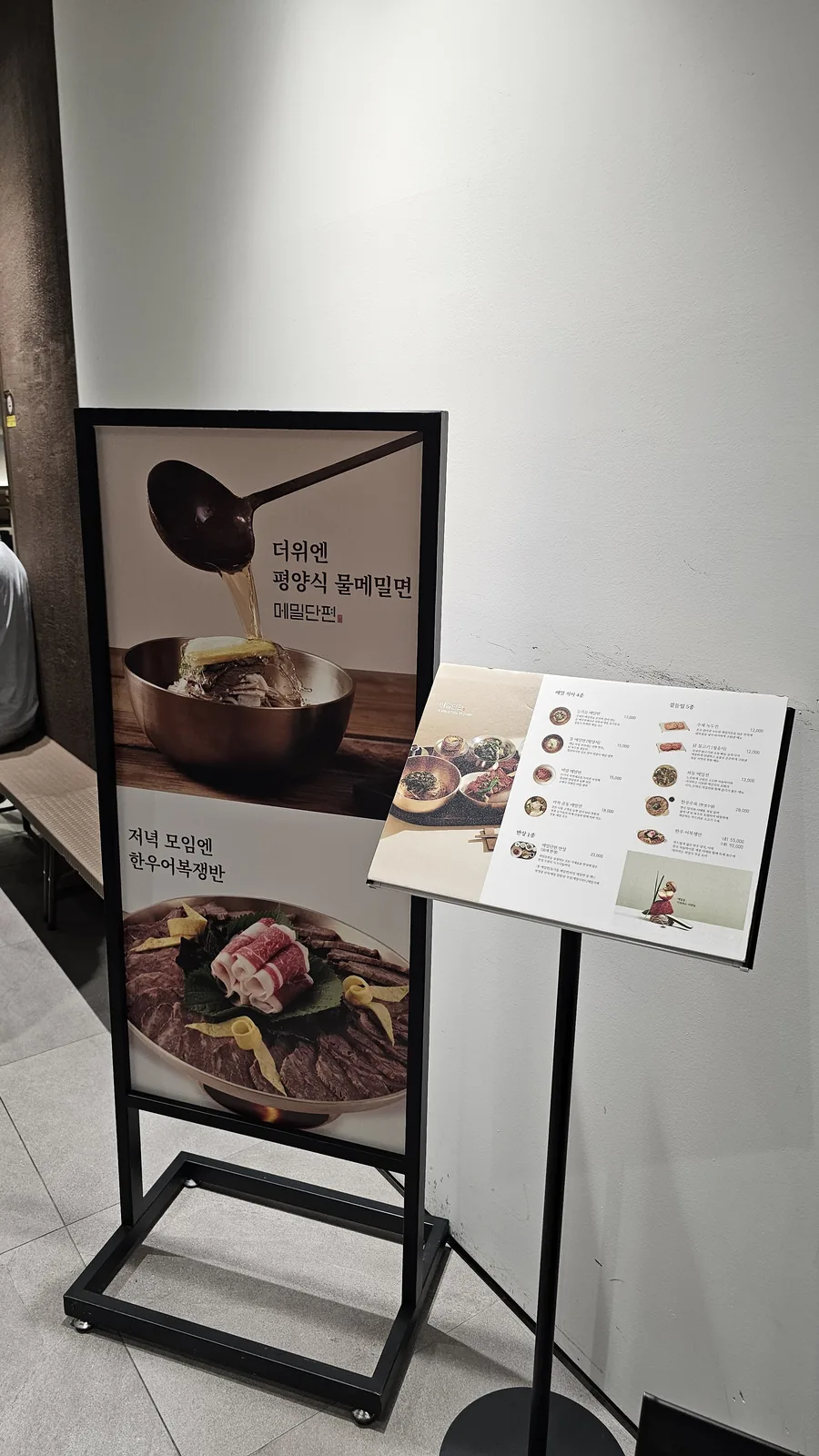
    Promotional standup sign at Meomil Danpyeon entrance featuring cold buckwheat noodles menu
    Promotional standup sign at Meomil Danpyeon entrance featuring cold buckwheat noodles menu
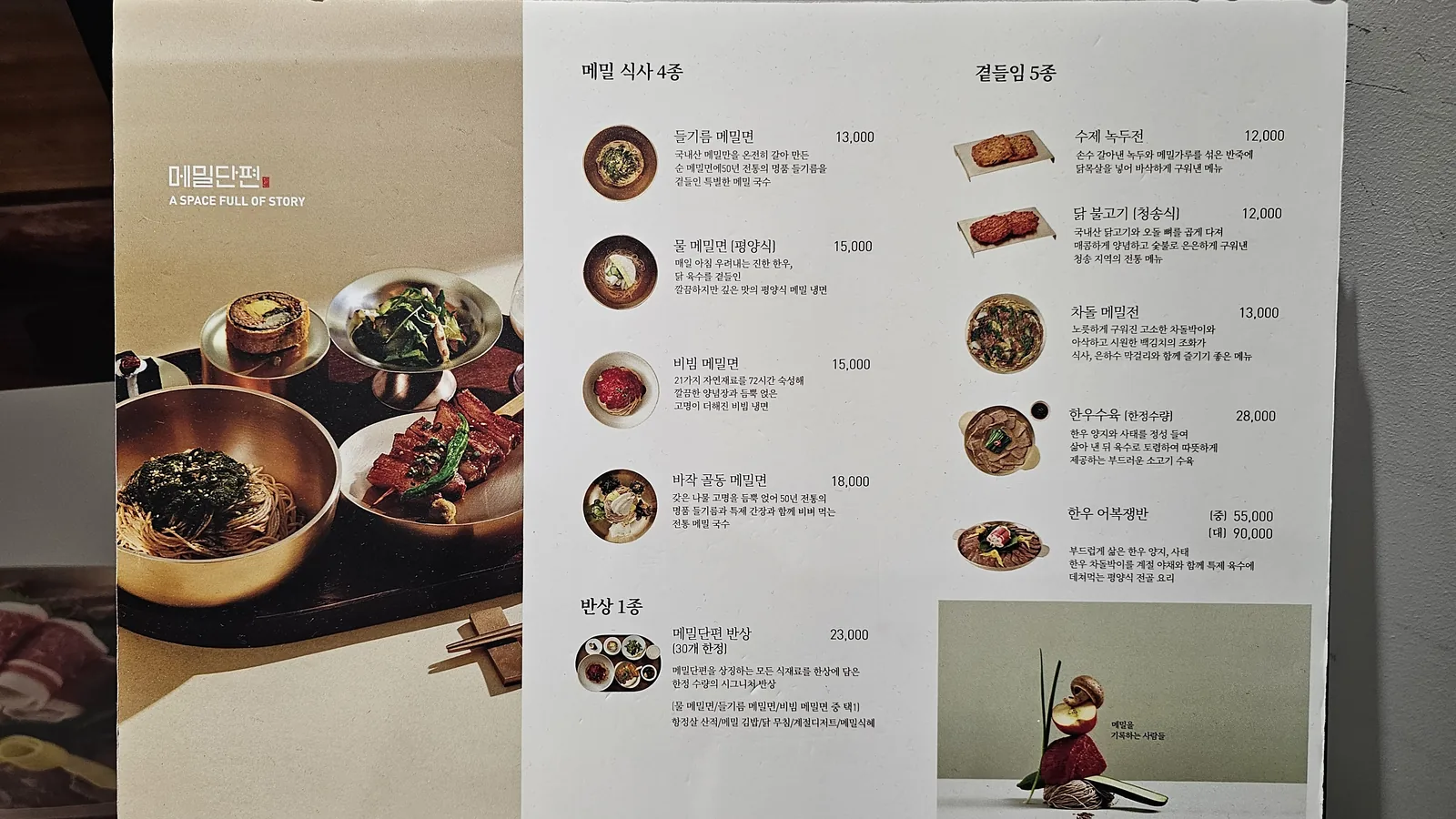
    Full menu board at Meomil Danpyeon Yeouido with buckwheat noodle dishes and bansang set prices
    Full menu board at Meomil Danpyeon Yeouido with buckwheat noodle dishes and bansang set prices

    Getting There

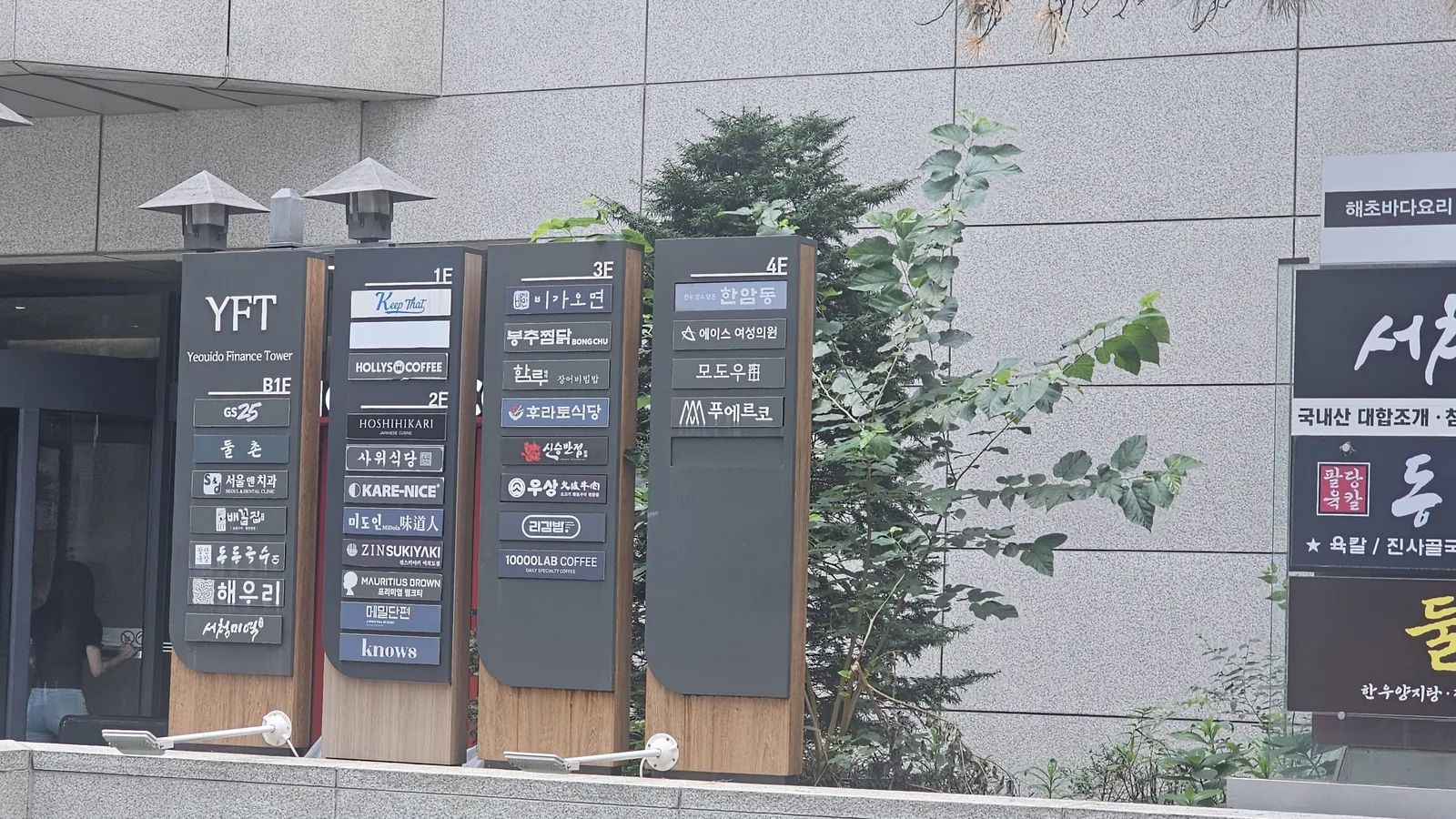
    Yeouido Finance Tower (YFT), 2nd floor. Yeouido is Seoul’s financial district — major banks, securities firms, KBS and MBC broadcast headquarters all packed onto a reclaimed island in the Han River. Think Canary Wharf but more compact, and with better street food on the ground level. The 63 Building and IFC Seoul mall are also here if you’re combining stops.

    Closest subway: Yeouido Station (Line 5 or Line 9), Exit 2. Walk roughly 8-10 minutes. From Gimpo Airport, about 20 minutes on the subway. From Incheon, closer to an hour via AREX then transfer.
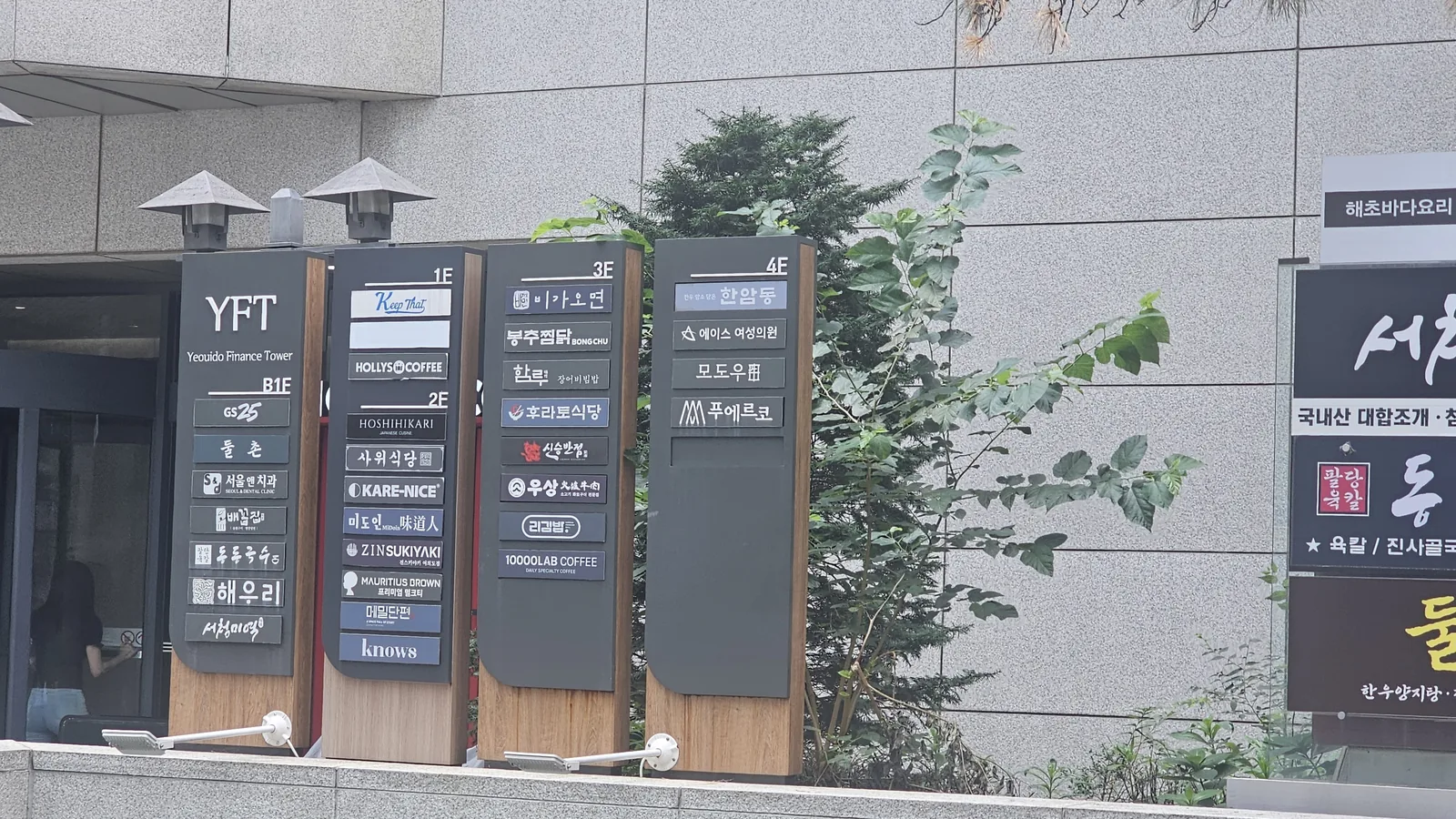
    Building directory sign at Yeouido Finance Tower entrance showing Meomil Danpyeon on 2F
    Building directory sign at Yeouido Finance Tower entrance showing Meomil Danpyeon on 2F
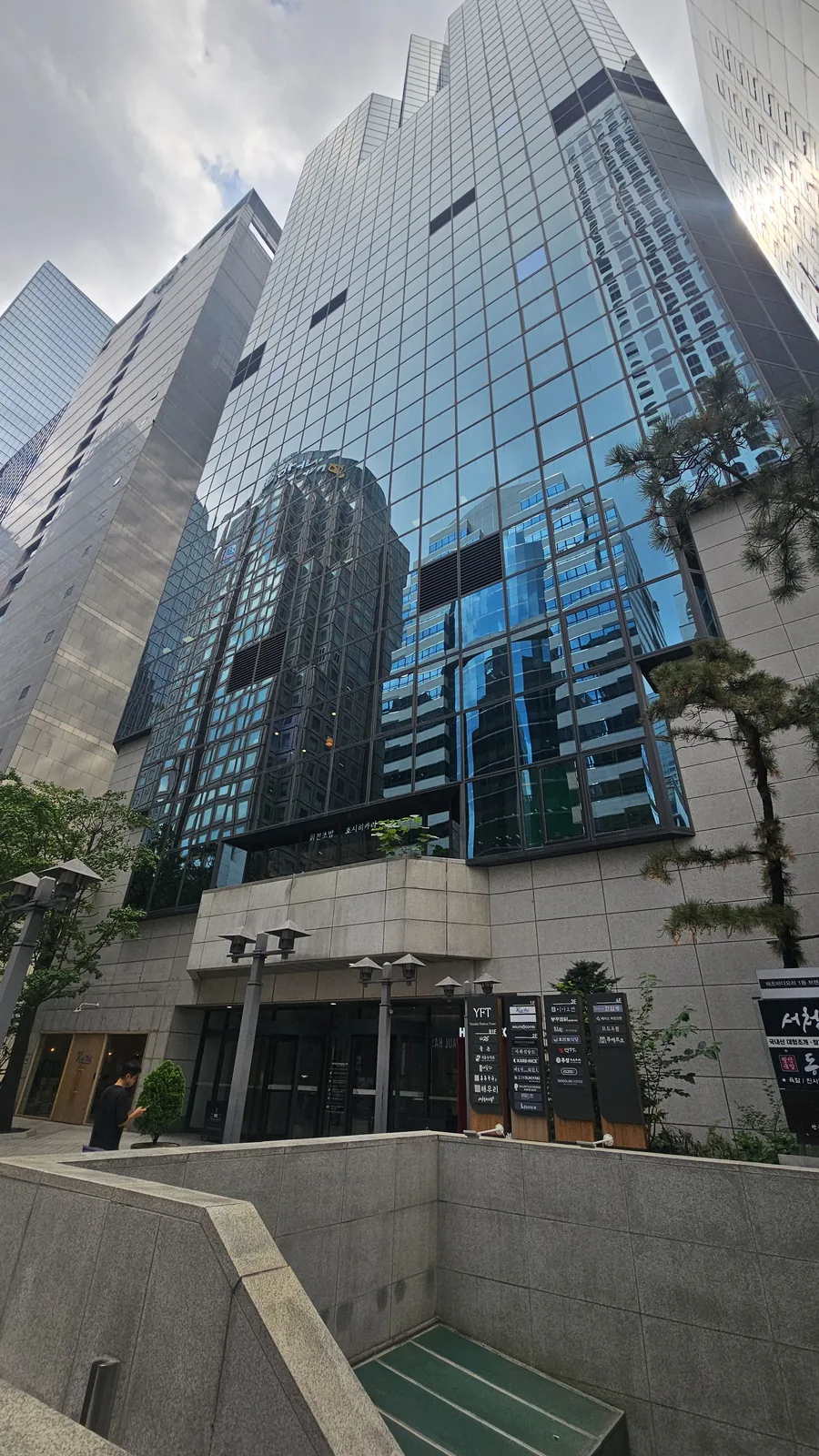
    Exterior glass facade of Yeouido Finance Tower high-rise office building in Seoul
    Exterior glass facade of Yeouido Finance Tower high-rise office building in Seoul

    The Interior

    They went for it. Dried flower arrangements hanging from the ceiling — large, structured installation, not just a few sprigs — brass antique bowls in a glass display case along one wall, muted warm tones throughout. For an office building restaurant, this is more interior design effort than it has to be. Feels like someone cared.

    Ordering is tablet-based at the table. No paper menu.
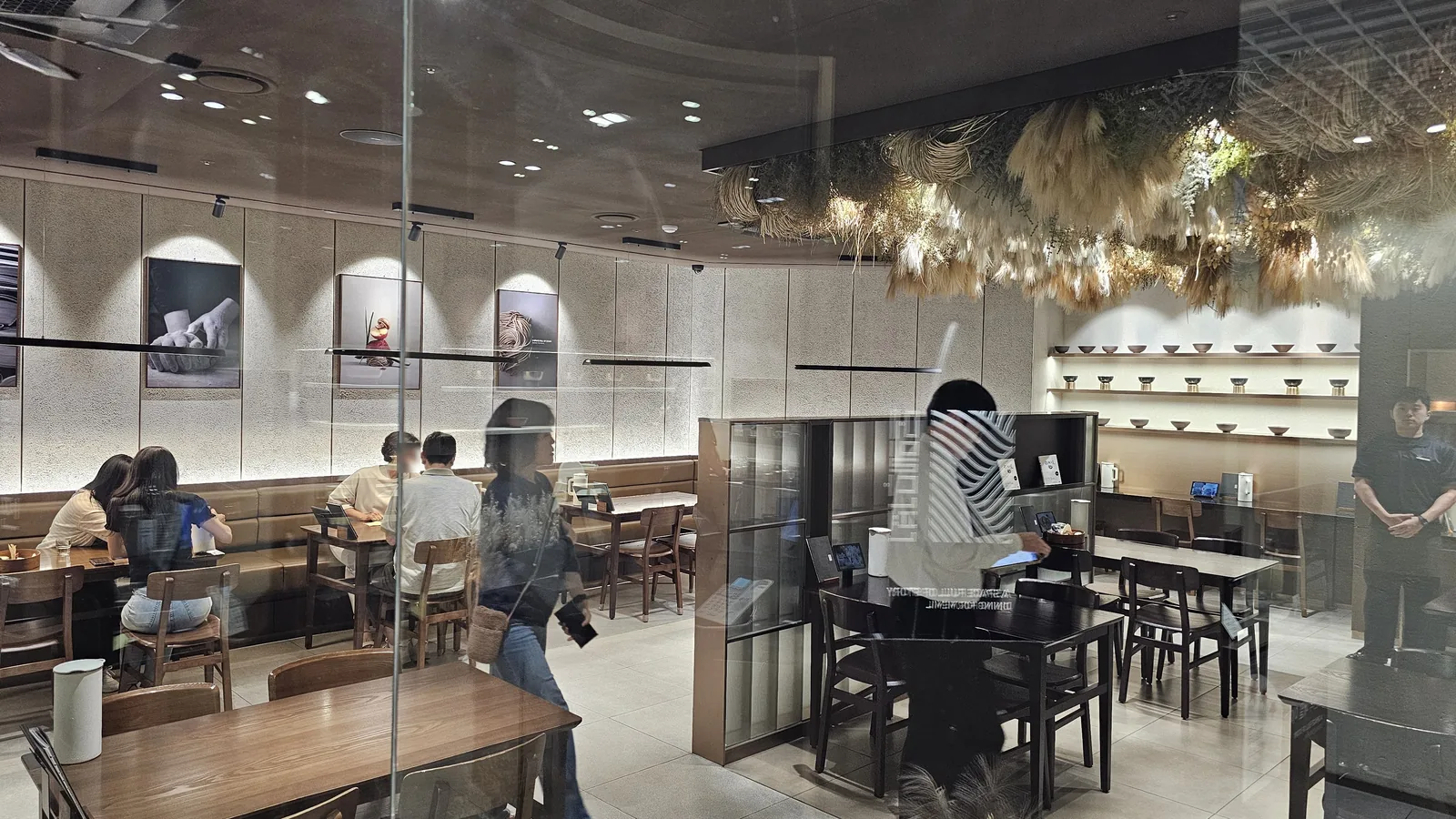
    Interior of Meomil Danpyeon through glass wall showing dried flower ceiling installation and brass bowl display case
    Interior of Meomil Danpyeon through glass wall showing dried flower ceiling installation and brass bowl display case

    The Bansang Set (반상) — 23,000 KRW / ~$17 USD

    Bansang (반상) is a traditional Korean tray meal. Main dish in the center, multiple small side dishes arranged around it, everything served at once. It’s rooted in the formal meal structure from the Joseon dynasty — originally an elaborate multi-course format for the upper class, simplified over time into something more accessible. Modern restaurants like this take the concept and dress it up again.

    Here, the bansang is 23,000 KRW. The only decision you make is the noodle: 들기름 메밀면 (perilla oil buckwheat noodles, dry) or 물 메밀면 (cold buckwheat noodles in clear broth). Everything else — the chicken skewer, kimbap, meat dish, drink, side dishes, dessert — is fixed and the same for both.

    We ordered one of each to compare.
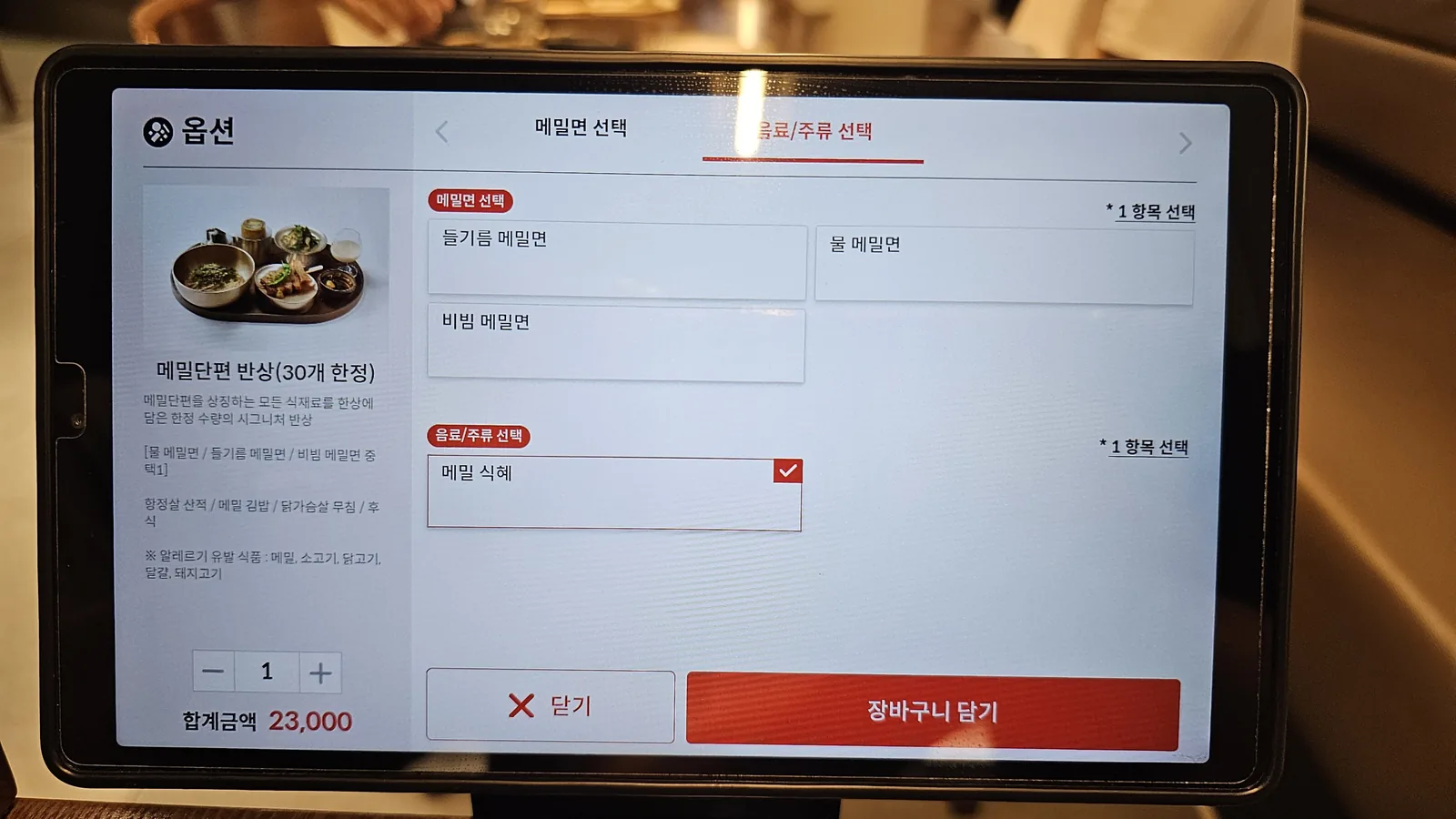
    Tablet ordering screen at Meomil Danpyeon with 23000 KRW bansang set and perilla oil noodle option selected
    Tablet ordering screen at Meomil Danpyeon with 23000 KRW bansang set and perilla oil noodle option selected

    물 메밀면 — Cold Broth Buckwheat Noodles

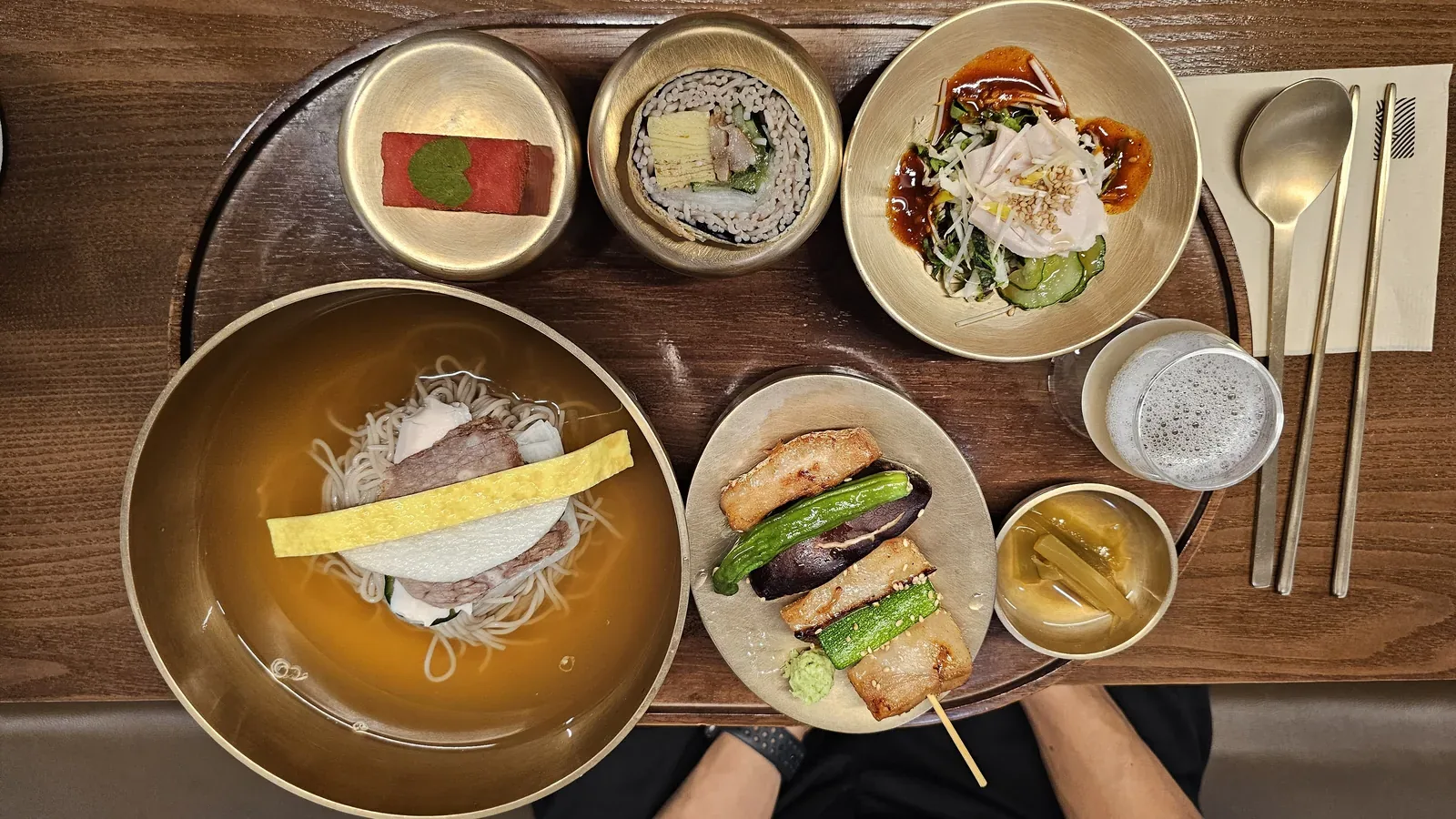
    Meomil Danpyeon bansang tray with cold buckwheat noodles in clear broth, chicken skewer, buckwheat kimbap, and sikhye drink
    Meomil Danpyeon bansang tray with cold buckwheat noodles in clear broth, chicken skewer, buckwheat kimbap, and sikhye drink

    Clear cold broth, nothing aggressive. The buckwheat noodles have more bite than wheat — slightly grainy, stiffer — and hold up well in cold liquid without going mushy. Good for a hot July morning.

    If you’ve tried naengmyeon (Korean cold noodles) before and found the vinegar sharpness too intense, this lands quieter. The broth is subtle, almost understated. No complexity to hunt for. Some people will like that; some will find it boring.

    들기름 메밀면 — Perilla Oil Buckwheat Noodles
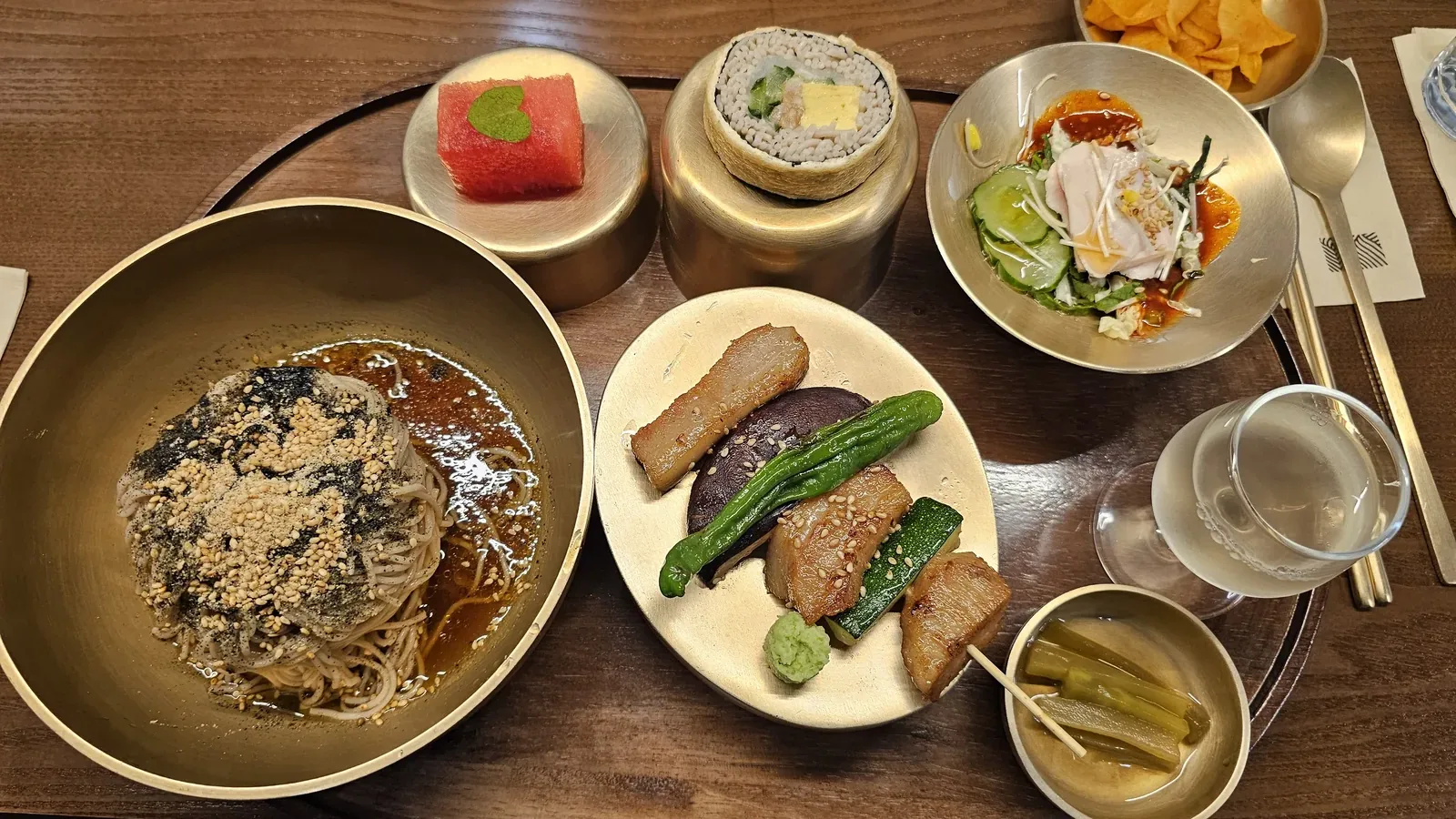
    Meomil Danpyeon bansang tray with perilla oil buckwheat noodles topped with sesame seeds and seaweed flakes, watermelon dessert, and side dishes
    Meomil Danpyeon bansang tray with perilla oil buckwheat noodles topped with sesame seeds and seaweed flakes, watermelon dessert, and side dishes

    Get this one.

    Perilla oil is nuttier than sesame oil and has a faint herbal edge — it’s its own flavor, not a substitute. The noodles come topped with sesame seeds and dried seaweed flakes, and you toss it at the table. Without broth diluting things, the buckwheat’s earthiness comes through cleanly. The oil coats each strand and the noodle flavor actually registers.

    tbh if you haven’t had perilla oil before, this is a decent introduction. It’s distinctive without being challenging. The combination of dry noodle, nutty oil, and earthy grain works.

    The Rest of the Tray

    Chicken skewer. Soy marinade. Decent, not the point.

    Buckwheat kimbap — small rolls where the rice is buckwheat-based, different texture from regular kimbap. Recognizable as kimbap, nothing surprising.

    Hwangjeongsal sanjeok muchim (황정살 산적 무침): cold seasoned meat slices in a light sweet-sesame glaze. Tender. Better than it sounds on paper.

    Buckwheat sikhye — sikhye is a traditional Korean sweet rice drink, cold, lightly fermented. The buckwheat version is less sweet than standard, grainier aftertaste. One of us liked it; the other found it odd. It divides people.

    Watermelon slice for dessert. Small, cold.

    Side dishes at Meomil Danpyeon including white napa kimchi and spicy radish pickle
    Side dishes at Meomil Danpyeon including white napa kimchi and spicy radish pickle

    Side dishes: white kimchi (napa-style, barely fermented, mild) and spicy radish pickle. One line each — they’re background.

    Practical Info

    Price: 23,000 KRW (~$17 USD) per person. Receipt for two: 46,000 KRW total, no extra charges.

    Payment: Card accepted. Standard terminal — foreign cards should work fine.

    Tipping: None. Korea doesn’t tip.

    Language: Tablet ordering has photos, so pointing gets you through the order. Staff interaction is minimal. If you get stuck, someone will help, but don’t expect fluent English.

    Reservations: Walk-in only. We arrived right at 11 AM and sat immediately. By 11:30, the restaurant was half-full with office workers — expect a full house during peak lunch hour.

    Vegetarians: The fixed bansang includes chicken and beef. Check the standalone noodle options on the menu board at the entrance if you need a meatless option.

    Solo: Standard table seating, no counter bar. Probably fine solo, but the space is designed for groups.

    Kids: The food is mild and accessible, but it’s a quiet upscale lunch spot inside an office building. Not exactly family-lunch energy.

    The Verdict

    Perilla oil buckwheat noodles: worth the visit on their own. Cold broth version: good, slightly forgettable. Everything else on the tray: solid supporting cast, no weak links, nothing transcendent either.

    23,000 KRW is high for a noodle lunch anywhere in Seoul. For a full set meal — sides, drink, dessert, curated tray — it’s defensible for Yeouido, which runs expensive across the board.

    Go if you’re in Yeouido anyway. The 63 Building is nearby, IFC Seoul is nearby, the Han River park is a short walk — if any of those are on your itinerary, work this in as lunch.

    Skip it if you have three days in Seoul and haven’t eaten Korean BBQ yet. Do the classics first. Come back to buckwheat bansang sets on a longer trip.

    We’d go back.

    FAQ

    Where exactly is Meomil Danpyeon in Yeouido?

    It’s on the 2nd floor of Yeouido Finance Tower (YFT). Closest subway is Yeouido Station on Line 5 or Line 9 — about an 8-10 minute walk from Exit 2.

    How much does the bansang set cost at Meomil Danpyeon?

    The bansang (set meal tray) is 23,000 KRW (~$17 USD) per person. You choose one noodle — perilla oil or cold broth — and everything else on the tray is fixed.

    Do I need a reservation at Meomil Danpyeon?

    Walk-in only, no reservation system. Arriving right at opening (around 11 AM) gets you seated immediately. By 11:30 AM the restaurant fills up with office workers on lunch break.

    Is there an English menu at Meomil Danpyeon?

    Ordering is tablet-based with photos, so pointing at what you want works fine. English text is limited but the visuals are clear enough to get through the order without Korean.

    What should I order at Meomil Danpyeon?

    Get the bansang set and choose 들기름 메밀면 (perilla oil buckwheat noodles). That’s the standout dish — the cold broth version is also good but less interesting.

    Is Meomil Danpyeon vegetarian-friendly?

    The bansang includes chicken and beef. If you’re vegetarian, check the standalone noodle options on the menu board at the entrance — some may work without meat sides.
    You might also like

    📍 Location

    Open in Google Maps →

  • Jangsu Makguksu in Cheongyang: Fresh Buckwheat Noodle Review

    Jangsu Makguksu in Cheongyang: Fresh Buckwheat Noodle Review

    Jangsu Makguksu in Cheongyang: Fresh Buckwheat Noodle Review

    Quick honest review of Jangsu Makguksu in Cheongyang — a no-frills local buckwheat noodle shop that makes their noodles fresh in-house. Short version: the noodles are genuinely good, the broth is clean and light, and at 9,000 KRW (~$6.70 a bowl) it’s hard to complain.

    Four of us went on a Saturday around 11:30 AM. Walked right in. No wait.

    What Is Makguksu?

    Makguksu (막국수) is Korea’s buckwheat cold noodle dish. Think earthy, slightly nutty-flavored noodles served in cold broth — or tossed in a spicy sauce if you want the bibim (비빔) version.

    It’s often compared to naengmyeon, which is the other big Korean cold noodle dish. But they’re different. Naengmyeon noodles are smoother and more elastic. Makguksu is coarser, with a more pronounced buckwheat flavor. Less refined. More honest.

    The buckwheat flavor is an acquired taste for some — it’s earthy and slightly bitter compared to wheat noodles. But when the noodles are fresh, that flavor gets a lot more interesting.

    About Jangsu Makguksu

    The “Jangsu” in the name refers to Jangsu County in North Jeolla Province (전북 장수군), a mountainous area historically known for buckwheat cultivation. Restaurants using this name are usually signaling a traditional approach to makguksu — this style is actually a signature dish of that region.

    What sets this place apart from most: they make the noodles fresh, right there in the kitchen.

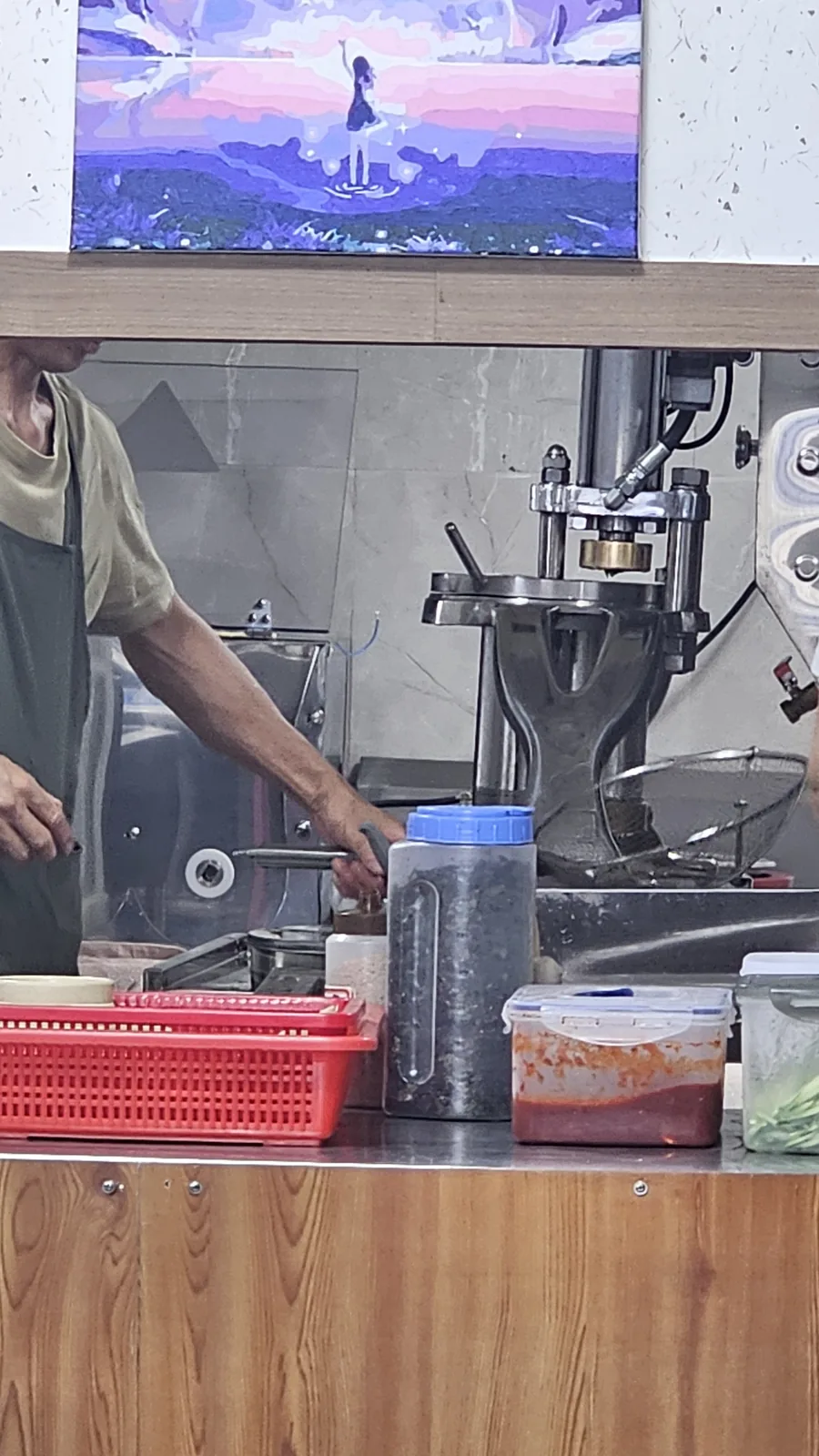
    Kitchen staff at Jangsu Makguksu operating a fresh noodle press machine to make buckwheat noodles in-house
    Kitchen staff at Jangsu Makguksu operating a fresh noodle press machine to make buckwheat noodles in-house

    There’s an actual noodle press machine (제면기) and you can watch staff working it during service. Buckwheat dough goes in, noodles come out. That’s not something you see at every makguksu restaurant. Most places use pre-packaged noodles. Freshly made ones have a noticeably better bite — slightly springier, with a cleaner buckwheat flavor.

    Getting to Cheongyang

    Cheongyang (청양군) is a small rural county in South Chungcheong Province (충남), about two hours south of Seoul by car. It’s not a well-known tourist destination — most people know it, if at all, for the Cheongyang Chili Pepper. The 청양고추 (Cheongyang chili) is actually one of Korea’s most famous varieties, and it’s named after this region.

    If you’re visiting the Chilgapsan area (칠갑산 — a popular hiking mountain nearby) or the Cheongyang Pepper Festival, this restaurant makes a solid lunch stop.

    There’s no direct train from Seoul. Your options are to drive, or take a bus from Cheonan or Daejeon and transfer. Honestly, a car makes way more sense for this area.

    The Interior

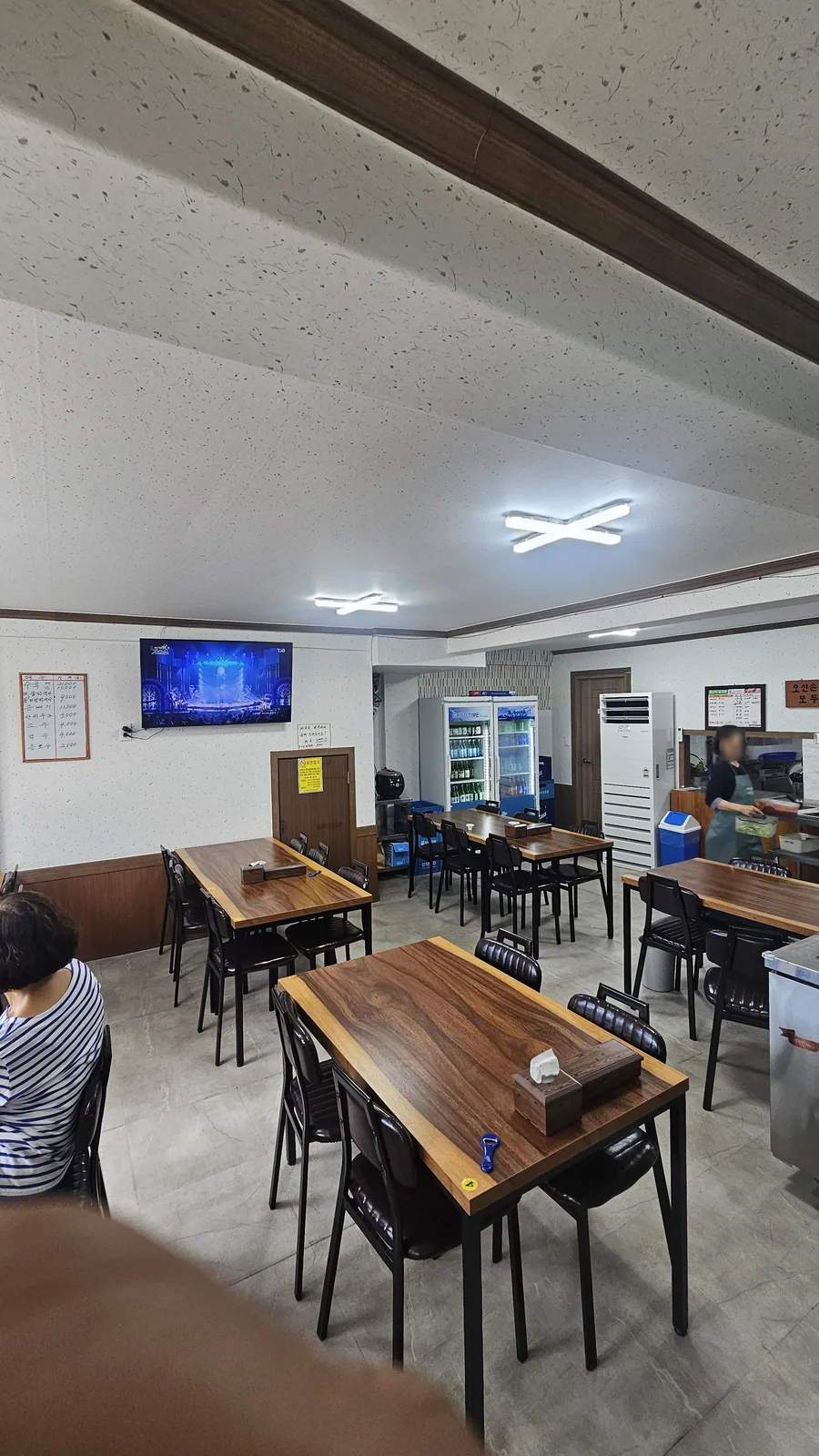
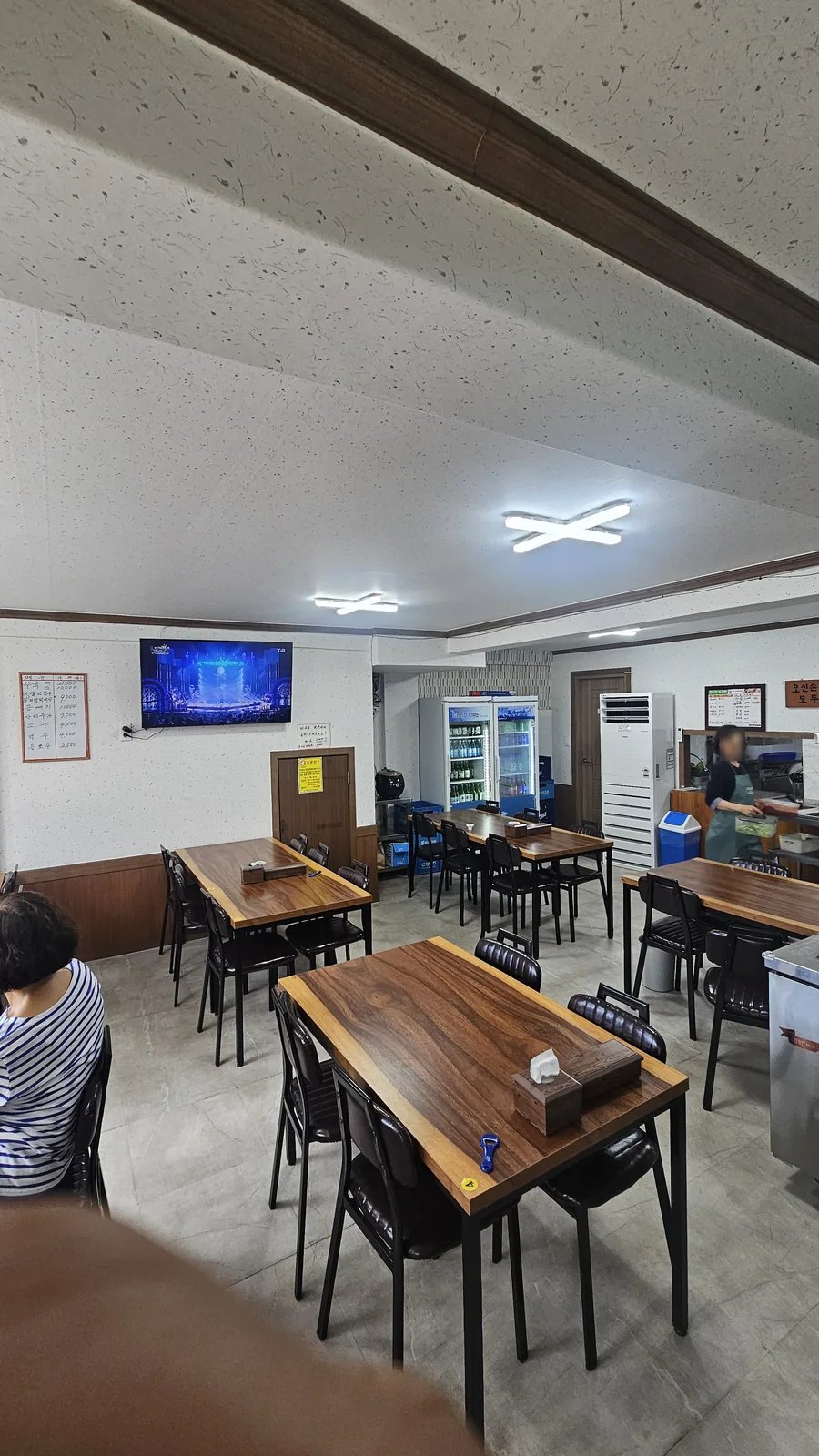
    Interior of Jangsu Makguksu in Cheongyang with wooden tables, black chairs, and LED wall decorations
    Interior of Jangsu Makguksu in Cheongyang with wooden tables, black chairs, and LED wall decorations

    Clean and straightforward. Wooden tables, black chairs, LED strip lighting on one wall, a couple of TVs. Spacious — tables are well-spread, which is nice for a group. No attempt at a “concept” or Instagram-friendly decor. The kind of place that spends money on ingredients, not interior design.

    The Menu

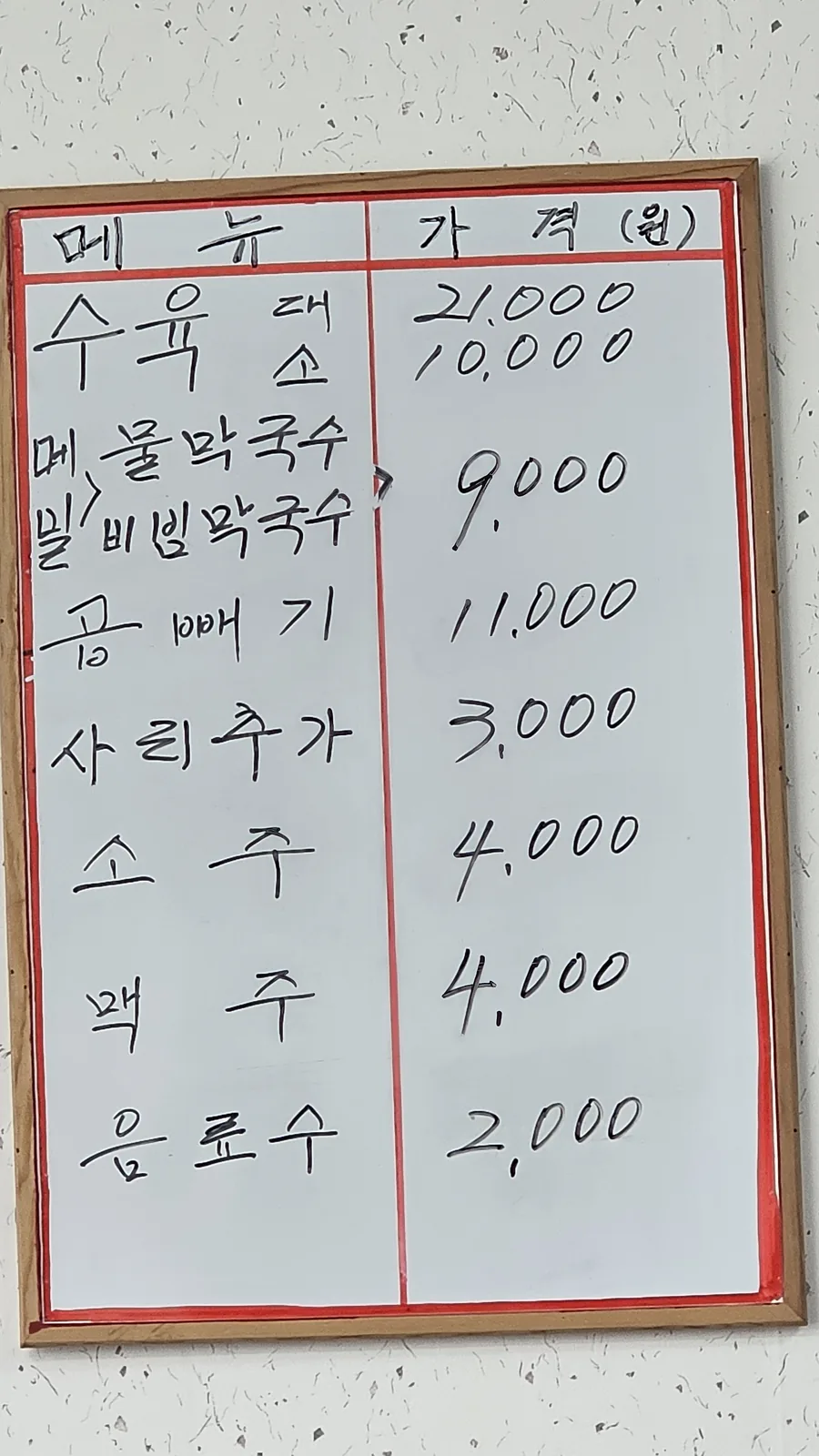
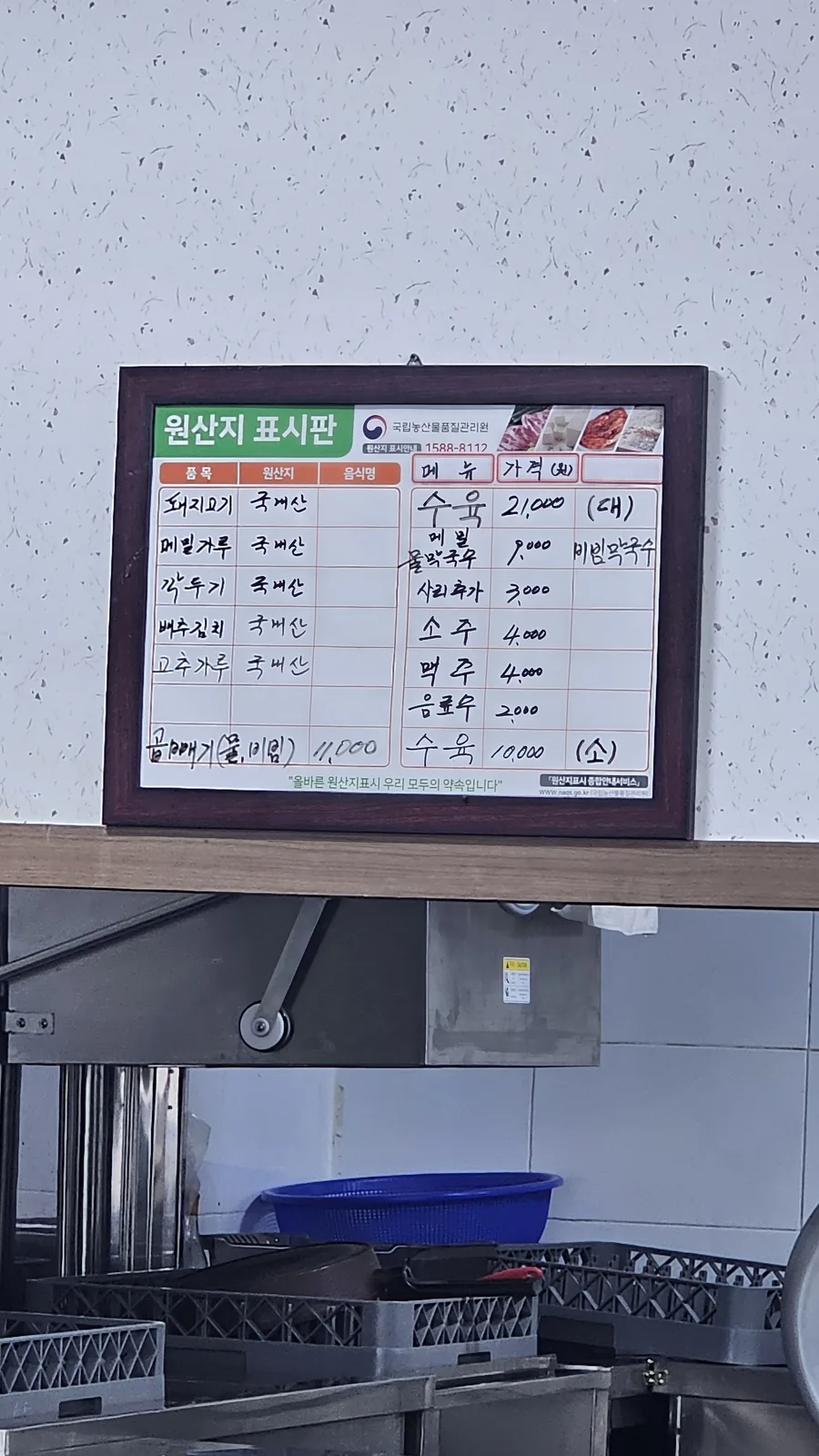
    Handwritten menu board at Jangsu Makguksu showing prices for subyuk, buckwheat makguksu, and bibim makguksu
    Handwritten menu board at Jangsu Makguksu showing prices for subyuk, buckwheat makguksu, and bibim makguksu

    The menu is handwritten on a board and pretty short:

    – 메밀막국수 (Buckwheat Makguksu, cold broth) — 9,000 KRW (~$6.70)

    – 비빔막국수 (Spicy Mixed Makguksu) — 11,000 KRW (~$8.15)

    – 수육 대 (Subyuk, large) — 21,000 KRW (~$15.60)

    – 수육 소 (Subyuk, small) — 10,000 KRW (~$7.40)

    – Add-ons: noodle extra, tofu

    No English menu. But the menu is simple enough to navigate by pointing.

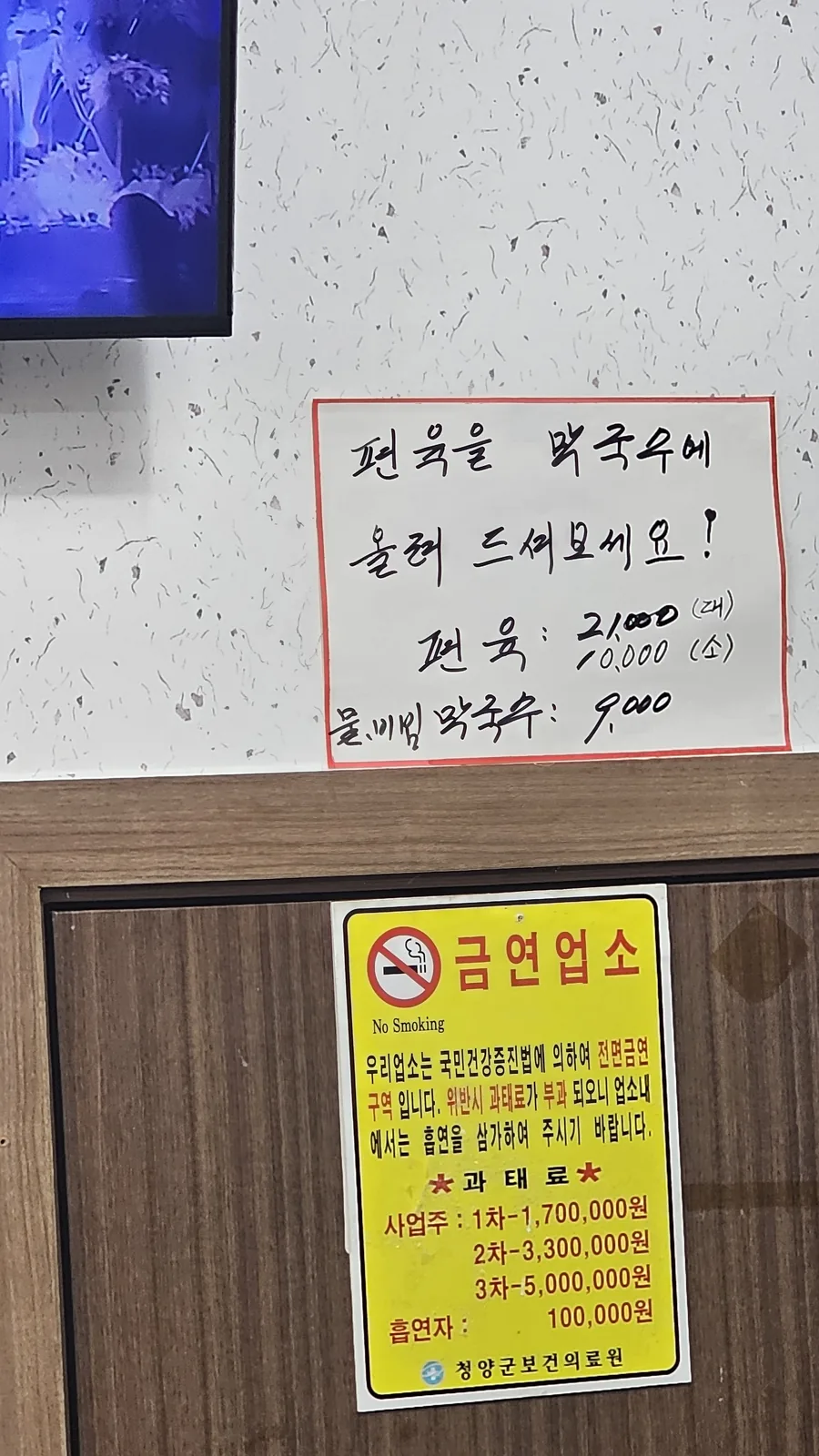
    Restaurant notice at Jangsu Makguksu instructing diners to place subyuk slices on top of makguksu, with pricing
    Restaurant notice at Jangsu Makguksu instructing diners to place subyuk slices on top of makguksu, with pricing

    There’s a notice at the entrance suggesting you place the subyuk on top of your makguksu. We followed that advice. Good call.

    What We Ordered

    We went with the buckwheat makguksu and the small subyuk to share among four.

    Buckwheat Makguksu

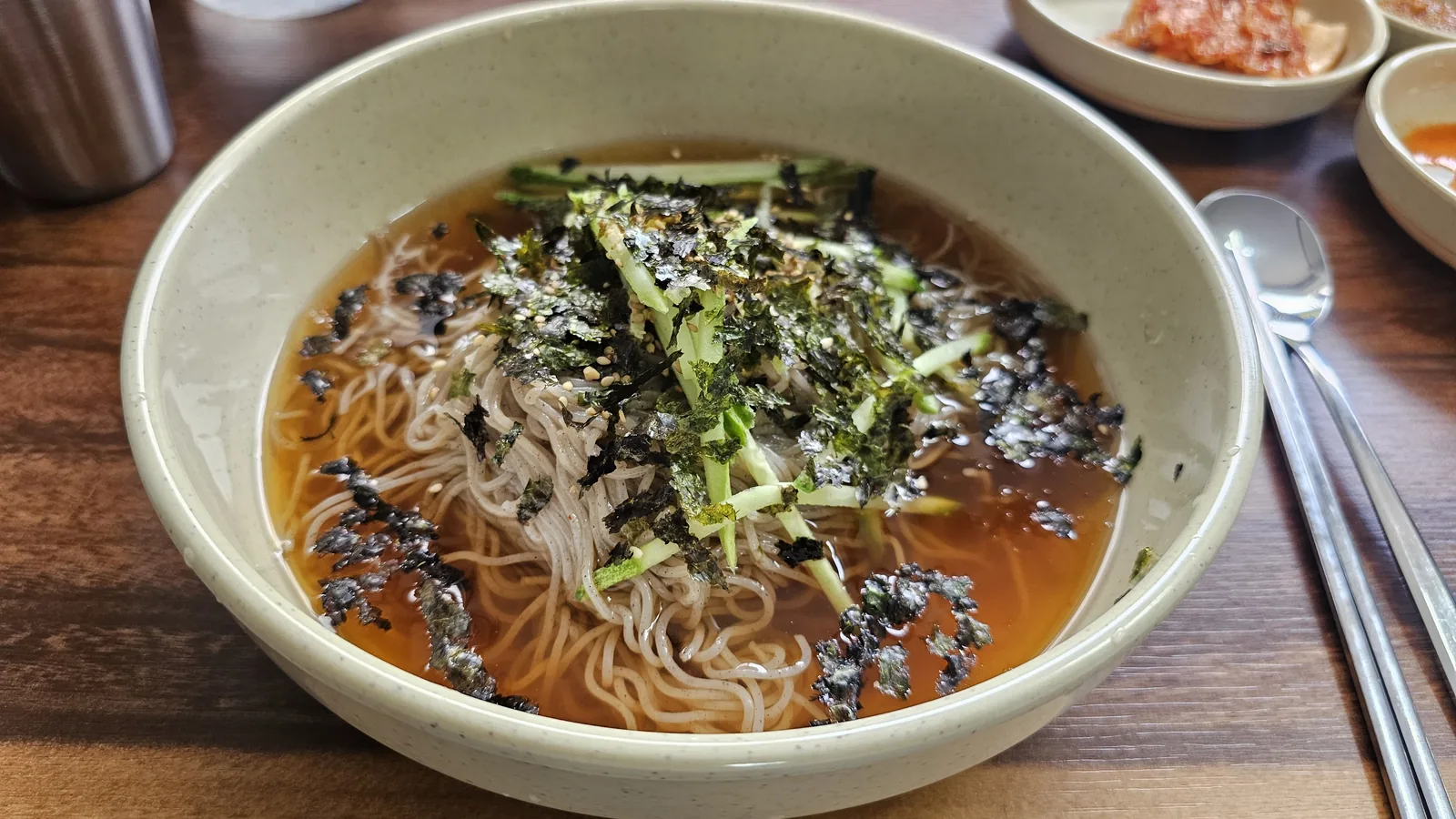
    Bowl of buckwheat makguksu with clear cold broth, shredded cucumber, and dried seaweed flakes at Jangsu Makguksu
    Bowl of buckwheat makguksu with clear cold broth, shredded cucumber, and dried seaweed flakes at Jangsu Makguksu
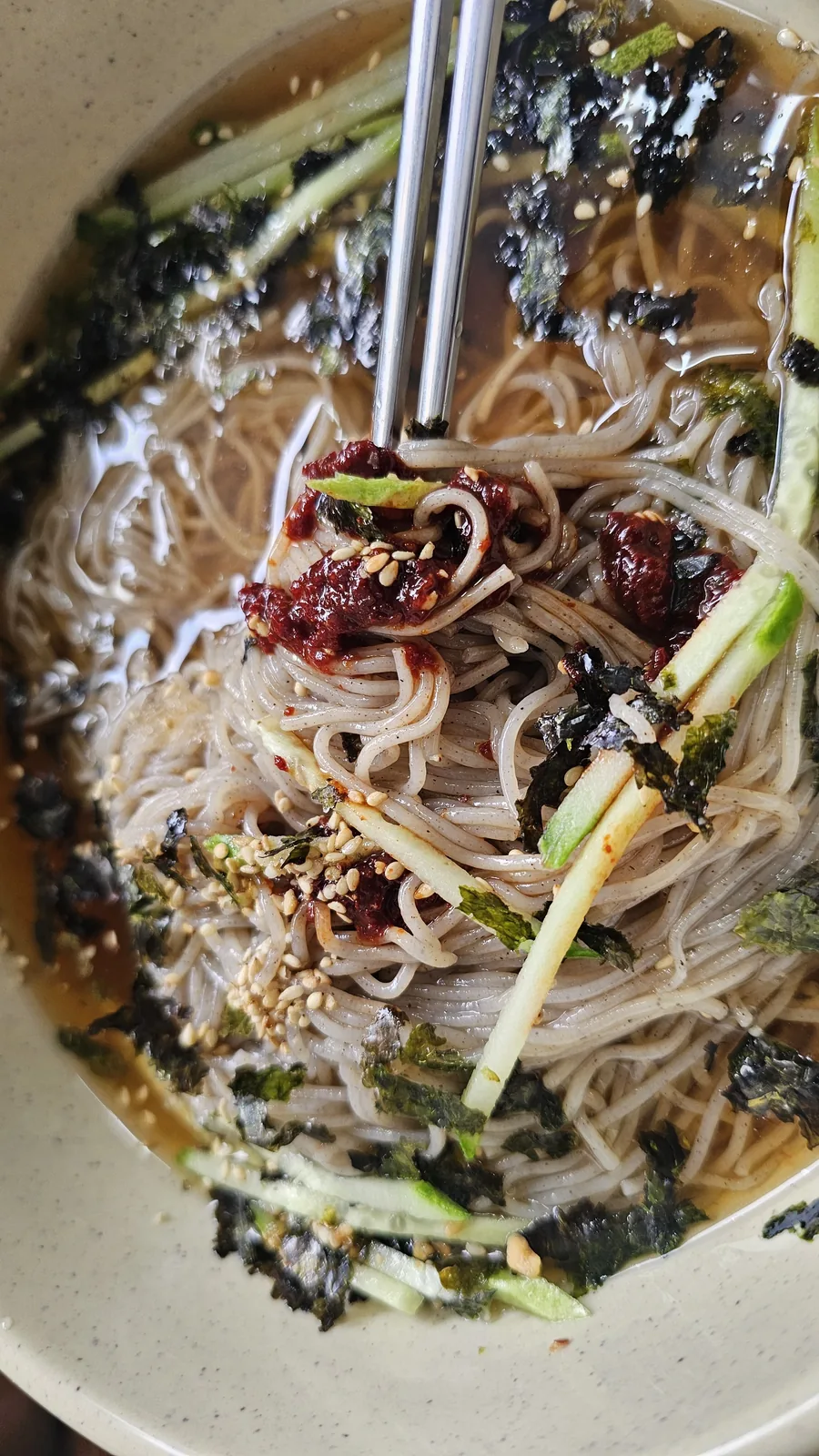
    Chopsticks lifting fresh buckwheat noodles from a makguksu bowl with gochujang chili paste on the side
    Chopsticks lifting fresh buckwheat noodles from a makguksu bowl with gochujang chili paste on the side

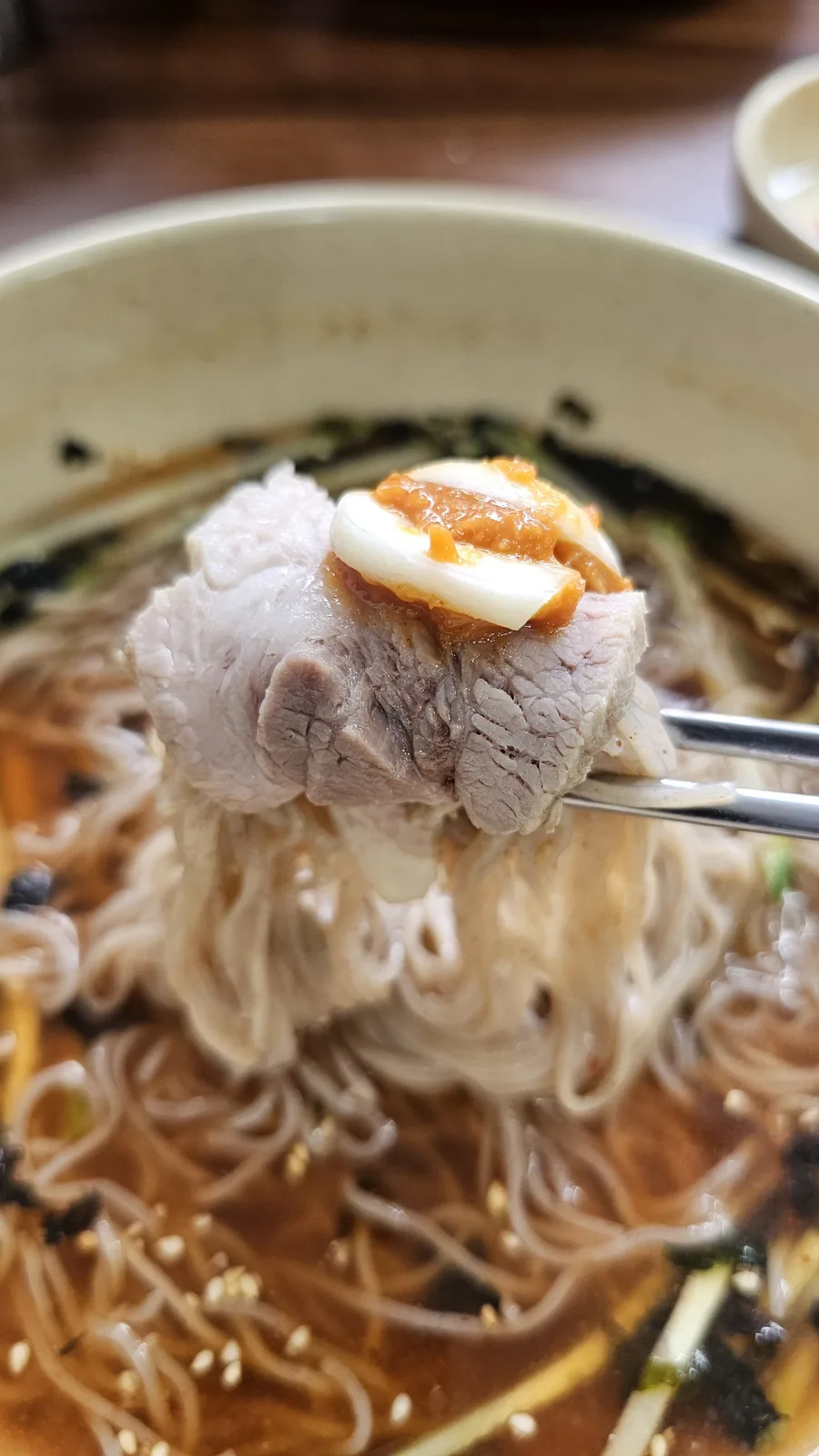
    The broth is clear and cold. Light savory flavor, no heavy seasoning. The focus is the noodles, and the broth knows it.

    The noodles — because they’re freshly made — have actual texture. A slight chew and springiness. You can taste the buckwheat without it being overwhelming. Topped with thin shredded cucumber and dried seaweed flakes (김 가루). Simple.

    Gochujang (chili paste) comes on the side. You can leave the bowl clean and light, or add the paste and mix. Either works. We did both — some went plain, some mixed it in. The plain version lets you taste the noodles properly. The spicy version is more punchy and satisfying.

    The noodles were the highlight of the meal. Clean taste, good texture. The freshness matters.

    Subyuk (Boiled Pork)

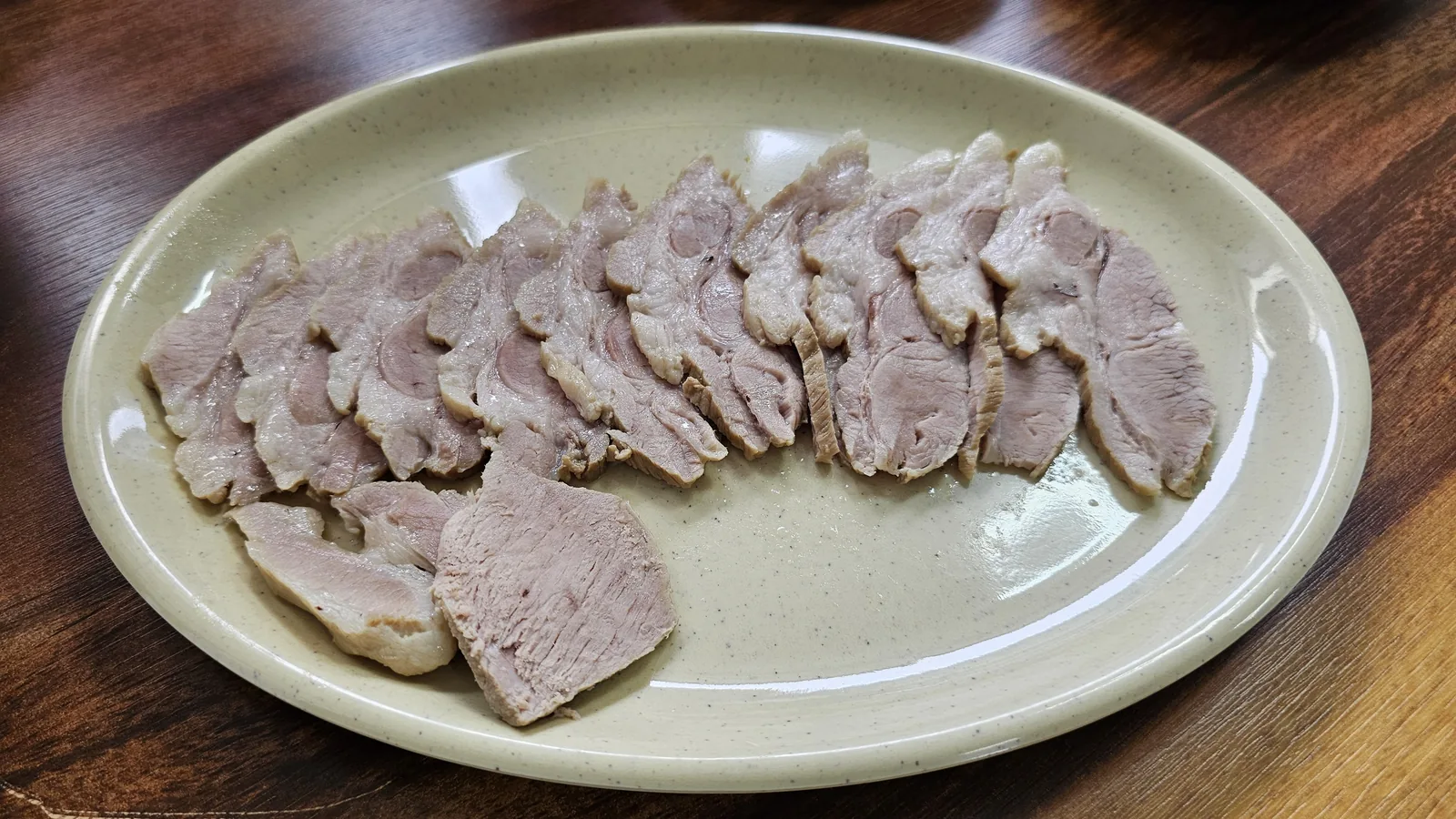
    Thinly sliced subyuk boiled pork on an oval plate at Jangsu Makguksu in Cheongyang
    Thinly sliced subyuk boiled pork on an oval plate at Jangsu Makguksu in Cheongyang

    Subyuk (수육), also called pyeonyuk (편육), is boiled pork — usually pork belly or shoulder — sliced thin and served warm or at room temperature. It’s one of Korea’s most common pork preparations. No frying, no heavy sauce. Just clean, slow-boiled pork.

    The small portion was a solid amount for four people sharing. Pork was tender, not greasy. Clean flavor.

    You dip it in the doenjang (된장 — fermented soybean paste) that comes in the side dishes. The paste is earthy and salty, which pairs well with the clean pork.

    The Side Dishes

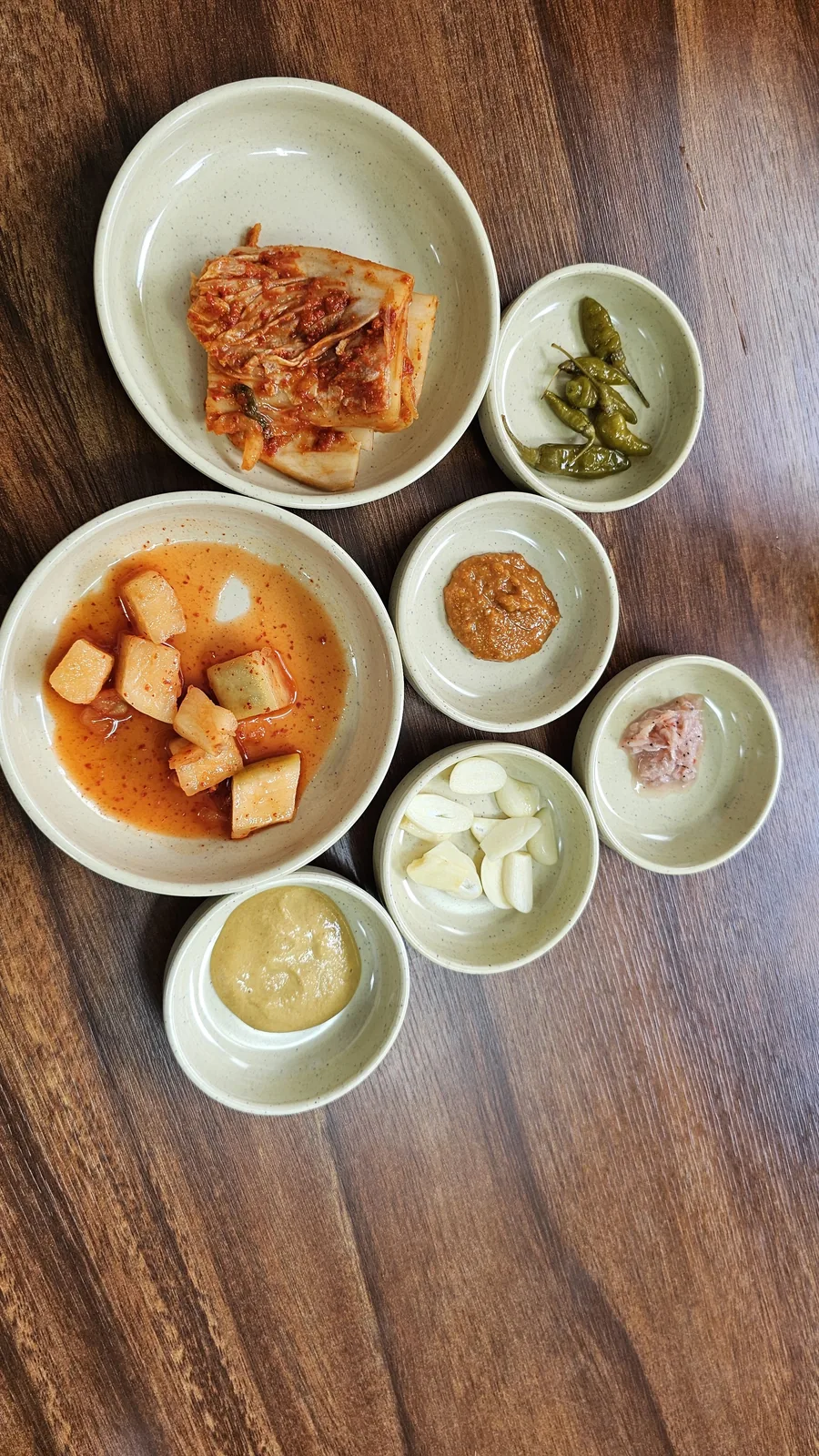
    Seven-dish banchan spread at Jangsu Makguksu including kkakdugi radish kimchi, baechu kimchi, doenjang, and mustard sauce
    Seven-dish banchan spread at Jangsu Makguksu including kkakdugi radish kimchi, baechu kimchi, doenjang, and mustard sauce

    Seven side dishes came out:

    – Kkakdugi (깍두기 — cubed radish kimchi)

    – Baechu kimchi (배추김치 — cabbage kimchi)

    – Doenjang (된장 — fermented soybean paste, for dipping)

    – Sliced garlic

    – A small portion of subyuk

    – Mustard sauce (겨자소스)

    – One more

    All the usual suspects at a Korean makguksu restaurant. Nothing surprising, all solid.

    The Subyuk-on-Makguksu Combo

    Close-up of a subyuk slice placed on top of buckwheat makguksu noodles at Jangsu Makguksu Cheongyang
    Close-up of a subyuk slice placed on top of buckwheat makguksu noodles at Jangsu Makguksu Cheongyang

    The restaurant actively tells you to do this, and they’re right. Take a slice of subyuk, place it on the noodles, pick it all up together. The pork adds a little fat and body to the otherwise very clean noodles. It works better than eating them separately.

    Ingredient Transparency

    Wall-mounted ingredient origin sign at Jangsu Makguksu showing buckwheat and pork sourcing information in Korean
    Wall-mounted ingredient origin sign at Jangsu Makguksu showing buckwheat and pork sourcing information in Korean

    They post ingredient origins on the wall — pork and buckwheat sourcing. This is a legal requirement for restaurants in Korea above a certain size. Worth glancing at if you care about sourcing.

    Stuff Tourists Should Know

    English menu: No. Korean only. The menu is simple — buckwheat noodle, spicy mixed noodle, boiled pork. Pointing works fine.

    English-speaking staff: Probably not. Small local restaurant in a rural area. Come with a translation app if you need to communicate more than pointing at the menu.

    Card payment: Unknown — bring cash to be safe. Rural small restaurants in Korea often prefer cash.

    Tipping: None. Korea doesn’t tip.

    Reservations: Not needed. Walk-in.

    Vegetarian: The makguksu broth may contain meat-based stock — hard to confirm without asking. The noodles themselves are buckwheat. Check if this matters to you.

    Halal/Kosher: Not applicable — pork is central to the meal here.

    Kids: Fine. Simple food, no complex flavors. The plain buckwheat noodle bowl is easy for kids.

    Solo dining: Totally fine. This isn’t a “group experience” restaurant.

    The Verdict

    The noodles are the reason to come here. Fresh-made, buckwheat flavor you can actually taste, light broth that doesn’t overpower them. For 9,000 KRW (~$6.70 a bowl), it’s honest value.

    The subyuk is good supporting cast. Small portion is enough for three or four people sharing.

    Go if:

    – You’re in Cheongyang or driving through South Chungcheong and need a solid lunch

    – You want to try proper regional makguksu away from the Seoul restaurant circuit

    – You care about fresh-made noodles over pre-packaged ones

    Skip if:

    – You’re in Seoul with limited time — this is two hours away and not worth a special trip just for noodles

    – You need English menus and English-speaking staff — this isn’t that kind of place

    Would we go back? Yeah. Already planning to.

    FAQ

    What is makguksu and how is it different from naengmyeon?

    Makguksu (막국수) is a Korean cold buckwheat noodle dish. It’s earthier and coarser than naengmyeon — less polished, more rustic. Usually served in a light cold broth or mixed spicy style. Jangsu Makguksu makes their noodles fresh in-house, which makes a noticeable difference in texture.

    How do I get to Cheongyang from Seoul?

    Cheongyang is about 2 hours south of Seoul by car. There’s no direct train — you’d need to drive or take a regional bus from Cheonan or Daejeon. It’s a small rural county, not a typical tourist stop, so a car is your best bet.

    Is there an English menu at Jangsu Makguksu?

    No English menu. The menu is handwritten in Korean on the wall: buckwheat noodle (메밀막국수), spicy mixed noodle (비빔막국수), and boiled pork (수육) in small or large. It’s simple enough to point at.

    How much does a meal cost per person?

    A bowl of buckwheat makguksu is 9,000 KRW (~$6.70). Add a shared small subyuk (boiled pork) for 10,000 KRW (~$7.40). For a group of four sharing one subyuk, expect to pay around 11,000–12,000 KRW per person (~$8–9).

    Is parking available?

    Cheongyang is a small town with space to spare — parking near the restaurant should be easy. No parking fees expected.

    Do I need to make a reservation?

    No reservation needed. It’s a walk-in local restaurant. We arrived at 11:30 AM on a weekend and walked right in with no wait.

    You might also like

    📍 Location

    Open in Google Maps →