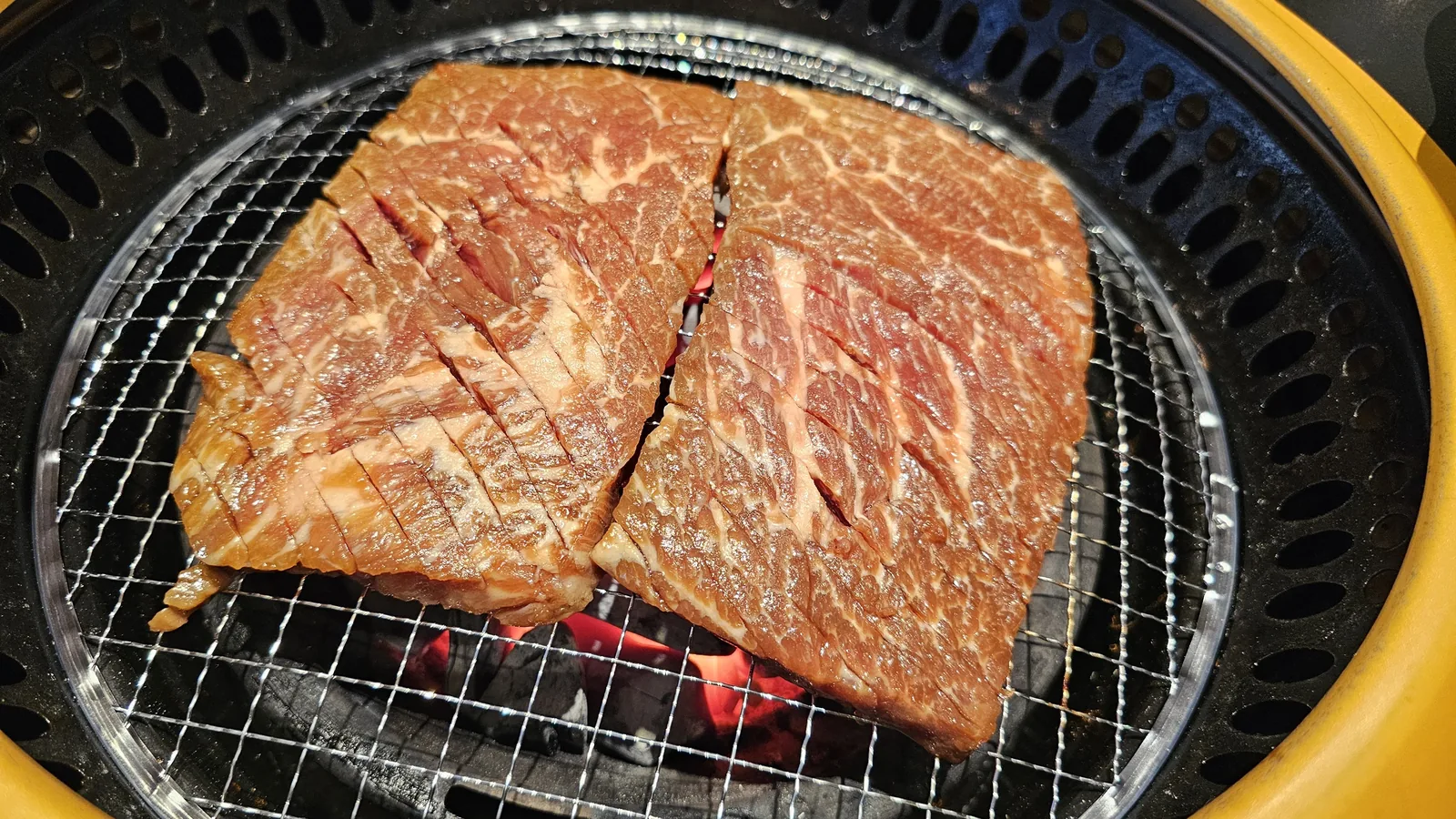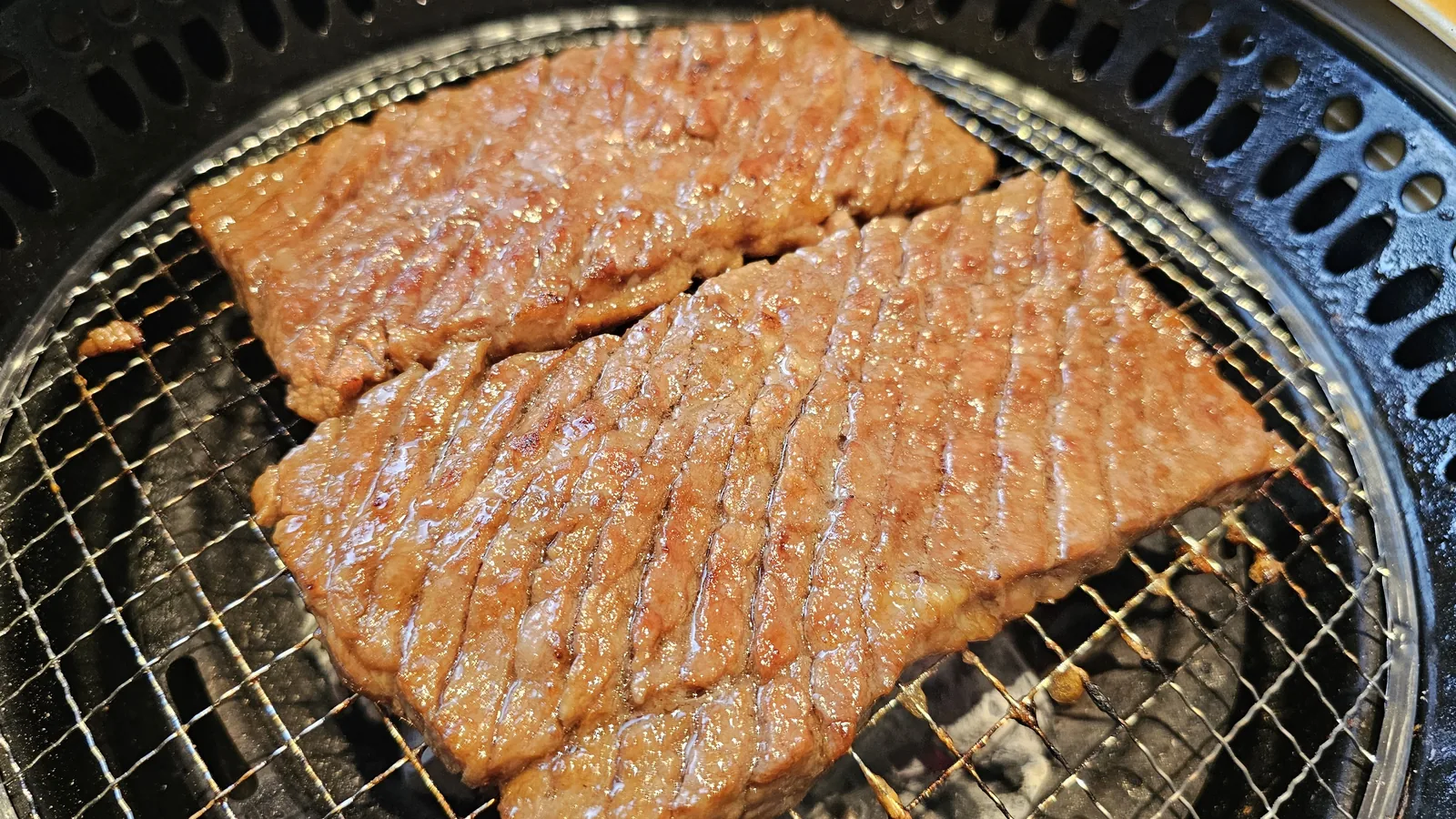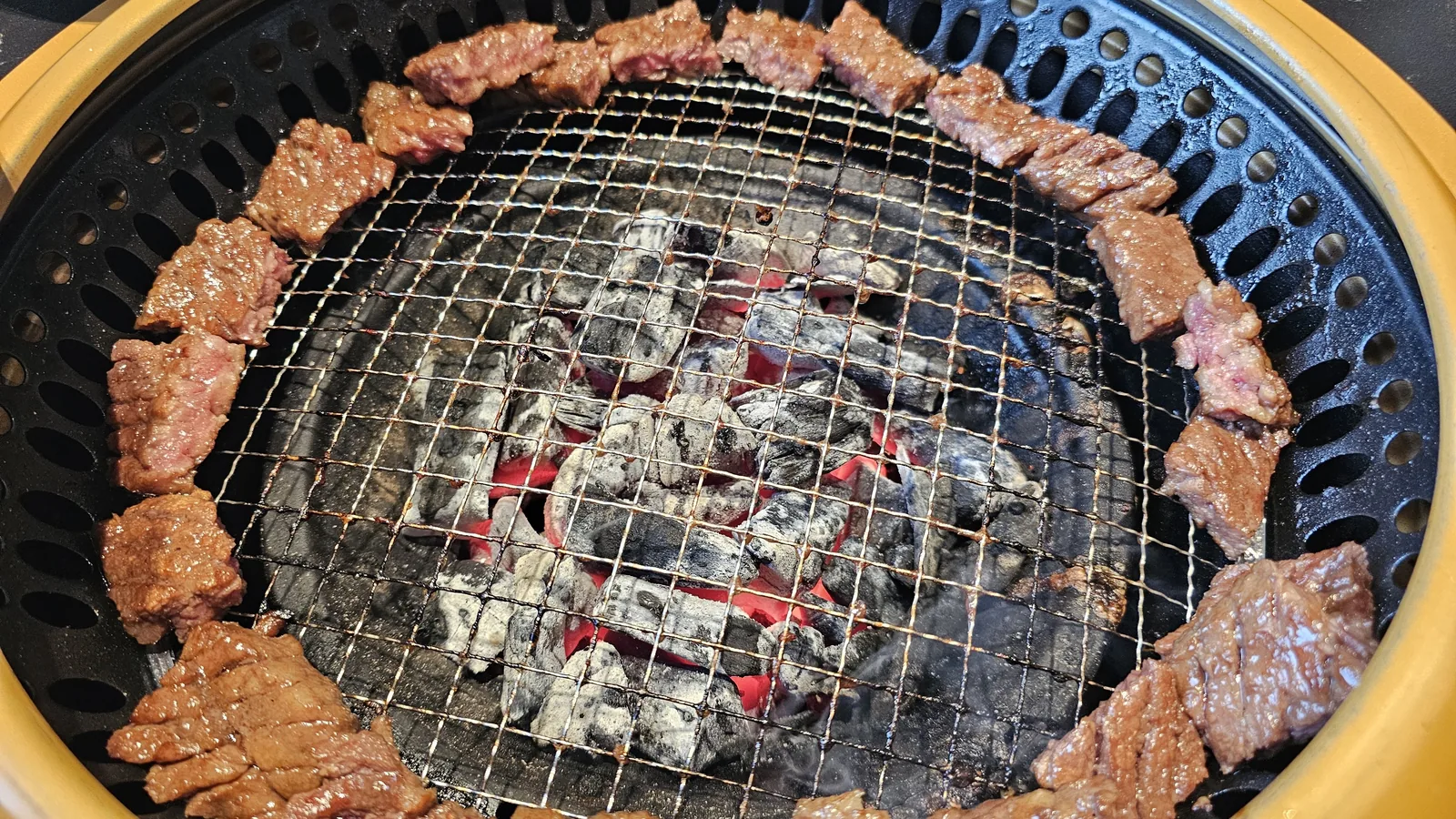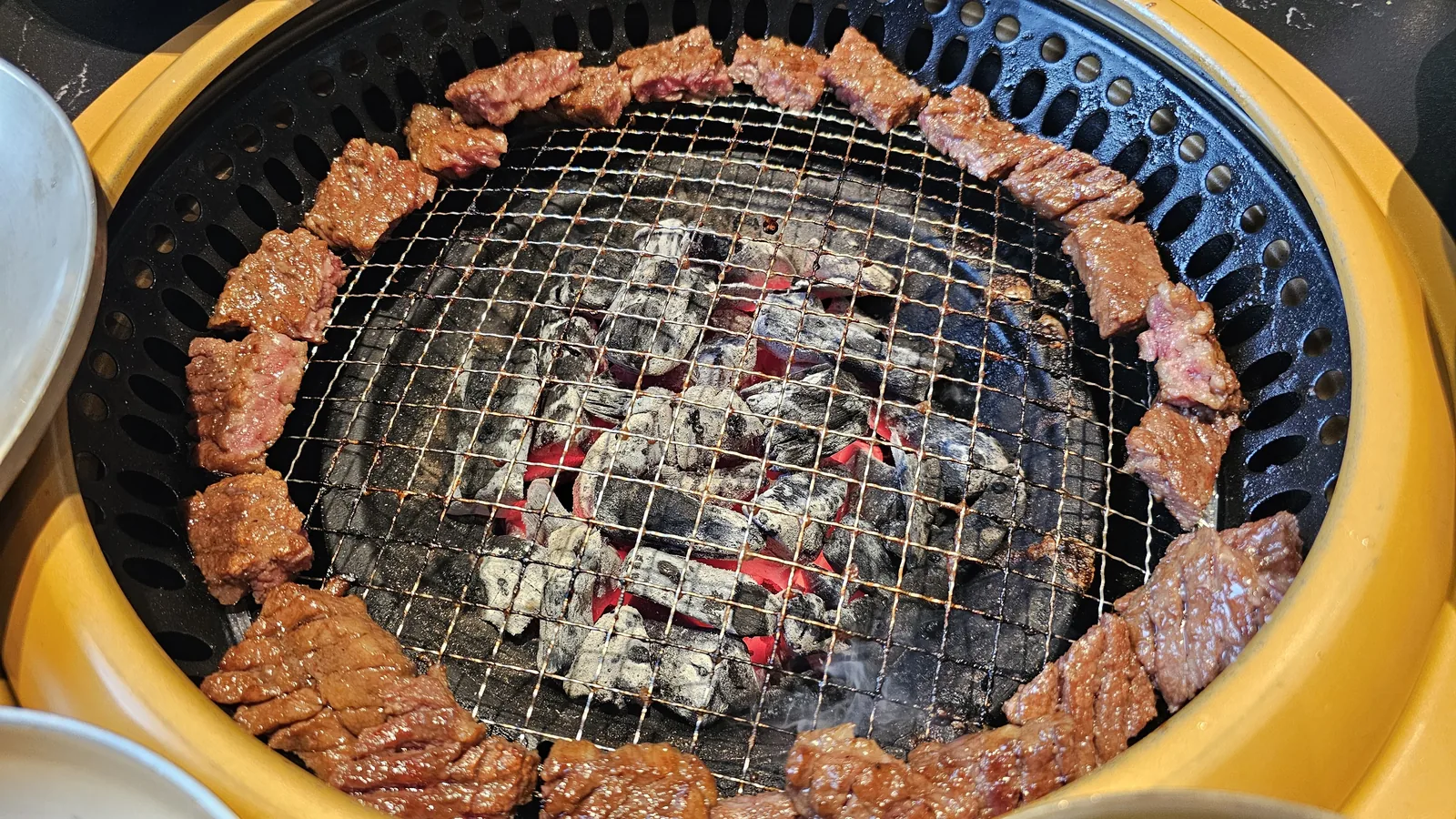
Tag: charcoal grill

  • Miyeon Yangkkochi Maratang in Cheongyang: Honest Review

    Miyeon Yangkkochi Maratang in Cheongyang: Honest Review

    🇯🇵 日本語版はこちら

    Quick honest review of Miyeon Yangkkochi Maratang (미연양꼬치마라탕) in Cheongyang — a Chinese-Korean combo restaurant doing charcoal-grilled Australian lamb skewers and self-pick malatang soup. Short version: the lamb is genuinely good, the malatang is solid, the place was packed by 6 PM on a weeknight. We ordered two sets of skewers and still went back for more.

    What Is Yangkkochi + Malatang?

    If you’re new to this combo, here’s the quick version.

    Yangkkochi (양꼬치) is Chinese-style lamb skewers cooked over charcoal. You dip them in a plate of cumin seeds mixed with dried chili powder right off the grill. The style came to Korea through Chinese immigrant food culture and blew up — there are now thousands of yangkkochi restaurants across the country. It’s distinctly different from Korean BBQ. The cumin-forward flavor profile is the giveaway.

    Malatang (마라탕) is a Sichuan-style spicy broth soup. The setup: you walk up to a refrigerator display, pick out your own ingredients — whatever you want from vegetables, tofu, noodles, fish cakes, meatballs — hand them over, and they cook everything in a spicy, numbing broth. Spice level is adjustable.

    The yangkkochi + malatang combo restaurant is everywhere in Korea right now. The logic is simple: while the skewers are grilling, you eat soup. The wait feels shorter. You end up eating a lot.

    About the Place
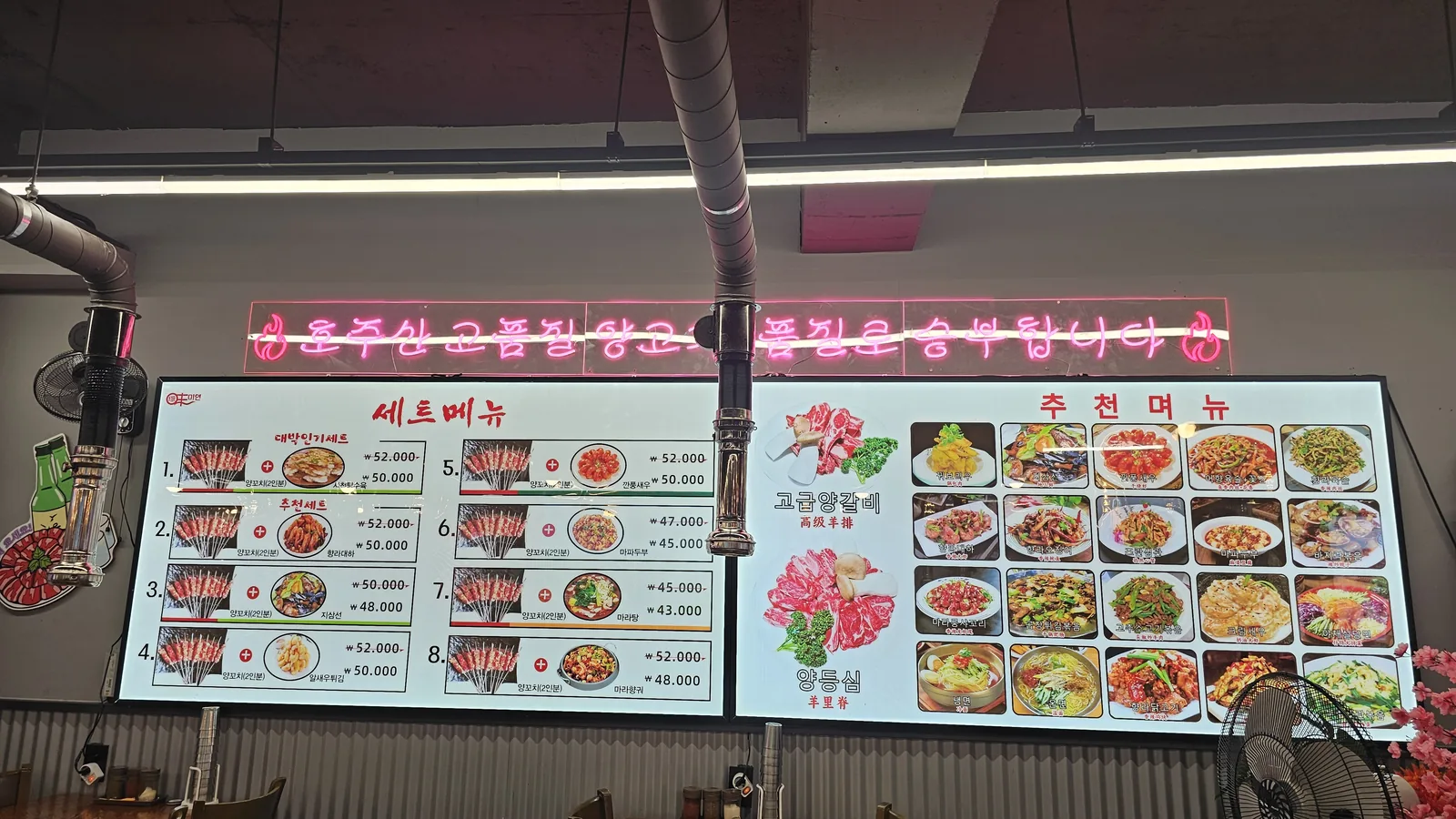
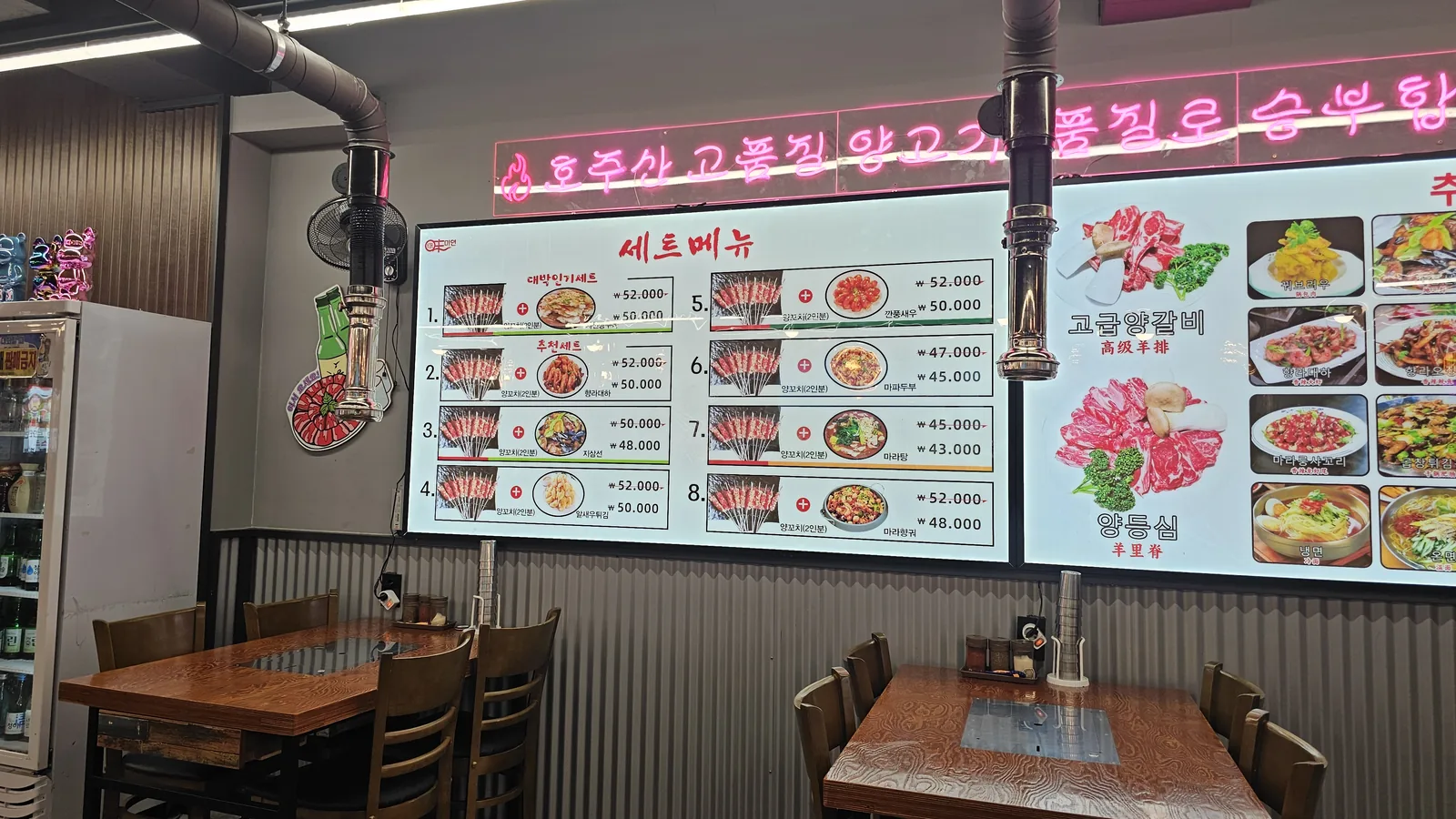
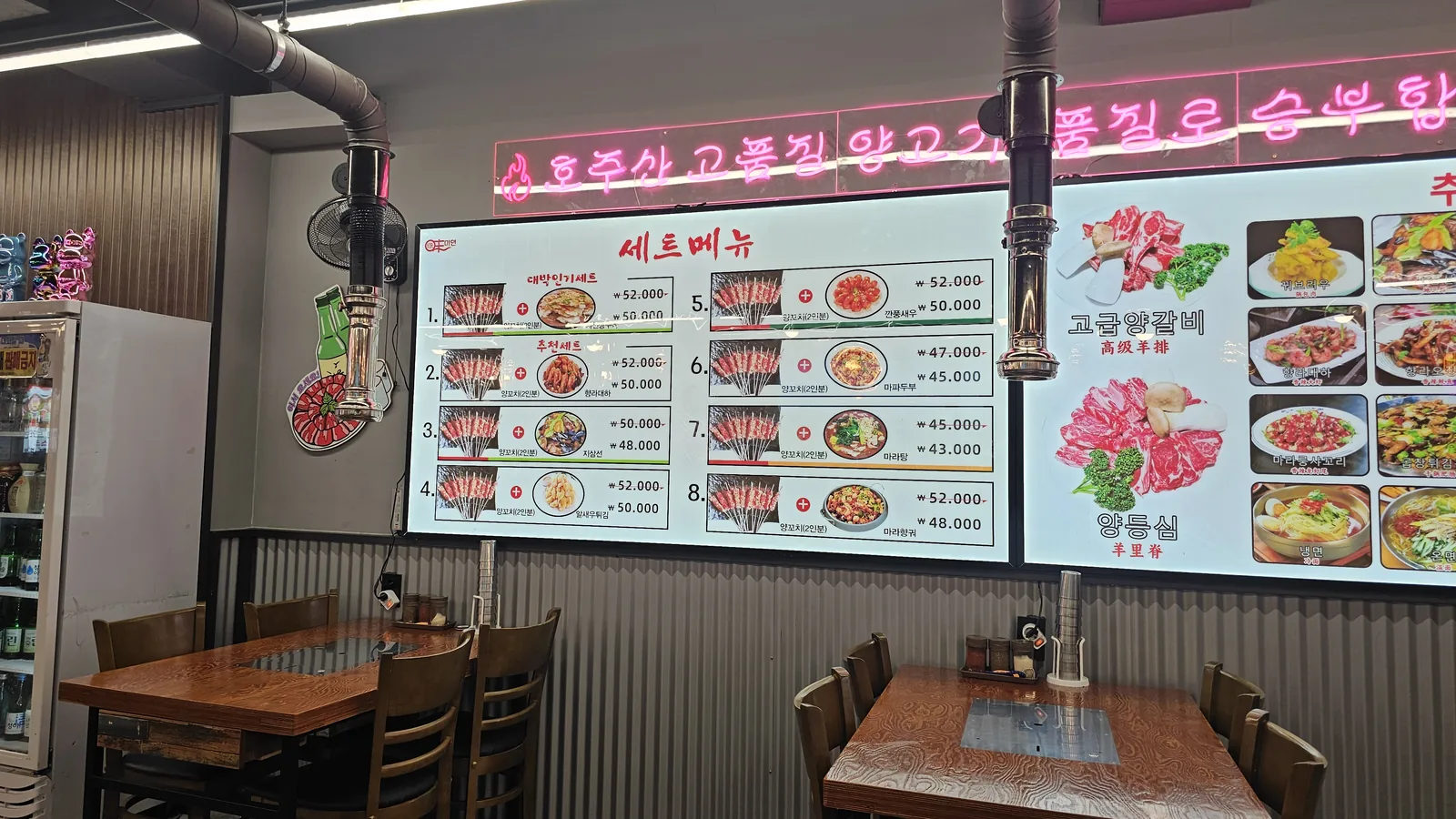
    Menu board and neon sign at Miyeon Yangkkochi reading
    Menu board and neon sign at Miyeon Yangkkochi reading “We compete with quality of Australian premium lamb”

    The big differentiator here: Australian lamb. There’s a neon sign on the wall that roughly translates to “We compete on quality of Australian premium lamb.” Bold claim. But based on what came off that grill, not an empty one — the lamb had a clean, mild flavor with minimal gaminess that cheaper suppliers can’t match.

    The menu covers yangkkochi (basic cuts plus premium options like lamb ribs and lamb loin), malatang, marasangui (마라상귀, a drier version without broth), and a handful of Chinese-Korean side dishes. Set menus for groups are available and worth looking at for the value.

    Getting There

    Cheongyang (청양군) is a county in South Chungcheong Province (충청남도), roughly 2 hours south of Seoul by car. Nationally it’s best known for producing Cheongyang chili peppers — one of the hottest domestic varieties and the reason you’ll see “청양고추” on Korean hot food packaging everywhere.

    It’s not on the standard Seoul tourist circuit. If you’re traveling independently through the Chungnam region or have a reason to be in the area, it’s worth knowing about. Getting there:

    – From Seoul: About 2 hours by car. No direct express train to Cheongyang itself.

    – From Daejeon: About 1 hour by car.

    – Nearest train stations: Hongseong or Yesan on the Janghang Line, then taxi into Cheongyang.

    No subway in this area. Car or taxi once you arrive.

    The Interior
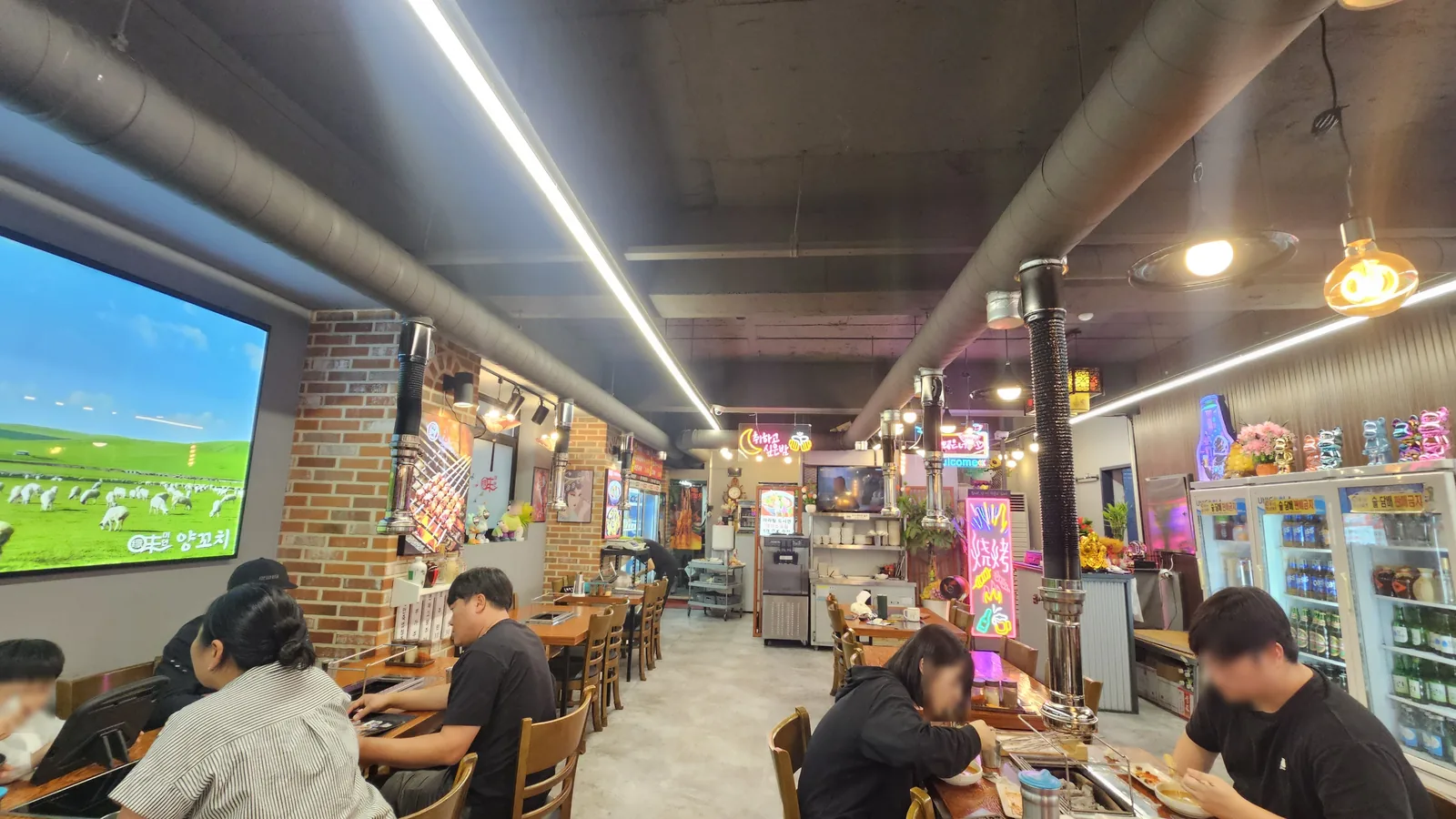
    Busy dinner scene inside Miyeon Yangkkochi Maratang Cheongyang with brick walls, neon signs, and TV screen

    Busy dinner scene inside Miyeon Yangkkochi Maratang Cheongyang with brick walls, neon signs, and TV screen
    Interior of Miyeon Yangkkochi Maratang in Cheongyang showing set menu and premium lamb cut boards with table seating

    Interior of Miyeon Yangkkochi Maratang in Cheongyang showing set menu and premium lamb cut boards with table seating

    Brick walls, neon signs, a big screen on the wall. The vibe is loud, casual Chinese restaurant energy — the kind of place where conversations compete with grill smoke and everyone’s leaning over skewers. By 6 PM the place was already at capacity with local families and groups. Not a date spot. A “we’re hungry and we’re going to eat a lot” spot.

    The screen was apparently playing footage of Australian sheep on open paddocks — a nice detail that signals the sourcing story is more than just a tagline.

    The Malatang Ingredient Fridge
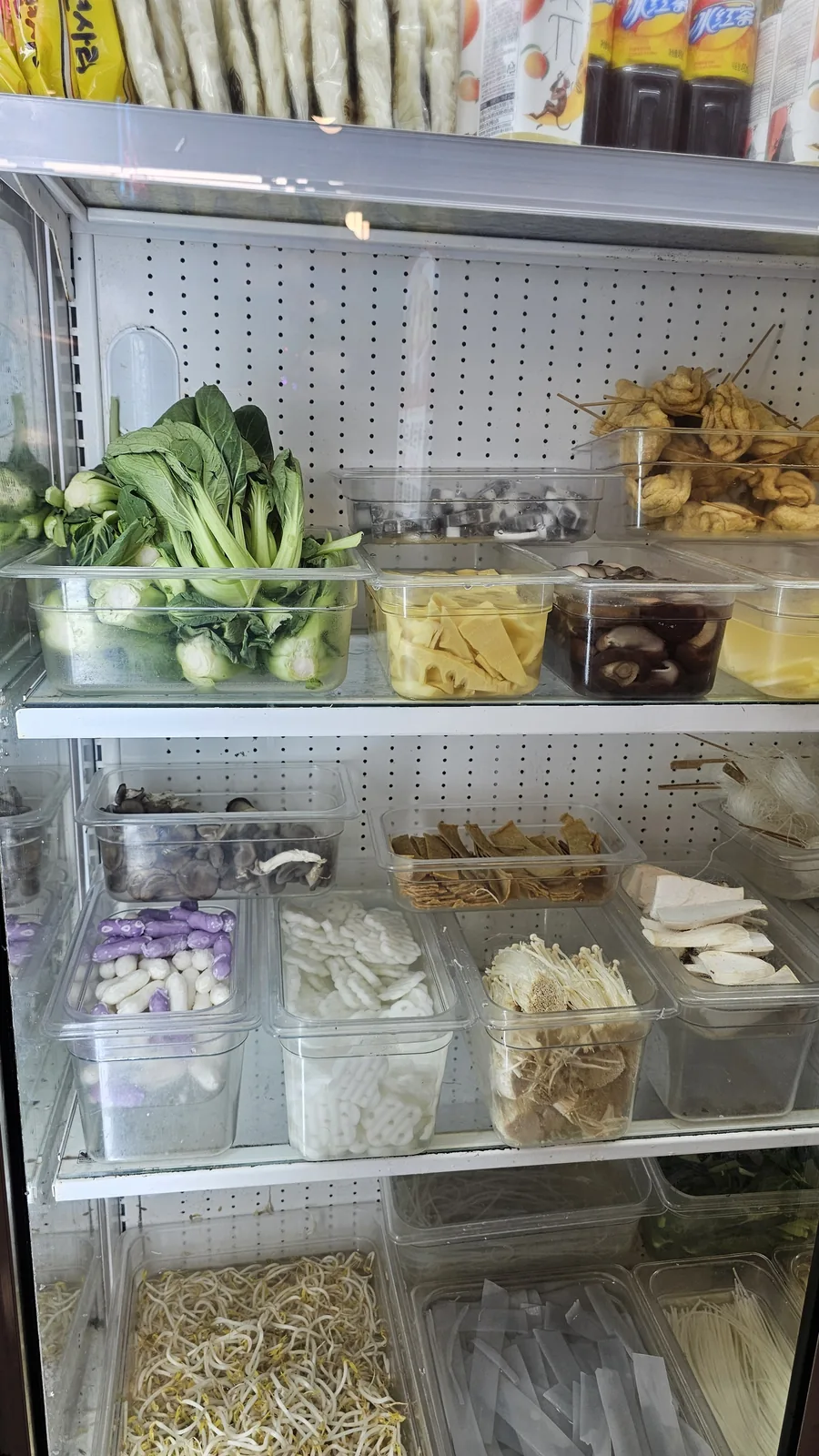
    Malatang self-pick refrigerator with bok choy, bamboo shoots, mushrooms, tofu skin, and meatballs at Miyeon Cheongyang

    Malatang self-pick refrigerator with bok choy, bamboo shoots, mushrooms, tofu skin, and meatballs at Miyeon Cheongyang
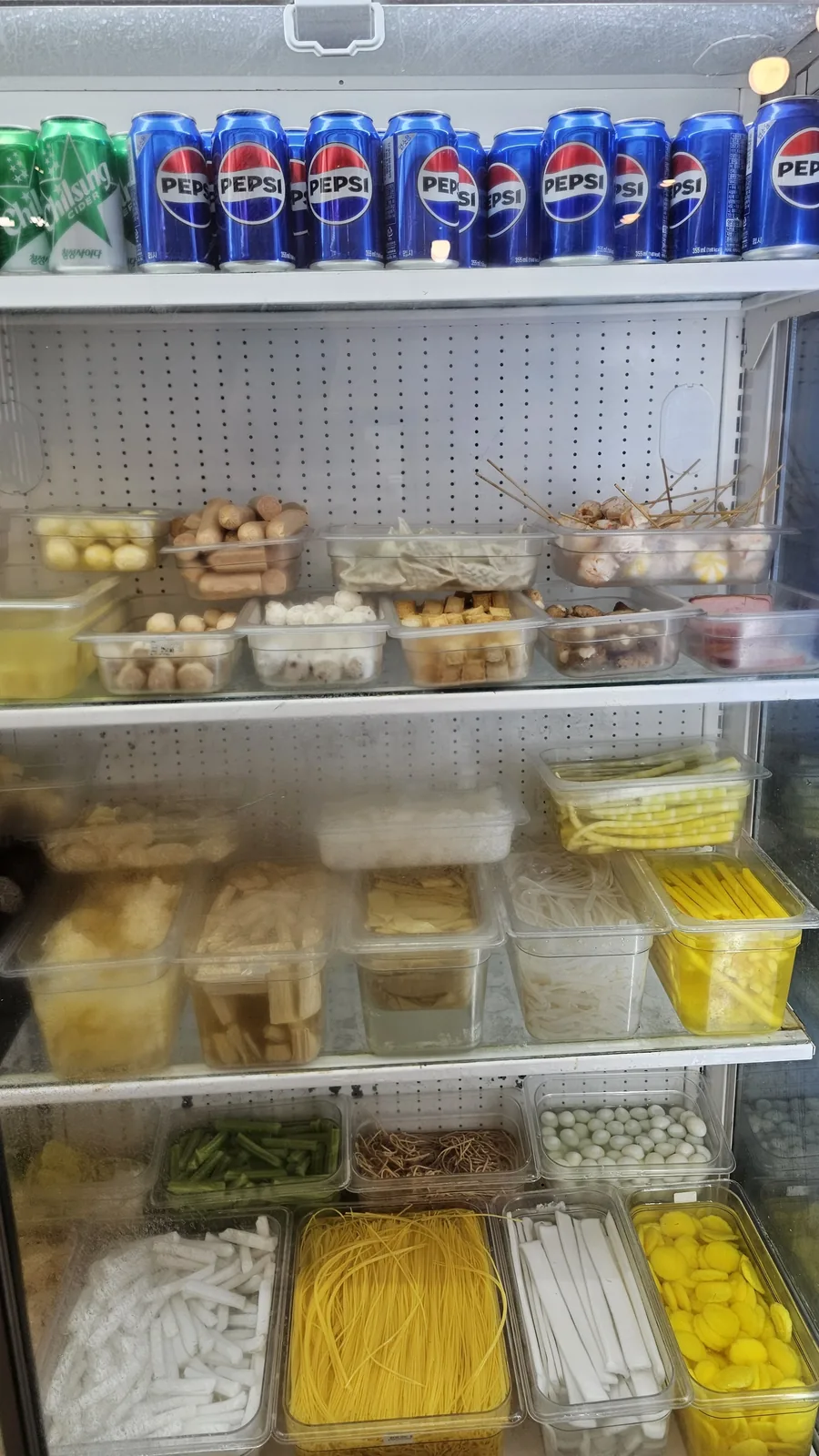
    Malatang ingredient fridge showing fish cake balls, noodles, rice cakes, quail eggs, and assorted vegetables

    Malatang ingredient fridge showing fish cake balls, noodles, rice cakes, quail eggs, and assorted vegetables

    One of the genuinely fun parts of malatang is picking your own ingredients. The selection at Miyeon is solid: bok choy, bamboo shoots, shiitake mushrooms, tofu skin, meatballs, fish cake balls, rice cakes, quail eggs, noodles, bean sprouts. Pick a mix you like, hand it over at the counter, wait for the bowl.
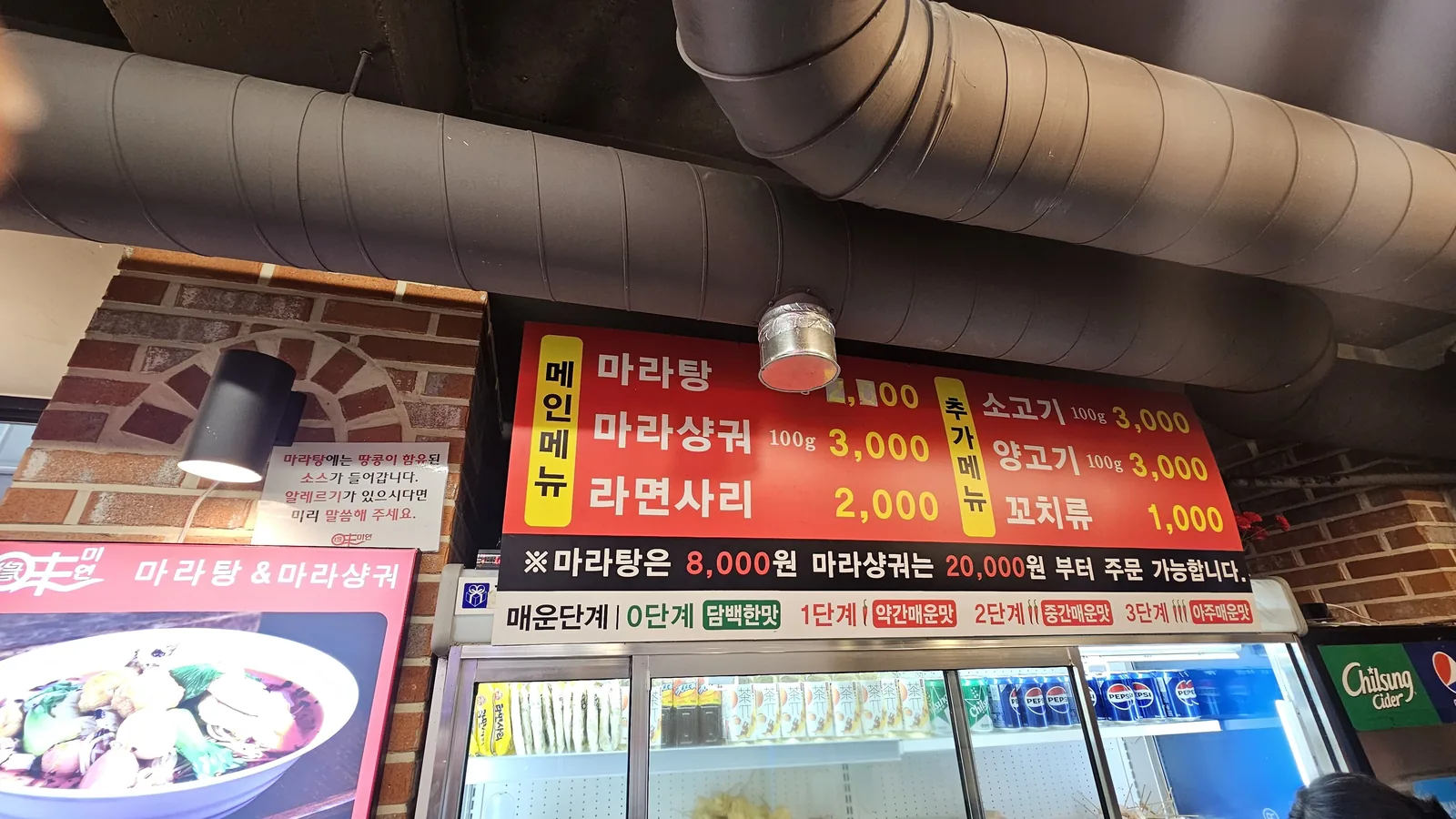
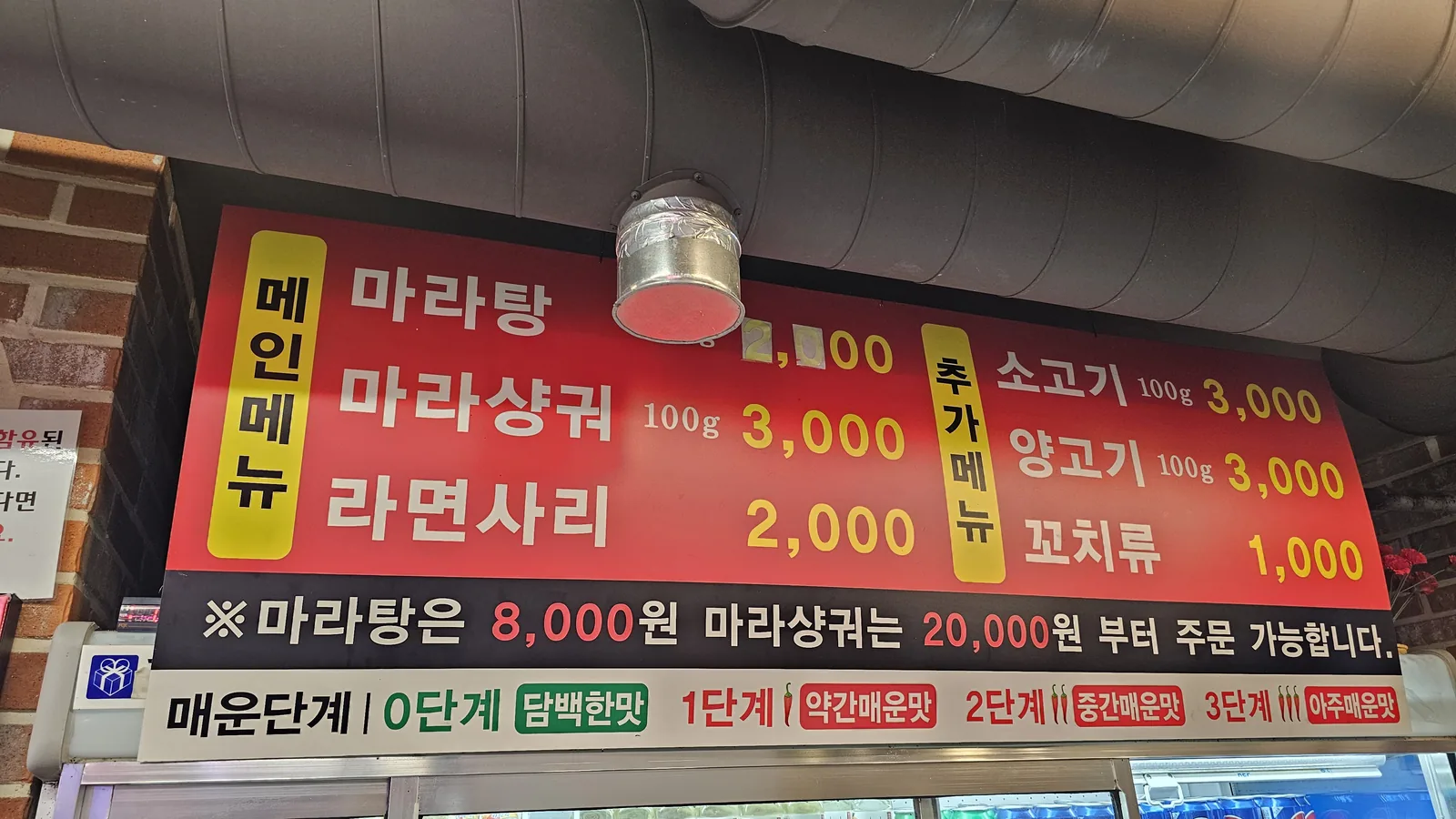
    Malatang and marasangui main menu board with spice level chart at Miyeon Yangkkochi Cheongyang

    Malatang and marasangui main menu board with spice level chart at Miyeon Yangkkochi Cheongyang
    Close-up of malatang menu board showing bowl options and spice levels at Miyeon Yangkkochi

    Close-up of malatang menu board showing bowl options and spice levels at Miyeon Yangkkochi

    The menu lists spice levels clearly. If you’re not used to malatang heat, start one level below what sounds interesting to you. The broth is numbing as well as spicy — that’s the Sichuan peppercorn effect. Some people love it immediately; some need a minute to adjust.

    What I Ordered

    We went with malatang (number 7 on the menu), a 2-person lamb skewer set, an additional 2-person order of skewers because the first round disappeared fast, and tangsuyu on the side.

    The math on that extra skewer order: sometimes you know after the third bite that you’re going to want more. This was one of those times.

    The Lamb Skewers
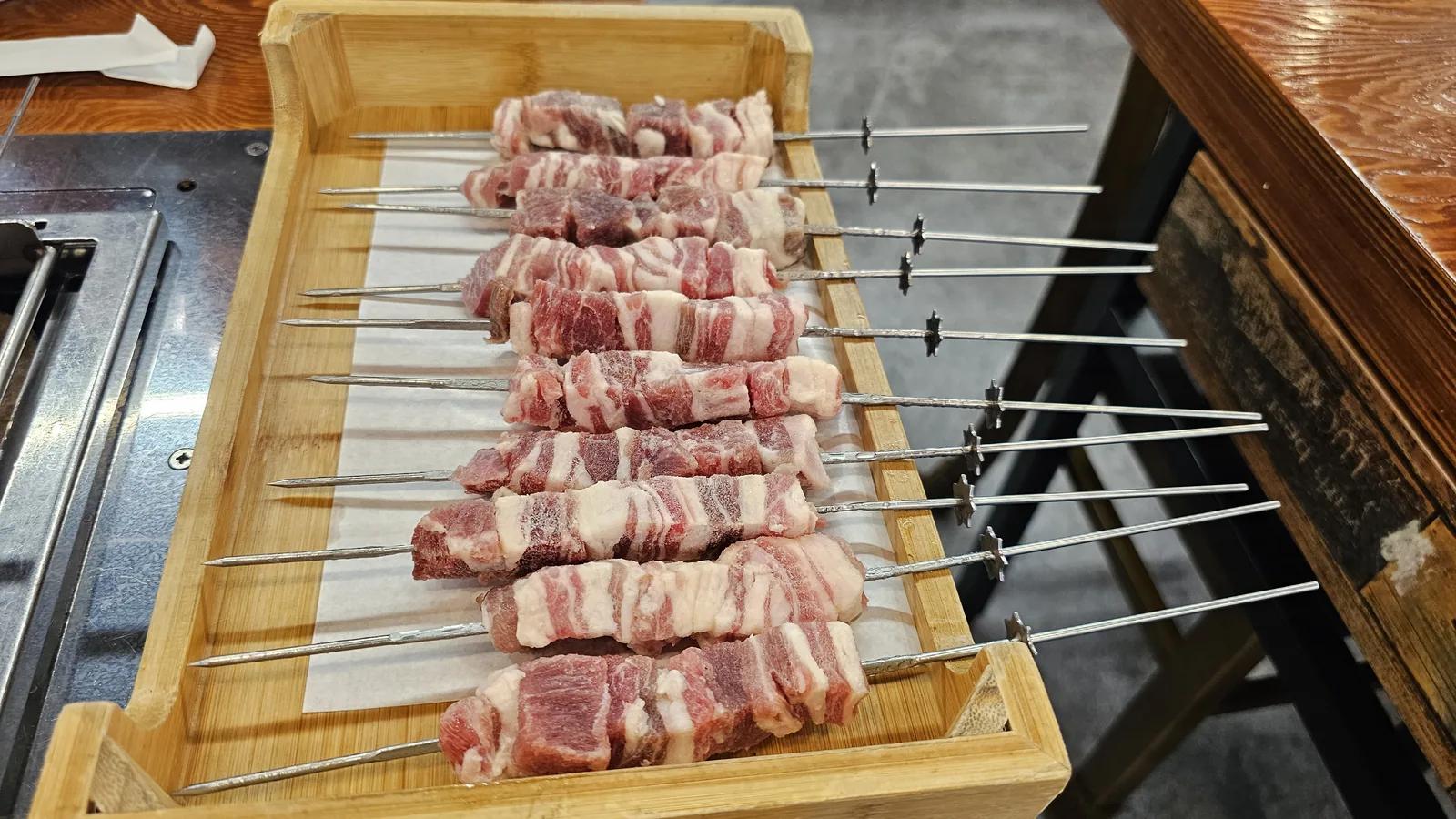
    Raw lamb skewers on wooden tray before grilling, side view at Miyeon Yangkkochi

    Raw lamb skewers on wooden tray before grilling, side view at Miyeon Yangkkochi
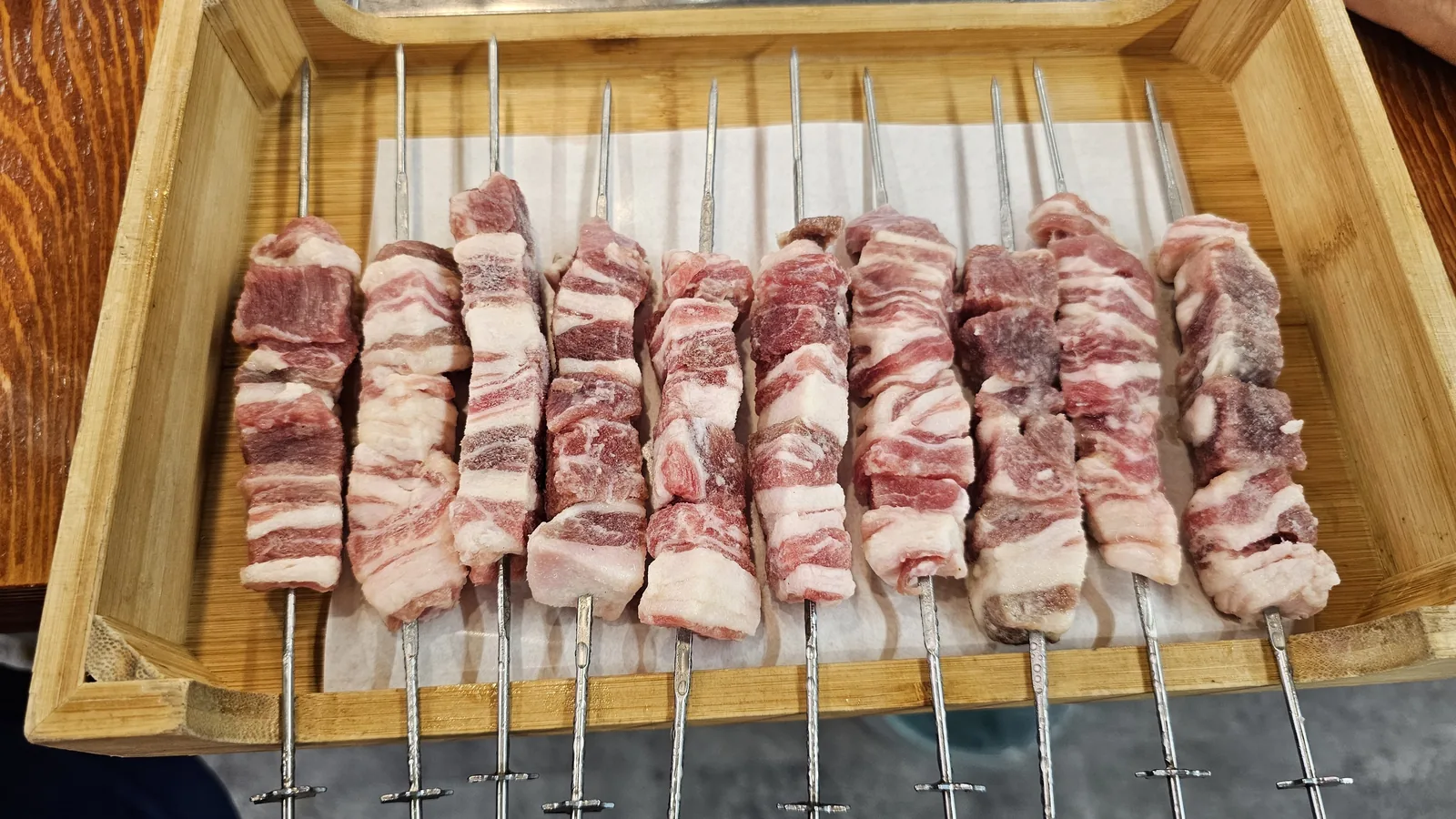
    Top-down view of raw lamb skewers arranged on wooden serving tray at Miyeon Yangkkochi Cheongyang

    Top-down view of raw lamb skewers arranged on wooden serving tray at Miyeon Yangkkochi Cheongyang

    They bring out the raw skewers on a wooden tray before grilling. The lamb chunks are a decent size — not the shrunken-down pieces you sometimes get at budget places trying to stretch the margin.
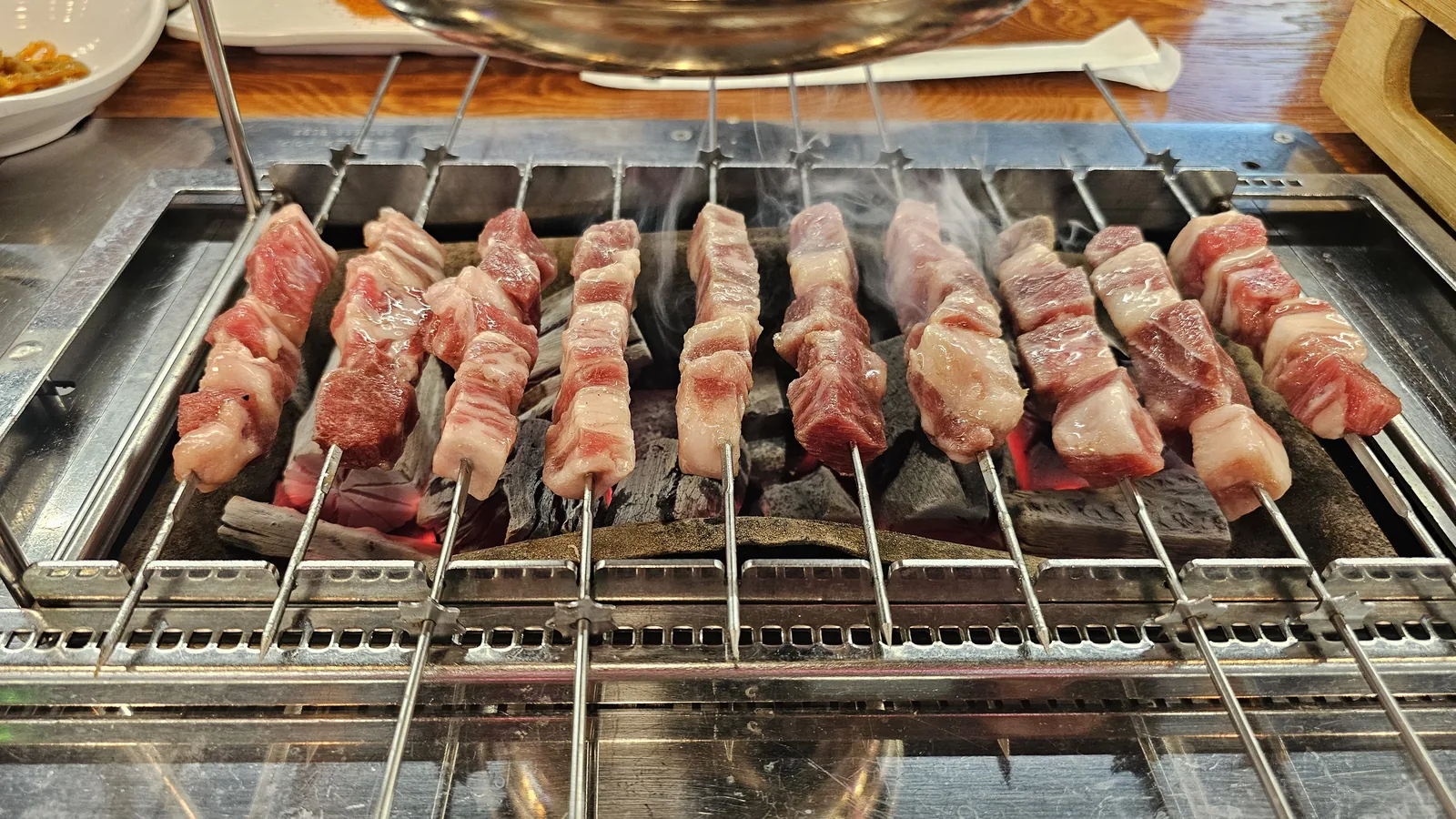
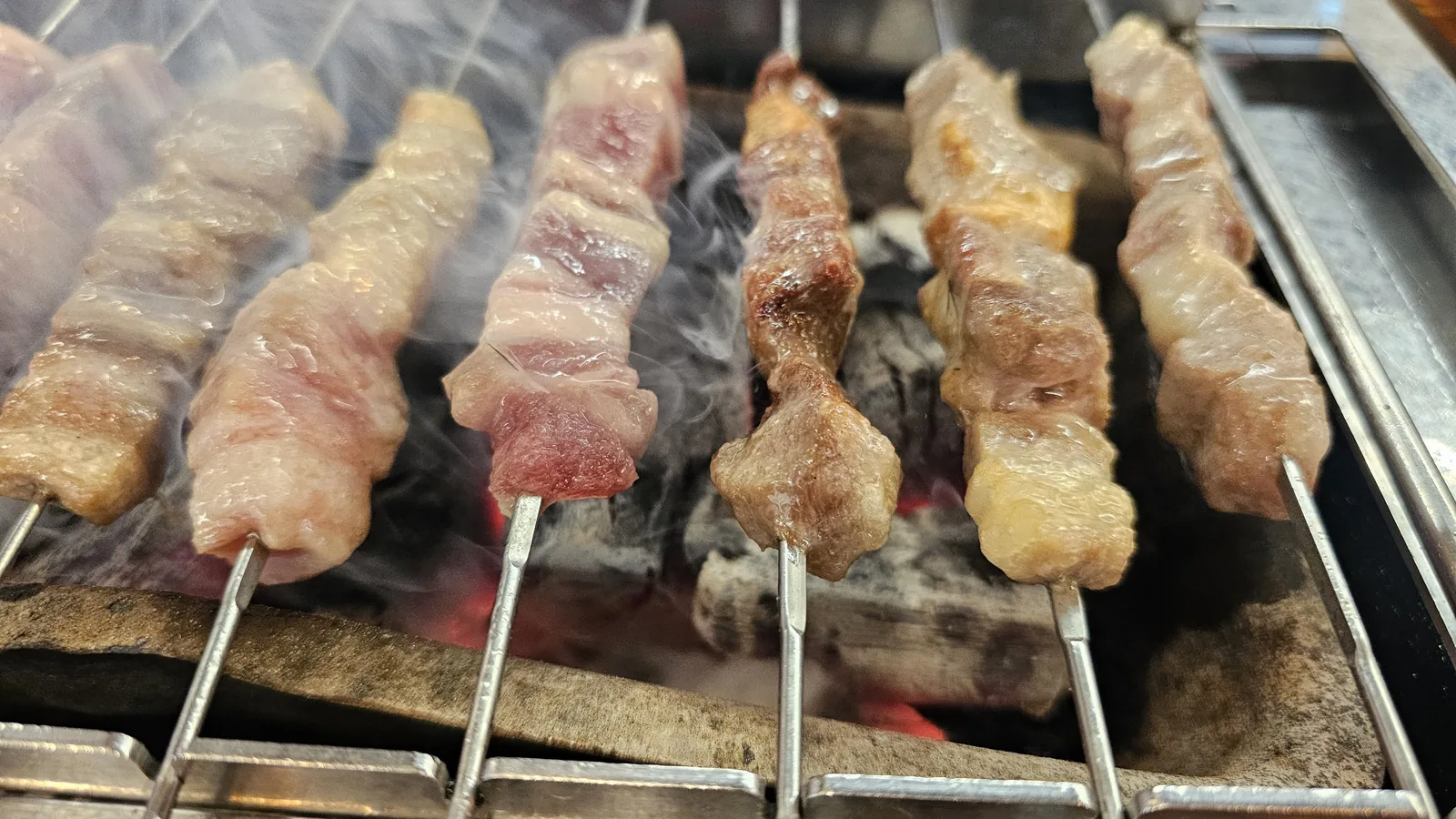
    Lamb skewers sizzling on charcoal grill with smoke rising at Miyeon Yangkkochi Maratang

    Lamb skewers sizzling on charcoal grill with smoke rising at Miyeon Yangkkochi Maratang
    Lamb skewers half-cooked on charcoal grill turning golden brown at Miyeon

    Lamb skewers half-cooked on charcoal grill turning golden brown at Miyeon

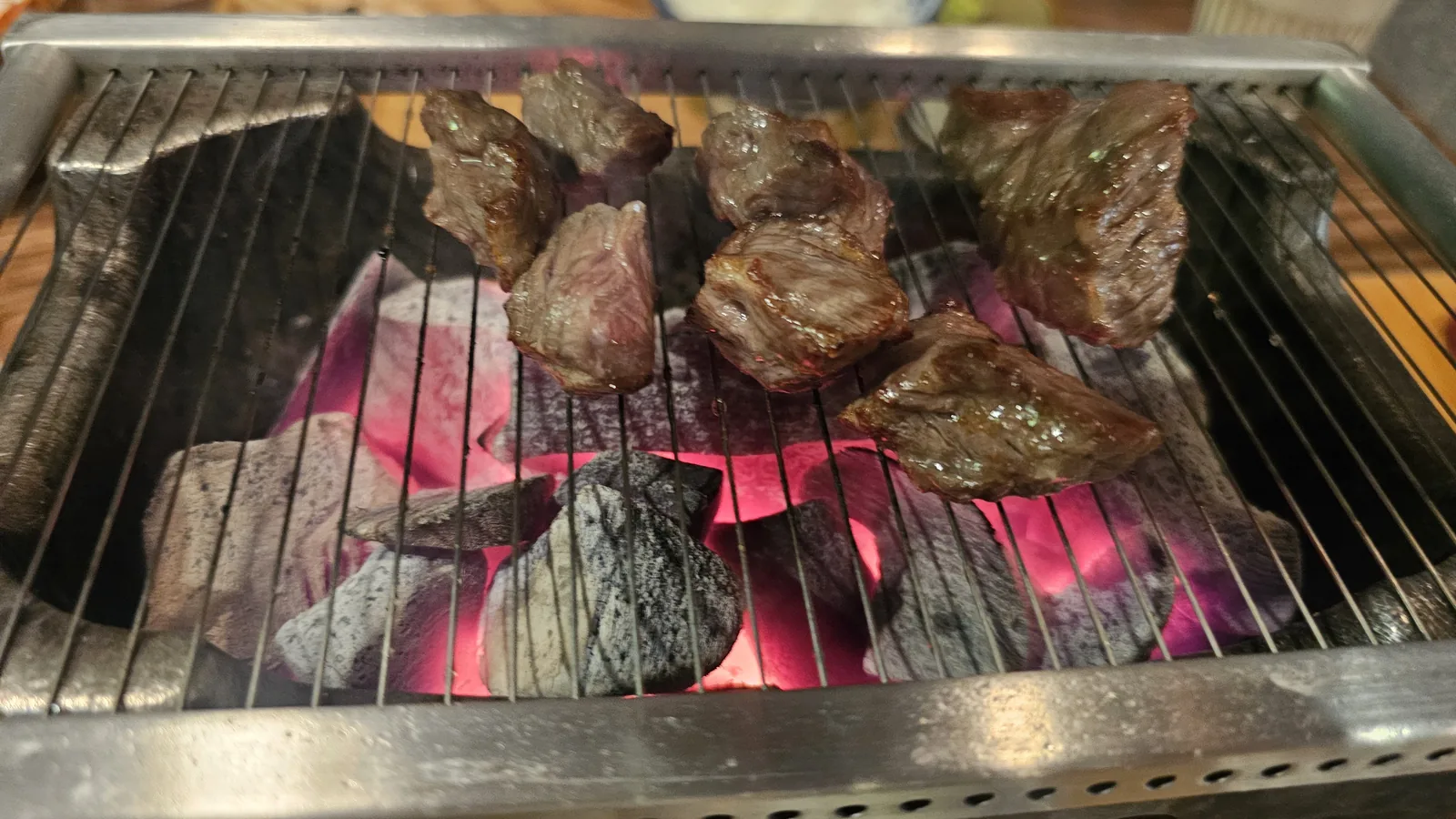
    Real charcoal grill. Not electric, not gas — charcoal. The fat drips, the outside gets color, smoke rises. It takes a bit longer than the instant heat of an electric grill, but the result is noticeably better. You get that faint char flavor layered over the lamb.
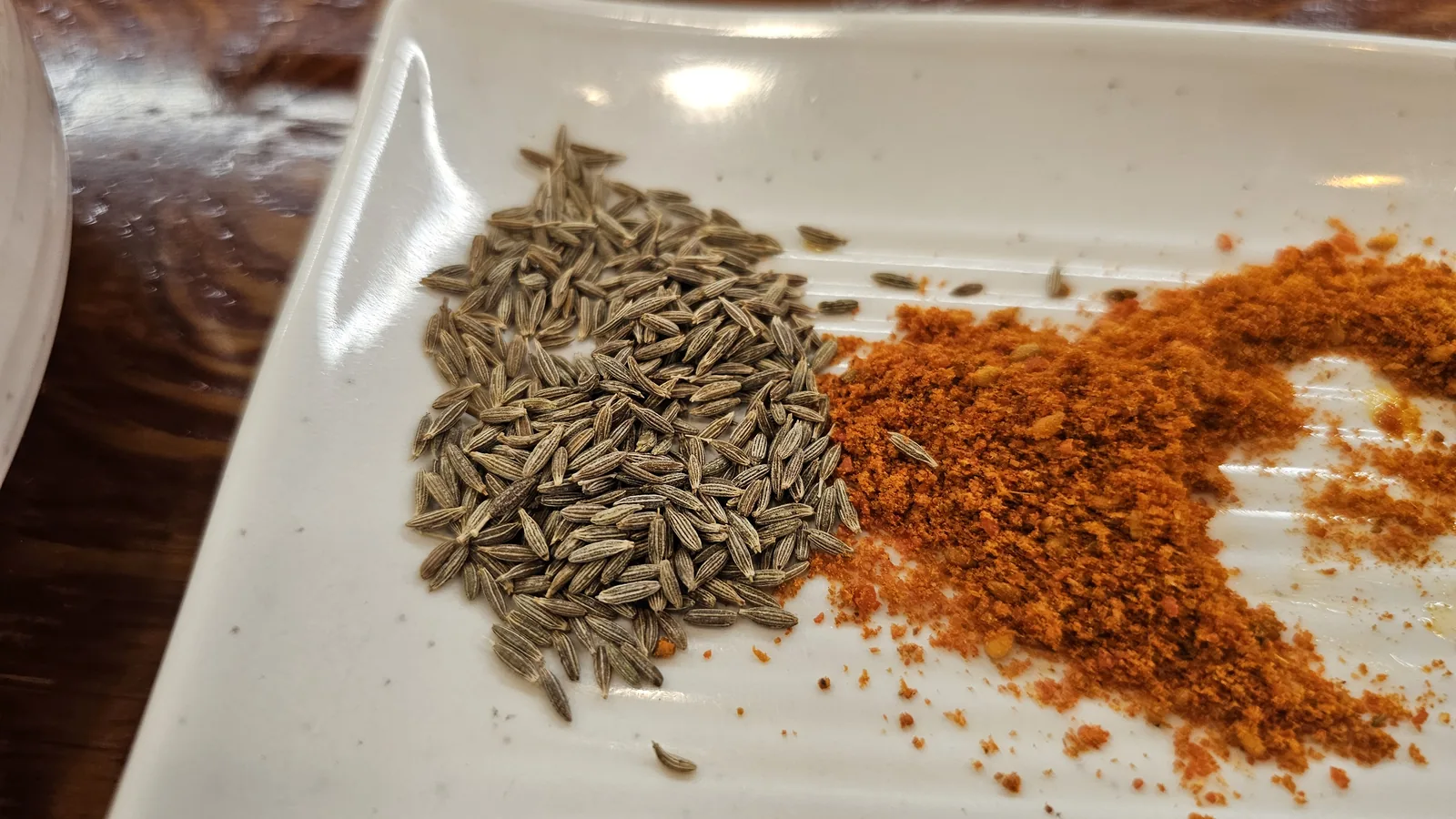
    Cumin seeds and red chili powder spice plate for dipping yangkkochi at Miyeon Maratang

    Cumin seeds and red chili powder spice plate for dipping yangkkochi at Miyeon Maratang

    The dipping plate: cumin seeds and dried chili powder. Roll the skewer through it right off the grill. This is the standard yangkkochi method and it’s not optional — the cumin does something with lamb fat that just works. Don’t skip it.

    The lamb was clean, mildly flavored, with the kind of quality that makes you understand why they put the Australian sourcing on a neon sign. We ordered twice. If you’re at a place and you order the same thing twice, that’s the review.

    The Malatang
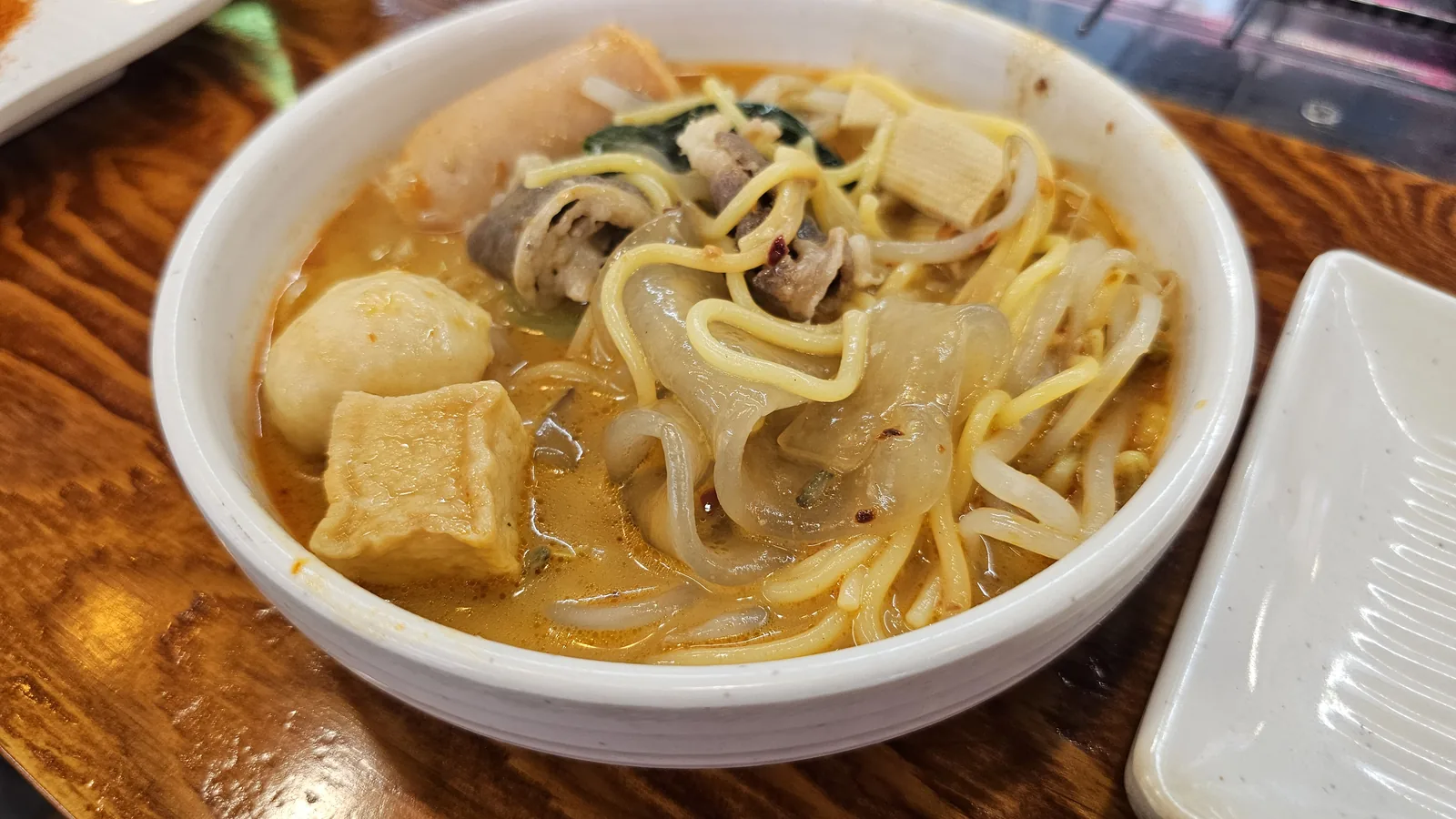
    Finished malatang bowl with noodles, fish cake, tofu, mushrooms, and bean sprouts at Miyeon Cheongyang

    Finished malatang bowl with noodles, fish cake, tofu, mushrooms, and bean sprouts at Miyeon Cheongyang

    A full bowl with noodles, fish cake, tofu, mushrooms, and bean sprouts in reddish-orange broth. It looks intense; it is spicy.

    The broth has that malatang tingle — heat and numbness at the same time from the Sichuan peppercorns. If this is your first malatang, the sensation is a bit different from standard chili heat. It builds and lingers in an interesting way. The base flavor underneath is rich and savory.

    Honest take: it’s good malatang. Not the most transcendent bowl I’ve had, but well-executed and satisfying, especially eating alongside grilled lamb. The two dishes work together better than they have any right to.

    The Tangsuyu
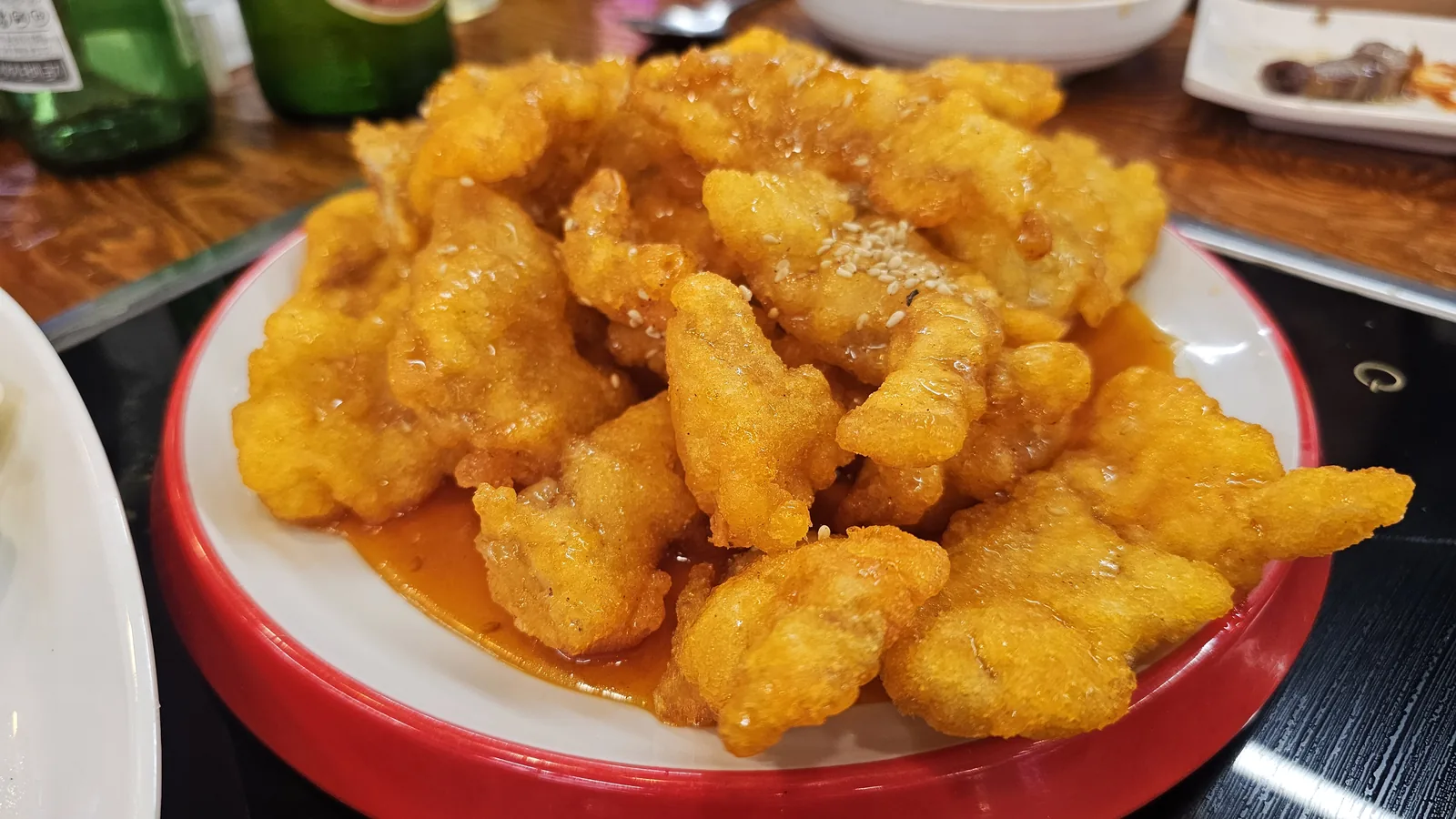
    Tangsuyu sweet and sour pork on red-rimmed plate with dipping sauce and sesame seeds at Miyeon Cheongyang

    Tangsuyu sweet and sour pork on red-rimmed plate with dipping sauce and sesame seeds at Miyeon Cheongyang

    Tangsuyu (탕수육) is the Korean version of sweet and sour pork — battered, deep-fried pork pieces with sweet and tangy sauce. At Miyeon, the sauce is poured over rather than served on the side, which is the “pour it on” (부어먹는 스타일) camp in an ongoing Korean food debate that regular visitors will eventually become aware of.

    Crispy batter, sauce, sesame seeds. It was good. Tangsuyu is tangsuyu. It’s not the reason to come here, but it works well as a side to break up the lamb and broth rotation.

    Stuff Tourists Should Know

    Language and menus: No English menu that I saw, but every dish on the menu has a photo. Point and order. Google Translate’s camera mode handles the text if you want specifics. Staff speaks Korean.

    Payment: Cards are accepted at most Korean restaurants — foreign Visa and Mastercard generally work without issue. Worth confirming before you sit down if you’re only carrying cash.

    Tipping: No tipping in Korea. None. Don’t tip.

    Vegetarian: Malatang can technically be done vegetarian — pick only vegetable ingredients from the fridge, request mild broth. But you’d be ordering around the core concept of the restaurant. If you don’t eat meat, there are better options elsewhere.

    Halal: The restaurant isn’t halal-certified. They serve pork (tangsuyu). The lamb sourcing is Australian, which may or may not be halal-certified depending on the specific supplier — check directly with the restaurant if this is relevant to you.

    Spice: Both the malatang broth and the chili powder dipping plate can be significant heat. If your tolerance is low, go mild on the malatang level and use the cumin-heavy side of the dipping plate rather than loading up on the chili.

    Groups: This place is built for groups. The more people, the more skewer sets you order, the better it works. Solo dining is fine but the group setup gets you more variety.

    Kids: Korean families were there with children at dinner. It’s welcoming and casual. The spicy food is worth flagging for younger kids.

    The Verdict

    We came for the lamb. Ordered more lamb than planned because the first round was too good to stop at.

    Miyeon Yangkkochi Maratang is a solid local spot with genuine quality behind the Australian lamb claim. Charcoal grill, clean-flavored meat, good cumin-chili dipping setup. The malatang is satisfying. The atmosphere is the loud, lively, slightly smoky kind that suits this food perfectly.

    Should you go?

    – If you’re in Cheongyang or passing through South Chungcheong — yes. It’s one of the better dinner options in the area and holds up against city-level competition.

    – If you’ve never tried yangkkochi before — good place to start. The quality of the lamb makes the experience more accessible than a budget spot would.

    – If you’re in Seoul specifically looking for yangkkochi — Daelim-dong (대림동) in Seoul has a whole street of yangkkochi specialists that are worth seeking out. But if you’re out this way, Miyeon doesn’t disappoint.

    – If you’re only doing 3-4 days in Seoul — probably not worth the trip out to Cheongyang for this alone. Eat Korean food first, come back to Chinese-Korean combinations on a longer visit.

    We ate a lot. We’d go back. That’s the review.

    FAQ

    What should I order at Miyeon Yangkkochi Maratang?

    Start with the lamb skewer set (2-person is a good baseline) and add malatang to go alongside it. We ended up ordering extra skewers on top — the lamb is the main draw here.

    What is yangkkochi?

    Yangkkochi (양꼬치) is Chinese-style charcoal-grilled lamb skewers, dipped in a plate of cumin seeds and chili powder right off the grill. Came to Korea through Chinese food culture and is now everywhere. Very different from Korean BBQ.

    What is malatang?

    Malatang (마라탕) is a Sichuan-style spicy broth soup where you walk up to a refrigerator, pick your own ingredients — vegetables, tofu, noodles, fish cakes, whatever — and they cook it all in a numbing spicy broth. Spice levels are adjustable.

    Is there an English menu?

    No English menu, but the menus have photos of every dish, which gets you most of the way there. Google Translate camera mode handles anything unclear.

    Is it suitable for vegetarians?

    Malatang can technically be built without meat by picking only vegetable ingredients, but this is fundamentally a lamb restaurant. Not a great fit for vegetarians.

    How crowded does it get?

    Busy by 6 PM on weekday evenings — the place was already full when we arrived. Weekends will be more crowded. No reservations at most local spots like this; just show up early.
    You might also like

    📍 Location

    Open in Google Maps →

  • GU.I Yeouido: Honest Review of Individual Charcoal Korean BBQ

    GU.I Yeouido: Honest Review of Individual Charcoal Korean BBQ

    🇯🇵 日本語版はこちら

    Quick honest review of GU.I (구아이) in Yeouido — an individual charcoal grill BBQ spot with a Japanese aesthetic that’s a bit of a left turn for a Korean beef restaurant. Skip to the verdict if you’re in a hurry, but here’s the short version: the concept is solid, the interior looks great, the meat is decent but not revelatory.

    Two of us went on a Tuesday around noon. We ordered Lunch Set A and added the green tea ice cream as dessert separately.
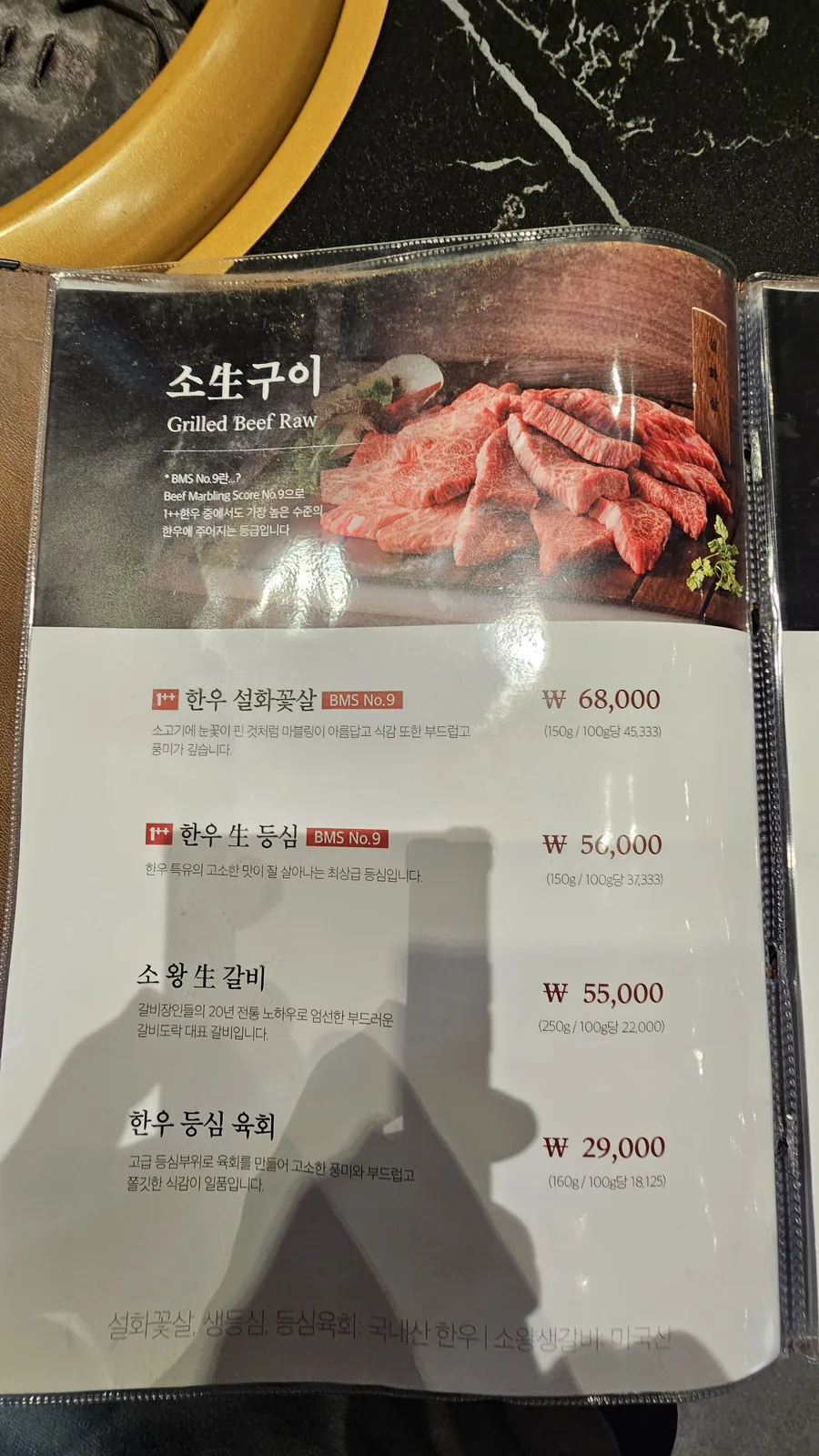
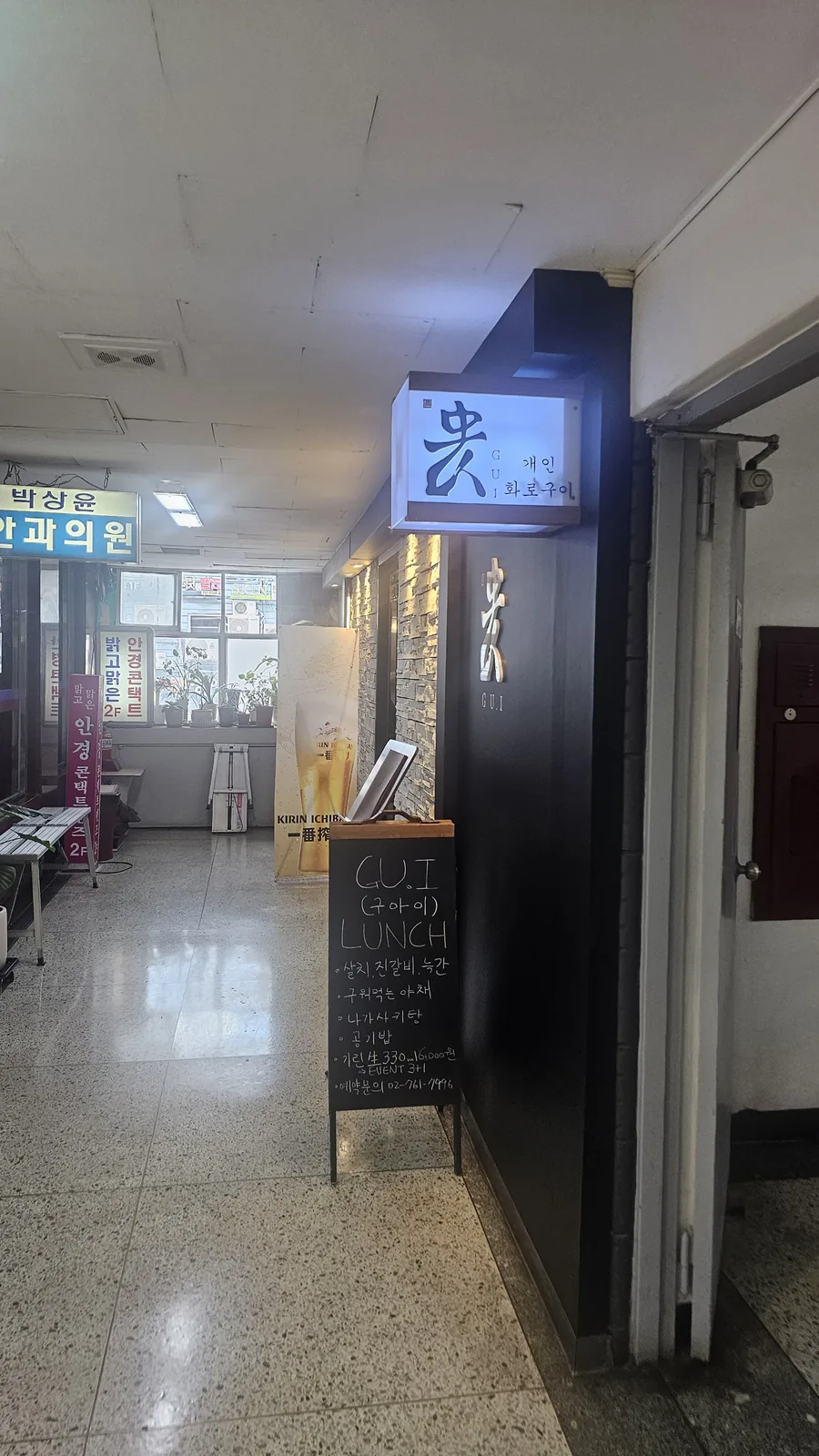
    GU.I restaurant entrance sign and lunch menu chalkboard in Yeouido Seoul
    GU.I restaurant entrance sign and lunch menu chalkboard in Yeouido Seoul
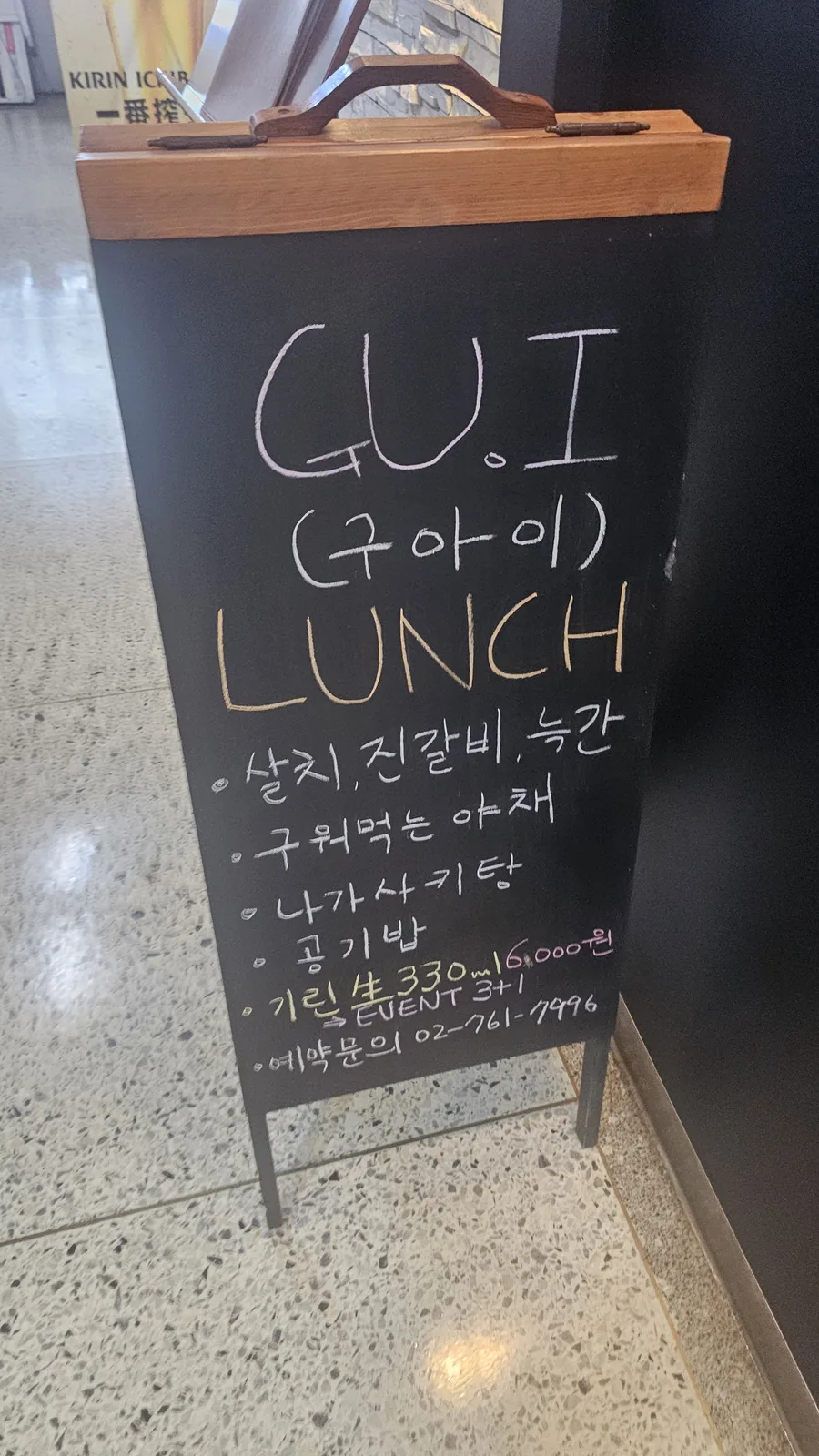
    GU.I Yeouido lunch menu chalkboard showing salchissal, jin-galbi, neukgan, Nagasaki soup, and Kirin draft beer promotion
    GU.I Yeouido lunch menu chalkboard showing salchissal, jin-galbi, neukgan, Nagasaki soup, and Kirin draft beer promotion

    What is GU.I?

    GU.I (구아이) is a Korean beef BBQ restaurant, but the delivery method is different from your typical Korean BBQ place.

    Instead of a shared grill in the center of the table, each person gets their own individual tabletop charcoal grill. That’s the concept. You’re grilling your own cuts over real charcoal, at your own pace, at your own heat level. More control, less fighting over grill space with your dinner partner.

    The interior leans hard into Japanese izakaya aesthetics — stone walls, warm pendant lights, dark wood tables. It doesn’t look like a Korean BBQ restaurant, honestly. Feels more like a mid-range Tokyo dinner spot. That contrast is intentional, and it mostly works.
    Getting There

    Yeouido is Seoul’s financial district — think something like Canary Wharf in London or the Financial District in Manhattan. It’s on an island in the Han River, connected by bridges on both sides.

    By subway:

    – Line 5 or Line 9: Yeouido Station (여의도역)

    – 10-15 minute walk from most exits depending on exact location

    From Incheon Airport:

    – AREX direct train to Seoul Station, then transfer to subway → about 60-70 minutes total

    – Taxi from the airport takes 50-80 minutes depending on traffic, roughly 65,000–80,000 KRW (~$48–59)

    Yeouido is a dense office district. At lunchtime on a weekday, the area is packed with office workers. GU.I fits right into that lunch rush ecosystem.

    The Interior

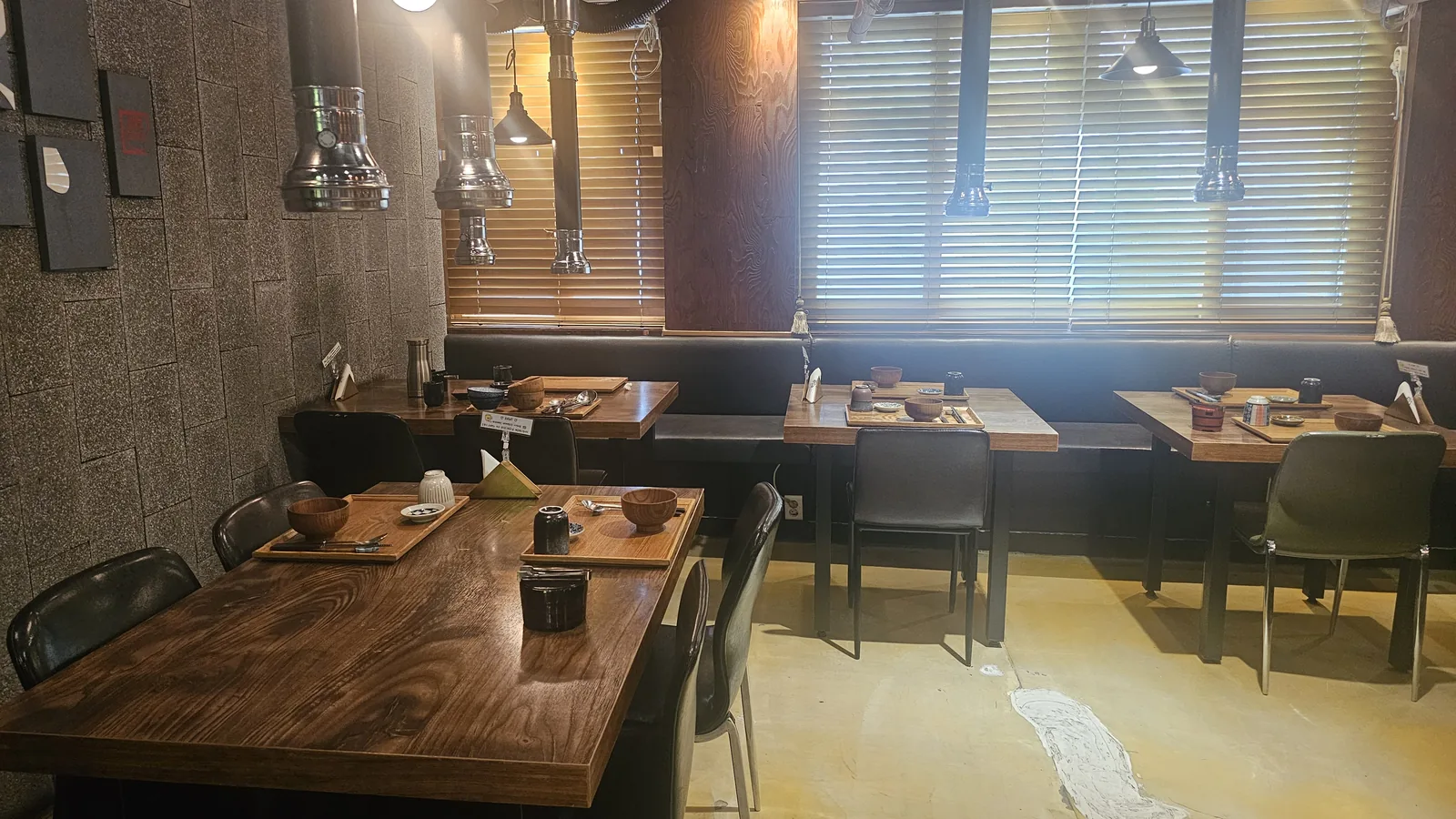
    Interior of GU.I Yeouido restaurant with wooden tables and individual charcoal grill setups
    Interior of GU.I Yeouido restaurant with wooden tables and individual charcoal grill setups
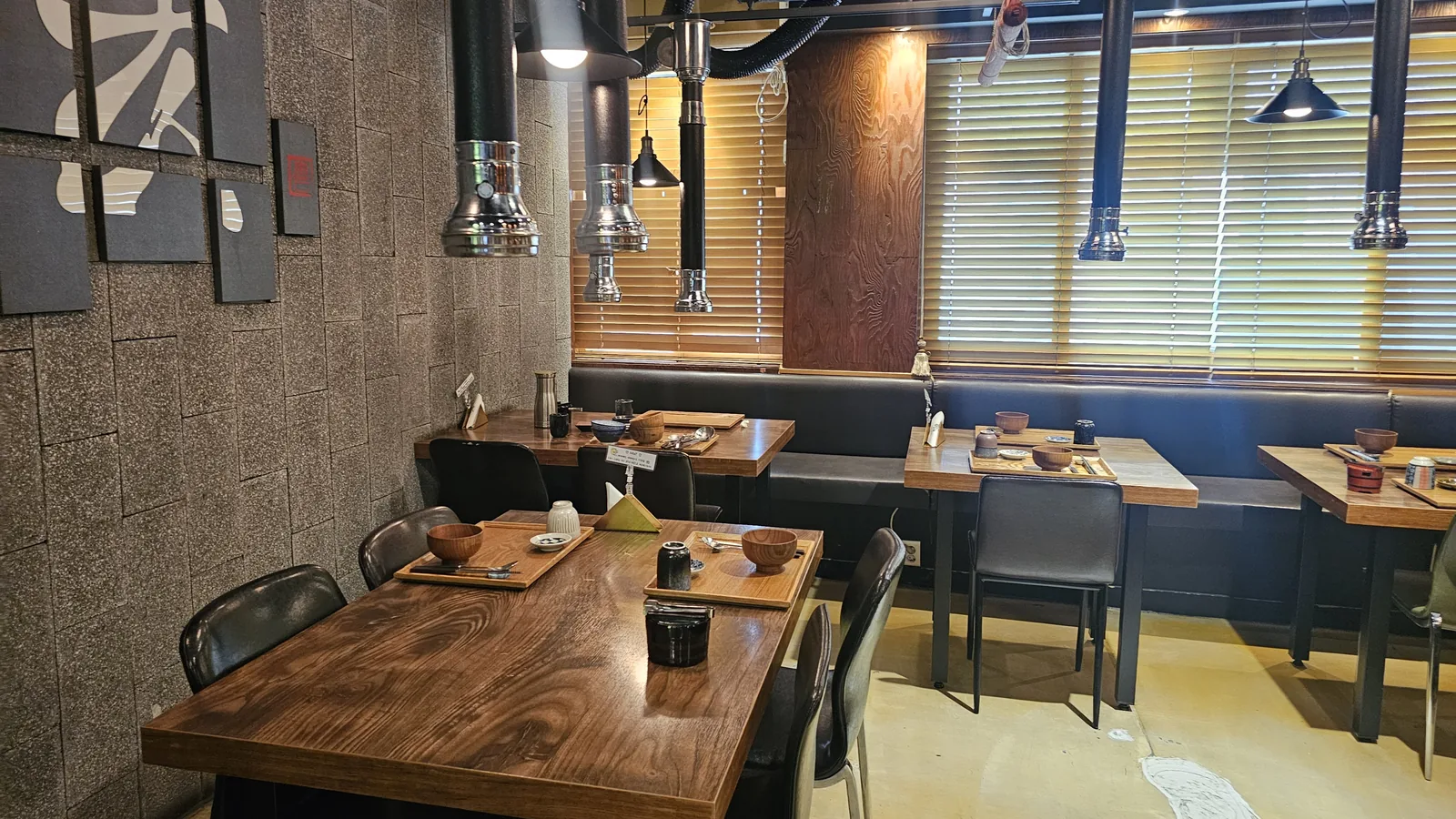
    GU.I Yeouido interior from different angle showing stone wall decor and full table arrangement
    GU.I Yeouido interior from different angle showing stone wall decor and full table arrangement
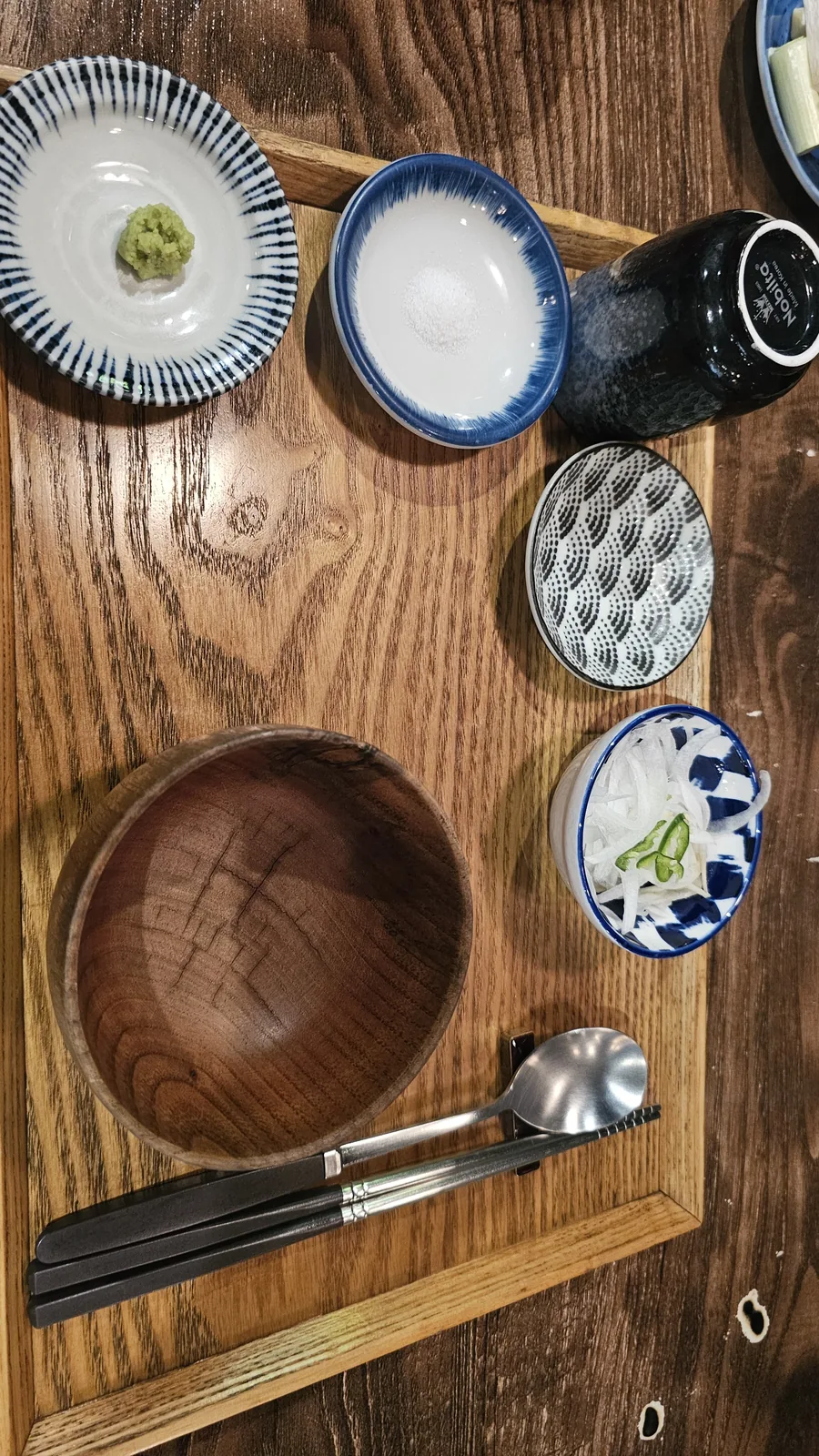
    GU.I Yeouido table setting flat lay with wasabi, salt, pickled onion, empty rice bowl, and chopsticks
    GU.I Yeouido table setting flat lay with wasabi, salt, pickled onion, empty rice bowl, and chopsticks

    The space is compact but well thought out. Each table has its own charcoal grill setup built in, with a ventilation system above. Stone accent walls, warm wood, pendant lighting — it has the look of somewhere that spent real money on design.

    Table settings come with the usual Korean BBQ sides: pickled onion, wasabi, salt for dipping. Clean, minimal, functional.

    It doesn’t feel loud or chaotic. For a Yeouido lunch spot, it’s actually pretty calm. Good for a business lunch if you don’t mind smelling like charcoal smoke afterward.

    What We Ordered

    Lunch Set A (점심 A세트)

    The lunch set includes:

    – 살치살 (Salchissal) — chuck flap / outside skirt, thin-sliced

    – 진갈비 (Jin-galbi) — short ribs

    – 늑간 (Neukgan) — intercostal meat (the thin strip between ribs)

    – 나가사키탕 (Nagasaki-style soup)

    – Rice + grilling vegetables

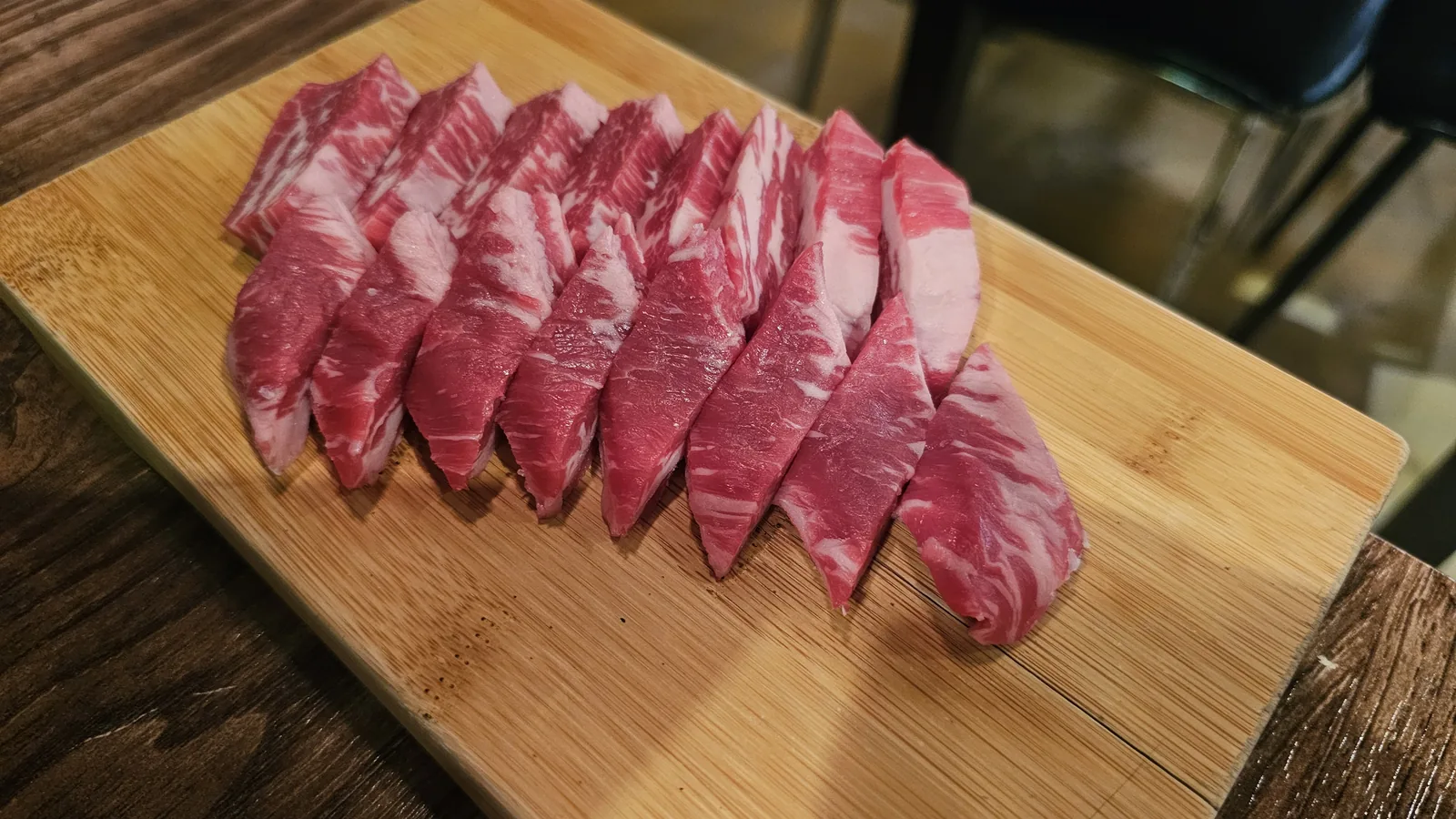
    Richly marbled raw beef on bamboo cutting board at GU.I Yeouido, close-up
    Richly marbled raw beef on bamboo cutting board at GU.I Yeouido, close-up

    The raw cuts come presented on a bamboo cutting board. Marbling is visible. It looks good. The presentation is doing a lot of work here — bamboo board, clean slices, good lighting — and it’s effective.

    The Meat

    Okay, here’s the honest take.

    The beef is… fine.

    Beef grilling on individual charcoal grill at GU.I Yeouido
    Beef grilling on individual charcoal grill at GU.I Yeouido
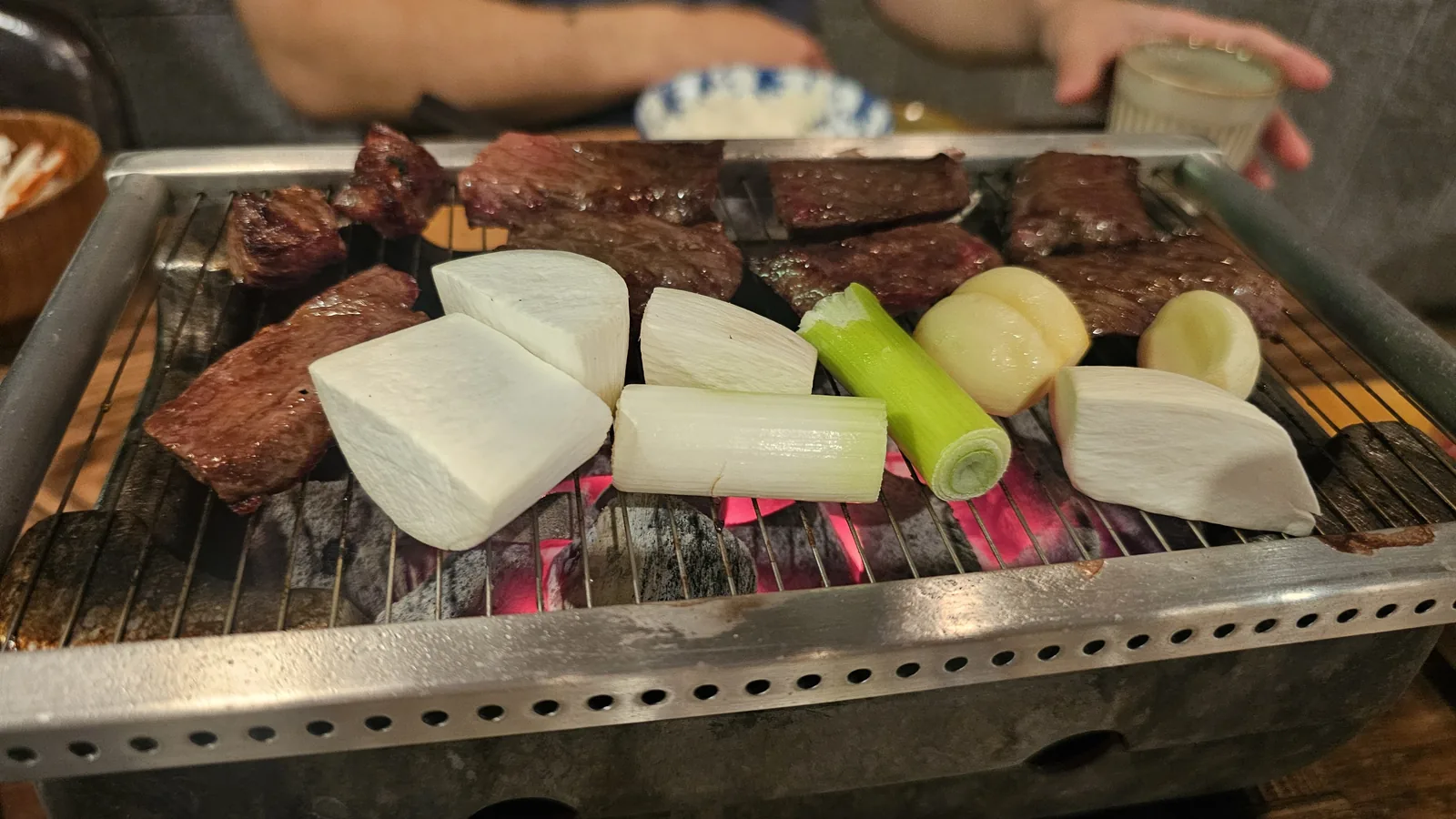
    Beef slices and vegetables including radish and green onion grilling together on charcoal at GU.I Yeouido
    Beef slices and vegetables including radish and green onion grilling together on charcoal at GU.I Yeouido

    The individual charcoal grill does what it’s supposed to do — you get real charcoal heat, you control the cook, you get some smoke on the meat. The actual grilling experience is good.

    The cuts themselves? Solid quality, not exceptional. The salchissal (chuck flap) had decent marbling and some chew to it. Jin-galbi (short ribs) was the better cut — a bit more flavor, slightly thicker. The neukgan is the most interesting on paper (intercostal meat has a distinct texture) but it’s the thinnest cut and cooks the fastest.

    “괜찮았어” was the honest verdict between us at the table — and that’s about right. Okay. Not bad, not jaw-dropping. A solid lunch, not a destination beef experience.

    If you’re comparing this to something like a specialized Hanwoo (Korean beef) restaurant, the gap is real. But for a Yeouido office lunch where the concept and presentation are part of what you’re paying for, it delivers.

    The Nagasaki Soup (나가사키탕)

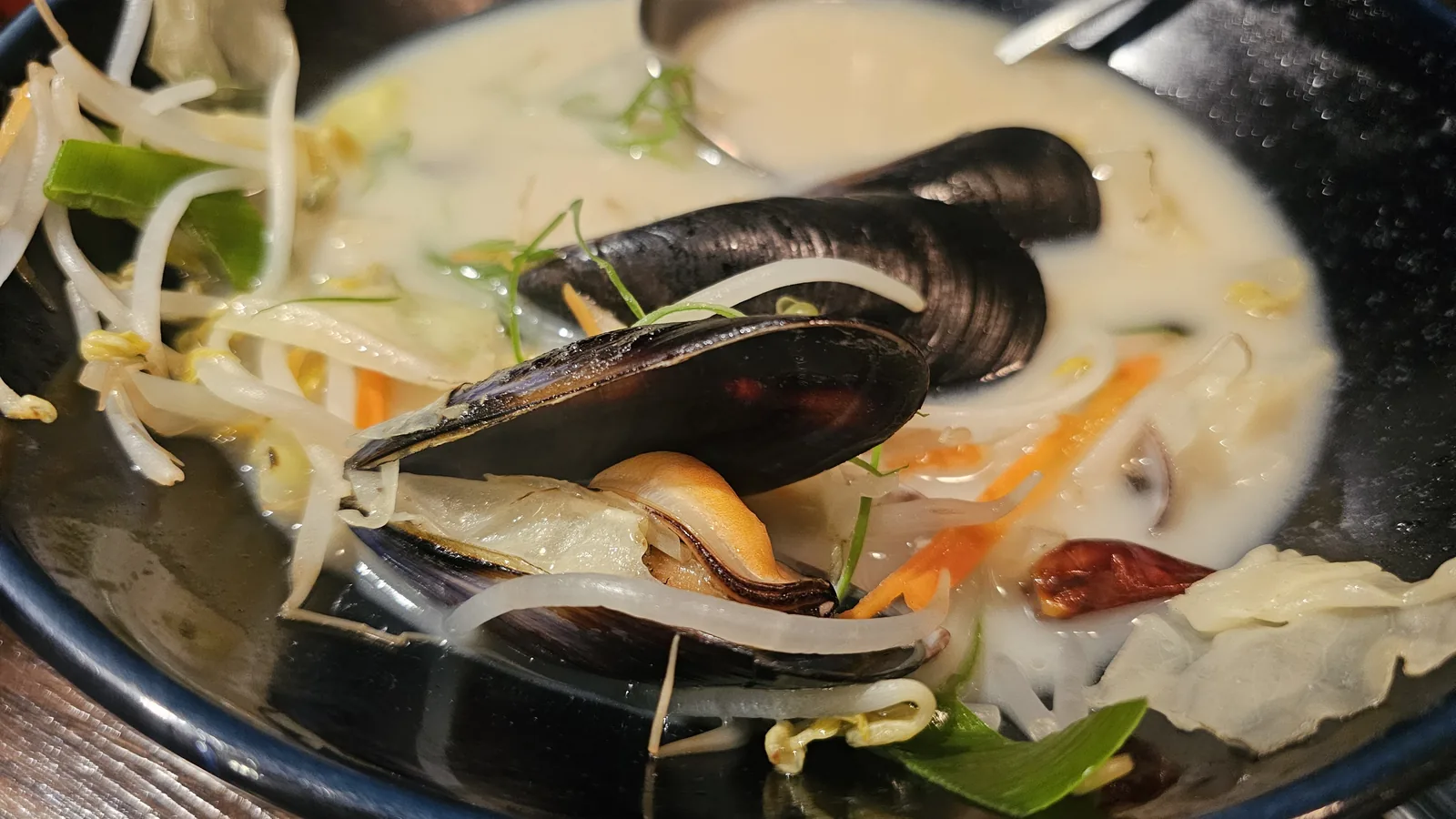
    Nagasaki soup close-up showing mussels, bean sprouts, carrots, and cabbage in white broth at GU.I Yeouido
    Nagasaki soup close-up showing mussels, bean sprouts, carrots, and cabbage in white broth at GU.I Yeouido
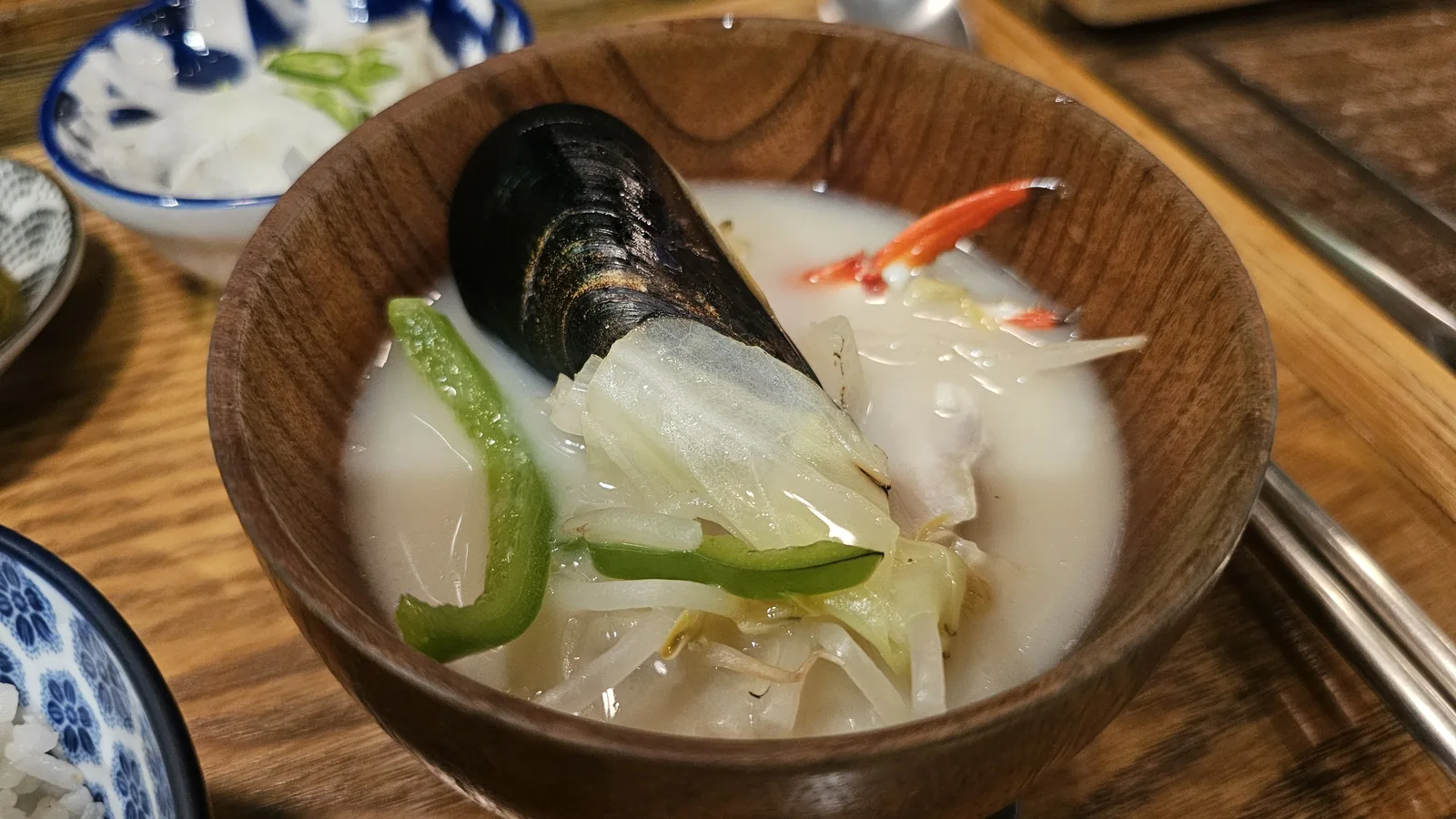
    Nagasaki-style soup in wooden bowl with mussels, green and red chili, white broth at GU.I Yeouido
    Nagasaki-style soup in wooden bowl with mussels, green and red chili, white broth at GU.I Yeouido

    This was the surprise of the meal, tbh.

    Nagasaki soup here is a white broth with mussels, bean sprouts, cabbage, carrots, and green and red chili. It’s mild, slightly savory, clean. Nothing heavy.

    Quick context for people who don’t know Nagasaki as a food reference: Nagasaki is a Japanese port city with a long history of Chinese and Western trade influence. Its food culture absorbed a lot from outside Japan — the most famous example being champon noodle soup. When Koreans reference “나가사키탕,” they’re drawing from that same port-city, cross-cultural soup tradition. Light broth, mixed protein, vegetables.

    This version is not spicy. It’s a good palate reset between beef cuts. Works well as a soup course in the set.

    Dessert: Green Tea Ice Cream (따로 주문)

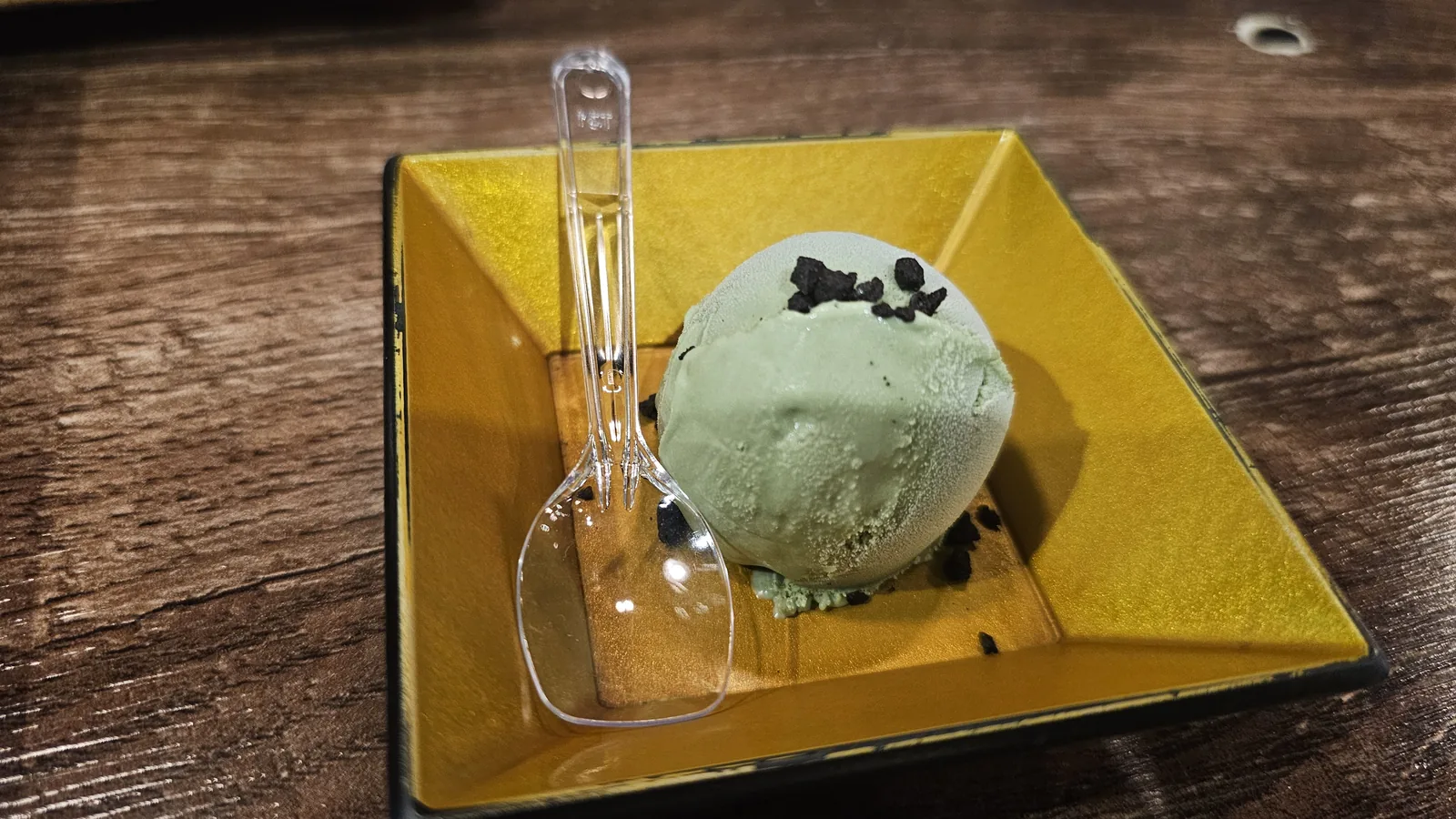
    Green tea ice cream served on gold plate as dessert at GU.I Yeouido
    Green tea ice cream served on gold plate as dessert at GU.I Yeouido

    We ordered this separately — it’s not in the lunch set.

    Served on a gold plate, proper green tea color, not neon. It’s fine. Exactly what it is. A clean finish after a charcoal grill meal.

    Not worth going out of your way for, but a reasonable way to end if you’re not in a rush back to the office.

    Stuff Tourists Should Know

    Kirin Beer Promotion

    At the time of our visit, they had a 기린生 (Kirin nama/draft) 3+1 promotion — buy 3 beers, get 1 free. Not bad for a lunchtime deal if you’re not heading back to meetings.

    Pricing

    – Lunch Set A: 16,000 KRW per person (~$12 USD)

    – Green tea ice cream: ordered separately, adds to the bill

    – Kirin draft beer: additional

    – Budget roughly 22,000–28,000 KRW (~$16–21) per person all-in for lunch with a beer

    Language

    Menu is in Korean. Staff in a Yeouido lunch spot will likely have limited English. You can point at menu photos — most Korean restaurants have them. Alternatively, Google Translate camera mode works well for Korean menus.

    Vegetarian/Dietary

    This is a beef-focused BBQ restaurant. Not vegetarian-friendly. No Halal certification that we know of. Soup contains shellfish (mussels).

    Reservations

    Walk-in worked fine at 12:15 PM on a Tuesday. Peak lunch rush (12:00–12:30) can fill up — arriving slightly before or after helps.

    Solo Dining

    The individual grill concept actually works for solo diners — you’re not sharing a grill or waiting on someone else. Practically, though, the lunch set portions are built around 2+ people.

    Solo vs. Group

    2-4 people is probably the sweet spot. Large groups might find it tight in terms of table space.

    The Verdict

    Should you go?

    Depends on what you’re doing in Yeouido.

    – If you’re already in Yeouido for meetings or sightseeing — yes, this is a solid lunch option. The concept is fun, the space looks good, the set is fair value at 16,000 KRW.

    – If you’re chasing Seoul’s best Korean BBQ — probably not your target. This is a polished concept restaurant, not a serious beef destination.

    – If you have limited time in Seoul and haven’t eaten proper Korean BBQ yet — eat at a traditional Korean BBQ place first. Come back to concept spots like GU.I on a longer visit.

    – If you want to try individual charcoal grill BBQ with a Japanese aesthetic and a light soup on the side — yeah, GU.I does that well.

    The meat is okay. The experience is good. The price is fair. That’s the honest read.

    Would we go back? Probably if we were already in Yeouido for something else. Not a special trip.

    —

    *Visited: August 2026, Tuesday, lunchtime. 2 people. Lunch Set A + green tea ice cream. Walk-in.*

    FAQ

    How much does lunch cost at GU.I Yeouido?

    The lunch set (점심 세트) is around 16,000 KRW (~$12 USD) per person. Add a draft beer or dessert and you’re looking at closer to 22,000–25,000 KRW (~$16–18) total.

    Does GU.I Yeouido take reservations?

    It’s a lunch-crowd spot in a financial district, so walk-ins at noon can get busy. Check their official Instagram for reservation info — arriving at 12:00–12:15 PM should be fine on weekdays.

    Do I need to speak Korean at GU.I Yeouido?

    The menu is primarily in Korean. Basic pointing and gestures will get you through. This is a Yeouido business lunch spot, not a tourist-facing restaurant — expect Korean-only menus and limited English from staff.

    Does GU.I accept credit cards?

    Most Seoul restaurants accept cards, including foreign Visa/Mastercard. Cash works fine too. No tipping expected — tipping is not customary in Korea.

    What kind of meat does GU.I serve at lunch?

    The lunch set typically includes thin-sliced premium cuts like salchissal (chuck flap), jin-galbi (short ribs), and neukgan (intercostal) — all grilled on individual tabletop charcoal grills.

    Is GU.I Yeouido family-friendly?

    Charcoal smoke + open flames at the table = not ideal for small kids. Fine for older kids and adults. The pace is quick and the space is compact.

    You might also like

    📍 Location

    GU.I (구아이)
    서울 영등포구 여의대방로 383 경도빌딩 2층
    383 Yeouidaebang-ro, Yeongdeungpo-gu, Seoul, 2F

    Open in Google Maps →

  • Galbidorak Guro: Honest Review of Korean Master Chef BBQ

    Galbidorak Guro: Honest Review of Korean Master Chef BBQ

    🇯🇵 日本語版はこちら

    Quick honest review of Galbidorak in Guro. Short version: premium Korean galbi done by someone with a government certificate to prove they know what they’re doing. Prices are real. Beef is good. If you’d spend serious money on a steak dinner, this makes more sense than that.

    I’ve been twice now. Still going back.

    What Is Galbidorak?

    Galbi (갈비) is Korean short rib — one of the pillars of Korean BBQ culture. At the most basic level, it’s beef cut across the bone, marinated or fresh, grilled over heat. If you’ve been to a Korean restaurant anywhere in the world, you’ve probably encountered it.

    What separates Galbidorak from the average galbi spot is the chef behind it.

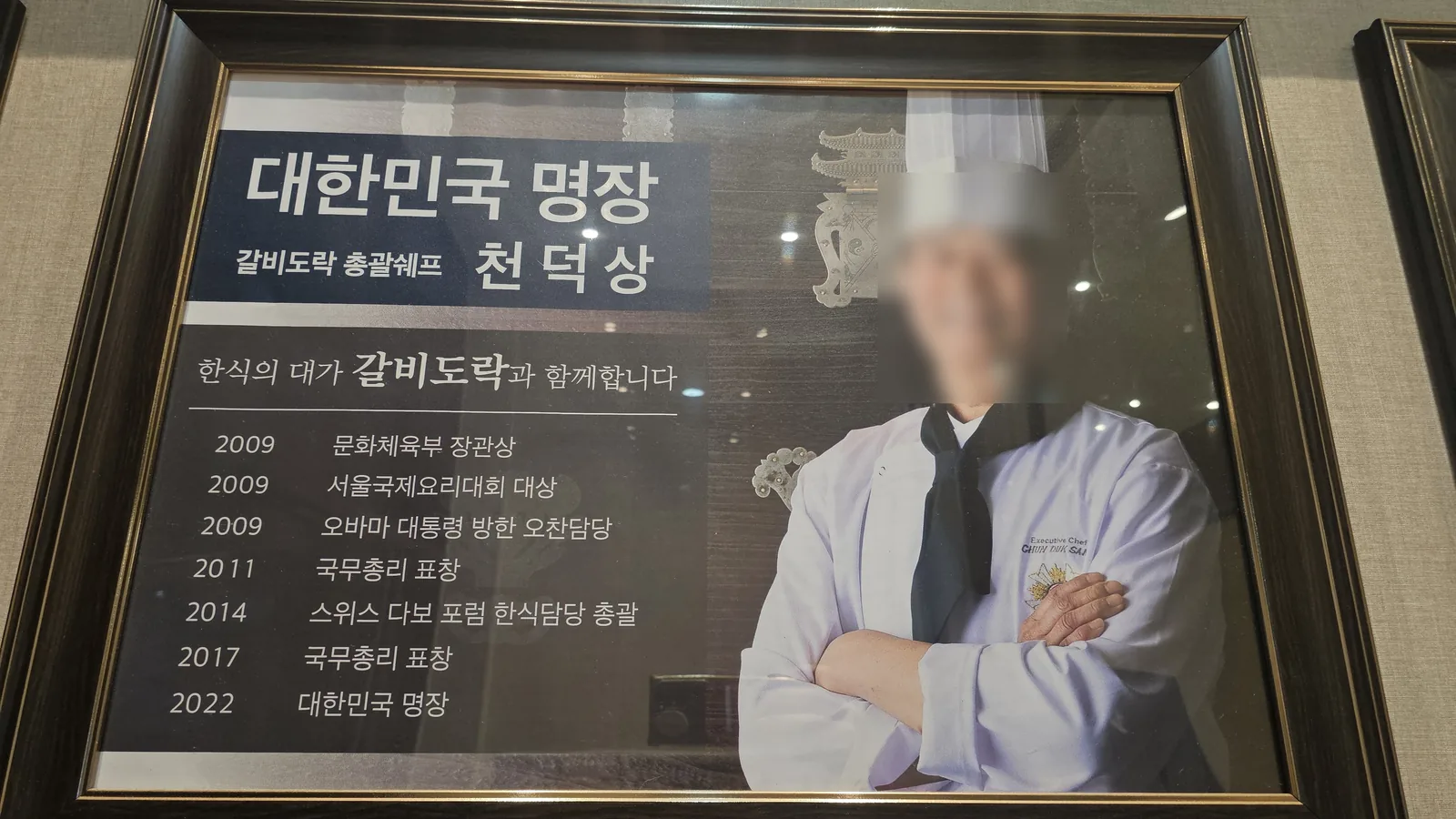
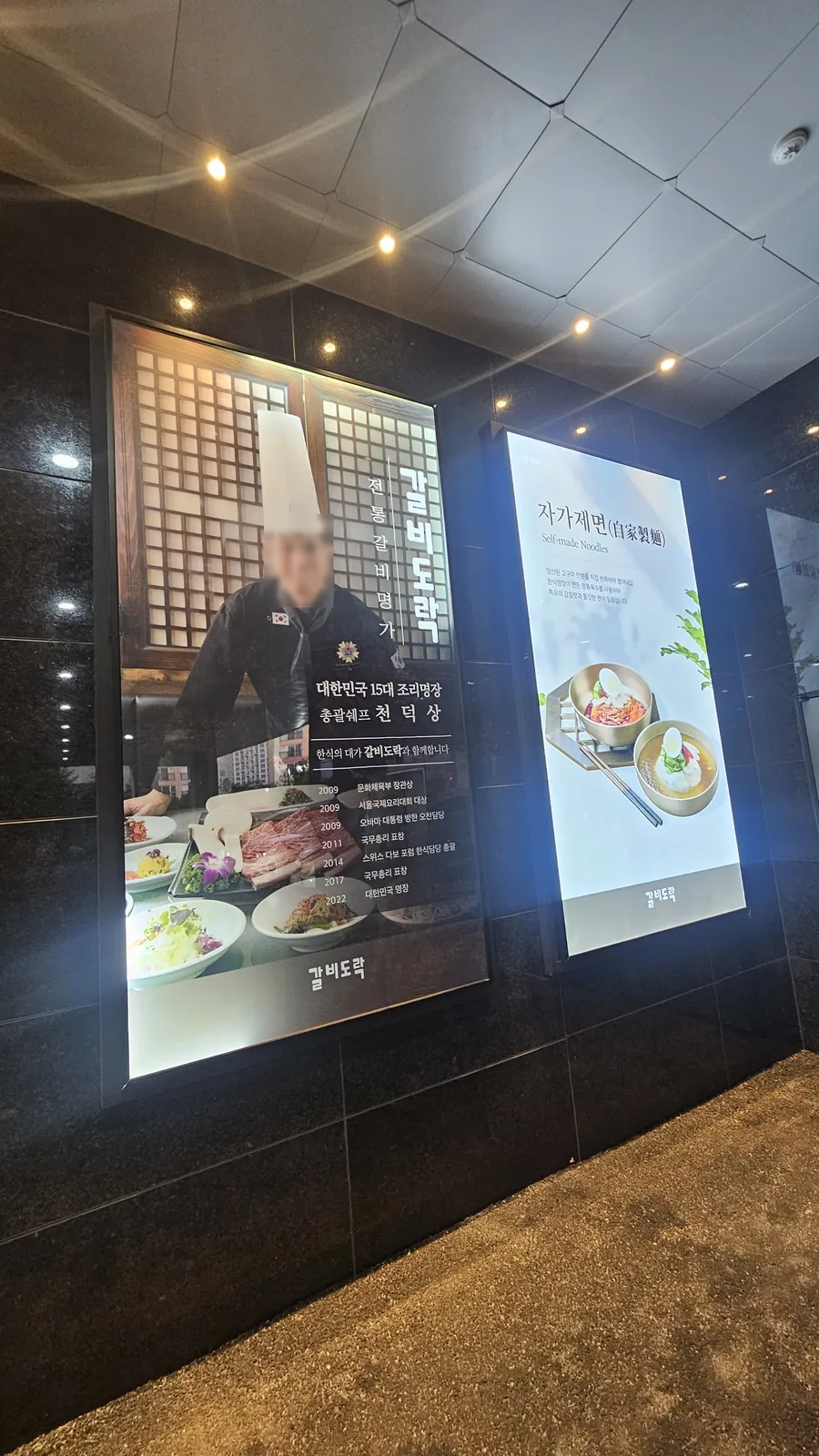
    Galbidorak chef credentials frame — Master Chef of Korea Cheon Deok-sang, 2022 Korean National Meister Award
    Galbidorak chef credentials frame — Master Chef of Korea Cheon Deok-sang, 2022 Korean National Meister Award

    Chef Cheon Deok-sang (천덕상) holds the title of 대한민국 명장 — Korean National Meister. This is a government designation awarded to craftspeople who’ve reached the absolute peak of their field. Not a Michelin star, not a magazine ranking. An official government recognition that says: this person is one of the best in the country at what they do.

    He received his in 2022. The specialty: galbi.

    The certificate is framed and mounted near the entrance. It’s not subtle. But it’s not bragging either — it’s just a fact about who’s running the kitchen.

    Getting to Guro

    Guro (구로구) is in southwestern Seoul. Not on most tourist itineraries — no palaces, no night markets, no famous shopping strips. It’s a real Seoul neighborhood where actual Seoulites live and work.

    By subway: Line 1 (blue) — Guro Station, or Line 7 (dark olive) — Guro Digital Complex Station. From central Seoul (City Hall, Myeongdong), it’s about 25–35 minutes. From either station, check Naver Maps or Google Maps for the exact walk to the restaurant.

    From Incheon Airport: About 50–60 minutes total via AREX to Seoul Station, then Line 1 south. Not a quick detour, but a workable dinner destination if you’re staying nearby.

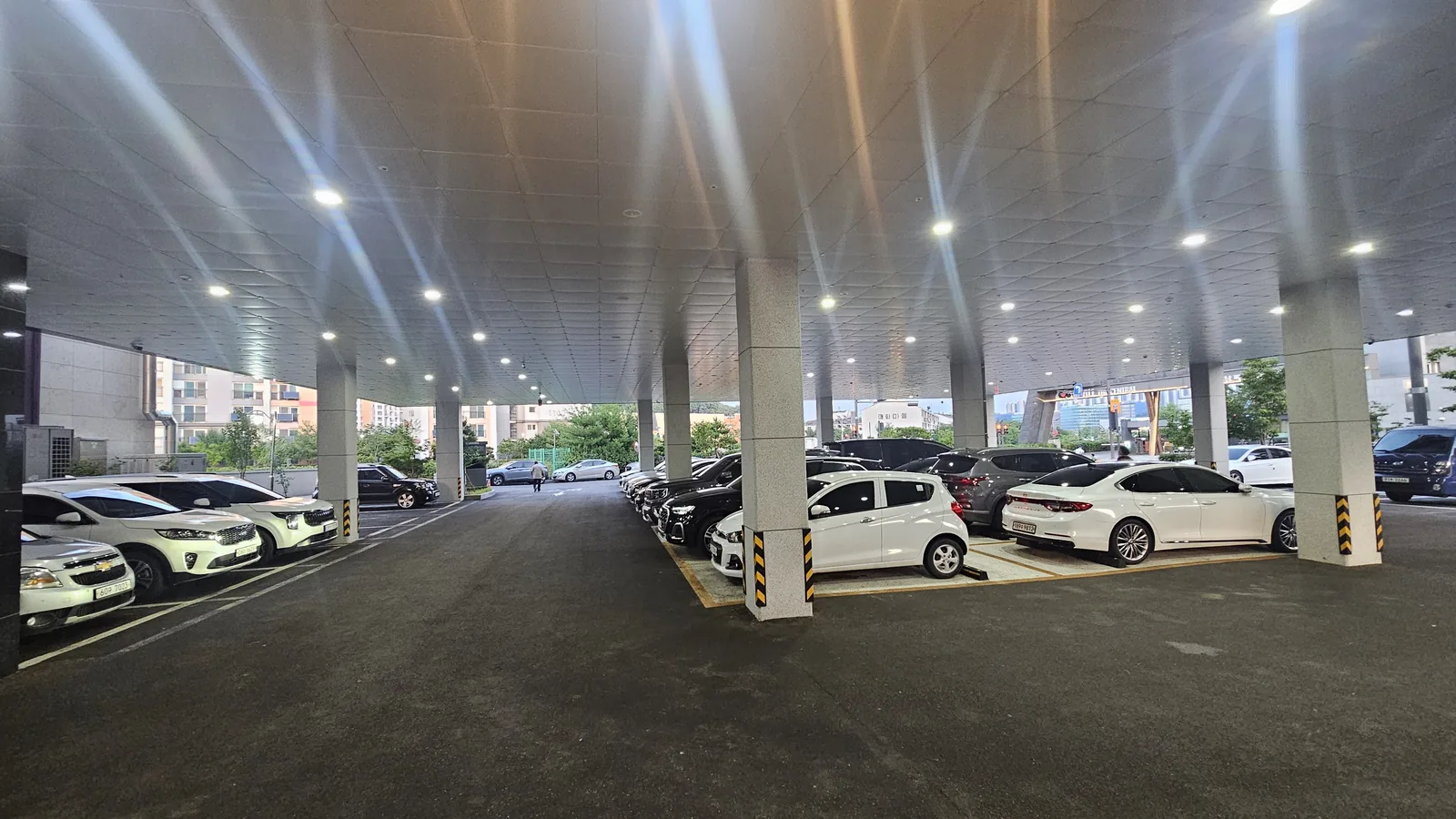
    Parking: Large covered lot on-site. If you’re coming by taxi or rented car, this is easy.

    Galbidorak Guro large covered parking lot with cars parked during evening hours
    Galbidorak Guro large covered parking lot with cars parked during evening hours
    Galbidorak restaurant entrance at night — signage for house-made cold noodles and Master Chef credentials
    Galbidorak restaurant entrance at night — signage for house-made cold noodles and Master Chef credentials

    The Space

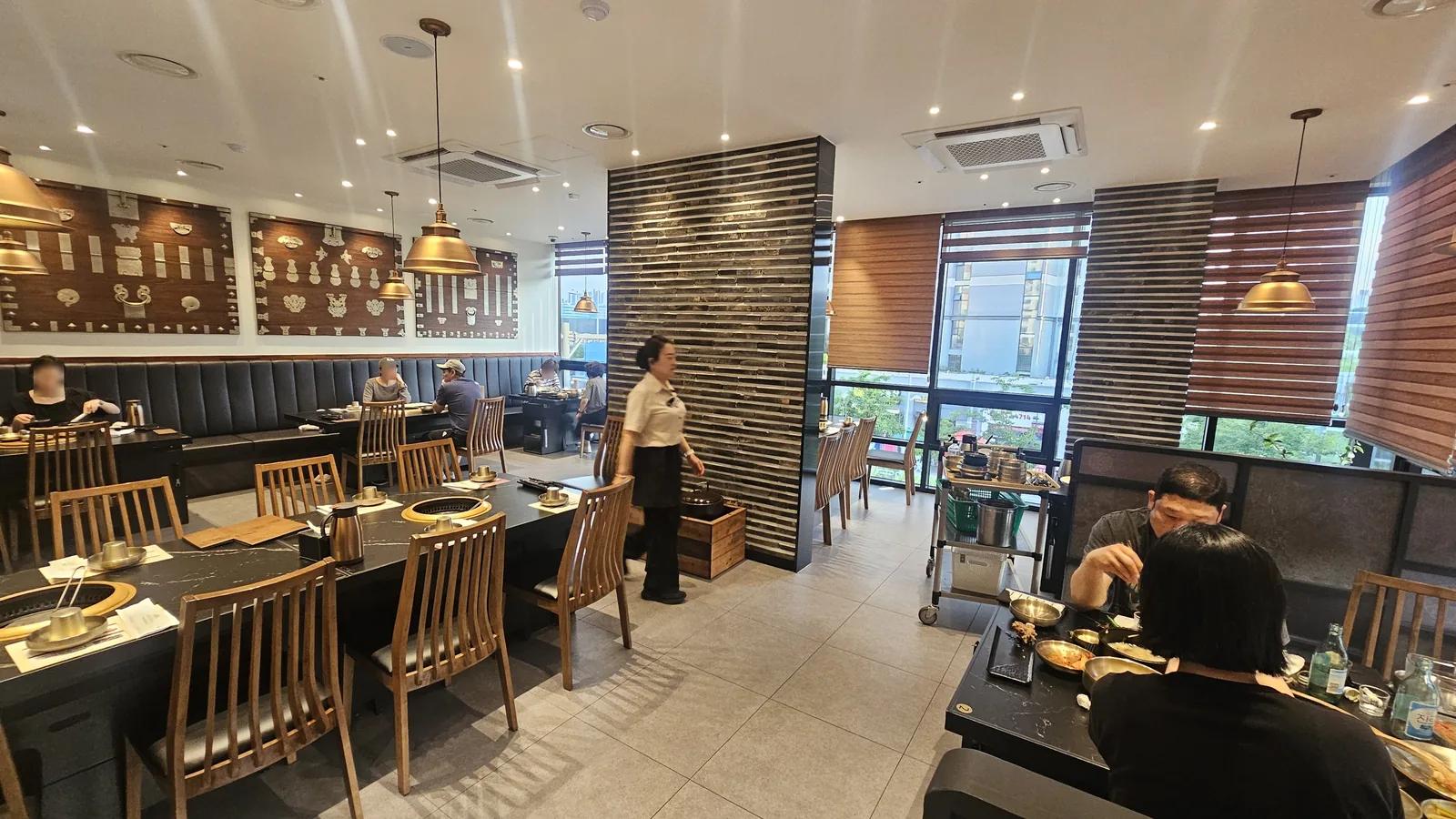
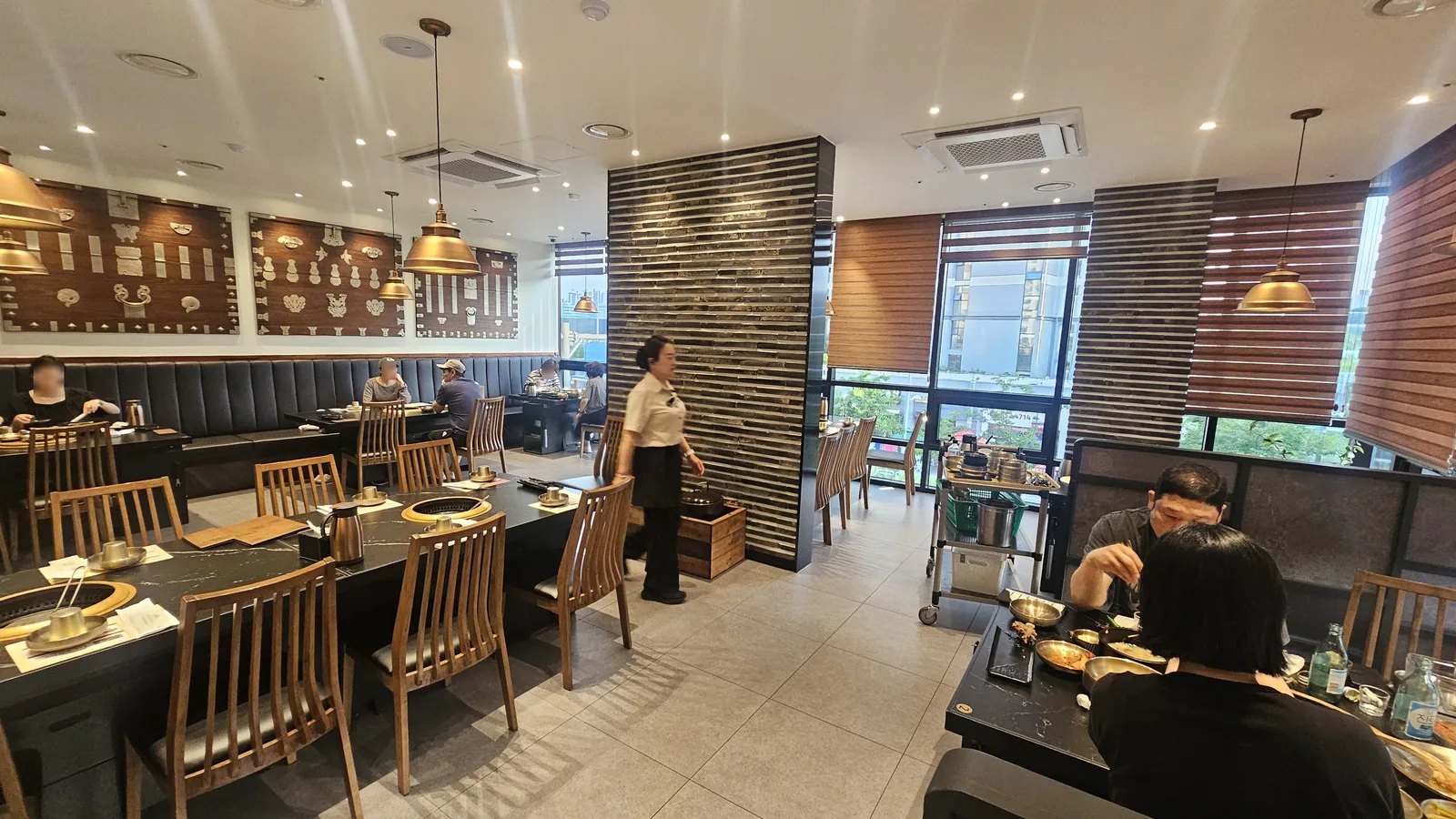
    Big restaurant. Genuinely polished interior — wooden panel walls, brass pendant lights, marble-topped tables, charcoal grill recessed into the center of each table. The overall feel is somewhere between an upscale steakhouse and a traditional Korean dining room. Considered, not flashy.

    Staff move efficiently. At this price point, they should.

    Elegant interior of Galbidorak Guro with wooden panels, brass pendant lights, and charcoal grill tables
    Elegant interior of Galbidorak Guro with wooden panels, brass pendant lights, and charcoal grill tables

    Banchan Before the Meat

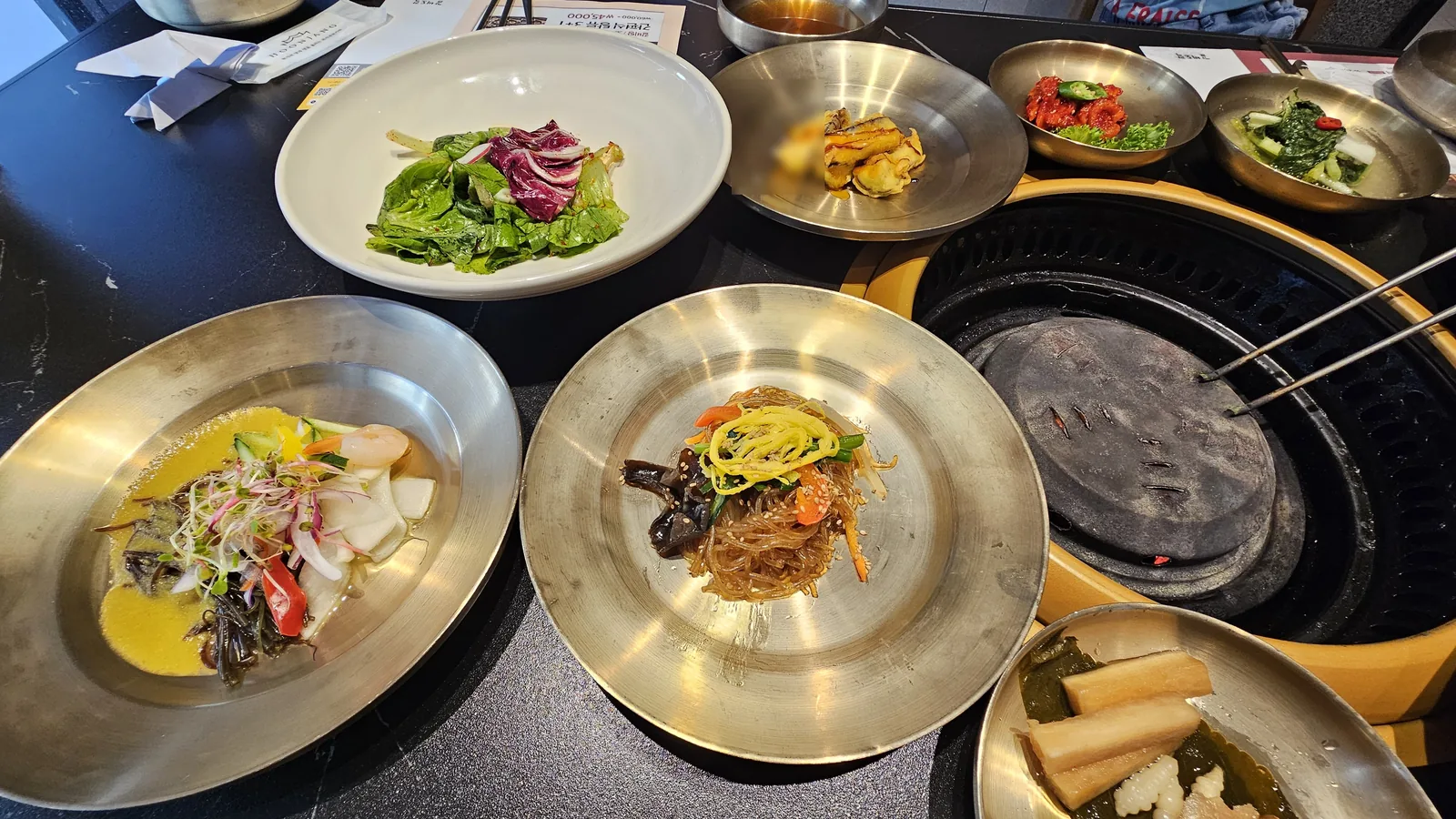
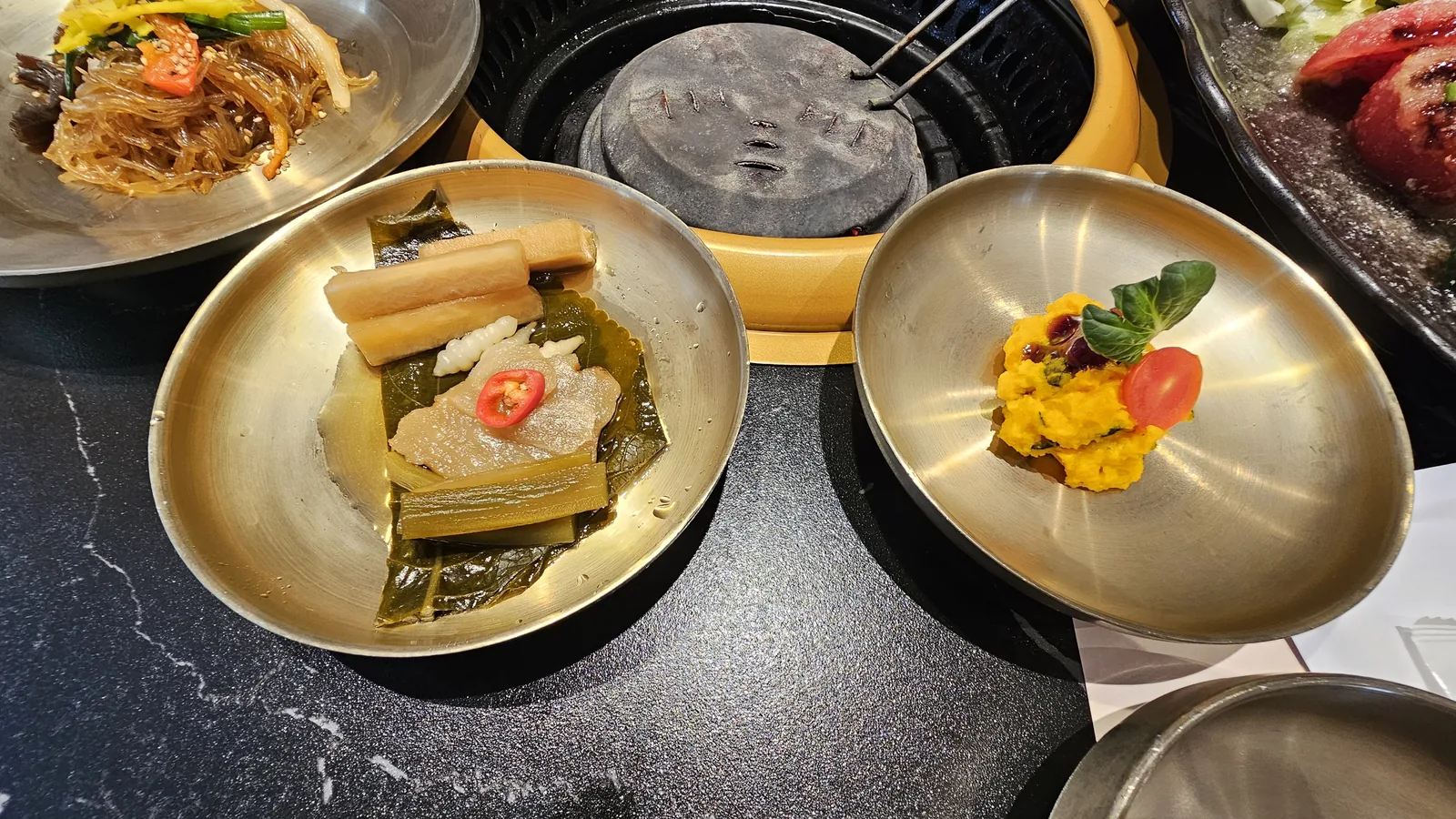
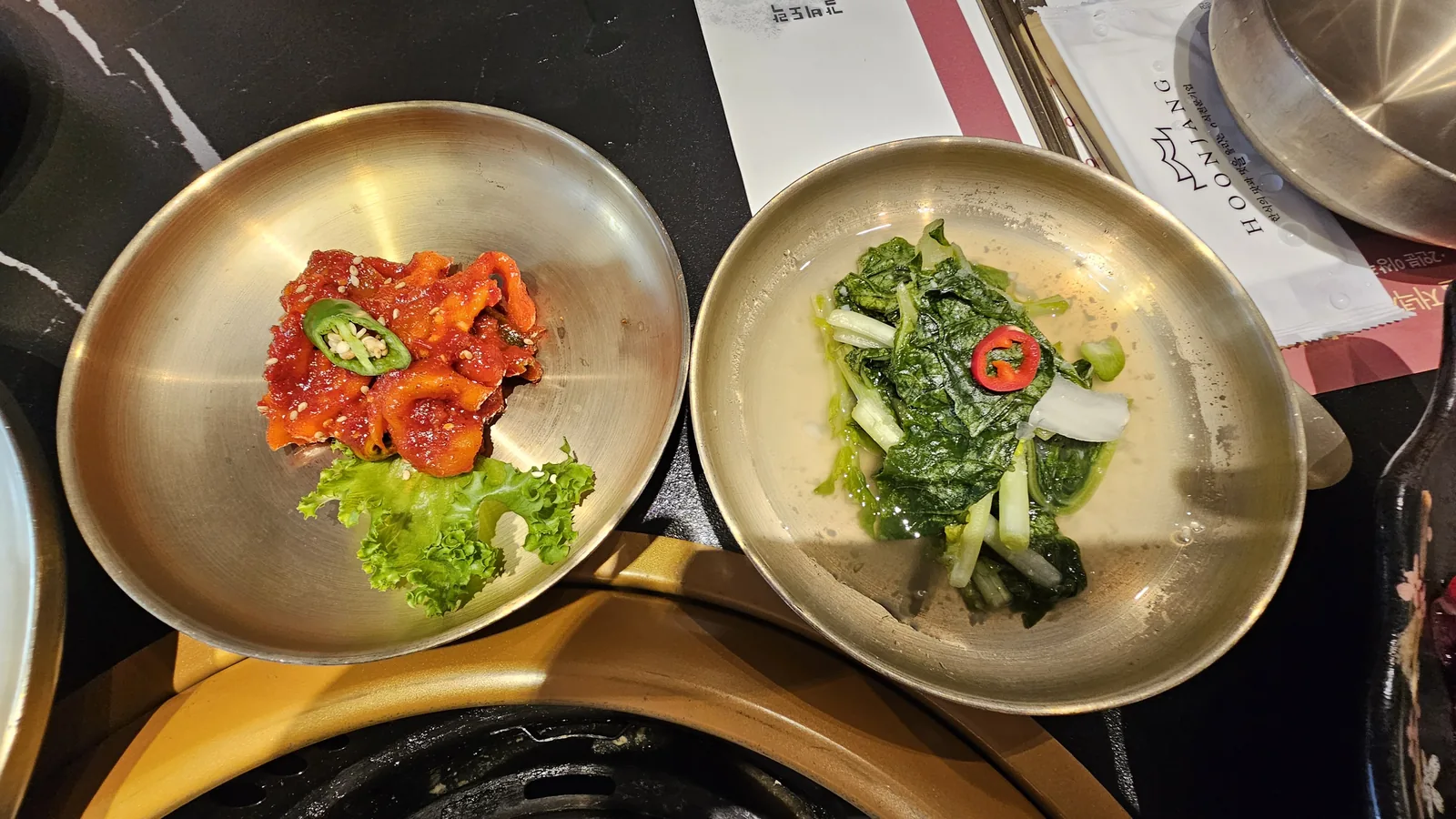
    Korean meals start with banchan — a spread of small side dishes that arrive before you order anything. At Galbidorak, you get a solid lineup: japchae (stir-fried glass noodles with vegetables), seasoned spinach namul, kkakdugi (cubed radish kimchi), candied pumpkin, and a few others. Not the 20-dish extravaganza of some places, but quality across the board.

    Banchan spread at Galbidorak — japchae, seasoned greens, kkakdugi, pumpkin salad and charcoal grill table setup
    Banchan spread at Galbidorak — japchae, seasoned greens, kkakdugi, pumpkin salad and charcoal grill table setup
    Galbidorak banchan close-up — stainless steel bowls with dried kelp, radish, tofu kimchi and candied pumpkin
    Galbidorak banchan close-up — stainless steel bowls with dried kelp, radish, tofu kimchi and candied pumpkin
    Galbidorak banchan — kkakdugi radish kimchi and seasoned spinach namul
    Galbidorak banchan — kkakdugi radish kimchi and seasoned spinach namul

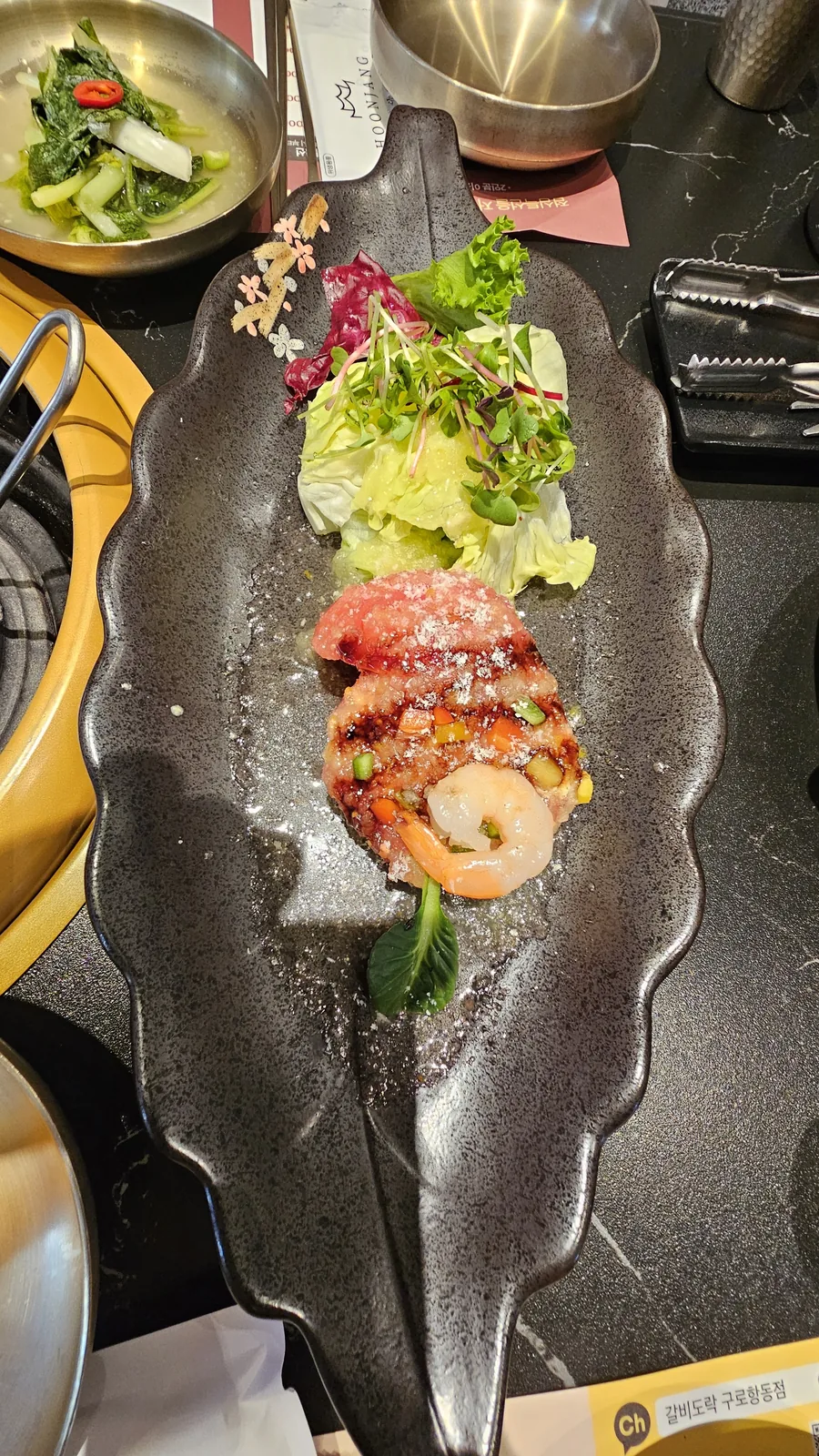
    Then there’s the appetizer — and this one’s actually impressive. A leaf-shaped black plate arrives with yukhoe (한우 육회, Korean-style raw beef tartare) and a couple of plump shrimp, dressed with micro greens and edible flowers. It looks like something from a tasting menu. Eats like it too.

    Galbidorak signature appetizer — beef yukhoe and shrimp on black leaf-shaped plate with micro greens and edible flowers
    Galbidorak signature appetizer — beef yukhoe and shrimp on black leaf-shaped plate with micro greens and edible flowers

    Yukhoe is raw beef. If that’s not for you, it’s not for you. But if you’re open to it, the seasoning here is clean and the beef doesn’t have the off-notes that cheaper versions sometimes do. Worth trying.

    소왕生갈비: The Whole Reason to Come

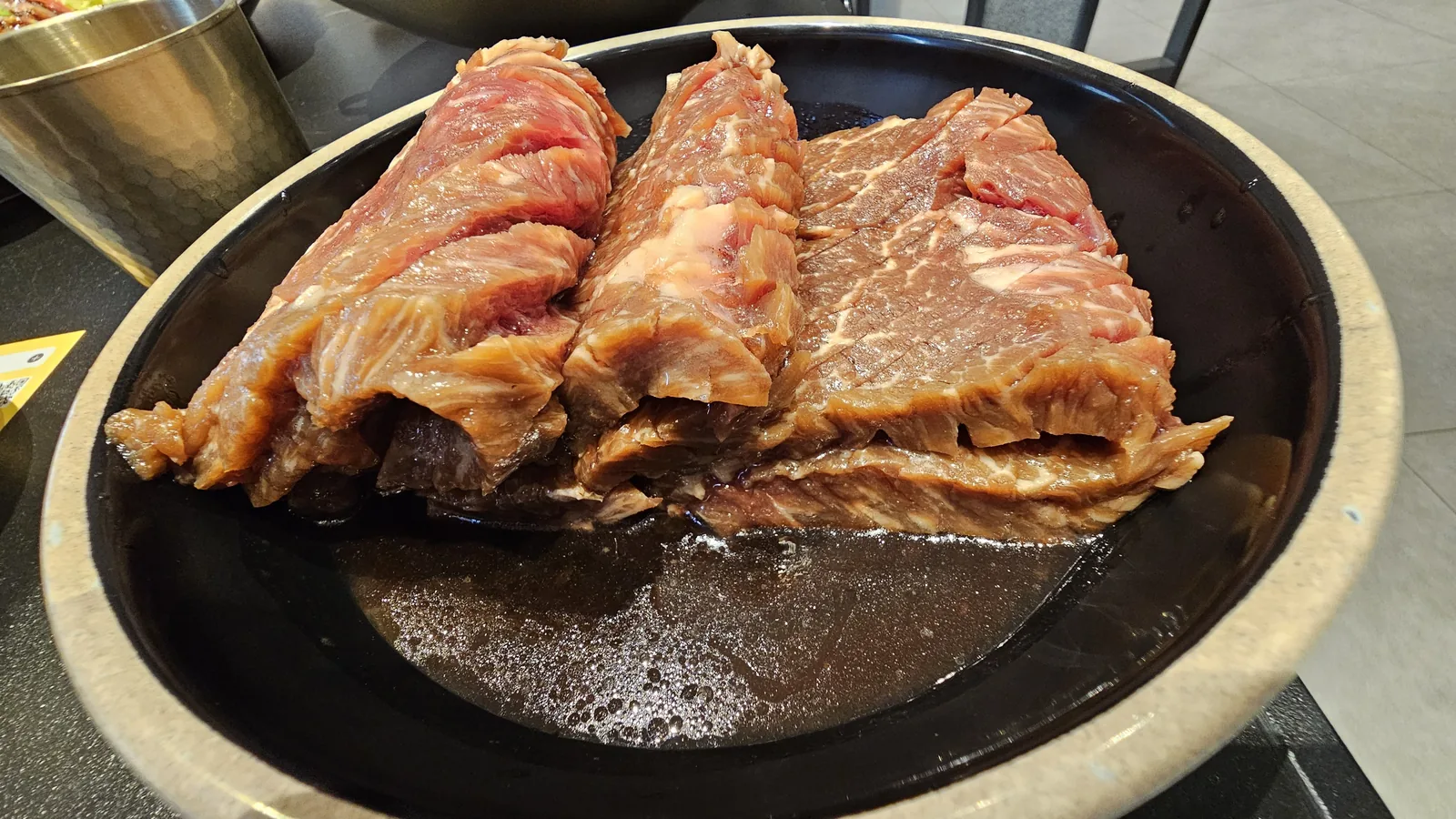
    소왕生갈비 — transliterated: Sowang Saeng Galbi, meaning King Fresh Short Rib. The 生 (saeng) character means raw or fresh — this is beef that arrives uncooked, on the bone, and gets grilled at your table.

    No marinade. No sauce. Just the beef and the charcoal doing their thing.

    Raw King beef short ribs in ceramic dish before grilling at Galbidorak Guro
    Raw King beef short ribs in ceramic dish before grilling at Galbidorak Guro

    Staff handle the grill entirely. You don’t touch the tongs. They manage the fire, flip the ribs, and time each section. This is full-service Korean BBQ — a different category from the casual spots where you manage your own grill and hope for the best.

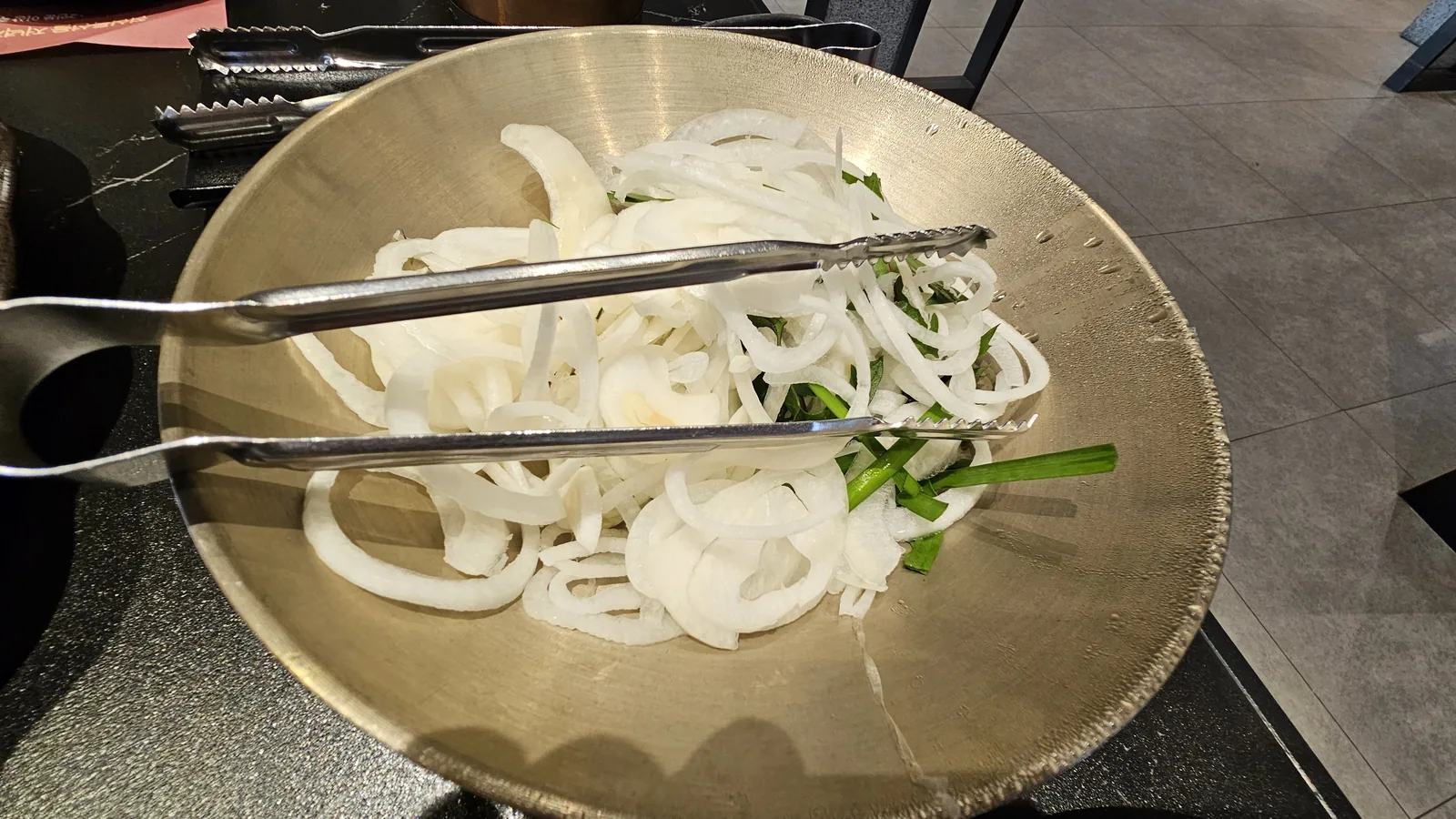
    Sliced onions and scallions in stainless bowl, accompaniment for Korean BBQ at Galbidorak
    Sliced onions and scallions in stainless bowl, accompaniment for Korean BBQ at Galbidorak
    King beef short ribs grilling over charcoal at Galbidorak, mid-cook stage
    King beef short ribs grilling over charcoal at Galbidorak, mid-cook stage

    The beef: well-marbled, with the natural sweetness you get from quality Korean hanwoo (한우). Charcoal does something gas grills can’t replicate — a faint smokiness, some crust on the fat, without drying the meat out. Cut a piece off the bone and eat it straight. Or wrap it in a sesame leaf with a slice of garlic and a dab of fermented shrimp paste. Either works.

    We ordered 4 servings for 3 people. That’s more galbi than is probably reasonable. Still no regrets.

    Marinated beef galbi nicely browned and glazed over charcoal grill at Galbidorak
    Marinated beef galbi nicely browned and glazed over charcoal grill at Galbidorak
    Small pieces of marinated beef arranged along charcoal grill edge at Galbidorak
    Small pieces of marinated beef arranged along charcoal grill edge at Galbidorak
    Marinated beef pieces on charcoal grill edge at Galbidorak from a different angle
    Marinated beef pieces on charcoal grill edge at Galbidorak from a different angle
    Brass tongs lifting a piece of well-cooked marinated beef at Galbidorak charcoal BBQ
    Brass tongs lifting a piece of well-cooked marinated beef at Galbidorak charcoal BBQ
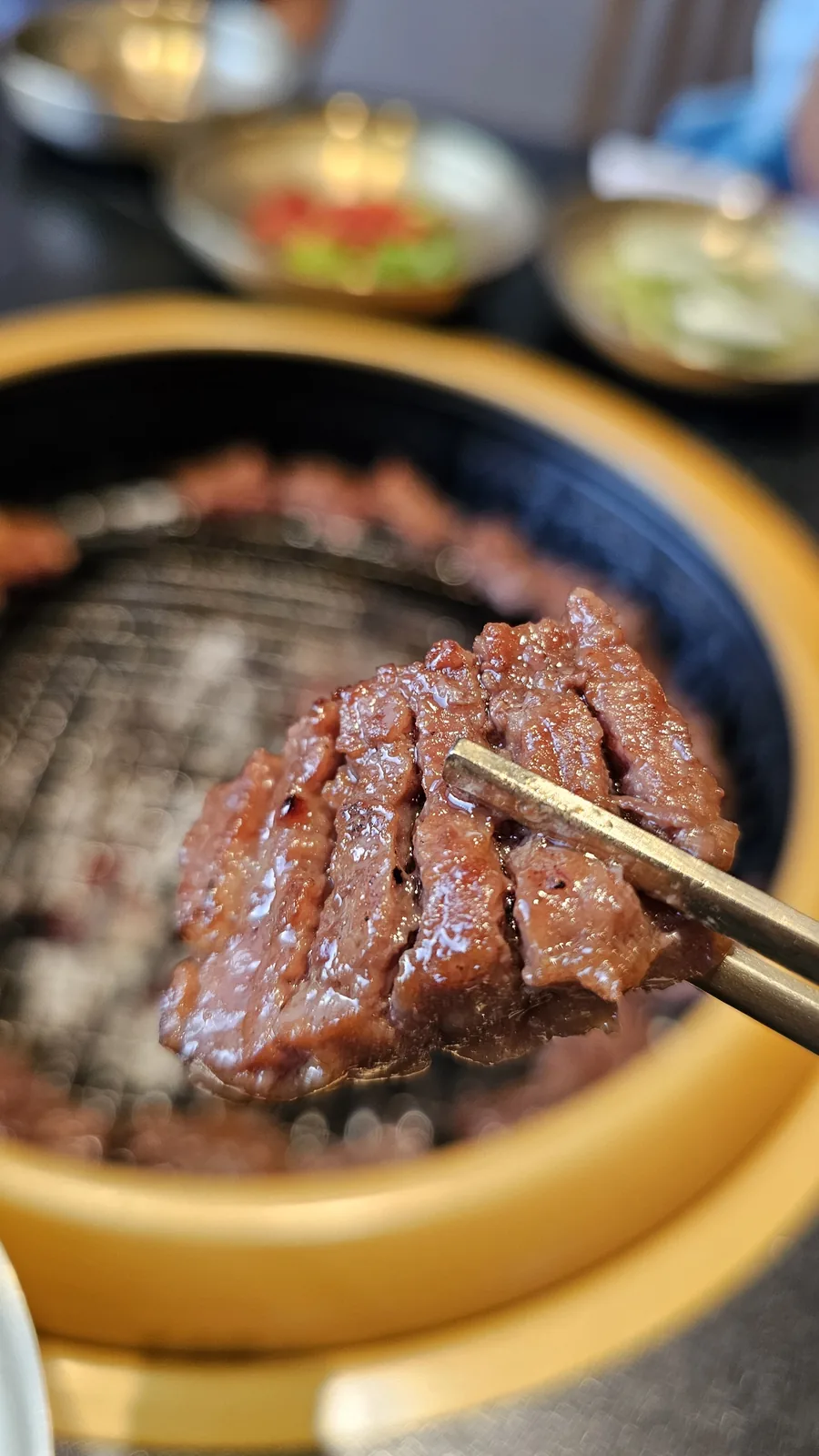
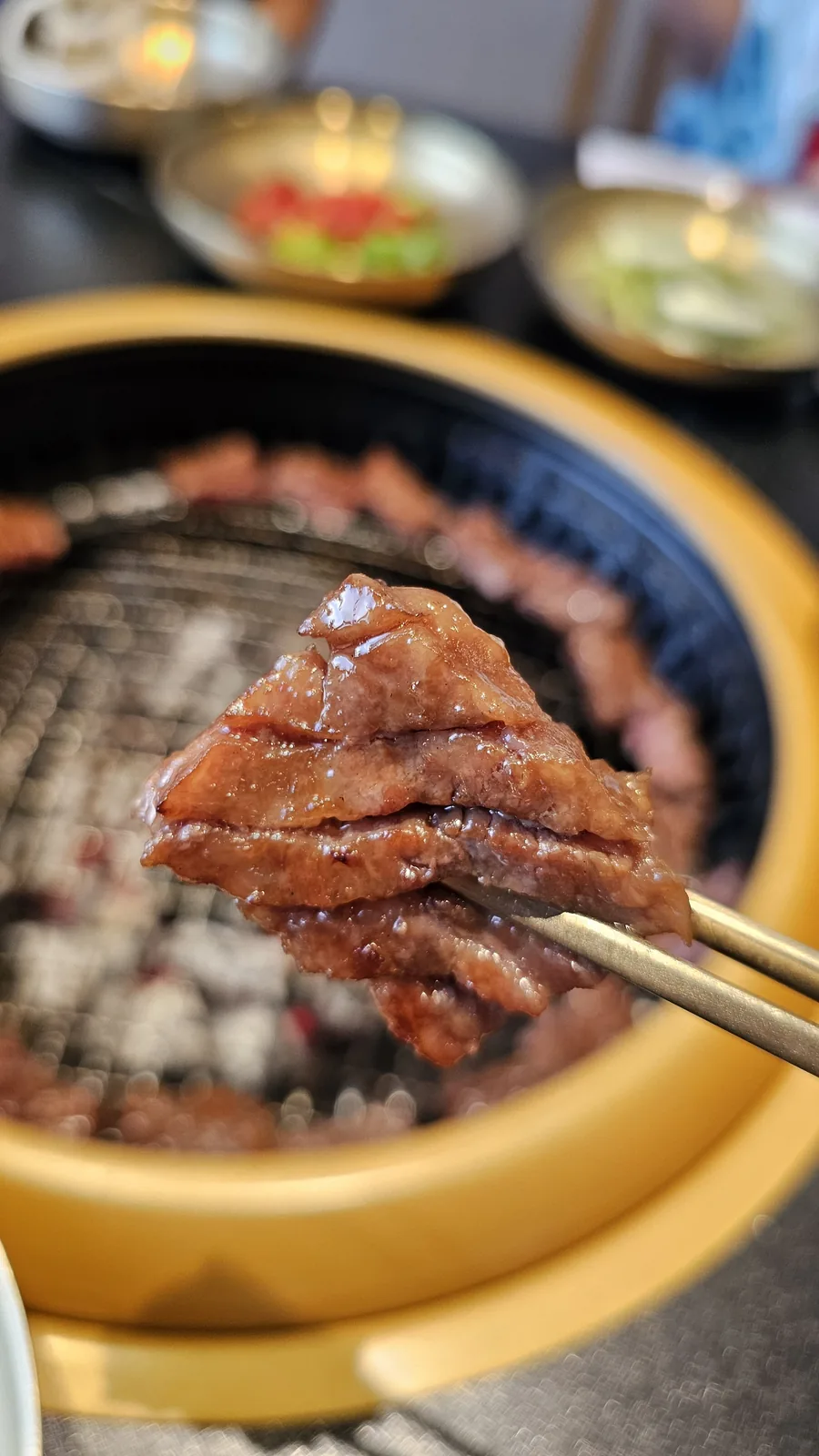
    Close-up of juicy cooked marinated beef held by tongs at Galbidorak Korean BBQ
    Close-up of juicy cooked marinated beef held by tongs at Galbidorak Korean BBQ

    Finishing With Nurungji

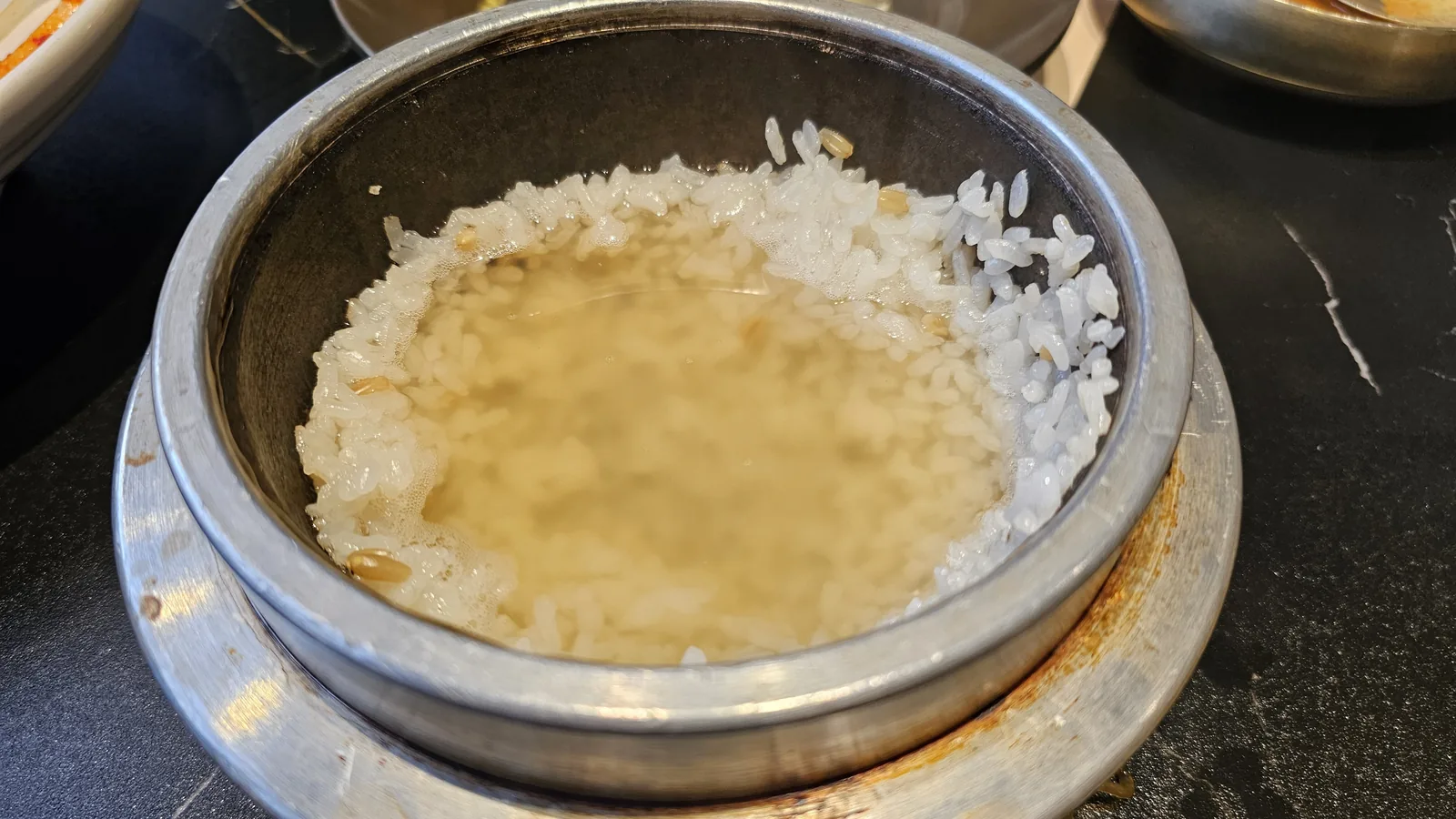
    After the main event, they bring 누룽지 (nurungji) — a stainless pot of scorched rice water (also called sungnyung). It’s what happens when you add hot water to the rice-crusted bottom of a pot: a slightly toasted, nutty, very mild liquid. Warm, simple, settles everything down.

    Nurungji scorched rice water in stainless pot, traditional end-of-meal drink at Galbidorak
    Nurungji scorched rice water in stainless pot, traditional end-of-meal drink at Galbidorak

    If you’ve never had it before: it’s not sweet, it’s not bold. It’s a clean finish. Standard at traditional Korean meals, and a thoughtful touch at a restaurant like this. Just drink it.

    The Event Deal

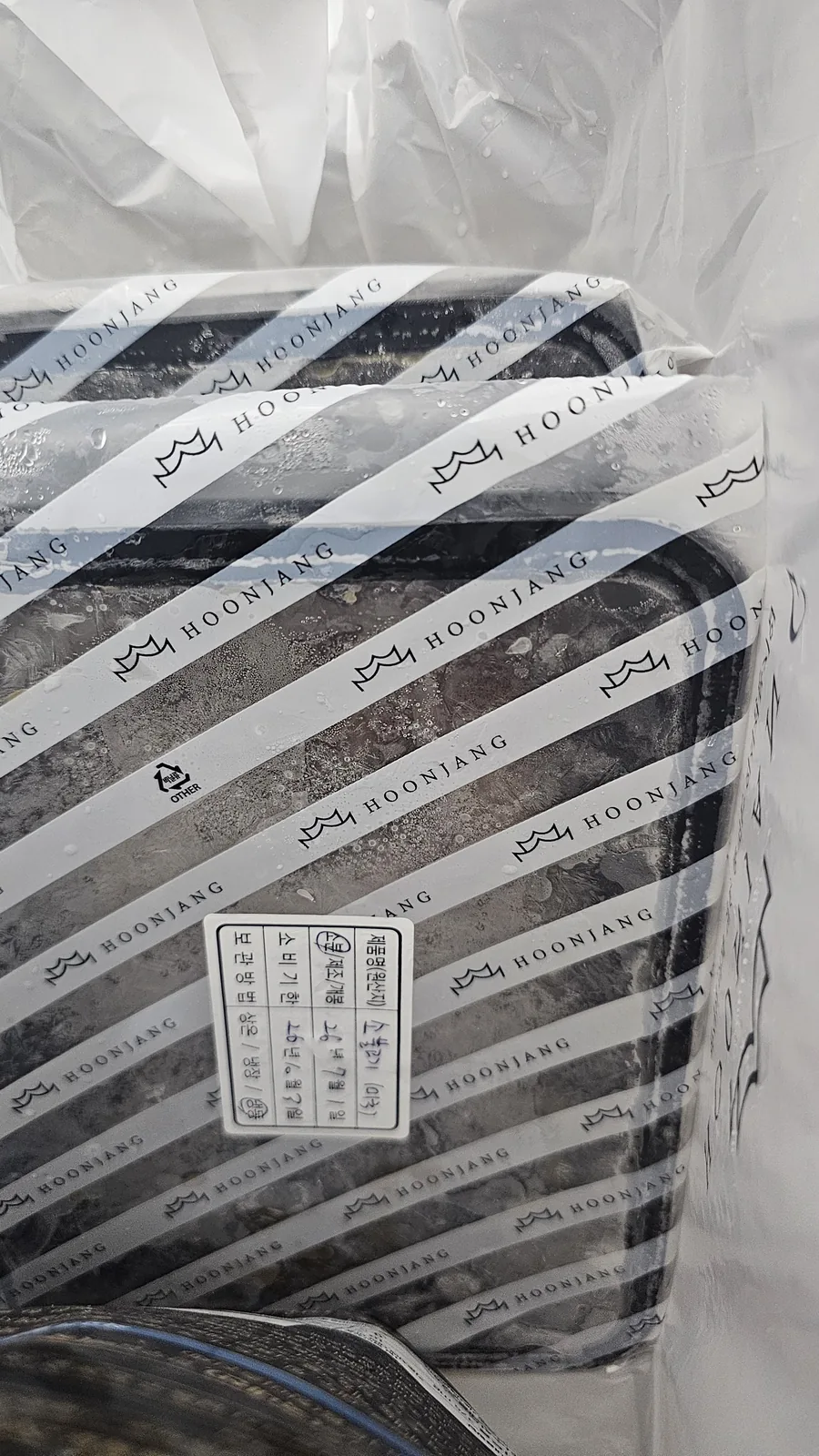
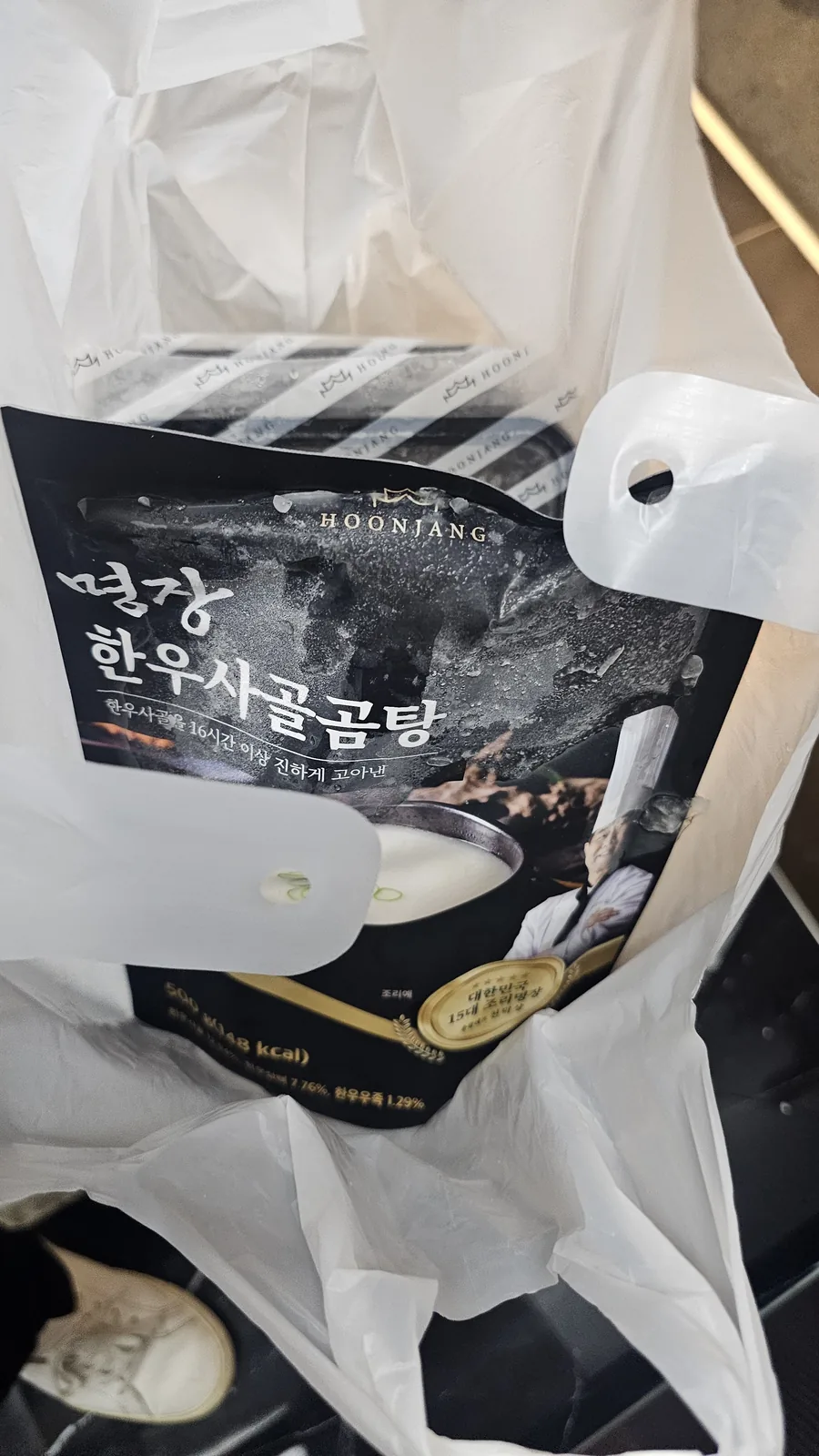
    Current promotion running during our visit: order galbi, get free frozen beef bulgogi to take home. We received HOONJANG brand frozen bulgogi packs as part of this — vacuum-sealed, ready to cook. A nice bonus, not the reason to make the trip.

    HOONJANG brand beef bulgogi packaging label — production date July 1, 2026, close-up
    HOONJANG brand beef bulgogi packaging label — production date July 1, 2026, close-up
    HOONJANG instant Korean beef bone broth salgomtang pouch product, packaging opened
    HOONJANG instant Korean beef bone broth salgomtang pouch product, packaging opened

    Check if the promotion is still running when you visit. These things change.

    The In-Store Retail Corner

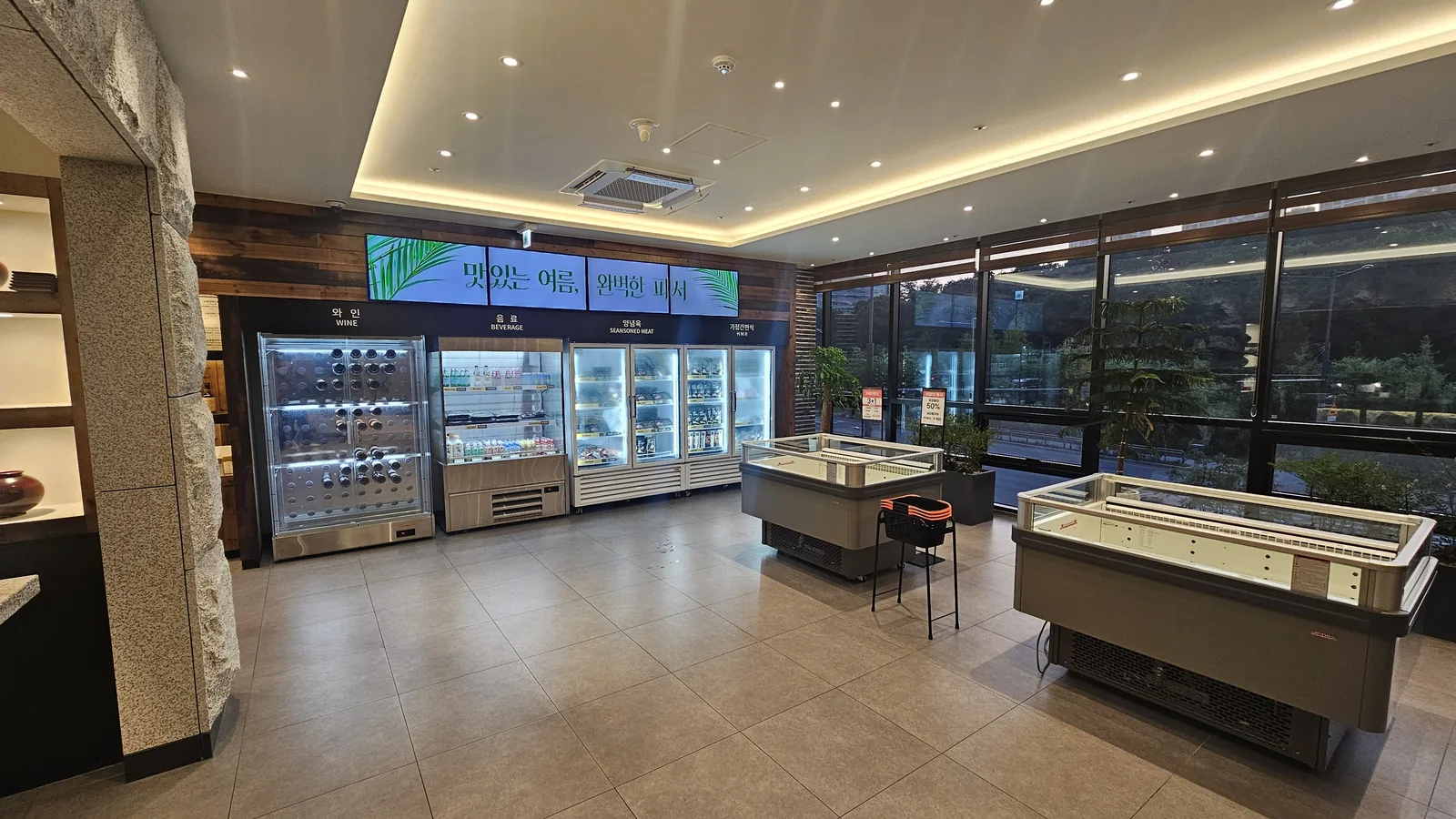
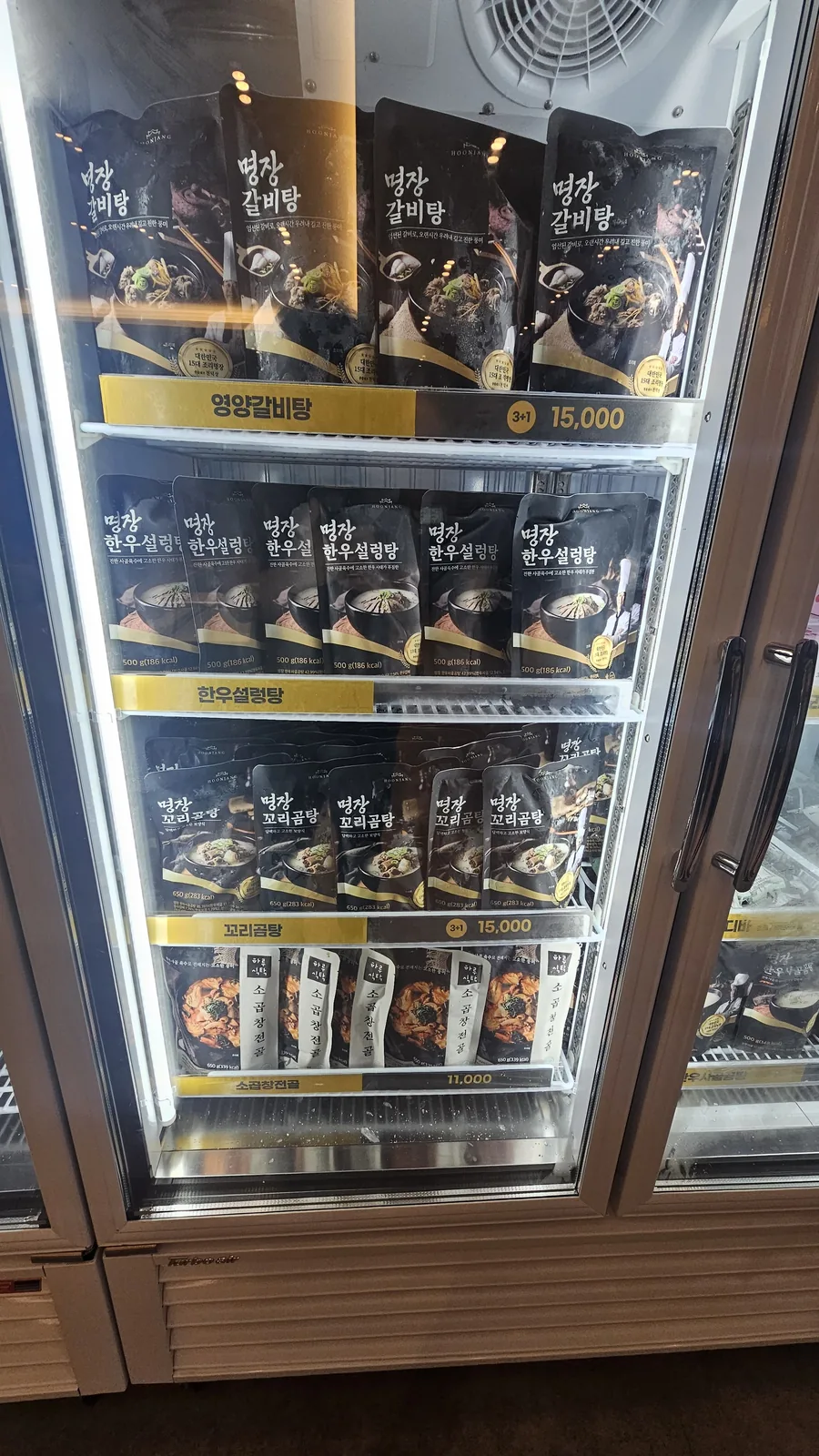
    One section of the restaurant is set up like a small shop: wine fridges, refrigerated marinated meat packs, and frozen ready-to-eat products. Galbitang (short rib soup), seolleongtang (bone broth), kkori gomtang (oxtail soup) — all in pouch form at 15,000 KRW (~$11) each.

    Galbidorak in-store retail corner with wine fridges, marinated meats and ready-to-cook HMR products
    Galbidorak in-store retail corner with wine fridges, marinated meats and ready-to-cook HMR products
    Galbidorak frozen product display — Byeoljang Galbitang, Han-u Seolleongtang, Han-u Kkori Gomtang pouches 15,000 KRW
    Galbidorak frozen product display — Byeoljang Galbitang, Han-u Seolleongtang, Han-u Kkori Gomtang pouches 15,000 KRW
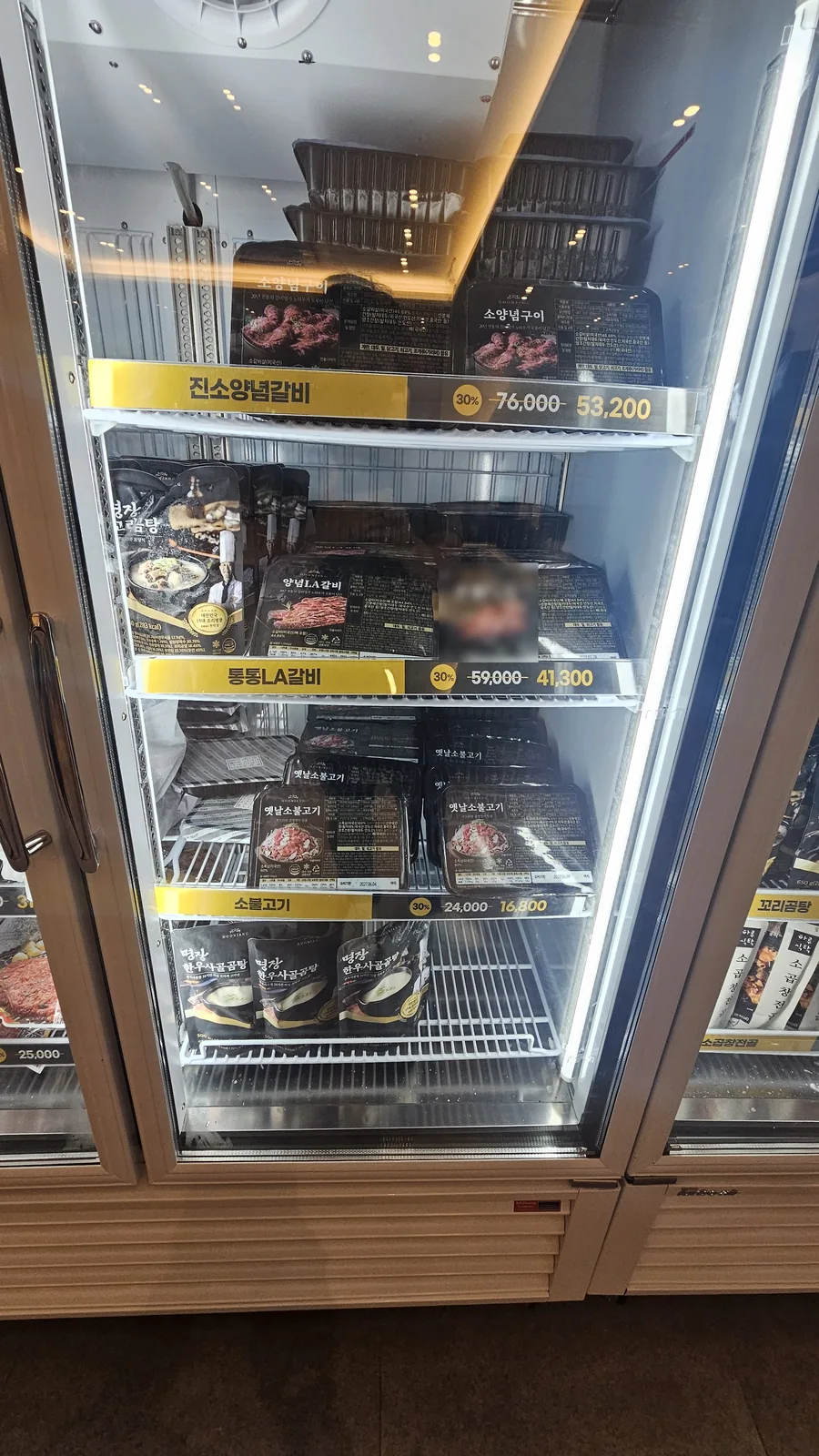
    Galbidorak frozen marinated meat display — Jinso Marinated Galbi, LA Galbi and Seasoned Beef Bulgogi with 30% discount
    Galbidorak frozen marinated meat display — Jinso Marinated Galbi, LA Galbi and Seasoned Beef Bulgogi with 30% discount

    Marinated galbi and LA galbi packs were on 30% discount at the time. If you’re staying somewhere with a kitchen, the take-home galbi is worth a look on your way out.

    The Menu (What Else Is There)

    The menu covers a lot of ground:

    – 한우 설화꽃살 (Flower cut sirloin): 68,000 KRW/serving (~$50)

    – 한우 生등심 (Fresh sirloin): 56,000 KRW/serving (~$41)

    – 소왕生갈비 (King fresh short rib): 55,000 KRW/serving (~$41)

    – 소왕 양념갈비 (King marinated galbi): 48,000 KRW/serving (~$36)

    – 한우 등심 육회 (Sirloin tartare): 29,000 KRW (~$21)

    – 정통 함흥 냉면 (Hamhung cold noodles): 12,000 KRW (~$9)

    – 왕갈비탕 (King short rib soup): 19,000 KRW (~$14)

    Lunch and dinner specials exist too — set meal formats (정식) that bundle rice, banchan, and a main at a structured price. Evening sets start around 27,000 KRW for pork and go up from there.

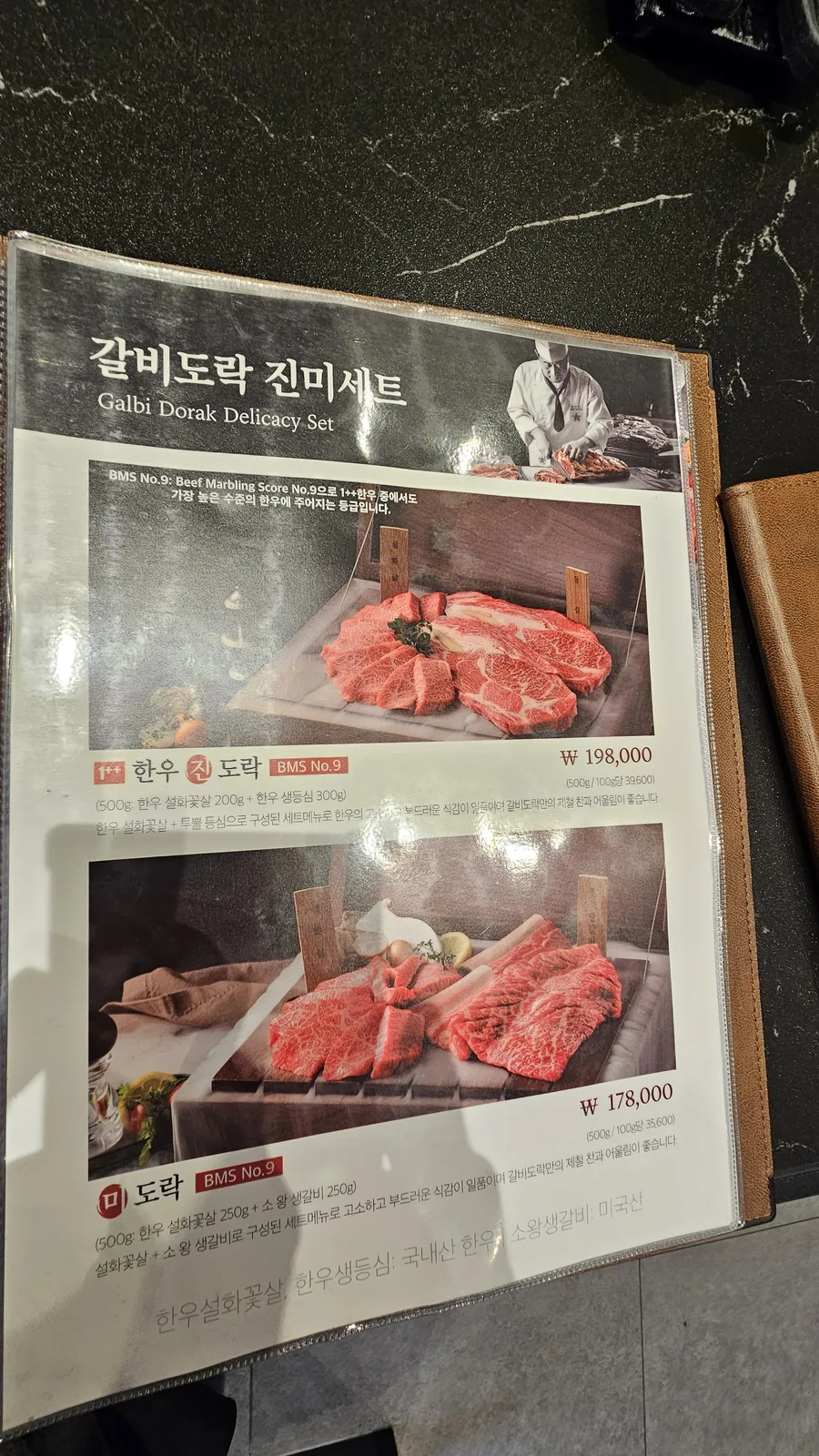
    Galbidorak set menu — Han-u Jindorak 178,000 KRW and Han-u Dorak BMS No.9 198,000 KRW
    Galbidorak set menu — Han-u Jindorak 178,000 KRW and Han-u Dorak BMS No.9 198,000 KRW
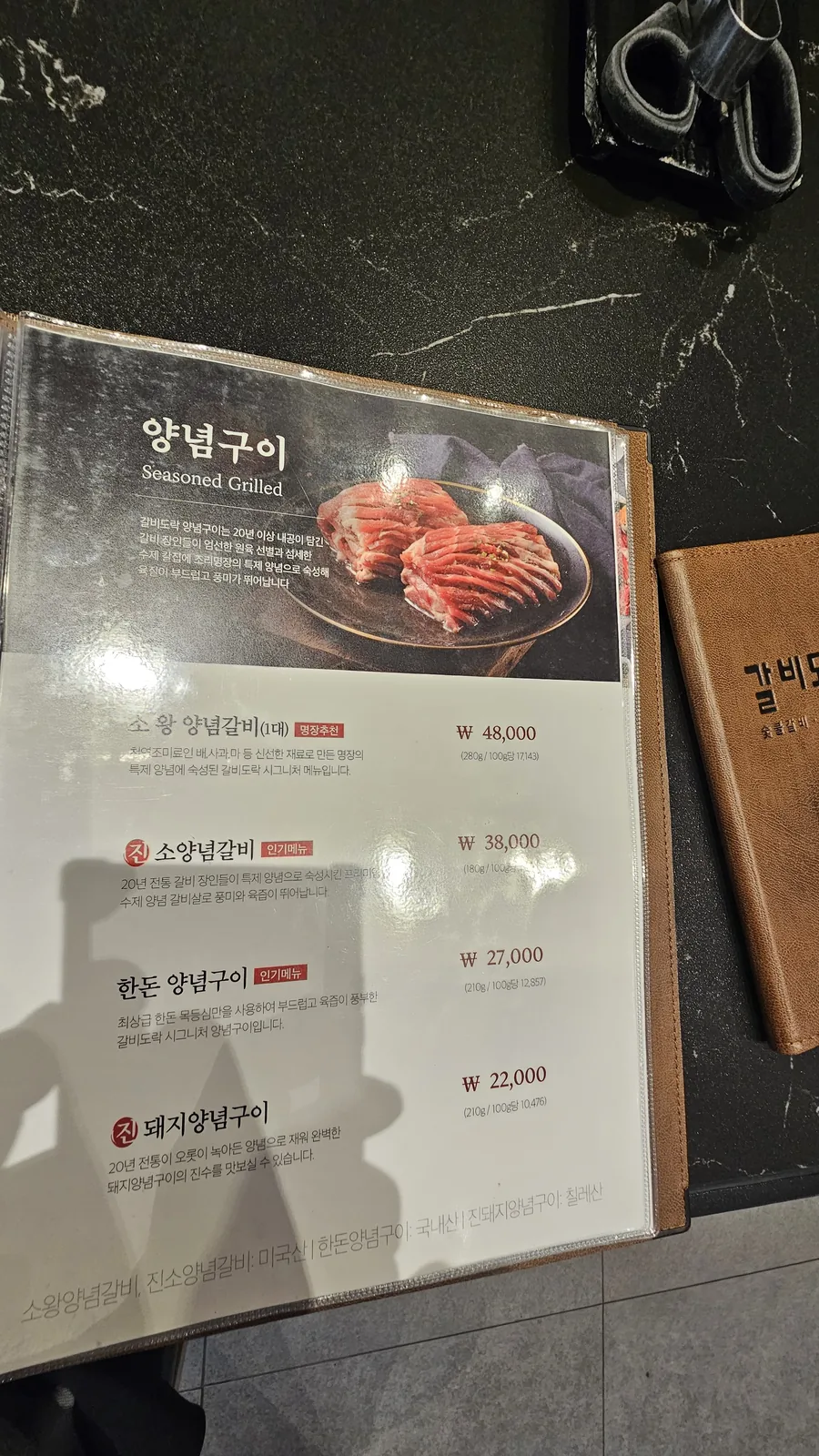
    Galbidorak raw beef menu — Han-u Flower Cut 68,000 KRW, Fresh Sirloin 56,000 KRW, King Raw Short Rib 55,000 KRW
    Galbidorak raw beef menu — Han-u Flower Cut 68,000 KRW, Fresh Sirloin 56,000 KRW, King Raw Short Rib 55,000 KRW
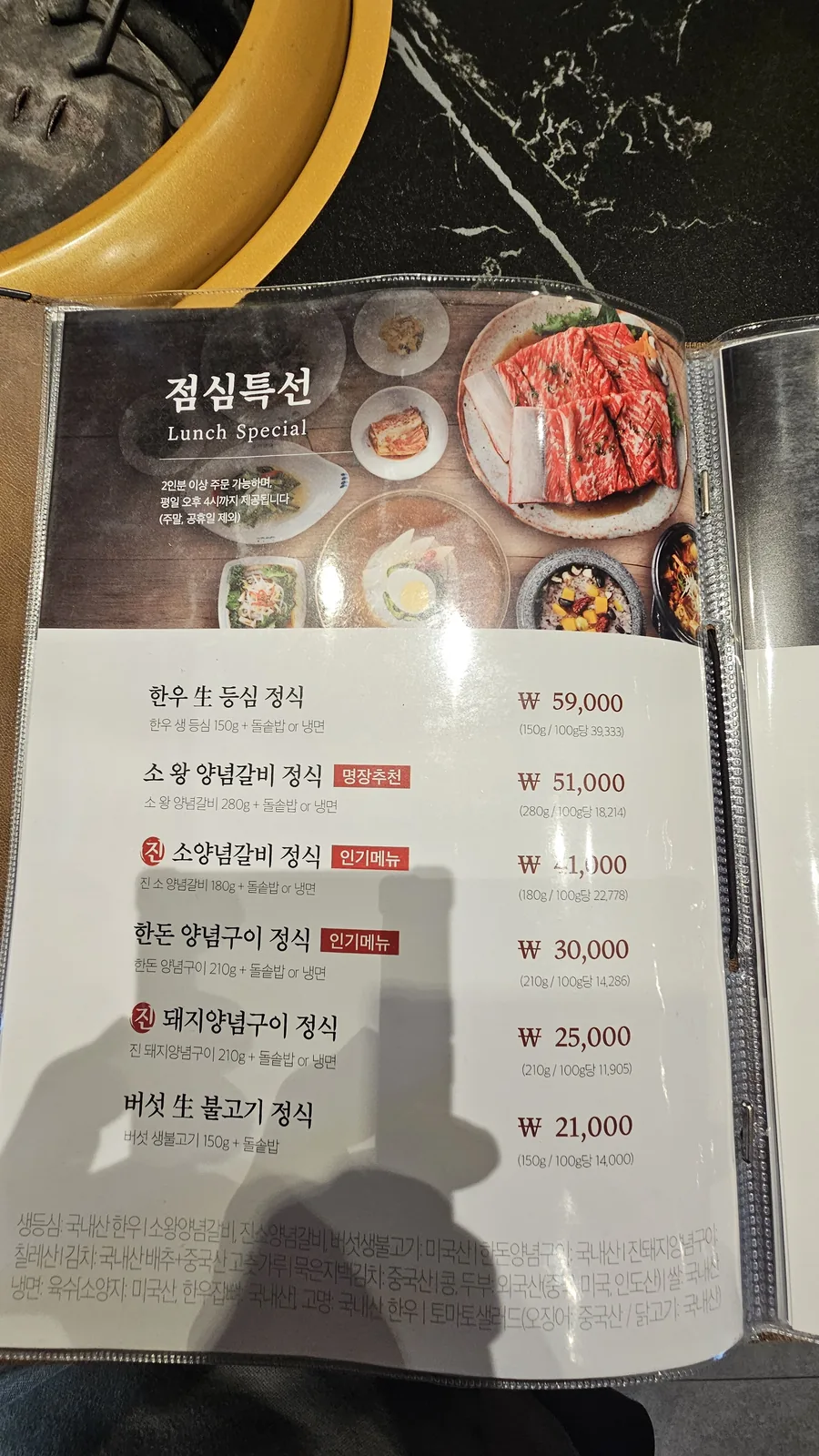
    Galbidorak marinated beef menu — King Marinated Galbi 48,000 KRW, Pork Marinated BBQ 22,000 KRW
    Galbidorak marinated beef menu — King Marinated Galbi 48,000 KRW, Pork Marinated BBQ 22,000 KRW
    Galbidorak lunch special menu — Han-u Raw Sirloin Set 59,000 KRW and other options
    Galbidorak lunch special menu — Han-u Raw Sirloin Set 59,000 KRW and other options
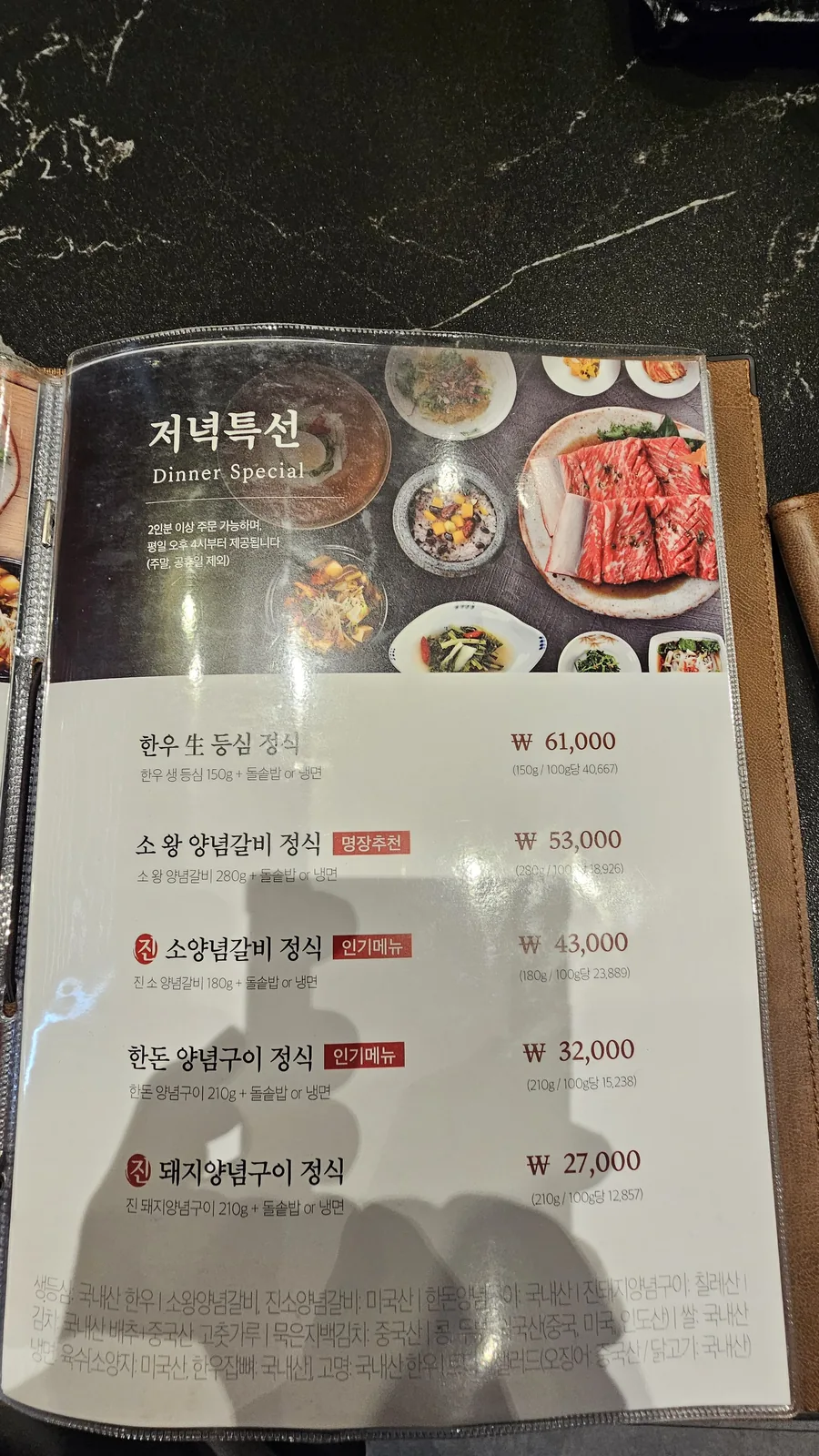
    Galbidorak dinner special menu — Han-u Raw Sirloin Set 61,000 KRW to Pork BBQ Set 27,000 KRW
    Galbidorak dinner special menu — Han-u Raw Sirloin Set 61,000 KRW to Pork BBQ Set 27,000 KRW
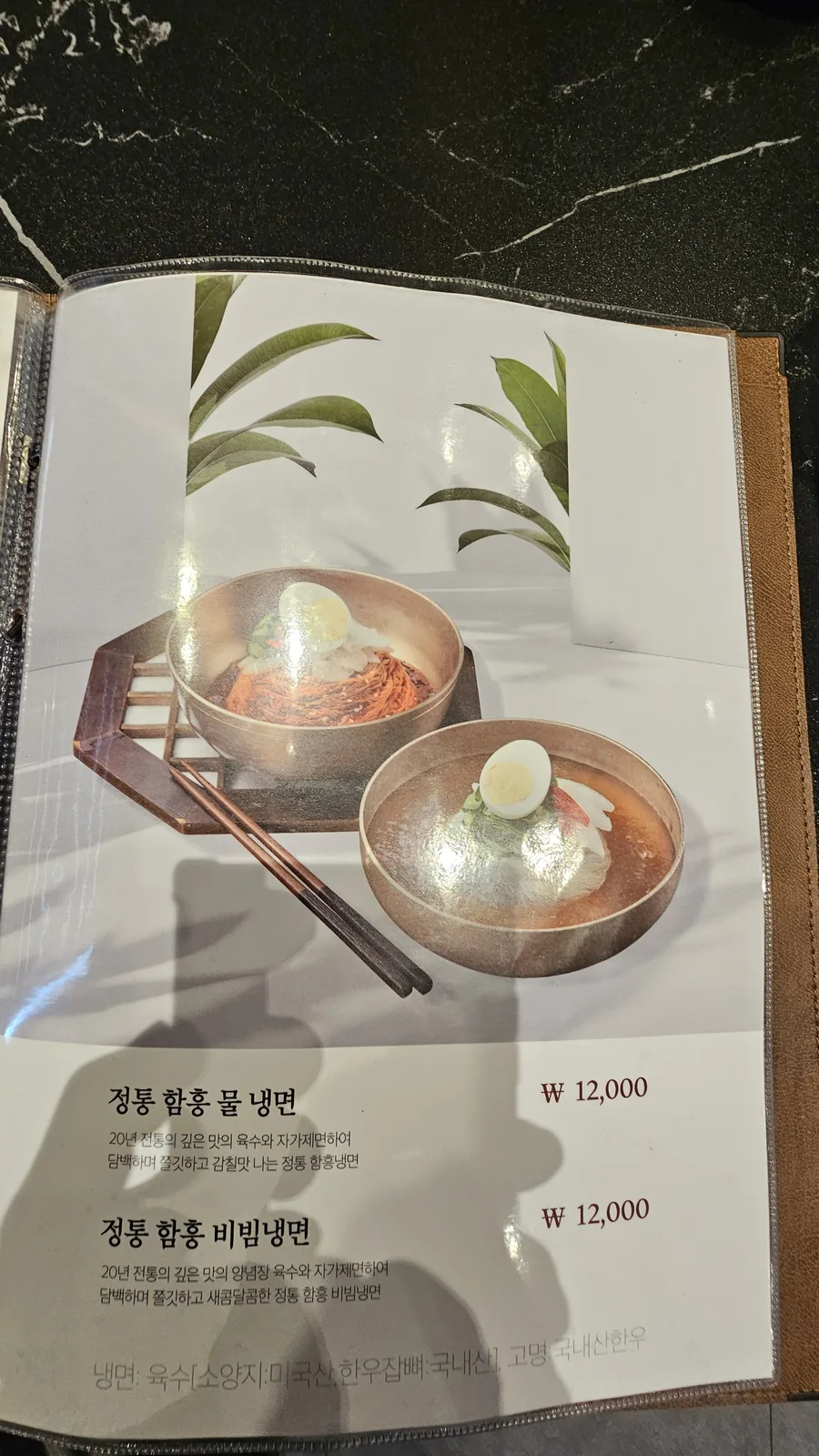
    Galbidorak naengmyeon menu — Hamhung Mul and Bibim Cold Noodles 12,000 KRW each
    Galbidorak naengmyeon menu — Hamhung Mul and Bibim Cold Noodles 12,000 KRW each
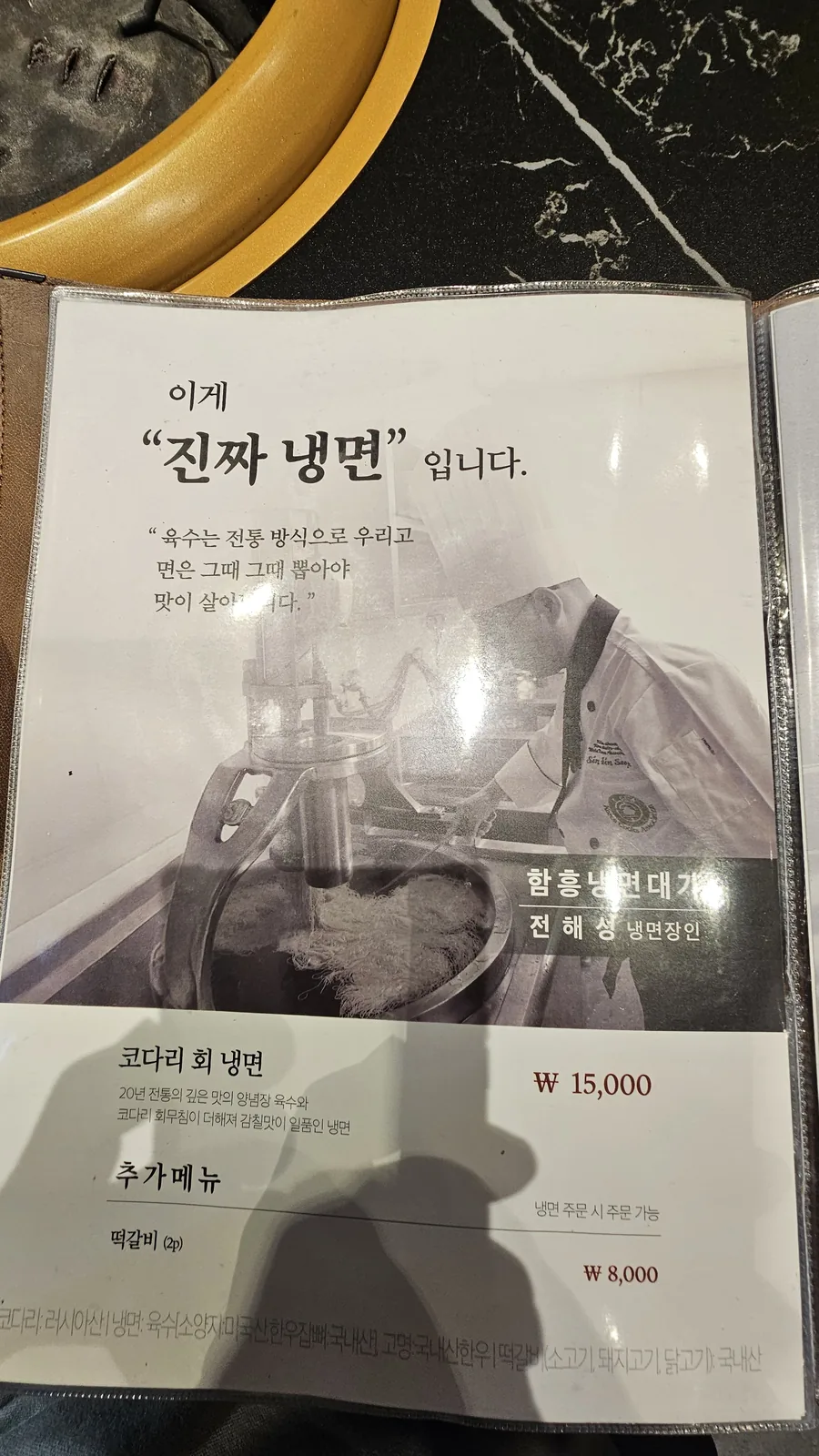
    Galbidorak side dish menu — Kodari Cold Noodle 15,000 KRW and Tteok-galbi 8,000 KRW
    Galbidorak side dish menu — Kodari Cold Noodle 15,000 KRW and Tteok-galbi 8,000 KRW
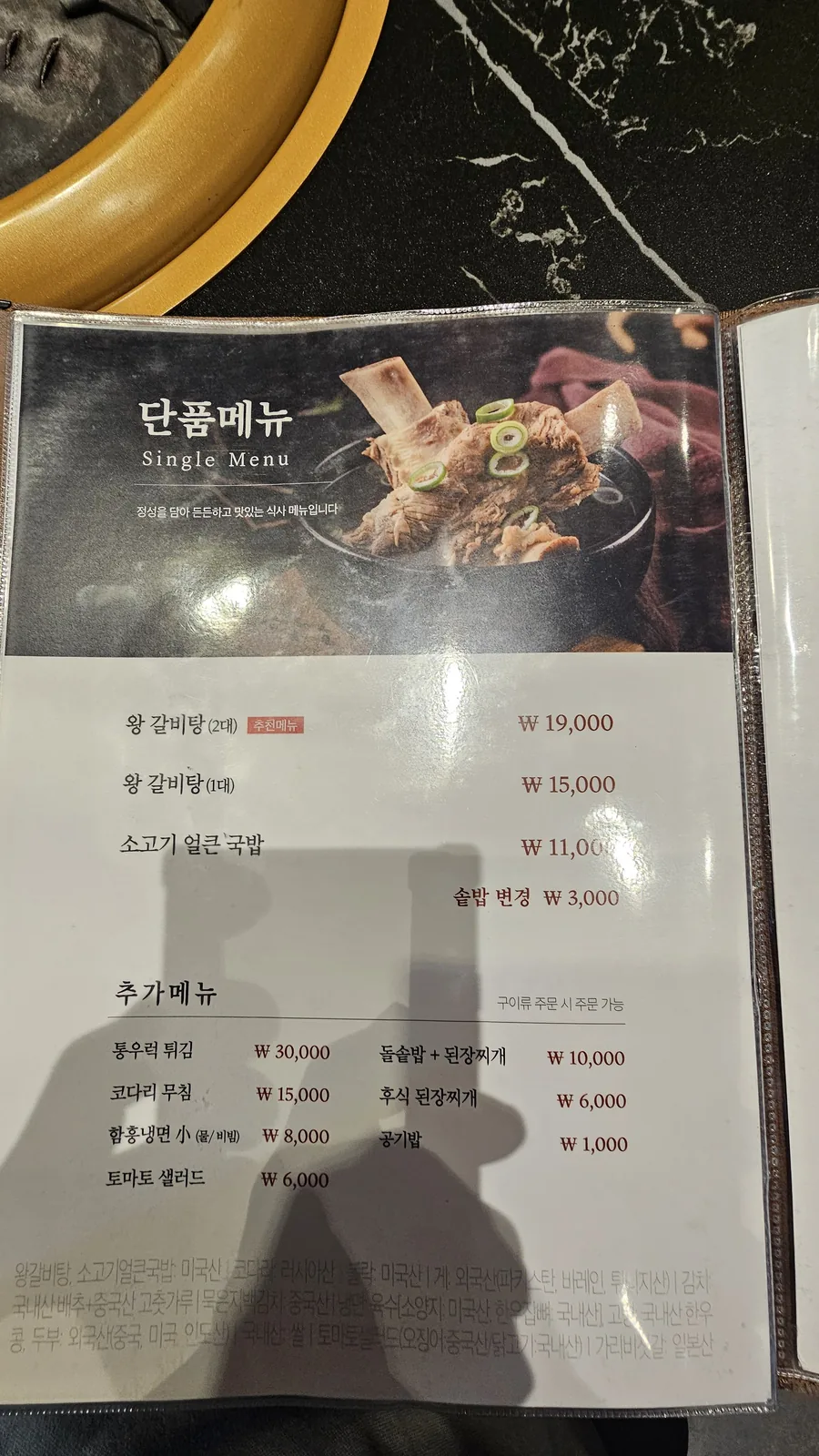
    Galbidorak solo dish menu — King Galbitang 19,000 KRW, Beef Spicy Rice Soup 11,000 KRW
    Galbidorak solo dish menu — King Galbitang 19,000 KRW, Beef Spicy Rice Soup 11,000 KRW
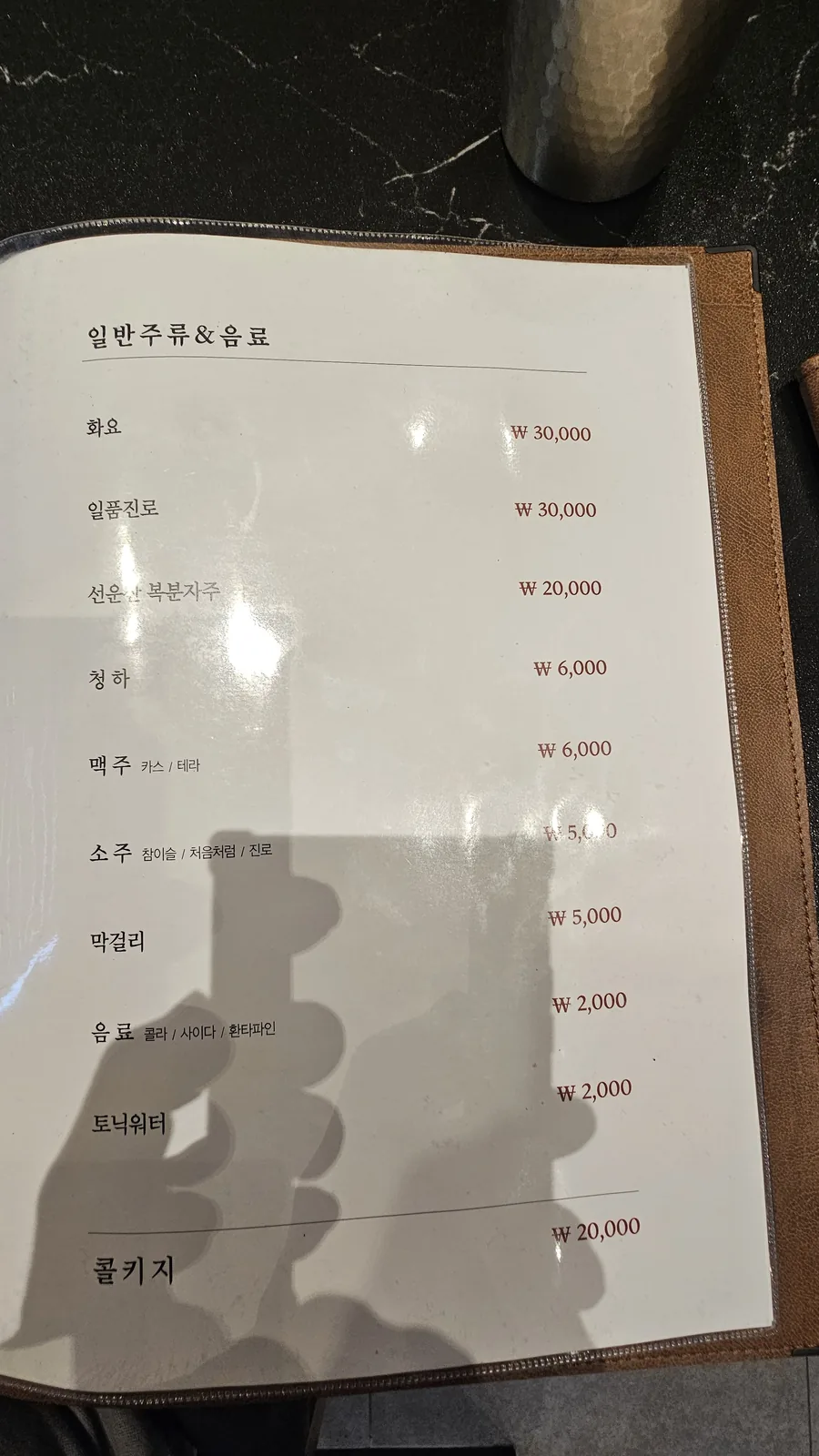
    Galbidorak drinks menu — Hwayo soju, Ilpoom Jinro, Bokbunja wine, beer and makgeolli
    Galbidorak drinks menu — Hwayo soju, Ilpoom Jinro, Bokbunja wine, beer and makgeolli
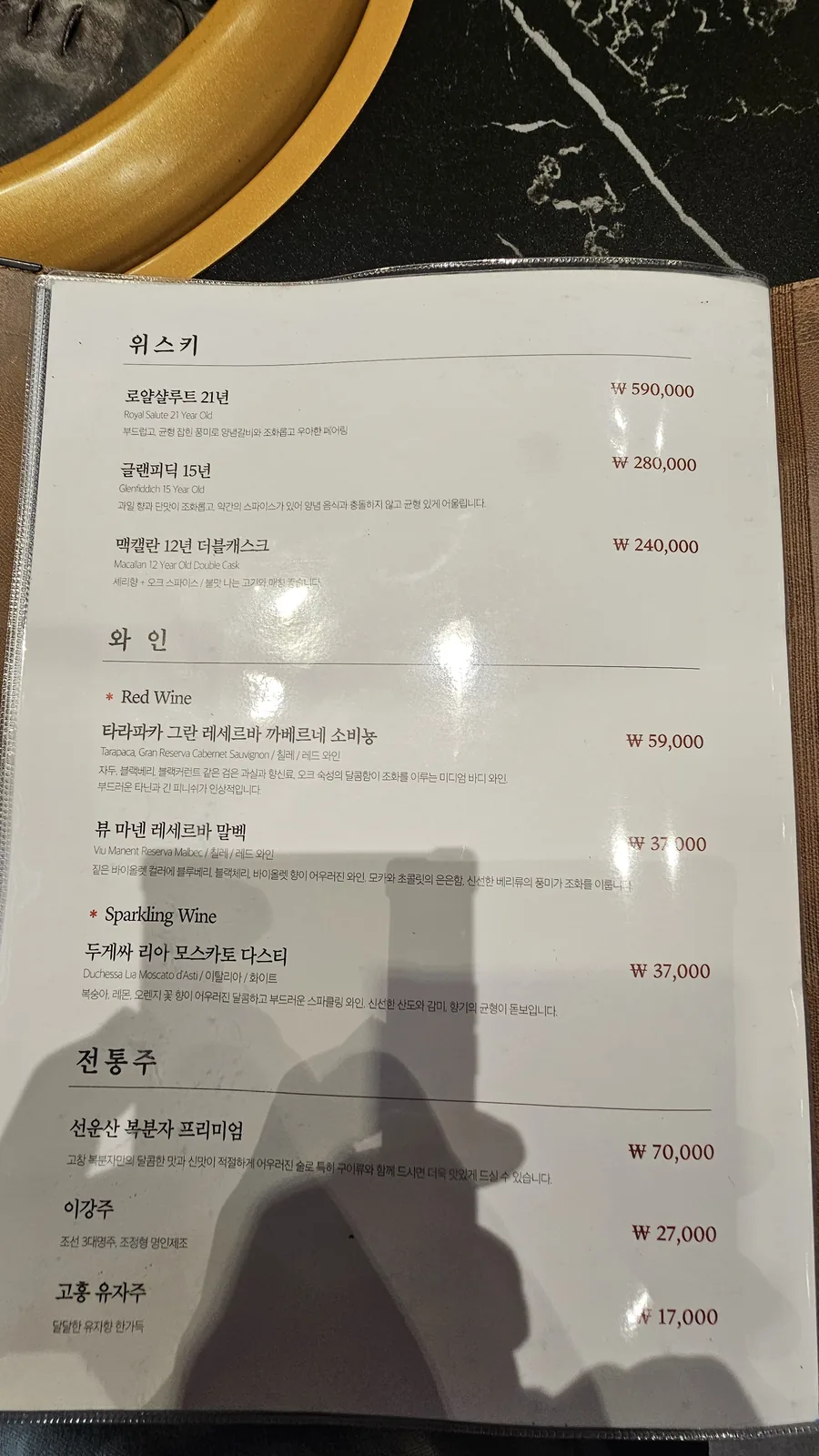
    Galbidorak premium drinks menu — Royal Salute 21 Year, Glenfiddich 15 Year, red wine and sparkling wine
    Galbidorak premium drinks menu — Royal Salute 21 Year, Glenfiddich 15 Year, red wine and sparkling wine

    The drinks menu is serious: Hwayo soju, multiple makgeolli options, and premium whisky by the glass — Royal Salute 21 Year, Glenfiddich 15 Year. This is built for long dinners, not a quick lunch stop.

    Stuff Tourists Should Know

    English menu: No. Menu is in Korean, with some Chinese characters. Google Translate’s camera mode covers most of it.

    Staff English: Basic. Pointing works. Don’t count on a detailed conversation, but you’ll get your order in.

    Payment: Cards accepted. Foreign Visa and Mastercard work fine at restaurants like this.

    Tipping: None. Korea doesn’t do tipping culture. Pay the bill, nothing extra needed.

    Vegetarian options: Almost zero. The banchan sides are mostly plant-based, but this restaurant is built around meat. Not the right place if you’re avoiding it.

    Kids: Fine. The space is big, service is attentive, and there’s no vibe pressure. Kids who eat meat will have no problem.

    Halal/Kosher: Not certified for either.

    Dress code: Nothing formal required, but the restaurant has a dinner-out feel. Business casual or smart casual is appropriate.

    Time to budget: 1.5–2 hours minimum for a proper evening meal.

    Price Check

    소왕生갈비 a la carte: 55,000 KRW (~$41 USD) per serving.

    We ordered 4 servings across 3 people. Total per-person estimate including the banchan spread, appetizer course, and nurungji finish: roughly 80,000–100,000 KRW (~$59–74 USD) before drinks. Add whisky or wine and the number climbs.

    This is not budget galbi. Go in knowing that, or don’t go at all.

    The Verdict

    Second visit. Still good. Coming back.

    If you want a proper high-end Korean BBQ experience — not the tourist-strip version, not the Instagram-optimized thin-cut trend — Galbidorak delivers. Real charcoal, full tableside service, quality beef, and a chef who earned a national award doing exactly this.

    The 소왕生갈비 is what you order. Everything else is support.

    Go if:

    – Premium Korean BBQ is on the list and budget isn’t the main concern

    – You want staff to grill for you, not manage your own fire

    – You’re in Guro anyway, or willing to make the trip

    – You want a long, relaxed dinner, not a quick bite

    Skip if:

    – You only have a few days in Seoul and haven’t covered the basics yet — eat at Gwangjang Market or a samgyeopsal spot first

    – Budget is tight — there are solid galbi options at half the price

    – You need English-fluent service for a comfortable experience

    FAQ

    How much does it cost per person at Galbidorak Guro?

    Budget around 80,000–100,000 KRW (~$59–74 USD) per person for a full evening meal with galbi. A single serving of the King fresh short rib (소왕生갈비) is 55,000 KRW (~$41).

    Is parking available at Galbidorak?

    Yes — there’s a large covered parking lot on-site, with plenty of space even on busy evenings.

    Does Galbidorak have an English menu or English-speaking staff?

    The menu is in Korean. Staff English is basic — pointing and Google Translate’s camera mode will get you through. No English menu at the time of this visit.

    Do I need a reservation at Galbidorak Guro?

    The restaurant is large, but evening visits can get busy. Calling ahead or using Naver Reservation is recommended, especially for groups.

    What’s the best thing to order at Galbidorak?

    The 소왕生갈비 (King fresh short rib) — thick, bone-in, uncooked and grilled tableside by staff over real charcoal. That’s the whole point of coming here.

    Is Galbidorak vegetarian-friendly?

    No. This is a meat-forward Korean BBQ restaurant. The banchan side dishes are mostly plant-based, but the menu itself revolves entirely around beef and pork.

    📍 Location

    Open in Google Maps →