Tag: korean comfort food

  • Bongchu Jjimdak Yeouido: Honest Braised Chicken Review

    Bongchu Jjimdak Yeouido: Honest Braised Chicken Review

    🇯🇵 日本語版はこちら

    Quick honest review of Bongchu Jjimdak (봉추찜닭) at the Yeouido Finance Tower branch. Short version: it’s a solid, reliable chain lunch. The food is average in the best way — nothing off, nothing surprising. If you’re already in Yeouido and want a filling Korean meal, it’s fine. If you’re planning a special trip across Seoul for this, don’t.

    I went on a Tuesday, arriving around 11 AM. By the time the food came out, the place was already loud and filling up fast. Yeouido at lunch is a whole thing.

    Bongchu Jjimdak Yeouido: Quick Facts

    • Our bill: medium original jjimdak, 39,000 KRW, plus two rice bowls, 2,000 KRW. We spent 41,000 KRW for two, or 20,500 KRW each.
    • Portion size: the menu lists medium as 3 servings. We shared it between two people; that is our order, not the restaurant’s serving recommendation.
    • Spice: our order confirmation labels the default option as spicy. Soy-based does not mean heat-free.
    • Ordering: scan the table QR code. The outdoor board includes English dish names, sizes and prices.
    • Verdict: a reliable, filling chain lunch if you are already in Yeouido; not a meal to cross Seoul for.

    Prices below are recorded from the menu and order confirmation photographed during this visit, not a live price list.

    Jump to menu prices, QR ordering, our bill, or spice level.

    What Is Bongchu Jjimdak (Korean Braised Chicken)?

    Jjimdak (찜닭, pronounced roughly “jjeem-dak”) is a Korean braised chicken dish. Bone-in chicken pieces cooked down with vegetables — radish, carrots, onion — in a soy-based sauce that goes slightly sweet and deeply savory as it reduces. You eat it over rice, spooning the sauce into the bowl until the whole thing becomes one cohesive comfort meal.

    The style got popular out of Andong (안동), a city in North Gyeongsang Province, where street market vendors supposedly started making it cheap and filling in the 1980s–90s. It spread nationwide from there. Today there are dedicated jjimdak chains all over Korea.

    Bongchu Jjimdak is one of the longest-running. First store opened in 2000 in Daehakno (대학로), Seoul’s university theater district. That’s 25+ years in business, which is a real number for a Korean restaurant chain.
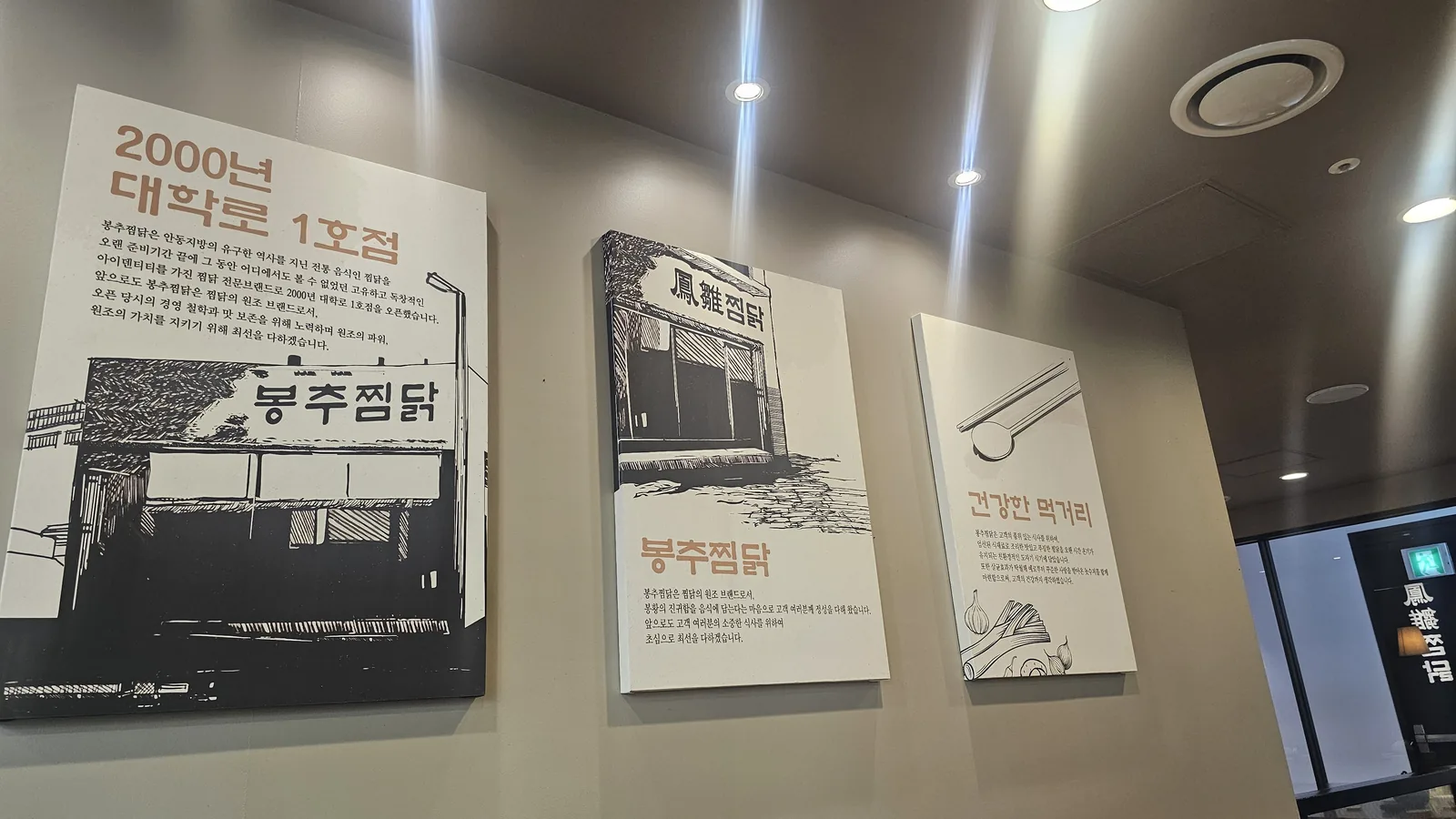
    Brand history wall panel at Bongchu Jjimdak Yeouido showing 2000 Daehakno flagship store origins
    Brand history wall panel at Bongchu Jjimdak Yeouido showing 2000 Daehakno flagship store origins

    Getting There

    Yeouido is Seoul’s financial district — think Canary Wharf or lower Manhattan, but Korean. Big office towers, government buildings, the National Assembly, and a lot of suit-wearing people at lunch. Not the most tourist-dense neighborhood, but not hard to reach.

    The Finance Tower branch is on the 3rd floor of the Yeouido Finance Tower building.

    Address: 23-8 Yeouido-dong, Yeongdeungpo-gu, Seoul

    Nearest subway: Yeouido Station (여의도역)

    Line 5 (Purple) or Line 9 (Gold) — about a 5-10 minute walk depending on the exit.

    From Incheon Airport: Check a live transit route to Yeouido Station before leaving, allowing for transfers and the walk to Finance Tower.

    From Myeongdong / central Seoul: About 30-40 minutes by subway.

    The Interior
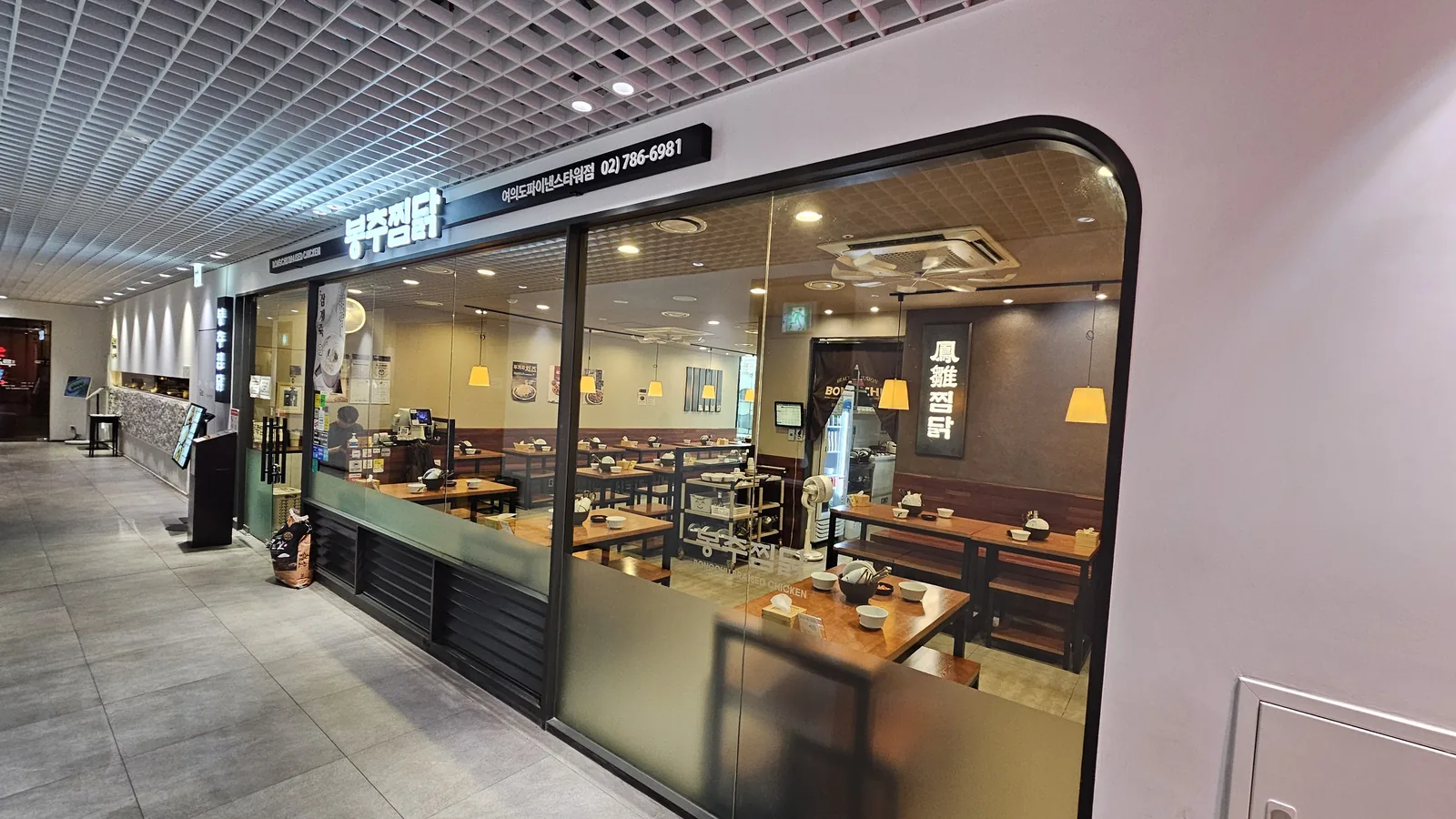
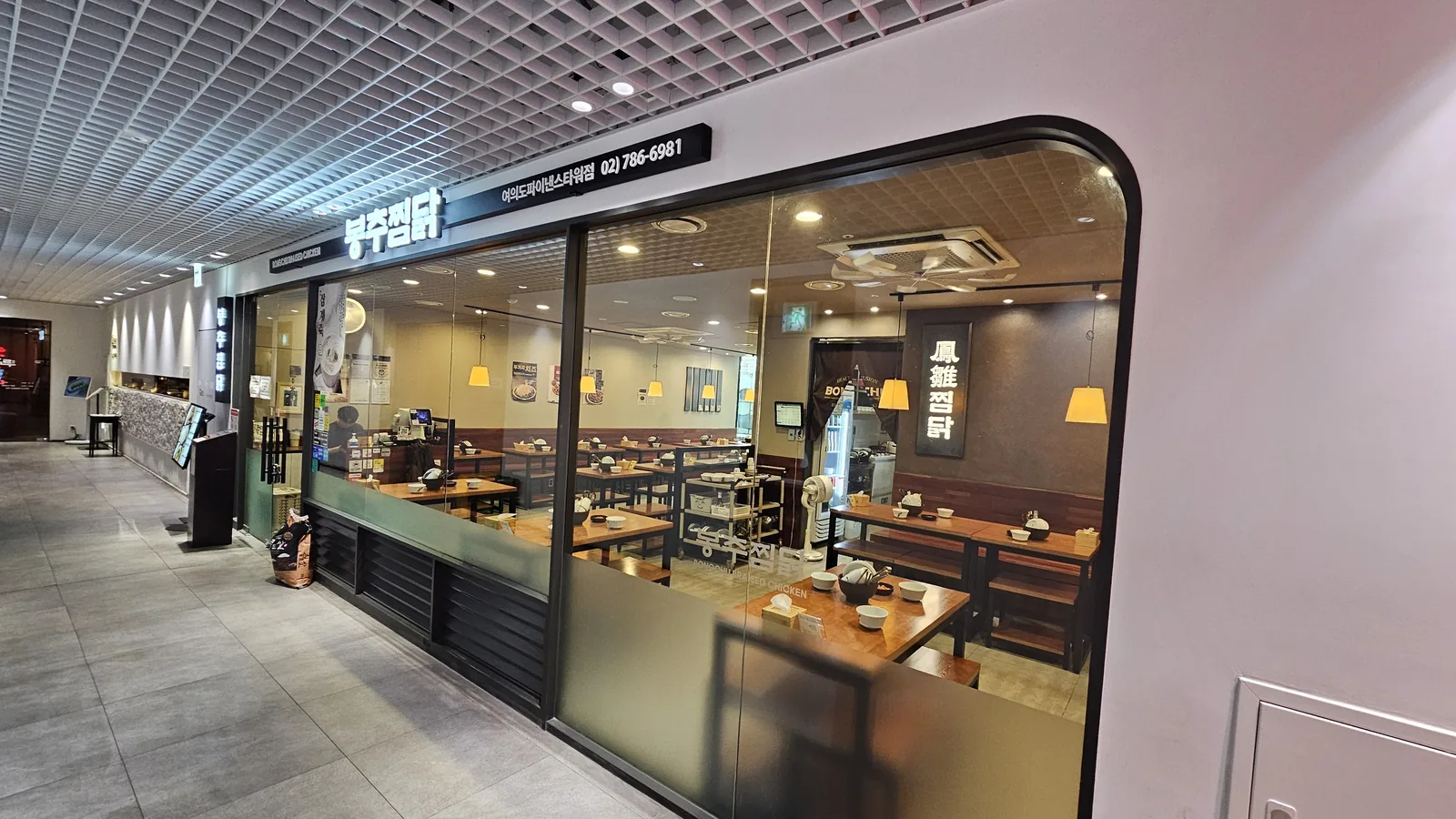
    Bongchu Jjimdak Yeouido Finance Tower branch exterior with brand signboard
    Bongchu Jjimdak Yeouido Finance Tower branch exterior with brand signboard

    Clean glass facade, standard chain restaurant interior. Decent lighting, reasonably spaced tables. Nothing that makes you stop and look around, but nothing uncomfortable either. The brand history panel on the wall is a nice touch if you want to read while you wait for your food.

    When I arrived around 11 AM, the place was calm. By the time we finished eating, almost every table was taken. Fair warning.

    How to Order at Bongchu Jjimdak Yeouido

    I ordered using the QR code on the table. The stand carries Kakao Pay and KICC branding.
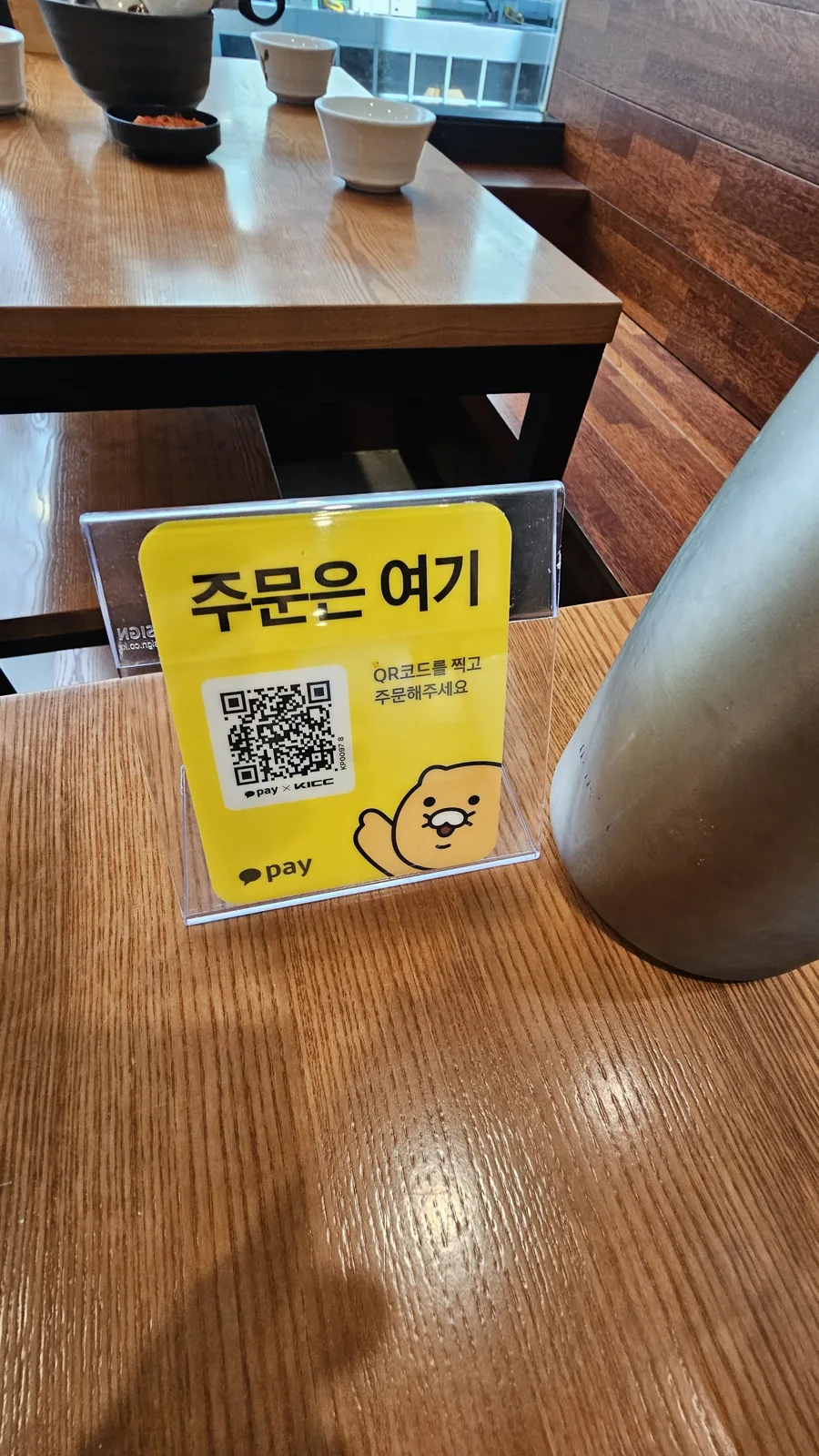
    QR code ordering stand with Kakao Pay at Bongchu Jjimdak Yeouido table
    QR code ordering stand with Kakao Pay at Bongchu Jjimdak Yeouido table

    Scan the code with your phone to open the ordering page. The screens shown in this review are in Korean. If needed, translate a screenshot of the menu or ask staff for help; a camera cannot read the display of the same phone. Use the English names on the outdoor board to match the dishes.
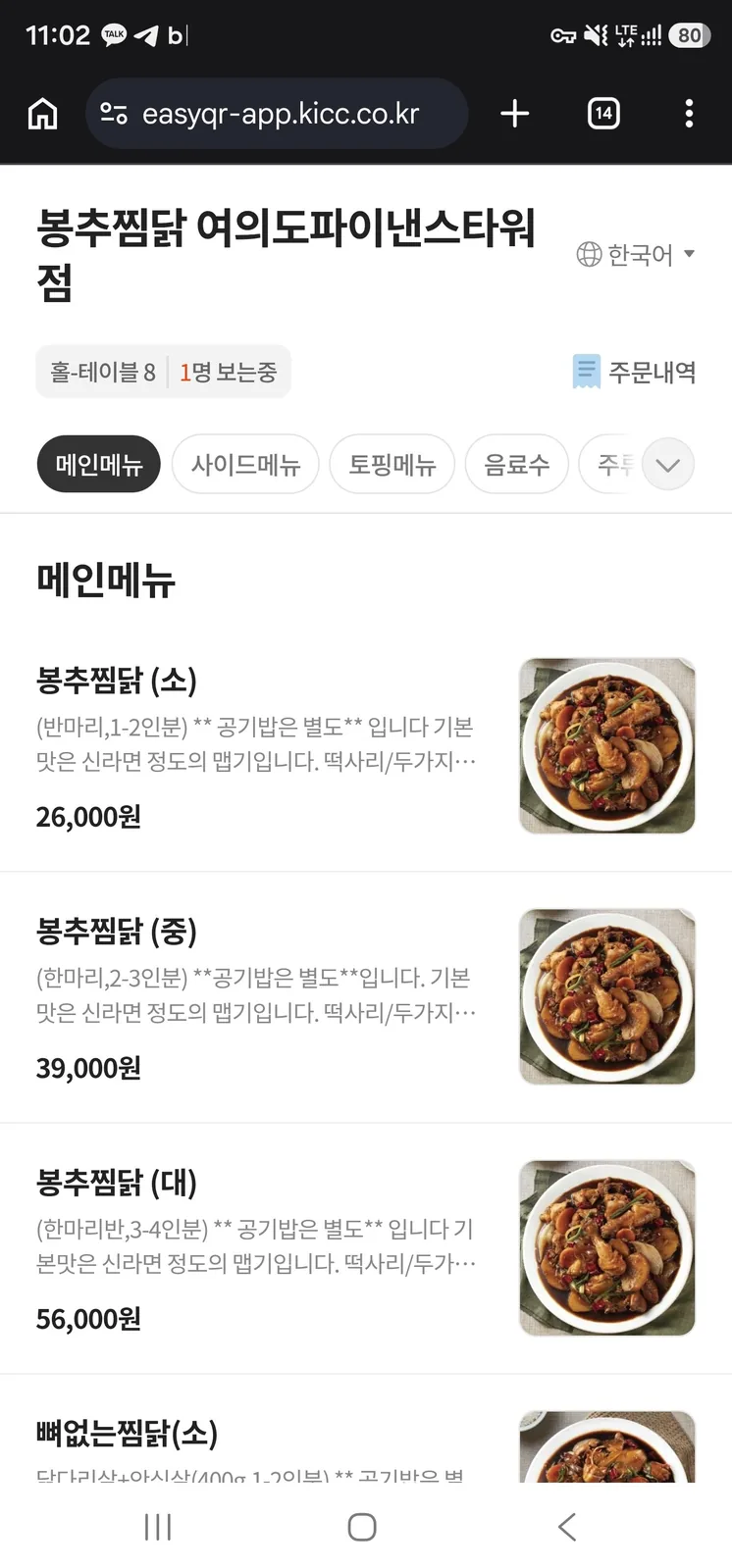
    Kakao Pay QR app ordering screen showing Bongchu Jjimdak small medium and large options
    Kakao Pay QR app ordering screen showing Bongchu Jjimdak small medium and large options

    The photographed menu lists original soy-based jjimdak (봉추찜닭), boneless braised chicken (뼈없는찜닭), spicy red jjimdak (빨간찜닭), and samgyetang (삼계탕), a separate ginseng chicken soup dish.

    The photos do not establish whether foreign-issued cards work with the QR system. Check with staff before ordering if that is your only payment method.

    Yeouido Finance Tower branch: prices and portions on the photographed menu
    DishSize / listed servingsPrice (KRW)
    Original braised chickenSmall / 1–2 people26,000
    Original braised chickenMedium / 3 people39,000
    Original braised chickenLarge / 4 people56,000
    Boneless braised chickenSmall / 1–2 people29,000
    Boneless braised chickenMedium / 3 people42,000
    Boneless braised chickenLarge / 4 people59,000
    Spicy red braised chickenMedium / 2–3 people43,000
    RiceOne bowl1,000

    These are branch prices from our visit. Check the current menu when you go. Rice was separate, at 1,000 KRW per bowl. You want the rice. Get the rice.
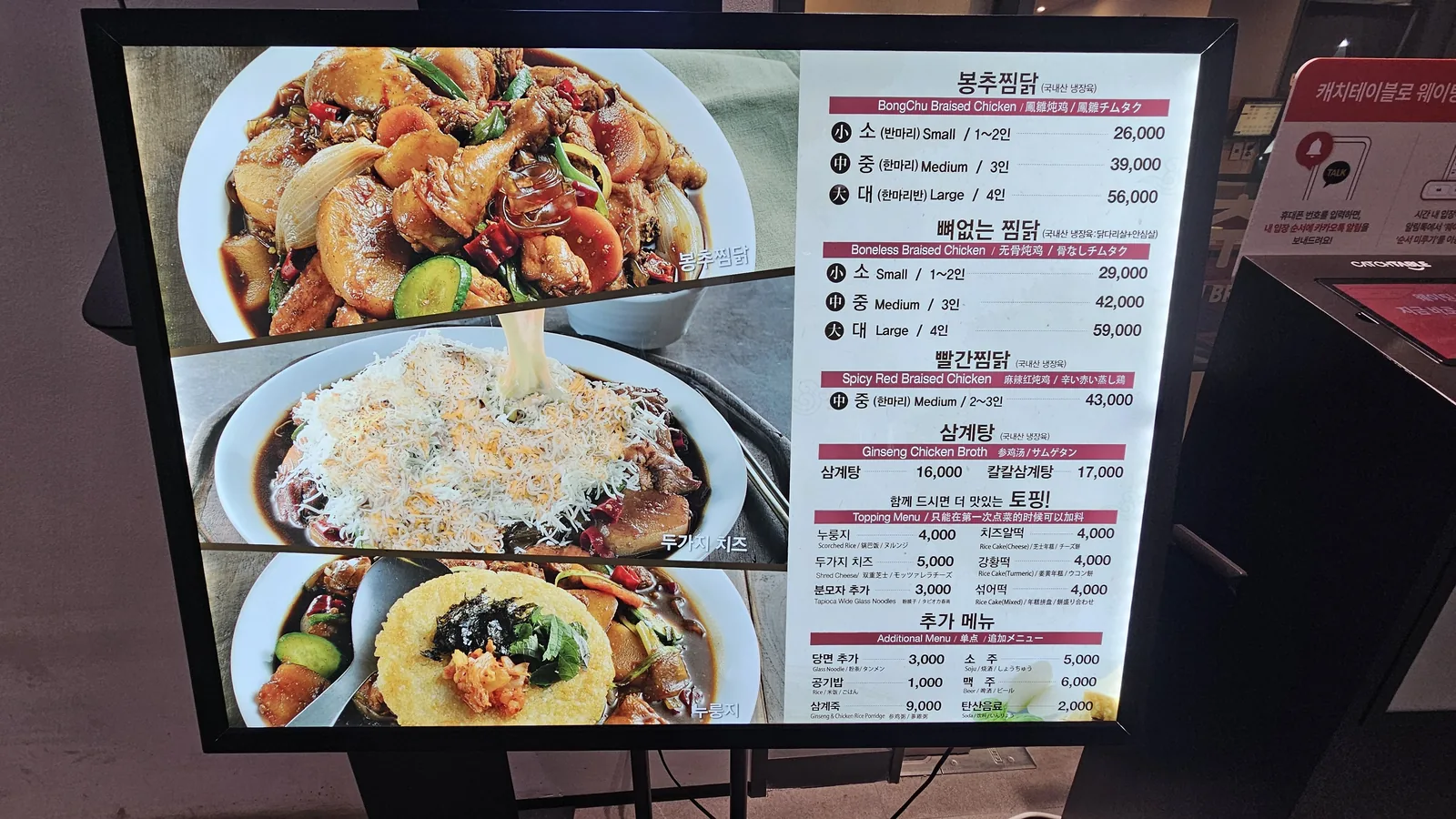
    Outdoor menu board at Bongchu Jjimdak Yeouido showing jjimdak varieties and prices
    Outdoor menu board at Bongchu Jjimdak Yeouido showing jjimdak varieties and prices

    Our Order: 41,000 KRW for Two

    Original jjimdak (medium): 39,000 KRW (~$29 USD). We shared it between two people. The menu lists medium as a 3-person portion.

    Two rice bowls: 2,000 KRW (~$1.50 USD).

    Total: 41,000 KRW (~$30 USD) for two, or 20,500 KRW (~$15) per person. USD amounts are approximate conversions from the original review, not live exchange rates.
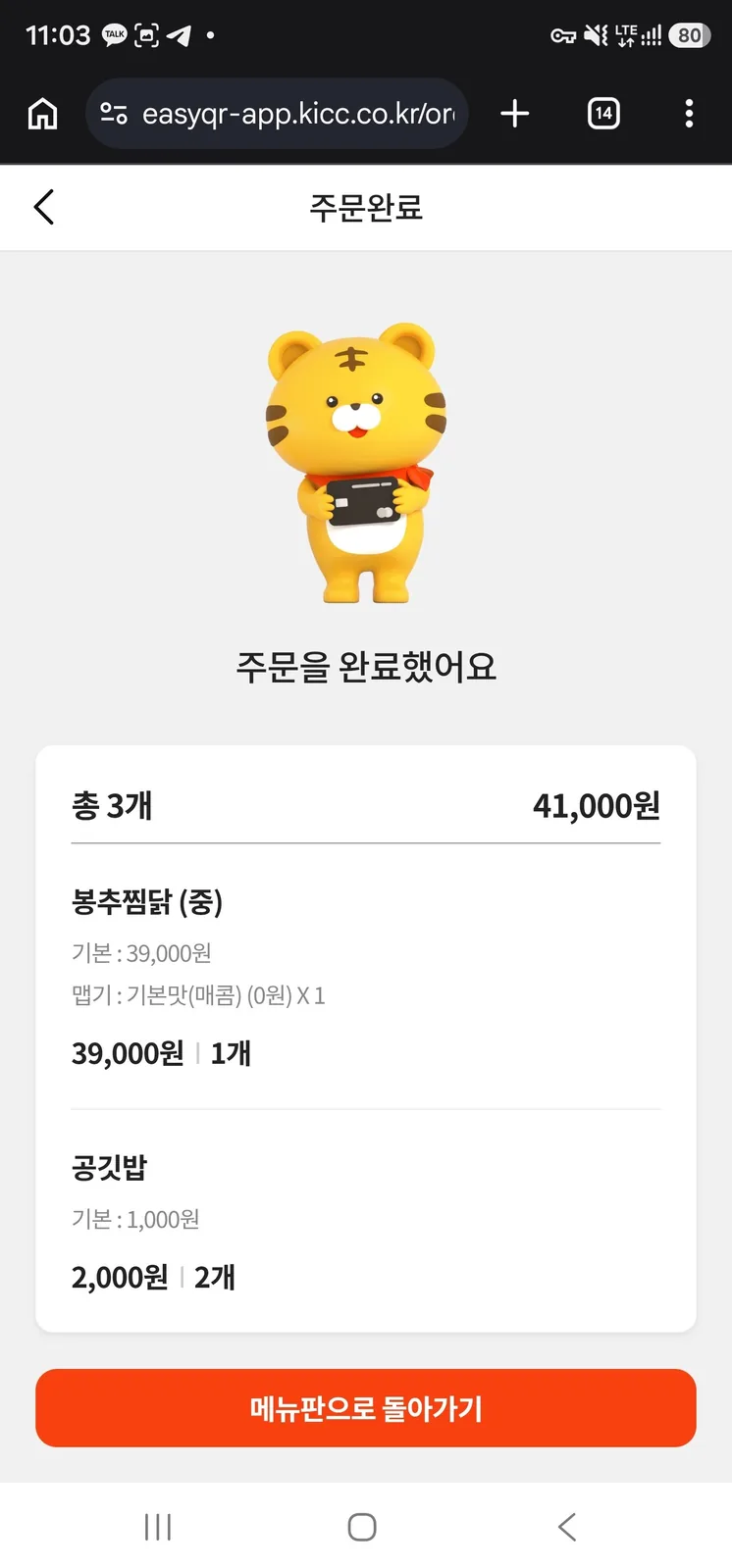
    Bongchu Jjimdak order confirmation: medium with default spicy option and two rice bowls, 41,000 KRW
    Our 41,000 KRW order: medium jjimdak and two rice bowls. The selected default option is labeled spicy.

    The Food

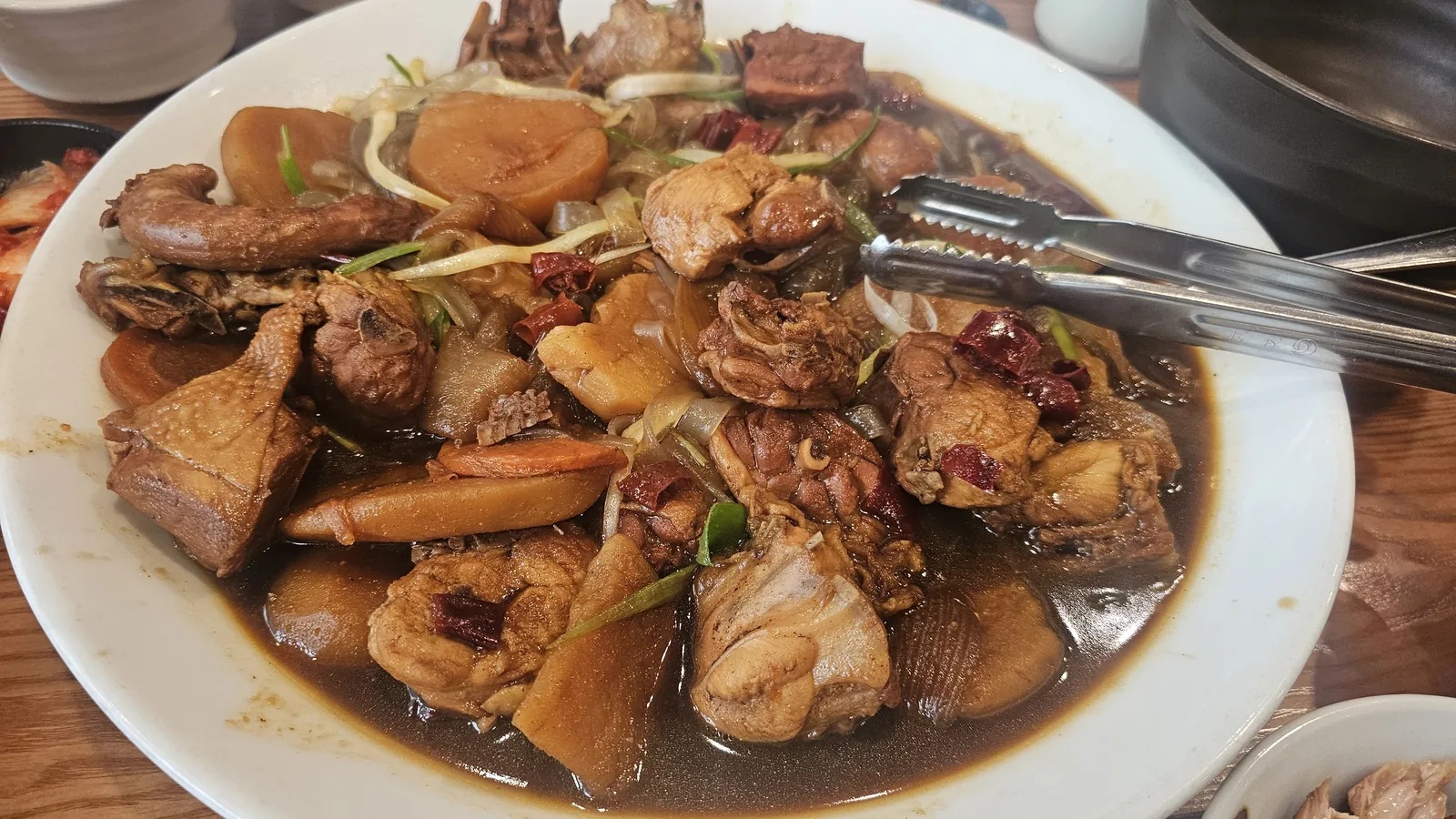
    Bongchu Jjimdak medium size Korean braised chicken with radish, carrot, onion, and green onion in soy sauce
    Bongchu Jjimdak medium size Korean braised chicken with radish, carrot, onion, and green onion in soy sauce

    The jjimdak arrives in a large stainless pot. Medium size is a proper amount for two — bone-in chicken pieces, radish chunks, sliced carrots, onion, green onion, all sitting in a glossy dark soy sauce. It looks good. It smells good.

    Taste-wise: it’s average.

    And I mean that as a neutral statement, not a critique. The sauce is exactly what it should be — savory, mildly sweet from the soy and sugar, with a faint depth from the garlic and ginger. The chicken is cooked through without being dry. Vegetables hold their texture. Everything is technically correct.

    But there’s no standout moment. Nothing that makes you stop mid-bite and think “okay, *this* is the thing.” It eats like a competent chain version of a good dish. Which is what it is.

    The move is to pour that sauce over your rice.
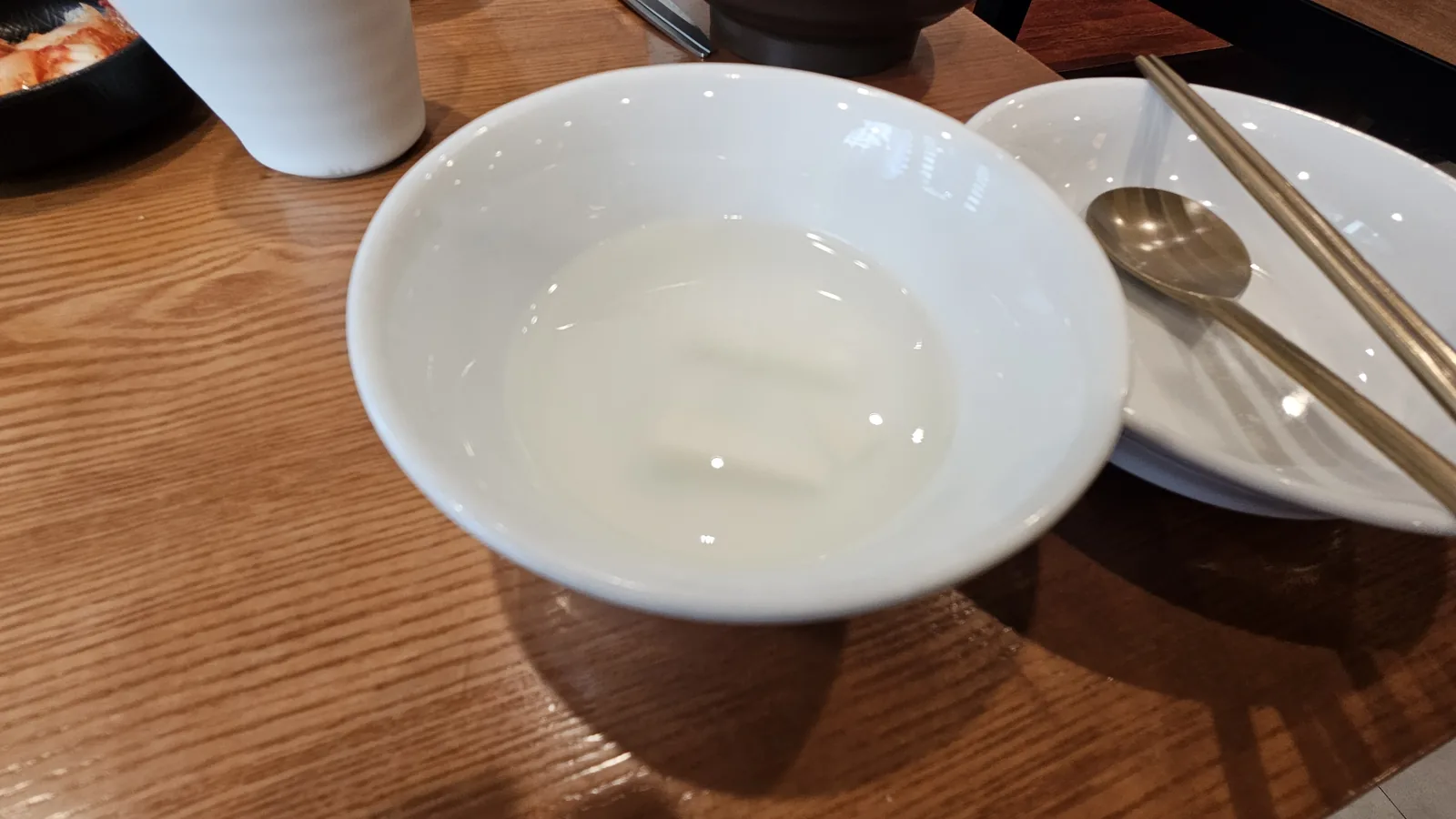
    Empty rice bowl with chopsticks and spoon set ready for service at Bongchu Jjimdak
    Empty rice bowl with chopsticks and spoon set ready for service at Bongchu Jjimdak

    Keep spooning the braising liquid into your rice bowl and mixing it in. The rice absorbs all of it, the sauce gets cut by the plain starch, and the whole thing becomes much more than the sum of its parts. This is how Korean people eat jjimdak. Don’t just pick at the chicken and leave the sauce behind.
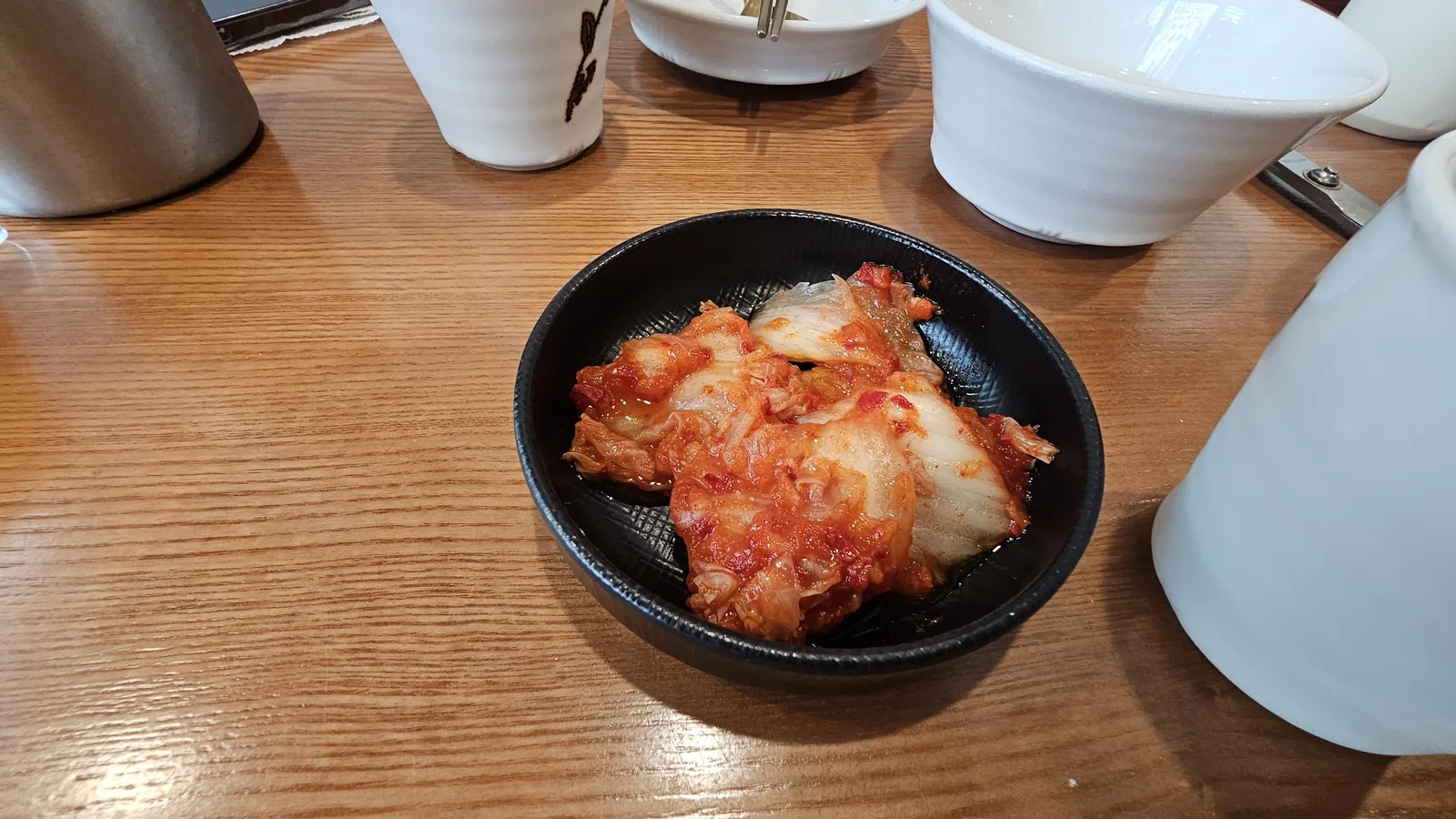
    Kimchi side dish in a black bowl at Bongchu Jjimdak Yeouido
    Kimchi side dish in a black bowl at Bongchu Jjimdak Yeouido

    Side dish is one portion of kimchi. That’s it. For a chain at this price point in Yeouido, don’t expect a full banchan spread — it’s a practical lunch operation, not a traditional Korean restaurant experience.

    The kimchi is fine as a palate cleanser between bites.

    Spice Level, English Menu and Payment

    Spice level: Our original jjimdak order shows 기본맛(매콤): the default option is labeled spicy. Do not assume the soy-based original is heat-free. The menu also lists spicy red jjimdak. Ask staff about a less-spicy option if needed; this review does not confirm one.

    English menu: The outdoor board includes English dish names, sizes and prices. The digital ordering screens shown here are in Korean; a full English digital ordering flow was not verified.

    Card payment: Foreign-card support through the QR system was not verified for this review. Ask staff which payment methods they accept before ordering.

    Tipping: No tipping in Korea. Don’t leave cash on the table — it’s not expected.

    Vegetarian options: Essentially none among the main dishes shown. This is a chicken restaurant.

    Halal / Kosher: Certification was not verified for this review. Check directly with the branch if you need certified food.

    Dining with children: Check the spice level before ordering for a child; our selected default option was labeled spicy.

    Solo dining: The smallest jjimdak on the photographed menu is listed for 1–2 people and costs 26,000 KRW before rice. Keep that portion and price in mind if eating alone.

    Lunch crowd: Real. The restaurant filled up during our late-morning visit. Arriving before the main office lunch rush is the better bet.

    The Verdict

    Depends on why you’re in Yeouido.

    Go if:

    – You’re in the Finance Tower area anyway and need a reliable, filling Korean lunch

    – You want to try jjimdak without hunting for a specialty spot

    – You’re fine with a chain experience — consistent, not exciting

    Skip if:

    – You only have a few days in Seoul and are optimizing every meal — spend those on something more exceptional

    – You want an authentic, non-chain Korean dining experience

    – You’re solo traveling and watching the budget per meal

    The food is honest and the portion was generous for the two of us. The Korean ordering screen may need some translation or staff help. Just don’t come in expecting to be blown away.

    Would I go back? If I happened to be in the Finance Tower at lunchtime and didn’t feel like walking far — yeah, probably. But I wouldn’t plan a day around it.

    FAQ

    Where is Bongchu Jjimdak Yeouido located?

    It’s in Yeouido Finance Tower (여의도파이낸스타워), 3rd floor, at 23-8 Yeouido-dong, Yeongdeungpo-gu, Seoul. Nearest subway is Yeouido Station (Line 5 or Line 9), about a 5-10 minute walk.

    How much does it cost per person at Bongchu Jjimdak Yeouido?

    We spent 41,000 KRW for two: medium original jjimdak at 39,000 KRW and two rice bowls at 1,000 KRW each. That was 20,500 KRW per person. The menu lists medium as 3 servings, although we shared it between two. These are prices from our visit.

    How do you order at Bongchu Jjimdak?

    We scanned the table QR code and used the Korean ordering page. Match the dishes to the English outdoor board, translate a screenshot, or ask staff for help. Foreign-card compatibility was not verified.

    Is Bongchu Jjimdak spicy?

    Our order confirmation labels the original jjimdak’s default option as spicy: 기본맛(매콤). A soy-based sauce is not a guarantee of zero heat. The menu also lists spicy red jjimdak. Ask staff about spice options before ordering.

    Is there an English menu at Bongchu Jjimdak Yeouido?

    The outdoor menu board has English dish names, portion sizes and prices. The ordering screens photographed for this review are in Korean. We have not verified whether the digital menu offers an English mode.

    When should I visit to avoid the lunch crowd at Yeouido?

    The restaurant filled up during our visit around 11 AM. Arriving before the main office lunch rush is a better bet than turning up at noon, but that observation is not a guarantee of no queue.
    You might also like

    📍 Location

    Open in Google Maps →

  • Hwanggeum Dwaeji Gukbap in Cheongyang: Honest Review

    Hwanggeum Dwaeji Gukbap in Cheongyang: Honest Review

    🇯🇵 日本語版はこちら

    Quick honest review of Hwanggeum Dwaeji Gukbap (황금돼지국밥) in Cheongyang. Short version: 10,000 KRW pork soup rice, milky bone broth, generous head meat, open at 6AM, one of those local spots regulars never stop going back to. I’m one of those regulars.

    We went as a group of five on a Saturday around noon. Got 4 돼지국밥 (pork gukbap) and 1 순대국밥 (sundae gukbap). Walked in, sat down, eaten and out in under 40 minutes. 50,000 KRW total for five people. That’s $37.

    What Is Gukbap?

    Gukbap (국밥) is two words: 국 (soup) + 밥 (rice). A bowl of hot soup with rice — either served on the side, or already mixed in.

    Dwaeji gukbap (돼지국밥) is the pork version. The broth is milky white from pork bones simmered for hours. The meat is typically 머리고기 (meorigugi) — head meat, meaning boiled pork from the cheek and jowl area. Sounds intense. Tastes like tender, mild pulled pork. It’s the cut that soaks up the most flavor from long simmering.

    This is Korean working-class comfort food. Not a trend. Not a chef’s-table concept. People have been eating this for breakfast and lunch for decades, and some places have been serving the same bowl for just as long.

    Where Is Cheongyang?

    Cheongyang (청양군) is a small county in South Chungcheong Province — about 2 hours south of Seoul by car or intercity bus from Daejeon. It’s not on most tourist itineraries. Most foreigners passing through Chungnam are heading to Gongju or Buyeo for the Baekje history, or to the western coast.

    But if you’ve eaten Korean food, you’ve probably encountered Cheongyang already. The county gave its name to 청양고추 — the cheongyang chili pepper, the go-to spicy variety in Korean cooking. When a Korean menu says “extra spicy (청양)” it’s referring to this county. The self-serve side dish bar here has a full container of them sliced up, and yes, they’re from around here.

    Getting There

    Cheongyang is a drive or intercity bus ride. From Daejeon, about 1 hour by bus. From Seoul’s Central City Terminal, around 2–2.5 hours. There’s no subway. Once in town, taxi or car makes things easier.

    Phone: 041-943-4300 (useful for directions or takeout orders)

    The Interior

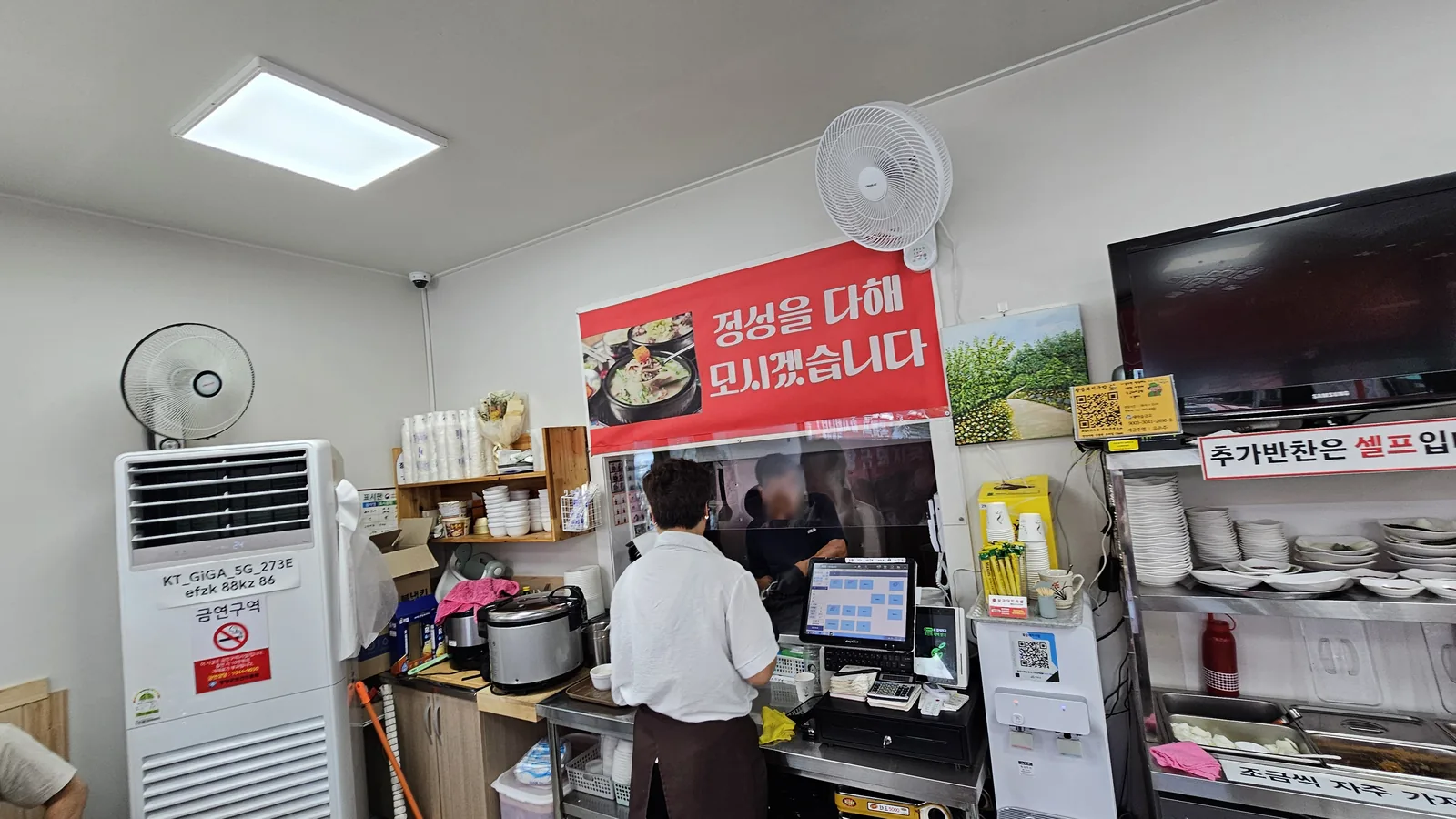
    Kitchen counter and staff at Hwanggeum Dwaeji Gukbap with self-service side dish station signage
    Kitchen counter and staff at Hwanggeum Dwaeji Gukbap with self-service side dish station signage

    Bright fluorescent lighting, clean tables, counter seating near the open kitchen. No mood lighting, no design concept. It’s the kind of place where the focus is entirely on the bowl in front of you.

    Two banners catch your eye when you walk in. One says “정성을 다해 모시겠습니다” — “We will serve you with sincerity.” The other one is better:

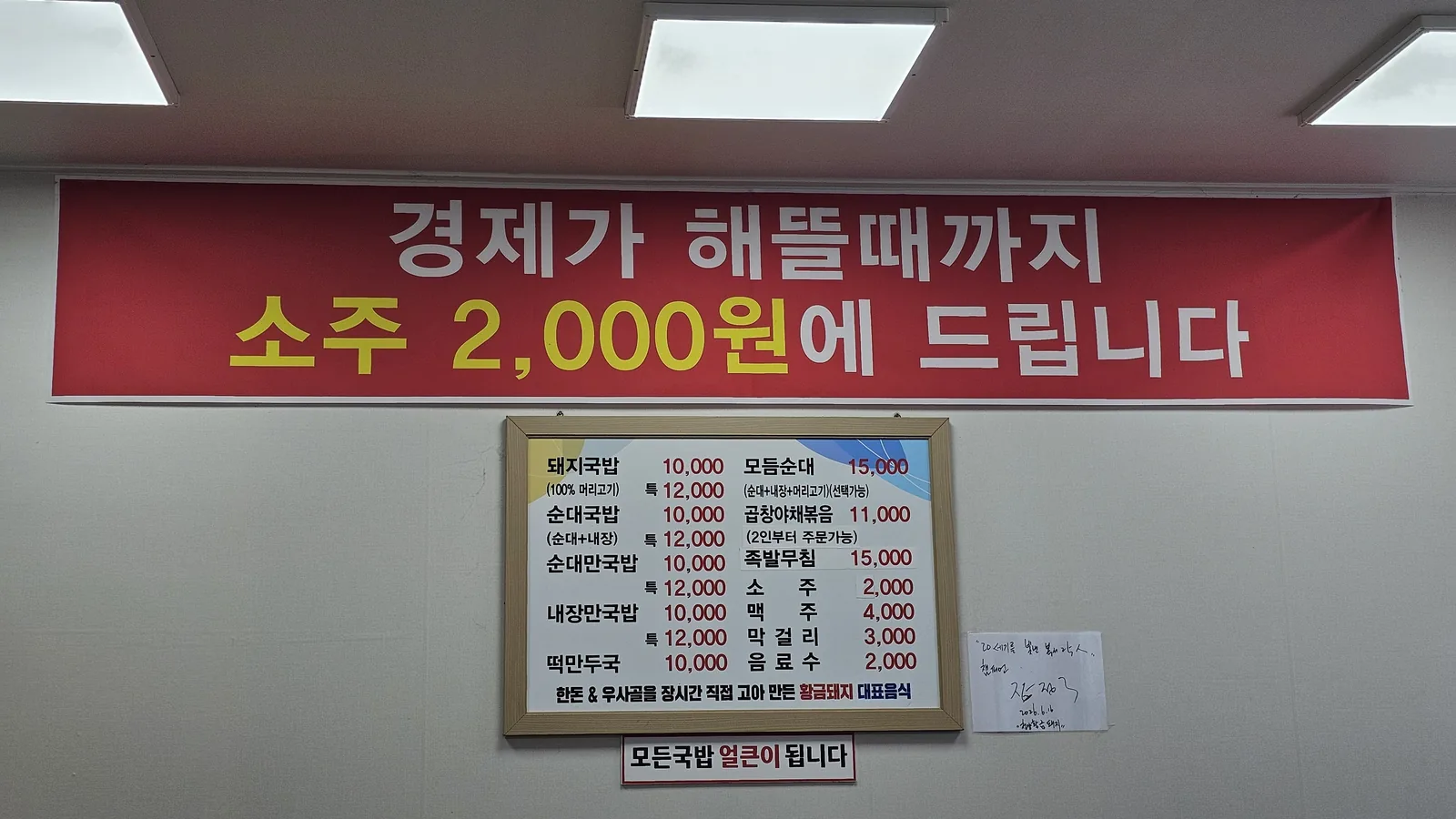
    Soju 2000 won promotional banner and menu board at Hwanggeum Dwaeji Gukbap
    Soju 2000 won promotional banner and menu board at Hwanggeum Dwaeji Gukbap

    “경제가 해뜰때까지 소주 2,000원에 드립니다” — “Until the economy improves, we’re serving soju for 2,000 won.”

    Regular soju at Korean restaurants runs 6,000–8,000 KRW these days. 2,000 KRW ($1.50) is a real gesture. Whether you read it as gimmick or sincerity, it works either way.

    The Side Dishes

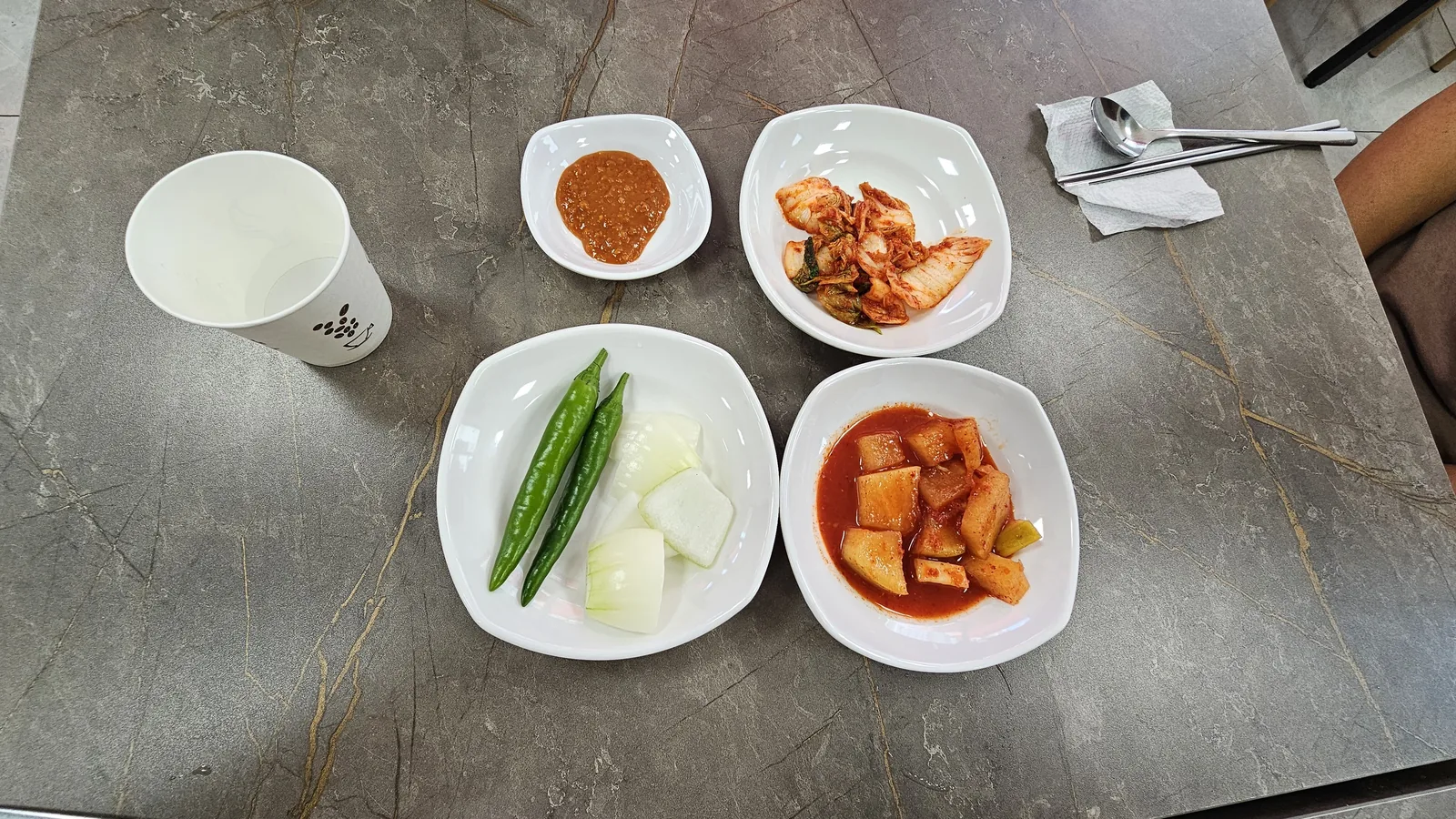
    Traditional Korean side dish table set at Hwanggeum Dwaeji Gukbap — salted shrimp, kkakdugi, cheongyang peppers, onion and kimchi
    Traditional Korean side dish table set at Hwanggeum Dwaeji Gukbap — salted shrimp, kkakdugi, cheongyang peppers, onion and kimchi
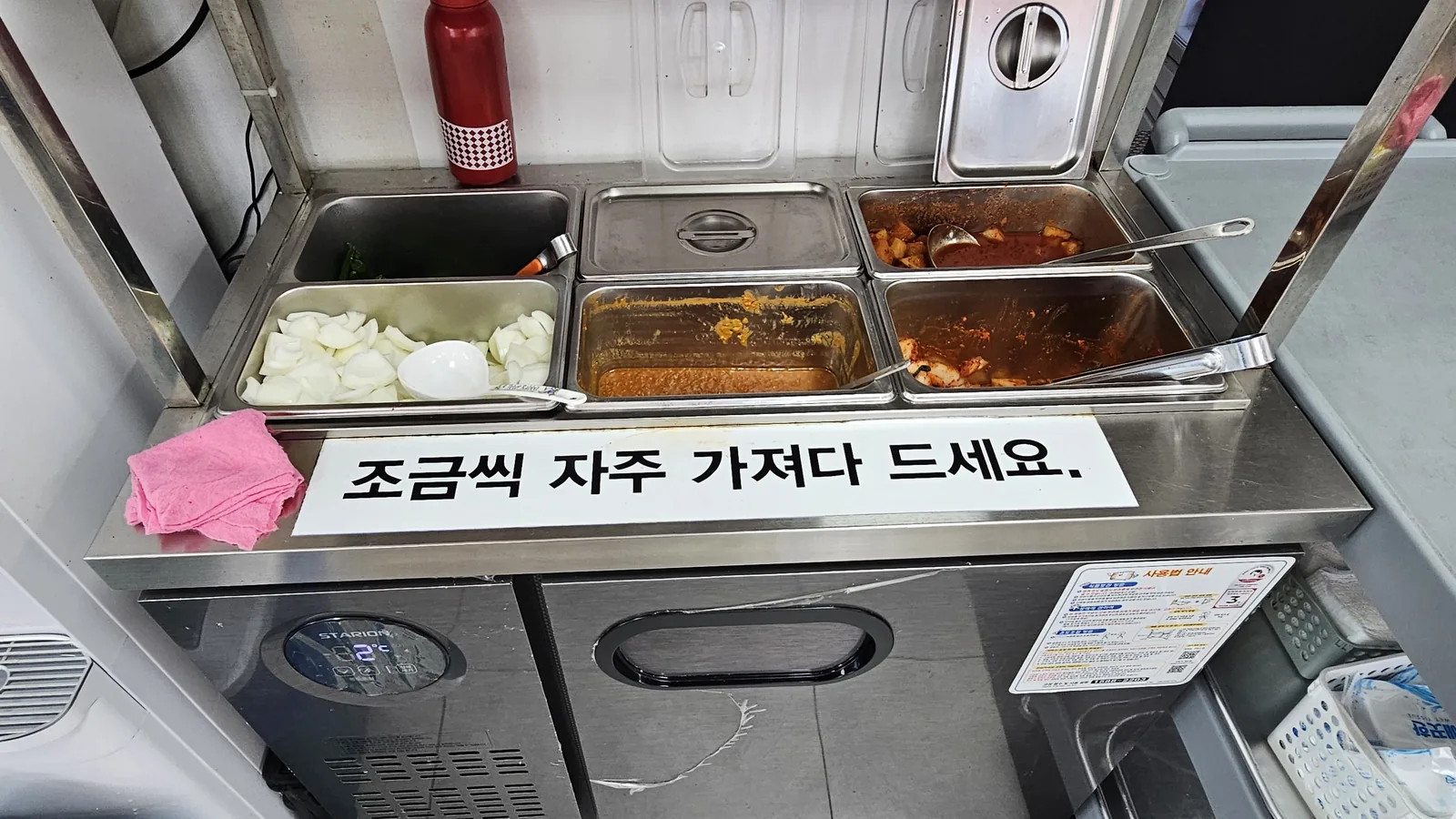
    Self-service side dish bar at Hwanggeum Dwaeji Gukbap with stainless containers of onions, salted shrimp and kkakdugi
    Self-service side dish bar at Hwanggeum Dwaeji Gukbap with stainless containers of onions, salted shrimp and kkakdugi

    Side dishes are self-service. The sign asks you to take a little and come back often — “조금씩 자주 가져다 드세요.” So don’t pile everything at once.

    The lineup:

    새우젓 (saeujeot) — fermented salted shrimp. This is the most important condiment at the table. You add it to your broth to season it. Gukbap comes out unsalted so you control it yourself. Start with a small spoonful, stir, taste, add more. Don’t skip this step or your bowl will taste flat.

    깍두기 (kkakdugi) — cubed radish kimchi. Goes alongside the soup, not usually in it. The crunch and acidity cut through the fatty broth well.

    청양고추 + 양파 — sliced cheongyang peppers and raw onion. Add the peppers if you want heat. Given that you’re literally in Cheongyang County, these are about as local as it gets.

    김치 — standard napa cabbage kimchi.

    For first-timers with gukbap: season with saeujeot first, then add heat with the peppers. Don’t dump everything in at once.

    Dwaeji Gukbap (돼지국밥)

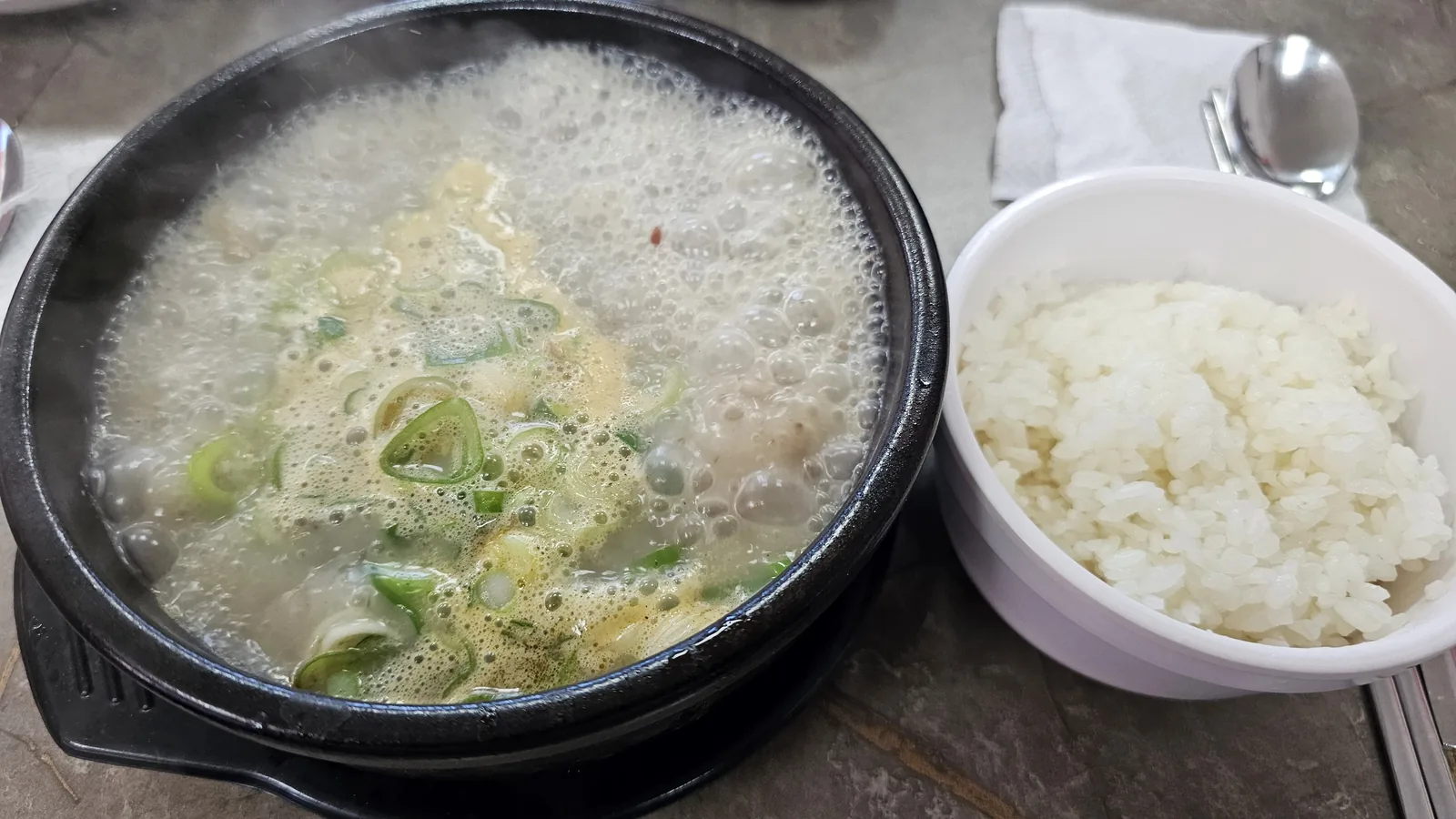
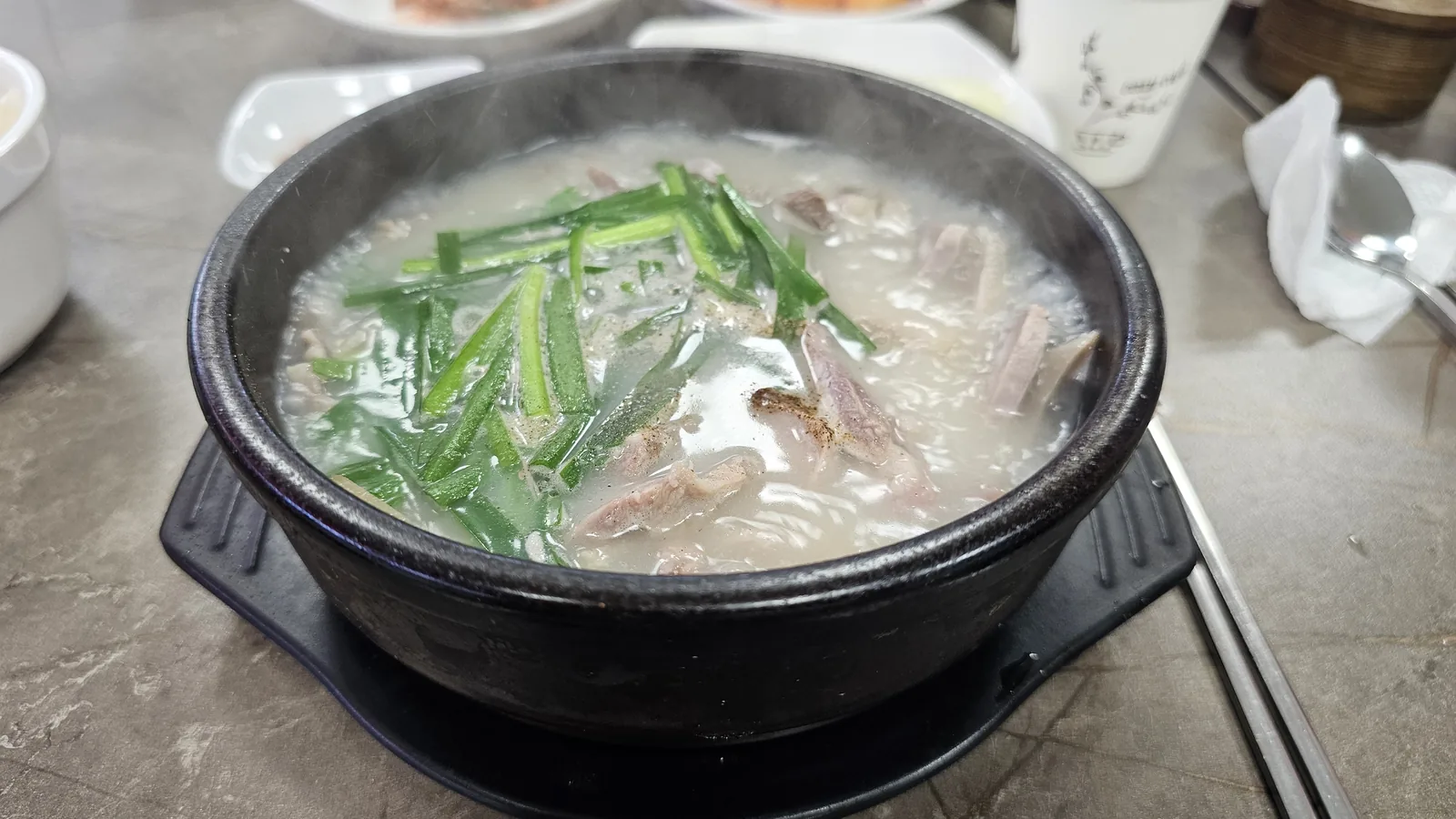
    The dwaeji gukbap (pork and rice soup) arrives
    The dwaeji gukbap (pork and rice soup) arrives
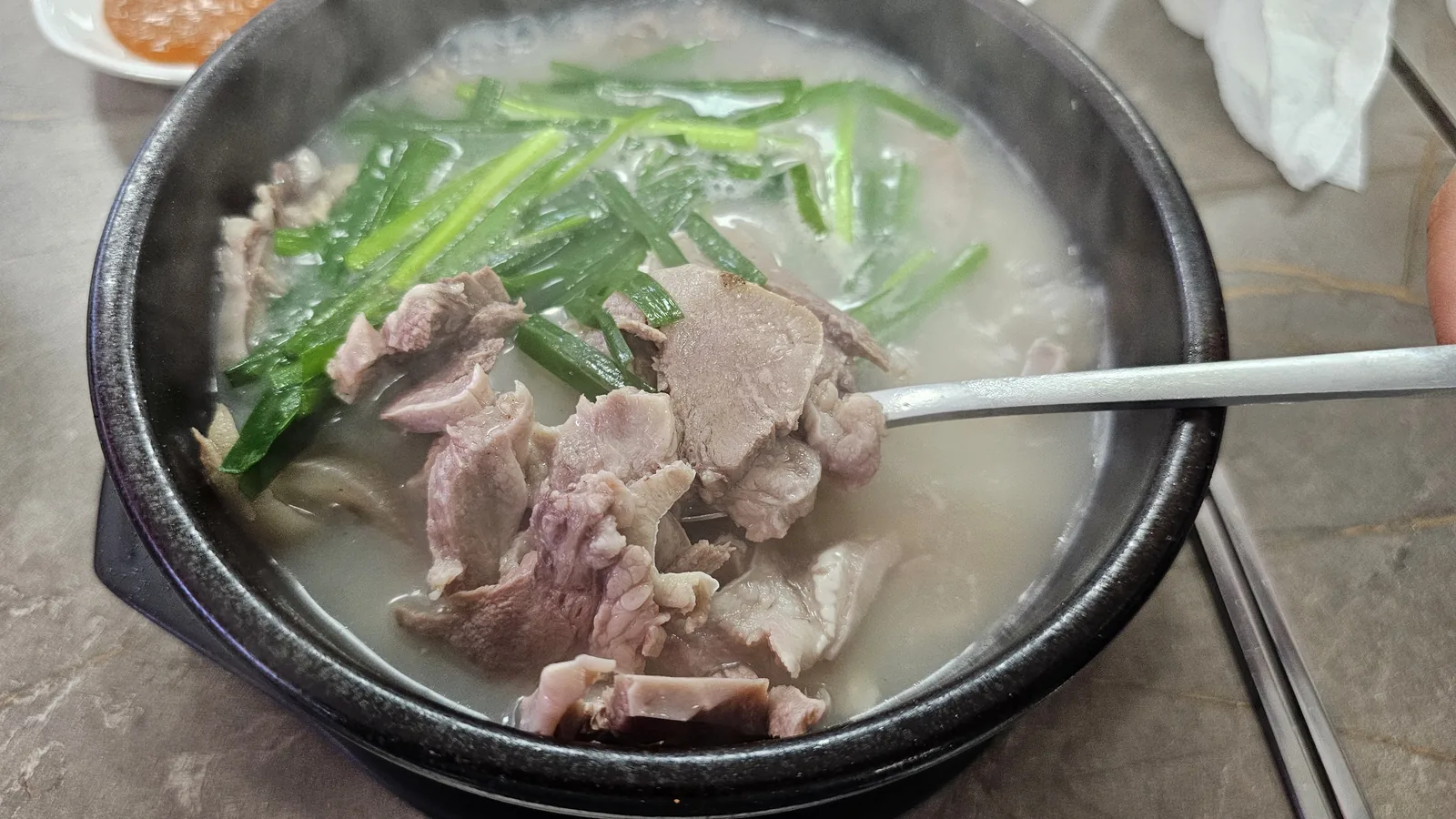
    Close-up of the pork head meat (meorigogi)
    Close-up of the pork head meat (meorigogi)

    The broth is the thing. Milky white from long-simmered pork bones, clean on the palate, not greasy. There’s no funky smell, no heaviness. Just a well-made bone broth that does exactly what it should.

    The head meat is generous. Lift a spoonful and you’re getting real chunks of soft, mild pork. Not shredded scraps — actual pieces. The texture holds up in the hot broth.

    Eat it how you want — rice separate or mixed in. Mixing is the more common way. Drop the rice in, let it soak up the broth for a minute, eat. Add saeujeot. Add some pepper if you want. Done.

    This is why I keep coming back here. The broth hits that specific comfortable note — porky but not overpowering, savory, warming. Some gukbap places get heavy or overly fatty. This one doesn’t. It’s calibrated right.

    Sundae Gukbap (순대국밥)

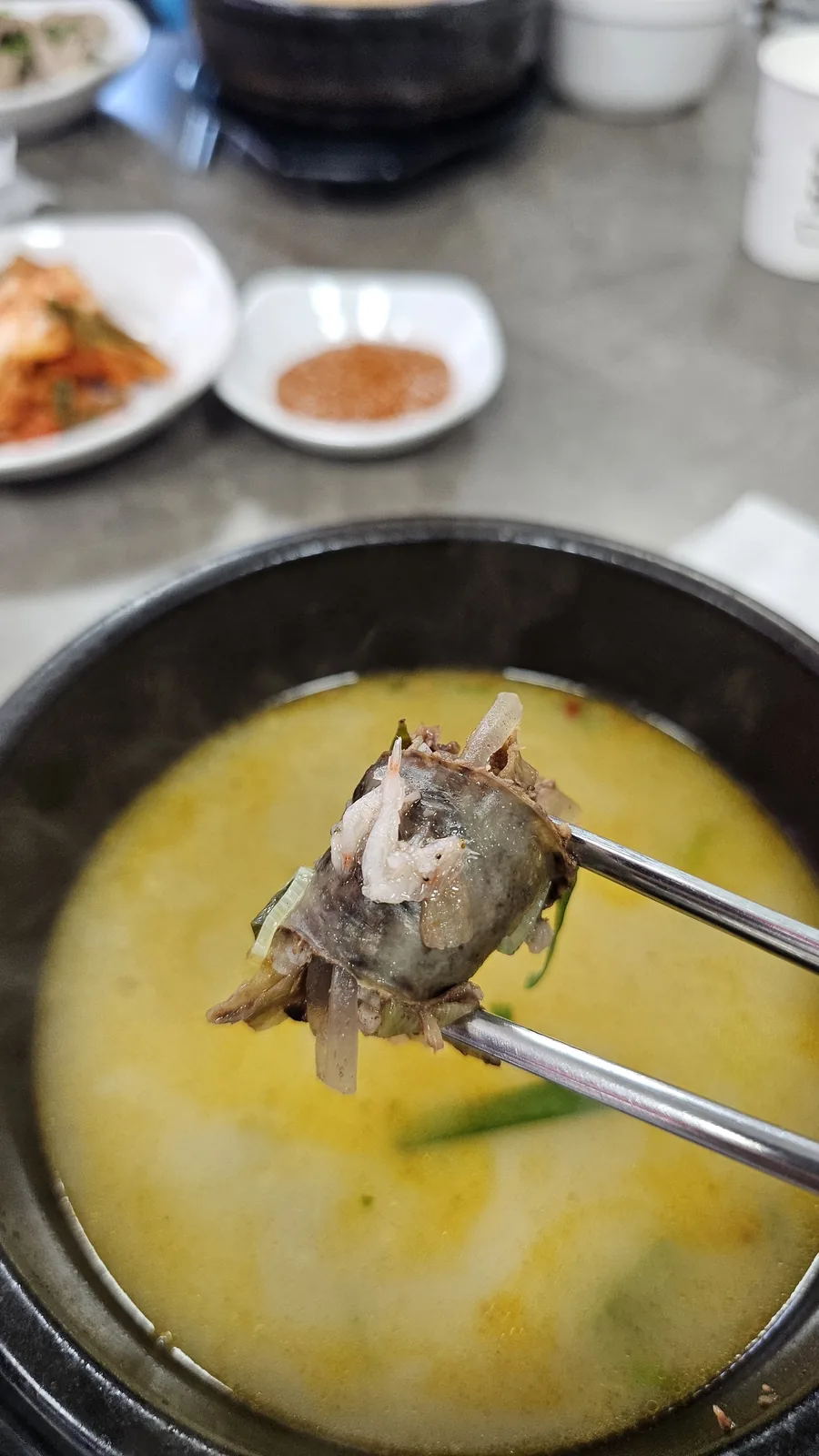
    A bowl of sundae gukbap (Korean blood sausage soup)
    A bowl of sundae gukbap (Korean blood sausage soup)
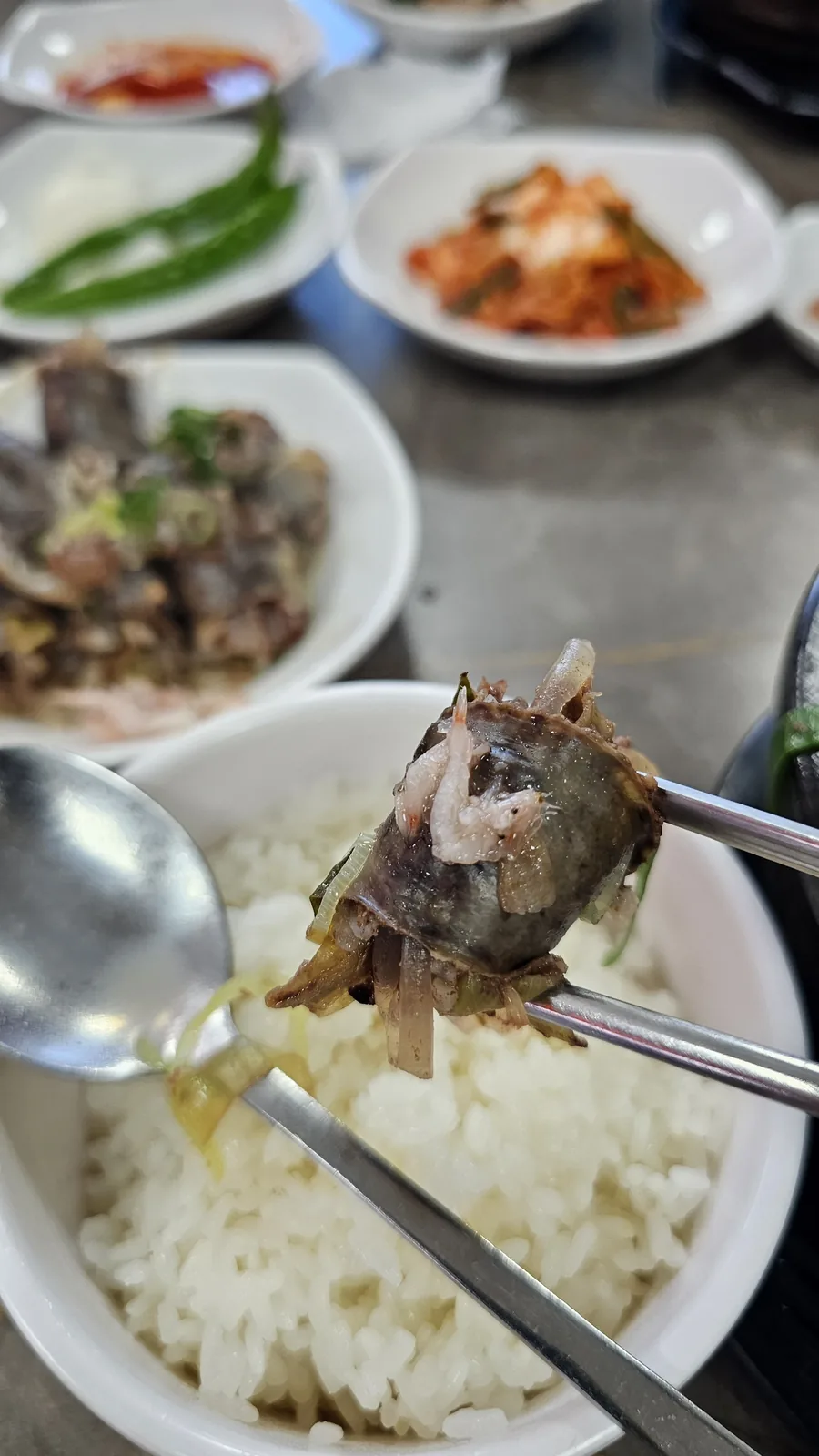
    Close-up of sundae (Korean blood sausage) held with chopsticks
    Close-up of sundae (Korean blood sausage) held with chopsticks
    Close-up of a sliced sundae showing its cross-section
    Close-up of a sliced sundae showing its cross-section

    Sundae (순대) is Korean blood sausage. Before you close this tab: it’s milder than what you might be imagining. The standard version is pig intestine casing stuffed with glass noodles (당면), vegetables, and sometimes tofu. Some versions include blood, some don’t. The flavor is gentle and the texture is soft and slightly chewy.

    Same milky broth as the pork bowl. The sundae goes right in, absorbs the soup, and you eat it with the broth. You can also dip pieces in the saeujeot directly.

    Sundae gukbap is a dividing-line dish for foreigners. Either it clicks and you love it, or you decide to stick with the plain pork version. Neither reaction is wrong. If you’ve got a friend in the group who eats everything, order one to share and try a piece before committing.

    The Menu

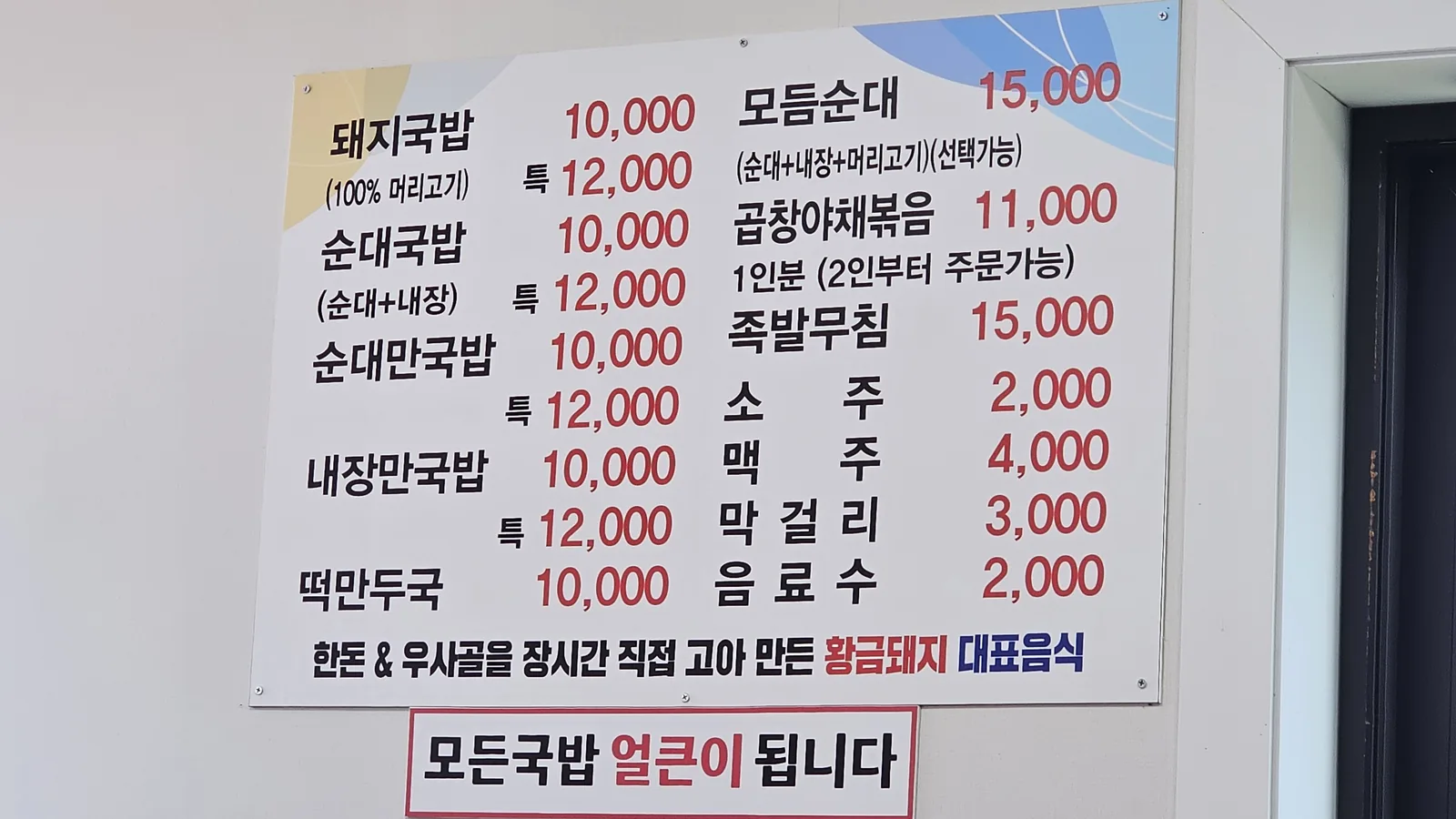
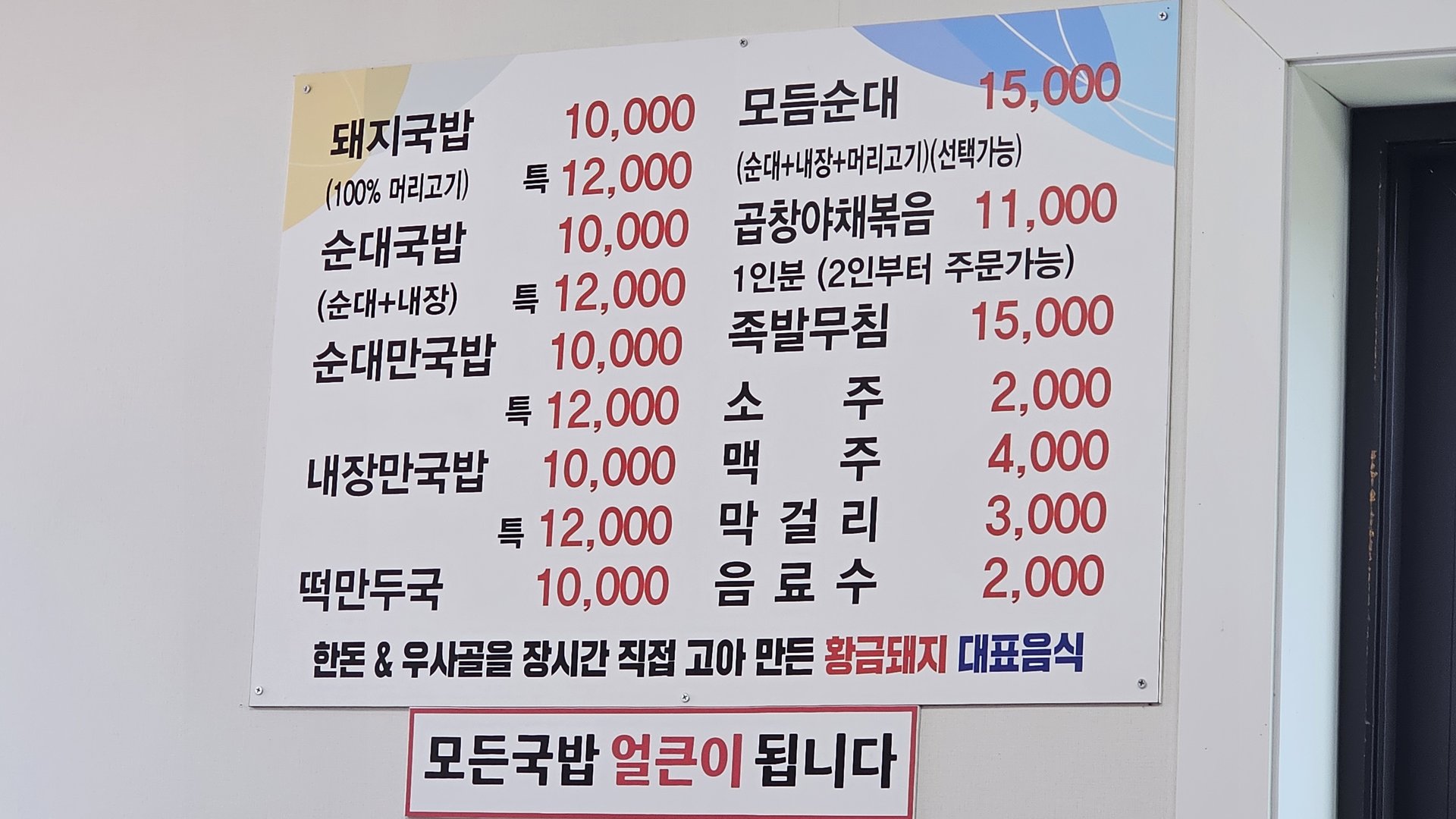
    Menu board at Hwanggeum Dwaeji Gukbap Cheongyang showing all items priced at 10,000 KRW
    Menu board at Hwanggeum Dwaeji Gukbap Cheongyang showing all items priced at 10,000 KRW

    Everything is 10,000 KRW (~$7.40 USD):

    – 돼지국밥 — pork soup rice (the main event)

    – 순대국밥 — Korean blood sausage soup rice

    – 내장만국밥 — offal-only soup rice (intestines and organ meat, for those who want to go further)

    – 떡만두국 — rice cake and dumpling soup (the safe option if you’re squeamish)

    Rice comes with every bowl. No upcharge. Soju is 2,000 KRW.

    Practical Info for Tourists

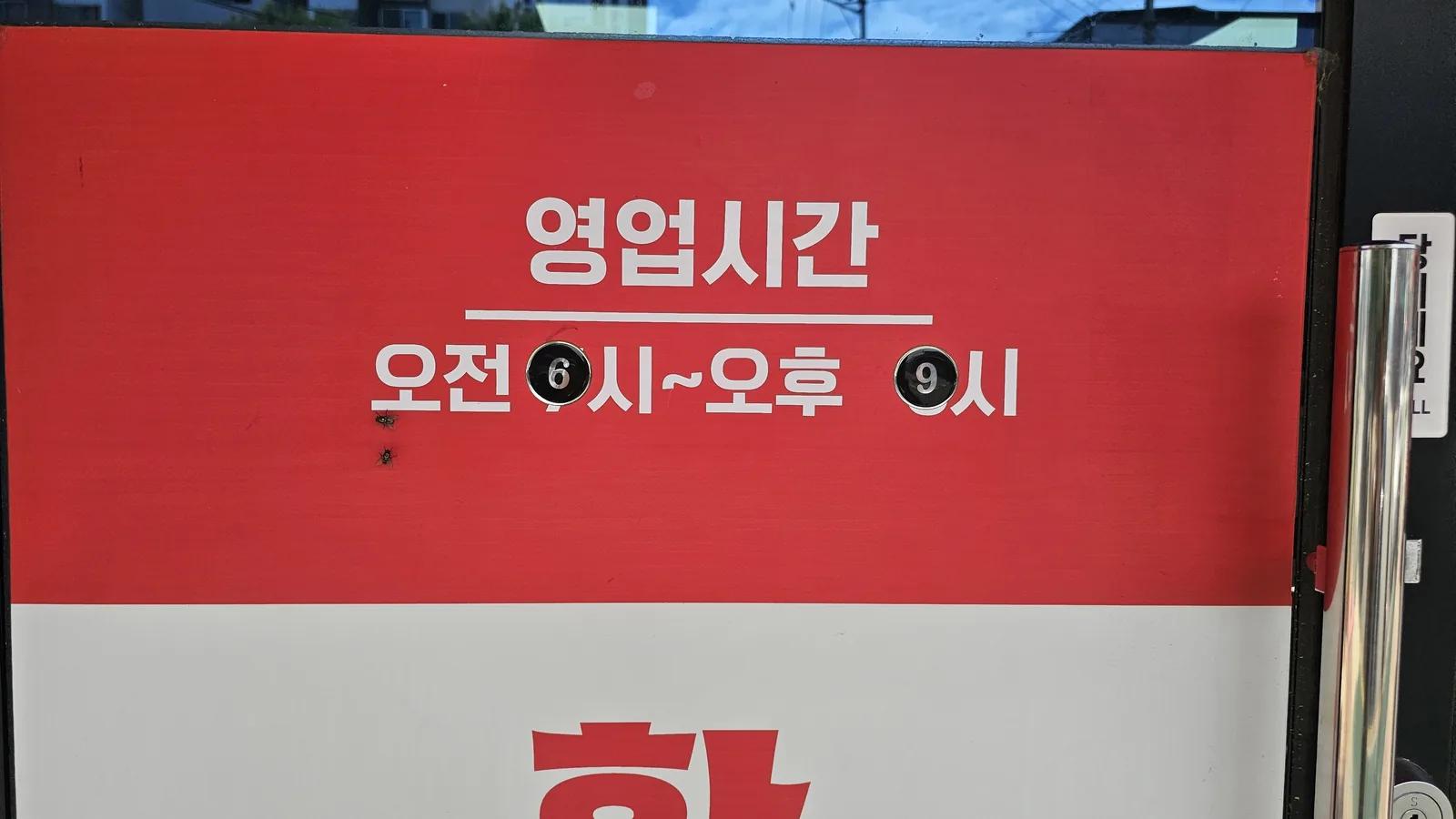
    Opening hours sign at Hwanggeum Dwaeji Gukbap
    Opening hours sign at Hwanggeum Dwaeji Gukbap
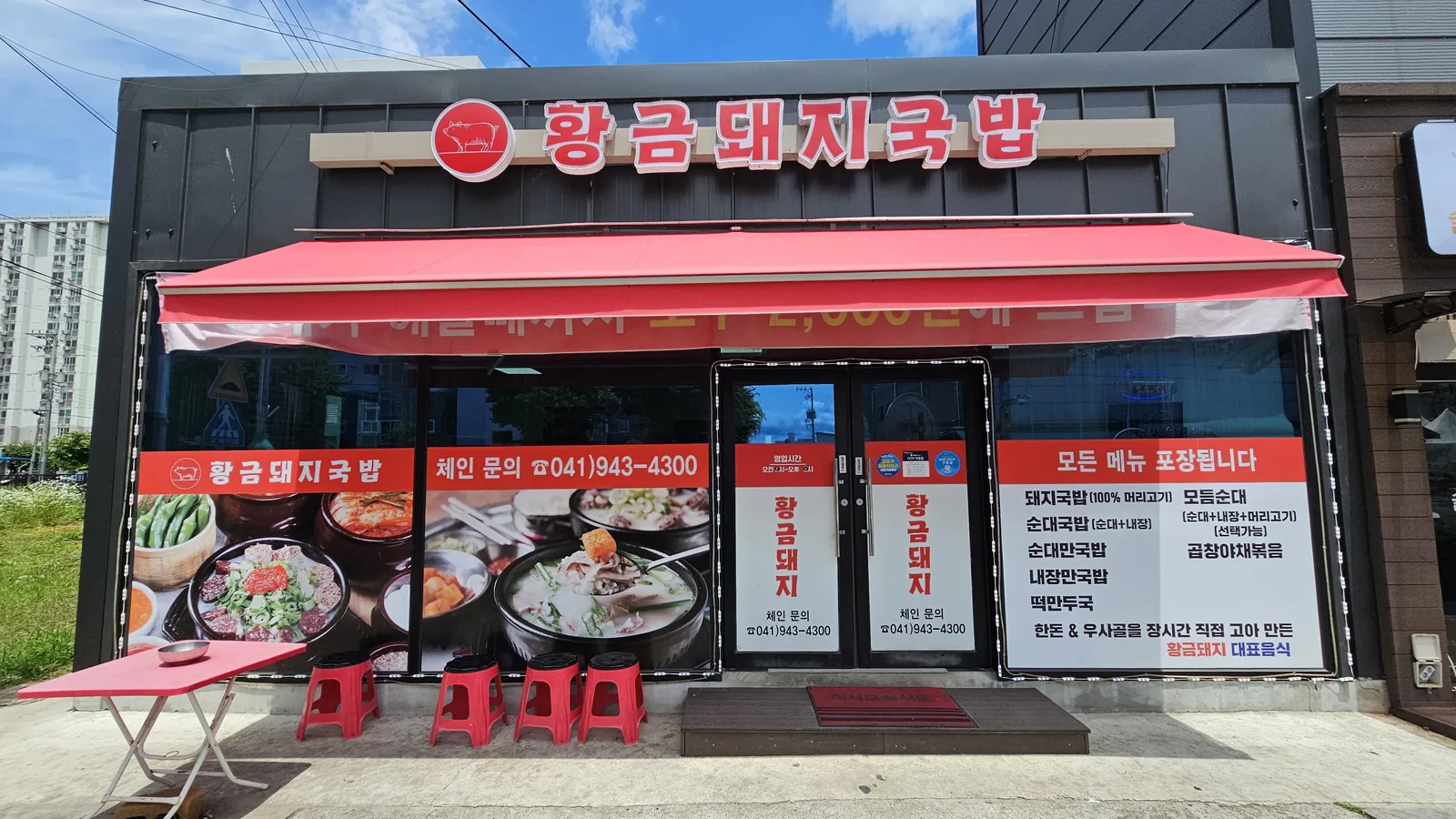
    Exterior of Hwanggeum Dwaeji Gukbap in Cheongyang
    Exterior of Hwanggeum Dwaeji Gukbap in Cheongyang

    Hours: 6:00 AM – 9:00 PM

    Takeout: Available (포장 가능 — the sign is on the exterior)

    Price per person: 10,000 KRW (~$7.40)

    English menu: No. Bring a translation app or just point. The menu has four items and they’re all the same price.

    English-speaking staff: Unlikely, but the ordering process is simple enough. Hold up fingers for how many bowls, point at the menu item. Works fine.

    Card payment: Not confirmed for this type of local restaurant. Bring 10,000 KRW per person in cash.

    Tips: Korea doesn’t tip. Don’t leave money on the table.

    Vegetarian options: None. This is a dedicated pork restaurant.

    Kids: Fine. Casual, loud enough, no dress code.

    Alcohol: Soju at 2,000 KRW. It’s there if you want it.

    The Verdict

    Should you make the trip to Cheongyang for this?

    If you’re in Cheongyang anyway — yes, this is exactly where you should eat. It’s the kind of local spot that earns repeat visits from people who live here. That’s not nothing.

    If you’re road-tripping through Chungnam and need a lunch stop — worth it. Good food at honest prices, in and out quickly. The 6AM opening also makes it a legitimate road-trip breakfast stop if you’re heading south early.

    If you’ve never had gukbap — this is a solid introduction. Start with the dwaeji gukbap. Season it with saeujeot. You’ll know pretty quickly whether Korean soup rice is your thing.

    If you’re vegetarian, or really not into pork/offal — different restaurant entirely. This one’s not for you.

    Tbh, the most surprising thing about this place is the soju price. 2,000 KRW at a restaurant is basically unheard of right now. Even if you don’t drink, it’s a sign of the kind of place this is — somewhere that actually cares about making things accessible to the people eating there.

    I keep coming back. Bowl’s always good. Nothing here disappoints.

    FAQ

    What are the opening hours of Hwanggeum Dwaeji Gukbap?

    Open daily from 6:00 AM to 9:00 PM. Yes, they’re open for breakfast — gukbap is a perfectly normal Korean breakfast.

    How much does a bowl cost at Hwanggeum Dwaeji Gukbap?

    All main bowls are 10,000 KRW (~$7.40 USD). Rice is included. Soju is 2,000 KRW (~$1.50) as a promotional price.

    What should I order at Hwanggeum Dwaeji Gukbap?

    Get the dwaeji gukbap — milky pork bone broth with generous head meat. If you’re up for something adventurous, the sundae gukbap with Korean blood sausage is also good.

    Is takeout available at Hwanggeum Dwaeji Gukbap?

    Yes, takeout (포장) is available. Phone ahead: 041-943-4300.

    Is there an English menu or English-speaking staff?

    Probably not. Bring a translation app. The menu is short and simple — four main items, all the same price — so pointing works fine.

    Do I need to bring cash?

    Card payment is not confirmed for this type of small local restaurant. Bring cash to be safe — 10,000 KRW per bowl.

    You might also like

    📍 Location