Quick honest review of Il-ho Myeonok (일호면옥) in Yeouido — a naengmyeon specialist that operates as a legitimate lunch institution for Seoul’s office crowd. Here’s the short version if you’re busy: mul naengmyeon is the real deal, the broth does the work, the dumplings are worth splitting, and you need to show up before 11:30 AM or you’re waiting in line.
We went on a Tuesday. Got there around 11:10 AM and the place was already nearly full. Sold-out signs were posted by the entrance — 양지탕 (brisket soup), 만두양지방, 사골만두국 (bone broth dumpling soup) — all gone before noon. That tells you something.
What Is Naengmyeon?
Quick primer, because this is one of those dishes that needs context before you eat it.
Naengmyeon (냉면) literally means “cold noodles.” Thin, slightly chewy noodles made from buckwheat or potato starch, served either in an icy clear broth (물냉면, mul naengmyeon) or dressed in a spicy-sweet sauce (비빔냉면, bibim naengmyeon — or 회냉면, hoe naengmyeon, which adds raw fish to the mix).
Historically, naengmyeon is from Pyongyang — what’s now North Korea. After the Korean War, people who fled south brought the dish with them, and it embedded itself permanently into Korean food culture. It’s considered one of the most refined cold dishes in Korean cuisine. You’ll find it as a closing course at Korean BBQ restaurants, but places like Il-ho Myeonok treat it as the main event.
The texture can be surprising the first time. Buckwheat noodles are chewier and more elastic than regular wheat noodles. They have a slightly grayish tint and a faint earthy flavor. If you’ve had Japanese soba, you’re in roughly the right territory — but naengmyeon is chewier, served much colder, and the broth is a completely different animal.
“면옥” (myeonok) means “noodle house.” “일호” (ilho) translates roughly to “number one” or “original.” Basically: The Original Noodle House. Given the lunch crowd, that framing seems earned.
About Il-ho Myeonok
A naengmyeon specialist operating in Yeouido’s dense office district. The menu is focused — naengmyeon in its main forms, dumplings, and a handful of soup dishes. No sprawling ten-page menu, no concept overload. Just cold noodles done properly.
The fact that certain items sell out before noon on a Tuesday is the strongest endorsement a restaurant can have. Nobody queues in a sold-out office-district lunch spot unless the food is actually good.
Getting There
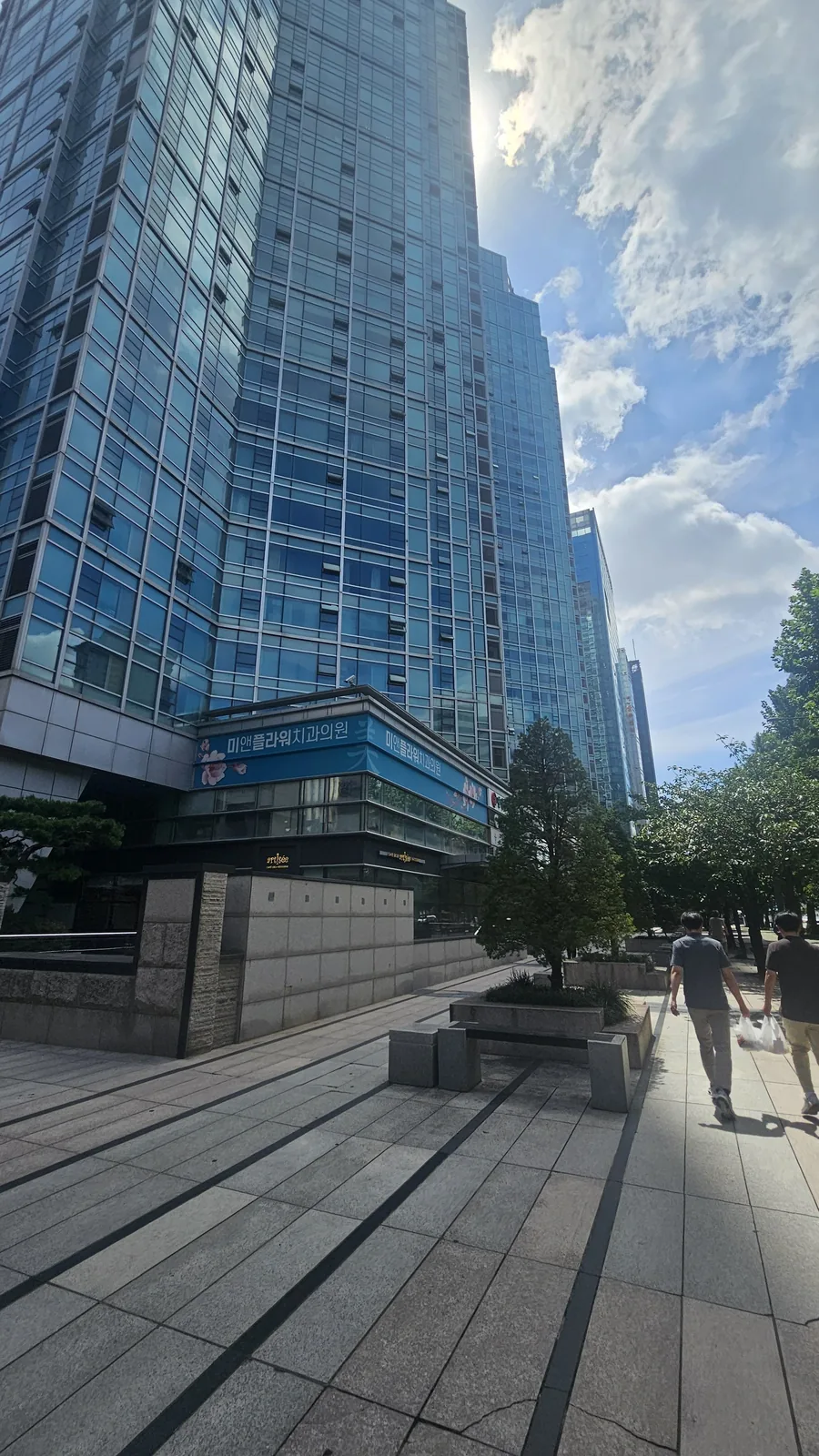
Yeouido is Seoul’s financial district — Korea’s answer to Wall Street, if Wall Street also had TV broadcasting headquarters and the National Assembly in the same neighborhood. It’s a dense cluster of banks, investment firms, KBS, MBC, SBS studios, and glass office towers. Most people here are in business casual by 9 AM.
From Incheon Airport (ICN): Airport Express (AREX) to Gongdeok or Hongik University, then transfer to Line 5 or 9 to Yeouido Station. Total: roughly 50–70 minutes. Taxi is faster but heavier on traffic — expect 50,000–70,000 KRW (~$37–52 USD) depending on conditions.
Nearest subway: Yeouido Station (Line 5, Line 9). A few minutes’ walk from there.
From Myeongdong or Itaewon, you’re about 20–30 minutes by subway.
The Space
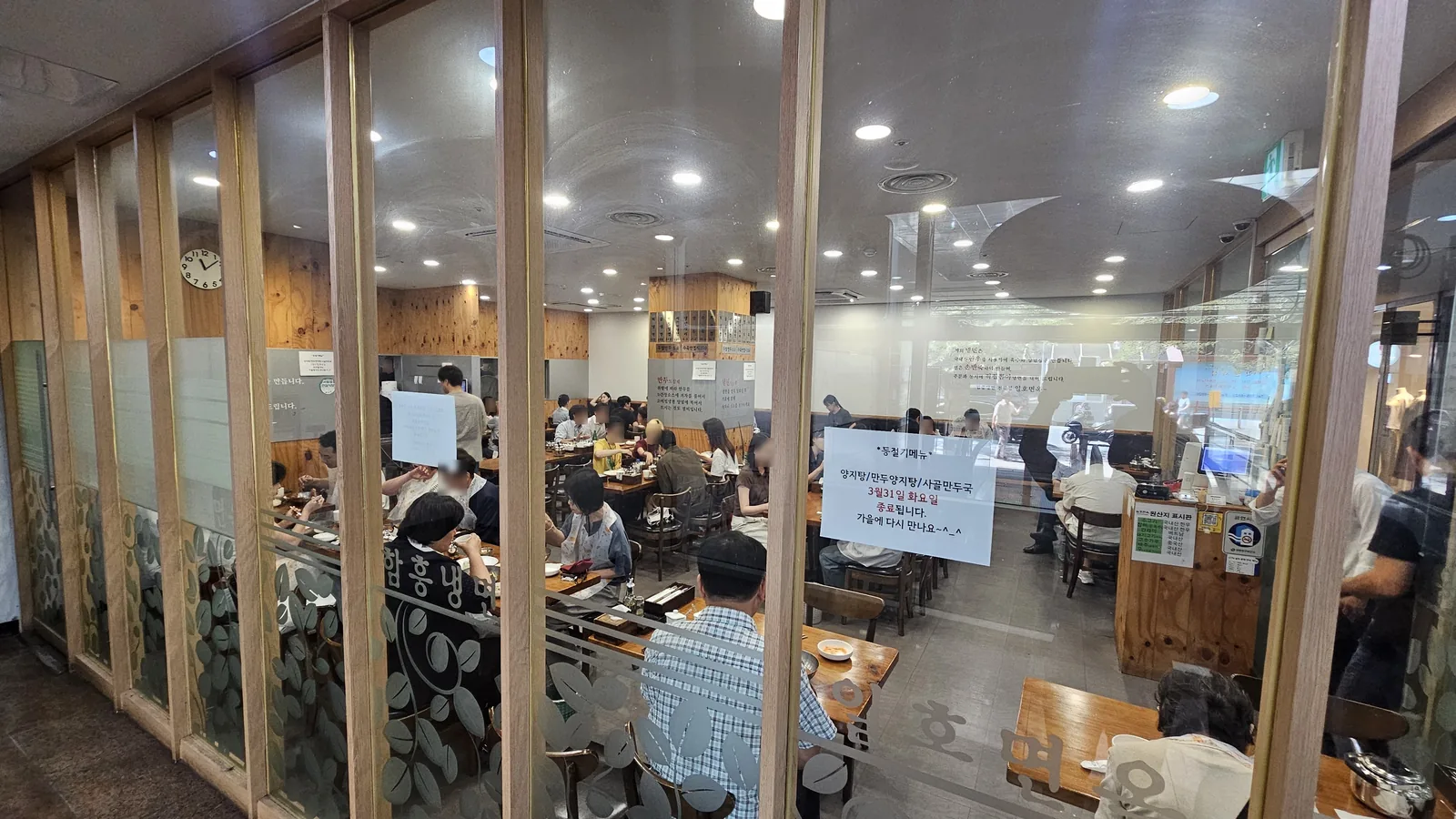
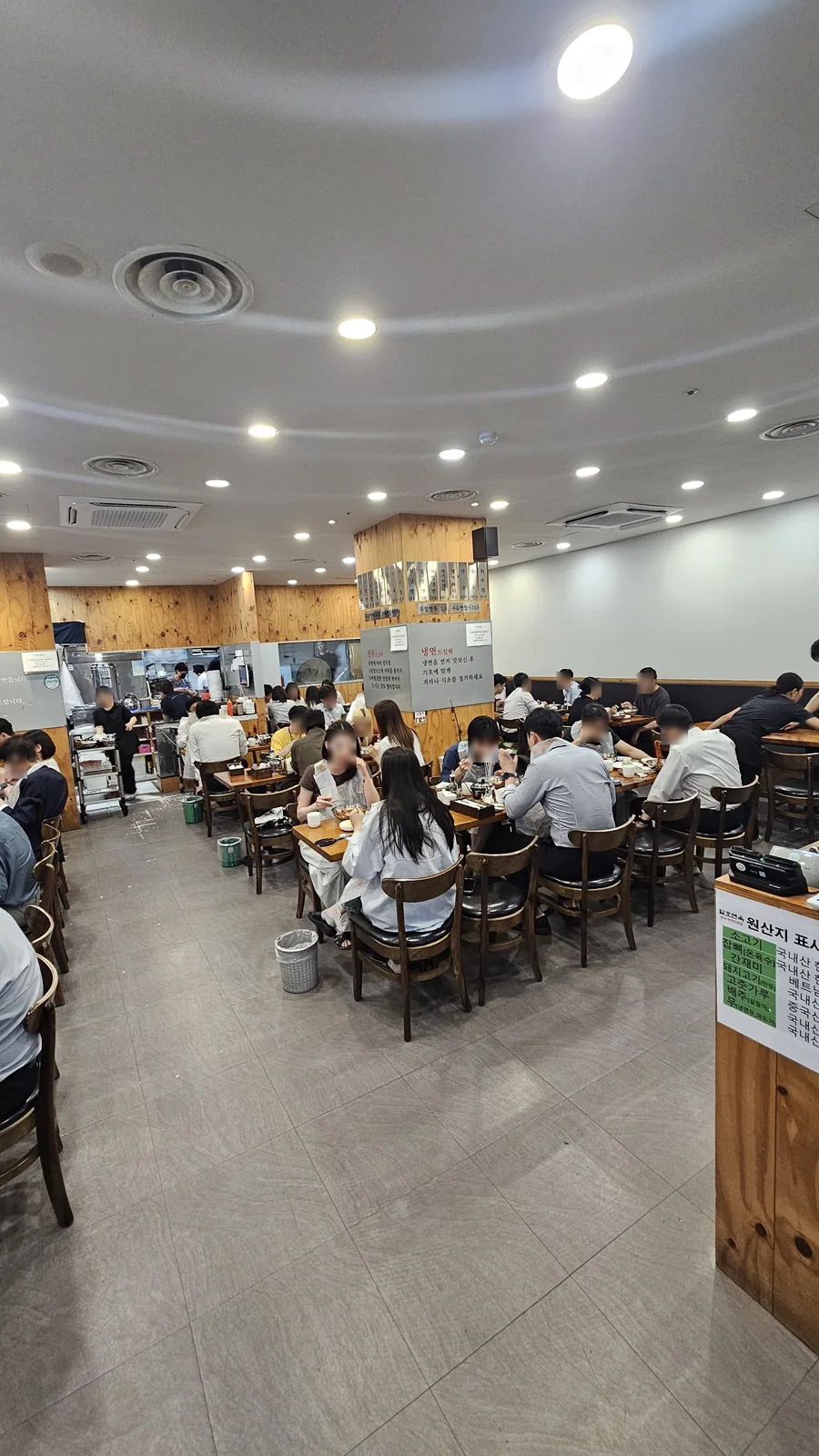
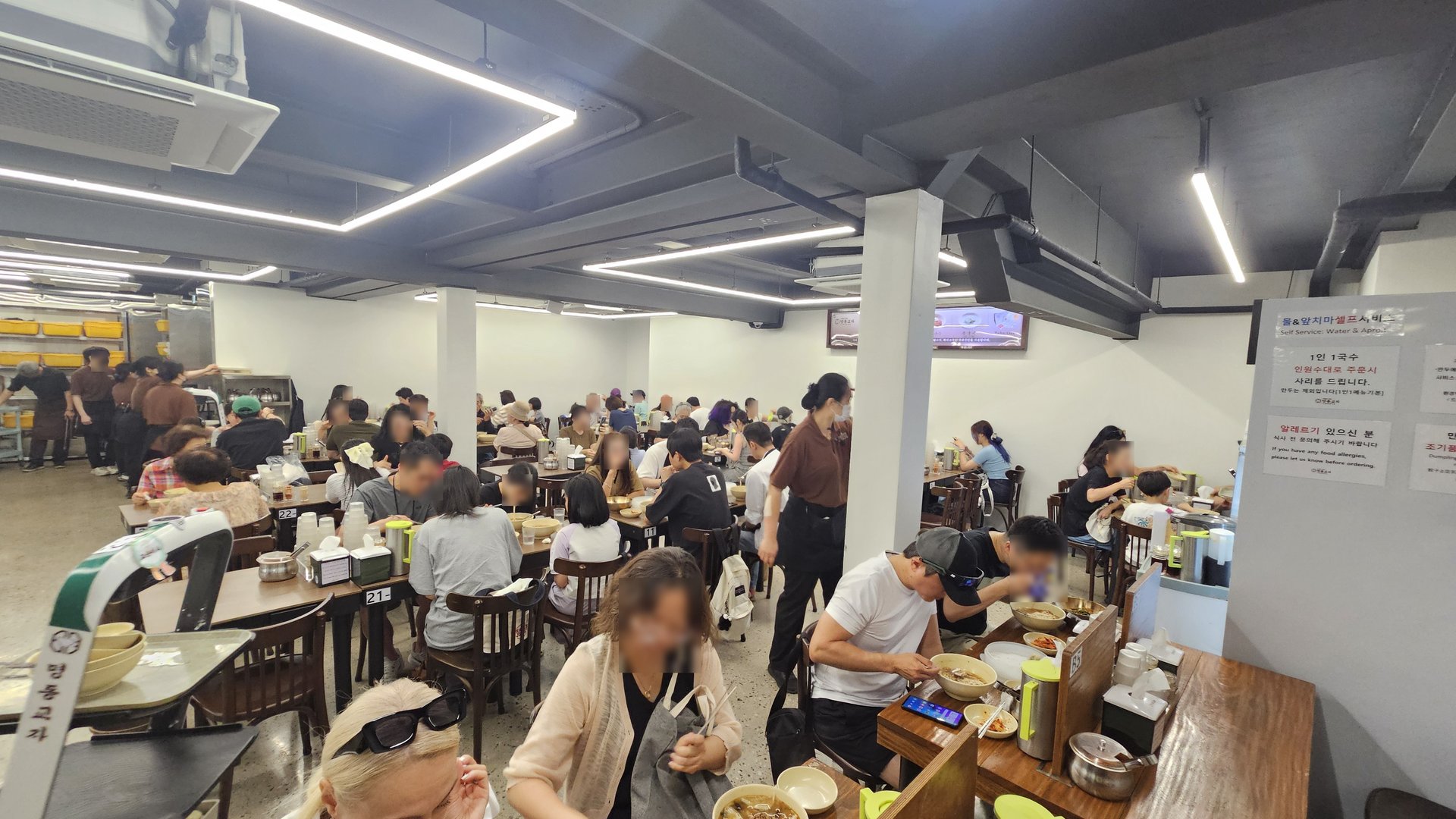
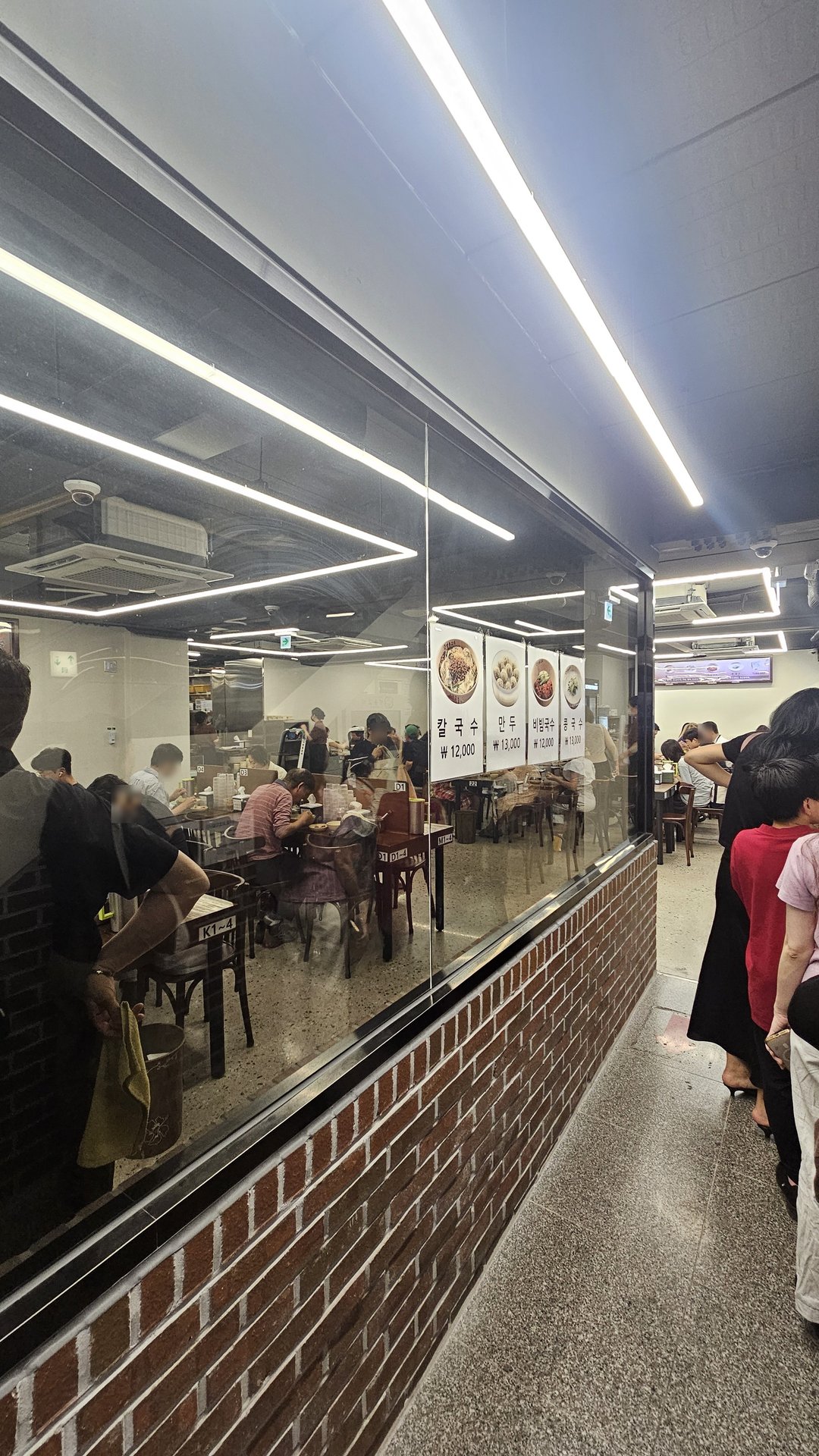
Wide open dining hall with a round ceiling. Clean, functional, not trying to be photogenic. There are no pendant lamps or curated shelving — just solid tables, chairs, and a full house of people eating cold noodles before noon.
An origin disclosure board (원산지 표시판) is mounted on the wall — a legal requirement in Korea showing where the ingredients come from. You’ll see these in many Korean restaurants. Worth knowing if you’re curious about sourcing.
The vibe is “serious Yeouido institution.” In a good way.
What We Ordered
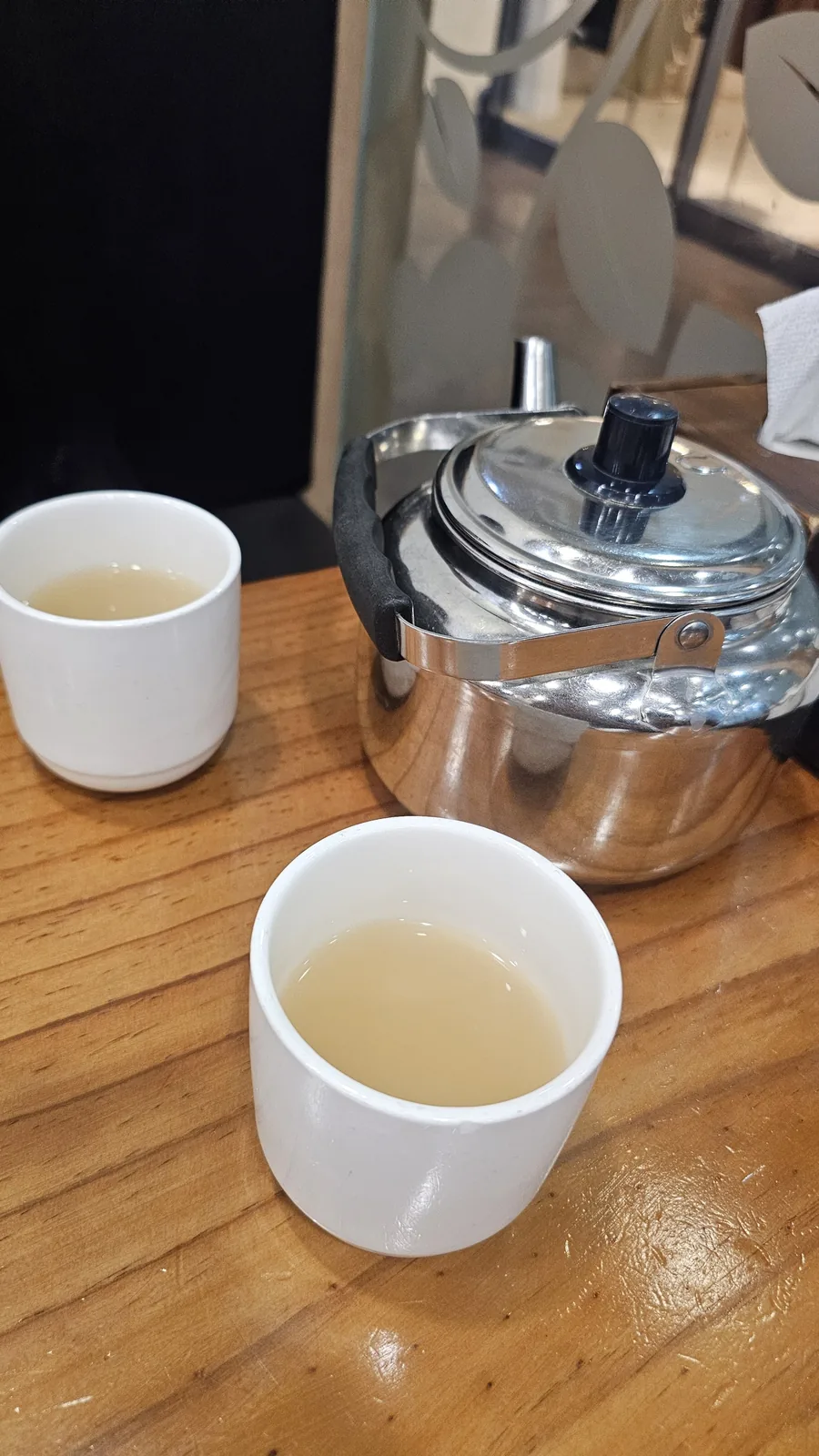
First thing on the table: a stainless steel kettle and two cups. Free, unprompted, no asking needed. What’s inside is yuksu (육수) — the same beef broth base the naengmyeon is built on, served on its own to drink. This is standard at serious naengmyeon houses, and it doubles as a preview: if the free broth tastes clean and deep, the bowl coming out of the kitchen usually will too. A small gesture that signals they know what they’re doing.
Mul Naengmyeon (물냉면)
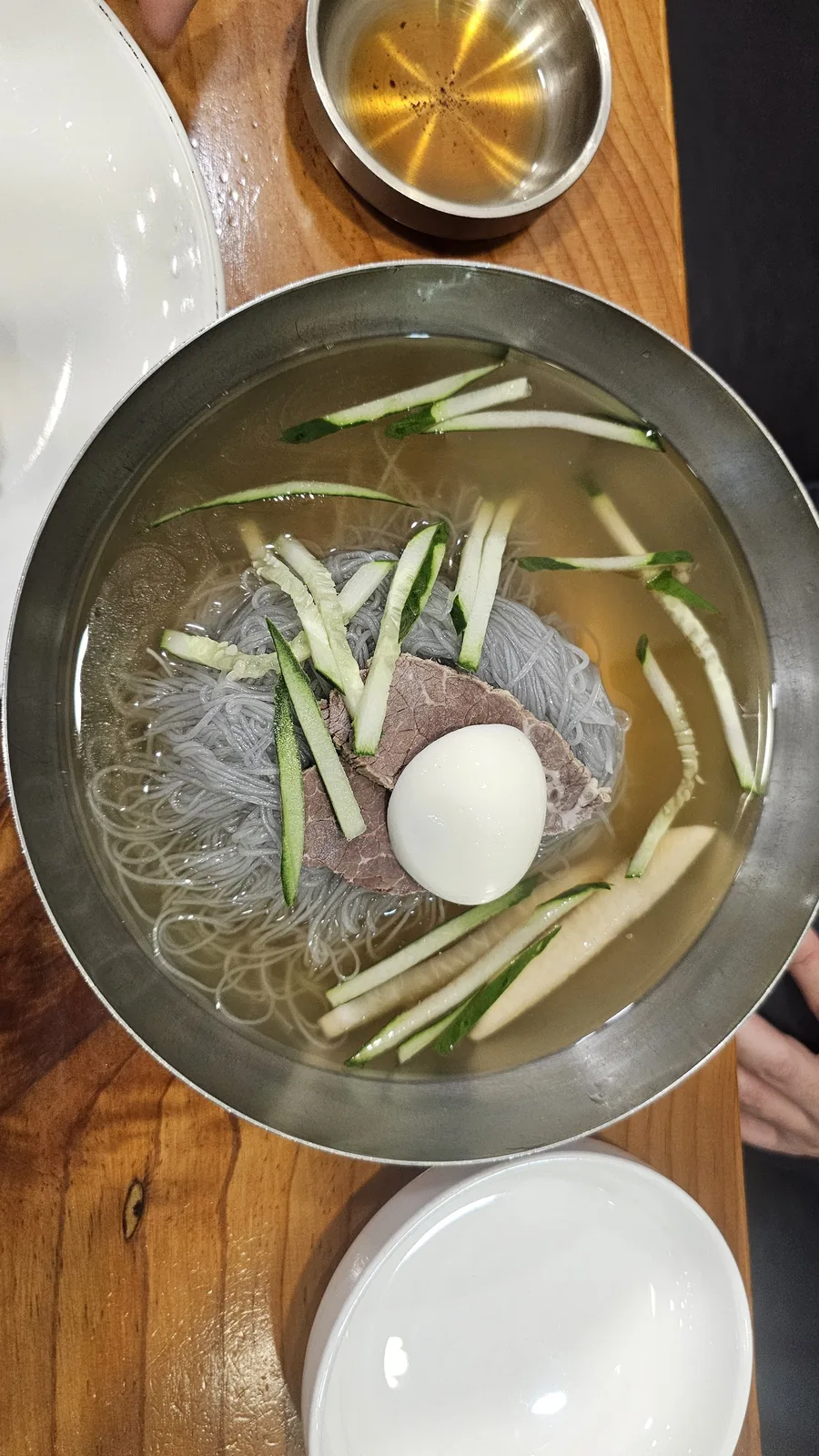
This is the core dish. The one you’re here to judge.
Clear, ice-cold beef broth in a stainless steel bowl. The broth is subtle — not aggressive, not salty, just clean and deep, with a faint tanginess from a touch of vinegar (you can add more from the table). On top: sliced pyunyuk (편육, boiled and pressed brisket), julienned cucumber, white radish strips, and a soft-boiled egg.
The broth is where cheaper naengmyeon spots fall apart. Thin, flat, vaguely beef-flavored water is what you get when it’s not properly made. Il-ho Myeonok’s broth has actual depth — you can tell something went into making it. Cold and clean and slightly tart in a way that makes you want another sip.
The noodles are chewy and slightly elastic, the way buckwheat noodles should be. They hold up in the cold broth without going soft.
A word on tradition: naengmyeon noodles are typically served long, which represents longevity in Korean culture. At many restaurants, scissors are offered so you can cut them to a manageable length. Don’t be surprised if scissors appear at the table.
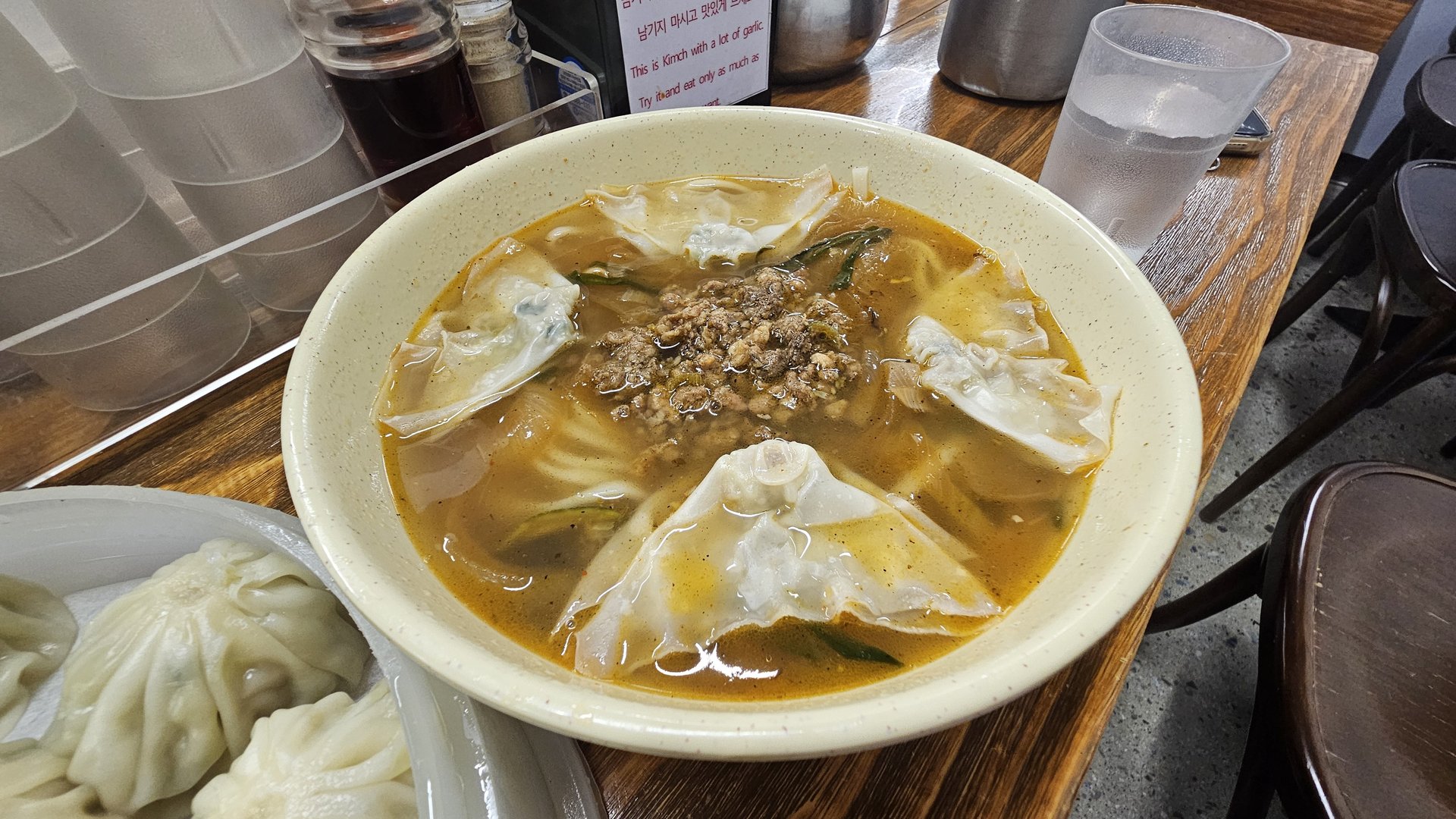
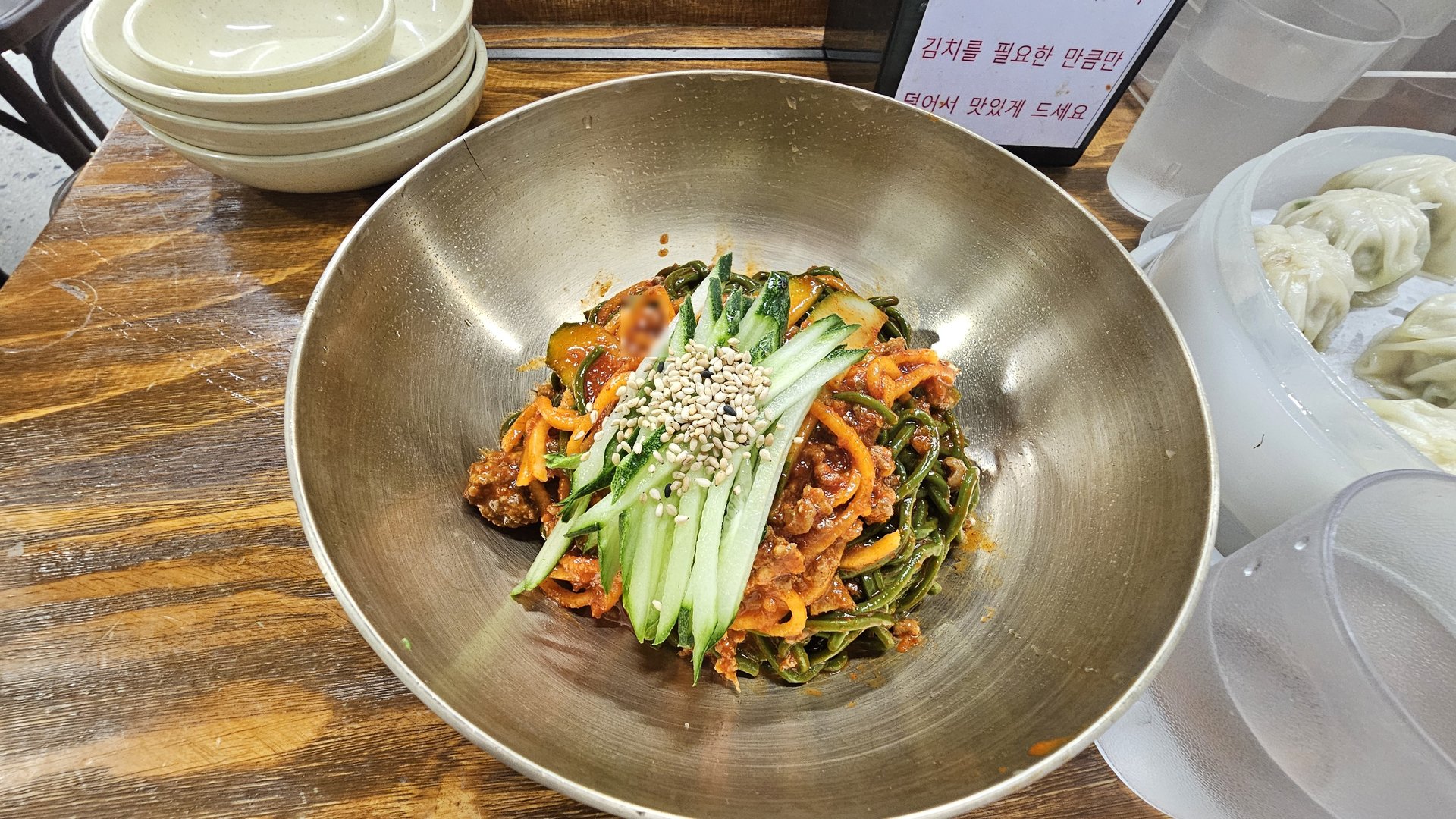
Hoe Naengmyeon (회냉면)
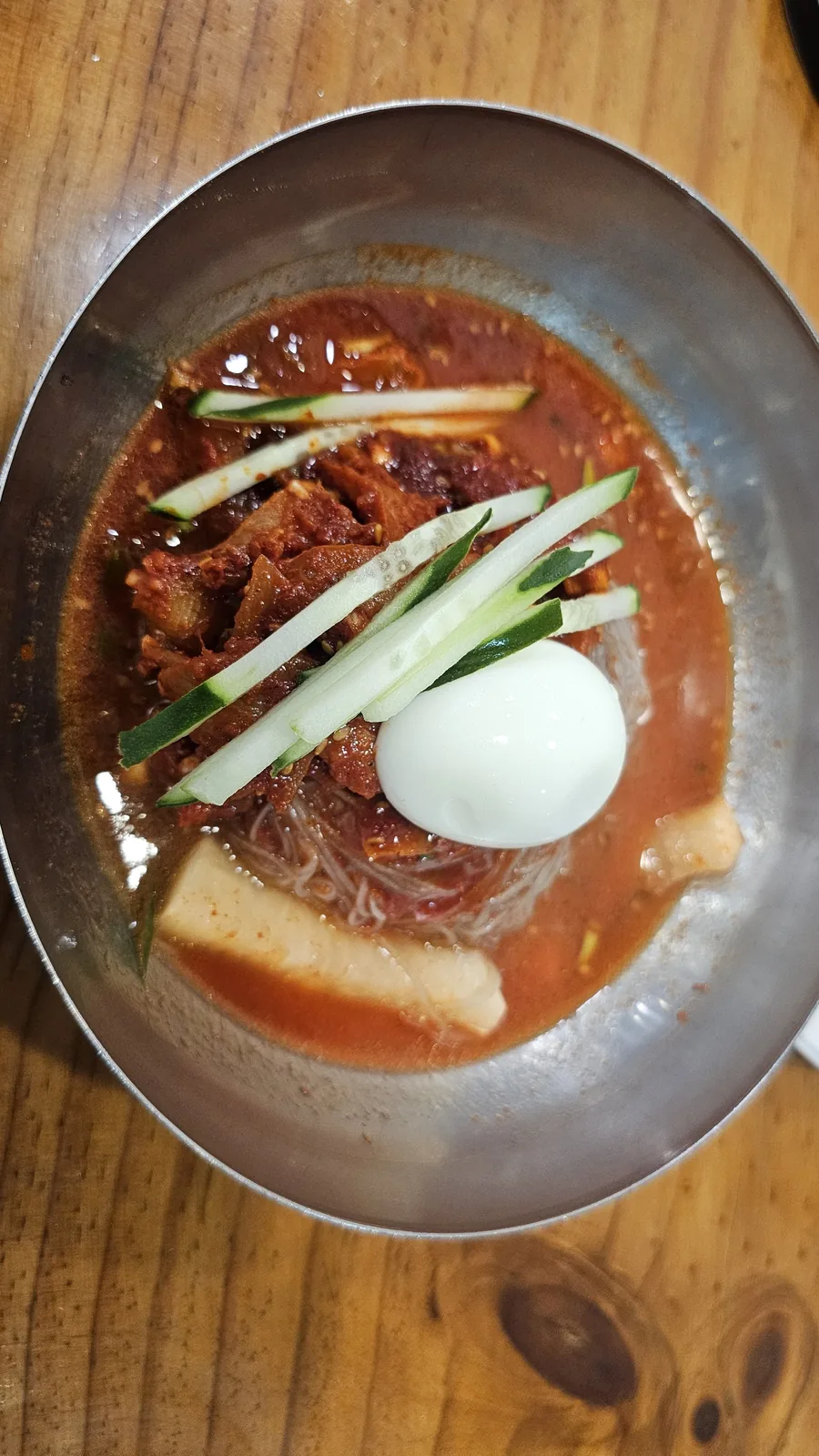
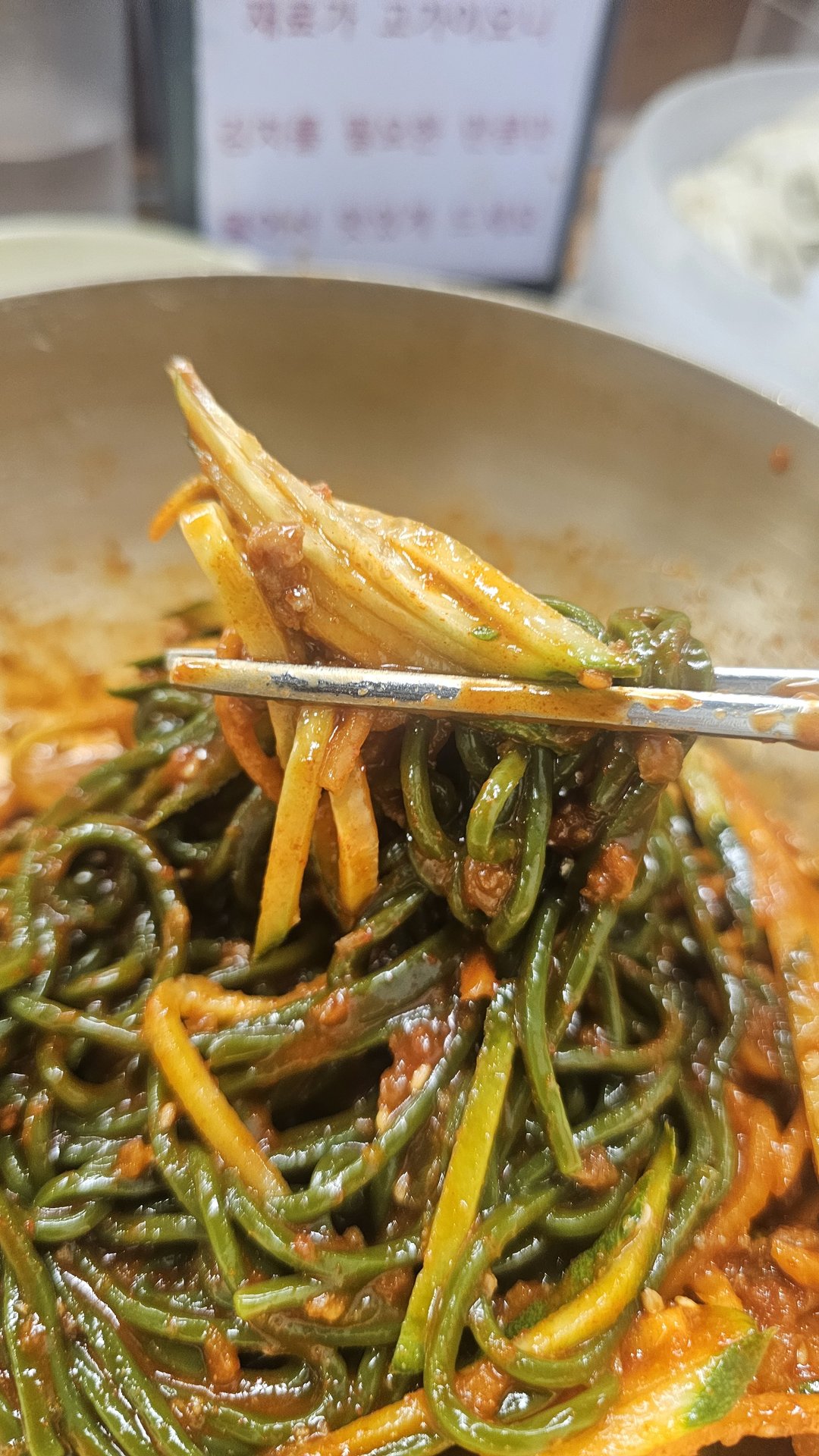
Same noodles, completely different experience. 회냉면 (hoe naengmyeon) is the spicy version — cold noodles coated in a gochujang-based sauce, with the addition of raw fish (회, hoe) worked into the mix. Sweet, spicy, tangy, cold.
The sauce is bolder and more upfront than the broth version. The raw fish adds a different texture and a lighter oceanic note that plays against the spice.
Tbh, if you like heat and don’t have issues with raw fish, the hoe naengmyeon has more going on. But the mul naengmyeon is the benchmark — it’s the quieter dish that requires more attention to appreciate. Start there.
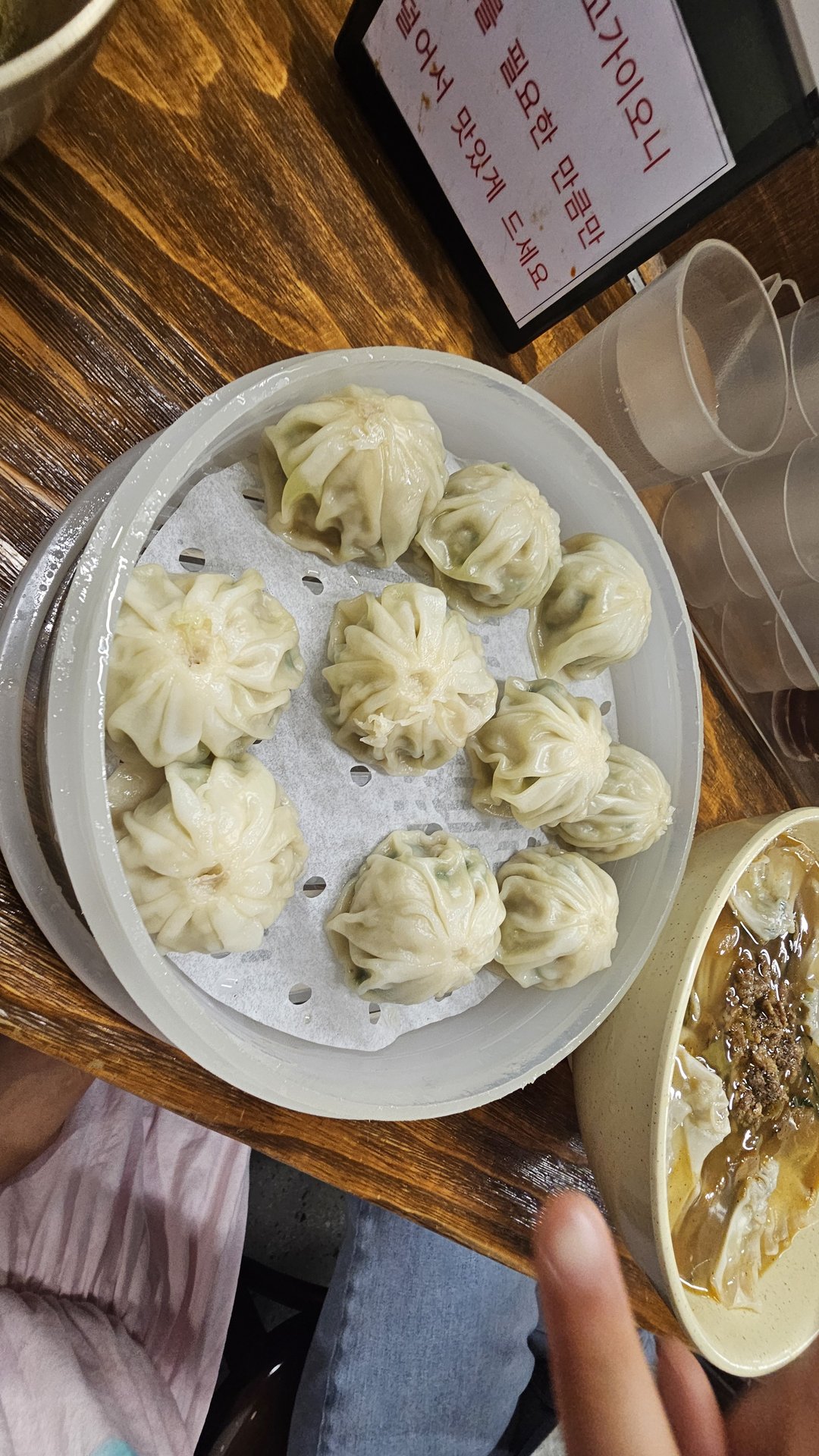
Wang Mandu — Two-Piece Dumplings (왕만두)
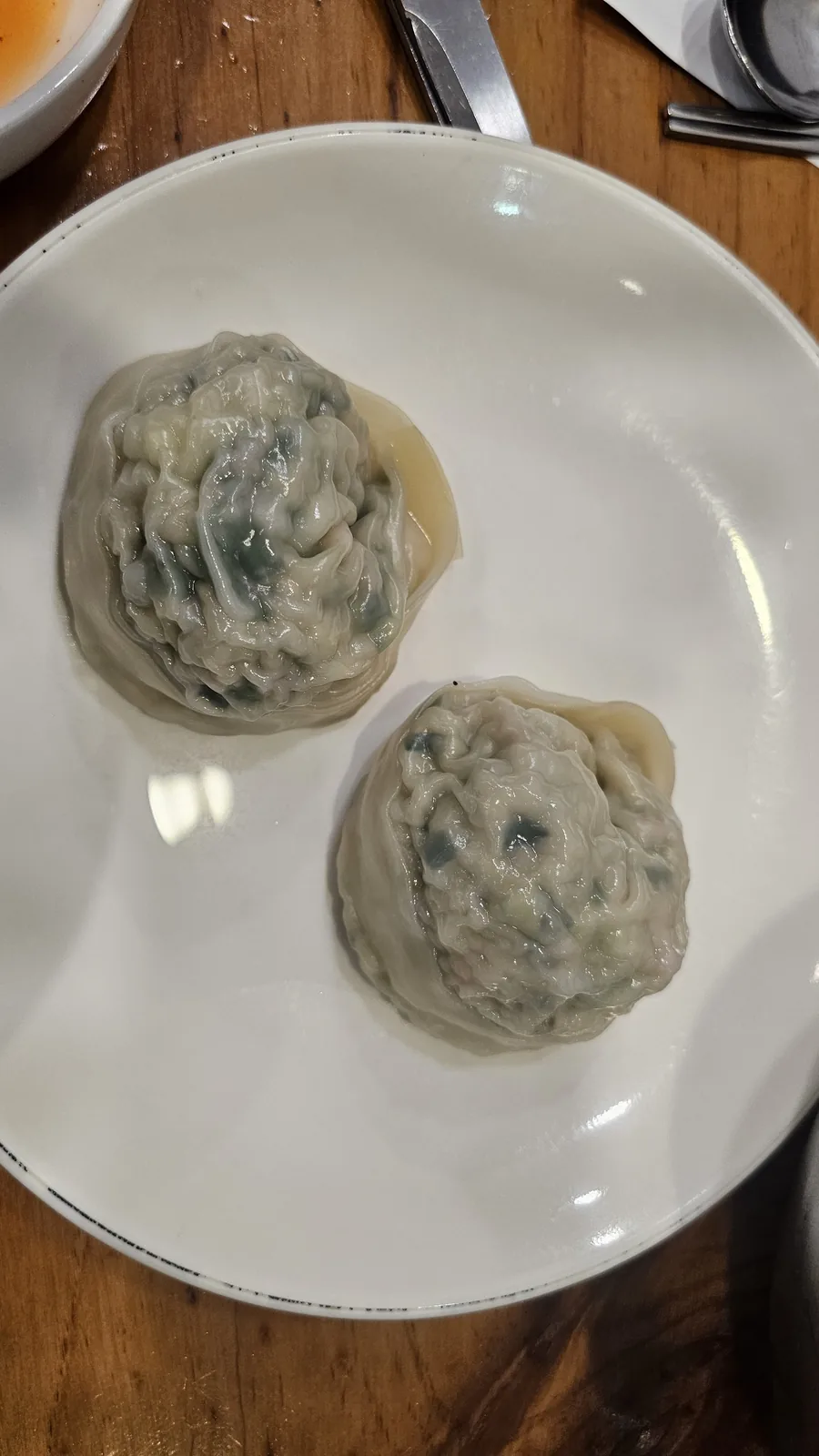
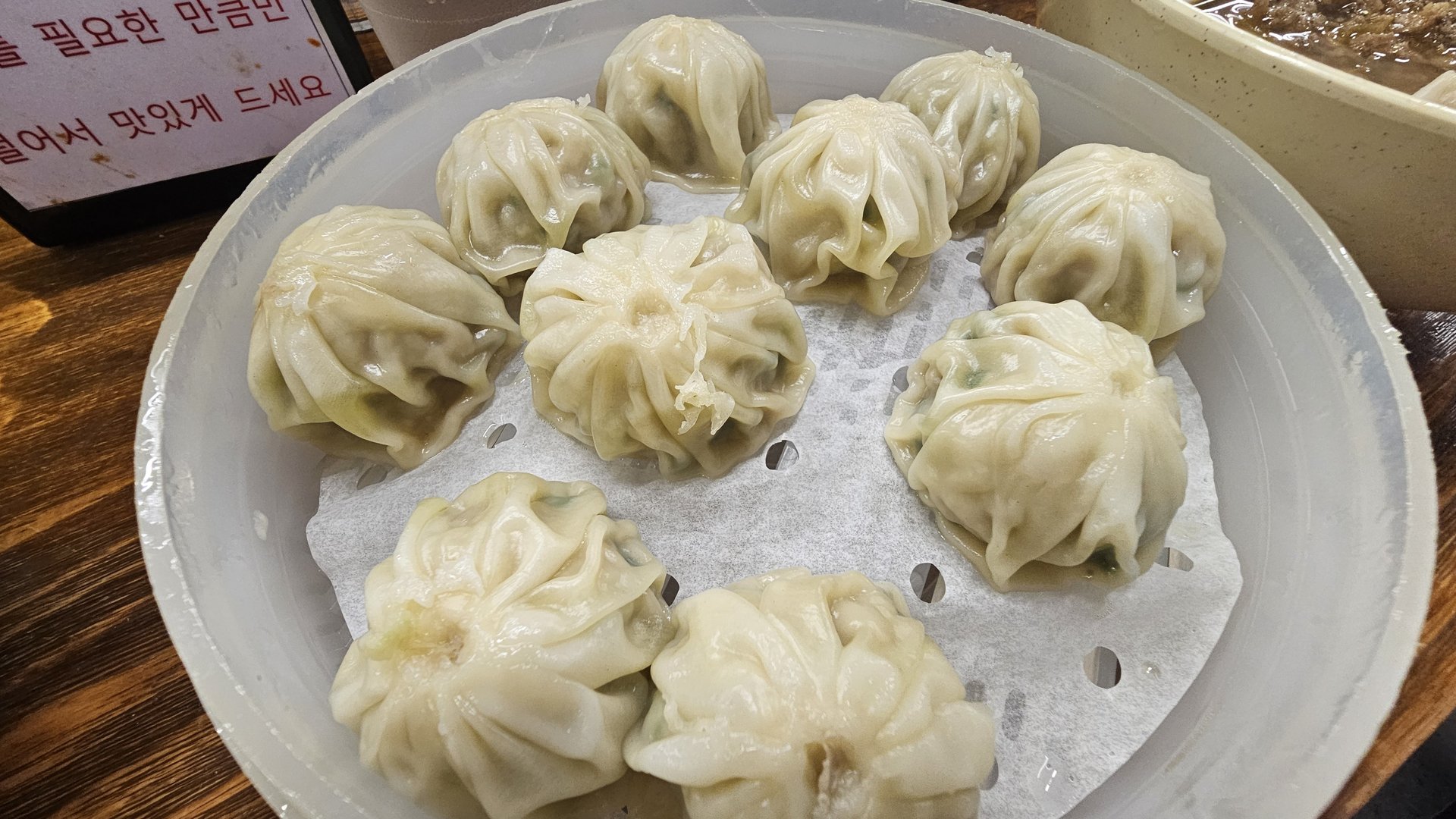
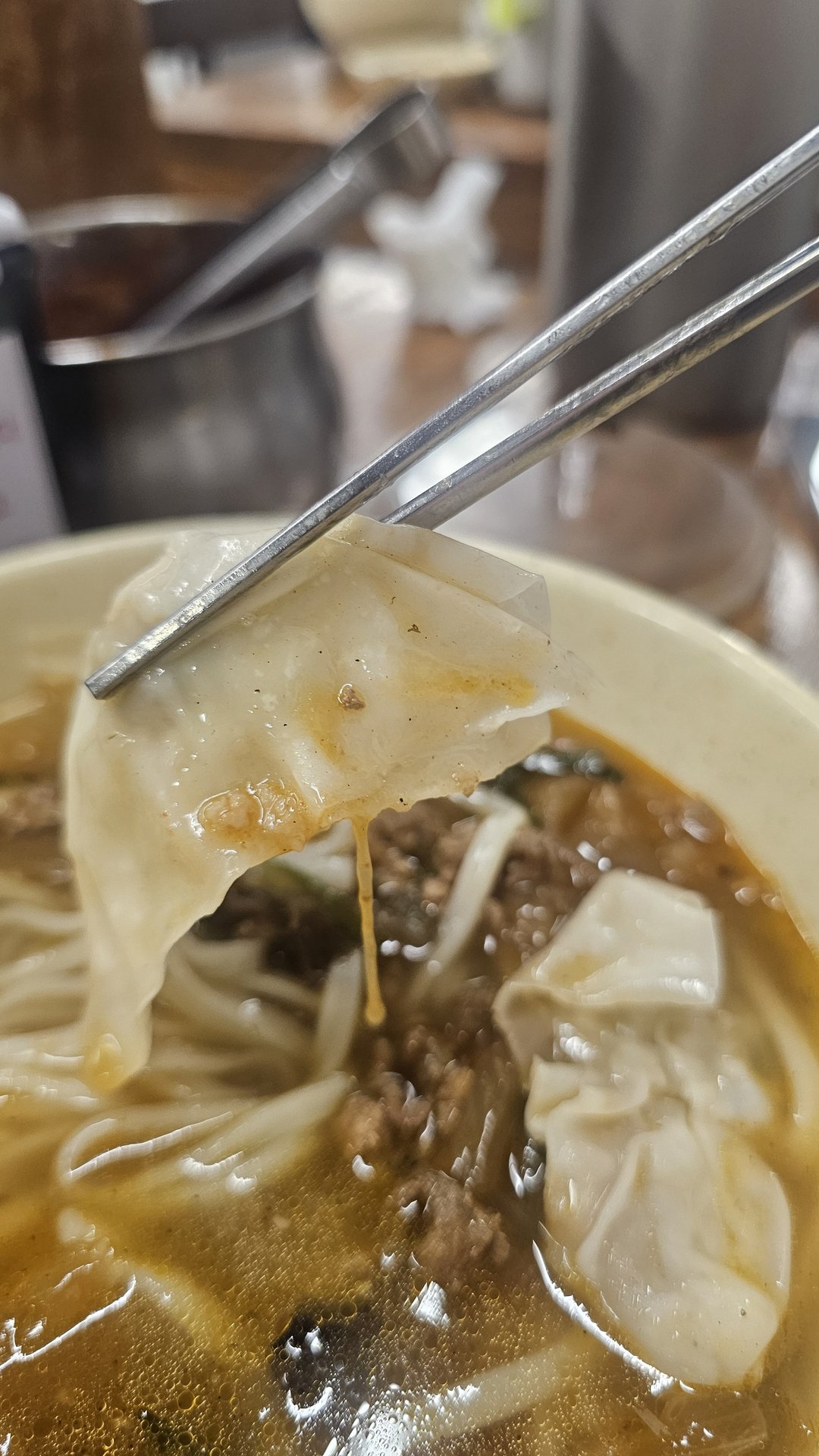
Two large steamed dumplings, semi-transparent skin, you can see the filling inside before you bite. “왕” (wang) means “king” — the oversized version of standard Korean mandu (만두, dumplings).
Solid filling-to-wrapper ratio. The skin is thin enough that it doesn’t dominate. Good call as a shared side. The combination of cold noodles plus something warm and doughy is a classic naengmyeon pairing — most places offer some version of it.
Stuff Tourists Should Know
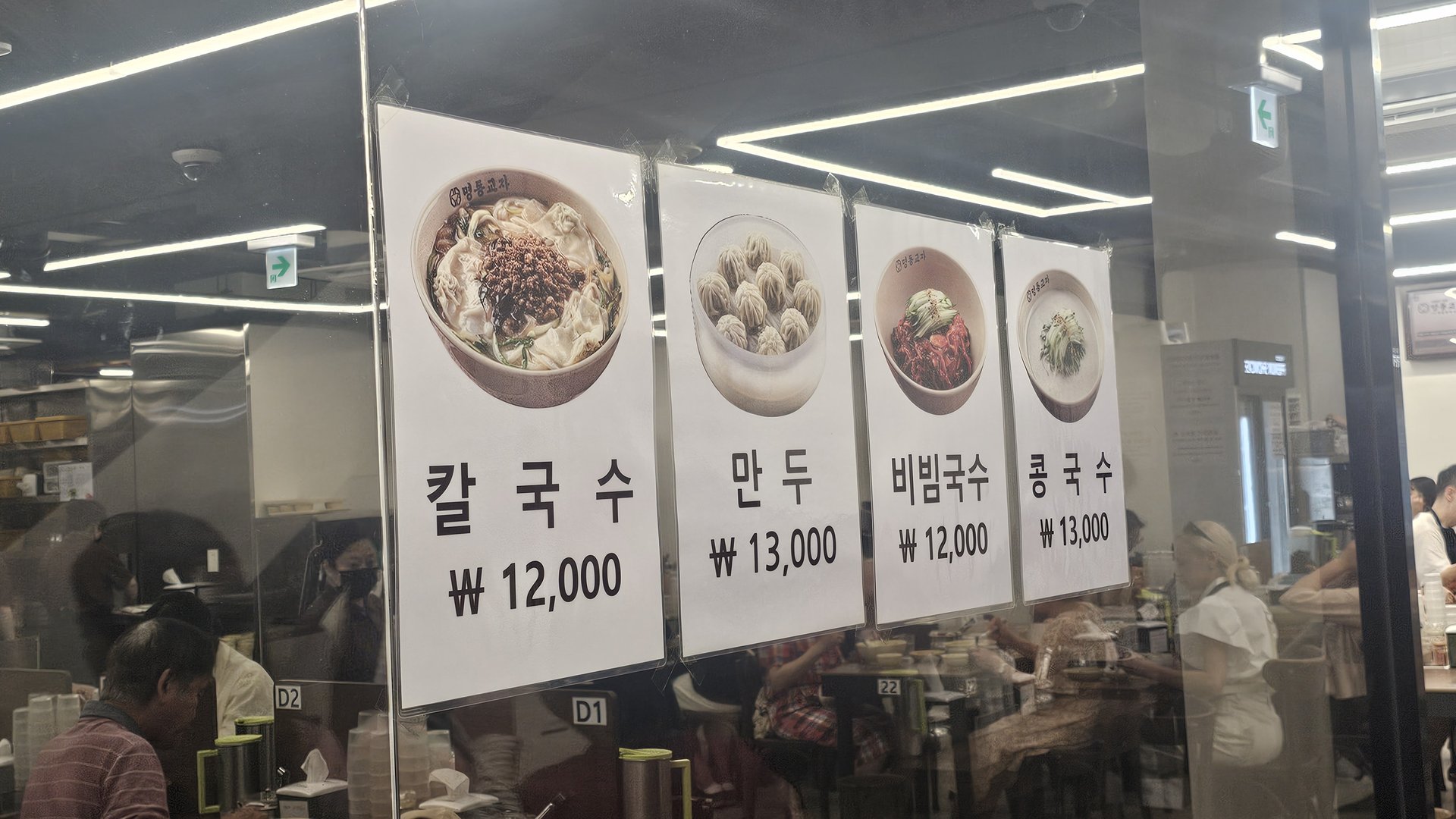
Language and ordering: No English menu visible. The menu is simple enough that pointing works — mul naengmyeon, hoe naengmyeon, mandu. Staff handles basic ordering without a problem.
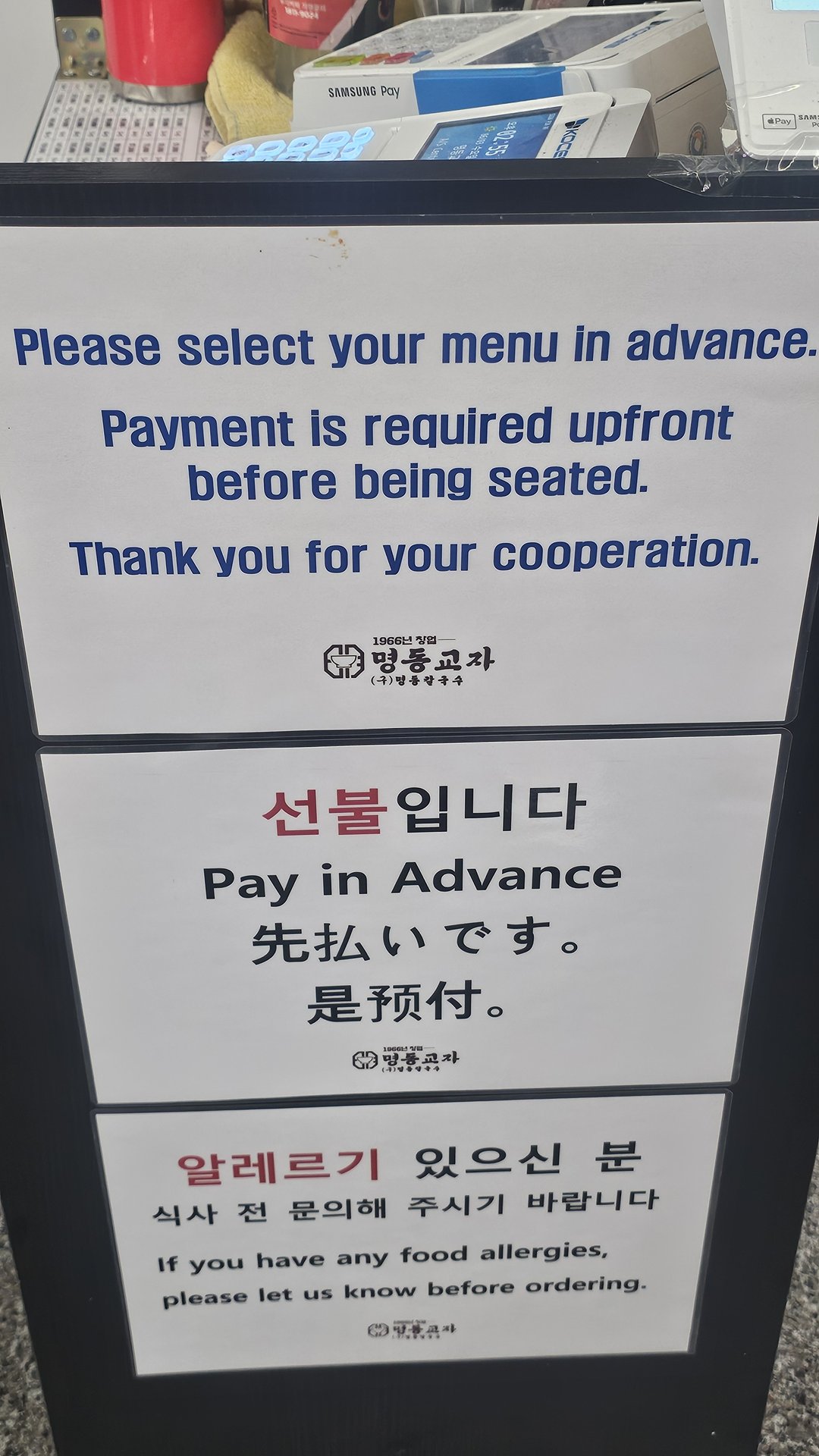
Payment: Most Korean restaurants in Yeouido’s office district accept foreign Visa and Mastercard. You’re probably fine, but keeping some cash as backup never hurts.
Tipping: None. Korea doesn’t tip. Don’t leave extra cash on the table — it creates confusion, not goodwill.
Timing: Go before 11:30 AM or after 1:30 PM. The lunch rush is real and fast. Items sell out. If you show up at 12:15 PM expecting to waltz in, manage your expectations.
Vegetarian / dietary: Naengmyeon broth is beef-based. No vegetarian version listed. The raw fish in hoe naengmyeon is raw, not cured — skip if you’re concerned about raw fish.
Family-friendly: Manageable with older kids who are already into Korean food. Not ideal for very young kids or picky eaters who need an easy-to-explain menu.
Solo dining: Fine. Plenty of solo diners at the counter and tables.
For grilled fish instead of noodles in Yeouido, see our Guigui Yeouido: Honest Review of Korean Grilled Mackerel.
The Verdict
Il-ho Myeonok is what a good naengmyeon house looks like: focused menu, packed before noon, items selling out, no energy spent on décor because the food carries it. The mul naengmyeon broth is properly made — clean, cold, with actual depth. The hoe naengmyeon delivers more punch if you want it. The dumplings are a reliable shared addition.
This isn’t a tourist destination you’d cross Seoul for. But if you’re in Yeouido for any reason — financial district meetings, Hangang Park, the National Assembly area — this is the right lunch call.
Go if:
– You’re already in Yeouido and want a proper Korean lunch
– You want to try naengmyeon at a place that takes it seriously
– You can get there before 11:30 AM
Maybe skip if:
– You have 3 days in Seoul and haven’t eaten bibimbap, samgyeopsal, or sundubu yet — naengmyeon is a second-trip dish for most first-timers
– You’re vegetarian or don’t eat raw fish
– You’re arriving at peak lunch and don’t want to wait
The broth is worth the trip.
FAQ
What is naengmyeon and what should I order at Il-ho Myeonok?
Naengmyeon is Korean cold noodles — either in a chilled clear broth (mul naengmyeon) or tossed in a spicy sauce (hoe naengmyeon). At Il-ho Myeonok, the mul naengmyeon is the benchmark dish. Get that first, then decide if you want the spicy version next time.
How busy does Il-ho Myeonok Yeouido get at lunch?
Very. The place fills up fast with Yeouido office workers. By 11:30 AM on weekdays, it’s nearly full. Some menu items sell out before noon. Go before 11:30 or after 1:30 PM to avoid a long wait.
Does Il-ho Myeonok Yeouido have an English menu?
Not visibly. The menu is simple though — naengmyeon, dumplings, a few soups. Pointing at another table or showing a photo works fine. Staff handles basic order communication without much trouble.
How much does a meal cost at Il-ho Myeonok Yeouido?
Expect around 13,000–16,000 KRW (~$10–12 USD) per bowl of naengmyeon. Two bowls plus shared dumplings for two people runs roughly 35,000–42,000 KRW (~$26–31 USD). Check current prices on the restaurant’s posted board — prices can shift.
Is naengmyeon vegetarian or halal?
The broth in mul naengmyeon is beef-based. No dedicated vegetarian or halal option is listed. If you don’t eat beef or pork, this isn’t the right stop.
How do I get to Il-ho Myeonok Yeouido from central Seoul?
Take Line 5 or Line 9 to Yeouido Station. The restaurant is a short walk from the station. From Myeongdong or Itaewon, you’re looking at 20–30 minutes by subway.