Quick honest review of Myeongdong Gyoja — a kalguksu institution that’s been feeding tourists and locals in Seoul’s most chaotic shopping district since 1966. Skip to the verdict if you’re in a hurry, but the short version: the mandu is excellent, the kalguksu broth is the real reason people keep coming back, and the garlic kimchi will wreck your breath for the rest of the afternoon.
Worth it.
Went on a Tuesday around 2:40 PM with two other people — well past the lunch rush. Still had to wait. Still packed inside.
What Is Myeongdong Gyoja?
“Gyoja” (교자) is the Korean reading of 餃子 — the same character used for gyoza in Japan and jiaozi in China. Dumplings, basically. But the dumplings aren’t even the main event here. It’s the kalguksu that built this place’s reputation.
Kalguksu (칼국수) is a Korean knife-cut noodle soup. Thick, flat, hand-cut wheat noodles in a long-simmered broth. The noodles aren’t uniform — they’re not machine-extruded — so they have that rustic, slightly uneven texture that machine noodles can’t fake. Myeongdong Gyoja’s broth is chicken-based, cooked down until it turns pale golden and rich. Clean but deep. The kind of thing that doesn’t look like much until you taste it.
Nearly 60 years of serving this soup. There’s a reason it’s still here while most restaurants around it rotate every two years.
The Michelin Thing
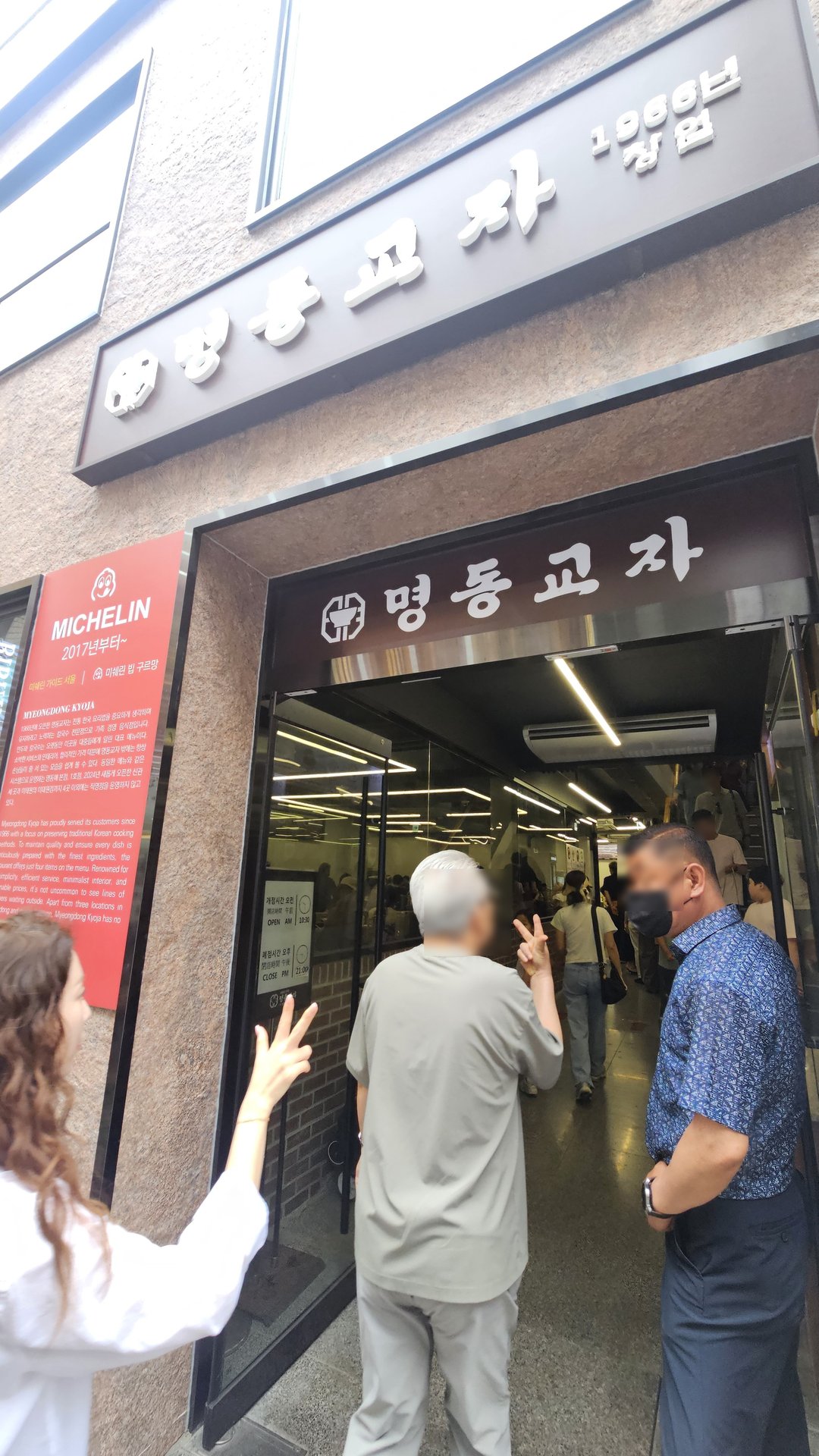
It’s on the Michelin Bib Gourmand list. Not a star — Bib Gourmand is Michelin’s “exceptional food at honest prices” category. Still real recognition, and one of the very few noodle spots in Seoul to get it.
Not overselling this. It’s not fine dining. It’s a canteen-style lunch spot that seats maybe 80–100 people under fluorescent lights. But that’s exactly what Bib Gourmand is supposed to flag — places that deliver consistently good food without charging you for the decor.
Getting There
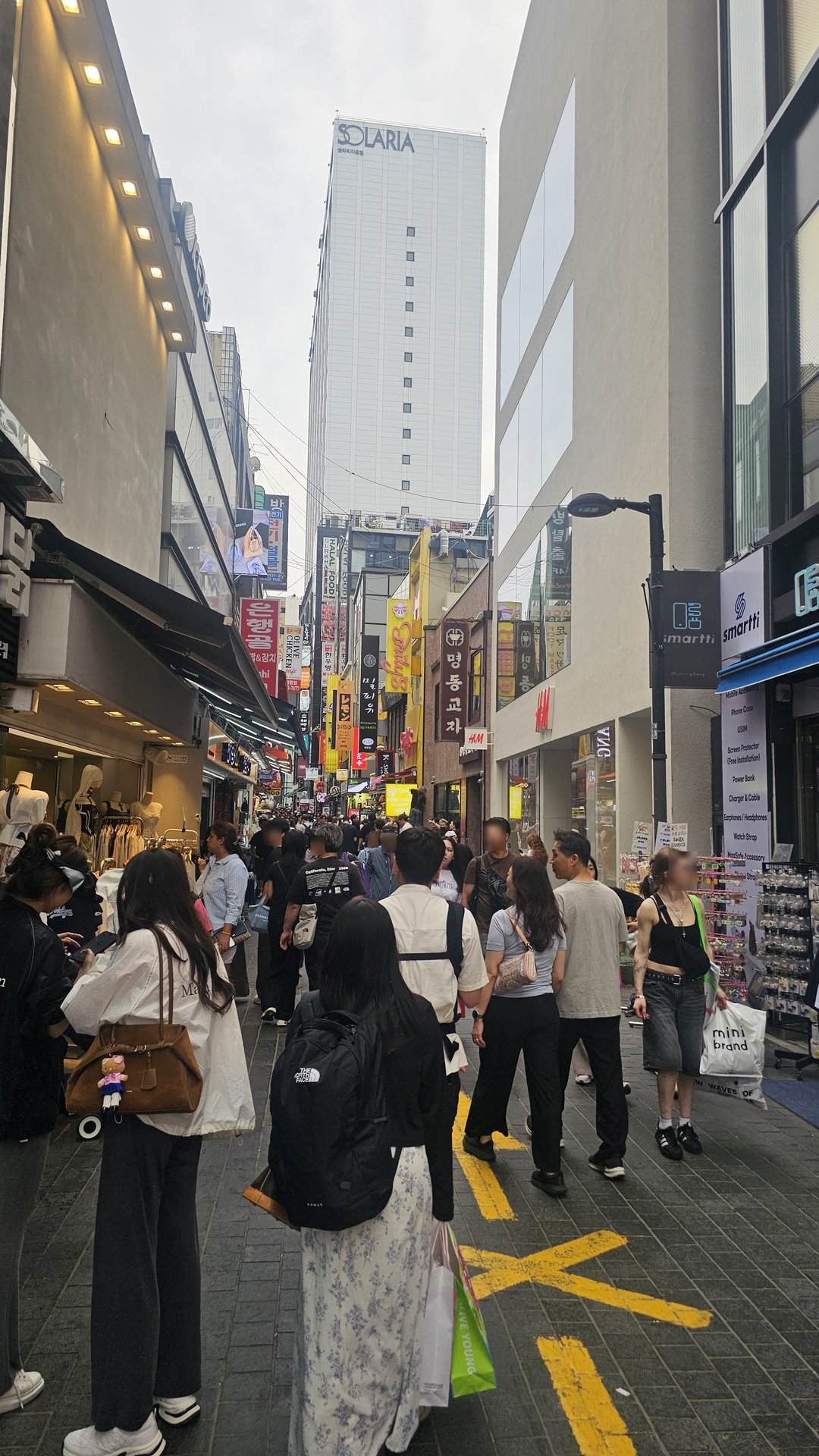
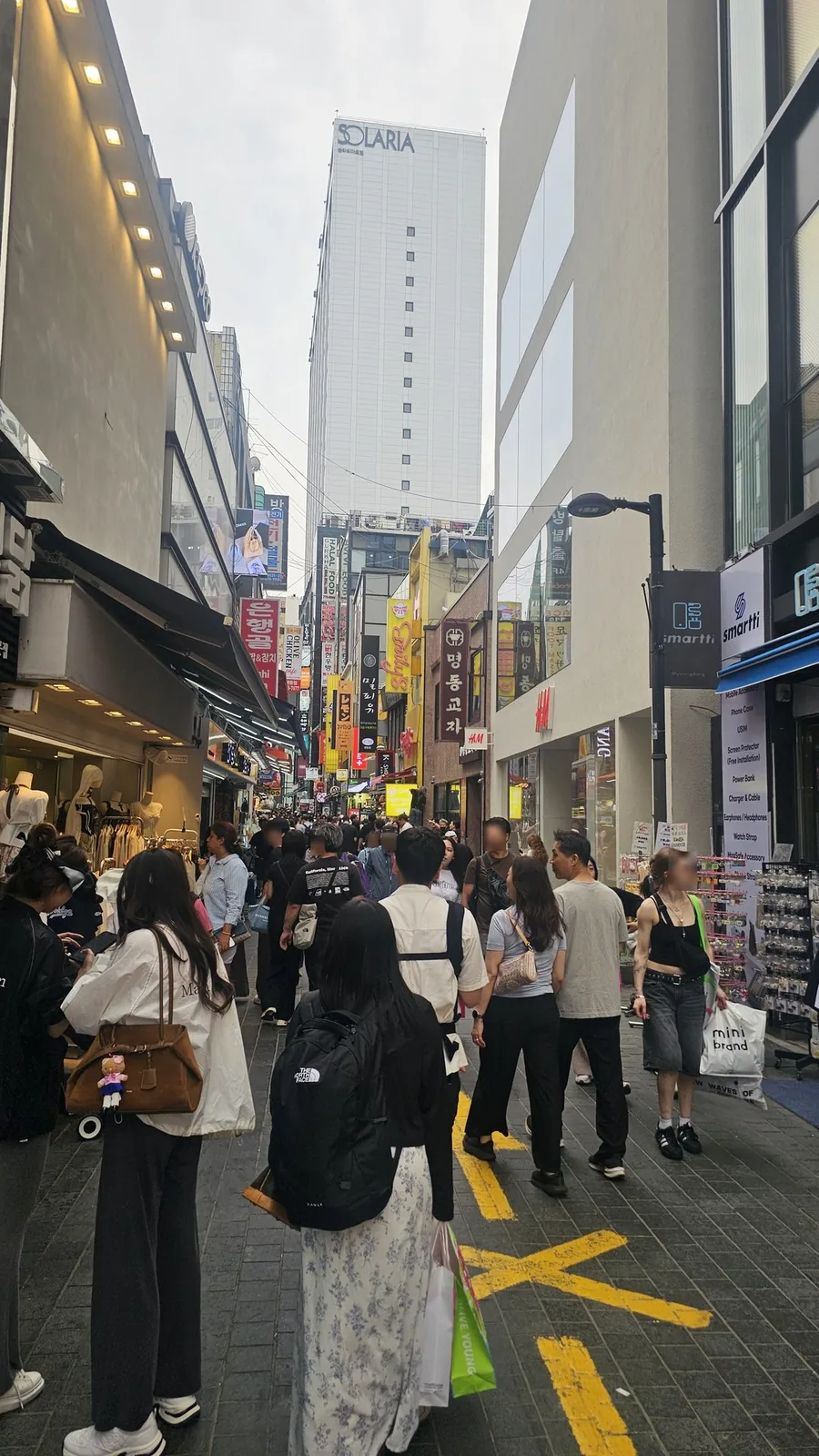
Myeongdong Gyoja main branch is right in the middle of Myeongdong — Seoul’s most tourist-dense shopping street, lined with K-beauty stores, street food carts, and more international visitors per square meter than almost anywhere else in the city.
Subway: Exit 5 or 8 from Myeongdong Station (Line 4, orange line). Walk toward the main pedestrian street and look for the line outside.
From Incheon Airport: About 1 hour by Airport Railroad (AREX) to Seoul Station, then one stop on Line 4 to Myeongdong.
From Hongdae or Sinchon: About 30–40 minutes by subway.
You can’t miss Myeongdong. It feels like a weekend crowd even on a Tuesday.
The Pre-Payment System — Read This First
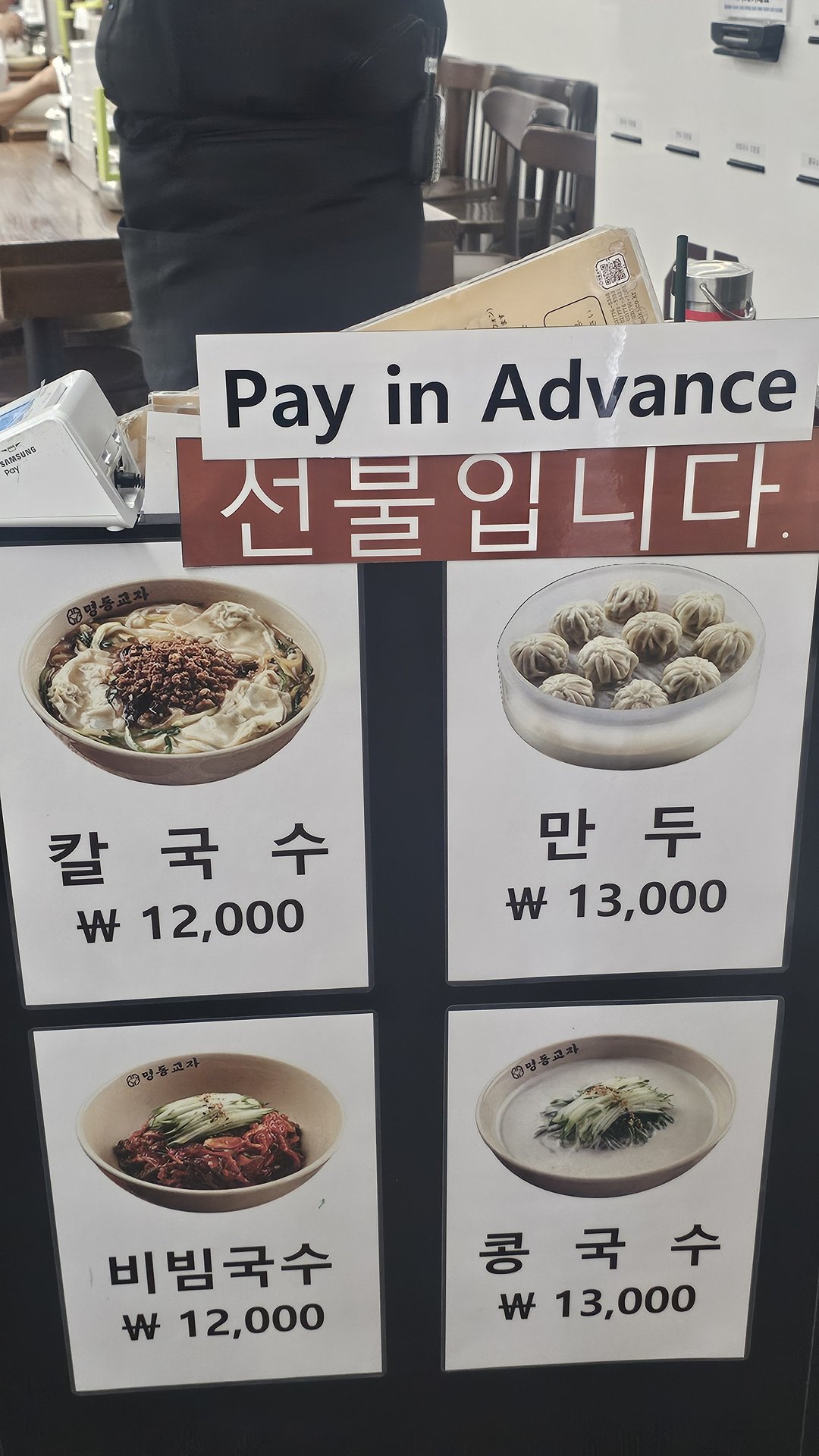
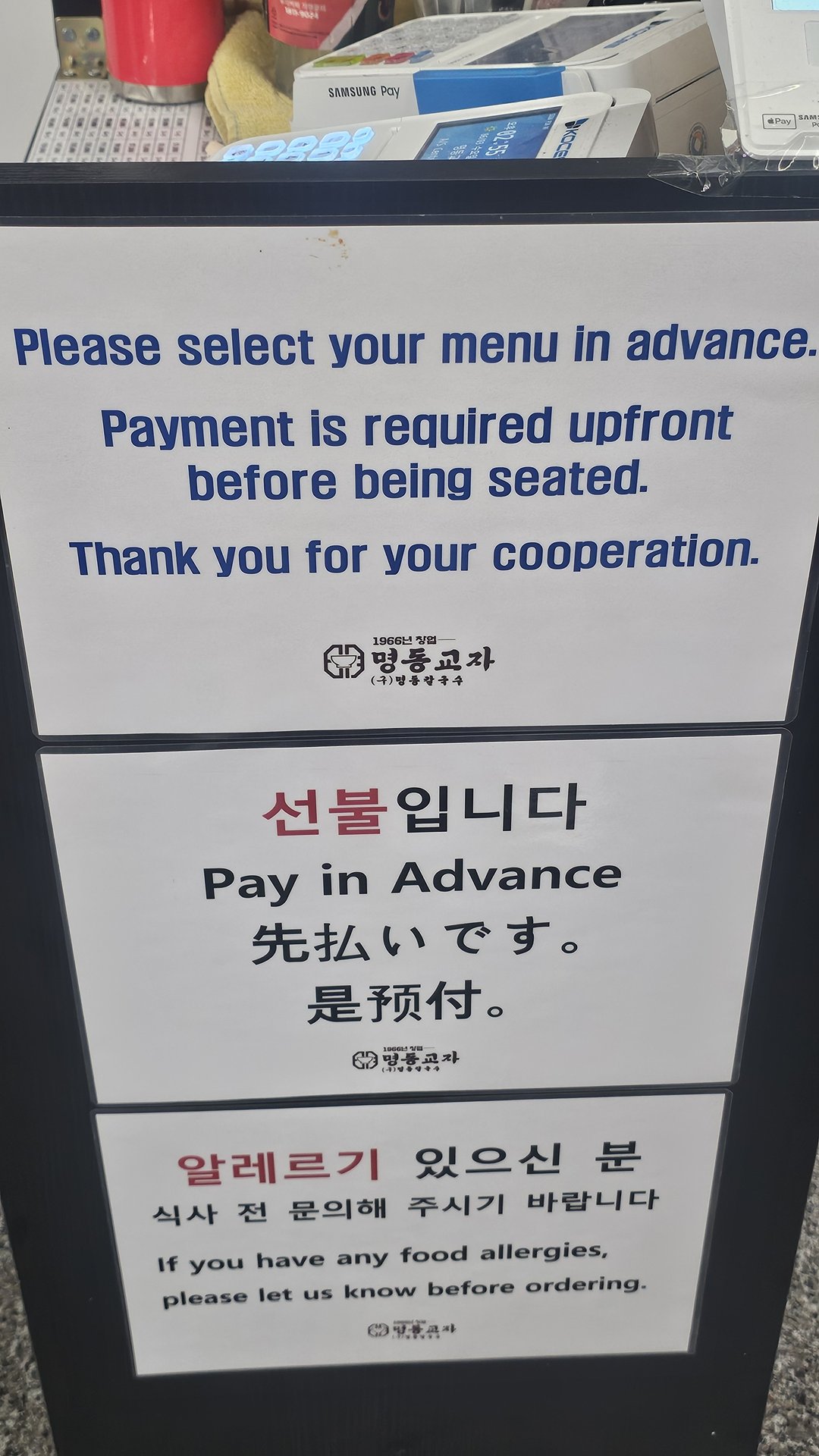
You pay before you sit. This catches first-timers off guard.
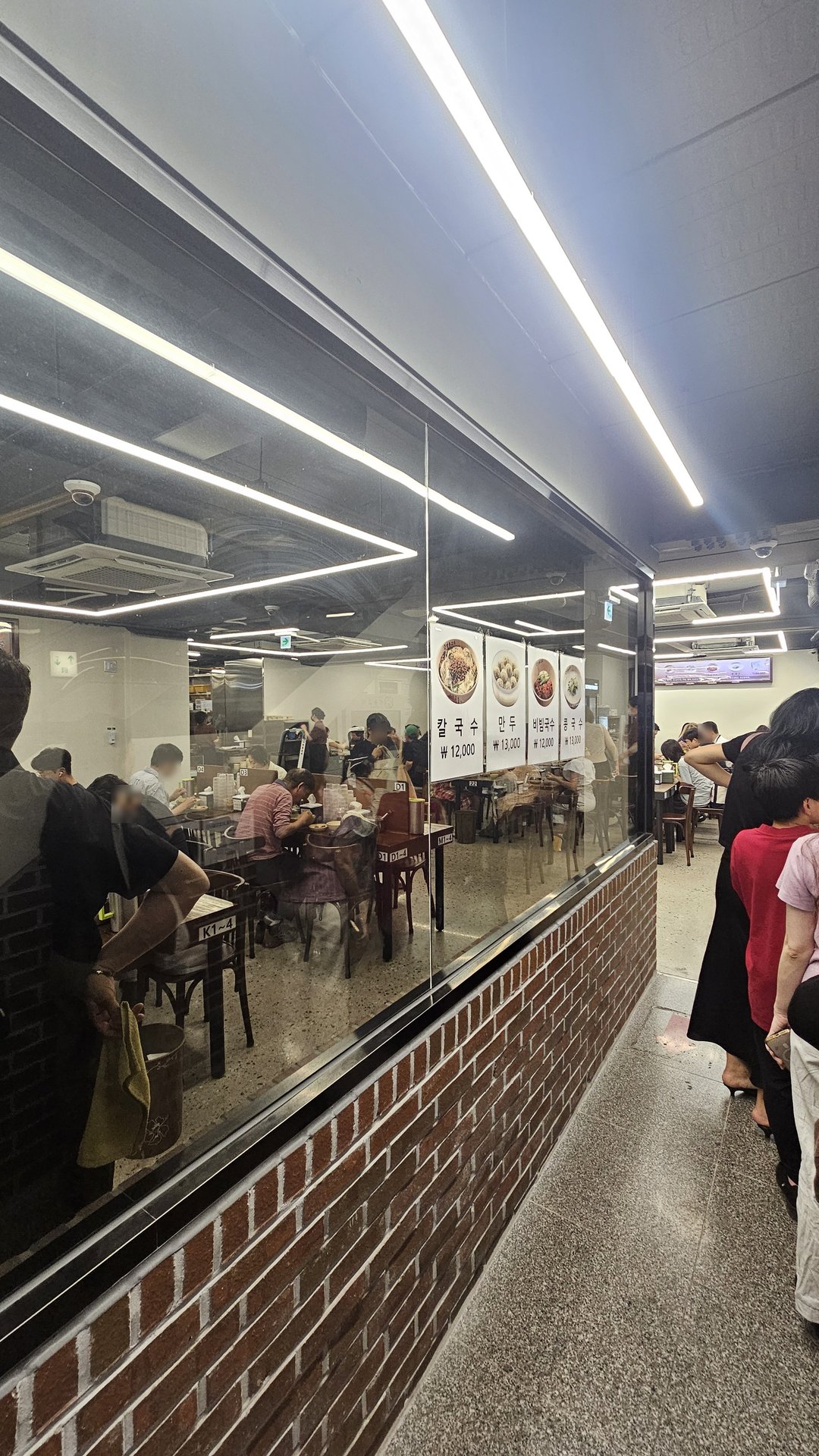
When you get to the door, they direct you to a counter where you order and pay upfront. Then you wait for a table. Signs in Korean, English, and Japanese explain the process — once you see them, it’s clear. But if you walk in expecting to sit first and pay later, just know it doesn’t work that way.
Also: there’s a food waste notice at every table. If you don’t finish your food, there’s an environmental fee. Just eat your food.
Inside
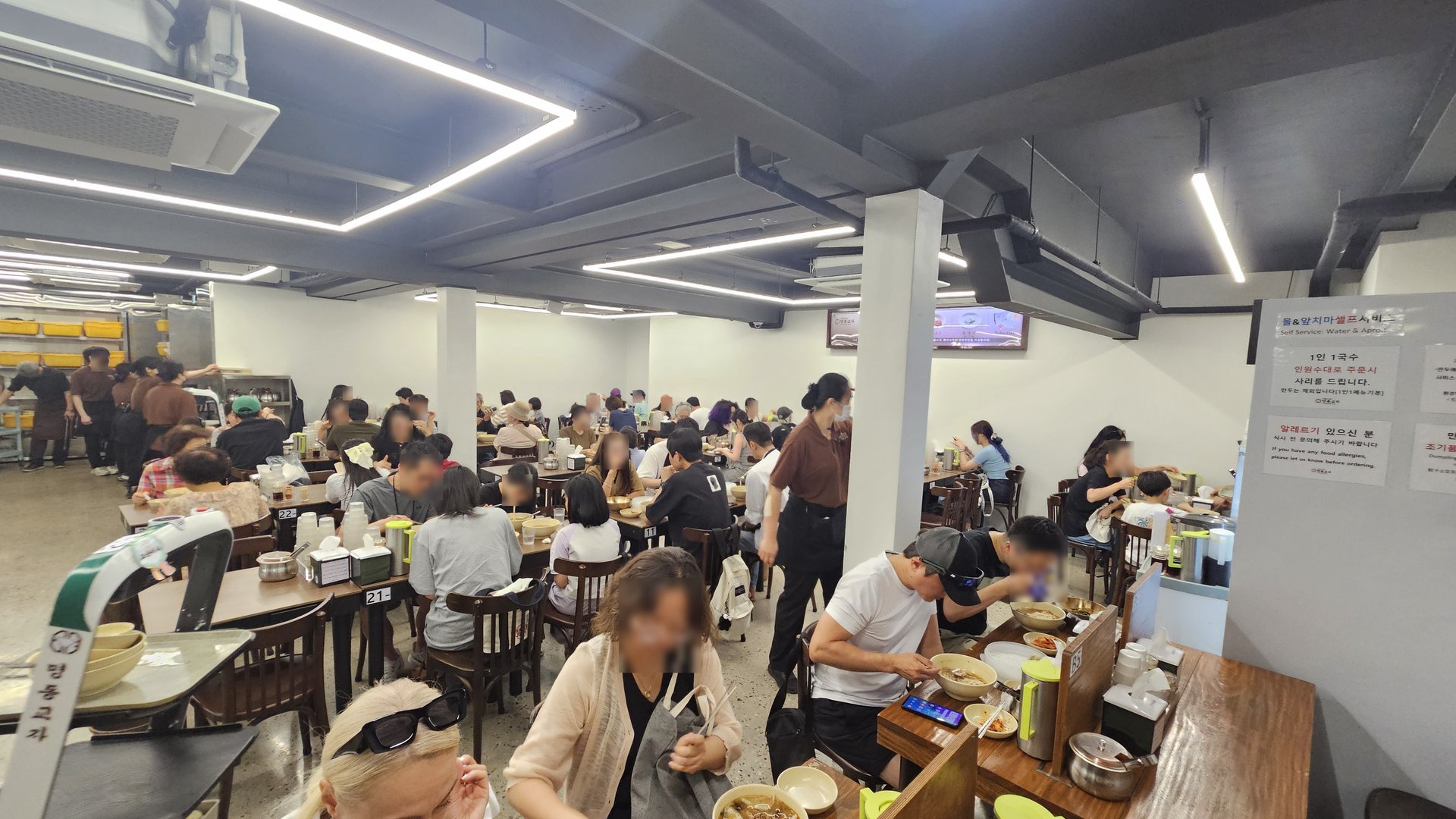
Big, bright, functional. Rows of tables under fluorescent lights. At 2:40 PM on a Tuesday — past peak lunch — it was still nearly full.
This is not an atmosphere place. No music, no mood lighting, no Instagram corner. It’s a room built to feed a lot of people fast. Tables turn quickly, staff moves quickly. Sit down, eat, leave. Everyone seems to understand this implicitly.
What I Ordered
Three people, three dishes: mandu, kalguksu, bibim guksu. Total came to 37,000 KRW (~$27 USD) for all three — about $9 per person. For Michelin-recognized food in the middle of Myeongdong, that’s genuinely fair pricing.
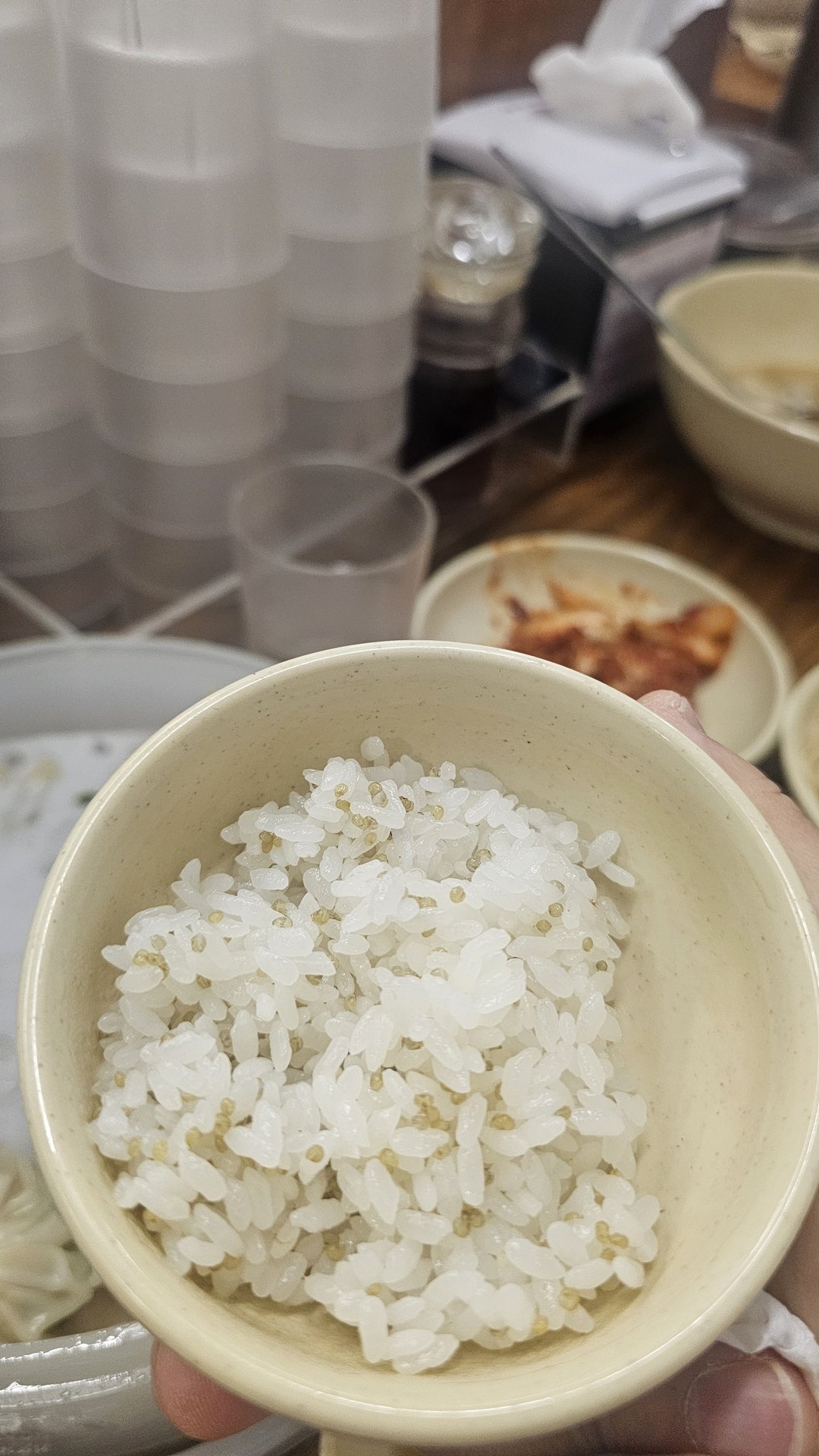
Rice (공기밥) was thrown in extra at no charge.
Mandu (Steamed Dumplings) — 13,000 KRW (~$9.60)
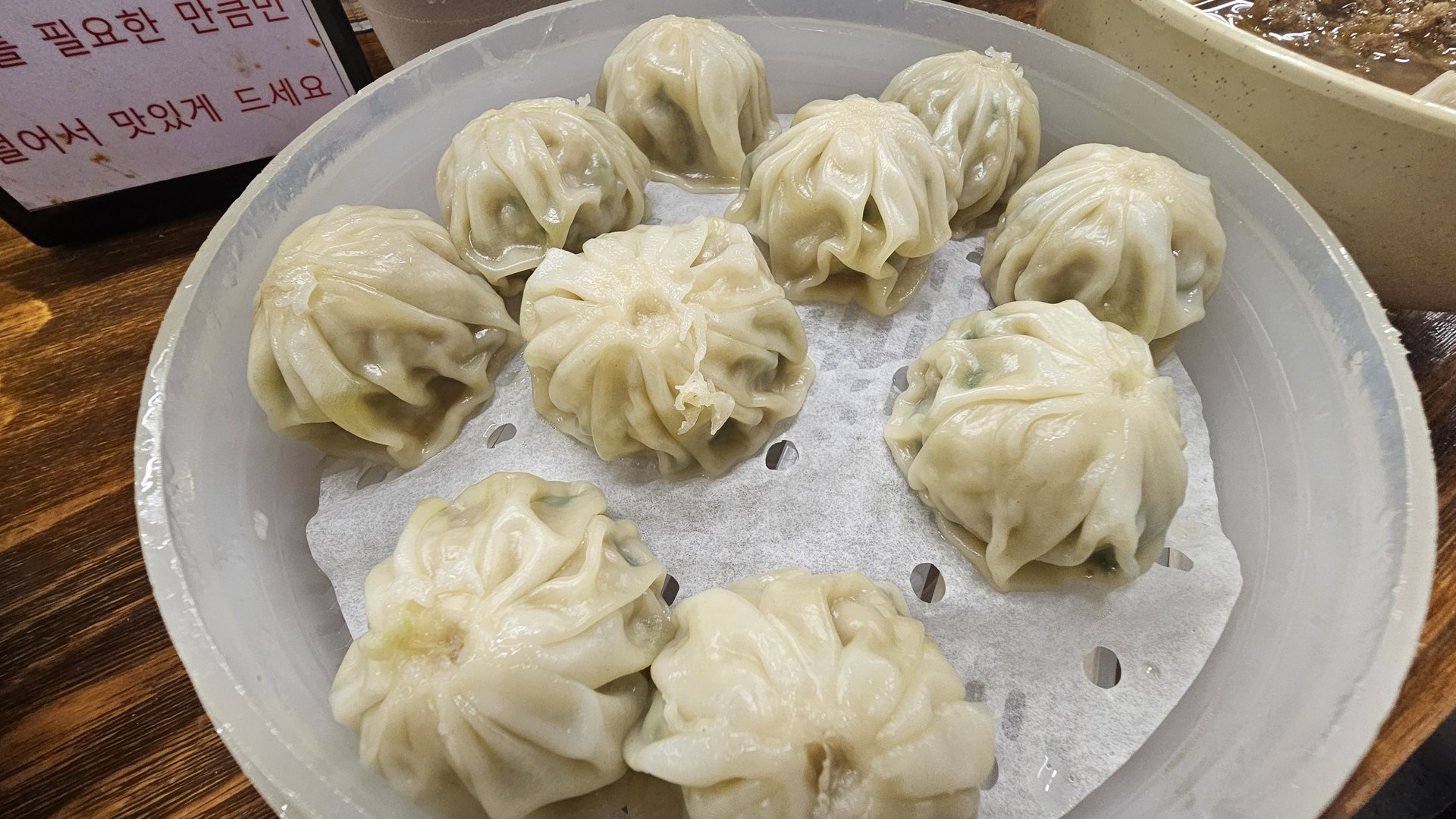
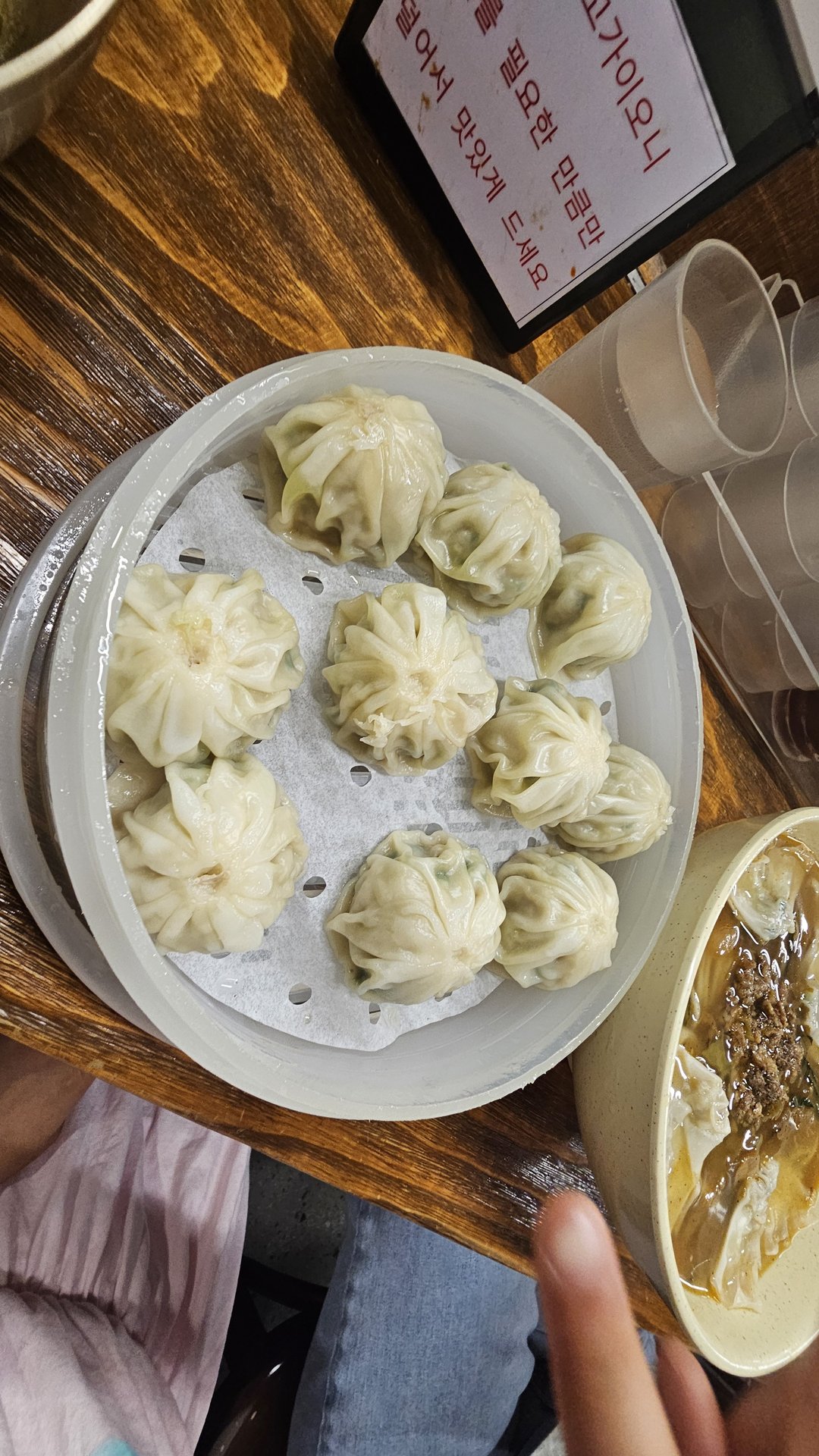
The mandu is really good.
These are large, thick-skinned Korean dumplings — not the delicate dim sum style, not pan-fried Japanese gyoza. The skin is substantial and chewy. The filling is pork and vegetables, well-seasoned and tightly packed. When you bite through, there’s good juice but not the explosive soup-dumpling situation — just proper, satisfying mandu.
Nine dumplings per order. Solid value at 13,000 KRW.
If your only reference point for dumplings is Japanese gyoza (thin-skinned, crispy, pan-fried), these will feel different. Heavier, more filling-forward. I prefer this style — more to actually eat.
Kalguksu (Knife-Cut Noodle Soup) — 12,000 KRW (~$8.90)
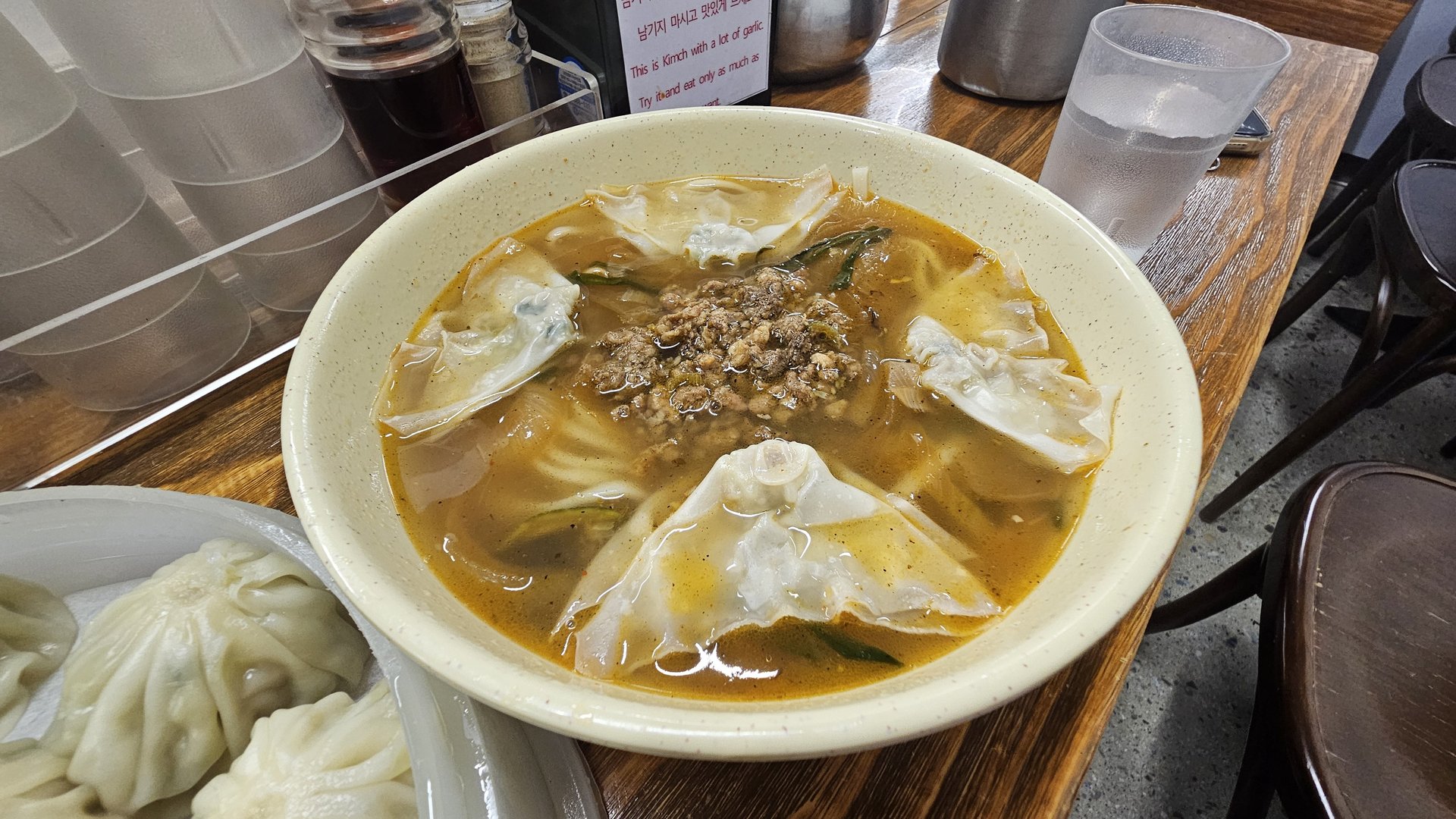
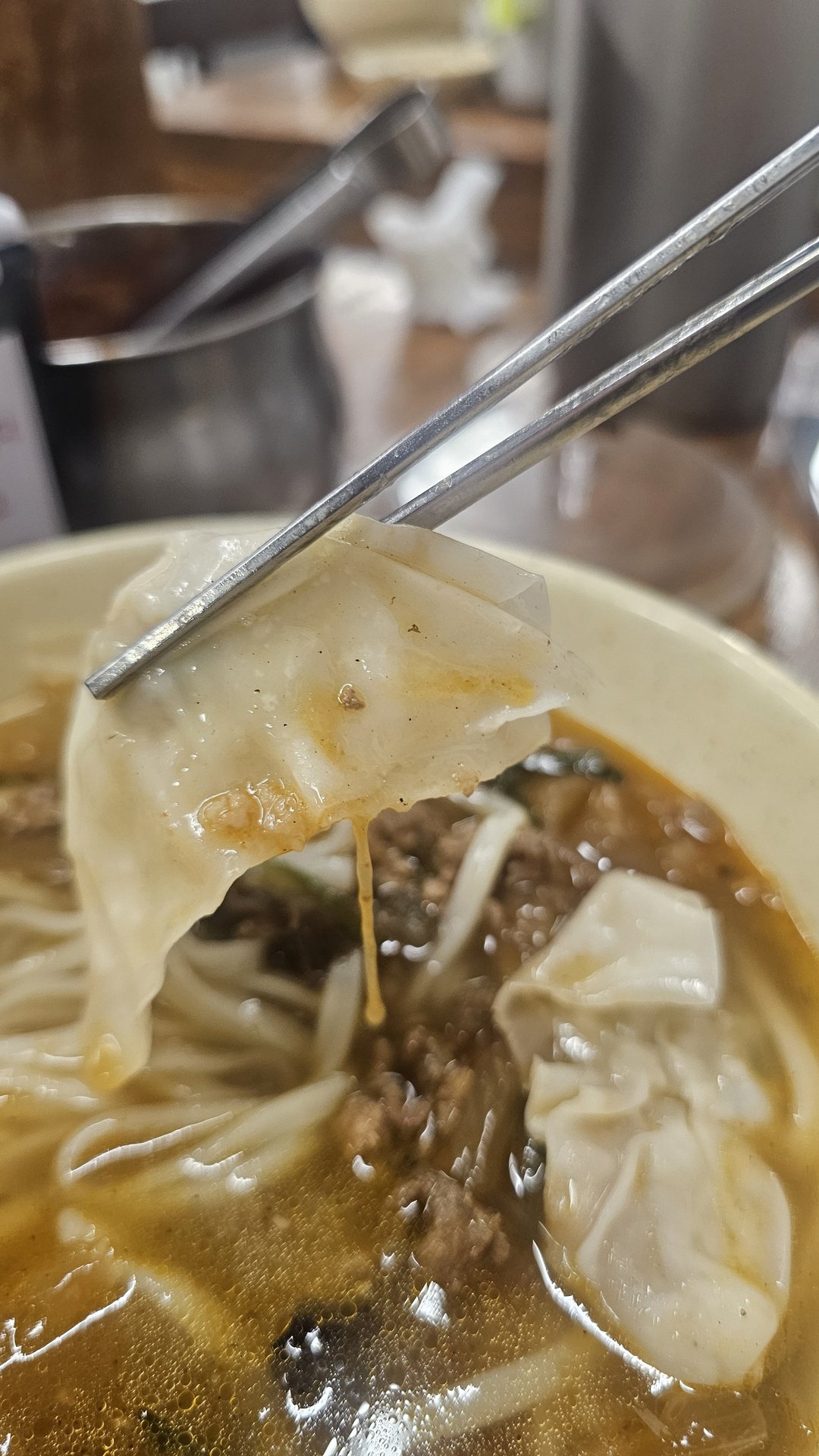
This is the dish that made the restaurant famous. And yeah — the broth delivers.
Chicken-based, long-simmered, pale and slightly cloudy. Clean but genuinely deep. Not salty, not spicy — just rich in a way that’s hard to pin down until you’ve had a few spoonfuls. The kind of broth that makes you want to keep drinking it even when you’re already full.
The noodles are thick and hand-cut, so they have a slightly uneven, rustic texture — not mushy, not too chewy. They hold up in the broth without going soft. Simple toppings: a few thick pieces that look like dumpling skin, some minced meat on top. The broth does all the work.
tbh, this is the dish to order. If you’re only getting one thing, get this.
Bibim Guksu (Spicy Mixed Noodles) — 12,000 KRW (~$8.90)
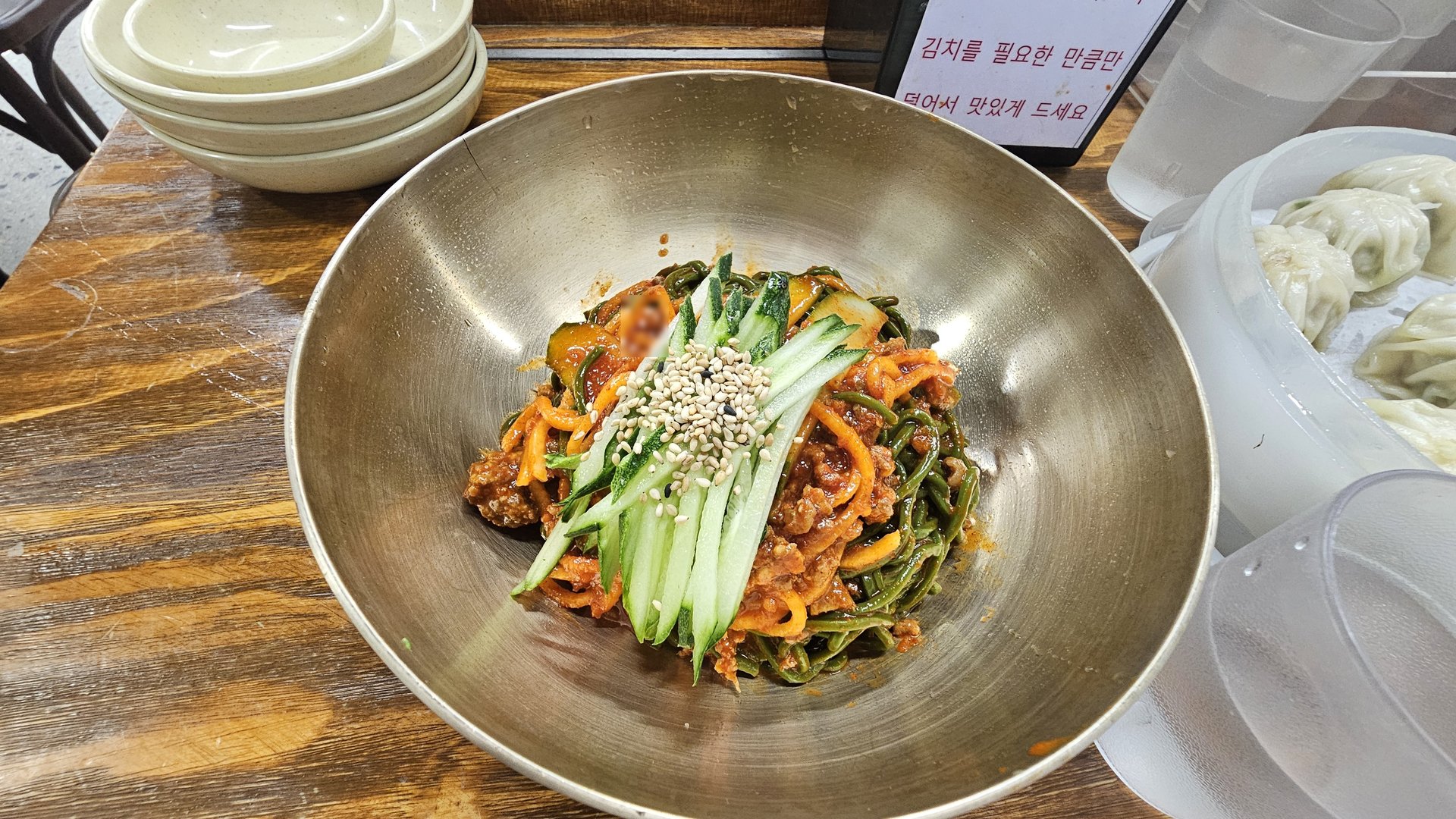
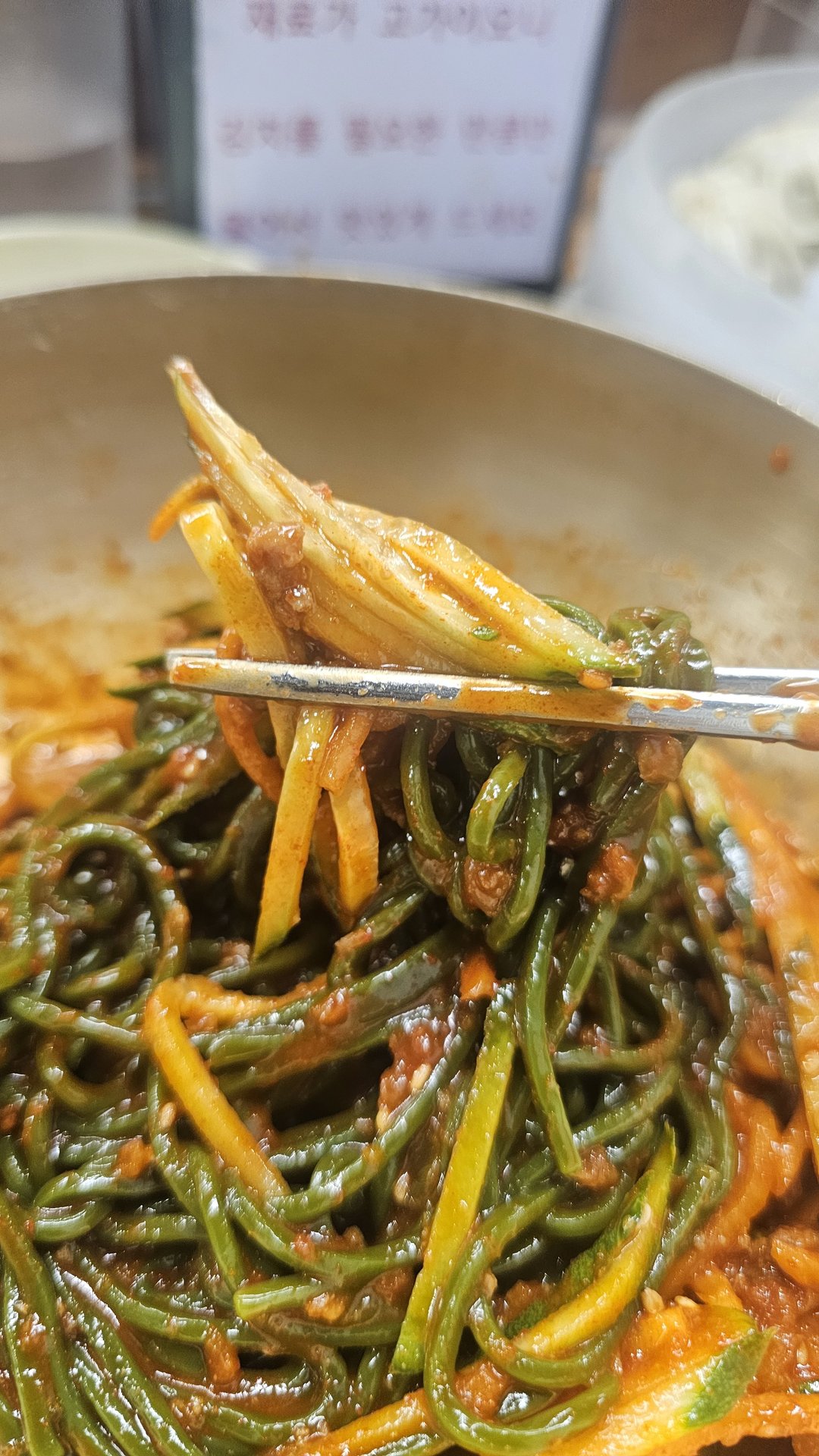
Bibim guksu is cold noodles tossed in a spicy red sauce — think Korean cold noodles, more fiery than sweet. Myeongdong Gyoja’s version comes in a big stainless steel bowl with julienned cucumber, perilla leaves (깻잎), and sesame seeds on top. The noodles are thinner than the kalguksu, and the sauce has a clean kick — not brutal, but present.
It’s good. Not as distinctive as the kalguksu, but if you’ve been eating heavy Korean food all week and want something cold and lighter, this works.
Honestly, if it’s summer and you’re already hot and tired from walking around Myeongdong, order this.
Kong Guksu — We Skipped It, But Worth Knowing About
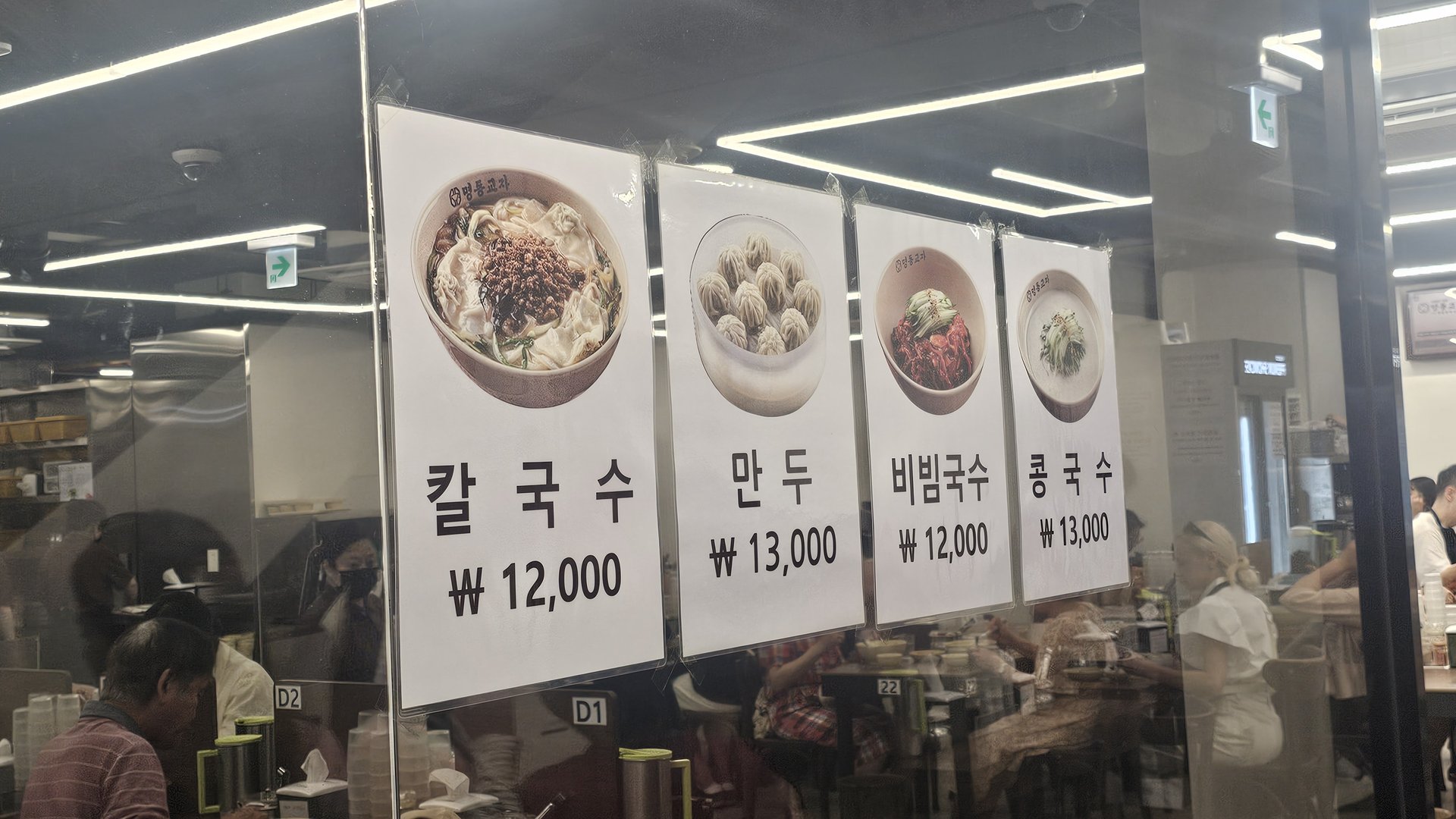
Kong guksu (콩국수) is cold noodles in chilled soy milk broth — a summer Korean specialty that sounds stranger than it tastes. Creamy, slightly nutty, surprisingly refreshing. 13,000 KRW, and it’s seasonal. Worth trying on a hot day if you’re feeling adventurous.
The Kimchi Situation
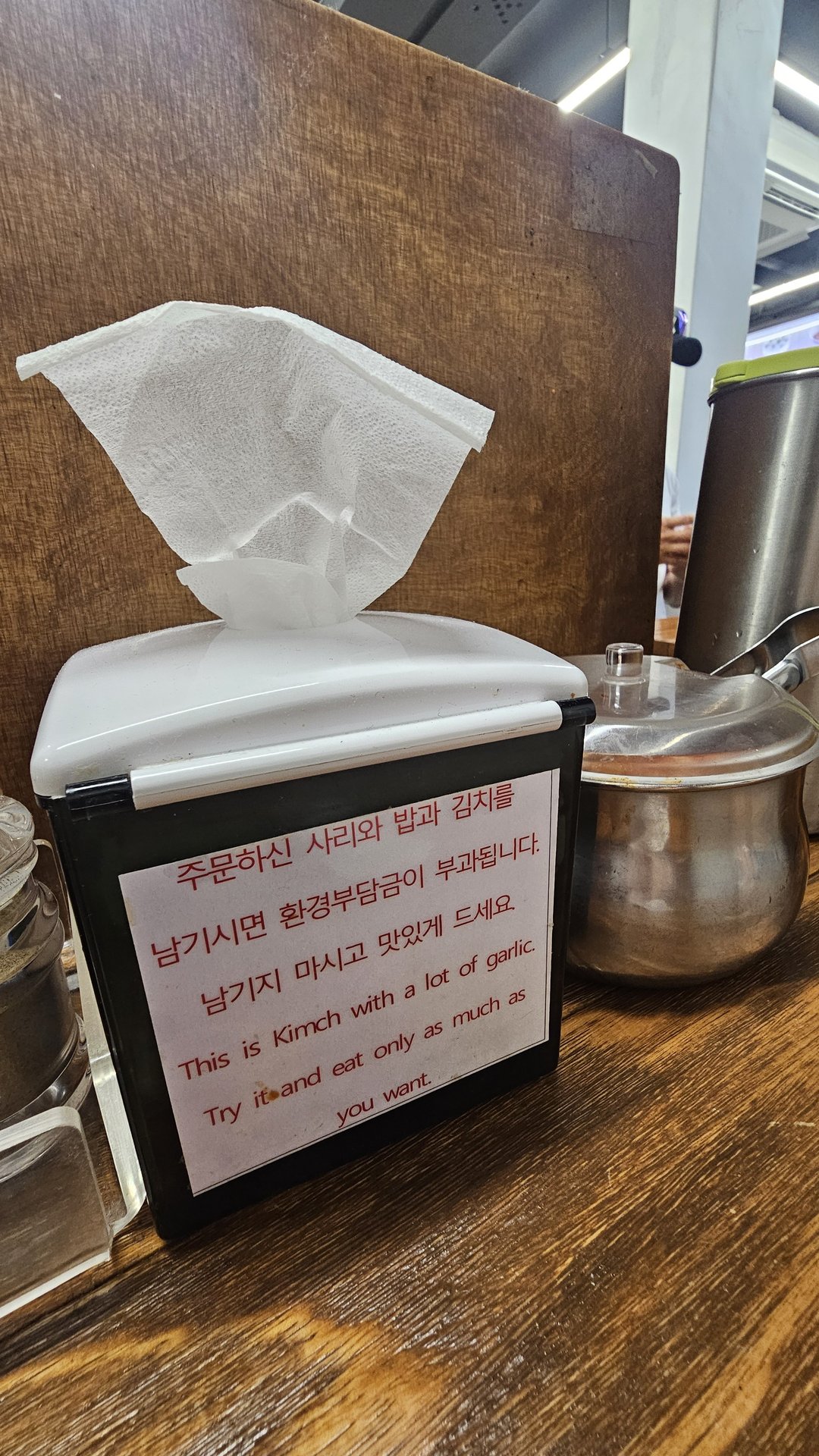
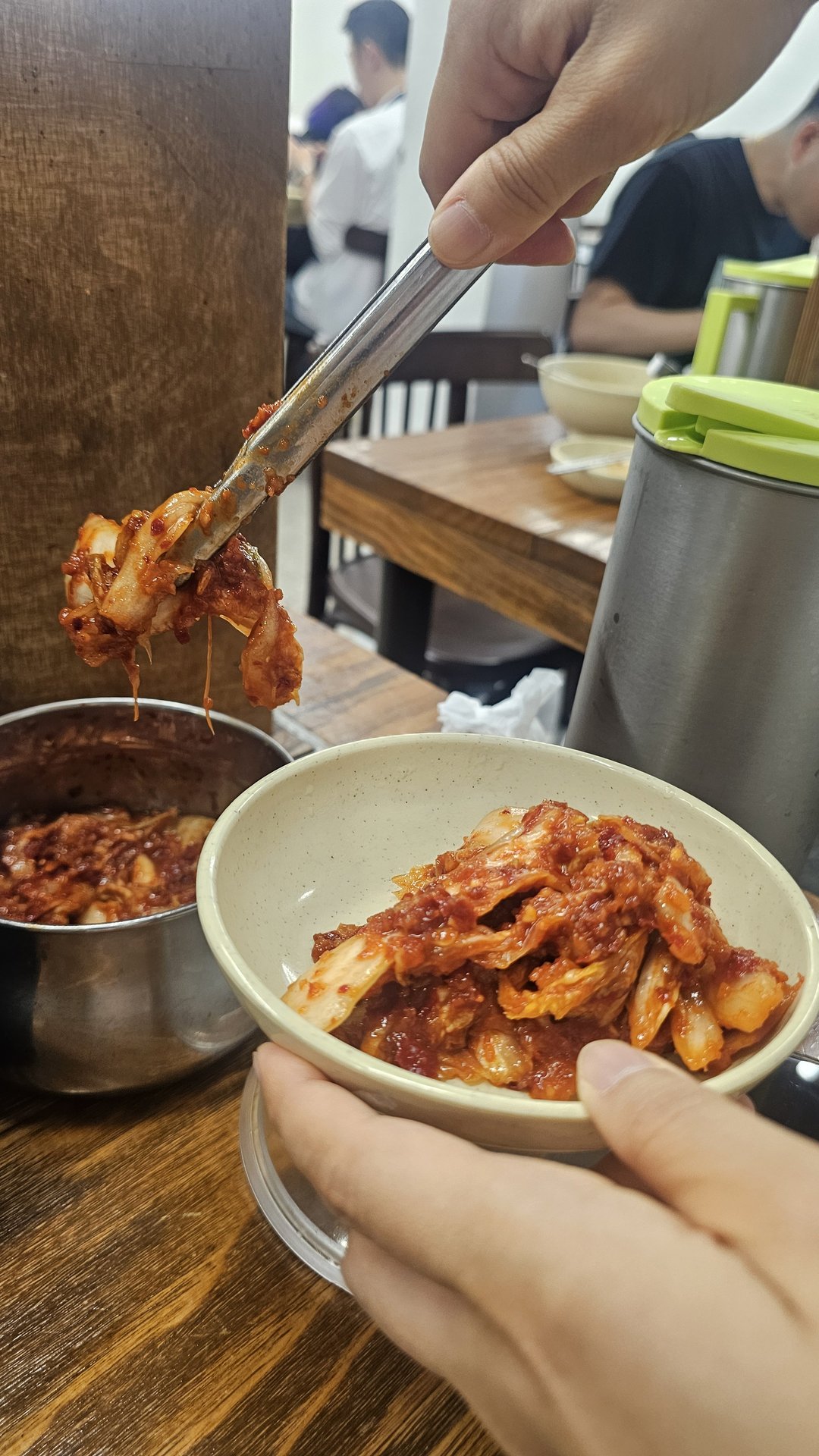
Kimchi here is self-service and free to refill. There’s also a notice on every table in English that basically says: this kimchi has a lot of garlic.
They mean it.
It’s garlicky, fermented, and pungent in the way properly aged kimchi should be. Goes great with the kalguksu broth. If you have any afternoon meetings or close-contact plans after this, maybe exercise some restraint. If you don’t, pile it on.
Unlimited refills. This is one of those simple Korean restaurant things that always delights visitors.
Stuff Tourists Should Know
Price: 12,000–13,000 KRW per dish (~$9–10 USD). For Myeongdong — Seoul’s most expensive tourist corridor — that’s a fair deal.
Payment: Cards accepted. Foreign Visa and Mastercard generally work fine in Seoul, and this place sees enough international visitors that it shouldn’t be an issue. Remember: pay at the counter before you sit.
English: Signs in three languages. Menu has four items. You’ll be fine.
Reservations: None. First-come, first-served.
Wait time: We waited about 10–15 minutes at 2:40 PM on a Tuesday. During peak lunch (12–1 PM), expect 20–30 minutes, maybe more on weekends. Tables turn fast.
Tipping: No. Korea doesn’t tip. Don’t leave coins behind.
Vegetarian options: Limited. The mandu filling has pork. The kalguksu broth is chicken-based. Kong guksu (soy milk) is the closest thing to a vegetarian option — verify with staff if you’re strict about it.
Solo dining: Fine. No issues eating alone here.
Families with kids: Kalguksu is mild, mandu is universally liked. The place is loud and busy, which works well or badly depending on your kids.
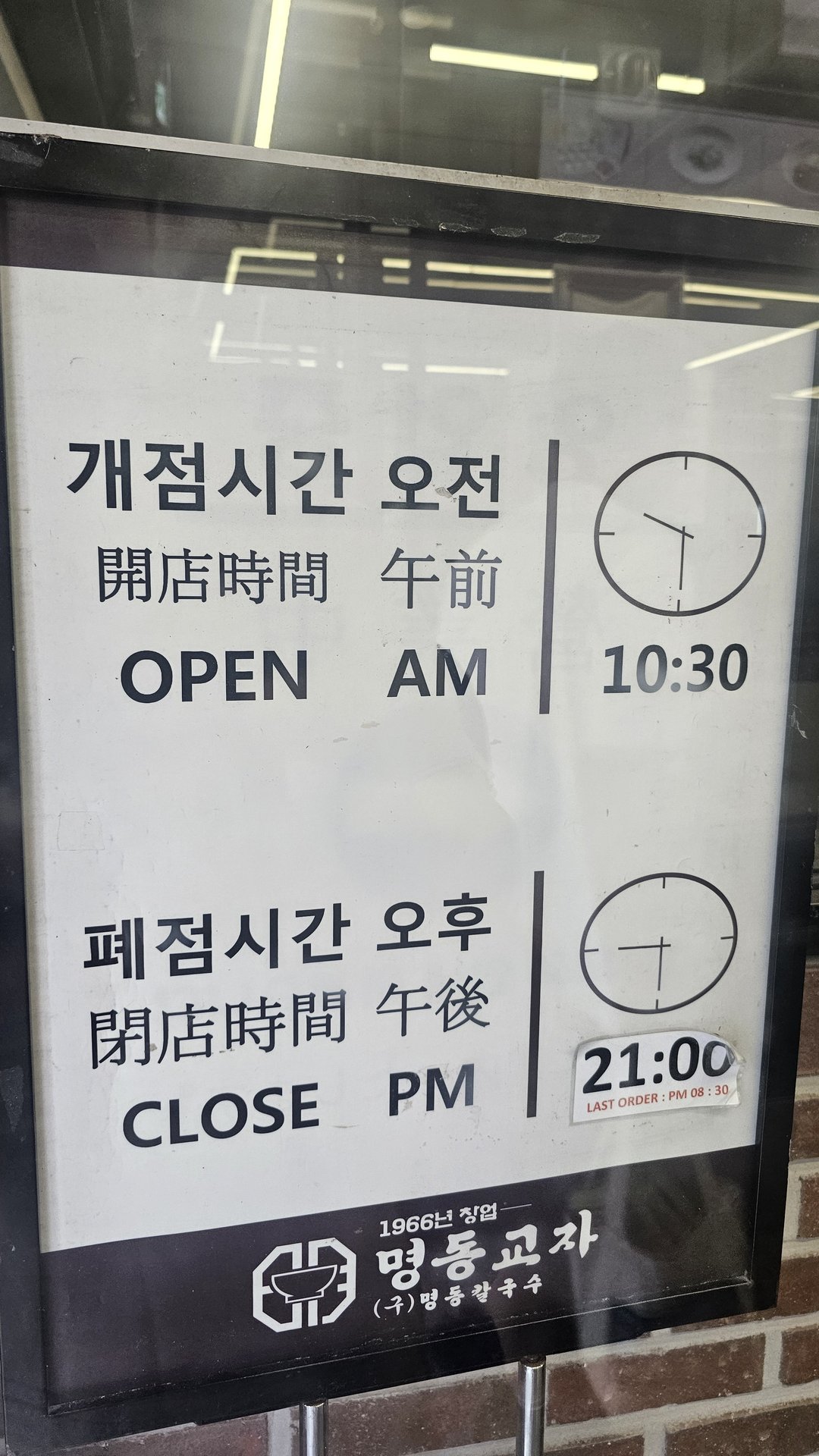
Operating hours: 10:30 AM – 9:00 PM, last order 8:30 PM.
The Verdict
Should you go?
Depends on your Seoul situation.
– If you’re in Myeongdong already — yes. Get the kalguksu. Don’t overthink it.
– If you have 3 days in Seoul and haven’t tried proper Korean noodle soup yet — yes. Kalguksu is one of those dishes every visitor should try, and this is one of the better versions in the city.
– If you’ve done all the Korean classics and just want lunch — also yes. It’s fast, cheap for what you get, and the food is consistent.
– If you need a calm, cozy dining experience — skip. This place is efficient, not relaxing.
The mandu is excellent. The kalguksu broth is genuinely distinctive — that slow-cooked chicken depth isn’t something you stumble into everywhere. Prices are honest. The garlic kimchi is aggressive in the right way.
I’ve been here multiple times over the years and it’s always the same: fast service, reliable food, zero pretension. That’s actually harder to maintain than it sounds.
Rating: 4/5 — would edge toward a 5 if the space had any soul, but the canteen vibe is part of what keeps the prices down. Fair trade.
FAQ
What’s on the menu at Myeongdong Gyoja?
Four items only — kalguksu (knife-cut noodle soup, 12,000 KRW), mandu (steamed dumplings, 13,000 KRW), bibim guksu (spicy cold noodles, 12,000 KRW), and kong guksu (cold soy milk noodles, 13,000 KRW, seasonal).
Do you need to pay in advance at Myeongdong Gyoja?
Yes. You order and pay at the counter before you’re seated. Signs explaining this are posted in Korean, English, and Japanese, so you won’t be caught off guard.
Is Myeongdong Gyoja Michelin-starred?
It’s on the Michelin Bib Gourmand list — that’s Michelin’s "great food at honest prices" category, not a star. Still real recognition, and one of the few noodle spots in Seoul to earn it.
What are the opening hours of Myeongdong Gyoja?
Open 10:30 AM to 9:00 PM daily, last order at 8:30 PM. No reservations — it’s first-come, first-served.
Is Myeongdong Gyoja tourist-friendly?
Very. Signs are in Korean, English, and Japanese. The menu has just four items, so ordering takes about ten seconds. Staff speaks enough English to get you through.
How much does it cost per person at Myeongdong Gyoja?
One dish runs 12,000–13,000 KRW (~$9–10 USD). Budget around that per person and you’re covered — kimchi refills are free.
Leave a Reply