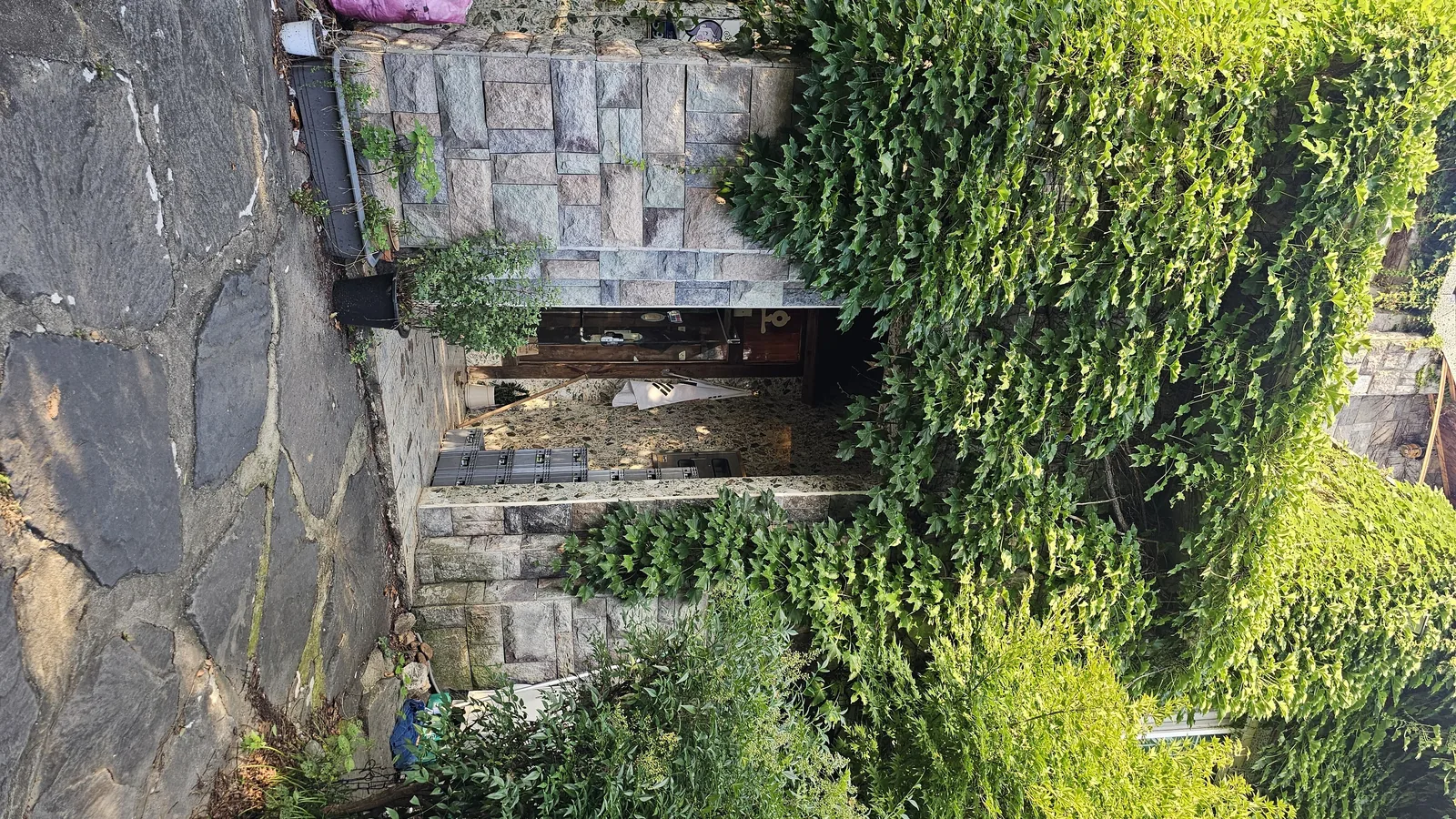
Quick honest review of Haeoeum (해오름) in Cheongyang — a Korean BBQ place that I’d have walked past if it weren’t for the wall of ivy. Went with four friends on a Friday evening. Here’s the short version: handmade seasoned pork ribs at 15,000 KRW ($11) per person, absurdly generous banchan, staff that kept refilling everything without being asked, and a cozy wooden interior that doesn’t feel like any other BBQ spot I’ve been to.
If you’re passing through South Chungcheong Province, this is worth the stop.
What Is Cheongyang?
Quick context, because most foreigners have never heard of it.
Cheongyang (청양) is a small county in South Chungcheong Province — roughly 2 to 2.5 hours south of Seoul. It doesn’t show up on most tourist itineraries. People driving through are usually on their way to the coast, Magoksa Temple, or somewhere else further south.
But Cheongyang has one major claim to fame in Korea: 청양고추 (Cheongyang chili pepper). This is the spicy chili that shows up in tteokbokki, budae jjigae, and most dishes when Koreans say something is “spicy.” The county is the namesake. So if you’ve eaten anything fiery in Korea, there’s a good chance Cheongyang was involved.
The restaurant itself sits in town. Nothing about the surroundings prepares you for the building.
The Exterior
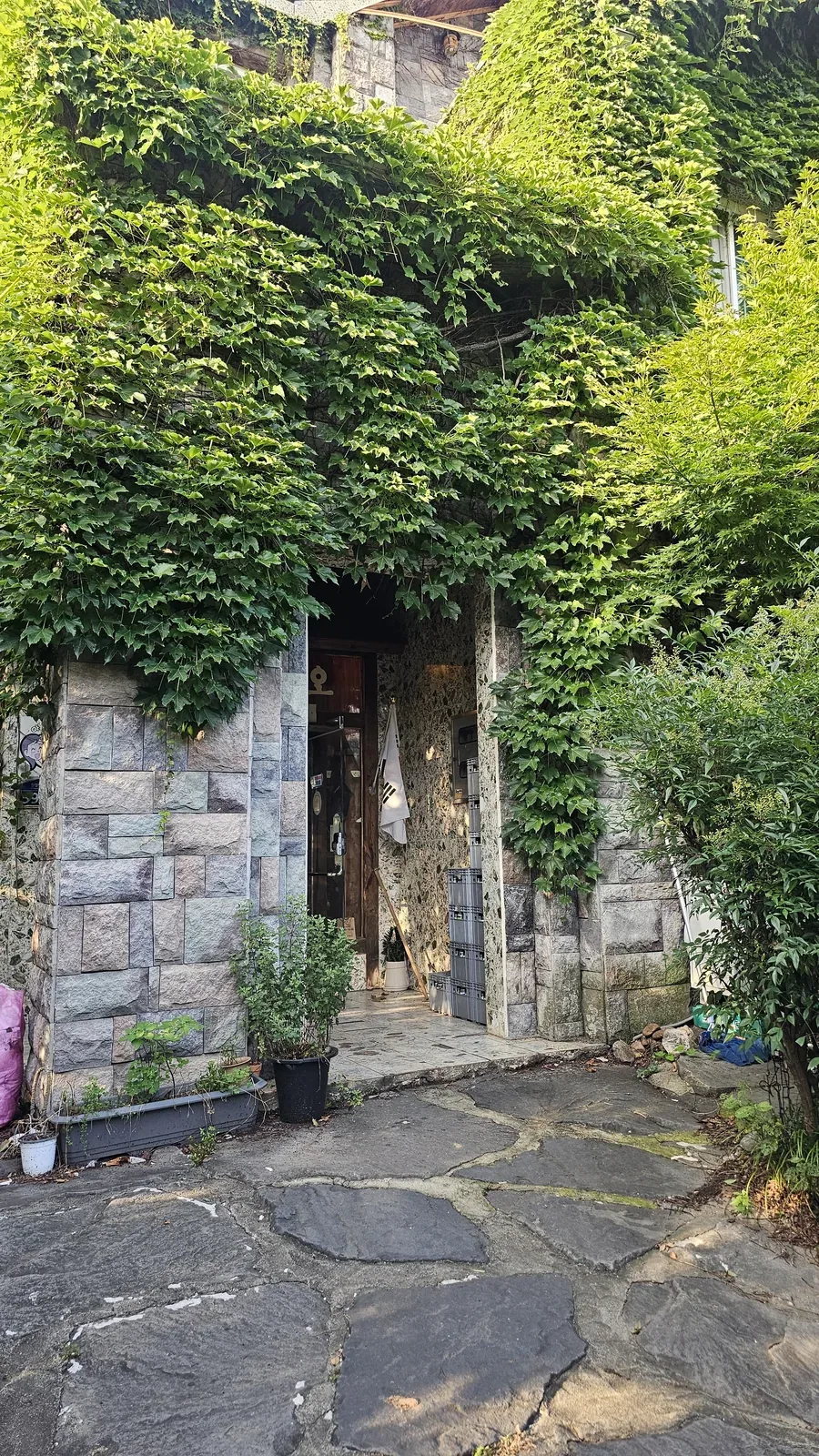
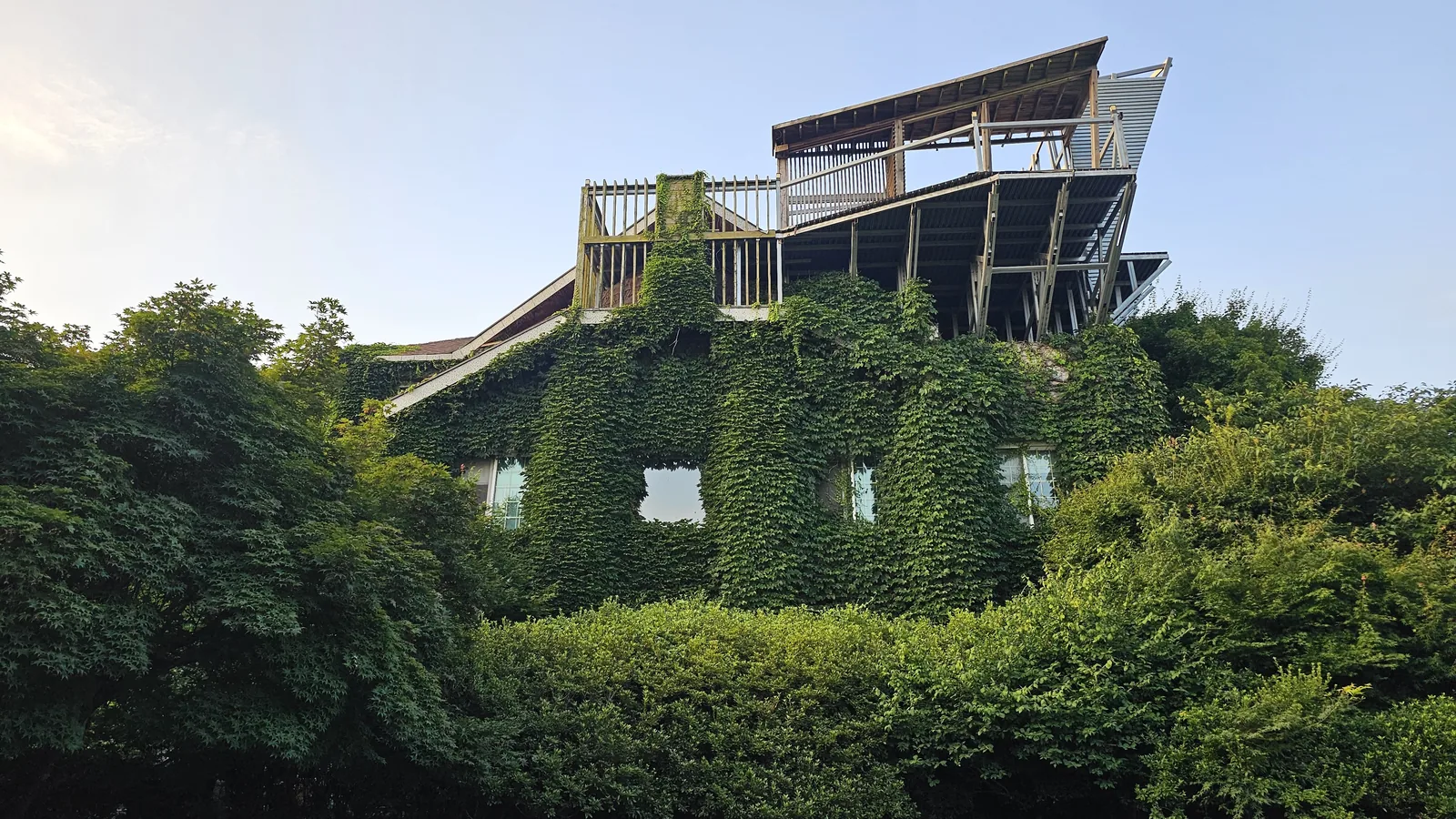
The entire exterior is covered in ivy. Wall-to-wall, dense green, like something that grew around the building over decades rather than a decoration anyone planned. Old stone steps lead up to the entrance. It looks more like a rural farmhouse than a Korean BBQ restaurant.
Most Korean BBQ places look like one of two things: a bare-bones neighborhood grill joint, or a sleek Instagram-ready setup with stainless steel everything. Haeoeum is neither. It has actual character, and the ivy makes it genuinely distinctive.
The Interior
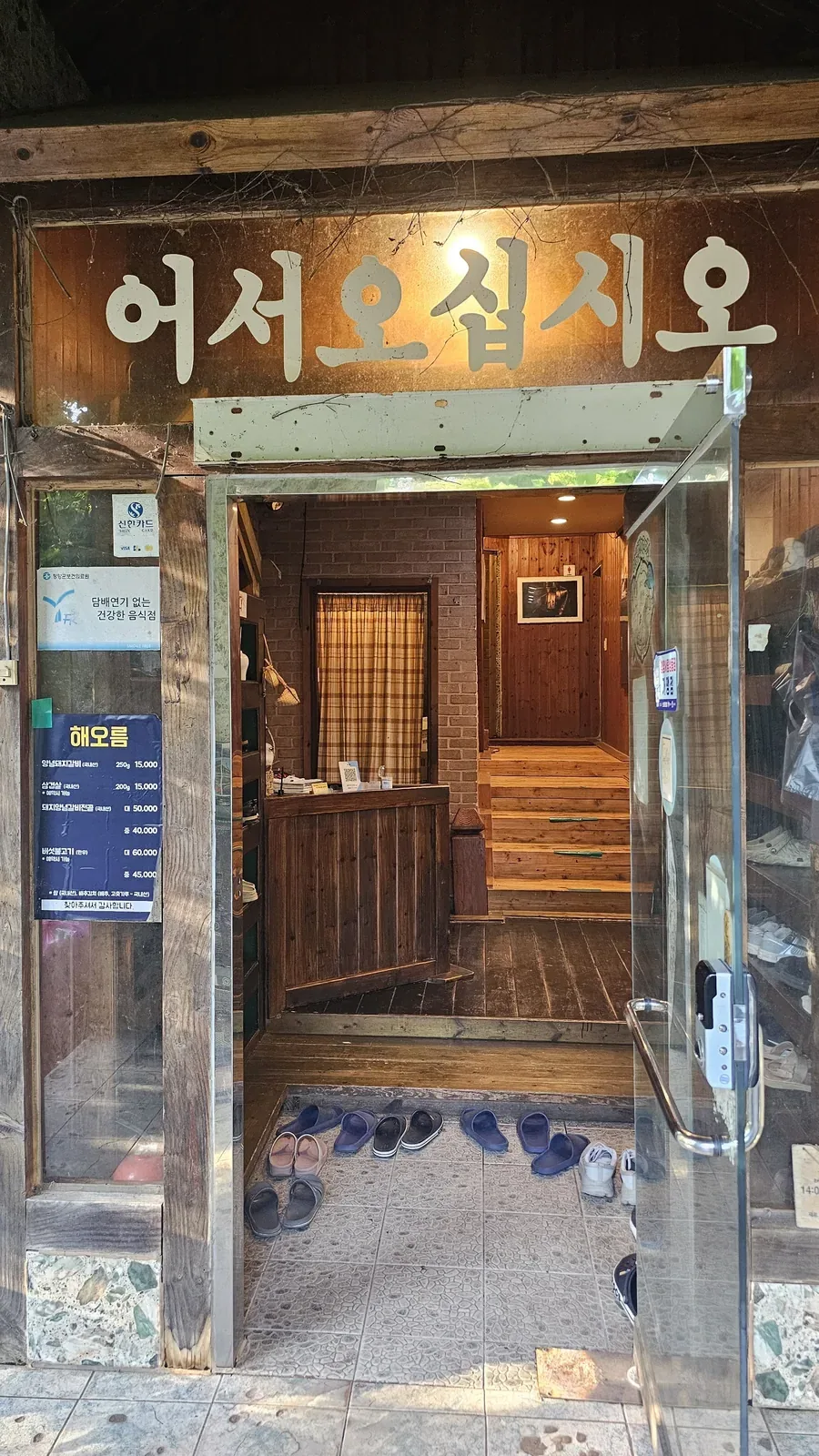
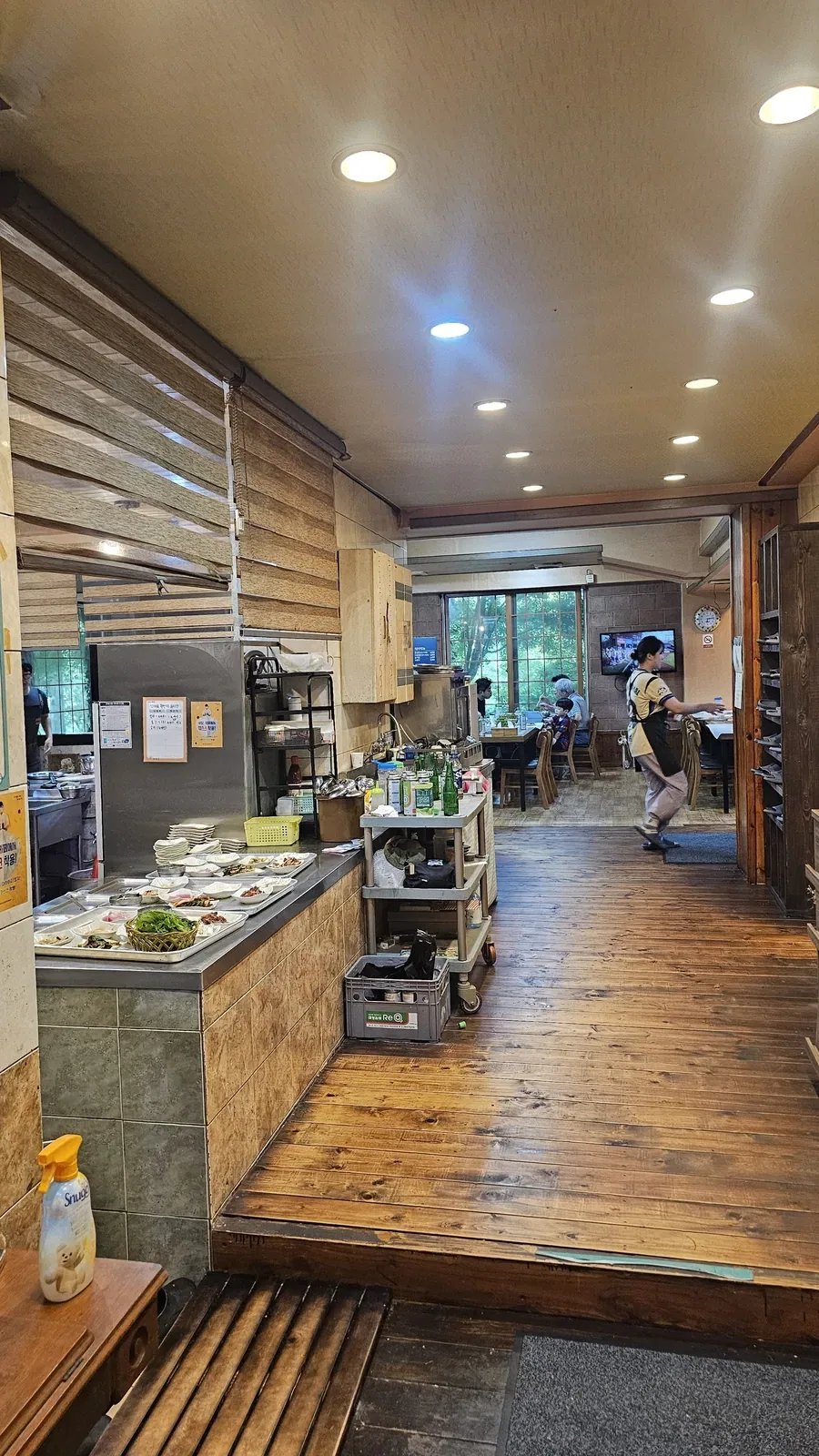
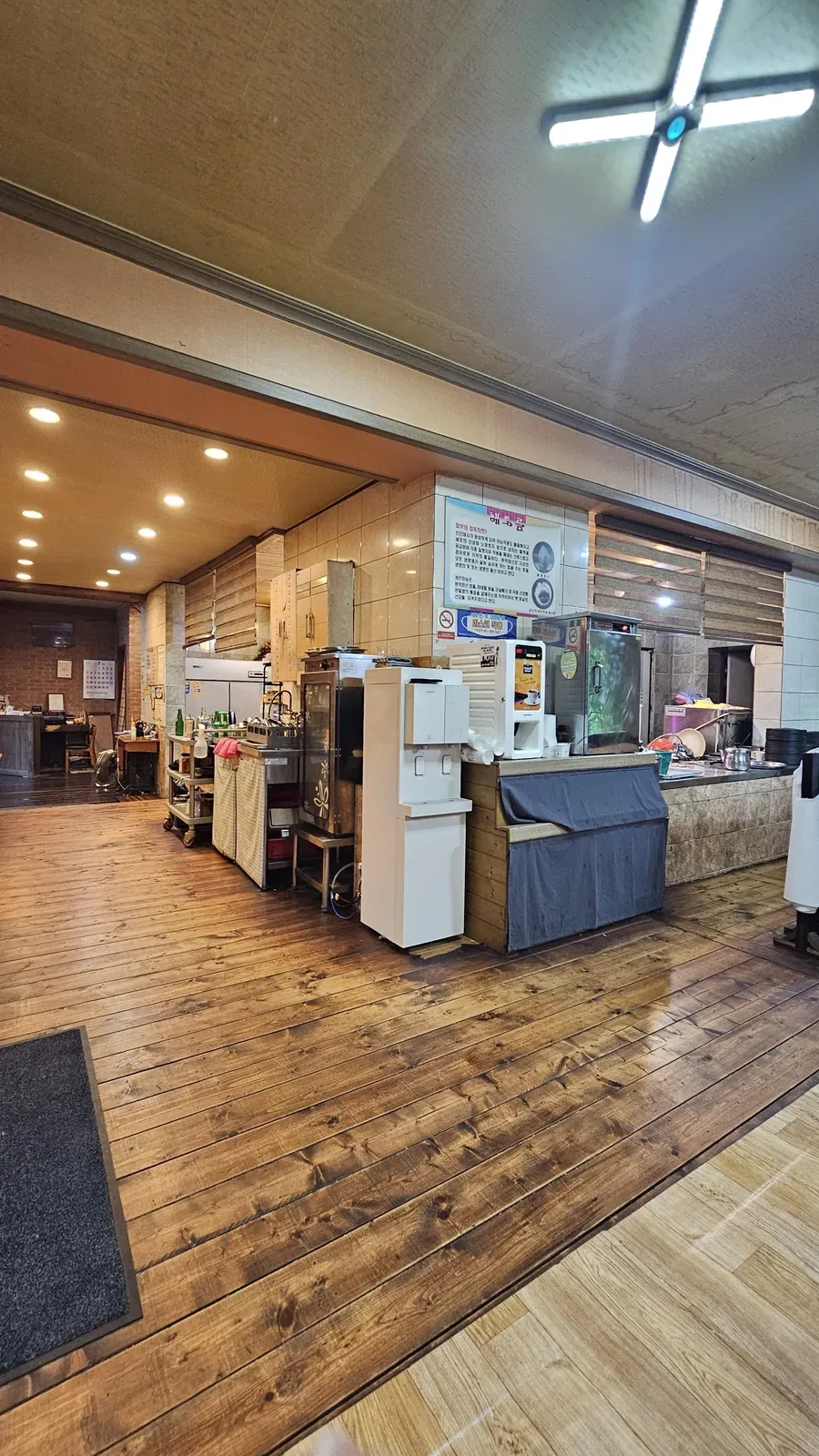
Shoes off at the entrance. Slippers provided. This is common in traditional Korean restaurants — the floor-seating areas (좌식, jwa-sik) require it.
The inside is all warm wood: floors, walls, furniture. Low lighting. Open kitchen where you can see what’s happening. It feels like a family operation, which it probably is. No background music competing with conversation.
We arrived around 6 PM on a Friday. About half-full when we sat down, filled up as the evening went on. Gets popular quickly, so showing up slightly early is the right move.
The Menu
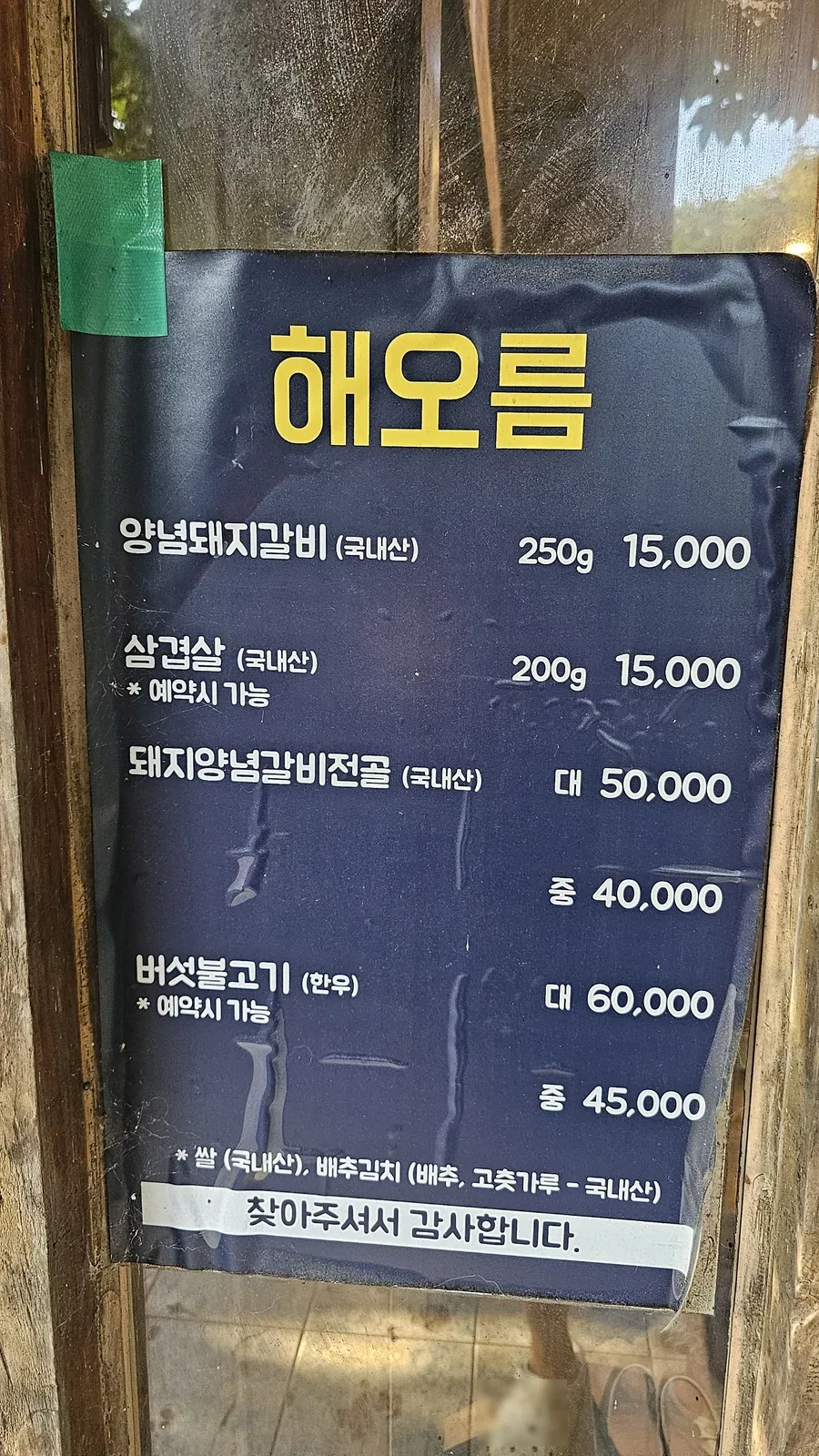
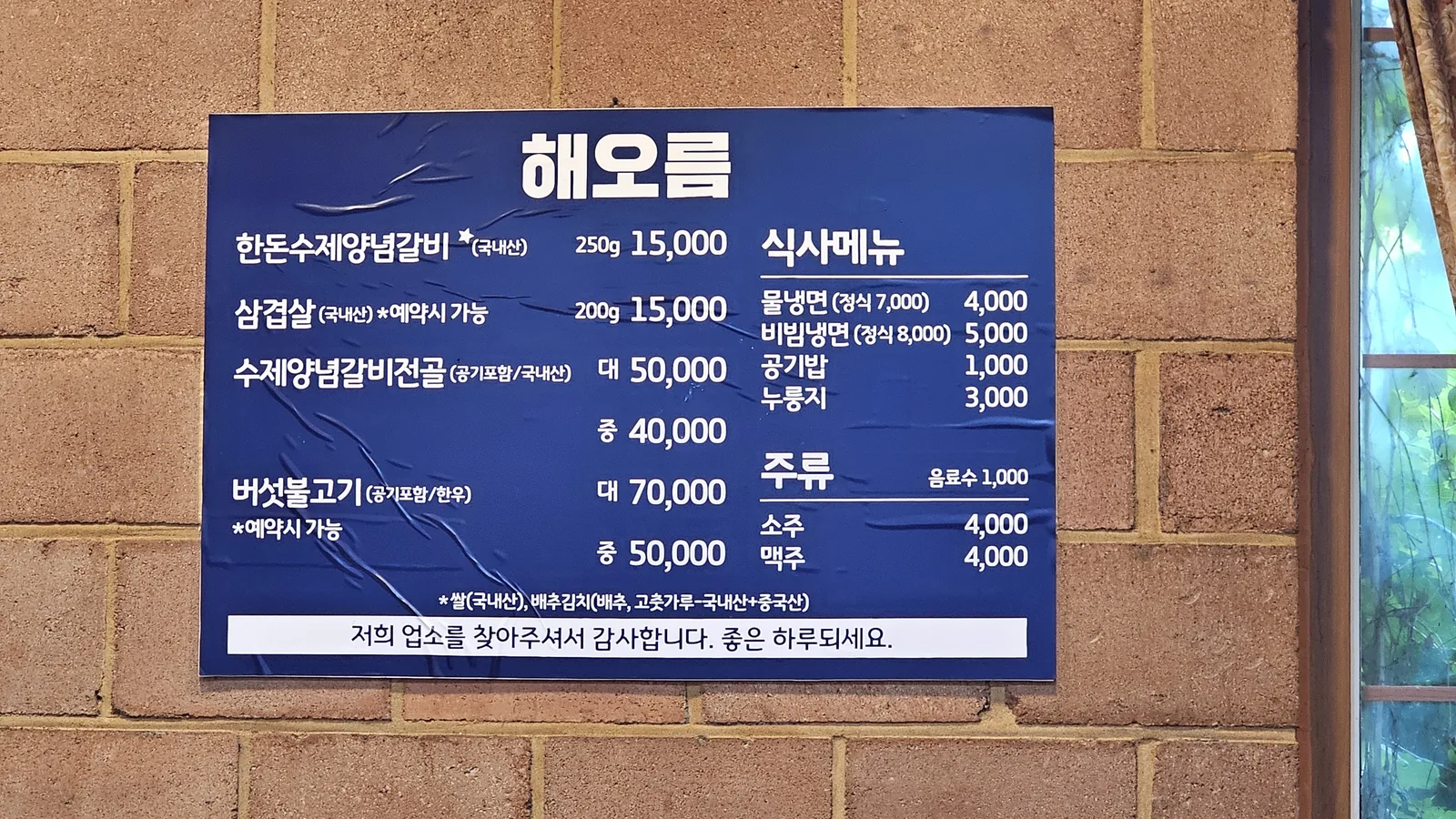
Korean-only menu. No pictures beyond what you can see on the wall board. Here’s what they serve:
Grilled Meat:
– 한돈수제양념갈비 (Handmade seasoned Korean pork ribs) — 250g, 15,000 KRW (~$11)
– 삼겹살 (Pork belly) — 200g, 15,000 KRW (~$11)
– 수제양념갈비전골 (Seasoned rib stew, includes rice) — Large 50,000 KRW / Medium 40,000 KRW
– 버섯불고기 (Mushroom bulgogi, Korean native beef 한우) — Large 70,000 KRW / Medium 50,000 KRW
Sides and Rice:
– 비빔냉면 (Spicy mixed cold noodles) — 5,000 KRW (or 8,000 KRW as a full meal set)
– 공기밥 (Steamed rice) — 1,000 KRW — order this and you get doenjang jjigae (fermented soybean paste stew) included
– 누룽지 (Scorched rice soup) — 3,000 KRW
Drinks:
– 소주, 맥주 (Soju, beer) — 4,000 KRW each
We ordered 5 portions of the 한돈수제양념갈비, one bibim naengmyeon as a full set, one nurungji, steamed rice with doenjang jjigae, and a bottle of soju. Total for 5 people came out to around 95,000–100,000 KRW (~$70–$75), which is roughly 19,000–20,000 KRW (~$14–15) per person. Genuinely good value.
What is yangnyeom galbi?
“Yangnyeom” (양념) means marinated or seasoned. This is pork ribs soaked in a sweet-savory sauce — typically soy sauce, garlic, ginger, pear or apple for sweetness, and sesame oil. You grill it at the table, cut it with scissors mid-cook, then eat it wrapped in lettuce with garlic and doenjang paste.
The “수제” (handmade) part of the name matters here. It means they make the marinade from scratch — not from the commercial paste that cheaper places use. You can taste the difference.
“한돈” just means Korean domestic pork, as opposed to imported. A quality indicator.
The Banchan Spread
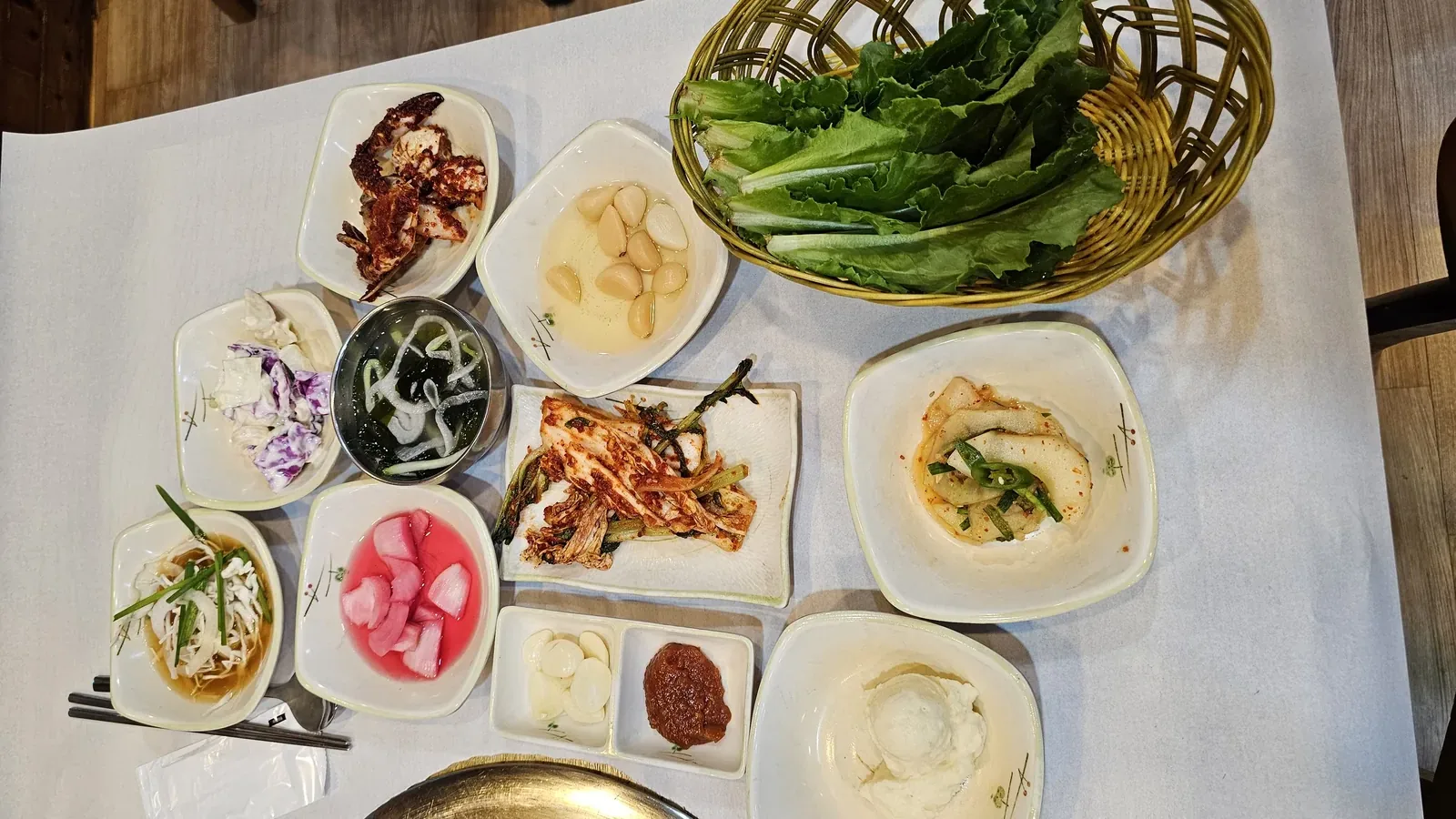
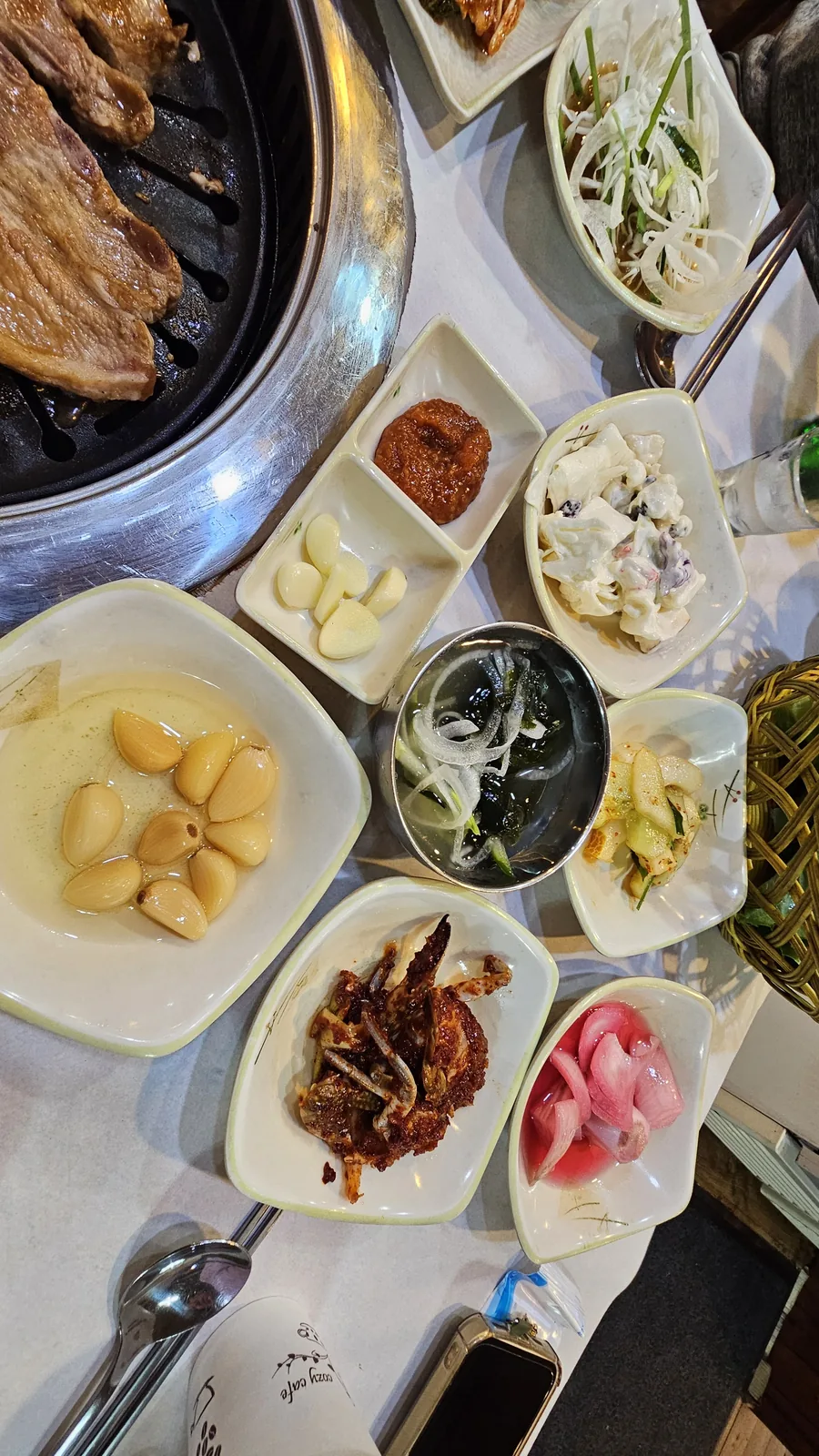
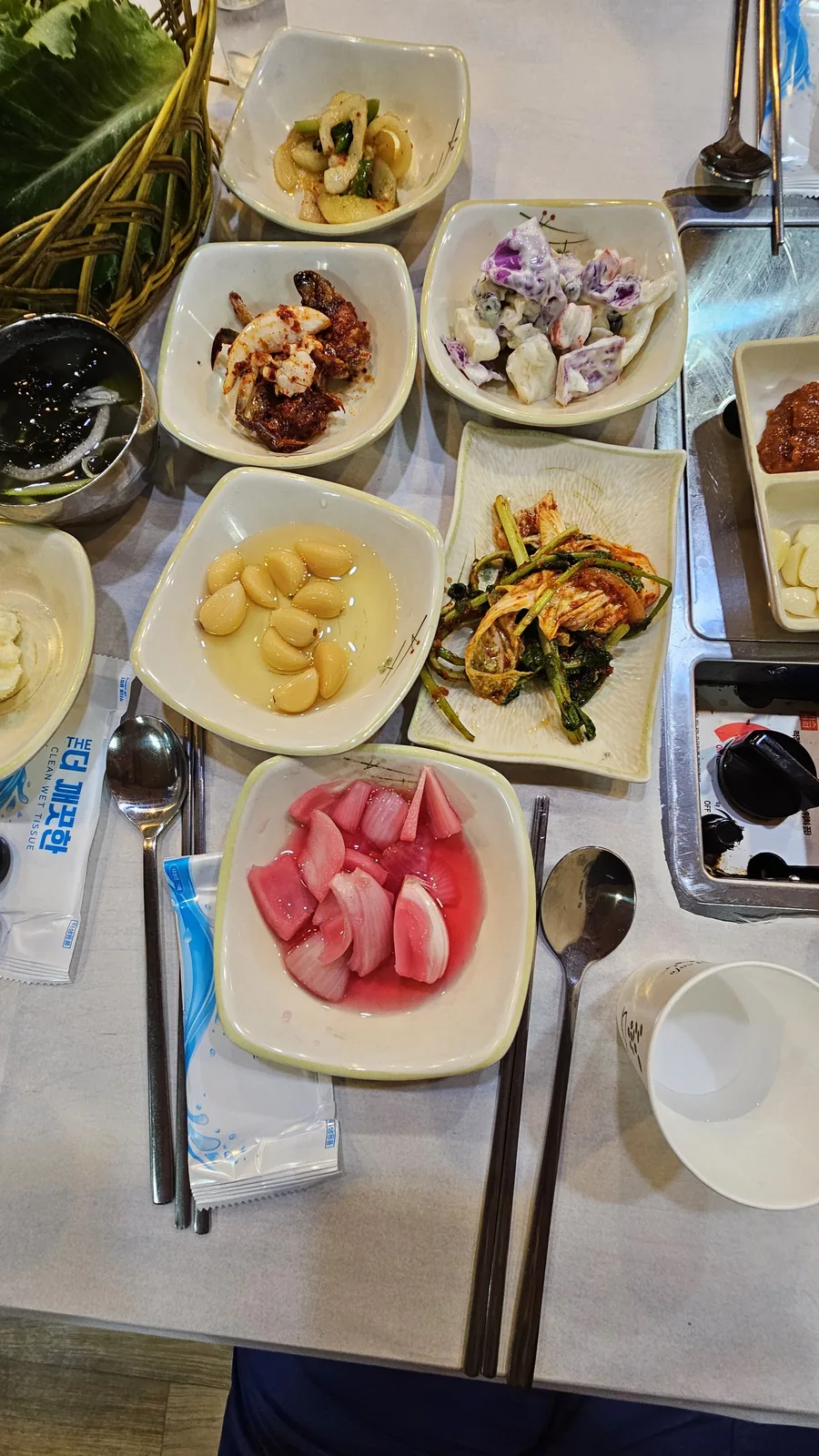
Banchan are the small side dishes that come with Korean meals. At most restaurants you get 4–6. Haeoeum sent out over 10.
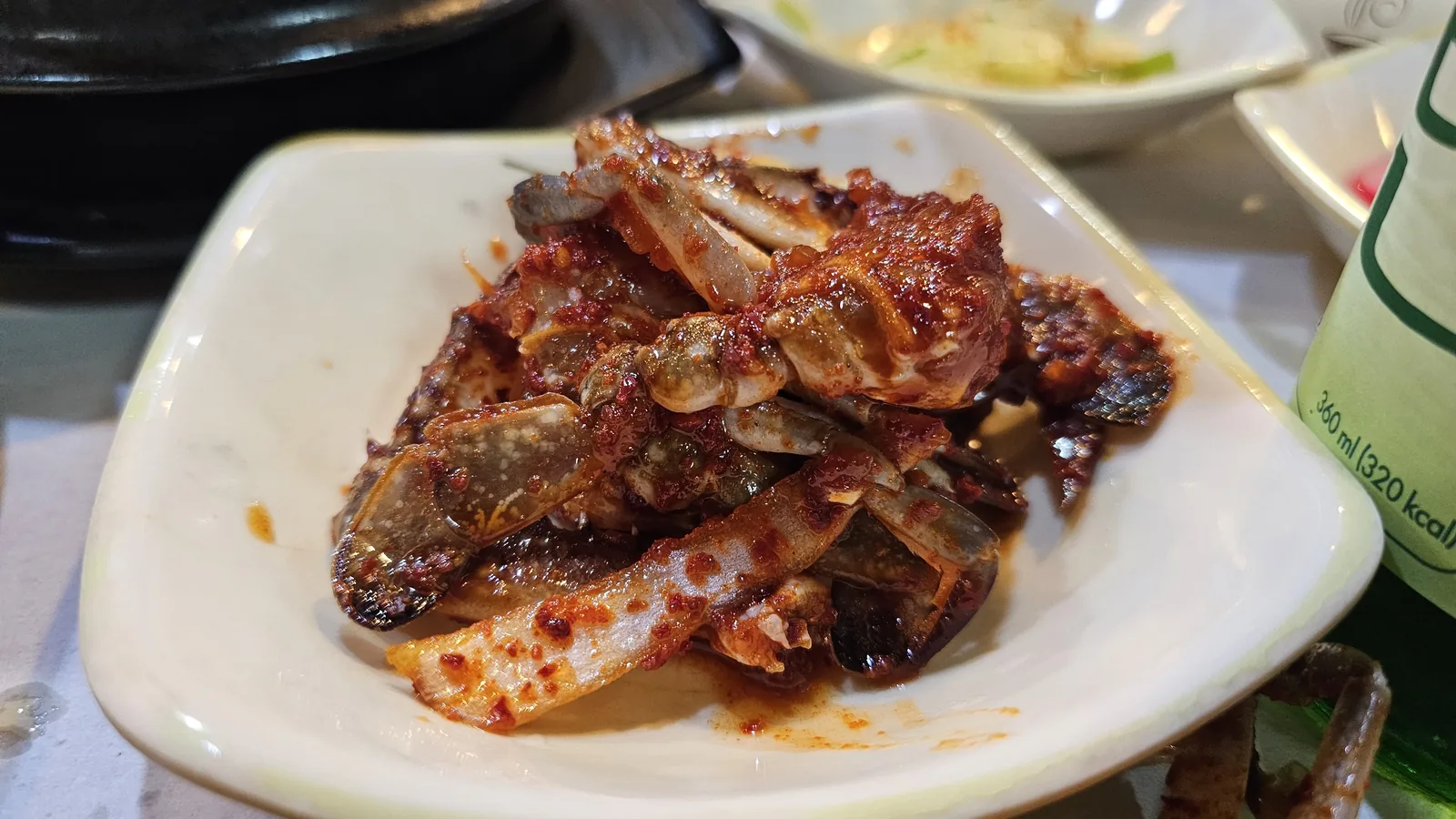
Ssam vegetables (perilla leaves, lettuce for wrapping), whole roasted garlic, pa-kimchi (green onion kimchi), pickled radish, tofu, cucumber salad, cabbage salad, pickled onion, stir-fried dried anchovies — and then, unexpectedly, 꽃게무침. That last one is spicy marinated raw crab, and it’s not standard at every BBQ place. Briny, spicy, slightly sweet. Excellent with the galbi.
The staff kept refilling everything automatically. Not “we had to ask and wait” — just constant quiet attention. When the ssam vegetables got low, more appeared. When the kimchi ran out, fresh kimchi arrived. Nobody had to flag anyone down.
Honestly, this is rare. And it makes the meal.
The Yangnyeom Galbi
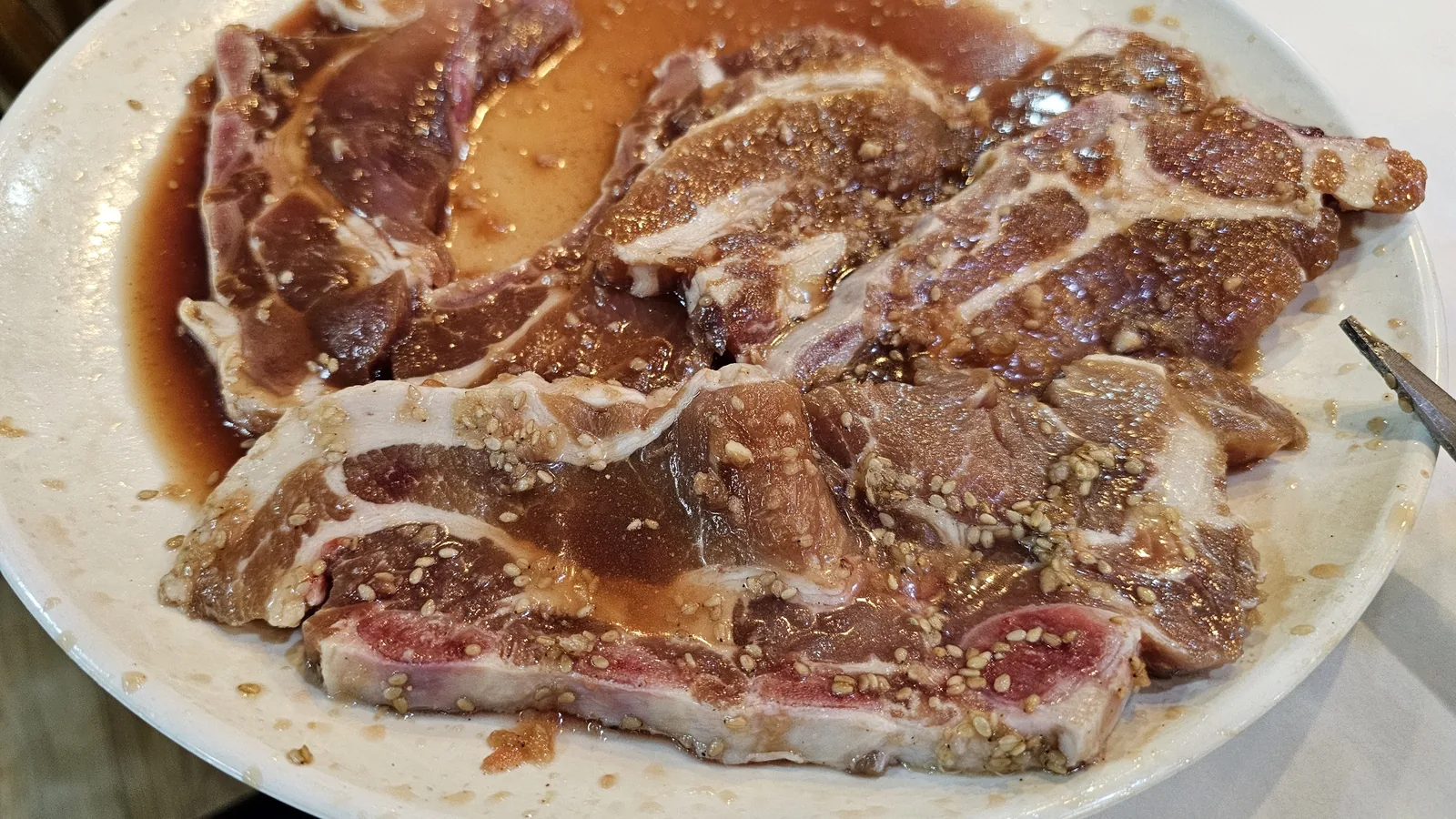
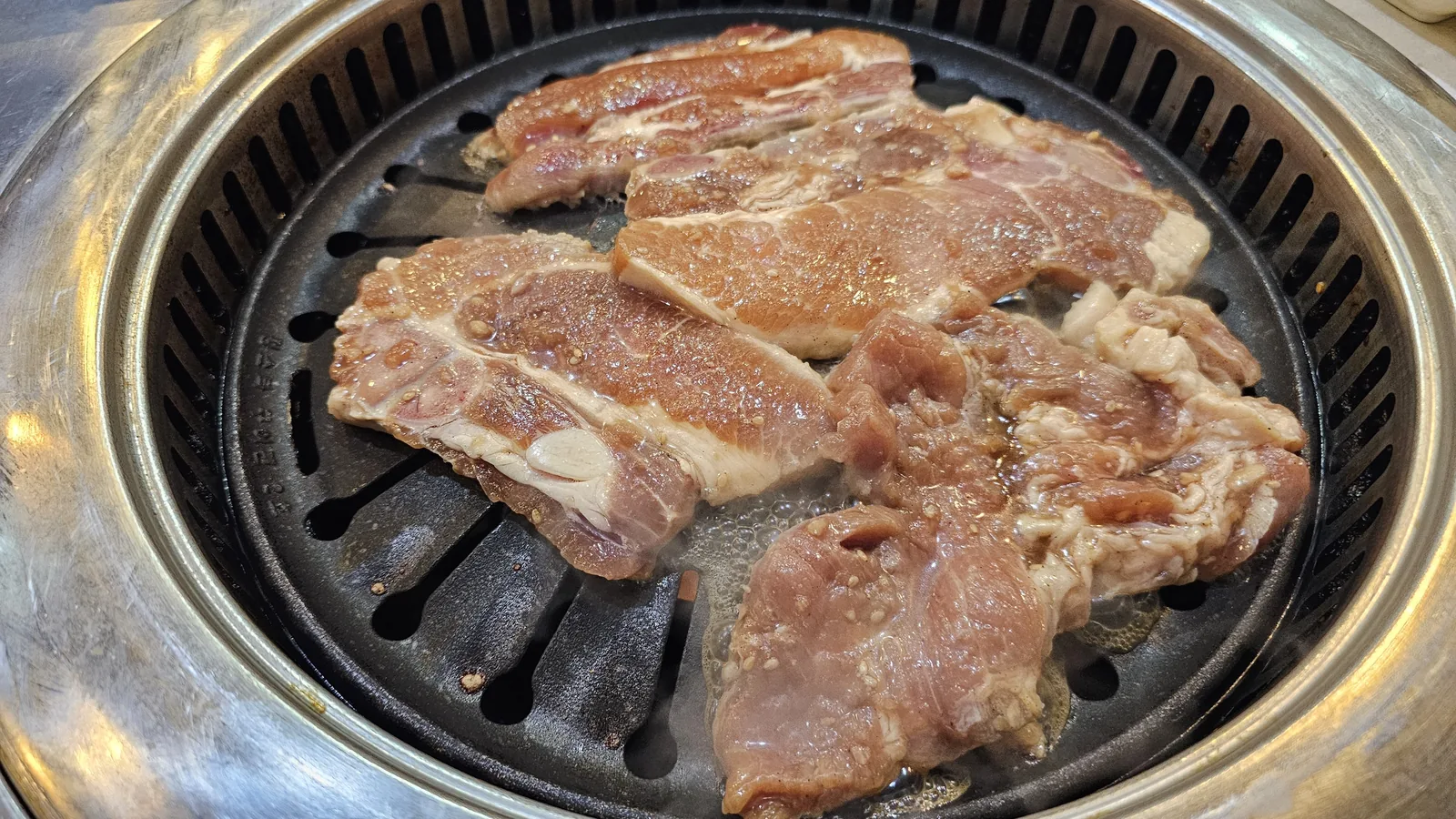
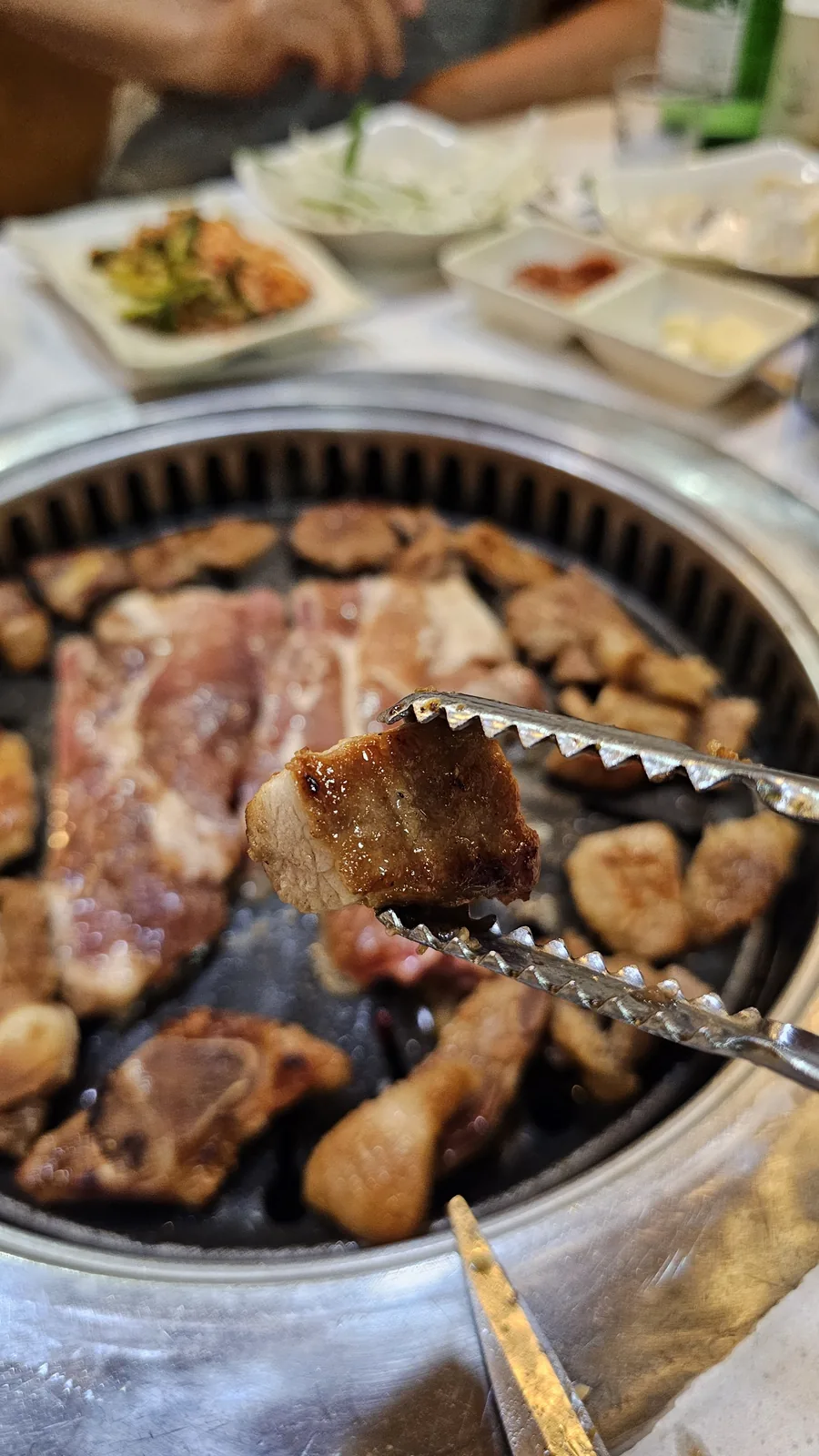
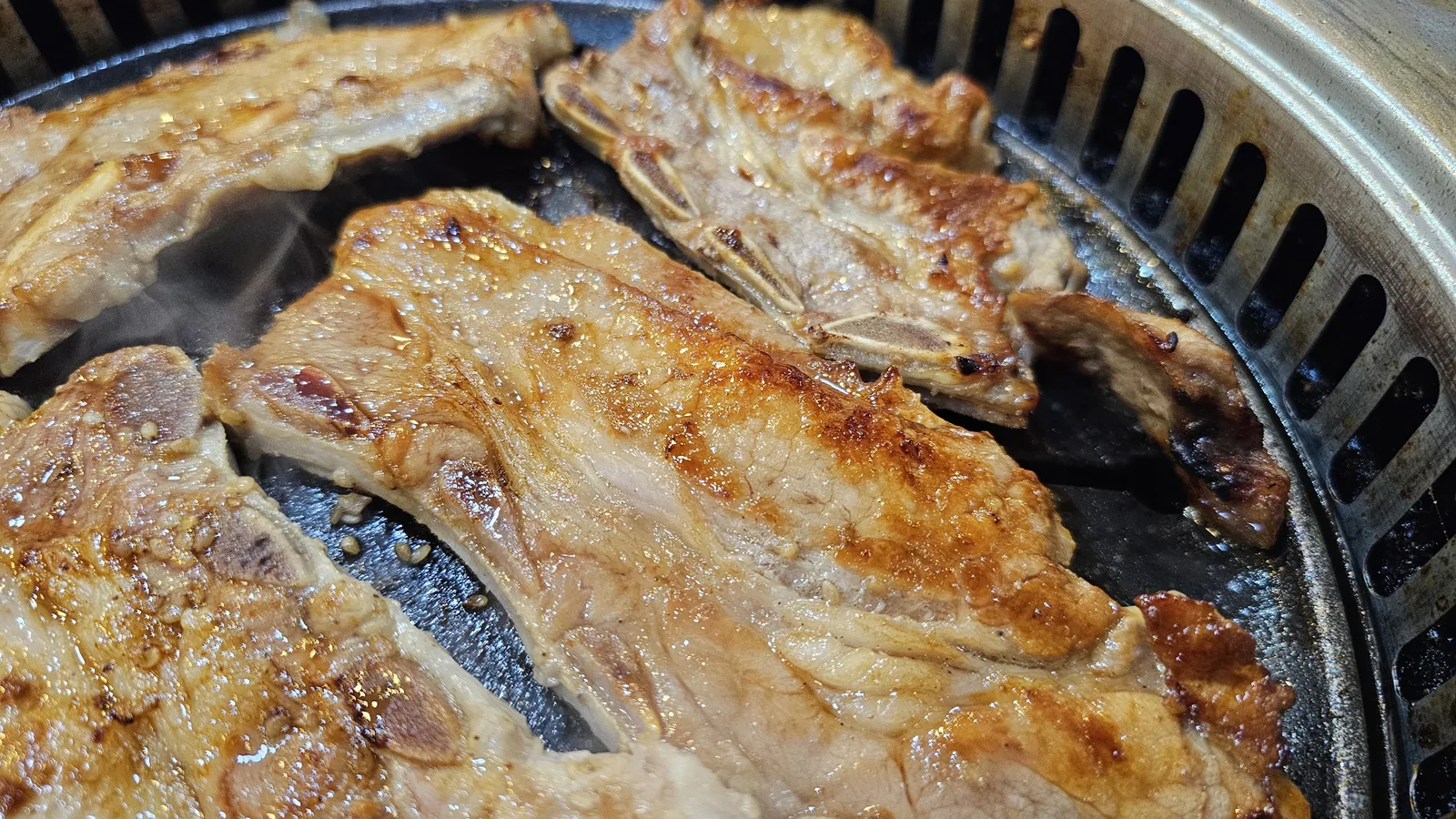
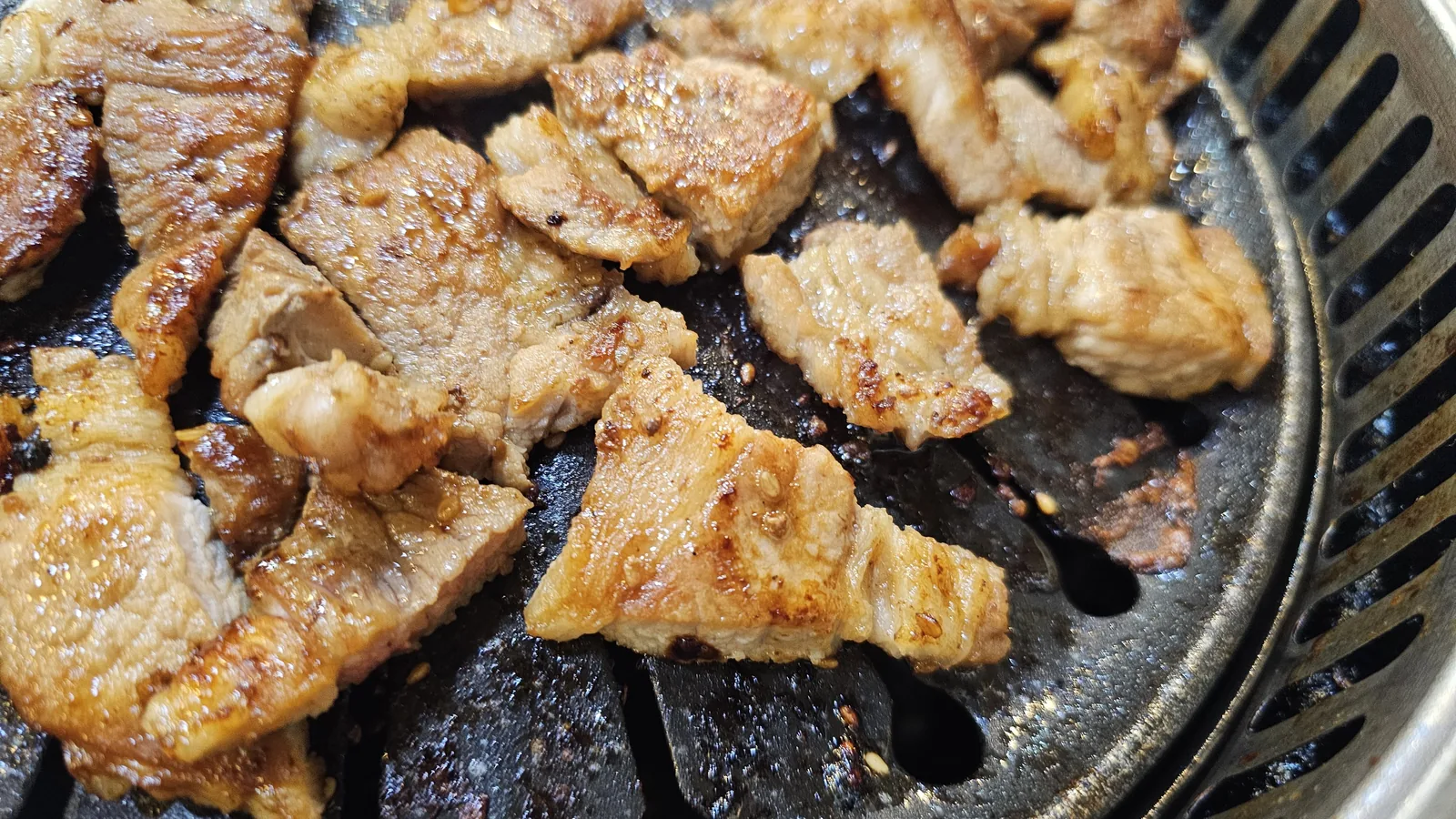
The raw meat comes out on a plate — marinade thick, rust-red, already coating every surface. Staff place it on the grill for you and manage it throughout. Scissors come out to cut the ribs into manageable pieces as they cook.
The marinade caramelizes on the grill. You get that sweet-charred crust on the outside, with the pork staying tender inside. Not dry, not overcooked. The handmade marinade isn’t aggressively sweet the way cheaper versions tend to be — there’s proper depth.
Wrap a piece in ssam lettuce. Add a sliver of garlic and a small dab of doenjang paste from the side dish. Eat in one bite.
That’s the move. Don’t overthink it.
Is it the single best yangnyeom galbi I’ve ever had? No. But for a small-town restaurant at 15,000 KRW a portion, it’s excellent — noticeably better than what you’d expect at this price point.
The Rest of the Order
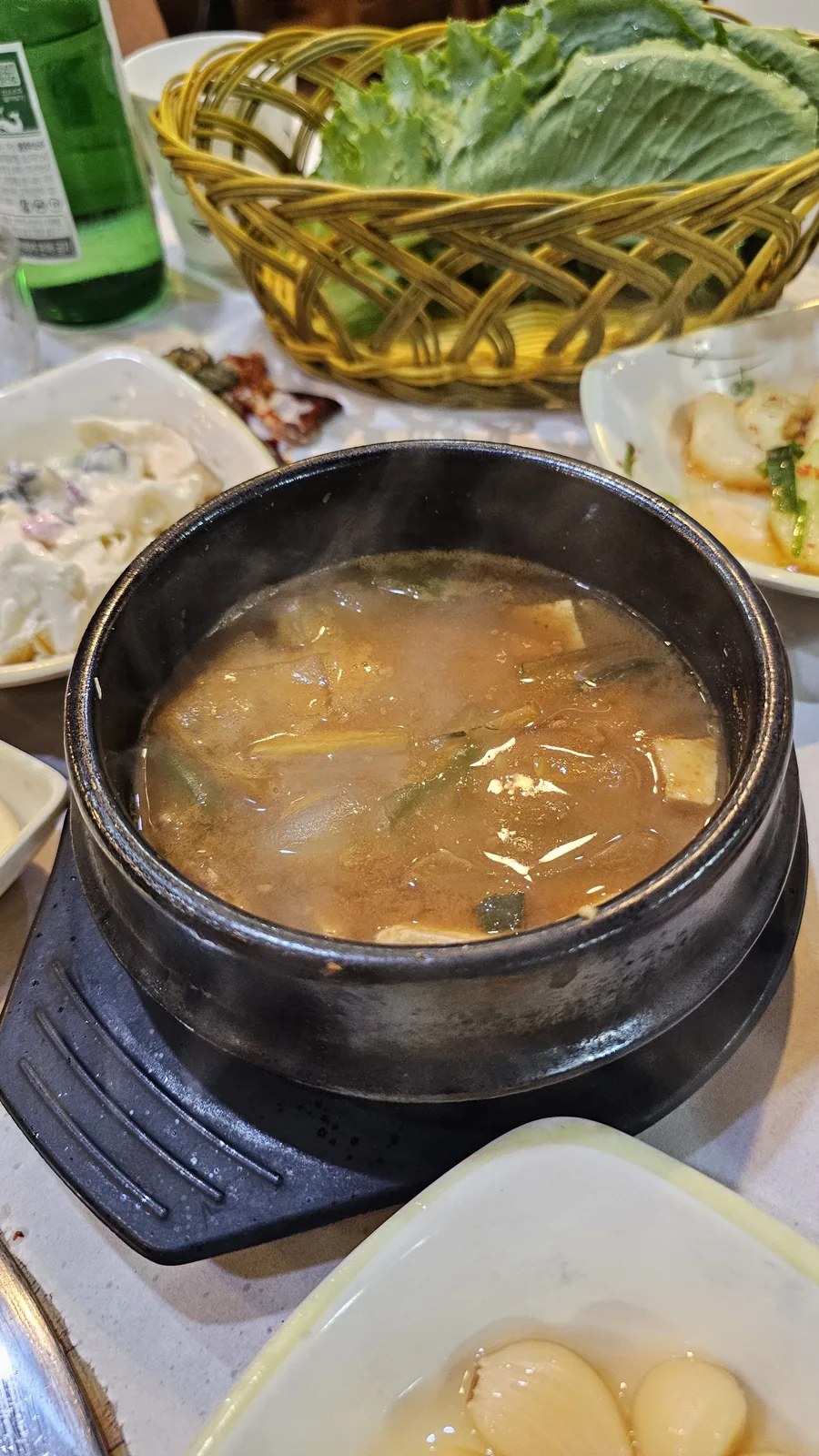
Doenjang jjigae: came automatically with the rice order. Tofu, vegetables, properly fermented soybean paste. Simple. Not the point of the meal but solid for what it is.
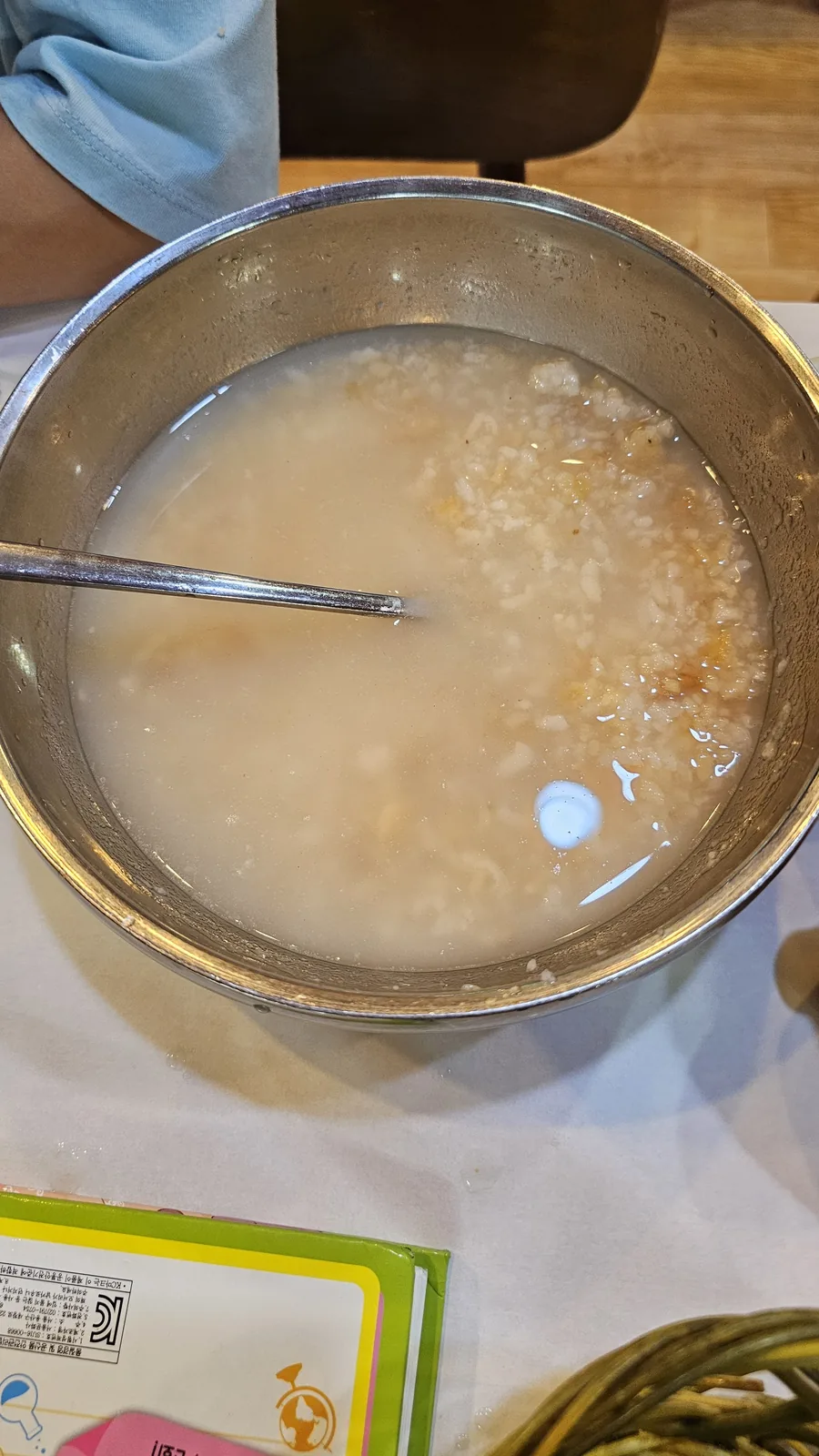
Nurungji tang: scorched rice soup. When rice cooks, a crust forms on the bottom of the pot. Add hot water, simmer it, and you get a light, slightly toasty soup. Koreans drink this at the end of meals to settle the stomach. At 3,000 KRW, it’s the right call after a meat-heavy BBQ session. Calming and clean.
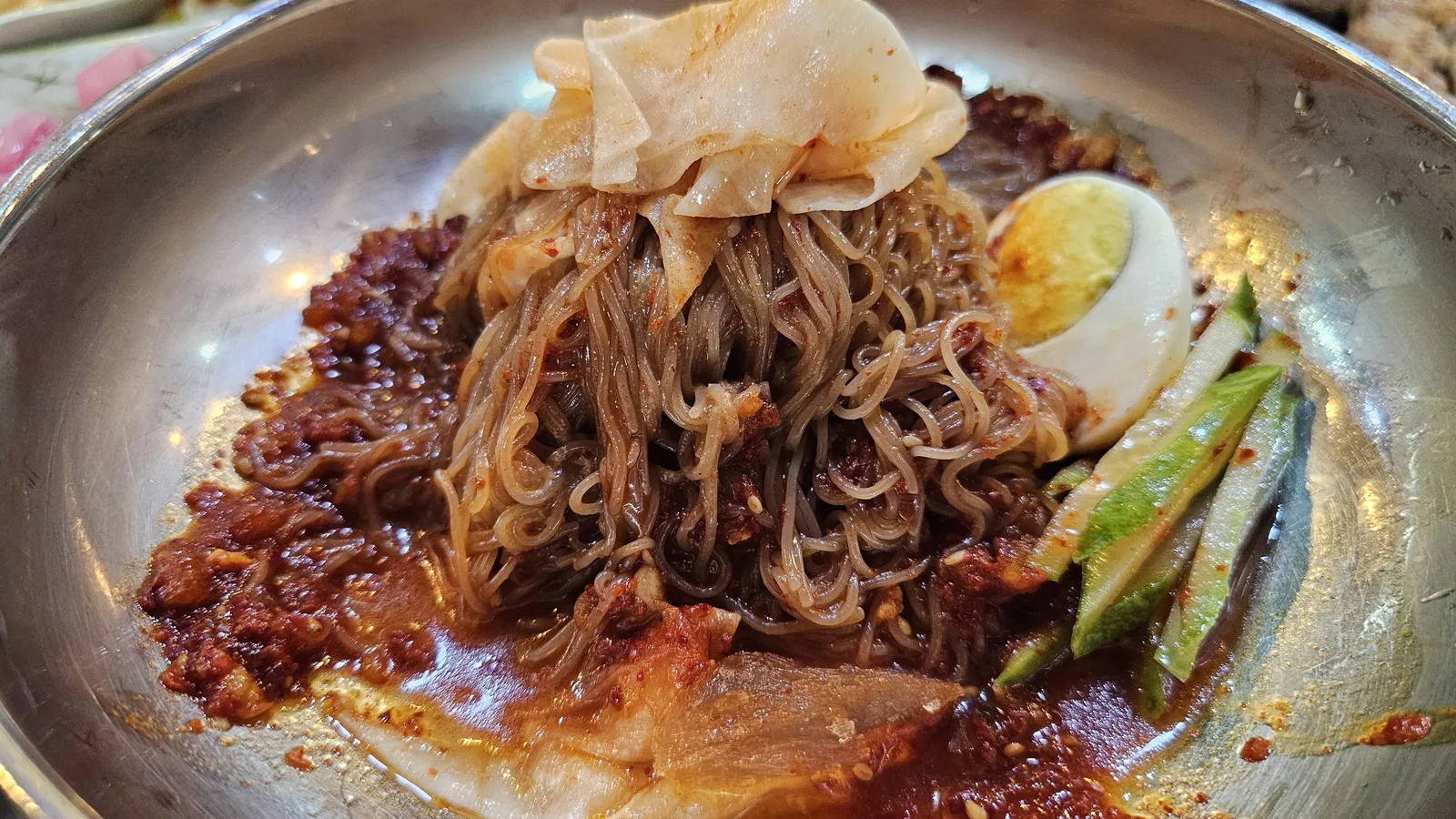
Bibim naengmyeon: thin, slightly chewy buckwheat noodles in spicy red sauce, topped with a soft-boiled egg, cucumber slices, and thin-cut boiled pork. Served cold. The contrast with the hot galbi is excellent — you naturally keep alternating between the two without really planning to. Ordered as a full set (8,000 KRW), which gives you the proper portion.
The Soju
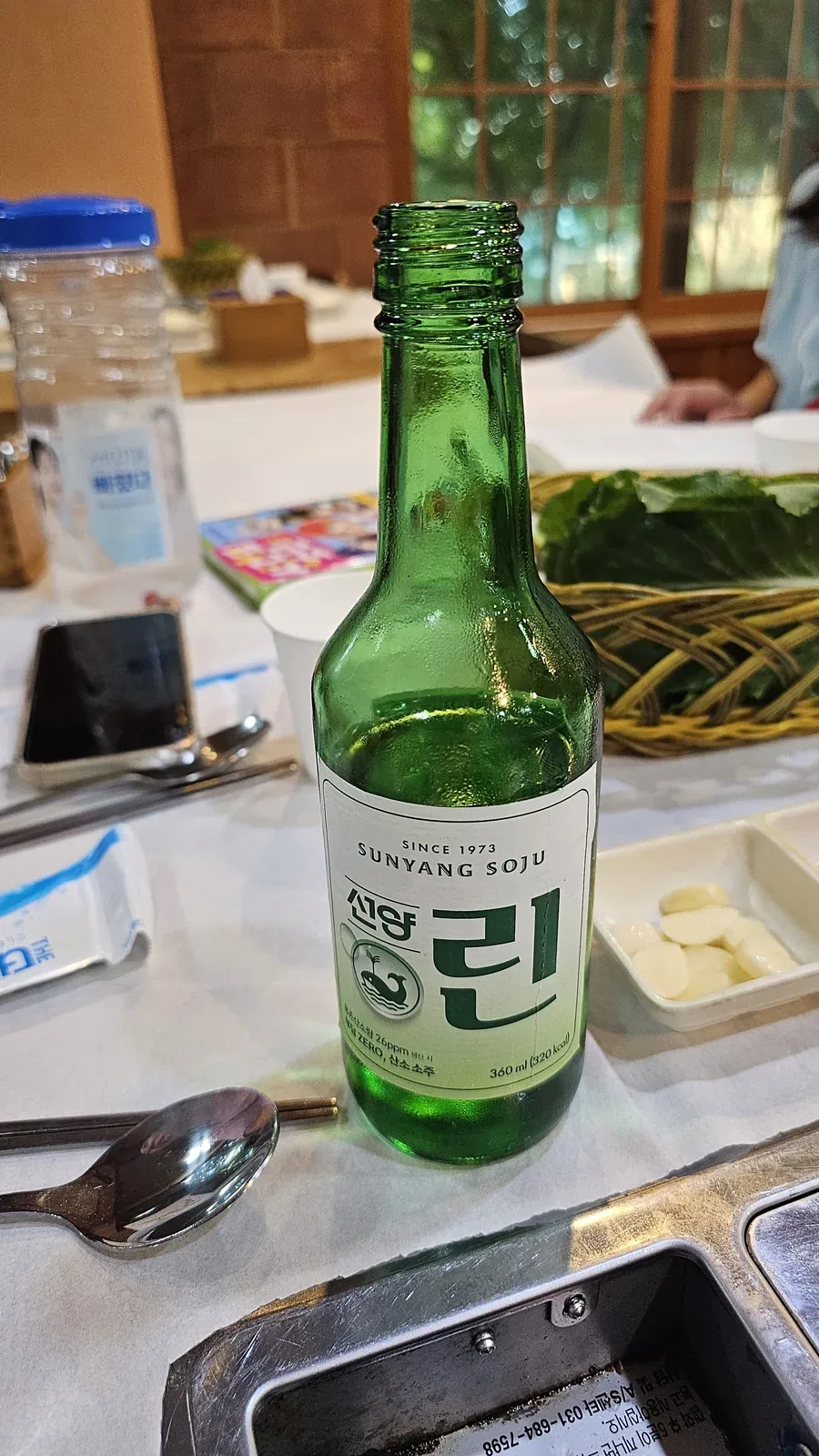
We had 순양소주 린 (Sunyang Soju “Rin”). 순양소주 is a regional distillery from Chungcheong — not a national brand, not what you’ll find everywhere in Seoul. “린” is their lighter variant, smoother and slightly lower ABV than the standard soju. A good regional touch. If you’re visiting Chungcheong, try it over the default Jinro.
At 4,000 KRW a bottle, no complaints.
Stuff Tourists Should Know
Getting there: Buses from Seoul’s Gangnam Express Bus Terminal (강남고속버스터미널) to Cheongyang run regularly. Journey is 2–2.5 hours. No direct train. A car is the most flexible option if you’re doing a broader Chungcheong road trip.
English: No English menu. Staff are warm and friendly but English communication will be limited. Google Translate’s camera mode works well on the menu board — point your phone at it and the Korean translates in real-time. You’ll manage.
Shoes: You remove them at the entrance. Bring clean socks.
Tipping: None. Korea doesn’t tip.
Vegetarian options: Minimal. This is a meat-focused grill restaurant. A few banchan are vegetable-based but the whole point is the galbi.
Seating: Mix of table and low floor-seating (좌식). The floor seats require sitting cross-legged or with legs folded — fine for most people, but if you have knee issues, a longer meal might be uncomfortable.
Card payment: Most Korean restaurants now accept major cards. Smaller provincial spots can occasionally be cash-only, so have some won on you just in case.
Kids: Should be fine. The grill setup is supervised by staff, and the food itself is family-friendly.
The Verdict
Should you go?
If you’re in Cheongyang or driving through South Chungcheong — yes, absolutely. It’s one of the better dinner options in the area and the value is hard to argue with. Get the 한돈수제양념갈비, let the staff handle the grill, eat the crab banchan, finish with nurungji.
If you’re only in Seoul for a few days — skip it and come back on a longer trip. Two and a half hours each way is a lot for galbi when Seoul has plenty of good options. Spend that time on something you can’t easily find elsewhere.
If you’re doing a slow road trip through Chungcheong province — yes, this is exactly the kind of place you want after a day of driving. Unhurried, local, genuinely good food, and staff who make you feel like a regular.
I’ll be back.
FAQ
What should I order at Haeoeum in Cheongyang?
The 한돈수제양념갈비 (handmade seasoned Korean pork ribs, 250g / 15,000 KRW) is the signature. Finish with a nurungji tang (scorched rice soup, 3,000 KRW) — it rounds off the meal perfectly.
How much does a meal at Haeoeum cost per person?
Roughly 18,000–22,000 KRW (~$13–16 USD) per person including galbi, a shared noodle dish, soup, and a drink. Very reasonable for the quality and quantity of food you get.
Do I need a reservation at Haeoeum?
A group of 5 walked in on a Friday evening without a reservation and got seated. That said, the restaurant isn’t large, so calling ahead for weekend visits or groups over 4 would be smart.
Is there an English menu at Haeoeum?
No English menu — this is a local spot in a small provincial town. Staff are very friendly but English may be limited. Google Translate’s camera mode works well on the menu board. Point-and-gesture gets you through.
How do I get to Cheongyang from Seoul?
About 2–2.5 hours from Seoul’s Express Bus Terminal (강남고속버스터미널). Buses run regularly. No direct train. A car makes the most sense if you’re exploring the South Chungcheong region more broadly.
Is Haeoeum good for groups?
Yes. The communal grilling setup is made for groups, the abundant banchan spread covers the table, and staff will handle the grill for you if needed.
Leave a Reply