
Quick honest review of Mukki (무끼) in Yeouido — a restaurant that specializes in borigulbi, Korea’s premium dried yellow corvina fish. Skip to the verdict at the bottom if you’re in a hurry, but here’s the short version: the fish is genuinely excellent, the set meal is substantial and satisfying, and this is one of the few restaurants in Seoul where you can eat a traditional Korean regional specialty that most tourists completely miss.
I’ve been here multiple times. It’s one of my regular lunch spots when I’m in Yeouido.
What Is Borigulbi?
Let me explain this before anything else, because if you’ve never heard of it, you need some context.
Gulbi (굴비) is dried yellow corvina — a silvery ocean fish that Koreans have been salting and drying for centuries. The best gulbi comes from Yeonggwang (영광), a coastal city in South Jeolla Province on Korea’s west coast. Within Yeonggwang, there’s a specific port town called Beopseongpo (법성포) that has its own climate and coastal wind patterns producing fish with a distinct result. Think of it the way wine regions work — same grape, different terroir, completely different character.
“Bori” (보리) means barley. Traditionally, the fish was stored and aged in barley husks, which absorbed excess moisture and kept the fish from spoiling while the flavor concentrated. The barley-aged fish is a step up from regular gulbi — more depth, slightly nuttier.
When the fish is grilled and served, it comes apart in firm, moist flakes. The skin crisps up. The interior has an intense savory-salty flavor that builds as you eat it. It doesn’t taste like fresh fish at all. It’s closer to aged charcuterie — a cured protein with concentrated umami and complexity.
The traditional way to eat it: a small chunk of fish with a bite of plain white rice, alternating. The rice cuts the salinity; the fish carries the flavor. They’re designed to eat together.
If you’ve been eating Korean food but haven’t tried proper borigulbi, you’ve been missing one of the foundational dishes.
About Mukki
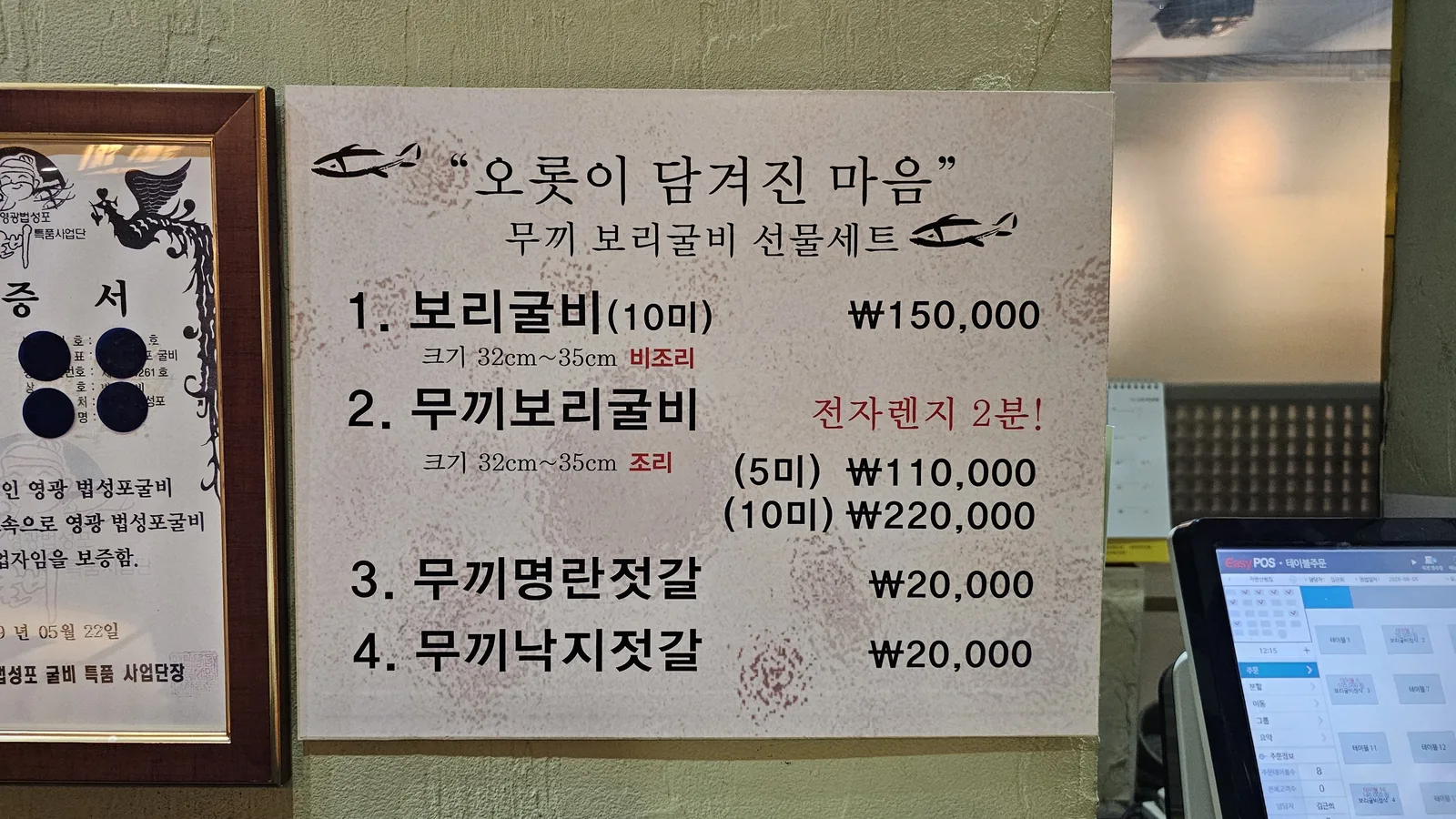
Mukki (무끼) is a specialty gulbi restaurant that also operates a gift set business — they sell boxed borigulbi as premium gifts, the kind Koreans buy to give during major holidays like Chuseok and Seollal. That detail matters, because it tells you how seriously they take the sourcing. This isn’t a restaurant that happens to serve gulbi — it’s a gulbi specialist that also runs a restaurant.
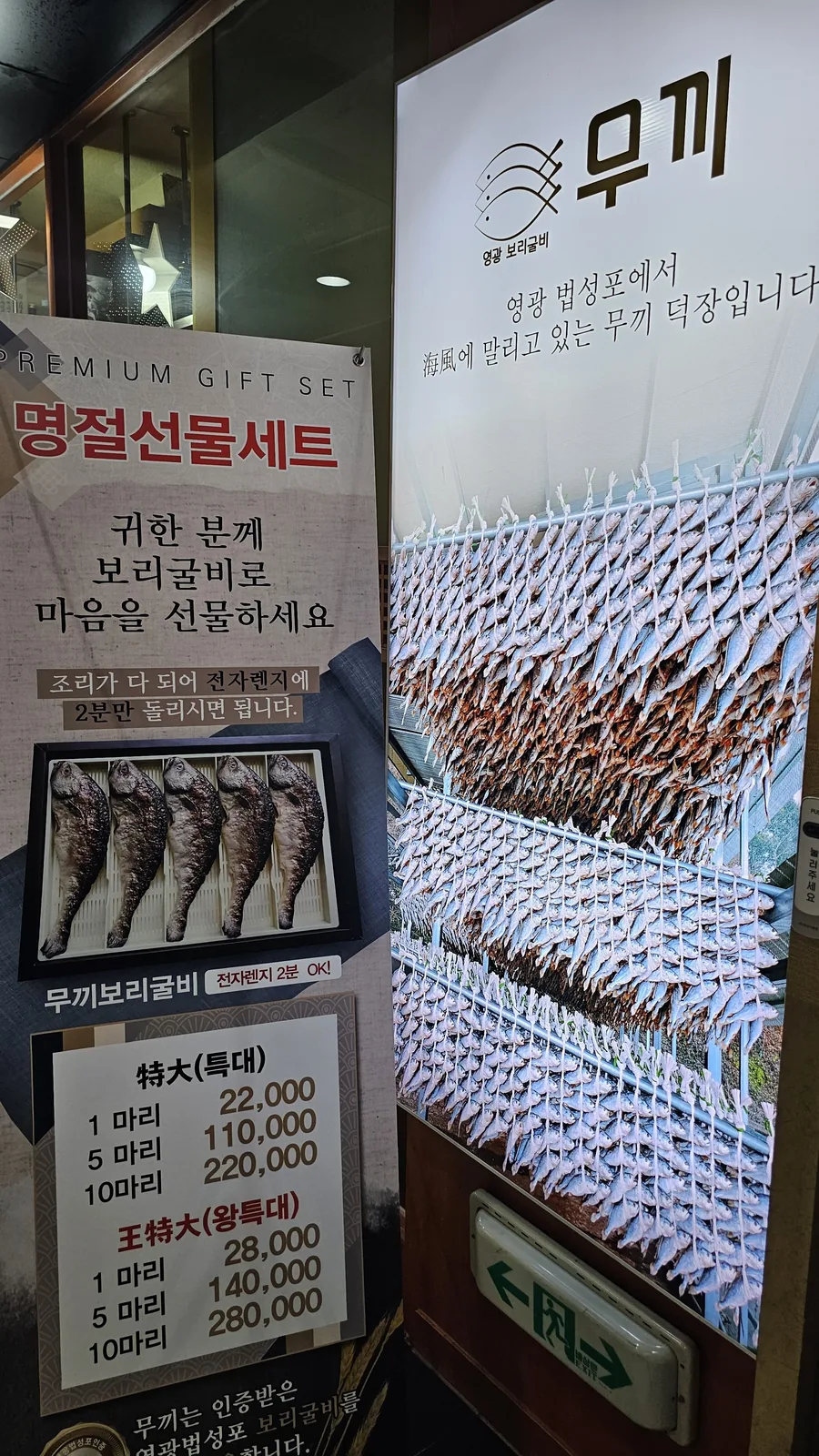
The full name on the sign is “무끼 영광 보리굴비” — Mukki, Yeonggwang Borigulbi. They’re upfront about where the fish comes from.
Getting There
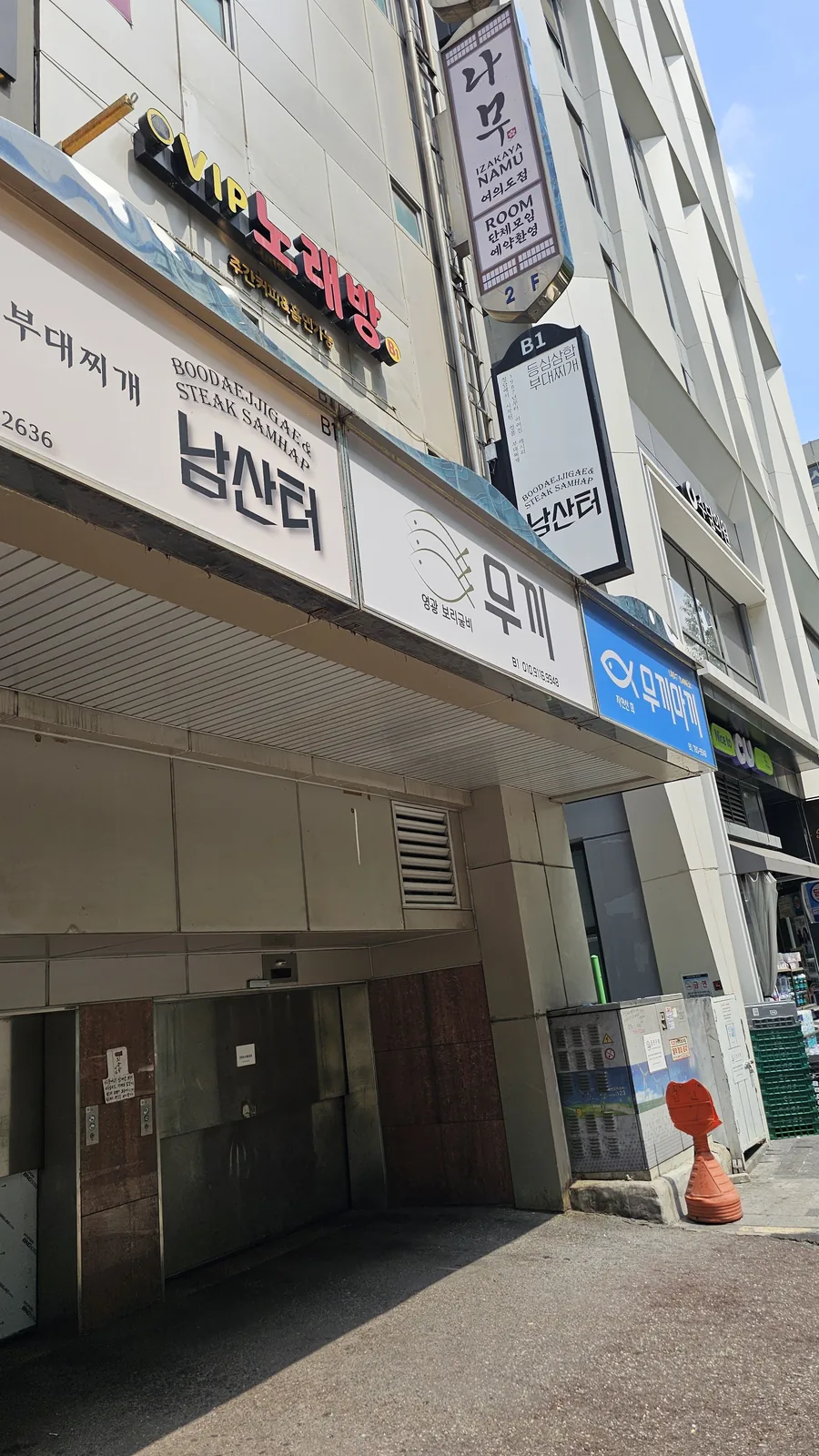
Mukki is in the basement level (B1) of a commercial building in Yeouido — Seoul’s financial district. If you know Canary Wharf in London, or Midtown Manhattan, or La Défense in Paris — same energy. Corporate towers, suit-wearing office workers, and a serious lunch crowd Monday through Friday.
Nearest subway: Yeouido Station (Line 5 and Line 9), around 5–10 minutes on foot depending on your exit. Google Maps will get you there accurately.
From Incheon Airport: About 50–60 minutes by subway (Airport Railroad to Gimpo Airport Station, transfer to Line 5 toward City Hall direction). By taxi or Kakao T, expect 40–50 minutes and roughly 50,000–65,000 KRW (~$37–48 USD) depending on traffic.
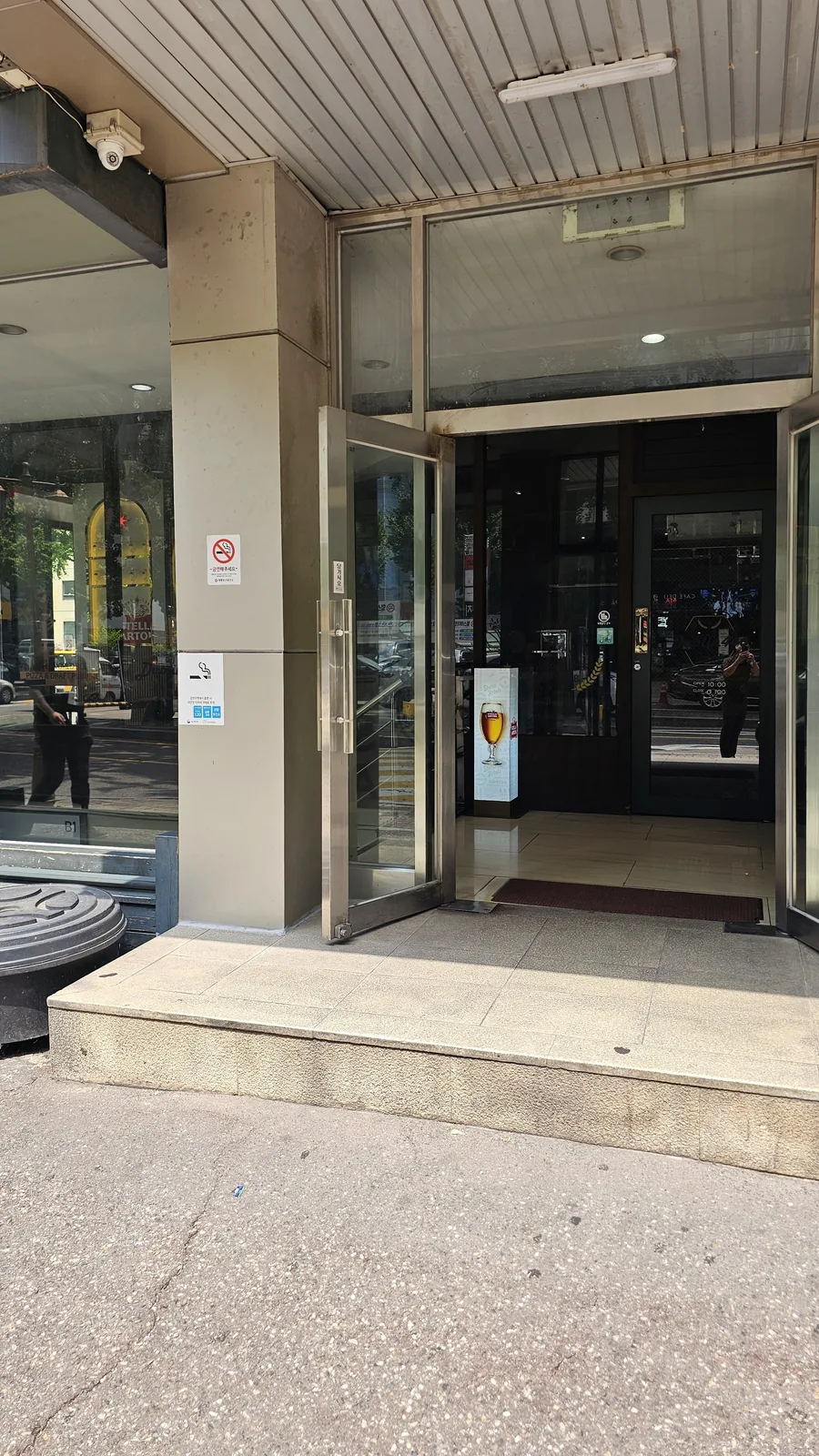
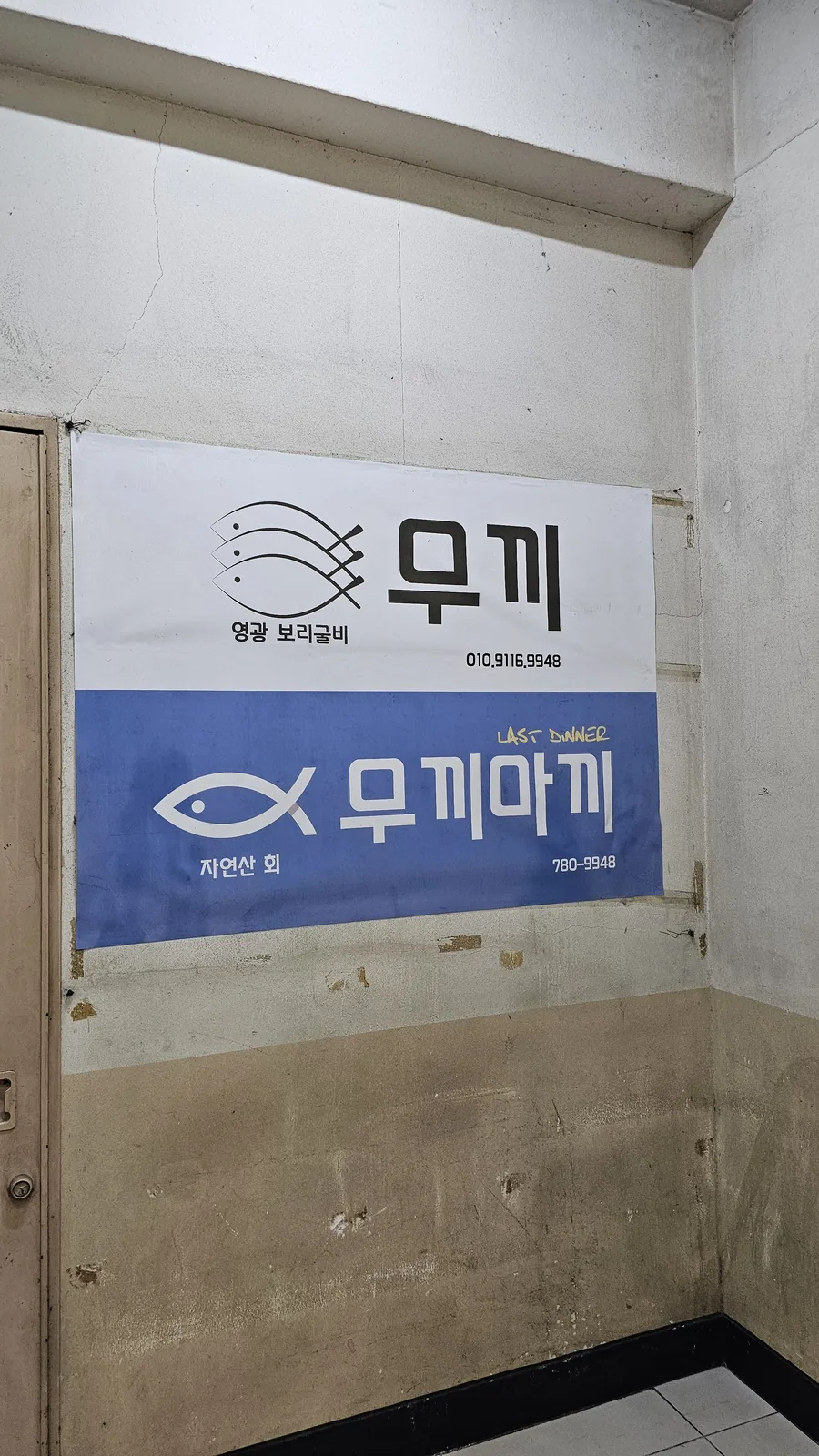
The restaurant is underground — follow the stairway down from street level. The entrance is easy to miss if you’re not looking, so check Google Maps before arriving.
The Interior
Down the stairs, you’re in a quiet, low-lit dining room that feels entirely disconnected from the Yeouido financial district bustle outside.

Traditional Korean floor seating — low wooden tables, cushions, wooden partition screens between sections, bamboo pendant lights overhead. It’s the kind of setup that makes you slow down and actually eat without rushing.
Vibe: calm, traditional, not Instagram-optimized. They’re not trying to be trendy. The space is designed to serve the food, not the other way around.
One thing foreigners should know upfront: there are no chairs. It’s all floor seating (좌식 방식). You’ll be sitting cross-legged or with legs folded for the duration of your meal — typically 30–45 minutes. If your knees don’t love that arrangement, keep it in mind before you commit.
What I Ordered
Borigulbi Jeongshik — 35,000 KRW (~$26 USD) per person
“Jeongshik” (정식) means a full Korean set meal. You get the main dish — in this case the grilled borigulbi — plus stone pot rice, green tea water for soaking, and a spread of banchan (side dishes). It’s not à la carte; it’s the whole package.
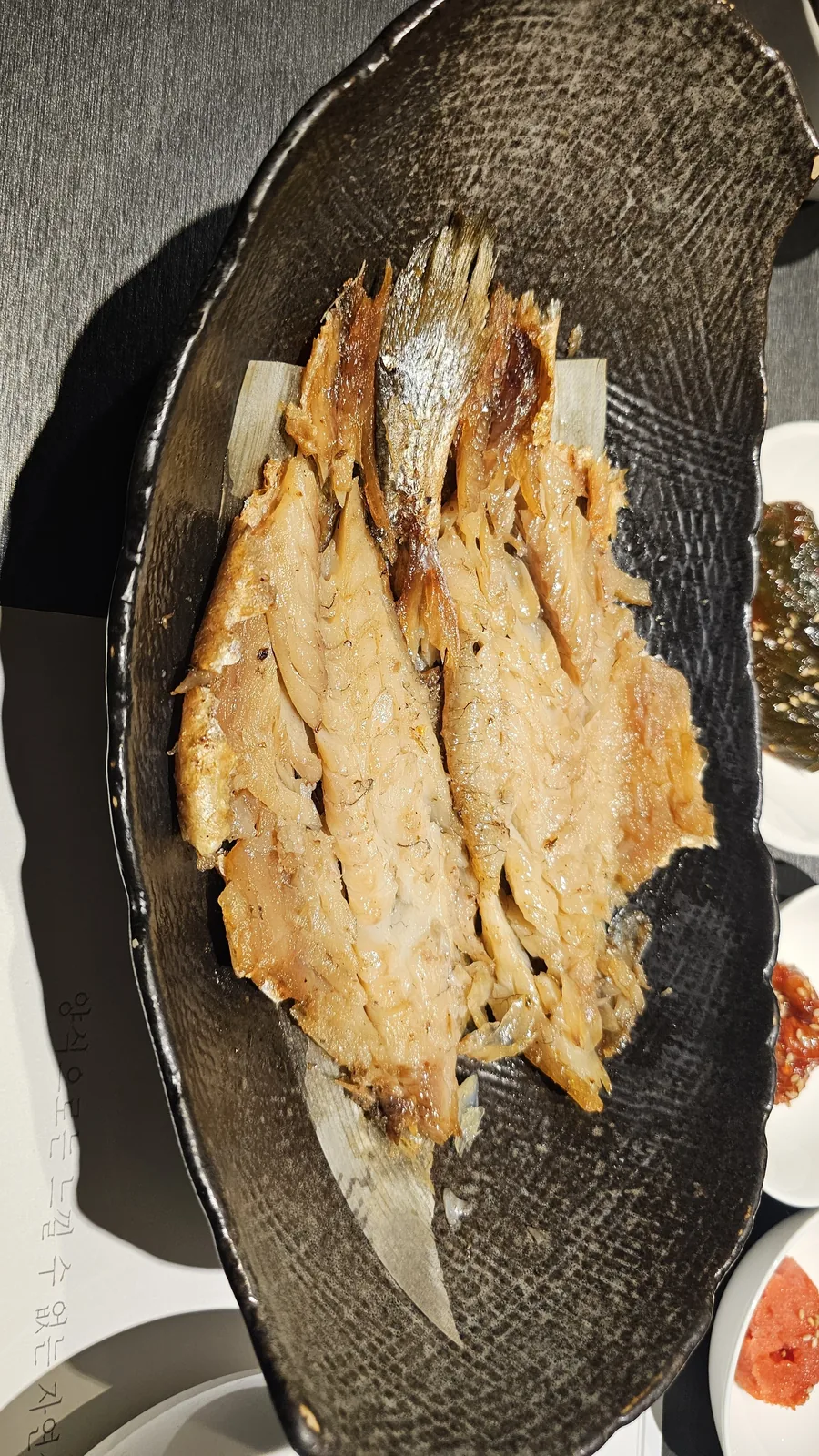
The fish arrives on a black ceramic plate, presented on a bamboo leaf. It’s pre-grilled in the kitchen and brought out partially separated — head and body split, ready to work through. No tableside cooking, no waiting. It’s just there, and it looks right.
The skin is golden. Slightly crispy at the edges. The flesh underneath pulls away cleanly in chunks when you work through it with chopsticks.
Here’s the thing about the flavor: it’s concentrated in a way that fresh fish simply isn’t. The curing and drying process pulls moisture out and intensifies everything. There’s salt, obviously — but underneath that there’s depth. A kind of nuttiness from the aging. Umami that builds as you eat more. It’s not aggressively salty if you pace it right (small amount of fish + rice = correct ratio).
This is the dish. Everything else on the table exists to complement it.
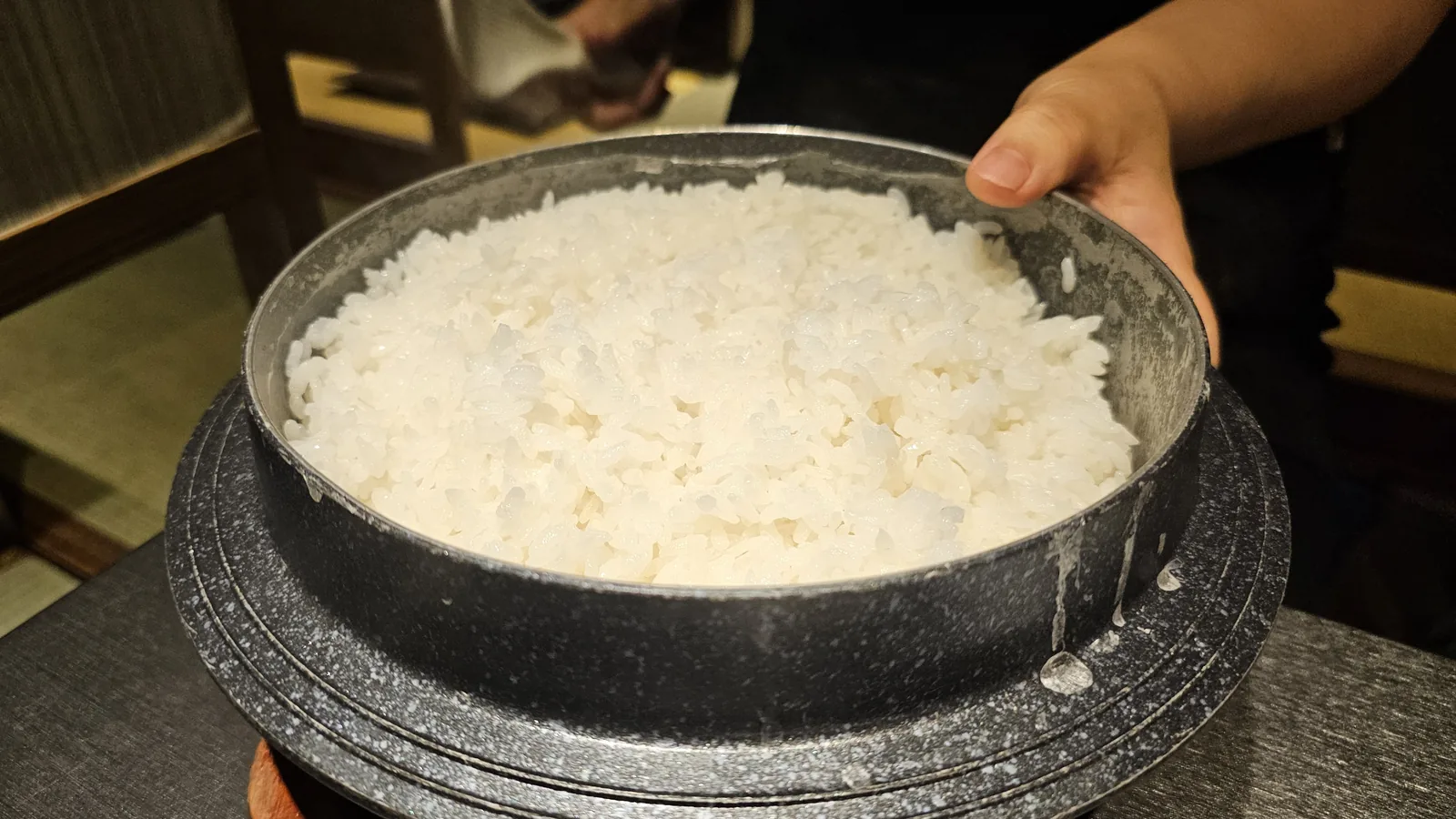
The rice comes in a stone pot (돌솥, dolsot) — plain white rice, steaming. No seasoning, no additions. Just rice. That’s the point.
The Side Dishes (Banchan)
Mukki doesn’t hold back on the banchan.
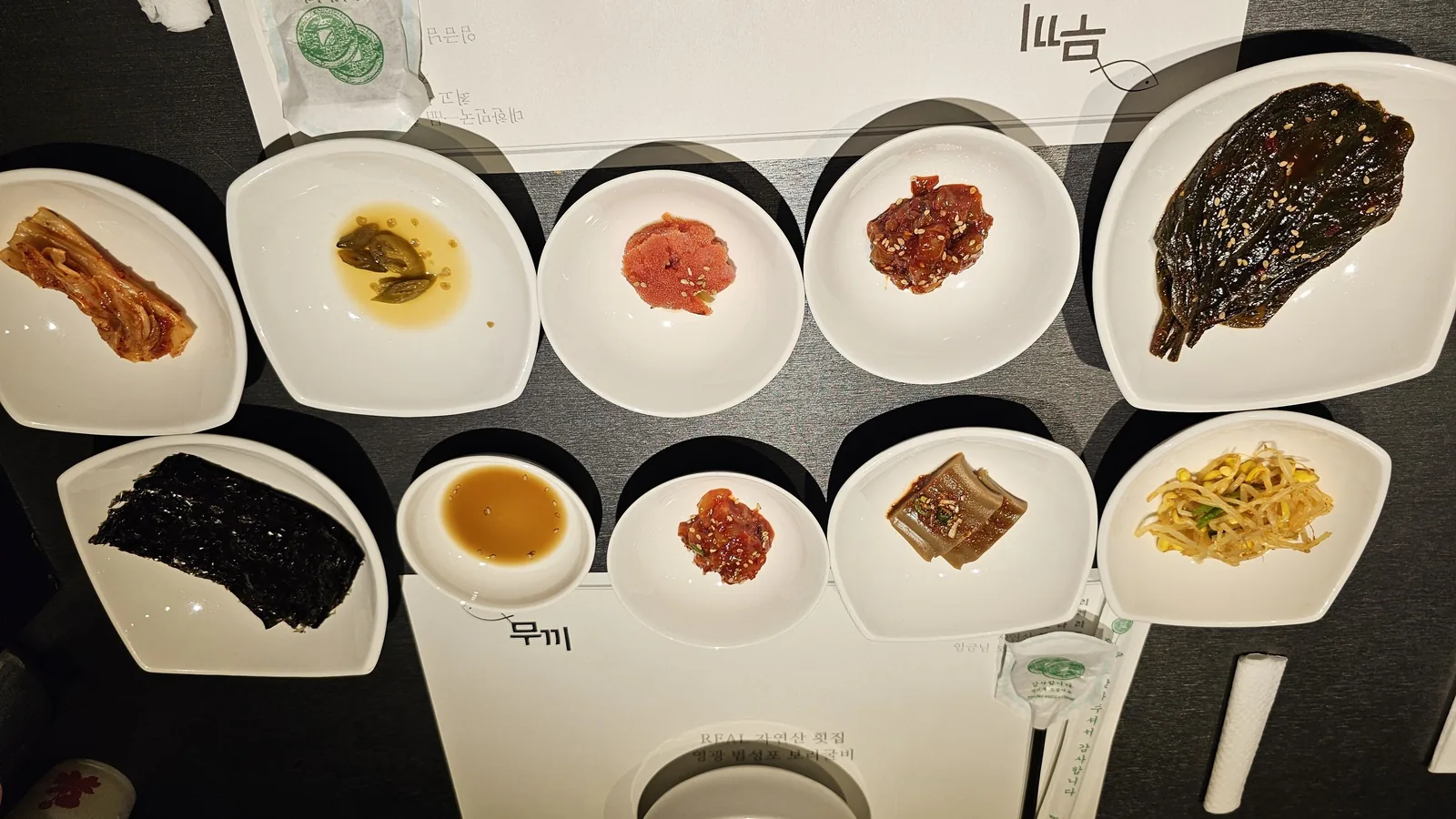
When the table is fully set, you’ve got:
Myeongran jeotgal (명란젓갈) — spicy salted pollock roe. Small, bright orange, intensely flavored. A tiny amount goes a long way with rice. This is one of the best things on the table.
Nakji jeotgal (낙지젓갈) — raw salted small octopus. Chewy, funky, seriously briny. Not for everyone, but worth a bite if you’re adventurous. Koreans love this stuff.
Soy-simmered gulbi (간장 조림 굴비) — a smaller piece of gulbi braised in soy and sugar. Completely different preparation from the main grilled fish. Sweeter, softer, almost glazed. A good contrast.
Kongnamul muchim (콩나물무침) — seasoned bean sprout salad. Light and fresh. Good palate cleanser between fish bites.
Cheongyang pepper pickles (청양고추절임) — sliced green chilies in soy-vinegar brine. Crunchy, sharp, a little spicy.
Kimchi — house-made, well-fermented. Standard good kimchi.
Gim (김) — roasted seaweed sheets. Wrap some fish and rice in one if you want.
Green tea water (녹차물) — the pale liquid that looks like a soup but absolutely isn’t. Don’t drink it on its own. Here’s how it’s meant to work: load a spoonful of rice, lay a piece of gulbi on top, dip the whole spoon into the green tea water for a second, then eat it soaked. The tea softens the rice, cuts the salt of the cured fish, and pulls everything into something lighter and cleaner. It’s the single best bite of the meal, and it’s the one most first-timers miss because they assume it’s soup.
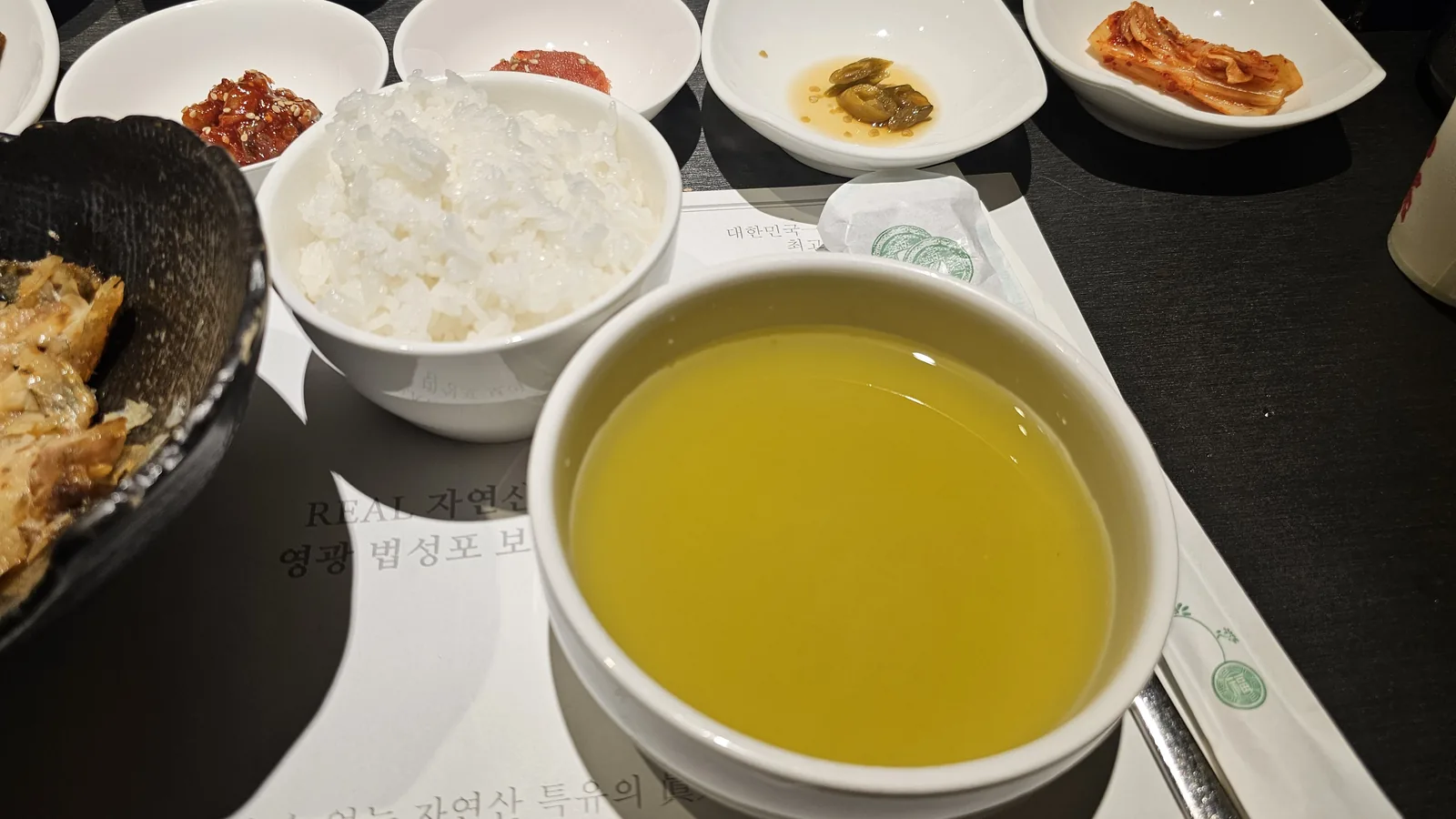
The myeongran and nakji jeotgal are what stand out most. Both are clearly house-made and both are better than what you get at most Korean restaurants. Don’t ignore them just because you don’t recognize them.
Pacing tip: don’t load up on banchan in the first five minutes. The fish is the main event. Give it the attention it deserves.
Stuff Tourists Should Know
Language: No English menu. Staff speaks basic Korean only. Google Translate’s camera mode will get you through the menu if you need it. Honestly, most people just order the jeongshik — there’s not much else to decide.
Payment: Cards accepted. Foreign cards (Visa, Mastercard) work fine at a normal commercial restaurant in 2026. No surprises there.
Tipping: None. Korea has no tipping culture. Don’t do it — it’ll just create an awkward moment.
Best time to visit: Arrive before noon or after 1:15 PM on weekdays. Yeouido is an office district with a real lunch rush. The restaurant fills up fast between 12–1 PM.
Reservations: Not strictly required, but worth calling ahead or checking Google Maps if you’re coming specifically for this place and don’t want to wait.
Vegetarian/vegan: Essentially zero options. The entire menu is fish-focused and most banchan contain seafood products. Wrong restaurant for dietary restrictions.
Floor seating: All floor seating, no chairs. 30–40 minute meals in cross-legged position. Fine for most people; potentially uncomfortable if you have knee or hip issues.
Gift sets: If you want to bring Korean food back home, Mukki sells boxed borigulbi and jeotgal sets. Premium, well-packaged, the kind of thing that impresses people who don’t know what it is.
For cockle bibimbap instead of a fish set in Yeouido, read our Eomjine Kkomak House in Yeouido: Cockle Bibimbap Review.
The Verdict
Should you go?
If you’re in Yeouido anyway — yes, without much hesitation. This is one of the better traditional Korean lunch options in the area, and borigulbi is the kind of dish that doesn’t show up in tourist-facing restaurants. It’s regional specialty food eaten by Koreans for Koreans, done properly, in a setting that takes it seriously.
If you’re on a short Seoul trip (3–4 days) and haven’t covered Korean BBQ, sundubu jjigae, or naengmyeon yet — go do those first. Not because Mukki is worse, but because borigulbi rewards context. It’s a dish that makes more sense after you’ve already spent time eating Korean food.
If you’ve been to Korea before and you’re looking to go deeper — this is exactly the kind of meal worth planning around. It’s not trendy, not Instagram-famous, and that’s the point.
At 35,000 KRW (~$26 USD) per person for a full jeongshik with this quality of sourcing, the price is fair. You’re paying for premium fish from a specialist source, not a generic set meal.
I keep coming back. That says most of what needs to be said.
FAQ
What is borigulbi and what does it taste like?
Borigulbi is dried yellow corvina fish from Yeonggwang, South Korea — salted, dried, and traditionally stored in barley husks during aging. When grilled, the flesh is concentrated and savory with a slightly briny depth that fresh fish doesn’t have. You eat it with plain rice, a few bites at a time — at Mukki, by dipping a spoonful of rice topped with fish into green tea water.
How much does a meal at Mukki Yeouido cost?
The borigulbi jeongshik (full set meal) is 35,000 KRW per person (~$26 USD). That includes the grilled fish, stone pot white rice, green tea water for soaking, and a full spread of banchan (Korean side dishes).
Do I need a reservation at Mukki Yeouido?
For weekday lunch, arrive before noon or after 1:15 PM to avoid the office crowd rush — Yeouido is a major business district. It’s worth calling ahead or checking their Google Maps page for current hours before visiting.
Is there an English menu at Mukki?
No English menu, and staff speaks minimal English. Google Translate’s camera mode works on the Korean menu board. Alternatively, just point at other tables’ food and say "이거" (i-geo — "this one").
Is Mukki suitable for vegetarians?
No. The restaurant is built around fish, and most banchan (side dishes) include fermented seafood. There’s essentially nothing suitable for vegetarians or vegans here.
Is the seating comfortable for foreigners?
It’s all traditional Korean floor seating — low tables with cushions, no chairs. If you have knee or hip issues, factor in 30–40 minutes of sitting cross-legged or folded before booking.
Leave a Reply