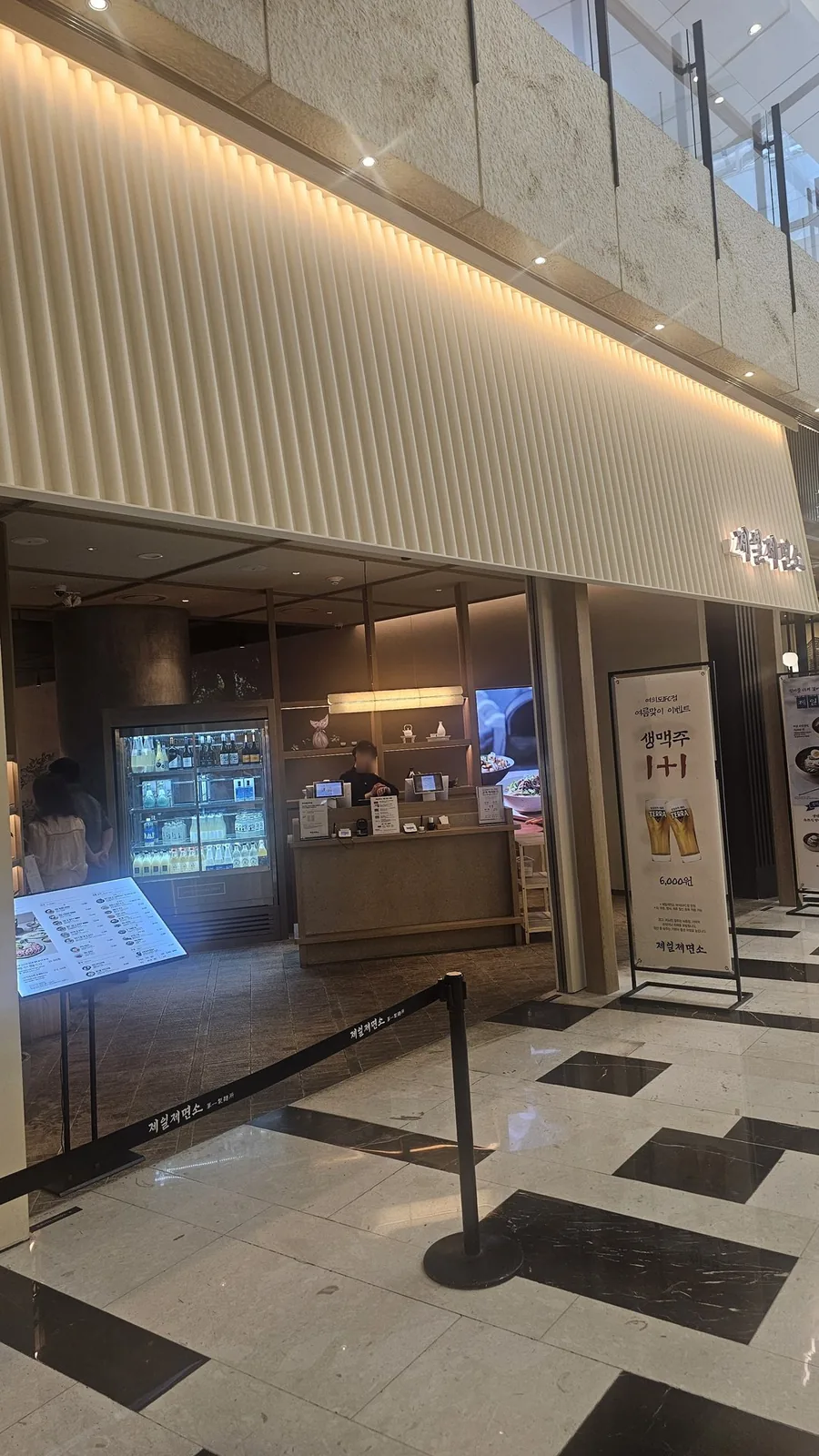
Tag: seoul lunch

  • Cheil Jemyunso Yeouido: Honest Review of the Shabu Shabu Hot Pot

    Cheil Jemyunso Yeouido: Honest Review of the Shabu Shabu Hot Pot

    🇯🇵 日本語版はこちら

    Quick honest review of Cheil Jemyunso at Yeouido IFC — a Korean chain known for cold noodles that somehow makes its shabu shabu hot pot the main reason to show up. Skip to the verdict if you’re pressed for time, but here’s the short version: the beef is thicker and better quality than the price suggests, the setup is clean, and if you’re already in Yeouido this is one of the better lunch calls you can make.

    Three of us went on a Tuesday. Walked in at 12:15 PM, no reservation, seated immediately.

    What Is Cheil Jemyunso?

    Cheil Jemyunso (제일제면소) is a Korean restaurant chain. The name translates roughly to “Number One Noodle Shop” — 제일 means “first” or “best,” 제면소 means a place that makes noodles. The menu does include naengmyeon (Korean cold noodles), warm noodles, and rice dishes.

    But the Jeil Shabu hot pot is what keeps people coming back. The Yeouido branch sits inside IFC Mall (국제금융센터 — the financial district’s main shopping complex), which means it feeds a lot of office workers on tight lunch windows. They’ve got the operation dialed in.

    What Is Shabu Shabu?

    If you haven’t done this before: shabu shabu (샤브샤브) is a hot pot style where you cook thin slices of beef and vegetables yourself by swishing them through simmering broth at your table. The name comes from the Japanese sound of the meat moving through liquid. Korea picked it up and made it their own.

    Cheil Jemyunso’s version — the Jeil Shabu Jeongol (제일 샤브 전골) — comes as a full ingredient platter: beef, mushrooms, bean sprouts, bok choy, lotus root, green chili, perilla leaves. The pot of broth sits on an induction burner built into the table. You heat it up, cook the ingredients at your own pace, and the broth gets better as the meal goes on.

    This is not a fast lunch. Plan for 45–60 minutes minimum.

    Getting There

    Subway: Yeouido Station (여의도역), Line 5 (purple line) or Line 9 (gold line). Follow IFC Mall signs from the station — you can walk the whole way underground without going outside, which matters in Seoul’s summers and winters.

    From Myeongdong: About 20 minutes by subway.

    From Hongdae/Sinchon area: About 15 minutes.

    From Gangnam: About 20 minutes via Line 9.

    From Incheon Airport: Around 50–60 minutes via Airport Railroad + subway transfer at Gimpo Airport Station.

    Yeouido is Seoul’s financial district — think Canary Wharf in London or La Défense in Paris. It’s not a typical tourist neighborhood, but plenty of visitors end up here for the Han River Park, the spring cherry blossoms along Yeouiseo-ro, or catching something at the KBS or MBC broadcast centers. If Yeouido is already on your itinerary, Cheil Jemyunso is easy to slot in.
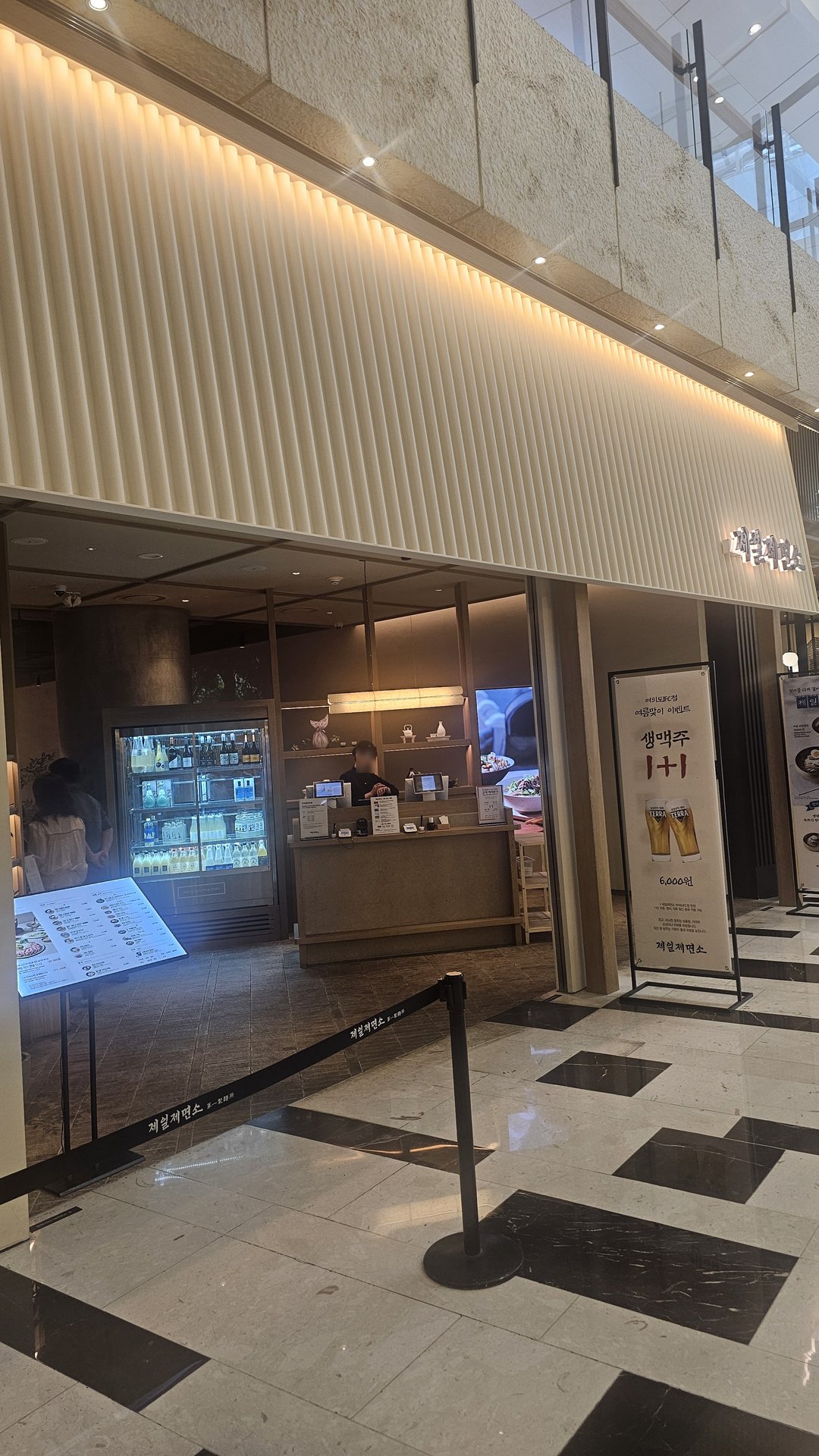
    Jeil Myeonso Yeouido IFC branch entrance inside the shopping mall
    Cheil Jemyunso Yeouido IFC branch entrance inside the shopping mall

    The Interior

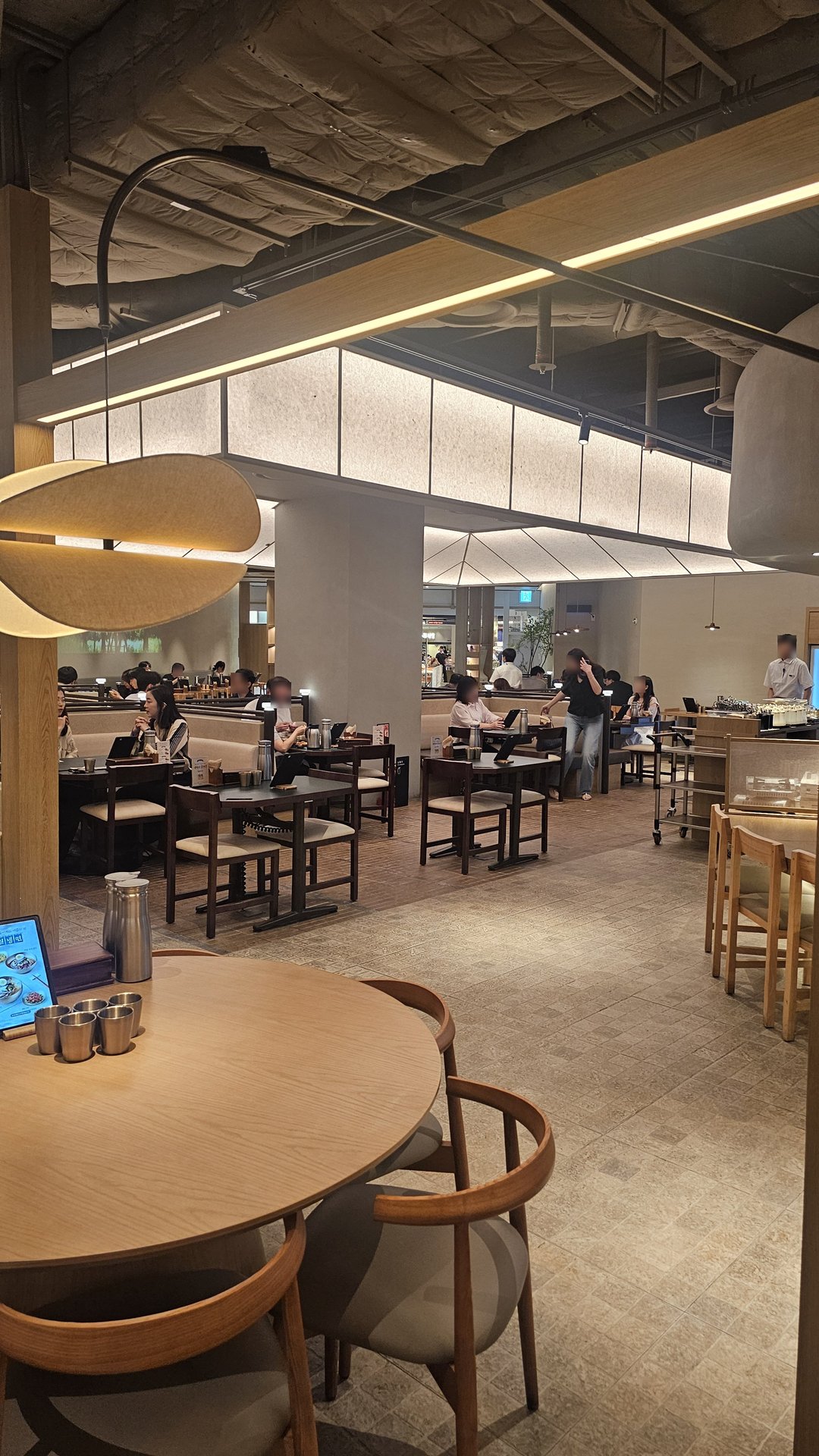
    Clean, modern, well-organized. Wooden table tops, warm lighting, and an open kitchen running along one side of the space. It reads like a polished chain — not a trendy independent restaurant, but not the soul-crushing corporate cafeteria version either.

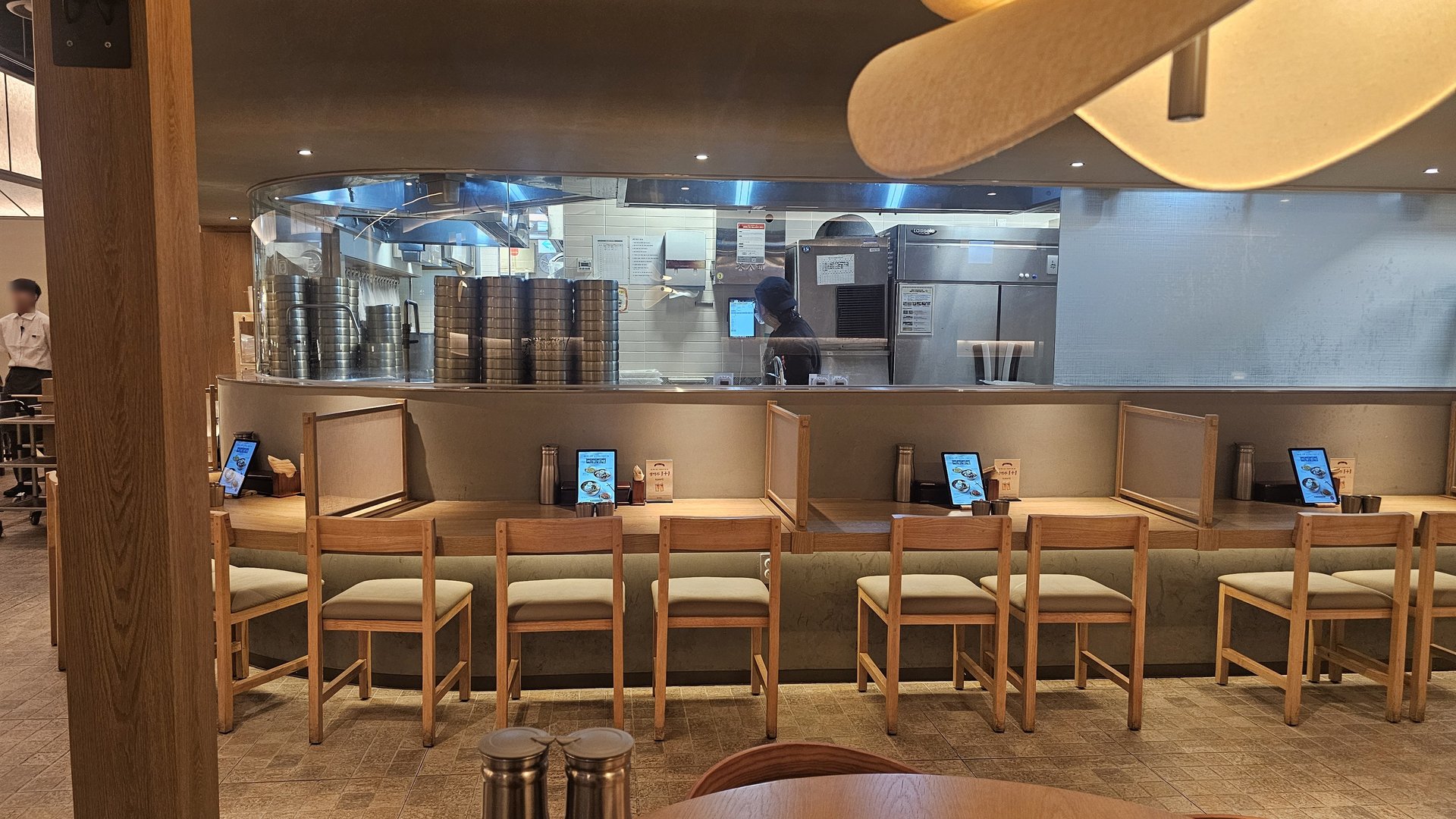
    The counter seats facing the open kitchen are the highlight for solo diners. Real counter space, proper stools, direct view of the kitchen. Solo dining at a hot pot place can feel weird, but not here.

    Lunch crowd was busy. Staffed well, tables turned over efficiently.
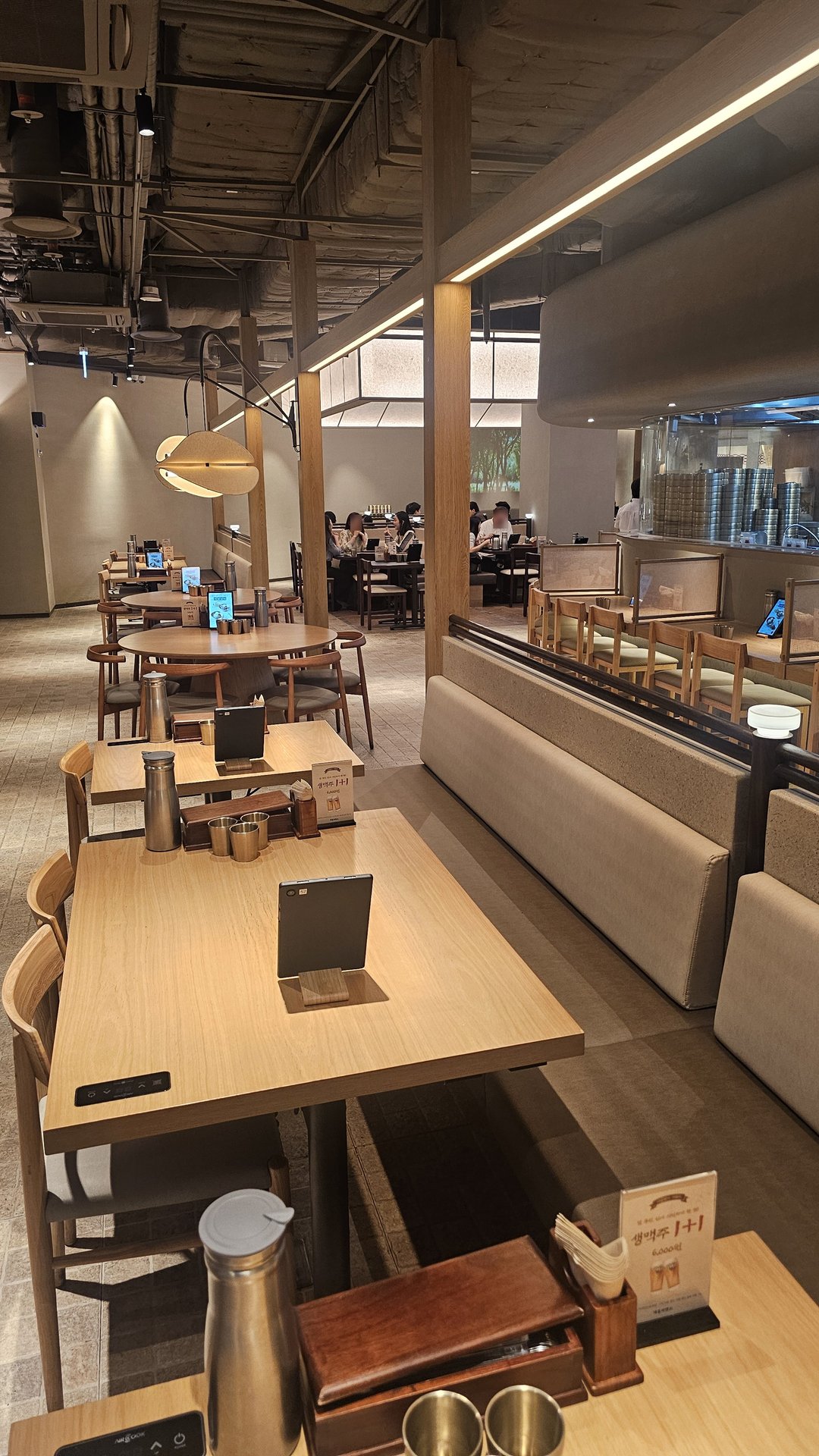
    Spacious interior of Jeil Myeonso Yeouido with wooden tables and open kitchen visible in the background
    Spacious interior ofCheil Jemyunso Yeouido with wooden tables and open kitchen visible in the background
    Busy weekday lunch service at Jeil Myeonso Yeouido with customers seated and staff in motion
    Busy weekday lunch service at Cheil Jemyunso Yeouido with customers seated and staff in motion
    Open kitchen counter with single-seat bar stools at Jeil Myeonso Yeouido IFC
    Open kitchen counter with single-seat bar stools at Cheil Jemyunso Yeouido IFC

    The Menu

    Tablet ordering with photos. Even with zero Korean, you can mostly figure out what’s what by looking at the pictures. The main categories: cold noodles, warm noodles, rice dishes, the shabu shabu hot pot, drinks and alcohol.
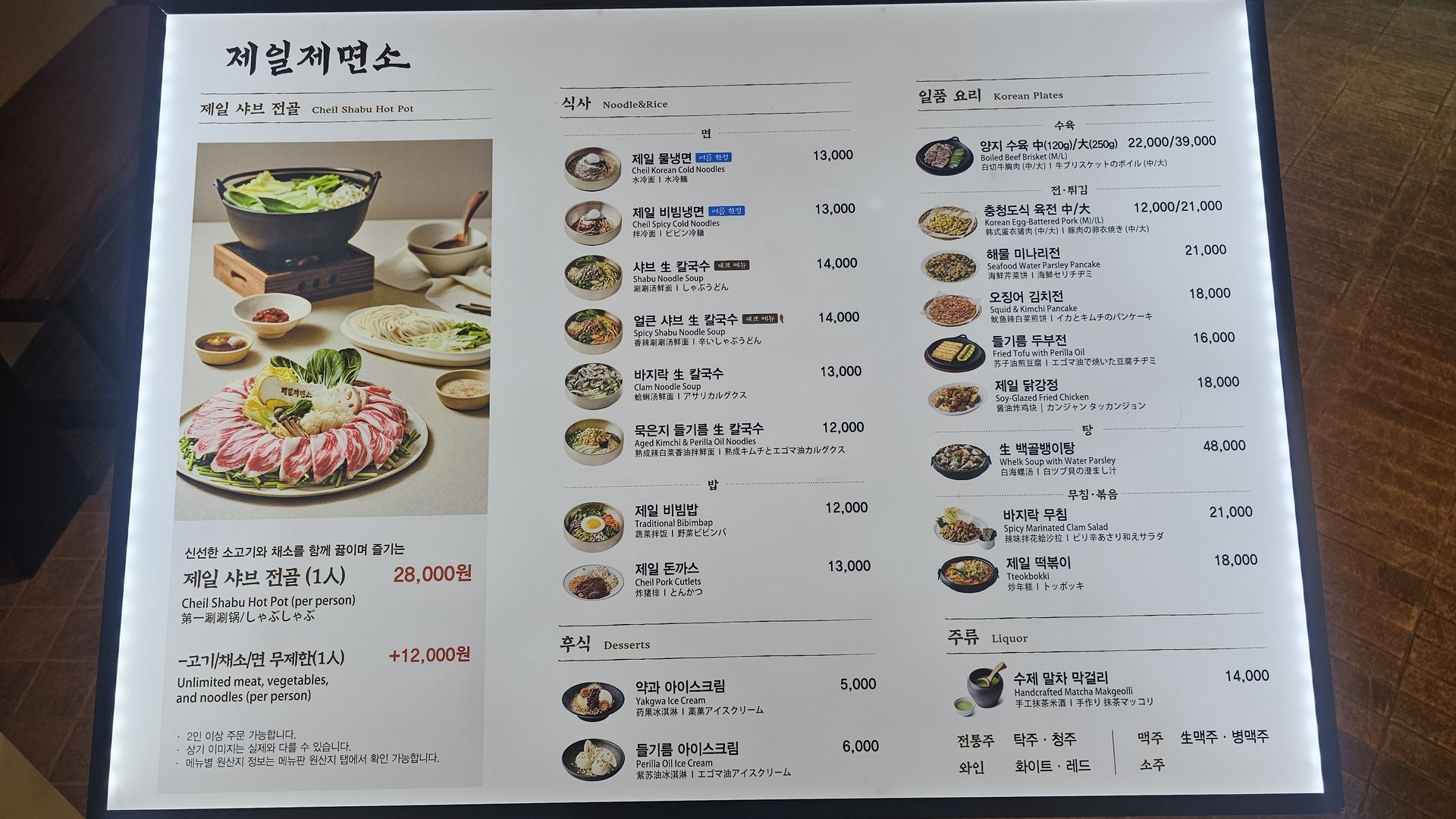
    Full paper menu at Jeil Myeonso Yeouido showing noodles, rice dishes, hot pot, and drinks with prices in Korean won
    Full paper menu at Cheil Jemyunso Yeouido showing noodles, rice dishes, hot pot, and drinks with prices in Korean won
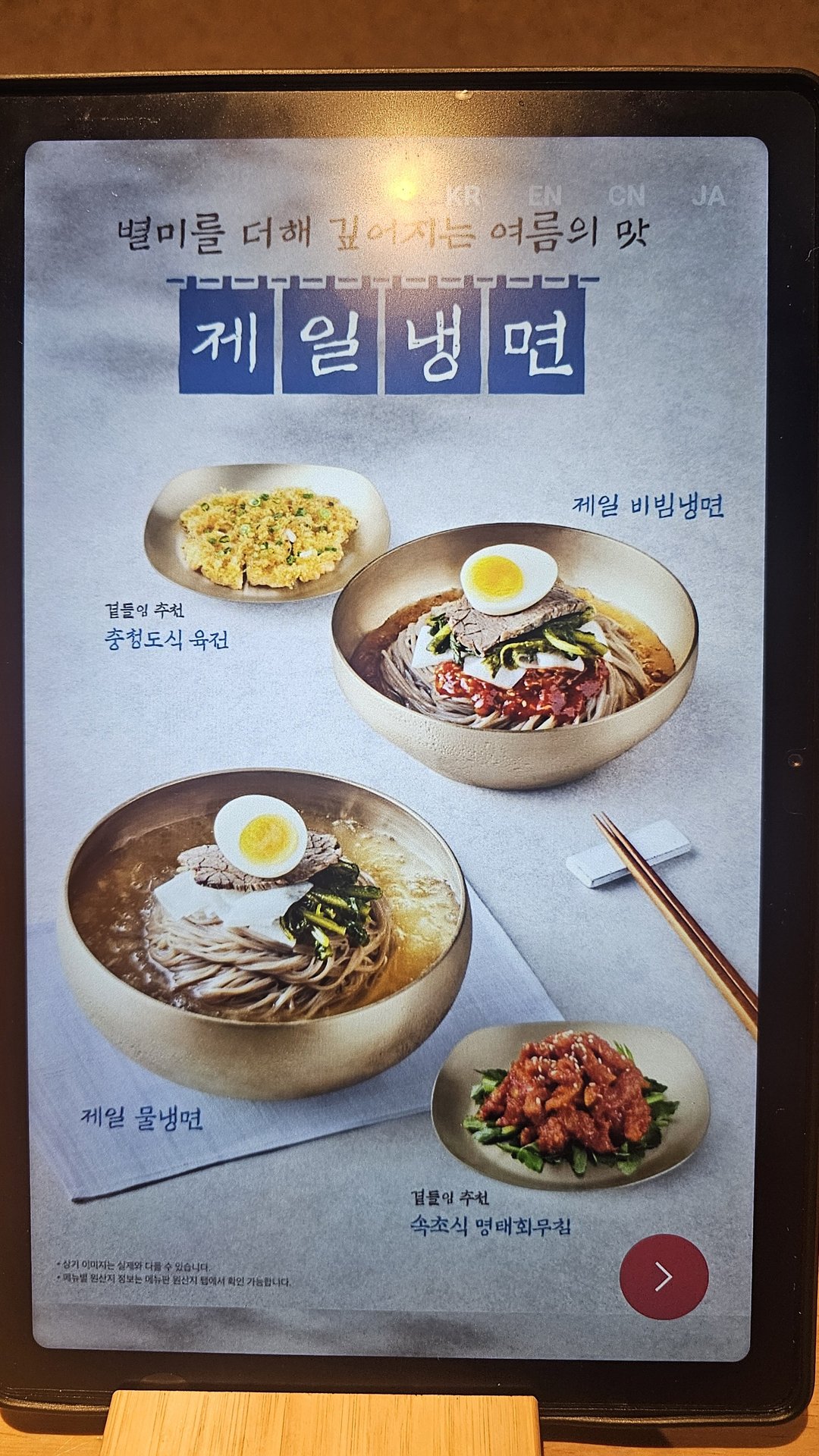
    Tablet menu at Jeil Myeonso showing naengmyeon cold noodle options — mul naengmyeon and bibim naengmyeon
    Tablet menu at Cheil Jemyunso showing naengmyeon cold noodle options — mul naengmyeon and bibim naengmyeon
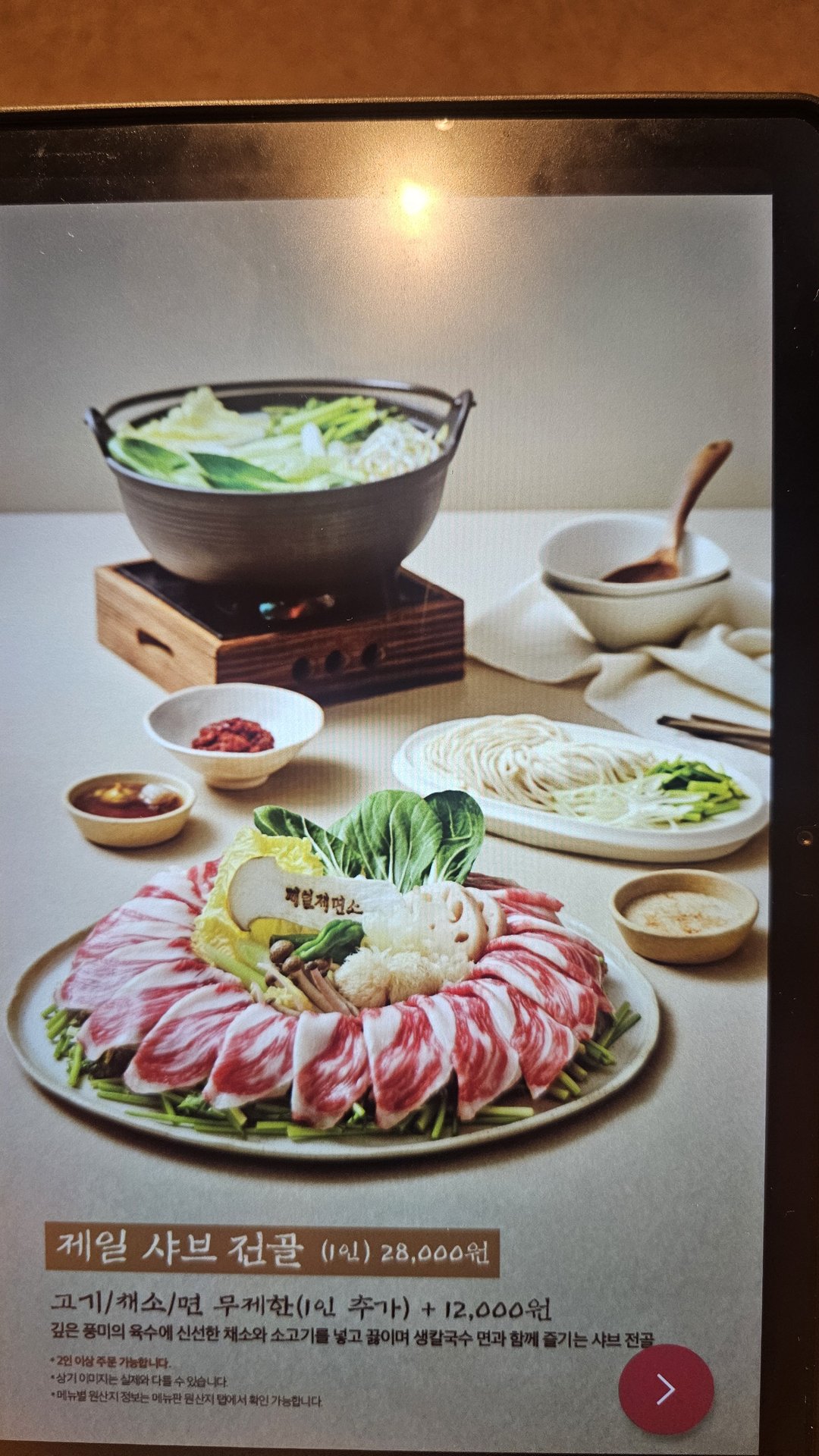
    Tablet menu at Jeil Myeonso showing the Jeil Shabu hot pot priced at 28,000 KRW per person
    Tablet menu at Cheil Jemyunso showing the Jeil Shabu hot pot priced at 28,000 KRW per person

    The shabu shabu at 28,000 KRW (~$21) per person is the most expensive thing on the menu. If you’re doing lunch on a tighter budget, the noodle and rice dishes come in cheaper. But honestly, coming to Cheil Jemyunso and ordering the noodles when the hot pot is there feels like going to a steakhouse for the salad.

    What We Ordered

    Three orders of the Jeil Shabu. 84,000 KRW (~$62) total for three people.

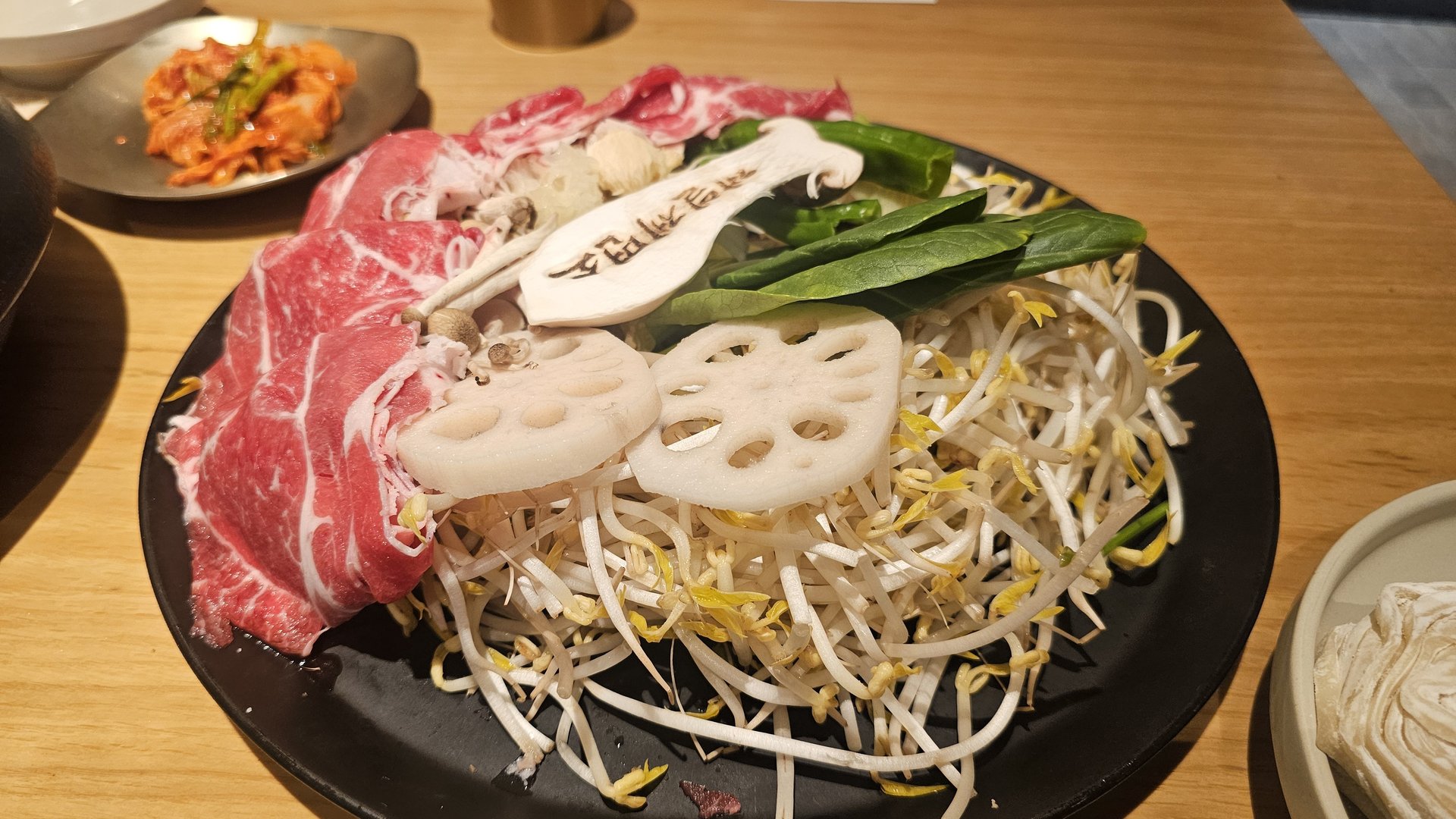
    The ingredients come out on a black platter with the restaurant’s logo pick pressed into the beef. It looks good.
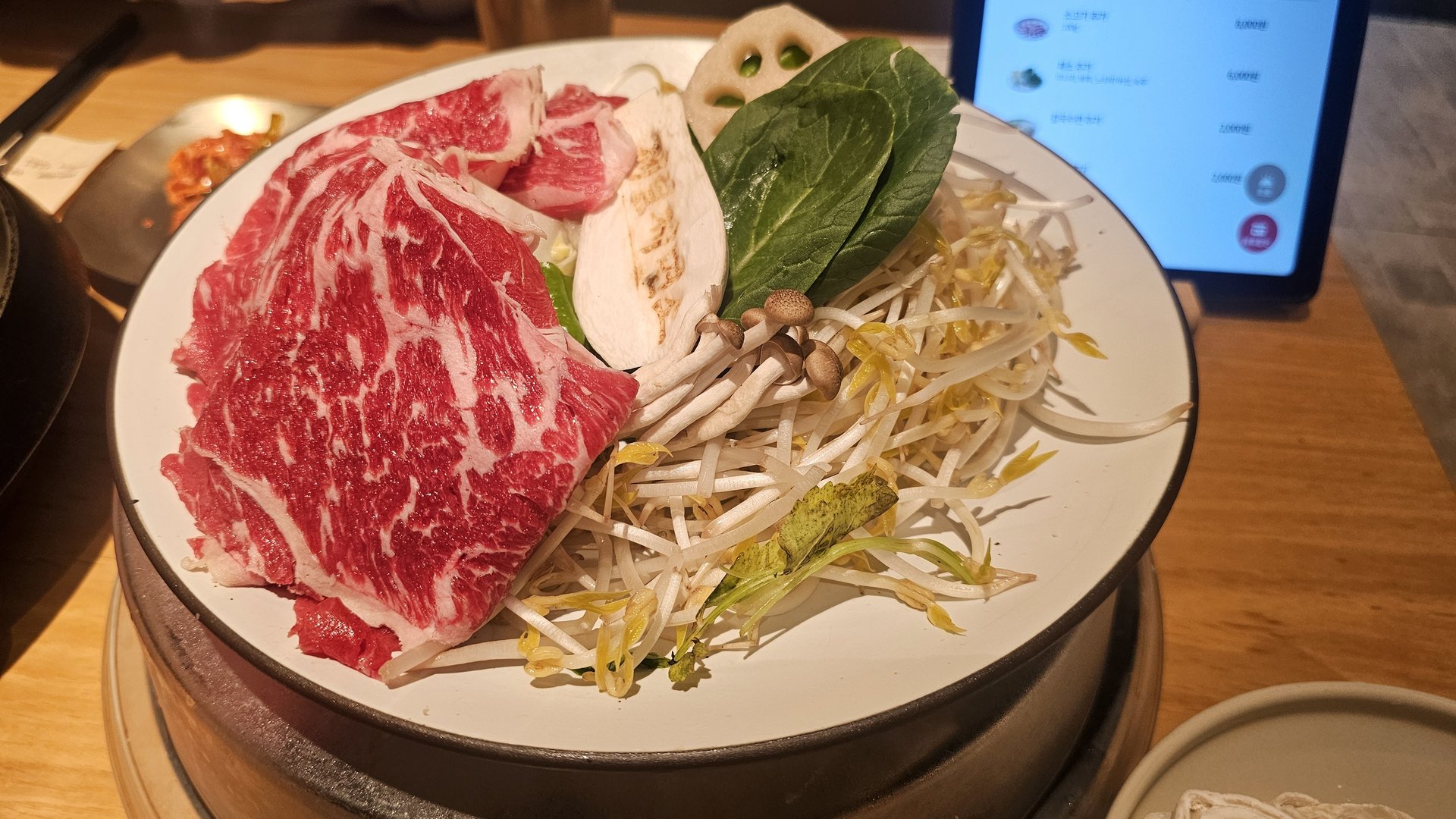
    Shabu shabu ingredient plate at Jeil Myeonso with marbled beef slices, mushrooms, bean sprouts, bok choy, and lotus root
    Shabu shabu ingredient plate at Cheil Jemyunso with marbled beef slices, mushrooms, bean sprouts, bok choy, and lotus root
    Black ingredient plate at Jeil Myeonso with the restaurant logo pick in the beef, showing beef, bean sprouts, lotus root, green chili, and perilla leaves
    Black ingredient plate at Cheil Jemyunso with the restaurant logo pick in the beef, showing beef, bean sprouts, lotus root, green chili, and perilla leaves

    The beef is the thing worth talking about. Most shabu shabu places cut the beef so thin it’s almost translucent — swish it in the broth for ten seconds and it’s done. That style is fine, but it’s not exciting. The beef here is noticeably thicker. You can actually feel the texture when you eat it. The marbling is solid. You’re getting real meat, not just something that absorbs broth flavor.

    This is the reason this spot gets return visits. The beef quality punches above the price.

    The vegetables: Mushrooms, bean sprouts (숙주), bok choy (청경채), lotus root (연근), green chili (청양고추), perilla leaves (깻잎). A full spread. The lotus root holds its texture even after time in the broth — it gives a crunch that the other vegetables don’t. Perilla leaves (깻잎) are a staple Korean herb — slightly minty, a little like basil. Worth trying in the broth even if you haven’t had them before.

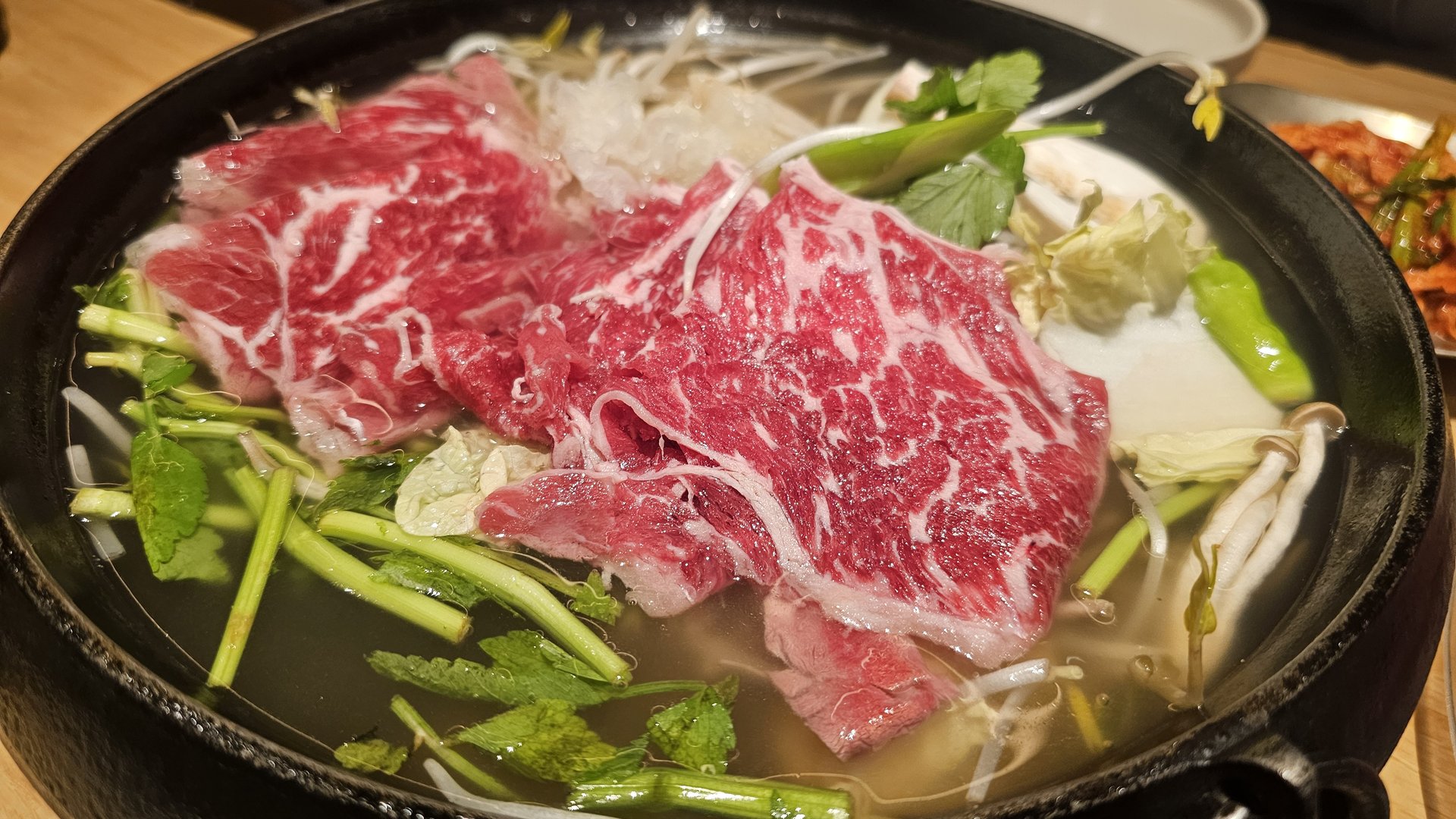
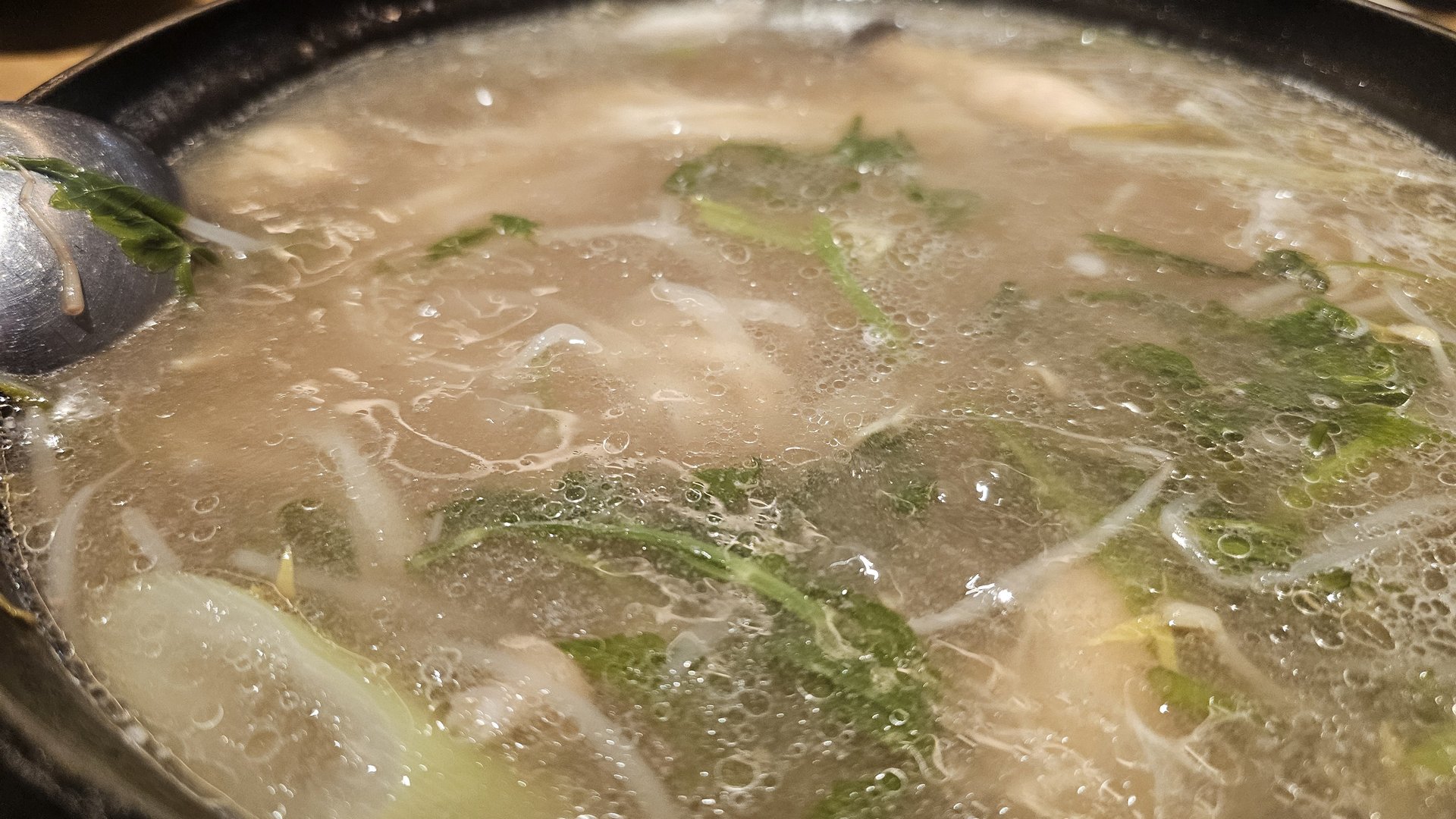
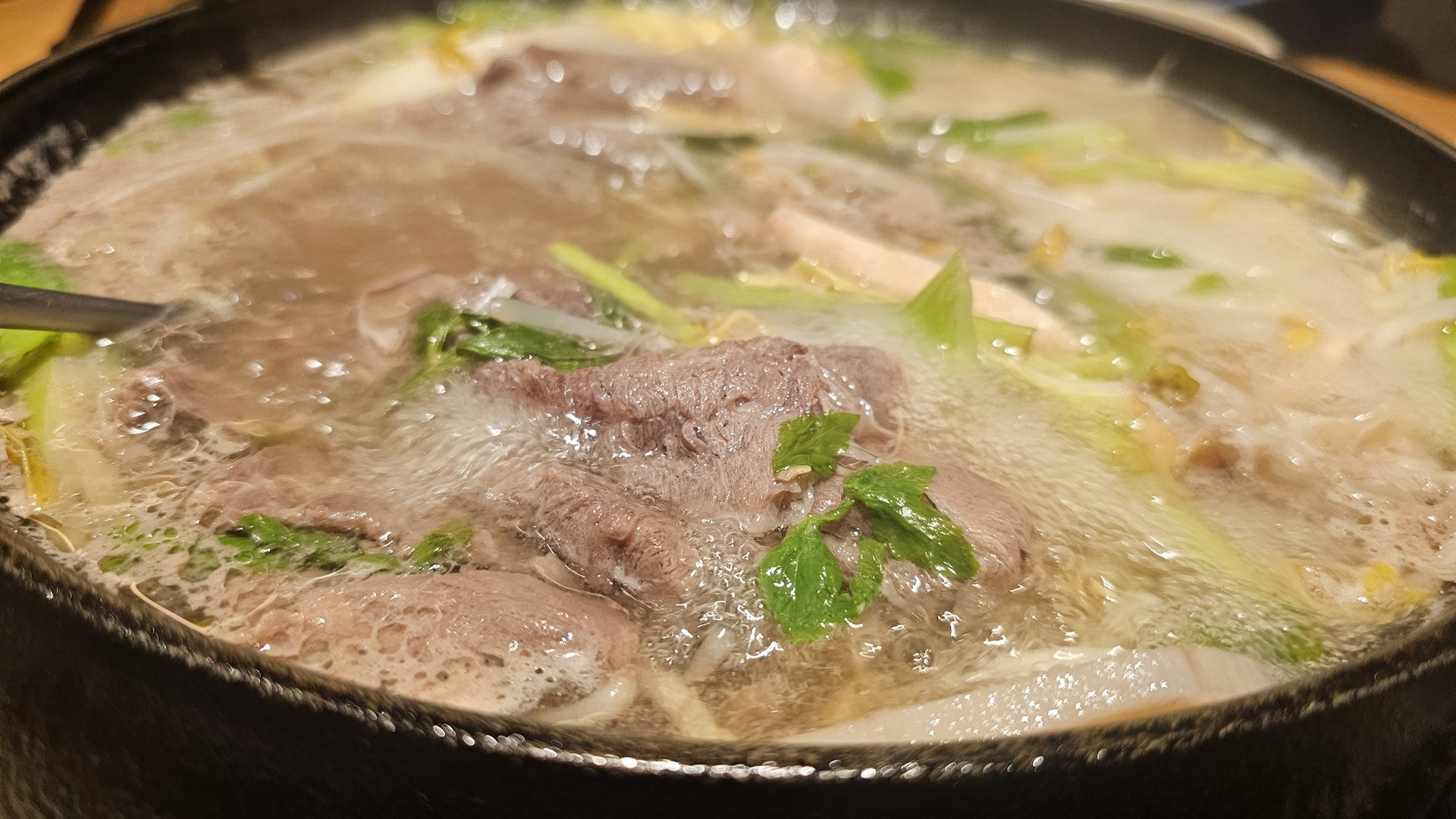
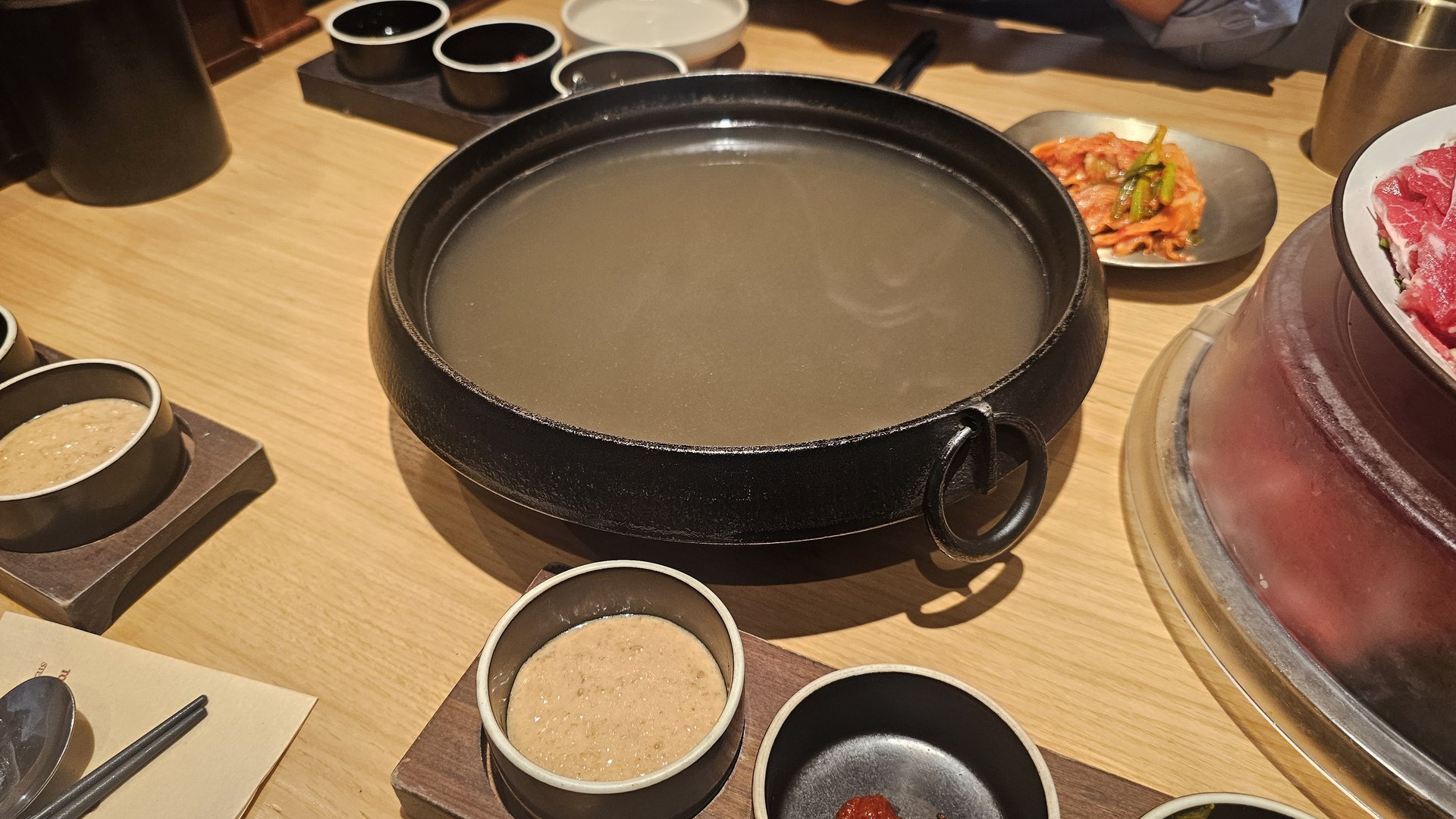
    The broth: Clear at the start. As the meat and vegetables cook through, it picks up depth, goes slightly cloudy, and gets genuinely good. By the time the ingredients are mostly done, the leftover broth is something you want to finish. Adding noodles at this point to soak up the broth is an easy yes.
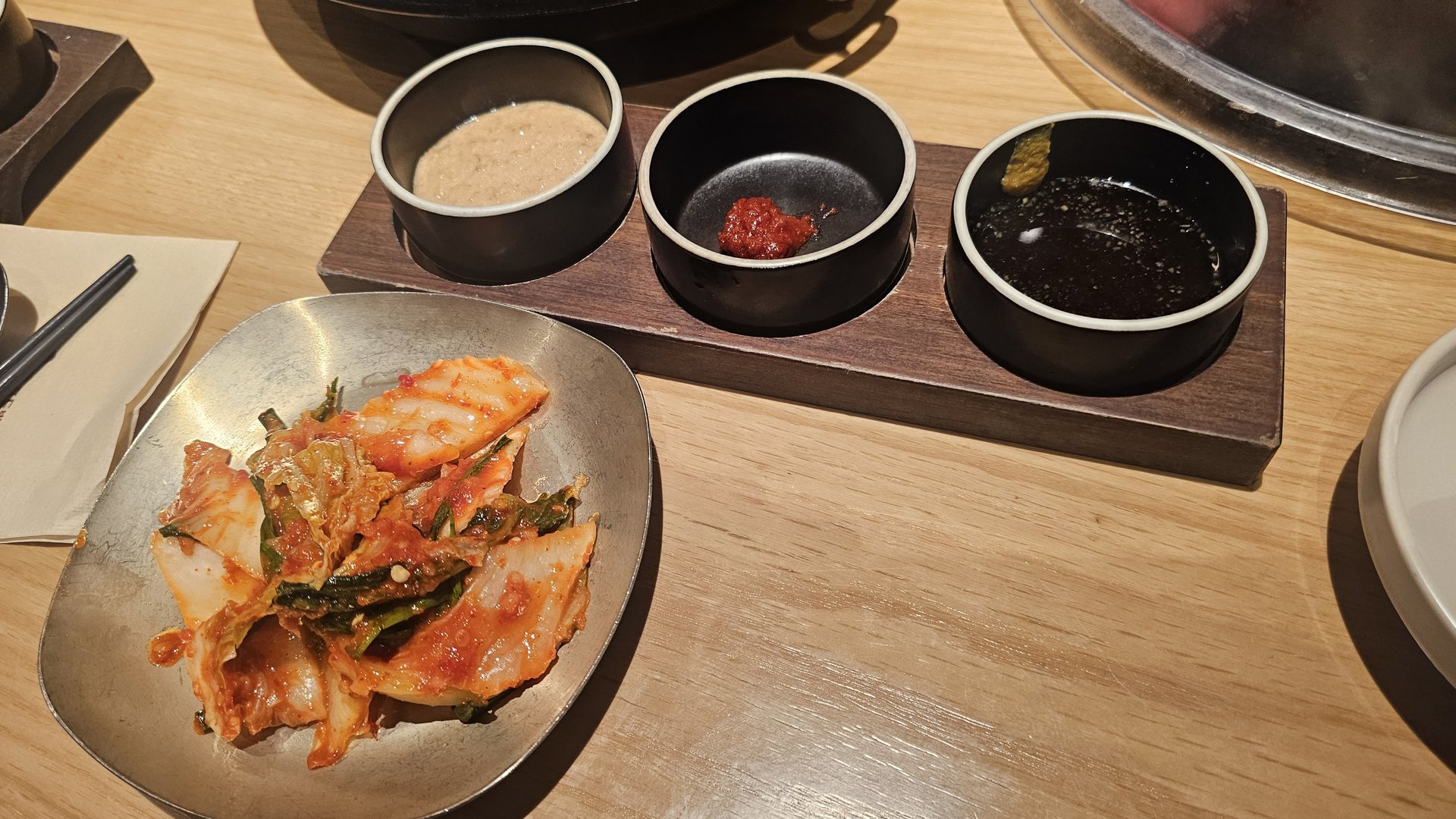
    Side dishes at Jeil Myeonso — kimchi and three dipping sauces including sesame, gochujang, and soy sauce
    Side dishes at Cheil Jemyunso — kimchi and three dipping sauces including sesame, gochujang, and soy sauce
    Initial hot pot setup at Jeil Myeonso with clear broth in the pot and raw beef and kimchi waiting on the side
    Initial hot pot setup at Cheil Jemyunso with clear broth in the pot and raw beef and kimchi waiting on the side
    Beef and vegetables cooking in the shabu shabu broth at Jeil Myeonso Yeouido
    Beef and vegetables cooking in the shabu shabu broth at Cheil Jemyunso Yeouido
    Jeil Myeonso shabu shabu hot pot boiling with cooked meat and vegetables, broth turning rich and cloudy
    Cheil Jemyunso shabu shabu hot pot boiling with cooked meat and vegetables, broth turning rich and cloudy
    Final stage of the Jeil Myeonso shabu shabu with reduced broth and fully cooked ingredients
    Final stage of the Cheil Jemyunso shabu shabu with reduced broth and fully cooked ingredients

    The dipping sauces: Three options on the table — sesame sauce (참깨소스), gochujang (고추장, Korean fermented red pepper paste — spicy and slightly sweet), and soy sauce (간장). Most people default to the sesame sauce and it’s the right call. Go gochujang if you want heat, soy sauce if you want something clean and simple.

    Kimchi comes as a side dish. Use it as a palate break between rounds of hot pot. Technically you can throw it into the broth but that’s not the intended move.

    The Cooking Process

    No formal instruction given — you figure it out quickly. Drop the beef in, swish it around until it changes color, pull it out. Vegetables need a bit longer. The induction burner keeps the broth at a steady simmer. Don’t crank it to full boil — medium heat is enough and keeps the broth from getting murky too fast.

    Staff will check in and help if you look genuinely lost. No pressure, no hovering.

    Stuff Tourists Should Know

    Price per person: 28,000 KRW (~$21). Budget for a drink if you want one — total per person comes to around 30,000–35,000 KRW (~$22–26) with sides included.

    Payment: Cards accepted, including most foreign cards (Visa/Mastercard work fine). Cash is fine too.

    Tipping: None. Korea doesn’t have a tipping culture. Do not leave money on the table — it will confuse the staff.

    English: Basic English from staff, photo-based tablet menus. You’ll be fine without Korean.

    Dietary restrictions: Not vegetarian or vegan friendly — the whole point is the beef, and the broth is meat-based. Halal not certified. If you have a shellfish or pork allergy you’re in okay shape here since neither is in the standard hot pot, but confirm with staff for your specific allergy.

    Kids: The induction burner at the table means you’d need to watch young children. The restaurant itself is family-friendly in setup — booths and regular tables have enough space.

    Solo dining: Fully comfortable. Counter section is designed for it.

    The Verdict

    This is the kind of place that earns regular visits precisely because it doesn’t try to be more than it is.

    The shabu shabu is well-executed, the beef is better than the price requires, and the IFC Mall location means it’s accessible without going out of your way if you’re already in Yeouido. It’s not going to be the most memorable meal of a Seoul trip — Korean BBQ, pojangmacha street food, or a proper naengmyeon in summer will all compete harder for that slot. But as a reliable, quality hot pot lunch in a clean comfortable space, it delivers every time.

    Go if:

    – You’re in Yeouido for the Han River, a work meeting, or IFC shopping

    – You’re 2–3 people looking for a shared, interactive lunch

    – You want to try shabu shabu without hunting down a specialty spot

    Skip if:

    – This is your first or second day in Seoul — eat Korean food first, hot pot later

    – Budget is tight — the noodle dishes elsewhere in IFC food hall are cheaper

    – You need vegetarian or halal options

    Worth coming back to. Already have.

    FAQ

    How much does the shabu shabu cost at Cheil Jemyunso Yeouido?

    The Jeil Shabu hot pot is 28,000 KRW (~$21) per person. There’s no minimum group size — you can order it solo.

    Where exactly is Cheil Jemyunso in Yeouido?

    Inside IFC Mall (국제금융센터) in Yeouido. Take subway Line 5 or Line 9 to Yeouido Station and follow signs for IFC Mall — you can walk there underground without going outside.

    Is there an English menu at Cheil Jemyunso?

    They use tablet menus with photos, so even without Korean you can navigate it. Staff speaks basic English and will help if you look stuck.

    Can you add noodles to the hot pot at the end?

    Yes — Cheil Jemyunso is primarily a noodle restaurant, so finishing your hot pot broth with naengmyeon (cold noodles) or noodles is an option. Check the tablet for add-ons.

    Do I need a reservation for lunch at Cheil Jemyunso Yeouido?

    We walked in on a weekday at 12:15 PM with no reservation and got seated right away. Peak lunch hour (noon to 1 PM) fills up, so arriving just before noon or after 1 PM is the safer move.

    Is Cheil Jemyunso good for solo dining?

    Yes. There’s a dedicated counter section facing the open kitchen built specifically for solo diners. It doesn’t feel like an afterthought — proper seats, comfortable setup.
    You might also like

    📍 Location

    Open in Google Maps →

  • Shindosegi, Yeouido: a beautiful room and a perfectly fine kimchi jjigae

    Shindosegi, Yeouido: a beautiful room and a perfectly fine kimchi jjigae

    🇯🇵 日本語版はこちら

    I should say upfront that we did this restaurant wrong. Shindosegi is built around aged beef, and we walked in, sat down, and ordered kimchi jjigae for lunch. So this isn’t really a review of what the place is for. It’s a review of what we actually ate, which was a 13,000 KRW (~$9.60) hot pot in a room that looked like it cost more than the food.

    What this place actually is

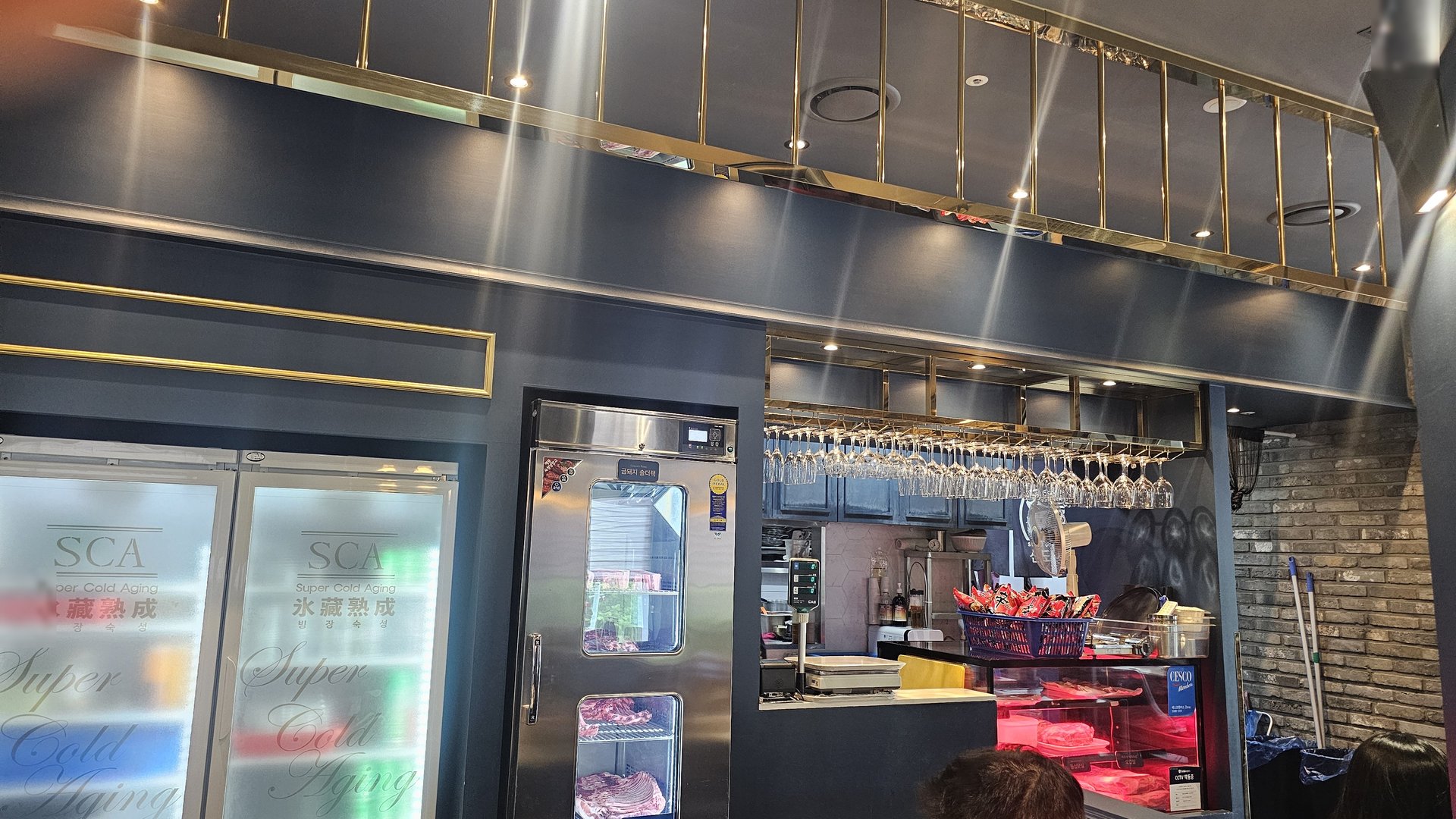
    Shindosegi (신도세기) is a chain whose whole pitch is an aging method they call SCA — Super Cold Aging, or 수빙숙성 in Korean. The short version: they age beef at near-freezing temperatures, colder than ordinary dry aging, which is supposed to firm up the texture, cut the gaminess, and push the flavor up. You don’t have to take their word for it either — the aging fridges are right there in the dining room, rows of vacuum-packed beef sitting behind glass while you eat. That’s the draw. Grilled aged beef, done Korean-BBQ style at your table.

    We ordered none of that. Keep that in mind for everything below.

    Getting there

    The Yeouido branch is on the 2nd floor of BNK Finance Tower, in the middle of Seoul’s financial district — think Wall Street or Canary Wharf, lots of suits at noon and tumbleweeds by nine. Yeouido Station on Line 5 or 9 puts you about 5–10 minutes away on foot depending on which exit you climb out of.

    If you’re staying somewhere central — Myeongdong, Gangnam, Hongdae — it’s a 20–30 minute subway ride, and honestly not worth the trip for the hot pot alone. From Incheon Airport you’re looking at the better part of an hour on the AREX plus a transfer, which would be a genuinely unhinged amount of effort for a bowl of kimchi jjigae. Go if you’re already in the neighborhood. Otherwise don’t reorganize your day around it.

    Shindosegi (신도세기) is a Korean restaurant chain built around a specific aging concept called SCA — Super Cold Aging (수빙숙성, su-bing-suk-seong in Korean). The idea is that beef is aged at near-freezing temperatures over an extended period. It’s supposed to tighten the texture, reduce any gamey smell, and concentrate flavor. You can actually see the meat sitting in refrigerated showcases when you walk in.

    The restaurant’s main draw is grilled aged beef, served Korean BBQ-style at the table. That’s the thing people come here for.

    We did not order that. We ordered kimchi jjigae.

    So consider this a review of the hot pot lunch option, not the BBQ. Two different experiences.

    Getting There

    Shindosegi Yeouido is on the 2nd floor of BNK Finance Tower in Yeouido — Seoul’s financial district, roughly equivalent to New York’s Wall Street or London’s Canary Wharf. If you’re staying near Yeouido or have business in the area, this is easy to reach.

    Nearest subway: Yeouido Station (Line 5 or 9), about a 5–10 minute walk depending on your exit.

    From central Seoul (Myeongdong, Gangnam, Hongdae), you’re looking at 20–30 minutes by subway. Not a destination worth a dedicated trip for the hot pot. Worth considering if you’re already in Yeouido.

    From Incheon Airport: roughly 50–60 minutes on the AREX express + subway transfer. Way too far to specifically come here just for kimchi jjigae.

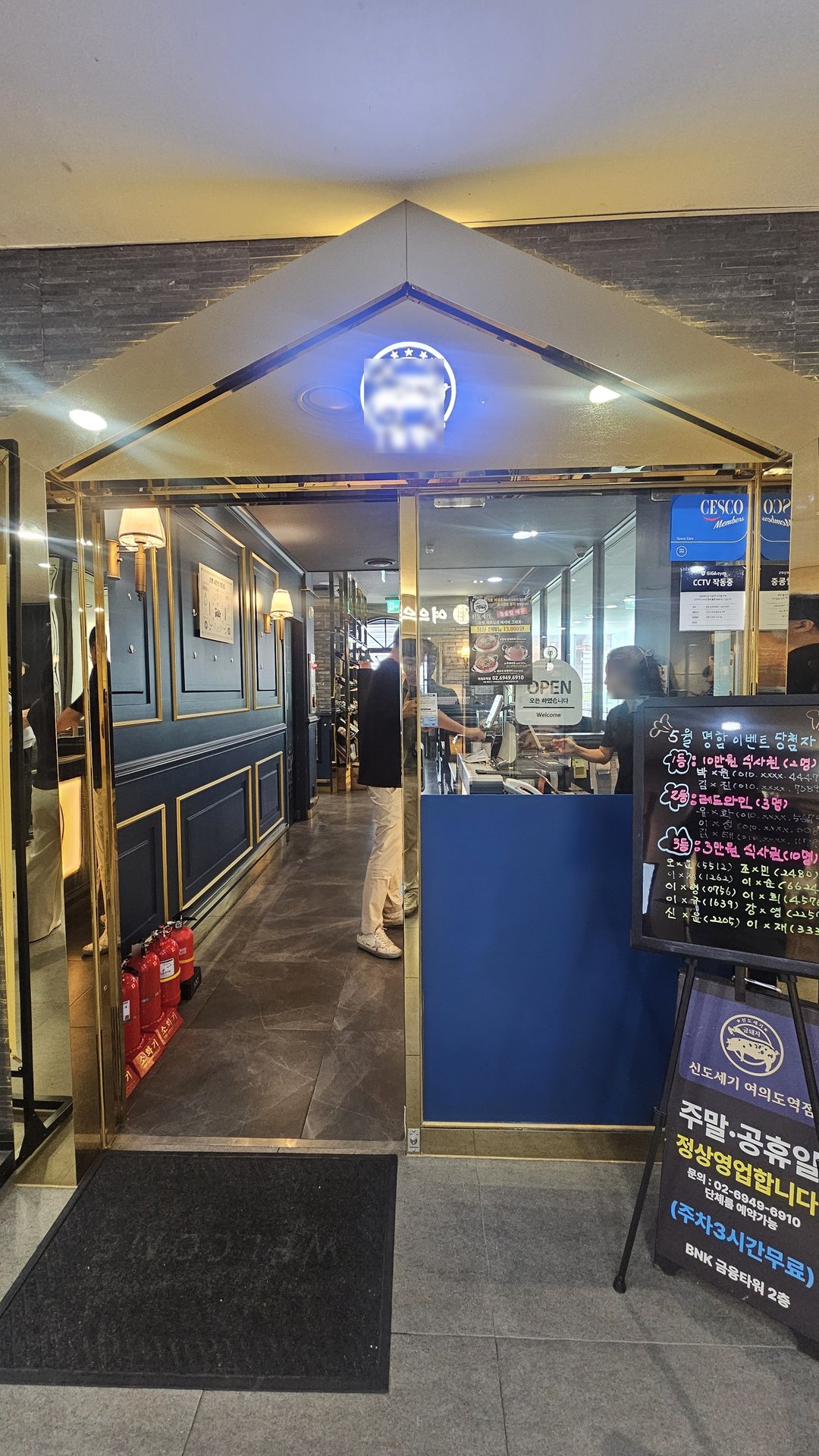
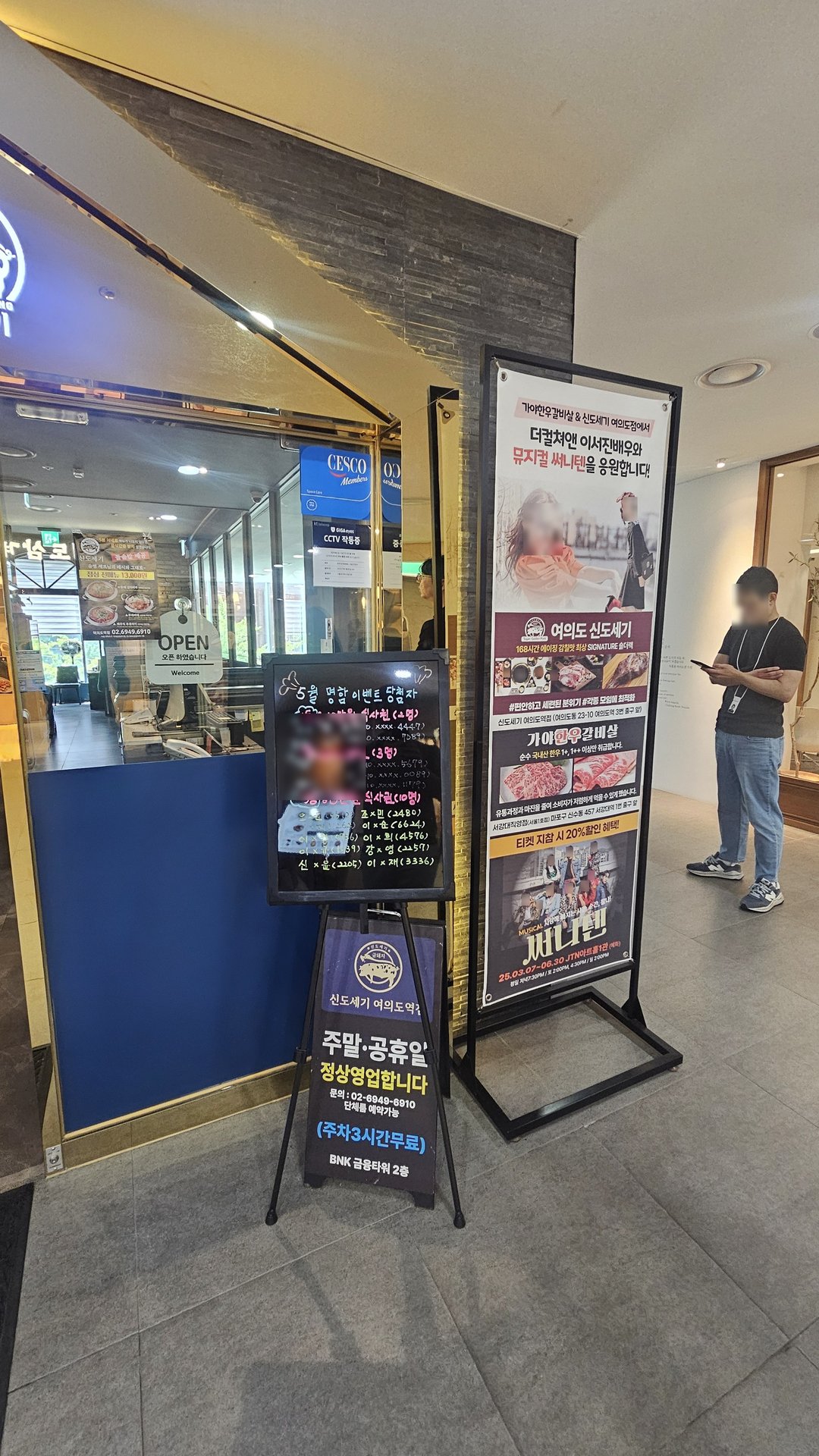
    Shindosegi Yeouido exterior entrance with standing sign board showing BNK Finance Tower 2F location
    Shindosegi Yeouido exterior entrance with standing sign board showing BNK Finance Tower 2F location
    Shindosegi Yeouido front entrance with neon sign, navy and gold door, and blackboard menu
    Shindosegi Yeouido front entrance with neon sign, navy and gold door, and blackboard menu

    The room

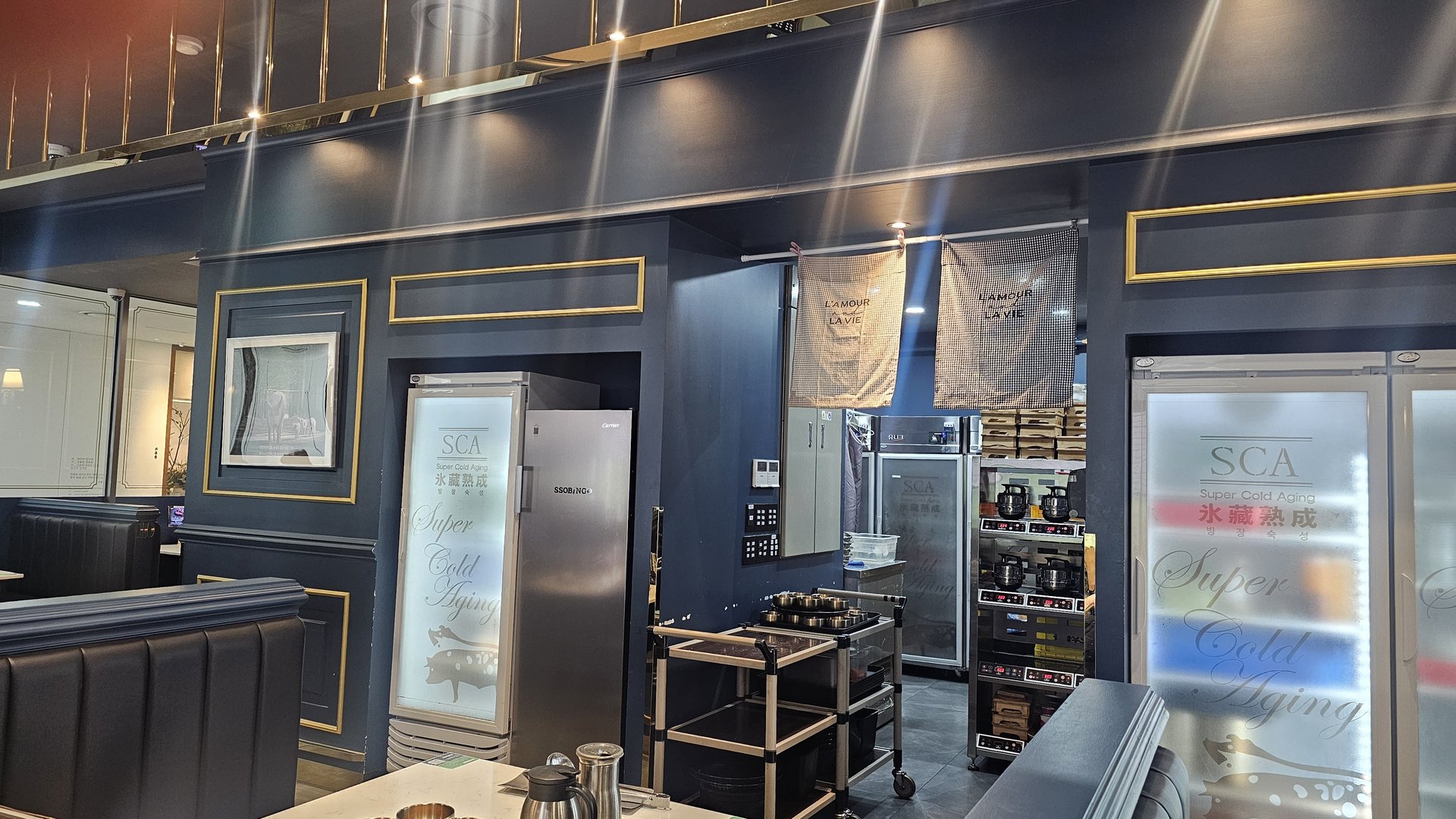
    Credit where it’s due: the interior is the best thing here. Navy and gold, and not in the gaudy way that combination usually goes — it’s restrained, more wine bar than gukbap joint. Wine glasses hang upside down over the floor, the kitchen is open, and those SCA fridges I mentioned do a lot of the visual work. For a place where lunch tops out around ten bucks, it punches well above its weight on atmosphere. There’s a tablet on each table for ordering, which quietly solves most of the language problem before it starts.

    Shindosegi Yeouido interior with navy and gold decor, SCA Super Cold Aging refrigerators, and dining seating area
    Shindosegi Yeouido interior with navy and gold decor, SCA Super Cold Aging refrigerators, and dining seating area
    SCA aged meat showcase refrigerator and wine glass rack inside Shindosegi Yeouido open kitchen
    SCA aged meat showcase refrigerator and wine glass rack inside Shindosegi Yeouido open kitchen

    .

    What we ate

    황제 김치전골 (Emperor Kimchi Jjigae), 13,000 KRW. If you’ve never had it: kimchi jjigae is a hot pot built on fermented kimchi, with tofu, pork, and a broth that lands somewhere between spicy and deeply savory. It’s a national comfort food — every household has its own version, every restaurant too. The “Emperor” (황제) tag implies the upgraded one: more of everything, richer.

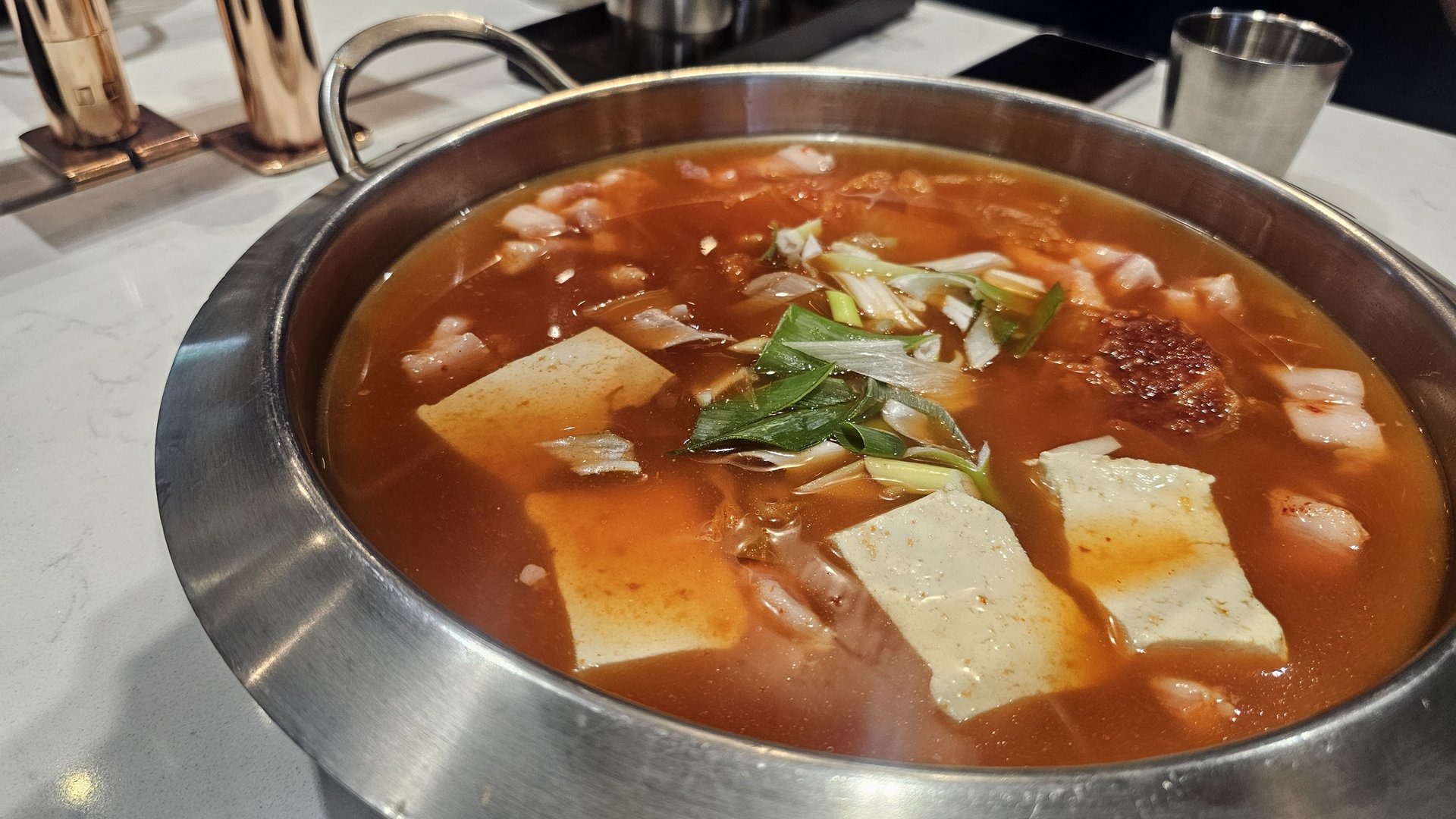
    It came out in a stone pot, not yet boiling, everything still arranged neatly — kimchi, tofu, scallion, a knob of seasoning on top — before the heat got to it. Then it bubbled up and the room started smelling like a Korean grandmother’s kitchen, which is to say great.

    Kimchi jjigae hot pot before boiling with tofu, kimchi, green onion, and seasoning at Shindosegi
    Kimchi jjigae hot pot before boiling with tofu, kimchi, green onion, and seasoning at Shindosegi

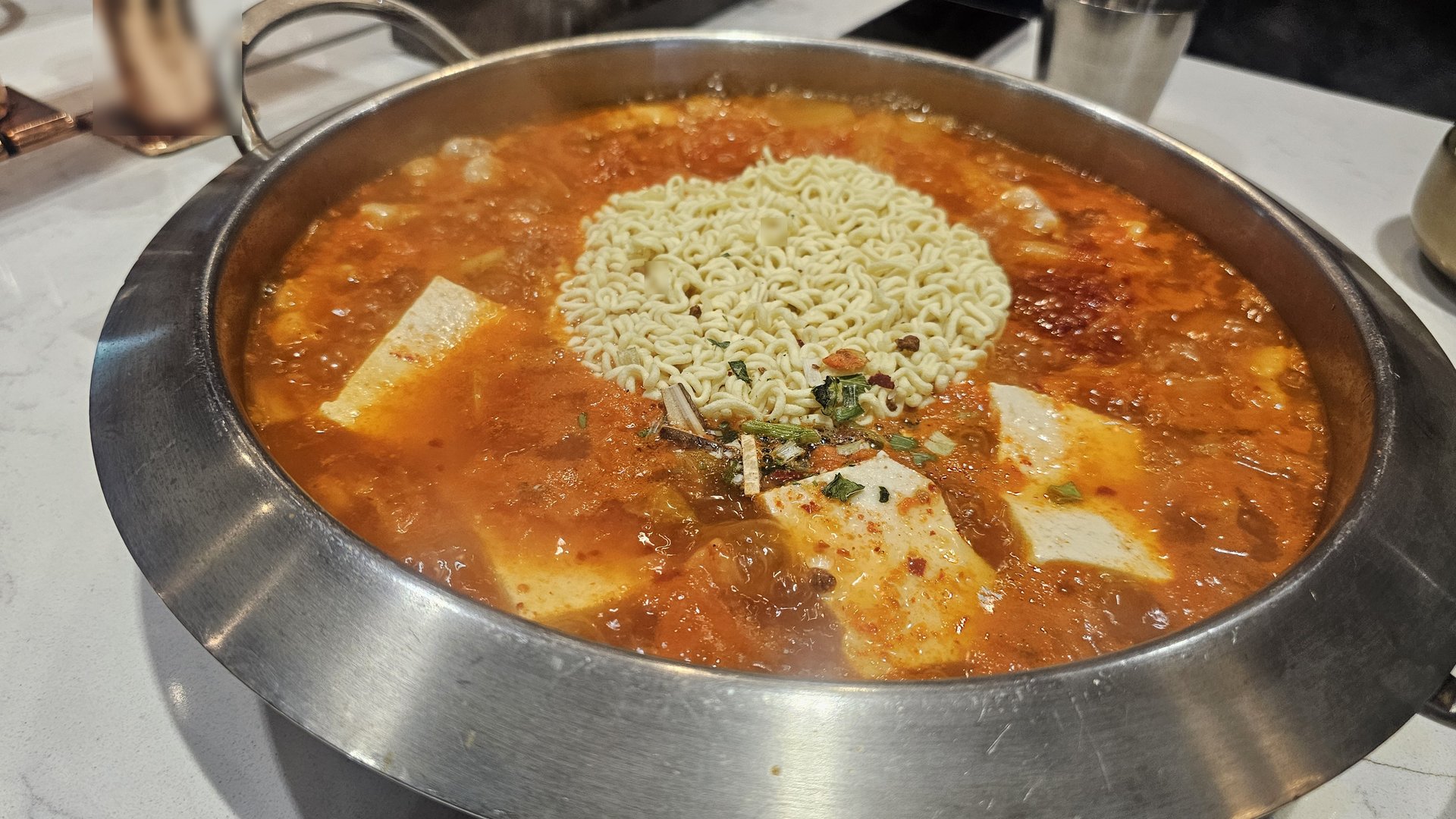
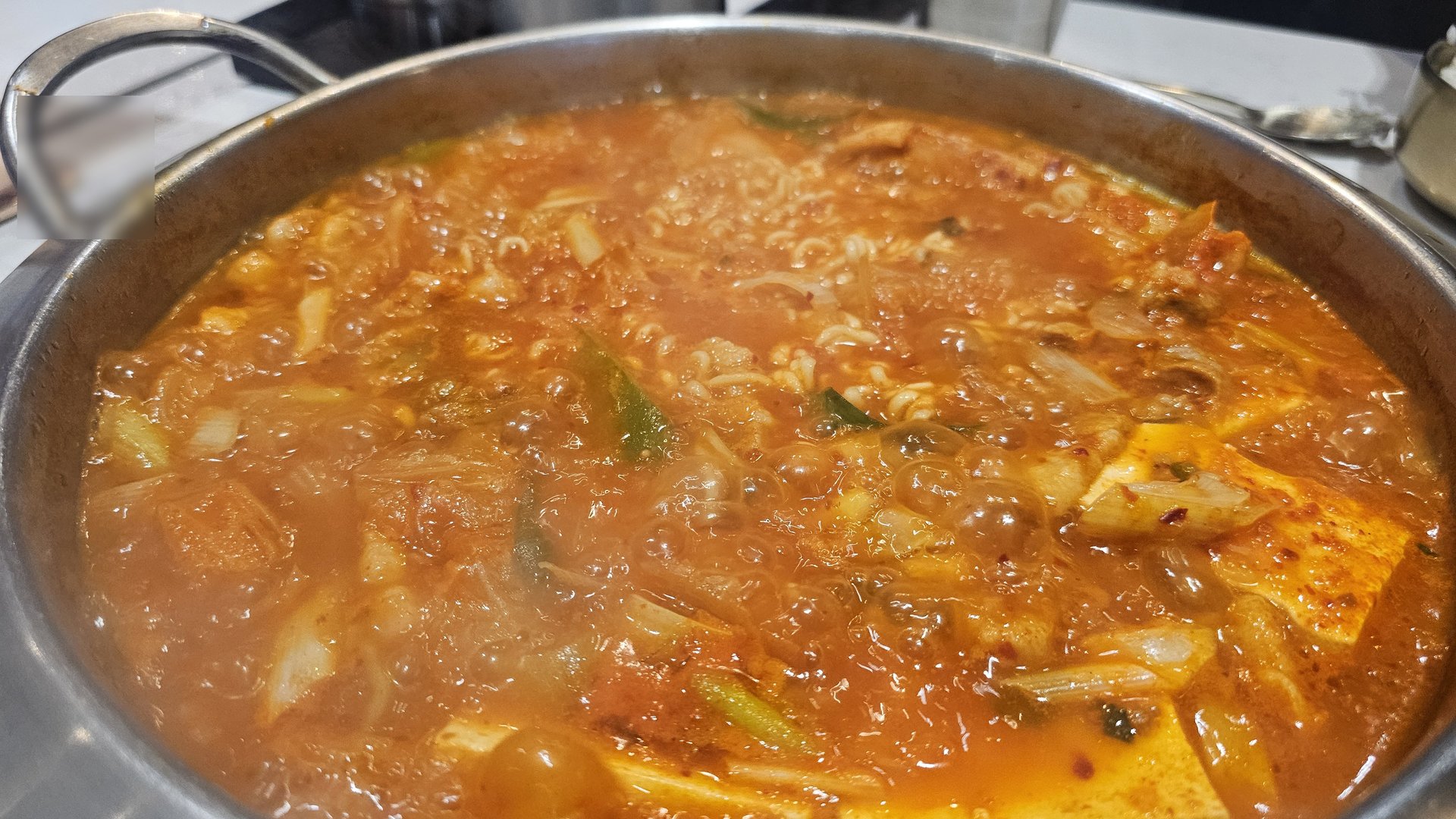
    Then it starts bubbling.

    Kimchi jjigae with ramen noodle add-on starting to boil at Shindosegi Yeouido
    Kimchi jjigae with ramen noodle add-on starting to boil at Shindosegi Yeouido
    Fully boiling kimchi jjigae with ramen noodles at Shindosegi Yeouido
    Fully boiling kimchi jjigae with ramen noodles at Shindosegi Yeouido

    The eating was less dramatic than the smell. The broth was competently spiced, the kimchi had real fermentation behind it, the tofu didn’t fall apart. All correct. But it’s the kind of jjigae any decent neighborhood spot would hand you at the same price without the “Emperor” branding, and somewhere in the middle of the pot I stopped having opinions about it and just ate. That’s not an insult exactly. It’s just not a thing I’ll remember next month.

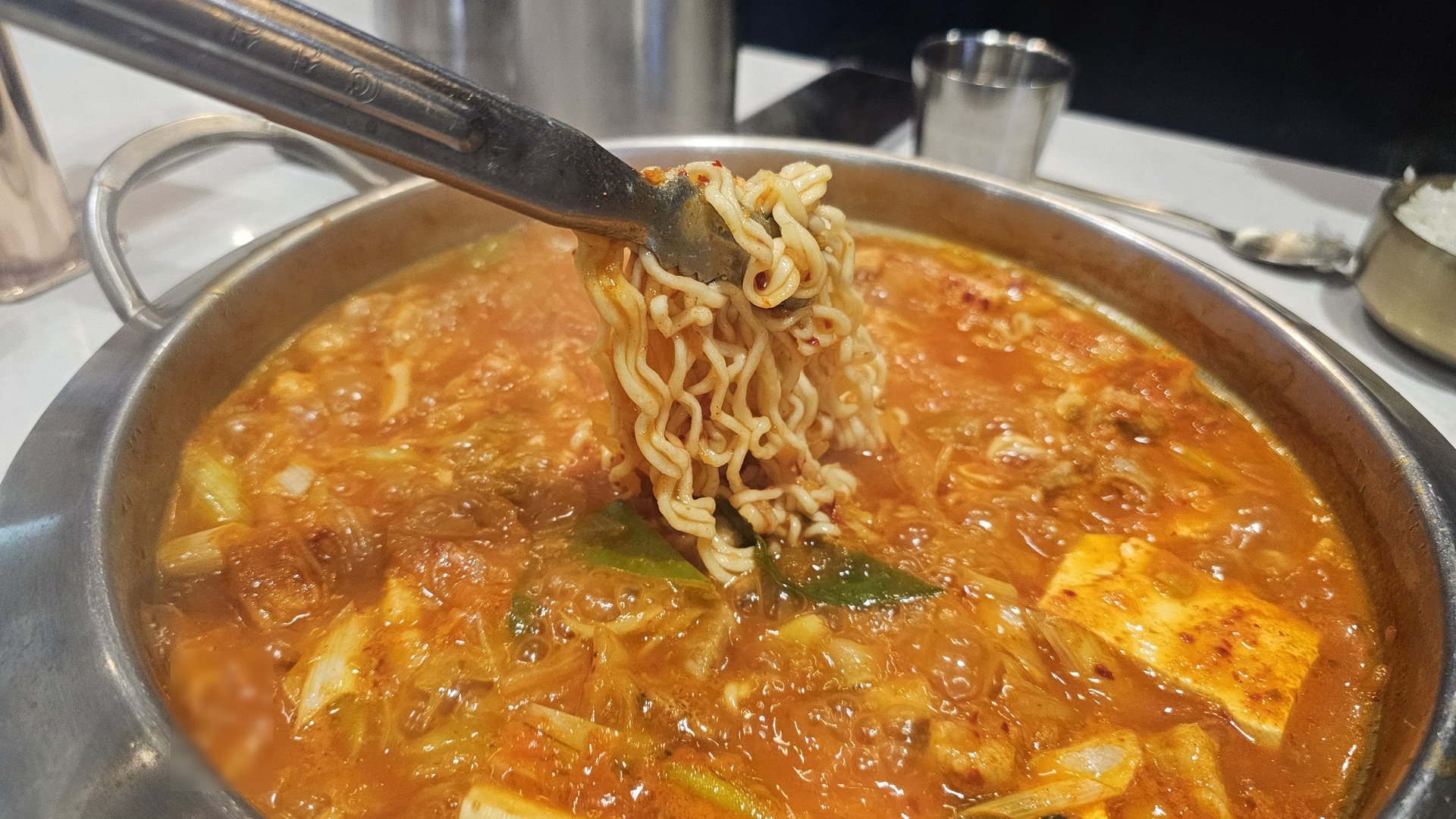
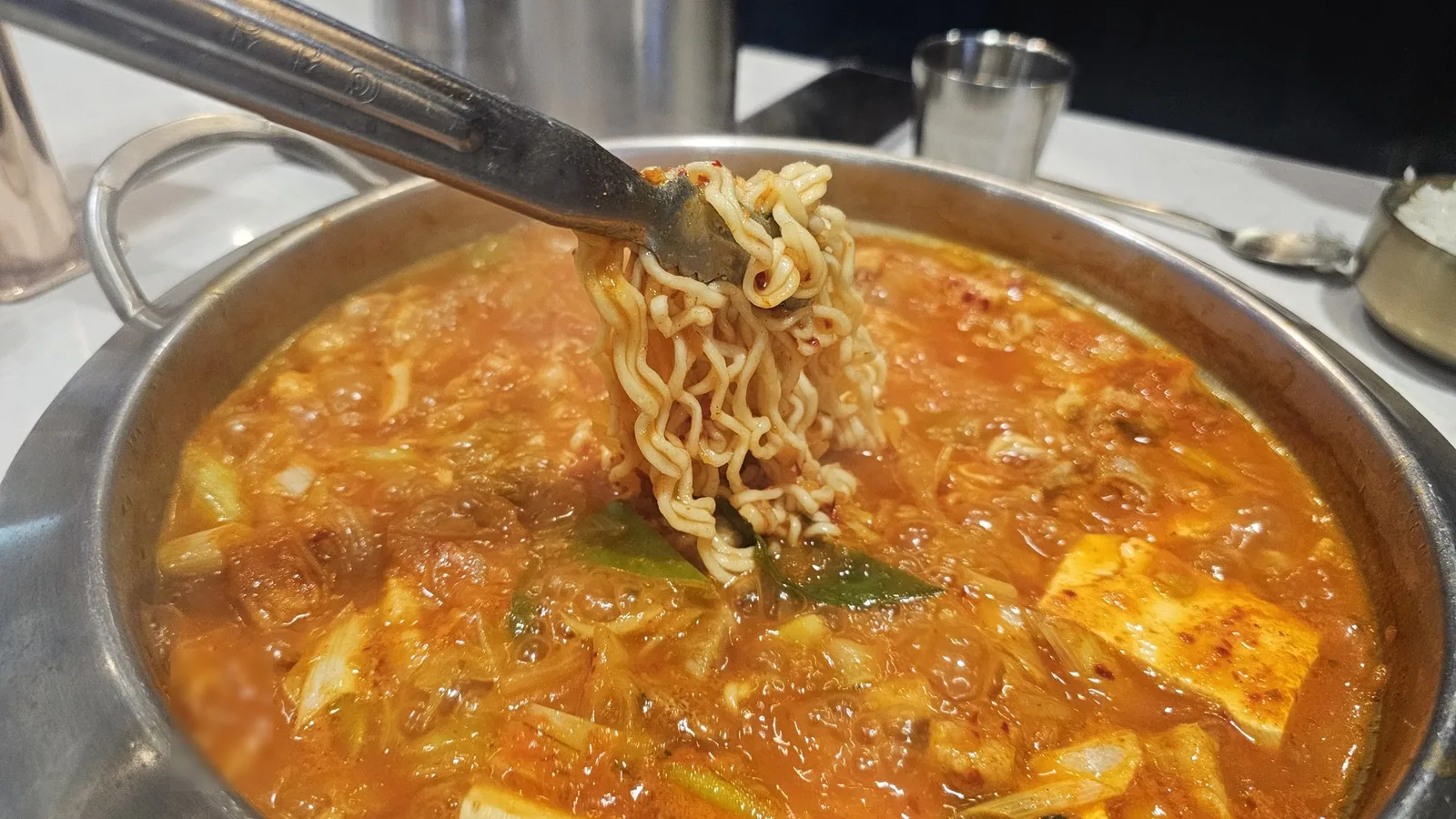
    라면 사리 (ramen add-on), 2,000 KRW. This is the move. You drop dried ramen noodles into the broth near the end and give them a few minutes; they drink up all that red kimchi liquid and go slightly chewy. It’s the best part of the meal, and I’ll be honest about why — it’s not that Shindosegi does something special with it, it’s that ramen in kimchi broth is just one of those combinations that’s good no matter who makes it. The broth on its own was average. The noodles are what made me finish the pot.

    Close-up of lifting ramen noodles from kimchi jjigae with tongs showing rich red broth at Shindosegi
    Close-up of lifting ramen noodles from kimchi jjigae with tongs showing rich red broth at Shindosegi

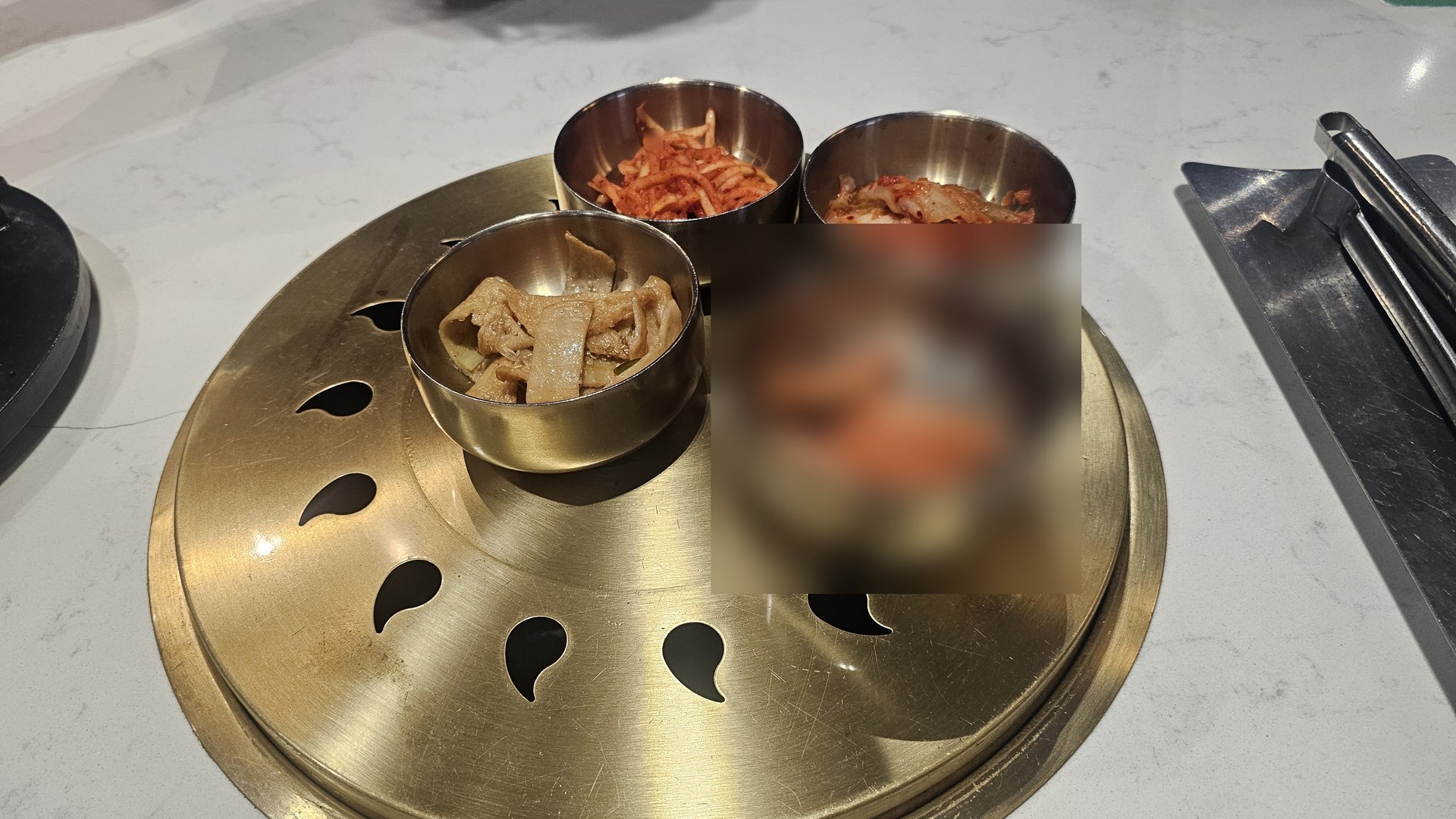
    기본 반찬 (banchan). Four little dishes on a gold tray: kkakdugi, regular baechu kimchi, jeotgal, and soy-pickled jangajji. A solid spread, and the jeotgal stood out — briny and sharp without tipping into too-salty, which is a harder line to walk than it sounds.

    Four-piece banchan set on a gold tray at Shindosegi Yeouido — kkakdugi, baechu kimchi, jeotgal, and jangajji
    Four-piece banchan set on a gold tray at Shindosegi Yeouido — kkakdugi, baechu kimchi, jeotgal, and jangajji

    The practical stuff, if you’re visiting

    You can manage here with zero Korean. The tablet has photos, some items carry English labels, and even when they don’t you can point your way through it. Staff probably won’t chat with you in English, but you don’t really need conversation to get fed. Pay by card — Yeouido is an office district, so cash-only places are basically extinct around here. Don’t tip; Korea doesn’t do it, and service is built into the bill. One small thing worth knowing: the sign outside says they run on weekends and holidays, which isn’t a given in this neighborhood — plenty of Yeouido restaurants shut when the office crowd vanishes.

    On portions, the hot pot is sized for two, one pot per pair, so a solo diner will be drowning in it and a group of four needs to order in multiples. It’s fine for kids in theory, though the room skews a touch nicer than toddler-friendly. And if dietary restrictions matter to you, ask first — kimchi jjigae has pork, and even the kimchi base often carries fish sauce, so it’s neither vegetarian nor halal.

    The same hot pot logic applies to the whole lunch menu, by the way: kimchi jjigae, budae jjigae, duruchigi, all 13,000 KRW a pot. The aged beef is a completely different price bracket — figure 30,000 to 60,000+ KRW per portion, which is the real reason to come and the thing we skipped.

    So, should you go?

    If you work in Yeouido or you’re passing through, sure — it’s a pleasant, fairly priced lunch, and the room makes it feel a little more special than the food earns. If you’re a tourist with limited days in Seoul, I’d skip it without much hesitation. Nothing about this meal was something you couldn’t get at a hundred other places; spend that meal on something Seoul does that nowhere else does — a proper grill house, good naengmyeon, a sundubu spot that takes its tofu seriously.

    The kimchi jjigae gets a 6 out of 10 from me. Fine, pretty surroundings, forgettable bowl. I probably won’t come back for the hot pot. I might come back for the beef, if Yeouido pulls me in again — which, given the SCA thing is apparently the entire point of the restaurant, is the version of Shindosegi I should’ve reviewed in the first place.

    You might also like

  • Eomjine Kkomak House in Yeouido: Cockle Bibimbap Review

    Eomjine Kkomak House in Yeouido: Cockle Bibimbap Review

    🇯🇵 日本語版はこちら

    Quick honest review of Eomjine Kkomak House (엄지네꼬막집) in Yeouido. Skip to the verdict if you’re short on time — but here’s the short version: the cockle bibimbap is genuinely good, the lunch set is reasonable for Yeouido, and this is the kind of place regulars keep coming back to not because it’s trendy but because it’s consistently on point.

    Two of us went for lunch. Two kkokak bibimbap sets, one potato pancake to share.

    What Is Kkokak Bibimbap?

    Okay, quick explainer before anything else.

    Kkokak (꼬막) is a shellfish — specifically an ark clam, often called a blood cockle in English. Small, dark-shelled, chewy. The real ones come from the tidal flats of South Jeolla Province in the south of Korea, particularly around Boseong and Suncheon. Koreans treat them like a regional delicacy.

    The texture is the thing. Kkokak is firmer than a clam, with less give — you actually have to chew it. The flavor is deeply umami and oceanic, but not fishy. Season them with gochugaru (Korean red pepper flakes), sesame oil, garlic, and scallions and you get something that’s almost addictive.

    Kkokak bibimbap is just rice with that seasoned cockle mixture piled on top. You mix it, you eat it. Simple as that. But like most Korean food, simple concept doesn’t mean anywhere near simple execution.

    About the Restaurant

    The name 엄지네꼬막집 translates roughly to “Eomji’s Cockle House.” The menu here is focused — not trying to do everything. Cockle bibimbap, cockle muchim (seasoned cockle as a standalone dish), abalone bibimbap, and a handful of sides. That’s it.

    Restaurants that keep a tight menu and stay busy are usually doing something right. This one’s been around long enough to build a local following, and the lunch crowd on a weekday backs that up.

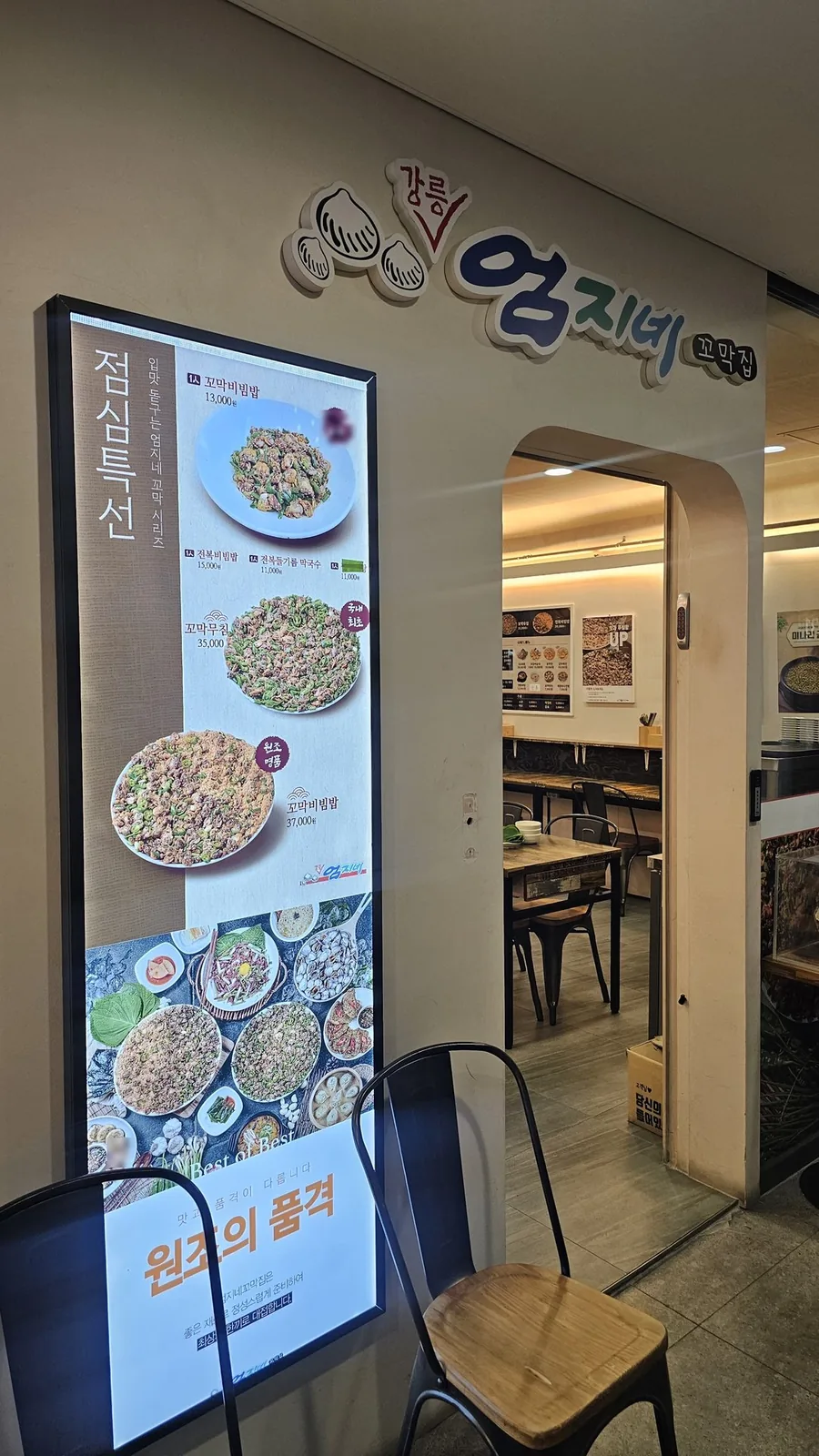
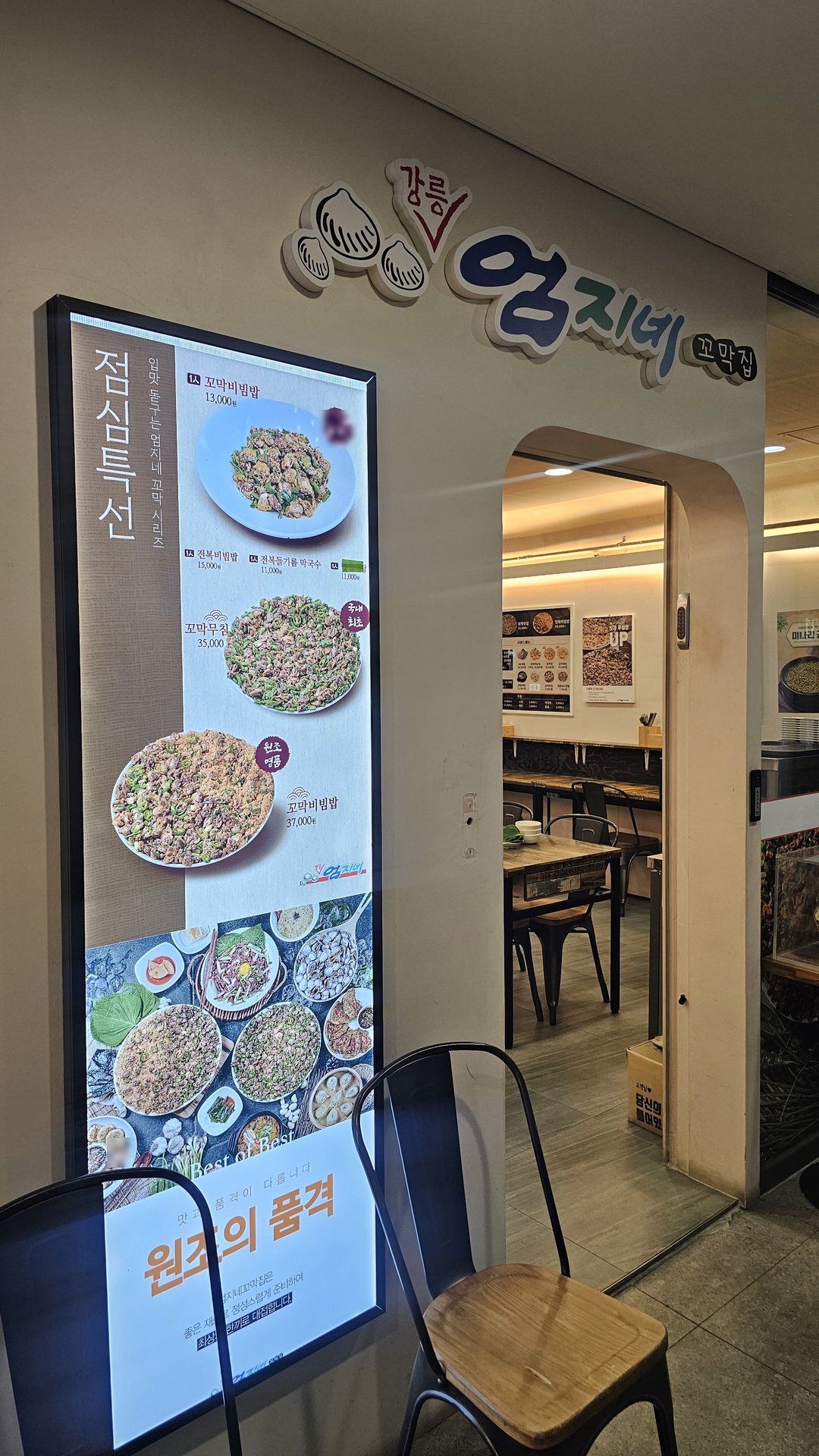
    Entrance of Eomjine Kkomak House in Yeouido with illuminated menu board showing cockle dishes
    Entrance of Eomjine Kkomak House in Yeouido with illuminated menu board showing cockle dishes

    Getting There

    Yeouido is Seoul’s financial district — think of it as Korea’s equivalent of Wall Street, but with a large riverside park attached. Banks, broadcast companies (KBS headquarters is here), government offices, and a whole lot of people who need somewhere decent to eat between 12 and 1 PM.

    Closest subway: Yeouido Station (여의도역), accessible via Line 5 or Line 9. Short walk from either exit. Use Naver Maps — more reliable than Google Maps for Korean addresses. Search 엄지네꼬막집 여의도 and it’ll come up.

    From Incheon Airport (ICN): About 50–60 minutes by AREX train and subway, or 40–45 minutes by taxi (roughly 50,000–70,000 KRW / ~$37–$52 depending on traffic). Not a straight-from-the-airport stop, but if you’re staying in Yeouido or passing through the area, it’s very convenient.

    The Interior

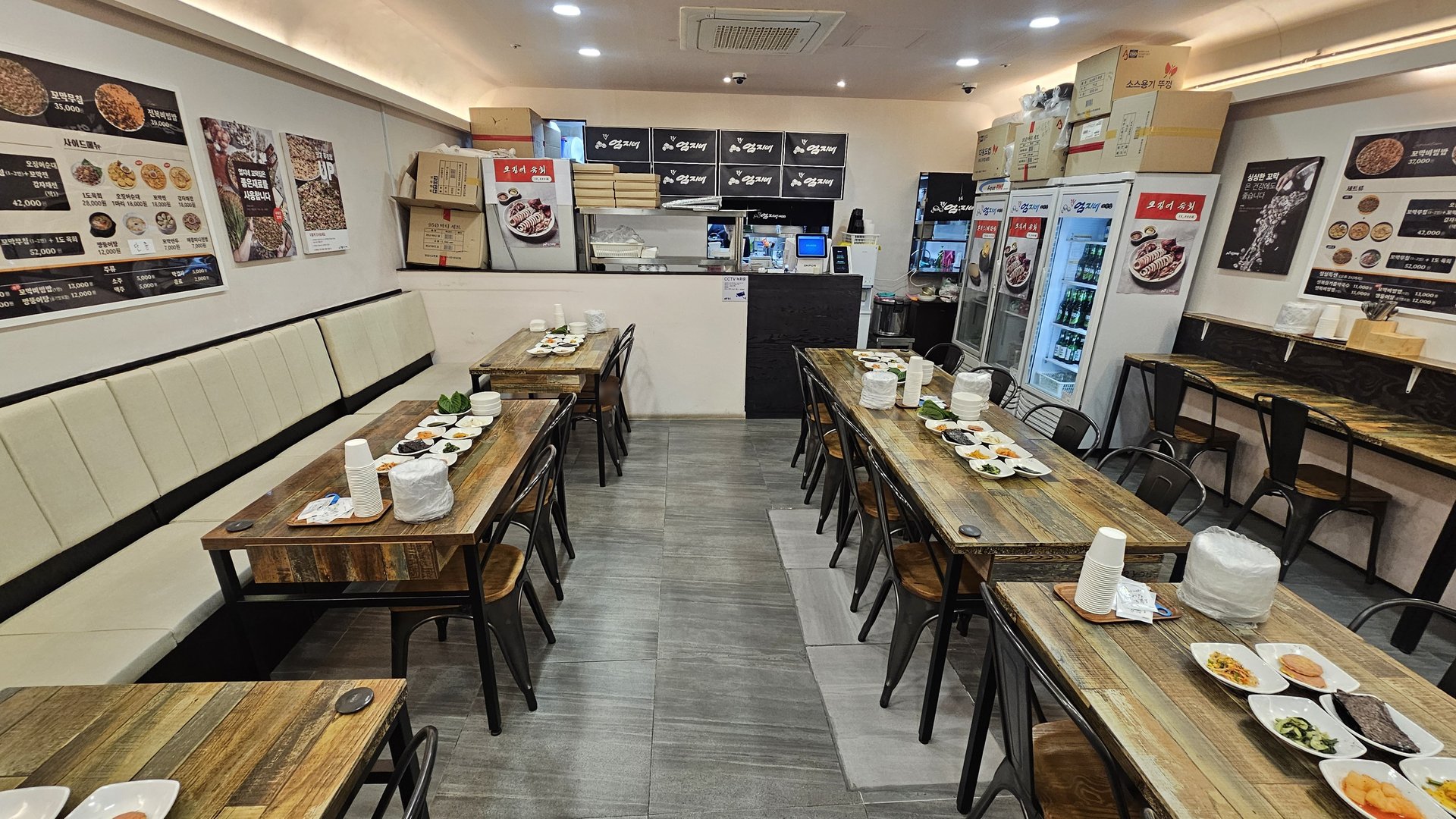
    Interior of Eomjine Kkomak House with long wooden tables and sofa-style bench seating

    Interior of Eomjine Kkomak House with long wooden tables and sofa-style bench seating

    Clean, functional, unpretentious. Long wooden tables, bench-style sofa seating along one wall, bright lighting. Not a date spot. Not somewhere you linger after eating. This is a lunch operation designed for quick turnover, and the layout reflects that.

    We went around 11 AM, right after opening — the hall was nearly empty and perfectly quiet. By noon, this place fills up with the Yeouido office crowd.

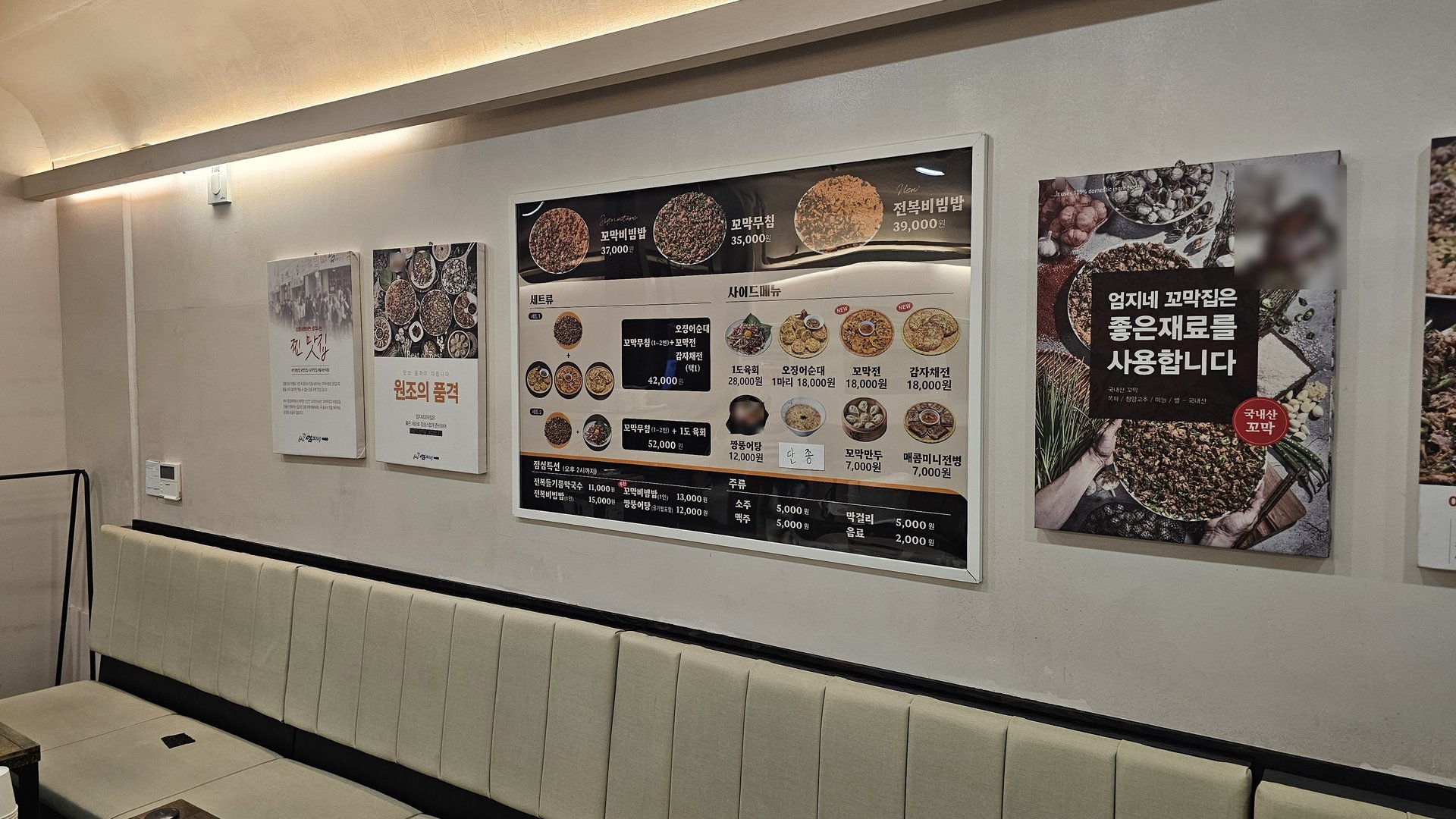
    Wall menu at Eomjine Kkomak House showing prices for kkokak bibimbap, kkokak muchim, and abalone bibimbap

    Wall menu at Eomjine Kkomak House showing prices for kkokak bibimbap, kkokak muchim, and abalone bibimbap

    The wall menu is in Korean only, but the prices are visible. Regular kkokak bibimbap is listed at 37,000 KRW (~$27 USD) on the main menu. The lunch set pricing is more reasonable — our total for two sets and a shared pancake came to 44,000 KRW, which breaks down to well under 20,000 per person.

    What I Ordered

    Kkokak Bibimbap Lunch Set × 2

    Kkokak bibimbap topped with a large mound of seasoned cockles, sesame, and green onions at Eomjine Kkomak House

    Kkokak bibimbap topped with a large mound of seasoned cockles, sesame, and green onions at Eomjine Kkomak House

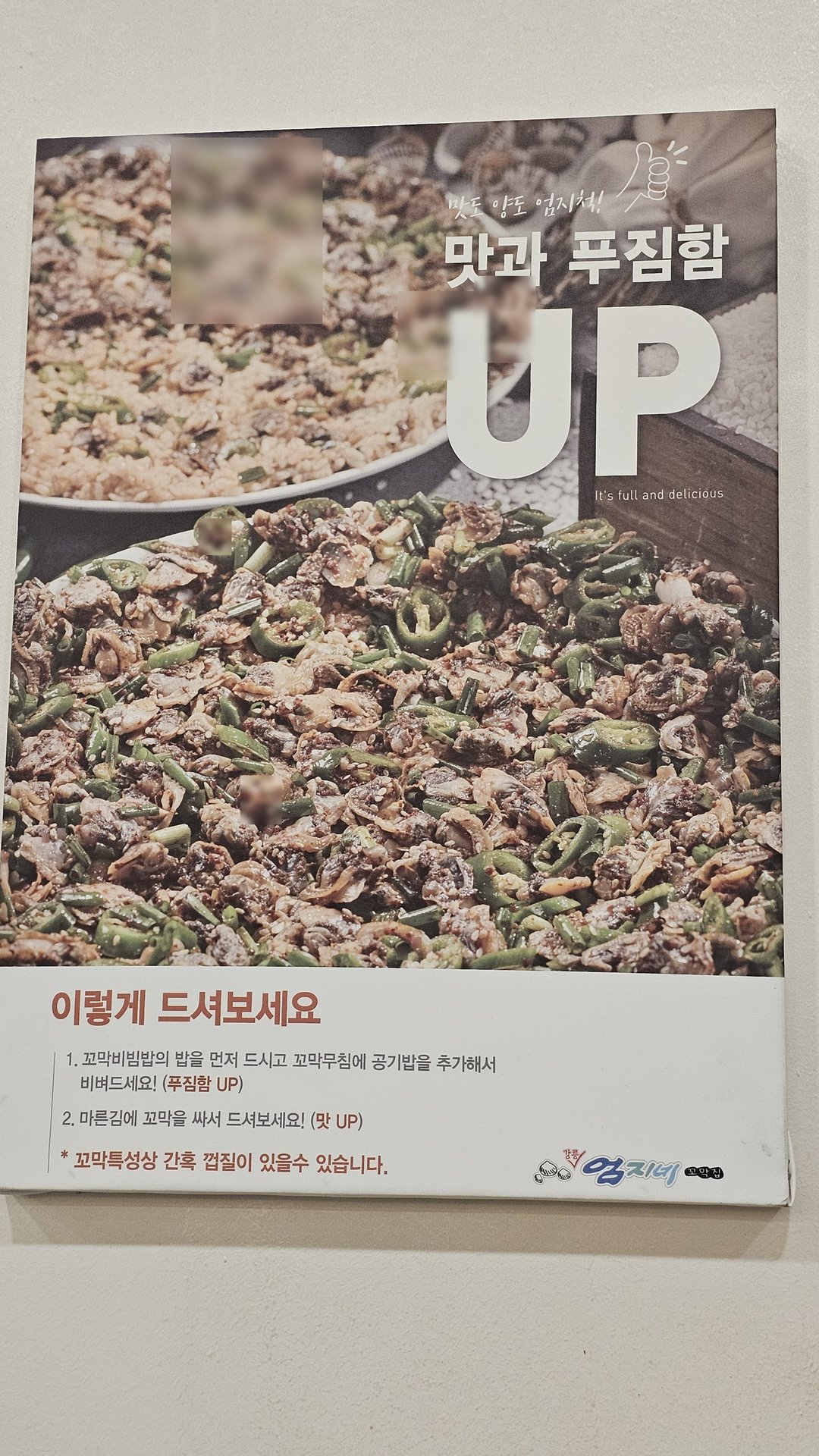
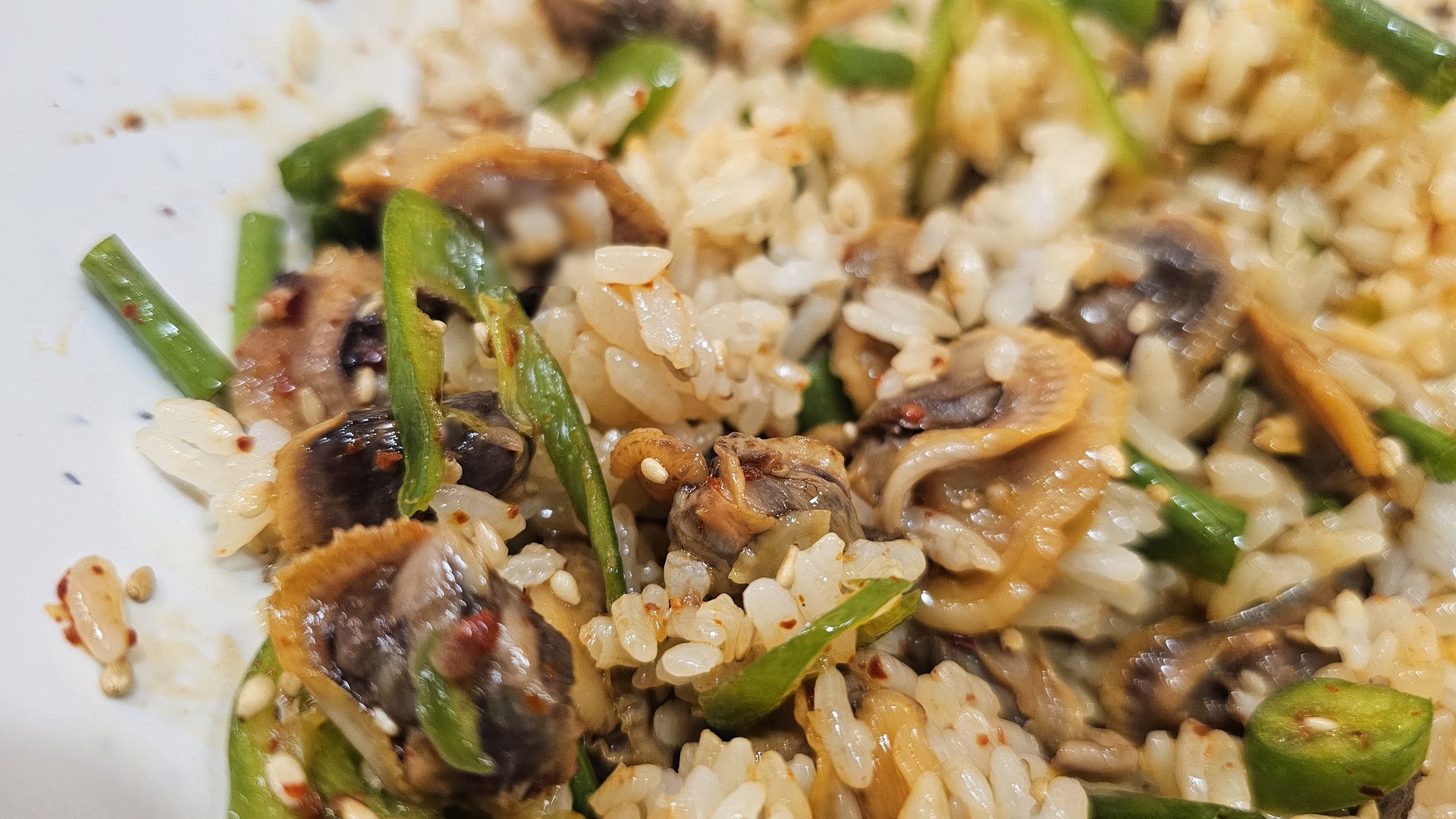
    The dish arrives looking like a lot. A big mound of seasoned cockles sits on top of a bowl of rice — the cockles are coated in that classic mix of gochugaru, sesame oil, garlic, and scallions. There’s an instruction card on the table.

    How-to-eat instruction card for kkokak bibimbap placed on table at Eomjine Kkomak House

    How-to-eat instruction card for kkokak bibimbap placed on table at Eomjine Kkomak House

    The instruction is: mix it. That’s essentially the whole thing. Once you mix, the sesame oil and cockle juices coat the rice and you get this savory, slightly spicy bowl that eats much bigger than it looks.

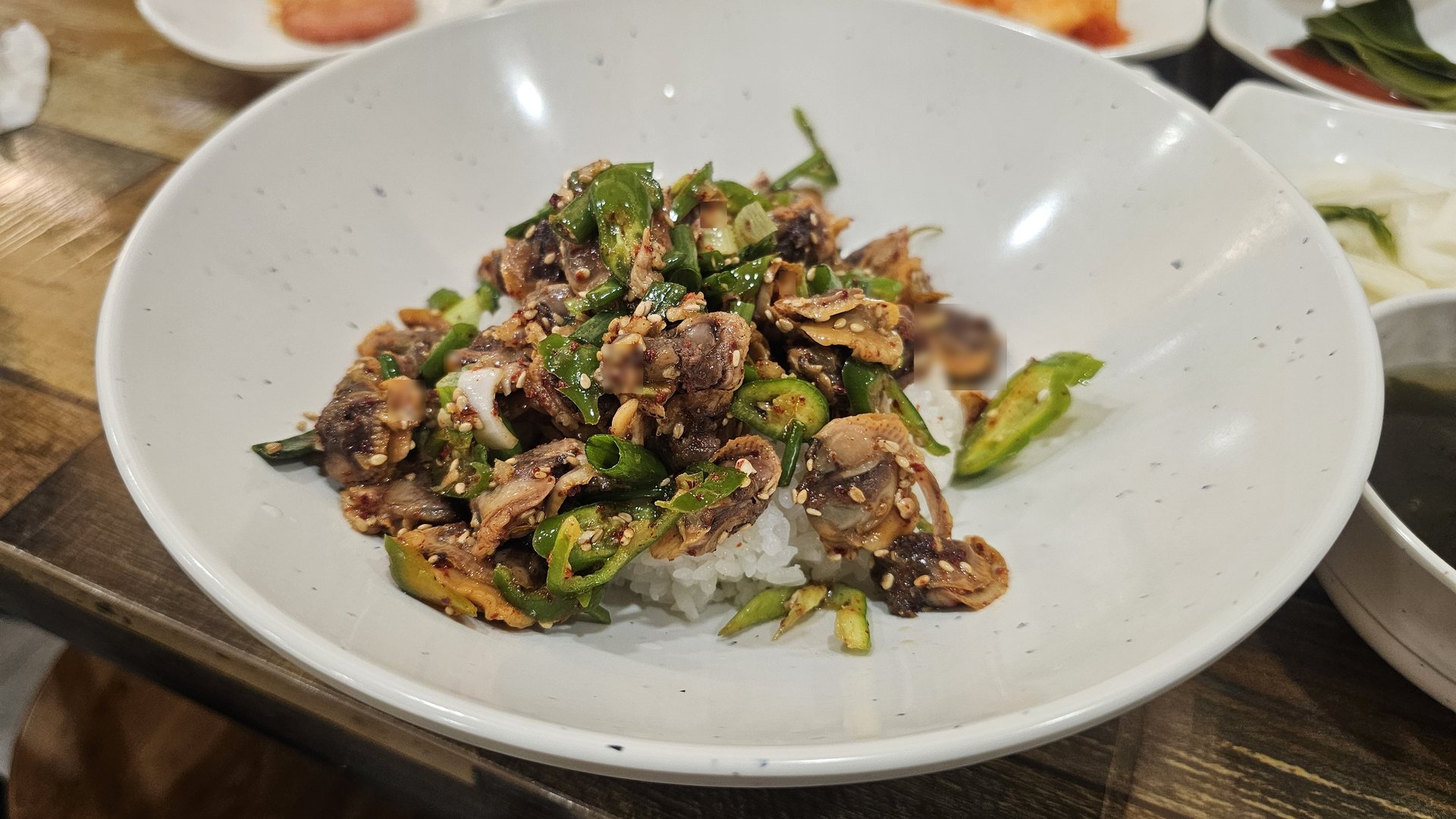
    The cockles themselves are cooked properly — firm but not rubbery, tender enough to eat without effort. The seasoning is balanced. The heat from the gochugaru is present but not aggressive, and the sesame flavor rounds everything out. It’s the kind of dish you finish and immediately understand why people come back for it.

    Close-up of mixed kkokak bibimbap showing cockles, rice, gochugaru seasoning and sesame at Eomjine Kkomak House Yeouido

    Close-up of mixed kkokak bibimbap showing cockles, rice, gochugaru seasoning and sesame at Eomjine Kkomak House Yeouido

    Yeah. This is the dish to order. No question.

    Potato Pancake (감자전) × 1 — Shared

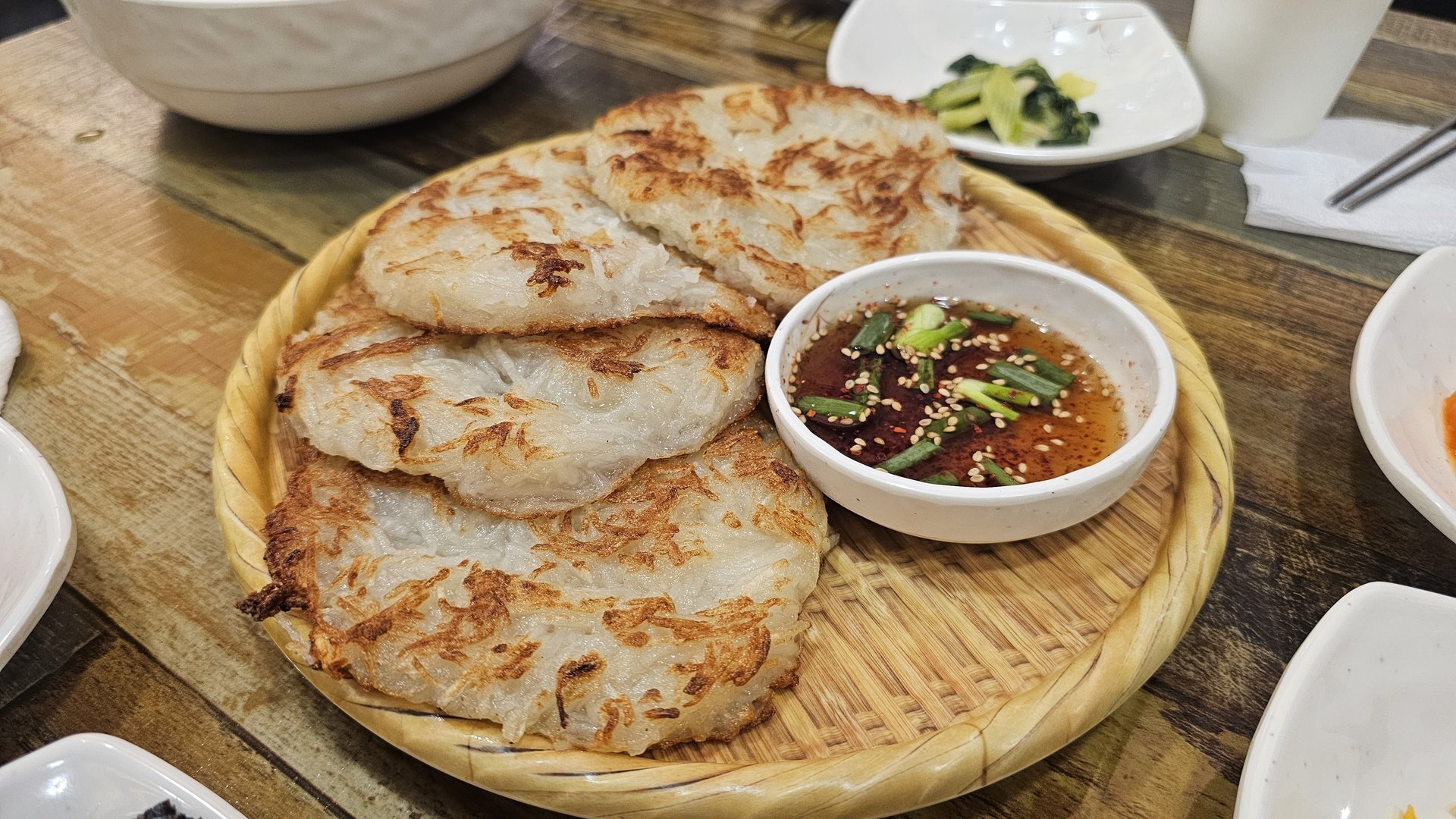
    Crispy potato jeon (Korean savory pancake) on bamboo tray with soy dipping sauce at Eomjine Kkomak House

    Crispy potato jeon (Korean savory pancake) on bamboo tray with soy dipping sauce at Eomjine Kkomak House

    Potato jeon is a Korean savory pancake made with grated potato — denser and chewier than a wheat-based pancake, slightly translucent in the middle when cooked right. Comes with a soy-based dipping sauce on the side.

    Crispy at the edges, chewy center, hits the spot as a shared side. It’s not a reason to come here on its own, but it’s a solid call when you want something to eat alongside the bibimbap. We finished it.

    The Soup

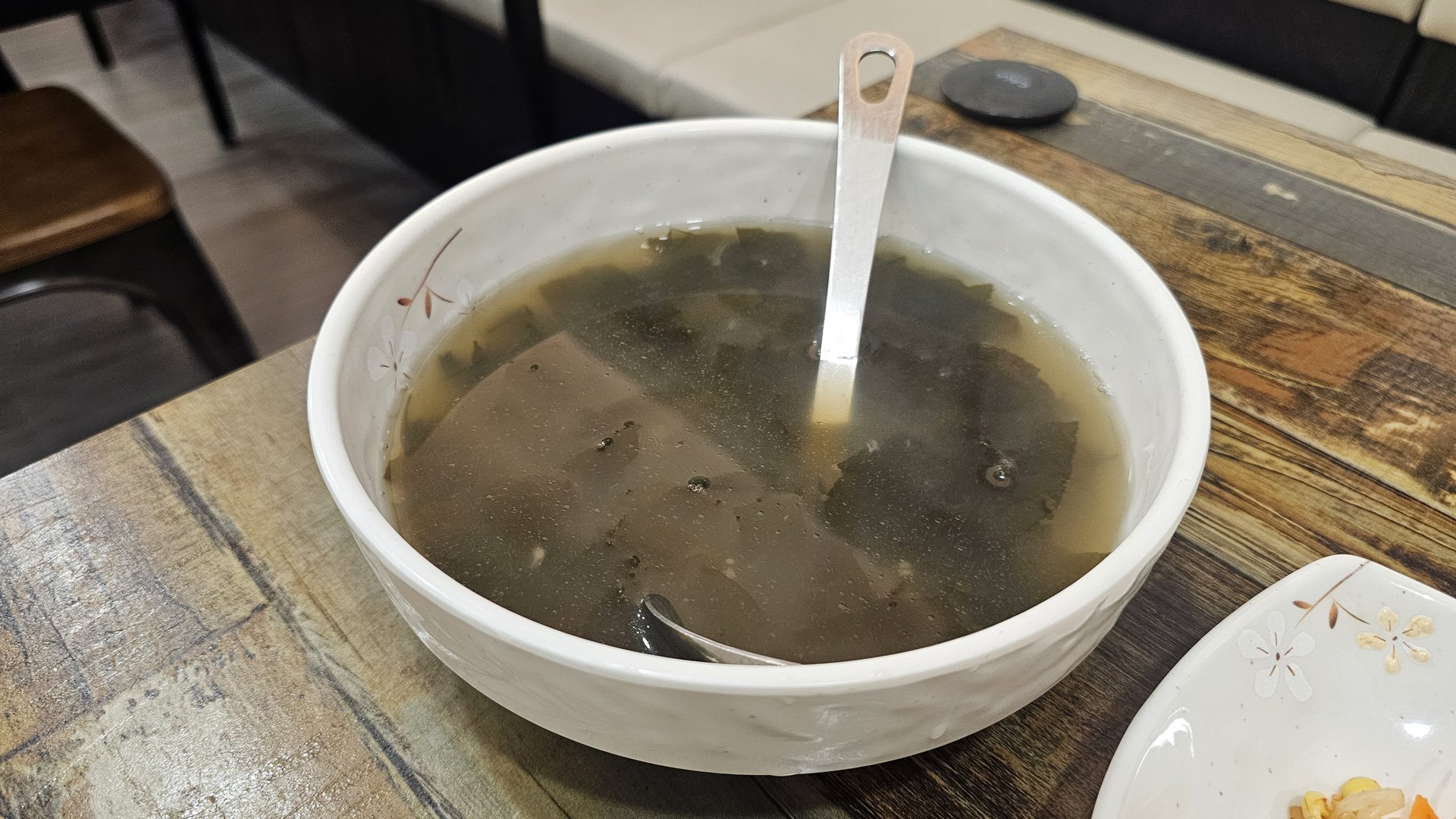
    Seaweed soup in white bowl served as part of the kkokak bibimbap lunch set

    Seaweed soup in white bowl served as part of the kkokak bibimbap lunch set

    The lunch set comes with soup. Seaweed soup (미역국, miyeokguk) — seaweed, tofu, clean light broth. Warm, simple, restorative. Standard for a Korean set meal. It does exactly what it’s supposed to do.

    Banchan (Side Dishes)

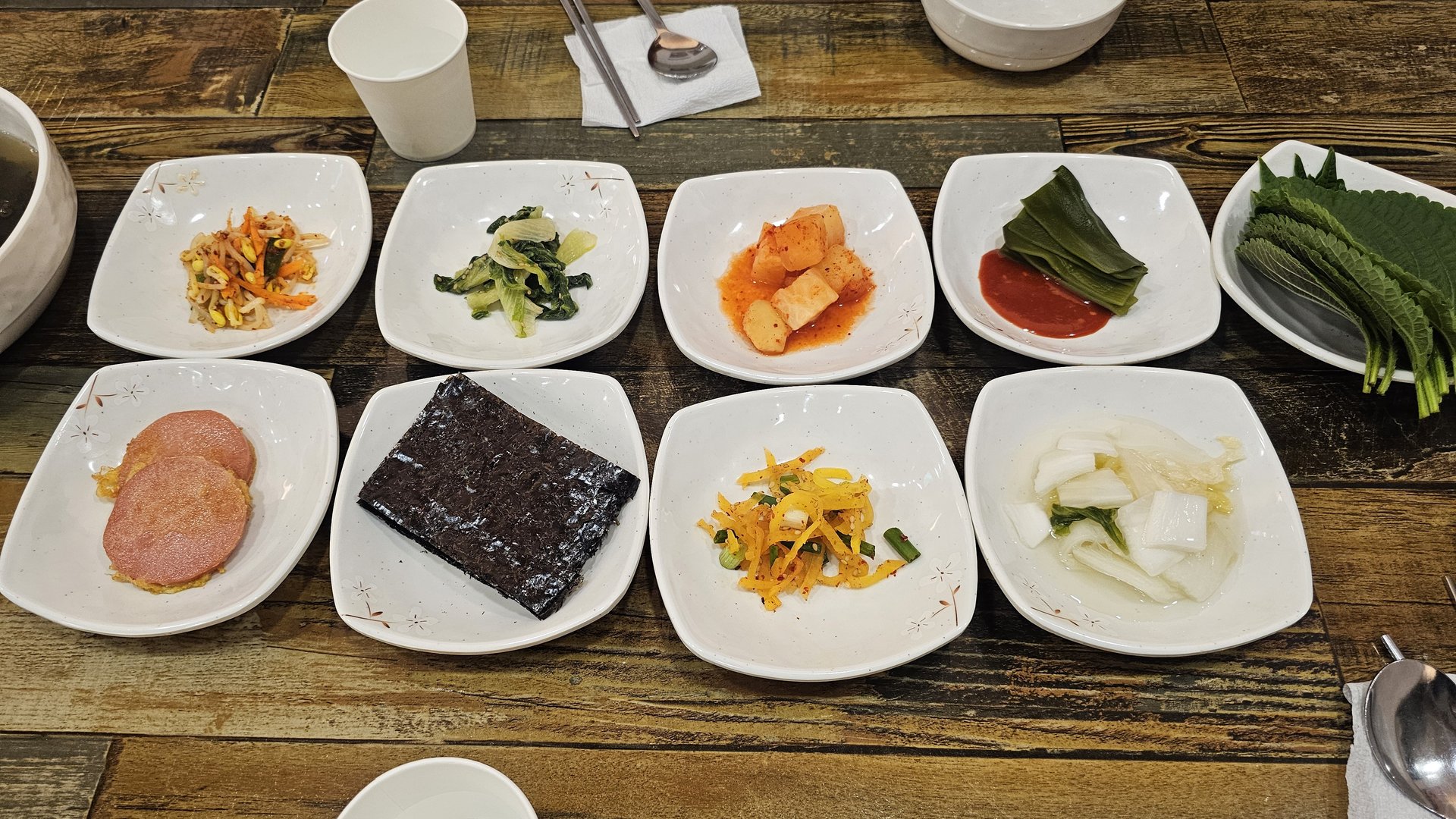
    Eight-piece banchan spread including egg roll, spam, seaweed, bean sprouts, kimchi, perilla, and cucumber

    Eight-piece banchan spread including egg roll, spam, seaweed, bean sprouts, kimchi, perilla, and cucumber

    Eight small side dishes came out with the sets. Banchan is the Korean tradition of serving multiple small dishes alongside the main — you eat from them throughout the meal, no extra charge.

    The spread here: egg roll, spam, dried seaweed, bean sprout salad, kkakdugi (cubed radish kimchi), perilla leaves, cabbage kimchi, cucumber salad. More than expected for a lunch set. The egg roll and spam are very Korean comfort food — not fancy, but satisfying.

    Total bill: 44,000 KRW (~$32.60 USD) for two kkokak bibimbap lunch sets and one shared potato pancake.

    That’s roughly 22,000 KRW (~$16.30) per person for cockle bibimbap, soup, eight banchan, and a shared side. For Yeouido, that’s solid value.

    Stuff Tourists Should Know

    English menu: The wall menu is Korean only. Staff likely speaks minimal English. Point-and-order works fine — the main dish is 꼬막비빔밥. Show a photo if needed.

    Payment: Korean cards work fine. Foreign Visa/Mastercard cards generally work at most Seoul restaurants now. Carry some cash as backup.

    Tipping: No. Korea doesn’t have a tipping culture. Just pay the bill as printed.

    Best time to go: Open for lunch. Arriving around 11:30 AM before the office rush is the move — by 12:30 PM it fills up fast on weekdays.

    Solo dining: Fine. Tables accommodate single diners without issue.

    Groups: Long tables work well for groups of 4–6. Larger groups may want to call ahead.

    Kids: Should be fine. Rice-based dishes and mild banchan make it manageable for children. The cockle seasoning has some heat — ask for less spicy (덜 맵게 해주세요) if needed.

    Dietary restrictions: Not suitable for vegetarians (cockles are the whole point) or shellfish allergies. Not halal. Gluten is tricky — soy sauce is in most things. For serious allergy concerns, this probably isn’t the right stop.

    The Verdict

    Should you go?

    If you’re in Yeouido for any reason — yes. Cockle bibimbap doesn’t appear on every Seoul menu. It’s a regional specialty that most restaurants don’t do seriously. Eomjine does it seriously, and the execution is consistent.

    If you’re on a 3-day Seoul trip and haven’t touched Korean barbecue, a proper jjigae (Korean stew), or street food yet — prioritize those first. Kkokak bibimbap is a slightly niche pick for first-timers. But if you’ve covered the basics and want to eat something that locals actually choose over the tourist trail: this is a good call.

    We’re regulars at this point. That’s the real review.

    FAQ

    What exactly is kkokak?

    Ark clam, also called blood cockle. A small saltwater shellfish with a firm, chewy texture and deep umami flavor — completely different from the clams you’d get at a Western seafood place. Very popular in Korean coastal cuisine, especially from South Jeolla Province.

    Is there an English menu?

    No. Menu is Korean-only. Point at 꼬막비빔밥, or show staff this post on your phone. You’ll be understood.

    Do I need a reservation?

    For weekday lunch, probably not — we walked in right at opening with no wait. Lunch rush (12–1 PM) will be busier. Weekends may vary. Arrive early to be safe.

    How spicy is the cockle bibimbap?

    Mild to medium heat. The gochugaru is present but it’s not a challenge. Most people handle it fine. If you’re very sensitive to spice, ask for 덜 맵게 해주세요 (a little less spicy, please).

    How do I eat it?

    Mix everything together. The restaurant puts an instruction card on the table. Basically: mix the cockles and rice thoroughly with whatever sauce comes with it, eat straight from the bowl. Don’t overthink it.

    Is it worth it as a tourist?

    If you want to eat something genuinely Korean and slightly off the usual tourist path — yes. Cockle bibimbap is the kind of dish that locals eat for comfort. That’s a good sign.

    How do I find it?

    Open Naver Maps (download it — it’s more accurate than Google Maps in Korea) and search 엄지네꼬막집 여의도. It’ll come up. Closest subway is Yeouido Station on Line 5 or Line 9.

    You might also like

  • Shinhee Sushi in Yeouido: Honest Review of the Lunch Set

    Shinhee Sushi in Yeouido: Honest Review of the Lunch Set

    🇯🇵 日本語版はこちら

    Quick honest review of Shinhee Sushi (신희초밥) in Yeouido. Skip to the verdict if you’re in a hurry, but the short version: 14,000 KRW (~$10 USD) per person for 10 sushi pieces, shrimp tempura, and udon. That’s not a typo. It’s one of the better lunch deals in Seoul’s financial district right now.

    Went on a Tuesday with two people. No reservation. Walked right in.

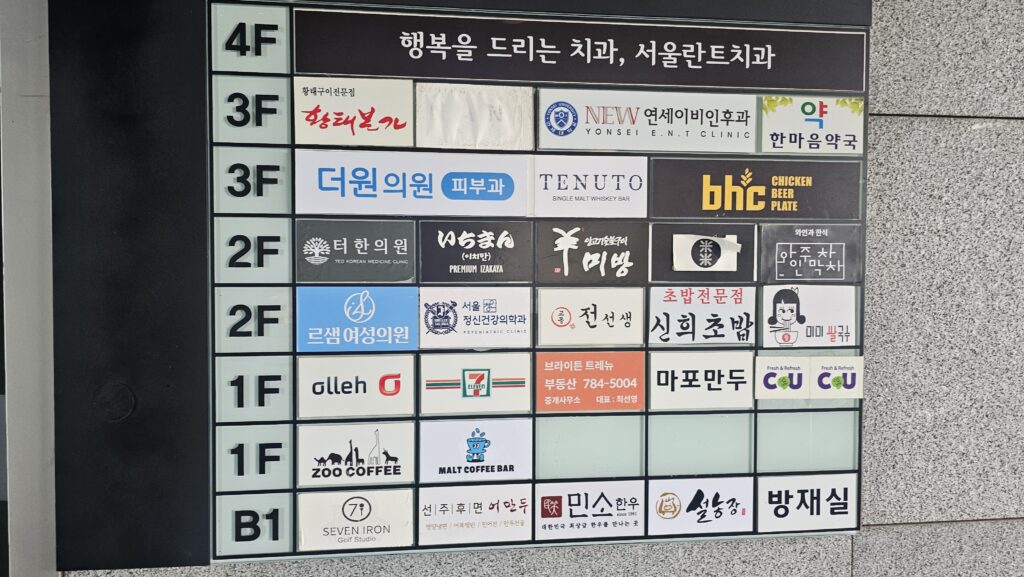
    Floor directory showing Shinhee Sushi on the second floor of a Yeouido building

    What Is a Korean Sushi Lunch Set?

    Quick context if you’ve never seen this format before.

    Korean sushi restaurants (초밥집) commonly run fixed-price lunch sets — you pay one price and get a set number of sushi pieces plus sides like miso soup, udon, or tempura. It’s the Korean version of Japan’s teishoku lunch format, but often priced more aggressively because you’re competing with nearby kimbap joints and bibimbap spots for the noon crowd.

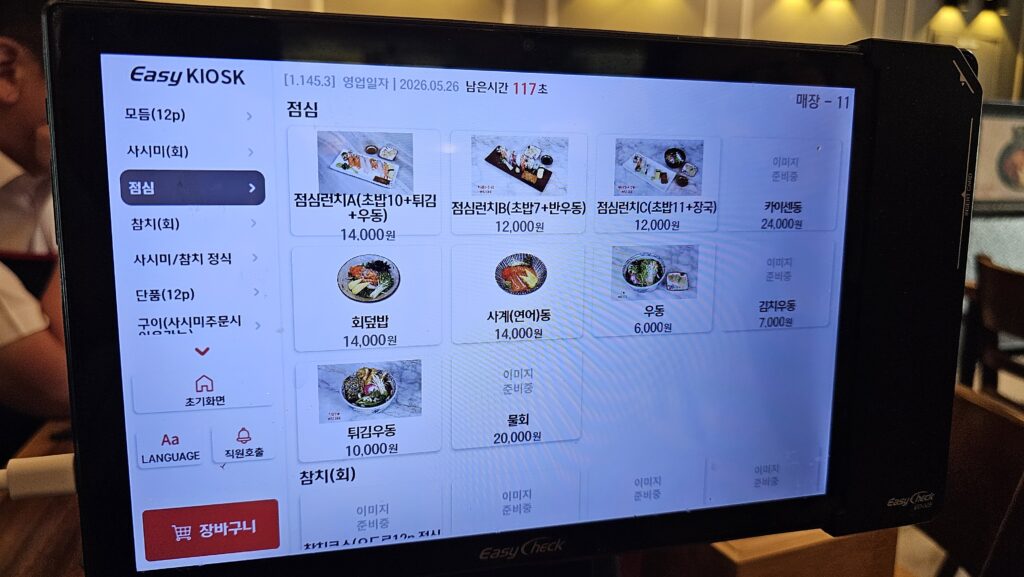
    Shinhee Sushi runs three lunch sets. Lunch Set A (점심런치A) is the one everyone orders: 10 sushi pieces + shrimp tempura + udon. 14,000 KRW (~$10 USD). That’s the move.

    About the Place

    Shinhee Sushi is a local, non-chain sushi restaurant that’s been in Yeouido a while. Not the trendy omakase-with-a-waitlist type. Not the conveyor belt type either. Just a solid sit-down sushi spot that happens to be in Seoul’s financial district, roughly equivalent to London’s Canary Wharf or New York’s Wall Street.

    The full menu is actually broader than the lunch crowd suggests — premium tuna courses, sashimi platters, kaisen-don (seafood rice bowls), live fish options, and individual nigiri. But if you show up at noon, almost every table is ordering the lunch set.

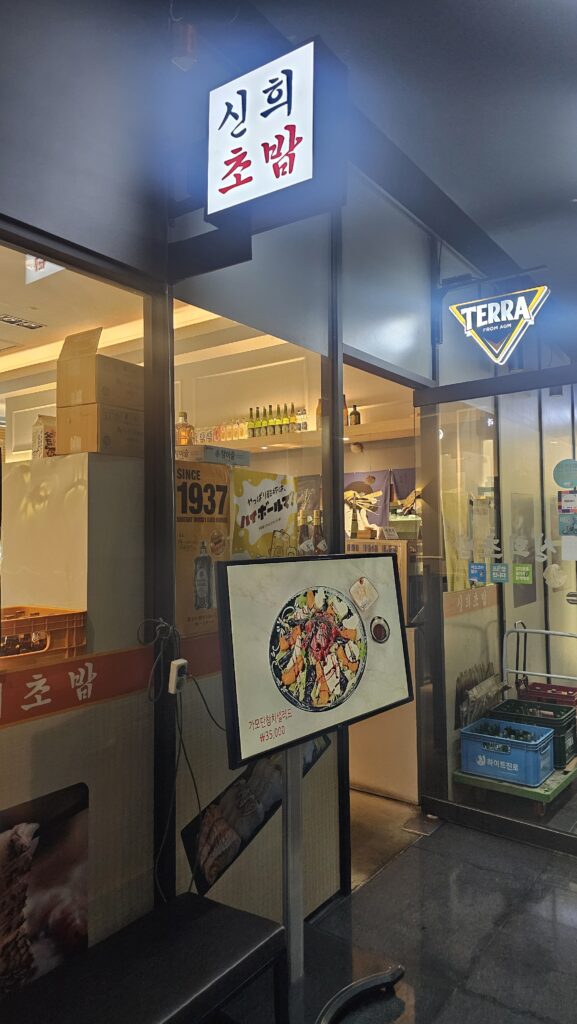
    Shinhee Sushi restaurant entrance in Yeouido with signage glass doors and menu display board

    Getting There

    Shinhee Sushi is on the 2nd floor of a building in Yeouido. The floor directory at the elevator will have 신희초밥 listed on 2F — that’s how you find it.

    Nearest subway: Yeouido Station (Line 5 or Line 9). About a 5-10 minute walk depending on which exit.

    From Incheon Airport: Roughly 45-50 minutes by subway (AREX to Hongik University Station, transfer to Line 2 toward Yeoinaru, or take Line 9 directly to Yeouido). Not a destination you’d cross Seoul for specifically, but very convenient if you’re already in the area.

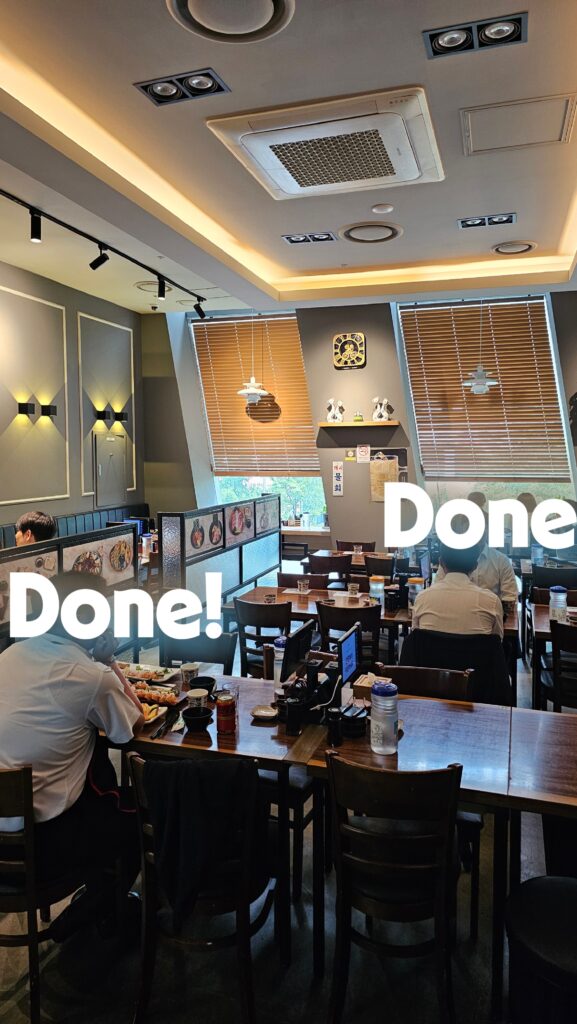
    Interior of Shinhee Sushi Yeouido with wooden tables bamboo blinds and seated lunch crowd

    The Interior

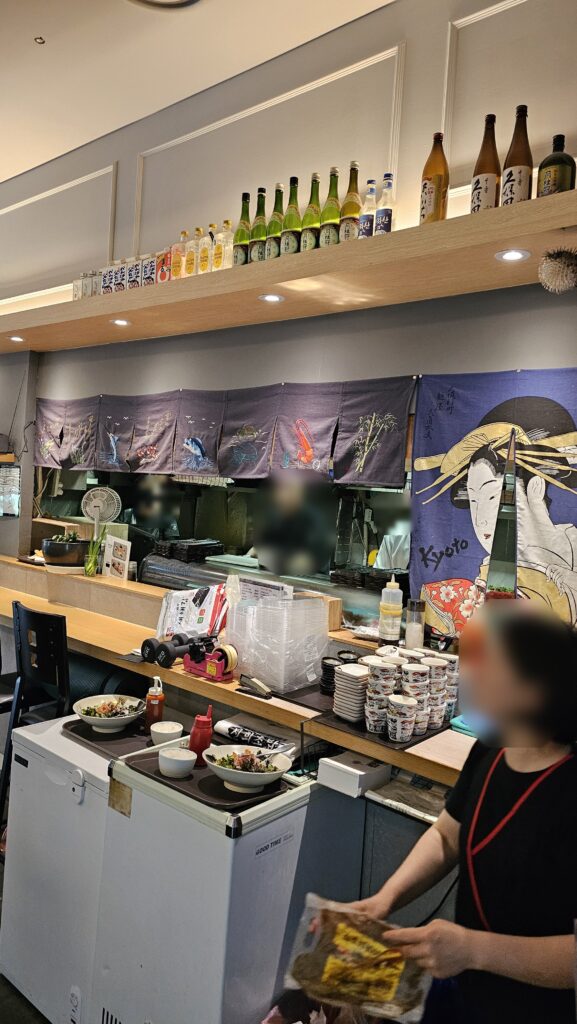
    Open sushi kitchen and bar counter at Shinhee Sushi with noren curtains and sake bottles

    Cleaner and more put-together than the lunch price suggests. Wooden tables and chairs, bamboo blind windows, noren curtains (the fabric dividers you see in Japanese restaurants) hanging over the open kitchen. You can watch the sushi chef work from your seat.

    Not fancy. No mood lighting, no elaborate presentation. But it’s a proper sit-down restaurant with a legitimate kitchen, not a grab-and-go counter. When we got there at lunchtime the place was already well-filled with office workers — this is a neighborhood regular spot, not a tourist trap.

    The Ordering System

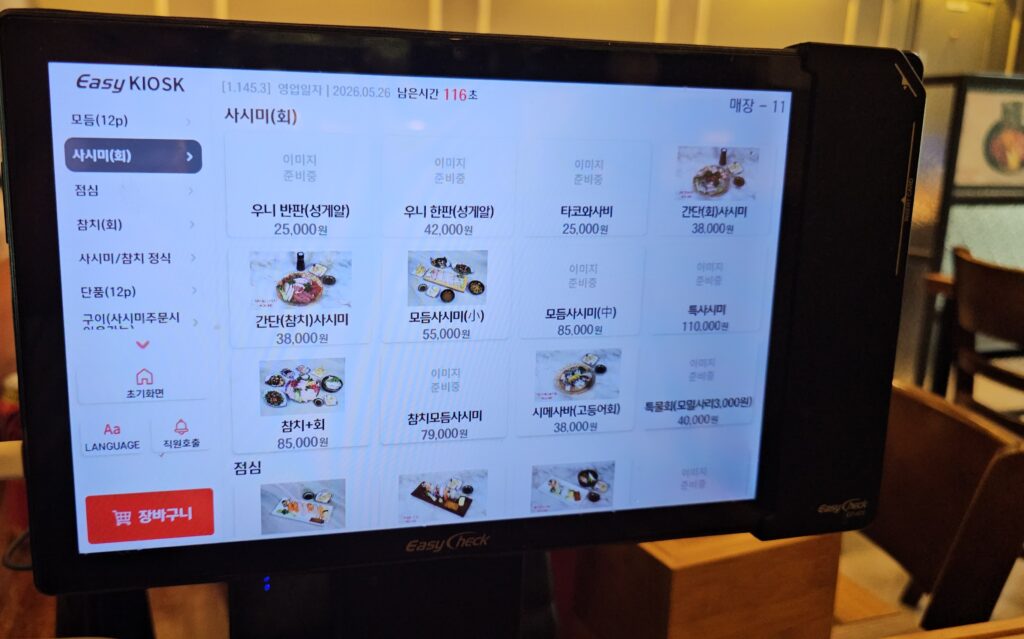
    Kiosk ordering. Touch screen, self-service.

    Kiosk touch screen lunch menu at Shinhee Sushi showing Lunch Set A 14000 KRW with sushi tempura udon

    The kiosk is in Korean only. That’s the main friction point for non-Korean speakers. No English on screen. That said, the menu photos are clear enough to navigate by sight, or just type 점심런치A on your phone and show it to a staff member — they’ll sort you out.

    What I Ordered

    Lunch Set A — 14,000 KRW (~$10 USD) per person

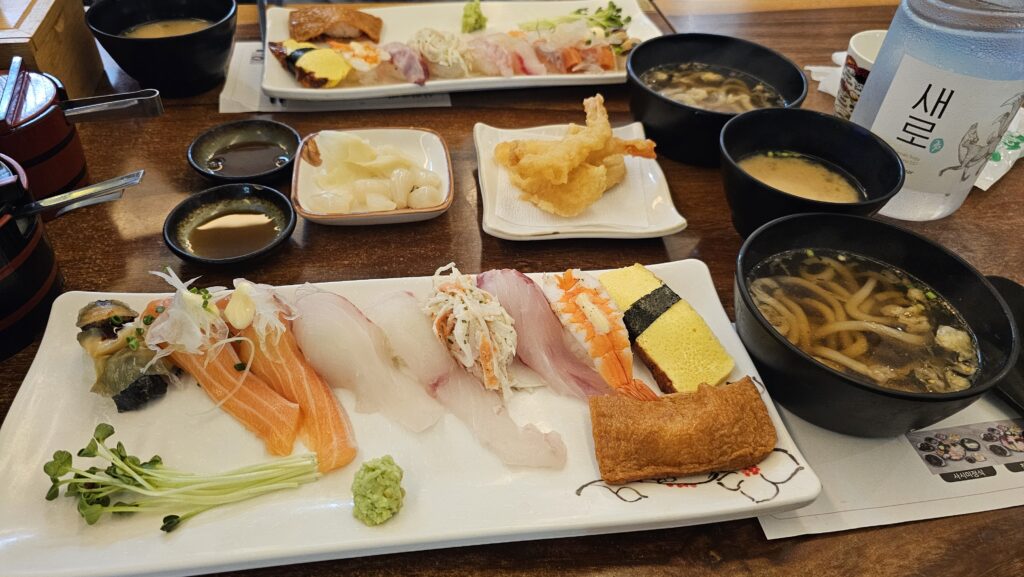
    Full table setting for two at Shinhee Sushi Yeouido with two sushi platters tempura udon and miso soup

    Here’s what landed on the table:

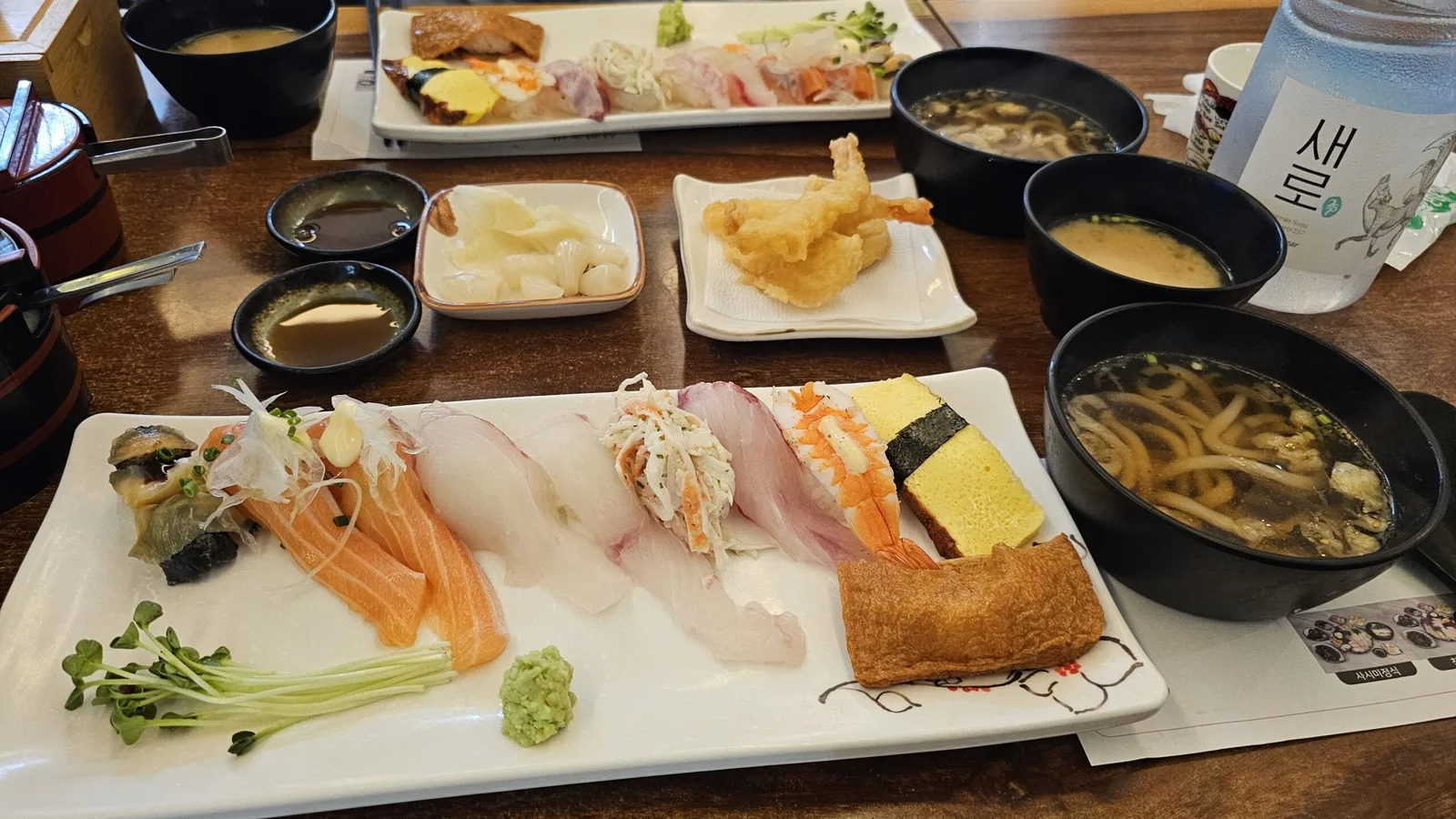
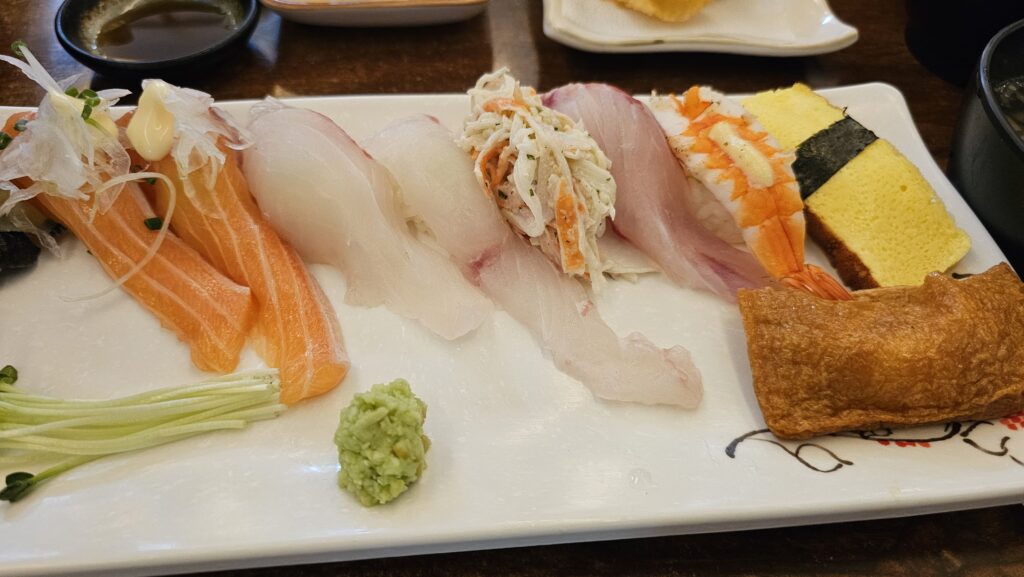
    The sushi plate: 10 pieces. Salmon, flounder (광어), squid, crab stick, yellowtail (방어), shrimp, tamagoyaki (sweetened egg), and inari (seasoned tofu pouch). Served on a white rectangular plate with wasabi and microgreens on the side.

    Close-up of Lunch Set A 10-piece sushi at Shinhee Sushi Yeouido with wasabi and microgreens

    For 14,000 KRW, this is good. The rice was served at the right temperature — slightly warm, the correct way. Salmon was fresh. Yellowtail was the best piece on the plate, noticeably better than the rest. Tamagoyaki and inari are filler pieces, but decent filler.

    Nothing here is going to rearrange your understanding of sushi. But nothing was bad. At this price point, that’s the win.

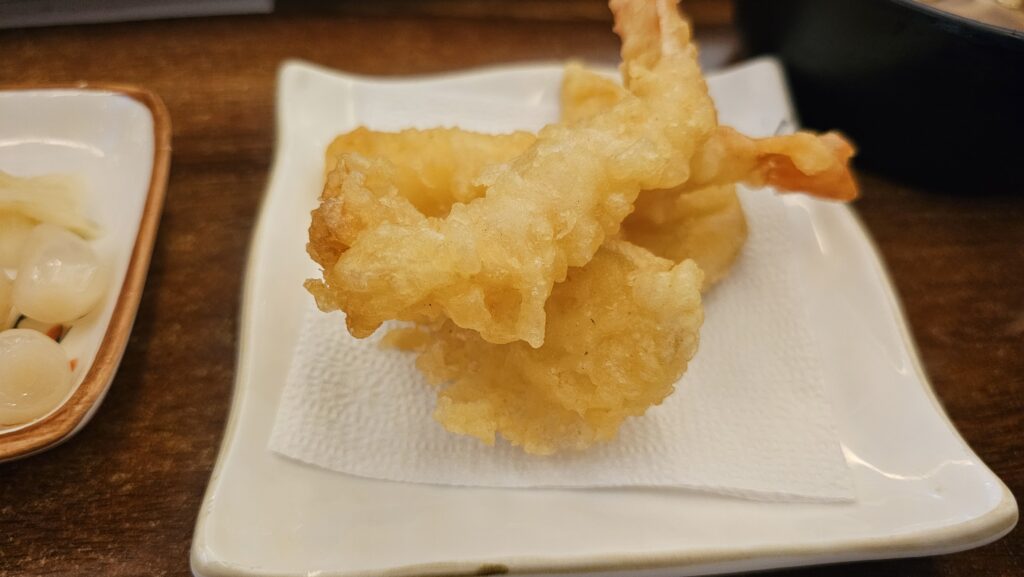
    Shrimp tempura (에비텐푸라): Two pieces, properly fried. Crispy coating, not greasy.

    Crispy shrimp tempura ebi-tempura on white plate at Shinhee Sushi Yeouido lunch set

    Udon: Standard. Mild broth, chewy noodles. It’s there to round out the meal, and it does that job fine.

    You also get miso soup, a small clam side dish, and water. Full table spread for two came to 28,000 KRW (~$21 USD). That’s $10.50 per person for a complete sushi lunch. In central Seoul.

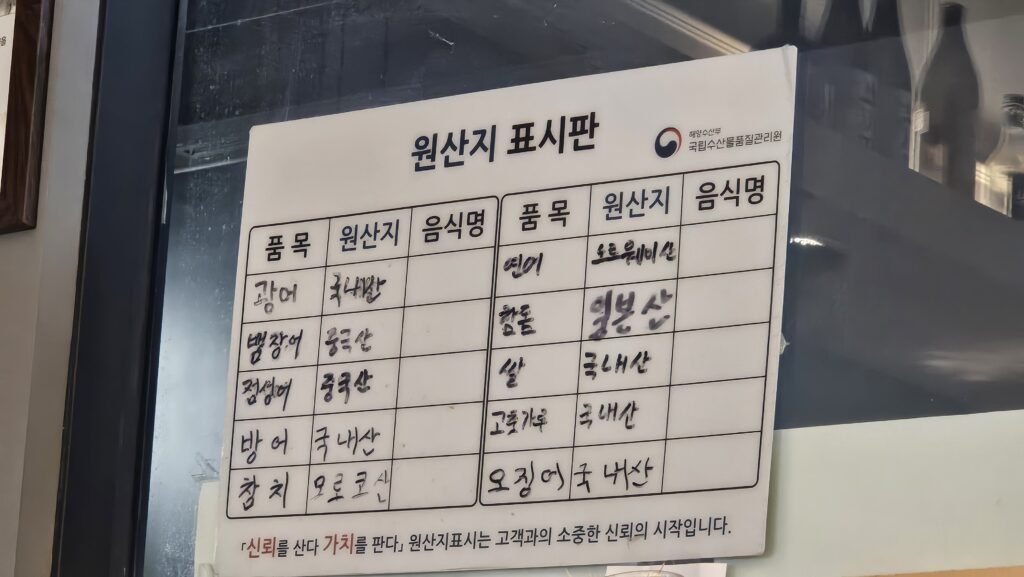
    Fish Origins

    Fish origin information board at Shinhee Sushi showing Norwegian salmon domestic flounder and Moroccan tuna

    Korean restaurants are legally required to post ingredient origins. Quick breakdown at Shinhee Sushi:

    – Salmon: Norway

    – Flounder, yellowtail, squid: Korea (domestic)

    – Tuna: Morocco

    – Eel: China

    Norwegian salmon is the standard across Korea — same fish you’d find at most sushi restaurants here. Moroccan tuna is also common in mid-range Korean sushi spots. Nothing unusual.

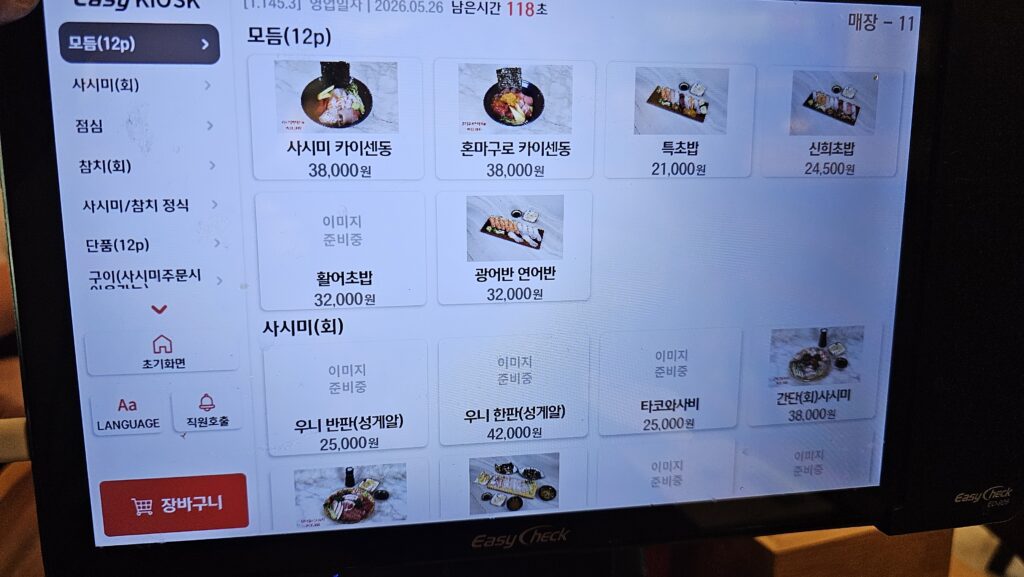
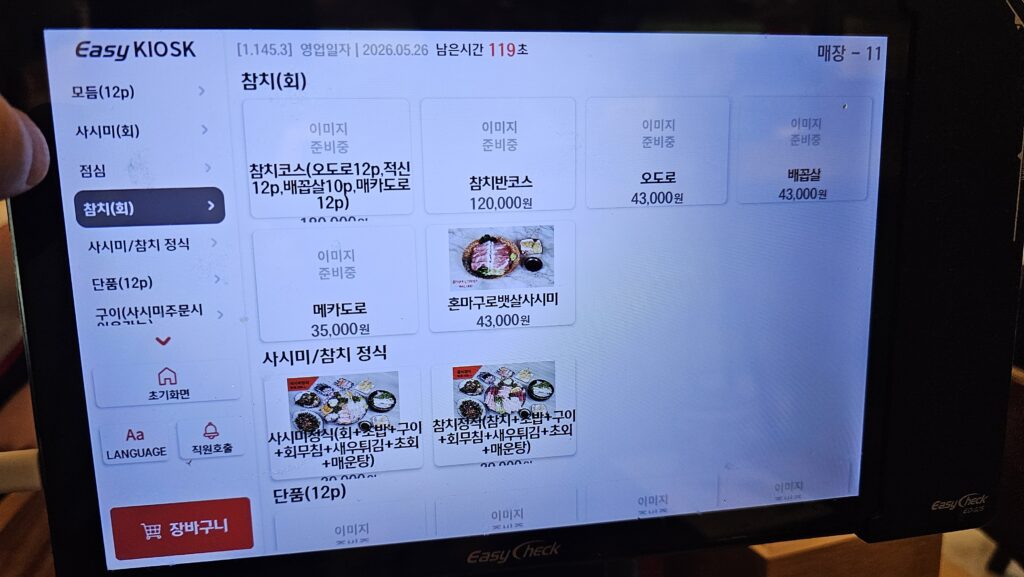
    More Menu Options

    In case you want something other than the lunch set:

    Kiosk sashimi menu at Shinhee Sushi Yeouido showing uni and assorted sashimi prices
    Kiosk assorted 12-piece sushi menu at Shinhee Sushi including kaisen-don 38000 KRW

    Kiosk premium tuna menu at Shinhee Sushi with hon-maguro bluefin tuna course options

    They run premium tuna courses (혼마구로 = bluefin tuna), sashimi sets starting around 25,000 KRW (~$18 USD), kaisen-don (seafood over rice) at 38,000 KRW (~$28 USD), and individual nigiri pieces if you want to build your own plate.

    Honestly, if you’re here at lunch, just get the set. The premium stuff exists for dinner and special occasions.

    Stuff Tourists Should Know

    English menu: The kiosk is Korean-only. Show staff 점심런치A on your phone for Lunch Set A. Staff may have limited English but will understand what you’re pointing at.

    Payment: Cards accepted. Foreign Visa and Mastercard should work fine at Korean restaurants.

    Tipping: No tipping in Korea. Seriously, don’t do it — it’ll create awkward confusion.

    Reservations: Probably not needed for lunch, but aim to arrive before 12:30 PM. The place fills up with office workers and wait times get longer after that.

    Vegetarian options: Minimal. The lunch set is entirely fish-based. If you avoid all seafood, this isn’t your spot.

    Group size: Comfortable for 2-4 people. Fine for solo dining too — plenty of people eat here alone.

    Kids: Should be fine if your kids eat sushi. No particularly child-hostile setup.
    The Verdict

    Should you go?

    If you’re in Yeouido at lunchtime — yes. This is the call.

    14,000 KRW for a 10-piece sushi set with tempura and udon is genuinely good value. The sushi isn’t life-changing, but it’s fresh, properly made, and better than what you’d get at a convenience store for half the price.

    – You’re in Yeouido for work or as part of a Seoul itinerary — yes, eat here. It’s quick, good, and cheap.

    – You only have 3 days in Seoul — maybe skip. Eat Korean BBQ, sundubu-jjigae, or naengmyeon first. Come back to sushi on a longer trip.

    – You want to eat exactly how Seoul office workers eat on a Tuesday — 100% yes, this is that experience.

    – You want a proper omakase or high-end sushi — wrong place. Head to Gangnam for that.

    Would I go back? Yeah. Already planning to.

    FAQ

    Where is Shinhee Sushi in Yeouido?

    It’s on the 2nd floor of a building in Yeouido — look for the floor directory at the elevator. Listed as 신희초밥 on 2F.

    Is there an English menu?

    The kiosk is Korean-only. Type 점심런치A on your phone and show it to staff — that’s Lunch Set A, the one to order.

    What’s included in Lunch Set A?

    10 mixed sushi pieces, shrimp tempura, udon, miso soup, and a clam side dish. 14,000 KRW (~$10 USD) per person.

    Do they take credit cards?

    Yes. Foreign Visa and Mastercard work fine.

    Is tipping expected?

    No. Korea doesn’t have a tipping culture. Don’t tip.

    Do I need a reservation for lunch?

    Not really, but get there before 12:30 PM. It gets packed.

    Is the fish fresh?

    They post origin info on the board — Norwegian salmon, domestic flounder and yellowtail, Moroccan tuna. Standard for a mid-range Korean sushi spot. Nothing to worry about.

    You might also like

  • Keebo Rock & Roll Yeouido: Honest Review of This Japanese Yoshoku Spot in Seoul

    Keebo Rock & Roll Yeouido: Honest Review of This Japanese Yoshoku Spot in Seoul

    🇯🇵 日本語版はこちら

    Quick honest review of Keebo Rock & Roll in Yeouido — a Japanese Yoshoku restaurant that’s been getting hyped up in Seoul food circles lately. Skip to the verdict at the bottom if you’re in a hurry, but here’s the short version: pork katsu is genuinely good, fish katsu is fine but forgettable, interior is gorgeous, prices are higher than typical Yeouido lunch.

    I went on a Tuesday around 12:15 PM. No reservation, walked right in.


    Wait, What’s Yoshoku?

    If you’ve never heard the term, Yoshoku (洋食) is basically Japan’s take on Western food from the late 1800s. Stuff like breaded pork cutlets, omelet over rice, hamburger steak with brown sauce. Comfort food, not fine dining.

    Koreans have been obsessed with it for the past few years. There are like five new Yoshoku places opening in Seoul every month. Keebo is one of the better-known ones.


    About Keebo (And Why It Matters)

    Keebo is one of several restaurants run by Chef Nam Joon-young. If you’ve been to Seoul before and eaten at Hyotteu (Vietnamese), Geogeo (Cantonese), or Nambak — same guy. He has a pretty solid track record, which is why people pay attention when he opens something new.

    The Yeouido location is called “Rock & Roll” for some reason. Don’t ask me why, it’s not a music-themed restaurant. Just go with it.


    Getting There

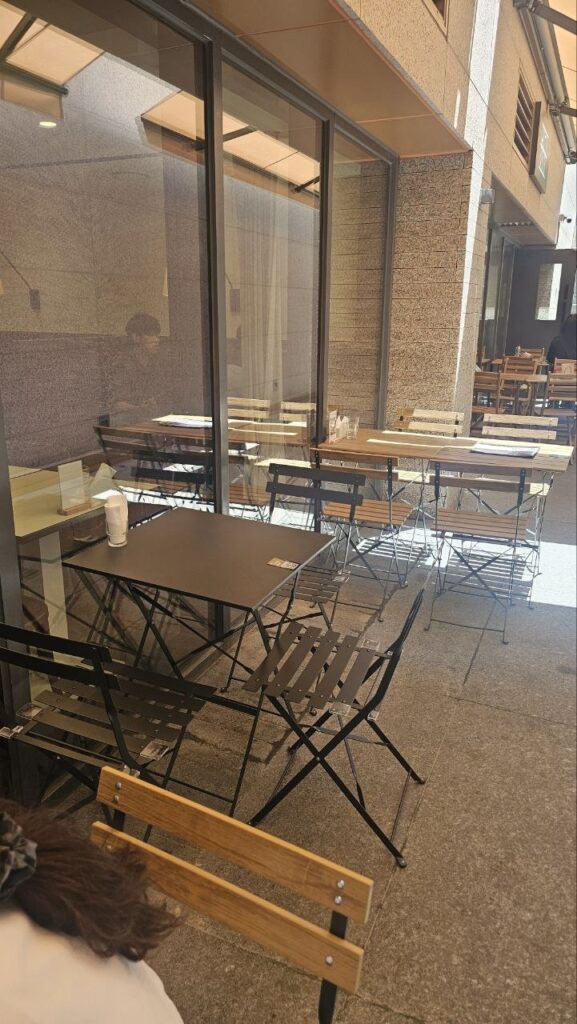
    Keebo Rock and Roll Yeouido exterior view with terrace seating

    It’s in Yeouido, which is basically Seoul’s financial district. Big office buildings, the National Assembly, banks, that kind of thing. Most people visit Yeouido for:

    • Cherry blossom festival (April)
    • Han River park
    • Fireworks festival (October)
    • IFC Mall / The Hyundai Seoul shopping
    • Conrad Seoul / Glad Hotel stays

    If you’re doing any of the above, Keebo is a reasonable lunch detour.

    Getting there: Take Subway Line 5 or 9 to Yeouido Station. Walk from there. Or just grab a cab and show them “키보 여의도” on your phone.


    The Interior

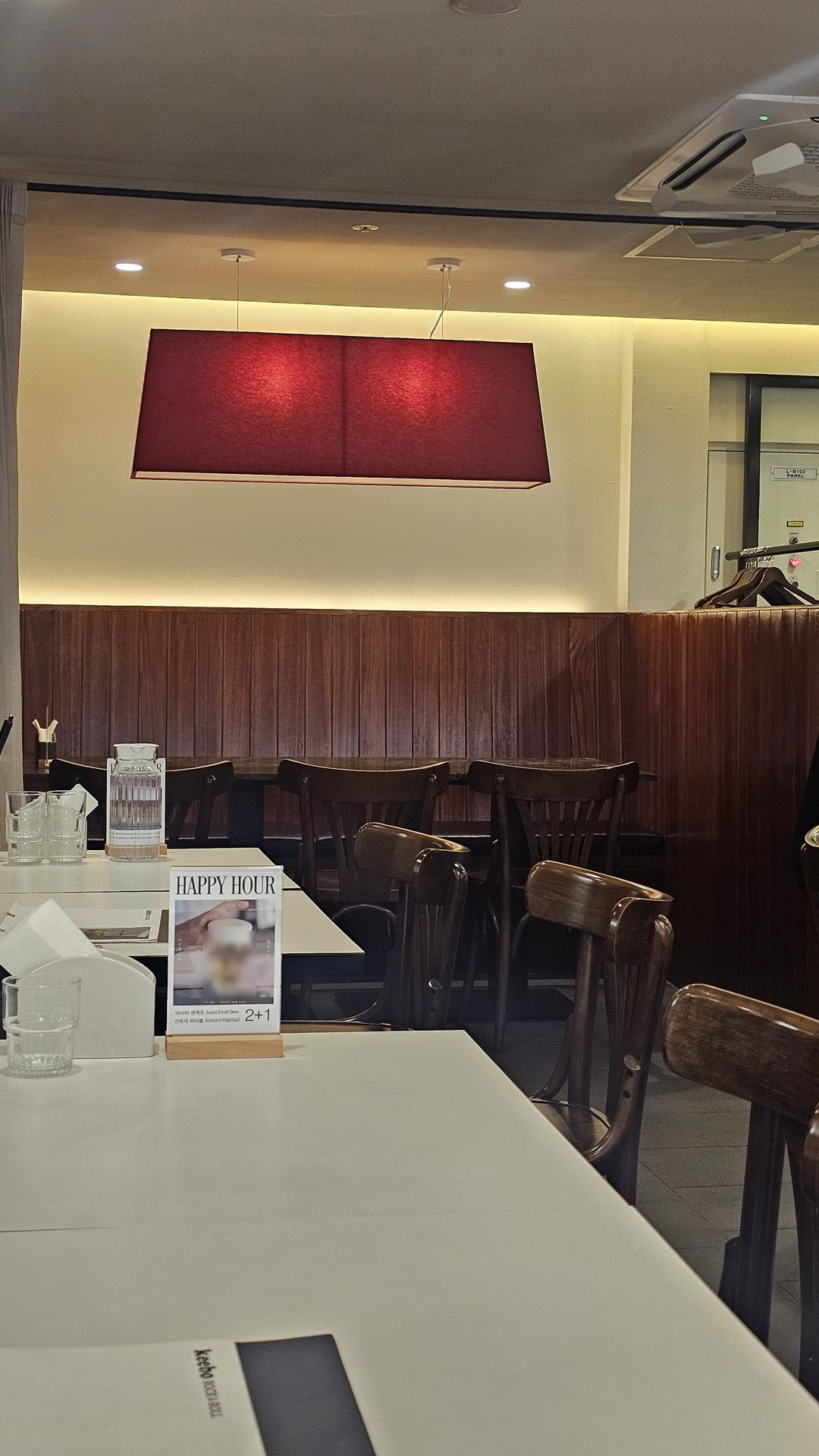
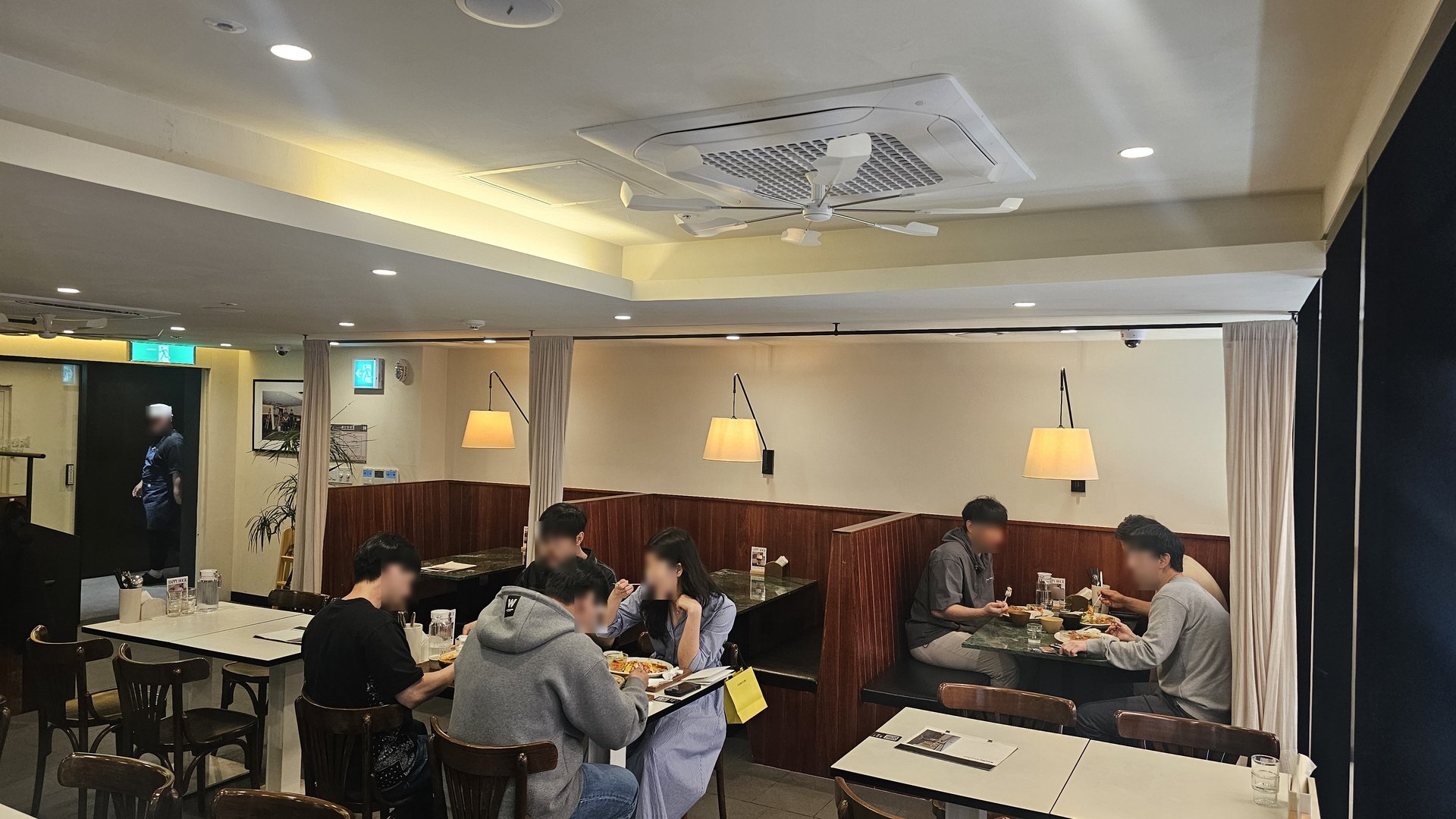
    Interior wall at Keebo Yeouido with red textile artwork, dark wood booths, and Happy Hour signage
    Interior wall at Keebo Yeouido with red textile artwork, dark wood booths, and Happy Hour signage

    Honestly, the interior is the strongest thing about this place. Looks like an old Tokyo bistro from the 80s — warm yellow lighting, those big red felt pendant lamps over the dining area, dark wood paneling, bentwood chairs.

    Dining room at Keebo Rock and Roll Yeouido with dark wood booths and lunch crowd
    Dining room at Keebo Rock and Roll Yeouido with dark wood booths and lunch crowd

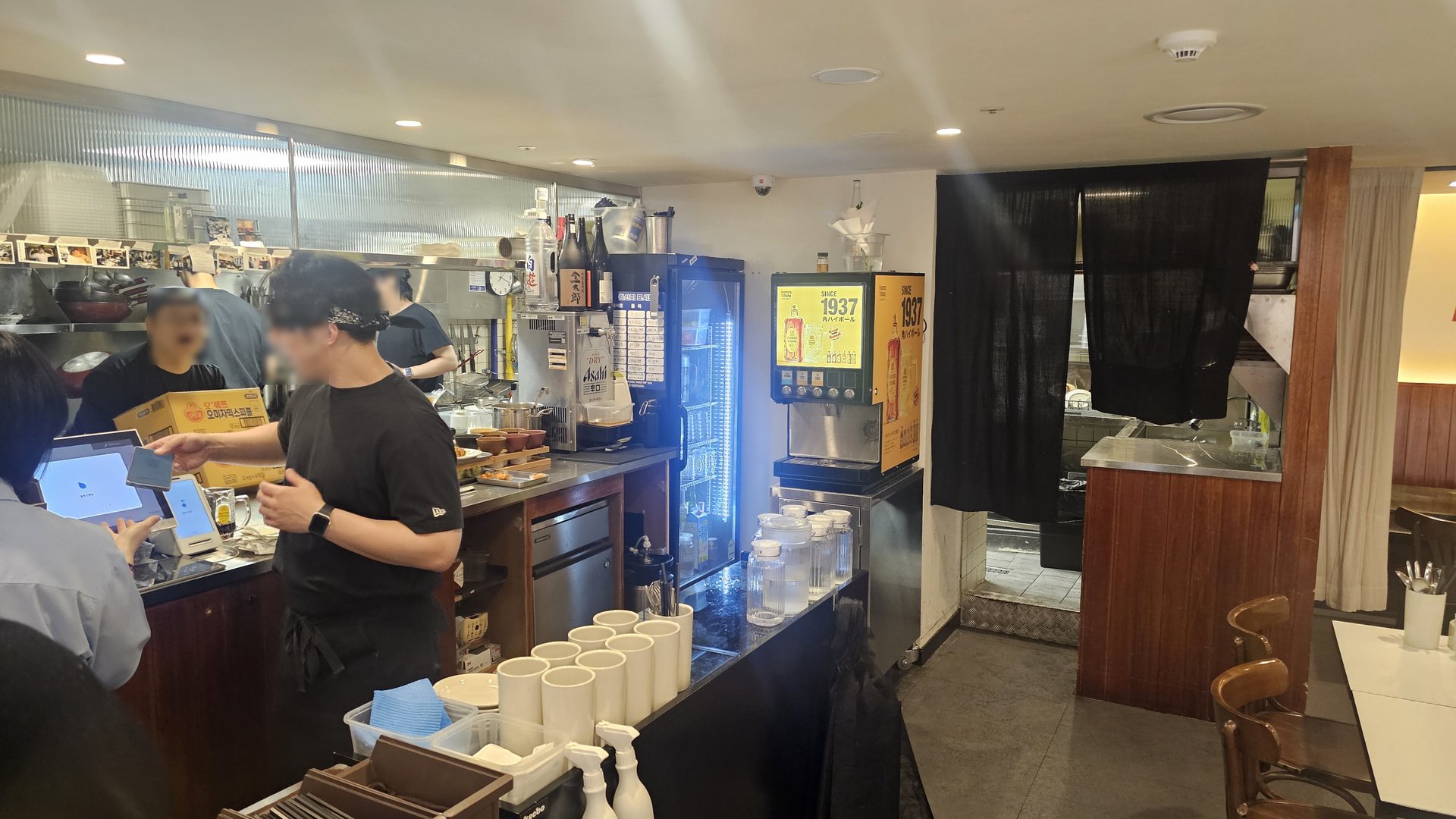
    The staff wear matching black uniforms with traditional Japanese-style bandanas. The plates are intentional. The cutlery is intentional. Even the salt shakers are intentional. You can tell someone really thought about this place.

    Open kitchen counter at Keebo Rock and Roll with Asahi beer tap and 1937 drink machine
    Open kitchen counter at Keebo Rock and Roll with Asahi beer tap and 1937 drink machine

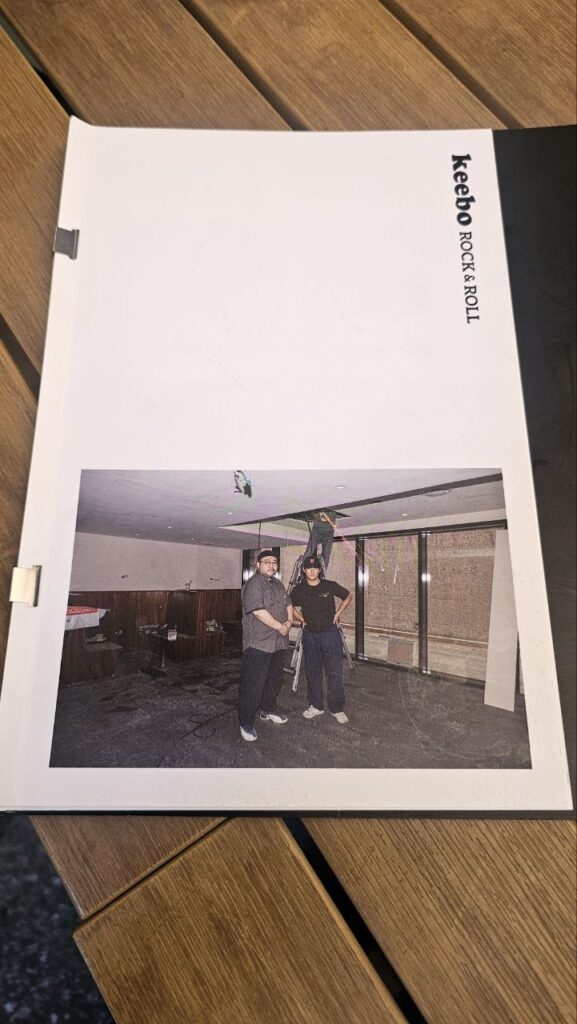
    There’s a small concept book on every table showing the renovation process. Cute touch.

    Keebo Rock and Roll concept book on table

    Vibe check: quiet enough for conversation. Mostly office workers at lunch. Not a tourist-heavy spot, which is honestly refreshing.


    What I Ordered

    I went with two people. We got the pork katsu and the fish katsu.

    Pork Katsu — 16,000 KRW (~$12)

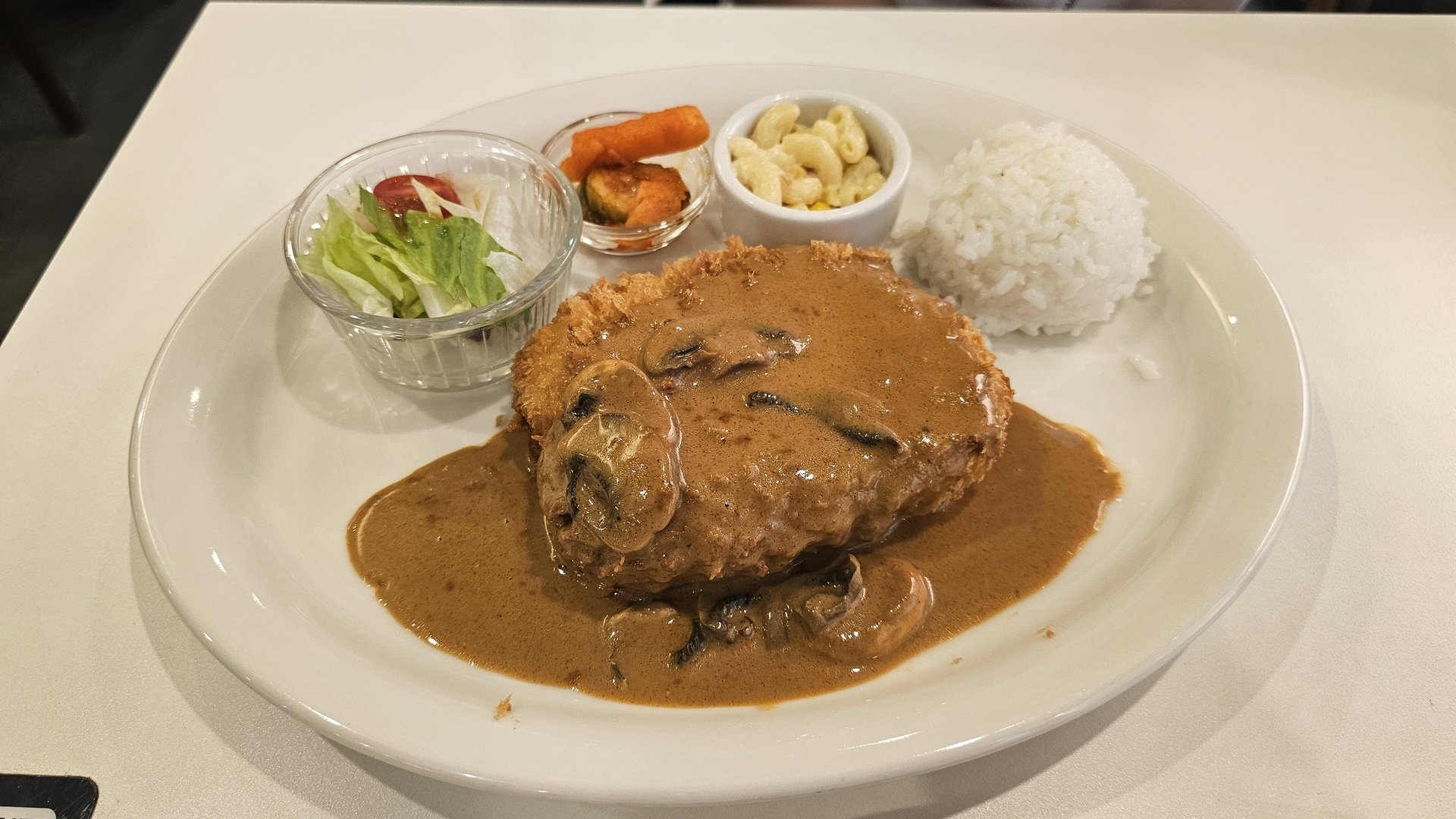
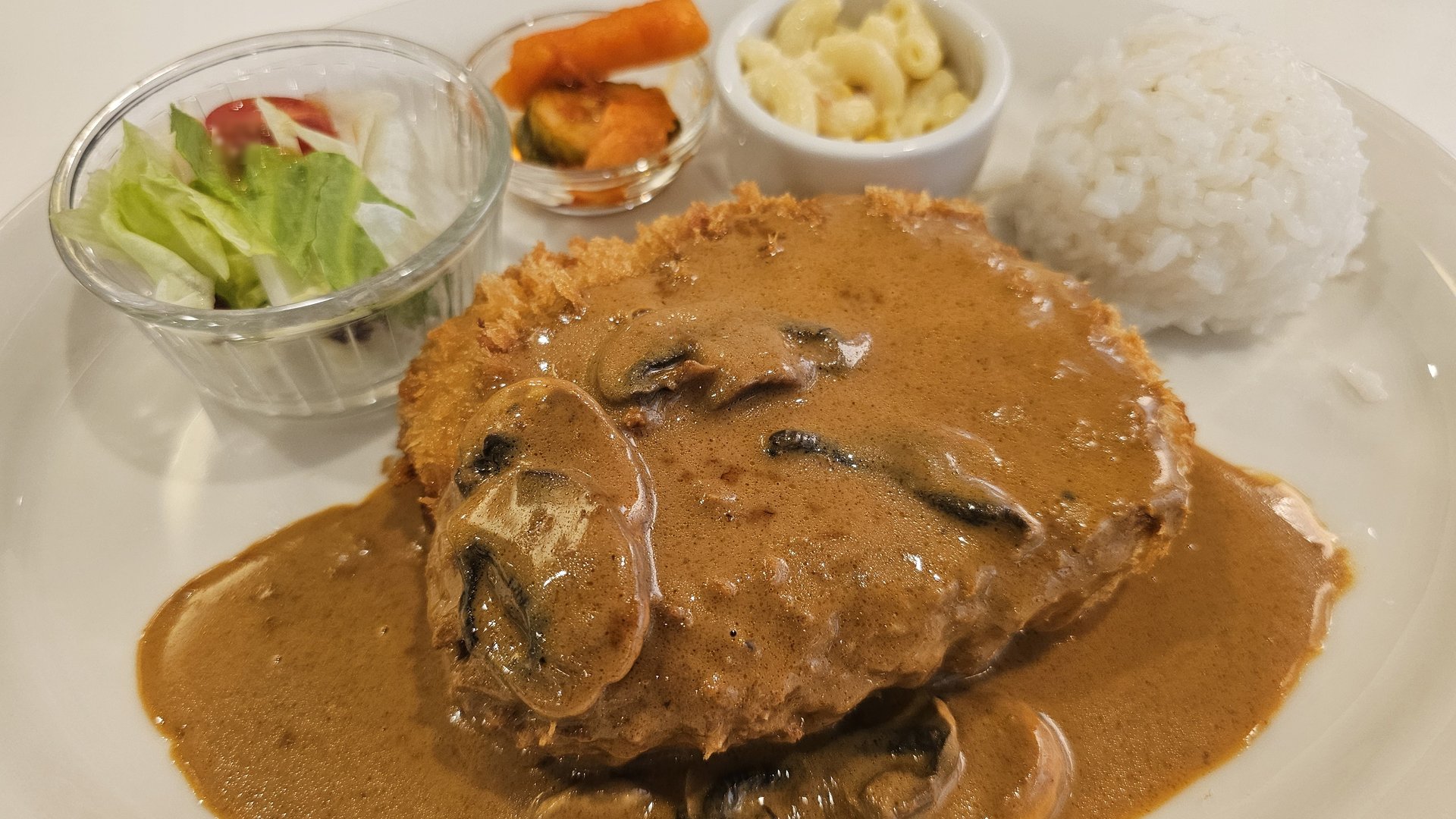
    Pork donkatsu with mushroom demi-glace sauce full plate with salad, macaroni salad, pickled vegetables and rice at Keebo
    Pork donkatsu with mushroom demi-glace sauce full plate with salad, macaroni salad, pickled vegetables and rice at Keebo

    Okay, this is the dish to order.

    Here’s the thing about katsu in Seoul right now — most places do that thin, wide cutlet style. Spread the pork out, breading does most of the work. Looks impressive on Instagram, eats like nothing.

    Keebo doesn’t do that. Their pork katsu is thick. Like, actual thick-cut pork loin you have to chew through. When you cut it, you can see the meat has structure.

    Close-up of pork donkatsu with rich mushroom demi-glace sauce at Keebo Rock and Roll Yeouido
    Close-up of pork donkatsu with rich mushroom demi-glace sauce at Keebo Rock and Roll Yeouido

    The brown sauce is made in-house. Lots of sliced mushrooms in it. Rich but not heavy. Comes with rice, salad, macaroni salad, pickle, and miso soup. Standard Yoshoku set arrangement.
    Worth the $12? Yeah, I’d say so. This is the dish that justifies the price.

    Fish Katsu — 16,000 KRW (~$12)

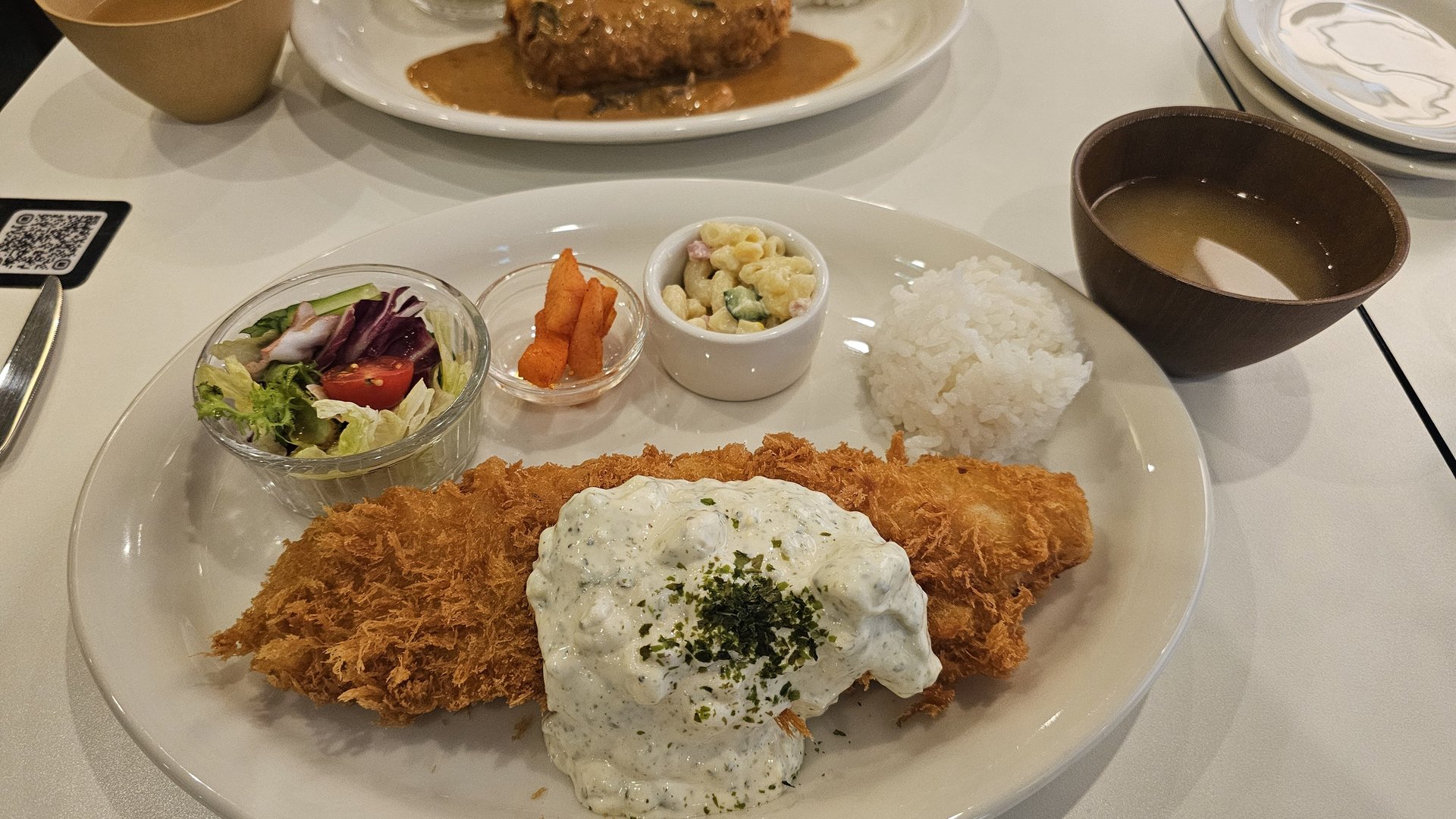
    Full plate of pork donkatsu with tartare sauce set including miso soup at Keebo Yeouido
    Full plate of pork donkatsu with tartare sauce set including miso soup at Keebo Yeouido

    Fish katsu is… fine.

    The fish itself is a thick piece of white fish (probably cod or pollock), breaded the same way as the pork. Crispy on the outside, flaky inside. Solid execution.

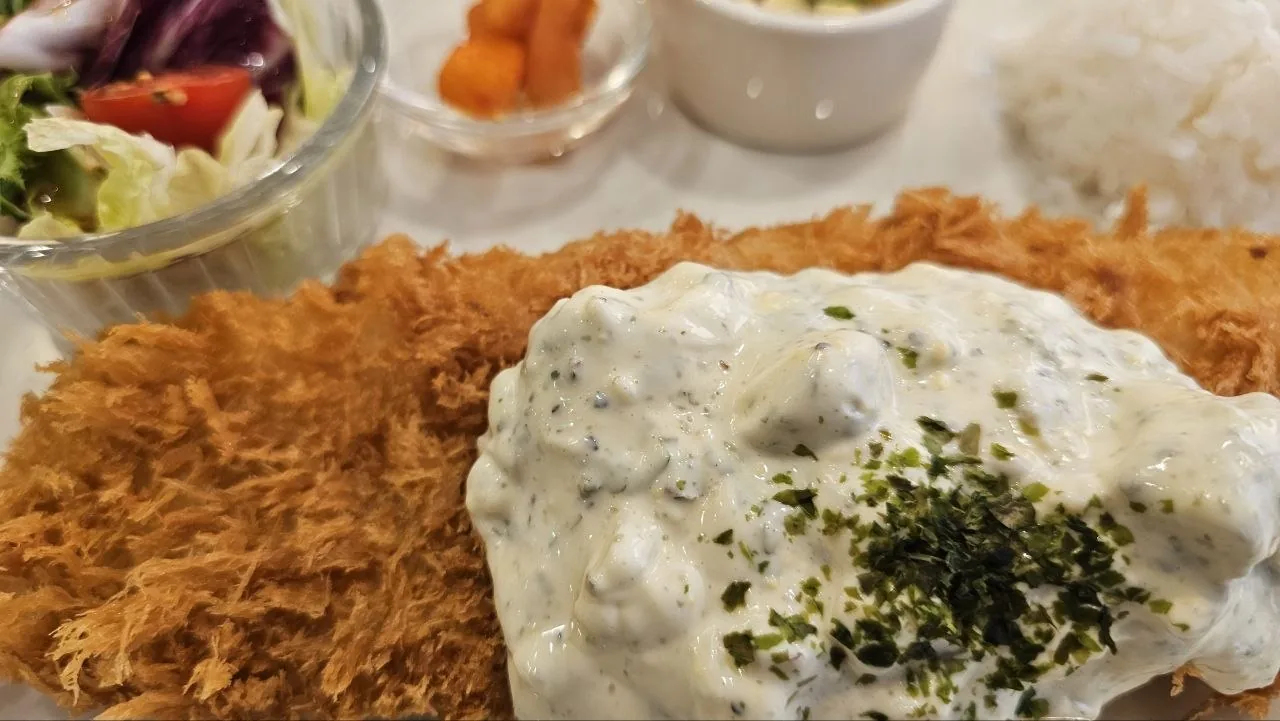
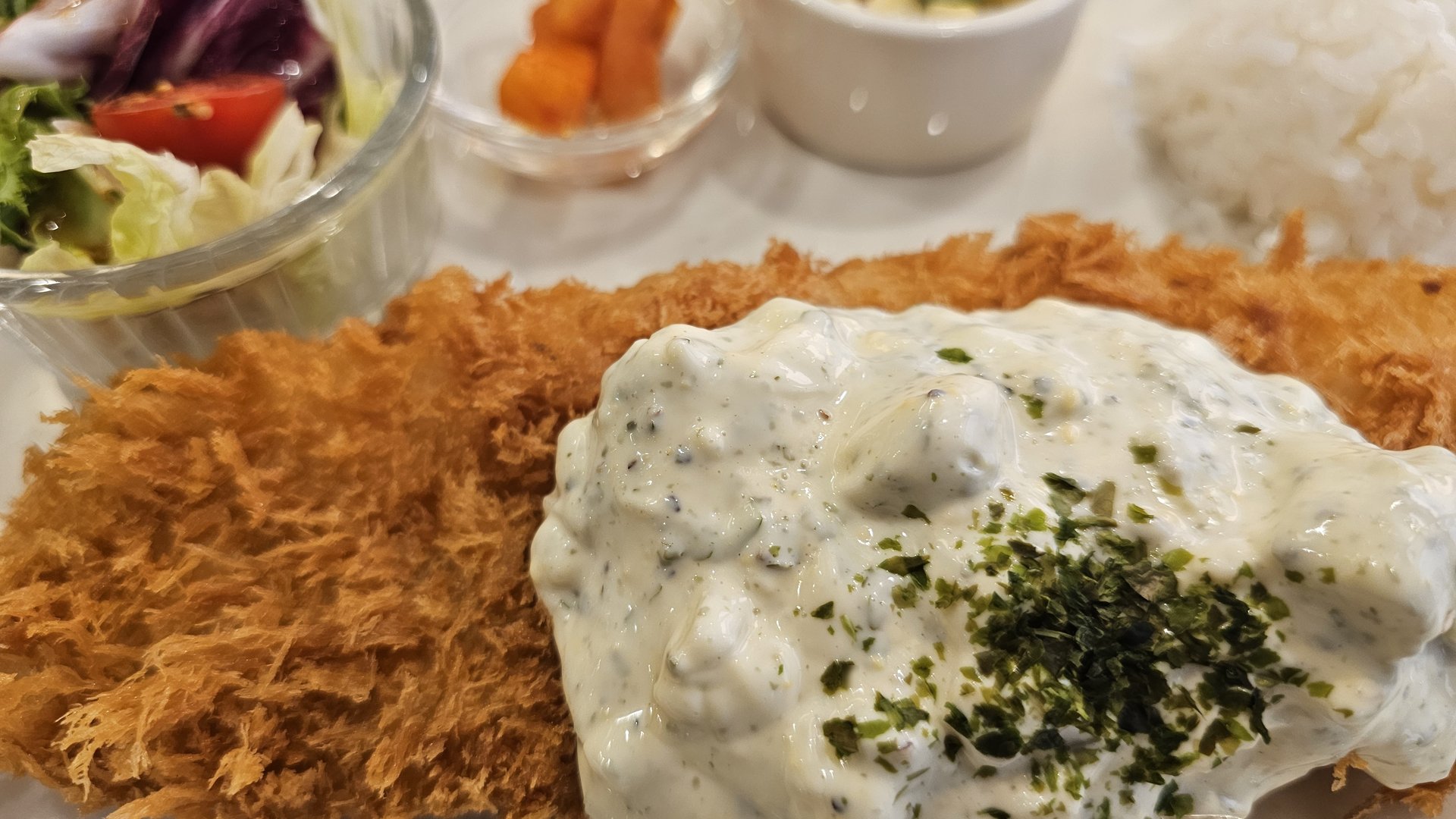
    Close-up of golden crispy pork donkatsu with creamy tartare sauce and herb garnish at Keebo
    Close-up of golden crispy pork donkatsu with creamy tartare sauce and herb garnish at Keebo

    The tartar sauce is the highlight here. It’s loaded with chopped pickles and herbs, gives it a fresh tangy kick that cuts through the fried fish. Better than the bottled tartar you’d get at most katsu chains.

    But honestly? It’s a well-made fish katsu. Nothing more. If you’re choosing between this and the pork, get the pork.

    The Omurice I Didn’t Order (But Want To)

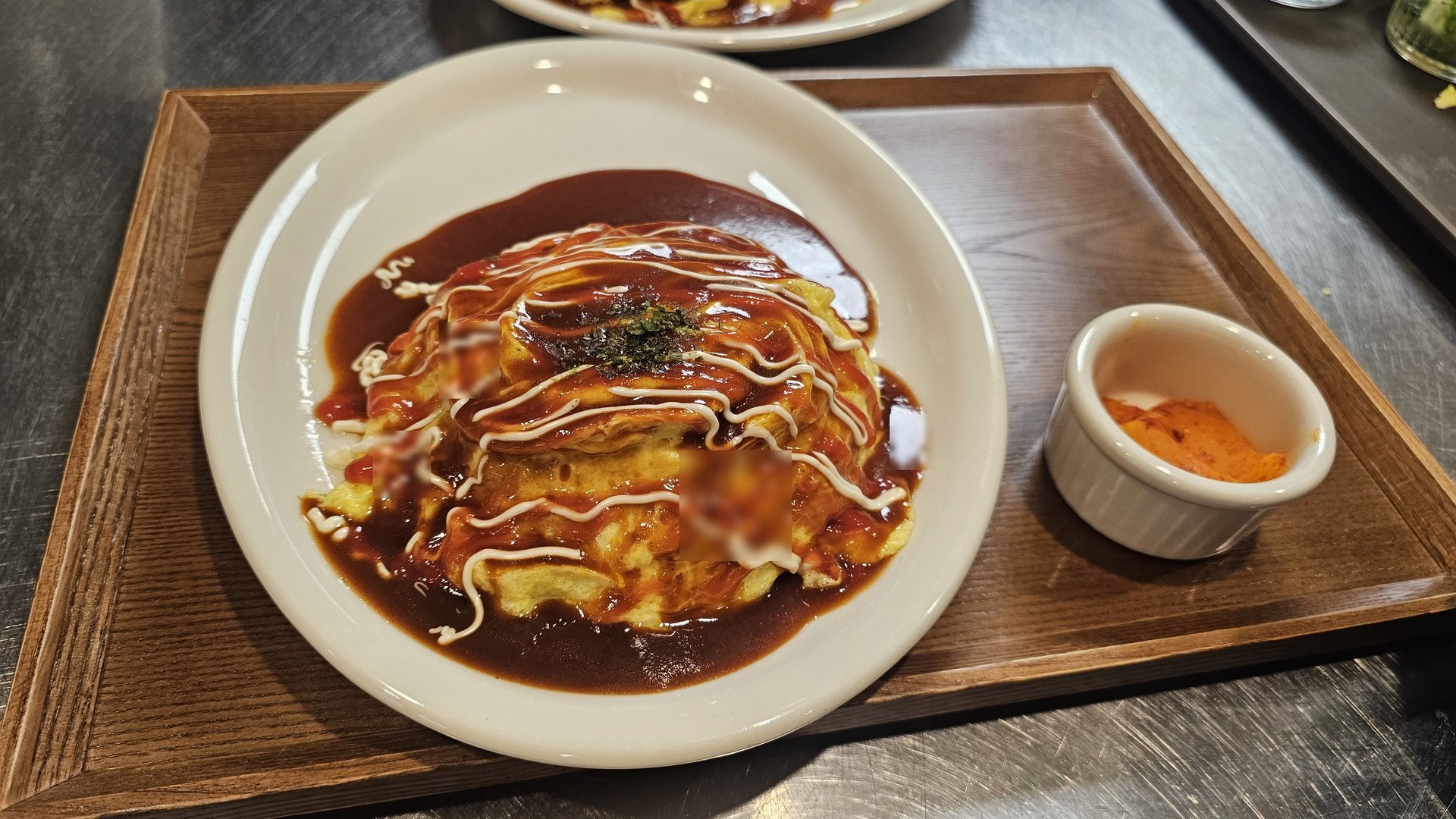
    Omurice with demi-glace sauce, mayo drizzle, and parsley topping served on wooden tray at Keebo Rock and Roll
    Omurice with demi-glace sauce, mayo drizzle, and parsley topping served on wooden tray at Keebo Rock and Roll

    Full disclosure — I didn’t actually try this. But I saw it leaving the kitchen on my way out and grabbed a photo because it looked stunning. Demi-glace sauce in those classic crosshatch patterns with mayo, a little parsley on top.
    This is their signature dish, apparently. I’ll be back specifically for this. Will update when I do.

    The Sides

    Every lunch comes with these sides on the same plate:

    • Small mixed salad (lettuce, cherry tomato, red cabbage)
    • Spicy Korean radish pickle
    • Macaroni salad (classic 80s diner style)
    • Steamed rice, dome-shaped
    • Miso soup on the side

    The macaroni salad is the giveaway that they know what they’re doing. Real Yoshoku places always have this. It’s a small thing, but if a “Japanese Yoshoku” place doesn’t serve macaroni salad with the lunch set, it’s not the real deal.


    Stuff Tourists Should Know

    How crowded?

    Weekday lunch around 12:15 PM = walked right in. Around 12:00 PM = probably a wait. Weekends = reservations recommended.

    You can book through the CatchTable app, which has English support.

    Happy Hour Tip

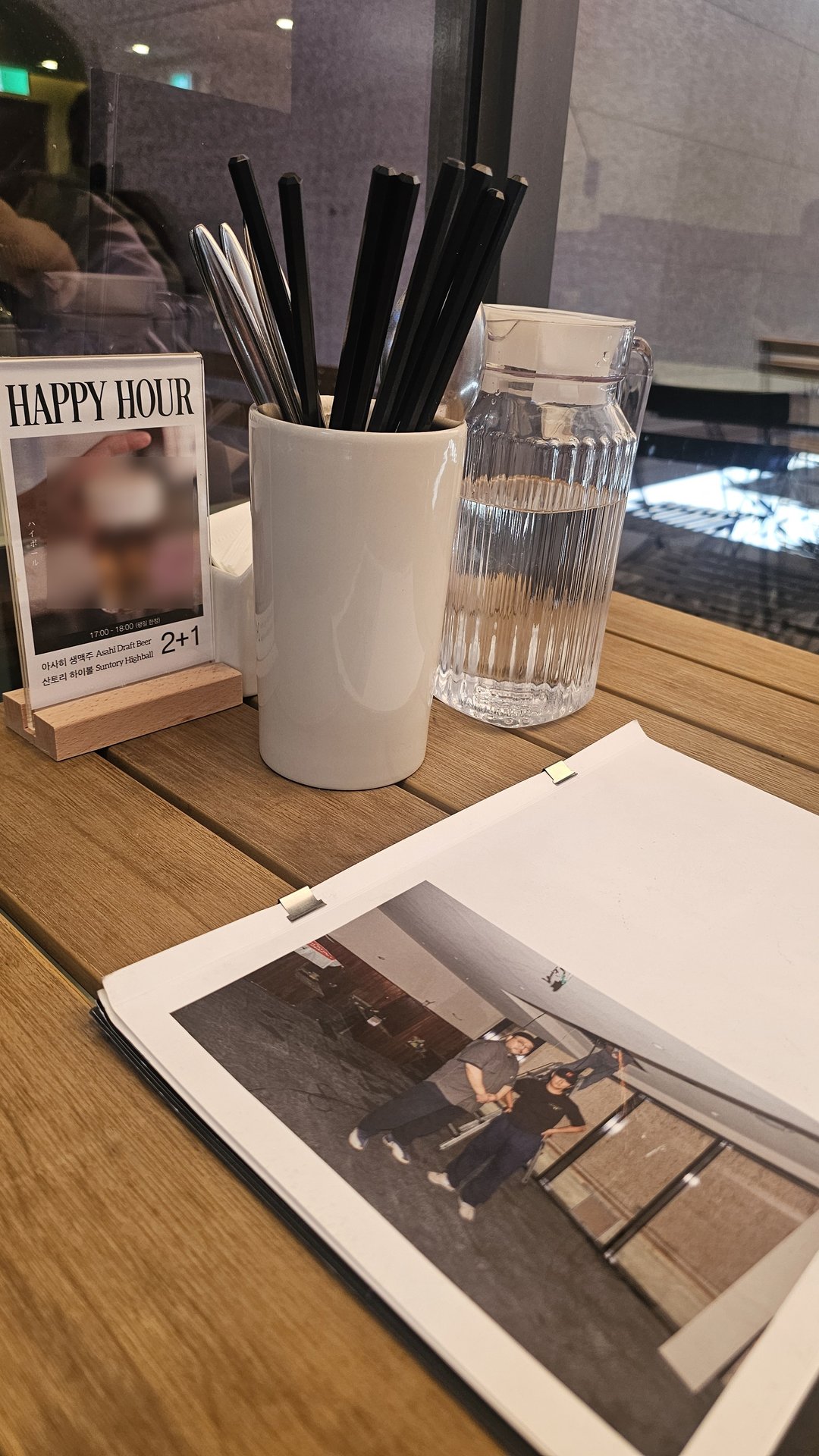
    Table setup at Keebo Yeouido with utensil holder, water glass, and Happy Hour 2+1 promotion card
    Table setup at Keebo Yeouido with utensil holder, water glass, and Happy Hour 2+1 promotion card

    Between 5–6 PM on weekdays, they do 2+1 on Asahi draft beer and Suntory highball. Solid deal if you’re in the area after a long day.

    Will the staff speak English?

    Basic English, yes. The menu has English subtitles on every item. You’ll be fine.

    Card or cash?

    All cards work, including foreign Visa/Mastercard. Korea barely uses cash anymore. No tipping.

    Dietary stuff

    • Vegetarian: Limited. Salads and a few sides only.
    • Halal: No
    • Allergies: Wheat (breading), egg (omurice, tartar). Just ask if concerned.

    Kids?

    Sure, but it’s not a kid-focused place. Adult/date/solo vibe.


    The Verdict

    Should you go?

    Depends on what you’re doing in Seoul.

    • If you’re in Yeouido anyway — yes, this is one of the better lunch options. Get the pork katsu.
    • If you have only 3 days in Seoul — probably skip. Eat Korean food. Come back to Yoshoku on a longer trip.
    • If you’ve been to Tokyo and want to see how Koreans interpret Japanese comfort food — yes, this is a good example.
    • If you’re a foodie traveler tracking down good Yoshoku in Asia — yes, worth a stop.

    The honest summary:

    Pork katsu — recommended. Fish katsu — fine but forgettable. Interior — stunning. Price — slightly high but reasonable for the quality. Will I come back? Yes, for the omurice.


    FAQ

    Is this restaurant tourist-friendly?

    Yes. English menu, card payment, English-speaking staff. About as easy as it gets in Seoul.

    How much per person?

    Plan 20,000–25,000 KRW ($15–$18 USD) for lunch with a drink. Dinner with sake or beer runs 40,000–60,000 KRW ($30–$45 USD) per person.

    Is it worth it?

    For the food alone? It’s okay. For the food plus the interior plus the location plus the experience? Yeah, I think so.

    Reservations needed?

    Lunch on weekdays — usually not. Weekends and dinner — recommended via CatchTable.

    Best time to go?

    12:15–1:30 PM on weekdays. Avoid 12:00–12:15 PM rush.

    What if I can’t read Korean?

    Menu has English. Staff speaks basic English. You’ll survive.

    Are there other Keebo locations?

    Yes, but this Yeouido one is the “Rock & Roll” flagship-style location. The others are smaller and have slightly different menus.


    Related Posts (Coming Soon)

    • Best Lunch Spots in Yeouido Under 20,000 KRW
    • Chef Nam Joon-young’s Restaurant Empire — Where to Eat
    • Tokyo vs Seoul Yoshoku: How Koreans Adapted the Style

    About this review: Visited on a weekday lunch in May 2026. All photos mine. No partnership with the restaurant — I paid for everything. If you want a less filtered take than the average travel blog, this is what I’ve got.

    One last thing: Prices and menu items change. Verify on Naver Map or CatchTable before you go.

    You might also like